CHAPMAN, R.M. & BRAGDON, H.R. (1964). Evoked responses
to numerical and non-numerical visual stimuli while
problem solving. Nature, 203, 1155-1157.
OTTON, L.J. & DONCHIN, E. (2000). Relationship between
P300 amplitude and subsequent recall for distinctive
events : Dependence on type of distinctiveness attribute.
Psychophysiology, 37, 644-661.
DUNCAN-JOHNSON, C.C. (1981). P300 latency : a new metric
of information processing. Psychophysiology, 18, 207-215
MAGNIE, M., BERMON, S., MARTIN, F., MADANY-LOUNIS, M.,
SUISSE, G., MUHAMMAD, W. & DOLISI, C. (2000). P300,
N400, aerobic fitness, and maximal aerobic exercise. Psychophysiology,
37, 369-377.
KARIS D., FABIANI, M. & DONCHIN, E. (1984). "P300" and
memory : Individual differences in the von Restorff
effect. Cognitive Psychology, 16 (2), 177-216.
KOK, A. (2001). On the utility of P3 amplitude as a
measure of processing capacity. Psychophysiology, 38
(3), 557-577.
FABIANI, M., KARIS, D. & DONCHIN, E. (1986). P300 and
recall in an incidental memory paradigm.
Psychophysiology, 23, 298-308.
MYUNG-SUN, K., JAE-JIN, K. & JUN SOO, K. (2001).
Frontal P300 decrement and executive dysfunction in
adolescents with conduct problems. Child Psychiatry
& Human Development, 32 (2), 93-106.
CARLSON, E.A., HOSTINAR, C.E., MILNER, S.B. & GUNNAR,
M.R. (2014). The emergence of attachment following early
social deprivation. Development &
Psychopathology, 26 (2), 479-489.
IACONO, W.G., CARLSON, S.R., MALONE, S.M. & McGUE, M.
(2002). P3 event-related potential amplitude and the risk
for disinhibitory disorders in adolescent boys. Archives
General Psychiatry, 59, 750-757. [PDF]
GONSALVEZ, C.J. & POLICH, J. (2002). P300 amplitude is
determined by target-to-target interval. Psychophysiology,
39, 388-396. [PDF]
WELLER, L. & LUCHTERHAND, E. (1974). Adolescents'
perceptions of their parents by social class, race and
parental presence. International Journal of Sociology
of the Family, 4, 215-221.
MOELLER, F.G., BARRATT, E.S., FISHER, C.J., DOUGHERTY,
D.M., REILLY, E.L., MATHIAS, C.W. & SWANN, A.C.
(2004). P300 event-related potential amplitude and
impulsivity in cocaine-dependent subjects. Neuropsychobiology, 50, 167-173.
DONCHIN, E. & COLES, M.G. (1988). Is the P300
component a manifestation of context updating ? Behavioral
& Brain Sciences, 11, 355-372.
HILL, H., OTT, F. & WEISBROD, M. (2005). Soa-dependent
n400 and p300 semantic priming effects using pseudoword
primes and a delayed lexical decision.
International Journal of Psychophysiology, 56, 209-221.
JOHNSON, R. (1989). Developmental evidence for
modality-dependent P300 generators : A normative study. Psychophysiology, 26, 651-670.
SATO, A., YASUDA, A., OHIRA, H., MIYAWAKI, K., NISHIKAWA,
M., KUMANO, H. & KUBOKI, T. (2005). Effects of value
and reward magnitude on feedback negativity and P300. Neuroreport, 16, 407-411. [PDF]
POLICH, J., LADISH, C. & BURNS, T. (1990). Normal
variation of P300 in children : age, memory span, and head
size. International Journal of Psychophysiology, 9, 237-248.
PATRICK, C.J., BERNAT, E.M., MALONE, S.M., IACONO, W.G.,
KRUEGER, R.F. & McGUE, M. (2006). P300 amplitude as a
marker of externalizing in adolescent males. Psychophysiology, 43 (1), 84-92.
IACONO, W.G. & McGUE, M. (2006). Association between
P3 event-related brain potential amplitude and adolescent
problem behavior. Psychophysiology, 43, 465-469.
YOON, H.H., IACONO, W.G., MALONE, S.M., BERNAT, E.M. &
McGUE, M. (2006). The effects of childhood disruptive
disorder comorbidity on P3 event-related brain potentials
in preadolescents with ADHD. Biological Psychology,
79, 329-336. [PDF]
PICTON, T.W. (1992). The P300 wave of the human
event-related potential. Journal of Clinical
Neurophysiology, 9, 456-479.
ROSENFELD, J.P. & SKOGSBERG, K.R. (2006). P300-based
Stroop study with low probability and target Stroop
oddballs : The evidence still favors the response
selection hypothesis. International Journal of
Psychophysiology, 60, 240-250.
POLICH, J. & MARTIN, S. (1992). P300, cognitive
capability, and personality : a correlational study of
university undergraduates. Personality &
individual differences, 13, 533-543.
YOON, H.H., IACONO, W.G., MALONE, S.M. & McGUE, M.
(2006). Using the brain P300 response to identify novel
phenotypes reflecting genetic vulnerability for adolescent
substance misuse. Addictive Behaviors, 31,
1067-1087.
POLICH, J. & SQUIRE, L. (1993). P300 from amnesic
patients with bilateral hippocampal lesions. Electroencephalography
& Clinical Neurophysiology, 86, 408-417.
POLICH, J. (2007). Updating P300 : an integrative theory
of P3a and P3b. Clinical Neurophysiology, 118
(10), 2128-2148. [PDF]
DE SOLA, S., TARANCON, T., PENA-CASANOVA, J., ESPADALER,
J.M., LANGHOR, K., POUDEVIDA, S., FARRÉ, M.,
VERDEJO-GARCIA, A. & DE LA TORRE, R. (2012). Auditory
event-related potentials (P3) and cognitive performance in
recreational ecstasy polydrug users : evidence from a
12-month longitudinal study. Psychopharmacology, 200,
425-437. [PDF]
IACONO, W.G. (2008). The forensic application of "Brain
fingerprinting" : Why scientists should encourage the use
of P300 memory detection methods. American Journal of
Bioethics, 8, 30-32.
POLICH, J. & MARGALA, C. (1997). P300 and probability
: comparison of oddball and single-stimulus paradigms.
International Journal of Psychophysiology, 25, 169-176.
IACONO, W.G. & MALONE, S.M. (2011). Developmental
endophenotypes : Indexing genetic risk for substance abuse
with the P300 brain event-related potential. Child
Development Perspectives, 4, 239-247. [PDF]
HARMON-JONES, E., BARRATT, E.S. & WIGG, C. (1997).
Impulsiveness, aggression, reading, and the P300 of the
event-related potential. Personality & Individual
Differences, 22, 439-445. [PDF]
DELLE-VIGNE, D., CAMPANELLA, S., KAJOSCH, H., VERBANCK, P.
& KORNREICH, C. (2011). Accroître la sensibilité de la
P300 à l'aide d'un paradigme oddball émotionnel bimodal. Acta
Psychiatica Belgica, 111 (1), 29-44.
POLICH, J. (1997). On the relationship between EEG and
P300 : Individual differences, aging, and ultradian
rhythms. International Journal of Psychophysiology,
26, 299–317.
YOON, H.H., MALONE, S.M., BURWELL, S.J., BERNAT, E.M.
& IACONO, W.G. (2013). Association between P3
event-related potential amplitude and externalizing
disorders : A time domain and time frequency investigation
of 29-year-old adults. Psychophysiology, 50 (7),
595-609. [PDF]
PAAS, F. (1992). Training strategies for attaining
transfer of problem-solving skill in statistics : A
cognitive-load approach. Journal of Educational
Psychology, 84, 429-434.
PAAS, F. & VAN MERRIENBOER, J.J.G. (1994). Variability
of worked examples and transfer of geometrical
problem-solving skills : A cognitive-load approach.
Journal of Educational Psychology, 86 (1),
122-133. [PDF]
PAAS, F., RENKL, A. & SWELLER, J. (2003). Cognitive
load theory and instructional design : Recent
developments. Educational Psychologist, 38, 1-4.
[PDF]
PAAS, F., TUOVINEN, J., TABBERS, H. & VAN GERVEN,
P.W.M. (2003). Cognitive load measurement as a means to
advance cognitive load theory. Educational
Psychologist, 38, 63-71. [PDF]
PAAS, F., RENKL, A. & SWELLER, J. (2004). Cognitive
load theory : Instructional implications of the
interaction between information structures and cognitive
architecture. Instructional Science, 32, 1-8. [PDF]
PACE, G.M, IVANCIC, M.T., EDWARDS, G.L., IWATA, B. &
PAGE, T.J. (1985). Assessment of stimulus preference and
reinforcer value with profoundly retarded individuals. Journal
of Applied Behavior Analysis, 18 (3), 249-255. [PDF]
PACE, G.M., IWATA, B.A., EDWARDS, G.L. & McCOSH, K.C.
(1986). Stimulus fading and transfer in the treatment of
self-restraint and self-injurious behavior. Journal
of Applied Behavior Analysis, 19 (4), 381-389. [PDF]
IWATA B.A., PACE, G.M., KALSHER, M.J., COWDERY, G.E. &
CATALDO, M.F. (1990). Experimental analysis and extinction
of self-injurious escape behavior. Journal of Applied
Behavior Analysis, 23 (1), 11-27. [PDF]
PACE, G.M., IWATA, B.A., COWDERY, G.E., ANDREE, P.J. &
McINTYRE, T. (1993). Stimulus (instructional) fading
during extinction of self-injurious escape behavior. Journal
of Applied Behavior Analysis, 26 (2), 205-212. [PDF]
PACE, G.M, IVANCIC, M.T. & JEFFERSON, G. (1994).
Stimulus fading as treatment for obscenity in a
brain-injured adult. Journal of Applied Behavior
Analysis, 27 (2), 301-305. [PDF]
PACHALSKA, M. (2002). The microgenetic revolution :
reflections on a recent essay by Jason Brown. Journal
of Neuropsychoanalysis, 4 (1), 109-117.
PACHALSKA, M. (2003). Neuropsychological rehabilitation
for post-traumatic frontal syndrome in patients recovering
from prolonged coma : A preliminary report. Acta
Neuropsychologica, 1 (2), 194-227.
PACHALSKA, M., LUKOWICZ, M., KROPOTOV, J.D.,
HERMAN-SUCHARSKA, I. & TALAR, J. (2011). Evaluation of
differentiated neurotherapy programs for a patient after
severe TBI and long term coma using event-related
potentials. Medical Science Monitor, 17 (10),
120-128. [PDF]
PACHALSKA, M., MacQUENN, B.D. & BROWN, J.W. (2012). Microgenetic theory : brain and mind in time. In R.W.
Rieber (Ed.), Encyclopedia of the history of
psychological theories, XXVI (pp. 675-708).
Frankfurt : Springer.
PACHALSKA, M. & KROPOTOV, J.D. (2013). Functional
neurophysiology : New approaches in neuropsychological
assessment. Frankfurt/Paris/ Lancaster, New
Brunswick : Ontos Verlag.
Pacifisme : Pacifiste : Doctrine
qui milite en faveur de la paix (et
considère que la guerre est
généralement la solution
la moins intéressante à un conflit,
le dernier recours).
/Guerre, belliqueux, va-t-en-guerre,militarisme.Pacifism.
GLADYS, T. (1951). Further discussion on pacifists vs.
psychologists. American Psychologist, 6 (8),
457-458.
KELMAN, H.C. & GLADSTONE, A.I. (1952). Pacifism and
psychology : Further comments. American Psychologist,
7, 159.
SCHELER, M. (1953). L'idée de paix et le pacifisme.
Paris : Aubier-Montaigne.
LAKE, D.A. (1992). Powerful pacifists : Democratic states
and war. American Political Science Review, 86 (1),
24-37.
Packer
Craig (Fort Worth 1950-) : Biologiste
américain et spécialiste de l'étude des lions
et plus généralement de
l'écosystème africain (savane). Étudiant de Goodall.
PACKER, C. & PUSEY, A.E. (1982). Cooperation and
competition within coalitions of male lions : Kin
selection or gam theory ? Nature, 296 (5859),
740-742.
[PDF]
PACKER, C. & PUSEY, A.E. (1983). Adaptations of female
lions to infanticide by incoming males. The American
Naturalist, 121 (5), 716-728. [PDF]
PACKER, C., GILBERT, D., PUSEY, A. & O’BRIEN, S.
(1991). A molecular genetic analysis of kinship and
cooperation in African lions. Nature, 351,
562-565.
PACKER, C., LEWIS, S. & PUSEY, A. (1992). A
comparative analysis of non-offspring nursing. Animal
Behaviour, 43, 265-281. [PDF]
PACKER, C., BRINK, B.M., KISSUI, H., MALITI, H., KUSHNI,
H. & CARO, T. (2011). The effects of trophy hunting on
lion and leopard populations in Tanzania. Ecology
& Conservation Biology, 25, 142-153.
PAGANI, L.S., TREMBLAY, R.E., VITARO, F., KERR, A. &
McDUFF, P. (1998). The impact of family transition on the
development of delinquency in adolescent boys : a 9-year
longitudinal study. Journal of Child Psychology &
Psychiatry, 39, 489-499.
PAGANI, L.S., TREMBLAY, R.E., VITARO, F., BOULERICE, B.
& McDUFF, P. (2001). Effects of grade retention on
academic performance and behavioral development.
Development & Psychopathology, 13, 297-315.
PAGANI, L.S., FITZPATRICK, C., BARNETT, T.A. & DUBOW,
E. (2010). Prospective associations between early
childhood television exposure and academic, psychosocial,
and physical well being by middle childhood. Archives
of Pediatrics & Adolescent Medicine, 164,
425-431.
PAGANI, L.S., FITZPATRICK, C. & PARENT, S. (2012).
Relating kindergarten attention to subsequent
developmental pathways of classroom engagement in
elementary school. Journal of Abnormal Child
Psychology, 40, 715-725. [PDF]
PAGANI, L.S., FITZPATRICK, C. & BARNETT, T.A. (2013).
Early childhood television viewing and kindergarten entry
readiness. Pediatric Research, 74, 350-355. [PDF]
BÉLANGER, J. (1978). Images et réalités du béhaviorisme.
Philosophiques, 5 (1), 3-110.
2
BEAUGRAND, J. (1988). Démarche scientifique et cycle de
la recherche. Dans M. Robert (Dir.), Fondements et
étapes de la recherche scientifique en psychologie(p. 1-34). St-Hyacinthe :
Édisem.
3
SKINNER, B.F. (1971). L'analyse expérimentale du
comportement. Paris : Seuil.
Page blanche : L'expression a deux acceptions : a) On
utilise cette expression pour décrire les difficultés ou les
hésitations à commencer la rédaction
d'un texte. =
syndrome de la page blanche. b) L'expression
renvoie également au principe
de tabula rasa.
Paglia Camille Anna (Endicott États-Unis 1947-) :Féminisme et essayiste
américaine.
PAGLIA, C.A. (1990). Sexual personae : Art and
decadence from Nefertiti to Emily Dickinson. New
Haven : Yale UP.
PAGLIA, C.A. (1992). Sex, art, and American culture :
Essays. New York : Vintage.
PAGLIA, C.A. (1994). Vamps & tramps : New essays.
New York : Vintage.
GEIGER, G., TODD., D.D., CLARK, H.B., MILLER, R.P. &
KORI, S.H. (1992). The effects of feedback and
contingent reinforcement on the exercise behavior of
chronic pain patients. Pain, 49 (2), 179-185.
Pairer : Pairage : Paire : Le mot a trois usages distincts mais voisins : a) Lors d'un conditionnement, le pairage est une opération méthodologique qui consiste à présenter deux stimuli à un organisme de manière à favoriser l'apprentissage. d'un comportement. Pairing.b) Le mot revoie à un propriété du cerveau, présente chez de de très nombreux organismes et qui consiste à associer, volontairement ou non, deux choses ou plus en fonction de certaines de leurs propriétés. Des études récentes révèlent que des organismes très primitifs, donc dépourvu de cerveau, comme la pieuvre, sont capables de pairer des stimuli. En anglais, on utilise davantage le terme associative learning.= Associer, apprendre, établir une relation.
Associative learning.c) En recherche,
on paire les sujets/participants
d'une recherche afin de
former des groupes plus égaux. = Deux à deux, jumeler.
Pairing.
BIRNBRAUER, J.S. (1971). Effects of pairing stimuli with reinforcement on multiple schedule performance of children. Journal of the Experimental Analysis of Behavior, 16 (3), 355-365. [PDF]
ZENTALL, T.R. & HOGAN, D.E. (1975). Key pecking in pigeons produced by pairing key light with inaccessible grain. Journal of the Experimental Analysis of Behavior, 23 (2), 199-206. [PDF]
YOON, S.-Y., BENNETT, G.M. & F.S. KELLER SCHOOL (2000). Effects of a stimulus-stimulus pairing procedure on conditioning vocal sounds as reinforcers. The Analysis of Verbal Behavior, 17, 75-88. [PDF]
MIGUEL, C.F., CARR, J.E. & MICHAEL, J. (2002). The effects of a stimulus-stimulus pairing procedure on the vocal behavior of children diagnosed with autism. The Analysis of Verbal Behavior, 18, 3-13. [PDF]
ESCH, B.E., CARR, J.E. & MICHAEL, J. (2005). Evaluating stimulus-stimulus pairing and direct reinforcement in the establishment of an echoic repertoire of children diagnosed with autism. The Analysis of Verbal Behavior, 21, 43-58. [PDF]
LONGANO, J.M. & GREER, R.D. (2006). The effects of stimulus-stimulus pairing procedure on acquisition of conditioned reinforcement on observing and manipulating stimuli by young children with autism. Journal of Early & Intensive Behavior Intervention, 3 (1), 62-80. [PDF]
VORNDRAN, C.M. & LERMAN, D.C. (2006). Establishing and maintaining treatment effects with less intrusive consequences via a pairing procedure. Journal of Applied Behavior Analysis, 39 (1), 35-48. [PDF]
VAUGHN, S. & LANCELOTTA, G.X. (1990). Teaching interpersonal social skills to poorly accepted students : Peer-pairing versus non-peer-pairing. Journal of School Psychology, 28, 181-188.
HOLLANDER, E.P. (1956). The friendship factor in peer
nominations. Personnel Psychology, 9, 435-447.
WITT, S.D. (2000). The influence of peers on children's
socialization to gender roles. Early Child
Development & Care, 162, 1-7.
KOHN, M. (1966). The child as a determinant of his peers
approach to him. Journal of Genetic Psychology, 109,
91-100.
BOBO, J.K. & HUSTEN, C. (2000). Sociocultural
influences on smoking and drinking. Alcool Research
& Health, 24 (4), 225-232.
[PDF]
HARTUP, W.W., GLAZER, J. & CHARLESWORTH, R. (1967).
Peer reinforcement and sociometric status. Child
Development, 38, 1017-1024.
MARTIN, C.L. & FABRS, R.A. (2001). The Stability and
Consequences of Young Children's Same-Sex Peer
Interactions. Developmental Psychology, 37
(3), 431-446. [PDF]
SINGLETON, L.C. & ASHER, S.R. (1977). Peer preference
and social interaction among third-grade children in an
integrated school district. Journal of Educational
Psychology, 69, 330-336.
HUBBARD, J.A. (2001). Emotion expression processes in
children's peer interaction : The role of peer rejection,
aggression, and gender. Child Development, 72, 1426-1438.
STRAIN, P.S., SHORES, R.E. & TIMM, M.A. (1977).
Effects of peer social initiations on the behavior of
withdrawn preschool children. Journal of Applied
Behavior Analysis, 10 (2), 289-298. [PDF]
GREGURAS, G.J., ROBIE, C. & BORN, M. (2001). Applying
the social relations model to self and peer evaluations. Journal
of Management Development, 20 (6), 508-525. [PDF]
LADD, G.W. & ODEN, S.L. (1979). The relationship
between peer acceptance and children’s ideas about
helpfulness. Child Development, 50, 402-408.
COSTELLO, J., PATEMAN, B., PUSEY, H. & LONGSHAW, K.
(2001). Peer review of classroom teaching : An interim
report. Nurse Education Today, 21, 444-454.
STRAIN, P.S., KERR, M.M. & RAGLAND, E.U. (1979).
Effects of peer-mediated social initiationsand prompt
reinforcement procedures on the social behavior of
autistic children. Journal of Autism &
Developmental Disorders, 9, 41-54.
LINDSLEY, E.W. (2002). Preschool children's friendships
and peer acceptance : Links to social competence. Child
Study Journal, 32 (3), 145-156.
STRAYER, R.R. (1980). Social ecology of the preschool peer
group. In W.A. Collins (Ed.), Development of
cognition, affect and social relations (Vol. 13,
pp. 165-196). Hillsdale : Lawrence Erlbaum.
SUDA, W. & FOUTS, G. (1980). Effect of peer presence
on introverted and extroverted children. Child
Development, 51, 1272-1275.
SHERIDAN, S.M., BUHS, E.S. & WARNES, E.D. (2003).
Childhood peer relationships in context. Journal of
School Psychology, 41, 285-292. [PDF]
LOVE, K.G. (1981). Comparison of peer assessment methods :
Reliability, validity, friendship bias, and user reaction.
Journal of Applied Psychology, 66 (4), 451-457.
GIFFORD-SMITH, M.E. & BROWNELL, C.A. (2003). Childhood
peer relationships : social acceptance, friendships, and
peer networks. Journal of School Psychology, 41, 235-284.
[PDF]
WHEELER, V. & LADD, G.W. (1982). Assessment of
children's self efficacy for social interactions with
peers. Developmental Psychology, 18, 795-805.
LADD, G.W. & TROOP-GORDON, W. (2003). The role of
chronic peer adversity in the development of children's
psychological adjustment problems. Child Development,
74, 1325-1348. [PDF]
DODGE, K.A., SCHLUNDT, D.C., SCHOCKEN, I. & DELUGACH,
J.D. (1983). Social competence and children's sociometric
status : The role of peer group entry strategies.
Merrill-Palmer Quarterly, 29, 309-336.
CHENG, T.O. (2004). Peer, parental, and commercial
influences on cigarette smoking among Chinese youths. Journal
of the National Medical Association, 96 (5),
691-692. [PDF]
WHALEN, C.K., HENKER, B., DOTEMOTO, S. & HINSHAW, S.P.
(1983). Child and adolescent perceptions of normal and
atypical peers. Child Development, 54, 1588-1598.
HAY, D.F., PAYNE, A. & CHADWICK, A. (2004). Peer
relations in childhood. Journal of Child Psychology
& Psychiatry, 45 (1), 84-108. [PDF]
ODOM, S.L. & STRAIN, P.S. (1984). Peer mediates
approches to promoting chilfren interaction : A review. American
Journal of Orthopsychiatry, 54, 544-557.
CARRON, A.V. & BURKE, S.M. (2005). Context and
physical activity : The influence of others. Sport
& Exercise Psychology Review, 1 (2), 23-31. [PDF]
STREMMEL, A. & LADD, G.W. (1985). Children’s selective
use of peer informants : Criteria for making
information-seeking decisions. Journal of Genetic
Psychology, 146, 541-550.
McAULIFFE, M.D., HUBBARD, J.A. & ROMANO, L.J. (2005).
The impact of teacher behavior on children's peer
relations. Journal of Abnormal Child Psychology, 37,
665-677.
HYMEL, S. (1986). Interpretations of peer behavior :
affective bias in childhood and adolescence. Child
Development, 57, 431-445.
TROOP-GORDON, W. & LADD, G.W. (2005). Trajectories of
peer vctimization and perceptions of the self and
schoolmates : Precursors to internalizing and
externalizing problems. Child Development, 76
(5), 1072-1091. [PDF]
PARKER, J.G. & ASHER, S.R. (1987). Peer relations and
later personal adjustment are low-accepted children at
risk. Psychological Buletin, 102 (3), 57-89.
SMITH, T.E. & LEAPER, C. (2006). Self-perceived gender
typicality and the peer context during adolescence. Journal
of Research on Adolescence, 16, 91-104.
PALINSCAR, A.S., BROWN, A.L. & MARTIN, S. (1987). Peer
interaction in reading comprehension instruction. Educational
Psychologist, 22 (3/4), 231-253.
LUBBERS, M.J., VAN DER WERF, M.P.C., SNIJDERS, T.A.B.,
CREEMERS, B.P.M. & KUYPER, H. (2006). The impact of
peer relations on academic progress in junior high.
Journal of School Psychology, 44, 491-512.
ROOT, L.S. (1987). Faculty evaluation : Reliability of
peer assessments of research, teaching, and service. Research
in Higher Education, 26, 71-84.
HEILBRON, N. & PRINSTEIN, M.J. (2008). Peer influence
and adolescent nonsuicidal self-injury : A theoretical
review of mechanisms and moderators. Applied &
Preventive Psychology, 12, 169-177. [PDF]
WEINER, J. (1987). Peer status of children and adolescents
: A review of the literature. Learning Disabilities
Research, 2, 62-79.
STEARNS, E., DODGE, K.A. & NICHOLSON, M. (2008). Peer
contextual influences on the growth of
authority-acceptance problems in early eementary school. Merrill
Palmer Quarterly, 54 (2), 208-231. [PDF]
PERRI, M.G., McADOO, W.G., McALLISTER, D.A., JORDAN, R.C.,
LAUER, J.B., YANCY, D.Z. & NEZU, A.M. (1987). Effects
of peer support and therapist contact on long-term weight
loss. Journal of Consulting & Clinical
Psychology, 55, 615-617.
CARRELL, S.E., MALMSTROM, F.V. & WEST, J.E. (2008).
Peer effects in academic cheating. Journal Human
Resources, 43 (1), 173-207. [PDF]
WHALEN, C.K., HENKER, B., BUHRMESTER, D., HINSHAW, S.P.
HUBER, A. & LASKI, K. (1989). Does stimulant
medication improve the peer status of hyperactive children
? Journal of Consulting & Clinical Psychology, 57,
545-549.
MORROW, M.T., HUBBARD, J.A., RUBIN, R.M. & McAULIFFE,
M D. (2008). The relation between childhood aggression and
depressive symptoms : The unique and joint mediating roles
of peer rejection and peer victimization. Merrill-Palmer
Quarterly, 54, 316-340.
DODGE, K.A., COIE, J.D., PETIT, G.S. & PRICE, J.M.
(1990). Peer status and aggression in boys' groups :
Developmental and contextual analyses. Child
Development, 61, 1289-1309.
BEAVER, K.M., SCHUTT, J.E., BOUTWELL, B.B., RATCHFORD, M.,
ROBERTS, K. & BARNES, J.C. (2009). Genetic and
environmental influences on levels of self-control and
delinquent peer affiliation : Results from a longitudinal
sample of adolescent twins. Criminal Justice &
Behavior, 36, 41-60. [PDF]
ASENDORPF, J. (1990). Beyond social withdrawal : Shyness,
unsociability, and peer avoidance. Human Development,
33, 250-259.
PORNARI, C.D. & WOOD, J. (2010). Peer and cyber
aggression in secondary school students : The role of
moral disengagement, hostile attribution bias, and outcome
expectancies. Aggressive Behavior, 36, 81-94.
CHEN, X., RUBIN, K.H. & SUN, Y. (1992). Social
reputation and peer relationships in Chinese and Canadian
children : A cross-cultural study. Child Development,
63, 1336-1343.
RUBIN, K.H., KENNEDY, A. & BOWKER, J. (2010). Parents,
peers, and social withdrawal in childhood : A relationship
perspective. New Directions for Child &
Adolescent Development, 127, 79-94. [PDF]
KRANTZ, P.J. & McCLANNAHAN, L.E. (1993). Teaching
children with autism to initiate to peers : Effects of a
script fading procedure. Journal of Applied Behavior
Analysis, 26(1), 121-132. [PDF]
VILLANTI, A., BOULAY, M. & JUON H. (2011). Peer,
parent and media influences on adolescent smoking by
developmental stage. Addictive Behaviors, 36 (1-2),
133-136. [PDF]
MATTHYS, W., VAN LOO, P., PACHEN, V., DE VRIES, H., VAN
HOOFF, J.A. & VAN ENGELAND, H. (1994). Behavior
of conduct disordered children in interaction with each
other and with normal peers. Child Psychiatry &
Human Development, 25, 183-195.
HAUN, D.B.M. & TOMASELLO, M. (2011). Conformity to
peer pressure in preschool children. Child
Development, 82 (6), 1759-1767. [PDF]
SIMPSON, J.A. (1994). Pair bonding as an organizational
model for integrating research on close relationships. Psychological
Inquiry, 5, 58-61.
VÉZINA, J., HÉBERT, M., POULIN F., LAVOIE, F., VITARO, F.
& TREMBLAY, R.E. (2011). Risky lifestyle as a mediator
between association with deviant peers and dating violence
victimization among adolescent girls. Journal of
Youth & Adolescence, 40, 814-824.
MATTHYS, W., DE VRIES, H., HECTORS, A., VEERBEEK, M.,
HEIDMANN, W., GOUD, M., VAN HOOFF, J.A.RA.M. & VAN
ENGELAND, H. (1995). Differences between conduct
disordered and normal control children in their tendencies
to escalate or neutralize conilicts when interacting with
nomial peers Child Psychiatry & Human
Development, 26, 29-41.
KOEGEL, L.K., KURIAKOSE, S., SINGH, A.K. & KOEGEL,
R.L. (2012). Improving generalization of peer
socialization in inclusive school settings using
initiations training. Behavior Modification, 36
(3), 361-377. [PDF]
WENTZEL, K.R. & CALDWELL, K. (1997). Friendships, peer
acceptance, and group membership : Relations to academic
achievement in middle school. Child Development, 68,
1198-1209.
MORROW, M.T., HUBBARD, J.A., BARNIGHT, L.J. & THOMSON,
A.K. (2012). Emotion expression processes in children's
peer interaction : The role of peer rejection, aggression,
and gender. Child Development, 72, 1426-1438.
LADD, G.W., KOCHENDERFER, B. & COLEMAN, C. (1997).
Classroom peer acceptance, friendship, victimization :
Distinct relational systems that contribute uniquely to
children's school adjustment ? Child Development, 68
(6), 1081-1097.
TROPP, L.R., O'BRIEN, T. & MIGACHEVA, K. (2014). How
peer norms of inclusion and exclusion predict children's
interest in cross-ethnic friendships. Journal of
Social Issues, 70, 151-166.
RYS, G.S. & BEAR, G.C. (1997). Relational aggression
and peer relations : Gender and developmental issues. Merrill-Palmer
Quarterly, 43, 87-106.
MORROW, M.T., HUBBARD, J.A., BARNIGHT, L.J. & THOMSON,
A.K. (2014). Fifth-grade children's daily experiences of
peer victimization and negative emotions : Moderating
effects of sex and peer rejection. Journal of
Abnormal Child Psychology, 42, 1089-1102.
TASSI, F. & SCHNEIDER, B.H. (1997). Task-oriented
versus other-referenced competition : Differential
implications for children's peer relations. Journal
of Applied Social Psychology, 27 (17), 1557-1580.
BRENDGEN, M., GIRARD, A., VITARO, F., DIONNE, G. &
BOIVIN, M. (2016). Personal and familial predictors of
peer victimization trajectories from primary to secondary
school. Developmental Psychology, 52 (7),
1103-1114.
LADD, G.W. (1999). Peer relationships and social
competence during early and middle childhood. Annual
Review of Psychology, 50, 333-359.
WENTZEL, K.R. (1998). Social relationships and motivation
in middle school : The role of parents, teachers, and
peers. Journal of Educational Psychology, 90 (2),
202-209. [PDF]
MORROW, M.T., HUBBARD, J.A., SALLEE, M.L., BARNIGHT, L.J.
LINES, M.D. & RUBIN, R.M. (2016). Dyadic accuracy and
bias in preadolescents' perceived peer relations :
Associations with aggression, depression, and peer
victimization. Journal of Personal & Social
Relationships, 33, 892-916.
TURNER, G. (1999). Peer support and young people's health.
Journal of Adolescence, 22, 567-572.
GERRARD, M., GIBBONS, F.X., ZHAO, L., RUSSELL, D.W. &
EIS-BERGAN, M. (1999). The effect of peers' alcohol
consumption on parental influence : A cognitive
mediational model. Journal of Studies on Alcohol, 13,
32-44.
GARCIA-BACETE, F.J., MARANDE-PERRIN, G., SCHNEIDER, B.H.
& CILLESSEN, A.H.N. (2019). Children's awareness of
peer rejection and teacher reports of aggressive behavior
Psychosocial Intervention, 28 (1), 37-47. [PDF]
Paivio Allan Urho (Thunder Bay 1925-2016) :Psychologuecognitiviste
américain d'origine canadienne. Il propose l'existence de
deux systèmes de représentation (représentation verbale et images
mentales) pour expliquer le fonctionnement de la pensée.
PAIVIO, A. (1963). Learning of adjective-noun paired
associates as a function of adjective-noun word order and
noun abstractedness. Canadian Journal of Psychology,
17, 370-379.
PAIVIO, A. (1965). Abstractness, imagery and
meaningfulness in paired associate learning. Journal
of Verbal Learning & Verbal Behavior, 4, 32-38.
PAIVIO, A. (1969). Mental imagery in associative learning
and memory. Psychological Review, 76, 241-263.
PAIVIO, A. (1975). Imagery and synchronic thinking. Canadian
Psychological Review, 16, 147-163.
PAIVIO, A. (1991). Dual coding theory : Retrospect and
current status. Canadian Journal of psychology, 45 (3),
255-287.
YULLE, J.C. (1983). Imagery, memory and cognition (PLE: Memory) : Essays in Honor of Allan Paivio. Psychology Press. (3),
255-287.
KEYNES, J.M. (1920). Economic consequences of the
peace. London : Macmillan.
NEURINGER, A. (1988). Personal paths to peace. Behavior
Analysis & Social Action, 6, 51-56.
PIAGET, J. (1934). Une éducation pour la paix est-elle
possible ? Bulletin de l'Enseignement de la Société
des Nations, 1, 17-23. [PDF]
KELMAN, H.C. (1991). A behavioral science perspective on
the study of war and peace. In R. Jessor (Ed.), Perspectives
on behavioral science : The Colorado lectures (pp.
245-275). Boulder, CO : Westview Press. [PDF]
HAVARD, G. (1992). La Grande Paix de Montréal : les
voies de la diplomatie franco-amérindienne.
Recherches amérindiennes au Québec, Montréal.
KELMAN, H.C. (1954). A proposed framework for the study of
war and peace. Bulletin of the Research Exchange on
the Prevention of War, 2 (6), 3-13.
DEUTSCH, M. (1993). Educating for a peaceful world. American
Psychologist, 48, 510-517. [PDF]
RICH, A. & PLATT, J.R. (1966). How to keep the peace. Bulletin
of the Atomic Scientists, 14.
BEER, F., SINCLAIR, G., HEALY, A. & BOURNE, L. (1995).
Peace agreement, intractable conflict, escalation
trajectory : A psychological laboratory experiment. International
Studies Quarterly, 39 (3), 297-312.
TINBERGEN, N. (1968). On war and peace in animals and man
: An ethologist's approach to the biology of aggression.
Science, 160, 1411-1418.
WEINE, S.M. (1999). Against evil. Peace and conflict. Journal
of Peace Psychology, 5 (4), 357-364.
GALTUNG, J. (1969). Violence, peace, and peace research. Journal
of Peace Research, 6, 167-191
CAIRNS, E. & HEWSTONE, M. (2002). The impact of
peacemaking in Northern Ireland on intergroup behaviour.
In G. Salomon & B. Nevo (Eds.), The nature and
study of peace education (pp. 217-228). Hillsdale,
NJ : Lawrence Erlbaum.
JOHNSON, D.W. & JOHNSON, R.T. (2003). Controversy and
peace education. Journal of Research in Education, 13
(1), 71-91.
ABELSON, R.P. & ZIMBARDO, P.G. (1970). Canvassing
for peace : A manual for volunteers. Ann Arbor, MI
: Society for the Psychological Study of Social Issues.
NEPSTAD, S.E. (2004). Religion, violence, and peacemaking.
Journal for the Scientific Study of Religion, 43, 297-301.
JOHNSON, D.W. & JOHNSON, R.T. (2005). Essential
components of peace education. Theory Into Practice,
44 (4), 280-292.
JOHNSON, D.W. & JOHNSON, R.T. (2006). Peace education
for consensual peace : The essential role of conflict
resolution. Journal of Peace Education, 3 (2),
147-174.
SUEDFELD, P. (1977). War, peace, and integrative
complexity : Un speeches on the Middle East problem,
1947-1976. Journal of Conflict Resolution, 21 (3),
427-442.
DIENER, E. & TOV, W. (2007). Subjective well-being and
peace. Journal of Social Issues, 63, 421-440.
KELMAN, H.C. (1981). Reflections on the history and status
of peace research. Conflict Management & Peace
Science, 5 (2), 95-110. [PDF]
TOV, W., DIENER, E., NG, W., KESEBIR, P. & HARTER, J.
(2009). The social and economic context of peace and
happiness. In R.S. Wyer, C.-Y. Chiu & Y.Y. Hong
(Eds.), Understanding culture : Theory, research, and
application. New York : Taylor & Francis
Group. [PDF]
LUTZ, C. & GONZALEZ, R. (2011). The anthropology of
peace and war. American Anthropologist, 113 (3),
495.
ULMAN, J.D. (1986). Working class strategies for world
peace. Behavior Analysis & Social Action, 5,
36-43.
BLACK, S.E., DEVEREUX, P.J. & SALVANES, K.G. (2013).
Under pressure ? The effect of peers on outcomes of young
adults. Journal of Labor Economics, 31 (1),
119-153. [PDF]
ROBERTS, P. (2018). War and peace in The Law of Peoples :
Rawls, Kant and the use of force. Kantian Review,
23 (4), 661-680.
SUEDFELD, P. & JHANGIANI, R. (2009). Cognitive
management in an enduring international rivalry : The case
of India and Pakistan. Political Psychology, 30,
937-951.
AHMAD, W. & MAHMOOD, Z. (2011). An empirical
investigation of the association between creative
advertising and advertising effectiveness in Pakistan. International
Journal of Marketing Studies, 3 (2), 32-52. [PDF]
THOMAS, P., BRACKEN, P. & YASMENN, S. (2007).
Explanatory models for mental illness : Limitations and
dangers in a global context. Pakistan Journal of
Neurological Sciences, 176, 176-181. [PDF]
PALFREY, T.R. & ROSENTHAL, H. (1983). A strategic
calculus of voting. Public Choice, 41 (1), 7-53.
PALFREY, T.R. & ROSENTHAL, H. (1984). Participation
and the provision of discrete public goods : A stategic
analysis. Journal of Publics Economics, 24,
171-193.
PALFREY, T.R. (1984). Spatial equilibrium with entry.
Review of Economic Studies, 51 (1), 139-156.
PALFREY, T.R. & PRISBREY, J.E. (1997). Altruism,
reputation, and noise in linear public goods experiments.
Journal of Public Economics, 61, 409-427.
PALFREY, T.R. & PRISBREY, J.E. (1997). Anomalous
behavior in linear public goods experiments : How much and
why ? American Economic Review, 87, 829-846.
AGER, D.V. (1963). Principles of paleoecology : An
introduction to the study of how and where animals and
plants lived in the past. New York : McGraw-Hil.
SHIMADA, K., CURRIE, P.J., SCOTT, E. & SUMIDA, S.S.
(2014). The greatest challenge to 21st century
paleontology : When commercialization of fossils threatens
the science. Palaeontologia Electronica, 17 (1),
1-4. [PDF]
KELMAN, H.C. (1978). Israelis and Palestinians :
Psychological prerequisites for mutual acceptance.
International Security, 3 (1), 162-186.
[PDF)
KELMAN, H.C. (1983). Conversations with Arafat : A
social-pscyhological assessment of the prospects for
Israeli-Palestinian peace. American Psychologist, 38,
203-216.
[PDF)
KELMAN, H.C. (1987). The political psychology of the
Israeli-Palestinian conflict : How can we overcome the
barriers to a negotiated solution ? Political
Psychology, 8 (3), 347-363.
[PDF]
AOUN, S. (2002). La problématique de l'état-nation au
Moyen Orient : le cas de l'État palestinien. Dans H.
Hassan-Yari (Dir.), Le processus de paix au Moyen
Orient. Montréal : L'Harmattan.
SAJID, A. (2005). Islamophobia : A new word for an old
fear. Palestine - Israel. Journal of Politics,
Economics & Culture, 12 (2), 31-40.
KELMAN, H.C. (2011). A one-country / two-state solution to
the Israeli-Palestinian conflict. Middle East Policy
Journal, 18 (1), 27-41. [PDF]
Paley
William (Peterborough 1743-1805 Bishopwearmouth)
: Théologien anglais. Il a développé un argument créationiste
(the watchmaker analogy), que Jacob
résume ainsi : [...] la principale preuve de l'existence de Dieu a
longtemps été l'argument d'intention. Développé notamment par
Paley dans sa théologie naturelle, publiée plusieurs années avant
L'Origine des
espèces, cet argument est le suivant. Si vous trouvez une
montre, vous ne doutez pas qu'elle a été fabriquée par un
horloger. De même, si vous considérez un organisme
un peu complexe, avec l'évidente finalité de tous ses organes,
comment ne pas conclure qu'il a été produit par la volonté d'un
être supérieur, d'un Créateur ? Car il serait simplement absurde,
dit Paley, de supposer que l'oeil d'un mammifère, par exemple,
avec la précision de son optique et sa géométrie, aurait pu se
former par un pur hasard.
PALFREY, T.R. & ROSENTHAL, H. (1983). A strategic
calculus of voting. Public Choice, 41 (1), 7-53.
PALFREY, T.R. & ROSENTHAL, H. (1984). Participation
and the provision of discrete public goods : A stategic
analysis. Journal of Publics Economics, 24,
171-193.
PALFREY, T.R. & POOLE, K.T. (1987). The relationship
between information, ideology, and voting behavior. American Journal of Political Science, 31 (3), 511-530.
PALFREY, T.R. & PRISBREY, J.E. (1997). Altruism,
reputation, and noise in linear public goods experiments.
Journal of Public Economics, 61, 409-427.
PALFREY, T.R. & PRISBREY, J.E. (1997). Anomalous
behavior in linear public goods experiments : How much and
why ? American Economic Review, 87, 829-846.
PALINCSAR, A.S., OGLE, D.S., JONES, B.B. & CARR, E.G.
(1986). Teaching reading as thinking.
Alexandria, VA : Association for Supervision and
Curriculum Development.
PALINCSAR, A.S., RANSOM, K. & DERBER, S. (1989).
Collaborative research and development of reciprocal
teaching. Educational Leadership, 46 (4), 37-40.
PALINCSAR, A.S. & KLENK, L. (1992). Fostering literacy
learning in supportive contexts. Journal of Learning
Disabilities, 25 (4), 211-229.
PALINCSAR, A.S., BROWN, L.A. & CAMPIONE, J.C. (1993).
First-grade dialogues for knowledge acquisition and use.
In E.A. Forman, N. Minick & C. Addison Stone (Eds.), Contexts
for learning (pp. 45-51). New York : Oxford
University Press.
PALINCSAR, A.S. (1998). Social constructivist perspectives
on teaching and learning. Annual Review of Psychology,
49, 345-375. [PDF]
KAWASAKI, A. & PURVIN, V. (1996). Persistant
palinopsia following ingestion of LSD. Archives of
Ophtalmology, 114 (1), 47-50.
POMERANZ, H.D. & LESSELL, S. (2000). Palinopsia and
polyopia in the absence of drugs or cerebral disease. Neurology,
54, 855-859.
EVANS, R.W. (2006). Reversible palinopsia and the Alice in
Wonderland syndrome associated with topiramate use in
migraineurs. Headache : The Journal of Head & Face
Pain, 46 (5), 815-818.
GERSZTENKORN, D. & LEE, A.G. (2014). Palinopsia
revamped : A systematic review of the literature. Survey
of Ophthalmology, 60, 1-35.
PALMER, C. (1989). Mapping musical thought to musical
performance. Journal of Experimental Psychology :
Human Perception and Performance, 15, 331-346.
PALMER, C. & KELLEY, M.H. (1992). Linguistic prosody
and musical meter in song. Journal of Memory &
Language, 31, 525-542.
PALMER, C. (1996). Anatomy of a performance : sources of
musical expression. Music Perception, 13,
433-454.
PALMER, C. (1997). Music performance. Annual Review
of Psychology, 48, 115-138. [PDF]
PALMER, C., SPIDLE, F., KOOPMANS, E. & SCHUBERT, P.
(2019). Ears, head and eyes : When singers synchronize. Quarterly
Journal of Experimental Psychology, 72 (9),
2272-2287.
PALMER, D.C., DONAHOE, J.W. & CROWLEY, M.A. (1985).
Discriminated inter-response times : Role of autoshaped
responses. Journal of the Experimental Analysis of
Behavior, 44 (3), 301-313. [PDF]
PALMER, D.C. & DONAHOE, J.W. (1992). Essentialism and
selectionism in cognitive science and behavior analysis. American
Psychologist, 47, 1344-1358. [PDF]
PALMER, D.C. (1998). On Skinner's rejection of S-R
psychology. The Behavior Analyst, 21 (1), 93-96.
[PDF]
PALMER, D.C. (1999). A call for tutorials on alternative
approaches to the study of verbal behavior. The
Analysis of Verbal Behavior, 16, 45-58. [PDF]
PALMER, D.C. (2010). Behavior under the microscope :
Increasing the resolution of our experimental procedures.
Behavior Analysis, 33 (1), 37-45. [PDF]
BILGI, C. & CAMPBELL, R. (1979). Cardiovascular
effects of tricyclic and tetracyclic antidepressants. Canadian
Family Physician, 25, 619-620, 622, 624-625.
[PDF]
MAYOU, R., SPRIGINGS, D., BIRKHEAD, J. & PRICE, J.
(2002). A randomized controlled trial of a brief
educational and psychological intervention for patients
presenting to a cardiac clinic with palpitation. Psychological
Medicine, 32, 699-706.
PANACCIO, C. (1991). Les mots, les concepts et les
choses. Paris/Montréal : Vrin/Bellarmin.
PANACCIO, C. (1992). Les mots, les concepts et les
choses. La sémantique de Guillaume d'Occam et le
nominalisme d'aujourd'hui. Montréal/Paris :
Bellarmin/Vrin.
PANACCIO, C. (1999). Le discours intérieur. De Platon
à Guillaume d'Ockham. Paris : Seuil
PANACCIO, C. (2007). Mental language and tradition
encounters in medieval philosophy : Anselm, Albert and
Ockham. Vivarium, 45, 269-282.
PANACCIO, C. (2009). Le savoir selon Guillaume d'Okcham .
Dans R. Nadeau (Dir.), Philosophies de la
connaissance (p. 91-109). PUL/Vrin.
Panda (Ailuropoda melanoleuca)
:Mammifère
de la famille des ursidés.
= Ours des bambous.
Panda.
MAPLE, T.L. (2000). Saving the giant panda.
Atlanta : Longstreet Press.
MAPLE, T.L. (2003). Behavioral and developmental
consequences of early rearing experience for captive giant
pandas (Ailuropoda melanoleuca). Journal of
Comparative Psychology, 117, 235-245.
KELLING, A.S., SNYDER, R.J., GARDNER, W., MARR, M.J.,
BLOOMSMITH, M.A. & MAPLE, T.L. (2006). Color vision in
the giant panda (Ailuropoda melanoleuca). Learning
& Behavior, 34 (2), 154-161.
BURNIE,
D. (Dir.) (2001). Animal. Londres : Dorling
Kindersley / Le règne animal. Saint-Laurent :
Erpi.
Panel d'experts : Panel de juges : En méthodologie,
individus choisis par le chercheur pour juger de certains aspects
de sa recherche avant sa réalisation (déroulement, outil de
collecte, etc.). EX: On demande au panel de
juger du degré de beauté d'individus photographiés, photos qui
seront ensuite présentées aux participants lors de la recherche
afin de mesurer ou de neutraliser l'influence de cette variable.
= Comité d'experts, juges, jury.
Panel.
ARKES, H.R., HACKETT, C. & BOEHM, L. (1989). The
generality of the relation between familiarity and judged
validity. Journal of Behavioral Decision Making, 2,
81-94.
ARKES, H.R., BOEHM, L.E. & XU, G. (1991). The
determinants of judged validity. Journal of
Experimental Social Psychology, 27, 576-605
LEVINE, E.L. & BAKER, D.P. (1992). Panel appraisals as
a criterion in test validation : A demonstration in a law
enforcement occupation. Journal of Business &
Psychology, 7, 173-188.
Panique : Peur vive et
soudaine, qui paralyse ou
empêche d'agir efficacement. EX: À la vue d'un
accident de voiture avec blessés, certaines personnes paniquent et
omettent d'appeler des secours. Parfois le peur est non fondée
(aucun danger réel, aucun objet menaçant), on utilise alors le mot
trouble panique
pour désigner ce problème psychologique.
Panic.
BARLOW, D.H., VERMILYEA, J., BLANCHARD, E., VERMILYEA, B.,
DINARDO, P. & CERNY, J.A. (1985). The phenomenon of
panic. Journal of Abnormal Psychology, 94, 320-328.
CRASKE, M.G. & BARLOW, D.H. (1988). A review of the
relationship between panic and avoidance. Clinical
Psychology Review, 8, 667-685.
CRASKE, M.G. (1988). Cognitive-behavioral treatment of
panic. In A.J. Frances & R.E. Hales (Eds.), Review
of psychiatry (Vol. 7, pp. 121-137). Washington,
D.C. : American Psychiatric Press, Inc.
CRASKE, M.G., SANDERSON, W. & BARLOW, D.H. (1987). The
relationships among panic, fear and avoidance. Journal
of Anxiety Disorders, 1, 153-160.
ADLER, C., CRASKE, M.G., KIRSHENBAUM S. & BARLOW, D.H.
(1989). "Fear of panic" : An investigation of its role in
panic occurrence, phobic avoidance, and treatment outcome.
Behaviour Research & Therapy, 27, 391-396.
BARLOW, D.H. & CRASKE, M.G. (1988). The phenomenology
of panic. In S.J. Rachman & J.D. Maser (Eds.),
Panic : Psychological perspectives (pp. 11-36).
Hillsdale, New Jersey : Lawrence Erlbaum Associates.
HOFMANN, S.G. (1999). Relationship between panic and
schizophrenia. Depression & Anxiety, 9, 101-106.
HOFMANN, S.G. (2004). The cognitive model of panic. In
M.A. Reinecke and D.A. Clark (Eds.), Cognitive therapy
across the lifespan : Evidence and practice (pp.
117-136). Cambridge, U.K. : Cambridge University Press.
PANKRATZ, L. (1979). Procedures for the assessment and treatment of functional sensory deficits. Journal of
Consulting & Clinical Psychology, 47 (2),
409–-410.
PANKRATZ, L. (1983). A new technique for the assessment and modification of feigned memory deficit. Perceptual and motor skills. Journal of Consulting & Clinical Psychology, 57, 367–-372.
PANKRATZ, L. & KOFOED, L. (1988). The assessment and
treatment of Geezers. Journal of the American Medical
Association, 259 (8), 1228–-1229.
PANKRATZ, L. (2006). Persistent problems with the
Munchausen syndrome by proxy label. Journal of
American Academic Psychiatry & the Law, 34 (1),
90-95. [PDF]
PANKRATZ, L. (2010). Persistent problems with the
"separation test" in Munchausen syndrome by proxy. The
Journal of Psychiatry & Law, 38 (3), 307-323. [PDF]
PANKSEPP, J. (1981). The ontogeny of play in rats. Developmental Psychobiology, 14 (4), 327-332.
PANKSEPP, J., SIVIY, S. & NORMANSHELL, L. (1984). The
psychobiology of play : theoretical and methodological
perspectives. Neuroscience & Behavioral Reviews,
8, 465-492.
PANKSEPP, J., KNUTSON, B. & BURGDORF, J. (2002). The
role of brain emotional systems in addictions : A
neuro-evolutionary perspective and new "self-report"
animal model. Addiction, 97, 459-469. [PDF]
PANKSEPP, J. (2005). Affective consciousness : Core
emotional feelings in animals and humans. Consciousness
& Cognition, 14 (1), 30-80. [PDF]
PANKSEPP, J. & PANKSEPP, J.P. (2006). The seven sins
of evolutionary psychology. Evolution &
Cognition, 6 (2), 108-131. [PDF]
TRACY, J.L. & RANDLES, D. (2011). Four models of basic
emotions : A review of Ekman and Cordaro, Izard, Levenson,
and Panksepp and Watt. Emotion Review, 3 (4),
397-405. [PDF]
PAP, A. (1943). On the meaning of necessity. Journal
of Philosophy 40 (17), 449-458.
PAP, A. (1944). The different kinds of A priori. Philosophical
Review 53 (5), 465-484.
PAP, A. (1949). Are all necessary propositions analytic ?
Philosophical Review, 58, 299-320.
PAP, A. (1950). Logic and the concept of entailment. Journal
of Philosophy, 47, 378-387.
PAP, A. (1957). Once more : Colors and the synthetic a
priori. Philosophical Review, 56, 94-99.
PUTNAM, H. (1957). Red and green all over again : A
rejoinder to Arthur Pap. Philosophical Review, 56, 100-103.
BLANSCHARD, B. (1962). Epilogue : A Memoir'. In Arthur
Pap, an Introduction to the Philosophy of Science (pp.
427-431).
STUMP, D.J. (2011). Arthur Pap’s functional theory of the
a priori. HOPOS : The Journal of the International
Society for the History of Philosophy of Science 1
(2), 273-290.
STUMP, D.J. (2020). The Kantian elements in Arthur Pap's
philosophy. Journal of Transcendental Philosophy, 2
(1),
PAPERT, S. (1973). Uses of technology to enhance
education. Logo Memo 8. Cambridge : Artificial
Intelligence Laboratory : Massachusetts Institute of
Technology .
PAPERT, S. (1980/81). Mindstorms : children, computers
and powerful ideas / Jaillissement de l'esprit :
ordinateurs et apprentissage. New York/Paris : Basic
Books/Flammarion.
PAPERT, S. (1991). Situating constructivism. In I. Harel
& S. Papert (Eds.), Constructionism : Research
reports and essays, 1985-1990 (pp. 1-11). Norwood,
NJ : Ablex.
PAPERT, S. (1993). The children's machine :
Rethinking school in the age of the computer/L'enfant et
la machine à connaître. Repenser l'école à l'ère de
l'ordinateur. New York : Basic Books/Paris :
Dunod.
PAPERT, S. (1998). Does easy do it ? Children, games and
learning. Game Developer, 87-88. [LIRE]
PAPEZ, J.W. (1937). A proposed mechanism of emotion. Archives
of Neurology & Psychiatry, 38, 725- 743. [PDF]
MacCLEAN, P.D. (1949). Psychosomatic disease and the
visceral brain : Recent developments bearing on the Papez
theory of emotion. Psychosomatic Medicine, 11,338-353.
BHATTACHARYY, K.B. (2017). James Wenceslaus Papez, his
circuit, and emotion. Annals of Indian Academy of
Neurology 20 (3), 207-210. [LIRE]
Papier-crayon
: Voir
Test papier-crayon.Paper-and-pencil test, Paper-and-pencil instrument.
BROWER, L. (1988). Avian predation on the monarch
butterfly and its implication for mimicry theory. The
American Naturalist, 131 (S), 4-6.
NAIR, A.V., MITRA, P. & ADITYA, S. (2014). Studies on
the diversity and abundance of butterfly (Lepidoptera :
Rhopalocera) fauna in and around Sarojini Naidu college
campus, Kolkata, West Bengal, India. Journal of
Entomology & Zoology Studies, 2 (4), 129-134.
[PDF]
THOMAS, J.A. (2016). Butterfly communities under threat. Science,
353 (6296), 216-218.
Pappenheim
Bertha (1856-1936) : Mieux connu en
psychologie sous le nom d'Anna
O., l'une des plus célèbres patientes de Breuer.
Elle dirigea un orphelinat à Frankfort et fonda la Ligue des
femmes juives. Elle s'intéressa également à la prostitution.
PAQUETTE, D. (1994). Fighting and playfighting in captive
adolescent chimpanzees. Aggressive Behavior, 20,
49-65.
PAQUETTE, D., CHARBONNEAU, R., DUBEAU, D., BIGRAS, M.
& TREMBLAY, R.E. (2003). Prevalence of father-child
rough-and-tumble play and physical aggression in preschool
children. European Journal of Psychology of
Education, 18 (2), 171-189. [PDF]
PAQUETTE, D. (2004). La relation père-enfant et
l'ouverture au monde. Enfance, 2, 205-225. [PDF]
PAQUETTE, D. (2004). Theorizing the father-child
relationship : mechamisms and developmental outcomes. Human
Development, 47 (4), 193-219. [PDF]
PAQUETTE, D. & DUMONT, C. (2013). The father-child
activation relationship, sex differences, and attachment
disorganization in toddlerhood. Child Development
Research, 2013, 1-9. [PDF]
Parachutage politique : Stratégie mise de l'avant par certains partis
politiques qui consiste, à la veille d'une élection,
à larguer un candidat et son équipe en sol étranger (d'où le
mot parachute), c-à-d dans un comté ou une circonscription que le
candidat connaît peu ou pas, ni d'Adam ni d'Eve.
MASSICOTTE, L. et BLAIS, A. (2003). Me voilà : trouvez-moi
un comté. Expériences canadiennes en matière de
parachutage politique. Dans B. Dolez et M. Hastings
(Dirs.), Le parachutage politique. Paris :
L'Harmattan.
Paradigme : Le mot a deux acceptions complémentaires : a) Au sens large, paradigme signifie nouvelle perspective, façon
différente de voir les choses, d'envisager une situation,
d'examiner une réalité, un problème.Conceptual change, new idea, new perspective.b) De manière
plus précise, ce concept, développé par Kuhn, désigne la théorie
dominante qui règne dans une science à une époque donnée. Le
paradigme est donc un ensemble de concepts, de méthodes
et de procédés scientifiques, bref de façons de faire nouvelles
qui permettent de résoudre des problèmes que les paradigmes
antérieurs n'étaient par parvenus à résoudre de manière
satisfaisante (anomalie).
Pour Kuhn, les paradigmes sont incommensurables;
ils ne peuvent être comparés entre eux, car, par définition,
le paradigme définit ses propres critères de vérité et ses propres
conditions de mise à l'épreuve de leurs hypothèses. EX:
la théorie de la relativité d'Einstein est un paradigme qui
explique des phénomènes
que la théorie de Newton était incapable d'expliquer ou même
d'envisager; idem pour la théorie de Darwin
qui a remplacé le paradigme créationniste. NDLR : Sauf
dans certains états américains ! Certains historiens et épistémologues
des sciences considèrent qu'il n'existe pas de paradigme en psychologie;
d'autres prétendent que le cognitivisme
serait devenu le nouveau paradigme de cette science, en succédant
au béhaviorisme à la
fin des années 60. Il y a donc là matière à débat.
= nouvelle perspective, nouvelle vision des choses,
révolution scientifique.
Paradigm, scientific
revolution, mode of thought, scientific trend.
a
BRUNER, J.S. & POSTMAN, L. (1949). On the perception
of incongruity : A paradigm. Journal of Personality,
18, 206-223.
PEPLAU, L.A. & GARNETS, L.D. (2000). A new paradigm
for understanding women's sexuality and sexual
orientation. Journal of Social Issues, 56 (2),
329-350. [PDF]
KURTZ, P. (2001). Skepticism and humanism : The
new paradigm. Routledge.
OVERTON, W.F. & REESE, H.W. (1972). On paradigm
shifts. American Psychologist, 27, 1197-1199.
BLASS, T. & SCHMITT, C. (2001). The nature of
perceived authority in the Milgram paradigm : Two
replications. Current Psychology, 20, 115-121.
OVERTON, W.F. (2013). A new paradigm for developmental
science : Relationism and
relational-developmental-systems. Applied Developmental
Science, 17 (2), 94-107.
LANTÉRI-LAURA, G. (1998). Essai sur les paradigmes de
la psychiatrie moderne. Paris : Éditions du Temps.
HASLAM, S.A., REICHER, S. & BIRNEY, M.E.
(2014). Nothing by mere authority : Evidence that in an
experimental analogue of the Milgram paradigm participants
are motivated not by orders but by appeals to science.
Journal of Social Issues, 70, 473-488. [PDF]
LEWIN, K. (1931). The conflict between Aristotelian and
Galileian modes of thought in contemporary psychology. Journal
of Genetic Psychology, 5, 141-177.
ROBINSON, D.N. (2000). Paradigms and "the myth of
framework" : how science progresses. Theory &
Psychology, 10, 39-47.
KUHN, T.S. (1962/1983). The structure of scientific
revolutions / La structure des révolutions
scientifiques. Chicago : University of
Chicago/Paris : Flammarion.
KENRICK, D.T., MANER, J.K., BUTNER, J., LI, N.P, BECKER,
D.V. & SCHALLER, M. (2002). Dynamical evolutionary
pychology : Mapping the domains of the new interactionist
paradigm. Personality & Social Psychology Review,
6 (4), 347-356. [PDF]
OVERTON, W.F. & REESE, H.W. (1972). On paradigm
shifts. American Psychologist, 27, 1197-1199.
MILLER, G.A. (2003). The cognitive revolution : A
historical perspective. Trends in Cognitive Sciences,
7 (3), 141. [PDF]
WARREN, N. (1971). Is a scientific revolution taking place
in psychology ? Doubts and reservations. Science
Studies, 4, 407-413.
TRACY, J.L., ROBINS, R.W. & GOSLING, S.D. (2004).
Tracking trends in psychological science : An empirical
analysis of the history of psychology. In T.C. Dalton
& R.B. Evans (Eds.), The life cycle of
psychological ideas. (pp. 105-130). New York :
Kluwer Academic. [PDF]
WEIMER, W.B. & PALERMO, D.S. (1973). Paradigms and
normal science in psychology. Science Studies, 3,
211-244.
MASTERMAN, M. (1974). The nature of a paradigm. In I.
Lakatos & A. Musgrave. (Eds.), Criticism and the
growth of knowledge (pp. 59-89). Cambridge, UK :
University Press.
PERRY, N. (1977). A comparative analysis of "Paradigm"
proliferation. British Journal of Sociology, 28,
38-50.
KUHN, T.S. (1977/90). The essential tension /La
tension essentielle : Tradition et changement dans les
Sciences. Chicago : University of Chicago Press.
TRYON, W.W. (1977). Another example of a paradigm clash : A reply to Bixenstein's "criticisms". American Psychologist, 32, 575-576.
NICHOLSON, N. & WHITE, R. (2006). Darwinism : A new
paradigm for organizational behavior. Journal of
Organizational Behavior, 27, 111-119. [PDF]
BANDURA, A. (1978). On paradigms and recycled ideologies.
Cognitive Therapy & Research, 2, 79-103.
[PDF]
GUTTING, G. (1980). Paradigms and revolutions.
Notre Dame : University of Notre Dame Press.
HENLEY, T.B. (1989). Meehl revisited : A look at paradigms
in psychology. Theoretical & Philosophical
Psychology, 9 (1), 30-36.
VAN HAAFTEN, W. (2007). Conceptual change and paradigm
change : What's the difference ? Theory Psychology
17, 59-85.
VARGAS, E.A. (1991). Behaviorology : Its paradigm. In W.
Ishaq (Ed.). Human behavior in today's world
(pp. 139-147). New York : Praeger.
MORGAN, D.L. (2007). Paradigms lost and pragmatism
regained : Methodological implications of combining
qualitative and quantitative methods. Journal of
Mixed Methods Research, 1, 48-76.
ULMAN, J.D. (1992). Behaviorology and psychology are
incommensurable paradigms : A rejoinder to Staats. Behaviorological Commentaries, 2, 23-28.
FRIMAN, P.C., ALLEN, K.D., KERWIN, M.L.E. & LARZELERE,
R. (1993). A citation analysis of the Kuhnian displacement
thesis. American Psychologist, 48 (6), 658-664.
OVERTON, W.F. (2012). Evolving scientific paradigms :
Retrospective and prospective. In L. L’Abate (Ed.), The
role of paradigms in theory construction. (pp.
31-65). New
York : Springer.
ROBINS, R.W. & CRAIK, K.H. (1994). A more appropriate
test of the Kuhnian displacement thesis. American
Psychologist, 49 (9), 815-816. [PDF]
Paradies Yin C. (1934-) : Philosophe
australien et spécialiste de l'étude du racisme.
PARADIES, Y.C. (2006). A systematic review of empirical
research on self-reported racism and health. International
Journal of Epidemiology, 35 (4), 888-901. [PDF]
PARADIES, Y.C. (2006). Defining, conceptualizing and
characterizing racism in health research. Critical
Public Health, 16 (2), 143-157.
PARADIES, Y.C., MONTOYA, M.J. & FULLERTON, S.M.
(2007). Racialized genetics and the study of complex
diseases : The thrifty genotype revisited.
Perspectives in Biology & Medicine, 50 (2),
203-227.
PARADIES, Y.C. & CUNNINGHAM, J. (2012). The DRUID
study : Exploring mediating pathways between racism and
depressive symptoms among Indigenous Australians. Social
Psychiatry & Psychiatric Epidemiology, 47,
165-173.
PARADIES, Y.C., TRUONG, M. & PRIEST, N. (2014). A
systematic review of the extent and measurement of
healthcare provider racism. Journal of General
Internal Medicine, 29 (2), 364-387.
Paradis fiscal :Pays ou
territoire dont les
niveaux d'imposition pour les particuliers et les
entreprises sont nulles ou faibles.
DENEAULT, A. (2014). Paradis fiscaux : La fillière
canadienne : Barbade, Caïmans, Bahamas, Nouvelle-Écosse,
Ontario... Montréal : Écosociété.
DENEAULT, A. (2016). Une escroquerie légalisée :
Précis sur les "paradis fiscaux". Montréal :
Écosociété.
Paradoxe : Du grec para, qui signifie «contre» et doxa, qui veut dire «opinion». En logique,
raisonnement ou
problème sans solution.EX:
Paradoxe du barbier. De façon
générale, le paradoxe désigne deux propositions
contradictoires en apparence incompatibles.
( ): Voir tableau ci-dessous.Paradox.
MOWRER, O.H. (1948). Learning theory and the neurotic
paradox.American Journal of Orthopsychiatry 18, 571-609.
ABELSON, R.P. (1985). A variance explanation paradox :
When a little is a lot. Psychological Bulletin, 97
(1), 129-133.
[PDF]
MEEHL, P.E. (1950). A most peculiar paradox.
Philosophical Studies, 1, 47-48. [PDF]
RICHARD, D.L. (1987). Les facteurs de risque coronarien :
Le paradoxe francais. Archives des Maladies du Coeur
et des Vaisseaux, 80, 17-21.
QUINE, W.V.O. (1966). The ways of paradox.
Harvard UP.
JACKENDOFF, R. (1991). The paradox of language
acquisition. Teaching Thinking & Problem Solving,
13 (5), 1-6.
BAIROCH, P. (1994).Mythes et paradoxe de
l'histoire économique. Paris : La découverte.
YABLO, S. (1997). Paradox without self-reference. Analysis,
53, 251-252. [PDF]
MACKIE, J.L. (1973). Truth, probability and paradox.
Oxford : Clarendon Press.
CROW, T.J. (2000). Schizophrenia as the price that homo sapiens pays for language : a resolution of the central paradox in the origin of the species. Brain Research Reviews, 31 (2-3), 118-129.
WATLAWICK, P., WEAKLAND, J. & FISH, R. (1975/81). Changements, paradoxes et psychothérapies. Paris : Éditions du
Seuil/Collection Points.
DEUTSCH, D. (2002). A musical paradox. Music
Perception, 3 (3), 275-280.
[PDF]
RAPPAPORT, J. (1981). In praise of paradox : A social
policy of empowerment over prevention. American
Journal of Community Psychology, 9 (1), 1-25. [PDF]
ROZIN, P., KABNICK, K., PETE, E., FISCHLER, C. &
SHIELDS, C. (2003). The ecology of eating : Part of the
French paradox results from lower food intake in French
than Americans, because of smaller portion sizes.
Psychological Science, 14 (3), 450-454. [PDF]
BIRNBAUM, M.H. (2008). New paradoxes of risky decision
making. Psychological Review, 115 (2), 463-501.
[PDF]
YABLO, S. (1982). Grounding, dependence, and paradox. Journal
of Philosophical Logic, 11, 117-137.
ALLAIS, M. (1953). Le comportement de l'homme rationnel
devant le risque, critique des postulats et axiomes de
l'école américaine. Econometrica, 21, 503-546.
BIRNBAUM, M.H. (2007). Tests of branch splitting and
branch-splitting independence in Allais paradoxes with
positive and mixed consequences. Organizational
Behavior & Human Decision Processes, 102, 154-173.
[PDF]
ZENTALL, T.R. & STAGNER, J.P. (2011). Suboptimal
choice by pigeons : Failure to support the Allais paradox.
Learning & Motivation, 42, 245-254.
Paradoxe de Condorcet :Paradoxe
découvert par Condorcet.Condorcet jury theorem.
GROFMAN, B. & OWEN, G. (1986). Condorcet models,
avenues for future research. In B. Grofman & G. Owen
(Eds.), Information pooling and group decision making
(pp. 93-102). Greenwich, CT : JAI Press.
BOLAND, P.J. (1989). Majority systems and the Condorcet
jury theorem. The Statistician, 38, 181-189.
AUSTEN-SMITH, D. & BANKS, J.S. (1996). Information
aggregation, rationality, and the Condorcet jury theorem.
American Political Science Review, 90 (1),
34-45.
McLENNAN, A. (1998). Consequences of the Condorcet jury
theorem for benecial information aggregation by rational
agents. American Political Science Review, 92, 413-418.
LASLIER, J.F. & WEIBULL, J. (2013). An
incentive-compatible Condorcet jury theorem.
Scandinavian Journal of Economics, 115, 84-108.
Paradoxe de l'âne de Buridan : Allégorie sur l'hésitation,
la rationalité et
l'absurdité de la vie. Un âne, à équidistance entre deux bottes de
foin identiques (A et B), ne trouve aucune raison de choisir la
botte A plutôt que la B et finira en raison de son hésitation par
mourir de faim; s'il avait choisi la botte de foin au hasard, où
s'il avait été moins rationnel, il aurait survécu à cette épreuve.
Ce dilemme oppose parfois une botte de foin (ou picotin d'avoine)
et un sceau d'eau et (donc deux besoins d'importance égale).
Contrairement à ce que l'on pourrait croire, ce dilemme n'a pas
été formulé par Buridan.Paradox of Buridan's ass.
RESCHER, N. (1960). Choice without preference : A study of
the logic and of the history of the problem of "Buridan's
ass". Kantstudien, 51, 142-175.
RESCHER, N. (1960). The paradox of Buridan's ass : A
fundamental problem in the theory of reasoned choice. Bucknell
Review, 9, 106-122.
HUBIEN, H. (1975). John Buridan on the fourth figure of
the syllogism. Revue Internationale de Philosophie,
29, 271-285.
Paradoxe de la valeur C : C pour codant.
Désigne l'absence ou la faible corrélation entre la
complexité apparente des êtres vivants et la taille de leur génome.
Paradoxe de la valeur C etgène
non-codant.
OHNO, S. (1972). So much "junk DNA" in our genome. Evolution
of Genetic Systems, 23, 366-370.
Paradoxe de Yule-Simpson : Tendance observé entre deux
échantillons de données nominales qui disparaît ou même s'inverse
lorsque les résultats de ces deux échantillons sont combinés.
Autrement dit, l'analyse des deux échantillons combinés semble
contredire ce qu'on a observé dans chacun des échantillons. Ce
paradoxe peut être éviter en neutralisant les covariables de la
recherche ou en comparant des échantillons de tailles équivalentes
ou identiques.
= Yule-Simpson effect.
YULE, G.U. (1903). Notes on the theory of association of
attributes of statistics. Biometrika, 2 (2),
121-134.
REINTJES R, DE BOER A, VAN PELT W, DE GROOT J.M. (2000).
Simpson's paradox : An example from hospital epidemiology.
Epidemiology, 11, 81-83.
SIMPSON, E.H. (1951). The interpretation of interaction in
contingency tables. Journal of the Royal Statistical
Society, 13 (2), 238-241.
BAKER, S.G. & KRAMER, B.S. (2001). Good for women,
good for men, bad for people : Simpson's paradox and the
importance of sex-specific analysis in observational
studies. Journal of Women's Health & Gender-Based
Medicine, 10 (9), 867-872.
BLYTH, C. R. (1972). On Simpson's paradox and the
sure-thing principle. Journal of the American
Statistical Association, 67 (338), 364-366.
ALTMAN, D.G. & DEEKS, J.J. (2002). Meta-analysis,
Simpson's paradox, and the number needed to treat. BMC
Medical Research Methodology, 2 [3], 1-5. [PDF]
WAGNER, C.H. (1982). Simpson's paradox Aand randomization.
The American Statistician, 36 (1), 46-48.
CATES, C. (2002). Simpson's paradox and calculation of
number needed to treat from meta-analysis. BMC
Medical Research Mathodology, 2 [1], 1-4. [PDF]
PAIK, M.J. (1985). A graphic representation of a three-way
contingency tables : Simpson's paradox and correlation. The
American Statistician, 36, 43-46.
ALLISON, V.J. & GOLDBERG, D.E. (2002). Species-level
versus community-level patterns of mycorrhizal dependence
on phosphorus : an example of Simpson's paradox. Functional
Ecology, 16 (3), 346-352.
HUH, M.H. (1987). Chances of Simpson's paradox. Journal
of the Korean Statistical Society, 16 (2), 113-116.
BIGELOW, J. (2004). Simpson's paradox. In The
Stanford Encyclopedia of Philosophy.
JEON, J.-W-, CHUNG, H.-Y. & BAE, J.S. (1987). Chances
of Simpson's paradox. Journal of the Korean
Statistical Society, 16 (2), 117-125. [PDF]
TU, Y.-K., GUNNELLI, D. & GILTHORPE, M. S. (2008).
Simpson’s paradox, lord’s paradox and suppres- sion
effects are the same phenomenon - The reversal paradox. Emerging
Themes in Epidemiology, 5.
MITTAL, Y. (1991). Homogeneity of subpopulations and
Simpson's paradox. Journal of the American Statistical
Association, 86 (413), 167-172.
RÜCKER, G. & SCHUMAKER, M. (2008). Simpson's paradox
visualized : The example of the Rosiglitazone
meta-analysis. BMC Medical Research Methodology, 8
[34], 1-8. [PDF]
JULIOUS, S.A. & MULLEE, M.A. (1994). Confounding and
Simpson's paradox. British Medical Journal, 309
(6967), 1480-1481.
RAMANANA-RAHARY, S., ZITT, M. & ROUSSEAU, R. (2009).
Aggregation properties of relative impact and other
classical indicators : convexity issues and the
Yule-Simpson paradox. Scientometrics, 9 (2),
311-327.
APPLETON, D., FRENCH, J. & VANDERPUMP, M. (1996).
Ignoring a covariate : An example of Simpson's paradox. The
American Statistician, 50 (4), 340-341.
WANG, Z. & ROUSSEAU, R. (2021). COVID-19, the
Yule-Simpson paradox and research evaluation. Scientometrics,
26, 3501-3511.
[PDF]
Paradoxe
du menteur : Koyré
a proposé une solution à ce paradoxe.
Paradoxe
du risque relatif/absolu :
BUCELLA, F. (2019). Le paradoxe du risque relatif. BIO
Web of Conferences, 15, 1-7.
[PDF]
Paradoxe du thon :Paradoxe,
proposé par l'auteur de ce lexique, qui illustre le cas suivant :
celui qui se sacrifie pour une cause, croyant ainsi améliorer la
situation, voire contribuer à la résolution d'un problème,
perd doublement. Ce qui est paradoxal ici, c'est que
celui qui se sacrifie est convaincu que son sacrifice ne peut
d'aucune manière se retourner contre lui. «J'agis
correctement, alors pourquoi serais-je puni ? Je fais partie des
bons ? » EX: Jaques adore le thon rouge. Sachant
que la ressource est en voie de disparition, il cesse d'en manger.
Et selon lui, tout le monde agira ainsi, car «c'est ce qu'il faut
faire si l'on veut sauver la planète». Mais, s'il est le seul à se
priver, et que les autres continuent d'en consommer, la ressource
s'épuise. Le jour où Jacques décide de s'offrir un sashimi de
thon, il réalise que son sacrifice (perte) a été fait en vain
(double-perte) puisqu'il n'y a plus un seul thon. Les individus
conscients de ce paradoxe refusent généralement d'agir les
premiers. Ce paradoxe met en lumière la nécessité de
synchroniser les efforts pour créer un véritable changement
à grande échelle et empêcher les tricheurs de se multiplier.
Paradoxe du thon etréchauffement
climatique.Tuna paradox.
Paragraphe : Division d'un texte qui permet d'en organiser les
idées.Paragraph.
HYODO, M., LE NY, J.F. & ACHOUR, L. (1994). The
course of representation in memory during the
comprehension of paragraphs. International Journal
of Psychology, 29, 565-590.
Parallaxe de mouvement : Indice monoculaire de profondeur qui relève du fait que lorsqu'un individu est en mouvement, les objets
rapprochés semblent se déplacer plus rapidement que les objets
éloignés. La vitesse apparente de déplacement d'un objet nous
informe donc sur la distance de cet objet.
TOZAWA, J., TORII, S. & MOCHIZUKI, T. (2006). Effects
of motion parallax and perspective cues on perceived size
and distance. Perception, 10, 89-93.
Parallèle (Faire) : Le terme a deux acceptions : a) Opération
mentale qui consiste à
comparer deux objets,
semblables à certains égards, afin que les propriétés
de l'un d'entre eux puissent servir à mieux décrire et expliquer
les propriétés de l'autre. EX: Plusieurs
psychologues tracent un parallèle entre un ordinateur (objet 1) et un cerveau (objet 2), notamment sur le plan de la
mémoire (propriété de 1 et 2). En science, on appelle ces parallèles des modèles.Parallel.b) Le terme est également
utilisé pour désigner le fonctionnement de deux choses,
physiquement proches, qui ne rencontrent jamais mais se déroulent
au même endroit souvent au même moment (simultanément).
EX: Plusieurs psychologues croient que le cerveau est
capable de traiter
indépendamment et simultanément deux informations
distinctes. (on dira alors en «traitement
parallèle»).
a
PRINGLE, J.W.S. (1951). On the parallel between learning
and evolution. Behaviour, 3, 174-215.
NATSOULAS, T. (1970). Gustav Bergmann's
psychophysiological parallelism. Behaviorism, 12 (1),
41-69.
Paralysie (comportementale) : Incapacité d'agir, d'émettre le bon comportement,
alors qu'il le faudrait, que la situation le commande. EX:
Incapacité de fuir à la vue d'un ours.
Paramètre (d'une réponse) : Les paramètres sont
les aspects ou les dimensions mesurables d'un indicateur (un comportement, une réponse physiologique, etc.).EX:
Mesurer le nombre de fois (fréquence) qu'un enfant pleure
(comportement) en une journée (intervalle de temps). (
): Voir tableau ci-dessous.Parameter.
LYON, D.O. (1963). Frequency of reinforcement as a
parameter of conditioned suppression. Journal of the
Experimental Analysis of Behavior, 12 (5),
723-730. [PDF]
FAGEN, R.M. & YOUNG, D.Y. (1978). Temporal patterns of
behaviour : Durations, intervals, latencies and sequences.
In P.W. Colgan (Ed.), Quantitative ethology (pp.
79-114). New York : Wiley.
Paranoïa : Paranoïaque : Du grec para qui signifie
«coté» et nous qui signifie «esprit». Délire
de la pensée qui se fonde
sur une perception
erronée de la réalité; et qui se caractérise par les sympômes
suivants : méfiance extrême à l'égard des autres et sentiment
de persécution (Ils sont là, derrière la porte, sous ma
peau...), une surestimation démesurée et pathologique de soi-même
(Je suis le plus beau, le meilleur, etc.), une susceptibilité à
fleur de peau (Une petite erreur, moi... Impossible !), un
jugement erroné. (Le Québec
ne sera jamais un pays, tout le monde sait ça). Paranoïa, Personnalité
paranoïaqueetschizophrénie
paranoïaque.Paranoïd, paranoïd
ideation.
ROSENFELD, H. (1949). Remarks on the relation of male
homosexuality to paranoia, paranoid anxiety and
narcissism. International Journal of Psycho-Analysis,
30, 36-47.
CHADWICK, P.D.J., BIRCHWOOD, M.J. & TROWER, P. (1996).
Cognitive therapy for delusions, voices and paranoia.
Chichester, UK : Wiley.
LEMERT, E. (1962). Paranoia and the dynamics of exclusion.
Sociometry, 25 (1), 2-20
FREEMAN, D., GARETY, P.A., BEBBINGTON, P. E., SMITH, B.,
ROLLINSON, R., FOWLER, D., KUIPERS, E., RAY, K. &
DUNN, G. (2005). Psychological investigation of the
structure of paranoia in a non-clinical population. British
Journal of Psychiatry, 186, 427-435.
GILLIS, J. & DAVIS, K.E. (1973). The effects of
amphetamine and chloropromazine on complex thinking in
paranoid and nonparanoid schizophrenics. In D. Summers and
L. Rappaport (Eds.), Human judgment and social
interaction (pp. 170-184). New York : Holt,
Rinehart, and Winston
KENDLER, K.S. (1980). The nosologic validity of paranoia
(simple delusional disorder) : A review. Archives of
General Psychiatry, 37, 699-706.
GILBERT, P., BOXALL, M., CHEUNG, M. & IRONS, C.
(2005). The relation of paranoid ideation and social
anxiety in a mixed clinical population. Clinical
Psychology & Psychotherapy, 12, 124-133.
CARSTENSEN, L.L. & FREMOUW, W.J. (1981). The
demonstration of a behavioral intervention for late life
paranoia. The Gerontologist, 21, 329-333.
COMBS, D.R., TIEGREEN, J. & NELSON, A. (2007). The use
of behavioral experiments to modify delusion and paranoia
: Clinical guidelines and recommendations. International
Journal of Behavioral Consultation & Therapy, 3
(1), 30-37. [PDF]
FENIGSTEIN, A. & VANABLE, P.A. (1992). Paranoia and
self-consciousness. Journal of Personality &
Social Psychology, 62, 129-138.
CHADWICK, P.D.J., HUGHES, S., RUSSELL, D., RUSSELL, I.
& DAGNA, D. (2009). Mindfulness groups for distressing
voices and paranoia : a replication and feasibility trial.
Behavioural & Cognitive Psychotherapy, 37, 403-412.
WILSON, M.S. & ROSE, C. (2013). “The role of
paranoia in a dual-process motivational model of
conspiracy belief. In J.W. van Prooijen &
P.A.M. van Lange (Eds.), Power, politics, and paranoia.
(pp. 273-291). Cambridge : Cambridge University Press.
Paraphilie : Terme proposé en 1980 (DSM-III)
pour remplacer l'expression déviance
sexuelle. Il désigne l'ensemble de comportements
sexuels caractérisé par le choix préférentiel et répétitif,
parfois exclusif, d'objets, de rituels
ou de situations atypiques comme moyen d'excitation et d'obtention
d'un plaisir sexuel.= Déviance sexuelle, perversion, plaisir sexuel atypique.
( ): Voir tableau ci-dessous.
Paraphilia, paraphilic disorder,
sexual deviance, sexual aberration.
KRAFFT-EBING, R.F. (1886/32). Psychopathia sexualis.
Physicians and Surgeons Book Company.
ABEL, G.G. & OSBORN, C.A. (2000). The paraphilias. In
M.G. Gelder, J.J. Lopez-Ibor & N. Andreasen (Eds.), New
Oxford textbook of psychiatry (pp. 897-913). New
York : Oxford.
STEKEL, W. (1930). Sexual aberrations : The
phenomenon of fetishism in relation to sex.
Liveright Publishing.
MOSER, C.A. (2001). Paraphilia : Another confused
sexological concept In P.J. Kleinplatz (Ed.), New
directions in sex therapy-innovations and alternatives.
Brunner-Routledge.
ELLIS, A. (1952). Perversions and neurosis. International
Journal of Sexology, 55, 135-138.
SPITZER, R.L. & WAKEFIELD, J.C. (2002). Why pedophilia
is a disorder of sexual attraction at least sometimes. Archives
of Sexual Behavior, 31, 499-500.
STOLLER, R.J. (1978). La perversion forme érotique de
la haine. Paris : Payot.
WEIDERMAN, M. (2003). Paraphilia and fetishism. The
Family Journal, 11 (3), 315-321. [PDF]
MONEY, J. (1986). Lovemaps : Clinical concepts of
sexual/erotic health and pathology, paraphilia, and
gender transposition in childhood, adolescence, and
maturity. New York : Irvington.
MOSER, C.A. & KLEINPLATZ, P.J. (2005). DSM-IV-TR and
the paraphilias : An argument for removal. Journal of
Psychology & Human Sexuality, 17 (3/4),
91-109.
FIRST, M.B. & FRANCES, A. (2008). Issues for DSM-5 :
Unintended consequences of small changes : The case of
paraphilias [Editorial]. American Journal of
Psychiatry, 165, 1240-1241.
DECLUE, G. (2009). Paraphilia NOS and sexual disorder NOS.
Open Access Journal of Forensic Psychology, 1,
1-29.
GABBARD, G.O. (1990). Dynamic approaches to the
paraphilias. Directions in Psychiatry, 10 (6),
1-8.
HINDERLITER, A.C. (2010). Defining paraphilia : excluding
exclusion. Open Access Journal of Forensic
Psychology, 2, 241-271. [PDF]
FEDOROFF, J.P. (1992). Buspirone hydrochloride in the
treatment of an atypical paraphilia. Archives of
Sexual Behavior, 21, 403-408.
THORNTON, D. (2010). Evidence regarding the need for a
diagnostic category for a coercive paraphilia. Archives
of Sexual Behavior, 39, 411-418.
BRADFORD, J.M.W., BOULET, J. & PAWLAK, A. (1992). The
paraphilias : A multiplicity of deviant behaviours. Canadian
Journal of Psychiatry, 37, 104-108.
QUINSEY, V.L. (2010). Coercive paraphilic disorder. Archives
of Sexual Behavior, 39, 405-410. [PDF]
LAWS, D.L. & O'DONOHUE, W. (Eds.) (1997). Sexual
deviance : Theory, assessment, and treatment.
Guilford Press.
Paraphrase : Paraphraser : Consiste à transformer la structure d'une phrase (syntaxe) ou d'un texte, sans en modifier le sens, donc en préservant l'idée à l'origine de cette phrase et, en science, en citant la source de cette idée. Paraphraser, écrireet plagier.= Reformuler, dire dans ses mots.
Paraphrasing.
GLEITMAN, L. & GLEITMAN, H. (1970). Phrase and
paraphrase. New York : W.W. Norton.
LE NY, J.F. (1988). L'ambiguïté et la paraphrase en
psychologie cognitive. In C. Fuchs (Dir.), L'ambiguïté
et la paraphrase (p. 21-27). Caen : Publications de
l'Université de Caen.
ROIG, M. (1999). When college students' attempts at
paraphrasing become instances of potential plagiarism. Psychological
Reports, 84 (3), 973-982.
ROIG, M. (2001). Plagiarism and paraphrasing criteria of
college and university professors. Ethics &
Behavior, 11 (3), 307-324.
SHIRLEY, S. (2004). The art of paraphrase. Teaching
English in the Two-Year College, 22 (2), 186-189.
BARRY, E.S. (2006). Can paraphrasing practice help
students define plagiarism ? College Student Journal,
4 (2), 377-384.
Paraphrénie : Type de psychose chronique non-dissociative
qui se caractérise par des délires
concentrés dans certaines sphères d'activités de la vie
quotidienne.
Paraphrenia.
KAY, D.W.K. & ROTH, M. (1961). Environmental and
hereditary factors in schizophrenias of old-age (late
paraphrenia) and their bearing on general problem of
causation in schizophrenia. Journal of Mental Science,
107, 649.
HERBERT, M.E. & JACOBSON, S. (1967). Late paraphrenia.
British Journal of Psychiatry, 113, 461-469.
IMEIDA, O.P., HOWARD, R.J. & LEVY, R. (1992). Late
paraphrenia : a review. International Journal of
Geriatric Psychiatry, 7, 543-548.
IMEIDA, O.P., HOWARD, R.J., LEVY, R. & DAVID, A S.
(1995). Psychotic states arising in late life (late
paraphrenia) : The role of risk factors. British
Journal of Psychiatry, 166, 215-228.
ROTH, M. & KAY, D.W.K. (1998). Late paraphrenia : A
variant of schizophrenia manifest in late life or an
organic clinical syndrome ? A review of recent evidence. International Journal of Geriatric Psychiatry, 13, 775-784.
RAVINDRAN, A.V., YATHAM, L.N. & MUNRO, A. (1999).
Paraphrenia redefined. Canadian Journal of Psychiatry/
Revue Canadienne de Psychiatrie, 44, 133-137.
CASANOVA, M.F. (2010). The pathology of paraphrenia. Current Psychiatry Reports, 12 (3), 196-200.
Parasite : Parasitisme : Relation
entre deux organismes
(ou plus) d'espèces différentes
qui est bénéfique pour l'un d'eux (le parasite) et désavantageuse
pour l'autre (l'hôte). Parasitisme et
commensalisme. Parasitism.
WINFREE, R. (1999). Cuckoos, cowbirds and the persistence
of brood parasitism. Trends in Ecology &
Evolution, 14, 338-343.
Parasomnie : Ensemble de comportements involontaires qui se manifestent lors du sommeil, et qui peuvent parfois être ou devenir pathologiques. ( ): Voir tableau ci-dessous.
Parasomnia.
LABERGE, L., TREMBLAY, R.E., VITARO, F & MONTPLAISIR,
J. (2000). Development of parasomnias from childhood to
early adolescence. Pediatrics, 106 (1), 67-74.
HUBLIN, C. & KAPRIO, J. (2003). Genetic aspects and
genetic epidemiology of parasomnias. Sleep Medicine
Reviews, 7 (5), 413-421.
Parcelle (de nourriture) : Lieu où se
concentrent les ressources
d'un milieu. Ces parcelles peuvent être fixes (EX:
un point d'eau) ou mobiles (EX: un troupeau de
caribous pour une meute de loups). Les parcelles sont convoités
par des organismes qui mettent en oeuvre des stratégies
pour se les approprier.
= Source pontuelle.
Patch.
GALEF, B.G. & WIGMORE, S.W. (1983). Transfer of
information concerning distant food : a test of the
"information centre" hypothesis. Animal Behaviour,
31, 748-758.
KACELNIK, A. (1984). Central place foraging in starlings
(Sturnus vulgaris) I : Patch residence time. Journal
of Animal Ecology, 53, 283-299.
FAHRIG, L. & MERRIAM, G. (1985). Habitat patch
connectivity and population survival. Ecology, 66, 1762-1768.
FAHRIG, L. & PALOHEIMO, J.E. (1988). Determinants of
local population size in patchy habitats. Theoretical
Population Biology, 34,194-213.
BOWERS, M.A., GREGARIO, K., BRAME, C.J., MATTER, S.F.
& DOOLEY, J.L. (1966). Use of space and habitats by
meadow voles at home range, patch and landscape scales. Oecologia,
105, 107-115.
BENDER, D.J. CONTRERAS, A.T. & FAHRIG, L. (1998).
Habitat loss and population decline : a meta-analysis of
the patch size effect. Ecology, 79, 517-533.
BOWMAN, J., CAPPUCINNO, N. & FAHRIG, L. (2002). Patch
size and population density : the effect of immigration
behavior. Conservation Ecology, 6 (1). [LIRE]
Parcimonie : Parcimonieux : Voir Principe de parcimonie.Principle of parsimony, law of parsimony, parsimony.
Pardon : Pardonner : Renoncer à punir
ou à se venger d'un individu qui nous a fait du tort ou du mal (ou dont est convaincu qu'il l'a fait).
Forgiveness.
WORTHINGTON, E.L. & DIBLASIO, F. (1990). Promoting
mutual forgiveness within the fractured relationship. Psychotherapy : Theory, Research, Practice, Training, 27, 219-223.
McCULLOUGH, M.E. & ROOT L.M. (2005). Forgiveness as
change. In E. L. Worthington (Ed.), Handbook of
forgiveness (pp. 91-107). New York : Routledge.
GORSUCH, R.L. & HAO, J.Y. (1993). Forgiveness : An
exploratory factor analysis and its relationships to
religious variables. Review of Religious Research,
34, 333-347.
LAWLER, K.A., YOUNGER, J.W., PIFERI, R.L., JOBE, R.L.,
EDMONDSON, K.A. & JONES, W.H. (2005). The unique
effects of forgiveness on health : An exploration of
pathways. Journal of Behavioral Medicine, 28,
157-167.
McCULLOUGH, M.E. & WORTHINGTON., E.L. (1995).
Promoting forgiveness : A comparison of two brief
psycho-educational interventions with a waiting-list
control. Counseling & Values, 40 (1),
55-68. [PDF]
YSSELDYK, R., MATHESON, K. & ANISMAN, H. (2007).
Rumination : Bridging a gap between forgivingness,
vengefulness, and psychological health. Personality
& Individual Differences, 42, 1573-1584.
McCULLOUGH, M.E., WORTHINGTON, E.L. & RACHAL, K.C.
(1997). Interpersonal forgiving in close relationships. Journal of Personality & Social Psychology, 73,
321-336.
[PDF] +[PDF]
MINOW, M. (1998). Between vengeance and forgiveness :
Facing history after genocide and mass violence. Boston
: Beacon Press.
WORTHINGTON., E.L., WITVLIET, C.V.O., PIETRINI, P. &
MILLER, A.J. (2007). Forgiveness, health, and well-being :
A review of evidence for emotional versus decisional
forgiveness, dispositional forgivingness, and reduced
unforgiveness. Journal of Behavioral Medicine, 30,
291-302.
McCULLOUGH, M.E., RACHAL, K.C., SANDAGE, S.J.,
WORTHINGTON, E.L., BROWN, S.W. & HIGHT, T.L. (1998).
Interpersonal forgiving in close relationships : II.
Theoretical elaboration and measurement. Journal of
Personality & Social Psychology, 75, 1586-1603.
[PDF]
WILLIAMSON, I. & GONZALEZ, M.H. (2007). The subjective
experience of forgiveness : Positive construals of the
forgiveness experience. Journal of Social &
Clinical Psychology, 26, 407-446.
BRADFIELD, M. & AQUINO, K. (1999). Effects of blame
attributions and offender likeableness on forgiveness and
revenge in the workplace. Journal of Management, 25,
607-631.
MALTBY, J., WOOD, A.M., DAY, L., KON, T.W.H., COLLEY, A.
& LINLEY, P.A. (2008). Personality predictors of
levels of forgiveness two and a half years after the
transgression. Journal of Research in Personality,
42, 1088-1094.
CANZONERI, N., GEVA, N. & VEDLITZ, A. (1999). The role
of forgiveness in intergroup conflict resolution. Journal
of Intergroup Relations, 26 (3), 26-47.
BONO, G., MCCULLOUGH, M.E. & ROOT, L.M. (2008).
Forgiveness, feeling connected to others, and well-being :
Two longitudinal studies. Personality & Social
Psychology Bulletin, 34 (2), 182-195. [PDF]
McCULLOUGH, M.E. (2000). Forgiveness as human strength :
Theory, measurement, and links to well-being. Journal
of Social & Clinical Psychology, 19 (1),
43-55. [PDF]
TOUSSAINT, L.L., OWEN, A.D. & CHEADLE, A.C.D. (2011).
Forgive to Live : Forgiveness, health, and longevity.
Journal of Behavioral Medicine, 35 (4), 375-386.
TOUSSAINT, L.L., WILLIAMS, D.R., MUSICK, M.A. &
EVERSON, S.A. (2001). Forgiveness and health : Age
differences in a US probability sample. Journal of
Adult Development, 8, 249-257.
TABAK, B.A., McCULLOUGH, M.E., ROOT, L.M., BONO, G. &
BERRY, J.W. (2012). Conciliatory gestures facilitate
forgiveness and feelings of friendship by making
transgressors appear more agreeable. Journal of
Personality, 80 (2), 503-536.
ZECHMEISTER, J.S. & ROMERO, C. (2002). Victim and
offender accounts of interpersonal conflict :
Autobiographical narratives of forgiveness and
unforgiveness. Journal of Personality & Social
Psychology, 82 (4), 675-686.
BURNETTE, J.L., McCULLOUGH, M.E., VAN TONGEREN, D.R. &
Davis, D.E. (2012). Forgiveness results from integrating
information about relationship value and exploitation
risk. Personality & Social Psychology Bulletin,
38 (3), 345-356.
[PDF]
McCULLOUGH, M.E., FINCHAM, F.D. & TSANG, J. (2003).
Forgiveness, forbearance, and time : The temporal
unfolding of transgression-related interpersonal
motivations. Journal of Personality & Social
Psychology, 84 (3), 540-557. [PDF]
STEINER, M., ALLEMAND, M. & McCULLOUGH, M.E. (2012).
Do agreeableness and neuroticism explain age differences
in the tendency to forgive others ? Personality &
Social Psychology Bulletin, 38, 441-453.
WORTHINGTON, E.L. & SCHERER, M. (2004). Forgiveness
is an emotion-focused coping strategy that can reduce
health risks and promote health resilience : Theory,
review, and hypotheses. Psychology & Health, 19,
385-405.
BROWN, R.P. (2004). Vengeance is mine : Narcissism,
vengeance, and the tendency to forgive. Journal of
Research in Personality, 38, 576-584.
McCULLOUGH, M.E., KURZBAN R. & TABAK. B.A. (2013).
Cognitive systems for revenge and forgiveness.
Behavioral & Brain Sciences, 36, 1-58. [PDF]
ZECHMEISTER, J.S., GARCIA, S., ROMERO, C. & VAS, S.N.
(2004). Don't apologize unless you mean it : A laboratory
investigation of forgiveness and retaliation. Journal
of Social & Clinical Psychology, 23, 532-564.
DAVIS, D.E., WORTHINGTON., E.L., HOOK, J.N. & HILL,
P.C. (2013). Research on religion/Spirituality and
forgiveness : A meta-analytic review. Psychology of
Religion & Spirituality, 5 (4), [PDF]
EXLINE, J.J., BAUMEISTER, R.F., BUSHMAN, B.J., CAMPBELL,
W.K. & FINKEL, E.J. (2004). Too proud to let go :
Narcissistic entitlement as a barrier to forgiveness.
Journal of Personality & Social Psychology, 87,
894-912.
McCULLOUGH, M.E., PEDERSEN, E.J., TABAK, B A. &
CARTER, E.C. (2014). Conciliatory gestures promote
forgiveness and reduce anger in humans. PNAS
Proceedings of the National Academy of Sciences, 111
(30), 11211-11216. [PDF]
Paréidolie : Du grec para qui signifie «à côté de», et eidôlon ou eidos qui veut dire «apparence, forme». Type d’illusion
qui consiste à reconnaître des formes familières dans des
objets (ou des ensembles d'objets) qui ne possèdent pas réellement
ces formes. EX: Voir une ourse (forme familière) en regardant les étoiles (constellation d'objets).
Pareidolia, illusory face perception.
FONTENELLE, L.F. (2008). Pareidolias in
obsessive-compulsive disorder : neglected symptoms that
may respond to serotonin reuptake inhibitors.
Neurocase, 14 (5), 414-418.
RIEKKI, T., LINDEMAN, M., ALENEFF, M., HALME, A. &
NUORTIMO, A. (2013). Paranormal and religious believers
are more prone to illusory face perception than skeptics
and non-believers. Applied Cognitive Psychology, 27 (2),
150-155.
ZUCKERMAN, M., BARRETT, B.H. & BRAGIEL, R.M. (1960).
The parental attitudes of parents of child guidance cases
: I. Comparisons with normals, investigations of
socioeconomic and family constellation factors, and
relations to parents' reactions to the clinics. Child
Development, 31, 401-417.
NATHANSON, A.I. (1999). Identifying and explaining the
relationship between parental mediation and children's
aggression. Communication Research, 26, 124-143.
ROTHBART, M.K. & MACCOBY, E.E. (1966). Parents'
differential reactions to sons and daughters. Journal
of Personality & Social Psychology, 4, 237-243.
BAINHAM, A., DAY, S., SLATER, S. & RICHARDS, M. (Eds.)
(1999). What is a parent ? Oxford : Oxford
University Press.
LYNN, D.-B. (1966). The process of learning parental and
sex-role identification. Journal of Marriage &
the Family, 18, 466-470.
RICCIARDELLI, L.A., McCABE, M.P. & BANFIELD, S.
(2000). Body image and body change methods in adolescent
boys Role of parents, friends, and the media. Journal
of Psychosomatic Research, 49, 189-197. [PDF]
LYNN, D.-B. (1969). Curvilinear relation between cognitive
functioning and distance of child from parent of the same
sex. Parent Preference of Preschool Children, 76
(2), 236-240.
RYBACK, D. & STAATS, A.W. (1970). Parents as behavior
therapy-technicians in treating reading deficits
(dyslexia). Journal of Behavior Therapy &
Experimental Psychiatry, 1, 109-117.
COLLINS, W.A., MACOBY, E.E., STEINBERG, L., HETHERINGTON,
E.M. & BORNSTEIN, M.H. (2000). Contemporary research
on parenting the case for nature and nurture. American
Psychologist, 55 (2), 218-232. [PDF]
LYNN, D.-B. & DE PALMA-CROSS A. (1974). Parent
preference of preschool children. Journal of Marriage
& Family, 6 (3), 555-559.
GLASCOE, F.P. (2000). Evidence-based approach to
developmental and behavioural surveillance using parents'
concerns. Child : Care, Health Development, 26 (2),
137-149.
WELLER, L. & LUCHTERHAND, E. (1974). Adolescents'
perceptions of their parents by social class, race and
parental presence. International Journal of Sociology
of the Family, 4, 215-221.
BATES, P. (1977). The search for reinforcers to train and
maintain effective parent behaviors. Rehabilitation
Literature, 9, 291-295.
KLONSKY, E.D., OLTMANNS, T.F., TURKHEIMER, E. &
FIEDLER, E. (2000). Recollections of conflict with parents
and family support in the personality disorders.
Journal of Personality Disorders, 14, 311-322. [PDF]
BORNSTEIN, P.H & HAMILTON, S.B. (1978). Positive
parental praise : Increasing reactivity and accuracy of
self-observation. Journal of Abnormal Child
Psychology, 6, 503-509.
MATTHEY, S., BARNETT, B., UNGER, J. & WATERS, B.
(2000). Paternal and maternal depressed mood during the
transition to parenthood. Journal of Affective
Disorders, 60 (2), 75-85.
WRIGHT, R. (1978). Parent power : A guide to
responsible child rearing. New York :
Psychological Dimensions.
MELHUISH, E.C. (2001). The quest for quality in early day
care preschool experience continues. International
Journal of Behavioral Development, 25 (1), 1-6.
FAGOT, B.I. (1978). The influence of sex of child on
parental reactions to toddler children. Child
Development, 49, 459-465.
BOOTH, A. & AMATO, P.R. (2001). Parental predivorce
relations and offspring postdivorce well-being.
Journal of Marriage & Family, 63, 197-212.
EYBERG, S.M. & MATARZZO, R.G. (1980). Training parents
as therapists : A comparison between individual
parent-child interaction training and parent group
didactic training. Journal of Clinical Psychology, 36,
492-499.
GERSHOFF, E.T. (2002). Corporal punishment by parents and
associated child behaviors and experiences : a
meta-analytic and theoretical review. Psychological
Bulletin, 128 (4), 539-579. [PDF]
YOGMAN, M.W. (1981). Games fathers and mothers play with
their infants. Infant Mental Health Journal, 2, 241-248.
WENTZEL, K.R. (2002). Are effective teachers like good
parents ? Interpersonal predictors of school adjustment in
early adolescence. Child Development, 73, 287-301.
[PDF]
BELSKY, J. (1984). The determinants of parenting : A
process model. Child Development, 55, 83-90.
ZNOJ, H.J. & KELLER, D. (2002). Mourning parents :
considering safeguards and their relation to health. Death
Studies, 26, 545-565. [PDF]
SOBOL, M., ASHBOURNE, D., EARN, B. & CUNNINGHAM, C.
(1989). Parents' attributions for achieving cornpliance
from Attention-deficit-disordered children. Journal
of Abnormal Child Psychology, 17 (3), 359-369.
HERTWIG, R., DAVIS, J.N. & SULLOWAY, F.J. (2002).
Parental investment : How an equity motive can produce
inequality. Psychological Bulletin, 128,
728-745. [PDF]
REIMERS T. & WACKER, D. (1988). Parents' ratings of the acceptability of behavioral treatment recommendations
made in an outpatient clinic : A preliminary analysis of
the influence of treatment effectiveness. Behavior Disorders, 14, 7-15.
GLASCOE, F.P., ALTEMEIER, W.K. & MacLEAN, W.E. (1989).
The importance of parents' concerns about their child's
development. American Journal of Disease of Children,
143, 855-858.
GRIFFITHS, M.D. (2003). Videogames : Advice for teachers
and parents. Education & Health, 21 (3),
48-49. [PDF]
MASH, E. & JOHNSTON, C. (1990). Determinants of
parenting stress : Illustrations from families of
hyperactive children and families of physically abused
children. Journal of Clinical Child Psychology, 19 (4),
313-328.
BRESTAN, E.V., EYBERG, S.M., ALGINA, J., JOHNSON, S.B.
& BOGGS, S.R. (2003). How annoying is it ? Defining
parental tolerance for child misbehavior. Child &
Family Behavior Therapy, 25, 1-15. [PDF]
GLASCOE, F.P. & MacLEAN, W.E. (1990). How parents
appraise their child's development. Family Relations,
39, 280-283.
KAIYZ, M. & KATZIR, D. (2004). Temporal changes in the
affective experience of new fathers and their spouses.
Infant Mental Health Journal, 25 (6), 540-555.
HOWARD, D. & MADRIGAL, R. (1990). Who makes the
decision : The parent or child ? Journal of Leisure
Research, 22, 244-258.
BURLAND, K. et DAVIDSON, J. (2004). Rôle des parents dans
le développement du musicien classique professionnel. Revue
STAPS, 64, 89-108.
MARSH, H.W. (1990). Two-parent, step-parent, and
single-parent families : Changes in achievement, attitudes
and behaviors during the last two years of high school. Journal
of Educational Psychology, 82, 327-340.
MORAES, L.C., SALMELA, J.H., RABELO, A. et VIANNA, N.
(2004). Le rôle des parents dans le développement des jeu-
nes joueurs de football et de tennis brésiliens. Revue
STAPS, 64, 109-126.
KUO, A.A., FRANKE, T.M., REGALDO, M. & HALFON, N.
(2004). Parent report of reading to young children. Pediatrics,
113 (6), 1944-1951. [PDF]
+ [PDF]
GLASCOE, F.P., MacLEAN, W.E. & STONE, W.L. (1991). The
importance of parents' concerns about their child's
behavior. Clinical Pediatrics, 30, 8-11.
PERLESZ, A. & McNAIR, R. (2004). Lesbian parenting :
Insiders' voices. Australian & New Zealand Journal
of Family Therapy, 25 (2), 129-140.
AMATO, P.R. & BOOTH, A. (1991). The consequences of
parental divorce and marital unhappiness for adult
well-being. Social Forces, 69, 895-914.
GOLDSTEIN, S.E., DAVIS-KEAN, P.E. & ECCLES, J.S.
(2005). Parents, peers, and problem behavior : A
longitudinal investigation of the impact of relationship
perceptions and characteristics on the development of
adolescent problem behavior. Developmental
Psychology, 41 (2), 401-413.
WHITBECK, L.B., HOYT, D.R., MILLER, M. & KAO, M.Y.
(1992). Parental support, depressed affect, and sexual
experience among adolescents. Youth & Society,
24, 166-177.
SPERA, A (2005). Review of the relationship among
parenting practices, parenting styles, and adolescent
school achievement. Educational Psychology Review, 17
(2), 125-146. [PDF]
BLATT, S.J. & HOMANN, E. (1992). Parent-child
interaction in the etiology of dependent and self-critical
depression. Clinical Psychology Review, 12,
47-91
WIGHT, D., WILLIAMSON, L. & HENDERSON, M. (2006).
Parental influences on young people's sexual behaviour : A
longitudinal analysis. Journal of Adolescence, 29
(4), 473-494.
CARON, A., WEISS, B., HARRIS, V. & CATRON, T. (2006).
Parenting behavior dimensions and child psychopathology :
Specificity, task dependency, and interactive relations.
Journal of Clinical Child & Adolescent Psychology,
35, 34-45.
PISTERMAN, S., FIRESTONE, P., MCGRATH, P., GOODMAN, J.T.,
WEBSTER, K., MALLORY, R. & GOFFIN B. (1992). The
effects of parent training on parenting stress and sense
of competence. Canadian Journal of Behavioural
Science, 4 (1), 41-58. [PDF]
ULLRICH-FRENCH, S. & SMITH, A.L. (2006). Perceptions
of relationships with parents and peers in youth sport :
Independent and combined prediction of motivational
outcomes. Psychology of Sport & Exercise, 7, 193-214.
RUNCO, M.A., JOHNSON, D.J. & BEAR, P.K. (1993).
Parents' and teachers' implicit theories of children's
creativity. Child Study Journal, 23, 91-113.
GROLNICK, W.S. & SEAL, K. (2008). Pressured
parents, stressed-out kids : Dealing with the
competition while raising a successful child. Amherst,
NY : Prometheus Books.
DOWNEY D. & POWELL, B. (1993). Do children in
single-parent households fare better living with same-sex
parents ? Journal of Marriage & the Family, 55, 55-71.
FAIRLOUGH, A. (2008). Growing up with a lesbian or gay
parent : Young people's perspectives. Health &
Social Care in the Community, 16 (5), 521–528.
SMOLL, F. (1993). Enhancing coach parent relationships in
youth sports. In J. Williams (Ed.), Applied Sport
Psychology (pp. 58-67). Palo Alto, Mayfield.
McNAIR, R., BROWN, R., PERLESZ, A., LINDSAY, J., DE VAUS,
D. & PITTS, M. (2008). Lesbian parents negotiating the
health care system in Australia. Health Care for Women
International, 29 (2), 91-114.
ECCLES, J.S. & HAROLD, R.D. (1993). Parent-school
involvement during the early adolescent years.
Teachers' College Record, 94, 568-587.
DIXON, M.A. & WARNER, S.M. (2008). More than just
letting them play : Parental influence on women’s lifetime
sport involvement. Sociology of Sport Journal, 25,
538-559. [PDF]
ARNOLD, D.S., O'LEARY, S.G., WOLFF, L.S. & ACKER, M.M.
(1993). The Parenting Scale : A measure of dysfunctional
parenting in discipline situations. Psychological
Assessment, 5 (2), 137-144.
SIMONS-BARTON, B. & CHEN, R. (2009). Peer and parent
influences on school engagement among early adolescents. Youth
& Society, 41 (1), 3-25. [PDF]
GLASCOE, F.P. (1994). It's not what it seems : The
relationship between parents' concerns and children's
cognitive status. Clinical Pediatrics, 33, 292-298.
PRINZIE, P., STAMS, G.J.J., DEKOVIC, M., REIJNJES, A.H.
& BELSKY, J. (2009). The relations between parents'
Big Five personality factors and parenting : A
meta-analytic review. Journal of Personality &
Social Psychology, 97, 351-362.
BAKER, D.B. (1994). Parenting stress and ADHD : A
cornpaison of mothers and fathers. Journal of
Emotional and Behavioral Disorders, 2, 46-50.
GRIFFITHS, M. (2009). Online computer gaming : Advice for
parents and teachers. Education & Health, 27
(1), 3-6. [PDF]
AMATO, P.R. (1994). Life-span adjustment of children to
their parents' divorce. Children & Divorce, 4
(1), 143-164. [PDF]
HABER, M.G. & TORO, P.A. (2009). Parent-adolescent
violence and later behavioral health problems among
homeless and housed youth. American Journal of
Orthopsychiatry, 79 (3), 305-318. [PDF]
WINEFIELD, H.R., TIGGEMANN, M. & WINEFIELD, A.H.
(1994). Parental rearing behaviour, attributional style
and mental health. In C. Perris, W.A. Arrindell & M.
Eisemann (Eds.), Parenting and psychopathology. Sussex
: John Wiley.
RUBIN, K.H., KENNEDY, A. & BOWKER, J. (2010). Parents,
peers, and social withdrawal in childhood : A relationship
perspective. New Directions for Child &
Adolescent Development, 127, 79-94. [PDF]
WALKER, L., GARBER, J. & VAN SLYKE, D. (1995). Do
parents excuse the misbehavior of children with physical
or emotional symptoms ? An investigation of the pediatric
sick role. Journal of Pediatric Psychology, 20
(3), 329-345.
SADEH, A., TIKOTZKY, L. & SCHER, A. (2010). Parenting
and infant sleep. Sleep Medicine Reviews, 14, 89-96.
[PDF]
JOHNSTON, C. & FREEMAN, W. (1997). Attributions for
child behavior in parents of children without behavior
disorders and children with attention
deficit-hyperactivity disorder. Journal of Consulting
& Clinical Psychology, 65 (4), 636-645.
GRIFFITHS, M.D. & KUSS, D.J. (2010). Adolescent social
networking : Should parents and teachers be worried ? Education
& Health, 29 (2), 23-25. [PDF]
GUTIÉRREZ-DOMÈNECH, M. (2010). Parental employment and time
with children in Spain. Review of Economics of the
Household, 8 (3), 371-391. [PDF]
LYKKEN, D.T. (1997). Incompetent parenting : Its causes
and cures. Child Psychiatry & Human Development,
27, 129-137.
GLASCOE, F.P. & LEEW, S. (2010). Parenting behaviors,
perceptions and psychosocial risk : Impact on child
development. Pediatrics, 125, 313-319. [PDF]
JACOB, T. & JOHNSON, S. (1997). Parenting influences
on the development of alcohol abuse and dependence. Alcohol
Health & Research World, 21 (3), 205-209. [PDF]
O'ROURKE, D., SMITH, R.E., SMOLL, F.L. & CUMMING, S.P.
(2011). Trait anxiety in young athletes as a function of
parental pressure and motivational climate : Is parental
pressure always harmful ? Journal of Applied Sport
Psychology, 4 (23), 398-412.
COTE, L. & AZAR, S. (1997). Child age, parent and
child gender and domain differences in parents'
attributions and responses to children's outcomes. Sex
Roles, 36, 23-50.
VILLANTI, A., BOULAY, M. & JUON H. (2011). Peer,
parent and media influences on adolescent smoking by
developmental stage. Addictive Behaviors, 36 (1-2),
133-136. [PDF]
GLASCOE, F.P. (1997). Do parents discuss concerns about
children's development with health care providers ? Ambulatory
Child Health, 2, 349-356.
FOSCO, G.M., STORMSHAK, E.A. & WINTER, C. (2012).
Family relationships and parental monitoring during middle
school as predictors of early adolescent problem behavior.
Journal of Clinical Child & Adolescent Psychology,
41 (2), 202-213. [PDF]
ANDREW, J.A., HOPS, H. & DUNCAN, S.C. (1997).
Adolescent modeling of parent substance use : The
moderating effect of the relationship with the parent.
Journal of Family Psychology, 11 (3), 259-270.
BESNARD, T., VERLAAN, P., CAPUANO, F., POULIN, F. et
VITARO, F. (2011). Les pratiques parentales des parents
d'enfants en difficultés de comportement : Effets de la
dyade parent-enfant. Revue Canadienne des Sciences du
Comportement, 43, 254-266.
[PDF]
WENTZEL, K.R. (1998). Social relationships and motivation
in middle school : The role of parents, teachers, and
peers. Journal of Educational Psychology, 90 (2),
202-209. [PDF]
NELSON, S.K., KUSHLEV, K., ENGLISH, T., DUNN, E.W. &
LYUBOMIRSKY, S. (2013). In defense of parenthood :
Children are associated with more joy than misery. Psychological
Science, 24 (1), 3-10. [PDF]
PEMPEK, T.A., KIRKORIAN, H.L. & ANDERSON, D.R. (2014).
The impact of background television on the quality and
quantity of parents' child-directed language. Journal
of Children & Media, 8, 211-222.
PAGAN, S. & SÉNÉCHAL, M. (2014). Involving parents in
a summer book reading program to promote reading
comprehension, fluency, and vocabulary in Grade 3 and
Grade 5 children. Canadian Journal of Education, 37
(2), 1-31.
JENSON, C., GREEN, R., SINGH, N., BEST, A. & ELLIS, C.
(1998). Parental attributions of the causes of their
children's behavior. Journal of Child & Family
Studies, 7 (2), 205-215.
NELSON, S.K., KUSHLEV, K. & LYUBOMIRSKY, S. (2014).
The pains and pleasures of parenting : When, why, and how
is parenthood associated with more or less well-being ? Psychological
Bulletin, 140, 846-895. [PDF]
RADESKY, J.S., MILLER, A.L., ROSENBLUM, K.L., APPUGLIESE,
D., ACIROTI, N. & LUMENG, J.C. (2015). Maternal mobile
device use during a structured parent' child interaction
task. Academic Pediatrics, 15 (2), 238-244.
GAVIN, K.M. & GREENFIELD, D.B. (1998). A comparison of
levels of involvement for parents with at-risk African
American kindergarten children in classrooms with high
versus low teacher encouragement. Journal of Black
Psychology, 24 (4), 403-417.
PONSETI, F.J., SESE, A. & MAS-GARCIA, A. (2016). The
impact of competitive anxiety and parental influence on
the performance of young swimmers. Revista
Iberoamericana de Psicología del Ejercicio y el Deporte,
11, 229-237.
[PDF]
GELMAN, S.A., COLEY, J.D., ROSENGREN, K.R., HARTMANN, E.E.
& PAPPAS, A.S. (1998). Beyond labeling : The role of
parental input in the acquisition of richly-structured
categories. Monographs of the Society for Research in
Child Development, 63 (1), 1-148.
MENDI, E. & ELDELEKLIOGLU, J. (2016). Parental
conditional regard, subjective well-being and self-esteem
: The mediating role of perfectionism. Psychology, 7
(10) 1276-1295. [PDF]
McDANIEL, B.T. & COYNE, S.M. (2016). Technology
interference in the parenting of young children :
Implications for mothers' perceptions of coparenting. The
Social Science Journal, 53, 435-443.
JENSON, C., GREEN, R., SINGH, N., BEST, A. & ELLIS, C.
(1998). Parental attributions of the causes of their
children's behavior. Journal of Child & Family
Studies, 7 (2), 205-215.
AZNAR, N. & TENENBAUM, H.R. (2016). Parent' child
positive touch : Gender, age, and task differences.
Journal of Nonverbal Behavior, 40 (4), 317-333. [PDF]
McDANIEL, B.T. & RADESKY, J. (2018). Longitudinal
associations between parent technology use, parenting
stress, and child behavior problems. Pediatric
Research, 84 (2), 210-218. [PDF]
McDANIEL, B.T. & RADESKY, J. (2018). Technoference :
Parent distraction by technology and associations with
child behavior problems. Child Development, 89
(1), 100-109. [PDF]
McDANIEL, B.T., TETI, D.M. & FEINBERG, M.E. (2018).
Predicting coparenting quality in daily life in mothers
and fathers. Journal of Family Psychology, 32,
904-914.
WOODWARD, L., TAYLOR, E. & DOWDNEY, L. (1998). The
parenting and family functioning of children with
hyperactivity. Journal of Child Psychology &
Psychiatry, 39 (2), 161-169.
MEULEMAN, R., LUBBERS, M. & VERKUYTEN, M. (2018).
Parental socialization and the consumption of domestic
versus foreign films, books and music. Journal of
Consumer Culture, 18 (1), 103-130.
McDANIEL, B.T. (2019). Parent distraction with phones,
reasons for use, and impacts on parenting and child
outcomes : A review of the emerging research. Human
Behavior & Emerging Technologies, 1, 72-80. [PDF]
Parent (Discipline/Autorité/Encadrement/Contrôle)
: Ensemble de règles mis en oeuvre par les parents
afin d'inculquer, maintenir, surveiller et corriger les comportements
de leurs enfants.= Éducation parentale, supervision parentale, pratique parentale.
Parental discipline, control parents, parenting, parent
tutoring, parent monitoring, parent surveillance, parent
management.
BAUMRIND, D. (1966). Effects of authoritative parental
control on child behavior. Child Development, 37
(4), 887-907. [PDF]
GLASCOE, F.P. & DWORKIN, P.H. (1995). The role of
parents in the detection of developmental and behavioral
problems. Pediatrics, 95 (6), 829-836.
WAHLER, R.G. (1969). Oppositional children : a quest for
parental reinforcement control. Journal of Applied
Behavior Analysis, 2 (3), 159-170. [PDF]
BAUMRIND, D. (1971). Current patterns of parental
authority. Developmental Psychology Monographs, 4,
1-102.
O'LEARY, S.G. (1995). Parental discipline mistakes. Current
Directions in Psychological Science, 4 (1), 11-13.
TEDIN, K.L. (1974). The influence of parents on the
political attitudes of adolescents. American
Political Science Review 68, 1579-1592.
HART, B. & RISLEY, T.R. (1995). Meaningful
differences in everyday parenting and intellectual
development in young American children. Baltimore :
Brookes.
WELLER, L. & BERKOVITZ, E. (1975). Parental discipline
and delayed gratification. Social Behavior &
Personality, 3, 1229-232.
WHITEBECK, L.B., HOYT, D.R. & ACKLEY, K.A. (1997).
Families of homeless and runaway adolescents : A
comparison of parent/caretaker and adolescent perspectives
on parenting, family violence, and adolescent conduct. Child
Abuse & Neglect, 21 (6), 517-528.
BAUMRIND, D. (1978). Parental disciplinary patterns and
social competence in children. Youth & Society, 9
(3), 239-276.
DEATER-DECKARD, K. & DODGE, K.A. (1997). Externalizing
behavior problems and discipline revisited : Nonlinear
effects and variation by culture, context, and gender. Psychological Inquiry, 8 (3), 161-175.
KANANAGH, K., YOUNGBLADE, L.M., REID, J.B. & FAGOT,
B.I. (1988). Interactions between children and abusive
versus control parents. Journal of Clinical Child
Psychology, 17, 137-142.
RANDOLPH, J.J. & DYKMAN, B.M. (1998). Perceptions of
parenting and depression-proneness in the offspring :
Dysfunctional attitudes as a mediating mechanism. Cognitive
Therapy & Research, 22, 377-400.
GLASCOE, F.P. (1999). Toward a model for an
evidenced-based approach to developmental/behavioral
surveillance, promotion and patient education. Ambulatory
Child Health, 5, 197-208.
HOOK, C.L. & DUPAUL, G.J. (1999). Parent tutoring for
students with attention deficit hyperactivity disorder :
Effects on reading performance and mother-child
interactions. School Psychology Review, 28,
60-75.
GLASCOE, F.P. (2000). Evidence-based approach to
developmental and behavioural surveillance using parents'
concerns. Child : Care, Health & Development, 26
(2), 137-149.
ECCLES, J.S. & HAROLD, R.D. (1991). Parental-school
involvement during the early adolescent years. Teachers
College Record, 94, 568-587.
GROTE D. (2001). Discipline without punishment. Across
the Board, 38, 52-58.
GLASCOE, F.P., MacLEAN, W.E. & STONE, W.L. (1991). The
importance of parents' concerns about their child's
behavior. Clinical Pediatrics, 30, 8-11.
LOPEZ, N.L., SCHNEIDER, H.G. & DULA, C.S. (2002).
Parent discipline scale : Discipline choice as a function
of transgression type. North American Journal of
Psychology, 4, 381-393.
SORBRING, E., RODHOLM-FUNNEMARK, M. & PALMERUS, K.
(2003). "Boys" and "girls" perceptions of parental
discipline in transgression situations. Infant &
Child Development, 12 (1), 53-69.
BEAN, R.A., BUSH, K.R., McKENRY, P.C. & WILSON, S.M.
(2003). The impact of parental support, behavioral
control, and psychological control on the academic
achievement and self-esteem of African American and
European American adolescents. Journal of Adolescent
Research, 18, 523-541.
BISHOP, S.J. & ROTHBAUM, F. (1992). Parents'
acceptance of control needs and preschoolers' social
behaviour : A longitudinal sudy. Canadian Journal of
Behaviour Science, 24 (2), 171-185.
GROLNICK, W.S. (2003). The psychology of parental
control : How well-meant parenting backfires.
Hillsdale, NJ : Lawrence Erlbaum Associates.
NOCK, M.K. & FERRITER, C. (2005). Parent management of
attendance and adherence in child and adolescent therapy :
A conceptual and empirical review. Clinical Child
& Family Psychology Review, 8, 149-166.
ARNOLD, D.S., O'LEARY, S.G., WOLFF, L.S. & ACKER, M.M.
(1993). The Parenting Scale : A measure of dysfunctional
parenting in discipline situations. Psychological
Assessment, 5 (2), 137-144.
BOIS, J. et SARRAZIN, P. (2006). Les chiens font-ils des
chats ? Une revue de littérature sur le rôle des parents
dans la socialisation de leur enfant pour le sport. Movement
et Sport Sciences, 57 (1), 9-54.
[PDF]
GROLNICK, W.S., PRICE, C.E., BEISWENGER, K. & SAUCK,
C.C. (2007). Evaluative pressure in parents : Effects of
situation, maternal, and child characteristics on
autonomy-supportive versus controlling behavior.
Developmental Psychology, 43, 991-1002.
POMERANTZ, E.M. & WANG, Q. (2009). The role of
parents' control in children's development in Western and
East Asian countries. Current Directions in
Psychological Science, 18, 285-289.
GERSHOFF, E.T., GROGAN-KAYLOR, A., LANSFORD, J.E., CHANG,
L., ZELLI, A, DEATER-DECKARD, K. & DODGE, K.A. (2010).
Parent discipline practices in an international sample :
Associations with child behaviors and moderation by
perceived normativeness. Child development, 81
(2), 487-502. [PDF]
O'ROURKE, D., SMITH, R.E., SMOLL, F.L. & CUMMING, S.P.
(2011). Trait anxiety in young athletes as a function of
parental pressure and motivational climate : Is parental
pressure always harmful ? Journal of Applied Sport
Psychology, 4 (23), 398-412.
GRUSEC, J.E. & GOODNOW, J.J. (1994). Impact of
parental discipline methods on the child's internalization
of values : A reconceptualization of current points of
view. Developmental Psychology, 30 (1),1-19.
BESNARD, T., VERLAAN, P., CAPUANO, F., POULIN, F. et
VITARO, F. (2011). Les pratiques parentales des parents
d'enfants en difficultés de comportement : Effets de la
dyade parent-enfant. Revue Canadienne des Sciences du
Comportement, 43, 254-266.
[PDF]
GLASCOE, F.P. (1994). It's not what it seems : The
relationship between parents' concerns and children's
cognitive status. Clinical Pediatrics, 33,
292-298.
TAM, C.-L., LEE, T.-H., KUMARASURIAR, V. & HAR, W.-M.
(2012). Parental authority, parent-child relationship and
gender differences : A study of college students in the
Malaysian context. Australian Journal of Basic &
Applied Sciences, 6 (2), 182-189. [PDF]
LATHAM, G.I. (1994). The power of positive parenting.North
Logan, UT : P & I Ink.
SLESNICK, N., REED, S., LETCHER, A., KATAFIASZ, H., JONES,
T. & BUETTNER, C. (2012). Predictors of parental
monitoring among families with a runaway adolescent. American
Journal of Orthopsychiatry, 82 (1), 10-18.
[PDF]
WOODMAN, A.C. (2014). Trajectories of stress among parents
of children with disabilities : A dyadic analysis. Family
Relations, 63, 39–54.
LANDRY, S.H. (2014). Le rôle des parents dans
l’apprentissage des jeunes enfants. Dans Encyclopédie
sur de développement des jeunes enfants (pp 1-6) [PDF]
MENDI, E. & ELDELEKLIOGLU, J. (2016). Parental
conditional regard, subjective well-being and self-esteem
: The mediating role of perfectionism. Psychology, 7
(10) 1276-1295. [PDF]
Parent (Participation/Engagement/Contribution/Soutien) : Temps et efforts
consacrés par les parents à
l'éducation - notamment
sur le plan scolaire - de
leurs enfants. Ces efforts
peuvent être plus ou moins soutenus, autoritaires et systématiques
(Voir encadrement parental).
Implication des parens, prépartion
à l'école et influence
familiale.= Participation parentale, implication parentale, suivi parental, influence
de la famille.Parent involvement,
Parental contribution, parent engagement, parent support,
parental time, family engagement.
MOLES, O. (1982). Synthesis of recent research on parent
participation in children's education. Educational
Leadership, 44-47.
COOPER, H.M., LINDSAY, J.J. & NYE, B. (2000). Homework
in the home : How student, family, and parenting-style
differences relate to the homework process. Contemporary
Educational Psychology, 25 (4), 464-487.
WATSON, T., BROWN, M. & SWICK, K. J. (1983). The
relationship of parents support to children's school
achievement. Child Welfare League of America, 62 (1),
175-180.
VAN VOORHIS, F.L. (2001). Interactive science homework :
An experiment in home and school connections. NASSP
Bulletin, 85 (627), 20-32.
MAGNUS, P., BERG, K., BJERKEDAL, T. & NANCE, W.E.
(1984). Parental determinants of birth weight.
Clinical Genetics, 26, 397-405.
EPSTEIN, J.L. (1984). Effects on parents of teacher
practices in parent involvement. Baltimore : Johns
Hopkins University, Center for Social Organization of
Schools.
SANDERS, M.G. (2001). How parental liaisons can help
bridge home and school. Journal of Educational
Research, 101, 287-297. [PDF]
SILVERN, S. (1985). Parent involvement and reading
achievement : A review of research and implications for
practice. Childhood Education, 62, 44-49.
AMADOR, N., FALBO, T. & LEIN, L. (2001). Parental
involvement during the transition to high school.
Journal of Adolescent Research, 16 (5), 511-529.
TOPPING, K. & WOLFENDALE. S. (Eds.) (1985).
Parental involvement in children's reading. New
York : Nichols.
FAN, X. (2001). Parental involvement and students'
academic achievement : A growth modeling analysis. The
Journal of Experimental Psychology, 70, 27-61.
KEITH, T.Z., REIMERS, T.M., FEHRMANN, P.G., POTTEBAUM,
S.M. & AUBEY, L.W. (1986). Parental involvement,
homework, and TV time : Direct and indirect effects on
high school achievement. Journal of Educational
Psychology, 78, 373-380.
EPSTEIN, J.L. (1986). Parent's reactions to teacher
practives of parent involvement. The Elementary
School Journal, 86, 277-294.
FAN, X. & CHEN, M. (2001). Parental involvement and
students' academic achievement : A meta-analysis. Educational
Psychology Review, 13, 1-21.
HOOVER-DEMPSEY, K.V., BASSLER, O.C. & RISSIE, J.
(1987). Parent involvement : Contributions of teacher
efficacy, school socioeconomic status and other school
characteristics. American Education of Research
Journal, 24, 417-436.
MATTINGLY, D.J.R., PRISLIN, T.L., MCKENZIE, J.L., RODRIGUEZ
& KAYZAR, B. (2002). Evaluating evaluations : The case
of parental involvement programs. Review of
Educational Research, 72 (4), 549-576.
FEHRMANN, P.G., KEITH, T.Z. & REIMERS, T. (1987). Home
Influence on school learning : Direct and indirect effects
of parental involvement on high school grades. Journal
of Educational Research, 806, 330-337.
ABRAMS, L.S. & GIBBS, J.T. (2002). Disrupting the
logic of home-school relations : Parent involvement
strategies and practices of inclusion and exclusion.
Urban Education, 37 (3), 384-407.
EPSTEIN, J.L. (1987). Toward a theory of family-school
connections : Teacher practices and parent involvement. In
K. Hurrelman, F.-X. Kaufmann and F. Losel (Eds.),
Social intervention : Potential and constraints.
Berlin : W. de Gruyter.
SÉNÉCHAL, M. & LEFEVRE, J.-A. (2002). Parental
involvement in the development of children's reading skill
: a five-year longitudinal study. Child development,
73 (2), 445-460. [PDF]
ZIEGLER, S. (1987). The effects of parent involvement
on childrens' achievement. Toronto : Board of
Education : Research Section Library Services Development
SHELDON, S.B. (2002). Parents' social networks and beliefs
as predictors of parent involvement. Elementary
School Journal, 102 (4), 301-316.
MONTAGUE, D.P.F. & WALKER-ANDREWS, A.S. (2002).
Mothers, fathers, and infants : The role of familiarity
and parental involvement in infants' perception of emotion
expressions. Child Development, 73, 1339-1352.
POTTER, G. (1989). Parent participation in the language
arts program. Language Arts, 66, 21-28.
SEYFRIED, S.F. & CHUNG, I.J. (2002). Parent
involvement as parental monitoring of student motivation
and parent expectations predicting later achievement among
African American and European American middle school age
students. Journal of Ethnic & Cultural Diversity
in Social Work, 11, 109-131.
HAYNES, N.H., CORNER, J.P. & HAMILTON-LEE, M. (1989).
School climate enhancement through parental involvement. Journal
of School Psychology, 27, 87-90.
BAKER, L. & SCHER, D. (2002). Beginning readers'
motivation for reading in relation to parental beliefs and
home reading experiences. Reading Psychology, 23 (4),
239-269.
HELLSTEDT, J.C. (1990). Early adolescent perceptions of
parental pressure in the sport environment. Journal
of Sport Behavior, 13, 135-144.
MATTINGLY, D.J., PRISLIN, R., MCKENZIE, T.L., RODRIGUEZ,
J.L. & KAYZAR, B. (2002). Evaluating evaluations : The
case of parent involvement programs. Review of
Educational Research, 72, 549-577.
DEGADO-GAITAN, C. (1991). Involving parents in the schools
: A process of empowerment. American Journal of
Education, 100, 20-46.
HOOVER-DEMPSEY, K.V., WALKER, J.M.T., JONES, K.P. &
REED, R.P. (2002). Teachers involving parents TIP :
results of an in-service teacher education program for
enhancing parental involvement. Teaching &
Teacher Education 18, 843–867.
EPSTEIN, J.L. (1991). Effects on student achievement of
teachers' practices of parental involvement. Advances
in reading/language research, 5, 261-276. In S.B.
Silvern (Ed.), Advances in reading/language research
: A research annual (Vol. 5, pp. 261-276). US :
Elsevier Science/JAI Pres.
JEYNES, W.H. (2003). A meta-analysis : The effects of
parental involvement on minority children's academic
achievement. Education & Urban Society, 35,
202-218.
GREENWODD, G.E. & HICKMAN, C.W. (1991). Research and
practice in parent involment : Implications for teacher
education.The Elementary School Journal, 91 (3),
279-287.
BAGNER, D. & EYBERG, S.M. (2003). Father involvement
in parent training : When does it matter ? Journal of
Clinical Child & Adolescent Psychology, 32,
599-605. [PDF]
USEEM, E.L. (1992). Middle school and math groups :
Parents' involvement in children's placement.
Sociology of Education, 65, 263-279.
BAKER, L. (2003). The role of parents in motivating
struggling readers. Reading & Writing Quarterly,
19 (1), 87-106.
STEINBERG, L., LAMBORN, S.D., DORNBUSCH, S.N. &
DARLING, N. (1992). Impact of parenting practices on
adolescent achievement : Authoritative parenting, school
involvement, and encouragement to succeed. Child
Development, 63, 1266-1281.
GAO, H. (2003). Contributions of parent involvement in
home, school and community to student outcomes, Doctoral
thesis, Tuscaloosa, AL : University of Alabama.
MAPP, K.L. (2003). Having their say : Parents describe why
and how they are engaged in children's learning.
School Community Journal, 13 (1), 35-64.
LOUCKS, H. (1992). Increasing parent/family involvement :
Ten ideas that work. NASSP Bulletien, 76 (543),
19-23.
VAN VOORHIS, F.L. (2003). Interactive homework in middle
school : Effects on family involvement and students'
science achievement. Journal of Educational Research,
96 (9), 323-339.
BRAUN, D. & SCHONVELD, A. (1992). Preparation for
parenthood : is it possible ? Concern, 81, 6-7.
BARTON, A.C., DRAKE, J.G., PEREZ, K., ST-LOUIS, K. &
GEORGE, M. (2004). Ecologies of parental engagement in
urban education. Educational Researcher, 33 (4),
3-12.
AHRONS, C.R. & MILLER, R.B. (1993). The effect of the
postdivorce relationship on paternal involvement : A
longitudinal analysis. American Journal of
Orthopsychiatry, 63, 441-450.
EPSTEIN, J.L. (2004). Family Involvement and technology :
Always about equity. Access Learning, 14 (5), 3.
BULANDA, R.E. (2004). Paternal involvement with children :
The influence of gender ideologies. Journal of
Marriage & Family, 66, 40-45.
KEITH, Z.T., KEITH, P.B., TROUTMAN, G.C., BICKLEY, P.G.,
TRIVETTE, P.S. & SINGH, K. (1993). Does parental
involvement affect eighth-grade student achievement ?
Structural analysis of national data. School
Psychology Review, 22, 474-496.
DESLANDES, R. et BERTRAND, R. (2004). Motivation des
parents à participer au suivi scolaire de leur enfant au
primaire. Revue des Sciences de l'Éducation, 3
(2), 411-433. [PDF]
HENDERSON, A.T. & BERLA, N. (Ed.) (1994). A new
generation of evidence : The family is critical to
student achievement. Washington, DC : Center for
Law and Education.
DESLANDES, R. & BERTRAND, R. (2004). Motivation of
parent involvement in secondary-level schooling. The
Journal of Educational Research, 98, 164-175.
SINGH, K., BICKLEY, P.G., TRIVETTE, P.S., KEITH, T.Z.,
KEITH, P.B. & ANDERSON, E. (1995). The effects of four
components of parental involvement on eighth grade student
achievement : Structural analysis of NELS-88 data. School
Psychology Review, 24, 299-317.
EPSTEIN, J.L. (2004). How middle schools can meet NCLB
requirements for family involvement. Middle Ground
(NMSA), 8 (1), 14-17.
GROLNICK, W.S. & SLOWACZEK, M.L. (1994). Parents’
involvement in children’s schooling : A multidimensional
conceptualization and motivational model. Child
Development, 65, 237-252.
BRETHERTON, I., LAMBERT, J.D. & GOLBY, B. (2005).
Involved fathers of preschool children as seen by
themselves and their wives : Accounts of attachment,
socialization, and companionship. Attachment &
Human Development, 7, 229-251.
FORTIN, L. & MERCIER, H. (1994). Liens entre la
participation des parents à l'école et les comportements
de leur enfant en classe du primaire. Revue des
Sciences de l'Éducation, 20 (3), 513-527.
[PDF]
SHELDON, S.B. (2005). Testing a structural equations model
of partnership program implementation and parent
involvement. The Elementary School Journal, 106
(2), 171-187.
HOOVER-DEMPSEY, K.V., BASSLER, O.C. & BUROW, R.
(1995). Parents' reported involvement in students'
homework : Parameters of reported strategy and practice. Elementary
School Journal, 95, 435-450.
HOOVER-DEMPSEY, K.V., WALKER, J.M.T., SANDLER, H.M.,
WHETSEL, D., GREEN, C.L., WILKINS, A.S. & CLOSSON, K.
(2005). Why do parents become involved ? Research findings
and implications. The Elementary School Journal, 106
(2), 105-130.
RASINSKI, T.V. (1995). Fast Start : A parental involvement
reading program for primary grade students. In W. Linek
& E. Sturtevant (Eds.), Generations of literacy :
17th Yearbook of the College Reading Association (pp.
301-312). Harrisonburg, VA : College Reading Association.
BARBER, B.K., STOLZ, H.E. & OLSEN, J.A. (2005).
Parental support, psychological control, and behavioral
control : Assessing relevance across time, method, and
culture. Monographs of the Society for Research in
Child Development, 70 (4).
HOOVER-DEMPSEY, K.V. & SANDLER, H.M. (1995). Parental
involvement in children's education : Why does it make a
difference ? Teachers College Record, 97 (2),
311-331.
HUEBNER, C.E. & MELTZOFF, A.N. (2005). Intervention to
change parent-child reading style : A comparison of
instructional methods. Journal of Applied
Developmental Psychology, 26, 296-313.
HO, S-C.E. & WILLMS, J.D. (1996). Effects of parental
involvement on eighth-grade achievement. Sociology of
Education, 69 (2), 126-141.
DECASTRO-AMBROSSETTI, D. & CHO, G. (2005). Do parents
value education ? Teachers' perceptions of minority
parents. Multicultural Education, 13, 44-46. [PDF]
HONG, S. & HO, H.Z. (2005). Direct and indirect
longitudinal effects of parental involvement on student
achievement : Second-order latent growth modeling across
ethnic groups. Journal of Educational Psychology, 97,
32-42.
WILLIAMS, E., RADIN, N. & COGGINS, K. (1996). Paternal
involvement in childrearing and the school performance of
Ojibwa children : An exploratory study. Merrill-Palmer
Quarterly, 42, 578-595.
DRIESSEN, G., SMIT, F. & SLEEGERS, P. (2005). Parental
involvement and educational achievement. British
Educational Research Journal, 31, 509-532.
YOUNG, A. R., BOWERS, P.G. & MACKINNON, G.E. (1996).
Effects of prosodic modeling and repeated reading on poor
readers' fluency and comprehension. Applied
Psycholinguistics, 17 (1), 59-84.
OVERSTREET, S., DEVINE, J., BEVANS, K. & EFREOM, Y.
(2005). Predicting parental involvement in children's
schooling within an economically disadvantaged African
American sample. Psychology in the Schools, 42,
101-111.
JEYNES, W.H. (2005). A meta-analysis of the relation of
parental involvement to urban elementary school children's
academic achievement. Urban education, 40,
237-269. [PDF]
HOOVER-DEMPSEY, K.V. & SANDLER, H.M. (1997). Why do
parents become involved in their children's education? Review
of Educational Research, 67 (1), 3-42. [PDF]
MCBRIDE, B.A., BROWN, G.L., BOST, K.K., SHIN, N., VAUGHN,
B. & KORTH, B. (2005). Paternal identity, maternal
gatekeeping, and father involvement. Family
Relations, 54, 360-372.
OTTO, L.B. & ATKINSON, M.P. (1997). Parental
involvement and adolescent development. Journal of
Adolescent Research, 12 (1), 68-89.
SHELDON, S. B. (2005). Testing a structural equation model
of partnership program implementation and parent
involvement. The Elementary School Journal, 106 (2),
171-187.
SMITH, J.G. (2006). Parental involvement in education
among low-income families : A case study. School
Community Journal, 16 (1), 43-56. [PDF]
SEGINER, R. (2006). Parents' educational involvement : A
developmental ecology perspective. Parenting, Science
& Practice, 6 (1), 1-48.
ANDERSON, K.J. & MINKE, K.M. (2007). Parent
involvement in education : Toward an understanding of
parents’ decision-making. Journal of Educational
Research, 100 (5), 313-323.
JEYNES, W.H. (2007). The relationship between parental
involvement and urban secondary school academic
achievement : A meta-analysis. Urban Education, 42
(1), 82-110. [PDF]
GURYAN, J., HURST, E. & KEARNY, M. (2008). Parental
Education and parental time with children. Journal of
Economic Perspectives, 22 (3), 23-46. [PDF]
LYYTINEN, P., LAASKO, M.-L., POIKKEUS, A.-M. (1998).
Parental contribution to child's early language and
interest in books. European Journal of Psychology of
Education, 13, 297-308.
SANDERS, M.G. (2008). How parent liaisons can help bridge
home and school. Journal of Educational Research,
101, 287-297. [PDF]
BALLI, S.J., DEMO, D.H. & WEDMAN, J.F. (1998). Family
involvement with children's homework : An intervention in
the middle grades. Family Relations, 47, 149-57.
PATALL, E.A., COOPER, H. & CIVEY, R.J. (2008). Parent
involvement in homework : A research synthesis. Review
of Educational Research, 78 (4), 1039-1101. [PDF]
GUTIÉRREZ-DOMÈNECH, M. (2010). Parental employment and time
with children in Spain. Review of Economics of the
Household, 8 (3), 371-391.
CALLAHAN, K., RADEMACHER, J.A. & HILDRETH, B.L.
(1998). The effect of parent participation in strategies
to improve the homework performance of students who are at
risk. Remedial & Special Education, 19 (3),
131-141.
MENHEERE, A. & HOOGE, E.H. (2010). Parental
involvement in children's education : A review study about
the effect of parental involvement on children's school
education with a focus on the position of illiterate
parents. Journal of the European Teacher Education
Network, 6, 145-157.
[PDF]
SALOMON, A. & COMEAU, J. (1998). La participation des
parents à l'école primaire trente ans après : un objectif
encore à atteindre. Revue Internationale de
Pédagogie, 44 (2-3), 251-267.
VAN VOORHIS, F.L. (2011). Costs and benefits of family
involvement in homework : Lessons learned from students
and families. Journal of Advanced Academics, 22,
220-249.
GAVIN, K.M. & GREENFIELD, D.B. (1998). A comparison of
levels of involvement for parents with at-risk African
American kindergarten children in classrooms with high
versus low teacher encouragement. Journal of Black
Psychology, 24 (4), 403-417.
JEYNES, W.H. (2011). Parental Involvement & Academic
Success. New York : Taylor & Francis/Routledge.
WAGGONER, K. & GRIFFITH, A. (1998). Parent involvement
in education : Ideology and experience. Journal for a
Just & Caring Education, 4 (1), 65-77.
LILLY, C.L. & HOOVER-DEMPSEY, K.V. (2011). Linking
parental motivations for involvement and student proximal
achievement outcomes in homeschooling and public shooling
settings. Education & Urban Society, 43 (3)
339–369. [PDF]
LYYTINEN, P., LAASKO, M. & POKKEUS, A. (1998).
Parental contributions to child's early language and
interest in books. European Journal of Psychology of
Education, 13, 297-308.
LARIVÉE, S.J. (2011). Regards croisés sur l'implication
parentale et les performances scolaires. Service
Social, 57 (2), 5-19. [PDF]
BAKER, T., WISE, J., KELLEY, G. & SKIBA, R.J. (2106).
Identifying barriers : Creating solutions to improve
family engagement. School Community Journal, 26,
161-180.
McDOWALL, P.S. & SCHAUGHENCY, E. (2017). Elementary
school parent engagement efforts : Relations with educator
perceptions and school characteristics. Journal of
Educational Research, 110 (4), 348-365.
BECK, L. & MURPHY, J. (1999). Parental involvement in
site-based management : Lessons from one site. International
Journal of Leadership in Education, 2 (2), 81-102.
McDOWALL, P.S., TAUMOEPEAU, M. & SCHAUGHENCY, E.
(2017). Parent involvement in beginning primary school :
Correlates and changes in involvement across the first two
years of school in a New Zealand sample. Journal of
School Psychology, 62, 11-31.
KIRKORIAN, H., CHOI, K. & ANDERSON, D.R. (2019).
American parents' active involvement mediates the impact
of background television on toddlers' play. Journal
of Children & Media, 13 (4), 377-394.
AINSWORTH, M.D.S. & BOWLBY, J. (1965). Child care
and the growth of love. London : Penguin Books.
BAUMRIND, D. (1967). Child care practices anteceding three
patterns of preschool behavior. Genetic Psychology
Monographs, 75 (1), 43-88.
MEANEY, M.J. (2001). Maternal care, gene expression, and
the transmission of individual differences in stress
reactivity across generations. Annual Review of
Neuroscience, 24, 1161-1192.
AINSWORTH, M.D.S. (1967). Infancy in Uganda : Infant
care and the growth of love. Baltimore : Johns
Hopkins University Press.
MELHUISH, E.C. (2001). The quest for quality in early day
care preschool experience continues. International
Journal of Behavioral Development, 25 (1), 1-6.
WILLNER, A.G., BRAUKMANN, C.J., KIRGEN, K.A., FIXSEN,
D.L., PHILLIPS, E.L. & WOLF, M.M. (1977). The training
and validation of youth-preferred social behaviors with
child-care personnel. Journal of Applied Behavior
Analysis, 10 (2), 219-230. [PDF]
BELSKY, J. (2001). Developmental risks (still) associated
with early child care. Journal of Child Psychology
& Psychiatry, 42 (7), 845-859. [PDF]
SCARR, S.W. (1984). Mother care other care. New
York : Basic Books, Inc.
TRASK, P.C., SCHWARTZ, S.M., DEANER, S.L., PATERSON, A.G.,
JOHNSON, T., RUBENFIRE, M. & POMERLEAU, O.F. (2002).
Behavioral medicine : The challenge of integrating
psychological and behavioral approaches into primary care.
Effective Clinical Practice, 5 (2), 75-83. [PDF]
BELSKY, J. & ROVINE, M.J. (1988). Non-maternal care in
the first year of life and the security of infant-parent
attachment. Child Development, 59, 5-19.
PARENT, C., ZHANG, T.Y., CALDJI, C., BAGOT, R. &
CHAMPAGNE, F.A., PRUESSNER, J. & MEANEY, M.J. (2005).
Maternal care and individual differences in defensive
responses. Current Directions in Psychological
Science, 14 (5), 229-233. [PDF]
THOMPSON, R. (1988). The effects of infant day care
through the prism of attachment theory. Early
Childhood Research Quarterly, 3, 273-282.
ZASLOW, M., PEDERSEN, F., SUWALSKY, J. & RABINOVICH,
R. (1989). Maternal employment and parent-infant
interaction at one year. Early Childhood Research
Quarterly, 4, 459-478.
ZAOUCHE-GAUDRON, C. SULOVA, L. & ESPIAU, G. (2005).
Day care nurses' perceptions of their educational practice
in France and in the Czech Republic. International
Journal of Child & Family Welfare, 8 (2-3),
88-98.
VANDELL, D. & CORASANTI, H. (1990). Child care and the
family : Complex contributors to child development. New
Directions for Child Development, 49, 23-37.
GRAIG, L. (2006). Does father care mean fathers share ? A
comparison of how mothers and fathers in intact families
spend time with children. Gender & Society, 20
(2), 259-281. [PDF]
BELSKY, J. (1990). Parental and nonparental child care and
children's socio-emotional development : A decade in
review. Journal of Marriage & Family, 52,
885-903.
CHAMPAGNE, F.A. & MEANEY, M.J. (2006). Stress during
gestation alters postpartum maternal care and the
development of the offspring in a rodent model.
Biological Psychiatry, 59, 1227-1235. [PDF]
CLUTTON-BROCK, T.H. (1991). The evolution of parental
care. Cambridge : Cambrige University Press.
LAYZER, J.I. & GOODSON, B.D. (2006). The "quality " of
early care and education settings : definitional and
measurement issues. Evaluation Review, 30 (5),
556-576. [PDF]
ZASLOW, M.J. (1991). Variations in child care quality and
its implications for children. Journal of Social
Issues, 47 (2), 125-138.
CHAMPAGNE, F.A. & MEANEY, M.J. (2007).
Transgenerational effects of social environment on
variations in maternal care and behavioral response to
novelty. Behavioral Neuroscience, 121, 1353-1363.
[PDF]
BELSKY, J. (1992). Consequences of child care for
children's development : A deconstructionist view. In A.
Booth (Ed.), Child care in the 1990s : Trends and
consequences (pp. 83-94). Hillsdale, NJ : Lawrence
Erlbaum Associates.
CHAMPAGNE, F.A. (2008). Epigenetic mechanisms and the
transgenerational effects of maternal care. Frontiers
of Neuroendocrinology, 29, 386-397. [PDF]
STARRELS, M. (1994). Gender differences in parent-child
relations. Journal of Family Issues, 15, 148-165.
ZICK, C.D. & BRYANT, W.K. (1996). A new look at
parents' time spent in child care : Primary and secondary
time use. Social Science Research, 25, 260-280.
LYKKEN, D.T. (1997). Incompetent parenting : Its causes
and cures. Child Psychiatry & Human Development,
27, 129-137.
Parent (Sollicitude) : Capacité des parents
à répondre rapidement et adéquatement aux besoins
- et non aux désirs - de
leurs bébés/enfants.
Sollicitude parentale, soinset attachement.= Sollicitude parentale.
Maternel sensitivity.
GROSSMANN, K., GROSSMANN, K.E., SPANGLER, G., SUESS, G.
& UNZNER, L. (1985). Maternal sensitivity and
newborns' orientation responses as related to quality of
attachment in northern Germany. Monographs of the
Society for Research in Child Development, 50 (209),
233-256.
PEDERSON, D.V., MORAN, G., SITKO, C., CAMPBELL, K.,
GHESQUIREK. & ACTON, H. (1990). Maternal sensitivity
and the security of infant-mother attachment : A Q-sort
study. Child Development, 61 (6), 1974-1983.
BELSKY, J. & PASCO FEARON, R.M. (2002). Early
attachment security, subsequent maternal sensitivity, and
later child development : Does continuity in development
depend upon continuity of caregiving ? Attachment
& Human Development, 4 (3), 361-387.
FELDMAN, R., EIDELMAN, A.I. & ROTENBERG, N. (2004).
Parenting stress, infant emotion regulation, maternal
sensitivity, and the cognitive development of triplets : a
model for parent and child influences in a unique ecology.
Child Development, 75 (6), 1774-1791.
FUERTES, M., LOPES DOS SANTOS, P., BEEGHLY, M. &
TRONICK, E. (2006). More than maternal sensitivity shapes
attachment. Annals of the New York Academy of
Science, 1094, 292-296.
LINDHIEM, O.C. BERNARD, K. & DOZIER, M. (2011).
Maternal sensitivity : Within-person variability and the
utility of multiple assessments. Child Maltreatment,
16 (1), 41-50. [PDF]
Parent
(Soutien) :Soutien social et conseils offerts, par des professionnels et des
non-professionels de la santé, aux parents
fatigués ou épuisés en raison des difficultés qu'ils éprouvent
avec leurs enfants. Soutien
au parent et enfant
handicapé.Parent support.
KANOY, K.W. & SCHROEDER, C.S. (1985). Suggestions to
parents about common behavior problems in a pediatric
primary care office : Five years of follow-up. Journal
of Pediatric Psychology, 10, 15-30.
DUMAS, J.E. & LAFRENIÈRE, P.J. (1993). Mother-child
relationships as sources of support or stress : A
comparison of competent, normative, aggressive, and
anxious dyads. Child Development, 64, 1732-1754.
Parent (Styles) : Façon particulière -
et plus ou moins efficace - de jouer son rôle
de parent.= Style parental.
Parenting styles.
ADAMS, P.L., APONTE, J.F. & SCHWAB, J.J. (1965).
Authoritarian parents and disturbed children. American
Journal of Psychology, 121, 1162-1167.
BARDI, M. & HUFFMAN, M.A. (2002). Effects of maternal
style on infant behavior in Japanese macaques (Macaca
fuscata). Developmental Psychobiology, 41, 364-372.
BAUMRIND, D. (1966). Effects of authoritative parental
control on child behavior. Child Development, 37
(4), 887-907. [PDF]
ARRINDELL, W.A., EMMELKAMP, P.M.G., MONSMA, A. &
BRILMAN, E. (1983). The role of perceived parental rearing
practices in the aetiology of phobic disorders : A
controlled study. British Journal of Psychiatry, 143,
183-187.
WOLFRADT, U., HEMPEL, S. & MILES, J.N.V. (2003).
Perceived parenting styles, depersonalisation, anxiety and
coping behaviour in adolescents. Personality &
Individual Differences, 34, 521-532.
ARRINDELL, W.A., KWEE, M.G.T, METHORST, G.J., VANDER ENDE,
J., POL, E. & MORITZ, M.J.M. (1989). Perceived
parental rearing styles of agoraphobic and socially phobic
inpatients. British Journal of Psychiatry, 155,
526-535.
GROLNICK, W.S. & RYAN, R.M. (1989). Parent styles
associated with children's self-regulation and competence
in school. Journal of Educational Psychology, 81,
143-154. [PDF]
WYNN-LAUER, C. (2004). A study of the differences in
parenting styles between substance abusing and non
substance abusing mothers (pp. 1-89) : Yeshiva
University.
BAUMRIND, D. (1991). The influence of parenting style on
adolescent competence and substance use. Journal of
Early Adolescence, 11 (1), 56-95.
AUNOLA, K. & NURMI, J.E. (2005). The role of parenting
styles in children's problem behavior. Child
Development, 76 (6), 1144-1159. [PDF]
BAUMRIND, D. (1991). Parenting styles and adolescent
development. In J. Brooks-Gunn, R. Lerner & A.C.
Petersen (Eds.), The encyclopedia on adolescence
(pp. 746-758). New York : Garland.
SPERA, A (2005). Review of the relationship among
parenting practices, parenting styles, and adolescent
school achievement. Educational Psychology Review, 17
(2), 125-146. [PDF]
STEINBERG, L., LAMBORN, S.D., DORNBUSCH, S.N. &
DARLING, N. (1992). Impact of parenting practices on
adolescent achievement : Authoritative parenting, school
involvement, and encouragement to succeed. Child
Development, 63, 1266-1281.
BONELL, C., ALLEN, E., STRANGE, V., OAKLEY, A., CAPAS, A.,
JOHNSON, A. & STEPHENSON, J. (2006). Influence of
family type and parenting behaviours on teenage sexual
behaviour and conceptions. Journal of Epidemiology
& Community Health, 60 (6), 502-506. [PDF]
DARLING, N. & STEINBERG, L. (1993). Parenting style as
context : An integrative model. Psychological
Bulletin, 113, 487-496.
PELAEZ, M., FIELD, T., PICKENS, J.N. & HART, S.
(2008). Disengaged and authoritarian parenting behavior of
depressed mothers with their toddlers. Infant
Behavior & Development, 31, 145-148. [PDF]
PAULSON, S.E. (1994). Relations of parenting style and
parental involvement with ninth-Grade students'
achievement. The Journal of Early Adolescence, 14,
250-267.
KESHAVARZ, S. & BAHARUDIN, R. (2009). Parenting style
in a collectivist culture of Malaysia. European
Journal of Social Sciences, 10 (1), 66-73. [PDF]
BRESTAN, E.V., EYBERG, S.M., ALGINA, J., JOHNSON, S.B.
& BOGGS, S.R. (2003). How annoying is it ? Defining
parental tolerance for child misbehavior. Child &
Family Behavior Therapy, 25, 1-15. [PDF]
WRIGHT, A.W., PARENT, J., FOREHARD, R., EDWARDS, M.C.,
CONNERS-BURROW, N.A. & LONG, N. (2013). The relation
of parent and child gender to parental tolerance of child
disruptive behaviors. Journal of Child & Family
Studie, 2 (6), 779-785.
Parent autoritaire : Parent qui use de
son autorité en punissant
- parfois physiquement -
davantage qu'il ne récompense/renforce le comportement de ses enfants.Authoritarian parent.
ADAMS, P.L., APONTE, J.F. & SCHWAB, J.J. (1965).
Authoritarian parents and disturbed children. American
Journal of Psychology, 121, 1162-1167.
STEINBERG, L., ELMEN, J.D. & MOUNTS, NS. (1989).
Authoritative parenting, psychosocial maturity, and
academic success among adolescents. Child Development,
60, 1424-1436.
STEINBERG, L., LAMBORN, S.D., DORNBUSCH, S.N. &
DARLING, N. (1992). Impact of parenting practices on
adolescent achievement : Authoritative parenting, school
involvement, and encouragement to succeed. Child
Development, 63, 1266-1281.
CHEN, X., DONG, Q. & ZHOU, H. (1997). Authoritative
and authoritarian parenting practices and social and
school adjustment. International Journal of
Behavioral Development, 20, 855-873.
GOLOMBOK, S., SPENCER, A. & RUTTER, M. (1983).
Children in lesbian and single parent households :
Psychosexual and psychiatric appraisal. Journal of
Child Psychology & Psychiatry, 24 (4),
551-572.
WAINRIGHT, J.L. & PATTERSON, C.J. (2006).
Delinquency, victimization, and substance use among
adolescents with female same-sex parents. Journal of
Family Psychology, 20, 526–530.
PATTERSON, C.J. (1992). Children of lesbian and gay
parents. Child Development, 63, 1025-1042.
PATTERSON, C.J. (2006). Children of lesbian and gay
parents. Current Directions in Psychological
Science, 15 (5), 241-244. [PDF]
JULIEN, D., DUBÉ, M. et GAGNON, I. (1994). Le
développement des enfants de parents homosexuels comparé
au développement des enfants de parents hétérosexuels. Revue
Québécoise de Psychologie, 15, 135-153.
TELINGATOR, C. & PATTERSON, C.J. (2008). Children
and adolescents of lesbian and gay parents. Journal
of the American Academy of Child and Adolescent
Psychiatry, 47, 1364-1368.
PATTERSON, C.J. (1995). Families of the lesbian baby
boom : Parents' division of labor and children's
adjustment. Developmental Psychology, 31, 115
- 123.
PALLOTTA-CHIAROLLI, M. (2006). Polyparents having
children, raising children, schooling children.
Lesbian & Gay Psychology Review, 7, 48-53.
CHAN, R.W., BROOKS, R. C., RABOY, B. & PATTERSON,
C.J. (1998). Division of labor among lesbian and
heterosexual parents : Associations with children's
adjustment. Journal of Family Psychology, 12,
402-419.
RIGGS, D.W. (2007). Becoming parent : Lesbians, gay
men, and family. QLD : Post Pressed.
PARKS, C.A. (1998). Lesbian parenthood : A review of the
literature. American Journal of Orthopsychiatry, 68,
376-389.
FAIRLOUGH, A. (2008). Growing up with a lesbian or gay
parent : Young people's perspectives. Health &
Social Care in the Community, 16 (5), 521-528.
FITZGERALD, B. (1999). Children of lesbian and gay
parents : A review of the literature. Marriage
& Family Review, 29 (1), 57-75.
PATTERSON, C.J. (2009). Children of lesbian and gay
parents : Psychology, law, and policy. American
Psychologist, 64, 727-736.
CLARKE, V. (2000). Stereotype, attack and stigmatize
those who disagree : Employing scientific rhetoric in
debates about lesbian and gay parenting. Feminism
& Psychology, 10, 152-159.
PATTERSON, C.J. (2009). Lesbian and gay parents and
their children : A social science perspective. In D. A.
Hope (Ed.), Contemporary perspectives on lesbian,
gay and bisexual identities : The Nebraska symposium
on motivation (Vol. 54, pp. 141-182). New York :
Springer.
CLARKE, V. (2000). Lesbian mothers : Sameness and
difference. Feminism & Psychology, 10,
273-278.
GOLDBERG, A.E. (2010). Lesbian and gay parents and
their children : Research on the family life cycle.
Washington, DC : American Psychological Association.
RAY, V. & GREGORY, R. (2001). School experiences of
the children of lesbian and gay parents. Family
Matters, 59 (7), 28-34. [PDF]
PATTERSON, C.J. & RISKIND, R.G. (2010). To be a
parent : Issues in family formation among gay and
lesbian adults. Journal of GLBT Family Studies, 6,
326-340.
CLARKE, V. (2001). What about the children ? Arguments
against lesbian and gay parenting. Women's Studies
International Forum, 24, 555-570.
ANDERSSEN, N., AMLIE, C. & YTTER, E.A. (2002).
Outcomes for children with lesbian or gay parents. A
review of studies from 1978 to 2000. Scandinavian
Journal of Psychology, 43 (4), 335-351.
FARR, R.H., FORSSELL, S.L. & PATTERSON, C.J. (2010).
Lesbian, gay, and heterosexual adoptive parents : Couple
and relationship issues. Journal of GLBT Family
Studies, 6, 199-213.
CLARKE, V. (2002). Sameness and difference in research
on lesbian parenting. Journal of Community &
Applied Psychology, 12, 210-222.
PATTERSON, C.J., FULCHER, M. & WAINRIGHT, J.L.
(2002). Children of lesbian and gay parents : Research,
law, and policy. In B.L. Bottoms, M.B. Kovera, &
B.D. McAuliff (Eds.), Children, social science and
the law (pp. 176–199). New York : Cambridge
University Press.
TORNELLO, S.L., FARR, R.H. & PATTERSON, C.J.
(2011). Predictors of parenting stress among gay
fathers. Journal of Family Psychology, 25,
591-600.
WAINRIGHT, J.L., RUSSELL, S.T. & PATTERSON, C.J
(2004). Psychosocial adjustment and school outcomes of
adolescents with same-sex parents. Child
Development, 75, 1886-1898.
PATTERSON, C.J. (2013). Family lives of lesbian and gay
adults. In G.W. Peterson & K.R Bush (Eds.), Handbook
of marriage and family (pp. 659–681). New York,
NY : Springer.
CLARKE, V., KITZINGER, C. & POTTER, J. (2004). Kids
are just cruel anyway : Lesbian and gay parents' talk
about homophobic bullying. British Journal of Social
Psychology, 43 (4), 531-550. [PDF]
PATTERSON, C.J. & GOLDBERG, A.E. (2016). Lesbian and
gay parents and their children. Policy Brief, 1
(1), 1-4. [PDF]
Parent et professeur-enseignant (Relation) :
Relation entre un parent et les enseignants/professeurs
de ses enfants.=relation école-famille, relation parents-école.
Parent-teacher partnership.
GALINSKY, E. (1988). Parents and teacher-caregivers :
Sources of tension, sources of support. Young
Children, 43 (3), 4-12.
FRENCH, M.K. (1996). Connecting teachers and families :
Using the family as the lab. Journal of Teacher
Education, 47 (5), 335-346.
MORRIS V.G., TAYLOR, S.I., KNIGHT, J. & WASSON, R.
(1996). Preparing teachers to reach out to families and
communities. Action in Teacher Education, 18 (1),
10-22.
GREENBERG, P. (1989). Ideas that work with young children.
Parents as partners in young children's development and
education. A new American fad : Why does it matter ? Young
Children, 44 (4), 61-75.
HENRY, M.E. (1996). Parent-school collaboration.
Feminist organizational structures and school
leadership. Albany : State University of New York.
EPSTEIN, J.L. (1989). Building parent-teacher partnerships
in inner city schools. Family Resource Coalition
Report, 2, 7.
DE ACOSTA, M. (1996). A foundational approach to preparing
teachers for family and community involvement in
children's education. Journal of Teacher Education,
47 (1), 9-15.
GALINSKY, E. (1990). Why are some parent teacher partner
ships clouded with difficulties ? Young Children, 45
(5), 38- 39.
KOERNER, J. & HULSELBOSCH, P. (1996). Preparing
teachers to work with children of gay and lesbian parents.
Journal of Teacher Education, 47 (5), 347-354.
GREENWODD G.E. & HIKCMAN, C.W. (1991). Research and
practice in parent involvement : Implications for teacher
education. Elementary School Journal, 91 (3),
280-288.
HOOVER-DEMPSEY, K.V. & SANDLER, H.M. (1997). Why do
parents become involved in their children's education? Review
of Educational Research, 67 (1), 3-42.
COMER, J.P. & HAYNES, N.M. (1991). Parent involvement
in schools : An ecological approach. Elementary
School Journal, 91 (3), 271-277.
STURM, C. (1997). Creating parent-teacher dialogue :
Intercultural communication in child care. Young
Children, 52 (5), 34-38.
HOOVER-DEMPSEY, K.V., BASSLER, O.C. & BRISSIE, J.S.
(1992). Explorations in parent-school relations.
Journal of Educational Research, 85, 287-294.
RICH, D. (1998). What parents want from teachers. Educational
Leadership, 55 (8), 37-39.
SAINT-LAURENT, L., ROYER É., HÉBERT, M. et TARDIF, L. (1994). Enquête sur la collaboration famille-école au Québec. Revue Canadienne de l'Éducation, 19 (3), 270-286.
BURKE, R. (1999). Diverse family structures : Implications
for p-3 teachers. Journal of Early Childhood Teacher
Education, 20 (3), 245-251.
JEYNES, W.H. (2003). A meta-analysis : The effects of
parental involvement on minority children's academic
achievement. Education & Urban Society, 35, 202-218.
JEYNES, W.H. (2005). A meta-analysis of the relation of
parental involvement to urban elementary school children's
academic achievement. Urban Education, 40, 237-269.
[PDF]
JEYNES, W.H. (2007). The relationship between parental
involvement and urban secondary school student academic
achievement : A meta-analysis. Urban Education, 42,
82-110.
HAWKINS, R.P., PETERSON, R.F., SCHWEID, E. & BIJOU,
S.W. (1966). Behavior therapy in the home : amelioration
of problem parent-child relations with the parent in a
therapeutic role. Journal of Experimental Child
Psychology, 4 (1), 99-107.
LASKI, K.E., CHARLOP, M.H. & SCHREIBMAN, L. (1988).
Training parents to use the Natural Language Paradigm to
increase their autistic children’s speech. Journal of
Applied Behavior Analysis, 21 (4), 391-400. [PDF]
ZEILBERGER, J., SAMPEN, S.E. & SLOANE, H.N. (1968).
Modification of a child's problem behaviors in the home
with the mother as therapist. Journal of Applied
Behavior Analysis, 1 (1), 47-53. [PDF]
COOPER, L.J., WACKER, D.P., SASSO, G.M. & DONN, L.K.
(1990). Using parents as therapists to evaluate
appropriate behavior of their children : application to a
tertiary diagnostic clinic. Journal of Applied
Behavior Analysis, 23 (3), 285-296. [PDF]
SCHOPLER, E. & REICHLER, R.J. (1971). Parents as
cotherapists in the treatment of psychotic children.
Journal of Autism & Childhood Schizophrenia, 1,
87–102.
HERBERT, E.W. & BAER, D.M. (1972). Training parents as
behavior modifiers : self-recording of contingent
attention. Journal of Applied Behavior Analysis, 9
(3), 139-149. [PDF]
POWERS, L.E., SINGER, G.H., STEVENS, T. & SOWERS,
J.-A. (1992). Behavioral parent training in home and
community generalization settings. Education &
Training in Mental Retardation, 27 (1), 13-27.
O'DELL, S. (1974). Training parents in behavior
modification : A review. Psychological Bulletin, 81,
418-433.
MILLER, S.J. & SLOANE, H.N. (1976). The generalization
efects of parent training across stimulus settings. Journal
of Applied Behavior Analysis, 9 (3), 355-370. [PDF]
RINGDAHL, J.E. & SELLERS, J.A. (2000). The effects of
different adults as therapists during functional analyses.
Journal of Applied Behavioral Analysis, 33 (2),
247-250.
[PDF]
KELLEY, M.L., EMBRY, L.H. & BAER, D.M. (1979). Skils
for child management and family support : Training parents
for maintenance. Behavior Modification, 3,
373-396.
MARCUS, B.A., SWANSON, V. & VOLLMER, T.R. (2001).
Effects of parent training on parent and child behavior
using procedures based on functional analysis. Behavioral
Interventions, 16, 87-104.
EYBERG, S.M. & MATARZZO, R.G. (1980). Training parents
as therapists : A comparison between individual
parent-child interaction training and parent group
didactic training. Journal of Clinical Psychology, 36,
492-499.
KUHN, S.A.C., LERMAN, D.C. & VORNDRAN, C.M. (2003).
Pyramidal training for families of children with problem
behavior. Journal of Applied Behavior Analysis, 36
(1), 77-88. [PDF]
SANDERS, M.R. & GLYNN, T. (1981). Training parents in
behavioral self-management : An analysis of generalization
and management. Journal of Applied Behavior Analysis,
14(3), 223-237. [PDF]
ADUBATO, S.A., ADAMS, M.K. & BUDD, K.S. (1981).
Teaching a parent to train a spouse in child ma agement
techniques. Journal of Applied Behavior Analysis, 14
(2), 193-205. [PDF]
BAGNER, D. & EYBERG, S.M. (2003). Father involvement
in parent training : When does it matter ? Journal of
Clinical Child & Adolescent Psychology, 32,
599-605. [PDF]
ROLIDER, A. & VAN HOUTEN, R. (1984). Training parents
to use extinction to eliminate night-time crying by
gradually increasing the criteria for ignoring crying.
Education & Treatment of Children, 7, 110-124.
GALE, G.M., EIKESETH, S.J. & RUDRUD, E. (2011).
Functional assessment and behavioural intervention for
eating difficulties in children with autism : a study
conducted in the natural environment using parents and ABA
tutors as therapists. Autism & Developmental
Disorders, 41 (10), 1383-1396.
[PDF]
PARENT, J.M., VEXLER, Z.S., GONG, C., DERUGIN, N. &
FERRIERO, D.M. (2002). Rat forebrain neurogenesis and
striatal neuron replacement after focal stroke. Annals
of Neurology, 52, 802-813.
PARENT, J.M., VON DEM BUSSCHE, N. & LOWENSTEIN, D.H.
(2002). Seizure-induced neurogenesis : are more new
neurons good for an adult brain ? Progress in Brain
Research, 135, 121-1321.
PARENT, J.M. (2003). Injury-induced neurogenesis in the
adult mammalian brain. Neuroscientist, 9, 261-272.
PARENT, J.M., VON DEM BUSSCHE, N. & LOWENSTEIN, D.H.
(2006). Prolonged seizures recruit caudal subventricular
zone glial progenitors into the injured hippocampus. Hippocampus, 16, 321-328.
PARENT, J.M. (2007). Adult neurogenesis in the intact and
epileptic dentate gyrus. Progress in Brain Research,
163, 529-540.
Parentalité (Espèce) : Relation phylogénétique plus ou moins étroite entre les espèces.EX : Bonobo et chimpanzé ont une forte parentalité.
PLATEK, S.M., CRITTON, S.R., BURCH, R. L., FREDERICK,
D.A., MYERS, T.E. & GALLUP, G.G. (2003). How much
paternal resemblance is enough ? Sex differences in
hypothetical investment decisions but not in the detection
of resemblance. Evolution & Human Behavior, 24,
81-87.
SILK, J.B. (2002). Kin selection in primate groups. International Journal of Primatology, 23, 849-875.
WEISFELD, G.E., CZILLI, T., PHILLIPS, K.A., GALL, J.A.
& LICHTMAN, C.M. (2003). Possible olfaction-based
mechanisms in human kin recognition and inbreeding
avoidance. Journal of Experimental Child Psychology,
85, 279-295.
Parenthèse : Utiliser lors de la citation des sources
scientifiques pour isoler dans la notice l'année de parution d'une
publication ou le numéro dans le cas des articles scientifique.
Pareto Vilfredo Fritz (Paris 1848-1923 Celigny) :Économiste et sociologue
italien. Il a décrit une situation sociale particulière qui porte
son nom (optimum de Pareto).
PARETO, W. (1968). Traité de sociologie générale.
Genève : Droz./The mind and society. New York : Harcourt,
Brace & Co.
FARIS, E. (1936). An estimate of Pareto. American
Journal of Sociology, 41, 657-668.
[LIRE]
ZUCKERMAN, A. (1977). The concept of political elite :
lessons from Mosca and Pareto. Journal of Politics
39, 324-344.
Parfum : Odeur naturelle ou artificielle du corps. Fragrance, pleasant scent.
BARON, R.A. (1981). The role of olfaction in human social
behavior : Effects of a pleasant scent on attraction and
social perception. Personality & Social
Psychology Bulletin, 7, 611-617.
DEBONO, K.G. (1992). Pleasant scents and persuasion : An
information processing approach. Journal of Applied
Social Psychology, 22, 910-919.
BARON, R.A. & THOMLEY, J. (1994). A whiff of reality :
Positive affect as a potential mediator of the effects of
pleasant fragrances on task performance and helping. Environment
Behavior, 26, 766-784.
BARON, R.A. & BRONNFEN, M.I. (1994). A whiff of
reality : Empirical evidence concerning the effects of
pleasant fragrances on work related behavior. Journal
of Applied Social Psychology, 24, 1179-1205.
BARON, R.A. (1997). The sweet smell of... helping :
Effects of pleasant ambient fragrance on prosocial
behavior in shopping malls. Personality & Social
Psychology Bulletin, 23 (5), 498-503. [PDF]
WINMAN, A. (2004). Do perfume additives termed human
pheromones warrant being termed pheromones ?
Physiology & Behavior, 82, 697-701.
MILLER, S.L. & MANER, J.K. (2010). Scent of a woman :
Men's testosterone responses to olfactory ovulation cues.
Psychological Science, 21, 276-283. [PDF]
Pari de Pascal : Raisonnement
formulé par Pascal dont la conclusion
affirme que, devant l'impossibilité de montrer l'existence de
Dieu, il vaut mieux y croire que de nier son existence. Ce pari -
on est pas sûr du résultat - est l'exemple même d'un raisonnement
qui vise à maximiser ses gains personnels.
Hypothèse
En réalité, Dieu existe
En réalité, Dieu n'existe pas
Vous
pariez que Dieu existe
Vous
avez raison alors à votre mort vous irez au paradis
Vous
avez tort alors à votre mort vous retournerez au néant
Vous
pariez que Dieu n'existe pas
Vous
avez tort alors à votre mort vous n'irez pas au paradis
Vous
avez raison alors à votre mort vous retournerez au néant
PARK, B. (1986). A method for studying the development of
impressions of real people. Journal of Personality
& Social Psychology, 51, 907-917.
PARK, B., RYAN, C.S. & JUDD, C.M. (1992). The role of
meaningful subgroups in explaining differences in
perceived variability for in-groups and out-groups. Journal
of Personality & Social Psychology, 63,
553-567.
PARK, B., DEKAY, M.L. & KRAUS, S. (1994). Aggregating
social behavior into person models : Perceiver-induced
consistency. Journal of Personality & Social
Psychology, 66, 437-459.
PARK, B., KRAUS, S. & RYAN, C.S. (1997). Longitudinal
changes in consensus as a function of acquaintance and
agreement in liking. Journal of Personality &
Social Psychology, 72, 604-616.
PARK, B. & JUDD, C.M. (2005). Rethinking the link
between categorization and prejudice within the social
cognition perspectivparke. Personality & Social
Psychology Review, 9, 108-130. [PDF]
Park Robert Ezra (Comté de Luzerne 1864-1944 Nashville) : Sociologue
américain et co-fondateur de l'École
de Chicago (avec Thomas).
Il s'est notamment intéressé aux minorités ethniques et aux villes
qui concentrent ces minorités. Selon lui, le phénomène
de l'intégation des immigrants traverse quatre étapes ou cycles :
prise de contact entre les groupes (les immigrants et la société
d'accueil), la compétition entre les individus de souches et
nouvellement arrivés, l'ajustement ou l'accommodation des uns aux
autres, et finalement l'assimilation de la minorité à la majorité.
Étudiant de James et Simmel.
Professeur de Becker.
PARK, R.E. (1915). The principles of human behavior.
Chicago, Ill. : Zalaz Corporation.
PARK, R.E. & MILLER H.A. (1921). Old world traits
transplanted. New York, N.Y.-London : Harper.
PARK, R.E. (1922). The immigrant press and its
control. New York, N.Y.-London : Harper.
PARK, R.E. (1925). Suggestion for the investigation for
human behavior in an urban environment. In R.E. Park, E.W.
Burgess & R.D. Mckenzie (Eds.), The city.
Chicago : University of Chigago Press.
PARK, R.E., BURGESS, E.W. & McKENZIE, R.D. (1925). The
city. Chicago : University of Chigago Press.
GUTH, S. (2008). De Strasbourg à Chicago : Robert E. Park
et l'assimilation des noirs américains. Revue des
Sciences Sociales, 4, 62-73.
PARKER, G.A. (1970). Sperm competition and its
evolutionary consequences in the insects. Biological
Reviews, 45, 525-567.
MAYNARD SMITH, J. & PARKER, G.A. (1976). The logic of
asymmetric contests. Animal Behaviour, 24,
159-175.
PARKER, G.A. & MACNAIR, M.R. (1979). Models of
parent-offspring conflict. IV. Suppression : evolutionary
retaliation by the parent. Animal Behaviour, 27,
1210-1235.
PARKER, G.A. (1984). Evolutionary stable strategies. In
J.R. Krebs & Davies N.B. (Eds.), Behavioural
ecology : an evolutionary approach (pp. 30-61).
Oxford : Blackwell.
PARKER, G.A. & MILINSKI, M. (1997). Cooperation under
predation risk : a data-based ESS analysis. Proceedings
of the Royal Society of London Series B Biological
Sciences, 264 (1785), 1239-1247.
Parker Gordon Barraclough (Melbourne 1942-) :Psychiatre
australien et spécialiste de l'étude et du traitement de la dépression.
PARKER, G. (2002). Olanzapine augmentation in the
treatment of melancholia : the trajectory of improvement
in rapid responders. International Clinical
Psychopharmacology, 17, 87-89.
PARKER, G., ANDERSON, I.M. & HADDAD, P. (2003).
Clinical trials of anti-depressant medications are
producing meaningless results. British Medical
Journal, 183, 102-104.
PARKER, G., BROTCHIE, H. & PARKER, K. (2005). Is
combination Olanzapine and antidepressant medication
associated with a more rapid response trajectory than
antidepressant alone ? American Journal of Psychiatry,
162, 796-798. [PDF]
PARKER, G. & FLETCHER, K. (2007). Treating depression
with the evidence-based psychotherapies : a critique of
the evidence. Acta Psychiatrica Scandinavica, 115,
352-359. [PDF]
PARKER, G. & BROTCHIE, H. (2010). Gender differences
in depression. International Review of Psychiatry, 22
(5), 429-436.
Parkinson :Maladie
dégénérative découverte par Parkinson en 1817. L'une des causes
de cette maladie serait
la dégénérescence de la voie
nigrostiée.= Syndrome
parkinsonien, le parkinson. Parkinson's
disease.
PARKINSON, J. (1817). An Essay on the shaking palsy.
London : Neely and Jones.
SLAUGHTER, J.R., SLAUGHTER, K.A., NICHOLS, N., HOLMES,
S.E. & MARTENS, M.P. (2001). prevalence, clinical
manifestations, etiology, and treatment of depression in
parkinson’s disease. Journal of Neuropsychiatry &
Clinical Neurosciences, 13, 187-196.
[PDF]
DE LA FUENTE-FERNANDEZ, R., RUTH, T.J., SOSSI, V.,
SCHULZER, M., CALNE, D.B. & STOESSL, A.J. (2001).
Expectation and dopamine release : Mechanism of the
placebo effect in Parkinson’s disease. Science, 293,
1164-1166. [PDF]
PARKES, J.D., MARSDEN, C.D., DONALDSON, I., GALEA-DEBONO,
A., WALTERS, J., KENNEDY, G. & ASSELMA, P.N. (1976).
Bromocriptine treatment in Parkinson's disease. Journal
of Neurology, Neurosurgery & Psychiatry, 39
(2), 184-193. [PDF]
HEINRICHS, N., HOFFMAN, E. & HOFMANN, S.G. (2001).
Cognitive-behavioral treatment for social phobia in
Parkinson's disease : A single-case study. Cognitive
& Behavioral Practice, 8, 329-335.
PEARCE, I. & PEARCE, J.M.S. (1978). Bromocriptine in
Parkinsonism. British Medical Journal, 1,
1402-1404. [PDF]
COOLS, R., BARKER, R.A., SAHAKIAN, B.J. & ROBBINS, T.W
(2001). Mechanisms of cognitive set flexibility in
Parkinson's disease. Brain, 124, 2503-2512. [PDF]
CALNE, D.B., PLOTKIN, C., WILLIAMS, A.C., NUTT, J.G.,
NEOPHYTIDES, A. & TEYCHENNE, P.F. (1978). Long- term
treatment of Parkinsonism with bromocriptine. Lancet,
311(8067), 735-738.
COOLS, R. BARKER, R.A., SAHAKIAN, B.J. & ROBBINS, T.W.
(2001). Enhanced or impaired cognitive function in
Parkinson's disease as a function of dopaminergic
medication and task demands. Cerebral Cortex, 11,
1136-1143.
RAVIZZA, S.M. & CIRANNI, M.A. (2002). Set shifting
impairments as a function of working memory demands in
older adults, prefrontal, and Parkinson's disease
patients. Journal of Cognitive Neuroscience, 14 (3),
472-483.
RASCOL, A., GUIRAUD, B., MONTASTRUC, J.L., DAVID, J. &
CLANET, M. (1979). Long-term treatment of Parkinson's
disease with bromocriptine. Journal of Neurology,
Neuros urgery & Psychiatry, 42 (2), 143-150. [PDF]
WOODWARD, T.S., BUB, D. N. & HUNTER, M.A. (2002). Task
switching deficits associated with Parkinson’s disease
reflect depleted attentional resources. Neuropsychologia,
40, 1948-1955.
ANDERSEN, J., AABRO, E. & GULMANN, N. (1980).
Antidepressive treatment in Parkinson's disease. Acta
Neurologica Scandinavica, 62, 210-219.
AARSLAND, D., ANDERSEN, K., LARSEN, J.P., LOLK, A. &
KRAG-SORENSEN, P. (2003). Prevalence and chararteristics
of dementia in Parkinson disease : An 8-year prospective
study. Archives of Neurology, 60, 387-392.
LIEBERMAN, A.N. & GOLDSTEIN, M. (1985). Bromocriptine
in Parkinson disease. Pharmacological Review, 37
(2), 217-227.
WEINTRAUB, D., MOBERG, P.J., DUDA, J.E., KATZ, I.R. &
STERN, M.B. (2003). Recognition and treatment of
depression in Parkinson’s disease. Journal of
Geriatric Psychiatry & Neurology, 16, 178-183.
GOTHAM, A.M., BROWN, R.G. & MARSDEN, C.D. (1986).
Depression in Parkinson's disease : a quantitative and
qualitative analysis. Journal of Neurology,
Neurosurgery & Psychiatry, 49, 381-389.
TUITE, P. & RISS, J. (2003). Recent Developments in
the Pharmacological Treatment of Parkinson’s disease.
Expert Opinion on Investigational Drugs, 2 (8),
1335-1352
SEEMAN, P., BZOWEJ, N.H., GUAN, H.C., BERGERON, C.,
REYNOLDS, G.P., BIRD, E.D., RIEDERER, P, JELLINGER, K.
& TOURTELLOTTE, W.W. (1987). Human brain D1 543 and D2
dopamine receptors in schizophrenia, Alzheimer's,
Parkinson's, and 544 Huntington's diseases. Neuropsychopharmacology,
1 (1), 5-15.
WEINTRAUB, D., MOBERG, P.J., DUDA, J.E., KATZ, I.R. &
STERN, M.B. (2003). Recognition and treatment of
depression in Parkinson’s disease. Journal of
Geriatric Psychiatry & Neurology, 16, 178-183.
MORRIS, R.G., DOWNES, J.J., SAHAKIAN, B.J., EVENDEN, J.L.,
HEALD, A.& ROBBINS, T.W. (1988). Planning and
spatial working memory in Parkinson’s disease. Journal
of Neurology, Neurosurgery, & Psychiatry, 51,
757–766. [PDF]
FRANK, M., SEEBERGER, L. & O'REILLY, R. (2004). By
carrot and stick : cognitive reinforcement learning in
parkinsonism. Science, 306, 1940-1943.
SANO, M., STERN Y., WILLIAMS, J., COTÉ, L., ROSENSTEIN, R.
& MAYEUX, R. (1989). Coexisting dementia and
depression in parkinson's disease. Archives of
Neurology, 46 (1), 284-1286.
HAREL, B.T., CANNIZZARO, M.S., COHEN, H., REILLY, N. &
SNYDER, P.J. (2004). Acoustic characteristics of
Parkinsonian speech : a potential biomarker of early
disease progression and treatment. Journal of
Neurolinguistics, 17, 439-453.
STARKSTEIN, S.E., BOLDUC, P.L., MAYBERG, H.E.,
PREZIOSI,T.J. & ROBINSON, R.G. (1990). Parkinson's
disease : a follow up study. Journal of Neurology,
Neurosurgery & Psychiatry, 53, 597-602. [PDF]
FRAK, V., COHEN, H. & POURCHER, E. (2004). A
dissociation betweenreal and simulated movements in
Parkinson’as disease. Neuroreport, 15,
1489-1492.
BEATTY, W.W. & MONSON, N. (1990). Problem solving in
Parkinson’s disease : Comparison of performance on the
Wisconsin and California Card Sorting Tests. Journal
of Geriatric Psychiatry & Neurology, 3,
163-171.
BHERER, L., BELLEVILLE, S. et HUDON, C. (2004). Le déclin
des fonctions exécutives au cours du vieillissement
normal, dans la maladie d’Alzheimer et dans la démence
frontotemporale. Psychologie et NeuroPsychiatrie du
Vieillissement, 2 (3), 181-189.
OWEN, A.M., JAMES, M., LEIGH, P.N., SUMMERS, B.A.,
MARSDEN, C.D., QUINN, N.P., LANGE, K.W. & ROBBINS,
T.W. (1992). Fronto-striatal cognitive deficits at
different stages of Parkinson's disease. Brain, 115,
1727-1751.
BRAND, M., LABUDDA, K., KALBE, E., HILKER, R., EMMANS, D.,
FUCHS, G., KESSLER, J. & MARKOWITSCH, H.J. (2004).
Decision-making impairments in patients with Parkinson's
disease. Behavioural Neurology, 15, 77-85. [PDF]
OWEN, A.M., ROBERTS, A.C., HODGES, J.R., SUMMERS, B.A.,
POLKEY, C.E. & ROBBINS, T.W. (1993). Contrasting
mechanisms of impaired attentional set-shifting in
patients with frontal lobe damage or Parkinson's disease.
Brain, 116, 159-1179.
RING, H.A., BENCH, C.J. & TRIMBLE, M.R., BROOKS, D.J.,
FRACKOWIAK, R.S. & DOLAN, R.J. (1994). Depression in
Parkinson’s disease : a positron emission study. British
Journal of Psychiatry, 165, 333-339.
MADDOX, W.T., FILOTEO, J.V., DELIS, D.C. & SALMON,
D.P. (1996). Visual selective attention deficits in
patients with Parkinson's disease : A quantitative
model-based approach. Neuropsychology, 10,
197-218.
CHEANG, H.S. & PELL, M.D. (2007). An acoustic
investigation of Parkinsonian speech in linguistic and
emotional contexts. Journal of Neurolinguistics, 20,
221-241. [PDF]
MURRAY, J.B. (1996). Depression in Parkinson’s disease. Journal
of Psychology, 130, 659-667.
POEWE, W. (2007). Depression in Parkinson's disease. Journal
of Neurology, 254 (S5), 49-55.
TANDBERG, E., LARSEN, J.P., AARSLAND, D. & CUMMINGS,
J.L. (1996). The occurrence of depression in Parkinson’s
disease : a community-based study. Archives of
Neurology, 53, 175-179.
REIJNDERS, S.A.M.J., EHRT, U., WEBER, W.E.J., AARSLAND, D.
& LEENTJENS, A.F.G. (2007). A systematic review of
prevalence studies of depression in Parkinson's disease. Movement Disorders, 23 (2), 183-189.
[PDF]
AARSLAND, D., LARSEN, J.P., WAAGE, O. & LANEVELD, J.H.
(1997). Maintenance electroconvulsive therapy for
Parkinson's disease. Convulsive Therapy, 13 (4),
274-247.
COOLS, R., LEWIS, S.J.G., CLARK, L., BARKER, R.A. &
ROBBINS, T.W. (2007). L-dopa disrupts activity in the
nucleus accumbens during reversal learning in Parkinson's
disease. Neuropsychopharmacology, 32, 180-189. [PDF]
BROD, M., MEDELSOHN, G. & ROBERTS, B.W. (1998).
Patient's experience of Parkinson's Disease. Journal
of Gerontology : Psychological Science, 53, 213-222.
FRANK, M.J., SAMANTA, J., MOUSTAFA, A.A. & SHERMAN,
S.J. (2007). Hold your horses : Impulsivity, deep brain
stimulation, and medication in parkinsonism. Science,
318(5854), 1309-1312. [PDF]
SEEMAN, P. & TALLERICO, T. (1999). Antipsychotic drugs
which elicit little or no Parkinsonism bind more loosely
than dopamine to brain D2 receptors, yet occupy high
levels of these receptors. Molecular Psychiatry, 3
(2), 123-134.
LEMKE, M.R. (2008). Depressive symptoms in Parkinson's
disease. European Journal of Neurology, 15 (S1),
21-25.
CUMMINGS, J.L. & MASTERMAN, D.L. (1999). Depression in
patients with Parkinson’s disease. International
Journal of Geriatrical Psychiatry, 14, 711-718.
VEAZEY, C., COOK, K., STANLEY, M., LAI, E.C. & KUNIK,
M.E. (2009). Telephone administered cognitive behavioral
therapy : A case study of anxiety and depression in
Parkinson’s disease. Journal of Clinical Psychology
in Medical Settings, 16, 243-253.
[PDF]
BIUNDO, R., CALABRESE, M., WEIS, L., FACCHINI, S.,
RICCHIERI, G., GALLO, P., & ANTONINI, A. (2013).
Anatomical correlates of cognitive functions in early
Parkinson’s disease patients. PLOS One, 8 (5),
BOLLER, J.K., BARBE, M.T., PAULS, K.A.M., RECK, C., BRAND,
M., MAIER, F., FINK, G.R., TIMMERMANN, L. & KALBE, E.
(2014). Decision-making under risk is improved by both
dopaminergic medication and subthalamic stimulation in
Parkinson's disease. Experimental Neurology,
254, 70-77.
HSIEH, S. & LEE, C.Y. (1999). Source memory in
Parkinson’s disease. Perceptual & Motor Skills,
89, 355-367.
PAPARELLA, L.R. (2023). A group therapist with Parkinson’s
disease facilitating Parkinson’s-related support groups :
Reflections and practical strategies. International
Journal of Group Therapy, 73 (3), 226-237.
PARKS, C.D. (1994). The predictive ability of social
values in resource dilemmas and public goods games. Personality & Social Psychology Bulletin, 20, 431-438.
PARKS, C.D., SANNA, L.J. & BEREL, S.R. (2001). Actions
of similar others as inducements to cooperate in social
dilemmas. Personality & Social Psychology
Bulletin, 27, 345-354.
PARKS, C.D., RUMBLE, A.C. & POSEY, D.C. (2002). The
effects of envy on reciprocation in social dilemmas. Personality & Social Psychology Bulletin, 28, 522-534.
PARKS, C.D. & STONE, A.B. (2010). The desire to expel
unselfish members from the group. Journal of
Personality & Social Psychology, 99 (2),
303-310. [PDF]
PARKS, C.D., JOIREMAN, J. & VAN LANGE, P.A.M. (2013).
Cooperation, trust, and antagonism : How publicly
beneficial goods are promoted. Psychological Science
in the Public Interest, 14, 119-165.
Parlement : Parlementaire : Parlementarisme : Au sens strict,
dans les démocraties,
lieu où s'exerce le pouvoir.= Assemble nationale, Système parlementaire.
TREMBLAY, M. et PELLETIER, R. (Dirs.) (2000). Le
système parlementaire canadien.Québec : Presses de
l'Université Laval.
TREMBLAY, M. PELLETIER, R. et PELLETIER, R. (Dirs.)
(2008). Le parlementarisme canadien. Québec :
Université Laval.
DESCHÊNES, G. (2010). L'affaire Michaud : Chronique
d'une exécution parlementaire. Québec :
Septentrion.
PELLETIER, R. et TREMBLAY, M. (Dirs.) (2017). Le
parlementarisme canadien. Québec : Université
Laval.
COOPER, F.S., LIBERMAN, A.M. & BORST, J.M. (1951). The
interconversion of audible and visible patterns as a basis
for research in the perception of speech. Proceedings
of the National Academy of Science, 37, 318-325.
ELIASBERG, W.G. (1954). Speaking and thinking. Acta
Psychologica, 10, 93-110.
KWIATKOWSKI, J. & SHRIBERG, L. (1993). Speech
normalization in developmental phonological disorders : A
retrospective study of capability-focus theory. Language,
Speech & Hearing Services in Schools, 24,
10-18.
BUYSSENS, E. (1954). Speaking and thinking from the
linguistic standpoint. Acta Psychologica, 10,
136-164.
TRAXLER, M.J. & GERNSBACHER, M. A. (1993). Improving
written communication through perspective taking. Language
& Cognitive Processes, 8, 311-334.
DELATTRE, P.C. (1958). Les indices acoustiques de la parole
: premier rapport. Phonetica, 2, 108-118.
FERRAND, L. (1994). Accès au lexique et production de la
parole : un survol. L'Année Psychologique, 94,
295-312.
HOCKETT, C.F. (1960). The origin of speech. Scientific
American, 203, 88-96.
KUHL, P.K. (1994). Learning and representation in speech
and language. Current Opinion in Neurobiology, 4,
812-822.
SIEGEL, G.M. & MARTIN, R.R. (1967). Verbal punishment
of disfluencies during spontaneous speech. Language
& Speech, 10 (4), 244-251.
JUSCZYK, P.W. (1997). The discovery of spoken
language. Cambridge, MA : MIT Press.
REYNOLDS, N.J. & RISLEY, T.R. (1968). The role of
social and material reinforcers in increasing talking of a
disadvantaged preschool child. Journal of Applied
Behavior Analysis, 1, 253-262. [PDF]
LAMBON RALPH, M.A., SAGE, K. & ROBERTS, J. (2000).
Classical anomia : A neuropsychological perspective on
speech production. Neuropsychologia, 38,
186-202. [PDF]
SIEGEL, G.M., LENSKE, J. & BROEN, P. (1969).
Suppression of normal speech disfluencies through response
cost. Journal of Applied Behavior Analysis, 2 (4),
265-276. [PDF]
MATTINGLY, I.G., LIBERMAN, A.M., SYRDAL, A.K. &
HALWES, T. (1971). Discrimination in speech and nonspeech
modes. Cognitive Psychology, 2, 131-157.
SHRIBERG, L., PAUL, R., MCSWEENY, J., KLIN, A., COHEN,
D.J. & VOLKMAR, F.R. (2001). Speech and prosody
characteristics of adolescents and adults with
high-functioning autism and Asperger syndrome. Journal
of Speech, Language, & Hearing Research, 44,
1097-1115.
WOLFRAM, W. (1971). Black-White speech differences
revisited. In W. Wolfram & N.H. Clarke (Eds.),
Black-White speech relationships (pp. 139-161).
Washington, DC : Center for Applied Linguistics.
MIYAKE, A., EMERSON, M.J., PADILLA, F. & AHN, J.C.
(2004). Inner speech as a retrieval aid for task goals :
The effects of cue type and articulatory suppression in
the random task cuing paradigm. Acta Psychologica,
115 (2-3), 123-142.
MATTINGLY, I.G. (1972). Speech cues and sign stimuli. American
Scientist, 60, 327-337.
KUHL, P.K. (2004). Early language acquisition : Cracking
the speech code. Nature Reviews Neuroscience, 5,
831-843. [PDF]
BUTTERWORTH, B. (1975). Hesitation and semantic planning
in speech. Journal of Psycholinguistic Research, 4
(1), 75-87. [PDF]
DEROUENE, J., BEAUVOIS, M.F. et RANTY, C. (1977). Deux
composantes dans l'articulation du langage oral : Preuve
experimentale de leur independance. Neuropsychologia,
15 (1), 143-153
OLSON, D.R. (1977). From utterance to text : The bias of
language in speech and writing. Harvard Educational
Review, 47, 257-281..
LUPYAN, G. & SWINGLEY, D. (2012). Self-directed speech
affects visual search performance. Quarterly Journal
of Experimental Psychology, 65 (6), 1068-1085. [PDF]
MOTLEY, M.T., CAMDEN, C.T. & BAARS, B.J. (1982).
Covert formulation and editing of anomalies in speech
production : Evidence from experimentally elicited slips
of the tongue. Journal of Verbal Learning &
Verbal Behavior, 21, 578-594.
MODY, M., MANOACH, D.S., GUENTHER, F.H., KENET, T., BRUNO,
K.A., McDOUGLAS, C.J. & STIGLER, K.A. (2013). Speech
and language in autism spectrum disorder : a view through
the lens of behavior and brain imaging. Neuropsychiatry,
3 (2), 223-232. [PDF]
ONG, W.J. (1982). Orality and literacy. London :
Methuen.
LIBERMAN, A.M. & MATTINGLY, I.G. (1985). The motor
theory of speech perception revised. Cognition, 21
(1) 1-36.
GERNSBACHER, M.A., MORSON, E.M. & GRACE, E.J. (2015).
Language development in autism. In G. Hichkok & S.
Small (Eds.), Neurobiology of language (pp.
879-886). Elsevier. [PDF]
BOHANNON, J.N. & STANOVICZ, L.B. (1988). The issue of
negative evidence : Adult responses to children's language
errors. Developmental Psychology, 24 (5),
684-689.
GERNSBACHER, M.A. MORSON, E.M. & GRACE, E.J. (2016).
Language and speech in autism. Annual Review of
Linguistics, 2, 413-425.
LODHI, S. & GREER, R.D. (1989). The speaker as
listener. Journal of the Experimental Analysis of
Behavior, 51, 353-360.
Parole (Compréhension) : Capacité
de saisir la signification d'un langage
parlé, d'une langue = Perception du
langage. Speech perception.
COOPER, F.S., LIBERMAN, A.M. & BORST, J.M. (1951). The
interconversion of audible and visible patterns as a basis
for research in the perception of speech. Poceedings
of the National Academy of Science, 37, 318-325.
LIBERMAN, A.M. & MATTINGLY, I.G. (1985). The motor
theory of speech perception revised. Cognition, 21
(1) 1-36.
KIMURA, D. (1961). Cerebral dominance and the perception
of verbal stimuli. Canadian Journal of Psychology,
15, 166-171.
LANE, H. (1965). The motor theory of speech perception : A
critical review. Psychological Review, 72 (4),
275-309.
JOANISSE, M.F., MANIS, F.R., KEATING, P. & SEIDENBERG,
M.S. (2000). Language deficits in dyslexic children :
Speech perception, phonology and morphology. Journal
of Experimental Child Psychology, 71, 30-60. [PDF]
LIBERMAN, A.M., COOPER, F.S., SHANKWEILER, D.P. &
STUDDERT-KENNEDY, M. (1967). Perception of the speech
code. Psychological Review, 74, 431-461.
POEPPEL, D., IDSARDI, W.J. & VAN WASSENHOVE, V.
(2008). Speech perception at the interface of neurobiology
and linguistics. Philosophical Transactions of the
Royal Society B. 363 (1493), 1071-1086.
STUDDERT-KENNEDY, M. & SHANKWEILER, D.P. (1970).
Hemispheric specialization for speech perception. Journal
of the Acoustical Society of America, 48 (2),
579-594. [PDF]
LOTTO, A.J., HICKOK, G. & HOLT, L.L. (2009).
Reflections on mirror neurons and speech perception. Trends
in Cognition Sciences, 13 (3), 110-114. [PDF]
MATTINGLY, I.G., LIBERMAN, A.M., SYRDAL, A.K. &
HALWES, T. (1971). Discrimination in speech and nonspeech
modes. Cognitive Psychology, 2, 131-157.
PISONI, D.B. & LAZARUS, J.H. (1974). Categorical and
noncategorical modes of speech perception along the
voicing continuum. Journal of the Acoustical Society
of America, 55, 328-333.
STUDDERT-KENNEDY, M. (1980). Speech perception. Language
& Speech, 23, 45-66.
KELLER, M.B., RYAN, N.D., STROBER, M., KLEIN, R.G.,
KUTCHER, S.P., BIRMAHER, B., HAGINO, O.R., KOPLEWICZ, H.,
CARLSON, G., CLARKE, G.N., EMSLIE, G.J., FEINBERG, D.,
GELLER, B., KUSUMAKAR, V., PAPATHEODOROU, G., SACK, W.H.,
SWEENEY, M., WAGNER, K.D., WELLER, E.B., WINTERS, N.C.,
OAKES, R. & MCCAFFERTY, J.P. (2001). Efficacy of
paroxetine in the treatment of adolescent major depression
: a randomized, controlled trial. Journal of the
American Academy of Child & Adolescent Psychiatry,
40, 762-772.
Parrish Celestia Susannah (Pittsylvania County, 1853-1918) :
Psychologue
américaine. Étudiante de
Titchener.
PARRISH, C.S. (1895). The cutaneous estimation of open and
filled space. American Journal of Psychology, 6,
514-522.
PARRISH, C.S. (1896-97). Localisation of cutaneous
impressions by arm movement without pressure upon the
skin. American Journal of Psychology, 8,
250-267.
PEAK, H. (1939). The Parrish laboratories of psychology as
Randolph-Macon Woman's College. Journal of
Experimental Psychology, 24, 551-553.
GLASS, M. (1941). Tribute to a pioneer teacher :
Celeste Parrish. Danville, Virginia : The Delta
Kappa Gamma Society, Iota State Organization.
STRICKLAND, C. (1971). Celestia Susannah Parrish. In E.T.
James, J.W. James & P.S. Boyer (Eds.), Notable
American women 1607-1950 : A biographical dictionary. Cambridge, MA : Belknap Press of Harvard University Press.
JAMES, E.T. (1971). Parrish, Celestia Susannah. In E.T.
James, J.W. James & P.S. Boyer (Eds.), Notable
American Women, 1607-1950 (Vol 3, pp. 18-20).
Cambridge, MA : Belknap Press.
THOMAS, R.K. (2012). Parrish, C.S. In R.W. Rieber (Ed.),
Encyclopedia of the history of psychological theories (pp.
765-767). New York : Springer-Verlag.
PARSONS, T. (1937/1967). Structure of social action. Glencoe, IL : Free Press.
PARSONS, T. (1951). The social system. Glencoe,
IL : Free Press.
PARSONS, T. (1960). Structure and process in modern
societies. Glencoe, IL : Free Press.
PARSONS, T. (1966). Societies : Evolutionary and
comparative perspectives. Englewood Cliffs, NJ :
Prentice-Hall.
GIDDENS, A. (1968)."Power" in the recent writings of
Talcott Parsons. Sociology, 2, 257-272.
Partage : Partager :
Comportement prosocial qui consiste à réduire volontairement
ses propres ressources
(ou leur valeurs) afin
d'augmenter celles d'autrui, souvent dans le but d'éviter un conflit. Le résultat du partage est rarement équitable.
EX: Une enfant partage son biscuit en deux, entre elle et son
frère.
= Diviser.
Sharing.
BARTON, E.J. (1981). Developing sharing : An analysis of
modeling and other behavioral techniques. Behavior
Modification, 5, 396-398.
FOSS, N.J., MINBAEVA, D.B, PEDERSEN, T. & REINHOLT, M.
(2009). Encouraging knowledge sharing among employees :
how job design matters. Human Resource
Management, 48 (6), 871-893.
[PDF]
JAEGGI, A.V., STEVENS, J.M.G. & VAN SCHAIK, C.P.
(2010). Tolerant food sharing and reciprocity is precluded
by despotism in bonobos but not chimpanzees. American
Journal of Physical Anthropology, 143, 41-51.
JAEGGI, A.V. & VAN SCHAIK, C.P. (2011). The evolution
of food sharing in primates. Behavioral Ecology &
Sociobiology 65, 2125-2140.
JAEGGI, A.V. & GURVEN, M. (2013). Natural cooperators
: Food sharing in humans and other primates. Evolutionary
Anthropology, 22, 186-195.
Parthénogénèse : Du grec parthenos, qui signifie «vierge» et
genesis, qui veut dire «naissance ou origine». Il s'agit
d'une forme de reproduction
sexuée à partir d'un gamète
femelle non fécondé (par un gamète mâle, donc sans spermatozoïde).
On observe ce phénomène
chez les végétaux et certains reptiles.
Parthénogenèse et
hermaphrodite.= reproduction
monoparental, autoreproduction.
Parthenogenesis.
OWEN, R. (1849). On parthenogenesis, or the
successive production of procreating individuals from a
single ovum. London : Johnvan Voorst.
MITTWOCH, U. (1978). Parthenogenesis. Journal of
Medical Genetics, 165-181. [PDF]
HADLEY, C.D. & LADD, E.C. (1973). Political
parties and political issues : Patterns in
differentiation since the New Deal. Beverly Hills
: SAGE .
RAHN, W.M. (1993). The role of partisan stereotypes in
information processing about political candidates. American
Journal of Political Science, 37, 472-496.
COX, G.W. & McCUBBINS, M.D. (1993). Legislative
leviathan : Party government in the house. Berkely,
CA : University of California Press.
HADLEY, C.D. & LADD, E.C. (1975). Transformations
of the American party system : Political coalitions from
the New Deal to the 1970s. New York : W.W. Norton
& Company.
KATZ, R.S. (1993). The evolution of party organizations in
Europe : The three faces of party organization.
American Review of Politics, 14, 593-618.
WITTMAN, D. (1977). Candidates with policy preferences : A
dynamic model. Journal of Economic Theory, 15,
86-103.
INGBERMAN, D.E. & VILLANI, J. (1993). An institutional
theory of divided government and party polarization. American
Journal of Political Science, 37, 429-471.
HIBBS, D.A. (1977). Political parties and macroeconomic
policy. American Political Science Review,
71 (4), 1467-1487.
WIELHOUWER, P.W. & LOCHERBIE, B. (1994). Party
contacting and political participation, 1952-90. American
Journal of Political Science, 38 (1), 211-229.
SIDANIUS, J. & EKEMAMMAR, B. (1983). Sex, political
party preference, and higher-order dimensions of
sociopolitical ideology. Journal of Psychology, 115,
233-239.
KATZ, R.S. (1995). Changing models of party organization
and party democracy : The emergence of the cartel party. Party
Politics, 1 (1), 5-28.
OFFE, C. (1983). Competitive party democracy and the
keynesian welfare state : Factors of stability and
disorganization. Policy Sciences, 15, 225-246.
ALDRICH, J.H. (1995). Why parties ? The origin and
transformation of political parties in America.
Chicago : University of Chicago Press.
DION, D. & HUBER, J. (1996). Party leadership and
procedural control in legislatures. Journal of
Politics, 58, 25-53.
DALTON, R.J. (1984). Cognitive mobilization and party
dealignment in advanced industrial democracies.
Journal of Politics, 46, 264-284.
SEYD, P. (1999). New parties/new politics ? A case study
of the British Labour Part. Party Politics, 5 (3),
383-405.
KATZ, R.S. (1986). Visions and realities of party
government. F.G. Castles & R. Wildenmann (Ed.), Party
government : A rationalistic conception. Berlin :
De Gruyter.
SNYDER, J.M. & TING, M.M. (2002). An informational
rationale for political parties. American Journal of
Political Science 46 (1), 90-110. [PDF]
GREEN, D.P., PALMQUIST, B. & SCHICKLER, E. (2002). Partisan
hearts and minds : Political parties and the social
identities of voters. New Haven : Yale University
Press.
WEISBERG, H.F. & GREENE, S. (2003). The political
psychology of party identification. In M.B. MacKuen &
G. Rabinowitz (Eds.), Electoral democracy (pp.
83-124). Ann Arbor : The University of Michigan Press.
WATTENBERG, M. P. (1991). The Republican presidential
advantage in the age of party disunity. In G.W. Cox &
S. Kernell (Eds.), The politics of divided government
(pp. 39-56). Boulder : Westview Press.
BURDEN, B.C. & KLOFSTAD, C.A. (2005). Affect and
Cognition in Party Identification. Political
Psychology, 26 (6), 869-886. [PDF]
MAYHEW, D.R. (1991). Divided we govern : Party
control, lawmaking, and investigations, 1946-1990.
New Haven : Yale University Press.
ASHWORTH, S. & BUENO DE MESQUITA, E. (2008).
Informative party labels with institutional and electoral
variation. Journal of Theoretical Politics, 20
(3), 251-273. [PDF]
HUCKFELDT, R. & SPRAGUE, J. (1992). Political parties
and electoral mobilization : Political structure, social
structure, and the party canvass. The American
Political Science Review, 86 (1), 70-86.
KATZ, R.S. & MAIR, P. (2009). The cartel party thesis
: A restatement. Perspectives on Politics, 7
(4), 753-766.
[PDF]
HARRINGTON, J.E. (1992). The role of party reputation in
the formation of policy. Journal of Public Economics,
49, 107-121.
CROSS, W. & BLAIS, A. (2012). Who selects party
leaders ? Party Politics, 18, 127-150. [PDF]
Parti politique (Ligne/Direction) : Point de
vue dominant au sein
d'un parti politique,
souvent explicite (mais pas nécessairement), rarement partagé par
tous les membres, mais
généralement accepté par tous, sous peine de rétrogradation ou d'exclusion du groupe.
La ligne de parti est un élément qui participe à cohésion
des groupes politiques, mais si elle imposée maladroitement à
trop de membres, elle peut l'affaiblir ou en menacer l'existence.
Participant :Sujet humain
d'une recherche. La
participation d'un sujet à une recherche peut être involontaire,
donc faite à l'insu du sujet lui-même, ou
volontaire, à la suite d'une sollicitation
en ce sens de la part du chercheur. Le
consentement du participant est donc donné avant le début
de cette recherche (consentement éclairé) ou à la fin de celle-ci
(tromperie). Souvent,
afin d'encourager la participation, les chercheurs versent une compensation
financière aux sujets. Les animaux
ne sont pas des participants; ce sont des sujets.
Par extension, le mot sert également à désiger la première partie
de la méthode d'un article
empirique qui décrit au lecteur
les caractéristiques des participants de sa recherche, ainsi que
la procédure d'échantillonnage
choisie pour les sélectionner. Participant, code de déontologie etdroits des participants.= Sujet, sujet humain, répondant, volontaire.
* Cobaye.Subject, Human subject research.
ROSEN, E. (1951). Differences between volunteers and
non-volunteers for psychological studies. Journal of
Applied Psychology, 35, 185-193.
GOLDIAMOND, I. (1976). Protection of human subjects and
patients : a social contingency analysis of distinctions
between research and practice, and its implications. Behaviorism, 4 (1), 1-41.
CARR, J.E. & WHITTENBAUGH, J.A. (1968). Volunteer and
nonvolunteer characteristics in an outpatient population.
Journal of Abnormal Psychology, 73 (1), 16-17. [PDF]
KELMAN, H.C. (1977). Privacy and research with human
beings. Journal of Social Issues, 33 (3),
169-195.
[PDF]
KELMAN, H.C. (1967). Human use of human subjects : The
problem of deception in social psychological experiments.
Psychological Bulletin, 67, 1-11. [PDF]
BARON, A. & PERONE, M. (1982). The place of the human
subject in the operant laboratory. The Behavior
Analyst, 5 (2), 143-158. [PDF]
O'BRIEN, F. (1968). Sequential contrast effects with human
subjects. Journal of the Experimental Analysis of
Behavior, 11, 537-542.
[PDF]
HINELINE, P.N. (1986). The relationships between subject
and experimenter. Journal of the Experimental
Analysis of Behavior, 45, 123-127. [PDF]
ROSNOW, R.L. & ROSENTHAL, R. (1969). volunteer
subject. In R. Rosenthal & R.L. Rosnow (Eds.),
Artifact in behavioral research (pp. 59-118).
Academic Press.
KRAEMER, H.C. & THIEMANN, S. (1987). How many
subjects ? Statistical power analysis in research.
Newbury Park, CA : Sage Publications.
HOROWITZ, I.A. (1969). Effects of the volunteer subject,
choice, and fear arousal on attitude change. Journal
of Personality & Social Psychology, 11, 34-37.
HACKING, I. (1988). The participant irrealist at large in
the laboratory. British Journal for the Philosophy of
Science, 39, 277-294.
JACKSON, J.M., PROCIDANO, M.E. & COHEN, C.J. (1989).
Subject pool sign-up procedures : A threat to external
validity. Social Behavior and Personality, 17,
29-43.
RUBIN, Z. & MOORE, J.C. (1971). Assessment of
subjects' suspicions. Journal of Personality &
Social Psychology, 17, 163-170.
KORN, J.H. & HOGAN, K. (1992). Effect of incentives
and aversiveness of treatment on willingness to
participate in research. Teaching of Psychology, 19
(1), 21-24.
WEBER, S.J. & COOK, T.D. (1972). Subject effects in
laboratory research : An examination of subject roles,
demand characteristics, and valid inference. Psychological
Bulletin, 77, 273-295.
BRITISH PSYCHOLOGICAL SOCIETY (1993). Ethical principles
for conducting research with human participants. The
Psychologist : Bulletin of the British Psychological
Society, 6, 33-36.
KELMAN, H.C. (1972). The rights of the subject in social
research : An analysis in terms of relative power and
legitimacy. American Psychologist, 27 (11),
989-1016.
[PDF]
MALAVIYA, P. (2001). Human participants respondents and
researchers. Journal of Consumer Psychology, 10
(1-2), 115-121.
[PDF]
SULLIVAN, D.S. & DEITER, T.E. (1973).
Subject-experimenter perceptions of ethical issues in human
research. American Psychologist, 28, 587-591.
GUYLL, M., SPOTH, R. & REDMOND, C. (2003). The effects
of incentives and research requirements on participation
rates for a community-based preventive intervention
research study. Journal of Primary Prevention, 24 (1),
25-41.
EVANS, R. & DONNERSTEIN, E. (1974). Some implications
for psychological research of early versus late term
participation by college subjects. Journal of Research
in Personality, 8, 102-109.
SHARPS, E.C., PELLETIER, L.G. & LÉVESQUE, C. (2006).
Double-edged sword of rewards for participation in
psychology experiments. Canadian Journal of
Behavioural Science, 38 (3), 269-277.
[PDF]
Participants
(Rémunération) : En science,
il faut parfois rémunérer
les sujets sélectionnés pour les
convaincre de participer à une recherche,
de la terminer si elle dure longtemps (certaines recherches
longitudinales) ou pour compenser ceux et celles qui ont subi des
effets secondaires
indésirables ou irréversibles.Compensation
and reimbursement of research participants.
BROWN KRUSE, J. & THOMPSON, M.A. (2001). A comparison
of salient rewards in experiments : Money and class
points. Economics Letters, 74 (1), 113–117.
BRASE, G.L., FIDDICK L. & HARRIES, C. (2006).
Participant recruitment methods and statistical reasoning
performance. Quarterly Journal of Experimental
Psychology, 59 (5), 965–976.
BRASE, G.L. (2009). How different types of participant
payments alter task performance. Judgment &
Decision Making, 4 (5), 419–428.
LUCASSEN, R.A. & THOMAS, M.K. (2014). Monetary
incentives versus class credit : Evidence from a large
classroom trust experiment. Economics Letters, 123
(2), 232–235.
Participer : Consiste à contribuer à une activité, plutôt que de refuser d'y prendre part ou de se contenter d'être seulement
présent lors du déroulement (assister). Participer,
partisan etprésentéisme.
PORTER, S.R. (2007). A closer look at faculty service :
What affects participation on committees ? Journal of
Higher Education, 78 (5), 523-541.
CHALABAEV, A., SARRAZIN, P., FONTAYNE, P., BOICHÉ, J.
& CLÉMENT-GUILLOTIN, C. (2013). The influence of sex
stereotypes and gender roles on participation and
performance in sport and exercise : Review and future
directions. Psychology of Sport & Exercise, 14
(2), 136-144. [PDF]
Partisan : Tout individu qui soutient et défend une idée,
une autre personne, un
groupe. Partisan, organisation
et équipe. Par extension, on utilise également ce terme pour désigner une personne qui défend une cause ou, en sicence, une théorie. Supporter.
WOLFSON, S., WAKELIN, D. & LEWIS M. (2005). Football
supporters' perceptions of their role in the home
advantage. Journal of Sport Sciences, 23 (4),
365-374.
PARTRIDGE, T., WEISS, E. & GREENBERG, G. (1996).
Individual development and evolution : The genesis of
novel behavior. International Journal of Comparative
Psychology, 9 (2), 99-103.
PARTRIDGE, T. & GREENBERG, G. (1998). Integrative
levels. In G. Greenberg & M.H. Haraway (Eds.), Comparative psychology : A handbook (pp. 150-155). New York :
Garland.
PARTRIDGE, T. (2003). Biological and caregiver correlates
of behavioral inhibition. Infant & Child
Development, 12 (1), 71-87.
PARTRIDGE, T. (2007). A latent growth-curve approach to
difficult temperament. Infant & Child Development,
16 (3), 255-265.
PARTRIDGE, T. & GREENBERG, G. (2010). Contemporay
ideas in physics an biology in Gottlieb’s psychology. In
K.E. Hood, C. Tucker-Halpern, G. Greenberg & R.M.
Lerner (Eds.), Handbook of developmental science,
behavior, and genetics. Blackwell Publishing Ltd.
[PDF]
PASCALIS, O., DE SCHONEN, S., MORTON, J., DERUELLE, C.
& FABRE-GRENET, M. (1995). Mother’s face recognition
by neonates : a replication and an extension. Infant
Behavior & Development, 18 (1), 79-85. [PDF]
PASCALIS, O., DEMONT, E., DE HAAN, M. & CAMPBELL, R.
(2001). Recognition of faces of different species : a
developmental study between 5-8 years of age. Infant
& Child Development, 10 (S), 39-45.
PASCALIS, O., DE HAAN, M. & NELSON, C.A. (2002). Is
face processing species-specific during the first year of
life ? Science, 296, 1321-1323.
PASCALIS, O., SCOTT, L.S., KELLY, D.J., SHANNON, R.W.,
NICHOLSON, E., COLEMAN M. & NELSON C.A. (2005).
Plasticity of Face Processing in Infancy. Proceedings
of the National Academy of Science, 102, 5297-5300.
PASCALIS, O., DE MARTIN DE VIVIÉS, X., ANZURES, G., QUINN,
P.C., SLATER, A.M., TANAKA, J.W. & LEE, K. (2011).
Development of face pprocessing. WIREs Cognitive
Science, 2, 666-675. [PDF]
PASCUAL-LEONE, J. (1970). A mathematical model for the
transition rule in Piaget's development stages. Acta
Psychologica, 32, 302-345.
PASCUAL-LEONE, J. & GOODMAN, D. (1979). Intelligence
and experience : A neo-Piagetian approach. Instructional
Science, 8, 301-367.
PASCUAL-LEONE, J. (1983). Growing into human maturity :
Toward a meta subjective theory of adulthood stages. Life-Span
Development & Behavior, 5, 117-155.
PASCUAL-LEONE, J. & BAILLARGEON, R. (1994).
Developmental measurement of mental attention. International
Journal of Behavioral Development, 17, 161-200.
PASCUAL-LEONE, J. (2019). Growing minds have a maturing
mental attention : A review of Demetriou and Spanoudis
(2018). Intelligence, 72, 59-66.
TODOR, J.I. (1979). Developmental differences in motor
task integration : A test of Pascual-Leone’s theory of
constructive operators. Journal of Experimental Child
Psychology, 28, 314-322. [PDF]
PASEK, J., MORE, E. & ROMER, D. (2009). Realizing the
social internet ? Online social networking meets offline
civic engagement. Journal of Information Technology
& Politics, 6 (3/4), 197-215.
PASEK, J., TAHK, A., LELKES, Y., KROSNICK, J.A., PAYNE,
B.K., AKHTAR, O. & TOMPSON, T. (2009). Determinants of
turnout and candidate choice in the 2008 U.S. Presidential
election : Illuminating the impact of racial prejudice and
oher considerations. Public Opinion Quarterly, 73
(5), 943-994.
PASEK, J., STARK, T., KROSNICK, J.A., TOMPSON, T. &
PAYNE B. (2014). Attitude toward Blacks in the Obama era :
Changing distributions and impacts on job approval and
electoral choice 2008-2012. Public Opinion Quarterly,
78 (S1), 276-302.
PASEK, J., STARK, T.H., KROSNICK, J.A. & TOMPSON, T.
(2015). What motivates a conspiracy theory ? Birther
beliefs, partisanship, liberal-conservative ideology, and
anti-Black attitudes. Electoral Studies, 40, 482-489.
[PDF]
PASEK, J. (2016). When will nonprobability surveys mirror
probability surveys ? Considering types of inference and
weighting strategies as criteria for correspondence. International Journal of Public Opinion Research, 28, 269-291.
PASHLER, H. (1984). Evidence against late selection :
Stimulus quality effects in previewed displays. Journal
of Experimental Psychology : Human Perception &
Performance, 10, 429-448. [PDF]
PASHLER, H. & BADGIO, P. (1985). Visual attention and
stimulus identification. Journal of Experimental
Psychology : Human Perception & Performance, 11 (2),
105-121. [PDF]
PASHLER, H. (1992). Attentional limitations in doing two
tasks at the same time. Current Directions in
Psychological Science, 1 (2), 44-50. [PDF]
PASHLER, H. (1994). Dual-task interference in simple tasks
: Data and theory. Psychological Bulletin, 116, 220-244.
[PDF]
PASHLER, H., ROHRER, D. & HARRIS, C. (2013). Can the
goal of honesty be primed ? Journal of Experimental
Social Psychology, 49, 959-964. [PDF]
PROULX, J. (2004). Passage à l’acte criminel. Dans G.
Lopez & S. Tzitzis (Eds.), Dictionnaire critique
des sciences criminelles (pp. 684-686). Paris :
Éditions Dalloz.
LATANÉ, B. & DARLEY, J. (1968). Group inhibition of
bystander intervention in emergencies. Journal of
Personality & Social Psychology, 10, 215-221.
DARLEY, J. & LATANÉ, B. (1968). Bystander intervention
in emergencies : Diffusion of responsibility. Journal
of Personality & Social Psychology, 8, 377-383.
DARLEY, J. & LATANÉ, B. (1969). Bystander "Apathy". American Scientist, 57, 244-268.
LATANÉ, B. & RODIN, J. (1969). A lady in distress :
Inhibiting effects of friends and strangers on bystander
intervention. Journal of Experimental Social
Psychology, 5, 189-202.
GORETTI, M. (1961). L'épreuve individuelle
d'intelligence générale de Barbeau et Pinard : étude sur
l'administration collective de quatre-sous-tests
verbaux. Québec : Université Laval.
SUBKOVIAK, M.J. (1976). Estimating reliability from a
single administration of a mastery test. JEM, 13,
265-276.
DILLMAN, D.A. (1991). The design and administration of
mail surveys. Annual Review of Sociology, 17, 225-249.
[PDF]
BANDILLA, W., BOSNJAK, M. & ALTDORFER, P. (2003).
Survey administration effects ? A comparison of Web-based
and traditional written self-administered surveys using
the ISSP environment module. Social Science Computer
Review, 21, 235-243.
WILLIAMS, R.J. & VOLBERG, R. (2009). Impact of survey
description, administration format, and exclusionary
criteria on population prevalence rates of problem
gambling. International Gambling Studies, 9 (2),
101-117.
CHEN, J., WHITE, S., McCLOSKEY, M., SOROUI, J. & CHUN,
Y. (2011). Effects of computer versus paper administration
of an adult functional writing assessment. Assessing
Writing, 16, 49-71.
GRIEVE R. & de GROOT, H.T. (2011). Does online
psychological test administration facilitate faking ?
Computers in Human Behavior, 27 (6), 2386-2391.
Passé : Objet d'étude de l'histoire.
En fait, l'histoire étudie certains événements passés,
généralement ceux qui concernent notre espèce.
Il va de soi que ce n'est pas le temps en soi qui intéresse les
historiens, mais les événements qui s'y déroulent. Le passé se
définit donc comme tout chose qui a eu lieu. Il exclut ce qui est
en train de se produire (présent) ou ce qui se déroulera (futur).
NDLR : Pour une raison que j'ignore, les
historiens sont très réticents à étudier le passé immédiat...
Passé, histoireet
fait historique.
ABDU, S., CHIMENTO, M., ALARCON-NOITO, G., ZUNIGA, D.,
APLIN, L.M., FARINE, D.R. & BRANDL, H.B. (2022).
The performance of field sampling for parasite detection
in a wild passerine. Ecology & Evolution 12
(8),
ABDU, S., EISENRING, M., ZUNIGA, D., ALARCON-NOITO, G.,
SCHMID, H., APLIN, L.M., BRANDL, H.B. & FARINE, D.R.
(2023). The presence of air sac nematodes in passerines
and near-passerines in southern Germany. International
Journal for Parasitology-Parasites & Wildlife, 21,
174-178.
Passif : Le terme renvoie à l'accumulation d'une chose négative dont l'influence ne se fait pas forcément sentir immédiatement. Il peut s'agir d'argent (dette), de CO2 (effet de serre), d'expériences personnelles traumatisantes (guerre,viol, famine, désastre naturel, etc).
/Actif.
Passion : Ce que l'on aime faire par dessus tout et dont on se prive, en partie ou totalement, que si l'on y est contraint.
Contrairement à la dépendance,
l'activité animée par une passion comporte plus d'avantages
pour l'individu que de désavantages (mais pas nécessairement pour
son entourage...).
Passion.
HUME, D. (1759/1990). Réflexions sur les passions.
Paris : Le Livre de Poche.
VALLERAND, R.J., PAQUET Y, PHILIPPE, F.L. & CHAREST,
J. (2010). On the role of passion in burnout : A process
model. Journal of Personality, 78, 289-312.
SOLOMON, R. (1976). The passions. New York :
Anchor.
FRIJDA, N.H., MESQUITA, B., SONEMANS, & VAN GOOZEN, S.
(1991). The duration of affective phenomena or emotions,
sentiments and passions. In K.T. Strongman (Ed.), International
review of studies on emotion (Vol. 1, pp. 187-225).
New York, NY : Wiley.
GABBARD, G.O. (2001). Cyberpassion : E-Erotic transference
on the Internet. Psychoanalytic Quarterly, 70,
719-739. [PDF]
VALLERAND, R.J., BLANCHARD, C.M., MAGEAU, G.A., KOESTNER,
R., RATELLE, C., LÉONARD, M. et GAGNÉ, M. (2003). Les
passions de l'âme : On obsessive and harmonious passion. Journal
of Personality & Social Psychology, 85, 756-767.
RATELLE, C., VALLERAND, R.J., MAGEAU, G., ROUSSEAU, F.L.
& PROVENCHER, P.J. (2004). When passion leads to
problematic outcomes : A look at gambling. Journal of
Gambling Studies 20, 105-119. [PDF]
LAFRENIÈRE, M-A.K., BÉLANGER, J.J., SEDIKIDES, C. &
VALLERAND, R.J. (2011). Self-esteem and passion for
activities. Personality & Individual Differences,
51, 541-544.
[PDF]
MAGEAU, G.A., VALLERAND, R.J., ROUSSEAU, F.L., RATELLE,
C.F. & PROVENCHER, P.J. (2005). Passion and gambling :
Investigating the divergent affective and cognitive
consequences of gambling. Journal of Applied Social
Psychology, 35, 100-118.
VALLERAND, R.J. (2012). From motivation to passion : In
search of the motivational processes involved in a
meaningful life. Canadian Psychology, 53,
42-52.
[PDF]
VALLERAND, R.J., ROUSSEAU, F.L., GROUZET, F.M.E., DUMAIS,
A. & GRENIER, S. (2006). Passion in sport : A look at
determinants and affective Page 20 of 21 experiences. Journal
of Sport & Exercise Psychology, 28, 454-478.
AVERILL, J.R. & SUNDARARAJAN, L. (2006). Passion and
qing : Intellectual histories of emotion, West and East.
In K. Pawlik & G. d'Ydewalle (Eds.), Psychological
concepts : An international historical perspective
(pp. 101-139). Hove, UK : Psychology Press.
MAGEAU, G. & VALLERAND, R.J., CHAREST, J., SALVY,
S.J., LACAILLE, N., BOUFFARD, T. & KOESTNER, R.
(2012). On the development of harmonious and obsessive
passion : The role of autonomy support, activity
specialization, and identification with the activity. Journal
of Personality, 77 (3), 601-646. [PDF]
SHIELDS, S.A. (2007). Passionate men, emotional women :
Psychology constructs gender difference in the late 19th
century. History of Psychology, 10, 92-110. [PDF]
VALLERAND, R.J., SALVY, S.J., MAGEAU, G.A., ELLIOT, A.J.,
DENIS, P., GROUZET, F.M.E. & BLANCHARD, C.B. (2007).
On the role of passion in performance. Journal of
Personality, 75, 505-534.
THOMAES, S., BUSHMAN, B.J., OROBIO DE CASTRO, B. &
REIJEIJTES, A. (2012). Arousing "gentle passions" in young
adolescents : Sustained experimental effects of
value-affirmations on prosocial feelings and behaviors. Developmental Psychology, 48, 103-110.
REDISH, A.V., JENSEN, S., JOHNSON, A. & KURT-NELSON,
Z. (2007). Reconciling reinforcement learning models with
behavioral extinction and renewal : Implications for
addiction, relapse, and problem gambling. Psychological
Review, 114 (3), 784-805. [PDF]
VALLERAND, R.J. (2012). The role of passion in sustainable
psychological well-being. Psychology of Well-Being :
Theory, Research & Practice, 2 (1), 1-21. [PDF]
PHILLIPE, F. & VALLERAND, R.J. (2007). Prevalence
rates of gambling problems in Montreal, Canada : A look at
old adults and the role of passion. Journal of
Gambling Studies, 23, 275-283. [PDF]
RIP, B., VALLERAND, R.J. & LAFRENIÈRE, M.-A.K.
(2012). Passion for a cause, passion for a creed : On
ideological passion, identity threat, and radicalization.
Journal of Personality, 80, 573-602. [PDF]
VALLERAND, R.J. (2008). The psychology of passion : In
search of what makes people's lives most worth living. Canadian
Psychology/Psychologie Canadienne, 49 (1), 1-13. [PDF]
CARPENTIER, J., MAGEAU, G. & VALLERAND, R.J. (2012).
Ruminations and flow : Why do people with a more
harmonious passion experience higher well-being ?
Journal of Happiness Studies, 13, 501-518. [PDF]
VALLERAND, R.J. (2008). On the psychology of passion : In
search of what makes people's lives most worth living. Canadian Psychology, 49, 1-13.
VALLERAND, R.J., MAGEAU, G.A., ELLIOT, A., DUMAIS, A,
DEMERS, M-A, ROUSEAU, F.L. (2008). Passion and performance
attainment in sport. Psychology of Sport &
Exercise, 9, 373-392.
MAGEAU, G.A., VALLERAND, R.J. CHAREST, J., SALVY, S.,
LACAILLE, N., BOUFFARD, T. & KOESTNER, R. (2009). On
the development of harmonious and obsessive passion : The
role of autonomy support, activity specialization, and
identification with the activity. Journal of
Personality, 77, 601-646.
LAFRENIèRE, M-A.K., VALLERAND, R.J., DONAHUE, E.G. &
LAVIGNE, G.L. (2009). On the costs and benefits of gaming
: The role of passion. CyberPsychology, 12,
285-290. [PDF]
HOUFFORT, N., FERNET, C., VALLERAND, R.J., LAFRAMBOISE,
A., GUAY, F. & KOESTNER, R. (2015). The role of
passion for work and need satisfaction in psychological
adjustment to retirement. Journal of Vocational
Behavior, 88, 84-94.
DONAHUE, E.G., RIP, B. & VALLERAND, R.J. (2009). When
winning is everything : On passion and aggression in
sport. Psychology of Sport & Exercise, 10,
526-534. [PDF]
CURRAN, T. & HILL, A.P., APPLETON, P.R., VALLERAND,
R.J. & STANDAGE, M. (2015). The psychology of passion
: A meta-analytical review of a decade of research on
intrapersonal outcomes. Motivation & Emotion, 39,
631-655.
GOOD, T.L, SLAVINGS, R., HAREL, K. & EMERSON, H.
(1987). Student passivity : A study of student
question-asking in K-12 classrooms. Sociology of
Education, 60 (3), 181-199.
PASTÖTTER, B. & BÄUML, K.-H.T. (2007). The crucial
role of postcue encoding in directed forgetting and
context-dependent forgetting. Journal of Experimental
Psychology : Learning, Memory, & Cognition, 33,
977-982.
PASTÖTTER, B. & BÄUML, K.-H.T. (2016). Reversing the
testing effect by feedback : Behavioral and
electrophysiological evidence. Cognitive,
Affective, & Behavioral Neuroscience, 16,
473-488.
PASTÖTTER, B., TEMPEL, T. & BÄUML, K.-H.T. (2017).
Long-term memory updating : The reset-of-encoding
hypothesis in list-method directed forgetting.
Frontiers in Psychology, 8 [2076], 1-6.
[PDF]
PASTÖTTER, B. ENGEL, M. & FRINGS, C. (2018). The
forward effect of testing : Behavioral evidence for the
reset-of-encoding hypothesis using serial position
analysis. Frontiers in Psychology, 9 [1197], 1-5.
[PDF]
PASTÖTTER, B. & FRINGS, C. (2019). The forward testing
effect is reliable and independent of learners' working
memory capacity. Cognition, 2 (1), 1-15. [PDF]
PATE-BAIN, H. (1983). A teacher's point of view on the
Tennessee Master Teacher Plan. Phi Delta Kappan.
PATE-BAIN, H. & ACHILLES, C.M. (1986). Interesting
developments on class size. Phi Delta Kappan, 67, 662-665.
PATE-BAIN, H., ACHILLES, C.M., BOYD-ZAHARIAS, J. &
McKENNA, B. (1992). Class size does make a difference.
Phi Delta Kappan, 74, 253-253. [PDF]
PATE-BAIN, H., CAIN, V., WORD, E. & BOYD-ZAHARIAS, J.
(1997). STAR Follow-Up Studies, 1996-1997 : The
Student/Teacher Achievement Ratio (STAR) Project.
ACHILLES, C.M., FINN, J.D. & PATE-BAIN, H. (2002).
Measuring class size : Let me count the ways.
Educational Leadership, 59 (5), 24-26.
PATEL, M.R., CARR, J.E. & DOZIER, C.L. (1998). On the
role of stimulus preference assessment in the evaluation
of contingent access to stimuli associated with stereotypy
during behavioral acquisition. Behavioral
Interventions, 13, 269-274.
PATEL, M.R., PIAZZA, C.C., KELLY, M.L., OSCHNER, C.A.
& SANTANA, C.M. (2001). Using a fading procedure to
increase liquid consumption in a child with feeding
problems. Journal of Applied Behavior Analysis, 34 (3),
357-360. [PDF]
PATEL, M.R., PIAZZA, C.C., MARTINEZ, C.J., VOLKERT, V.M.
& SANTANA, C.M. (2002). An evaluation of two
differential reinforcement procedures and escape
extinction to treat food refusal. Journal of Applied
Behavior Analysis, 35, 363-374.
[PDF]
PATEL, M.R., PIAZZA, C.C., LAYER, S.A., XOLEMAN, R. &
SWARTZWEIDLDER, D.M. (2005). A Systematic evaluation of
food textures To decrease
packing and increase oral intake in children with
pediatric feeding disorders. Journal of Applied
Behavior Analysis, 38 (1), 89-100. [PDF]
Paternalisme : Consiste à user de son autorité
pour traiter autrui comme des
enfants.Paternalism.
JACKMAN, M.R. (1994). The velvet glove : Paternalism
and conflict in gender, class, and race relations. Berkeley, CA : University of California Press.
MISCHEL, W. (1961). Father absence and delay of
gratification : Cross-cultural comparisons". Journal
of Abnormal & Social Psychology 63, 116-124.
ZAOUCHE-GAUDRON, C. (Ed.) (2001). La problématique
paternelle. Ramonville : St-Agne : Erès.
D'ANDRADE, R.G. (1973). Father absence, identification and
identity. Ethos, 1, 440-445.
ZAOUCHE-GAUDRON, C. (2001). Contribution à l'analyse de
l'implication paternelle. Revue Européenne de
Psychologie Appliquée, 51 (1-2), 69-75.
LAMB, M.E. (1975). Fathers : Forgotten contributors to
child development. Human Development, 18,
245-266.
WHITE, L. & GILBRETH, J.G. (2001). When children have
two fathers : Effects of relationships with stepfathers
and noncustodial fathers on adolescent outcomes. Journal
of Marriage & the Family, 63, 155-167.
GROSSMANN, K.E. & VOLKMER, J.J. (1984). Fathers'
presence during birth of their infants and paternal
involvement. International Journal of Behavioral
Develpoment, 7, 157-165.
MARKERT, J.A., DANLEY, P.D. & ARNEGARD, M.E. (2001).
Maternal effects, paternal effects and sexual selection. Trends
in Ecology & Evolution, 16 (2), 95-100. [PDF]
DIAMOND, J.C. (1986). Becoming a father : A psychoanalytic
perspective on the forgotten parent. Psychoanalytic
Review, 73 (4), 41-64.
BERG, S.J. & WYNNE-EDWARDS, K.E. (2001). Changes in
testosterone, cortisol, and estradiol levels in men
becoming fathers. Mayo Clinic Proceedings, 76
(6), 582-592.
BARNETT, R.C. & BARUCH, G.K. (1987). Determinants of
fathers' participation in family work. Journal of
Marriage & the Family, 49, 29-40.
YEUNG, W.J., SANDBERG, J.F., DAVIS-KEAN, P.E. &
HOFFERTH, S.L. (2001). Children's time with fathers in
intact families. Journal of Marriage & Family, 63
(1), 136-154.
CHAMBERLAND, C. et CÔTÉ, M. (1988). Participation des
pères aux tâches familiales et perception des rôles
sexuels chez leur garçon d'âge préscolaire. Apprentissage
et Socialisation, 11 (3), 167-172.
ZAOUCHE-GAUDRON, C. et ROUYER, V. (2002). Le père dans la
construction de l'identité sexuée de l'enfant.
Confrontation des modèles théoriques. L'Orientation
Scolaire et Professionnelle, 31 (4), 523-533.
McBRIDE, B. (1989). Stress and fathers' parental
cornpetence : Implications for family life and parent
educators. Family Relations, 38, 385-389.
YEUNG, W.J., SANDBERG, J.F., DAVIS-KEAN, P.E. &
HOFFERTH, S.L. (2001). Children's time with fathers in
intact families. Journal of Marriage & the
Family, 63, 136-154.
CHAMBERLAND, C. (1991). Contribution des pères au rôle
domestique et identité sexuelle de leur garçon d'âge
préscolaire. Revue Canadienne des Sciences du
Comportement/Canadian Journal of Behavior Science, 23 (2),
214-227.
SILVERSTEIN, L.B. (2002). Fathers and families. In J.P.
McHale & W.S. Grolnick (Eds.), Retrospect and
prospect in the study of families. Mahwah, New
Jersey : Lawrence Erlbaum Associates.
AMATO, P.R. (1994). Father-child relations, mother-child
relations, and offspring psychological well-being in early
adulthood. Journal of Marriage & the Family, 56,
1031-1042.
BAGNER, D. & EYBERG, S.M. (2003). Father involvement
in parent training : When does it matter ? Journal of
Clinical Child & Adolescent Psychology, 32,
599-605. [PDF]
COLTRANE, S. & ALLAN, K. (1994). "New" fathers and old
stereotypes : Representations of mas culinity in 1980s
television. Masculinities, 2, 43-66.
BAGNER, D. & EYBERG, S.M. (2003). Father involvement
in treatment. In T.H. Ollendick and C.S. Schroeder (Eds.),
Encyclopedia of clinical child and pediatric
psychology. New York : Plenum. [PDF]
PERLESZ, A. (2004). Deconstructing the fear of father
absence. Journal of Feminist Family Therapy, 16
(3), 1-29.
[PDF]
BULANDA, R.E.A. (2004). Paternal involvement with
children : The influence of gender ideologies. Journal
of Marriage & Family, 66, 40-45.
BAKER, D.B. (1994). Parenting stress and ADHD : A
cornpaison of mothers and fathers. Journal of
Emotional & Behavioral Disorders, 2, 46-50.
CONDON, J.T., BOYCE, P. & CORKINDALE, C.J. (2004). The
first-time fathers study : a prospective study of the
mental health and wellbeing of men during the transition
to parenthood. Australian & New Zealand Journal
of Psychiatry, 150, 56-64.
BRETHERTON, I., LAMBERT, J.D. & GOLBY, B. (2005).
Involved fathers of preschool children as seen by
themselves and their wives : Accounts of attachment,
socialization, and companionship. Attachment &
Human Development, 7, 229-251.
DIAMOND, J.C. (1995). Someone to watch over me : The
father as the original protector of the mother-infant
dyad. Psychoanalysis & Psychotherapy, 12, 89-102.
ANDERSON D.A. & HAMILTON M. (2005). Gender role
sterotyping of parents in children's picture books : the
invisible father. Sex Roles, 52, 145-151.
GRAIG, L. (2006). Does father care mean fathers share ? A
comparison of how mothers and fathers in intact families
spend time with children. Gender & Society, 20
(2), 259-281. [PDF]
PATTERSON, C.J. (2004). Gay fathers. In M.E. Lamb (Ed.), The
role of the father in child development (pp.
397–-416). New York : Wiley.
PARKE, R.D. (1996). Fatherhood. Cambridge :
Harvard University Press.
WHITE, J.M., GODFREY, J. & MOCASSIN, B.I. (2006).
American Indian fathering in the Dakota Nation : Use of
Akicita as a fatherhood standard. Fathering, 4 (1),
49-69.
DE SINGLY, F. (1996). Le temps, maternel et paternel,
consacré à l'enfant. Dans R.B. Dandurand et R. Hurtubise
et C. Le Bourdais (Dirs.), Enfances. Perspectives
sociales et pluriculturelles (p. 203-217). Institut
québécois de recherche sur la culture. Québec : Les
Presses de l'Université Laval.
GEARY, D.C. (2007). Evolution of fatherhood. In C. Salmon
& T. Shackelford (Eds.), Family relationships :
An evolutionary perspective (pp. 115-144). New York
: Oxford University Press.
ZAOUCHE-GAUDRON, C. (1997). Influence de la
différenciation paternelle sur la construction de
l'identité sexuée de l'enfant de 20 mois. Enfance, 50
(3), 425-434. [PDF]
PAQUETTE, D., EUGÈNE, M.M., DUBEAU, D. et GAGNON, M.-N.
(2009). Les pères ont-ils une influence spécifique sur le
développement des enfants ? In D. Dubeau, A. Devault &
G. Forget (Eds.), La paternité au 21e siècle
(pp. 99-122). PUL.
DIAMOND, J.C. (1998). Fathers with sons : Psychoanalytic
perspectives on "good enough" fathering throughout the
life cycle. Gender & Psychoanalysis, 3, 243-299.
CAMERON, P. (2009). Gay fathers' effects on children : a
review. Psychological Reports, 104 (2), 649–659.
PAULSON, J.F. & BAZEMORE, S.D. (2010). Prenatal and
postpartum depression in fathers and its association with
maternal depression. Journal of American Medical
Association, 303 (19), 1961-1969. [LIRE]
AMATO, P.R. & GILBRETH, J.G. (1999). Nonresident
fathers and children's well-being : A meta-analysis. Journal
of Marriage & the Family, 61, 557-573.
LAMB, M.E. (Ed.) (2010). The role of the father in
child development. Hoboken NJ : Wiley.
GLAUBER, R, GOZJOLKO, K.L. (2011). Do traditional fathers
always work more ? Gender ideology, race, and parenthood.
Journal of Marriage & Family, 73, 1133-1148.
AMATO, P.R. & RIVERA, F. (1999). Paternal involvement
and children's behavior problems. Journal of Marriage
& the Family, 61, 375-384.
SHEARS, J., BUBAR, R. & HALL, R.C. (2011).
Understanding Fathering among Urban Native American Men. Advances in Social Work, 12 (2), 201-217. [PDF]
SILVERSTEIN, L.B. & AUERBACH, C.F. (1999). De-
constructing the essential father. American
Psychologist, 54,397-407.
MASHOODH, R., FRANKS, B., CURLEY, J.P. & CHAMPAGNE,
F.A. (2012). Paternal social enrichment effects on
maternal behavior and offspring growth. Proceedings
of the National Academy of Sciences USA, 109 (S2),
17232-17238. [PDF]
DAVIES, N. & EAGLE, G. (2013). Conceptualizing the
paternal function : Maleness, masculinity, or thirdness ?
Contemporary Psychoanalysis, 49 (4), 559-585.
BERMAN, S. (2021). Beyond remembering the forgotten parent
: The conception of the father. Psychoanalytic Social
Work, 28 (1), 43-63.
Pathogène : Comme adjectif, caractérise un état maladif ou pathologique,
qui requiert des soins, ou qui est susceptible d'engendrer un tel
état.
= Maladif, toxique, nocif,
délétère. Comme substantif, le terme désigne également toutes
choses qui engendrent cet état.
= Poison, substance toxique, facteur pathogène.
Pathologie : Le contraire de la santé
ou de la normalité.
Terme d'origine médicale utilisé plus récemment pour désigner les
troubles mentaux.
Les symptômes de la
maladie mentale sont souvent plus variés et diffus que ceux de la
plupart des maladies
biologiques. En psychologie, suivant la perspective, la
pathologie peut naître d'une maladie mentale (psychanalyse et cognitivisme) ou de contingences sociales particulières et dysfonctionnelles (behaviorisme et écologisme). Pathologie etcomportement
pathologique. = Maladie, affection, anormalité, désordre, déviance, problème grave, trouble
important, cas lourd.
/Normalité,
sain, santé.
( ):Maladie biologique,
maladie mentale,
maladie psychosomatique.Disorders, pathology.
KACELNIK, A. (2003). The evolution of patience. In G.
Loewenstein, D. Read & R. Baumeister (Eds.), Time
and decision : Economic and psychological perspectives
on intertemporal choice (pp. 115-138). New York :
Russell Sage Foundation.
STEVENS, J.R., HALLINAN, E.V. & HAUSER, M.D. (2005).
The ecology and evolution of patience in two new world
monkeys. Biology Letters, 1 (2), 223-226. [PDF]
ROSATI, A., STEVENS, J., HARE, B. & HAUSER, M.D.
(2007). The evolutionary origins of human patienc :
Temporal preferences in chimpanzees, bonobos, and human
adults. Current Biology, 17 (19), 1-6. [PDF]
JIMURA, K., MYERSON, J., HILGARD, J., BRAVER, T.S. &
GREEN, L. (2009). Are people really more patient than
other animals ? Evidence from human discounting of real
liquid rewards. Psychonomic Bulletin & Review, 16
(6), 1071-1075.
[PDF]
Patient : Désigne, dans le modèle
médico-psychiatrique, celui qui consulte un professionnel
de la santé (mais qui, contrairement au malade,
ne requiert pas nécessairement de soins).
Par extension, le terme désigne aussi le malade, celui qui souffre.
(mais pas nécessairement pour les raisons qu'il invoque). Certains
psychologues, notamment
les humanistes, lui
préfèrent le le terme client, plus
neutre. Au Québec, dans
notre système de
santé, le terme désigne également «celui qui attend, attend,
attend, en silence...».
= Malade.
* Client.Patient.
FERENCZI, S. (1914/1970). Quand le patient s'endort
pendant la séance d'analyse. Dans Psychanalyse II,
Oeuvres complètes - Tome II : 1913-1919 (p. 134).
Paris : Payot.
MARVEL, M.K., EPSTEIN, R.M., FLOWERS, K. & BECKMAN,
H.B. (1999). Soliciting the patient's agenda : have we
improved ? Journal of American Medicine Assoication,
281 (3), 283-287.
AYLLON, T. & AZRIN, N.H. Reinforcement and
instructions with mental patients. (1964). Journal of
the Experimental Analysis of Behavior, 7, 327-331.
[PDF]
HOENCAMP, E., STEVENS, A. & HAFFMANS, J. (2002).
Patients' attitudes toward antidepressants. Psychiatric
Services, 53 (9), 1180-1181.
GOLDIAMOND, I. (1976). Protection of human subjects and
patients : a social contingency analysis of distinctions
between research and practice, and its implications. Behaviorism,
4 (1), 1-41.
LAUBER, C., NORDT, C. & RÖSSLER, W. (2003). Patients'
attitudes toward antidepressants. Psychiatric
Services, 54 (5), 746-747.
DiMATTEO, M.R., FRIEDMAN, H.S. & TARNANTA, A. (1979).
Sensitivity to bodily nonverbal communication as a factor
in physician-patient rapport. Journal of Nonverbal
Behavior, 4, 18-26.
WYNNE, L. (2004). The missing theory : Why behavior
analysis has little impact on voluntary adult outpatient
services. Ethical Human Psychology & Psychiatry,
6 (2), 135-146. [PDF]
GABBARD, G.O. & COYNE, L. (1987). Predictors of
response of antisocial patients to hospital treatment. Hospital
& Community Psychiatry, 38 (11), 1181-1185.
COLSON, D.B., HORWITZ, L., ALLEN, J.G., FRIESWYK, S.H.,
GABBARD, G.O., NEWSOM, G.E. & COYNE, L. (1988).
Patient collaboration as a criterion for the therapeutic
alliance. Psychoanalytic Psychology, 5 (3),
259-268.
KRAVITZ, R.L., EPSTEIN, R.M., FELDMAN, M.D., FRANZ, C.E.,
AZARI, R., WILKS, M.S., HINTON, L. & FRANKS, P.
(2005). Influence of patients' requests for
direct-to-consumer advertised antidepressants. Journal
of the American Medical Association, 293,
1995-2002.
GABBARD, G.O. (1989). Patients who hate. Psychiatry,
52 (1), 96-106.
LAUBER, C., NORDT, C., BRAUNSCHWEIG, C. & RÖSSLER, W.
(2006). Do mental health professionals stigmatize their
patients ? Acta Psychiatrica Scandinavica, 113
(S429), 51-59. [PDF]+
[PDF]
KLERMAN, G.L. (1990). The psychiatric patient's right to
effective treatment : implications of Osheroff v. Chestnut
Lodge. American Journal of Psychiatry, 147,
409-418.
AKER, S., AKER, A.A., BOKE, O., DUNDAR, C., SAHIN, A.R.
& PEKSEN, Y. (2007). Attitude of medical students to
psychiatric patients and their disorders and the influence
of psychiatric study placements in bringing about changes
in attitude. The Israel Journal of Psychiatry &
Related Sciences, 44 (3), 204-212. [PDF]
GABBARD, G.O. (1992). Once a patient, always a patient :
Therapist-patient sex after termination. The American
Psychoanalyst, 26 (4), 6-7.
FAVA, G.A. & GUIDI, J. (2007). Information overload,
the patient, and the clinician. Psychotherapy &
Psychosomatic, 76, 1-3.
MORTENSEN, B. & JUEL, K. (1993). Mortality and causes
of death in first admitted schizophrenic patients. British
Journal of Psychiatry, 163, 183-189.
AKDENIZ, F. (2010). Female-specific health problems in
mental patients. Current Opinion in Psychiatry, 23 (4), 378-382.
JOHNSON, M. & WEBB, C. (1995). Rediscovering unpopular
patients : the concept of social judgement. Journal of
Advanced Nursing, 21 (3), 466-475.
KIKUCHI, T., UCHIDA, H., SUZUKI, T., WATANABE, K. &
KASHIMA, H. (2011). Patients' attitudes toward side
effects of antidepressants : an Internet survey. European
Archives of Psychiatry & Clinical Neuroscience, 261
(2), 103-109.
RÖSSLER, W., SALIZE, H.J., TRUNK, V. & VOGES, B.
(1996). The attitude of medical students to psychiatric
patients. German. Nervenarzt, 67, 757-764.
BARTLETT-ELLIS, R.J., CARMON, A.F. & PIKE, C. (2016).
A review of immediacy and implications for
provider-patient relationships to support medication
management. Patient Preference & Adherence, 10, 9-18.
[PDF]
Patient zéro : Expression qui désigne le premier individu chez qui une maladie/infection (transmissible ou non) est détectée
(variole, grippe, SIDA, etc.). Il ne s'agit pas forcément de la
première personne malade.
VEALEY, R.S. & CAMPBELL, J.L. (1988). Achievement
goals of adolescent figure skaters : Impact on
self-confidence, anxiety, and performance. Journal of
Adolescent Research, 3, 227-243.
SELTZER, R. & GLASS, W. (1991). International politics
and judging in Olympic skating events : 1968-1988.
Journal of Sport Behavior, 14, 189-200.
WHISSELL, R., LYONS, S., WILKINSON, D. & WHISSELL, C.
(1993). National bias in judgements of Olympic-level
skating. Perceptual & Motor Skills, 77,
355-358.
GOULD, D., JACKSON, S. & FINCH, L. (1993). Sources of
stress in national champion figure skaters. Journal of
Sport & Exercise Psychology, 15, 134-159.
KONING, R.H. (2005). Home advantage in speed skating :
Evidence from individual data. Journal of Sports
Sciences, 23, 417-427.
BACHNER-MILMAN, R., ZOHAR, A.H., EBSTEIN, R.P., ELIZUR, Y.
& CONSTANTINI, N. (2006). How anorexic-like are the
symptom and personality profiles of aesthetic athletes ? Medicine
& Science in Sports & Exercise, 38 (4),
628-636. [PDF]
GOLDBERG, S. (1974/93). The inevitability of
patriarch. Peru, Illinois : Open Court .
BRYSON, V. (1999). "Patriarchy" : A concept too useful to
lose. Contemporary Politics, 5 (4), 311-324.
GOLDBERG, S. (1977). The inevitability of patriarchy.
London : Temple Smith.
EAGLY, A.H. & WOOD, W. (2005). Universal sex
differences across patriarchal cultures ? evolved
psychological dispositions. Behavioral & Brain
Sciences, 28, 281-283.
BARKER, J. & DOWNING, H. (1980). Word processing and
the transformation of patriarchal relations of control in
the office. Capital & Class, 10, 64-99. [PDF]
BARTKY, S.L. (1988). Foucault, femininity, and the
modernization of patriarchal power. In I. Diamond & L.
Quinby (Eds.), Feminism & Foucault : Reflections
on resistance (pp. 61-86). Boston : Northeastern
University Press.
WITZ, A. (1992). Professions and patriarchy. New
York : Routledge.
STEPHAN, W.G. (1992). Sexual motivation, patriarchy, and
compatibility. Behavioral & Brain Sciences, 15,
111-112.
MACLEOD, C. (2007). The risk of phallocentrism in
masculinities studies : how a revision of the concept of
patriarchy may help. Psychology in Society, 35,
4-14. [PDF]
RENATO, R. (1993). Notes toward a critique of patriarchy
from a male position. Anthropological Quarterly, 66
(4), 81-87.
ALBEE, G.W. (1996). The psychological origins of the white
male patriarchy. Journal of Primary Prevention, 17 (1),
75-97.
POLLERT, A. (1996). Gender and class revisited; or, the
poverty of "patriarchy". Sociology, 30 (4),
639-660.
GNEEZY, U., LEONARD, K.L. & LIST, J.A. (2009). Gender
differences in competition : evidence from a matrilineal
and a patriarchal society. Econometrica, 77 (5),
1637-1664. [PDF]
TABET, P. (1998). La construction sociale de
l’inégalité des sexes. Des outils et des corps.
Paris : L’Harmattan/Bibliothèque du féminisme.
HASSEL, H., REDDINGER, A. & VAN SLOOTN, J. (2011).
Surfacing the structures of patriarchy : Teaching and
learning threshold concepts in women’s studies.
International Journal for the Scholarship of Teaching
& Learning, 5 (2), 1-19. [PDF]
HEAVEN, P.C.L., RAJAB, D. & RAY, J.J. (1985).
Patriotism, racism and the disutility of the ethnocentrism
concept. Journal of Social Psychology, 125, 181-185.
KELMAN, H.C. (1997). Nationalism, patriotism, and national
identity : Social-psychological dimensions. In D. Bar-Tal
& E. Staub (Eds.), Patriotism in the life of
individuals and nations (pp. 165-189). Chicago :
Nelson-Hall. [PDF]
SKITKA, L.J. (2005). Patriotism or nationalism ?
Understanding post- September 11, 2001, flag-display
behavior. Journal of Applied Social Psychology, 35, 1995-2011.
[PDF]
SAHAR, G. (2008). Patriotism, attributions for the 9/11
attacks, and support for war : Then and now. Basic
& Applied Social Psychology, 30, 189-197.
PATTEN, S.B. (1999). Psychosocial stress, depressive
symptoms and depressive disorders, an integrative
hypothesis. Medical Hypotheses, 53, 210-216.
PATTEN, S.B. (2002). Progress against major depression in
Canada. Canadian Journal of Psychiatry, 47 (8),
775-780.
PATTEN, S.B., C.A. BECK. C.A. WILLIAMS, C. BARBUI, C.
& METZ, M.L. (2003). Major depression in multiple
sclerosis : A population-based study. Neurology, 61
(11), 1524-1527.
PATTEN, S.B. (2004). The impapattenpct of antidepressant
treatment on population health : synthesis of data from
two national data sources in Canada. Population
Health Metrics, 2 (9), 1-7. [PDF]
PATTEN, S.B., WANG, J.L., WILLIAM, J.V.A., CURRIE, S.,
BECK. C.A., MAXWELL, C.J. & El-GUEBALY, N. (2006).
Descriptive epidemiology of major depression in Canada. Canadian
Journal of Psychiatry, 51 (2), 84-90. [PDF]
Pattern : Anglicisme. NDLR : Remplacer selon
le contexte par : agencement, chaîne de comportements, modèle,
topographie, type, schéma, situation, cas de figure, patron moteur
ou patron d'activité.
Pattern.
SMITH, P.K. & CONNOLLY, K. (1972). Patterns of play
and social interactionin preschool children. In N.
Blurton-Jones (Ed.), Ethological studies of child
behaviour. Cambridge University Press.
VOGEL, R. & ANNAU, Z. (1973). An operant
discrimination task allowing variability of reinforced
response patterning. Journal of the Experimental
Analysis of Behavior, 20 (1), 1-6. [PDF]
SHIMP, C.P. (1982). Choice and behavioral patterning. Journal
of the Experimental Analysis of Behavior, 37 (2),
157-169. [PDF]
SNYDER, J. & PATTERSON, G.R. (1986). The effects of
consequences on patterns of social interaction : A
quasi-experimental approach to reinforcement in natural
interaction. Child Development, 57, 1257-1268.
URBAN, J., CARLSON, E., EGELAND, B. & SROUFE, L. A.
(1991). Patterns of individual adaptation across
childhood. Development & Psychopathology, 3,
445-460.
BLOOM, L. (1992). Commentary on Fogel, A., et al. (1992).
Patterns are not enough. Social Development, 1,
143-146.
GALEF, B.G. (1995). Why behavior patterns that animals
learn socially are locally adaptive. Animal Behaviour,
49, 1325-1334. [PDF]
PATTERSON, C.J. & MISCHEL, W. (1975). Plans to resist
distraction. Developmental Psychology, 11, 369-378.
PATTERSON, C.J., VADEN, N.A., GRIESLER, P.C. &
KUPERSMIDT, J.B. (1991). Income level, gender, ethnicity,
and household composition as predictors of children's peer
companionship outside of school. Journal of Applied
Developmental Psychology, 12, 447-465.
PATTERSON, C.J. (1992). Children of lesbian and gay
parents. Child Development, 63, 1025-1042.
PATTERSON, C.J. (2006). Children of lesbian and gay
parents. Current Directions in Psychological Science,
15 (5), 241-244. [PDF]
PATTERSON, C.J. (2009). Children of lesbian and gay
parents : Psychology, law, and policy. American
Psychologist, 64, 727-736.
Patterson Francine G. (Chicago 1947-) :Primatologue
américaine, spécialisée dans l'étude des gorilles.
Patterson et
Koko. Collaboratrice de Linden.
PATTERSON, F.G. (1978). The gestures of a gorilla :
language acquisition in another pongid. Brain &
Language, 5, 72-97.
PATTERSON, F.G. (1980). Innovative uses of language
by a gorilla : a case study. In K.E. Nelson (Ed.), Children's
language. New York : Gardner Press.
PATTERSON, F.G. & LINDEN, E. (1981). The
education of Koko. New York : Holt, Rinehart and
Winston.
PATTERSON, F.G. (1987). Koko's story. New
York : Scholastic Books.
PATTERSON, F.G. & PATTERSON, C.H. (1988). Review
of ape language : From conditioned response to symbol. American Journal of Psychology, 101 (4), 582-590.
PATTERSON, G.R., JONES, R., WHITTIER, J. & WRIGHT,
M.A. (1965). A behavior modification technique for the
hyperactive child. Behavior Research & Therapy,
2, 217-226.
PATTERSON, G.R. (1976). Living with children : A
training program for parents and teachers.
Champaign, Ill. : Research Press.
PATTERSON, G.R. (1982). Coercive family process.
Eugene, Ore : Castalia.
PATTERSON, G.R., DEBARYSH, B.D. & RAMSEY, E. (1990). A
developmental perspective on antisocial behavior. American
Psychologist, 44, 329-335.
[PDF]
PATTERSON, K. & HODGES, J.R. (1992). Deterioration of
word meaning : implications for reading. Neuropsychologia,
30 (12), 1025-1040.
PATTERSON, K., GRAHAM, K. & HODGES, J.R. (1994). The
impact of semantic memory loss on phonological
representations. Journal of Cognitive Neuroscience, 6
(1), 57-69.
PATTERSON, K. & BEHRMANN, M. (1997). Frequency and
consistency effects in a pure surface dyslexic patient. Journal of Experimental Psychology : Human Perception &
Performance, 23 (4), 1217-1230.
PATTERSON, K., LAMBON RALPH, M.A., HODGES, J.R &
McCLELLAND, J.L. (2001). Deficits in irregular past-tense
verb morphology associated with degraded semantic
knowledge. Neuropsychologia, 39 (7), 709-724.
PATTERSON, K. (2007). The reign of typicality in semantic
memory. Philosophical Transactions of Royal
Societies, B, 362 (1481), 813-821. [PDF]
PATTON, J.R. (1994). Practical recommendations for using
homework with students who are learning disabled.
Journal of Learning Disabilities, 27, 570-578.
PATTON, J.R. (1995). Introduction : Teaching science to
students with special needs. Teaching Exceptional
Children, 27 (4), 4-6.
PATTON, J.R. JAYANTHI, M & POLLOWAY, E.A. (2001).
Home-school collaboration about; homework : What do we
know and what should we do? Reading & Writing
Quarterly, 17, 227-242.
HOOVER, J.J. & PATTON, J.R. (2005). Curricular
adaptation for students with learning and behavior
problems : Principles & Practice. Austin :
PRO-ED.
PATTON, J.H. (1994). Sensation seeking. In V.S.
Ramachandran (Ed.), Encyclopedia of human behavior
(Vol. 4, 1301-1310). San Diego, CA : Academic Press Inc.
PATTON, J.H., STANFORD, M.S. & BARRATT, E.S. (1995).
Factor structure of the Barratt impulsiveness scale. Journal
of Clinical Psychology, 51 (6), 768-774. [PDF]
PATTON, J.H. & STANFORD, M.S. (2010). Psychology of
impulsivity. In J. Grant and M. Potenza (Eds.), The
Oxford handbook of impulse control disorders. New
York : Oxford.
PATTON, J.H. & STANFORD, M.S. (2011). Impulsivity. In
Wiley Encyclopedia of Forensic Science.
PATTON, J.H. & STANFORD, M.S. (2012). Psychology of
impulsivity. In J E. Grant & M.N. Potenza (Eds.), The
Oxford handbook of impulse control disorders (pp.
262-274). Oxford University Press.
PAULHUS, D.L. (1984). Two-component models of socially
desirable responding. Journal of Personality &
Social Psychology, 46, 598-609. [PDF]
PAULHUS, D.L. & JOHN, O.P. (1998). Egoistic and
moralistic bias in self-perceptions : The interplay of
self-deceptive styles with basic traits and motives. Journal
of Personality, 66, 2024-1060. [PDF]
PAULHUS, D.L. & LANDOLT, M. (2000). Paragons of
intelligence : The psychological significance of ideal
exemplars of intelligence. Canadian Journal of
Behavioural Science, 32, 33-44. [PDF]
PAULHUS, D.L. & WILLIAMS, K.M. (2002). The dark triad
of personality : Narcissism, machiavellianism, and
psychopathy. Journal of Research in Personality, 36,
556- 563. [PDF]
PAULHUS, D.L. & VAZIRE, S. (2007). The self-report
method. In R.W. Robins, R.C. Fraley & R.F. Krueger
(Eds.), Handbook of research methods in personality
psychology (pp. 224-239). New York : Guilford. [PDF]
Pauling Linus Carl (Portland 1901-1994 Big Sur) : Chimiste et physicien américain. Il s'est notamment intéressé à la schizophrénie
et au rôle de la vitamine
dans la prévention de l'artériosclérose.
Il est également l'un des rares double-récipiendaires du Nobel
(tout comme Marie Curie).
PAULING, L. (1968). Orthomolecular psychiatry : Varying
the concentrations of substances normally present in the
human body may control mental disease. Science, 160
(3825), 265-271. [LIRE]
PAULING, L. (1970). Vitamin C and the common cold. San
Francisco : W.H. Freeman and Co.
HAWKINS, D. & PAULING, L. (Eds.) (1973). Orthomolecular
psychiatry; Treatment of schizophrenia. San
Francisco, W.H. Freeman and Co.
PAULING, L., ROBINSON, A.B. & OXLEY, S.S. (1973).
Results of a loading test of ascorbic acid, niacinamide,
and pyridoxine in schizophrenic subjects and controls. In
D. Hawkins and L. Pauling (Eds.), Orthomolecular
Psychiatry : Treatment of schizophrenia (pp.
18-34). San Francisco : W.H. Freeman and Co.
PAULING, L. (1995). On the orthomolecular environment of
the mind : Orthomolecular theory. Journal of
Orthomolecular Medicine, 7 (1). [LIRE]
HAGER, T. (1995). Force of nature : The life of Linus
Pauling. New York : Simon & Schuster.
HAGER, T. (1995). Linus Pauling and the chemistry of
life. Oxford : Oxford University Press.
FATIMA, N. & PAULSEN, M.B. (2004). Higher education
and state workforce productivity in the 1990s. Thought
& action : NEA. Higher Education Journal, 20
(1), 75-94.
ST. JOHN, E.P., PAULSEN, M.B. & CARTER, D.F. (2005).
Diversity, college costs, and postsecondary opportunity :
An examination of the financial nexus between college
choice and persistence for African Americans and Whites. The
Journal of Higher Education, 76 (5), 545-569.
LOHFINK, M.M. & PAULSEN, M.B. (2005). Comparing the
determinants of persistence for first-generation and
continuing-generation students. Journal of College
Student Development, 46 (4), 409-428.
PAULSEN, M.B. & TOUTKOUSHIAN, R.K. (2006). Overview of
economic concepts, models and methods for institutional
research. In R.K. Toutkoushian & M.B. Paulsen (Eds.),
Applying economics to institutional research. New
directions for institutional research (Vol. 132, pp.
5-24). San Francisco : Jossey-Bass.
PAULSEN, M.B. & FELDMAN, K.A. (2007). The conditional
and interaction effects of epistemological beliefs on the
self-regulated learning of college students : Motivational
strategies. Research in Higher Education, 48
(3), 353-401.
Pause : Interruption volontaire d'une activité, souvent dans le but de se reposer, de réduire la fatigue.
Break.
BHERER, L., DESJARDINS, S. & FORTIN, C. (2007).
Age-related differences in timing with breaks. Psychology
& Aging, 22 (2), 398-403. [PDF]
Pauvreté : Pauvre : État d'un individu dont les ressources -
économiques, sociales, psychologiques - sont insuffisantes pour
lui permettre de se développer normalement (enfant) ou, chez
l'adulte, de combler ses
besoins.Poverty.
Pauvreté (économique) : On distingue
habituellement la pauvreté absolue de la pauvreté relative. La
pauvreté absolue désigne un état d'indigence
telle que l'individu est incapable de subvenir à ses besoins
essentiels (respirer, manger, boire, dormir, etc.). La pauvreté
relative, elle, renvoie à l'écart maximal qu'une société tolère ou
considère acceptable entre ses citoyens les plus riches et les
plus pauvres. Il va de soi que cet écart varie d'une société à
l'autre. De nombreux auteurs proposent également de distinguer la
pauvreté économique de la pauvreté sociale, cette dernière forme
décrivant l'absence ou la quasi-absence de ressources
sociales. Pauvreté, résilienceetmilieu
défavorisé.= Misère, indigence, défavorisation.
/Richesse.Poverty, poor, low family income,
economically disadvantaged population, low-income individual,
economic deprivation.
GUTTENTAG, M. (1970). Group cohesiveness, ethnic organization, and poverty. Journal of Social Issues, 26 (2), 105-132.
DUNCAN, G.J. & BROOKS-GUNN, J. (2000). Family poverty,
welfare reform, and child development. Child
Development, 71 (1), 188-196.
FEATHER, N.T. (1974). Explanations of poverty in
Australian and American samples : the person, society, or
fate ? Australian Journal of Psychology, 26,
199-216.
VAUGHN, B., GOVE, F. & EGELAND, B. (1980). The
relationship between out of home care and the quality of
infant-mother attachment in an economically disadvantaged
population. Child Development, 51 (4), 1203-1214.
CLAWSON, R.A. & TRICE, R. (2000). Poverty as we know
it : Media portrayals of the poor. Public Opinion
Quarterly, 64, 53-64.
FURNHAM, A. (1982). The perception of poverty among
adolescents. Journal of Adolescence, 5, 135-147.
GUO, G. & MULLAN HARRIS, K. (2000). The mechanisms
mediating the effects of poverty on children's
intellectual development. Demography, 37 (4),
431-447.
FURNHAM, A. (1982). Why are the poor always with us?
Explanations for poverty in Britain. British Journal
of Social Psychology, 21 (4), 311-322.
KREIDL, M. (2000). Perceptions of poverty and wealth in
western and post-communist countries. Social Justice
Research, 13, 151-176.
FUJIURA, G.T. & YAMAKI, K. (2000). Trends in demog-
raphy of childhood poverty and disability. Exceptional
Children, 66, 187-199.
FURNHAM, A. (1982). Explanations for unemployment in
Britain. European Journal of Social Psychology, 12, 335-351.
KAGITCIBASI, C., SUNAR, D. & BEKMAN, S. (2001).
Long-term effects of early intervention : Turkish
low-income mothers and children. Applied
Developmental Psychology, 22, 333-361.
TULLOCK, G. (1986). The economics of wealth and
poverty. London, England : Wheatsheaf Press
COZZARELLI., WILKINSON, A.V. & TAGLER, M.J. (2001).
Attitudes toward the poor and attributions for poverty. Journal
of Social Issues, 57, 207-270.
SMITH, K. & STONE, L. (1989). Rags, riches, and
bootstraps : beliefs about the causes of wealth and
poverty. The Sociological Quarterly, 30 (1),
93-107.
LUPIEN, S.J., KING, S., MEANEY, M. & McWEN, B S.
(2001). Can poverty get under your skin ? basal cortisol
levels and cognitive function in children from low and
high socioeconomic status. Development &
Psychopathology, 13 (3), 653-676.
GARMEZY, N. (1991). Resiliency and vulnerability to
adverse developmental outcomes associated with poverty. American
Behavioral Scientist, 34, 416-430.
LOTT, B.E. (2001). Low income parents and the public
schools. Journal of Social Issues, 57, 247-260.
RAMEY, C.T. & CAMPBELL, F.A. (1991). Poverty, early
childhood education, and A.C. Huston (Ed.), Children
in poverty : Child development and public policy
(pp. 190-221). New York : Cambridge University Press.
EAMON, M.K. (2001). The effects of poverty on children's
socioemotional development : An ecological systems
analysis. Social Work, 46 (3), 256-266. [PDF]
KIWEON, K. (1992). The effect of poverty on children's
academic performance. Dissertation Abstracts
International, 53, 2124A.
APPLEBAUM, L.D. (2001). The influence of perceived
deservingness on policy decisions regarding aid to the
poor. Political Psychology, 22 (3), 419-442. [PDF]
GARMEZY, N. (1993). Children in poverty : Resilience
despite risk. Psychiatry, 56, 127-136.
LOTT, B.E. & BULLOCK, H.E. (2001). ho are the poor ? Journal
of Social Issues, 57, 189-206.
HUSTON, A.C. (1993). Children in poverty : A national
crisis. The Child, Youth, & Family Services
Quarterly, 16 (1)1, 1-2.
ABERNATHY, T.J., WEBSTER, G. & VERMEULEN, M. (2002).
Relationship between poverty and health among adolescents.
Adolescence, 37, 55-67.
WILL, J.A. (1993). The dimensions of poverty : public
perceptions of the deserving poor. Social Science
Research, 22, 312-332.
YAQUB, S. (2002). Poor children grow into poor adults :
harmful mechanisms or over-deterministic theory ?Journal
of International Development, 14, 1081-1093. [PDF]
DUNCAN, G.J., BROOKS-GUNN, J. & KLEBANOV, P.K. (1994).
Economic deprivation and early childhood development. Child
development 65 (2), 296-318.
LOTT, B.E. (2002). Cognitive and behavioral distancing
from the poor. American Psychologist, 57, 100-
110.
KLEBANOV, P.K., BROOKS-GUNN, J. & DUNCAN, G.J. (1994).
Does neighborhood and family poverty affect mothers'
parenting, mental health, and social support ? Journal
of Marriage & the Family, 441-455.
LEMIEUX, A.F. & PRATTO, F. (2003). Social relations
and global poverty : The roles of prejudice, power, and
social dominance. In S. Carr & T. Sloan (Eds.), Community
psychology and global poverty (pp. 147-161).
Kluwer Academic Publishers.
HUSTON, A.C., McLOYD, V.C. & GARCIA, C. (1994).
Children and poverty : Issues in contemporary research. Child
Development, 65 (2), 275-282.
ICELAND, J. (2003). Poverty in America. Berkeley :
University of California Press.
QUILLIAN, L. (2003). How long are exposures to poor
neighborhoods ? The long-term dynamics of entry and exit
from poor neighborhoods. Population Research &
Policy Review, 22, 221-249.
BANERJEE, A. (1994). Poverty, incentives, and development.
American Economic Review, 84 (2), 211-215.
PAYNE, R.K. (2003). A framework for understanding
poverty. Baytown, TX : RFT Pub.
QUILLIAN, L. (2003). The decline of male employment in
low-income Black neighborhoods, 1950-1990. Social
Science Research, 32, 220-250.
GAVIGAN, S.A.M. (1995). Poverty law and poor people : The
place of gender and class in clinic practice. Journal
of Law & Social Policy, 11, 165-182.
[PDF]
EVANS, G.W. (2004). The environment of childhood poverty.
American Psychologist, 59, 77-92.
KORENMAN, S., MILLER, J.E. & SJAASTAD, J.E. (1995).
Long-term poverty and child development in the United
States : Results from the NLSY. Children & Youth
Services Review, 17 (1-2), 127-155. [PDF]
HUSTON, A.C. (2005). The effects of welfare reform and
poverty policies on children and families. In D. Pillemer
(Ed.), Developmental psychology and social change (pp.
83-103). New York : Cambridge University Press.
SCHERVISH, P.G. & HAVENS, J.J. (1995). Do the poor pay
more : Is the U-shaped curve correct. Nonprofit
& Voluntary Sector Quarterly, 24 (1), 79-90. [PDF]
SKIBA, R.J. POLONI-STAUDINGER. L., SIMMONS, A.B., FEGGINS,
L. R. & CHUNG, C.G. (2005). Unproven links : Can
poverty explain ethnic disproportionality in special
education? Journal of Special Education, 39, 130-144.
BROOKS-GUNN, J., KLEBANOV, P.K. & LIAW, F. (1995). The
learning, physical, and emotional environment of the home
in the context of poverty : The Infant Health Development
Program. Children & Youth Services Review, 17,
251-276.
SAPOLSKY, R. (2005). Sick of poverty. Scientific
American, 293 (6), 92-99. [PDF]
BROOKS-GUNN, J. (1996). Strategies for altering the
outcomes of poor children and their families. In P.L.
Chase-Lansdale and J. Brooks-Gunn (Eds.), Escape from
poverty : What makes a difference for children ?
New York : Cambridge University Press, 1996.
BERTRAND, M., MULLAINATHAN, S. & SHAFIR, E. (2006).
Behavioral economics and marketing in aid of decision
making among the poor. Journal of Public Policy &
Marketing, 25 (1), 8-23. [PDF]
HUNT, M.O. (1996). The individual, society or both ? A
comparison of Black, Latino, and White beliefs about the
causes of poverty. Social Forces, 75, 293-322.
HACKING, I. (2006). Façonner les gens : le seuil de
pauvreté. Dans J.-P. Beaud et J.-G. Prévost (Dirs.), L’Ère
du chiffre. Sainte-Foy : Presses de l’université du
Québec.
WILSON, G. (1996). Toward a revised framework for
examining beliefs about the causes of poverty. Social
Science Quarterly, 37, 413-428.
ATKINS, M.S. FRAZIER, S.,BIRMAN, D., ABDUL ADIL,J.
MAUDETTE JACKSON, M., GRACZYK, P.A., TALBOTT, E., FARMER,
A.D., BELL, C.C. & MCKAY, M.M. (2006). School-based
mental health services for children living in high poverty
urban communities. Administration & Policy in
Mental Health & Mental Health Services Research, 3 (2),
146-159. [PDF]
JORDAN, B. (1996). A theory of poverty and social
exclusion. Cambridge : Polity Press.
AMATO, P.R. & MAYNARD, R. (2007). Decreasing
nonmarital births and strengthening marriage to reduce
poverty. Future of Children, 17, 117-142.
BROWN, J.L. & POLLITT, E. (1996). Malnutrition,
poverty and intellectual development. Scientific
American, 274, 38-43. [PDF]
MURNANE, R.J. (2007). Improving the education of children
living in poverty. The Future of Children, 17,
161-184.
HUSTON, A.C., McLOYD, V.C. & GARCIA COLL, C. (1997).
Poverty and behavior : The case for multiple methods and
multiple levels of analysis. Developmental Review,
17, 376-393.
DRUZIC-LJUBOTINA, O. & LJUBOTINA, D. (2007).
Attributions of poverty among social work and non-social
work students in Croatia. Croatian Medical Journal,
48 (5), 741-749.
[LIRE]
BROOKS-GUNN, J. & DUNCAN, G.J. (1997). The effects of
poverty on children. Children & Poverty, 7 (2),
55-71. [PDF]
HUTSON, R. (2007). Child support and parental conflict in
low-income families. Children & Youth Services
Review, 27,1142-1157.
QUILLIAN, L. & REDD, R. (2008). Can social capital
explain persistent racial poverty gaps ? In A. Chih
Lin and D.R. Harris (Eds.), The colors of poverty (pp.
170-197). New York : Russell Sage.
BOR, W., NAJMAN, J.M., ANDERSON, M.J., O’CALLAGHAN, M.,
WILLIAMS, G.M. & BEHRENS, B.C. (1997). The
relationship between low family income and psychological
disturbance in young children : An Australian longitudinal
study. The Australian & New Zealand Journal of
Psychiatry, 31, 664-675.
MARKS, J. (2009). Is poverty better explained by history
of colonialism ? Nature, 458 (7235), 145-146.
CHAFEL, J.A. (1997). Societal images of poverty : child
and adults beliefs. Youth & Society, 28,
432-463.
BOBO, L.D. (2009). Crime, urban poverty, and social
science. Du Bois Review : Social Science Research on
Race, 6 (2), 273-278. [PDF]
MORÇÖL, G. (1997). Lay explanations for poverty in Turkey
and their determinants. Journal of Social Psychology,
137, 728-738.
LEPIANKA, D., VAN OORSCHOT, W. & GELISSEN, J. (2009).
Popular explanations of poverty : A critical discussion of
empirical research. Journal of Social Policy, 38
(3), 421-443. [PDF]
KRAUS, M.W., PIFF, P.K., MENDOZA-DENTON, R.,
RHEINSCHMIDT, M.L. & KELTNER, D. (2012). Social class,
solipsism, and contextualism : How the rich are different
from the poor. Psychological Review, 119, 546-572.
[PDF]
DUFLO, E. (2010). Le développement humain : Lutter
contre la pauvreté. Paris : Le Seuil.
DUNCAN, G.J., YEUNG, W.I., BROOKS-GUNN, J. & SMITH,
J.R. (1998). How much does childhood poverty affect the
life chances of children ? American Sociological
Review, 63, 406-423.
READ, J. (2010). Can poverty drive you mad ?
Schizophrenia, socio-economic status and the case for
pimary prevention. New Zealand Journal of Psychology,
39 (2), 7-19
EVANS, G.W. & KUTCHER, R. (2011). Loosening the link
between childhood poverty and adolescent smoking and
obesity : The protective effects of social capital. Psychological
Science, 22, 3-7.
WHITLEY, E., GUNNELL, D., DORLING, D. & DAVEY SMITH,
G. (1999). Ecological study of social fragmentation,
poverty and suicide. British Medical Journal, 319,
1034-1037. [PDF]
WEINER, B., OSBORNE, D. & RUDOLPH, U. (2011). An
attributional analysis of reactions to poverty : The
political ideology of the giver and the perceived morality
of the receiver. Personality & Social Psychology
Review, 15 (2), 199-213. [PDF]
EVANS, G.W., CHEN, E., MILLER, G.E. & SEEMAN, T.E.
(2012). How poverty gets under the skin : A life course
perspective. In V. Maholmes & R. King (Eds.), The
Oxford handbook of poverty and child development (pp.
13-36). New York : Oxford University Press.
QUILLIAN, L. (2012). Segregation and poverty concentration
: The role of three segregations. American Sociological
Review, 77, 354-379.
JENSEN, E. (2012). The Effects of poverty on the brain how
are kids from poverty different and what do the
differences suggest we can do about it ? Texas
Elementary Principals & Supervisor Association, 25 (3),
1-5. [PDF]
RAVER, C.C., McCOY, D.C. & LOWENSTEIN, A.L. (2013).
Predicting individual differences in low-income children's
executive control from early to middle childhood. Developmental
Science, 3, 394-408. [PDF]
BERLINER, D.C. (2013). Effects of inequality and poverty
vs. teachers and schooling on America’s youth. Teachers College Record, 115 (12), 1–26.
ST-JACQUES, M. (1999). La pauvreté : jeu et enjeu, Education
Canada, 39 (3), 8-11.
BERLINER, D.C. (2013). Inequality, poverty and the
socialization of America's youth for the responsibilities
of citizenship. Theory into Practice, 52 (3),
203-209.
BURNETT, B. & LAMPERT, J. (2016). Re-thinking teacher
quality in high-poverty schools in Australia. In G. W.
Noblit & W.T. Pink (Eds.), Education, equity,
economy : Crafting a new intersection (pp. 51–72).
Springer.
QUILLIAN, L. (2017). Neighborhood and the
intergenerational transmission of poverty. Focus, 33 (2),
22-24. [PDF]
QUILLIAN, L. (1999). Migration patterns and the growth of
high-poverty neighborhoods, 1970-1990. American
Journal of Sociology, 105 (1), 1-37.
FARAH, M.J. & HOOK, C.J. (2017). Trust and the poverty
trap. Proceedings of the National Academy of Sciences,
114 (21), 5327-5329. [PDF]
EVANS, G.W. (2017). Childhood poverty and adult
psychological well-being. Proceedings of the National
Academy of Sciences, 113, 14949-14952.
JACHIMOWICZ, J.M., CHAFIK, S., MUNRAT, S., PRABHU, J.C.
& WEBER, E.U. (2017). Community trust reduces myopic
decisions of low-income individuals. Proceedings of
the National Academy of Sciences, 114, 5401-5406.
ALLEN, R. & SIMS, S. (2018). Do pupils from low-income
families get low-quality teachers ? Indirect evience from English schools. Oxford Review of Education, 44 (4), 441-458.
WILSON, G. (1996). Toward a revised framework for
examining beliefs about the causes of poverty. Social
Science Quarterly, 37, 413-428.
O'CONNOR, S. (2001). Voices of parents and teachers in a
poor white urban school. Journal of Education for
Students Placed at Risk, 6 (3), 175-198.
BROOKS-GUNN, J. & DUNCAN, G.J. (1997). The effects of
poverty on children. Children & Poverty, 7 (2),
55-71. [PDF]
BERLINER, D.C. (2006). Our impoverished view of
educational research. Teachers College Record, 108
(6), 949-995. [PDF]
CHAFEL, J.A. (1997). Societal images of poverty : child
and adults beliefs. Youth & Society, 28,
432-463.
DRUZIC-LJUBOTINA, O. & LJUBOTINA, D. (2007).
Attributions of poverty among social work and non-social
work students in Croatia. Croatian Medical Journal,
48 (5), 741-749.
[LIRE]
DUNCAN, G.J. BROOKS-GUNN, J. (2000). Family poverty,
welfare reform, and child development. Child
Development, 71 (1), 188-196.
BOBO, L.D. (2009). Crime, urban poverty, and social
science. Du Bois Review 6 (2), 273-278. [PDF]
PAVLOV, I.P. (1903). Experimental psychology and the
psycho-pathology of animals. Bulletin of the Imperial
Medical Academy, 7.
PAVLOV, I.P. (1904). Sur la sécrétion psychique des
glandes salivaires. Archives internationales de
physiologie, 1.
PAVLOV, I.P. (1906). Scientific study of so-called
psychical processes of higher animals. Science, 24,
613-619.
PAVLOV, I.P. (1927). Conditioned reflexes : An
investigation of the physiological activity of the
cerebral cortex. London : Oxford University Press.
PAVLOV, I.P. (1963). Réflexes conditionnels et
inhibition. Paris : Gonthier.
YERKES, R.M. & MORGULIS, S. (1909). The method of
Pavlov in animal psychology. Psychological Bulletin, 6, 257-273.
CUNNINGHAM, A. (2001). Ivan Pavlov and the conditioning of
physiological responses. Advances in Mind-Body
Medicine, 17, 7-8.
KONORSKI, J. (1970). Pavlov and contemporary physiological
psychology. Conditional Reflex, 5 (4), 241-248.
FUREDY, J.J. (2003). Pavlov, Ivan (1849-1936). In J. Byrne
(Ed.), Learning & memory : The MacMillan
Psychology reference series (pp. 516-520). New York
: MacMillan.
GANTT, W.H. (1973). Reminiscences of Pavlov. Journal
of Experimental Analysis of Behavior, 20 (1),
131-136. [PDF]
BOAKES, R.A. (2003). The impact of Pavlov on the
psychology of learning in english-speaking countries. The
Spanish Journal of Psychology, 6 (2), 93-98. [PDF]
SKINNER, B.F. (1981). Pavlov's influence on psychology in
America. Journal of the History of the Behavioral
Sciences, 17, 242-245.
MACKINTOSH, N.J. (2003). Pavlov and associationism. The
Spanish Journal of Psychology, 6, 177-184. [PDF]
THOMAS, R.K. (1994). Pavlov was "mugged." History of
Psychology newsletter, 26, 86-91.
AKINS, C.K. (2004). The role of Pavlovian conditioning in
sexual behavior : A comparative analysis of human and
nonhuman animals. International Journal of
Comparative Psychology, 17, 241-262. [PDF]
LE NY, J.F. (1994). Ce qu'était "n'être pas psychique" en
1906 : Pavlov revisité. In P. Fraisse & J. Segui
(Dirs.), Les origines de la psychologie scientifique
: Centième anniversaire de "L'Année Psychologique"
(1894-1994) (p. 123-143). Paris : PUF.
TIMBERLAKE, W. (2004). Trends in the study of pavlovian
conditioning. International Journal of Comparative
Psychology, 17 (2), 119-130. [PDF]
WOLPE, J. & PLAUD, J.J. (1997). Pavlov's contributions
to behavior therapy : The obvious and the not so obvious.
American Psychologist, 52 (9), 966-972. [PDF]
COLEMAN, S.R. (2007). Pavlov and the equivalence of
associability in classical conditioning. The Journal
of Mind & Behavior, 28 (2), 115-134. [PDF]
CATANIA, A.C. & LATIES, V.G. (1999). Pavlov and
Skinner : Two lives in science (An introduction to B.F.
Skinner some response to the stimulus "Pavlov. Journal
of the Exprerimental Analysis of Behavior, 72 (3),
455-461. [PDF]
KILLEEN, P.R. (2014). Pavlov + Skinner = Premack.
International Journal of Comparative Psychology, 27, 544-568.
Pavlovienne (Societé) : Société fondée en
1955 par Gantt en l'honneur
de Pavlov.Pavlovian Society.
FUREDY, J.J. (2001). An epistemologically arrogant
community of contending scholars : A pre-Socratic
perspective on the past, present, and future of the
Pavlovian society. Integrative Physiological &
Behavioral Science, 36, 5-14.
Pavlovisme :
YERKES, R.M. & MORGULIS, S. (1909). The method of
Pavlov in animal psychology. Psychological Bulletin,
6, 257-273.
KOPALDZE, R. (2000). Ivan P Pavlov's view on vivisection.
Integrative Physiological & Behavioral Science, 4,
266-271
KONORSKI, J. (1970). Pavlov and contemporary physiological
psychology. Conditional Reflex, 5 (4), 241-248.
CUNNINGHAM, A. (2001). Ivan Pavlov and the conditioning of
physiological responses. Advances in Mind-Body
Medicine, 17, 7-8.
GANTT, W.H. (1973). Reminiscences of Pavlov. Journal
of Experimental Analysis of Behavior, 20 (1),
131-136. [PDF]
FUREDY, J.J. (2001). An epistemologically arrogant
community of contending scholars : A pre-Socratic
perspective on the past, present, and future of the
Pavlovian society. Integrative Physiological &
Behavioral Science, 36, 5-14.
PEARCE, J.M. & HALL, G. (1980). A model for Pavlovian
learning : Variations in the effectiveness of conditioned
but not of unconditioned stimuli. Psychological
Review, 87, 532- 552.
SKINNER, B.F. (1981). Pavlov’s influence on psychology in
America. Journal of the History of the Behavioral
Sciences, 17, 242-245.
PEARCE, J.M. (1987). A model for stimulus generalization
in Pavlovian conditioning. Psychological Review, 94
(1), 61-75.
FUREDY, J.J. (1992). Reflections on human Pavlovian
decelerative heart-rate conditioning with negative tilt as
US : Alternative approaches. Integrative
Physiological & Behavioral Science, 27, 347-355.
FUREDY, J.J. (2003). Pavlov, Ivan (1849-1936). In J. Byrne
(Ed.), Learning & memory : The MacMillan
Psychology reference series (pp. 516-520). New York
: MacMillan.
THOMAS, R.K. (1994). Pavlov was "mugged." History of
Psychology newsletter, 26, 86-91.
BOAKES, R.A. (2003). The impact of Pavlov on the
psychology of learning in english-speaking countries. The
Spanish Journal of Psychology, 6 (2), 93-98. [PDF]
WOLPE, J. & PLAUD, J.J. (1997). Pavlov's contributions
to behavior therapy : The obvious and the not so obvious.
American Psychologist, 52 (9), 966-972. [PDF]
MACKINTOSH, N.J. (2003). Pavlov and associationism. The
Spanish Journal of Psychology, 6, 177-184.
THOMAS, R.K. (1997). Correcting some Pavloviana regarding
"Pavlov's Bell" and Pavlov's "mugging." American
Journal of Psychology, 110, 115-125.
AKINS, C.K. (2004). The role of Pavlovian conditioning in
sexual behavior : A comparative analysis of human and
nonhuman animals. International Journal of
Comparative Psychology, 17, 241-262. [PDF]
CATANIA, A.C. & LATIES, V.G. (1999). Pavlov and
Skinner : Two lives in science (An introduction to B.F.
Skinner some response to the stimulus "Pavlov". Journal
of the Exprerimental Analysis of Behavior, 72 (3),
455-461. [PDF]
TIMBERLAKE, W. (2004). Trends in the study of pavlovian
conditioning. International Journal of Comparative
Psychology, 17 (2), 119-130. [PDF]
COLEMAN, S.R. (2007). Pavlov and the equivalence of
associability in classical conditioning. The Journal
of Mind & Behavior, 28 (2), 115-134. [PDF]
GLENMULLEN, J. (2002). Prozac backlash : Overcoming
the dangers of Prozac, Zoloft, Paxil and other
antidepressants with safe, effective alternatives.
New York : Simon & Schuster.
BREGGIN, P.R. (2006). Paxil special report I : Court
filing makes public my previously suppressed analysis of
Paxil's effects. Ethical Human Psychology &
Psychiatry, 8, 77-84. [PDF]
BREGGIN, P.R. (2006). Paxil special report II : How
GlaxoSmithKline suppressed data on Paxil-induced akathisia
: Implications for suicidality and violence. Ethical
Human Psychology & Psychiatry, 8, 91-100.
[PDF]
BREGGIN, P.R. (2006). Paxil special report III : Drug
company suppressed data on paroxetine-induced stimulation
: Implications for violence and suicide. Ethical Human
Psychology & Psychiatry, 8, 255-263. [PDF]
PAXTON, P. (1999). Is social capital declining in the
United States ? A multiple indicator assessment. American
Journal of Sociology, 105, 88-127.
PAXTON, P. (2000). Women's suffrage in the mea-surement of
democracy : Problems of operationalization. Studies
in Comparative International Development 35(3),
92-110.
PAXTON, P. & KUNOVICH, S. (2003). Women's political
representation : The importance of Ideology. Social
Forces, 82, 87-114.
PAXTON, P., KUNOVICH, S. & HUGHES, M. (2007). Gender
in politics. Annual Review of Sociology 33,
263-284.
PAXTON, P. & GLANVILLE, J. (2015). Is trust rigid or
malleable ? A laboratory experiment. Social
Psychology Quarterly, 78, 194-204.
Payer : Paye : Paie : Paiement : Forme d'échange
qui consiste à verser un montant d'argument ou de tout autre
type de rémunération (salairehonoraire, émoulement, cachet, traitement, etc.) en échange d'un travail
sous forme de biens ou de services.
JUDGE, T.A. & CABLE, D.M. (2011). When it comes to
pay, do the thin win ? The effect of weight on pay for men
and women. Journal of Applied Psychology, 96, 95-112.
Payer/Paiement à l'acte : L'expression désigne les modalités de paiement d'une personne - souvent un professionnel - qui consiste lui à verser une somme dont la nature varie en fonction clients/patients,
en échange d'un service (acte)
BRAS, P.L. (2017). Paiement à l'acte/capitation ; une
réforme ébauchée mais avortée. LesTribunes de la Santé,
57 (4), 71-89. [PDF]
Payer/Paiement à la performance : L'expression désigne les modalités de paiement d'une personne - souvent un professionnel - et qui
consiste à verser une somme - qui peut varier - en échange d'un
service (acte) pour chaque client/patient.
BRAS, P.L. (2020). La rémunération des médecins à la
performance : efficacité clinique ou efficacité
symbolique ? Les Tribunes
de la Santé, 64, 61-77.
Payer/Paiement en espèce : L'expression désigne les modalités de paiement d'un bien ou d'un service
au moyen de monnaie ou de billets de banques (=espèce).
Payer/Paiement par capitation : L'expression désigne les modalités de paiement d'une personne - souvent un professionnel
et qui consiste à lui verser une somme fixe en
échange d'un service (acte) offert à un groupe de client
dont le nombre est déterminé.
BRAS, P.L. (2017). Paiement à l'acte/capitation ; une
réforme ébauchée mais avortée. LesTribunes de la Santé,
57 (4), 71-89. [PDF]
PAYETTE, S. (1987). Recent porcupine expansion at tree
line : a dendroecological analys. Canadian Journal
Zoology, 65, 551-557.
PAYETTE, S., FORTIN, M.-J. & GAMACHE, I. (2001). The
subarcticforest-tundra : the structure of a biome in a
changing climate. BioScience, 51, 709-718. [PDF]
PAYETTE, S. & DELWAIDE, A. (2004). Dynamics of
subarctic wetland forests over the past 1500 years. Ecological
Monographs, 74, 373-391. [PDF]
PAYETTE, S., FILION, L. & DELWAIDE, A. (2008).
Spatially explicit fire-climate history of the boreal
forest-tundra (Eastern Canada) over the last 2000 years.
Philosophical Transactions of the Royal Society B., 363,
2301-2316. [PDF]
PAYETTE, S., DELWAIDE, A., SCHAUFFHAUSER, A. & MAGNAN,
G. (2012). Calculating long-term fire frequency at the
stand scale from charcoal data. Ecosphere, 3
(7), 1-16. [PDF]
PAYNE, D.G. (1986). Hypermnesia for pictures and words :
Testing the recall level hypothesis. Journal of
Experimental Psychology : Learning, Memory &
Cognition, 12, 16-29.
PAYNE, D.G. (1987). Hypermnesia and reminiscence in recall
: A historical and empirical review. Psychological
Bulletin, 101, 5-27.
PAYNE, D.G. & ROEDIGER, H.L. (1987). Hypermnesia
occurs in recall but not in recognition. American
Journal of Psychology, 100, 145-165. [PDF]
PAYNE, D.G., TOGLIA, M.P. & ANASTASI, J.S. (1994).
Recognition performance level and the magnitude of the
misinformation effect in eyewitness memory. Psychonomic
Bulletin & Review, 1 (3), 376-382.
PAYNE, D.G., NEUSCHATZ, J.S, LAMPINEN, J.M. & LYNN, S.
(1997). Compelling memory illusions : The qualitative
characteristics of false memories. Current Directions
in Psychological Science, 6, 56-60.
PAYNE, B.K. (2001). Prejudice and perception : The role of
automatic and controlled processes in misperceiving a
weapon. Journal of Personality & Social
Psychology, 81 (2), 181-192.
PAYNE, B.K., JACOBY, L.L. & LAMBERT, A.J. (2004).
Memory monitoring and the control of stereotype
distortion. Journal of Experimental Social
Psychology, 40, 52-64.
PAYNE, B.K., SHIMIZU, Y. & JACOBY, L.L. (2005). Mental
controland visual illusions : Toward explaining
race-biased weapon identifications. Journal of
Experimental Social Psychology, 41, 36-47. [PDF]
PAYNE, B.K. (2005). Conceptualizing control in social
cognition : How executive control modulates the expression
of automatic stereotyping. Journal of Personality
& Social Psychology, 89, 488-503. [PDF]
PAYNE, B.K., KROSNICK, J.A., PASEK, J., LELKES, Y.,
AKHTAR, O. & TOMPSON, T. (2010). Implicit and explicit
prejudice in the 2008 American presidential election. Journal
of Experimental Social Psychology, 46, 367-374. [PDF]
Pays : Ensemble d'individus qui occupent un territoire
géré par un état et
dont l'existence est reconnue officiellement par les autres
(pays). Le pays est une entité juridique, alors que la nation
ou le peuple sont des entités sociales/politiques. Pays, territoireet
État.
Pays bas :Pays.= Hollande.
Netherlands, dutch, Holland.
VERKUYTEN, M. (1986). The impact of ethnic and sex
differences on happiness among adolescents in the
Netherlands. Journal of Social Psychology, 126, 259-260.
THIJS, J. (2011). Ethnic differences in
teacher-oriented achievement motivation : A study among
early adolescent students in the Netherlands. The
Journal of Genetic Psychology, 172, 121-140.
VERKUYTEN, M. (1989). Self-esteem among Dutch and
Turkish children in the Netherlands. Journal of Social
Psychology, 129, 269-271.
JOSHI, S.P. (2012). Adolescent sexual Ssocialization
and teen magazines : A cross-national study between the
United States and the Netherlands. Boca Raton,
Florida : Universal-Publishers. [PDF]
VERKUYTEN, M. (1992). Ethnic group preferences and the
evaluation of ethnic identity among adolescents in the
Netherlands. The Journal of Social Psychology, 132,
741-750.
GOUDRIAAN, A.E. (2014). Gambling and problem gambling in
the Netherlands. Addiction, 109, 1066-1071.
BECONA, E. (1996). The problem and pathological in Europe
: The cases of Germany, Holland and Spain. Journal of
Gambling Studies, 12 (2), 179-192.
BUUNK, B., ANGLEITNER, A., OUBAID, V. & BUSS, D.
(1996). Sex differences in jealousy in evolutionary and
cultural perspective : Tests from the Netherlands,
Germany, and the United States. Psychological Science,
7, 359-363.
BECONA, E. (1996). The problem and pathological in Europe
: The cases of Germany, Holland and Spain. Journal of
Gambling Studies, 12 (2), 179-192.
HOFSTEE, W.K.B., KIERS, H.A.L., DE RAAD, B., GODLBERG,
L.R. & OSTENDORF, F. (1997). Comparison of Big-Five
structures of personality traits in Dutch, English, and
German. European Journal of Personality, 11,
15-31.
NISSEN, J.M. & HAVEMAN, M.J. (1997). Mortality and
avoidable death in people with severe self-injurious
behaviour : results of a Dutch study. Journal of
Intellectual Disability Research, 41 (3), 2520-257.
RUTJENS, B.T. & VAN DER LEE, R. (2020).
Spiritual skepticism Hetero-geneous science
skepticism in the Netherlands. Public Understanding of
Science, 29 (3), 335–352.
PDF : Format de lecture de nombreux documents numériques. Plusieurs articles
scientifiques sont disponibles dans ce lexique en format
PDF. Pour les obtenir, il suffit de cliquer sur le [PDF]
qui se trouve à la fin d'une
notice, comme dans l'exemple suivant :
BÉLANGER, J. (1978). Images et réalités du béhaviorisme.
Philosophiques, 5 (1), 3-110. [PDF]
KELMAN, H.C. (2010). Interactive problem solving :
Changing political culture in the pursuit of conflict
resolution. Peace & Conflict : Journal of
Peace Psychology, 16 (4), 389-413.
[PDF]
PEARCE, C.L. & SIMS, H.P. (2000). Shared leadership :
Toward a multi-level theory of leadership. Advances in
the Interdisciplinary Studies of Work Teams, 7,
115-139.
PEARCE, C.L. & SIMS, H.P. (2002). Vertical versus
shared leadership as predictors of the effectiveness of
change management teams : An examination of aversive,
directive, transactional, transformational, and empowering
leader behaviors. Group Dynamics : Theory, Research
& Practice, 6 (2), 172-197. [PDF]
PEARCE, C.L. (2004). The future of leadership : Combining
vertical and shared leadership to transform knowledge
work. Academy of Management Executive, 18 (1),
47-57.
PEARCE, C.L. & MANZ, C.C. (2005). The new silver
bullets of leadership : The importance of self and shared
leadership in knowledge work. Organizational
Dynamics, 34 (2), 130-140.
PEARCE, C.L., CONGER, J.A. & LOCKE, E.A. (2007).
Shared leadership theory. The Leadership Quarterly, 18
(3), 281-288. [PDF]
PEARCE, J.M. & HALL, G. (1980). A model of Pavlovian
learning : Variations in the effectiveness of conditioned
but not unconditioned stimuli. Psychological Review,
87, 532-552.
PEARCE, J.M. (1987). A model for stimulus generalization
in Pavlovian conditioning. Psychological Review, 94,
61-75. [PDF]
PEARCE, J.M. (1994). Similarity and discrimination : A
selective review and a connectionist model. Psychological
Review, 101, 587-607. [PDF]
PEARCE, J.M. (2002). Evaluation and development of a
connectionist theory of configural learning. Animal
Learning & Behavior, 30, 73-95. [PDF]
PEARCE, J.M., ESBERG. R., GEORGE, D.N. & HASELGROVE,
M. (2008). The nature of discrimination learning in
pigeons. Learning & Behavior, 36, 188-199. [PDF]
PEARSON, E.S. & NEYMAN, J. (1928). On the use and
interpretation of certain test criteria for the purposes
of statistical inference. Biometrika, 20 (1/2),
175-240.
NEYMAN, J. & PEARSON, S.E. (1933). On the problem of
the most efficient tests of statistical hypotheses. Philosophical Transactions of the Royal Society, 289-337.
PEARSON, E.S. (1955). Statistical concepts in their
relation to reality. Journal of the Royal Statistical
Society, B, 17 (2), 288-294.
PEARSON, E.S. (1962). Some thoughts on statistical
inference. Annals of Mathematical Statistics, 33 (2),
394-403.
PEARSON, E.S. & KENDALL, M.G. (1969). Studies in
the history of statistics and probability. Where shall the history of statistics begin ? Biometrika, 47 (3/4), 447-449.
MOORE, P.G. (1975). A tribute to Egon Sharpe Pearson. Journal of the Royal Statistical Society, Series A, 138 (2), 129-130.
DAVID, H.A. (1981). Egon S. Pearson. Amerian Statistician,
35 (2), 4-5. [PDF]
PEARSON, K. (1892). The grammar of science.
London : J.M. Dent and Company.
PEARSON, K. (1896). Mathematical contributions to the
theory of evolution : III. Regression, heredity, and
panmixia. Philosophical Transactions of the Royal
Society, 187, 253-318.
PEARSON, K. (1897). The chances of death and other
studies in evolution. New York : Edward Arnold.
PEARSON, K. (1900). On the criterion that a given system
of deviations from the probable in the case of a
correlated system of variables is such that it can be
reasonably supposed to have arisen from random sampling.
Philosophical Magazine Series 5, 50 (302), 157-175.
[PDF]
+ [PDF]
PEARSON, K. & LEE, A. (1903). Inheritance of physical
characters. Biometrika, 2, 357-462.
YULE, G.U. (1938). Notes of Karl Pearson's lectures on the
theory of statistics, 1894-96. Biometrika, 30, 198-203.
INMAN, H.F. (1994). Karl Pearson and R.A. Fisher on
statistical tests : A 1935 exchange from nature. The
American Statistician, 48 (1), 2-11. [PDF]
HACKING, I. (1981). Karl Pearson's history of statistics.
British Journal for the Philosophy of Science, 32, 177-84.
SCHWEDER, T. (1988). A significance version of the basic
Neyman-Pearson theory for scientific hypothesis testing. Scandinavian
Journal of Statistics, 15, 225-242.
PLACKETT, R.L. (1983). Karl Pearson and the chi-squared
test. International Statistical Review, 51 (1),
59-72.
STIGLER, S. (2008). Karl Pearson's theoretical errors and
the advances they inspired. Statistical Science, 23,
261-271.
PEARSON, P.D. (1971). Developing language skills and
self-concept : Which content areas seem most promising ? Elementary English, 48, 17-21.
PEARSON, P.D. (1976). A psycholinguistic model of reading.
Language Arts, 53, 309-314.
PEARSON, P.D. & SPIRO, R. (1980). Toward a theory of
reading comprehension instruction. Topics in Language
Disorders, 1, 71-88.
PEARSON, P.D. (2004). The reading wars. Educational
Policy, 18, 216-252.
PEARSON, P.D. MOJE, E.B. & GREENLEAF, C. (2010).
Literacy and science : Each in the service of the other. Science, 328 (5977), 459-463.
Peau : Enveloppe du corps.
Il s'agit du plus gros organe
du corps humain (15 % à 16 % du poids corporel). La peau est formée de deux tissus, l’épiderme et le derme, qui assure cinq fonctions :
1) Elle protège les autres organes;
2) Elle joue un rôle sur le plan de l’excrétion des
déchets; 3) Elle permet la régulation de la température
corporelle;4) Elle permet aussi la
perception tactile (haptique);
5) Finalement, elle est un important réservoir
sanguin. Skin.
NATSOULAS, T. & DUBANOSKI, R.A. (1964). Inferring the
locus and orientation of the perceiver from responses to
stimulation of the skin. American Journal of
Psychology, 77 (2), 281-285.
Peau (Couleur) : Variation de ton
et de couleur de la peau l'humain qui fait partie de l'apparence. Skin color.
WAGATSUMA, H. (1967). The social perception of skin color
in Japan. Daedalus, 92 (2), 407-443.
WILLIAMS, J.E., BOSWELL, D.A. & BEST, D.L. (1975).
Evaluative responses of preschool children to the colors
white and black. Child Development, 46 (2),
501-508.
RUSSELL, K.Y., WILSON, M. & HALL, R.E. (1992). The
color complEX: The politics of skin color among African
Americans. New York : Harcourt Brace Jovanovich.
VRIJ, A. & WINKEL, F.W. (1994). Perceptual distortions
in cross-cultural interrogations : The impact of skin
color, accent, speech style, and spoken fluency on
impression formation. Journal of Cross-Cultural
Psychology, 25 (2), 284-295.
CORCOS, A.F. (1983). Biology of skin color. The
American Biology Teacher, 45 (2), 90-95.
UHLMANN, E., DASGUPTA, N., ELGUETA, A., GREENWALD, A.G.
& SWANSON, J. (2002). Subgroup prejudice based on skin
color among Hispanics in the United States and Latin
America. Social Cognition, 20 (3), 198-226.
VAN DEN BERGHE, P.L. & FROST, P. (1986). Skin color
preference, sexual dimorphism and sexual selection : A
case of gene-culture co-evolution ? Ethnic &
Racial Studies, 9, 87-113.
FINK, B., GRAMMER, K. & MATTS, P.J. (2006). Visual
skin color distribution plays a role in the perception of
age, attractiveness, and health of female faces.
Evolution & Human Behavior, 27 (6), 433-442.
OKAZAWA-REY, M., ROBINSON, T. & WARD, J.V. (1987).
Black women and the politics of skin color and hair. Women
& Therapy, 6 (1-2), 89-102.
STEPANOVA, E.V. & STRUBE, M.J. (2012). The role of
skin color and facial physiognomy in racial categorization
: Moderation by implicit racial attitudes. Journal of
Experimental Social Psychology, 48 (4), 867-878.
TELLES, E. & PASCHEL, T. (2014). Who is Black, White,
or mixed race ? How skin color, status, and nation shape
racial classification in Latin America. American
Journal of Sociology, 120, 864-907.
PECHER, D., ZEELENBERG, R. & RAAIJMAKERS, J.G.W.
(1998). Does pizza prime coin ? Perceptual priming in
lexical decision and pronunciation. Journal of Memory
& Language, 38, 401-418. [PDF]
PECHER, D. (2001). Perception is a two-way junction :
Feedback semantics in word recognition. Psychonomic
Bulletin & Review, 8 (3), 545-551. [PDF]
PECHER, D., ZEELENBERG, R. & RAAIJMAKERS, J.G.W.
(2005). Enemies and friends in the neighborhood :
Orthographic similarity effects in semantic
categorization. Journal of Experimental Psychology :
Learning, Memory, & Cognition, 31, 121-128. [PDF]
PECHER, D., VAN DANTZIG, S., ZWAAN, R.A. & ZEELENBERG,
R. (2009). Language comprehenders retain implied shape and
orientation of objects. Quarterly Journal of
Experimental Psychology, 62 (6), 1108-1114. [PDF]
PECHER, D., VAN DANTZIG, S. & SCHIFFERSTEIN, H.N.J.
(2009). Concepts are not represented by imagery. Psychonomic
Bulletin & Review, 16, 914-919. [PDF]
STERN, E. (2005). Pedagogy meets neuroscience.
Science, 310, 745. [PDF]
CRAHAY, M. (1982). Piaget et la pédagogie : une
confrontation difficile, mais prometteuse. Éducation,
Tribune Libre, 188, 27-39.
MARKOWITZ, L. (2005). Unmasking moral dichotomies : Can
feminist pedagogy overcome student resistance ? Gender
& Education, 17 (1), 39-55.
MAHER, F. (1987). Toward a richer theory of feminist
pedagogy. Journal of Education, 169 (3),
91-100.
GERGELY, G. & CSIBRA, G. (2005). The social
construction of the cultural mind : Imitative learning as
a mechanism of human pedagogy. Interaction Studies, 6
(3), 463-481.
GREER, R.D. (1989). A pedagogy for survival. In A. Brown-
stein (Ed.), Progress in behavioral sciences (pp.
7-44).
Hillsdale, NJ: Erlbaum.
GAUTHIER, C., MELLOUKI, M., SIMARD, D., BISSONNETTE, S. et
RICHARD, M. (2005). Quelles sont les pédagogies
efficaces ? Un état de la recherche. Paris :
Fondation pour l'innovation politique.
BOYER, C. (1991). Bégaiement de la pédagogie au québec. Vie
pédagogique, 70, 42-45.
GERGELY, G., KIRALY, I. & EGYED, K. (2007). On
pedagody. Developmental Science, 10 (1),
139-146.
KAMEENUI, E.J. (1991). Toward a scientific pedagogy : A
sameness in the message. Journal of Learning
Disabilities, 24 (6), 364-372.
HOUDÉ, O. (2008). Pedagogy, not (only) anatomy of
reasoning. Trends in Cognitive Sciences, 12,
173-174.
SHREWBURY, C. (1993). What is feminist pedagogy ? Women’s
Studies Quarterly, 3-4, 8-16.
CRAWLEY, S. (2008). Introduction : Feminist pedagogies in
action : Teaching beyond disciplines. Feminist
Teacher, 19 (1), 1-12.
CSIBRA, G. & GERGELY, G. (2009). Natural pedagogy. Trends
in Cognitive Sciences, 13 (4), 148-153. [PDF]
SKERRY, A.E. (2013). The origins of pedagogy :
Developmental and evolutionary perspectives. Evolutionary
Psychology, 11 (3), 550-572. [PDF]
KERSH, B.Y. (1958). The adequacy of "meaning" as an
explanation for the superiority of learning by independent
discovery. Journal of Educational Psychology, 49,
282-292
BRUNER, J.S. (1961). The act of discovery. Harvard
Educational Review, 31 (1), 21-32.
TUOVINEN, J.E. & SWELLER, J. (1999). A comparison of
cognitive load associated with discovery learning and
worked examples. Journal of Educational Psychology,
91 (2), 334-341.
AUSUBEL, D.P. (1964). Some psychological and educational
limitations of learning by discovery. The Arithmetic
Teacher, 11, 290-302.
HODGES, N.J. & LEE, T.D. (1999). The role of augmented
information prior to learning a bimanual visual-motor
coordination task : Do instructions of the movement
pattern facilitate learning relative to discovery learning
? British Journal of Psychology, 90, 389-403.
CRAIG, R.C. (1965). Discovery, task completion, and the
assignment as factors in motivation. American
Educational Research Journal, 2, 217-222.
KENDLER, H.H. (1966). Reflections on the conference. In
L.S. Shulman& E.R. Keislar (Eds.), Learning by
discovery : A critical appraisal (pp.171-176).
Chicago, IL : Rand McNally.
SHULMAN, L. & KEISLER, E. (Eds.) (1966). Learning
by discovery : A critical appraisal. Chicago : Rand
McNally.
MAYER, R.E. (2004). Should there be a three-strikes rule
against pure discovery learning ? The case for guided
methods of instruction. American Psychologist, 59
(1), 14-19.
KAGAN, J. (1966). Learning, attention, and the issue of
discovery. In L.S. Shulman and E.R. Keislar (Eds.),
Learning by discovery : A critical appraisal (pp.
151-161). Chicago, IL : Rand McNally.
GUTHRIE, J.T. (1967). Expository instruction versus a
discovery method. Journal of Educational Psychology,
58, 45-49.
ANASTASIOW, N.J., SIBLEY, S.A., LEONHARDT, T.M. &
BORICH G.D. (1970). A comparison of guided discovery,
discovery and didactic teaching of math to kindergarten
poverty children. American Educational Research
Journal, 7, 493-510.
ANTHONY, W.S. (1973). Learning to discover rules by
discovery. Journal of Educational Psychology, 64, 325-328.
KIRSCHNER, P.A., SWELLER, J. & CLARK, R.E. (2006). Why
minimal guidance during instruction does not work : an
analysis of the failure of constructivist, discovery,
problem-based, experiential, and inquiry-based teaching. Educational
Psychologist, 41 (2), 75-86. [PDF]
HIRSCH, C.R. (1977). The effects of guided discovery and
individualized instructional packages on initial learning,
transfer, and retention in second-year algebra.
Journal for Research in Mathematics Education, 8,
359-368.
CANTOR, G.N., DUNLAP, L.L. & RETTIE, C.S. (1982).
Effects of reception and discovery instruction on
kindergarteners’ performance on probability tasks. American
Educational Research Journal, 19, 453-463.
ANDREWS, J.D.W. (1984). Discovery and expository learning
compared : Their effects on independent and dependent
students. Journal of Educational Research, 78,
80-89.
Pédagogie interculturelle :Pédagogie adaptée
aux classes dans lesquelles
étudient des élèves/étudiants de diverses cultures.
GAUDET, É. et POTVIN, C. (1997). Pour une pédagogie
interculturelle : des stratégies d'enseignement.
Saint-Laurent : ERPI.
GAUDET, É. et LAFORTUNE, L. (1997). La pédagogie
interculturelle dans le réseau collégial : présentation
d'une recherche-action-formation sur des stratégies
d'enseignement. Dans R. Féger (Dir.), L'éducation
face aux nouveaux défis. Montréal : Éditions
Nouvelles.
LAFORTUNE, L. et GAUDET, É. (2000). Une pédagogie
interculturelle pour une éducation à la citoyenneté. Montréal
: ERPI.
Pédagogie ouverte :
BROUILLET, Y. et PAQUETTE, C. (1976). Plans d'étude,
curriculum et la pédagogie ouverte. Laval : Cahiers
du GREI, n°2, les Éditions NHP.
PAQUETTE, C. (1976). Vers une pratique de la
pédagogie ouverte. Victoria-ville, les Éditions
NHP.
PARÉ, A. (1977). Créativité et pédagogie ouverte.
Victoriaville, Les Éditions NHP.
PAQUETTE, C. (1979). Quelques fondements d'une pédagogie
ouverte. Québec Français, 36, 20-21. [PDF]
Pédagogie par projet :
DUMAS, B. et LEBLOND, M. (2002). Les rôles de l’enseignant
en pédagogie de projet. Pédagogie, 126, 64-66.
Pédagogie universelle et différenciée : Nouvelle mouture postmoderne
des travaux de Gardner sur
l'intelligence
multiple appliquée à l'enseignement qui s'appuie sur l'idée que les individus n'apprennent pas tous de la même façon (styles d'apprentissage) et qu'il faut, en conséquence, adapter les méthodes d'enseignement/pédagogiques pour tenir compte des
différences individuelles et du caractère distinctif des
élèves/étudiants (inclusion
scolaire).= Pédagogie universelle, enseignement universel et différencié.
UD, Universal Design, Universal Instructional Design, Universal Design for Instruction.
SILVER, P., BOURKE, A. & SYREHORN, K.C. (1998).
Universal instructional design in higher education : An
approach for inclusion. Equity & Excellence in
Education, 31(2), 47-51.
McGUIRE, J. & SCOTT, S. (2006). Universal design for
instruction : Extending the universal design paradigm to
college instruction. Journal of Postsecondary
Education & Disability, 19, 124-134.
BOWE, F.G. (2000). Universal design in education :
Teaching non traditional students. Westport, CT :
Bergin and Garvey.
KURTTS, S.A. (2006). Universal design for learning in
inclusive classrooms. Electronic Journal of Inclusive
Education, 1 (10), 1-16. [PDF]
MEYER, A. & ROSE, D. (2000). Universal design for
individual di erences. Educational Leadership, 58 (3),
39-43.
McGUIRE, J. & SCOTT, S. (2006). An approach to
inclusive college instruction : Universal design for
instruction. Learning Disabilities : A
Multidisciplinary Journal, 14, 21-31.
PIHSA, B. & COYNE, P. (2001). Smart from the start :
The promise of universal design for learning. Remedial
& Special Education, 22 (4), 197-203.
ROSE, D.H., HARBOUR, W.S., JOHNSTON, C.S., DALEY, S.G.
& ABARBANELL, L. (2006). Universal design for learning
in postsecondary education : Reflections on principles and
their application. Journal of Postsecondary Education
& Disability, 19 (2), 17-27. [PDF]
McGUIRE, J. & SCOTT, S. (2002). Universal
instructional design : A promising new paradigm for higher
education. Perspectives, 28 (2), 27-29.
MCGUIRE, J.M., SCOTT, S.S. & SHAW, S.F. (2006).
Universal design and its application in educational
environments. Remedial & Special Education, 27
(3), 166-175. [PDF]
HITCHCOCK, C., MEYER, A., ROSE, D. & JACKSON, R.
(2002). Providing new access to the general curriculum :
Universal design for learning. Teaching Exceptional
Children, 35 (2), 8-17.
ABELL, M. (2006). Individualizing learning using
intelligent technology and universally designed
curriculum. Journal of Technology, Learning, and
Assessment, 5 (3), 4-19. [PDF]
HOWARD, J.B. (2003). Universal design for learning : An
essential concept for teacher education. Journal of
Computing in Teacher Education, 19 (4), 113- 118.
CURRY, C., COHEN, L. & LIGHTBODY, N. (2006). Universal
design in science learning. Science Teacher, 73 (3),
32-37.
SCOTT, S., McGUIRE, J. & FOLEY, T.E. (2003). Universal
design for instruction : A framework for anticipating and
responding to disability and other diverse learning needs
in the college classroom. Equity & Excellence in
Education, 36, 40-49.
SPOONER, F., BAKER, J.N., HARRIS, A.A., AHLGRIM-DELZELL,
L. & BROWDER, D.M. (2007). Effects of training in
universal design for learning on lesson plan development.
Remedial & Special Education, 28, 108-116.
MCGUIRE, J.M., SCOTT, S.S. & SHAW, S.F. (2003).
Universal design for instruction : The paradigm, its
principles, and products for enhancing instructional
access. Journal of Postsecondary Education &
Disability, 17, 11-21.
BERNACCHIO, C. & MULLEN, M. (2007). Universal design
for learning. Psychiatric Rehabilitation Journal, 31
(2), 167-169.
SCOTT, S., McGUIRE, J. & SHAW, S. (2003). Universal
design for instruction : A new paradigm for adult
instruction in postsecondary education. Remedial
& Special Education, 24 (6), 369-379. [PDF]
MCGUIRE-SCHWARTZ, M. & ARDNT, J. (2007). Transforming
universal design for learning in early childhood teacher
education from college classroom to early childhood
classroom. Journal of Early Childhood Teacher
Education, 28 (2), 127-139.
SCOTT, S. & McGUIRE, J. (2004). Universal design
for instruction orientation materials. Storrs, CT
: Center on Postsecondary Education and Disability.
JIMÉNEZ, T.C., GRAF, V.L. & ROSE, E. (2007). Gaining
access to general education : The promise of universal
design for learning. Issues in Teacher Education, 16
(2), 41-54.
PLINER, S. & JOHNSON, J. (2004). Historical,
theoretical, and foundational principles of universal
design in higher education. Equity of Excellence in
Education, 37, 105-113. [PDF]
KORTERING, L.J., MCCLANNON, T. & BRAZIEL, P. (2008).
Universal Design for Learning : A look at what algebra and
biology students with and without high incidence
conditions is saying. Remedial & Special
Education, 29 (6), 352-363.
BOUCK, E.C., COURTAD, C.A., HEUTSCHE, A., OKOLO, C.M.
& ENGLERT, C.S. (2009). The virtual history museum : A
universally designed approach to social studies
instruction. Teaching Exceptional Children, 42
(2), 14-20.
ROSE, D.H., MEYER, A. & HITCHCOCK, C. (2005). The
universally designed classroom : Accessible curriculum
and digital technologies. Cambridge, MA : Harvard
Education Press.
EDYBURN, D. (2010). Would you recognize universal design
for learning if you saw it ? Ten propositions for new
directions for the second decade of UDL. Learning
Disability Quarterly, 33, 33-41.
ROSE, D.H., HASSELBRING, T.S., STAHL, S. & ZABALA, J.
(2005). Assistive technologie and universal design for
learning : Two sides of the same coin. Dans D. Edyburn, K.
Higgins and R. Boone (Eds.), Handbook of special
education Technology Research and Practice (pp.
507-518). Wisconsin : Knowledge by Design.
BERGERON, L., ROUSSEAU, N. et LECLERC, M. (2011). La
pédagogie universelle : au coeur de la planification de
l'inclusion scolaire. Éducation et Francophonie, 39 (2),
87-104. [PDF]
WEHMEYER, M.L., SMITH, S.J. & DAVIES, D.K. (2005).
Technology use and students with intellectual disability :
Universal design for all students. In D. Edyburn, K.
Higgins & R. Boone (Eds.), Handbook of spsecial
education technology research and practice (pp.
309-323). Wisconsin : Knowledge by Design.
BARILE, M., NGUYEN, M., HAVEL, A. & FECHTEN, C.
(2012). L'accessibilité universelle en pédagogie : des
avantages pour toutes et tous ! Revue Pédagogie
Collégiale, 25 (4), 20-22.
EMBRY, P., PARKER, D., McGUIRE, J. & SCOTT, S. (2005).
Postsecondary disability service providers’ perceptions
about implementing Universal design for instruction. Journal
of Postsecondary Education & Disability, 18
(1), 34-48.
COUREY, S.J., TAPPE, P., SIKER, J. & LEPAGE, P.
(2012). Improved lesson planning with universal design for
learning (UDL). Teacher Education & Special
Education, 36 (1), 7-27.
PEDERSEN, A., BEVEN, J., WALKER, I. & RIFFITHS, B.
(2004). Attitudes toward Indigenous-Australians : The
role of empathy and guilt. Journal of Community &
Applied Social Psychology, 14, 233-249
PEDERSEN, A., WALKER, I. & WISE, M. (2005). "Talk does
not cook rice" : Beyond anti-racism rhetoric to strategies
for social action. The Australian Psychologist, 40,
20-30.
PEDERSEN, A. & BARLOW, F. (2008). Theory to social
action : A university based strategy targeting prejudice
against Aboriginal Australians. The Australian
Psychologist, 43, 148-159.
PEDERSEN, A., ALY, A., HARTLEY, L. & McGARTY, C.
(2009). An intervention to increase positive attitudes and
address misconceptions about Australian Muslims : A call
for education and open mindedness. The Australian
Community Psychologist, 21 (2), 81-93. [PDF]
PEDERSEN, A., WALKER, I., PARADIES, Y. & GUERIN, B.
(2011). How to cook rice : A review of ingredients for
teaching anti-prejudice. Australian Psychologist, 46,
55-63. [PDF]
PEDERSEN, W.C., GONZALES, C. & MILLER, N. (2000). The
moderating effect of trivial triggering provocation on
displaced aggression. Journal of Personality &
Social Psychology, 78, 913-927. [PDF]
PEDERSEN, W.C., MILLER, L.C., PUTCHA, A.D. & YANG, Y.
(2002). Evolved sex differences in the number of partners
desired ? The long and the short of it. Psychological
Science, 13, 157-161. [PDF]
PEDERSEN, W.C. (2006). The impact of attributional
processes on triggered displaced aggression. Motivation
& Emotion, 30, 75-87. [PDF]
PEDERSEN, W.C., DENSON, T.F., GOSS, R.J., VASQUEZ, E.A.,
KELLEY, N.J. & MILLER, N. (2011). The impact of
rumination on aggressive thoughts, feelings, arousal, and
behavior. British Journal of Social Psychology, 50, 281-301.
[PDF]
PEDERSEN, W.C., PUTCHA-BHAGAVATULA, A. & MILLER, L.C.
(2011). Are men and women really that different ?
Examining some of Sexual Strategies Theory (SST)’s key
assumptions about sex-distinct mating mechanisms. Sex
Roles, 64, 629-643.
[PDF]
YOUNGBLADE, L.M. & NACKASHI, J. (2003). Evaluation
of children's spontaneous reports of social difficulties
: "I don't have any friends". Pediatric Case Review,
3, 157-167.
Pédophilie : Déviance sexuelle ou paraphilie.
Les trois conditions nécessaires et suffisantes pour établir un diagnostic
de pédophilie selon le
DSM-IV sont : 1) Présence de fantaisies
imaginatives sexuellement excitantes, d'impulsions
sexuelles, ou de comportements, survenant avec intensité et de
façon répétée, pendant une période d'au moins 6 mois, impliquant
une activité sexuelle avec un enfant ou des enfants prépubères
(généralement âgés de 12-13 ans et moins). 2) La
personne a cédé à ses impulsions sexuelles, ou les impulsions
sexuelles ou les fantaisies imaginatives sont à l'origine d'un
désarroi prononcé ou de difficultés interpersonnelles. 3)
Le sujet est âgé de 16 ans au moins et a au moins 5 ans de plus
que l'enfant mentionné en 1. Pédophilie, plethysmographeetagression
sexuelle d'enfant. Pedophilia.
KARPMAN, B. (1950). A case of paedophilia (legally rape)
cured by psychoanalysis. Psychoanalytic Review, 37,
235-276.
HOWITT, D. (1995). Pornography and the paedophile : Is it
criminogenic ? British Journal of Medical Psychology,
168, 15-27.
MOHR, J.W., TURNER, R.W. & JERRY, M.B. (1964). Pedophilia
and exhibitionism. Toronto : University of Toronto
Press.
HALL, G.C.N., HIRSCHMAN, R. & OLIVER, L.L. (1995).
Sexual arousal and arousability to pedophilic stimuli in a
community sample of normal men. Behavior Therapy, 26,
681-694.
FREUND, K. (1965). Diagnosing heterosexual pedophilia by
means of a test for sexual interest. Behaviour
Research & Therapy, 3, 229-234.
FEDOROFF, J.P. (1996). The genesis of pedophilia : testing
the "abuse to abuser" hypothesis. Journal of Offender
Rehabilitation, 24, 85-101.
FREUND, K. (1967). Erotic preference in pedophilia. Behaviour
Research & Therapy, 5, 339-348.
BOURGEOIS, J.A. & KLEIN, M. (1996). Risperidone and
fluoxetine in the treatment of pedophilia with comorbid
dysthymia. Journal of Clinical Psychopharmacology,
16, 257-258.
KOHLENBERG, R.J. (1974). In-vivo desensitization and
aversive stimuli in the treatment of pedophilia.
Journal of Abnormal Psychology, 83, 192-195.
PRYOR, D. (1996). Unspeakable acts : Why men sexually
abuse children. New York : New York University
Press.
LAWS, D.R. & HOLMEN, M.L. (1978). Sexual response
faking by pedophiles. Criminal Justice &
Behavior, 5, 343-356.
EDWARDS, M. (1997). Treatment for paedophiles; Treatment
for sex offenders. Paedophile policy and prevention.
Australian Institute of Criminology Research &
Public Policy Series, 12, 74-75.
CRAWFORD, D. (1981). Treatment approaches with pedophiles.
Adult sexual interest in children, 181-217.
LOPEZ, G. (1997). Les violences sexuelles sur les
enfants. Paris : Presses Universitaires de France.
KELLY, R.J. (1982). Behavioral re-orientation of
pedophiliacs : Can it be done? Clinical Psychology
Review, 2, 387-408.
BARBAREE, H.E. & SETO, M.C. (1997). Pedophilia :
Assessment and treatment. In D.R. Laws & W.T.
O'Donohue (Eds.), Sexual deviance : Theory,
assessment & treatment (pp. 175-193). New York
: Guilford.
GROTH, A.N. & GARY, T.S. (1982). Heterosexuality,
homosexuality, and pedophilia : Sexual offenses against
children and adult sexual orientation. In A.M. Scacco
(Ed.), Male rape : A casebook of sexual aggressions
(pp. 143-152). New York : AMS Press.
MARSHALL, W.L. (1997). Pedophilia : Psychopathology and
theory. In D.R. Laws & W. O'Donohue (Eds.), Sexual
deviance : Theory, assessment, and treatment (pp.
152-174). New York : Guilford Press.
FREUND, K., SCHER, H., CHAN, S. & BEN-ARON, M. (1982).
Experimental analysis of pedophilia. Behaviour
Research & Therapy, 20, 105-112.
RIND, B., TROMOVITCH, P. & BAUSERMAN, R. (1998). A
meta-analytic examination of assumed properties of child
sexual abuse using college samples. Psychological
Bulletin, 124 (1), 22-53.
LANGEVIN, R. & LANG, R.A. (1985). Psychological
treatment of pedophiles. Behavioral Sciences &
the Law, 3, 403-419.
McCONAGHY, N. (1998). Pedophilia : A review of the
evidence. Australian & New Zealand Journal of
Psychiatry, 32 (2), 252-265.
ARAJI, S. & FINKELHOR, D. (1985). Explanations of
pedophilia : Review of empirical evidence.Bulletin of
the American Academy of Psychiatry & the Law, 13,
17-38. [PDF]
SETO, M.C. & LALUMIÈRE, M.L. (2001). A brief screening
scale to identify pedophilic in terests among child
molesters. Sex Abuse 13,15-25.
QUINSEY, V.L. (1986). Men who have sex with children. In
D.N. Weisstub (Ed.), Law and mental health :
International perspectives (Vol.2, pp. 140-172).
New York : Pergamon.
BLANCHARD, R., KLASSEN, P., DICKEY, R., KUBAN, M.E. &
BLAK, T. (2001). Sensitivity and specificity of the
phallometric test for pedophilia in nonadmitting sex
offenders. Psychological Assessment, 13,
118-126.
FINKELHOR, D. & ARAJI, S. (1986). Explanations of
pedophilia : A four factor model. The Journal of Sex
Research, 22 (2), 145-161.
DIXSON, A.F. (2002). Abnormal erotosexual preferences in
human beings : The nature of pedophilia. Archives of
Sexual Behavior, 31, 482.
FREUND, K. & BLANCHARD, R. (1989). Phallometric
diagnosis of pedophilia. Journal of Consulting &
Clinical Psychology, 57 (1), 100-105.
FAGAN, P.J., WISE, T.N., SCHMIDT, C.W. & BERLIN, F.S.
(2002). Pedophilia. Journal of the American Medical
Association, 288, 2458-2465.
BRIERE, J. & RUNTZ, M. (1989). University males'
sexual interest in children : Predicting potential indices
of pedophilia in a non-forensic sample. Child Abuse
& Neglect, 13, 65-75.
VARELA, D. & BLACK, D.W. (2002). Pedophilia treated
with carbamazepine and clonazepam. American Journal of
Psychiatry, 159, 1245-1246.
JONES, G. (1990). The study of intergenerational intimacy
in North America : Beyond politics and pedophilia.
Journal of Homosexuality, 20 (1-2), 288.
BERLIN, F.S. (2002). Pedophilia : When is a difference a
disorder ? Archives of Sexual Behavior, 31,
479-480.
SPITZER, R.L. & WAKEFIELD, J.C. (2002). Why pedophilia
is a disorder of sexual attraction - at least sometimes. Archives
of Sexual Behavior, 31, 499-500.
FREUND, K. & BLANCHARD, R. (1987). Feminine gender
identity and physical aggressiveness in heterosexual and
homosexual pedophiles. Journal of Sex & Marital
Therapy, 13, 25-34.
GREEN, R. (2002). Is pedophilia a mental disorder ? Archives
of Sexual Behavior, 31, 467-471.
JAMES, A. & HOUSTON, D.A. (1990). Legal, social, and
biological definitions of pedophilia. Archives of
Sexual Behavior, 19 (4), 333-342.
HUPRICH, S.K., GACONO, C.B., SCNEIDER, R.B. & BRIDGES,
M.R. (2004). Rorschach oral dependency in psychopaths,
pedophiles, and sexual homicide perpetrators. Behavioral
Sciences & the Law, 22, 345-356. [PDF]
FREUND, K., WATSON, R. & DICKEY, R. (1990). Does
sexual abuse in childhood cause pedophilia : An
exploratory study. Archives of Sexual Behavior, 19 (6),
557-568.
SETO, M.C. (2004). Precisely defining pedophilia. Archives
of Sexual Behavior, 31, 498-499.
CANTOR, J.M., BLANCHARD, R., CHRISTENSEN, B.K., DICKEY,
R., KLASSEN, P., BECKSTEAD, A L., BLAK, T. & KUBAN,
M.E. (2004). Intelligence, memory, and handedness in
pedophilia. Neuropsychology, 18, 3-14.
SETO, M.C. (2004). Pedophilia and sexual offenses
involving children. Annual Review of Sex Research, 15,
321-361.
SMITH, J. & PETITBON, C. (2005). Relapse prevention
group therapy for paedophiles : French adaptation. Encephale, 31, 552-558.
SETO, M.C., CANTOR, J.M. & BLANCHARD, R. (2006).
Pornography offenses are a valid diagnostic indicator of
pedophilia. Journal of Abnormal Psychology, 115
(3), 610-615.
[PDF]
HUGHES, J.R. (2007). Review of medical reports on
pedophilia. Clinical Pediatrics, 46, 667-682. [PDF]
BLANCHARD, R., KOLLA, N.D, CANTOR, J.M., KLASSEN, P.,
DICKEY, R., KUBAN, M.E. & BLAK, T. (2007). IQ,
Handedness, and pedophilia in adult male patients. Sex
ABuse, 17, 285-289. [PDF]
HALL, R.C. & HALL R.C. (2007). Profile of pedophilia :
Definition, characteristics of offenders, recidivism,
treatment outcomes, and forensic issues. Mayo Clinic
Proceedings, 82 (4), 457-471. [PDF]
CANTOR, J.M., KABANI, N., CHRISTENSEN, B.K., ZIPURSKY,
R.B., BARBAREE, H.E., DICKEY, R., KLASSEN, P.E., MIKULIS,
D.J., KUBAN, M.E., BLAK, T., RICHARDS, B.A., ANRATTY, M.K.
& BLANCHARD, R. (2008). Cerebral white matter
deficiencies in pedophilic men. Journal of
Psychiatric Research. 42 (3), 167-183.
ANDRÉ, S. et GOSSELIN, G. (2008). Qu'est-ce que la
pédophilie ? Editions Luc Pire.
GLADUE, B. (1990). Hormones and neuroendocrine factors in
atypical human sexual behavior. In J.R. Feierman (Ed.),
Pedophilia : Biosocial dimensions (pp. 274-98). New
York : Springer-Verlag.
BLANCHARD, R. (2010). The DSM diagnostic criteria for
pedophilia. Archives of Sexual Behavior, 39,
304-316. [PDF]
FREUND, K. & WATSON, R. (1992). The proportion of
heterosexual and homosexual pedophiles among sex offenders
against children : An exploratory study. Journal of
Sex & Marital Therapy, 18 (1), 34-43.
SETO, M.C. (2012). Is pedophilia a sexual orientation ? Archives of Sexual Behavior, 41, 231-236.
FREUND, K. & KUBAN, M. (1994). The basis of the abused
abuser theory of pedophilia : A further elaboration on an
earlier study. Archives of Sexual Behavior, 23,
553-563.
ENBERGEN, G., WITTFOTH, M., FRIELING, H., PONSETI, J.,
WALTER, M., WALTER, H., BEIER, K.M., SCHIFFER, B. &
KRUGER, T.H.C. (2015). The neurobiology and psychology of
pedophilia : recent advances and challenges. Frontiers
in Human Neuroscience, 9 [344], 1-20. [PDF]
BLANCHARD, R., KLASSEN, P., DICKEY, R., KUBAN, M.E. &
BLAK, T. (2001). Sensitivity and specificity of the
phallometric test for pedophilia in nonadmitting sex
offenders. Psychological Assessment, 13, 118-126.
SETO, M.C., CANTOR, J.M. & BLANCHARD, R. (2006).
Pornography offenses are a valid diagnostic indicator of
pedophilia. Journal of Abnormal Psychology, 115
(3), 610-615.
[PDF]
BLANCHARD, R. (2010). The DSM diagnostic criteria for
pedophilia. Archives of Sexual Behavior, 39,
304-316. [PDF]
EDWARDS, M. (1997). Treatment for paedophiles; Treatment
for sex offenders. Paedophile policy and prevention.
Australian Institute of Criminology Research &
Public Policy Series, 12, 74-75.
Peine de mort : Dans certains pays,
notamment aux États-Unis, châtiment prévu par la loi, et qui
consiste à tuer le coupable d'un acte que la société considère
comme intolérable (meutre d'un policier, meurtre en série, etc).
Peine de mort, crime
et punition.Capital punishment, death penalty.
BYE, R.T. (1919). Capital punishment in the United
States. Philadelphie : Committee on Philanthropic
Labor of Philadelphia. [PDF]
KIRKPATRICK, C. (1925). Capital punishment.
Philadelphie : Committee on Philanthropic Labor of
Philadelphia.
SCHUESSLER, K. (1952). The deterrent influence of the
death penalty. The Annals of the American Academy of
Political & Social Science, 1284 (1),
54-62. [PDF]
BAILEY, W.C. (1980). Deterrence and the celerity of the
death penalty : A neglected question in deterrence
reesearch. Social Forces, 58 (4), 1308-1333.
COSTANZO, M.A. (1997). Just revenge : Costs and
consequences of the death penalty. Worth
Publishers.
KAPLAN, J. (1983). The problem of capital punishment. Law
Review, 88, 555-577.
RADELET, M.L. & VANDIVER, M. (1983). The Florida
Supreme Court and death penalty appeals. Journal of
Criminal Law & Criminology, 74, 913-926.
ACKER, J.R. (1993). A different agenda : The Supreme
Court, empirical research evidence, and capital punishment
decisions, 1986-1989. Law & Society Review, 27,
65-88.
GROSS, S.R. (1993). The romance of revenge : Capital
punishment in America. Studies in Law, Politics,
& Society, 13, 71-104.
BRISMAN, A. (2009). Docile bodies or rebellious spirits :
Issues of time and power in the waiver and withdrawal of
death penalty appeals. Valparaiso University Law
Review, 43 (2), 459-512.
COSTANZO, M.A. & McKENNA, C. (1994). An overview of
the death penalty and capital trials : History, current
status, legal procedures, and cost. Journal of Social
Issues, 50 (2), 1-18.
PEIRCE, C.S. (1867). Upon logical comprehension and
extension. Proceedings of the American Academy of
Arts & Sciences, 7, 416-432.
PEIRCE, C.S. (1868). Questions concerning certain
faculties claimed for man. Journal of Speculative
Philosophy, 2, 103-114.
PEIRCE, C.S. (1869). Comment se fixe la croyance. Revue
Philosophique de la France et de L'Étranger, 6, 553-569.
PEIRCE, C.S. (1877). The fixation of belief. Popular
Science Monthly, 12, 1-15.
PEIRCE, C.S. (1878). Deduction, induction, and hypothesis.
Popular Science Monthly, 13, 470-482.
LEVI, I. (1980). Inductionas self-correcting according to
Peirce. In D.H. Mellor (Ed.), Science, belief and
behavior (pp. 127-39). Cambridge : Cambridge
University Press.
LAUDAN, L. (1981). Peirce and the trivialization of the
self-corrective thesis. In L. Laudan (Ed.), Science
and Hypothesis : Historical essays on scientific
methodology (pp. 226-251). Dordrecht : Reidel.
MURPHY, J.P. (1990). Pragmatism : From Peirce to
Davidson. Boulder, CO : Westview Press.
SCHNEIDER, S.M. (1997). Back to our philosophical roots :
A journal review of Transactions of the Charles S. Peirce.
Society. The Behavior Analyst, 20, 17-23.
BRENT, J. (1998). Charles Sanders Peirce : A life.
Bloomington, IN : Indiana University Press.
MOXLEY, R.A. (2002). The selectionist meaning of C.S.
Peirce and B.F. Skinner. The Analysis of Verbal
Behavior, 18, 71-91. [PDF]
Péjoratif : Qualifie des mots ou des expressions qui désignent des objets/sujets que le
locuteur évalue de manière ouvertement défavorable. EX
: Un pogne-cul.
PÉLADEAU, N. et MERCIER, C. (1993). Approches qualitative
et quantitative en évaluation de programmes. Sociologie
et Sociétés, 25 (2), 111-124. [PDF]
PÉLADEAU, N. et LEGAULT, A. (2001). Qui a peur de
l'enseignement direct ? In N. Giroux, J. Forget et
Collaborateurs (Eds.), Pour un (nouveau) départ
assuré en lecture, écriture, mathématique et autres
apprentissages personnels ou sociaux : guide pédagogique
destiné aux enseignants en difficulté (pp.
120-133). Montréal : Precision Teaching Consultants.
PÉLADEAU, N., FORGET, J. & GAGNÉ, F. (2003). Effect of
paced and unpaced pratice on skill application and
retention : how much is enough ? American
Educationnal Research Journal, 40 (3), 769-801.
PÉLADEAU, N., FORGET, J. et GAGNÉ, F. (2005). Le transfert
des apprentissages et la réforme de l’éducation au Québec
: quelques mises au point. Revue des Sciences de
l'Éducation, 31 (1), 187-209.
[PDF]
PÉLADEAU, N., DAGENAIS, C. & RIDDE, V. (2017).
Evaluation and program planning concept mapping internal
validity : A case of misconceived mapping ? Evaluation
& Program Planning, 62, 56-63.
PELAEZ-NOGUERAS, M. (1992). Recurrent issues in the study
of behavior development : Metamodels. Behavioral
Development, 1, 3-5.
PELAEZ, M. & MORENO, R. (1999). Four dimensions of
rules and their correspondence to rule-governed behavior :
A taxonomy. Behavior Development Bulletin, 8,
21-27. [PDF]
PELAEZ, M., FIELD, T., PICKENS, J.N. & HART, S.
(2008). Disengaged and authoritarian parenting behavior of
depressed mothers with their toddlers. Infant
Behavior & Development, 31, 145-148. [PDF]
PELAEZ, M., VURUÉS-ORTEGA, J. & GEWIRTZ, J.L. (2011).
Reinforcement of vocalizations through contingent vocal
imitation. Journal of Applied Behavior Analysis, 44
(1), 33-40.
[PDF]
PELAEZ, M., VURUÉS-ORTEGA, J. & GEWIRTZ, J.L. (2011).
Acquisition of social referencing via discrimination
training in infants. Journal of Applied Behavior
Analysis, 45 (1), 23-36. [PDF]
PELHAM, W.E., MURPHY, D.A., VANNATTA, K., MILICH, R.,
LICHT, B.G., GNAGY, E.M., GREENSLADE, K.E., GREINER, A.R.
& VODDE-HAMILTON, M. (1992/93). Methylphenidate and
attributions in boys with attention deficit-hyperactivity
disorder. Journal of Consulting & Clinical
Psychology, 60, 282-292. / Annual Progress in
Child Psychiatry & Child Development, 242-265.
PELHMAN, W., PILLOW, D.R., KIPP, H.L., GREINER, A.R.,
TRANE, S.T., HOZA, B., GNAGY, E., WASCHBUSCH, D.A.,
GREENHOUSE, J., WOLFSON, L. & FITZPATRICK, E. (2002).
Effects of Methylphenidate and expectancy on children with
ADHD : Behavior, academic performance, and attributions in
a summer treatment program and regular classroom settings.
Journal of Consulting & Clinical Psychology, 70 (2),
320-335. [PDF]
PELHAM, W.E., FABIANO, G.A. & MASSETTI, G.M. (2005).
Evidence-based assessment of
attention-deficit/Hyperactivity disorder in children and
adolescents. Journal of Clinical Child &
Adolescent Psychology, 34 (3), 449-476. [PDF]
PELHAM, W.E., FOSTER, E.M. & ROBB, J.A. (2007). The
economic impact of attention deficit hyperactivity
disorder in children and adolescents. Journal of
Pediatric Psychology, 32, 711-727. [PDF]
PELHAM, W.E. & FABIANO, G.A. (2008). Evidence-based
psychosocial treatment for attention deficit/hyperactivity
disorder : An update. Journal of Clinical Child &
Adolescent Psychology, 37 (1), 185- 214. [PDF]
PELLEGRINI, A.D. (1980). The semantic structure of private
speech. International Journal of Psycholinguistics,
20, 59-74.
PELLEGRINI, A.D. (1987). Social cognitive aspects of
children's play : The effects of age, gender, and activity
center. Journal of Applied Developmental Psychology,
6, 129-140.
PELLEGRINI, A.D. (1995). A longitudinal study of boys'
rough-and-tumble play and dominance during early
adolescence. Journal of Applied Developmental
Psychology, 16, 77-93.
PELLEGRINI, A.D., BARTINI, M. & BROOKS, F. (1999).
School bullies, victims, and aggressive victims : Factors
relating to group affiliation and victimization in early
adolescence. Journal of Educational Psychology, 91
(2), 216-224.
PELLEGRINI, A.D., DUPUIS, D. & SMITH, P.K. (2007).
Play in evolution and development. Development
Review, 27, 261-276. [PDF]
PELLEGRINO, J.W. (1971). A general measure of organization
in free recall for variable unit size and internal
sequential consistency. Behavior Research Methods
& Instrumentation, 3, 241-246. [PDF]
PELLEGRINO, J.W. & BATTIG, W.F. (1972). Effects of
semantic list structure differences in free recall. Psychonomic
Science, 29 (2), 65-67. [PDF]
PELLEGRINO, J.W. (1995). Technology in support of critical
thinking. Teaching of Psychology, 22, 11- 12.
PELLEGRINO, J.W. (2012). Assessment of science learning :
LivingJournal of Research in Science Teaching, in
interesting times. Journal of Research in Science
Teaching, 49 (6), 831-841.
PELLETIER, L.G., FORTIER, M.S., VALLERAND, R.J., TUSON,
K.M. & BRIÈRE, N.M. (1995). Toward a new measure of
intrinsic motivation, extrinsic motivation, and
amotivation in sports : The Sport Motivation Scale (SMS).
Journal of Sport & Exercise Psychology, 17,
35-53.
PELLETIER, L.G., FORTIER, M.S., VALLERAND, R.J. &
BRIÈRE, N.M. (2001). Perceived autonomy support, levels of
self-determination, and persistence for an activity : A
longitudinal investigation. Motivation & Emotion,
25, 279-306.
PELLETIER, L.G., DION, S.C, SLOVINEC-D'ANGELO, M. &
REID, R. (2004). Why do you regulate what you eat ?
Relationships between forms of regulation, eating
behaviors, sustained dietary behavior change, and
psychological adjustment. Motivation & Emotion,
28 (3), 245-277.
PELLETIER, L.G. & SHARP, E.C. (2009). Educational
pressures from above and teachers interpersonal behaviors.
Theory & Research in Education, 7, 175-184.
PELLETIER, L.G., GUERTIN, C., POPE, J.P. & ROCCHI, M.
(2016). Homeostasis balance, homeostasis imbalance or
distinct motivational processes ? Comments on Marks
(2015). Homeostatic theory of obesity. Health
Psychology Open, 3 (1), 1-4. [PDF]
PELLIS, S.M. & PELLIS, V.C. (1987). Play-fighting
differs from serious fighting in both target of attack and
tactics of fighting in the laboratory rat Rattus
norvegicus. Aggressive Behavior, 13, 227-242.
PELLIS, S.M., PELLIS, V.C. & WHISHAW, I.Q. (1992). The
role of the cortex in play fighting by rats :
Developmental and evolutionary implications. Brain,
Behavior & Evolution, 39, 270-284.
PELLIS, S.M. & PELLIS, V.C. (1998). Play fighting of
rats in comparative perspective : A schema for
neurobehavioral analyses. Neuroscience &
Biobehavioral Reviews, 23, 87-101.
PELLIS, S.M. & IWANIUK, A.N. (2004). Evolving a
playful brain : A levels of control approach. International
Journal of Comparative Psychology, 17, 90-116. [PDF]
PELLIS, S.M. & PELLIS, V.C. (2007). Rough-and tumble
play and the development of the social brain. Association
of Psychological Science, 16 (2), 95-98. [PDF]
PEMPEK, T.A., YERMOLAYEVA, Y.A. & CALVERT, S.L.
(2009). College students’ social networking experiences on
Facebook. Journal of Applied Developmental Psychology,
30, 227-238. [PDF]
PEMPEK, T.A. & CALVERT, S.L. (2009). Tipping the
balance : Advergames to promote low-income African
American children’s consumption of nutritious foods and
beverages. Archives of Pediatrics & Adolescent
Medicine, 163 (7), 633-637.
[PDF]
PEMPEK, T.A., KIRKORIAN, H.L., RICHARDS, J.E., LUND, A.F.,
ANDERSON, D.R. & STEVENS, M. (2010). The effects of
visual and auditory comprehensibility on infants’ and
toddlers’ attention to television. Developmental
Psychology, 46, 1283-1293.
PEMPEK, T.A., DEMERS, L.B., HANSON, K., KIRKORIAN, H.L.
& ANDERSON, D.R. (2011). The impact of infant-directed
videos on parent child interaction. Journal of Applied
Developmental Psychology, 32, 10-19.
PEMPEK, T.A., KIRKORIAN, H.L. & ANDERSON, D.R. (2014).
The impact of background television on the quality and
quantity of parents’ child-directed language. Journal
of Children & Media, 8, 211-222
PENFIELD, W., ERICKSON, T.C. & THOMAS, C.C. (1941). Epilepsy
and cerebral localization : A study of the mechanism,
treatment and prevention of epileptic seizures.
PENFIELD, W. & JASPER, H.H. (1954). Epilepsy and
the functional anatomy of the human brain.
Little, Brown and Co.
PENFIELD, W. (1960). The torch. Little, Brown
and Co.
PENFIELD, W. (1975). The mystery of the mind : A
critical study of consciousness and the human brain.
Princeton University Press.
PENFIELD, W. (1977). No man alone : A surgeon's life.
Little, Brown and Co.
FISHER, C., GROSS, J. & ZUCH, J. (1965). Cycle of
penile erection synchronous with dreaming (REM) sleep.
Archives of General Psychiatry, 12, 29-45.
KUMAR, A., WAKHLU, A.K. & CHANDRA, H. (1986).
Congenital absence of the penis. Indian Pediatrics,
23, 303-304.
BANCROFT, J., JONES, H.C. & PULLAN, B.P. (1966). A
simple transducer for measuring penile erections with
comments on its use in the treatment of sexual disorders.
Behaviour Research & Therapy, 4, 239-241.
TIEFER, L. (1987). The pursuit of the perfect penis :
The medicalization of male sexuality. London :
Sage.
BARLOW, D.H., BECKER, R., LEITENBERG, H. & AGRAS, W.S
(1970). A mechanical strain gauge for recording penile
circumference change. Journal of Applied Behavior
Analysis, 3 (1), 73-76. [PDF]
REILLY, J.M. & WOODHOUSE, C.R.J. (1989). Small penis
and the male sexual role. The Journal of Urology,
142, 569-572.
HENDREN, W.H. (1997).The genetic male with absent penis
and urethrorectal communication : experience with 5
patients. Journal of Urology, 157, 1469-1474.
MONEY, J. & EHRHARDT, A.A. (1972). Rearing of a
sex-reassigned normal male infant after traumatic loss of
the penis. In Man and woman/boy and girl (pp.
46-51). Baltimore, MD : John Hopkins University Press.
FISHER, C.M. (1999). Phantom erection after amputation of
penis. Case description and review of the relevant
literature on phantoms. The Canadian Journal of
Neurogical Sciences, 26 (1), 53-56. [PDF]
ROSEN, R.C., SHAPIRO, D. & SCHWARTZ, G.E. (1975).
Voluntary control of penile tumescence. Psychosomatic
Medicine, 37, 479-483.
ANDERSON, K.E. & WAGNER, G. (1995). Physiology of
penile erection. Physiology Review, 75, 191-236.
MONEY, J. (1975). Ablation penis : Normal male infant
sex-reassignment as a girl. Archives of Sexual
Behavior, 4, 65-71.
RAMACHADRAN, V.S. (2008). Phantom penises in transsexuals.
Journal of Consciousness Studies, 15 (1), 5-16.
TIEFER, L. (1986). In pursuit of the perfect penis. American Behavioral Scientist, 29 (5), 579-599.
WADE, N.J. & FINGER, S. (2010). Phantom penis :
historical dimensions. Journal of the History of the
Neurosciences, 19, 299-312.
PENKE, L., DENISSEN, J.J.A. & MILLER, G.F. (2007). The
evolutionary genetics of personality. European
Journal of Personality, 21, 549-587. [PDF]
PENKE, L. & ASENDORPF, J.B. (2008). Evidence for
conditional sex differences in emotional but not in sexual
jealousy at the automatic level of cognitive processing. European
Journal of Personality, 22, 3-30. [PDF]
PENKE, L. & ASENDORPF, J.B. (2008). Beyond global
sociosexual orientations : A more differentiated look at
sociosexuality and its effects on courtship and romantic
relationships. Journal of Personality & Social
Psychology, 95, 1113-1135. [PDF]
PENKE, L., BATES, T.C., GOW, A.J., PATTIE, A., STARR,
J.M., JONES, B.C., PERRETT, D.I. & DEARY, I.J. (2009).
Symmetric faces are a sign of successful cognitive aging.
Evolution & Human Behavior, 30, 429-437.
[PDF]
PENKE, L. & JOKELA, M. (2016). The evolutionary
genetics of personality revisited. Current Opinion in
Psychology, 7, 104-109. [PDF]
Pennebaker James W. (Midland 1950-) :Psychologue
américain et spécialiste de l'étude de la psycholosomatique et de la thérapie par l'écriture.
PENNEBAKER, J.W. (1985). Traumatic experience and
psychosomatic disease : Exploring the roles of behavioural
inhibition, obsession, and confiding. Canadian
Psychology, 26, 82-95.
PENNEBAKER, J.W. & BEALL, S.K. (1986). Confronting a
traumatic event : toward an understanding of inhibition
and disease. Journal of Abnormal Psychology, 95
(3), 274-281. [PDF]
PENNEBAKER, J.W. BARGER, S.D. & TIEBOUT, J. (1989).
Disclosure of traumas and health among holocaust
survivors. Psychosomatic Medicine, 51 (5),
577-589.
PENNEBAKER, J.W. (1993). Putting stress into words :
Health, linguistic, and therapeutic implications.
Behaviour Research & Therapy, 31 (6), 539-548.
PENNEBAKER, J.W. (1997). Writing about emotional
experiences as a therapeutic process. Psychological
Science, 8 (3), 162-166. [PDF]
PENNER, L.A. (2002). Dispositional and organizational
influences on sustained volunteerism : An interactionist
perspective. Journal of Social Issues, 58 (3),
447-467. [PDF]
PENNER, L.A., ALBRECHT, T.L., COLEMAN, D.K. & NORTON,
W. (2007). Interpersonal perspectives on Black-White
health disparities : Social policy implications.
Social Issues & Policy Review, 1 (1), 63-98. [PDF]
PENNER, L.A., CLINE, R.J. W., ALBRECHT, T.L., HARPER,
F.W.K., PETERSON, A.M., TAUB, J.M. & RUCKDESCHEL, J.C.
(2008). Parents' empathic responses and pain and distress
in pediatric patients. Basic & Applied Social
Psychology, 30 (2), 102-113. [PDF]
PENNER, L.A., DOVIDIO, J.F., WEST, T.V., GAERTNER, S.L.,
ALBRECHT, T.L., DAILY, R.K. & MARKOVA, T. (2010).
Aversive racism and medical interactions with Black
patients : A field study. Journal of Experimental
Social Psychology, 46 (2), 436-440. [PDF]
PENNINGTON, B.F. (1990). The genetics of dyslexia. Journal
of Child Psychology & Psychiatry, 31, 193-201.
PENNINGTON, B.F. & OZONOFF, S. (1996). Executive
functions and developmental psychopathology. Journal
of Child Psychology & Psychiatry, 37, 51-87.
PENNINGTON, B.F., FILIPEK, P.A., LEFLY, D., CHURCHWELL,
J., KENNEDY, D.N., SIMON, J.H., FILLEY, C.M., GALABURDA,
A., ALARCON, M. & DeFRIES, J.C. (1999). Brain
morphometry in reading-disabled twins. Neurology, 53,
723-729.
PENNINGTON, B.F., MOON, J., EDGIN, J., STEDRON, J. &
NADEL, L. (2003). The neuropsychology of Down syndrome :
evidence for hippocampal dysfunction. Child
Developemt, 74 (1), 75-93.
[PDF]
PENNINGTON, B.F. (2006). From single to multiple deficit
models of developmental disorders Cognition, 101,
385-413. [PDF]
PENNYPACKER, H.S., KOENING, C.H. & LINDSLEY, O.R.
(1972). Handbook of the standard behavior chart.
Kansas City, KS : Precision Media.
PENNYPACKER, H.S., BLOOM, H.S., CRISWELL, E.L.,
NEELAKANTAN, P., GOLDSTEIN, M.K. & STEIN, G.H. (1982).
Toward an effective technology of instruction in breast
self-examination. International Journal of Mental
Health, 11 (3), 98-116.
PENNYPACKER, H.S. (1992). Is behavior analysis undergoing
selection by consequences ? American Psychologist, 47
(11), 1491-1498.
PENNYPACKER, H.S. & HENCH, L.L. (1997). Making
behavioral technology transferrable. The Behavior
Analyst, 20 (2), 97-108. [PDF]
PENNYPACKER, H.S. (2004). Complexity and selection : A
template for nation building. Behavior & Social
Issues, 13, 134-135.
[PDF]
Pensée : Penser : Au sens large, ce qui se déroule dans notre
esprit, notre cerveau. De manière plus précise, il s'agit de la
capacité de se représenter
les objets et leurs propriétés
en leur absence, de manipuler des images et/ou symboles.
dans certains de manière logique (raisonemment).
Cette représentation de la réalité repose sur des images
et/ou un langage. = Idée.Thinking, thought.
ANGELL, J.R. (1897). Thought and imagery. Philosophical
Review, 6, 646-651.
[LIRE]
KIRBY, K. & KOSSLYN, S.M. (1990). Thinking visually.
Mind & Language, 5 (4), 324-331. [PDF]
TITCHENER, E.B. (1909). Lectures on the experimental
psychology of the thought processes. New York : The
Macmillan Co.
ANDERSON, J.R. (1990). The adaptive character of
thought. Hillsdale, NJ : Erlbaum Associates.
WEGNER D.M., SHORTT J.W., BLAKE, A.W. & PAGE, M.S.
(1990). The suppression of exiting thoughts. Journal
of Personality & Social Psychology, 58, 409-418.
[PDF]
WATSON, J.B. (1920). Is thinking merely the action of
language mechanisms ? British Journal of Psychology,
11, 87-104.
CLARK, A. & KARMILOFF-SMITH, A. (1993). The cognizer's
innards : A psychological and philosophical perspective on
the development of thought. Mind & Language, 8 (4),
487-519. [PDF]
DRETSKE, F. (1993). The nature of thought.
Philosophical Studies, 70, 185-199.
PIAGET, J. (1925). Le développement de la pensée de
l'enfant. Pro Juventute : Rivista Svizzera per la
Protezione della Gioventù, 6 (9), 464-469.
DELACROIX, H. (1930). Le langage et la pensée.
Paris : Librairie Félix Alcan.
SPERBER, D. (1994). The modularity of thought and the
epidemiology of representations. In L.A. Hirschfeld &
S.A. Gelman (Eds.), Mapping the mind : Domain
specificity in cognition and culture (pp. 39-67).
Cambridge, UK : Cambridge University Press.
WHITEHEAD, A.N. (1938). Modes of thought. New
York : Macmillan.
SIEGLER, R.S. (1996). Emerging minds : The process of
change in children's thinking. New York : Oxford
University Press.
BLANSHARD, B. (1940). The nature of thought. New
York.
HALPERN, D.F. (1996). Thought and knowledge : An
introduction to critical thinking. Mahwah, New
Jersey : Lawrence Erlbaum Associates, Publishers.
SZÉKELY, L. (1950). Knowledge and thinking. Acta
Psychologica, 7, 1-24.
MANDLER, J.M. (1998). Babies think before they speak. Human
Development, 41, 116-126.
ROKEACH, M. (1950). The effect of perception time upon the
rigidity and concreteness of thinking. Journal of
Experimental Psychology, 40, 206-216.
ANDERSON, J.R. & LEBIERE, C. (1998). The atomic
components of thought. Mahwah, N.J. : Lawrence
Erlbaum Associates.
RAPAPORT, D. (1950). On the psycho-analytic theory of
thinking. The International Journal of Psychoanalysis,
31, 161-170.
BARON, J. (2000). Thinking and deciding, New York
: Cambridge University Press.
RAPAPORT, D. (1951). Organization and pathology of
thought. New York : Columbia University Press.
EVANS, J.St.B.T. (2000). Thinking and believing. In J.
Garcià-Madruga, N. Carriedo, & M. J. Gonzàlez-Labra
(Eds.), Mental models in reasoning. Madrid :
UNED.
COHEN, J. (1953). Social thinking. Acta Psychologica,
9, 146-158
VINUEZA, A. (2000). Sensations and the language of
thought. Philosophical Psychology, 13 (3),
373-392.
RYLE, G. (1953). Thinking. Acta Psychologica, 9,
189-196.
HEBB, D.O. (1953). On human thought. Canadian Journal
of Psychology, 7, 99-110.
MARKMAN, A.B. & GENTNER, D. (2001). Thinking. Annual
Review of Psychology, 52, 223-247. [PDF]
PIAGET, J. (1954). Le langage et la pensée du point de vue
génétique. Acta Psychologica, 10, 51-60. [PDF]
BORODITSKY, L. (2001). Does language shape thought ? :
Mandarin and english speakers’ conceptions of time. Cognitive
Psychology, 43, 1-22.
[PDF]
WHORF, B.L. (1956). The relation of habitual thought and
behavior to language. In J.B. Carroll (Ed.), Language,
thought, and reality (pp. 134-159). Cambridge, MA :
MIT Press.
BLOOM P. & KEIL, F. (2001). Thinking through language.
Mind & Language, 16, 351-367. [PDF]
BRUNER, J.S., GOODNOW, J.J. & AUSTIN, G.A.A. (1956). Study
of thinking. Wiley : New York.
MARKIC, O. (2001). Is language of thought a conceptual
necessity ? Acta Analytica, 16 (26), 53-60.
NEWELL, A. & SIMON, H.A. (1961). Computer simulation
of human thinking. Science, 134 (3495), 2011-2017.
CARRUTHERS, P. (2002). Modularity, language, and the
flexibility of thought. Behavioral & Brain
Sciences, 25 (6), 705-719. [PDF]
BARTLETT, F.C. (1958). Thinking : An experimental and
social study. London : Allen & Unwin.
FAUCONNIER, G. & TURNER, M. (2002). The way we
think : Conceptual blending and the mind's hidden
complexities. New York : Basic Book.
NISBETT, R. (2003). The geography of thought.
New York : Free Press.
HENLE, M. (1962). On the relation between logic and
thinking. Psychological Review, 69, 366-378.
DIACONIS, P. (2003). The problem of thinking too much. Bulletin
of the American Academy of Science, 26-38. [PDF]
LAURENDEAU, M. & PINARD, A. (1962). Causal
thinking in the child : A genetic and Experimental
Approach. New York : International Universities
Press.
SUNDBERG, M.L. (2004). A behavioral analysis of thinking.
VB News, 4, 4-5.
BION, W.R. (1962). The psycho-analytic study of thinking.
International Journal of Psychoanalysis, 43,
306-310.
MELSER, D. (2004). The act of thinking. Cambridge,
MA : MIT Press.
BERLYNE, D.E. (1965). Structure and direction in
thinking. New York : Wiley.
MANDLER, J.M. (2004). Thought before language. Trends
in Cognitive Science, 8, 508-513.
KRUGER, J., WIRTZ, D. & MILLER, D.T. (2005).
Counterfactual thinking and the first instinct fallacy. Journal
of Personality & Social Psychology, 88, 725-735.
[PDF]
WADDINGTON, C.H. (1977). Tools for thought.
London : Paladin.
ATANCE, C.M. & O’NEILL, D.K. (2005). The emergence of
episodic future thinking in humans. Learning &
Motivation, 36, 126-144. [PDF]
ZAJONC, R.B. (1980). Feeling and thinking : Preferences
need no inferences. American Psychologist, 35,
151-175. [PDF]
BIRNBAUM, M.H. (1981). Thinking and feeling : A skeptical
review. American Psychologist, 36, 99-101.
HOLYOAK, K.J. & MORRISON, R.G. (Eds.) (2005). The
Cambridge handbook of thinking and reasoning.
Cambridge, UK : Cambridge University Press.
WOODFIELD, A. (1982). Thought and object. Oxford
: OUP.
KAY, P. & REGIER, T. (2006). Language, thought and
color : recent developments Trends in Cognitive
Sciences, 10 (2), 51-54. [PDF]
MILLIKAN, R. (1984). Language, thought and other
biological categories. Cambridge : MIT Press.
READ, D.W. (2008). Working memory : A cognitive limit to
non-human primate recursive thinking prior to hominid
evolution ? Evolutionary Psychology, 6 (4),
676-714. [PDF]
WEINER, B. (1985). Spontaneous causal thinking. Psychological Bulletin, 97, 74-84.
RIPS, L.J. (2008). Causal thinking. In J.E. Adler &
L.J. Rips (Eds.), Reasoning : Studies of human
inference and its foundation (pp. 597-631).
Cambridge, UK : Cambridge University Press.[PDF]
TERRACE, H.S. (1985). Animal cognition : thinking without
language. Philosophical Transactions of Royal Society
London, B308, 113-128.
WEGNER, D.M. (2009). How to think, say, or do precisely
the worst thing for any occasion. Science, 325,
48-51. [PDF]
BANDURA, A. (1986). Social foundations of thought and
action : A social cognitive theory. Englewood
Cliffs : Prentice-Hall.
KAY, P. & REGIER, T. (2009). Language, thought, and
color : Whorf was half right. Trends in Cognitive
Science, 13 (10), 439-446. [PDF]
PETTIT, P. & McDOWELL, J. (1986). Subject,
thought, and context. Oxford : OUP.
EHRING, T., SZEIMIES, A.-K. & SCHAFFRICK, C. (2009).
An experimental analogue study into the role of abstract
thinking in trauma-related rumination. Behaviour
Research & Therapy, 47, 285-293.
SKINNER, B.F. (1989). The origins of cognitive thought. American
Psychologist, 44, 13-18.
BORODITSKY, L. (2011). How language shapes thought. Scientif
American, 304 (2), 62-65. [PDF]
KAHNEMAN, D. (2011). Thinking, fast and slow.
New York, NY : Farrar, Straus and Giroux.
ACAR, S. & RUNCO, M.A. (2015). Thinking in multiple
directions : Hyperspace categories in divergent thinking.
Psychology of Art, Creativity, & Aesthetics, 9,
41-53.
LEGENDRE-BERGERON,
M.F. (1980). Lexique de la psychologie du
développement de Jean Piaget. Montréal : Gaëtan
Morin.
Pensée alternative : Élément d'un raisonnement
qui consiste à imaginer une alternative (supposition) à ce que l'on pense habituellement de
manière automatique.
Alternative thinking.
KELLY, B., LONGBOTTOM, J., POTTS, F. & WILLIAMSON, J.
(2004). Applying emotional intelligence : exploring the
promoting alternative thinking strategies curriculum. Educational
Psychology in Practice, 20, 221-240.
CURTIS, C. & NORGATE, R. (2007). An evaluation of the
promoting alternative thinking strategies curriculum at
Key Stage 1. Educational Psychology in Practice, 23 (1), 33-44.
CREAN, H.F. & JOHNSON, D. B. (2013). Promoting
Alternative Thinking Strategies (PATHS) and Elementary
School Aged Children's Aggression : Results from a Cluster
Randomized Trial. American Journal of Community
Psychology, 52 (1-2), 56-72.
INAM, A., TARIQ, P.N. & ZAMAN, S. (2015). Cultural
adaptation of preschool PATHS (Promoting Alternative
Thinking Strategies) curriculum for Pakistani children. International
Journal of Psychology, 50 (3), 232-239.
HUMPHREY, N., BARLOW, A., WIGELSWORTH, M., LENDRUM, A.,
PERT, K., JOYCE, C. & TURNER, A. (2016). A cluster
randomized controlled trial of the Promoting Alternative
Thinking Strategies (PATHS) curriculum. Journal of
School Psychology, 58, 73-89.
Pensée binaire : Type de pensée ou tendance de la pensée qui consiste à raisonner de façon binaire sur des sujets précis et à généraliser ces raisonnements à tous les éléments du discours.
Un raisonnement binaire est un raisonnement de
de type Si non A, donc B. En En d'autres termes, si ce
n'est pas blanc (A), c'est nécessairement noir (B). EX: Si
un cours est populaire, alors qu'un autre qui se donne au
même moment se vide (A), on en déduit donc que s'il se vide parce
qu'il est de mauvaise qualité (B). Ici toute autre explication
(C à Z) est exclue du raisonnement. Il n'y a pas de nuances possibles, de position intermédiaire, c'est un ou l'autre, blanc ou noir; rien entre les deux.
EX: Le cours moins populaire n'est pas forcément de
mauvaise qualité; il peut être tout simplement moins intéressant que le
premier (C); si le premier n'était pas disponible, le second se
remplirait. En plus d'être simpliste, cette pensée se généralise, sans autre analyse, à tous les autres éléments d'un discours. Vous êtes pour ou contre A (binaire); si vous êtes contre A, vous êtes aussi forcément contre C et D (généralisation). EX: Si vous êtes contre le port des signes religieux dans la fonction publique (A), vous êtes forcément contre la construction des temples religieux (C) ou la prière dans les lieux publics. Si elle parvient parfois à saisir certains phénomènes simples, cette forme de pensée échoue totalement à appréhender la complexité. et les variations de la réalité. s
= Si non A, donc B. = raisonnement simpliste, pensée simpliste, pensée linéaire.
Binary thought.
Pensée créative : Pensée créative et créativité.Creative thought, creative
thinking.
NEWELL, A., SHAW, J.C. & SIMON, H.A. (1962). The
processes of creative thinking. In H.E. Gruber, G. Terrell
& M. Wertheimer (Eds.), Contemporary approaches
to creative thinking (pp. 63-119). New York :
Atherton Press.
RUNCO, M.A. (1991). Metaphors and creative thinking.
[Comment] Creativity Research Journal, 4, 85-86.
HOLYOAK, K.J. & THAGARD, P. (1995). Mental leaps
: Analogy in creative thought. Cambridge, MA : MIT
Press.
BONK, C.J. & SMITH, C.S. (1998). Alternative
instructional strategies for creative and critical
thinking in the accounting curriculum. Journal of
Accounting Education, 16 (2), 261-293.
ALMEIDA, L.S., PRIETO, L.P., FERRANDO, M., OLIVEIRA, E.
& FERRANDIZ, C. (2008). Torrance Test of Creative
Thinking : The question of its construct validity. Thinking
Skills and Creativity, 3, 53–-58.
STORM, B.C. & PATEL, T.N. (2014). Forgetting as a
consequence and enabler of creative thinking. Journal
of Experimental Psychology : Learning, Memory, &
Cognition, 40 (6), 1594-1609. [PDF]
Pensée critique :Pensée qui se caractérise par la capacité et la volonté de s'interroger sur la valeur
de toute affirmation ( = doute systématique) et de porter des jugements
objectifs en s'appuyant sur des arguments cohérents fondés
sur des faits (empiriquement
valide), ainsi que par la capacité de rejeter toute
affirmation non étayée par des faits.
Pensée critique, raisonnement
scientifique etméthode
scientifique.= Pensée rationelle, scepticisme./Pensée magique.Critical thinking, critical thinking skills.
ENNIS, R.H. (1958). An appraisal of the Watson-Glaser
critical thinking appraisal. Journal of Educational
Research, 52, 155-158.
ROE, C.A. (1999). Critical thinking and belief in the
paranormal : A re-evaluation. British Journal of
Psychology, 90 (1), 85-98.
ALCOCK, J.E. & OTIS, L.P. (1980). Critical thinking
and belief in the paranormal. Psychological Reports,
46, 479-482.
KUHN, D. (1999). A developmental model of critical
thinking. Educational Researcher, 28 (2),
16-26.
NORRIS, S.P. (1985). The choice of standard conditions in
defining critical thinking competence. Educational
Theory, 35 (1), 97-107.
PASCARELLA, E.T. (1999). The development of critical
thinking : Does college make a difference ? Journal
of College Student Development, 40, 562-569.
ENNIS, R.H. (1985). A logical basis for measuring critical
thinking skills. Educational Leadership, 43 (2),
44-48.
BAILIN, S., CASE, R., COOMBS, J.R. & DANIELS, L.B.
(1999). Conceptualizing critical thinking.Journal of
Curriculum Studies, 31 (3), 285-302.
NORRIS, S.P. (1989). Can we test validly for critical
thinking ? Educational Researcher, 18 (9),
21-26. [PDF]
THAYER-BACON, B.J. (2000). Transforming critical
thinking : Thinking constructively. New York, NY :
Teachers College Press.
ENNIS, R.H. (1989). Critical thinking and subject
specificity : Clarification and needed research.
Educational Researcher, 18 (3), 4-10.
PITHERS, R.T. & SODEN, R. (2000). Critical thinking in
education : A review. Educational Research, 42 (3),
237-249.
KING, P.M., WOOD, P.K. & MINES, R.A. (1990). Critical
thinking among college and graduate students. The
Review of Higher Education, 13, 167-186.
ANDOLINO, M. (2002). Practical guide to critical
thinking. Albany, NY : Delmar.
TOPLAK, M.E. & STANOVICH, K.E (2002). The domain
specificity and generality of disjunctive reasoning :
Searching for a generalizable critical thinking skill. Journal of Educational Psychology, 94, 197-209.
KENNEDY, M., FISHER, M.B. & ENNIS, R.H. (1991).
Critical thinking : Literature review and needed research.
In L. Idol & B.F. Jones (Eds.), Educational
values and cognitive instruction : Implications for
reform (pp. 11-40). Hillsdale, New Jersey :
Lawrence Erlbaum & Associates.
BAILIN, S. (2002). Critical thinking and science
education. Science & Education, 11 (4),
361-375.
DUCHSCHER, J.E. (2003). Critical thinking : perceptions of
newly graduated female baccalaureate nurses. Journal
of Nursing Education, 42 (1), 14-27.
SEIXAS, P. (1991). Critical thinking in history.
Horizon, 29 (1), 10-13.
SAVICH, C. (2003). Improving critical thinking skills in
history. Networks, 11 (2), 1-12. [PDF]
CHAFFEE, J. (1991). Thinking critically. Boston
: Houghton Mifflin.
PATTIZ, A. (2004). The idea of history teaching : Using
Collingwood's idea of history to promote critical thinking
in the high school history classroom. History
Teacher, 37 (2), 239.
PAUL, R.W. (1992). Critical thinking : What, why, and how
? New Directions for Community Colleges, 77,
3-24.
HERGOVICH, A. & ARENDASY, M. (2005). Critical thinking
ability and belief in the paranormal. Personality
& Individual Differences, 38, 1805-1812. [PDF]
McCUTCHEON, L.E., HANSON, E., APPERSON, J.M. & WYNN,
V. (1992). Relationships among critical thinking skills,
academic achievement, and miscoceptions about psychology.
Psychologcial Reports, 71, 635-639. [PDF]
ENNIS, R.H. (1993). Critical thinking assessment. Theory
into Practice, 32 (3), 179-186.
VAN GELDER, T. (2005). Teaching critical thinking : Some
lessons from cognitive science. College Teaching, 53
(1), 41-48. [PDF]
LACEY, B. (1994). Evaluating viewpoints : Critical
thinking in United States history. History Teacher, 27
(4), 502-503.
CASE, R. (2005). Moving critical thinking to the main
stage. Education Canada, 45 (2), 45-49.
[PDF]
PELLEGRINO, J.W. (1995). Technology in support of critical
thinking. Teaching of Psychology, 22 (1),11-
12.
WADE, C. (1995). using writing to develop and assess
critical thinking. Teaching of Psychology, 22 (1),
24-28.
WOLFE, C.R. (1995). Focussing on critical-thinking skills
: Problem solving and argument analysis. Teaching of
Psychology, 22 (1), 24-28.
CARLSON, E.R. (1995). Evaluating the credibility of
sources : A missing link in the teaching of critical
thinking. Teaching of Psychology, 22 (1),
39-41.
PAUL, R.W. & ELDER, L. (2006). Critical thinking : The
nature of critical and creative thought. Journal of
Developmental Education, 30 (2), 34-35.
HALPERN, D.F. (1996). Thought and knowledge : An
introduction to critical thinking. Mahwah, New
Jersey : Lawrence Erlbaum Associates, Publishers.
KIDA, T. (2006). Don't believe everything you think :
The 6 basic mistakes we make in thinking. Amherst,
NY : Prometheus Books.
ENNIS, R.H. (1996). Critical thinking dispositions : Their
nature and assessability. Informal Logic, 18
(2-3), 165-182.
[PDF]
MOORE, B. & PARKER, R. (2007). Critical thinking.
New York, NY : McGraw-Hill.
FOLLMAN, J., LAVELY, C. & BERGER, N. (1997). Inventory
of instruments of critical thinking. Informal Logic,
8 (2), 261-267. [PDF]
FACIONE, N.C. & FACIONE, P.A. (2008). Critical
thinking and clinical judgment. In N.C. Facione & P.A.
Facione (Eds.), Critical thinking and clinical
reasoning in the health sciences : A teaching anthology
(pp. 1-13). Hermosa Beach, CA : The California Academic
Press.
[PDF]
VIDEBECK, S.L. (1997). Critical thinking : prevailing
practice in baccalaureate schools of nursing. Journal
of Nursing Education, 36 (1), 5-10.
BONK, C.J. & SMITH, C.S. (1998). Alternative
instructional strategies for creative and critical
thinking in the accounting curriculum. Journal of
Accounting Education, 16 (2), 261-293.
FERO, L.J., WITSBERGER, C.M., WESMILLER, S.W., ZULLO, T.G.
& HOFFMAN, L.A. (2009). Critical thinking ability of
new graduate and experienced nurses. Journal of
Advanced Nursing, 65 (1), 139-148. [PDF]
BULLEN, M. (1998). Participation and critical thinking in
online university distance education. Journal of
Distance Education, 32 (2), 1-32.
WESP, R. & MONTGOMERY, K. (1998). Developing critical
thinking through the study of paranormal phenomena. Teaching
of Psychology, 25, 275-278.
O’HARE, L.O. & McGUINNESS, C. (2009). Measuring
critical thinking, intelligence, and academic performance
in psychology undergraduates. The Irish Journal of
Psychology, 30 (3-4), 123-131. [PDF]
LARIVÉE, S. (2014). Quand le paranormal manipule la
science. Comment retrouver l'esprit critique !
Québec : MultiMondes / Presse Universitaire de Grenoble.
ROTT, D., KOHNEN, M. & FISCHER, C. (2024). The importance of promoting critical thinking in schools : Examples from Germany. Gifted Education International, 40 (2), 214-232.
[PDF]
TAVRIS, C., WADE, C., GAGNON, A., GOULET, C. et WIEDMANN, P. (1999/2007/2017). Introduction à la psychologie : les
grandes perspectives.St-Laurent : ERPI.
JANIS, I.L. (1972). Victims of groupthink : A
psychological study of foreign-policy decisions and
fiascoes. Boston : Houghton-Mifflin.
PARK, W. (1990). A review of research on groupthink. Journal of Behavioral Decision-Making, 3, 229-245.
FLOWERS, M. (1977). A laboratory test of some implications
of Janis's groupthink hypotheses. Journal of
Personality & Social Psychology, 35, 888-896.
BERNTHAL, P. & INSKO, C. (1993). Cohesiveness without
groupthink : The interactive effects of social and task
cohesion. Group & Organization Management, 18,
66-87.
TETLOCK, P.E. (1979). Identifying victims of groupthink
from public statements of decision makers. Journal of
Personality & Social Psychology, 37 (8),
1314-1324. [PDF]
MULLEN, B., ANTHONY, T., SALAS, E. & DRISKELL, J.
(1994). Group cohesiveness and quality of decision making
: An integration of tests of the groupthink hypothesis.
Small Group Research, 25, 189-204.
LONGLEY, J. & PRUITT, D.G. (1980). Groupthink : a
critique of Janis’s theory. Review of Personality
& Social Psychology, 1, 74-93.
MOHAMED, A. & WIEBE, F. (1996). Toward a process
theory of groupthink. Small Group Research, 27,
416-430.
MANZ, C.C. & SIMS, H.P. (1982). The potential for
groupthink in autonomous work groups. Human Relations,
35, 773-784.
SCHAFER, M. & CRICHLOW, S. (1996). Antecedents of
groupthink : A quantitative study. Journal of Conflict
Resolution, 40 (3), 415-435.
JANIS, I.L. (1982). Groupthink : Psychological
studies of policy decisions and fiascoes. Boston :
Houghton-Mifflin.
RAVEN, B.H. (1998). Group think, Bay of Pigs, and
Watergate reconsidered. Organizational Behavior &
Human Decision Processes, 73, 352-361.
FODOR, E. & SMITH, T. (1982). The power motive as an
influence on group decision making. Journal of Social
Psychology, 42, 178-185.
CALLAWAY, M.R., MARRIOTT, R.G. & ESSER, J.K. (1985).
Effects of dominance on group decision-making : Towards a
stress-reduction explanation of groupthink. Journal of
Personality & Social Psychology, 49, 949-952.
SMITH, S. (1985). Groupthink and the hostage rescue
mission. British Journal of Political Science, 15
(1), 117-123.
CHOI, J.N. & KIM, M.U. (1999). The organizational
application of groupthink and its limitations in
organizations. Journal of Applied Psychology, 84
(2), 297-306. [PDF]
MOORHEAD, G. & MONTANARI, J.R. (1986). An empirical
investigation of the groupthink phenomenon. Human
Relations, 39, 399-410.
FLIPPEN, A.R. (1999). Understanding groupthink from a
self-regulatory perspective. Small Group Research,
30, 139-165. [PDF]
McCAULEY, C. (1989). The nature of social influence in
groupthink : Compliance and internalization. Journal
of Personality & Social Psychology, 57,
250-260.
BARON, R.S. (2005). So right it’s wrong : Groupthink and
the ubiquitous nature of self censorship. In M. Zanna
(Ed.), Advances in experimental social psychology
(Vol. 37, pp. 219-253). San Diego : Elsevier.
T'HART, P. (1990). Groupthink in government : A study
of small groups and policy failure. Baltimore :
Johns Hopkins University Press.
TETLOCK, P.E., PETERSON, R.S., McGUIRE, C., CHANG, S.
& FELD, P. (1992). Assessing political group dynamics
: A test of the groupthink model. Journal of
Personality & Social Psychology 63, 403-425.
BADIE, D. (2010). Groupthink, Iraq, and the War on terror
: Explaining US policy shift toward Iraq. Foreign
Policy Analysis, 6, 277-296. [PDF]
KRON, M., KREVELD, D. & RABBIE, J. (1992). Group
versus individual decision making : Effects of
accountability and gender on groupthink. Small Group
Research, 23, 427-458.
Pensée divergente : Forme de pensée qui consiste à proposer des idées nouvelles - souvent dites originales
ou créatives - qui
permettent d'envisager des solutions à des problèmes.=Pensée originale, pensée créative, sortir des senties battus, penser hors de la boîte.
/Pensée convergente.
Divergent thinking.
RUNCO, M.A. (1984). Teachers' judgments of creativity and
social validation of divergent thinking tests. Perceptual
& Motor Skills, 59, 711-717.
RUNCO, M.A. & MRAZ, W. (1992). Scoring divergent
thinking tests using total ideational output and a
creativity index. Educational & Psychological
Measurement, 52, 213-221.
RUNCO, M.A. (1984). Divergent and convergent thinking. In
K. Chrisman & D.L. Couchenour (Eds.), Encyclopedia
of contemporary early childhood education (pp.
338-240). Newbury Park, CA : Sage Publications.
RUNCO, M.A. (1993). Divergent thinking, creativity, and
giftedness. Gifted Child Quarterly, 37 (1),
16-22.
RUNCO, M.A., OKUDA, S.M. & THURSTON, B J. (1987). The
psychometric properties of four systems for scoring
divergent thinking tests. Journal of Psychoeducational
As- sessment, 5, 149-156.
VAN DYNE, L. & SAAVEDRRA, R. (1996). A naturalistic
minority influence experiment : Effect of divergent
thinking, conflict and originality in work-groups.
Brisith Journal of Social Psychology, 35, 151-167.
[PDF]
RUNCO, M.A. & BAHLEDA, M.D. (1987). Birth order and
divergent thinking. Journal of Genetic Psychology,
148, 119-125.
VINCENT, P.H., DECKER, B.P. & MUMFORD, M.D. (2002).
Divergent thinking, intelligence, and expertise : A test
of alternative models. Creativity Research Journal,
14, 163-178.
BATEY, M. & FURNHAM, A. (2008). Intelligence and
personality as predictors of divergent thinking : The role
of general, fluid and crystallised intelligence.
Thinking Skills & Creativity, 4 (1), 60-69.
McCRAE, R.R. (1987). Creativity, divergent thinking, and
openness to experience. Journal of Personality &
Social Psychology, 52, 1258-1265.
SILVIA, P.J., WINTERSTEIN, B.P., WILLSE, J.T., BARONA,
C.M., CRAM, J.T., HESS, K.I. & RICHARD, C.A. (2008).
Assessing creativity with divergent thinking tasks :
Exploring the reliability and validity of new subjective
scoring methods. Psychology of Aesthetics,
Creativity, & the Arts, 2, 68-85.
McCRAE, R.R., ARENBERG, D. & COSTA, P.T. (1987).
Declines in divergent thinking with age : Cross-sectional,
longitudinal, and cross-sequential analyses.
Psychology & Aging, 2, 130-137.
NUSBAUM, E.C. & SILVIA, P.J. (2011). Are intelligence
and creativity really so different ? Fluid intelligence,
executive processes, and strategy use in divergent
thinking. Intelligence, 39, 36-45.
NEMETH, C. & KWAN J. (1987). Minority influence,
divergent thinking and detection of correct solutions. Journal
of Applied Social Psychology, 17, 788-799.
SILVIA, P.J. ( 2011). Subjective scoring of divergent
thinking : Examining the reliability of unusual uses,
instances, and consequences tasks. Thinking Skills
& Creativity, 6, 24-30.
RUNCO, M.A. & OKUDA, S.M. (1988). Problem discovery,
divergent thinking, and the creative process. Journal
of Youth & Adolescence, 17, 211-220.
RUNCO, M.A. & ACAR, S. (2012). Divergent thinking
as an indicator of creative potential. Creativity
Research Journal, 24, 66-75.
RUNCO, M.A. & OKUDA, S.M. (1991). The instructional
enhancement of the ideational originality and flexibility
scores of divergent thinking tests. Applied Cognitive
Psychology, 5, 435-441.
PLUCKER, J.A. QIAN, M. & SCHMANLENSEE, S.L. (2014). Is
what you see what you really get ? Comparison of scoring
techniques in the assessment of real-world divergent
thinking. Creativity Research Journal, 26, 135-143.
HAO, N., LIU, M.G., KU, Y.X., HU, Y. & RUNCO, M.A.
(2015). Verbal divergent thinking facilitated by a
pleasurable incubation interval. Psychology of
Aesthetics, Creativity, & the Arts, 9, 286-295.
RUNCO, M.A., OKUDA, S.M. & THURSTON, B.J. (1991).
Environmental cues and divergent thinking. In M.A. Runco
(Ed.), Divergent thinking (pp. 79-85). Norwood,
NJ: Ablex Publishing Corporation.
ACAR, S. & RUNCO, M.A. (2015). Thinking in multiple
directions : Hyperspace categories in divergent thinking.
Psychology of Art, Creativity, &
Aesthetics, 9, 41-53.
RUNCO, M.A. (1991). The evaluative, valuative, and
divergent thinking of children. Journal of Creative
Behavior, 25, 311-319.
BEKATAYEV, K. & RUNCO, M.A. (2016). Scoring divergent
thinking tests with a semantics-based algorithm. Europe's
Journal of Psychology, 12 (2), 210-220.
RUNCO, M.A. (1991). Children's divergent thinking and
creative ideation. Developmental Review, 12,
233-264.
RUNCO, M.A., ABDULLA, A.M. & PAEK, S.-H. (2016). Which
test of divergent thinking is best ? Creativity :
Theories-Research-Applications, 3, 4-18.
GRAJZEL, K., ACAR, S. & SINGER,G. (2023). The Big Five
and divergent thinking : A meta-analysis. Personality
and Individual Differences, 214 (2),
Pensée
hostile : Pensée
qui contient des scénarios
violents ou agressifs.
Aggressive
thought, risky thought.
CALVERT, S.L. & TAN, S. (1994). Impact of virtual
reality on young adults' physiological arousal and
aggressive thoughts : Interaction versus observation. Journal
of Applied Developmental Psychology, 15, 125-139.
ANDERSON, C.A. (1997). Effects of violent movies and trait
hostility on hostile feelings and aggressive thoughts. Aggressive
Behavior, 23, 161-178.
ANDERSON, K.B., ANDERSON, C.A., DILL, K.E. & DEUSER,
W.E. (1998). The interactive relations between trait
hostility, pain, and aggressive thoughts. Aggressive
Behavior, 24, 161-171.
ANDERSON, C.A. & DILL, K.E. (2000). Video games and
aggressive thoughts, feelings, and behavior in the
laboratory and in life. Journal of Personality &
Social Psychology, 78 (4), 772-790. [PDF]
ANDERSON, C.A., CARNAGEY, N.L. & EUBANKS, J. (2003).
Exposure to violent media : The effects of songs with
violent lyrics on aggressive thoughts and feelings.
Journal of Personality & Social Psychology, 84
(5), 960-971. [PDF]
SHINGLER, J. (2009). Managing intrusive risky thoughts :
What works ? Journal of Sexual Aggression, 15
(1), 39-53.
FEIGENBAUM, A. (1963). Notes on negation, affirmation, and
magical thinking. Psychoanalytic Quarterly, 32,
215-245.
GEORGE, L. & NEUFELD, R.W. (1987). Magical ideation
and schizophrenia. Journal of Consulting &
Clinical Psychology, 55, 778-779.
PIATTELLI-PALMARINI, M. (1996). Wishful thinking ?
Nature, 382, 505-506.
ZUSNE, L. & JONES, W.H. (1989). Anomalistic
psychology : A study of magical thinking. Hillsdale,
NJ : Erlbaum.
TOBACYK, J.J. & WILKINSON, L.V. (1990). Magical
thinking and paranormal beliefs. Journal of Social
Behavior & Personality an International, 5,
255-264.
DIACONIS, P. (1985). Theories of data analysis : from
magical thinking through classical statistics. In Hoaglin
et F. Mosteller & J. Tukey (Eds.), Exploring data
tables trends and shapes. Wiley.
THALBOURNE, M.A. & FRENCH, C.C. (1995). Paranormal
belief, manic-depressiveness, and magical ideation : A
replication. Personality & Individual
Differences, 18, 291-292.
SERBAN, G. (1982). The tyranny of magical thinking. New
York : E.P. Dutton Inc.
ROSENGREN, K., JOHNSON, C.N. & HARRIS, P.L. (Eds.)
(2000). Imagining the impossible : Magical,
scientific, and religious thinking in children (pp.
1-34). New York : Cambridge University Press.
DIACONIS, P. (1981). Magical thinking in the analysis of
scientific data. Ann. New York Academy of Science,
364, 236-244.
VYSE, S.A. (2000). Believing in magic : The
psychology of superstition. Oxford University
Press.
ECKLAB, M. & CHAPMAN, L.J. (1983). Magical ideation as
an indicator of schizotypy. Journal of Counseling
& Clinical Psychology, 51, 215-225.
NEMEROFF, C. & ROZIN, P. (2000). The makings of the
magical mind : The nature and function of sympathetic
magical thinking. In. K.S. Rosengren, C.N. Johnson &
P.L. Harris (Eds.), Imagining the impossible :
Magical, scientific, and religious thinking in children
(pp. 1-34). New York : Cambridge University Press.
LEGENDRE-BERGERON, M.F. (1980). Lexique de la
psychologie du développement de Jean Piaget.
Montréal : Gaëtan Morin.
Pensée opératoire formelle : Chez Piaget,
mode de pensée logique qui se développe vers 12 ans.
= Pensée logique.
Formal thought, formal thinking.
PIAGET, J. (1977). Recherches sur l'abstraction
réfléchissante. Paris : Presses Universitaires de
France.
LINN, M.C. & SWINEY, J.F. (1981). Individual
differences in formal thought : Role of expectations and
aptitudes. Journal of Educational Psychology, 73, 274-286.
MARKOVITS, H. (1984). Awareness of the "possible" as a
mediator of formal thinking in conditional reasoning
problems. British Journal of Psychology, 75, 367-376.
PAQUET, J. & LAURENDEAU, M. (2007). Étude comparative
des évaluations collectives et individuelles de la pensée
formelle. International Journal of Psychology, 25
(1), 61-76.
Pensée
parasite : Pensée ou image qui
perturbe le cours normal d'une activité, d'un comportement.
EX: Lors d'un relation sexuelle, se demander si l'on a
acquitté sa Visa (et réaliser que non au moment de l'orgasme...).
Intrusive thought, intrusive image, train of
though.
BREWIN, C.R. & SMART, L. (2005). Working memory
capacity and suppression of intrusive thoughts. Journal
of Behavior Therapy & Experimental Psychiatry, 36
(1), 61-68.
RACHMAN, S. (2007). Unwanted intrusive images in obsessive
compulsive disorders. Journal of Behavior Therapy
& Experimental Psychiatry, 38 (4), 402-410.
BEUTE, F. & KORT, Y.A.W. (2018). Stopping the train of
thought : a pilot study using an ecological momentary
intervention with twice-daily exposure to natural versus
urban scenes to lower stress and rumination. Applied
Psychology : Health & Well-Being, 10 (2),
236-253. [PDF]
WILKINSON, S. & KITZINGER, C. (2000). Thinking
differently about "thinking positive" : A discursive
approach to cancer patients' talk. Social Science
& Medicine, 50 (6), 797-811.
PARKE, J., GRIFFITHS, M.D. & PARKE, A. (2007).
Positive thinking among slot machine gamblers : a case of
maladaptive coping ? International Journal of Mental
Health & Addiction, 5, 39-52.
WOOD, J.V., PERUNOVIC, W.Q.E. & LEE, J. (2009).
Positive thinking : Power for some, peril for others. Psychological
Science, 20, 860-866.
NG, W. & DIENER, E. (2009). Feeling bad ? The "power"
of positive thinking may not apply to everyone.
Journal of Research & Personality, 43, 455-463.
STANOVICH, K.E. & West, R.F. (2011). A taxonomy of
rational thinking problems. In K.E. Stanovich (Ed.), Rationality
and the reflective mind. NY : Oxford University
Press.
STANOVICH, K.E., WEST, R.F. & TOPLAK, M.E. (2013).
Myside bias, rational thinking, and intelligence.
Current Directions in Psychological Science, 22
(4), 259-264.
Pensée rigide : Pensée étroite : Qualifie le processus d'une
pensée qui peine à prendre en considération toutes le
données d'une situation, et par conséquence à envisager les
différentes options d'un problème que l'on ne parvient pas à
résoudre (ou que l'on résout, mais pas de manière optimale),
processus qui se solde généralement par une entêtement à recourir
à de "vieilles" solutions ou à défendre de fausses idées. EX:
Homer Simpson.
= Rigidité cognitive, pensée étroite, étroitesse d'esprit.
/Flexibilité cognitive.Rigidity, mental rigidity, cognitive rigidity.
ROKEACH, M. (1948). Generalized mental rigidity as a
factor in ethnocentrism. Journal of Abnormal &
Social Psychology, 43, 259-277.
ROKEACH, M. (1960). The open and closed mind.
New York : Basic Books.
ROKEACH, M. (1950). The effect of perception time upon the
rigidity and concreteness of thinking, Journal of
Experimental Psychology, 40, 206-216.
SHOCKLEY, J.T. (1962). Behavioral rigidity in relation to
student success in college physical science. Science
Education, 46 (1), 67-70.
ROKEACH, M. (1951). A method for studying individual
differences in "narrow-mindedness". Journal of
Personality, 30<,/i> 219-233.
PANEK, P.E., STONER, S.B. & BEYTEHNER, K.M. (1983).
Behavioral rigidity in young and old adults. The
Journal of Psychology Interdisciplinary & Applied,
114 (2), 199-206.
ROKEACH, M. (1951)."Narrow-mindedness" and personality. Journal
of Personality, 30, 234-251.
STEWIN, L. (1983). The concept of rigidity : An enigma. International Journal for the Advancement of Counselling, 6, 227-232.
SCHEIER, I. & FERGUSON, G.A. (1952). Further factorial
studies of tests of rigidity. Canadian Journal of
Psychology, 6, 18-30.
SCHAIE, K.W., DUTTA, R. & WILLIS, S.L. (1991).
Relation between rigidity-flexibility and cognitive
abilities in adulthood. Psychology & Aging, 6 (3),
371-383. [PDF]
SCHAIE, K.W. (1955). A test of behavioral rigidity. Journal
of Abnormal Psychology, 51 (3), 604-610.
SCHAIE, K.W. (1996). Rigidity. In G.L. Maddox (Ed.), Encyclopedia of aging. New York : Springer.
SCHAIE, K.W. (1958). Rigidity-flexibility and intelligence
: A cross-sectional study of the adult life span from 20
to 70. Psychological Monographs, 72 (9), 1-26. [PDF]
PIAGET, J. (1923). Les deux directions de la pensée
scientifique. Archives des Sciences Physiques et
Naturelles, 134 (11), 145-162.
DUNBAR, K. & FUGELSANG, J. (2005). Scientific thinking
and reasoning. In K.J. Holyoak & R. Morrison (Eds.), Cambridge handbook of thinking and reasoning (pp. 705-726).
Cambridge University Press. [PDF]
WARTOFSKY, M.W. (1968). Conceptual foundations of
scientific thought. New York : Macmillan.
DUNBAR, K. & FUGELSANG, J. (2005). Causal thinking in
science : How scientists and students interpret the
unexpected. In M.E. Gorman, R.D. Tweney, D. Gooding &
A. Kincannon (Eds.), Scientific and technical
thinking. (pp. 57-80). Mahwah, NJ : Lawrence
Erlbaum Associates.
MEDAWAR, P. (1969). Induction and intuition in
scientific thought. London : Methuen
HARRÉ, R. (1970). The principles of scientific
thinking. London : Macmillan.
TWENEY, R.D., DOHERTY, M.E. & MYNATT, C.R. (Eds.)
(1982). On scientific thinking. New York, NY :
Columbia University Press.
FEIST, G.J. (2006). How development and personality
influence scientific thought, interest, and achievement. Review
of General Psychology, 10 (2), 163-182. [PDF]
JOHNSTON, A.H. & AL-NAEMEA, F.F. (1991). Room for
scientific thought ? International Journal of Science
Education, 13 (2), 187-192.
NERSESSIAN, N.J. (1992). How do scientists think ?
Capturing the dynamics of conceptual change in science. In
Giere, R.N. (Ed.), Cognitive models of science.
(pp. 3-45). University of Minnesota Press. Minneapolis,
MN. [PDF]
GINGRAS, Y. (2008). Parlons sciences - Les
transformations de l'esprit scientifique : Entretiens
avec Yanick Villedieu. Montréal : Les Éditions du
Boréal.
CROMBIE, A.C. (1994). Styles of scientific thinking
in the european tradition. London : Duckworth.
LERNER, G.K. (2008). Scientific thought in context.
Gale.
DUNBAR, K. (1997). How scientists think : Online
creativity and conceptual change in science. In T.B. Ward,
S.M. Smith & S. Vaid (Eds.), Conceptual structures
and processes : Emergence, discovery and change.
APA Press. Washington DC.
McCABE, D.P. & CASTEL, A.D. (2008). Seeing is
believing : The effect of brain images on judgments of
scientific reasoning. Cognition, 107,
343-352.
THUILLIER, P. (1997). La revanche des sorcières :
l'irrationnel et la pensée scientifique. Paris :
Belin.
NERSESSIAN, N.J. (2009). How do engineering scientists
think ? Model-based simulation in biomedical engineering
laboratories. Topics in Cognitive Science, 1,
730-757. [PDF]
DUNBAR, K. (1999). Scientific Thinking and its
development. In R. Wilson & F. Keil (Eds.), The
MIT encyclopedia of cognitive science (pp.
730-733). Cambridge, MA : MIT press.
Pensée vagabonde :Pensée qui se développe lorsqu'on exécute machinalement une tâche que l'on
connaît bien.
= Pensée flottante. EX:
pensée au ingrédients du souper pendant que l'on conduit.
Mind-wandering.
SMALLWOOD, J. & SCHOOLER, J.W. (2006). The restless
mind. Psychological Bulletin, 132, 946-958.
SMALLWOOD, J. NIND, L. & O'CONNOR, R.C. (2009). When
is your head at ? An exploration of the factors associated
with the temporal focus of the wandering mind. Conscious.
Cognition, 18, 118-125.
SMALLWOOD, J., FITZGERALD, A., MILES, L.K. & PHILLIPS,
L.H. (2009). Shifting moods, wandering minds : negative
moods lead the mind to wander. Emotion, 9, 271-276
SMALLWOOD, J. (2010). Why the global availability of mind
wandering necessitates resource competition : reply to
McVay and Kane (2010). Psychological Bulletin, 136,
202-207.
SMALLWOOD, J. & O'CONNOR, R.C. (2011). Imprisoned by
the past : unhappy moods lead to a retrospective bias to
mind wandering. Cognition & Emotion, 25, 1481-1490.
GOLDBERG, S.R., HOFFMEISTER, F., SCHLICHTING, U.U. &
WUTTKE, W.A. (1971). Comparison of pentobarbital and
cocaine self-administration in rhesus monkeys : Effects of
dose and fixed-ratio parameter. Journal of
Pharmacology & Experimental Therapeutics, 179,
277-283.
GRIFFITHS, R.R., BIGELOW, G. & LIEBSON, I. (1979).
Human drug self-administration : Double-blind comparison
of pentobarbital, diazepam, chlorpromazine and placebo.
Journal of Pharmacology & Experimental Therapeutics,
210, 301-310.
LEMAIRE, G.A. & MEISCH, R.A. (1984). Pentobarbital
self-administration in rhesus monkeys : drug concentration
and fixed-ratio size interactions. Journal of the
Experimental Analysis of Behavior, 42 (1), 37-49.
[PDF]
PENTON-VOAK, I.S. & PERRETT, D.I. (2000). Female
preference for male faces change cyclically. Evolution
& Human Behavior, 21, 39-48.
PENTON-VOAK, I.S., LITTLE, A.C., JONES, B.C., BURT, D.M.,
TIDDEMAN, B.P. & PERRETT, D.I. (2003). Female
condition influences preferences for sexual dimorphism in
faces of male humans (Homo sapiens). Journal of
Comparative Psychology, 117, 264–271.
PENTON-VOAK, I.S., JACOBSON, A. & TRIVERS, R. (2004). Populational differences in attractiveness judgements of
male and female faces : comparing British and Jamaican
samples. Evolution & Human Behavior, 25,
355–370.
PENTON-VOAK, I.S., BATE, H., LEWIS, G.H. & MUNAFO, M.R. (2012).
Effects of Emotion Perception Training on Mood in Undergraduate Students: A randomized controlled trial. British Journal of Psychiatry, 201 (1),
71-72.
PENTON-VOAK, I.S., ADAMS, S., BUTTON, K.S., FLUKARTY, M., DALILI, M., BROWNING, M., HOLMES, E.A., HARRMER, C.J. & MUNAFO, M.R. (2021). Emotional recognition training modifies neural response to emotional faces but does not improve mood in healthy volunteers with high levels of depressive symptoms. Psychological Medicine, 51 (7), 1211-1219.
PEPITONE, A. & HAYDEN, R.G. (1955). Some evidence for
conflict resolution in impression formation. Journal
of Abnormal Psychology, 51 (2), 302-307.
PEPITONE A. & KLEINER, R. (1957). The effects of
threat and frustration on group cohesiveness. Journal
of Abnormal Psychology, 54 (2), 192-199.
PEPITONE, A. & WIPIZESKI, C. (1960). Some consequences
of experimental rejection. Journal of Abnormal
Psychology, 60, 359-364.
PEPITONE, A. (1967). Motivations in decision making. Transactions
of the New York Academy of Sciences, 29 (7),
920-934.
PEPITONE, A., FAUCHEUX, C., MOSCOVICI, S., CESA-BIANCHI,
S., MAGISTRETTI, G., IACONO, G., ASPREA, A.-M. &
VILLONE, G. (1967). The role of the self esteem in
competitive choise behavior. International Journal of
Psychology, 2 (3), 147-159.
PEPLAU, L.A., DEBRO, S.C., VENIEGAS, R.C. & TAYLOR, P.
(Eds.) (1999). Gender, culture and ethnicity.
Mountain View, CA : Mayfield Publishing.
PEPLAU, L.A., SPALDING, L.R., CONLEY, T. & VENIEGAS,
R. (1999). The development of sexual orientation in women.
Annual Review of Sex Research, 10, 70-99.
PEPLAU, L.A. (2003). Human sexuality : How do men and
women differ ? Current Directions in Psychological
Science, 12 (2), 37-40.
PEPLAU, L.A. & FINGERHUT, A.W. (2007). The close
relationships of lesbians and gay men. Annual Review
of Psychology, 58, 101-120. [PDF]
PEPLAU, L.A. & HUPPIN, M. (2008). Masculinity,
femininity and the development of sexual orientation in
women. Journal of Gay & Lesbian Mental Health, 12
(1/2), 147-167.
[PDF]
PEPLER, D.J., KING, G., CRAIG, W., BYRD, B. & BREAM,
L. (1995). The effectiveness of social skills training for
aggressive children. Child & Youth Forum, 24,
297-313.
PEPLER, D.J. & CRAIG, W. (1999) What should we do
about bullying : Research into practice. Peacebuilder,
2, 9-10.
PEPLER, D.J., CRAIG, W., CONNOLLY, J., YUILE, A.,
McMASTER, L. & JIANG, D. (2006). A developmental
perspective on bullying. Aggressive Behavior, 32,
376-384.
PEPLER, D.J., CRAIG, W. & BLIS, J. (2007). Responding
to bullying : What works ? International Journal of
School Psychology, 28, 15-24.
PEPLER, D.J., CRAIG, W., JIANG, D. & CONNOLLY, J.
(2008). The development of bullying and considerations for
intervention. International Journal of Adolescent
Mental Health, 20, 3-9.
PEPPERBERG, I.M. (1986). Acquisition of anomalous
communicatory systems : Implications for studies of
interspecies communication. In R.J. Schusterman, J.A.
Thomas & F.G. Woods (Eds.), Dolphin cognition and
behavior : A comparative approach (pp. 289-302).
Hillsdale, N.J. : Lawrence Erlbaum.
PEPPERBERG, I.M. (1990). Conceptual abilities of some
nonprimate species with an emphasis on an African Grey
Parrot. In S.T. Parker and K.R. Gibson (Eds.), "Language"
and "intelligence" in monkeys and apes (pp.
469-507). New York : Cambridge University Press.
PEPPERBERG, I.M. (1994). Numerical competence in african
grey parrot (Psittacus erithacus). Journal of
Comparative Psychology, 108 (1), 36-44.
[PDF]
PEPPERBERG, I.M. (2006). Ordinality and inferential
abilities of a grey parrot (Psittacus erithacus). Journal
of Comparative Psychology, 120, 205-216. [PDF]
PEPPERBERG, I.M., VIVINAY, J. & CAVANAGH, P. (2008).
Processing of the Müller-Lyer illusion by a grey parrot
(Psittacus erithacus). Perception, 37, 765-781.
[PDF]
Perçage : Signe
corporel sous forme d'objet (anneau, épingle, clou, os, etc)
inscrit dans la peau.Piercing.
BRAITHWAITE, R., ROBILLARD, A., WOODRING, T., STEPHENS, T.
& ARRIOLA, K.J. (2001). Tattooing and body piercing
among adolescent detainees : relationship to alcohol and
other drug use. Journal of Substance Abuse, 13,
5-16.
ARMSTRONG, M.L., ROBERTS, A.E., OWEN, D.C. & KOCH,
J.R. (2004). Contemporary college students and body
piercing. Journal of Adolescence Health, 35,
58-61.
DESCHENES, M., DEMERS, S. & FINÈS, P. (2006).
Prevalence and characteristics of body piercing and
tattooing among high school students. Canadian
Public Health Association, 97 (4), 325-329.
D'AMBROSIO, A., CASILLO, N. & MARTINI, V. (2013).
Piercings and tattoos : psychopathological aspecs.
Activitas Nervosa Superior Rediviva, 51 (3-4),
146-149. [PDF]
CATTELL, J.M. (1902). The time of perception as a measure
of differences in intensity. Philosophische Studien,
19, 63-68.
McCLELLAND, J.L. & RUMELHART, D.E. (1981). An
interactive activation model of context effects in letter
perception : Part 1. An account of basic findings. Psychological
Review, 88 (5), 375-407. [PDF]
KOFFKA, K. (1922). Perception : An introduction to the
"gestalt-theorie". Psychological Bulletin, 19,
531-585.
MICHAELS, C.F. & CARELLO, C. (1981). Direct
perception. Englewood Cliffs, NJ : Prentice-Hall.
BORING, E.G. (1942). Sensation and perception in the
history of experimental psychology. New York :
Appleton-Century-Crofts.
McCLELLAND, J.L. & RUMELHART, D.E. (1982). An
interactive activation model of context effects in letter
perception, part II : The contextual enhancement effect
and some tests and extensions of the model. Psychological
Review, 89 (1), 60-94.
BRUNER, J.S. & GOODMAN, C.C. (1947). Value and need as
organizing factors in perception. Journal of Abnormal
& Social Psychology, 42, 33-44.
COOPER, L.A. & RAGAN, D.T. (1982). Attention,
perception, and intelligence. In R.J. Sternberg (Ed.),
Handbook of human intelligence (pp. 123-169).
Cambridge : Cambridge University Press.
BRUNER, J.S. & POSTMAN, L. (1948). Symbolic value as
an organizing factor in perception. Journal of Social
Psychology, 27, 203-208.
ROCK, I. (1983). The logic of perception. MIT
Press : Cambridge, MA.
BRUNER, J.S. (1948). Perceptual theory and the Rorschach
test. Journal of Personality, 17, 157-168.
BROWN, J.W. (1983). The microstructure of perception :
Physiology and patterns of breakdown. Cognition &
Brain Theory, 6 (2), 145-184.
POSTMAN, L. & BRUNER, J.S. (1948). Perception under
stress. Psychological Review, 55, 314-323.
POMERANTZ, J.R. (1983). Global and local precedence :
Selective attention in form and motion perception. Journal
of Experimental Psychology : General, 112, 516-540.
GIBSON, J.J. (1950). The perception of the visual
world. Westport : Greenwood Press.
AURELL, C.G. (1983). Perception : A model comprising two
modes of consciousness. Addendum : Evidence based on
event-related potentials and brain lesions. Perceptual
& Motor Skills, 56, 211-220.
JOHANSSON, G. (1950). Configurations in the perception of
velocity. Acta Psychologica, 7, 25-79
TREISMAN, A., KAHNEMAN, D. & BURKELL, J. (1983).
Perceptual objects and the cost of filtering. Perception
& Psychophysics, 33, 527-532.
PRICE, H.H. (1950). Perception. London :
Methuen.
MARCEL, A. (1983). Conscious and unconscious perception :
Experiments on visual masking and word recognition. Cognitive Psychology, 15, 197-237.
ATTNEAVE, F. (1954). Some informational aspects of visual
perception. Psychological Review, 61 (3),
183-193.
MARCEL, A. (1983). Conscious and unconscious perception :
An approach to the relations between phenomenal experience
and perceptual processes. Cognitive Psychology, 15,
238-300.
HASTORF, A.H. & CANTRIL, H. (1954). They saw a game :
A case study. Journal of Abnormal & Social
Psychology, 49, 129-134.
ROCK, I. (1984). Perception. New York :
Scientific American Library.
POSTMAN, L.J. (1955). Association theory and perceptual
learning. Psychological Review, 62, 438-446.
McCLELLAND, J.L. & ELMAN, J.L. (1986). The TRACE model
of speech perception. Cognitive Psychology, 18,
1-86.
GIBSON, J.J. & GISON, E.J. (1955). What is learned in
perceptual learning? A reply to Professor Postman. Psychological Review, 62, 447-450.
WAGEMANS, J. (1986). Direct theory of perception : An
evaluation by representatives of indirect theories of
perception. L'année Psychologique, 86 (2),
261-273.
GARNER, W.R., HAKE, H.W. & ERIKSEN, C.W. (1956).
Operationism and the concept of perception. Psychological
Review, 63, 149-159.
YOUNGER, B.A. & COHEN, L.B. (1986). Developmental
change in infants' perception of correlations among
attributes. Child Development, 57, 803-815.
HIRST, R.J. (1959). The problems of perception.
London : George Allen and Unwin.
POMERANTZ, J.R. & KUBOVY, M. (1986). Theoretical
approaches to perceptual organization : Simplicity and
likelihood principles. In K.R. Boff, L. Kaufmann &
J.P. Thomas (Eds.), Handbook of Perception and Human
Performance (Vol, 2 pp. 1-45). John Wiley &
Sons. [PDF]
PRITCHART, R.M., HERON, W. & HEBB, D.O. (1960). Visual
perception approached by the method of stabilized images.
Canadian Journal of Psychology, 14, 67-77.
SPELKE, E.S. & VON HOFSTEN, C. (1986). Do infants
reach for perceived objects ? A reply to Stiles-Davis.
Journal of Experimental Psychology : General, 115 (1),
98-100. [PDF]
FANTZ, R. (1961). The origin of form perception. Scientific
American, 204, 66-72.
COREN, S. (1986). An efferent component in the visual
perception of direction and extent. Psychological
Review, 93, 391-410.
GREGORY, R.L. (1964). Human perception. British
Medical Bulletin, 20 (1), 21.
RICCI, C. & BLUNDO, C. (1990). Perception of ambiguous
figures after focal brain lesions. Neuropsychologia,
28, 1163-1173.
WALKER-ANDREWS, A.S., BAHRICK, L.E., RAGLIONI, S.S. &
DIAZ, I. (1991). Infants' bimodal perception of gender. Ecological Psychology, 3 (2), 55-75.
YANTIS, S. (1992). Multi-element visual tracking :
attention and perceptual organization. Cognitive
Psychology, 24, 295-340.
GIBSON, J.J. (1966). The senses considered as
perceptual systems. Boston : Houghton Mifflin.
TREISMAN, A. (1992). Perceiving and re-perceiving objects.
American Psychologist, 47, 862-875.
MERIKLE, P.M. (1992). Perception without awareness :
Critical issues. American Psychologist, 47, 792-795.
COLLINS, A.W. (1967). The epistemological status of the
concept of perception. Philosophical Review, 76,
436-459.
TREISMAN, A. (1992). The perception of features and
objects. In A. Baddeley & L. Weiskrantz (Eds.), Attention
: Selection, awareness and control. A tribute to Donald
Broadbent (pp. 5-35). Oxford : Clarendon Press
University.
GIBSON, E.J. (1969). Principles of perceptual
learning and development. NY : Meredith Co.
ROBINSON, H. (1994). Perception. London :
Routledge.
SPERRY, R.W. (1970). Cerebral dominance in perception. In
F.A. Young and D.B. Lindsley (Eds.), Early experience
in visual information processing in perceptual and
reading disorders (pp. 167-178). Washington, DC :
National Academy of Sciences.
JOHNSON, S.P. & ASLIN, R.N. (1995). Perception of
object unity in 2-month-old infants. Developmental
Psychology, 31 (5), 739-745.
ATTNEAVE, F. (1971). Multistability in perception.
Scientific American, 225 (6), 62-71.
CHATER, N. (1996). Reconciling simplicity and likelihood
principles in perceptual organization. Psychological
Review, 103 (3), 566-581. [PDF]
GYR, J.W. (1972). Is a theory of direct visual perception
adequate ? Psychological Bulletin, 77, 246-261.
WINER, G.A. & COTRELL, J.E. (1996). Effects of drawing
on directional representations of the process of vision. Journal of Educational Psychology, 88 (4), 704-714.
MOORE, C.M. & EGETH, H. (1997). Perception without
attention : Evidence of grouping under condition of
inattention. Journal of Experimental Psychology :
Human Perception & Performance, 23, 339-352. [PDF]
NATSOULAS, T. (1974). The subjective, experiential element
in perception. Psychological Bulletin, 81 (10),
611-631.
WADE, N.J. & HELLER, D. (1997). Scopes of perception :
The experimental manipulation of space and time. Psychological Research, 60, 227-237.
HUMPHREY, N. (1974). Species and individuals in the
perceptual world of monkeys. Perception, 3,
105-114.
ROCK, I. (1997). Indirect Perception. Cambridge,
MA : MIT Press.
DIJKSTERHUIS, A. & VAN KNIPPENBERG, A. (1998). The
relation between perception and behavior or how to win a
game of Trivial Pursuit. Journal of Personality &
Social Psychology, 74, 865-877.
GREGORY, R.L. (1974). Concepts and mechanisms of
perception. London : Duckworth.
TREISMAN, A. (1999). Feature binding, attention and object
perception. In G. Humphreys, J. Duncan & A. Treisman
(Eds.), Attention, space, and action. Oxford :
Oxford University Press.
COLE, M. (1975). Perception and understanding in young
children : An experimental approach. International
Journal of Mental Health, 4 (3), 96-97.
GOLDSTEIN, E.B. (1999). Sensation and perception.
Pacific Grove, Brooks/Cole.
JONES, M.R. (1976). Time, our lost dimension : toward a
new theory of perception, attention and memory. Psychological
Review, 83, 323-355.
FOSTER, J. (2000). The nature of perception.
Oxford : Oxford University Press.
JACKSON, F. (1977). Perception : A representative
theory. Cambridge : Cambridge University Press.
DRETSKE, F. (2000). Perception, knowledge and belief.
Cambridge : Cambridge University Press.
NATSOULAS, T. (1977). On perceptual aboutness. Behaviorism,
5 (1), 75-97.
HUEMER, M. (2001). Skepticism and the veil of
perception. Oxford : Rowman and Littlefield
Publishers.
POMERANTZ, J.R., SAGER, L.C & STOEVER, R.J. (1977).
Perception of wholes and of their component parts : Some
configural superiority effects. Journal of
Experimental Psychology : Human Perception &
Performance, 3, 422-435.
GUÉGUEN, N. et JACOB, C. (2001). L'effet des
caractéristiques d'une musique d'attente téléphonique sur
la perception du délai d'attente des interlocuteurs. Revue
Européenne de Psychologie Appliquée, 51 (1-2), 77-84.
LEACH, M., HENNESY, M. & FISHBEIN, M. (2001).
Perception of easy-difficulty : Attitude or self- efficacy
? Journal of Applied Social Psychology, 31, 1-20.
McCLELLAND, J.L. (1978). Perception and masking of wholes
and parts. Journal of Experimental Psychology : Human
Perception & Performance, 4, 210-223.
WADE, N.J. & SWANSTON, M. (2001). Visual
perception : An introduction. London : Psychology
Press.
MONTAGUE, D.P.F. & WALKER-ANDREWS, A.S. (2002).
Mothers, fathers, and infants : The role of familiarity
and parental involvement in infants' perception of emotion
expressions. Child Development, 73, 1339-1352.
McCLELLAND, J.L. (1978). The phenomenology of perception.
Science, 201, 899-900.
GOSSELIN, F. & SCHYNS, P.G. (2003). Superstitious
perceptions reveal properties of memory representations. Psychological
Science, 14, 505-509. [PDF]
COREN, S. (2003). Sensation and perception. In I.B. Weiner
(Ed.), Handbook of psychology : History of psychology
(Vol. 1, pp. 85-108). New Jersey : John Wiley & Sons,
Inc. [PDF]
BEHRMANN, M. & KIMCHI, R. (2003). What does visual
agnosia tell us about perceptual organization and its
relationship to object perception ? Journal of
Experimental Psychology : Human Perception &
Performance, 29 (1), 19-42. [PDF]
BAHRICK, L.E., LICKLITER, R. & FLOM, R. (2004).
Intersensory redundancy guides the development of
selective attention, perception, and cognition in Infancy.
Current Directions in Psychological Science, 13
(3), 99-102. [PDF]
DILWORTH, J. (2005). The reflexive theory of perception. Behavior
& Philosophy, 33, 17-40.
[PDF]
PRINZ, J. (2006). Is emotion a form of perception ? Canadian
Journal of Philosophy, 36 (S32), 137-160. [PDF]
BLAKE, R. & SHIFFAR, M. (2007). Perception of human
motion. Annual Review of Psychology, 58, 47-73.
COHEN, L.B. (1979). The development of infant perception
and cognition. American Psychologist, 34, 894-899.
WURM, L.H. (2007). Danger and usefulness : An alternative
framework for understanding rapid evaluation effects in
perception ? Psychonomic Bulletin & Review, 14,
1218-1225.
MASSAD, C., HUBBARD, M. & NEWTSON, D. (1979).
Selective perception of events. Journal of
Experimental Social Psychology, 15, 513-532.
FELDMAN, J. (2010). Bayes and the simplicity principle in
perception. Psychological Review, 116 (4),
875-880.
ZADRA, J.R. & CLORE, G.L. (2011). Emotion and
perception : The role of affective information.
Wiley Interdisciplinary Reviews : Cognitive Science, 2,
676-685.
WITT, J.K. (2011). Action's effect on perception.
Current Directions in Psychological Science, 20,
201-206.
YANTIS, S. (2013). Sensation and perception.
Palgrave Macmillan.
FIRESTONE, C. & SCHOLL, B.J. (2015). Cognition does
not affect perception : Evaluating the evidence for
"top-down" effects. Behavioral & Brain sciences,
39, 1-77. [PDF]
Perception cutanée :Perception du
monde qui se forge au moyen du toucher passif, par opposition au
toucher actif de la perception haptique.
GENTAZ, É. (2002). Caractéristiques générales de
l'organisation anatomo-fonctionnelle de la perception
cutanée et haptique. Dans Y. Hatwell, A. Streri, & É.
Gentaz (Dirs.), Toucher pour connaître : psychologie
cognitive de la perception tactile manuelle (p.
17-34). Paris : Presses Universitaires de France.
Perception
sociale de l'intelligence : Voir Perception
sociale de l'intelligence. People's conception of intelligence, children's
beliefs about intelligence.
PIAGET, J. (1923). La causalité chez l'enfant. The
British Journal of Psychology, 18 (3), 276-301.
SCHLOTTMANN, A. (2000). Is perception of causality modular
? Trends in Cognitive Science, 4, 441-442.
MICHOTTE, A.E. (1946/1963). La perception de la
causalité. Louvain. / The perception of causality.
Londres : Methuen.
LIEN, Y. & CHENG, P.W. (2000). Distinguishing genuine
from spurious causes : a coherence hypothesis. Cognitive
Psychology, 40, 87-137.
[PDF]
YELA, M. (1952). Phenomenal causation at a distance. Quarterly
Journal of Experimental Psychology, 4, 139-154.
SCHOLL, B.J. & TREMOULET, P.D. (2000). Perceptual
causality and animacy. Trends in Cognitive Sciences,
4, 299-309.
OLUM, V. (1956). Developmental differences in the
perception of causality. American Journal of
Psychology, 69, 417-423.
NATSOULAS, P. (1961). Principles of momentum and kinetic
energy in the perception of causality. American
Journal of Psychology, 74, 394-402.
GUSKI, R. & TROJE, N. (2003). Audiovisual phenomenal
causality. Perception & Psychophysics, 65,
789-800.
LEVELT, W.J.M. (1962). Motion braking and the perception
of causality. In Causalité, permanence et réalité
phénoménales (pp. 244-258). Louvain :
Publications Universitaires de Louvain, Studia
Psychologica.
WHITE, P.A. (2005). Visual causal impressions in the
perception of several moving objects. Visual
Cognition, 12, 395-404.
MICHOTTE, A.E. et THINES, A. (1963/1991). La causalité
perceptive. Journal de Psychologie Normale et
Pathologique, 60, 9-36. / In A. Thines, A. Costall
& G. Butterworth (Eds.), Michotte's Experimental
Phenomenology of Perception (pp. 66-87). Hillsdale,
NJ : Lawrence Erlbaum Associates
BALL, W.A. (1973). The perception if causality in the
infant. Paper presented at the biannual meeting of
the Society for Research in Child Development,
Philadelphia, PA.
CHAPUT, H.H. & COHEN, L.B. (2001). A model of infant
causal perception and its development. In J. D. Moore
& K. Stenning (Eds.), Proceedings of the
twenty-third annual conference of the cognitive science
society (pp. 182-187). Mahwah : Lawrence Erlbaum
Associates.
LESLIE, A.M. (1982). The perception of causality in
infants. Perception, 11, 173-186.
LESLIE, A.M. (1984). Spatiotemporal continuity and the
perception of causality in infants. Perception, 13,
287-305.
LESLIE, A.M. (1986). Getting development off the ground :
Modularity and the infant's perception of causality. In P.
van Geert (Ed.), Theory building in development (pp.
405-437). Amsterdam : Elsevier, North-Holland.
LESLIE, A.M. & KEEBLE, S. (1987). Do six-month-old
infants perceive causality ? Cognition, 25, 265-288.
WHITE, P.A. (2005). Visual impressions of interactions
between objects when the causal object does not move. Perception,
34, 491-500
SAXE, R. & CAREY, S. (2006). The perception of
causality in infancy. Acta Psychologica, 123, 144-165.
LESLIE, A.M. (1988). The necessity of illusion :
Perception and thought in infancy. In L. Weiskrantz (Ed.),
Thought without language (pp. 185-210). Oxford :
Clarendon Press/Oxford University Press.
GORDON, I., DAY, R. & STECHER, E. (1990). Perceived
causality occurs with stroboscopic movement of one or both
stimulus elements. Perception, 19, 17-20.
CHOI, H. & SCHOLL, B.J. (2006). Perceiving causality
after the fact : Postdiction in the temporal dynamics of
causal perception. Perception, 35, 385-399. [PDF]
OAKES, L.M. & COHEN, L.B. (1990). Infant perception of
a causal event. Cognitive Development, 5, 193-207.
WHITE, P.A. (2006). The role of activity in visual
impressions of causality. Acta Psychologica, 123,
166-185.
COSTALL, A. (1991). Phenomenal causality. In G. Thines, A.
Costall & G. Butterworth (Eds.), Michotte's
experimental phenomenology of perception (pp.
51-64). Hove, England : Erlbaum.
SCHLOTTMANN, A. & SHANKS, D. (1992). Evidence for a
distance between judged and perceived causality. Quarterly
Journal of Experimental Psychology, 44A, 321-342.
COHEN, L.B. & OAKES, L.M. (1993). How infants perceive
a simple causal event. Developmental Psychology, 29,
421-433.
BERRY, D.S. & SPRINGER, K. (1993). Structure, motion
and preschoolers’ perceptions of social causality. Ecological
Psychology, 5, 273-283.
SCHLOTTMANN, A. RAY, E., MITCHELL, A. & DEMETRIOU, N.
(2006). Perceived social and physical causality in
animated motions : Spontaneous reports and ratings.
Acta Psychologica, 123, 112-143.
SCHLOTTMANN, A. & ANDERSON, N.H. (1993). An
information integration approach to phenomenal causality.
Memory & Cognition, 21, 785-801. [PDF]
LILJEHOLM, M. & CHENG, P.W. (2007). When is a cause
the "same" ? Coherent generalization across contexts. Psychological
Science, 18, 1014-1021. [PDF]
OAKES, L.M. (1994). The development of infants' use of
continuity cues in their perception of causality. Developmental
Psychology, 30, 869-879.
NEWMAN, G., CHOI, H., WYNN, K. & SCHOLL, B. (2008).
The origins of causal perception : Evidence from
postdictive processing in infancy. Cognitive
Psychology, 57, 262-291. [PDF]
OAKES, L.M. & COHEN, L.B. (1994). Infant causal
perception. In C. Rovee-Collier & L.P. Lipsitt (Eds.),
Advances in infancy research (Vol 9, pp. 1-54).
Norwood, NJ Ablex Publishing Corp.
KRUSCHKE, J.K. & FRAGASSI, M.M. (1996). The perception
of causality : Feature binding in interacting objects. In
Proceedings of the eighteenth annual conference of the
cognitive science society (pp. 441-446). Hillsdale,
NJ : Erlbaum.
WHITE, P.A. (2010). The property transmission hypothesis :
A possible explanation for visual impressions of pulling
and other kinds of phenomenal causality. Perception,
39 (9), 1240-1253. [PDF]
WHITE, P.A. & MILNE, A. (1997). Phenomenal causality :
Impressions of pulling in the visual perception of objects
in motion. American Journal of Psychology, 110,
573-602.
ROLFS, M., DAMBACHER, M. & CAVANAGH, P. (2013). Visual
adaptation of the perception of causality. Current
Biology, 23 (3),
250-254.
COHEN, L.B. & AMSEL, G. (1998). Precursors to infants'
perception of causality. Infant Behavior &
Development, 21, 713-731.
COHEN, L.B., AMSEL, G., REDFORD, M.A. & CASASOLA, M.
(1998). The development of infant causal perception. In A.
Slater (Ed.), Perceptual development : Visual,
auditory, and speech perception in infancy (pp.
167-209). East Sussex, UK : Psychology Press Ltd.
SCHLOTTMANN, A. (1999). Seeing it happen and knowing how
it works : How children understand the relation between
perceptual causality and underlying mechanism. Developmental
Psychology, 35, 303-317.
NORENZAYAN, A., CHOI, I. & NISBETT, R.E. (1999).
Eastern and Western perceptions of causality for social
behavior : Lay theories about personalities and
situations. In D.A. Prentice & D.T. Miller (Eds.), Cultural
divides : Understanding and overcoming group conflict
(pp. 239-272). New York : Sage.
KOMINSKY, J., STRICKLAND, B., WERTZ, A., ELSNER, C., WYNN,
K. & KEIL, F. (2017). Categories and constraints in
causal perception. Psychological Science, 28 (11),
1649-1662. [PDF]
COHEN, L.B. RUNDELL, L.J., SPELLMAN, B.A. & CASHON, C.
H. (1999). Infants' perception of causal chains. Psychological
Science, 10, 412-418.
PITTS, W.H. & MCCULLOCH, W.S. (1947). How we know
universals the perception of auditory and visual forms. The
Bulletin of Mathematical Biophysics, 9 (3),
127-147.
FREYD, J.J. & TVERSKY, B. (1984). Force of symmetry in
form perception. American Journal of Psychology, 97,
109-126. [PDF]
GIBSON, J.J. (1950). The perception of visual surfaces. American
Journal of Psychology, 63, 367-384.
KOURTZI, Z. & KANWISHER, N. (2001). Representation of
perceived object shape by the human lateral occipital
complex. Science, 1506-1509.
FANTZ, R.L. (1961). The origins of form perception. Scientific
American, 204, 66-72.
ROBERSON, D., DAVIDOFF, J. & SHAPIRO, L.R. (2002).
Squaring the circle : The cultural relativity of good
shape. Journal of Cognition & Culture, 2, 29-53.
[PDF]
REID, J.B., MEDIN, D.L. & DAVIS, R.T. (1965).
Perception of verticality by monkeys. Journal of
Comparative & Physiological Psychology, 60,
208-212.
FELDMAN, J. (2007). Perceptual grouping by selection of a
logically minimal model. International Journal of
Computer Vision, 55 (1), 5-25. [PDF]
NYBORG, H. (1971). Tactile stimulation and perception of
the vertical. I. Effects of diffuse vs. specific tactile
stimulation. Scandinavian Journal of Psychology, 12,
1-3
O'HANLON, C.G. & ROBERSON, D. (2007). What constrains
children's learning of novel shape terms ? Journal of
Experimental Child Psychology, 97, 138-148. [PDF]
NYBORG, H. (1971). Tactile stimulation and perception of
the vertical. II. Effects of field dependence, arousal,
and cue function. Scandinavian Journal of Psychology,
12, 135-143.
NYBORG, H. (1972). Light intensity and perception of the
vertical : Two experiments with the rod-and-frametest. Scandinavian
Journal of Psychology, 13, 1-13.
WITT, J.K. (2011). Tool use influences perceived shape and
perceived parallelism, which serve as indirect measures of
perceived distance. Journal of Experimental
Psychology : Human Perception & Performance, 37,
1148-1156.
Perception de la pente :Perception d'un objet fixe qui penche d'un côté ou mobile sur un plan inclinée et qui donc accélère (ou l'inverse).
Slope, slent.
BOWER, T.G.R. (1966). Slant perception and shape constancy
in infants. Science, 151, 832-834.
SLATER, A. & MORISON, V. (1985). Shape constancy and
slant perception at birth. Perception, 14, 337-344.
ADOLPH, K.E., EPPLER, M.A. & GIBSON, E.J. (1993).
Crawling versus walking infants' perception of affordances
for locomotion over sloping surfaces. Child
Development, 64, 1158-1174.
ADOLPH, K.E. (1995). Psychophysical assessment of
toddlers' ability to cope with slopes. Journal of
Experimental Psychology : Human Perception &
Performance, 21, 734-750.
PATERSON, A. & ZANGWILL, O.L. (1944). Disorders of
visual space perception associated with lesions of the
right cerebral hemisphere. Brain, 67, 331-358.
WALK, R.D., TRYCHIN, S. & KARMEL, B.Z. (1965). Depth
perception in the dark-reared rat as a function of time in
the dark. Psychonomic Science, 3, 9-10.
WALK, R.D. & GIBSON, E.J. (1961). A comparative and
analytical study of visual depth perception. Psychological
Monographs, 75 (15), Whole No. 519).
REID, J.B., MEDIN, D.L. & DAVIS, R.T. (1965).
Perception of verticality by monkeys. Journal of
Comparative and Physiological Psychology, 60,
208-212.
WALK, R.D. & DODGE, S.H. (1962). Visual depth
perception of a 10-month-old monocular human infant. Science,
137, 529-530.
WALK, R.D. & WALTERS, C.P. (1974). Importance of
texture-density preferences and motion parallax for visual
depth discrimination by rats and chicks. Journal of
Comparative & Physiological Psychology, 86,
309-315.
TALLARICO, R.B. (1962). Studies of visual depth perception
: IV. comparisons of texture densities on a visual cliff
by chicks. Perceptual & Motor Skills, 15,
626.
NATSOULAS, P. (1963). On homogeneous retinal stimulation
and the perception of depth. Psychological Bulletin,
60 (4), 385-390.
BALL, W.A. & VURPILLOT, E. (1976). Perception of depth
in infants. Année Psychologique, 383-399.
GREENFIELD, P.M., BRANNON, C. & LOHR, D. (1994).
Two-dimensional representation of movement through
three-dimensional space : The role of video game
expertise. Journal of Applied Developmental
Psychology, 15, 87-103.
[PDF]
TRYCHIN, S. & WALK, R.D. (1964). A study of the depth
perception of monocular hooded rats on the visual cliff. Psychonomic
Science, 1, 53-54.
WADE, N.J. & HELLER, D. (1997). Scopes of perception :
The experimental manipulation of space and time. Psychological
Research, 60, 227-237.
Perception
de soi : Perception
de nous-même, de notre soi.
Perception de soi et connaissance de soi. Self-perception.
BEM, D.J. (1972). Self-perception theory. In L. Berkowitz
(Ed.), Advances in experimental social psychology
(Vol. 6., pp. 1-62). New York : Academic Press.
HUGHES, M. & DEMO, D.H. (1989). Self-perception of
Black Americans : Self-esteem and personal efficacy. Amercian
Journal of Sociology, 95, 132-159.
[PDF]
ROSS, L., LEPPER, M.R. & HUBBARD, M. (1975).
Perseverance in self-perception and social perception :
Biased attributional processes in the debriefing paradigm.
Journal of Personality & Social Psychology, 32,
880-892.
ROCHAT, P. & MORGAN, R. (1993). Self-perception by
3-month-old infants. In Stavros Valenti & John B.
Pittenger (Eds.), Studies in perception and action II
(pp. 14-18). Hillsdale (NJ): Lawrence Erlbaum Publishers.
[PDF]
TAYLOR, S.E. & KOIVUMAKI, J.H. (1976). The perception
of self and others : Acquaintanceship, affect and
actor-observer differences. Journal of Personality
& Social Psychology, 33, 403-408.
EVANS, D.W., NOAM, G.G., WERTLEIB, D., PAGET, K.F. &
WOLF, M. (1994). Self-perception and adolescent
psychopathology : A clinical-developmental perspective. American
Journal of Orthopsychiatry, 64 (2), 293-300.
ZANNA, M., OLSON, J.M. & FAZIO, R.H. (1981).
Self-perception and attitude-behavior consistency. Personality
& Social Psychology Bulletin, 7 (2), 252-256.
ROCHAT, P. (1998). Self-perception and action in infancy.
Experimental Brain Research, 123, 102-109. [PDF]
McCABE, M., RICCIARDELLI, L. & RIDGE, D. (2006). Who
thinks I need a perfect body ? Perceptions and internal
dialogue among adolescents about their bodies. Sex
roles, 55 (5-6), 409-419.
Perception
de soi (Complexité) : Concept
proposé par Linville qui
cherche à décrire dans quelle mesure les individus perçoivent les
différents aspects (= complexité) de leur propre fonctionnement
cognitif, et dans quelle mesure cette perception peut modifier le
stress ou d'autres états psychologiques, notamment la dépression.
Self-complexity.
LINVILLE, P.W. (1982). The complexity-extremity effect and
age-based stereotyping. Journal of Personality &
Social Psychology, 42, 193-211.
RAFAELI-MOR, E. & STEINBERG, J. (2002).
Self-complexity and well-being : A review and research
synthesis. Personality & Social Psychology
Review, 6 (1), 31-58.
LINVILLE, P.W. (1985). Self-complexity and affective
extremity : Don’t put all your eggs in one cognitive
basket. Social Cognition, 3, 94-120.
SOLOMON, A. & HAAGA, D.A.F. (2003). Reconsideration of
self-complexity as a buffer against depression. Cognitive
Therapy & Research 27 (5), 579-591.
LINVILLE, P.W. (1987). Self-complexity as a cognitive
buffer against stress-related depression and illness. Journal
of Personality & Social Psychology, 52,
663-676.
RYAN, R.M., LAGUARDIA, J.G. & RAWSTHORNE, L.J. (2005).
Self-complexity and the authenticity of self-aspects :
Effects on well being and resilience to stressful events.
North American Journal of Psychology, 7 (3),
431-448.
RAFAELI-MOR, E., GOTLIB, I.H. & REVELLE, W. (1998).
The meaning and measurement of self-complexity. Personality
& Individual Differences, 27 (2), 341-356.
NIEDENTHAL, P.M., SETTERLUND, M.B. & WHERRY, M.B.
(1992). Possible self-complexity and affective reactions
to goal-relevant evaluation. Journal of Personality
& Social Psychology, 63 (1), 5-16.
PARKER, A.G., BOLDERO, J.M. & BELL, R.C. (2006).
Borderline personality disorder features : The role of
self-discrepancies and self-complexity. Psychology and
Psychotherapy : Theory, Research, & Practice, 79
(3), 309-321.
WOOLFOLK, R.L., NOVALANY, J.G., ALLEN, M.A. & POLINO,
M. (1995). Self-complexity, self-evaluation, and
depression : An examination of form and content within the
self-schema. Journal of Personality & Social
Psychology, 68, 1108-1120.
LINVILLE, P.W. (2007). Self-complexity. In R.F. Baumeister
& K.D. Vohs (Eds.), Encyclopedia of social
psychology. Thousand Oaks, CA : Sage.
TELFORD, C.W. (1930). Differences in responses to colors
and their names. Journal of Genetic Psycholology, 37,
151-159.
ROBERSON, D. & DAVIDOFF, J. (2000). The categorical
perception of colours and facial expressions : The effect
of verbal interference. Memory & Cognition 28,
977-986.
LIGON, E.M.A. (1932). Genetic study of color naming and
word reading. American Journal of Psychology, 44, 103-121.
ROBERSON, D., DAVIES, I. & DAVIDOFF, J. (2000). Color
categories are not universal : replications and new
evidence from a stone age culture. Journal of
Experimental Psychology : General, 129, 369-398. [PDF]
ANDRÉ, J. (1949). Étude sur les termes de couleur
dans la langue latine. Paris : G. Klincksieck.
ROBERSON, D., DAVIES, I. & DAVIDOFF, J. (2002). Colour
categories are not universal : Replications and new
evidence . In B. Saunders & J. van Brakel (Eds.), Theories,
technologies, instrumentalities of color :
Anthropological and historical perspectives.
Lanham, Maryland : University Press of America Inc.
[PDF]
RAY, V.F. (1952). Techniques and problems in the study of
human color perception. Southwestern Journal of
Anthropology, 8, 251-259.
OZGEN, E. & DAVIES, I.R.L. (2002). Acquisition of
categorical color perception : A perceptual learning
approach to the linguistic relativity hypothesis. Journal
of Experimental Psychology : General, 131, 477-493.
[PDF]
RAY, V.F. (1953). Human color perception and behavioral
response. Transactions of the New York Academy of
Sciences, 16, 98-104.
MEDIN, D.L. & DAVIS, R.T. (1967). Color discrimination
by rhesus monkeys. Psychonomic Science, 7, 33-34.
KAY, P. & REGIER, T. (2003). Resolving the question of
color naming universals. Proceedings of the National
Academy of Sciences, 100, 9085-9089. [PDF]
BERLIN, O.B. & KAY, P. (1969). Basic color terms
: Their universality and evolution. Berkeley, CA :
University of California Press.
ROBERSON, D., DAVIDOFF, J., DAVIES, I. & SHAPIRO, L.R.
(2004). The development of color categories in two
languages : A longitudinal study. Journal of
Experimental Psychology : General, 133, 554-571.
HEIDER, E.R. (1972). Universals in color naming and
memory. Journal of Experimental Psychology, 93,
10-20.
ROBERSON, D., DAVIDOFF, J., DAVIES, I., IAN, R.L. &
SHAPIRO, L.R. (2005). Color categories : evidence for the
cultural relativity hypothesis. Cognitive Psychology,
50 (4), 378-411. [PDF]
HEIDER, E.R. & OLIVER, C.C. (1972). The structure of
the color space in naming and memory for two languages. Cognitive
Psychology, 3, 337-354.
RAAIJMAKERS, J.G.W. & DE WEERT, Ch.M.M. (1975). Linear
and nonlinear opponent color coding. Perception &
Psychophysics, 18, 474-480. [PDF]
O’HANLON, C. & ROBERSON, D. (2006). Learning in
context : Linguistic and attentional constraints on
children’s color term learning. Journal of
Experimental Child Psychology, 94, 275-300.
BERLIN, B. & BERLIN, E.A. (1975). Aguaruna color
categories. American Ethnologist, 2 (1), 61-87.
DAOUTIS, C., FRANKLIN, A., RIDDETT, A., CLIFFORD, A. &
DAVIES, I.R.L. (2006). Categorical effects in children’s
colour search : A cross-linguistic comparison. British
Journal of Developmental Psychology, 24, 373-400.
KAY, P. & McDANIEL, C.K. (1978). The linguistic
significance of the meanings of basic color terms. Language,
4 (3), 10-14.
KAY, P. & REGIER, T. (2006). Language, thought and
color : recent developments Trends in Cognitive
Sciences, 10 (2), 51-54. [PDF]
LUCY, J. & SHWEDER, R. (1979). Whorf and his critics :
linguistic and nonlinguistic influences on color memory. American
Anthropologist, 81, 581-615.
DAOUTIS, C., PILLING, M. & DAVIES, I.R.L. (2006).
Categorical effects in visual search for colour. Visual
Cognition, 14, 217-240.
SANDELL, J.H., GROSS, C.G. & BORNSTEIN, M.H. (1979).
Color categories in Macaques. Journal of Comparative
& Physiological Psychology, 93, 626-635.
REGIER, T., KAY, P. & KHERAPAL, N. (2007). Color
naming reflects optimal partitions of color space. Proceedings
of the National Academy of Sciences, 104 (1),
431-1441. [PDF]
BORNSTEIN, M.H. (1985). On the development of color naming
in young children : Data and theory. Brain &
Language, 26, 72-93.
WINAWER, J., WITTHOFT, N., FRANK, M.C., WU, L., WADE, A.R.
& BORODISKY, L. (2007). Russian blues reveal effects
of language on color discrimination. Proceedings of
the National Academy of Sciences, 104 (19),
7780-7785. [PDF]
BORNSTEIN, M.H. (1985). Human infant color vision and
color perception. Infant Behavior & Development,
8, 109-113.
ROBERSON, D. & HANLEY, J.R. (2007). Color categories
vary with language after all. Current Biology, 17,
605-606.
JAMESON, K.A. & D'ANDRADE, R.G. (1997). It is not
really red, green, yellow, blue. In C.L. Hardin & L.
Maffi (Eds.), Color categories in thought and
language (pp. 295-319). Cambridge : Cambridge
University Press.
ATHANASOPOULOS, P., WIGGETT, A., DERING, B., KUIPERS,
J.-R. & THIERRY, G. (2009). The Whorfian mind :
Electrophysiological evidence that language shapes
perception. Communicative & Integrative Biology,
2 (4), 332-334.
[PDF]
MORALES, D. & PASHLER, H. (1999). Attention and
perception of color symmetry. Nature, 399 (6732),
115-116. [PDF]
KAY, P. & REGIER, T. (2009). Language, thought, and
color : Whorf was half right. Trends in Cognitive
Science, 13 (10), 439-446. [PDF]
DAVIDOFF, J., DAVIES, I. & ROBERSON, D. (1999). Colour
categories of a stone-age tribe. Nature, 398,
203-204. [PDF]
Perception
des distances/longueurs :Distance
perception.
PIAGET, J. et MORF, A. (1954). L'action des facteurs
spatiaux et temporels de centration dans l'estimation
visuelle des longueurs. Archives de Psychologie, 34
(136), 243-288.
PROFFITT, D.R., STEFANUCCI, J., BANTON, T. & EPSTEIN,
W. (2003). The role of effort in perceiving distance. Psychological
Science, 14, 106-112.
WITT, J.K., PROFFITT, D.R. & EPSTEIN, W. (2004).
Perceiving distance : A role of effort and intent. Perception,
33, 570-590.
PROFFITT, D.R. (2006). Distance perception. Current
Directions in Psychological Research, 15, 131-135.
WHITE, E.J., SHOCKLEY, K. & RILEY, M.A. (2013).
Multimodally specified energy expenditure and perceived
distance. Psychonomic Bulletin & Review, 20,
1371-1377.
MICHOTTE, A.E. (1927). Rapport sur la perception des
formes In Proceedings and papers (pp. 167-174).
Groningen, The Netherlands : Noordhof.
KELLMAN, P.J. & SHIPLEY, T.F. (1991). A theory of
visual interpolation in object perception. Cognitive
Psychology, 23, 141-221.
FANTZ, R.L. (1961). The origin of form perception.
Scientific American, 204, 66-72.
TREISMAN, A. (1992). The perception of features and
objects. In A. Baddeley & L. Weiskrantz (Eds.), Attention
: Selection, awareness and control. A tribute to Donald
Broadbent (pp. 5-35). Oxford : Clarendon Press
University.
TREISMAN, A., KAHNEMAN, D. & BURKELL, J. (1983).
Perceptual objects and the cost of filtering. Perception
& Psychophysics, 33, 527-532.
JOHNSON, S.P. & ASLIN, R.N. (1995). Perception of
object unity in 2-month-old infants. Developmental
Psychology, 31 (5), 739-745.
MASSEY, C.M. & GELMAN, R. (1988). Preschoolers'
ability to decide whether a photographed unfamiliar object
can move itself. Developmental Psychology, 24
(3), 307-317. [PDF]
ISHAI, A., UNGERLEIDER, L.G., MARTIN, A. & HAXBY, J.V
(2000). The representation of objects in the human
occipital and temporal cortex. Journal of Cognitive
Neuroscience, 12 (2), 35-51.
BEHRMANN, M. & KIMCHI, R. (2003). What does visual
agnosia tell us about perceptual organization and its
relationship to object perception ? Journal of
Experimental Psychology : Human Perception &
Performance, 29 (1), 19-42. [PDF]
LISTER, C., LEACH, C. & RILEY, E. (1989). The
development of understanding of quantity in children with
Down's syndrome. Early Child Development & Care,
9, 57-66.
VILETTE, B. (1996). Le développement de la
quantification chez l’enfant. Comparer, transformer et
conserver. Lille : Presses universitaires du
Septentrion.
SIEGLER, R.S. & OPFER, J.E. (2003). The development of
numerical estimation : Evidence for multiple
representations of quantity. Psychological Science,
14, 237-250.
YOUNG, A., HELLAWELL, D. & HAY, D.C. (1987).
Configural information in face perception. Perception,
10, 747-759.
FARAH, M.J., WILSON, K.D., DRAIN, M. & TANAKA, J.W.
(1998). What is "special" about face perception ? Psychological
Review, 105, 482-498. [PDF]
ANAKI, D., BOYD, J. & MOSCOVITCH, M. (2007). Temporal
integration in face perception : Evidence of configural
processing of temporally separated face parts. Journal
of Experimental Psychology : Human Perception &
Performance, 33, 1-19.
HAXBY, J.V., HOFFMAN, E.A. & GOBBINI, M.I. (2000). The
distributed human neural system for face perception. Trends
in Cognitive Sciences, 4, 223–233.
TANAKA, J.W., KAISER, M.D., BUTLER, S. & LE GRAND, R.
(2012). Mixed emotions : Holistic and analytic perception
of facial expression. Cognition & Emotion, 26 (6),
961-977. [PDF]
Perception
du mouvement/de la vitesse : Perception,illusion du mouvement
et mouvement.
Perception of movement, representation of movement, visual
motion, perception of speed.
MIBAI, S. (1931). An experimental study of apparent
movement. Psychological Monographs, 42, 1-91.
PIAGET, J. (1941). Les notions de mouvement et de
vitesse chez l'enfant. Paris : Presses université
de France.
SHIFFAR, M. & FREYD, J.J. (1990). Apparent motion of
the human body. Psychological Science, 1,
257-264.
[PDF]
JOHANSSON, G. (1950). Configurations in the perception of
velocity. Acta Psychologica, 7, 25-79
SHIFFAR, M. & FREYD, J.J. (1990). Apparent motion of
the human body. Psychological Science, 1,
257-264.
GRAHAM, C.H. (1965). The perception of movement. In C.H.
Graham, N.R., Bartlett, J.L. Brown, Y. HSIA, C.G. Mueller
& L.A. Riggs (Eds.), Vision and visual
perception. New York : Wilev.
WEIR, S. (1978). The perception of motion : Michotte
revisited. Perception, 7, 247-260.
COOKE, N.J. & BREDIN, S.D. (1994). Constructing naive
theories of motion on the fly. Memory & Cognition,
22, 474-493.
PROFFITT, D.R., CUTTING, J.E. & STIER, D.M. (1979).
Perception of wheel-generated motions. Journal of
Experimental Psychology : Human Perception &
Performance, 5, 289-302.
SHARON, T. & WYNN, K. (1998). Infants' individuation
of actions from continuous motion. Psychological
Science, 9, 357-362. [PDF]
VON HOFSTEN, C. (1980). Predictive reaching for moving
objects by human infants. Journal of Experimental
Child Psychology, 30, 369-382.
HECHT, H. & BERTAMINI, M. (2000). Understanding
projectile acceleration. Journal of Experimental
Psychology : Human Perception & Performance, 26, 730-746.
PROFFITT, D.R. & CUTTING, J.E. (1980). An invariant
for wheel-generated motions and the logic of its
determination. Perception, 9, 435-449.
ROHRER, D. (2002). Misconceptions about incline speed for
nonlinear slopes. Journal of Experimental Psychology :
Human Perception & Performance, 28, 963-973. [PDF]
McCLOSKEY, M., CARAMAZZA, A. & GREEN, B. (1980).
Curvilinear motion in the absence of external forces :
Naive beliefs about the motion of objects. Science,
210, 1139-1141.
CARAMAZZA, A., McCLOSKEY, M. & GREEN, B. (1981). Naive
beliefs in "sophisticated" subjects : Misconceptions about
trajectories of objects. Cognition, 9, 117-123.
WANG, S., KAUFMAN, L. & BAILLARGEON, R. (2003). Should
all stationary objects move when hit? Developments in
infants' causal and statistical expectations about
collision events. Infant Behavior & Development,
26, 529-567.
McCLOSKEY, M. & KOHL, D. (1983). Naive physics : The
curvilinear impetus principle and its role in interactions
with moving objects. Journal of Experimental
Psychology : Learning, Memory, & Cognition, 9, 146-156.
GREDÄBACK, G. & VON HOFSTEN, C. (2004). Infants'
evolving representation of object motion during occlusion
: A longitudinal study of 6- to 12-month-old infants. Infancy,
6 (2), 165-184. [PDF]
McCLOSKEY, M. (1983). Naive theories of motion. In D.
Gentner & A.L. Stevens (Eds.), Mental models
(pp. 299-324). Hillsdale, N.J. : Erlbaum.
ROSANDER, R. & VON HOFSTEN, C. (2004). Infants'
emerging ability to represent object motion. Cognition,
91, 1-2. [PDF]
FREYD, J.J. (1983). The mental representation of movement
when static stimuli are viewed. Perception &
Psychophysics, 33, 575-581. [PDF]
KAISER, M.K., PROFFITT, D.R. & ANDERSON, K. (1985).
Judgments of natural and anomalous trajectories in the
presence and absence of motion. Journal of
Experimental Psychology : Learning, Memory, &
Cognition, 11, 795-803.
WITT, J.K. & SUGOVIC, M. (2012). Does ease to block a
ball affect perceived ball speed ? Examination of
alternative hypotheses. Journal of Experimental
Psychology : Human Perception & Performance, 38 (5),
1202-1210.
PROFFITT, D.R. & KAISER, M.K. (1986). The use of
computer graphics animation in motion perception research.
Behavior Research Methods, Instruments, & Computers,
18, 487-492.
WITT, J.K., SUGOVIC, M. & DODD, M.D. (2016).
Action-specific perception of speed is independent of
attention. Attention, Perception, &
Psychophysics, 78 (3), 880-890.
Perception
du risque : Voir
Risque.Risk perception.
Perception du temps : Perception du
temps réel et estimation de sa durée.
= Perception temporelle, temps psychologique, temps subjectif.
Mental time, time estimation processes, internal clock, time
concept.
HEIDEGGER, M. (1927/64). L'être et le temps.
Paris : Gallimard.
MECK, W.H. & BENSON, A.M. (2002). Dissecting the
brain's internal clock : How frontal-striatal circuitry
keeps time and shifts attention. Brain &
Cognition, 48, 195-211.
PIAGET, J. (1941). Quelques observations sur le
développement psychologique de la notion de temps. Compte
rendu des séances de la Société de physique et
d'histoire naturelle de Genève, 58, 21-24. [PDF]
ELMAN, J.L. (2003). Development : It’s about time. Developmental
Science, 6, 430-433.
PIAGET, J. (1942). Une expérience sur le développement de
la notion de temps. Revue Suisse de Psychologie et de
Psychologie appliquée, 1, 179-185. [PDF]
VOHS, K.D. & SCHMEICHEL, B.J. (2003). Self-regulation
and the extended now : Controlling the self alters the
subjective experience of time. Journal of Personality
& Social Psychology, 85 (2), 217-230.
[PDF]
ZEEMAN, W.P.C. (1949). The subjective duration of
time-intervals. Acta Psychologica, 6, 126-177.
POUTHAS, V. & PERBAL S. (2004). Time perception
depends on accurate clock mechanisms as well as unimpaired
attention and memory processes. Acta Neurobiologiae
Experimentalis, 64, 367-385.
ROELOFS, O.C & ZEEMAN, W.P.C. (1949).The subjective
duration of time-intervals. II the influence of order in
the estimation of duration of two sucessive intervals. Acta
Psychologica, 6, 289-336.
BROWN, J.W. (2004). A microgenetic approach to time and
memory in neuropsychology. Acta Neuropsychologica, 2
(1), 1-12.
COHEN, J. (1954). The experience of time. Acta
Psychologica, 10, 207-219.
STRATHMAN, A. & JOIREMAN, J. (Eds.) (2005). Understanding
behavior in the context of time : Theory, research, and
application. Mahwah, NJ : Lawrence Erlbaum.
MATSUDA, F. (1965). Development of time estimation : II.
Effects of frequency of sounds given during standard time.
Japanese Journal of Psychology, 36, 285-294.
HANCOCK, P.A. & WEAVER, J.L. (2005). On time
distortions under stress. Theoretical Issues in
Ergonomics Science, 6 (2), 193-211.
ZUlLI, N. & FRAISSE, P. (1966). L'estimation du temps
en fonction de la quantite de mouvements effectives dans
une tache. Étude genetique. Année Psychologique, 6,
383-396.
GRAF, P. & GRODIN, S. (2006). Time perception and
time-based prospective memory. In J. Glicksohn and M.S
Myslobodsky (Eds.), Timing the future : The case for
a time-based prospective memory (pp. 1-24). World
Scientific Publishing.
MATSUDA, F. (1967). Development of time estimation : m.
Effects of frequency of sounds given during standard
timeand reproduced time. Japanese Journal of
Psychology, 37, 285-294
NOBRE, A.C., CORREA, A. & COULL, J.T. (2007). The
hazards of time. Current Opinion in Neurobiology, 17,
1-6.
ORNSTEIN, R.E. (1969). On the experience of time. London
: Routledge & Kegan Paul.
SUDDENDORF, T. & CORBALIS, M.C. (2007). The evolution
of foresight : What is mental time travel, and is it
unique to humans ? Behavioral & Brain Sciences,
30, 299-313.
PIAGET, J. (1973). Le developpement de La notion de
temps chez l'enfant . Paris : Presses
Universitaires de France.
THOMAS, E.A.C. & BROWN, I. (1974). Time perception and
the filled-duration illusion. Perception &
Psychophysics, 16, 449-458.
JONES, M.R. (1976). Time, our lost dimension : toward a
new theory of perception, attention and memory. Psychological
Review, 83, 323-355.
ROITMAN, J., BRANNON, E.M. & PLATT, M.L. (2007).
Assessing a single mechanism for time and number
representation in humans. Acta Psychologica, 124,
296-318.
McKAY, T.D. (1977). Time estimation : Effects of
attentional focus and of a comparison of interval
conditions. Perceptual & Motor Skills, 45, 584-586.
FIELD, D.P. & HINELINE, P.N. (2008). Dispositioning
and the obscured roles of time in psychological
explanation. Behavior & Philosophy, 36,
5-69.
ALLAN, L.G. (1979). The perception of time. Perception
& Psychophysics, 26, 340-354.
ZIMBARDO, P.G. & BOYD, J. (2008). The time paradox
: The new psychology of time that will change your life.
New York : The Free Press.
MULLIGAN, R.M. & SCHIFFMAN, H.R. (1979). Temporal
experience as a function of organization in memory. Bulletin
of the Psychonomic Society, 14, 417-420.
GIBBON, J. & CHURCH, R.M. (1981). Time left : Linear
versus logarithmic subjective time. Journal of
Experimental Psychology : Animal Behavior Processes, 7,
87-107.
MECK, W.H., PENNEY, T.B. & POUTHAS, V. (2008).
Cortico-striatal representation of time in animals and
humans. Current Opinion in Neurobiology, 18, 145-152.
[PDF]
LEVIN, I. & GILAT, I. (1983). A developmental analysis
o f early time concepts : The equivalence and additivity
of the effect of interfering cues on duration comparisons
of young children. Child Development, 54, 78-83.
ZAKAY, D., NITZAN, D. & GUCKSOHN, J. (1983). The
influence of task difficulty and external tempo on
subjective time estimation. Perception &
Psychophysics, 34, 451-456.
MECK, W.H. (1983). Selective adjustment of the speed of
internal clock and memory processes. Journal of
Experimental Psychology : Animal Behavior Processes, 9,
171-201.
BRANNON, E.M., LIBERTUS, M., MECK, W.H. & WOLDORFF, M.
(2008). Electrophysiological measures of time processing
in infant and adult brains : Weber's law holds. Journal
of Cognitive Neuroscience, 20, 193-203. [PDF]
ARLIN, M. (1986). The effects of quantity and depth of
processing on children's time perception. Journal of
Experimental Child Psychology, 42, 84-98.
ARLIN, M. (1989). The effects of quantity and depth of
processing on children's time perception. Journal of
Experimental Child Psychology, 42 (1), 84-98. [PDF]
JONES, M.R. & BOLTZ, M. (1989). Dynamic attending and
responses to time. Psychological Review, 96,
459-491.
WILSON, A.E., GUNN, G.R. & ROSS, M. (2009). The role
of subjective time in identity regulation. Applied
Cognitive Psychology, 23 (8), 1164-1178.
CASASANTO, D., FOTAKOPOULOU, O. & BORODITSKY, L.
(2010). Space and time in the child’s mind : Evidence for
a cross-dimensional symmetry. Cognitive Science, 34,
387-405. [PDF]
GIBBON, J. & CHURCH, R.M. (1990). Representation of
time. Cognition, 37, 23-54.
NYBERG, L., KIM, A.S.N., HABIB, R., LEVINE, B. &
TULVING, E. (2010). Consciousness of subjective time in
the brain. Proceedings of the National Academy of
Sciences of the United States of America, 107,
22356-22359.
[PDF]
ZAKAY, D. & BLOCK, R.A. (1996). The role of attention
in time estimation processes. In M.A. Pastor & J.
Artieda (Eds.), Time, internal clocks and movement
(pp. 143-164). Amsterdam : Elsevier.
ROSA, H. (2010). Accélération : une critique sociale du
temps. Paris : La Découverte.
WADE, N.J. & HELLER, D. (1997). Scopes of perception :
The experimental manipulation of space and time. Psychological
Research, 60, 227-237.
LUSTIG, C. (2011). The neuroscience of time and number :
untying the Gordian knot. Frontiers in Integrative
Neuroscience, 5 (47), 1-3. [PDF]
SUDDENDORF, T. & CORBALIS, M.C. (1997). Mental time
travel and the evolution of the human mind. General,
Social & General Psychology Monographs, 123,
133-167.
LUSTIG, C. & MECK, W.H. (2011). Modality differences
in timing and temporal memory throughout the lifespan.
Brain & Cognition, 77 (2), 298-303. [PDF]
SALTMARCH, H.F. (1934). Report on cases of apparent
precognition. Proceedings of the Society for Psychical
Research, 42, 49-103.
RHINE, J.B. (1938). Experiments bearing on the
precognition hypothesis : I. Pre-shuffling card calling.
Journal of Parapsychology, 2, 38-54.
RHINE, J.B. (1945). Precognition reconsidered. Journal
of Parapsychology, 9, 264-277
NICOL, J.F. (1961). Apparent spontaneous precognition : A
historical review. International Journal of
Parapsychology, 3 (2), 26-39.
GREENWALD, A.G. (1975). Significance, nonsignificance, and
interpretation of an ESP experiment. Journal of
Experimental Social Psychology, 11, 180-191.
STANOVICH, K.E. (1989). Implicit philosophies of mind-The
dualism scale and its relation to religiosity and belief
in extrasensory perception. Journal of Psychology,
123, 5-23.
Perception
haptique : Du grec haptomai qui veut dire
"je touche, j'établis un contact", qui qualifie tout phénomène qui
concerne le sens du toucher
actif (EX: Toucher une plaque de granit, percevoir le grain, les
veines de la pierre), par opposition à la perception cutanée qui
désigne le contact passif entre une partie du corps et un objet (EX:
Sentir le contact entre la laine de votre chandail et votre peau).
Perception, haptique
etmémoire
haptiques.
= Perception tactile, modalité perceptive tactilo-kinesthésique, perception active, perception exploratoire.
Haptic perception, haptic exploration, haptic processing.
DAY, R. & WONG, T.S. (1971). Radial and tangential
movement directions as determinants of the haptic illusion
in an L figure. Journal of Experimental Psychology,
87, 19-22.
GENTAZ E. et HATWELL, Y. (2000). Le traitement haptique
des propriétés spatiales et des proprétés matérielles des
objets. In Y. Hatwell, A. Streri et E. Gentaz (Eds.), Toucher
pour connaître. Psychologie cognitive de la perception
tactile manuelle (p. 128-162). Paris : Presses
Universitaires de France.
DEREGOWSKI, J. & ELLIS, H.D. (1972). Effect of
stimulus orientation upon haptic perception of the
horizontal-vertical illusion. Journal of Experimental
Psychology, 95, 14-19.
HELLER, M.A., BRACKETT, D.D., WILSON, K., YONEYAMA K.
& BOYER, A. (2002). Visual experience and the haptic
horizontal-vertical illusion. British Journal of
Visual Impairment, 20, 105-109.
WONG, T.S. (1975). The respective role of limb and eye
movements in the haptic and visual Müller-Lyer illusion. Quarterly Journal of Experimental Psychology, 27, 659-666.
HELLER, M.A., BRACKETT, D.D., WILSON, K., YONEYAMA K.,
BOYER, A. & STEFFEN, H. (2002). The haptic Müller-Lyer
illusion in sighted and blind people. Perception, 31,
1263-1274.
WONG, T.S. (1977). Dynamic properties of radial and
tangential movements as determinants of the haptic
horizontal-vertical illusion with an L figure. Journal
of Experimental Psychology : Human Perception &
Performance, 3, 151-164.
SUZUKI, K. & ARASHIDA, R. (1992). Geometrical haptic
illusions revisited : Haptic illusions compared with
visual illusions. Perception & Psychophysics, 52,
329-335.
WOODS, A.T. & NEWELL, F.N. (2004). Visual, haptic and
cross-modal recognition of objects and scenes. Journal
of Physiology, 98, 147-159. [PDF]
GENTAZ E. & HATWELL, Y. (1996). Role of gravitational
cues in the haptic perception of orientation.
Perception & Psychophysics, 58, 1278-1292.
GENTAZ E. & HATWELL, Y. (1996). Role of gravitational
cues in the haptic perception of orientation.
Perception & Psychophysics, 58, 1278-1292.
GENTAZ E. & HATWELL, Y. (1998). The haptic oblique
effect in the perception of rod orientation by blind
adults. Perception & Psychophysics, 60,
157-167.
KLATZKY, R.L. (1999). Path completion after haptic
exploration with out vision : Implications for haptic
spatial representations. Perception &
Psychophysics, 61, 220-235.
GENTAZ E. & HATWELL, Y. (1999). Role of memorisation
conditions in the haptic processing of orientations and
the "oblique effect". British Journal of Psychology,
90, 377-388.
BARA, F., FRENDEMBACH, B. & GENTAZ E. (2010). Rôle des
procédures exploratoires manuelles dans la perception
haptique et visuelle de formes chez des enfants scolarisés
en cycle 2. L'Année Psychologique, 110, 197-225.
CASLA, M., BLANCO, F. & TRAVIESO, D. (1999). Haptic
perception of geometric illusions by persons who are
totally congenitally blind. Journal of Visual
Impairment & Blindness, 93, 583-588.
BAUD-BODY, G. & GENTAZ E. (2012). The perception and
representation of orientations : a study in the haptic
modality. Acta Psychologica, 141 (1), 24-30.
HASTORF, A.H. & CANTRIL, H. (1954). They saw a game :
A case study. Journal of Abnormal & Social
Psychology, 49, 129-134.
WASEDA, H. (1966). A phenomenal analysis of social
perception. Journal of Child Language, 2, 1-26.
KENNY, D.A., BOND, C.F., MOHR, C.D. & HORN, E.M.
(1996). Do we know how much people like one another ? Journal
of Personality & Social Psychology, 71, 928-936.
SNYDER, M., TANKE, E.D. & BERSHEID, E. (1977). Social
perception and interpersonal behavior : On the
self-fulfilling nature of social stereotypes. Journal
of Personality & Social Psychology, 35 (9),
655-666. [PDF]
+
[PDF]
KENNY, D.A. (1996). Prospects for applying the social
relations model to person perception. Psychological
Inquiry, 7, 288-294.
MARKUS, H., SMITH, J. & MORELAND, R.L. (1985). Role of
the self-concept in the perception of others. Journal
of Personality & Social Psychology, 49,
1494-1512.
SPRINGER, K., MEIER, J.A. & BERRY, D.S. (1996).
Nonverbal bases of social perception : Developmental
change in sensitivity to patterns of motion that reveal
interpersonal events. Journal of Nonverbal Behavior,
20, 199-211.
FRANK, M.G. & GILOVICH, T. (1988). The dark side of
self and social perception : Black uniforms and aggression
in professional sports. Journal of Personality &
Social Psychology, 54, 74-85.
VALA, J., MONTEIRO, M. & LEYENS J.-P. (1988).
Perception of violence as a function of observer's
ideology and actor's group membership. Bristish
Journal of Social Psychology, 27 (3), 231-237. [PDF]
MULLEN, B. & HU, L. (1988). Social perception as a
function of cognitive mechanisms : Two meta-analytic
integrations. British Journal of Social Psychology,
27, 333-356.
JONES, E.E. (1990). Interpersonal perception. New
York : Macmillan.
ABELSON, R.P., DASGUPTA, N., PARK, J. & BANAJI, M.R.
(1998). Perceptions of the collective other. Personality
& Social Psychology Review, 2 (4), 243-250.
GILBERT, D.T., PELHAM, B.W. & KRULL, D.S. (1988). On
cognitive busyness when person perceivers meet persons
perceived. Journal of Personality & Social
Psychology, 54 (5), 733-740. [PDF]
HURWITZ, J. & PEFFLEY, M. (1998). Perception and
prejudice : Race and politics in the United States.
New Haven, CT : Yale University Press.
CASTELLI, L., CARRARO, L., GHITTI, C. & PASTORE, M.
(2007). The effects of perceived competence and
sociability on electoral outcomes. Journal of
Experimental Social Psychology, 45, 1152-1155. [PDF]
ZEBROWITZ, L.A. (1990). Social perception.
Buckingham, England : Open University Press.
FISKE, S.T., CUDDY, A.J.C. & GLICK, P. (2007).
Universal dimensions of social perception : Warmth and
competence. Trends in Cognitive Science, 11,
77-83. [PDF]
KENNY, D.A. (1991). A general model of consensus and
accuracy in interpersonal perception. Psychological
Review, 98, 155-163.
KUBOTA, J.T. & ITO, T. (2007). Multiple cues in social
perception : the time course of processing race and facial
expression. Journal of Experimental Social
Psychology, 43, 738-52.
[PDF]
FISKE, S.T. (1993). Social cognition and social
perception. Annual Review of Psychology, 44,
155- 194.
GAWRONSKI, B. (2009). The multiple inference model of
social perception : Two conceptual problems and some
thoughts on how to resolve them. Psychological
Inquiry, 20, 24-29.
KENNY, D.A. & DePAULO, B.M. (1993). Do people know how
others view them ? : An empirical and theoretical account.
Psychological Bulletin, 114, 145-161
LIGHTSTONE, K., FRANCIS, R. & KOCUM, L. (2011).
University faculty style of dress and students' perception
of instructor credibility. International Journal of
Business & Social Science, 2 (15), 15-22.
[PDF]
KENNY, D.A. (1993). A coming-of-age for research on
interpersonal perception. Journal of Personality, 61,
789-807.
McDERMOTT, L.A. & PETTIJOHN, T.F. (2011). The
influence of clothing fashion and race on the perceived
socioeconomic status and person perception of college
students. Psychology & Society, 4 (2),
64-75. [PDF]
FINK, B., WEEGE, B., FLÜGGE J., RÖLDER, S., NEAVE, N.
& McCARTY, K. (2012). Men's personality and women's
perception of their dance quality. Personality &
Individual Differences, 52 (2), 232-235.
KENNY, D.A., ALBRIGHT, L., MALLOY, T.E. & KASHY, D.A.
(1994). Consensus in interpersonal perception :
Acquaintance and the big five. Psychological Bulletin,
116, 245-258.
RÖDER, S., WEEGE. B., CARBON, C.-C., SHACKELFORD, T.K.
& FINK, B. (2015). Men's perception of women's dance
movements depends on mating context, but not men's
sociosexual orientation. Personality & Individual
Differences, 86, 172-175. [PDF]
KENNY, D.A. (1994). Interpersonal perception : A
social relations analysis. New York : Guilford
Publications.
JUSSIM, L. (2017). Precis of social perception and social
reality : Why accuracy dominates bias and self-fulfilling
prophecy. Behavioral & Brain Sciences,
1-65. [PDF]
WOBER, M. (1973). East African undergraduates' attitudes
concerning the concept of intelligence. British
Journal of Social & Clinical Psychology, 12, 431-432.
WOBER, M. (1974). Towards an understanding of Kiganda
concept of intelligence. In J. Berry & P. Dasen
(Eds.), Culture and cognition : Reading in
cross-cultural psychology (pp. 261-280). London :
Methuen.
NEVO, B. & KHADER, A. (1995). Cross-cultural, gender
and age differences in Singaporean mothers' conceptions of
children's intelligence. Journal of Social
Psychology, 135, 509-517.
STERNBERG, R., CONWAY, B., KETRON J. & ERNSTEIN, M.
(1981). People's conception of intelligence. Journal
of Personality & Social Psychology, 41, 37-55.
STIPEK, D. & GRALINSKI, J. (1996). Children's beliefs
about intelligence and school performance. Journal of
Educational Psychology, 88, 397-407.
STERNBERG, R. (1985). Implicit theories of intelligence,
creativity and wisdom. Journal of Personality &
Social Psychology, 49 (3), 607-627. [PDF]
YUSSEN, S. & KANE, P. (1985). Children's concept of
intelligence. In S. Yussen, The growth of reflection in
children (pp. 207-241). New York : Academic Press.
YANG, S.-H. & STERNBERG, R. (1997). Taiwanese Chinese
people's conceptions of intelligence. Intelligence,
25, 21-36.
RUISEL, I. (1993). What students know about intelligence.
Studia Psychologia, 35, 229-235.
FURNHAM, A. (2001). Self-estimates of intelligence :
culture and gender difference in self and other estimates
of both general g) and multiple intelligences. Personality
& Individual Differences, 31, 1381-1405. [PDF]
SNELLMAN, L. & RATY, H. (1995). Conceptions of
intelligence as social representations. European
Journal of Psychology of Education, 10, 273-287.
ZEBROWITZ, L.A., HALL, J.A. & MURPHY, N.A. (2002).
Looking smart and looking good : Facial cues to
intelligence and their origins. Personality &
Social Psychology Bulletin, 28, 238-249.
Perception
subliminale : Qui agit sur les sens
sans que l'organisme en
soit conscient. Subliminal
perception.
GOLDIAMOND, I. (1958). Indicators of perception : I.
Subliminal perception, subception, unconscious perception
: An analysis in terms of psychophysical indicator
methodology. Psychological Bulletin, 55,
373-411.
VOKEY J.R. & READ, J.D. (1985). Subliminal messages :
Between the devil and the media. American
Psychologist, 40, 1231-1239. [PDF]
GOLDIAMOND, I. (1959). The hysteria over subliminal
advertising as a misunderstanding of science. American
Psychologist, 14, 598-599.
Perception tactile : Qualifie tout phénomène
qui concerne le sens du toucher.
On distingue la perception alimentée par le toucher actif
(haptique) de celle qui se construit grâce au toucher passif
(cutané).
= Perception tactile,
modalité perceptive, tactilo-kinesthésique.
Tactil perception.
HATWELL, Y. (1959). Perception tactile des formes et
organisation spatiale tactile. Journal de Psychologie
Normale et Pathologique, 56, 187-204.
GENTAZ E. et HATWELL, Y. (2000). Le traitement haptique
des propriétés spatiales et des propriétés matérielles des
objets. In Y. Hatwell, A. Streri & E. Gentaz (Eds.), Toucher
pour connaître. Psychologie cognitive de la perception
tactile manuelle (p. 128-162). Paris : Presses
Universitaires de France.
HATWELL, Y. (1960). La perception tactile des formes :
perception et activité perceptive tactile. L'Année
Psychologique, 60, 165-176.
DAY, R. & AVERY, G. (1970). Absence of the
horizontal-vertical illusion in haptic space. Journal
of Experimental Psychology, 83, 172-173.
DAY, R. & WONG, T.S. (1971). Radial and tangential
movement directions as determinants of the haptic illusion
in an L figure. Journal of Experimental Psychology,
87, 19-22.
HELLER, M.A., BRACKETT, D.D., WILSON, K., YONEYAMA K.,
BOYER, A. (2002). Visual experience and the haptic
horizontal- vertical illusion. British Journal of
Visual Impairment, 20, 105-109.
DEREGOWSKI, J. & ELLIS, H.D. (1972). Effect of
stimulus orientation upon haptic perception of the
horizontal-vertical illusion. Journal of Experimental
Psychology, 95, 14-19.
HELLER, M.A., BRACKETT, D.D., WILSON, K., YONEYAMA K.,
BOYER, A. & STEFFEN, H. (2002). The haptic Müller-Lyer
illusion in sighted and blind people. Perception, 31,
1263-1274.
WONG, T.S. (1975). The respective role of limb and eye
movements in the haptic and visual Müller-Lyer illusion. Quarterly
Journal of Experimental Psychology, 27, 659-666.
WONG, T.S. (1977). Dynamic properties of radial and
tangential movements as determinants of the haptic
horizontal-vertical illusion with an L figure. Journal
of Experimental Psychology : Human Perception &
Performance, 3, 151-164.
SUZUKI, K. & ARASHIDA, R. (1992). Geometrical haptic
illusions revisited : Haptic illusions compared with
visual illusions. Perception & Psychophysics, 52,
329-335.
WOODS, A.T. & NEWELL, F.N. (2004). Visual, haptic and
cross-modal recognition of objects and scenes. Journal
of Physiology, 98, 147-159. [PDF]
GENTAZ, E. & HATWELL, Y. (1996). Role of gravitational
cues in the haptic perception of orientation.
Perception & Psychophysics, 58, 1278-1292.
GENTAZ, E. & HATWELL, Y. (1996). Role of gravitational
cues in the haptic perception of orientation.
Perception & Psychophysics, 58, 1278-1292.
GENTAZ, E. & HATWELL, Y. (1998). The haptic oblique
effect in the perception of rod orientation by blind
adults. Perception & Psychophysics, 60,
157-167.
KLATZKY, R.L. (1999). Path completion after haptic
exploration with out vision : Implications for haptic
spatial representations. Perception &
Psychophysics, 61, 220-235.
GENTAZ, E. & HATWELL, Y. (1999). Role of memorisation
conditions in the haptic processing of orientations and
the "oblique effect". British Journal of Psychology,
90, 377-388.
BARA, F., FRENDEMBACH, B. & GENTAZ, E. (2010). Rôle
des procédures exploratoires manuelles dans la perception
haptique et visuelle de formes chez des enfants scolarisés
en cycle 2. L'Année Psychologique, 110, 197-225.
CASLA, M., BLANCO, F. & TRAVIESO, D. (1999). Haptic
perception of geometric illusions by persons who are
totally congenitally blind. Journal of Visual
Impairment & Blindness, 93, 583-588.
BAUD-BODY, G. & GENTAZ, E. (2012). The perception and
representation of orientations : a study in the haptic
modality. Acta Psychologica, 141 (1), 24-30.
ROSENBLATT, F. (1958). The perceptron : a probabilistic
model for information storage and organization in the
brain. In J.A. Anderson & E. Rosenfeld (Eds.), Neurocomputing.
Foundations of research. MIT Press. [PDF]
CANNAS, S.A., STARIOLO, D. & TAMMARIT, F.A. (1996).
Learning dynamics of simple perceptrons with non-extensive
cost function. Network : Computation in Neural
Sciences 7, 141. [PDF]
LINEHAN, M.M. (1973). Suicide and attempted suicide :
Study of perceived sex differences. Perceptual
& Motor Skills, 37, 31-34.
Perdant : Perdre : Celui ou celle qui subit une
perte ou, dans certain cas, encaisse une défaite.
Perdant, conflit
etsoumission.= Effet du perdant.
/Gagnant.Looser, loser effects, loosing.
REEVE, J., OLSON, B.C. & COLE, S.G. (1985). Motivation
and performance : Two consequences of winning and losing
in competition. Motivation & Emotion, 9 (3),
291-298. [PDF]
BEAUGRAND, J.P., GOULET, C. & PAYETTE, D. (1991).
Outcome of dyadic conflict in male green swordtail fish
(Xiphophorus helleri) : Effects of body size and prior
dominance. Animal Behaviour, 41, 187-194.
DUGATKIN, L.A. (1997). Winner effects, loser effects and
the structure of dominance hierarchies. Behavior
Ecology, 8, 583-587.
DUGATKIN, L.A. & EARLY, R.L. (1997). Individual
recognition, dominance hierarchies and winner and loser
effects. Proceedings of the Royal Society B :
Biological Sciences, 271 (1547), 1537-1540. [PDF]
HSU, Y. & WOLF, L.L. (1999). The winner and loser
effect : integrating multiple experiences. Animal
Behaviour, 57, 903-910. [PDF]
MESTERTON-GIBBONS, M. (1999). On the evolution of pure
winner and loser effects : a game-theoretic model. Bulletin
of Mathematical Biology, 61, 1151-1186.
HSU, Y. & WOLF, L.L. (2001). The winner and loser
effect : what fighting behaviours are influenced ?
Animal Behaviour, 61, 777-786. [PDF]
Père
absent : Effet de l'absence, plus ou moins longue, du père
sur le développement
de son enfant.
= absence du père, père manquant. Father
absence, patherless, solo mother family.
MISCHEL, W. (1961). Father absence and delay of
gratification : Cross-cultural comparisons. Journal of
Abnormal & Social Psychology, 63, 116-124.
GOLOMBOK, S. (1999). New family forms : Children raised in
solo mother families, lesbian mother families, and in
families created by assisted reproduction. In L. Balter
& C. Tamis-LeMonda (Eds.), Child psychology : A
handbook of contemporary issues. Philadelphia PA :
Psychology Press.
D'ANDRADE, R.G. (1973). Father absence, identification and
identity. Ethos, 1, 440-445.
KIERNAN, K. (2006). Non-residential fatherhood and child
involvement : Evidence from the millennium cohort study Journal
of Social Policy, 35 (4), 651-669.
DRAPER, P. & HARPENDING, H. (1982). Father absence and
reproductive strategy : An evolutionary perspective.
Journal of Anthropological Research, 38, 255–273.
HAWKINS, D., AMATO, P.R. & KING, V. (2007). The
relationship between no-nresident father involvement and
adolescent well-being : Parent effects or child effects ?
American Sociological Review, 72, 990-1010.
GROSSMANN, K.E. & VOLKMER, J.J. (1984). Fathers'
presence during birth of their infants and paternal
involvement. International Journal of Behavioral
Develpoment, 7, 157-165.
MENDLE, J., HARDEN, K.P., TURKHEIMER, E., VAN HULLE, C.A.,
D'ONOFRIO, B.M., BROOKS-GUNN, J. & LAHEY, B.B. (2009).
Associations between father absence and age of first
sexual intercourse. Child Development, 80, 1463-1480.
GOLOMBOK, S., TASKER, F. & MURRAY, C. (1997). Children
raised in fatherless families from infancy : Family
relationships and the socioemotional development of
children of lesbian and single heterosexual mothers. Journal
of Child Psychology & Psychiatry, 38 (7),
783-792.
CHEADLE, J. & AMATO, P.R. & KING, V. (2010).
Patterns of nonresident father involvement.
Demography, 47, 205-226.
SHTULMAN, A. & YOO, R. I. (2015). Children's
understanding of physical possibility constrains their
belief in Santa Claus. Cognitive Development, 34,
51-62. [PDF]
Perec
Georges (Paris 1936-1982 Ivry-sur-Seine) : Écrivain
français. Il a parodié
avec brio le jargon, les travers et la manière des articles
scientifiques.
PEREC, G. (1991). Cantatrix sopranica L.et
autres écrits scientifiques. Paris : Le Seuil. [LIRE]
PERETZ, I. & MORAIS, J. (1980). Modes of processing
melodies and ear-asymmetry in nonmusicians. Neuropsychologia,
20, 447-489.
[PDF]
PERETZ, I. (1985). Asymétrie hémisphérique dans les
amusies. Revue Neurologique, 141, 169-183. [PDF]
PERETZ, I. (2006). The nature of music from a biological
perspective. Cognition, 100 (1), 1-32. [PDF]
PERETZ, I., GOSSELIN, N., BELIN, P., ZATTORE, R., PLAILLY,
J. & TILLMANN, B. (2009). Music Lexical networks : The
cortical organization of music recognition. Annals of
the New York Academy of Sciences, 1169, 256-265. [PDF]
PERETZ, I., NGUYEN, S. & CUMMINGS, S. (2011). Tone
language fluency impairs pitch discrimination. Frontiers
in Psychology, 2, 1-5.
[PDF]
PERFECT, T.J. & RABBITT, P.M. (1993). Speed and
accuracy of memory decisions in older adults.
Psychological Reports, 73 (2), 607-610.
PERFECT, T.J., WAGSTAFF, G.F., MOORE, D., ANDREWS, B.,
CLEVELAND, V., NEWCOMBE, S. & BROWN, L. (2008). How
can we help witnesses to remember more ? It's an (eyes)
open and shut case. Law & Human Behavior, 32
(4), 314-324.
PERFECT, T.J., FIELD, I. & JONES, R. (2009). Source
credibility and idea-improvement have independent effects
on unconscious plagiarism errors in recall and
generate-new tasks. Journal of Experimental Psychology. Learning,
Memory & Cognition, 35, 267-274. [PDF]
PERFECT, T.J., ANDRADE, J. & EAGAN, I. (2011). Eye
closure reduces the cross-modal memory impairment caused
by auditory distraction. Journal of Experimental
Psychology Learning Memory & Cognition, 37 (4),
1008-1013.
PERFECT, T.J. & STARK, L.J. (2012). Unconscious
plagiarism in recall : Attribution to the self, but not
for self-relevant reasons. Europe's Journal of
Psychology, 8 (2), 275-283. [PDF]
Perfectible
: Qualifie toute chose qui peut être améliorée, qui
n'a pas encore atteint la perfection, son niveau optimal.
Perfection : État d'une chose ou d'un objet qui ne peut être
amélioré, quoi que l'on fasse. La quête pathologique de cette perfection se nomme perfectionnisme .= Nec-plus-ultra, bout-du-bout.
State of the art, perfection.
PACHT, A.R. (1984). Reflections on perfection.
American Psychologist, 39, 386-390.
Perfectionnisme : Perfectionniste : État de celui ou celle qui
n'accepte pas l'erreur ou
le caractère inachevé ou imparfait de ses comportements,
de son appararence,
de ses projets ou de ses oeuvres. Perfectionnisme, procrastination et méticulosité.Perfectionism.
HORNEY, K. (1950). Neurosis and human growth. New
York : Norton.
O'CONNOR, D.B., O'CONNOR, R.C. & MARSHALL, R. (2007).
Perfectionism and psychological distress : Evidence of the
mediating effects of rumination. European Journal of
Personality, 21, 429-452.
ADLER, A. (1956). The neurotic disposition. In H.L.
Ansbacher et R.R. Ansbacher (Eds.), The individual
psychology of Alfred Adler. New York : Harper.
BLANKSTEIN, K.R., LUMLEY, C.H. & CRAWFORD, A. (2007).
Perfectionism, hopelessness, and suicide ideation :
Revisions to diathesis-stress and specific vulnerability
models. Journal of Rational-Emotive &
Cognitive-Behavior Therapy, 25, 279-319.
HOLLANDER, H. (1965). Perfectionism. Comprehensive
Psychiatry, 6, 94-103.
WEI, M., HEPPNER, P., MALLEN, M., KU, T., LIAO, K. &
WU, T. (2007). Acculturative stress, perfectionism, years
in the United States, and depression among Chinese
international students. Journal of Counseling
Psychology, 54, 385-394.
HAMACHEK, D.E. (1978). Psychodynamics of normal and
neurotic perfectionism. Psychology, 15, 27-33.
BARDONE-CONE, A.M. (2007). Self-oriented and socially
prescribed perfectionism dimensions and their associations
with disordered eating. Behaviour Research &
Therapy, 45,1977-1986.
[PDF]
BURNS, D.D. (1980). The perfectionist's script for
self-defeat. Psychology Today, 34-51.
ASHBAUGH, A., ANTONY, M.M., LISS, A., SUMMERFELDT, L.J.,
McCABE, R.E. & SWINSON, R.P. (2007). Changes in
perfectionism following cognitive-behavioral therapy of
social phobia. Depression & Anxiety, 24, 169-177.
BARROW, J.C. & MOORE, C.A. (1983). Group interventions
with perfectionistic thinking. Personnel &
Guidance Journal, 61, 612-615.
RILEY, C., LEE, M., COOPER, Z., FAIRBURN, C.G. &
SHAFRAN, R. (2007). A randomised controlled trial of
cognitive-behaviour therapy for clinical perfectionism : a
preliminary study. Behaviour Research & Therapy,
45, 2221-2231.
HEWITT, P.L. & DYCK, D.G. (1986). Perfectionism,
stress, and vulnerability to depression. Cognitive
Therapy & Research, 10, 137-142.
MILLER, L. & VAILLANCOURT, T. (2007). Relation between
childhood peer victimization and adult perfectionism : Are
victims of indirect aggression more perfectionistic ? Aggressive
Behavior, 33, 230-241.
WANG, K.T., SLANEY, R.B. & RICE, K.G. (2007).
Perfectionism in Chinese university students from Taiwan :
A study of psychological well-being and achievement
motivation. Personality & Individual Differences,
42, 1279-1290.
HEWITT, P.L. & FLETT, G.L. (1990). Perfectionism and
depression : A multidimensional analysis. Journal of
Social Behavior & Personality, 5 (5), 423-438.
PLEVA, J. & WADE, T.D. (2007). Guided self-help versus
pure self-help for perfectionism : a randomised controlled
trial. Behaviour Research & Therapy, 45, 849-861.
FROST, R.O., MARTEN, P., LAHART C. & ROSENBLATE, R.
(1990). The dimensions of perfectionism. Cognitive
Therapy & Research, 14 (5), 449-468.
KEARNS, H., FORBES, A. & GARDINER, M. (2007). A
cognitive behavioural coaching intervention for the
treatment of perfectionism and self-handicapping in a
nonclinical population. Behaviour Change, 24, 157.
HEWITT, P.L. & FLETT, G.L. (1991). Perfectionism in
the self and social contexts : Conceptualization,
assessment, and association with psychopathology.
Journal of Personality & Social Psychology, 60 (3),
456-470. [PDF]
STOEBER, J., PESCHECK, E., OTTO, K. & BECKER, C.
(2007). Perfectionism and competitive anxiety in athletes
: Differentiating striving for perfection and negative
reactions to imperfection. Personality &
Individual Differences, 42 (6), 959-969.
FLETT, G.L., HEWITT, P.L., BLANSTEIN, K. & O'BRIEN, S.
(1991). Perfectionism, self-actualization, and personal
adjustment. Journal of Social Behavior &
Personality, 6,147-160.
CONROY, D.E., KAYE, M.P. & FIFER, A.M. (2007).
Cognitive links between fear of failure and perfectionism.
Journal of Rational-Emotive & Cognitive-Behavior
Therapy, 25, 237-253.
HEWITT, P.L. & FLETT, G.L. (1991b). Dimensions of
perfectionism in unipolar depression. Journal of
Abnormal Psychology, 100, 98-101.
HEWITT, P.L. & FLETT, G.L. (2007). Diagnosing the
perfectionistic personality. Current Psychiatry, 6,
53-64.
FROST, R.O., LAHART, C.M. & ROSENBLATE, R. (1991). The
development of perfectionism : A study of daughters and
their parents. Cognitive Therapy & Research, 15 (6),
469-489.
BARDONE-CONE, A.M. (2007). Self-oriented and socially
prescribed perfectionism dimensions and their associations
with disordered eating. Behaviour Research &
Therapy, 45, 1977-1986.
FLETT, G.L., HEWITT, P.L., BLANSTEIN, K. & MOSHER,
S.W. (1991). Perfectionism, self-actualization, and
personal adjustment. Journal of Social Behavior &
Personality, 6,147-160.
FLETT, G.L., BESSER, A., HEWITT, P.L. & DAVIS R.A.
(2007). Perfectionism, silencing the self, and depression.
Personality & Individual Differences, 43, 1211-1222.
LUNDH, L.G., BROMAN, J.E., HETTA, J. & SABOONCHI, F.
(1992). Perfectionism and insomnia. Journal of Sleep
Research, 1 (S1), 138.
RICE, K.G. & ASHBY, J.S. (2007). An efficient method
for classifying perfectionists. Journal of Counseling
Psychology, 54, 72-85.
FLETT, G.L., BLANSTEIN, K., HEWITT, P.L. & KOLEDIN, S.
(1992). Components of perfectionism and procrastination in
college students. Social Behavior & Personality,
20, 85-94.
FLETT, G.L., HEWITT, P.L., WHELAN, T. & MARTIN, T.R.
(2007). Perfectionism Cognitions Inventory : Psychometric
properties and associations with distress and deficits in
cognitive self-management. Journal of Rational
Emotive & Cognitive Behavior Therapy, 25,
255-277.
HEWITT, P.L., FLETT, G.L. & TURNBULL-DONOVAN, W.
(1992). Perfectionism and suicide potential. British
Journal of Clinical Psychology, 31, 181-190.
O'CONNOR, R.C. & FORGAN, G. (2007). Suicidal thinking
and perfectionism : The role of goal adjustment and
behavioral inhibition/activation systems (BIS/BAS).
Journal of Rational-Emotive & Cognitive-Behavior
Therapy, 25, 321-341.
SADDLER, C.D. & SACKS, L.A. (1993). Multidimensional
perfectionism and academic procrastination : Relationships
with depression in university students. Psychological
Reports, 73, 863-871.
STOEBER, J. & RANBOW, A. (2007). Perfectionism in
adolescent school students : Relations with motivation.
achievement, and well-being. Personality &
Individual Differences, 42 (7), 1379-1389.
FROST, R.O., HEIMBERG, R.G., HOLT, C.S., MATTIA, C.S.
& NEUBAUER, A.L. (1993). A comparison of two measures
of perfectionism. Personality & Individual
Differences, 14, 119-126.
RICE, K.G., ASHBY, J.S. & SLANEY, R.B. (2007).
Perfectionism and the five-factor model of personality.
Assessment, 14 (4), 385-398.
HEWITT, P.L. & FLETT, G.L. (1993). Dimensions of
perfectionism, daily stress, and depression : A test of
the specific vulnerability hypothesis. Journal of
Abnormal Psychology, 102, 58-65.
BLANKSTEIN, K.R., FLETT, G.L., HEWITT, P.L. & ENG, A.
(1993). Dimensions of perfectionism and irrational fears :
An examination with the Fear Survey Schedule. Personality
& Individual Differences, 15, 323-328.
WILKSCH, S.M., DURDRIDGE, M.R. & WADE, T.D. (2008). A
preliminary controlled comparison of programs designed to
reduce risk of eating disorders targeting perfectionism
and media literacy. Journal of the American Academy
of Child & Adolescent Psychiatry, 47, 939-947.
KUTLESA, N. & ARTHUR, N. (2008). Overcoming negative
aspects of perfectionism through group treatment. Journal
of Rational-Emotive & Cognitive-Behaviour Therapy,
26, 134-150.
FERGURSON, K.L. & RODWAY, M.R. (1994).
Cognitive-behavioral treatment of perfectionism. Research
on Social Work Practice, 4 (3), 283-308.
HUPRICH, S.K., PORCELLI, J., KEASCHUCK, R., BINIENDA, J.
& ENGLE, B. (2008). Depressive personality disorder,
dysthymia and their relationship to perfectionism. Depression
& Anxiety, 25, 207-217. [PDF]
FLETT, G.L., HEWITT, P.L., BLANSTEIN, K. & DYNIN, C.
(1994). Dimensions of perfectionism and type A behaviour.
Personality & Individual Differences, 16,
477-485.
LAURENTI, H.J., BRUCH, M.A. & HAASE, R.F. (2008).
Social anxiety and socially prescribed perfectionism :
Unique and interactive relationships with maladaptive
appraisal of interpersonal situations. Personality
& Individual Differences, 45, 55-61.
ALDEN, L.E., BIELING P.J. et WALLACE, S.T. (1994).
Perfectionism in interpersonal context : A self-regulation
analysis of dysphoria and social anxiety. Cognitive
Therapy & Research, 18, 297-316.
KUTLESA, N. & ARTHUR, N. (2008). Overcoming negative
aspects of perfectionism through group treatment.
Journal of Rational-Emotive & Cognitive-Behavior
Therapy, 26, 134-150.
FLETT, G.L., RUSSO, F.A. & HEWITT, P.L. (1994).
Dimensions of perfectionism and constructive thinking as a
coping response. Journal of Rational- Emotive &
Cognitive-Behavior Therapy, 12, 163-179.
ASHBY, J.S., RICE, K.G. & KUTCHINS, C.B. (2008).
Matches and mismatches : Partners, perfectionism, and
premarital adjustment. Journal of Counseling
Psychology, 55, 125-132.
BLATT, S.J. (1995). The destructiveness of perfectionism :
Implications for the treatment of depression. American
Psychologist, 50, 1003-1020.
OLSON, M.L. & KWON, P. (2008). Brooding perfectionism
: Refining the roles of rumination and perfectionism in
the etiology of depression. Cognitive Therapy &
Research, 32, 788-802.
FLETT, G.L., HEWITT, P.L., ENDLER, N.S. & TASSONE, C.
(1994). Dimensions of perfectionism and type A behaviour.
Personality & Individual Differences, 16,
477-485.
SHERRY, S.B., LAW, A., HEWITT, P.L., FLETT, G.L. &
BESSER, A. (2008). Social support as a mediator of the
relationship between perfectionism and depression : A
preliminary test of the social disconnection model. Personality
& Individual Differences, 45, 339-344.
KOBORI, O. & TANNO, Y. (2008). Self-oriented
perfectionism and information gathering behaviour. Australian
Journal of Psychology, 60, 26-30.
RHÉAUME, J., FREESTONE, M.H., DUGAS, M.J., LETARTE, H.
& LADOUCEUR, R. (1995). Perfectionism, responsibility
and obsessive-compulsive symptoms. Behaviour Research
& Therapy, 33, 785-794.
STOEBER, J. & EYSNK, M.W. (2008). Perfectionism and
efficiency : accuracy, response bias, and invested time in
proof-reading performance. Journal of Research in
Personality, 42 (6), 1673-1678.
BASTIANI, A.M., RAO, R., WELTZIN, T. & KAYE, W.H.
(1995). Perfectionism in anorexia nervosa.
International Journal of Eating Disorders, 17, 147-152.
STOEBER, J. & RENNERT, D. (2008). Perfectionism in
school teachers : Relations with stress appraisals, coping
styles, and burnout. Anxiety, Stress & Coping,
21, 37-53.
BLATT, S.J., QUINLAN, D.M., PILKONIS, P.A. & SHEA,
M.T. (1995). Impact of perfectionism and need for approval
on treatment of depression. Journal of Consulting
& Clinical Psychology, 63, 125-132.
BESSER, A., FLETT, G.L., HEWITT, P.L. & GUEZ, J.
(2008). Perfectionism, and cognitions, affect,
self-esteem, and physiological reactions in a performance
situation. Journal of Rational-Emotive &
Cognitive- Behavior Therapy, 26, 206-228.
HEWITT, P.L., FLETT, G.L. & MIKAIL, S. (1995).
Perfectionism and relationship maladjustment in chronic
pain patients and their spouses. Journal of Family
Psychology, 9, 335-347.
[PDF]
CHANG, E.C., SANNA, L.J., CHANG, R. & BODEM, M.R.
(2008). A preliminary look at loneliness as a moderator of
the link between perfectionism and depressive and anxious
symptoms in college students : Does being lonely make
perfectionistic strivings more distressing ? Behaviour
Research & Therapy, 46, 877-886.
FLETT, G.L., HEWITT, P.L., BLANKSTEIN, K.R. & MOSHER,
S.W. (1995). Perfectionism, life events, and depressive
symptoms : A test of a diathesis-stress model. Current
Psychology, 14, 112-137.
BLANKSTEIN, K.R., DUNKLEY, D.M. & WILSON, J. (2008).
Evaluative Concerns and Personal Standards Perfectionism :
Self-esteem as a Mediator and Moderator of Relations with
Personal and Academic Needs and Estimated GPA. Current
Psychology, 27 (1), 29-61.
FRY, P.S. (1995). Perfectionism, humor, and optimism as
moderators of health outcomes and determinants of coping
styles of women executives. Genetic, Social, &
General Psychology Monographs, 121, 213-245.
EGAN, S.J. & HINE, P. (2008). Cognitive behavioural
treatment of perfectionism : A single case experimental
design series. Behaviour Change, 25, 245-258.
JOINER, T.E. & SCMHIDT, N. (1995). Dimensions of
perfectionism, life stress, and depressed and anxious
symptoms. Journal of Social & Clinical
Psychology, 14, 165-183.
ARGUS G. & THOMPSON, M. (2008). Perceived social
problem solving, perfectionism, and mindful awareness in
clinical depression : An exploratory study. Cognitive
Therapy & Research, 32, 745-757.
PARKER, W.D. & STUMPF, H. (1995). An examination of
the Multidimensional Perfectionism Scale with a sample of
academically talented children. Journal of
Psychoeducational Assessment, 13, 372-383.
STOEBER, J., KEMPE, T. & KEOGH, E.J. (2008). Facets of
self-oriented and socially prescribed perfectionism and
feelings of pride, shame, and guilt following success and
failure. Personality & Individual Differences,
44, 1506-1516.
FLETT, G.L., HEWITT, P.L., ENDLER, N.S. & TASSONE, C.
(1995). Perfectionism and components of state and trait
anxiety. Current Psychology : Developmental-Learning
Personality-Social, 13, 326-350.
HEWITT, P.L., HABKE, A.M., LEE-BAGGLEY, D.L., SHERRY, S.B.
& FLETT, G.L. (2008). The impact of perfectionistic
self-presentation on the cognitive, affective, and
physiological experience of a clinical interview. Psychiatry
: Interpersonal & Biological Processes, 71,
93-122.
FLETT, G.L., SAWATSKY, D.L. & HEWITT, P.L. (1995).
Dimensions of perfectionism and goal commitment : A
further comparison of two perfectionism measures. Journal
of Psychopathology & Behavioral Assessment, 17, 111-124.
ANTONY, M.M. (2008). Cognitive behavioral therapy for
perfectionism over time (DVD Video). Washington,
DC : American Psychological Association.
HEWITT, P.L., FLETT, G.L. & EDIGER, E. (1996).
Perfectionism and depression : Longitudinal assessment of
a specific vulnerability hypothesis. Journal of
Abnormal Psychology, 105 (2), 276-280.
BURNS, E.F. (2008). Nobody's perfect : A story for
children about perfectionism. Washington, DC :
magination press.
SLANEY, R.B. & ASHBY, J.S. (1996). Perfectionists :
Study of a criterion group. Journal of Counseling
& Development, 74, 393-398.
TISSOT, A.M. & CROWTHER, J.H. (2008). Self-oriented
and socially prescribed perfectionism : Risk factors
within an integrative model for bulimic symptomatology.
Journal of Social & Clinical Psychology, 27, 734-755.
ASHBY, J.S. & KOTTMAN, T. (1996). Inferiority as a
distinction between normal and neurotic perfectionists. Individual
Psychology : The Journal of Adierian Theory, Research
& Practice, 53 (3), 237-245.
STOEBER, J., FEAST, A.R. & HAYWARD, J.A. (2009).
Self-oriented and socially prescribed perfectionism :
Differential relationships with intrinsic and extrinsic
motivation and test anxiety. Personality &
Individual Differences, 47, 423-428.
TODOROV, C. et BAZINET, A. (1996). Le perfectionnisme :
Aspects conceptuels et cliniques. Revue Canadienne de
Psychiatrie, 41 (5), 291-298.
STOEBER, J., STOLL, O., SALMI, O. & TIIKKAJA, J.
(2009). Perfectionism and achievement goals in young
Finnish ice-hockey players aspiring to make the Under-16
national team. Journal of Sports Sciences, 27,
85-94.
RICE K.G., ASHBY, J.S. & PREUSSER, K.J. (1996).
Perfectionism, relationships with parents, and
self-esteem. Individual Psychology, 52, 246-260.
FANGET, F., RENGADE, C.E. et TERRA, J.L. (2009). Le
perfectionnisme. Approche cognitive et comportementale.
Journal de Thérapie Comportementale et Cognitive, 19,
79-85. [PDF]
BOIVIN, I. et MARCHAND, A. (1996). Le perfectionnisme et
les troubles anxieux. Revue Québécoise de Psychologie,
17 (1), 125-141.
[PDF]
SHERRY, S.B. & HALL, P.A. (2009). The perfectionism
model of binge eating : Tests of an integrative model.
Journal of Personality & Social Psychology, 96 (3),
690-709. [PDF]
HEWITT, P.L. NEWTON, J., FLETT, G.L. & CALLANDER, L.
(1997). Perfectionism and suicide ideation in adolescent
psychiatric patients. Journal of Abnormal Child
Psychology, 25 (2), 95-101.
STURMAN, E.D., FLETT, G.L., HEWITT, P.L. & RUDOLPH,
S.G. (2009). Dimensions of perfectionism and self-worth
contingencies in depression. Journal of
Rational-Emotive & Cognitive-Behavior Therapy, 27,
213-231.
HILL, R.W., ZRULL, M.C. & TURLINGTON, S. (1997).
Perfectionism and interpersonal problems. Journal of
Personality Assessment, 69, 81-103.
ANTONY, M.M. & SWINSON, R.P. (2009). When perfect
isn't good enough : Strategies for coping with
perfectionism. Oakland, CA : New Harbinger
Publications.
HILL, R.W., MCINTIRE, K. & BACHARACH, V.R. (1997).
Perfectionism and the big five factors. Journal of
Social Behavior & Personality, 12 (1),
257-270.
SHERRY, S.B., VRIEND, J.L., HEWITT, P.L., SHERRY, D.L.,
FLETT, G.L. & WARDROP, A.A. (2009). Perfectionism
dimensions, appearance schemas, and body image disturbance
in community members and university students. Body
Image, 6, 83-89.
FROST, R. & STEKETEE, G. (1997). Perfectionism in
obsessive-compulsive disorder patients. Behaviour
Research Therapy, 35, 291-296.
ULU, I.P. & TEZAR, E. (2010). Adaptive and maladaptive
perfectionism, adult attachment, and Big Five personality
traits. Journal of Psychology, 144 (4), 327-340.
NAJARIAN, B. & KHODARAHIMI, S. (1997). Psychology of
perfectionism. Journal of Human Sciences, 6 (20),
35-56.
STOEBER, J. & YANG, H. (2010). Perfectionism and
emotional reactions to perfect and flawed achievements :
Satisfaction and pride only when perfect. Personality
& Individual Differences, 49, 246-251.
ABLARD, K.E. & PARKER, W.D. (1997). Parents'
achievement goals and perfectionism in their academically
talented children. Journal of Youth &
Adolescence, 26, 651-667.
SOMOV, P. (2010). Present perfect : A mindfulness
approach to letting go of perfectionism and the need for
control. Oakland, CA : New Harbinger Publications.
BLATT, S.J., ZUROFF, D.C., BONDI, C.M., SANISLOW, C. &
PILKONIS, A. (1998). When and how perfectionism impedes
the brief treatment of depression : Further analyses of
the NIMH TDCRP. Journal of Consulting & Clinical
Psychology, 66, 423-428.
GRAHAM, A.R., SHERRY, S B., STEWART, S.H., SHERRY, D L.,
MCGRATH, D.S., FOSSUM, K.M. & ALLEN, S.L. (2010). The
existential model of perfectionism and depressive symptoms
: A short-term, four-wave longitudinal study. Journal
of Counseling Psychology, 57, 423-438.
HART, B.A., GILNER, F.H., HANDAL, P.J. & GELLER, J.D.
(1998). The relationship between perfectionism and
self-efficacy. Personality & Individual
Differences, 24, 109-113.
RICE, K.G. & VAN ARSDALE, A.C. (2010). Perfectionism,
stress, coping, and alcohol-related problems among college
students. Journal of Counseling Psychology, 57,
439-450.
WYATT, R. & GILBERT, P. (1998). Dimensions of
perfectionism : A study exploring their relationship with
perceived social rank and status. Personality &
Individual Differences, 24, 71-79.
CHILDS, J.H. & STOEBER, J. (2010). Self-oriented,
other-oriented, and socially prescribed perfectionism in
employees : Relationships with burnout and engagement. Journal
of Workplace Behavioral Health, 25 (4), 269-281. [PDF]
STOEBER, J. (1998).The Frost Multidimensional
Perfectionism Scale revisited : More perfect with four
(instead of six) dimensions. Personality &
Individual Differences, 24, 481-491.
SHAFRAN, R., EGAN, S.J. & WADE, T.D. (2010).
Overcoming perfectionism : a self-help guide using
cognitive-behavioural techniques. London, UK :
Constable & Robinson.
STOEBER, J. & CHILDS, J.H. (2010). The assessment of
self-oriented and socially prescribed perfectionism :
Subscales make a difference. Journal of Personality
Assessment, 92, 577-585.
ANTONY, M.M. & SWINSON, R.P. (1998/2009). When
perfect isn't enough : Strategies for coping with
perfectionism. Oakland, CA : New Harbinger
Publications.
KODARAHIMI, S. (2010). Perfectionism and five-big model of
personality in an Iranian sample. International
Journal of Psychology & Counselling, 2 (4),
72-79. [PDF]
RICE, K.G., ASHBY, J.S. & SLANEY, R.B. (1998).
Self-esteem as a mediator between perfectionism and
depression : A structural equations analysis. Journal
of Counseling Psychology, 45, 304-314.
EGAN, S.J., WADE, T.D. & SHAFRAN, R. (2011).
Perfectionism as a transdiagnostic process : A clinical
review. Clinical Psychology Review, 31, 203-212.
CHANG, C.E. (1998). Cultural differences, perfectionism,
and suicidal risk in a college population : Does social
problem solving still matter ? Cognitive Therapy
& Research, 22, 237-254.
HILL, A.P., HALL, H.K. & APPLETON, P.R. (2011). The
relationship between multidimensional perfectionism and
contingencies of self- worth. Personality &
Individual Differences, 50, 238-242.
RICE, K.G., NEIMEYER, G.J. & TAYLOR, J.M. (2011).
Efficacy of Coherence Therapy in treating procrastination
and perfectionism. Counseling Outcome Research &
Evaluation, 2, 126-136.
SLADE, P.D. & OWENS, R.G. (1998). A dual process model
of perfectionism based on reinforcement theory. Behavior
Modification, 22, 372-390.
POWERS, T.A., KOESTNER, R., ZUROFF, D.C., MILYAVSKAYA, M.
& GORIN, A.A. (2011). The effects of self-criticism
and self-oriented perfectionism on goal pursuit. Personality
& Social Psychology Bulletin, 37, 964-975.
HAASE, A.M., PRAPAVESSIS, H. & OWENS, R.G. (1999).
Perfectionism and eating attitudes in competitive rowers :
Moderating effects of body mass, weight classification and
gender. Psychology & Health, 14, 643-657.
HILL, A.P., HALL, H.K., DUDA, J.L. & APPLETON, P.R.
(2011). The cognitive, affective and behavioural responses
of self-oriented perfectionists following successive
failure on a muscular endurance task. International
Journal of Sport & Exercise Psychology, 9, 189-207.
NAJARIAN, B., ATARI, Y.A. & ZARGAR, Y. (1999).
Development and validation of perfectionism scale.
Educational Psychology Review, 5 (3/4), 3-14.
ASHBY, J.S., DICKINSON, W.D., GNILKA, P. & NOBLE, C.
(2011). Hope as a mediator and moderator of
multidimensional perfectionism and depression in middle
school students. Journal of Counseling &
Development, 89, 131-139
BLENKIRON, P., EDWARDS, R. & LYNCH, S. (1999).
Associations between perfectionism, mood, and fatigue in
chronic fatigue syndrome : A pilot study. The Journal
of Nervous & Mental Disease, 187 (9) 566-570.
BEHESHTIFAR, M., MAZRAE-SEFIDI, F. & MOGHADAM, M.N.
(2011). Role of perfectionism at workplace. European
Journal of Economics, Finance & Administrative
Sciences, 38, 168-173. [PDF]
VIETH, A.Z. & TRULL, T.J. (1999). Family patterns of
perfectionism : An examination of college students and
their parents. Journal of Personality Assessment, 72,
49-67.
APPLETON, P.R. & HILL, A.P. (2012). Perfectionism and
athlete burnout in junior elite athletes : The mediating
role of motivation regulations. Journal of Clinical
Sport Psychology, 6, 129-145.
VOHS, K.D., BARDONE, A., JOINER, T.E., ABRAMSON, L.Y.
& HEATHERTON, T. (1999). Perfectionism, perceived
weight status, and self-esteem interact to predict bulimic
symptoms : A model of bulimic symptom development. Journal
of Abnormal Psychology, 108, 695-700.
DUNKLEY, D.M., BLANKSTEIN, K.R. & BERG, J.L. (2012).
Perfectionism dimensions and the five-factor model of
personality. European Journal of Personality, 26, 233-244.
ENNS, M.W. & COX, B.J. (1999). Perfectionism and
depression symptom severity in major depressive disorder.
Behaviour Research & Therapy, 37, 783-794.
EGAN, S.J., WADE, T.D. & SHAFRAN, R. (2012). The
transdiagnostic process of perfectionism. Revista de
Psicopatología y Psicología Clínica, 17 (3),
279-294. [PDF]
BOUCHARD, C., RHÉAUME, J. & LADOUCEUR, R. (1999).
Responsibility and perfectionism in OCD : an experimental
study. Behaviour Research & Therapy, 37 (3),
239-248.
[PDF]
GNILKA, P.B., ASHBY, J.S. & NOBLE, C.M. (2012).
Multidimensional perfectionism and anxiety : Differences
among perfectionists and tests of a coping-mediation
model. Journal of Counseling and Development, 9,
427-436.
SABOONCHI, F., LUNDH, L.G. & OST, L.G. (1999).
Perfectionism and self-consciousness in social phobia and
panic disorder with agoraphobia. Behaviour Research
& Therapy, 37, 799-808.
MACKINNON, S.P., SHERRY, S.B., STEWART, S.H., ANTONY, M.M.
& SHERRY, D.L. (2012). Caught in a bad romance :
Perfectionism, conflict, and depression in romantic
relationships. Journal of Family Psychology, 26
(2), 215-225. [PDF]
NILSSON, J.E., PAUL, B.D., LUPINI, L.N. & TATEM, B.
(1999). Cultural differences in perfectionism : A
comparison of African American and White college students.
Journal of College Student Development, 40, 141-150.
GAUDREAU, P. (2012). A methodological note on the
interactive and main effects of dualistic personality
dimensions : An example using the 2 × 2 model of
perfectionism. Personality & Individual
Differences, 52, 26-31.
SABOONCHI, F. & LUNDH, L.G. (1999). State
perfectionism, and its relation to trait perfectionism,
priming, and being observed. Scandinavian Journal of
Behaviour Therapy, 28, 154-166.
STOEBER, J. (2012). Dyadic perfectionism in romantic
relationships : Predicting relationship satisfaction and
longterm commitment. Personality & Individual
differences, 53 (3), 300-305.
WATSON, P.J., VARNELL, S.P. & MORRIS, R.J. (1999).
Self-reported narcissism and perfectionism : An
ego-psychological perspective and the continuum
hypothesis. Imagination, Cognition & Personality,
79 (1), 59-69.
MOLNAR, D.S., SADAVA, S.W., FLETT, G.L. & COLAUTTI, J.
(2012). Perfectionism and health : A mediational analysis
of the roles of stress, social support and health-related
behaviours. Psychology & Health, 27, 846-864.
HABKE, A., HEWITT, P.L. NEWTON, J., FLETT, G.L. (1999).
Perfectionism and sexual satisfaction in intimate
relationships. Journal of Psychopathology &
Behavioral Assessment, 21, 307-322.
LAVENDER, N.J. & CAVAIOLA, A.A. (2012). Impossible
to please : How to deal with perfectionist coworkers,
controlling spouses, and other incredibly critical
people. Oakland, CA : New Harbinger.
RHÉAUME, J., FREESTON, M.H., LADOUCEUR, R., BOUCHARD, C.,
GALLANT, L., TALBOT, F. & VALLIÈRES, A. (2000).
Functional and dysfunctional perfectionists : Are they
different on compulsive-like behaviors ? Behaviour
Research & Therapy, 38, 119-128.
GAUDREAU, P. & VERNER-FILLION, J. (2012).
Dispositional perfectionism and well-being : A test of the
2 × 2 model of perfectionism in the sport domain. Sport,
Exercise, & Performance Psychology, 1, 29-43.
DUNKLEY, D.M., BLANKSTEIN, K.R., HALSALL, J., WILLIAMS, M.
& WINKWORTH, G. (2000). The relation between
perfectionism and distress : Hassles, coping, and
perceived social support as mediators and moderators. Journal
of Counseling Psychology, 47, 437-453.
MacKINNON, S.P. & SHERRY, S.B. (2012). Perfectionistic
self-presentation mediates the relationship between
perfectionistic concerns and subjective well-being : A
three-wave longitudinal study. Personality &
Individual Differences, 53, 22-28.
CHANG, E.C. (2000). Perfectionism as a predictor of
positive and negative psychological outcomes : Examining a
mediation model in younger and older adults. Journal
of Counseling Psychology, 47, 18-26.
RICE, K.G., RICHARDSON, C.M.E. & CLARK, D. (2012).
Perfectionism, procrastination, and psychological
distress. Journal of Counseling Psychology, 59
(2), 288-302. [PDF]
RHÉAUME, J., LADOUCEUR, R. & FREESTON, M.H. (2000).
The prediction of obsessive-compulsive tendencies : Does
perfectionism play a significant role ? Personality
& Individual Differences, 28, 583-592.
ASHBY, J.S., NOBLE, C.M. & GNILKA, P.B. (2012).
Multidimensional perfectionism, of a stress-mediation
model. Journal of College Counseling, 15, 130-143.
DUNKLEY, D.M. & BLANKSTEIN, K.R. (2000). Self-critical
perfectionism, coping, hassles, and current distress : A
structural equation modeling approach. Cognitive
Therapy & Research, 24, 713-730.
FLETT, G.L., GALFI-PECHENKOV, I., MOLNAR, D.S., HEWITT,
P.L. & GOLDSTEIN, A.L. (2012). Perfectionism,
mattering, and depression : A mediational analysis. Personality & Individual Differences, 52, 828-832.
ONWUEGBUZIE, A.J. (2000). Academic procrastinators and
perfectionistic tendencies among graduate students. Journal
of Social Behavior & Personality, 15, 103-109.
ASHBY, J.S., SLANEY, R.B., NOBLE, C.M., GNILKA, P.B. &
RICE, K.G. (2012). Understanding differences between
"Normal" and "Neurotic" perfectionists : Implications for
mental health counselors. Journal of Mental Health
Counseling, 34, 322-340.
RICE, K.G. & MIRZADEH, S.A. (2000). Perfectionism,
attachment, and adjustment. Journal of Counseling
Psychology, 47 (2), 238-250.
WANG, K.T., FU, C.C. & RICE, K.G. (2012).
Perfectionism in gifted students : Moderating effects of
goal Rice-5 orientation and contingent self-worth.
School Psychology Quarterly, 27, 96-108.
SLANEY, R.B., CHADHA, N., MOBLEY, M. & KENNEDY, S.
(2000). Perfectionism in Asian Indians : Exploring the
meaning of the construct in India. The Counseling
Psychologist, 28, 10-31.
DOEBLER, T.C, SCHNICK, C., BECK, B.L. & ASTOR-STETSON,
E. (2000). Ego protection : The effects perfectionism and
gender on acquired and claimed self-handicapping and
self-esteem. College Student Journal, 34, 524-537.
CHANG, E.C. (2013). Perfectionism and loneliness as
predictors of depressive and anxious symptoms in Asian and
European Americans : Accounting for variations in
self-construal schemas. Cognitive Therapy &
Research, 37, 1179-1188.
VINCENT, N.K. & WALKER, J.R. (2000). Perfectionism and
chronic insomnia. Journal of Psychosomatic Research,
49, 349-354.
CURRAN, T., HILL, A.P. & NIEMIEC, C.P. (2013). A
conditional process model of children's behavioral
engagement and behavioral disaffection in sport based on
self-determination theory. Journal of Sport &
Exercise Psychology, 35 (1), 30-43.
BURNS, L.R., DITTMANN, K., NGUYEN, N.-L. & MITCHELSON,
J.K. (2000). Academic procrastination, perfectionism, and
control : Associations with vigilant and avoidant coping.
Journal of Social Behavior & Personality, 15, 35-46.
STEELE,
A.L., EAITE, S., EGAN, S.J., FINNIGAN, J., HANDLEY, H.
& WADE, T.D. (2013). Psycho- education and group
cognitive-behavioural therapy for clinical perfectionism :
a case series evaluation. Behavioural & Cognitive
Psychotherapy, 41, 129-143.
MILLS, S. & BLANKSTEIN, K.R. (2000). Perfectionism,
intrinsic vs extrinsic motivation, and motivated
strategies for learning : A multidimensional analysis of
university students. Personality & Individual
Differences, 29, 1191-1204.
STOEBER, J. KOBORI, O. & TANNO, Y. (2013).
Perfectionism and self-conscious emotions in British and
Japanese students : Predicting pride and embarrassment
after success and failure. European Journal of
Personality, 27, 59-70.
STUMPF, H. & PARKER, W.D. (2000). A hierarchical
structural analysis of perfectionism and its relation to
other personality characteristics. Personality &
Individual Differences, 28, 837-852.
RICHARDSON, C.E., RICE, K.G. & DEVINE, D.P. (2014).
Perfectionism, emotion regulation, and the cortisol stress
response. Journal of Counseling Psychology, 61 (1),
110-118.
RICE, K.G. & MIRZADEH, S.A. (2000). Perfectionism,
attachment and adjustment. Journal of Consulting
Psychology, 47, 238-250.
RICE, K.G. & RICHARDSON, C.E. (2014). Classification
challenges in perfectionism. Journal of Counseling
Psychology, 61, 641-648.
SUDDARTH, B.H. & SLANEY, R.B. (2001). An investigation
of the dimensions of perfectionism in college students. Measurement
& Evaluation in Counseling & Development, 34,157-165.
STOEBER, J. KOBORI, O. & BROWNA. (2014). Examining
mutual suppression effects in the assessment of
perfectionism cognitions : Evidence supporting
multidimensional assessment. Assessment, 21, 647-660.
CASTRO, J.R. & RICE, K.G. (2001). Perfectionism and
ethnicity : Implications for depressive symptoms and
self-reported academic achievement. Cultural Diversity
& Ethnic Minority Psychology, 9 (1), 64-78.
CROCKER, P.R., GAUDREAU, P., MOSEWICH, A.D. & KLJAJIC,
K. (2014). Perfectionism and the stress process in
intercollegiate athletes : Examining the 2 × 2 model of
perfectionism in sport competition. International
Journal of Sport Psychology, 45, 61-84.
SLANEY, R.B., RICE, K.G., MOBLEY, M. TRIPPI, J. (2001).
The revised Almost Perfect Scale. Measurement &
Evaluation in Counseling & Development, 34,
130-145.
KLIBERT, J., LAMIS, D.A., COLLINS, W., SMALLEY, K.B.,
WARREN, J.C., YANCEY, C.T. & WINTEROWD, C. (2014).
Resilience mediates the relations between perfectionism
and college student distress. Journal of Counseling
& Development, 92, 75-82.
DIBARTOLO, P., FROST, R.O., ALMODOVAR, S. & DIXON, A.
(2001). Can a cognitive restructuring intervention
inoculate against the disruptive effects of perfectionism
on an evaluative task ? Behavior Therapy, 32,
167-184.
CURRAN, T., HILL, A.P., JOWETT, G.E. & MALLINSON, S.
(2014). The relationship between multidimensional
perfectionism and passion in junior athletes.
International Journal of Sport Psychology, 45,
369-384.
ENNS, M.W., COX., B.J., SAREEN, J. & FREEMAN, P.
(2001). Adaptive and maladaptive perfectionism in medical
students : A longitudinal investigation. Medical
Education, 35,1034-1042.
STOEBER, J. (2014). How other-oriented perfectionism
differs from self-oriented and socially prescribed
perfectionism. Journal of Psychopathology &
Behavioral Assessment, 36, 329-338.
ENNS, M.W., COX., B.J., SAREEN, J. & FREEMAN, P.
(2001). Adaptive and maladaptive perfectionism in medical
students : A longitudinal investigation. Medical
Education, 35,1034-1042.
HANDLEY, A.K., EGAN, S.J., KANE, R.T. & REES, C.S.
(2015). A randomized controlled trial of group
cognitive-behavioural treatment for perfectionism. Behaviour
Research & Therapy, 68, 37-47.
SHAFRAN, R. & MANSELL, W. (2001). Perfectionism and
psychopathology : A review of research and treatment. Clinical
Psychology Review, 21, 879-906.
NEUMEISTER, K.L., FLETCHER, K.L. & BURNEY, V.H.
(2015). Perfectionism and achievement motivation in
high-ability students : An examination of the 2 2 model of
perfectionism. Journal for the Education of the
Gifted, 38, 215-232.
KAWAMURA, K., HUNT, S., DIBARTOLO, P. & FROST, R.
(2001). Perfectionism, anxiety, and depression : Are the
relationships independent ? Cognitive Therapy &
Research, 25, 291-301.
CHANG, E.C. & SANNA, L.J. (2001). Negative
attributional style as a moderator of the link between
perfectionism and depressive symptoms : Preliminary
evidence for an integrative model. Journal of
Counseling Psychology, 48, 490-495.
OLIVER, J.M., HSRT, B.A., ROSS, M.J. & KATZ, B.M.
(2001). Healthy perfectionism and positive expectations
about counseling. North American Journal of
Psychology, 3, 229-242.
HILL, A.P., WITCHER, C.S.G., GOTWLAS, J.K. & EYLAND,
A.F. (2015). A qualitative study of perfectionism among
self-identified perfectionists in sport, dance, and music.
Sport, Exercise & Performance Psychology, 44
(4), 237-253. [PDF]
FLETT, G.L., HEWITT, P.L., SHAPIRO, B. & RAYMAN, J.
(2001). Perfectionism, beliefs, and adjustment in dating
relationships. Current Psychology, 20, 289-311.
STOEBER, J., HASKEW, A.E. & SCOTT, C. (2015).
Perfectionism and exam performance : The mediating effect
of task-approach goals. Personality & Individual
Differences, 74, 171-176.
STÖBER, J. & JOORMANN, J. (2001). Worry,
procrastination and perfectionism : Discriminating worry
from anxiety and depression. Cognitive Therapy &
Research, 25, 49-60. [PDF]
EGAN, S.J., PIEK, J.P. & DYCK, M.J. (2015). Positive
and negative perfectionism and the big five personality
factors. Behaviour Change, 32 (2), 104-113.
WITTENBERG, K.J. & NORCROSS, J.C. (2001). Practitioner
perfectionism : Relationship to ambiguity tolerance and
work satisfaction. Journal of Clinical Psychology, 57,
1543-1550.
SHERRY, D.L., SHERRY, S.B., HEWITT, P L., MUSHQUASH, A.
& FLETT, G.L. (2015). The existential model of
perfectionism and depressive symptoms : Tests of
incremental validity, gender differences, and moderated
mediation. Personality & Individual Differences,
76, 104-110.
VOHS, K.D., VOELZ, Z.R., PETIT, J.W., BARDONE, A.M., KATZ,
J HEATHERTON, T., ABRAMSON, L.Y. & JOINER, T.E.
(2001). Perfectionism, body dissatisfaction, and
self-esteem. Journal of Social & Clinical
Psychology, 20 (4), 476-497.
STOEBER, J. (2015). How other-oriented perfectionism di
ers from self-oriented and so-ially prescribed
perfectionism : Further findings. Journal of
Psychopathology & Behavioral Assessment, 37, 611-623.
SHAFRAN, R., COOPER, Z. & FAIRBURN, C.G. (2002).
Clinical perfectionism : A cognitive-behavioural analysis.
Behaviour Research & Therapy, 40, 773-791.
KLIBERT, J., LAMIS, D.A., NAUFEL, K., YANCEY, C.T. &
LOHR, S. (2015). Associations between perfectionism and
generalized anxiety : Examining cognitive schemas and
gender. Journal of Rational-Emotive &
Cognitive-Behavior Therapy, 33, 160-178.
KOIVULA, N., HASSMÉN, P. & FALLBY, J. (2002).
Self-esteem and perfectionism in elite athletes : effects
on competitive anxiety and self-confidence. Personality
& Individual Differences 32, 865-875. [PDF]
NEALIS, L.J., SHERRY, S.B., SHERRY, D.L. STEWART, S.H.
& MacNEIL, M.A. (2015). Toward a better understanding
of narcissistic perfectionism : Evidence of factorial
validity, incremental validity, and mediating mechanisms.
Journal of Research in Personality, 57, 11-25.
WALSH, J.J. & UGUMBA-AGWUNOBI, G. (2002). Individual
differences in statistics anxiety : the roles of
perfectionism, procrastination and trait anxiety.
Personality & Individual Differences, 33, 239-251.
SMITH, M.M., SAKLOFSKE, D.H., YAN, G. & SHERRY, S.B.
(2015). Perfectionistic strivings and perfectionistic
concerns interact to predict negative emotionality :
Support for the tripartite model of perfectionism in
Canadian and Chinese university students. Personality
& Individual Differences, 81, 141-147.
COX, B.J., ENS, M.W. & CLARA, I.P. (2002). The
multidimensional structure of perfectionism in clinically
distressed and college student samples. Psychological
Assessment, 14, 365-373.
FLETT, G.L. & HEWITT, P.L. (2002). Perfectionism
: Theory, research, and treatment. Washington, DC
: American Psychological Association.
STOEBER, J. & CORR, P.J. (2015). Perfectionism,
personality, and affective experiences : New insights from
revised reinforcement sensitivity theory. Personality
& Individual Differences, 86, 354-359.
ENNS, M.W., COX, B.J. & CLARA, I. (2002). Adaptive and
maladaptive perfectionism : Developmental origins and
association with depression proneness. Personality
& Individual Differences, 33, 921-935.
FLETT, G.L., HEWITT, P.L., SU, C. & FLETT, K.D.
(2016). Perfectionism in language learners : Review,
conceptualization, and recommendations for teachers and
school psychologists. Canadian Journal of School
Psychology, 31, 75-101.
TANGNEY, J.P. (2002). Perfectionism and the self-conscious
emotions : Shame, guilt, embarrassment, and pride. In G.L.
Flett & P.L. Hewitt (Eds.), Perfectionism :
Theory, research, and practice (pp. 199-215).
Washington, DC : American Psychological Association.
FINN, K. (2016). Modèle théorique hypothétique du
perfectionnisme des étudiants universitaires. Revue
de Psychoéducation, 45 (1), 87-112.
[PDF]
FLETT, G.L. & HEWITT, P.L. (2002). Perfectionism and
maladjustment : An overview of theoretical, definitional,
and treatment issues. In G.L. Flett & P.L. Hewitt
(Eds.), Perfectionism : Theory, research, and
treatment (pp. 5-31). Washington, DC : American
Psychological Association.
SMITH, M.M., SHERRY, S.B., CHEN, S., SAKLOFSKE, D.H. &
HEWITT, P.L. (2016). Perfectionism and narcissism : A
meta-analytic review. Journal of Research in
Personality, 64, 90-101.
HABKE, A. & FLYNN, C.A. (2002). Interpersonal aspects
of trait perfectionism. In G.L. Flett & P.L. Hewitt
(Eds.), Perfectionism : Theory, research, and
treatment (pp. 151-180). Washington, DC : American
Psychological Association.
STOEBER, J., MADIGAN, D.J., DAMIAN, L.E., ESPOSITO, R.M.
& LOMBARDO, C. (2016). Perfectionism and eating
disorder symptoms in female university students : The
central role of perfectionistic self-presentation.
Eating & Weight Disorders, 22, 641-648.
KERNIS, M.H. & PARADISE, A.W. (2002). Distinguishing
between secure and fragile forms of high self-esteem. In
E.L. Deci & R.M. Ryan (Eds.), Handbook of
self-determination research (pp. 339-360).
Rochester, NY : University of Rochester Press.
SMITH, M.M., SAKLOFSKE, D.H., YAN, G. & SHERRY, S.B.
(2016). Cultural similarities in perfectionism :
Perfectionistic strivings and concerns generalize across
Chinese and Canadian groups. Measurement &
Evaluation in Counseling & Development, 49, 63-76.
RICE, K.G. & PREUSSER, K.J. (2002). The
Adaptive/Maladaptive Perfectionism Scale. Measurement
& Evaluation in Counseling & Development, 34,
210-222.
SMITH, M.M., SHERRY, S.B., RNIC, K., SAKLOFSKE, D.H.,
ENNS, M. & GRALNICK, T. (2016). Are perfectionism
dimensions vulnerability factors for depressive symptoms
after controlling for neuroticism ? A meta-analysis of 10
longitudinal studies. European Journal of
Personality, 30, 201-212.
HEWITT, P.L., CAELIAN C., FLETT, G.L., COLLINS, L. &
FLYNN, C. (2002). Perfectionism in children and
adolescents : Associations with depression, anxiety, and
anger. Personality & Individual Differences, 32,
1049-1061.
LA ROCQUE, C.L., LEE, L. & HARKNESS, K.L. (2016). The
role of current depression symptoms in perfectionistic
stress enhancement and stress generation. Journal of
Social & Clinical Psychology, 35, 64-86.
SUMI, K. & KANDA, K. (2002). Relationship between
neurotic perfectionism, depression, anxiety, and
psychosomatic symptoms : a prospective study among
Japanese men. Personality & Individual
Differences, 32, 817-826.
HILL, A.P. & CURRAN, T. (2016). Multidimensional
perfectionism and burnout a meta-analysis. Personality
& Social Psychology Review, 20 (3), 269-288. [PDF]
FLETT, G.L., HEWITT, P.L., OLIVER, J.M. & MACDONALD,
S. (2002). Perfectionism in children and their parents : A
developmental analysis. In G.L. Flett and P.L. Hewitt
(Eds.), Perfectionism : Theory, research, and
treatment (pp. 89-132). Washington, DC : American
Psychological Association Press.
NEPON, T., FLETT, G.L. & HEWITT, P.L. (2016).
Self-image goals in trait perfectionism and
perfectionistic self-presentation : Toward a broader
understanding of the drives and motives of perfectionists.
Self & Identity, 15, 683-706.
WALSH, J.J. & UGUMBA-AGWUNOBI, G. (2002). Individual
differences in statistics anxiety : the roles of
perfectionism, procrastination and trait anxiety. Personality
& Individual Differences, 33 (2), 239-251.
STOEBER, J., MUTINELLI, S. & CORR, P. (2016).
Perfectionism in students and positive career planning
attitudes. Personality & Individual Differences,
97, 256-259.
ASHBY, J.S. & RICE, K.G. (2002). Perfectionism,
dysfunctional attitudes, and self-esteem : A structural
Eequations analysis. Journal of Counseling &
Development, 80, 197-203.
FLETT, G.L. & HEWITT, P.L. (2016). Reflections on
perfection and the pressure to be perfect in athletes,
dancers, and exercisers : A focus on perfectionistic
reactivity in key situations and life contexts. In A.P.
Hill (Ed.), The psychology of perfectionism in sport,
dance, and exercise (pp. 296-319). London, UK :
Routledge.
ABRAMSON, L.Y., BARDONE, A.M., VOHS, K.D., JOINER, T.E.
& HEATHERTON, T.F. (2002). The paradox of
perfectionism and binge eating : Toward a resolution. In
L.B. Alloy and J.H. Riskind (Eds.), Cognitive
vulnerability to emotional disorders. Hillsdale,
N.J. : Erlbaum.
MENDI, E. & ELDELEKLIOGLU, J. (2016). Parental
conditional regard, subjective well-being and self-esteem
: The mediating role of perfectionism. Psychology, 7
(10) 1276-1295. [PDF]
KAWAMURA, K., FROST, R. & HARMATZ, M. (2002). The
relationship of perceived parenting styles to
perfectionism. Personality & Individual
Differences, 32, 317-327.
SHERRY, S.B., MacKINNON, S.P. & GAUTREAU, C.M. (2016).
Perfectionists do not play nicely with others : Expanding
the social disconnection model. In F.M. Sirois & D.S.
Molnar (Eds.), Perfectionism, health, and well-being
(pp. 225-243). New York, NY : Springer. [PDF]
FLETT, G.L., MADORSKY, D., HEWITT, P.L. & HEISEL, M.J.
(2002). Perfectionism cognitions, rumination, and
psychological distress. Journal of Rational-Emotive
& Cognitive-Behavior Therapy, 20 (1), 33-48.
STOEBER, J. & HOTHAM, S. (2016). Perfectionism and
attitudes toward cognitive enhancers ("smart drugs"). Personality
& Individual Differences, 88, 170-174.
SUB, A. & PRABHA, C. (2003). Academic performance in
relation to perfectionism, test procrastination and test
anxiety of high school children. Psychological
Studies, 48 (3), 77-81.
CHANG, E.C., YU, T., CHANG, O.D. & JILANI, Z. (2016).
Evaluative concerns and personal standards perfectionism
as predictors of body dissatisfaction in Asian and
European American females : Does ethnicity matter ? Journal
of American College Health, 64, 580-584.
SUTANDAR-PINNOCK, K., WOODSIDE, D.B., CARTER, J.C.,
OLMSTED, M.P. & KAPLAN, A.S. (2003). Perfectionism in
anorexia nervosa : a 6-24-month follow-up study.
International Journal of Eating Disorders, 33,
225-229.
REILLY, E.E., STEY, P. & LAPSLEY, D.K. (2016). A new
look at the links between perceived parenting,
socially-prescribed perfectionism, and disordered eating.
Personality & Individual Differences, 88,
17-20.
HARING, M., HEWITT, P.L. & FLETT, G.L. (2003).
Perfectionism, coping, and quality of intimate
relationships. Journal of Marriage & Family, 65,
143-158.
NEALIS, L.J., SHERRY, S.B., LEE-BAGGLEY, D L., STEWART,
S.H. & MacNEIL, M.A. (2016). Revitalizing narcissistic
perfectionism : Evidence of the reliability and the
validity of an emerging construct. Journal of
Psychopathology & Behavioral Assessment, 38,
493-504.
FLETT, G.L., BESSER, A., DAVIS, R.A. & HEWITT, P.L.
(2003). Dimensions of perfectionism, unconditional
self-acceptance, and depression. Journal of
Rational-Emotive & Cognitive-Behavior Therapy, 21, 119-138.
RICE, K.G. & RICHARDSON, C.E. (2016). Perfectionism in
academic settings. In F.M. Sirois & D.S. Molnar
(Eds.), Perfectionism, health, and well-being (pp.
245-261). Switzerland : Springer International Publishing.
[PDF]
DUNKLEY, D.M., ZUROFF, D.C. & BLANKSTEIN, K.R. (2003).
Self-critical perfectionism and daily affect :
Dispositional and situational influences on stress and
coping. Journal of Personality & Social
Psychology, 84, 234-252.
DOBOSZ, A.M. (2016). The perfectionism workbook for
teens : Activities to help you reduce anxiety and get
things done. New Harbinger : Workbook edition.
SHERRY, S.B., HEWITT, P.L., FLETT, G.L. & HARVEY, M.
(2003). Perfectionism dimensions, perfectionistic
attitudes, dependent attitudes, and depression in
psychiatric patients and university students. Journal
of Counseling Psychology, 50 (3), 373-386. [PDF]
GAUDREAU, P. (2016). The 2x2 model of perfectionism in
sport, dance, and exercise. In A.P. Hill (Ed.), The
psychology of perfectionism in sport, dance and exercise
(pp. 174-200). London, UK : Routledge.
HAASE, A.M. & PRAPAVESSIS, H. (2003). Assessing the
factor structure and composition of the Positive and
Negative Perfectionism Scale in sport. Personality
& Individual Differences, 36, 1725-1740.
STOEBER, J. & CORR, P. (2016). A short empirical note
on perfectionism and flourishing. Personality &
Individual Differences, 90, 50-53.
DUNKLEY, D.M., ZUROFF, D.C. & BLANKSTEIN, K.R. (2003).
Self-critical perfectionism and daily affect :
Dispositional and situational influences on stress and
coping. Journal of Personality & Social
Psychology, 84, 234-252.
FLETT, G.L., NEPON, T., HEWITT, P.L. & FITZGERALD, K.
(2016). Perfectionism, components of stress Reactivity,
and depressive symptoms. Journal of Psychopathology
& Behavioral Assessment, 38, 645-654.
HILL, R.W., HUELSMAN, T.J., FURR, R.M., KIBLER, J.
VICENTE, B.B. & KENNEDY, C. (2004). A new measure of
perfectionism : The Perfectionism Inventory. Journal
of Personality Assessment, 82 (1), 80-91. [PDF]
SHERRY, S.B., STOEBER, J. & RAMASSUBU, C. (2016).
Perfectionism explains variance in self-defeating
behaviors beyond self-criticism : Evidence from a
cross-national sample. Personality & Individual
Differences, 95, 196-199.
PALLANTI, S. (2004). Review of perfectionism : Theory,
research, and treatment. The American Journal of
Psychiatry, 161 (8), 1511.
SHAFRAN, R., COUGHTREY, A. & KOTHARI, R. (2016). new
rontiers in the treatment of perfectionism.
International Journal of Cognitive Therapy, 9 (2),
156-170. [PDF]
SHAHAR, G., BLATT, S.J., ZUROFF, D.C., KRUPNICK, J.L.
& SOTSKY, S.M. (2004). Perfectionism impedes social
relations and response to brief treatment for depression.
Journal of Social & Clinical Psychology, 23, 140-154.
HILL, A.P. & CURRAN, T. (2016). Multidimensional
perfectionism and burnout a meta-analysis. Personality
& Social Psychology Review, 20 (3), 269-288. [PDF]
WEI, M., RUSSEL, D.W., ABRAHAM, T. & MALLINCKRODT, B.
(2004). Maladaptive perfectionism as a mediator and
moderator between adult attachment and depressive mood. Journal
of Counseling Psychology, 51 (2), 201-212. [PDF]
NEPON, T., FLETT, G.L. & HEWITT, P.L. (2016).
Self-image goals in trait perfectionism and
perfectionistic self-presentation : Toward a broader
understanding of the drives and motives of perfectionists.
Self & Identity, 15, 683-706.
CHANG, E.C., BANKS, K.H. & WATKINS, A.F. (2004). How
adaptive and maladaptive perfectionism relate to positive
and negative psychological functioning : Testing a
stress-mediation model in Black and White female college
students. Scholarship, 1-12. [PDF]
SMITH, M.M., SHERRY, S.B., RNIC K.,SAKLOFSKE, D.H., ENNS,
M. & GRALNICK, T. (2016). Are perfectionism dimensions
vulnerability factors for depressive symptoms after
controlling for neuroticism. A meta-analysis of
longitudinal studies. European Journal of Personality,
30, 201-212
SHERRY, S.B., HEWITT, P.L., LEE-BAGGLEY, D.L., FLETT, G.L.
& BESSER, A. (2004). Perfectionism and thoughts about
having cosmetic surgery per- formed. Journal of
Applied Biobehavioral Research, 9, 244-257.
CHANG, E.C. (2017). Perfectionism and loneliness as
predictors of depressive and anxious symptoms in African
American adults : Further evidence for a top-down additive
model. Cognitive Therapy & Research, 41,
720-729.
O'CONNOR, R.C., O'CONNOR, D.B., O'CONNOR, D.S., SMALLWOOD,
J. & MILES, J. (2004). Hopelessness, stress, and
perfectionism : The moderating effects of future thinking.
Cognition & Emotion, 18, 1099-1120.
STOEBER, J., NOLAND, A.B., MAWENU, T.W., HENDERSON, T.M.
& KENT, D.N. (2017). Perfectionism, social
disconnection, and interpersonal hostility : Not all
perfectionists don't play nicely with others. Personality
& Individual Differences, 119, 112-117
TOZZI, F., AGGEN, S.H., NEALE, B.M., ANDERSON, C.B.,
MAZZEO, S.E., NEALE, M.C. & BULIK, C.M. (2004). The
structure of perfectionism : A twin study Behavior
Genetics, 34 (5), 483-494. [PDF]
HEWITT, P.L., FLETT, G.L. & MIKAIL, S.F. (2017). Perfectionism
: A relational approach to conceptualization,
assessment, and treatment. New York : Guilford.
CHEN, C., HEWITT, P.L. & FLETT, G.L. (2017). Ethnic
variations in other-oriented perfectionism's associations
with depression and suicide behaviour. Personality
& Individual Differences, 104, 504-509.
HILL, R.W., HUELSMAN, T.J., FURR, R.M., KIBLER, J.
VICENTE, B.B. & KENNEDY, C. (2004). A new measure of
perfectionism : The Perfectionism Inventory. Journal
of Personality Assessment, 82 (1), 80-91. [PDF]
MACKINNON, S.P., KEHAYES, I., LEONARD, K., FRASER, R.
& STEWART, S.H. (2017). Perfectionistic concerns,
social negativity and subjective well-being : A test of
the social disconnection model. Journal of
Personality, 85, 326-340.
LUNDH, L.G. (2004). Perfectionism and acceptance.
Journal of Rational-Emotive & Cognitive-Behavior
Therapy, 22 (4), 255-269. [PDF]
GAUDREAU, P., FRANCHE, V., KLJAJIC, K. & MARTINELLI,
G. (2017). The 2 × 2 model of perfectionism : Assumptions,
trends, and potential developments. In J. Stoeber (Ed.), The
psychology of perfectionism : Theory, research,
applications (pp. 44-67). New York, NY : Routledge.
BIELING, P.J., ISRAELI, A.L. & ANTONY, M.M. (2004). Is
perfectionism good, bad, or both ? Examining models of the
perfectionism construct. Personality & Individual
Differences, 36, 1373-1385.
SMITH, M.M., SPETH, T.A., SHERRY, S., SAKLOFSKE, D.H.,
STEWART, S.H. & GLOWACKA, M. (2017). Is socially
prescribed perfectionism veridical ? A new take on the
stressfulness of perfectionism. Personality &
Individual Differences, 110, 115-118.
BESSER, A., FLETT, G.L. & HEWITT, P.L. (2004).
Perfectionism, cognition, and affect in response to
performance failure vs. success. Journal of
Rational-Emotive & Cognitive-Behavior Therapy, 22, 297-324.
LIZMORE, M.R., DUNN, J.G. & DUNN, J.C. (2017).
Perfectionistic strivings, perfectionistic concerns, and
reactions to poor personal performances among
intercollegiate athletes. Psychology of Sport &
Exercise, 33, 75-84.
SOENENS, B., VANSTEENKISTE, M., LUYTEN, P., DURIEZ, B.
& GOOSSENS, L. (2005). Maladaptive perfectionistic
self-representations : The mediational link between
psychological control and adjustment. Personality
& Individual Differences, 38, 487-498. [PDF]
LIMBURG, K., WATSON, H.J., HAGGER, M.S. & EGAN, S.J.
(2017). The relationship between perfectionism and
psychopathology : A meta-analysis. Journal of Clinical
Psychology, 73, 1301-1326.
RICE, K.G., LOPEZ, F.G. & VERGARA, D. (2005).
Parental/social influences on perfectionism and adult
attachment orientations. Journal of Social &
Clinical Psychology, 24, 580-605.
CURRAN, T. & HILL, A.P. (2017). Perfectionism is
increasing over time : A meta-analysis of birth cohort
differences from 1989 to 2016. Psychological
Bulletin, 145 (4), 410-429.
[PDF]
SOENENS, B., ELIOT, A.J., GOOSSENS, L., VANSTEENKISTE, M.,
LUYTEN, P. & DURIEZ, B. (2005). The intergenerational
transmission of perfectionism : Parents' psychological
control as an intervening variable. Journal of Family
Psychology, 19 (3), 358-366.
STOEBER, J. & DIEDENHOFEN, B. (2017). Multidimensional
perfectionism and counterfactual thinking : Some think
upward, others downward. Personality & Individual
Differences, 119, 118-121.
ANSHEL, M.H. & MANSOURI, H. (2005). Influences of
perfectionism on motor performance, affect, and causal
attributions in response to critical information feedback.
Journal of Sport Behavior, 28, 99-124.
MIQUELON, P., VALLERAND, R.J., GROUZET, F. & CARDINAL,
G. (2005). Perfectionism, academic motivation, and
personal adjustment : An integrative model. Personality
& Social Psychology Bulletin, 31, 913-924. [PDF]
ENNS, M.W. & COX, B.J. (2005). Perfectionism,
stressful life events, and the 1-year outcome of
depression. Cognitive Therapy & Research, 29, 541-553.
POWERS, T.A., KOESTNER, R. & TOPCIU, R A. (2005).
Implementation intentions, perfectionism, and goal
progress. Personality & Social Psychology
Bulletin, 31, 902-912.
CHANG, E.C. (2006). Perfectionism and dimensions of
psychological well-being in a college student sample : A
test of a stress-mediation model. Journal of Social
and Clinical Psychology, 25, 1001-1022.
SMITH, M.M., SHERRY, S.B., GAUTREAU, C.M., MUSQUASH, A.R.,
SAKLOFSKE, D.H. & SNOW, S.L. (2017). The
intergenerational transmission of perfectionism : Fathers'
other-oriented perfectionism and daughters' perceived
psychological control uniquely predict daughters'
self-critical and personal standards perfectionism. Personality
& Individual Differences, 119, 242-248. [PDF]
DUNN, J.G., GOTWALS, J.K., DUNN, J.C. & SYROTUNIK,
D.G. (2006). Examining the relationship between
perfectionism and trait anger in competitive sport. International
Journal of Sport & Exercise Psychology, 4,
7-24.
STOEBER, J. & CORR, P.J. (2017). Perfectionism,
personality, and future-directed thinking : Further
insights from revised reinforcement sensitivity theory. Personality
& Individual Differences, 105, 78-83.
STOEBER, J. & OTTO, K. (2006). Positive conceptions of
perfectionism : approaches, evidence, challenges. Personality
& Social Psychology Review, 10, 95-319.
ALDEA, M.A. & RICE, K.G. (2006). The role of emotional
dysregulation in perfectionism and psychological distress.
Journal of Counseling Psychology, 53, 498-510.
HEWITT, P.L. MIKAIL, S.F., FLETT, G.L. & DANG, S.
(2018). Specific formulation feedback in
dynamic-relational group psychotherapy of perfectionism. Psychotherapy,
55, 179-185.
ASHBY, J.S., KOTTMAN, T. & STOLTZ, K. (2006).
Multidimensional perfectionism and personality priorities.
The journal of Individual Psychology, 62 (3),
312-323.
ROZENTAL, A., SHAFRAN, R., WADE, T.D., KOTHARI, R., EGAN,
S.J., EKBERG, L., WISS, M., CARLBRING, P. & ANDERSSON,
G. (2018). Guided web-based cognitive behavior therapy for
perfectionism : Results from two different randomized
controlled trials. Journal of Medical Internet
Research, 20 (4), e154. [PDF]
NEUMEISTER, K.L.S. & FINCH, H. (2006). Perfectionism
in high-ability students : Relational precursors and
influences on achievement motivation. Gifted Child
Quarterly, 50, 238-251.
MOORE, E., HOLDING, A.C., HOPE, N.H., HARVEY, B., POWERS,
T.A., ZUROFF, D. & KOESTNER, R. (2018). Perfectionism
and the pursuit of personal goals : A self-determination
theory analysis. Motivation & Emotion, 42
(1), 37-49.
SHERRY, S.B., BESSER, A., HEWITT, P.L., FLETT, G.L. &
KLEIN, C. (2006). Machiavellianism, trait perfectionism,
and perfectionistic self-presentation. Personality
& Individual Differences, 40, 829-839.
MACKINNON, S.P. RAY, C. M., IRTH, S.M. & O'CONNOR,
R.M. (2018). Perfectionism and drinking to cope : A 21-day
diary study. Journal of Research in Personality, 78,
177-178. [PDF]
RICE, K.G. & PENCE, S.L. (2006). Perfectionism and
obsessive-compulsive symptoms. Journal of
Psychopathology & Behavioral Assessment, 28, 103-111.
SMITH, M.M., SHERRY, S.B., CHEN, S., SAKLOFSKE, D.H.,
MUSHQUASH, C., FLETT, G.L. & HEWITT, P.L. (2018). The
perniciousness of perfectionism : A meta-analytic review
of the perfectionism-suicide relationship. Journal of
Personality, 86, 522-542. [PDF]
STOLTZ, K. & ASHBY, J.S. (2006). Perfectionism and
lifestyle : Personality differences among adaptive
perfectionists, maladaptive perfectionists, and
nonperfectionists. The Journal of Individual
Psychology, 63 (4), 414-423. [PDF]
SMITH, M.M., SHERRY, S.B. GLOWACKA, M., SPETH, T.A.,
STEWART, S.H., SAKLOFSKE, D.H. & ETHERSON, M. (2019).
Who is the most demanding of them all ? A multisource
investigation of other-oriented perfectionism, socially
prescribed perfectionism, and depressive symptoms. Personality
& Individual Differences, 138, 328-332. [PDF]
FLETT, G.L. & HEWITT, P.L. (2006). Dimensions of
perfectionism, unconditional self-acceptance, and
depression. Journal of Rational-Emotive &
Cognitive-Behavior Therapy, 21 (2), 119-138. [PDF]
HILL, A.P., MALLINSON-HOWARD, S.H. & JOWETT, G.E.
(2018). Perfectionism in sport : A meta- analytical
review. Sport, Exercise, & Performance
Psychology, 7 (3), 235-270. [PDF]
RICE, K.G. & ALDEA, M.A. (2006). State dependence and
trait stability of perfectionism : A short-term
longitudinal study. Journal of Counseling Psychology,
53, 205-213.
SMITH, M.M., VIDOVIC, V., SHERRY, S.B., STEWART S.H. &
SAKLOFSKE, D.H. (2018). re perfectionism dimensions risk
factors for anxiety symptoms ? A meta-analysis of 11
longitudinal studies. Anxiety, Stress, & Coping,
31, 4-20. [PDF]
MOLNAR D.S., REKER, D.L., CULP, N.A., SADAVA, S.W. &
DECOURVILLE, N.H. (2006). A mediated model of
perfectionism, affect, and physical health. Journal
of Research in Personality, 40, 482-500. [PDF]
CURRAN, T. (2018). Parent conditional regard and the
development of perfectionism in adolescent athletes : The
mediating role of competence contingent self-worth.
Sport, Exercise, & Performance Psychology, 7,
284-296. [PDF]
STOEBER, J. & OTTO, K. (2006). Positive conceptions of
perfectionism : Approaches, evidence, challenges. Personality
& Social Psychology Review, 10, 295-319.
CURRAN, T. & HILL, A.P. (2018). A test of
perfectionistic vulnerability following competitive
failure among college athletes. Journal of Sport
& Exercise Psychology, 40 (5), 269-279. [PDF]
SLANEY, R.B., PINCUS, A.L., ULIASZEK, A.A. & WANG,
K.T. (2006). Conceptions of perfectionism and
interpersonal problems : evaluating groups using the
structural summary method for circumplex data. Assessment,
13 (2), 138-153.
FEHER, A., SMITH, M.M., SAKLOFSKE, D.H., PLOUFFE, R.,
WILSON, C.A. & SHERRY, S.B. (2019). The Big Three
Perfectionism Scale-Short Form (BTPS-SF) : Development of
a Brief Self-Report Measure of Multidimensional
Perfectionism. Journal of Psychoeducational
Assessment, 38 (1), 37-52. [PDF]
DUNKLEY, D.M., BLANKSTEIN, K.R., MASHEB, R.M. & GRILO,
C.M. (2006). Personal standards and evaluative concerns
dimensions of "clinical" perfectionism : A reply to
Shafran et al. (2002, 2003) and Hewitt et al. (2003). Behaviour
Research & Therapy, 44, 63-84.
GAUDREAU, P. (2019). On the distinction between personal
standards perfectionism and excellencism : A theory
elaboration and research agenda. Perspectives on
Psychological Science, 14, 195-215.
PLEVA, J. & WADE, T.D. (2006). Guided self-help versus
pure self-help for perfectionism : A randomised controlled
trial. Behaviour Research & Therapy, 45,
849-861.
CURRAN, T. & HILL, A.P. (2019). Perfectionism is
increasing over time : A meta-analysis of birth cohort
differences from 1989 to 2016. Psychological
Bulletin, 145 (4), 410-429.
[PDF]
ALDEA, M.A. & RICE, K.G. (2006). The role of emotional
dysregulation in perfectionism and psychological distress.
Journal of Counseling Psychology, 53, 498-510.
SMITH, M.M., SHERRY, S.B., VIDOVIC, V., SAKLOFSKE, D.H.,
STOEBER, J. & BENOIT, A. (2019). Perfectionism and the
five-factor model of personality : A meta-analytic review.
Personality & Social Psychology Review, 23
(4), 367-390. [PDF]
HEWITT, P.L., FLETT, G.L. SHERRY, S.B. & CAELIAN, C.F.
(2006). Trait perfectionism dimensions and suicide
behavior. In T.E. Ellis (Ed.), Cognition and suicide
: Theory, research, and practice (pp. 215-235).
Washington, DC : American Psychological Association.
FLETT, G.L. & HEWITT, P.L. (2006). Positive versus
negative perfectionism in psychopathology. Behavior
Modification, 30 (4), 472-495.
ETHERSON, M.E., SMITH, M.M., HILL, A.P., SHERRY, S.B.,
CURRAN, T., FLETT, G.L. & HEWITT, P.L. (2022).
Perfectionism, mattering, depressive symptoms, and suicide
ideation in students : a test of the Perfectionism Social
Disconnection model. Personality & Individual
Differences, 191.
ETHERSON, M.E., SMITH, M.M., SHERRY, S.B. & CURRAN, T.
& HILL, A.P. (2022). Perfectionism as a vulnerability
following appearance-focussed social comparison : A
multi-wave study with female adolescents. Personality
& Individual Differences, 186, 1-25.
FROST, R., MARTEN, P.A., LAHART, C. & ROSENBLATE, R.
(1990). The dimensions of perfectionism. Cognitive
Therapy & Research, 14, 449-468.
SLANEY, R.B., RICE, K.G., MOBLEY, M. TRIPPI, J. (2001).
The revised Almost Perfect Scale. Measurement &
Evaluation in Counseling & Development, 34,
130-145.
SUDDARTH, B.H. & SLANEY, R.B. (2001). An investigation
of the dimensions of perfectionism in college students. Measurement & Evaluation in Counseling and Development, 34, 157-165.
RICE, K.G. & PREUSSER, K.J. (2002). The
Adaptive/Maladaptive Perfectionism Scale. Measurement
& Evaluation in Counseling & Development, 34,
210-222.
HEWITT, P.L., FLETT, G.L., TURNBULL-DONOVAN, W. &
MIKAIL, S. (1991). The Multidimensional perfectionism
scale : Reliability, validity, and psychometric properties
in psychiatric samples. Psychological Assessment, 3,
464-468.
ENNS, M.W. & COX, B.J. (2002). The nature and
assessment of perfectionism : A critical analysis. In G.L.
Flett and P.L. Hewitt (Eds.), Perfectionism : Theory,
research, and treatment (pp. 33-62). Washington,
DC. : American Psychological Association,
HEWITT, P.L. & FLETT, G.L. (1991). Perfectionism in
the self and social contexts : conceptualization,
assessment and association with psychopathology. Journal
of Personality & Social Psychology, 60,
456-470.
SLANEY, R.B., RICE, K.G. & ASHBY, J.S. (2002). A
programmatic approach to measuring perfectionism : The
Almost Perfect Scales. In G.L. Flett and P.L. Hewitt
(Eds.), Perfectionism : Theory, research, and
treatment. (pp. 63-88). Washington, DC : American
Psychological Association.
FROST, R.O., HEIMBERG, R.G., HOLT, C.S., MATTIA, J.I.
& NEUBAUER, A.L. (1993). A comparison of two measures
of perfection. Personality & Individual
Differences, 14, 119-126.
FLETT, G.L., BLESSER, A. DAVIS, R.A. & HEWITT, P.L.
(2003). Dimensions of perfectionism, unconditional
self-acceptance, and depression. Journal of
Rational-Emotive & Cognitive-Behavior Therapy, 21,
119-138.
MITZMAN, S.F., SLADE, P. & DEWEY, M.E. (1994).
Preliminary development of a questionnaire designed to
measure neurotic perfectionism in the eating disorders. Journal
of Clinical Psychology, 50, 516-522.
HAASE, A.M. & PRAPAVESSIS, H. (2003). Assessing the
factor structure and composition of the Positive and
Negative Perfectionism Scale in sport. Personality
& Individual Differences, 36, 1725-1740.
FLETT, G.L., SAWATSKY, D.L., BLANKSTEIN, K.R., MOSHER,
S.W. & HEWITT, P.L. (1995). Perfectionism, life
events, and depressive symptoms : A test of a
diathesis-stress model. Current Psychology, 14,
112-137.
HILL, R.W., HUELSMAN, T.J., FURR, R.M., KIBLER, J.
VICENTE, B.B. & KENNEDY, C. (2004). A new measure of
perfectionism : The Perfectionism Inventory. Journal
of personality assessment, 82 (1), 80-91. [PDF]
FLETT, G.L., SAWATSKY, D.L. & HEWITT, P.L. (1995).
Dimensions of perfectionism and goal commitment : A
further comparison of two perfectionism measures. Journal
of Psychopathology & Behavioral Assessment, 17, 111-124.
HAWKINS, C.C., WATT, H.M.G. & SINCLAIR, K.E. (2006).
Psychometric properties of the Frost Multidimensional
Perfectionism Scale with Australian adolescent girls.
Educational & Psychological Measurement, 66
(6), 1001-1022.
ENNS, M.W. & COX, B.J. (1995). The nature and
assessment of perfectionism : A critical analysis. In G.L.
Flett & P.L. Hewitt (Eds.), Perfectionism :
Theory, research, and treatment (pp. 33-62).
Washington, DC : American Psychological Association
BARDONE-CONE, A.M. (2007). Self-oriented and socially
prescribed perfectionism dimensions and their associations
with disordered eating. Behaviour Research &
Therapy, 45, 1977-1986.
[PDF]
RICE, K.G. & ASHBY, J. (2007). An efficient method for
classifying perfectionists. Journal of Counselling
Psychology, 54, 1, 72-85.
SLANEY, R.B., ASHBY, J.S. & TRIPPI, J. (1995).
Perfectionism : Its measurement and career relevance. Journal
of Career Assessment, 3, 279-297.
PARK, H.-J. (2009). Validation of the almost Perfect
Scale-Revised. The Korean Journal of Counseling and
Psychotherapy, 21 (1), 131-149. [PDF]
JACOBS, R.H., SILVA, S.G., REINECKE, M.A., CURRY, J.F.,
GINSBURG, G.S., KRATOCHVIL, C.J. & MARCH, J.C. (2009).
Dysfunctional attitudes scale perfectionism : a predictor
and partial mediator of acute treatment outcome among
clinically depressed adolescents. Journal of Clinical
Child & Adolescent Psychology, 38, 803-813.
EGAN, S.J., WADE, T.D. & SHAFRAN, R. (2012). The
transdiagnostic process of perfectionism. Revista de
Psicopatología y Psicología Clínica, 17 (3),
279-294.
PARKER, W.D. & STUMPF, H. (1995). An examination of
the Multidimensional Perfectionism Scale with a sample of
academically talented children. Journal of
Psychoeducational Assessment, 13, 372-383.
MONTEIRO-AMARAL, A.P., SOARES, M.J., PEREIRA, A.T., BOS,
S.C., MARQUES, M., VALENTE, J., NOGUEIRA, V., AZEVEDO,
M.H. & MACEDO, A. (2013). Frost Multidimensional
Perfectionism Scale : the Portuguese version.
Revista de Psiquiatria Clinic, 40 (4), 144-149. [PDF]
STOEBER, J. (1998). The Frost Multidimensional
Perfectionism Scale revisited : More perfect with four
(instead of six) dimensions. Personality &
Individual Differences, 24, 481-491.
RICE, K.G. & RICHARDSON, C.E. & TUELLER, S.
(2014). The short form of the revised Almost Perfect
Scale. Journal of Personality Assessment, 96
(3), 368-379.
HAASE, A.M., PRAPAVESSIS, H. & OWENS, R.G. (1999).
Perfectionism and eating attitudes in competitive rowers :
Moderating effects of body mass, weight classification and
gender. Psychology & Health, 14, 643-657.
STOEBER, J. & DAMAIN, L.E. (2014). The clinical
perfectionism questionnaire : Further evidence for two
factors capturing perfectionistic strivings and concerns.
Personality & Individual Differences, 61/62,
38-42.
FLETT, G.L., NEPON, T., HEWITT, P.L., MOLNAR, D.S. &
ZHAO, W. (2016). Projecting perfection by hiding effort :
Supplementing the perfectionistic self-presentation scale
with a brief self-presentation measure. Self &
Identity, 15, 245-261.
SMITH, M.M., SAKLOFSKE, D.H., STOEBER, J. & SHERRY,
S.B. (2016). The Big Three Perfectionism Scale : A new
measure of perfectionism. Journal of
Psychoeducational Assessment, 34, 670-687.
NAJARIAN, B., ATARI, Y.A. & ZARGAR, Y. (1999).
Development and validation of perfectionism scale.
Educational Psychology Review, 5 (3/4), 3-14.
FLETT, G.L., HEWITT, P.L., BESSER, A., SU, C.,
VAILLANCOURT, T., BOUCHER, D., MUNRO, Y., DAVISDON, L.
& GALE, O. (2016). The Child-Adolescent Perfectionism
Scale : Development, psychometric properties, and
associations with stress, distress, and psychiatric
symptoms. Journal of Psychoeducational Assessment,
34, 634-652.
HEWITT, P.L. & FLETT, G.L. & MIKAIL, S.F. (2017).
Perfectionism : A relational approach to
conceptualization, assessment, and treatment.
London, UK : Guilford.
FEHER, A., SMITH, M.M., SAKLOFSKE, D.H., PLOUFFE, R.,
WILSON, C.A. & SHERRY, S.B. (2019). The Big Three
Perfectionism Scale-Short Form (BTPS-SF) : Development of
a Brief Self-Report Measure of Multidimensional
Perfectionism. Journal of Psychoeducational Assessment, 38 (1), 37-52. [PDF]
FERGUSON, K.L. & RODWAY, M.R. (1994). Cognitive
behavioral treatment of perfectionism : initial evaluation
studies. Research on Social Work Practice, 4, 283-308.
SHAFRAN, R., EGAN, S.J. & WADE, T.D. (2010). Overcoming
perfectionism : a self-help guide using
cognitive-behavioural techniques. London :
Constable & Robinson.
BLATT, S.J., QUINLAN, D.M., PILKONIS, P.A. & SHEA,
M.T. (1995). Impact of perfectionism and need for approval
on the brief treatment of depression : the National
Institute of Mental Health Treatment of Depression
Collaborative Research Program revisited. Journal of
Consulting & Clinical Psychology, 63, 125.
ENNS, M.W. & COX, B.J. (1999). Perfectionism and
depression symptom severity in major depressive disorder.
Behaviour Research & Therapy, 37, 783-794.
SHAFRAN, R. & MANSELL, W. (2001). Perfectionism and
psychopathology : A review of research and treatment. Clinical
Psychology Review, 21, 879-906.
FLETT, G.L. & HEWITT, P.L. (2002). Perfectionism
: Theory, research, and treatment. Washington, DC
: American Psychological Association.
ARPIN-CRIBBIE, C., IRVINE, J. AND RITVO, P. (2012).
Web-based cognitive-behavioral therapy for perfectionism :
a randomized controlled trial. Psychotherapy
Research, 22, 194-207.
FLETT, G.L. & HEWITT, P.L. (2002). Perfectionism and
maladjustment : An overview of theoretical, definitional,
and treatment issues. In G.L. Flett, & P.L. Hewitt
(Eds.), Perfectionism : Theory, research, and
treatment (pp. 5-31). Washington, DC : American
Psychological Association.
ALDEA, M.A., RICE, K.G., GORMLEY, B. & ROJAS, A.
(2010).Telling perfectionists about their perfectionism :
effects of providing feedback on emotional reactivity and
psychological symptoms. Behaviour Research &
Therapy, 48, 1194-1203.
SHAFRAN, R., COOPER, Z. & FAIRBURN, C. (2002).
Clinical perfectionism : a cognitive behavioural analysis.
Behaviour Research & Therapy, 40, 773-791.
RADHU, N., DASKALAKIS, Z.J., GUGLIETTI, C.L., FARZAN, F.,
BARR, M. S., ARPIN-CRIBBIE, C.A., FITZGERALD, P.B. &
RITVO, P. (2012). Cognitive behavioral therapy-related
increases in cortical inhibition in problematic
perfectionists. Brain Stimulation, 5, 44-54.
SHAHAR, G., BLATT, S.J., ZUROFF, D.C., KRUPNICK, J.L.
& SOTSKY, S.M. (2004). Perfectionism impedes social
relations and response to brief treatment for depression.
Journal of Social & Clinical Psychology, 23, 140-154.
STEELE, A.L., WAITE, S., EGAN, S.J., INNIGAN, J., HANDLEY,
H. & WADE, T.D. (2013). Psycho-education and group
cognitive-behavioural therapy for clinical perfectionism :
a case series evaluation. Behavioural & Cognitive
Psychotherapy, 41, 129-143.
RILEY, C. & SHAFRAN, R. (2005). Clinical perfectionism
: a preliminary qualitative analysis. Behavioural
& Cognitive Psychotherapy, 33, 369-374.
EGAN, S.J., PIEK, J.P., DYCK, M.J., REES, C.S. &
HAGGER, M.S. (2013). A clinical investigation of
motivation to change standards and cognitions about
failure in perfectionism. Behavioural & Cognitive
Psychotherapy, 41, 556-578.
STEELE, A.L. & WADE, T.D. (2007). Guided self-help
versus pure self-help for perfectionism : a randomised
controlled trial. Behaviour Research & Therapy,
45, 849-861
GLOVER, D.S., BROWN, G.P., FAIRBURN, C. & SHAFRAN, R.
(2007). A preliminary evaluation of cognitive behaviour
therapy for clinical perfectionism : a case series. British
Journal of Clinical Psychology, 46, 85-94.
RILEY, C., LEE, M., COOPER, Z., FAIRBURN, C. &
SHAFRAN, R. (2007). A randomised controlled trial of
cognitive-behaviour therapy for clinical perfectionism : a
preliminary study. Behaviour Research & Therapy,
45, 2221-2231.
CHIK, H.M., WHITTAL, M.L. & O'NEILL, M. P. (2008).
Perfectionism and treatment outcome in obsessive
compulsive disorder. Cognitive Therapy &
Research, 32, 376-388.
STEELE, A.L. & WADE, T.D. (2008). A randomised trial
investigating guided self-help to reduce perfectionism and
its impact on bulimia nervosa : a pilot study. Behaviour
Research & Therapy, 46, 1316-1323.
LLOYD, S., SCHMIDT, U., KHONDOKER, M. & TCHANTURIA, K.
(2015). Can psychological interventions reduce
perfectionism ? A systematic review and meta-analysis. Behavioural
& Cognitive Psychotherapy, 43, 705-731.
EGAN, S.J. & HINE, P. (2008). Cognitive behavioural
treatment of perfectionism : A single case experimental
design series. Behaviour Change, 25, 245-258.
EGAN, S.J., WADE, T.D., SHAFRAN, R. & ANTONY, M.M.
(2016). Cognitive-behavioral treatment of
perfectionism. London, UK : Guilford Press.
PERFETTI, C.A. (1967). A study of denotative similarity
with restricted word associations. Journal of Verbal
Learning & Verbal Behavior, 6, 788-795.
[PDF]
PERFETTI, C.A., BECK, I., BELL, L. & HUGHES, C.
(1987). Phonemic knowledge and learning to read are
reciprocal : A longitudinal study of first grade children.
Merrill-Palmer Quarterly, 33 (3), 283-319.
PERFETTI, C.A. (1995). Cognitive research can inform
reading education. Journal of Research in Reading, 18,
106-115.
PERFETTI, C.A. & TAN, L.H. (1998). The time course of
graphic, phonological, and semantic activation in Chinese
character identification. Journal of Experimental
Psychology : Learning, Memory & Cognition, 24, 101-118.
[PDF]
PERFETTI, C.A., LIU, Y. & TAN, L.H. (2005). The
lexical constituency model : Some implications of research
on chinese for general theories of reading. Psychological
Review, 112 (1), 43-59.
[PDF]
Performance : Ce concept a au moins trois acceptions :
a) Pour Chomsky,
produit ou résultat observable de la compétence
(linguistique) d'un locuteur.b) Ce qu'un individu parvient à faire ou à dire
à un moment donné, et que l'on peut oberver ou mesurer oau moyen
d'un test psychométrique.
= Comportement,
réponse. c) Parfois
utilisé comme synonyme de réussite
ou d'efficacité.Performance.
a
CHOMSKY, N. (1965/69). Aspects of the theory of
syntax / Structures syntaxiques. Cambridge : The
MIT Press/Paris : Éditions du Seuil.
TOLMAN, E.C. (1955). Principles of performance.
Psychological Review, 62, 315-326.
SKINNER, B.F. & MORSE, W.H. (1958). Sustained
performance during very long experimental sessions. Journal
of the Experimental Analysis of Behavior, 1 (3),
235-244. [PDF]
MARTENS, R. & LANDERS, D.M. (1970). Motor performance
under stress : A test of the inverted-U hypothesis. Journal
of Personality & Social Psychology, 15,
29-37.
TREVETT, A.J., DAVISON, M.C. & WILLIAMS, R.J. (1972).
Performance in concurrent interval schedules. Journal
of the Experimental Analysis of Behavior, 17 (3),
369-374. [PDF]
GILBERT, T.F. (1978). Human competence : Engineering
worthy performance. New York : McGraw-Hill.
LÉGAL, J.-P. (2005). Effets non conscients des stéréotypes
sur les comportements et les performances. Préjugés
et Stéréotypes, 1-5. [PDF]
BROPHY, J.E. (2005). Goal theorists should move on from
performance goals. Educational Psychologist, 40
(3), 167-176. [PDF]
REEVE, J., OLSON, B.C. & COLE, S.G. (1985). Motivation
and performance : Two consequences of winning and losing
in competition. Motivation & Emotion, 9 (3),
291-298. [PDF]
HILL, R.A. & BARTON, R.A. (2005). Red enhances human
performance in contests. Nature, 435, 293. [PDF]
NG, T.W.H. & FELDMAN, D.C. (2008). The relationship of
age to ten dimensions of job performance. Journal of
Applied Psychology, 93, 392-423.
LARIVÉE, S.J. (2011). Regards croisés sur l’implication
parentale et les performances scolaires. Service
Social, 57 (2), 5-19.
CHALABAEV, A., SARRAZIN, P., FONTAYNE, P., BOICHÉ, J.
& CLÉMENT-GUILLOTIN, C. (2013). The influence of sex
stereotypes and gender roles on participation and
performance in sport and exercise : Review and future
directions. Psychology of Sport & Exercise, 14
(2), 136-144. [PDF]
Performance Improvement Journal :Revue
scientifique multidisciplinaire. Éditeur : International
Society for Performance.
FU, F.Q. & BROCK, T.R. (2023). the relevance and
robustness of gilbert's behavioral engineering model in
an emerging market environment : empirical evidence from
china Performance Improvement Journal, 62 (2),
37-45.
BINDER, C. & WATKINS, C.L. (1990). Precision
teaching and direct instruction : Measurably superior
instructional technology in schools. Performance
Improvement Quarterly, 3, 74-95.
Période : Laps de temps plus ou moins long pendant lequel se déroulent des événements significatifs pour la survie
et le développement
d'un organisme. = Moment important de durée variable.
Period.
Période critique : Moment plus ou moins court du développement
au cours duquel un organisme
doit faire un apprentissage
particulier, sans quoi cet apprentissage devient alors fort peu probable ou carrément impossible.
EX: Jusqu'à tout récemment on croyait que les enfants
devaient apprendre à parler avant 5 ou 6 ans, sans quoi cela était
par la suite impossible.
* Période sensitive.Critical period, critical earning period.
SPALDING, D.A. (1872). On instinct. Nature, 6,
485-486.
FLEGE, J. (1987). A critical period for learning to
pronounce foreign languages ? Applied Linguistics, 8,
162-177.
SCOTT, J.P. (1962). Critical periods in behavioral
development. Science, 138, 949-958.
JOHNSON, J.S. & NEWPORT, E.L. (1989). Critical period
effects in second language learning : The influence of
maturational state on the acquisition of English as a
second language. Cognitive Psychology, 21,
60-99.
HAILMAN, J.P. & KLOPFER, P.H. (1962). On measuring
"critical learning periods" in birds. Animal
Behaviour, 10,233-234.
HURFORD, J.R. (1991). The evolution of the critical period
for language acquisition. Cognition, 40,
159-201. [PDF]
SCOTT, J.P. (1975). Critical periods for the development
of social behavior in dogs. In J.P. Scott (Ed.). Critical
periods. Stroudsberg. PA : Dowden. Hutchinson
& Ross.
JOHNSON, J.S. & NEWPORT, E.L. (1991). Critical period
effects on universal properties of language : The status
of subjacency in the acquisition of second languages. Cognition,
30, 215-258.
CUTISS, S.R. (1980). The critical period and feral
children. UCLA Papers in Cognitive Linguistics, 2,
21-36.
KUHL, P.K. (2001). Brain mechanisms underlying the
critical period for language : Linking theory and
practice. in A.M. Battro, S. Dehaene & W.J. Singer
(Eds.), Human neuroplasticity and education (pp.
33-59). The Pontifical Academy of Sciences : Vatican City.
[PDF]
LAPLANCHE,
J. et PONTALIS, J.B. (1967/1998). Vocabulaire de la
psychanalyse. Paris : Presses Universitaires de
France.
Période pré-oedipale : Période du développement psychosexuel
antérieure à l'instauration du complexe
d'Oedipe. = Phase pré-oedipale.
Preoedipal phase of libido.
BRUNSWICK, R.M. (1940). The preoedipal phase of libido
development. In R. Fliess (Ed. 1948), The
psychoanalytic reader (pp. 261-283). New York :
International University Press.
LAPLANCHE,
J. et PONTALIS, J.B. (1967/1998). Vocabulaire de la
psychanalyse. Paris : Presses Universitaires de
France.
Période réfractaire (cognitive) : Laps de
temps durant lequel le traitement
d'un premier stimulus
(Tâche 1) ralenti le traitement d'un second stimulus (Tâche 2).
Psychological refractory period.
TELFORD, C. (1931). The refractory phase of voluntary and
associative response. Journal of Experimental
Psychology, 14, 1-35.
GOTTDANKER, R. (1979). A psychological refractory period
or an unprepared period ? Journal of Experimental
Psychology : Human Perception & Performance, 5, 208-215
WELFORD, A.T. (1952). The "psychological refractory
period" and the timing of high-speed performance : a
review and a theory. British Journal of Psychology,
43, 2-19.
VAN SELST, M., RUTHRUFF, E. & JOHNSTON, J. (1999). Can
practice eliminate the psychological refractory period
effect ? Journal of Experimental Psychology : Human
Perception and Performance, 25, 1268-1283.
SMITH, M.C. (1967). Theories of the psychological
refractory period. Psychological Bulletin, 67,
202-213.
LEVY, P., PASHLER, H. & BOER, E. (2006). Central
interference in driving : Is there any stopping the
psychological refractory period ? Psychological
Science, 17 (3), 228-235.
HERMAN, L.M. & KANTOWITZ, H. (1970). The psychological
refractory period effect : Only half the
double-stimulation story ? Psychological Bulletin,
73, 74-88.
GUAN, H.W. (2005). Practice and fractionated reaction time
in the psychological refractory period paradigm.
Research Quarterly for Exercise & Sport, 76
(1), 56.
GREENWALD, A. & SCHULMAN, H. (1973). On doing two
things at once : II. Elimination of the psychological
refractory period effect. Journal of Experimental
Psychology, 101, 70-76.
INDERMÜHLE, R., TROCHE, S.J. & RAMMSAYER, T.H. (2011).
Personality and the psychological refractory period : No
evidence for an extraversion- or intelligence-related
effect. Canadian Journal of Behavioral Science/Revue
Canadienne des Sciences du Comportement, 43 (3),
214-221.
Période sensible : Moment plus ou moins court du développement
au cours duquel un organisme
est tout particulièrement sensible à l'influence de l'environnement,
de son milieu. Lors de
cette période, le cerveau
acquiert une plasticité qui favorise
certains apprentissages.
Hors de cette période optimale, les apprentissages
sont possibles mais difficiles et plus longs. EX:
Il est plus facile d'apprendre à parler avant 5 ou 6 ans. Après
cette période, l'enfant n'apprend que des mots
du lexique de base, ou au mieux à construire des phrases simples.
* Période critique.Sensitive period.
BORNSTEIN, M.H. (1989). Sensitive periods in development :
Structural characteristics and causal interpretations. Psychological
Bulletin, 105 (2), 179-197.
Périodique : Terme technique qui désigne en bibliothèque
les sources publiées
plusieurs fois par année, à des intervalles variables, d'une
journée (EX: Les quotidiens comme le Devoir),
d'une semaine (EX: Les hebdomadaires), d'un mois
(EX: Les mensuels comme Québec-Science), et
ainsi de suite. En science,
on considère les revues
scientifiques comme des périodiques.
=Revue, magazine.
/Livre,monographie.
BUZON, C. (2011). Les périodiques en bibliothèque
universitaire. Bulletin de Psychologie, 64 (1),
61-62. [PDF]
Perkins Kenneth A. ( ) : Psychologue
américain et spécialiste du comportement de fumer.
PERKINS, K.A. (1994). Issues In the prevention of weight
gain after smoking cessation. Annals of Behavioral
Medicine, 16, 46-52.
PERKINS, K.A. (1996). Sex differences in nicotine versus
non-nicotine reinforcement as determinants of tobacco
smoking. Experimental & Clinical
Psychopharmacology, 4, 166-177.
PERKINS, K.A., DONNY, E. & CAGGIULA, A.R. (1999). Sex
differences in nicotine effects and self-administration :
Review of human and animal evidence. Nicotine &
Tobacco Research, 1, 301-315.
PERKINS, K.A., DOYLE, T.D., CICCOCIOPPO, M., CONKLIN, C.,
SAYETTE, M. & CAGGIULA, A. (2006). Sex differences in
the influence of nicotine dose instructions on the
reinforcing and self-reported rewarding effects of
smoking. Psychopharmacology, 184 (3-4), 600-607.
PERKINS, K.A., LERMAN, C. FONTE, C., MERCINCAVAGE, M.,
STITZER, M.L., CHENGAPPA, K.R.N. & JAIN, A. (2010).
Cross-validation of a new procedure for early screening of
smoking cessation medications in humans. Clinical
Pharmacology & Therapeutics, 88, 109-114.
[PDF]
Perkins William H. (Kansas city 1923-2008 Baldwin Hills) :
Spécialiste américain du bégaiement.
PERKINS, W. (1973). Replacement of stuttering whith normal
speech : II. Journal of Speech & Hearing
Disorders, 38, 295-303.
PERKINS, W.H. DENT, R.D. & CURLEE, R.F. (1991). A
theory of neuropsycholinguistic function in stuttering.
Journal of Speech & Hearing Research, 34 (4),
734-752.
PERKINS, W.H. (1992). Stuttering prevention I : Academic
exercise or clinical relevance ?Journal of Fluency
Disorders, 17 (1-2), 33-38.
PERKINS, W.H. (1994). Solving unsolvable stuttering.
American Journal of Speech-Language Pathology, 3
(3), 32-33.
PERKINS, W.H. (1994). Fluency controls and automatic
fluency. American Journal of Speech-Language
Pathology, 1 (2), 9-10.
PERLOFF, R. (1950). A note on Brower's "The problem of
quantification in psychological science". Psychological
Review, 57, 188-192.
PERLOFF, R. (1964). Problems of method and ethics in
interracisal research. American Behavioral Scientist,
7 (7), 7–9.
PERLOFF, R. (1973). On being intelligent about
intelligence. Perspectives in Biology & Medicine,
16 (4), 650-652.
PERLOFF, R. (1987). Self-interest and personal
responsibility redux. American Psychologist, 42,
3-11.
PERLOFF, R. (1992). The peregrinations of an applied
generalist in government, industry, a university
psychology department, and a business school. Professional
Psychology : Research & Practice, 23 (4),
263-268.
CORLETT, J.A. (1988). Perloff, utilitarianism, and
existentialism : Problems with self-interest and personal
responsibility. American Psychologist, 43 (6),
481-483.
LIPSITT, L.P. & PERLOFF, R.M. (2013). Robert Perloff
(1921–2013). American Psychologist, 68 (9),
881–882.
PERLS, F.S. (1943/1978). Le moi, la faim et
l'agressivité. Paris : Tchou.
PERLS, F., HEFFERLINE, R.E. & GOODMAN, P. (1951/979).
Gestalt therapy : Excitement and growth in the human
personality. Gestalt Journal Press. /Gestalt thérapie :
Vers une théorie du Self : nouveauté, excitation et
croissance. Montréal : Stanké.
CLARKSON P. & MACKEWN, J. (1993). Fritz Perls.
London : Sage Publications.
Permanence de l'objet : Pour Piaget,
désigne la compréhension,
qui se développeà la fin de la première année de la vie (vers 7 à
8 mois), qu'un chose continue d'exister même si on ne peut plus la
voir, l'entendre ou la toucher. La permanance de l'objet repose
sur la capacité de se representer
un objet sur lequel on ne
peut exercer ses schèmes sensori-moteurs (que l'on ne peut voir,
manipuler, saisir, entendre, sentir, toucher, etc.).
= Inférer, imaginer sans voir, se représenter un objet caché.
Object permanence.
PIAGET, J. (1937/54). La construction du réel chez
l'enfant. Genève : Delachaux et Niestlé. / The
construction of reality in children. New York :
Ballantine Books.
BAILLARGEON, R. (1987). Young infants reasoning about the
physical and spatial properties of hidden object. Cognitive
Development 2, 179-200.
BOWER, T.G.R. (1967). The development of object permanence
: Some studies of existence constancy. Perception
Psychophysiology, 2, 411-418.
WELLMAN, H.M., CROSS, D. & BARTSCH, K. (1987). Infant
search and object permanence : A meta-analysis of the
A-not-B error. Monographs of the Society for Research
in Child Development, 51 (3), 1-51.
BOWER, T.G.R., BROUGHTON, J.M. & MOORE, M.K. (1971).
Development of the object concept as manifested in the
tracking behaviour of infants between 7 and 20 weeks of
age. Journal of Experimental Psychology, 11,
182-193.
BAILLARGEON, R. & GRABER, J. (1987). Where's the
rabbit ? 5.5 month-old infants representation of the
height of a hidden object. Cognitive Development, 2,
375-392. [PDF]
KRAMER, J.A., HILL, K.T. & COHEN, L.B. (1975).
Infants' development of object permanence : A refined
methodology and new evidence for Piaget's hypothesized
ordinality. Child Development, 46, 149-155.
MOORE, M.K., BORTON, R. & DARBY, B.L. (1978). Visual
tracking in young infants : Evidence for object identity
or object permanence ? Journal of Experimental Child
Psychology, 25, 183-198.
BAILLARGEON, R. (1987). Object performance in 3 1/2 and 4
1/2 month old infants. Developmental Psychology, 23,
655-664. [PDF]
BOWER, T.G.R. & WISHART, J.G. (1972). The effects of
motor skill on object permanence. Cognition, 1,
165-172.
BAILLARGEON, R. & DEVOS, J. (1991). Object permanence
in young infants : Further evidence. Child
Development, 62 (6) 1227-1246. [PDF]
JACKSON, E, CAMPOS, J.J. & FISCHER, K.W. (1978). The
question of decalage between object permanence and person
permanence. Developmental Psychology, 14, 1-10.
LEGERSTEE, M. (1994). The role of familiarity and sound in
the development of person and object permanence. British
Journal of Developmental Psychology, 12, 455-468.
FETTERS, L. (1981). Object permanence development in
infants with motor handicaps. Physical Therapy, 61,
327-333. [PDF]
MARESCHAL, D., PLUNKETT, K. & HARRIS, P. (1995). Developing
object permanence : A connectionist model. In
Proc. 17th Annual Conference of the Cognitive Science
Society. Hillsdale, NJ.
MOORE, M.K. & MELTZOFF, A.N. (1978). Object
permanence, imitation, and language development in infancy
: Toward a neo-Piagetian perspective on communicative and
cognitive development. In F.D. Minifie & L.L. Lloyd
(Eds.), Communicative and cognitive abilities - Early
behavioral assessment (pp. 151-184). Baltimore :
University Park Press.
MUNAKATA, Y., McCLELLAND, J.L., JOHNSON, M.H. &
SIEGLER, R.S. (1997). Rethinking infant knowledge : Toward
an adaptive process account of successes and failures in
object permanence tasks. Psychological Review, 104, 686-713.
PERREAULT, N., DUMAS, C. & DORÉ, F.Y. (1982). Permanence
de l'objet chez le chat : recherche et découverte de
l'objet en fonction de sa nature et des indices
olfactifs. Québec : Les presses Universitaires de
Laval.
WYNN, K. & CHIANG, W.-C. (1998). Limits to infants'
knowledge of objects : the case of magical appearance.
Psychological Science, 9, 448-455.
BAILLARGEON, R., SPELKE, E.S. & WASSERMAN, S. (1985).
Object permanence in five-month-old infants. Cognition,
20, 191-208.
[PDF]
MUNAKATA, Y. (1998). Infant perseveration and implications
for object permanence theories : A PDP model of the AB
task. Developmental Science, 1, 161-184.
HOOD, B. & WILLATS, P. (1986). Reaching in the dark to
an object's remembered position : evidence for object
permanence in 5-month-old infants. British Journal of
Developmental Psychology, 4, 57-65.
MOORE, K.M. & MELTZOFF, A.N. (1999). New findings on
object permanence : A developmental difference between two
types of occlusion. British Journal of Developmental
Psychology, 17, 563-584. [PDF]
DORÉ, F.Y. (1986). Object permanence in adult cats (Felis
catus). Journal of Comparative Psychology, 100
(4), 340-347.
BOGARTZ. R.S., SHINSKEY, J.L & SCHILLING, T. H.
(2000). Object permanence in five-and-a-half- month-old
infants ? Infancy, 1 (4), 403-428.
BAILLARGEON, R. (1986). Representing the existence and the
location of hidden objects : Object permanence in 6- and
8-month-old infants. Cognition, 23, 21-41.
[PDF]
BAILLARGEON, R. (2004). Infants’ reasoning about hidden
objects : Evidence for event-general and event-specific
expectations. Developmental Science, 7, 391-424.
SPELKE, E.S. & KESTENBAUM, R. (1986). Les origines du
concept d'objet. Psychologie Française, 31,
67-72.
MOORE, K.M. & MELTZOFF, A.N. (2008). Factors affecting
infants’ manual search for occluded objects and the
genesis of object permanence. Infant Behavior &
Development, 3, 168-180.
[PDF]
SPELKE, E.S. & VON HOFSATEN, C. (1986). Do infants
reach for objects ? A reply to Stiles-Davis. Journal
of Experimental Psychology : General, 115, 98-100.
CHARLES, E.P. & RIVERA, S.M. (2009). Object permanence
and method of disappearance : looking measures further
contradict reaching measures. Developmental Science,
12 (6), 991-1006. [PDF]
Permis de pratique (de la psychologie) : Pièce
officielle écrite délivrée par le Gouvernement
du Québec et qui accorde à son détenteur l'autorisation
d'exercer une profession,
par exemple la psychologie.= Permission officielle de pratiquer, droite de pratique.
Permission : À la suite d'une demande, accord explicite, oral ou écrit, d'agir que l'on donne à autrui. Parfois, notamment s'il
s'agit d'un droit, la
permission est donnée de manière tacite, sans demande préalable.
PERONE, M. & BARON, A. (1980). Reinforcement of human
observing behavior by a stimulus correlated with
extinction or increased effort. Journal of the
Experimental Analysis of Behavior, 34 (3), 239-261.
[PDF]
PERONE, M. & CRAWFORD, E. (1999). The role of
intermittent shock postponement in reinforcement by
timeout from avoidance. Mexican Journal of Behavior
Analysis, 25 (3), 329-340. [PDF]+
[PDF]
PERONE, M. (1999). Statistical inference in behavior
analysis : Experimental control is better. The
Behavior Analyst, 22, 109-116.
[PDF]
BARON, A. & PERONE, M. (2001). Explaining avoidance :
Two factors are still better than one. Journal of the
Experimental Analysis of Behavior, 75 (3), 357-378.
[PDF]
MADDEN G.J. & PERONE, M. (1999). Human sensitivity to
concurrent schedules of reinforcement : The role of
schedule-correlated stimuli. Journal of the
Experimental Analysis of Behavior, 71 (3), 303-318.
[PDF]
BONDY, A.S. & FROST, L.A. (1993). Mands across the
water : A report on the application of the
picture-exchange communication system in Peru. The
Behavior Analyst, 16, 123-128. [PDF]
PERREAULT, M., LEICHNER, P., SABOURIN, S. & GENDREAU,
P. (1993). Patient satisfaction with outpatient
psychiatric services. Evaluation & Program
Planning, 16, 109-118.
PERREAULT, M., KATERELOS, T.E., SABOURIN, S., LEICHNER, P.
& DESMARAIS, J. (2001). Information as a distinct
dimension for satisfaction assessment of outpatient
psychiatric services. International Journal of Health
Care Quality Assurance, 14 (3), 111-120.
PERREAULT, M., CHARTIER-OTIS, M., DJAWN WHITE, N.,
BÉLANGER, C., MARCHAND, A., ZACCHIA, C. et BOUCHARD, S.
(2007). Évaluation d’une consultation en ligne portant sur
le traitement des troubles anxieux. Journal
International de Victimologie, 7 (2), 119-122. [PDF]
PERREAULT, M., CHARTIER-OTIS, M., BÉLANGR, C., MARCHAND,
A., ZACCHIA, C. & BOUCHARD, S. (2009). Trouble panique
avec agoraphobie et trouble d’anxiété sociale : recours
aux pairs-aidants et accès au traitement. Santé
Mentale au Québec, 24 (1), 187-198. [PDF]
PERREAULT, M., DJEMAÄ-DAMIA, M.T., FLEURY, M., TOURÉ, E.H.
et CARON, J. (2013). Facteurs associés à l'exposition
élevée aux médicaments psychotropes : étude montréalaise.
Santé Mentale au Québec, 38 (1), 259-275.
PERRETT, D.I., LEE, K.J., PENTON-VOAK, I.S., ROWLAND,
D.R., YOSHIKAWA, S., BURT, D.M., HENZI, S.P., CASTLES,
D.L. & AKAMATSU, S. (1998) Effects of sexual
dimorphism on facial attractiveness. Nature 394,
884-887.
PERRETT, D.I., BURT, D.M., PENTON-VOAK, I.S., LEE, K.J.,
ROWLAND, D.R. & EDWARDS, R. (1999). Symmetry and human
facial attractiveness. Evolution & Human
Behavior, 20, 295-307.
PERRETT, D.I., PENTON-VOAK, I.S., LITTLE, A.C., TIDDEMAN,
B.P., BURT, D.M., SCHMIDT, N., OXLEY, R. & BARRETT, L.
(2002). Facial attractiveness judgements reflect learning
of parental age characteristics. Proceedings of the
Royal Society of London B, 269, 873-880. [PDF]
PERRETT, D.I. (2005). The voice and face of woman : One
ornament that signals quality ? Evolution & Human
Behavior, 26 (5), 398-408.
PERRETT, D.I., XIAO, D., BARRACLOUGH, N.E., KEYSERS, C.
& ORAM, M.W. (2009). Seeing the future : Natural image
sequences produce "anticipatory" neuronal activity and
bias perceptual report. The Quarterly Journal of
Experimental Psychology, 62 (11), 2081-2104.
GREGORY, R.L. & HOPKINS, P. (1974). Pupils of a
talking parrot. Nature, 252, 637-638.
ZENTALL, T.R. (2001). The Alex studies : The cognitive
abilities of an African grey parrot. Ethology, 107,
365-368.
PEPPERBERG, I.M. (1990). Conceptual abilities of some
nonprimate species with an emphasis on an african grey
parrot. In S.T. Parker & K.R. Gibson (Eds.), "Language"
and "intelligence" in monkeys and apes (pp.
469-507). New York : Cambridge University Press.
SHELDRAKE, R. & MORGANA, A. (2003). Testing a language
- Using a parrot for telepathy. Journal of Scientific
Exploration, 17, 60 1-615.
PEPPERBERG, I.M. (1991). A communicative approach to
animal cognition : A study of conceptual abilities of an
African Grey Parrot. In C.A. Ristau (Ed.), Cognitive
ethology : The minds of other animals (pp.
153-186). Hillsdale, N.J. : Lawrence Erlbaum.
PEPPERBERG, I.M. (1994). Numerical competence in african
grey parrot (Psittacus erithacus). Journal of
Comparative Psychology, 108 (1), 36-44.
[PDF]
PEPPERBERG, I.M. (1994). A communicative approach to
animal cognition : A study of conceptual abilities of an
African Grey Parrot. In C.A. Ristau (Ed.), Cognitive
ethology : The minds of other animals (pp.
153-186). Hillsdale, N.J. : Lawrence Erlbaum.
TIMBERLAKE, W. (2003). Talking with Alex: An Essay on
Pepperberg's : The Alex Studies. Semiotica, 146,
441-473.
PEPPERBERG, I.M., GARCIA, S.E., JACKSON, E.C. &
MARCONI, S. (1995). Mirror use by African grey parrots
(Psittacus erithacus). Journal of Comparative
Psychology, 109 (2), 189-195
LINDEN, E. (1999). The parrots lament : and other
true tales of animal intrigue, intelligence, and
ingenuity. Thorndike : G.K. Hall and Co.
PEPPERBERG, I.M., VIVINAY, J. & CAVANAGH, P. (2008).
Processing of the Müller-Lyer illusion by a grey parrot
(Psittacus erithacus). Perception, 37, 765-781.
[PDF]
DIAMOND, J. & BOND, A.B. (1999). The parrot that
plays. Australasian Sciences, 20, 17-19.
AUERSPERG, A.M.I., SZABO, B., VON BAYERN, A.M.P. &
KACELNIK, A. (2012). Spontaneous innovation of tool use
and flexible manufacture in the Goffin's cockatoo (Cacatua
goffini). Current Biology, 22 (21), 903-904.
FARABAUGH, S.M., LINZENBOLD, A. & DOOLING, R.J.
(1994). Vocal plasticity in budgerigars : Evidence for
social factors in the learning of contact calls. Journal
of Comparative Psychology, 108, 81-92.
FARABAUGH, S.M., DENT, M.L. & DOOLING, R.J. (1998).
Hearing and vocalizations of wild-caught Australian
budgerigars. Journal of Comparative Psychology, 112,
74-81.
HILE, A.G. & STRIEDTER, G.F. (2001). Call convergence
within groups of female budgerigars. Ethology, 106, 1105-1114.
HEYES, C.M. & SAGGERSON, A. (2002). Testing for
imitative and nonimitative social learning in the
budgerigar using a two-object/two-action test. Animal
Behaviour, 64, 851-859. [PDF]
PERRUCHET, P. (1987). Pourquoi apprend-on mieux quand les
répétitions sont espacés ? Une évaluation des réponses
contemporaines. Année Psychologique, 87, 253-272.
PERRUCHET, P. (1989). The effect of spaced practice on
explicit and implicit memory. British Journal of
Psychology, 80, 113-130. [PDF]
PERRUCHET, P., REY, A., HIVERT, E. & PACTON, S.
(2006). Do distractors interfere with memory for study
pairs in associative recognition ? Memory &
Cognition, 34, 1046-1054. [PDF]
PERRUCHET, P., POULIN-CHARONNAT, B., TILLMANN, B. &
PEEREMAN, R. (2014). New Evidence for Chunk-Based Models
in Word Segmentation. Acta Psychologica, 149, 1-8.
[PDF]
PERRUCHET, P. (2019). What mechanisms underlie implicit
statistical learning ? Transitional probabilities versus
chunks in language learning. Topics in Cognitive
Sciences, 11, 520-535. [PDF]
Persévérance : Le concept a au moins deux acceptions : a )
Désigne les efforts
consentis par un individu pour poursuivre et atteindre ses
objectifs, malgré le stress et
les embûches, notamment au travail ou à l'école.
Persistence, hardiness. a ) Pour Kobasa
et Maddi, le terme renvoie à
trois facteurs qui déterminent le courage d'agir. Hardiness.
a
WEINER, H. (1969). Human behavioral persistence. Psychological
Record, 20, 445-456.
LEVESQUE, M. et PAGEAU, D. (1990). La persévérance
aux études. La conquête de la toison d'or ou l'appel
des sirènes. Québec : Ministère de l'Enseignement
supérieur et de la science, Direction générale de
l'enseignement collégial.
FEATHER, N.T. (1962). The study of persistence. Psychological Bulletin, 59 (2), 94-115.
KOBASA, S.C. (1979). Stressful life events, personality,
and health & Inquiry into hardiness. Journal of
Personality & Social Psychology, 37 (1), 1-11.
CLARK, L.M. & HARTMAN, M. (1996). Effects of hardiness
and appraisal on the psychological distress and physical
health of caregivers to elderly relative. Research on
Aging, 18 (4), 379-401.
KOBASA, S.C., MADDI, S.R. & OURINGTON, S. (1981).
Personality and constitution as mediators in the
stress-illness relationship. Journal of Health &
Social Behavior, 22 (4), 368-378.
MADDI, S.R., WADWA, P. & HAIER, R.J. (1996).
Relationship of hardiness to alcohol and drug use in
adolescents. American Journal of Drug & Alcohol
Abuse, 22, 247-257.
KOBASA, S.C., MADDI, S.R. & KAHN, S. (1982). Hardiness
and health : A prospective study. Journal of
Personality & Social Psychology, 42 (1),
168-177.
MADDI, S.R. (1997). Personal Views Survey II : A measure
of dispositional hardiness. In C.P. Zalaquett & R.J.
Wood (Eds.), Evaluating stress : A book of resources
(pp. 293-309). Lanham, MD, US : Scarecrow Press.
BARTONE, P.T. (1999). Hardiness protects against
war-related stress in army reserve forces. Consulting
Psychology Journal, 51, 72-82.
KOBASA, S.C., MADDI, S.R. & ZOLA, M.A. (1983). Type A
and hardiness. Journal of Behavioral Medicine, 6
(1), 41-51.
MADDI, S.R. (1999). The personality construct of
hardiness, I : Effect on experiencing, coping, and strain.
Consulting Psychology Journal, 51, 83-94.
BARTONE, P.T. (2000). Hardiness as a resiliency factor for
United States Forces in the Gulf war. In J.M. Violanti, D.
Paton, & C. Dunning (Eds.), Posttraumatic stress
intervention : challenges, issues, and perspectives
(pp. 115-133). Springfield, IL : C. Thomas.
BRITT, T., ADLER, A. & BARTONE, P.T. (2001). Deriving
benefits from stressful events : The role of engagement in
meaningful work and hardiness. Journal of
Occupational Health Psychology, 6, 53-63.
KOBASA, S.C. MADDI, S.R. PUCCETTI, M.C. & ZOLA, M.A.
(1985). Effectiveness of hardiness, exercise and social
support as resources against illness. Journal of
Psychosomatic Research, 29 (5), 525-533.
MADDI, S.R. (2002). The story of hardiness : Twenty years
of theorizing, research, and practice. Consulting
Psychology Journal : Practice & Research, 54, 173-185.
KOBASA, S.C., MADDI, S.R. PUCCETTI, M.C. & ZOLA, M.A.
(1986). Relative effectiveness of hardiness, exercise and
social support as resources against illness. Journal
of Psychosomatic Research, 29, 525-533.
MADDI, S.R. (2004). Hardiness : An operationalization of
existential courage. Journal of Humanistic Psychology,
44, 279-298.
MADDI, S.R. (1987). Hardiness training at Illinois Bell
Telephone. In J.P. Opatz (Ed.), Health promotion
evaluation. Stevens Point, WI : National Wellness
Institute.
MADDI, S.R. & KHOSHABA, D.M. (2005). Resilience at
work : How to succeed no matter what life throws at you.
New York : American Management Association.
FUNK, S.C. & HOUSTON, B.K. (1987). A critical analysis
of the Hardiness Scale's validity and utility. Journal
of Personality & Social Psychology, 53, 572-578.
MADDI, S.R. (2006). Hardiness : The courage to grow from
stresses. Journal of Positive Psychology, 1,
160-168.
BANKS, J.K. & GANNON, L.R. (1988). The influence of
hardiness on the relationship between stressors and
psychosomatic symptomatology. American Journal of
Community Psychology, 16 (1), 25-37.
BARTONE, P.T. (2007). Test-retest reliability of the
dispositional resilience scale-15, A brief hardiness
scale. Psychological Reports, 101 (3), 943-944.
WERSMAN, M. (1990). The relationship between stress and
performance : The moderating effect of hardiness. Human
Performance, 3 (3), 141-155.
MADDI, S.R. (2007). Relevance of hardiness assessment and
training to the military context. Military Psychology,
19 (1), 61-70.
BARTONE, P.T., PICANO, J., ROLAND, R.R. & WILLIAMS,
T.J. (2008). Personality hardiness predicts success in
U.S. Army Special Forces candidates. International
Journal of Selection & Assessment, 16 (1),
78-81.
MADDI, S.R. & HESS, M. (1992). Hardiness and success
in basketball. International Journal of Sports
Psychology, 23, 360-368.
MADDI, S.R., HARVEY, R., KHOSHABA, D., FAZEL, M. &
RESURECCION, N. (2009). The personality construct of
hardiness, IV : Expressed in positive cognitions and
emotions concerning oneself and developmentally relevant
activities. Journal of Humanistic Psychology, 49,
292-305.
KOBASA, S.C., MADDI, S.R. & COURINGTON, S. (1993).
Clarification of sampling in some early hardiness article.
Journal of Personality & Social Psychology, 65
(1), 207.
BARTONE, P.T. & HYSTAD, S.W. (2010) Increasing mental
hardiness for stress resilience in operational settings.
In P.T. Bartone, B.H. Johnsen, J. Eid, J.M. Violanti &
J.C. Laberg (Eds.), Enhancing human performance in
security operations : International and law enforcement
perspective (pp. 257-272). Springfield, Il :
Charles C. Thomas
MADDI, S.R. & KHOSHABA, D. M. (1994). Hardiness and
mental health. Journal of Personality Assessment, 63,
265-274.
KAUR, H. & KAUR, R. (2014). Construction and
Standardization of Personality Hardiness Scale for
Teachers. International Journal of Research, 1
(1), 1579-1586. [PDF]
LEVESQUE, M. et PAGEAU, D. (1990). La persévérance
aux études. La conquête de la toison d’or ou l’appel des
sirènes. Québec : Ministère de l’Enseignement
supérieur et de la science, Direction générale de
l’enseignement collégial.
BRAUNSTEIN, A., McGRATH, M. & PESCATRICE, D.
(2000/2001). Measuring the impact of income and financial
aid offers on college enrollment decisions. Research
in Higher Education, 4 (3), 247-259.
LOTKOWSKI, V.A., ROBBINS, S.B. & NOETH, R.J. (2004). The
role of academic and non-academic factors in improving
college retention : ACT policy report. Iowa City,
IA : ACT Inc.
HANDELSMAN, M.M., BRIGGS, W.L., SULLIVAN, N. & TOWLER,
A. (2005). A measure of college student course engagement.
Journal of Educational Research, 98, 184.
KING, C. (2005). Factors related to the persistence
of first year college students at four-year colleges and
universities : A paradigm shift. Wheeling Jesuit
University.
GOODMAN, K. & PASCARELLA, E.T. (2006). First-year
seminars increase persistence and retention : A summary of
the evidence from How College Affects Students. Peer
Review, 8 (3), 26-28.
BURNIE, D. (Dir.) (2001). Animal. Londres :
Dorling Kindersley / Le règne animal.
Saint-Laurent : Erpi.
Personal
Relationships : Revue
scientifique multidisciplinaire qui consacre ses pages à
l'étude des relations sociales. Éditeur : Wiley.
KENNY, D.A. (1995). The effect of nonindependence on
significance testing in dyadic research. Personal
Relationships, 2, 67-75.
Personality
Disorders : Theory, Research & Treatment : Revue
scientifique multidisciplinaire qui consacre ses pages à
l'étude de la personnalité
et de ses troubles.
Éditeur : APA.
SKODOL, A.E., BENDER, D.S., MOREY, L.C., ALARCON, R.D.,
SIEVER, L.J., CLARK, L.E., KRUEGER, R.F., VERHEUL, R.,
BELL, C.C. & OLDHAM, J.M. (2011). Proposed changes
in personality and personality disorder assessment and
diagnosis for DSM-5 part I : Description and rational. Personality
Disorders : Theory, Research & Treatment, 2
(1), 4-22. [PDF]
Personality & Individual Differences : Revue
scientifique multidisciplinaire qui consacre ses pages à
l'étude de la personnalité. Éditeur
: Elsevier.
EYSENK, H.J. (1991). Dimensions of personality : 16: 5
or 3 ? criteria for a taxonomic paradigm. Personality
& Individual Differences, 12, 773-790. [PDF]
ARCHER, J. (2006). Cross-cultural differences in
physical aggression between partners : A
social-structural analysis. Personality &
Social Psychology Review, 10, 133-153. [PDF]
LEAPER, C. & HOLLIDAY, H. (1995). Gossip processes
during same-gender and cross-gender friends'
conversations. Personal Relationships, 2,
237-246.
Personnalité : Du latin persona qui désignait dans la
Rome antique le masque que l'acteur portait au théâtre. Ensemble
de traits, de types, de
structures psychiques qui caractérise un individu. Ces traits, ces
types ou ces structures, selon le cas, formeraient chez l'individu
un noyau psychologique relativement stable, qui serait à l'origine
de ses comportements, de ses idées et de ses émotions.
Personnalité, troubles de la personalitéet
théorie des 5 traits centraux.= Organisation
psychique, organisation interne. ( ):
Voir tableau ci-dessous. Personality.
RIBOT, T.A. (1885). Les maladies de la personnalité.
DIGMAN, J.M. (1990). Personality structures : Emergence of
the five-factor Model. Annual Review of Psychology,
41, 417-440. [PDF]
BINET, A. (1892). Les altérations de la personnalité.
Paris : Félix Alcan.
GOLDBERG, L.R. (1990). An alternative "description of
personality" : The big-five factor structure. Journal
of Personality & Social Psychology, 59, 1216-1229.
KANTOR, J.R. (1919). Human personality and its pathology.
Journal of Philosophy, Psychology, Scientific Method,
16, 236-246.
PLOMIN, R. & NESSELROADE, J.R. (1990). Behavioral
genetics and personality change. Journal of
Personality, 58 (1), 191-220.
MYERSON, A. (1921). The foundations of personality. Boston
: Little, Brown, and Company. [LIRE]
PETTIGREW, T.F. (1990). A bold stroke for personality a
half-century ago : A retrospective review of Gordon
Allport's personality : A psychological interpretation. Contemporary
Psychology, 35, 533-536.
KANTOR, J.R. (1923). Does psychology need a new conception
of personality ? Psychological Bulletin, 20,
80-81.
SINGER, J.L. & BONANNO, G.A. (1990). Personality and
private experience : Individual differences in
consciousness and in attention to subjective phenomena. In
L. Pervin (Ed.), Handbook of personality (pp.
419-444). New York : Guilford Press.
PERVIN, L.A. (1990). A brief history of modern personality
theory. In L.A. Pervin (Ed.), Handbook of personality
: Theory and research (pp. 3–18). The Guilford
Press.
FURNHAM, A. (1990). Can people accurately estimate their
own personality test scores. European Journal of
Personality, 4, 319-327.
BAGBY, E. (1928). The psychology of personality. An
analysis of common emotional disorders. New York :
Henry Holt & Co.
EYSENK, H.J. (1991). Dimensions of personality : 16: 5 or
3? criteria for a taxonomic paradigm. Personality
& Individual Differences, 12, 773-90.
EPSTEIN, S. (1991). Cognitive-experiential self-theory :
An integrative theory of personality. In R. Curtis (Ed.),
The relational self : Convergences in psychoanalysis
and social psychology (pp. 111-137). NY : Guilford.
ALLPORT, G.W. & VERNON, P.E. (1930). The field of
personality. Psychological Bulletin, 27, 677-730.
COOPER, H.M. & LEMKE, K.M. (1991). On the role of
meta-analysis in personality and social psychology. Personality
& Social Psychology Bulletin, 17, 245-251.
TERMAN, L.M. (1934). The measurement of personality. Science,
80, 605-608.
ZUCKERMAN, M. (1991). Psychobiology of personality.
Cambridge : Cambridge University Press.
LEWIN, K. (1936). Dynamic theory of personality.
New York : McGraw-Hill.
SMITH, B.D. & VETTER, H.J. (1991). Theories of
personality. New York : Prentice-Hall.
ALLPORT, G.W. (1937). Personality : A psychological
interpretation. New York : Henry Holt.
HJELLE, L. & ZIEGLER, D. (1992). Personality :
Basic assumptions. Research and applications. New
York : McGraw Hill.
KANTOR, J.R. (1937-1938). Character and personality :
their nature and interrelations. Character &
Personality, 2, 3-32.
LOEHLIN, J.C. (1992). Genes and environment in
personality development. Newberry Park, Ca. : Sage.
HELSON, R. & ROBERTS, B.W. (1992). Personality of
young adult couples and wives' work patterns. Journal
of Personality, 60, 575-597.
MURRAY, H.A. (1938). Explorations in personality.
New York : Oxford University Press.
GOLDBERG, L.R. (1992). The development of markers for the
big-five factor structure. Psychological Assessment,
4, 26-42.
HATHAWAY, S.R. & McKINLEY, J.C. (1940). A multiphasic
personality schedule (Minnesota) : Construction of the
schedule. Journal of Psychology, 10, 249-254.
WIGGINS, J.S. & INCUS, A.L. (1992). Personality :
Structure and assessment. Annual Review of
Psychology, 43, 473-504.
HUNT, J. McV. (Ed. ) (1944). Personality and behavior
disorders. New York : Ronald Press.
COSTA, P.T. & McCRAE, R.R. (1992). Normal personality
assessment in clinical practice : The NEO Personality
Inventory. Psychological Assessment, 4 (1),
5-13.
DEANER, S.L. & McCONATHA, J.T. (1993). Relationship of
humor to depression and personality. Psychological
Reports, 72 (3), 755-763.
MEEHL, P.E. (1946). Profile analysis of the Minnesota
Multiphasic Personality Inventory in differential
diagnosis. Journal of Applied Psychology, 30, 517-524.
EYSENK, H.J. (1993). Creativity and personality :
suggestions for a theory. Psychological Inquiry, 4,
147-78.
EPSTEIN, S. (1993). Implications of cognitive-experiential
self-theory for personality and developmental psychology.
In D. Funder, R. Parke, C. Tomlinson-Keasey, &
K.Widaman (Eds.), Studying lives through time :
Personality and development (pp. 399-438).
Washington, DC : American Psychological Association.
ASCH, S.E. (1946). Forming impressions of personality. Journal
of Abnormal & Social Psychology, 41, 258-290.
BURGER, J.M. (1993). Personality. Pacific Grove,
CA : Brooks/Cole.
MURPHY, G. (1947). Personality. New York :
Harper & Row.
SIMPSON, J.A., GANGESTAD, S.W. & BIEK, M. (1993).
Personality and nonverbal social behavior : An ethological
perspective of relationship initiation. Journal of
Experimental Social Psychology, 29, 434-461.
EYSENK, H.J. (1947). Dimensions of personality.
New York : Praeger.
MISCHEL, W. (1993). Introduction to personality.
New York : Holt, Rinehart and Winston.
LIVESLEY, W.J., JACKSON, D.N. & VERNON, P.A. (1993).
Genetic and environmental contributions to dimensions of
personality disorder. American Journal of Psychiatry,
150 (12), 1826-1831.
HALL, C.S. (1947). Diagnosing personality by the analysis
of dreams. Journal of Abnormal & Social
Psychology, 42, 68-79.
FEIST, J. (1994). Theories of personality.
Harcourt Brace.
EPSTEIN, S. (1994). Trait theory as personality theory :
Can a part be as great as the whole ? Psychological
Inquiry, 5, 120-122.
McKINLEY, J.C., HATHAWAY S.R. & MEEHL, P.E. (1948).
The Minnesota Multiphasic Personality Inventory : VI. The
K scale. Journal of Consulting Psychology, 12,
20-31.
BOUCHARD, T.J. (1994). Genes, environment, and
personality. Science, New Series, 264,
1700-1701.
[PDF]
DRISKELL, J.E., HOGAN, J., SALAS, E. & HOSKIN, B.
(1994). Cognitive and personality predictors of training
performance. Military Psychology, 6, 31-46.
ROBERTS, B.W. & DONAHUE, E.M. (1994). One personality,
multiple selves : Integrating personality and social
roles. Journal of Personality, 62, 201-218.
BICKHARD, M.H. & CHRISTOPHER, J.C. (1994). The
influence of early experience on personality development.
New Ideas in Psychology, 12 (3), 229-252.
DOLLARD, J. & MILLER, N. (1950). Personality and
psychotherapy : an analysis in terms of learning,
thinking and culture. New York : McGraw-Hill.
SHELDON, K.M. & KRASSER, T. (1995). Coherence and
congruence : Two aspects of personality integration. Journal
of Personality & Social Psychology, 68, 531-543.
[PDF]
CATTELL, R.B. (1950). Personality. New York :
McGraw-Hill.
FEINGOLD, A. (1994). Gender differences in personality : A
meta-analysis. Psychological Bulletin, 116,
429-456.
[PDF]
EYSENK, H.J. (1952). Personality. Annual Review of
Psychology, 3, 151-174.
ZUCKERMAN, M. (1995). Good and bad humors : Biochemical
bases of personality and its disorders. Psychological
Science, 6 (6), 325-332. [PDF]
BRONFENBRENNER, U. (1953). Personality. Annual Review
of Psychology, 4, 157-182.
ÀVILA, C. (1995). Facilitation and inhibition of visual
orienting as a function of personality. Personality
& Individual Differences, 18, 503-509.
MURRAY, H.A. & KLUCKHOHN, C. (1953). Personality
in nature, Society, and culture. New York : Knopf.
REVELLE, W. (1995). Personality pocesses. Annual
Review of Psychology, 46, 295-328.
MASLOW, A.H. (1954/1970). Motivation and personality.
New York : Harper & Row. [PDF]
BUSS, D.M. (1995). Social adaptation and five major
factors of personality. In J. Wiggins (Ed.), The five
factor model of personality : Theoretical perspectives
(pp. 180-207). New York : Guilford Publications.
CRAIG, R.J. (1995). The role of personality in
understanding substance abuse. Alcoholism Teatment
Quarterly, 13, 17-27.
BERNSTEIN, D. & ROBERTS, B.W. (1995). Assessing dreams
through self-report questionnaires : Relations with past
research, sleep, and personality. Journal of Dreaming,
5, 13-27.
ALLPORT, G.W. (1955/56). Becoming : Basic
considerations for a psychology of personality. New
Haven, CT : Yale University Press.
WIGGINS, J.S. (1996). The five-factor model of
personality. NY : The Guildford Press.
MEEHL, P.E. (1956). Wanted-a good cook-book. American
Psychologist, 11 (6), 263-272.
PERVIN, L.A. (1996). The science of personality.
New York : Wiley.
HALL, C.S. & LINDZEY, G. (1957). Theories of
personality. New York : John Wiley & Sons.
McCRAE, R.R. & COSTA, P.T. (1996). Toward a new
generation of personality theories : Theoretical contexts
for the five-factor model. In J.S. Wiggins (Ed.), The
five-factor model of personality : Theoretical
perspectives (pp. 51-87). New York : Guilford.
CATTELL, R.B. (1957). Personality and motivation
structure and measurement. New York : World Book.
HOGAN, R., HOGAN J. & ROBERTS, B.W. (1996).
Personality measurement and employment decisions :
Questions and answers. American Psychologist, 51,
469-477.
JACKSON, D.N. & MESSICK, S. (1958). Content and style
in personality assessment. Psychological Bulletin,
55, 243-252.
STAUDINGER, U.M. & FLEESON, W. (1996). Self and
personality in old and very old age : A sample case of
resilience? Development & Psychopathology, 8, 867-885.
LEVINSON, D.J. (1959). Role, personality, and social
structure. Journal of Abnormal & Social
Psychology, 58, 170-180.
PERVIN, L.A. (1996). The science of personality.
New York : Wiley.
ALLPORT, G.W. (1961). Pattern and growth in
personality. New York : Holt, Rinehart, and
Winston.
EPSTEIN, S. (1996). Recommendations for the future
development of personality psychology. Commentary. Journal
of Research in Personality : Special Edition, 30,
435- 446.
JESSOR, R. (1961). Issues in the phenomenological approach
to personality. Journal of Individual Psychology, 17,
27-38.
McCRAE, R.R. (1996). Integrating the levels of
personality. Psychological Inquiry, 7, 353-356.
BANDURA, A. (1963). The role of imitation in personality.
The Journal of Nursery Education, 18 (3),
207-215. [PDF]
DILL, K.E., ANDERSON, C.A., ANDERSON, K.B. & DEUSER,
W.E. (1997). Effect of aggressive personality on social
expectations and social perceptions. Journal of
Research in Personality, 31, 272-292.
EPSTEIN, S. (1997). This i have learned from over forty
years of conducting personality research. Journal of
Personality, 65, 3-32.
THOMAS, A., CHESS, S., BIRCH, H., HETZIG, M. & KORN,
S. (1963). Behavioural individuality in early
childhood. New York : New York University Press.
BOUCHARD, T.J. (1997). Experience producing drive theory :
How genes drive experience and shape personality. Acta
Paediatrica, 422 (S), 60-64.
ROBERTS, B.W. (1997). Plaster or plasticity : Are work
experiences associated with personality change in women ?
Journal of Personality, 65, 205-232.
BANDURA, A. & WALTERS, R.H. (1963). Social
learning and personality development. New York :
Holt, Rinehart & Winston.
HALL, C., LINDZEY, G. & CAMPBELL, J.B. (1997). Theories
of personality. New York : Wiley.
ROBERTS, B.W. & HELSON, R. (1997). Changes in culture,
changes in personality : The influence of individualism in
a longitudinal study of women. Journal of Personality
& Social Psychology, 72, 641-651.
BORGANA, E.F. (1964). The structure of personality
characteristics. Behavioral Science, 12, 8-17.
DENEVE, K.M. & COOPER, H. (1998). The happy
personality : A meta-analysis of 137 personality traits
and subjective well-being. Psychological Bulletin,
124,197-229. [PDF]
EAVES, L.J., HEATH, A.C., NEALE, M.C., HEWITT, J.K. &
MARTIN, N.G. (1998). Sex differences and non-additivity in
the effects of genes on personality. Twin Research,
1, 131-137.
RUSTING, C.L. (1998). Personality, mood, and cognitive
processing of emotional information : Three conceptual
frameworks. Psychological Bulletin, 124 (2),
165-196.
WHITE, R.W. (1964). The abnormal personality.
New York : Ronald Press.
HEALTH, A.C., EAVES, L.J., KIRK, K.M. & MARTIN, N.G.
(1998). Effects of lifestyle, personality, symptoms of
anxiety and depression, and genetic predisposition on
subjective sleep disturbance and sleep pattern. Twin
Research, 1, 176-188. [PDF]
GLUECK, B.C., MEEHL, P.E., SCHOFIELD, W. & CLYDE, D.J.
(1964). The quantitative assessment of personality. Comprehensive
Psychiatry, 5, 15-23.
ROGERS, G.M. & REVELLE, W. (1998). Personality, Mood,
and the Evaluation of Affective and Neutral Word Pairs. Journal
of Personality & Social Psychology, 74 (6),
1592-1605. [PDF]
EYSENK, H.J. (1966). Personality and experimental
psychology. Bulletin of the British Psychological
Society, 19, 1-28.
MISCHEL, W. (1998). Introduction to personality. Fort
Worth, TX : Harcourt Brace.
EYSENK, H.J. (1967). The biological basis of
personality. Springfield : Thomas.
ZUCKERMAN, M., JOIREMAN, J.A., KRAFT, M. & KULHMAN,
D.M. (1999). Where do motivational and mood traits fit
within three factor models of personality. Personality
& Individual Differences, 26, 487-504.
PLANT, W.T. & MINIUM, E.W. (1967). Differential
personality development in young adults of markedly
different aptitude levels. Journal of Educational
Psychology, 58 (3), 141-152.
FURHAM, A. & HEAVEN, P. (1999). Personality and
social behaviour. London : Arnold.
MISCHEL, W. (1968). Personality and assessment.
New York : John Wiley & Sons.
CASPI, A. & ROBERTS, B.W. (1999). Personality change
and continuity across the life course. In L. A. Pervin
& O. P. John, Handbook of Personality Theory and
Research (Vol. 2, pp. 300-326). New York : Guilford
Press.
LOEHLIN, J.C. (1968). Computer models of personality.
New York : Random House.
PERVIN, L.A. & JOHN, O.P. (Eds.) (1999/2005). Handbook
of personality : Theory and research. / La personnalité.
Théorie et recherche. New York : The Guilford
Press/Bruxelles : Deboeck.
WINTER, D.G. & BARENBAUM, N.A. (1999). History of
modern personality theory and research. In L. Pervin &
O. John (Eds.), Handbook of personality theory and
research (pp. 3–27). New York : Guilford.
SKINNER, T.C. & HAMPSON, S.E. (1999). Personality,
personal models and self-care in type 1 diabetes.
Diabetes, 48, A317.
CONSTANTINOPLE, A. (1969). An Eriksonian measure of
personalty development in college students. Developmental
Psychology, 1, 357-372.
CLONINGER, C.R. (1999). La personnalité. Paris :
Flammarion.
COHEN, J. (1969). Personality assessment. Chigago
: Rand McNally.
JUDGE T.A. & BONO, J.E. (2000). Five-factor model of
personality and transformational leadership. Journal
of Applied Psychology, 85, 751-765.
THOMAS, A., CHESS, S. & BIRCH, H.G. (1970). The origin
of personality. Scientific American, 223 (2),
102-109. [LIRE]
CLONINGER, C.R. (2000). Biology of personality dimensions.
Current Opinion in Psychiatry, 13, 611-616.
BAGBY, R.M., RYDER, A.G. (2000). Personality and the
affective disorders : past efforts, current models, and
future directions. Current Psychiatry Reports 2, 465-472.
FRIEDMAN, H.S. (2000). Long-term relations of personality
and health : Dynamisms, mechanisms, tropisms. Journal
of Personality, 68, 1089-1108.
EYSENK, H.J. & COOKSON, D. (1970). Personality in
primary school children : 3. Family background. British
Journal of Educational Psychology, 40, 117-131.
KOERNER, K. & LINEHAN, M.M. (2000). Research on
dialectical behavior therapy for borderline personality
disorder. The Psychiatric Clinics of North America,
23 (1), 151-167.
LYKKEN, D.T. (1971). Multiple factor analysis and
personality research. Journal of Research in
Personality, 5, 161-170.
JOSEPH, J. (2001). Separated twins and the genetics of
personality differences : A critique. The American
Journal of Psychology, 114 (1), 1-30.
[PDF]
FISKE, D.D.W. (1971). Measuring the concepts of
personality. Chigago : Aldine.
ROBINS, R.W. TRACY, J.L., TRZESNIEWSKI, K., POTTER, J.
& GOSLING, S. (2001). Personality correlates of
self-esteem. Journal of Research in Personality, 35,
463-482. [PDF]
ROBERTS, B.W. & CASPI, A. (2001). Personality
development and the person-situation debate : It's déjà vu
all over again. Psychological Inquiry, 12,
104-109.
WIGGINS, J.S. (1973). Personality and prediction :
Principles of personality assessment. Reading, MA :
Addison-Wesley.
FURNHAM, A. (2001). Self-estimates of intelligence :
culture and gender di erence in self and other estimates
of both general g) and multiple intelligences. Personality
& Individual Differences, 31, 1381-1405. [PDF]
BONEVA, B.S. & FRIEZE, I.H. (2001). Toward a concept
of a migrant personality. Journal of Social Issues,
57, 477-491.
ALLPORT, G.W. (1973). Pattern and growth in
personality. USA : Holt, Rnehart and Winston Inc.
PHELPS, B.J. (2001). Personality, personality "theory" and
dissociative identity disorder : What behavior analysis
can contribute and clarify. The Behavior Analyst
Today, 2 (4), 325-335.
MISCHEL, W. (1973). Toward a cognitive social learning
reconceptualisation of personality. Psychologival
Review, 80, 252-253.
WHITESIDE, S. & LYNAM, D. (2001). The five factor
model and impulsivity : Using a structural model of
personality to understand impulsivity. Personality
& Individual Differences, 30, 669-689.
DOHERTY, M.A. (1973). Sexual bias in personality theory.
The Counseling Psychologist, 4, 67-75.
PERVIN, L.A. (2001). Current controversies and issues
in personality. New York : Wiley.
BERGERET, J. (1974). La personnalité normale et
pathologique. Paris : Dunod.
REYNOLDS, K., TURNER, J.C., HASLAM, S.A. & RYAN, M.
(2001). The role of personality and group factors in
explaining prejudice. Journal of Experimental Social
Psychology, 37, 427-434.
GUILFORD, J.P. (1975). Factors and factors of personality.
Psychological Bulletin, 82, 802-814.
GOSLING, S.D., KO, S.J., MANNARELLI, T. & MORRIS, M.E.
(2002). A room with a cue : Personality judgments based on
offices and bedrooms. Journal of Personality &
Social Psychology 82 (3), 379-398. [PDF]
CONGER, J.J., MILLER, W.C. & WALSMITH, C.R. (1975).
Antecedent of delinquency : Personality, social class, and
intelligence. In P.H. Mussen, J.J. Conger & J. Kagan
(Eds.), Readings in child development and
personality. New York : Harper & Row.
AMICHAI-HAMBURGER, Y. (2002). Internet and personality. Computers
in Human Behavior, 18, 1-10.
COSTA, P.T. & McCRAE, R.R. (1976). Age differences in
personality structure : A cluster analytic approach.
Journal of Gerontology, 31, 564-570.
TRIANDIS, H.C. & SUH, E.M. (2002). Cultural influences
on personality. Annual Review of Psychology, 53,
133-160. [PDF]
MORF, C.C. (2002). Personality at the hub : Extending the
conception of personality psychology. Journal of
Research in Personality, 36, 649-660.
VALLACHER, R.R., READ, S.J. & NOWAK, A. (2002). The
dynamical perspective in personality and Social
Psychology. Personality & Social Psychology
Review, 6 (4), 264-273.
LOEHLIN, J.C. & NICHOLS, R.C. (1976). Heredity,
environment, and personality : A study of 850 sets of
twins. Austin, TX : University of Texas Press.
FEIST, J. & FEIST, G.J. (2002). Theories of
personality. New York : McGraw-Hill.
HJELLE, L.A. & ZIEGLER, D. (1976). Personality
theories : basic assumptions, research and applications.
New York : McGraw-Hill.
SRIVASTAVA, S., JOHN, O.P., GOSLING, S.D. & POTTER, J.
(2003). Development of personality in early and middle
adulthood : Set like plaster or persistent change ? Journal
of Personality & Social Psychology, 84 (5),
1041-1053. [PDF]
BARENBAUM, N.B. & WINTER, D.G. (2003). Personality. In
I.B. Weiner (Ed.), Handbook of psychology : History
of psychology (Vol. 1, pp. 177-204). New Jersey :
John Wiley & Sons, Inc. [PDF]
HOOKER, K. & McADAMS, D.P. (2003). Personality
reconsidered : A new agenda for aging research. New
Directions in Aging Research, 58B (6), 296-304. [PDF]
MADDI, S.R. (1976). Personality theories. A
comparative analysis. Homewood, Ill. : Dorsey.
ALLEN, B.P. (2003). Personality theories :
Development, growth, and diversity. Boston : Allyn
& Bacon
WIGGINS, J.S. (2003). Paradigms of personality
assessment. NY : The Guilford Press.
MISCHEL, W. (1977). On the future of personality
measurement. American Psychologist, 32, 246-254.
McCRAE, R.R. & COSTA, P.T. (2003). Personality in
adulthood : A five-factor theory perspective. New
York : Guilford.
HUBER, W. (1977). Introduction à la psychologie de la
personnalité. Bruxelles : Pierre Mardaga.
TRIANDIS, H.C. (2004). The many dimensions of culture. Academy
of Management Executive, 18 (1), 81-93. [PDF]
FISKE, D.W. (1978). Strategies for personality
research : The observation versus interpretation of
behaviors. San Francisco : Jossey-Bass.
RUBIN, D.C. & SIEGLER, I.C. (2004). Facets of
personality and the phenomenology of autobiographical
memory. Applied Cognitive Psychology, 18,
913-930.
LEONTIEV, A.N. (1978). Activity, consciousness, and
personality. Hillsdale : Prentice-Hall.
HALL, J.R., BENNING, S.D. & PATRICK, C.J. (2004).
Criterion-related validity of the three-factor model of
psychopathy : Personality, behavior, and adaptive
functioning. Assessment, 11 (1), 4-16. [PDF]
BARRETT, P.T. & KLINE, P. (1980). Personality factors
in the Eysenck Personality Questionnaire. Personality
& Individual Differences, 1, 317-333. [PDF]
ROBERTS, B.W. & O'DONNELL, M. & ROBINS, R.W.
(2004). Goal and personality trait development in emerging
Adulthood. Journal of Personality & Social
Psychology, 87 (4), 541-550.
[PDF]
PERVIN, L.A. (1980). Personality, Theory, assessment
and research. New York : Wiley & Sons.
RYCKMAN, R. (2004). Theories of personality.
Belmont, CA : Thomson/Wadsworth.
WIEBE, K.F. & FLWCK, J.R. (1980). Personality
correlates of intrinsic, extrinsic, and nonreligious
orientations. The Journal of Psychology, 105, 181-187.
CORR, P.J. (2004). Reinforcement sensitivity theory and
personality. Neuroscience & Biobehavioral
Reviews, 28, 317-332.
[PDF]
CANTOR, N. (1981). A cognitive-socialapproach to
personality. In N. Cantor & J. Kihlstrom (Eds.), Personality,
cognition, andsocial interaction (pp. 23-44).
Hillsdale, NJ : Erlbaum.
GOODWIN, R.D. & GOTLIB, I.H. (2004). Gender
differences in depression : the role of personality
factors. Psychiatry Research, 126, 135-142. [PDF]
BARRON, F. & HARRINGTON, D.M. (1981). Creativity,
intelligence, and personality. Annual Review of
Psychology, 32, 439-476. [PDF]
BONO, J.E. & JUDGE, T.A. (2004). Personality and
transformational and transactional leadership : A
meta-analysis. Journal of Applied Psychology, 89 (5),
901-910. [PDF]
CATTELL, R.B. (1983). Structured personality learning
theory. New York : Praeger.
RAJA, U., JOHNS, G. & NTALIANIS, F. (2004). The impact
of personality on psychological contracts. Academy of
Management Journal, 47 (3), 350-367.
GATCHEL, R.J. & MEARS, F.G. (1984). Personality.
Theory, assessment and research. New York :
Saint-Martin Press.
PERVIN, L.A. & OLIVIER, P.J. (2004). La
personnalité : De la théorie à la recherche. De
Boeck.
AUSTIN, E.J., SAKLOFSKE, D.H. & EGAN, V. (2005).
Personality, well being and health correlates of trait
emotional intelligence. Personality & Individual
Differences, 38, 547-558.
LEONARD, P. (1984). Personality and ideology :
Towards a materialist understanding of the individual.
London : Macmillan.
HANSENNE, M. (2005). Psychologie de la personnalité.
Bruxelles : De Boeck.
WINTER, D.G. (2005). Things I've learned about personality
from studying political leaders at a distance. Journal
of Personality, 73, 557-584. [PDF]
ROBINS, R.W. (2005). The nature of personality : Genes,
culture, and national character. Science, 310,
62-63.
MORF, C.C. (2006). Personality reflected in a coherent
idiosyncratic interplay of intra- and interpersonal
self-regulatory processes. Journal of Personality,
74, 1527-1556.
BABLADELIS, G. (1984). The study of personality.
New York : Holt, Rinehart and Winston.
THOMAS, J.C. & SEGAL, D.L. (Eds.) (2005). Comprehensive
handbook of personality and psychopathology. New
York : John Wiley & Sons.
McCRAE, R.R. & TERRACCIANO, A. (2005). Personality
profiles of cultures : Aggregate personality traits.
Journal of Personality & Social Psychology, 89
(3), 407-425. [PDF]
HUMPHREYS, M.S. & REVELLE, W. (1984). Personality,
motivation, and performance : A theory of the relationship
between individual differences and information processing.
Psychological Review, 91 (2), 153-184.
MICHEL, G. et PURPER-OUAKIL, D. (2006). Personnalité
et développement - Du normal au pathologique. Paris
: Dunod.
TERRACCIANO, A., COSTA, P.T. & McCAE, R.R. (2006).
Personality plasticity after age 30. Personality
& Social Psychology Bulletin, 32 (8), 999-1009.
[PDF]
CORR, P.J. (Ed.) (2006). The reinforcement
sensitivity theory of personality. Cambridge
University Press.
CHAMORRO-PREMUZIC, T. & FURNHAM, A. (2006).
Intellectual competence and the intelligent personality :
A third way in differential psychology. Review of
General Psychology, 10 (3), 251-267.
WIGGINS, J.S. & BROUGHTON, R. (1985). The
interpersonal circle : A structural model for the
integration of personality research. In R. Hogan & W.
H. Jones (Eds.), Perspectives in personality
(Vol. 1, pp. 1-47). Greenwich, CT : JAI Press.
TERRACCIANO, A. et al. (2006). National character dose not
reflect mean personality trait levels in 49 cultures. Science,
310, 96-100. [PDF]
EPSTEIN, S. (1985). The implications of
cognitive-experiential self-theory for research in social
psychology and personality. Journal for the Theory of
Social Behaviour, 15, 283-310.
ROBERTS, B.W., WALTON, K.E. & VIECHTBAEUR, W. (2006).
Patterns of mean-level change in personality traits across
the life course : A meta-analysis of longitudinal studies.
Psychological Bulletin, 132 (1), 1-25.
EYSENCK, H.J. & EYSENCK, M. (1985). Personality
and individual differences : A natural science approach.
N.Y. : Plenum.
ENGLER, B. (2006). Personality theories. Houghton
Mifflin.
LITTLE, A.C., BURT, D.M. & PERRETT, D.I. (2006). What
is good is beautiful : Face preference reflects desired
personality. Personality & Individual
Differences, 41 (6), 1107-1118. [PDF]
BURGER, J.M. (1986). Personality : Theory and
research. Belmont, CA : Wadsworth.
FEIST, G.J. (2006). How development and personality
influence scientific thought, interest, and achievement. Review
of General Psychology, 10 (2), 163-182. [PDF]
SHAHAR, G., KALNITZKI, E., SHULMAN, S. & BLATT, S.J.
(2006). Personality, motivation, and the construction of
goals during the transition to adulthood. Personality
& Individual Differences, 40, 53-63.
BLICKLE, G., SCHLEGEL, A., FASSBENDER, P. & KLEIN, U.
(2006). Some personality correlates of business
white-collar crime. Applied Psychology : An
International Review, 55 (2), 220-233.
ROBERTS, B.W., WALTON, K.E. & VIECHTBAEUR, W. (2006).
Patterns of mean-level change in personality traits across
the life course : A meta-analysis of longitudinal studies.
Psychological Bulletin, 132 (1), 1-25.
CLONINGER, C.R. (1986). A unified biosocial theory of
personality and its role in the development of anxiety
states. Psychiatric Developments, 3, 167-226.
SAUCIER, G. & GOLDBERG, L.R. (2006). Personnalité,
caractère et tempérament : La structure translinguistique
des traits. Psychologie Française, 51, 265-284.
[PDF]
PROYER, R.T. & HÄUSLER, J. (2007). Assessing behavior
in standardized settings : The role of objective
personality tests. International Journal of Clinical
& Health Psychology, 7 (2), 537-546. [PDF]
CHAMORRO-PREMUZIC, T. & FURNHAM, A. (2007).
Personality and music : Can traits explain how people use
music in everyday life ? British Journal of
Psychology, 98, 175-185. [PDF]
PENKE, L., DENISSEN, J.J.A. & MILLER, G.F. (2007). The
evolutionary genetics of personality. European
Journal of Personality, 21, 549-587. [PDF]
MAYER, J.D. (2007). Personality : A systems approach.
Boston, MA : Allyn & Bacon.
LINDENBOIM, N., COMTOIS, K.A. & LINEHAN, M.M. (2007).
Skills practice in dialectical behavior therapy for
suicidal borderline women. Cognitive & Behavioral
Practice, 14 (2), 147-156.
COQUITT, J.A., SCOTT, B.A., JUDGE, T.A. & SHAW, J.C.
(2006). Justice and personality : Using integrative
theories to derive moderators of justice effects. Organizational
Behavior & Human Decision Processes, 100, 110-127.
[PDF]
HARDIE, E. & TEE, M.Y. (2007). Excessive internet use
: The role of personality, loneliness and social support
networks in internet addiction. Australian Journal of
Emerging Technologies & Society, 5 (1), 34-47.
[PDF]
SAKLOFSKE, D.H., AUSTIN, E.J., ROHR, B.A. & ANDREWS,
J.W.A. (2007). Personality, emotional intelligence, and
exercise. Journal of Health Psychology, 12 (6),
937-948. [PDF]
CLONINGER, C.R. (1987). A systematic method for clinical
description and classification of personality variants - a
proposal. Archives of General Psychiatry, 44,
573-88.
KRUEGER R.F., MARKON, K.E., PATRICK, C.J., BENNING, S.D.
& KRAMER, M. (2007). Linking antisocial behavior,
substance use, and personality : An integrative
quantitative model of the adult externalizing spectrum. Journal
of Abnormal Psychology, 116, 645-666.
McCRAE, R.R. & COSTA, P.T. (1987). Validation of the
5-factor model of personality across instruments and
observers. Journal of Personality & Social
Psychology, 52, 81-90.
LEZENWERGER, M.F. & WILLETT, J.B. (2007). Predicting
individual change in personality disorder features by
function of simultaneous individual change in personality
dimensions linked to neurobehavioral systems : The
Longitudinal Study of Personality Disorders. Journal
of Abnormal Psychology, 116 (4), 684-700. [PDF]
HOLDEN, C. (1987). The genetics of personality. Science,
237, 598-601.
PENKE, L., DENISSEN, J.J.A. & MILLER, G.F. (2007). The
evolutionary genetics of personality. European
Journal of Personality, 21, 549-587. [PDF]
REVELLE, W. (1987). Personality and motivation : Sources
of inefficiency in cognitive performance. Journal of
Research in Personality, 21, 436-453.
EKEHAMMAR, B. & AKRAMI, N. (2007). Personality and
prejudice : From Big Five personality factors to facets. Journal
of Personality, 75, 899-926. [PDF]
SINGER, J.L. & KOLLIGAN, J. (1986). Personality :
Developments in the study of private experience. Annual
Review of Psychology, 38 (1), 533-574. [PDF]
ROBINS, R.W., FRALEY, R.C. & KRUEGER, R.F. (Eds.)
(2007). Handbook of research methods in personality
psychology. New York : Guilford Press.
BAGBY, R.M., QUILTY, L.C. & RYDER, A.C. (2008).
Personality and depression. Canadian Journal of
Psychiatry, 53 (1), 14-25. [PDF]
BLICKLE, G., MEURS, J.A., ZETTLER, I., SOLGA, J., NOETHE,
N.D., KRAMER, J. & FERRI, G.R. (2008). Personality,
political skill, and job performance. Journal of
Vocational Behavior, 72 (3), 377-387. [PDF]
ROBERTS, B.W. & MROCZEK, D. (2008). Personality trait
change in adulthood. Current Directions in
Psychological Science, 17, 31-35.
CORR, P.J. (2008). The reinforcement sensitivity
theory of personality. Cambridge, UK : Cambridge
University Press.
DWECK, C.S. (2008). Can personality be changed ? : The
role of beliefs in personality and change. Current
Directions in Psychological Science, 17 (6),
391-394. [PDF]
CORR, P.J. (2008). Reinforcement sensitivity theory (RST):
Introduction. In P.J. Corr (Ed.), The reinforcement
sensitivity theory of personality (pp. 1-43).
Cambridge, UK : Cambridge University Press.
BOAG, S. (2008). Personality down under :
Perspectives from Australia. New York : Nova.
PHARES, E.J. (1988). Introduction to personality.
Glenview, Ill. : Scott, Foresman.
KRUEGER, R.F., SOUTH, S., JOHNSON, W. & IACONO, W.
(2008). The heritability of personality is not always 50 %
: Gene-environment interactions and correlations between
personality and parenting. Journal of Personality, 76,
1485-1521. [PDF]
TELLEGEN, A., LYKKEN, D.T., BOUCHARD, T.J., WILCOX, K.J.,
SEGAL, N.L. & RICH, S. (1988). Personality similarity
in twins reared apart and together. Journal of
Personality & Social Psychology, 54, 1031-1039.
WOOD, A.M., MALTBY, J., LINLEY, P.A. & JOSEPH, S.
(2008). The authentic personality : A theoretical and
empirical conceptualization and the development of the
Authenticity Scale. Journal of Counseling Psychology,
55 (3), 385-399. [PDF]
DWECK, C.S. & LEGGETT, E.L. (1988). A social-cognitive
approach to motivation and personality. Psychological
Review, 95, 256-273. [PDF]
+ [PDF]
REVELLE, W. & WILT, J. (2008). Personality is more
than reinforcement sensitivity. European Journal of
Personality, 22 (5), 407-409.
ROBERTS, B.W., KUNCEL, N.R., SHINER, R., CASPI, A. &
GOLDBERG, L.R. (2008). The power of personality : The
comparative validity of personality traits, socioeconomic
status, and cognitive ability for predicting important
life outcomes. Perspectives on Psychological Science,
2 (4), 313-345. [PDF]
LINCOLN, K.D. (2008). Personality, negative interactions,
and mental health. Social Service Review, 82
(2), 223-251. [PDF]
WILKS, L. (2009). The stability of personality over time
as a function of personality trait dominance. Undergraduate
Student Psychology Journal, 1, 1-9. [PDF]
SUTIN, A.R., COSTA, P.T., MIERCH, R. & EATON, W.W.
(2009). Personality and career success : Concurrent and
longitudinal relations. European Journal of
Personality, 23 (2), 71-84 [PDF]
OLTMANNS, T.F. & TURKHEIMER, E. (2009). Person
perception and personality pathology. Current
Directions in Psychological Science, 18, 32-36.
SAUCIER, G. (2009). What are the most important dimensions
of personality ? Evidence from studies of descriptors in
diverse languages. Social & Personality
Psychology Compass, 3/4, 620-637.
UNSWORTH, N., MILLER, J.D.M., LAKEY, C.E., YOUNG, D.L.,
MEEKS, J.T., CAMBELL, W.K. & GOODIE, A.S. (2009).
Exploring the relations among executive functions, fluid
intelligence, and personality. Journal of Individual
Differences, 30 (4), 194-200. [PDF]
PEABODY, D. & GOLDBERG, L.R. (1989). Some determinants
of factor structures from personality-trait descriptors. Journal
of Personality & Social Psychology, 57,
552-567.
VAZIRE, S. & DORIS, J.M. (2009). Personality and
personal control. Journal of Research in Personality,
43, 274-275. [PDF]
PERVIN, L.A. (1989). Goal concepts in personality and
social psychology : A historical introduction. In L.A.
Pervin (Ed.), Goal concepts in personality and social
psychology (pp. 1-17). Hillsdale, NJ : Erlbaum.
HEINE, S.J. & BUCHTEL, E.E. (2009). Personality : The
universal and the culturally specific. Annual Review
of Psychology, 60, 369-394. [PDF]
EAVES, L., EYSENK, H.J. & MARTIN, N.G. (1989). Genes,
culture, and personality. New York : Academic.
DE YOUNG, C.G. (2010). Toward a theory of the Big Five. Psychological
Inquiry, 21 (1), 26-33. [PDF]
ZINBARG, R. & REVELLE, W. (1989). Personality and
conditioning : A test of four models. Journal of
Personality & Social Psychology, 57, 301-314.
[PDF]
HUMBAD, M.N., DONNELLAN, B., IACONO, W.G., McGUE, M. &
BURT, S.A. (2010). Is spousal similarity for personality a
matter of convergence or selection ? Personality
& Individual Differences, 49 (7), 827-830. [PDF]
DUCKITT, J. & SIBLEY, C.G. (2010). Personality,
ideology, prejudice, and politics : A dual?process
motivational model. Journal of personality 78
(6), 1861-1894.
DEARY, I.J., WEISS, A. & BATTY, G.D. (2010).
Intelligence and personality as predictors of illness and
death : how researchers in differential psychology and
chronic disease epidemiology are collaborating to
understand and address health inequalities. Science in
the Public Interest, 11 (2), 53-79. [PDF]
COHEN, S. & EDWARDS, J.R. (1989). Personality
characteristics as moderators of the relationship between
stress and disorder. In R.W.J. Neufeld (Ed.), Advances
in the investigation of psychological stress. New
York : Wiley. [LIRE]
BUTCHER, J.N. (2010). Personality assessment from the 19th
to the Early 21st century : Past achievements and
contemporary challenges. Annual Review of Clinical
Psychology, 6, 1-20.
SKODOL, A.E., BENDER, D.S., MOREY, L.C., ALARCON, R.D.,
SIEVER, L.J., CLARK, L.E., KRUEGER, R.F., VERHEUL, R.,
BELL, C.C. & OLDHAM, J.M. (2011). Proposed changes in
personality and personality disorder assessment and
diagnosis for DSM-5 part I : Description and rational. Personality
Disorders : Theory, Research & Treatment, 2
(1), 4-22. [PDF]
HYLAND, P. & ODUSZEK, D. (2011). A psycho-historical
analysis of Adolf Hitler : The role of personality,
psychopathology, and development. Psychology &
Society, 4 (2), 58-63. [PDF]
BOAG, S. & TILIOPOULOS, N. (Eds.) (2011).
Personality and individual differences : Theory,
assessment and application. New York : Nova.
OLTMANNS, T.F. & BALSIS, S. (2011). Personality
pathology in later life : Questions about the measurement,
course, and impact of disorders. Annual Review of
Clinical Psychology, 7, 321-349. [PDF]
BUSS, D.M. & HAWLEY, P.H. (2011) (Eds.), The
evolution of personality and individual differences.
New York : Oxford University Press.
WILT, J., OEHLBERG, K. & REVELLE, W. (2011). Anxiety
in personality. Personality & Individual
Differences, 50, 987-993. [PDF]
SKODOL, A.E., OLDHAM, J.M., MOREY, L.C., KRUEGER, R.F.,
BENDER, D.S., CLARK, L.E., VERHEUL, R. & SIEVER, L.J.
(2011). Proposed changes in personality and personality
disorder assessment and diagnosis for DSM-5 part II :
Clinical apllication. Personality Disorders : Theory,
Research & Treatment, 2 (1), 23-40. [PDF]
PICKETT, S.M., LODIS, C.S., PARKHILL, M.R. & ORCUTT,
H.K. (2012). Personality and experiential avoidance : A
model of anxiety sensitivity. Personality &
Individual Differences, 53 (3), 246-250.
[PDF]
HUGHES, K.A., MOORE, R.A., MORRIS, P.H. & CORR, P.J.
(2012). Throwing light on the dark side of personality :
Reinforcement sensitivity theory and primary/secondary
psychopathy in a student population. Personality &
Individual Differences, 52, 532-536.
HOGAN, R., JOHNSON, J. & BRIGGS, S. (Eds.)
(1990/1997). Handbook of personality. New York
: Academic Press.
PETTERSSON, E., TURKHEIMER, E., HORN, E.E. & MENATTI,
A.R. (2012). The general factor of personality and
evaluation. European Journal of Personality, 26, 292-302.
[PDF]
PERVIN, L.A. (1990). Handbook of personality, theory
and research. New York : Guilford Press.
SCOTT, B.A. & JUDGE, T.A. (2013). Beauty, personality,
and affect as antecedents of counterproductive
work behavior receipt. Human Performance, 26 (2),
93-113.
GOLDBERG, L.R. (1990). An alternative "description of
personality" : The big-five factor structure. Journal
of Personality & Social Psychology, 59, 1216-1229.
[PDF]
UTTL, B., WHITE C.A., WONG-GONZALEZ, D., McDOUGALL, J.
& LEONARD, C.A. (2013). Prospective memory,
personality, and individual differences. Frontiers in
Personality Science & Individual Differences, 4 [130],
1-15. [PDF]
KIHLSTROM, J. & HARCKIEWICZ, J. (1990). An
evolutionary Milestone in the psychology of personality. Psychological
Inquiry, 1 (1), 86-100.
BUSS, D.M. & PENKE, L. (2015). Evolutionary
personality psychology. In M. Mikulincer, P.R. Shaver,
M.L. Cooper & R.J. Larsen (Eds.), APA handbook
of personality and social psychology, personality
processes and individual differences (Vol. 4, pp.
3-29). Washington, DC : American Psychological
Association. [PDF]
SAUCIER, G. & CONLEY, M. (2015). Separating
personality and situation. European Journal of
Personality, 29, 410-411.
PENKE, L. & JOKELA, M. (2016). The evolutionary
genetics of personality revisited. Current Opinion in
Psychology, 7, 104-109. [PDF]
KANDLER, C., RIEMAN, R., ANGLETNER, A., SPINATH, F.M.,
BORKENAU, P. & PENKE, L. (2016). The nature of
creativity : The roles of genetic factors, personality
traits, cognitive abilities, and environmental sources.
Journal of Personality & Social Psychology, 111, 230-249.
ROBERTS, B.W., LUO, J., BRILEY, D.A., CHOW, P., SU, R.
& HILL, P.L. (2017). A systematic review of
personality trait change through intervention.
Psychological Bulletin, 143, 117- 141.
RAMMSTEDT, B., LECHNER, C..M. & DANNER, D. (2018).
Relationships between Personality and Cognitive Ability :
A Facet-Level Analysis. Journal of Intelligence, 6 [28],
1-13. [PDF]
ASEBEDO, S.D., WILMARTH, M.J., SEAY, M.C., ACHULETA,
K., BRASE, G.L. & MacDONALD, M. (2018). Personality
and saving behavior among older adults. Journal of
Consumer Affairs, 53 (2), 488-519.
HIEBLER-RAGGER, M., FUCHSHUBER, J., DRÖSCHER, H., VAJDA,
C., FINK, A. & UNTERRAINER, H.F. (2018). Personality
influences the relationship between primary emotions and
religious/spiritual well-being. Frontiers in
Psychology, 9 [370], 1-8.
[PDF]
SAUCIER, G. (2019). Is religiousness a form of variation
in personality, or in culture, or neither ? Conceptual
issues and empirical indications. Archive for the
Psychology of Religion, 41, 216-223.
PAPURT, M.J. (1930). A study of the Woodworth
Psychoneurotic Inventory with suggested revision. The
Journal of Abnormal & Social Psychology, 25
(3), 335.
TERMAN, L.M. (1934). The measurement of personality. Science,
80, 605-608.
MOUTA, J. FURNHAM, A. & CRUMP, J. (2003). Demographic
and personality predictors of intelligence : a study using
the Neo Personality Inventory and the Myers-Briggs Type
Indicator. European Journal of Personality, 17 (1),
79-94
MEEHL, P.E. (1946). Profile analysis of the Minnesota
Multiphasic Personality Inventory in differential
diagnosis. Journal of Applied Psychology, 30, 517-524.
GOSLING, S.D., RENTFROW, P.J. & SWANN, W.B. (2003). A
very brief measure of the Big Five personality domains. Journal
of Research in Personality, 37, 504-528. [PDF]
MEEHL, P.E. (1956). Wanted-a good cook-book. American
Psychologist, 11 (6), 263-272.
DILCHERT, S., ONES, D.S., VISWESVARAN, C. & DELLER, J.
(2006). Response distortion in personality measurement :
born to deceive, yet capable of providing valid
self-assessments ? Psychology Science, 48 (3),
209-225.
JACKSON, D.N. (1971). The dynamics of structured
personality tests. Psychological Review, 78 (3),
229-248.
BARRETT, P.T. BARRETT, P.T. & EYSENK, S.B.G. (1984).
The assessment of personality across 14 countries. Personality
& Individual Differences, 5, 615-632. [PDF]
FUNDER, D.C. & HARRIS, M.J. (1986). On the several
facets of personality assessment : the case of social
acuity. Journal of Personality, 54, 528-550.
BAGBY, R.M. & WIDIGER, T.A. (2018). Five Factor Model
Personality Disorder Scales : An introduction to a special
section on assessment of maladaptive vriants of the five
factor model. Psychological Assessment, 30 (1),
1-9.
BRIGGS, S.R. & CHEEK, J.M. (1986). The role of factor
analysis in the development and evaluation of personality
scales. Journal of Personality, 54, 106-148.
UHER, J. & ASENDORPF, J.B. (2008). Personality
assessment in the great apes : comparing ecologically
valid behavior measures, behavior ratings, and adjective
ratings. Journal of Research in Personality, 42
(4), 821-838.
TETT, R.P., JACKSON, D.N. & ROTHSTEIN, M. (1991).
Personality measures as predictors of job performance : a
meta-analytic review. Personnel psychology, 44 (4),
703-742.
WOOD, D., NYE, C.D. & SAUCIER, G. (2010).
Identification and measurement of a more comprehensive set
of person-descriptive trait markers from the English
lexicon. Journal of Research in Personality, 44, 258-272.
WIGGINS, J.S. & PINCUS, A.L. (1992). Personality :
Structure and assessment. Annual Review of
Psychology, 43, 473-504.
BUTCHER, J.N. (2010). Personality assessment from the 19th
to the Early 21st century : Past achievements and
contemporary challenges. Annual Review of Clinical
Psychology, 6, 1-20.
COSTA, P.T. & McCRAE, R.R. (1992). Normal personality
assessment in clinical practice : The NEO Personality
Inventory. Psychological Assessment, 4 (1),
5-13.
SKODOL, A.E., OLDHAM, J.M., MOREY, L.C., KRUEGER, R.F.,
BENDER, D.S., CLARK, L.E., VERHEUL, R. & SIEVER, L.J.
(2011). Proposed changes in personality and personality
disorder assessment and diagnosis for DSM-5 part II :
Clinical apllication. Personality Disorders : Theory,
Research & Treatment, 2 (1), 23-40. [PDF]
BOAG, S. & TILIOPOULOS, N. (Eds.) (2011).
Personality and individual differences : Theory,
assessment and application. New York : Nova.
JACKSON, D.N. & ROTTHSTEIN, M.G. (1993). Evaluating
personalty testing in personnel selection. The
psychologist, 6, 8-11.
THALMAYER, A.G., SAUCIER, G. & EIGENHUIS, A. (2011).
Comparative validity of brief- to medium-length Big Five
and Big Six questionnaires. Psychological Assessment,
23, 995-1009.
HOGAN, R., HOGAN J. & ROBERTS, B.W. (1996).
Personality measurement and employment decisions :
Questions and answers. American Psychologist, 51,
469-477.
RYAN, A.M., PLOYHART, R.E. & FRIEDEL, L.A. (1998).
Using personality testing to reduce adverse impact : A
cautionary note. Journal of Applied Psychology, 83
(2), 298-307.
THALMAYER, A.G. & SAUCIER, G. (2014). The
Questionnaire Big Six (QB6) in 26 nations : Developing
cross-culturally applicable Big Six, Big Five, and Big Two
inventories. European Journal of Personality, 28, 482-496.
DAVIS, S.F. (1999) Web-based administration of a
personality questionnaire : comparison with traditional
methods. Behaviour Research Methods, Instruments
& Computers, 31 (4), 572-577.
WIDHIARSO, W. & HIMAN, F. (2015). Employee Recruitment
: Identifying Response Distortion on the Personality
Measure. EJBO Electronic Journal of Business Ethics
& Organization Studies, 20 (1), 14-21. [PDF]
BUCHANAN, T. & SMITH, J.L. (1999). Using the internet
for psychological research : personality testing on the
World Wide Web. British Journal of Psychology, 90,
125-144.
MATHER, J.A. & ANDERSON, R.C. (1993). Personalities of
octopuses (Octopus rubescens). Journal of Comparative
Psychology, 107 (3), 336-340. [PDF]
BRIFFA, M. & WEISS, A. (2010). Animal personality. Current
Biology, 20 (21), 912-914.
McGUIRE, M.T., RALEIGH, M.J. & POLLACK, D.B. (1994).
Personality features in vervet monkeys : The effects of
sex, age, social status, and group composition.
American Journal of Primatology, 33, 1-13.
GOSLING, S.D. SANDY C.J. & POTTER, J. (2010).
Personalities of self-identified "dog people" and "cat
people". Anthrozoös, 23, 213-222.
HOGAN, R. & HOGAN, J. & ROBERTS, B. (1996).
Personality measurement and employment decisions :
Questions and answers. American Psychologist, 51,
469-477. [PDF]
KING, J.E. & FIGUEREDO, A.J. (1997). The Five-Factor
Model plus dominance in chimpanzee personality. Journal
of Research in Personality, 31, 257-271.
[PDF]
BERGVALL, U.A., SCHÄPERS, A., KJELLANDER, P & WEISS,
A. (2011). Personality and foraging decisions in fallow
deer, Dama dama. Animal Behaviour, 81, 101-112.
GOSLING, S.D. & JOHN, O.P. (1999). Personality
dimensions in non-human animals : A cross-species review.
Current Directions in Psychological Science, 8,
69-75. [PDF]
WEISS, A., ADAMS, M.J., WIDDIG, A. & GERALD, M.S.
(2011). Rhesus macaques (Macaca mulatta) as living fossils
of hominoid personality and subjective well-being.
Journal of Comparative Psychology, 125, 72-83.
GOSLING, S.D. (2001). From mice to men : what can we learn
about personality from animal research ? Psychological
Bulletin, 127, 45-86. [PDF]
WEISS, A., INOUE-MURAYAMA, M., KING, J.E., ADAMS, M.J.
& MATSUZAWA, T. (2012). All too human ? Chimpanzee and
orang-utan personalities are not anthropomorphic
projections. Animal Behaviour, 83, 1355-1365. [PDF]
APLIN, L.M., FARINE, D.R., MORAND-FERRON, J., COLE, E.F.,
COCKBURN, A. & SHELDON, B.C. (2013). Individual
personalities predict social behaviour in wild networks of
great tits (Parus major). Ecology Letters, 16
(11), 1365-1372.
KING, J.E., WEISS, A. & FARMER, K.H. (2005). A
chimpanzee (Pan troglodytes) analogue of cross-national
generalization of personality structure : zoological parks
and an African sanctuary. Journal of Personality, 73,
389-410.
DOSMANN, A. & MATEO, J.M. (2014). Food, sex, and
predators : Animal personality persists with
multidimensional plasticity across complex environments. Animal
Behaviour, 90, 109-116. [PDF]
WEISS, A., KING, J.E. & PERKINS, L. (2006).
Personality and subjective well-being in orangutans (Pongo
pygmaeus and Pongo abeli). Journal of Personality
& Social Psychology, 90 (3), 501-511. [PDF]
WEISS, A. STAES, N, PERENBOOM, J.J., INOUE-MURAYAMA, M.,
STEVENS, J.M. & EENS, M. (2015). Personality in
bonobos. Psychological Science, 26, 1430-1439.
WEISS, A., KING, J.E. & HOPKINS, W.D. (2007). A
cross-setting study of chimpanzee (Pan troglodytes)
personality structure and development : zoological parks
and Yerkes National Primate Research Center. American
Journal of Primatology, 69, 1264-1277. [PDF]
WEISS, A. & KING, J.E (2015). Great ape origins of
personality maturation and sex differences : A study of
orangutans and chimpanzees. Journal of Personality
& Social Psychology, 108 (4), 648-664.
KING, J.E., SISCO, M.M. & WEISS, A. (2008). Aping
humans : Age and sex effects in chimpanzee (Pan
troglodytes) and human (Homo sapiens) personality. Journal
of Comparative Psychology, 122 (4), 418-427. [PDF]
WEISS, A., WILSON, M.L., COLLINS, D.A., MJUNGU, D.,
KAMENYA, S., FOERSTER, S. & PUSEY, A.E. (2017).
Personality in the chimpanzees of Gombe National Park.
Scientific Data, 4, 1-18. [PDF]
WEISS, A., INOUE-MURAYAMA, M., HONG, K.-W., NOUE, E.,
UDONO, S., OCHIAI, T., MATSUZAWA, T., HIRATA, S. &
KING, J.E. (2009). Assessing chimpanzee personality and
subjective well-being in Japan. American Journal of
Primatology, 71, 283-292.
ALTSCHUL, D.M., HOPKINS, W.D., HERRELKO, E.S.,
INOUE-MURAYAMA, M., MATSUZAWA, T., KING, J.E., ROSS, S.R.
& WEISS, A. (2018). Personality links with lifespan in
chimpanzees. eLIFE, 1-17. [PDF]
Personnalité (Stabilité) :Stability
of personality.
ROBERTS, B.W., CASPI, A. & MOFFITT, T. (2001). The
kids are alright : Growth and stability in personality
development from adolescence to adulthood. Journal of
Personality & Social Psychology, 81, 670-683.
TERRACCIANO, A., COSTA, P.T. & McCAE, R.R. (2006).
Personality plasticity after age 30. Personality
& Social Psychology Bulletin, 32 (8), 999-1009.
ROBERTS, B.W. & MROCZEK, D. (2008). Personality trait
change in adulthood. Current Directions in
Psychological Science, 17, 31-35.
DWECK, C.S. (2008). Can personality be changed ? : The
role of beliefs in personality and change. Current
Directions in Psychological Science, 17 (6),
391-394. [PDF]
WILKS, L. (2009). The stability of personality over time
as a function of personality trait dominance. Undergraduate
Student Psychology Journal, 1, 1-9. [PDF]
LONGABAUGH, R., RUBIN, A., MALLOY, P., BEATTIE, M.,
CLIFFORD, P.R. & NOEL, N. (1994). Drinking outcomes of
alcohol abusers diagnosed as antisocial personality
disorder. Alcoholism : Clinical & Experimental
Research, 18, 778-785.
LOBBESTAEL, J., ARNTZ, A. & SIESWERDA, S. (2005).
Schema modes and childhood abuse in borderline and
antisocial personality disorders. Journal of Behavior
Therapy & Experimental Psychiatry, 36 (3),
240-253.
[PDF]
NAUTH, L.L. (1995). Power and control in the male
antisocial personality. Journal of Rational- Emotive
& Cognitive-Behavior Therapy, 13 (4),
215-224.
LAHEY, B.B., LOEBER, R. & BURKE, J.D. (2005).
Predicting future antisocial personality disorder in males
from a clinical Assessment in Childhood. Journal of
Consulting & Clinical Psychology, 73 (3),
389-399. [PDF]
LYKKEN, D.T. (1995). The antisocial personalities.
Hillsdale, NJ : Erlbaum.
SWANN, A.C., LIJFFIJT, M., LANE, S.D., STEINBERG, J.L.
& MOELLER, F.G. (2009). Trait impulsivity and response
inhibition in antisocial personality disorder. Journal
of Psychiatric Research, 43, 1057-1063.
[PDF]
LEE, J.H. (1999). The treatment of psychopathic and
antisocial personality disorders : A review.
Clinical Decision Making Support Unit, Broadmoor Hospital.
[PDF]
FRANKLIN, J.C., HEILBRON, N., GUERRY, J.D., BOWKER, K.B.
& BLUMENTHAL, T.D. (2009). Antisocial and borderline
personality disorder symptomatologies are associated with
decreased prepulse inhibition : The importance of optimal
experimental parameters. Personality & Individual
Differences, 47, 439-443. [PDF]
SLUTSKE, W.S., EISEN, S., XIAN, H., TRUE, W.R., LYONS,
M.J., GOLDBERG, J. & TSUANG, M. (2001). A twin study
of the association between pathological gambling and
antisocial personality disorder. Journal of Abnormal
Psychology, 110, 297-308.
FERGUSON, C.J. (2010). Genetic contributions to antisocial
personality and behavior : A meta-analytic review from an
evolutionary perspective. Journal of Social
Psychology, 150 (2), 160-180. [PDF]
Personnalité autoritaire : Forme de personnalité qui se caractérise par un recours fréquent à la punition et à la menace.
Autoritarisme.Authoritarian personality.
ADORNO, T.W., FRENKEL, B.E., SANFORD, R.N. & LEVINSON,
D.J. (1950). The authoritarian personality. New
York : Harper & Bros.
SHILS, E.A. (1954). Authoritarianism : "Right" and
"left". In R. Christie & M.Jahuda (Eds.), Studies in
the scope and method of "The authoritarian personality"
(pp. 24-49). Glencoe, IL : Free Press.
ALTEMEYER, B. (1998). The other "authoritarian
personality". In M.P. Zanna (Ed.), Advances in
Experimental Social Psychology (Vol. 30, pp.
47-92). San Diego : Academic Press.
HEAVEN, P.C.L. & BUCCI, S. (2001). Right-wing
authoritarianism, social dominance orientation and
personality : An analysis using the IPIP measure.
European Journal of Personality, 15, 49-56.
MARTIN, J.L. (2001). The authoritarian personality, 50
years later : What lessons are there for political
psychology ? Political Psychology, 22, 1-26.
AKRAMI, N. & EKEHAMMAR, B. (2006). Right-wing
authoritarianism and social dominance orientation : Their
roots in Big-Five personality factors and facets. Journal
of Individual Differences, 27, 117-126. [PDF]
TRULL, T.J., WIDIGER, T.A. & FRANCES, A. (1987).
Covariation of criteria sets for avoidant, schizoid, and
dependent personality disorders. American Journal of
Psychiatry, 144 (6), 767-771.
TRULL, T.J., WIDIGER, T.A. & FRANCES, A. (1987).
Covariation of criteria sets for avoidant, schizoid, and
dependent personality disorders. American Journal of
Psychiatry, 144 (6), 767-771.
OVERHOLSER, J.C. (1989). Differentiation between schizoid
and avoidant personalities : An empirical test. Canadian
Journal of Psychiatry, 34 (8), 785-790.
Personnalité histrionique (Trouble) : Personnalité
qui se caractérise par un besoin maladif d'attirer l'attention
afin de plaire et de séduire. Pour y parvenir, l'individu a
recours à la flatterie, aux charmes et aux mensonges. Il exprime
ses émotions de manière
excessive et fait montre habituellement d'une faible estime
de soi.
Personnalité
limite (Trouble) : Qualifie
une structure de la personnalité
à la frontière de la névrose
et de la psychose.= États limites, trouble limite, trouble limite de la personnalité, cas limite.
BPD, Borderline
Personality Disorder,
borderline personality organization, borderline personality,
borderline psychopathology, borderline states, bordeline
disorder.
KERNBERG, O.F. (1967). Borderline personality
organization. Journal of the American Psychoanalytic
Association, 15, 641-685.
KELLY, T.M., SOLOFF, P.H. & LYNCH, K.G. (2000). Recent
life events, social adjustment, and suicide attempts in
patients with major depression and borderline personality
disorder. Journal of Personality Disorders, 14 (4),
316-326.
ZANARINI, M.C. (2000). Childhood experiences associated with the development of borderline personality disorder. Psychiatric
Clinics of North America, 23, 89-101.
COOLIDGE, F.L., SEGAL, D.L., STEWART, S.E. & ELLET,
J.A.C. (2000). Neuropsychological dysfunction in children
with borderline personality disorder features : a
preliminary investigation. Journal of Research in
Personality, 34, 554-561. [PDF]
ZANARINI, M.C., RUSER, T.F., FRANKENBURG, F.R., HENNEN, J.
& GUNDERSON, J.G. (2000). Risk factors associated with
the dissociative experiences of borderline patients. Journal
of Nervous & Mental Disease, 188 (1), 26-30.
ZANARINI, M.C., FRANKENBURG, F.R., REICH, D.B., MARINO,
M.F., LEWIS, R.E., WILLIAMS, A.A. & KHERA, G.S.
(2000). Biparental failure in the childhood experiences of
borderline patients. Journal of Personality Disorders,
149, 264-273.
GUNDERSON, J.G. (2001). Borderline personality
disorder. A clinical guide. Washington, DC :
American Psychiatric Press.
FONAGY, P., TARGET, M., GERGELY, G., ALLEN, J.G. &
BATEMAN, A. (2001). The developmental roots of borderline
personality disorder in early attachment relationships : A
theory and some evidence. Psychoanalytic Inquiry, 23,
412-459.
BATEMAN, A.W. & FONAGY, P. (2001). Treatment of
borderline personality disorder with psychoanalytically
oriented partial hospitalization : an 18- month follow-up.
American Journal of Psychiatry, 158, 36-42.
FONAGY, P., TARGET, M. & GERGELY, G. (2001).
Dysfunctional attachment relationships and the
psychosocial origins of borderline personality disorder.
Thalassa : Journal of the International Sándor Ferenczi
Society, 12 (1), 21-49.
SEARLES, H.F. (1969). A case of borderline thought
disorder. International Journal of Psycho-anaysis,
50, 655-664.
CLARKIN, J.F., FOELSCH, P.A., LEVY, K.N., HULL, J.W.,
DELANEY, J.C. & KERNBERG, O.F. (2001). The development
of a psychodynamic treatment for patients with borderline
personality disorder : A preliminary study of behavioral
change. Journal of Personality Disorders, 15
(6), 487-495.
[PDF]
BERGERET, J. (1975/92). La dépression et les
états-limites. Paris : Payot.
KOONS, C.R., ROBINS, C.J., TWEED, J.L., LYNCH, T.R.,
GONZALEZ, A.M., MORSE, J.Q., BISHOP, C.K., BUTTERFIELD,
M.I. & BASTIAN, L.A. (2001). Efficacy of dialectical
behavior therapy in women veterans with borderline
personality disorder. Behavior Therapy, 32,
371-390. [PDF]
KERNBERG, O.F. (1975). Borderline conditions and
pathological narcissism. New York : Aronson.
HENNESSEY, M. & McREYNOLDS, C.J. (2001). Borderline
personality disorder : Psychosocial considerations and
rehabilitation implications. Work : A Journal of
Prevention, Assessment & Rehabilitation, 17
(2), 97-103.
LINEHAN, M.M., DIMEFF, L.A., REYNOLDS, S.K., COMTOIS,
K.A., WELCH, S.S., HEAGERTY, P. & KIVLAHAN, D.R.
(2002). Dialectical behavior therapy versus comprehensive
validation therapy plus 12-step for the treatment of
opioid dependent women meeting criteria for borderline
personality disorder. Drug Alcohol Depend, 67 (1),
13-26.
ROSENFELD, H.A. (1978). Notes on the psychopathology and
psycho-analytic treatment of some borderline states. International
Journal of Psychoanalysis, 59, 215-221.
VAN DEN BOSCH, L.M.C., VERHEUL, R., SCHIPPERS, G.M. &
VAN DEN BRINK, W. (2002). Dialectical behavior therapy of
borderline patients with and without substance use
problems : Implementation and long-term effects. Addictive
Behaviors, 27 (6), 911-923.
GRILO, C.M., SANISLOW, C.A. & MCGLASHAN, T.H. (2002).
Co-occurrence of DSM-IV personality disorders with
borderline personality disorder. Journal of Nervous
& Mental Disease, 190, 552-554.
LEBOIT, J & CAPPONI, A. (Eds.) (1979). Advances in
psychotherapy of the borderline patient. New York :
Jason Aronson.
ZANARINI, M.C., YONG, L. & FRANKENBURG, F.R. (2002).
Severity or reported childhood sexual abuse and its
relationship to severity of borderline psychopathology and
psychosocial impairment among borderline inpatients. Journal
of Nervous & Mental Disease, 190, 381-387.
ROSENFELD, H.A. (1979). Difficulties in the psychoanalytic
treatment of borderline patients. In J. Le Boit & A.
Capponi (Eds.), Advances in the psychotherapy of the
borderline patient. New York : Jason Aronson.
GERGELY, G., FONAGY, P. & TARGET, M. (2002).
Attachment, mentalization, and the etiology of borderline
personality disorder. Self Psychology, 7 (1),
61-72.
ARNTZ, A., VAN DEN HOORN, M., VERHEUL, C.J., VAN DEN
BOSCH, W.M.C. & DE BIE, A.J.H.T. (2003). Reliability
and validity of the borderline personality disorder
severity index. Journal of Personality Disorders, 17,
45-59.
COWDRY, R.W., PICKAR, D. & DAVIES, R. (1985). Symptoms
and EEG findings in the borderline syndrome. International
Journal of Psychiatry in Medicine, 15 (3),
201-211.
GERSON, J. & STANLEY, B. (2003). Suicidal
self-injurious behavior in people with BPD. Psychiatric
Times, 20 (13), 59-60.
ARNTZ, A., VAN DEN HOORN, M., VERHEUL, C.J., VAN DEN
BOSCH, W.M.C. & DE BIE, A.J.H.T. (2003). Reliability
and validity of the borderline personality disorder
severity index. Journal of Personality Disorders, 17,
45-59.
VERHEUL, R., VAN DEN BOSCH, L.M.C., KOETER, M.W.J., DE
RIDDER, M.A.J., STIJNEN, T. & VAN DEN BRINK, W.
(2003). Dialectical behaviour therapy for women with
borderline personality disorder : 12-month, randomised
clinical trial in the Netherlands. British Journal of
Psychiatry, 182, 135-140.
ALVARES, A. (1985). The problem of neutrality : some
reflections on the psycho-analytic attitude in the
treatment of borderline and psychotic children. Journal
of Child Psychotherapy, 11, 87-103.
GUNDERSON, J.G. & BERKOWITZ, C. (2003). A BPD
brief : An introduction to borderline personality
disorder-diagnosis, origins, course, and treatment.
New York : National Education Alliance for Borderline
Personality Disorders.
ADLER, G. (1985). Borderline psychopathology and its
treatment. New York : Aronson.
WIRTH-CAUSTON, J. (2003). Women and borderline
personality disorder : Symptoms and stories. New
Brunswick, New Jersey, London : Rutgers University Press.
GABBARD, G.O. & NEMIAH, J.C. (1985). Multiple
determinants of anxiety in a patient with borderline
personality disorder. Bulletin of the Menninger
Clinic, 49 (2), 161-172.
LIEB, K., ZANARINI, M.C., SCHAHL, C, LINEHAN, M.M. &
BOHUS, M. (2004). Borderline personality disorder.
Lancet, 364, 453-461. [PDF]
SOLOFF, P.H., GEORGE, A. & NATHAN, R.S. (1986).
Progress in pharmacotherapy of borderline disorders : a
double-blind study of amitriptyline, haloperidol and
placebo. Archives of General Psychiatry, 43,
691-697.
BATEMAN, A.W. & FONAGY, P. (2004). Mentalization-based
treatment of BPD. Journal of Personality Disorders, 18
(1), 36-51.
BATEMAN, A.W. & FONAGY, P. (2004). Psychotherapy
for borderline personality diorder : Mentalization-based
treatment. Oxford : Oxford University Press.
LINEHAN, M.M. (1987). Dialectical behavior therapy for
borderline personality disorder : Theory and method. Bulletin
of the Menninger Clinic, 51, 261-276.
ARNTZ, A., KLOKMAN, J. & SIES WEDA, S. (2005). An
experimental test of the schema mode model of borderline
personality disorder. Journal of Behavior Therapy
& Experimental Psychiatry, 36, 226-239.
LEVY, K.N. (2005). The implications of attachment theory
and research for understanding borderline personality
disorder. Development & Psychopathology, 17,
959-986. [PDF]
BLATT, J.S., FORD, R.Q., BERMAN, W., COOK, B. & MEYER,
R. (1988). The assessment of change during the intensive
treatment of borderline and schizophrenic young adults. Psychoanalytic
Psychology, 5, 127-158.
CLARKIN, J.F. & POSNER, M. (2005). Defining the
mechanisms of borderline personality disorder. Psychopathology,
38, 56-63. [PDF]
COWDRY R. & GARDNER, D.C. (1988). Pharmacotherapy of
borderline personality disorder. Archives of General
Psychiatry, 45, 111-119.
BRADLEY, R. & WESTERN, D. (2005). The psychodynamics
of borderline personality disorder : A view from
developmental psychopathology Development &
Psychopathology, 17, 927-957.
[PDF]
SHAW, C. & PROCTOR, G. (2001). Women at the margins :
a critique of Borderline Personality Disorder. Feminism
& Psychology, 15 (4), 483-490.
BATEMAN, A.W. (1989). Borderline Personality in Britain :
a preliminary study. Comprehensive Psychiatry, 30
(5), 385-390.
RYAN, R.M. (2005). The developmental line of autonomy in
the etiology, dynamics and treatment of borderline
personality disorders. Development &
Psychopathology, 17, 987-1006. [PDF]
LINEHAN, M.M., MILLER, M. & ADDIS M.E. (1989). Dialectical
behavior therapy for borderline personality disorder :
Practical guidelines. Innovations in Clinical
Practice : A Sourcebook.
LOBBESTAEL, J., ARNTZ, A. & SIESWERDA, S. (2005).
Schema modes and childhood abuse in borderline and
antisocial personality disorders. Journal of Behavior
Therapy & Experimental Psychiatry, 36 (3),
240-253.
[PDF]
DELL, P.F. & EISENHOWER J.W. (1990). Adolescent
multiple personality disorder : A preliminary study of
eleven cases. Journal of the American Academy of
Child & Adolescent Psychiatry, 29, 359-366.
CLARKIN, J.F. (2006). Conceptualization and treatment of
personality disorders. Psychotherapy Research, 16,
1-11.
BROCKMAN, R. (1990). Medication and transference in
psychoanalytically oriented psychotherapy of the
borderline patient. Psychiatric Clinics of North
America, 13, 287-295.
FONAGY, P. & BATEMAN, A. (2006). Progress in the
treatment of borderline personality disorder. British
Journal of Psychiatry, 188 (1), 1-3.
LINEHAN, M.M., ARMSTRONG, H.E., SUAREZ, A., ALLMAN, D.
& HEARD, H.L. (1991). Cognitive-behavioral treatment
of chronically parasuicidal borderline patients.
Archives of General Psychiatry, 48, 1060-1064.
CLARKIN, J.F. & LEVY, K.N. (2006). Psychotherapy for
patients with borderline personality disorder : Focusing
on the mechanisms of change.Journal of Clinical
Psychology, 62 (S), 405-516.
PERR, I.N. (1991). Crime and multiple personality disorder
: A case history and discussion. Bulletin of the
American Academy Psychiatry & Law, 19, 203-214.
LEVY, K.N., CLARKIN, J.F., YEOMANS, F., SCOTT, L.N.,
WASSERMAN, R.H. & KERNBERG, O.F. (2006). The
mechanisms of change in the treatment of borderline
personality disorder with transference focused
psychotherapy. Journal of Clinical Psychology, 62 (4),
481-501. [PDF]
ZWEIG-FRANK, H. & PARIS, J. (1991). Parents' emotional
neglect and overprotection according to the recollections
of patients with borderline personality disorder.
American Journal of Psychiatry, 148, 648-651.
FONAGY, P. & BATEMAN, A. (2006). Mechanism of change
in mentalization based treatment of borderline personality
disorder. Journal of Clinical Psychology, 62,
411-430.
WESTERN, D., MOSES, M.J., SILK, K.R., LOHR, N.E., COHEN,
R. & SEGAL, H. (1992). Quality of depressive
experience in borderline personality disorder and major
depression : when depression is not just depression. Journal
of Personality Disorders, 6 (4), 382-393. [PDF]
GRATZ, K.L. & GUNDERSON, J.G. (2006). Preliminary data
on an acceptance-based emotion regulation group
intervention for deliberate self-harm among women with
borderline personality disorder. Behavior Therapy, 37,
25-35. [PDF]
CORNELIUS, J.R., SOLOFF, P.H., PEREL, J.M. & ULRICH,
R.F. (1993). Continuation pharmacotherapy of borderline
personality disorder with haloperidol and phenelzine. American
Journal of Psychiatry, 150, 1843-1848.
LINEHAN, M.M., COMTOIS, K.A., MURRAY, A.M., BROWN, M.Z.,
GALLOP, R.J., HEARD, H.L., KORSLUND, K.E., TUREK, D.A.,
REYNOLDS, S.K. & LINDENBOIM, N. (2006). Two-year
randomized controlled trial and follow-up of dialectical
behavior therapy vs therapy by experts for suicidal
behaviors and borderline personality disorder.
Archives of General Psychiatry, 63 (7), 757-766. [PDF]
ZANARINI, M.C., FRANKENBURG, F.R., HENNEN, J., REICH, D.B.
& SILK, K.R. (2006). Prediction of the 10 year course
of borderline personality disorder. American Journal
of Psychiatry, 163, 827-832.
KORNER, A., GERULL, F., MEARES, R. & STEVENSON, J.
(2006). Borderline personality disorder treated with the
conversational model : A replication study. Comprehensive
Psychiatry, 47 (5), 406-411.
COID, J.W. (1993). An affective syndrome in psychopaths
with borderline personality disorder ? British
Journal of Psychiatry, 162, 641-650.
CLARKIN, J.F., YEOMANS, F. & KERNBERG, O.F. (2006).
Psychotherapy of borderline personality : Focusing on
object relations. Washington, D.C. : American
Psychiatric Publishing, Inc.
LINEHAN, M.M. (1993). Cognitive behavioral treatment
of borderline personality disorder. New York :
Guilford Press.
LEZENWERGER, M.F. & PASTORER, R.E. (2007). On
determining sensitivity to pain in borderline personality
disorder. Archives of General Psychiatry, 64,
747-748.
LINEHAN, M.M., TUTEK, D.A., HEARD, H.L., ARMSTRONG, H.E.
(1994). Interpersonal outcome of cognitive behavioral
treatment for chronically suicidal borderline patients. American
Journal of Psychiatry, 151, 1771-1776.
FONAGY, P. & BATEMAN, A. (2007). Mentalizing and
borderline personality disorder. Journal of Mental
Health, 16 (1), 83-101.
ZWEIG-FRANK, H., PARIS, J. & GUZDER, J. (1994).
Psychological risk factors for dissociation and
self-mutilation in female patients with borderline
personality disorder. Canadian Journal of Psychiatry,
39, 259-264.
CLARKIN, J.F., YEOMANS, F.E., LENZENWEGER, M.F., LEVY,
K.L. & KERNBERG, O.F. (2007). An object relations
model of borderline pathology. Journal of Personality
Disorders, 21 (5), 474-499. [PDF]
MEHLUM, L., FRISS, S., VAGLUM, P. & KARTERUD, S.
(1994). A longitudinal pattern of suicidal behavior in
borderline disorder : a prospective follow-up study.
Acta Psychiatrica Scandinavica, 90 (2), 124-130.
LEVY, K.N., EDELL, W.S. & McGLASHAN, T.H. (2007).
Depressive experiences in inpatients with borderline
personality disorder. Psychiatric Quarterly, 78,
129-143.
ARNTZ, A. (1994). Treatment of borderline personality
disorder : a challenge for cognitive-behavioural therapy.
Behaviour Research & Therapy, 32, 419-430.
ZANARINI, M.C., FRANKENBURG, F.R., REICH, D.B., SILK,
K.R., HUSON, J.I. & McSWEENWY, M.B. (2007). The
subsyndromal phenomenology of borderline personality
disorder : A 10 year follow-up. American Journal of
Psychiatry, 164, 929-935. [PDF]
GABBARD, G.O. (1994). Management of
countertransference with borderline patients.
Washington, DC : American Psychiatric Press.
BATEMAN, A.W. & FONAGY, P. (2008). 8-year follow-up of
patients treated for borderline personality disorder :
mentalization-based treatment versus treatment as usual.
American Journal of Psychiatry, 165 (5), 631-638.
GABBARD, G.O. (1994). Psychotherapeutic strategies for
borderline personality disorder. Directions in
Psychiatry, 14 (13), 1-8.
TRULL, T.J., SOLHAN, M.B., TRAGESSER, S.L., JAHNG, S.,
WOOD, P.K., PIASECKI, T.M. & WATSON, D. (2008).
Affective instability : Measuring a core feature of
borderline personality disorder with ecological momentary
assessment. Journal of Abnormal Psychology, 117,
647-661.
MISHAN, J. & BATEMAN, A.W. (1994). Treatment of
Borderline Personality Disorder with group therapy in a
day hospital setting. Group Analysis, 27 (4),
484-495.
CASTANIER, C. et LE SCANFF, C. (2009). Influence de la
personnalité et des dispositions émotionnelles sur les
conduites sportives à risques : une revue de littérature.
Movement & Sport Sciences, 67, 39-78. [PDF]
McMAIN, S.F., LINKS, P.S., GNAM, W.H., GUIMOND, T.,
CARDISH, R.J., KORMAN, L. & STREINER, D.L. (2009). A
randomized trial of dialectical behavior therapy versus
general psychiatric management for borderline personality
disorder. American Journal of Psychiatry, 166 (12),
1365-1374.
REY, H. (1994). Universals of psycho-analysis in the
treatment of psychotic and borderline states.
London : Free Association Books.
YEOMANS, F.E., LEVY, K.N. & CLARKIN, J.F. (2009). The
case for borderline personality disorder : commenting on
Tyrer and Paris, et al. Journal of Personality &
Mental Health, 3, 110-115.[PDF]
LINEHAN, M.M., TUTEK, D.A., HEARD, H.L. & ARMSTRONG,
H.E. (1994). Interpersonal outcome of cognitive behavioral
treatment for chronically suicidal borderline patients. American
Journal of Psychiatry, 151, 1771-1776.
GOODMAN, M., HAZLETT, E.A., NEW, A.S., KOENIGSBERG, H.W.
& SIEVER, L. (2009). Quieting the affective storm of
borderline personality disorder. American Journal of
Psychiatry, 166 (5), 522-528. [PDF]
BRODSKY, B.S., CLOITRE, M. & DULIT, R.A. (1995).
Relationship of dissociation to self-mutilation and
childhood abuse in borderline personality disorder. American
Journal of Psychiatry, 152 (12), 1788-1792.
FARRELL, J.M., SHAW, I.A. & WEBBER, M.A. (2009). A
schema-focused approach to group psychotherapy for
outpatients with borderline personality disorder : A
randomized controlled trial. Journal of Behavior
Therapy & Experimental Psychiatry, 40 (2),
317-328. [PDF]
BATEMAN, A.W. (1995). The treatment of borderline patients
in a day hospital setting. Psychoanalytic
Psychotherapy, 9 (1), 3-16.
BERKING, M., NEACSIU, A., COMTOIS, K.A. & LINEHAN,
M.M. (2009). The impact of experiential avoidance on the
reduction of depression in treatment for borderline
personality disorder. Behaviour Research &
Therapy, 47, 663-670. [PDF]
BATEMAN, A.W. (1997). Borderline personality disorder and
psychotherapeutic psychiatry : an integrative approach. British
Journal of Psychotherapy, 13 (4), 489-498.
GLENN, C.R. & KLONSKY, E.D. (2009). Emotion
dysregulation as a core feature of borderline personality
disorder. Journal of Personality Disorders, 23, 20-28.
[PDF]
KERNBERG, O.F. (1997). Les troubles limites de la
personnalité. Paris : Dunod.
FRANKLIN, J.C., HEILBRON, N., GUERRY, J.D., BOWKER, K.B.
& BLUMENTHAL, T.D. (2009). Antisocial and borderline
personality disorder symptomatologies are associated with
decreased prepulse inhibition : The importance of optimal
experimental parameters. Personality & Individual
Differences, 47, 439-443. [PDF]
HAMPTON, M.C. (1997). Dialectical behavior therapy in the
treatment of persons with borderline personality disorder.
Archives of Psychiatric Nursing, 11 (2), 96-101.
KLIEM, S., KRÜGER, C. & KOSSFELDER, J. (2010).
Dialectical behavior therapy for borderline personality
disorder : A meta-analysis using mixed-effects modeling. Journal
of Consulting & Clinical Psychology, 78,
936-951. [PDF]
ZANARINI, M.C. & FRANKENBURG, F.R. (1997). Pathways to
the development of borderline personality disorder. Journal
of Personality Disorders, 11, 93-104.
CÀRDENAS-MORLES, L., FLADUNG, A.-K., KAMMER, T., SCHMAHL,
C., PLENER, P.L., CONNEMANN, B.J. &
SCHÖNFELDT-LECUONA, C. (2010). Exploring the affective
component of pain perception during aversive stimulation
in borderline personality disorder. Psychiatry
Research, 186 (2-3), 458-460.
[PDF]
KJELLANDER, C, BONGAR, B. & KING, A. (1998).
Suicidality in borderline personality disorder. Crisis,
19 (3), 125-135.
JAHNG, S., SOLHAN, M.B., TOMKO, R.L., WOOD, P.K.,
PIASECKI, T.M. & TRULL, T.J. (2011). Affect and
alcohol use : An ecological momentary assessment study of
outpatients with borderline personality disorder.
Journal of Abnormal Psychology, 120, 572-584.
ZANARINI, M.C., FRANKENBURG, F.R., DUBO, E.D., SICKEL,
A.E., TRIKHA, A., LEVIN, A. & REYNOLDS, V. (1998).
Axis I comorbidity of borderline personality disorder.
Americain Journal of Psychiatry, 155 (12),
1733-1739.
WILT, J., OEHLBERG, K. & REVELLE, W. (2011). Anxiety
in personality. Personality & Individual
Differences, 50, 987-993. [PDF]
ZUCKERMAN, M., JOIREMAN, J.A., KRAFT, M. & KULHMAN,
D.M. (1999). Where do motivational and mood traits fit
within three factor models of personality. Personality
& Individual Differences, 26, 487-504.
ARNTZ, A., DIETZEL, R. & DREESEN, L. (1999).
Assumptions in borderline personality disorder :
specificity, stability and relationship with etiological
factors. Behaviour Research & Therapy, 37,
545-557.
BATEMAN, A.W. & FONAGY, P. (1999). Effectiveness of
partial hospitalization in the treatment of borderline
personality disorder : A randomized controlled trial. American
Journal of Psychiatry, 156, 1563-1569.
BARNICOT, K., KATSAKOU, C., BHATTI, N., SAVIILL, M.,
FEARNS, N. & PRIEBE, S. (2012). Factors predicting the
outcome of psychotherapy for borderline personality
disorder : A systematic review. Clinical Psychology
Review, 32, 400-412. [PDF]
LINEHAN, M.M., SCHMIDT, H.I., DIMEFF, L.A., CRAFT, J.C.,
KANTER, J. & COMTOIS, K.A. (1999). Dialectical
behavior therapy for patients with borderline personality
disorder and drug-dependence. American Journal of
Addiction, 8, 279-292.
GOETHEM VAN, A., MULDERS, D., MURIS, M., ARNTZ, A. &
EGGER, J. (2012). Reduction of self-injury and improvement
of coping behavior during dialectical behaviour therapy
(DBT) of patients with borderline personality disorder. International
Journal of Psychology & Psychological Therapy, 12 (1),
21-34. [PDF]
COMTOIS, K.A. COWLEY, D.S., DUNNER, D.L. & ROY-BYRNE,
P.P. (1999). Relationship between borderline personality
disorder and axis I diagnoses in severity of depression
and anxiety. Journal of Clinical Psychiatry, 60,
752-758.
TOMKO, R.L., BROWN, W.C., TRAGESSER, S.L., WOOD, P.K.,
MEHL, M.K. & TRULL, T.J. (2012). Social context of
anger in borderline personality disorder and depressive
disorders : findings from a naturalistic observation
study. Journal of Personality Disorders, 26
(64), 1-15. [PDF]
ZANARINI, M.C., VUJANOVIC, A., PARACHINI, E.A., BOULANGER,
J.L., FRANKENBURG, F.R. & HENNEN, J. (2003). A
screening measure for BPD : The McLean Screening
Instrument for Borderline Personality Disorder (MSI-BPD).
Journal of Personality Disorders, 17, 568-573.
ARNTZ, A., VAN DEN HOORN, M., VERHEUL, C.J., VAN DEN
BOSCH, W.M.C. & DE BIE, A.J.H.T. (2003). Reliability
and validity of the borderline personality disorder
severity index. Journal of Personality Disorders, 17,
45-59.
Personnalité multiple (Trouble) :Trouble
psychologique définit par la classification statistique
internationale des maladies et des problèmes de santé connexes (CIM),
qui se caractérise par la présence chez une même personne d'au
moins deux personnalités distinctes (dissociation),
chacune ayant son propre nom et ses traits caractéristiques. Dans
le DSM-IV, ce trouble se
nomme trouble
dissociatif de l'identité. Personnalité multiple etfaux souvenir. Multiple
personality disorder.
KOHLENBERG, R.J. (1973). Operant control of multiple
personality. Behavior Therapy, 4, 137-140.
BOWMAN, E.S. (1990). Adolescent multiple personality
disorder in the nineteenth and early twentieth centuries.
Dissociation, 3, 179-187.
LARMORE, K., LUDWIG, A.M. & CAIN, R.B. (1977).
Multiple personality : An objective case study. British
Journal of Psychiatry, 131, 35-40.
DELL, P.F. & EISENHOWER J.W. (1990). Adolescent
multiple personality disorder : A preliminary study of
eleven cases. Journal of the American Academy of
Child & Adolescent Psychiatry, 29, 359-366.
FRASER, G.A. (1990). Satanic ritual abuse : A cause of
multiple personality disorder. Journal of Child &
Youth Care, 55-66.
ROSS, C.A. (1984). Diagnosis of multiple personality
during hypnosis : A case. International Journal of
Clinical & Experimental Hypnosis, 32 (2),
222-235.
ROSS, C.A. (1990). Twelve cognitive errors about multiple
prsonality disorder. American Journal of
Psychotherapy, 44 (3), 348-356.
ROSS, C.A., MIKKER, S.D., BJORNSON, L., REAGOR, P. &
FRASER, G.A. (1991). Abuse histories in 102 cases of
multiple personality disorder. Canadian Journal of
Psychiatry, 36, 97-101.
KLUFT, R.P. (1985). The natural history of multiple
personality disorder. In R.P. Kluft (Ed.), Childhood
antecedents of multiple personality (pp. 197-238).
Washington, DC : American Psychiatric Press.
ROSS, C.A. (1991). Epidemiology of multiple personality
disorder and dissociation. Psychiatric Clinics of
North America, 14 (3), 503-517.
SPANOS, N.P., WEEKES, J.R. & BERTRAND, L.D. (1985).
Multiple personality : A social psychological perspective.
Journal of Abnormal Psychology 94, 362-376.
ROSS, C.A., ANDERSON, G., FLEISHER, W. & NORTON, G.R.
(1991). Frequency of multiple personality disorder among
psychiatric inpatients. American Journal of
Psychiatry, 148, 1717-1720.
HACKING, I. (1992). Multiple personality and its hosts. History
of the Human Sciences, 5 (2), 3-31.
BLISS, E.I. (1986). Multiple personality, allied
disorders and hypnosis. New York : Oxford.
MERSKEY, H. (1992). The manufacture of personalities : The
production of multiple personality disorder. British
Journal of Psychiatry, 160, 327-340.
ROSS, C.A. & FRASER, G. (1987). Recognizing multiple
personality disorder. Annals of the Royal College of
Physicians & Surgeons, 20 (5), 357-360.
McHUGH, P.R. (1995). Witches, multiple personalities, and
other psychiatric artifacts. Nature Medicine, 1 (2),
110-114.
SPANOS, N.P. (1989). Hypnosis, demonic possession and
multiple personality : Strategic enactments and disavowals
of responsibility for actions. In C.A. Ward (Ed.), Altered
states of consciousness and mental health : Theoretical
and methodological issues (pp. 96-124). Newbury
Park, CA : Sage.
LILIENFELD, S.O. & LYNN, S.J. (2003). Dissociative
identity disorder : Multiple personalities, multiple
controversies. In S.O. Lilienfeld, S.J. Lynn & J.M.
Lohr (Eds.), Science and pseudoscience in clinical
psychology (pp. 109-142). New York : Guilford
Press.
Personnalité paranoïaque (Trouble) : Du
grec para qui signifie «à coté» et nous qui
signifie «esprit». Délire
fondé sur une perception
erronée de la réalité et qui se caractérise par les symptômes suivants : méfiance extrême à l'égard des autres et sentiment de persécution (Ils sont là, derrière ma porte, sous ma peau...), une surestimation démesurée et pathologique de soi-même (Je suis le
plus beau, le meilleur, etc.), une susceptibilité à fleur de peau
(Une petite erreur, moi... Impossible !), un jugement erroné (Le Québec
ne sera jamais un pays indépendant, tout le monde sait ça).
Qualifie un certain type de psychose.
Personnalité et schizophrénie paranoïde. Paranoia,
paranoid personality disorders.
SIEVER L.J. & KENDLER, K.S. (1987).
Schizoid/schizotypal/paranoid personality disorders. In
J.O. Cavenar (Ed.), Psychiatry. New York : Basic
Books.
CHADWICK, P., BIRCHWOOD, M. & TROWER, P. (1996).
Cognitive therapy for delusions, voices and paranoia.
Chichester, UK : Wiley.
MILLER, M.B., USEDA, D., TRULL, T.J., BURR, M. &
MINK-BROWN, C. (2001). Paranoid, schizoid, and schizotypal
personality disorder. In H.E. Adams & P.B. Sutker
(Eds.), Comprehensive handbook of psychopathology. New
York : Kluwer Academic/Plenum.
CHADWICK, P.D.J., HUGHES, S., RUSSELL, D., RUSSELL, I.
& DAGNA, D. (2009). Mindfulness groups for distressing
voices and paranoia : a replication and feasibility trial.
Behavioural & Cognitive Psychotherapy, 37, 403-412.
[PDF]
Personnalité schizoïde (Trouble) : Personnalité qui se caractérise par un repli sur soi. La personne schizoïde vit seule et a peu d'amis;
malgré cela, elle ne souffre pas de solitude.
Elle manifeste peu d'intérêts pour les relations sociales ou toute
autre activité en groupe. Personnalité schizoïde et isolement
social.Schizoid personality disorder.
ISAACS, S.S. (1939). A special mechanism in a schizoid
boy. International Journal of Psycho-Analysis, 20,
333-339.
WOLFF, S. & CHICK, J. (1980). Schizoid personality in
childhood : a controlled follow-up study. Psychological
Medicine, 10, 85-100.
KLEIN, M. (1946). Notes on some schizoid mechanisms. International
Journal of Psycho-Analysis, 27, 99-110.
[PDF]
AKHTAR, S. (1987). Schizoid personality disorder : A
synthesis of developmental, dynamic, and descriptive
features. American Journal of Psychotherapy, 41
(4), 499-518.
GUNTRIP, H. (1969). Schizoid phenomena, object
relations, and the self. New York : International
Universities Press.
TRULL, T.J., WIDIGER, T.A. & FRANCES, A. (1987).
Covariation of criteria sets for avoidant, schizoid, and
dependent personality disorders. American Journal of
Psychiatry, 144 (6), 767-771.
RAINE, A. & ALLBUTT, J. (1989). Factors of schizoid
personality. British Journal of Clinical Psychology,
28, 31-40.
JACCARD, R. (1975). L'exil intérieur : Schizoïdie et
civilisation. Paris : Presses Universitaires de
France.
WOLFF, S. (1991). "Schizoid" personality in childhood and
adult life : III. The childhood picture. British
Journal of Psychiatry, 159, 629-635.
WOLFF, S. & BARLOW, A. (1979). Schizoid personality in
childhood : a comparative study of schizoid, autistic and
normal children. Journal of Child Psychology &
Psychiatry 20, 29-46.
WOLFF, S. (1998). Schizoid personality in childhood : The
links with Asperger syndrome, schizophrenia spectrum
disorders, and elective mutism. In E. Schopler & Z.B.
Gary (Eds.), Asperger syndrome or high-functioning
autism ? Current issues in autism (pp. 123-138).
New York : Plenum.
GOLDEN, R. & MEEHL P.E. (1979). Detection of the
schizoid taxon with MMPI indicators. Journal of
Abnormal Psychology, 88, 217-233.
RAINE, A., FUNG A.L. & LAM, B.Y.H. (2011). Peer
victimization partially mediates the schizotypy -
aggression relationship in children and adolescents.
Schizophrenia Bulletin, 37, 937-945. [PDF]
SIEVER, L.J. & KENDLER, K.S. (1987).
Schizoid/schizotypal/paranoid personality disorders. In
J.O. Cavenar (Ed.), Psychiatry. New York : Basic
Books.
MOORE, J.W., DICKINSON, A. & FLETCHER, P.C. (2011).
Sense of agency, associative learning, and schizotypy. Journal
: Consciousness & Cognition, 20 (3), 792-800. [PDF]
Personnalité schizotypique (Trouble) :
Difficulté à se faire des amis et à entretenir des relations
étroites et intimes avec autrui.
= Trouble de la personalité schizotypique. Schizotypal personality, schizotypal personality disorder.
SCHULZ, P.M., SCHULZ, S.C., GOLDBERG, S.C., ETTIGI, P.,
RESNICK, R.J. & FRIEDEL, R.O. (1986). Diagnoses of the
relatives of schizotypal outpatients. Journal of
Nervous & Mental Disease, 174, 457-463.
SQUIRES-WHEELER, E., SKODOL, A.E., FRIEDMAN, D. &
ERLENMEYER KIMLING, L. (1988). The specificity of DSM-III
schizotypal personality traits. Psychological
Medicine, 18, 757-765.
SQUIRES-WHEELER, E., SKODOL, A.E., BASSETT, A. &
ERLENMEYER-KIMLING, L. (1989). DSM-III-R schizotypal
personality traits in offspring of schizophrenic disorder,
affective disorder, and normal control parents.
Journal of Psychiatric Research, 23, 229-239.
CLARIDGE, G. (1997). Schizotypy : Implications for
Illness and Health. Oxford University Press.
MINAS, R.K. & PARK, S. (2007). Attentional window in
schizophrenia and schizotypal personality : Insight from
negative priming studies. Applied & Preventive
Psychology, 12 (3), 140-148.
[PDF]
Personnalité sombre : Voir Triade sombre.Dark triad, dark triad personality.
PERSONNAZ, B. (1975). Conformité, consensus et referents
clandestins : La dependance en tant que processus
annulateur d’influence. Bulletin de Psychologie, 29,
230-242.
PERSONNAZ, B. (1984). Study in social influence using the
spectrometer method : Dynamics of the phenomea of
conversion and covertness in perceptual responses.
European Journal of Social Psychology, 11, 431-438.
PERSONNAZ, B. (1984). Perspectives sur les liens entre
innovation et différenciation sociale, et réactance
psychologique et "libertance". Bulletin de
Psychologie, 37 (365), 501-506.
PERSONNAZ, B. (1986). Changements normatifs manifestes et
latents dans les phénomènes d’influence minoritaire et de
dissimilation. Bulletin de Psychologie, 37, 177-191.
PERSONNAZ, B. & PERSONNAZ, M. (1987). Un paradigme
pour l'étude expérimentale de la conversion. Dans S.
moscovici et G. Mugny (Dirs.), Psychologie de la
conversion : études sur l'influence inconsciente
(p. 35-68). Fribourg : Cousset Delval.
Personne : Au sens large, ce terme est synonyme d'individu.
Au sens strict, le terme personne met davantage
l'accent sur les particularités (personnalité)
et la dimension humaine du sujet. En ce sens, on pourrait dire
qu'une meute de loups est composé de 20 individus, mais non de 20
personnes. En droit, on distingue également la personne physique (un individu) de la personne
morale à qui l'on reconnait une existence juridique.
= Indivdu, humain.
Person.
SMITH, C. (2010). What is a person ? Chicago :
Chicago University Press.
Personnel : Ensemble des employés,
salariées ou non, qui
contribuent à l'activité d'une entreprise,
commerciale ou non. Personnel et formation
du personnel. Le concept exclut souvent les membres de la
haute direction d'une entreprise.
= Employés.
Staff.
REID, D.H., SCHUH-WEAR, C.L. & BRANNON, M.E. (1978).
Use of a group contingency to decrease staf absenteeism in
a state institution. Behavior Modification, 2,
251-266
ARCO, L. & BIRNBRAUER, J.S. (1990). Performance
feedback and maintenance of staff behavior residential
settings. Behavioral Interventions, 5 (3),
207-217.
PANSU, P. (1997). Norme d'internalité et appréciation de
la valeur professionnelle : l'effet des explications
internes dans l'appréciation du personnel. Le Travail
Humain, 60 (2) 205-222.
LOUCHE, C., PANSU, P. & PAPET, J. (2006). Normes de
jugement et appréciation du personnel. Bulletin de
Psychologie, 54 (3), 369-374.
Personnel
soignant : Ensemble des individus, salariées ou non
(parfois des bénévoles),
qui contribuent à aider et guérir une personne dans les hôpitaux,
les instituts psychiatriques et dans les
ressources alternatives.( ): infirmière,
psychiatre,psychologue,
préposé aux bénéficiaires en milieu psychiatrique, bénévole.Institutional staff, behavioral staff
management, mental health technician.
BURG, M.M., REID, D.H. & LATTIMORE, J. (1973). Use of
a self-recording and supervision institutional staff
behavior. Journal of Applied of Behavior Analysis, 12
(3), 363-375.
[PDF]
KREITNER, R., REIF, W.E. & MORRIS, M. (1977).
Measuring the impact of feedback on the performance of
mental health technicians. Journal of Organizational
Behavior Management, 1, 105-109.
PAGE, T.J., IWATA, B.A. & REID, D.H. (1982). Pyramidal
training : A large-scale application with institutional
staff. Journal of Applied Behavior Analysis, 15,
335-351. [PDF]
REID, D.H. & WHITMAN, T.L. (1983). Behavioral staff
management in institutions : A critical lreview of
effectivenes and aceptability. Analysis &
Intervention in Developmental Disabilities, 3,
131-149.
BROWN, K.G. (2001). Using computer to deliver training
: Which employees learn and why ? Personnel
Psychology, 54, 271-296.
Perspective : Le terme a deux sens complémentaires : a) En général, il réfère à ce qui se profile, à ce qui pourrait survenir dans un avenir plus ou moins lointain, compte tenu des tendances qui se dessinent. Généralement, celui ou celle qui analyse la perspective annonce la fin ou le début d'un phénomène important. Contrairement aux devins, le spécialiste de des perspectives s'appuie sur des faits et des théories pour faire ses prédictions, et non sur le hasard ou des croyances.= Oracle, prophétie, augure, en développement.
b) En psychologie
et dans les sciences en
général, ce mot désigne un point de vue particulier sur la nature
et les causes d'un phénomène,
d'un objet d'étude,
point de vue partagé par un ensemble (pas nécessairement
majoritaire) de scientifiques.
Il s'agit plus précisément du plus petit commun dénominateur ou de
l'intersection d'un ensemble de théories
(parfois d'une seule théorie). Par exemple, Les théories psychanalytiques
ont en commun l'idée que si l'on veut comprendre l'être humain, il
faut absolument expliquer le fonctionnement de l'inconscient.
L'inconscient est donc le PPCD des théories qui se réclament de la
psychanalyse. A contrario, les théories qui considèrent que
l'inconscient n'existe pas ou joue un rôle secondaire dans le
développement de la personnalité (l'humanisme, le cognitivisme,
etc.) n'appartiennent pas à la perspective psychanalytique. Hors
ce point commun, il existe cependant entre les tenants d'une même
perspective de nombreux désaccords. (EX:
L'inconscient se fonde-t-il uniquement sur des pulsions sexuelles
? Existe-t-il des comportements privés ? L'information peut-elle
être réduite à l'influx nerveux ?). Contrairement à la théorie, la
perspective n'a pas la prétention de former un tout cohérent, de
présenter une seule vision globale du monde, d'offrir une seule explication.
Elle permet cependant de regrouper les nombreuses théories autour
d'éléments centraux, de faire un peu d'ordre dans le grand
foisonnement d'idées et de concepts des sciences. Un peu à la
manière des soleils d'un univers scientifique.
= École de pensée, approche, grille d'analyse, doctrine, point de vue théorique, angle d'analyse, plus petit commun
dénominateur théorique.
( ): Voir tableau ci-dessous.
Perspective, framework, theoretical approach, point of view, school, system of
psychology, viewpoint, group.
RIFKIN, J. (1995/6). The end of work : The decline of the global labor force and the dawn of the post-market era. Putnam Publishing Group./ La fin du travail. La Découverte.
b
DUNLAP, K. (1925). Old and new viewpoints in
psychology. St. Louis : C.V. Mosby Co.
BRENNAN, J.F. (1995). Readings in the history and
systems of psychology. Upper Saddle River, NJ :
Prentice-Hall.
WOODWORTH, R.S. (1931). Contemporary schools of
psychology. New York : Ronald Press.
CORDOVA, J.V. & ADDIS, M.E. (1995). Adopting and
defending an explanatory system : How and by what criteria
? The Behavior Therapist, 18, 38-39. [PDF]
WOODWORTH, R.S. & SHEEHAN, M. (1964). Contemporary
Schools of Psychology. New York : Ronald Press.
THORNE, B.M. & HENLEY, T.B. (1997). Connections
in the history and systems of psychology. Boston :
Houghton Mifflin.
BUXTON, C.E. (Ed.) (1985). Points of view in the
modern history of psychology. New York : Academic.
GOULET, C., WIEDMANN, P. et GAGNON, A. (1998/2007/2014). La perspective humaniste. Dans C. Tavris, C. Wade, A. Gagnon, C. Goulet, P. WIEDMANN & S. Richard-Bessette (Dirs.). Introduction à la psychologie : Les grandes perspectives (p. 240-272). St-Laurent : ERPI/Pearson/Chenelière.
ROBINS, R.W., GOSLING, S.D. & CRAIK, K.H. (1999). An
empirical analysis of trends in psychology. American
Psychologist, 54, 117-128. [PDF]
JARVIS, M. (2000). Theoretical approaches in
psychology. London : Routledge.
METZGER, W. (1986). Do schools of psychology still
exist ? Gestalt-Psychologie. Frankfurt : Kramer. [LIRE]
ALLEN, N.B. & BADCOCK, P.B. (2003). The social risk
hypothesis of depressed mood : Evolutionary, psychosocial,
and neurobiological perspectives. Psychological
Bulletin, 129, 887-913. [PDF]
LINDSAY, D.S. & READ, J.D. (1994). Psychotherapy and
memories of childhood sexual abuse : A cognitive
perspective. Applied Cognitive Psychology, 8,
281-338.
TAVRIS, C., WADE, C., GAGNON, A., GOULET, C. et WIEDMANN,
P. (2007/2014). Introduction à la psychologie : Les
grandes perspectives. St-Laurent : ERPI/Pearson/Lachenelière.
Perspective éthologiste : Toute perspective qui étudie les
phénomènes selon les principes et la méthode de l'éthologie.
KRAUT, R. & JOHNSON, R.E. (1979). Social and emotional messages of smiling : an ethological approach. Journal of personality & social psychology 37 (9), 1539
Perspective psychosociale : De nos jours, il s'agit davantage d'une domaine de recherche que d'une perspective - la relation réciproque entre la société et le comportement
des individus - puisque la vaste majorité des explications des psychosociologues
sont largement inspirées par la perspective
cognitiviste.
Perspectives on Psychological Science : Revue
scientifique de psychologie. Éditeur : Wiley.
DE HOUWER J., FIEDLER, K. & MOORS, A. (2011).
Strengths and limitations of theoretical explanations in
psychology : Introduction to the special section. Perspectives on Psychological Science, 6, 161-162. [PDF]
SCHACTER, S. & HALL, R. (1952). Group-derived
restraints and audience persuasion. Human Relations,
5, 397-406.
PETTY, R.E. & CACIOPPO, J.T. (1990). Involvement and
persuasion : Tradition versus integration. Psychological
Bulletin, 107, 367-374.
[PDF]
HOVLAND, C.I., JANIS, I.L. & KELLEY, H.H. (1953). Communications
and persuasion : Psychological studies in opinion
change. New Haven, CT : Yale University Press.
BOUDON, R. (1992). L'art de se persuader des idées
fausses, fragiles ou douteuses. Paris : Seuil.
LEVENTHAL, H. & PERLOE, S.I. (1962). A
relationship between self-esteem and persuasibility. Journal
of Abnormal & Social Psychology, 64, 385-388.
PETTY, R.E. & CACIOPPO, J.T. & HAUGTEVD, C.
(1992). Ego-involvement and persuasion : An appreciative
look at the Sherif's contribution to the study of
self-relevance and attitude change. In D. Granberg &
G. Sarup (Eds.), Social judgment and intergroup
relations : Essays in honor of Muzafer Sherif (pp.
147-175). New York : Springer-Verla.
[PDF]
ALLYN, J. & FESTINGER, L. (1961). The effectiveness of
unanticipated persuasive communications. Journal of
Abnormal & Social Psychology, 62, 35-40.
MccGUIRE, W.J. (1964). Inducing resistance to persuasion.
Advances in Experimental Social Psychology, 1, 191-229.
PERLOFF, R.M. (1993). The dynamics of persuasion.
New Jersey : Lawrence Erlbaum Associates.
HATFIELD, E., ARONSON, E. & ABRAHAMS, D. (1966). On
increasing the persuasiveness of a low prestige
communicator. Journal of Experimental Social
Psychology, 2, 325-342.
CIALDINI, R.B. (1993/2004). Influence : The
psychology of persuasion/Influence et manipulation :
comprendre et maîtriser les mécanismes et les techniques
de persuasion. New York : Morrow/Éditions First.
ROSNOW, R. & ROBINSON, E. (1967). Experiments in
persuasion. New York : Academic Press.
PETTY, R. E., WEGENER, D.T., FABRIGAR, L.R., PRIESTER,
J.R. & CACIOPPO, J.T. (1993). Conceptual and
methodological issues in the elaboration likelihood model
of persuasion : A reply to the Michigan State critics.
Communication Theory, 3, 336-362. [PDF]
ROSNOW, R. (1967). Magnitude of impact. In L. Festinger,
E.J. Robinson, R.L. Rosnow & S. Schachter (Eds.), Experiments in persuasion (pp. 399-408). New York, N.Y. :
Academic Press.
MAIO, G.R. & OLSON, J.M. (1995). Involvement and
persuasion : Evidence for different kinds of involvement.
Canadian Journal of Behavioural Science, 27,
64-78. [PDF]
FRIESTAD, M. & WRIGHT, P. (1995). Persuasion knowledge
: Lay people's and researches' beliefs about the
psychology of persuasion. Journal of Consumer
Research, 27, 123-156.
LEVENTHAL, H. (1971). Fear appeals and persuasion : The
differentiation of a motivational construct. American
Journal of Public Health, 61, 1208-1224.
PRATKANIS, A.R. & TURNER, M.E. (1996). Persuasion and
democracy : Strategies for increasing deliberative
participation and enacting social change. Journal of
Social Issues, 52 (1), 187-205.
AJZEN, I. (1971). Attitudinal vs. normative messages : An
investigation of the differential effects of persuasive
communications on behavior. Sociometry, 34,
263-280.
PHAM, M.T. (1996). Cue representation and selection
Effects of arousal on persuasion. Journal of
Consumer Research, 22, 373-387.
PETTY, R.E. & CACIOPPO, J.T. (1977). Forewarning,
cognitive responding, and resistance to persuasion. Journal
of Personality & Social Psychology, 35,
645-655. [PDF]
CHAIKEN, S., WOOD, W. & EAGLY, A.H. (1996). Principles
of persuasion. In E.T. Higgins & A. Kruglanski (Eds.),
Social psychology : Handbook of basic mechanisms and
processes. New York : Guilford Press.
CHAIKEN, S. (1979). Communicator physical attractiveness
and persuasion. Journal of Personality & Social
Psychology, 5, 547-562.
AAKER, J.L. & MAHESWARAN, D. (1997). The effect of
cultural orientation on persuasion. Journal of
Consumer Research, 24, 315-328.
CHAIKEN, S. (1980). Heuristic versus systematic
information processing and the use of source versus
message cues in persuasion. Journal of
Personality & Social Psychology, 39 (5),
752-766.[PDF]
PETTY, R.E. & CACIOPPO, J.T. (1979). Issue involvement
can increase or decrease persuasion by enhancing
message-relevant cognitive responses. Journal of
Personality & Social Psychology, 37, 1915-1926.
PETTY, R.E. & WEGENER, D.T. (1998). Attitude change :
Multiple roles for persuasion variables. In D. Gilbert, S.
Fiske & G. Lindzey (Eds.), The handbook of social
psychology (pp. 323-390). New York : McGraw-Hill.
HALL, J.A. (1980). Voice tone and persuasion. Journal
of Personality & Social Psychology, 38,
924-934.
WOOD, W. (2000). Attitude change : Persuasion and social
influence. Annual Review of Psychology, 51,
539-570. [PDF]
SAWYER, A.G. (1981). Repetition, cognitive responses and
persuasion. In R.E. Petty, T.M. Ostrom & T.C. Brock
(Eds.), Cognitive responses in persuasion (pp.
237-261). Hillsdale, NJ : Erlbaum.
FISHER-LOKOU, J. et GUÉGUEN, N. (2000). Processus de
persuasion en situation de médiation : Effets du pouvoir
et de l'innovation. Psychologie Canadienne, 41 (4),
267-278.
[PDF]
CIALDINI, R.B. (2001). The science of persuasion.
Scientific American, 284, 76-81. [PDF]
TRENHOLM, S. (1982). Persuasion and social influence.
New Jersey : Prentice Hall.
CONWAY, L.G. & SCHALLER, M. (2002). On the
verifiability of evolutionary psychological theories : An
analysis of the psychology of scientific persuasion. Personality & Social Psychology Review, 6, 152-166. [PDF]
PUCKETT, J., PETTY, R.E., CACIOPPO, J.T. & FISHER, D.
(1983). The relative impact of age and attractiveness
stereotypes on persuasion. Journal of Gerontology,
38, 340-343.
O'KEEFE, D.J. (2002). Guilt as a mechanism of persuasion.
In J.P. Dillard & M. Pfau (Eds.), The persuasion
handbook : Developments in theory and practice (pp.
329-344). Thousand Oaks, CA : Sage. [PDF]
TORMALA, Z.L., PETTY, R.E. & BRINOL, P. (2002). Ease
of retrieval effects in persuasion : the roles of
elaboration and thought-confidence. Personality &
Social Psychology Bulletin 28, 1700-1712.
SCHUDSON, M. (1984). Advertising, The uneasy
persuasion. New York : Basic Books.
O'KEEFE, D.J. (2002). Persuasion : Theory and
research. Thousand Oaks, CA. : Sage Publications.
MacLACHLAN, J. (1984). making a message memorable and
persuasive. Journal of Advertising Research, 23,
51-59.
KUMKALE, T.G. & ALBARRACIN, D. (2004). The sleeper
effect in persuasion : A meta-analytic review.
Psychological Bulletin, 130 (1), 143-172.
[PDF]
CACIOPPO, J.T., PETTY, R.E., KAO, C.F. & RODRIGUEZ, R.
(1986). Central and peripheral routes to persuasion : An
individual difference perspective. Journal of
Personality & Social Psychology, 51, 1032-1043.
[PDF]
DILLARD, J. & ANDERSON, J.W. (2004). The role of fear
in persuasion. Psychology & Marketing, 21,
909-926.
PETTY, R.E. & CACIOPPO, J.T. (1986). The elaboration
likelihood model of persuasion. Advances in
Experimental Social Psychology, 19, 123-205. [PDF]
DILLARD, J. & SHEN, L. (2005). On the nature of
reactance and it's role in persuasion. Communication
Monographs, 72, 144-168.
PETTY, R.E. & BRINOL, P. (2007). Mécanismes
psychologiques de la persuasion. Diogène, 217
(1), 58-78.
[PDF]
PETTY, R.E. & CACIOPPO, J.T. (1986). Communication
and persuasion : Central and peripheral routes to
attitude change. New York : Springer-Verlag.
GAMINA-WILK, M. (2007). On applying the knowledge on
social influence techniques. Polish Journal of Applied
Psychology, 5, 37-47.
CHAIKEN, S. (1987). The heuristic model of persuasion. In
M.P. Zanna, J.M. Olson & C.P. Herman (Eds.),
Social influence : The Ontario Symposium (Vol. 5,
pp. 3-39). Hillsdale, NJ : Erlbaum.
O'KEEFE, D.J. (2008). Persuasion. In W. Donsbach (Ed.), International
encyclopedia of communication (Vol. 8, pp.
3590-3592). Oxford, UK, and Malden, MA : Wiley-Blackwell.
[PDF]
WOOD, W. (1988). Influence and persuasion. In A. Campbell
(Ed.), Male and female. Oxford, England :
Andromeda.
DILLARD, J. (2009). Persuasion. In C.R. Berger, M. Roloff
& D. Roskos-Ewoldsen (Eds.), Handbook of
communication science (pp. 203-218). Thousand
Oaks, CA : Sage.
PASTUCHA, P., PRASKO,J., DIVEKY, T., GRAMBAL, A.,
LATALOVA, K, SIGMUNDOVA, Z. & TICHACKOVA, A. (2009).
Borderline personality disorder and dissociation -
comparison with healthy controls. Activitas Nervosa
Superior Rediviva, 51 (3-4), 146-149. [PDF]
CACIOPPO, J.T. & PETTY, R.E. (1989). Effects of
message repetition on argument processing recall, and
persuasion. Basic & Applied Psychology, 10
(1), 3-12. [PDF]
O'KEEFE, D.J. (2009). Theories of persuasion. In R. Nabi
& M.B. Oliver (Eds.), Handbook of media effects
(pp. 269-282). Thousand Oaks, CA : Sage.
JOHNSON, B.T. & EAGLY, A.H. (1989). Effects of
involvement on persuasion : A meta-analysis. Psychological
Bulletin, 106 (2), 290-314. [PDF]
DILLARD, J. & MIRALDI, L. (2009). Persuasion :
Research areas and approaches. In U. Fix, A. Gardt &
J. Knape (Eds.), Rhetoric and stylistics : An
international handbook of historical and systematic
research (pp. 689-702). Berlin : Mouton de
Gruyter.
DOUGLAS, K.M., SUTTON, R.M. & STAHI, S. (2010). Why I
am less persuaded than you : people's intuitive
understanding of the psychology of persuasion. Social
Influence, 5, 133-148.
MEYERS, R.A. (1989). Persuasive arguments theory : A test
of assumptions. Human Communication Research, 15,
357-381.
O'KEEFE, D.J. (2012). Conviction, persuasion, and
argumentation : Untangling the ends and means of
influence. Argumentation, 26, 19-32.
CHAIKEN, S.S., LIBERMAN, A. & EAGLY, A.H. (1989).
Heuristic and systematic information processing within and
beyond the persuasion context. In J.S. Uleman & Bargh,
J.A. (Eds.), Unintended thought (pp. 212-252).
New York : Guilford Press.
VYSKOCILOVA, J., PRASKO, J., SEDLACKOVA, Z., OCISKOVA, M.
& GRAMBAL, A. (2014). Schema therapy for CBT
therapists who treat borderline patients. Activitas
Nervosa Superior Rediviva, 56 (1-2), 24-31. [PDF]
Perte : Fait d'être privé momentanément ou définitivement d'une partie de soi (ses facultés cognitives, un membre), d'une personne
qui nous est chère ou d'un objet (argent, maison, etc)
auquel on tient généralement (sauf peut-être, dans certains cas,
la perte de poids...). Dans certain cas, on utilise le mot perdant pour désigner celui qui subit une perte ou encaisse la défaite
(alors que l'inverse, un gain ou la victoire, était possible). Si
cette perte peut-être attribuable à autrui, on utilise alors le mot préjudice./ Gain. Loss.
WORTMAN, C.B. & SILVER, R.C. (1989). The myths of
coping with loss. Journal of Consulting &
Clinical Psychology, 57 (3), 349-357.
NOLEN-HOEKSEMA, S. & LARSON, J. (1999). Coping
with loss. Mahwah, NJ : Erlbaum.
NOLEN-HOEKSEMA, S., PARKER, L. & LARSON, J. (1994).
Ruminative coping with depressive mood following loss.
Journal of Personality & Social Psychology, 67,
92-104.
CAPPS, L. & BONANNO, G.A. (2000). Narrating
bereavement : Thematic and grammatical predictors of
adjustment to loss. Discourse Processes, 30, 1-25.
DAVIS, C.G. & NOLEN-HOEKSEMA, S. (2001). Loss and
meaning : How do people make sense of loss ? American
Behavioral Scientist, 44, 726-741.
BONANNO, G.A. (2004). Loss, trauma, and human resilience :
have we underestimated the human capacity to thrive after
extremely aversive events ? American Psychologist,
59, 20-28.
[PDF]
GABBARD, G.O. (1998). Vertigo : Female objectification,
male desire, and object loss. Psychoanalytic Inquiry,
18 (2), 161-167.
RICK, S. (2011). Losses, gains, and brains :
Neuroeconomics can help to answer open questions about
loss aversion. Journal of Consumer Psychology, 21, 453-463.
[PDF]
Perte d'un être cher : Fait d'être privé définitivement d'une
personne que l'on apprécie/aime,
et qui se traduit généralement par un chagrin.
(qui peut parfois se transformer en
dépression). Perte, deuil
et résilience.Loss, conjugal loss.
RUBIN, S. (1982). Persisting effects of loss : A model of
mourning. Series in Clinical Community Psychology :
Stress & Anxiety, 8, 275-282.
BONANNO, G.A., PAPA, A. & O'NEIL, K. (2001). Loss and
human resilience. Applied & Preventative
Psychology, 10, 193-206.
WORTMAN, C.B. & SILVER, R.C. (1987). Coping with
irrevocable loss. In G.R. VandenBos & B.K. Bryant
(Eds.), Cataclysms, crises, and catastrophes :
Psychology in action (pp. 189-235). Washington, DC
: American Psychological Association.
FIELD, N.P. & BONANNO, G.A. (2001). The role of blame
on adaptation in the first five years following the death
of a spouse. American Behavioral Scientist, 44, 764-781.
WORTMAN, C.B. & SILVER, R.C. (1989). The myths of
coping with loss. Journal of Consulting &
Clinical Psychology, 57 (3), 349-357.
DAVIS, C.G. & NOLEN-HOEKSEMA, S. (2001). Loss and
meaning : How do people make sense of loss ? American
Behavioral Scientist, 44, 726-741.
LASKER, J.N. & TOEDTER, L.J. (1991). Acute versus
chronic grief : The case of pregnancy loss. American
Journal of Orthopsychiatry, 61 (4), 510-522.
WASKOWIC, T.D. & CHARTIER, B.M. (2003). Attachment and
the experience of grief following the loss of a spouse. Omega,
47, 77.
LAYNE, L.L. (1992). Of fetuses and angels : Fragmentation
and integration in narratives of pregnancy loss.
Knowledge and Society : The Anthropology of Science
& Technology, 9, 29-58.
KALTMAN, S. & BONANNO, G.A. (2003). Trauma and
bereavement : Examining the impact of sudden and violent
deaths. Journal of Anxiety Disorders, 17, 131-147.
NOLEN-HOEKSEMA, S., PARKER, L. & LARSON, J. (1994).
Ruminative coping with depressive mood following loss.
Journal of Personality & Social Psychology, 67,
92-104.
ABELES, N., VICTOR, T.L. & DELANO-WOOD, L. (2004). The
impact of an older adult's death on thefamily. Professional
psychology : Research & Practice, 35,
234-239.
THUEN, F. (1997). Social support after the loss on an
infant child : a long-term perspective. Scandinavian
Journal of Psychology, 38, 103-110.
WORTMAN, C.B., WOLFF, K. & BONANNO, G.A. (2004). Loss
of an intimate partner through death. In D.J. Mashek &
A. Aron (Eds.), Handbook of closeness and intimacy
(pp. 305-320). Hillsdale, NJ : Erlbaum.
BONANNO, G.A., NOTARIUS, C.I., GUNZERATH, L., KELTNER, D.
& HOROWITZ, M.J. (1998). Interpersonal ambivalence,
perceived dyadic adjustment, and conjugal loss. Journal
of Consulting & Clinical Psychology, 66,
1012-1022.
BONANNO, G.A. (2004). Loss, trauma, and human resilience :
have we underestimated the human capacity to thrive after
extremely aversive events ? American Psychologist,
59, 20-28.
[PDF]
BONANNO, G.A. (1999). Factors associated with the
effective accommodation to loss. In C. Figley (Ed.), The
traumatology of grieving (pp. 37-52). Washington,
DC : Taylor & Francis.
WORTMAN, C.B. & BOERNER, K. (2007). Beyond the myths
of coping with loss : Prevailing assumptions versus
scientific evidence. H.S. Friedman & R. Cohen-Silver
(Eds.), Foundations of health psychology (pp.
285-324). New York, NY, US : Oxford University Press. [PDF]
NOLEN-HOEKSEMA, S. & LARSON, J. (1999). Coping
with loss. Mahwah, NJ : Erlbaum.
GOLD, K.J., SEN, A. & HAYWARD, R.A. (2010). Marriage
and cohabitation outcomes after pregnancy loss.
Pediatrics, 125 (5), 12002-1207. [PDF]
Perte de contact avec la réalité : L'expression désigne
aussi bien un dérèglement sensoriel (hallucination) que
l'incapacité à interpréter et à suivre correctement les règles de
fonctionnement en société (comportements asociaux et psychotiques).Loss of contact with reality.
Perte de mémoire : Voir Oubli.Memory loss, forgetting.
Perte de poids : Voir Poids (Perte). Weight loss, weight control, weight loss maintenance.
Perte de sujets : Perte de participants : Cette perte désigne les sujets
choisis pour participer à une recherche
mais qui, pour une raison ou une autre, se désistent en cours de
route, et donc ne complètent pas toutes les phases de la dites
recherche. Les données obtenues grâce à ces sujets sont alors
considérées comme non-valides et doivent par conséquent être
exclues de l'analyse de
données. Parmi ces raisons on compte : la fatigue,
les effets
secondaires, le manque de temps, etc. Pour le chercheur,
cette perte peut compromettre la validité
interne et externe de sa recherche lorsque les sujets abandonnent
davantage dans un groupe que dans l'autre (= perte différentielle
donc effet différentiel) ou lorsque les sujets sont très nombreux
à se désister (perte massive qui diminue la puissance
des tests
statistiques).
Pertinence (d'un problème scientifique) : On dit
d'un problème scientifique qu'il est
pertinent si on a des raisons valables de croire que Y est bel et
bien un Y (dans le cas d'une recherche descriptive qui vise à
décrire les propriétés d'un phénomènes)
ou que X est bel et bien la cause de Y (explication d'un phénomène
ou de ses propriétés). Il y a deux types de raisons ou arguments
valables ou pertinentes : 1) il existe une
théorie qui prédit les propriétés de Y ou explique la relation
possible entre X et Y; 2) il existe un certain
nombre de faits qui permettent de croire à l'existence d'une
relation entre X et Y. Ces deux conditions (faits et théories)
peuvent également être réunies (thèse forte) pour augmenter la
pertinence d'un problème. /Faux-problème.
Perturbateur endocrinien : Ensemble de substances chimiques naturelles et artificielles qui influence, généralement de manière
néfaste, le système endocrinien et l'équilibre hormonal
d'un organisme. ( ): Bisphénol A, phtalates, DDT.
Endocrine disruptor.
PATISAUL, H.B. & ADEWALE, H.B. (2009). Long-term
effects of environmental endocrine disruptors on
reproductive physiology and behavior. Frontiers in
Behavioral Neuroscience, 3 [10], 1-18.
[PDF]
FRYE, C., BO, E., CALAMANDREI, G., CALZAÀ, L.,
DESSI-FULGHERI, F., FERNÀNDEZ, M. FUSANI, L. KAH, O.
KAJTA, M., LE PAGE, Y., PATISAUL, H.B., VENEROSI, A.,
WOJTOWICZ, A.K. & PANZICA G.C. (2012). Endocrine
disrupters : a review of some sources, effects, and
mechanisms of actions on behavior and
neuroendocrinesystems. Journal of
Neuroendocrinology, 24 (1), 144-159. [PDF]
PERUGI, G., MUSETTI, L., SIMONINI, E., PIAGENTINI, F.,
CASSANO, G.B. & AKISKAL, H.S. (1990). Gender-mediated
clinical features of depressive illness the importance of
temperamental differences. The British Journal of
Psychiatry, 157 (6), 835-841.
PERUGI, G., AKISKAL, H.S., PFANNER, C., PRESTA, C.,
GEMIGNANI, A. & MILANFRANCHI, A. (1997). The clinical
impact of bipolar and unipolar affective comorbidity on
obsessive–compulsive disorder. Journal of
Affective Disorders, 46 (1), 15-23.
PERUGI, G., AKISKAL, H.S., LATTANZI, L., CECCONI, D.,
MASTROCINQUE, C., PATRONELLI, A., VIGNOLI, S. & BEMI,
E. (1998). The high prevalence of “soft” bipolar (II)
features in atypical depression. Comprehensive
Psychiatry, 39 (2), 63-71.
PERUGI, G., TONI, C., TRAVIERSO, M.C. & AKISKAL, H.S.
(2003). The role of cyclothymia in atypical depression :
toward a data-based reconceptualization of the
borderline–bipolar II connection. Journal of
Affective Disorders, 73 (1-2), 87-98.
PERUGI, G. & AKISKAL, H.S. (2002). The soft bipolar
spectrum redefined : focus on the cyclothymic,
anxious-sensitive, impulse-dyscontrol, and binge-eating
connection in bipolar II and related conditions Psychiatric
Clinics, 25 (4), 713-737.
HIRSCHFELD, M. (1938). Sexual anomalies and
perversions : Physical and psychological development,
diagnosis and treatment. London : Encyclopaedic
Press.
ELLIS, A. (1952). Perversions and neurosis. International
Journal of Sexology, 55, 135-138.
LANTÉRI-LAURA, G. (1979). Lecture des perversions.
Histoire de leur appropriation médicale. Paris :
Masson.
GALLWEY, P.L.G. (1979). Symbolic dysfunction in the
perversions : some related clinical problems.
International Review of Psycho-Analysis, 6,
155-161.
Pervin Lawrence A. (1936-2016) :Psychologue
américain et spécialiste de l'étude de la personnalité.
Collaborateur de John.
PERVIN, L.A. (1980). Personality, theory, assessment
and research. New York : Wiley & Sons
PERVIN, L.A. (1989). Goal concepts in personality and
social psychology : A historical introduction. In L.A.
Pervin (Ed.), Goal concepts in personality and social
psychology (pp. 1-17). Hillsdale, NJ : Erlbaum.
PERVIN, L.A. (1994). A critical analysis of current trait
theory. Psychological Inquiry, 5, 103-113.
PERVIN, L.A. (2001). Current controversies and issues
in personality. New York : Wiley.
PERVIN, L.A. et OLIVIER, P.J. (2004). La personnalité
: De la théorie à la recherche. De Boeck.
Pessimisme : État de celui qui entre deux options
ou possibilités - ça va foirer ou ça va marcher - penche
généralement pour la première.
/Optimisme. Pessimism.
NOREM, J.K. & CANTOR, N. (1986). Defensive pessimism :
Harnessing anxiety as motivation. Journal of
Personality & Social Psychology, 51, 1208-1217.
NOREM, J.K. & CANTOR, N. (1986). Anticipatory and post
hoc cushioning strategies : Optimism and defensive
pessimism in "risky" situations. Cognitive Therapy
& Research, 10, 347-362.
CANTOR, N. & NOREM, J.K. (1989). Defensive pessimism
and stress and coping. Social Cognition, 7,
92-112
MARTIN, A.J., MARSH, H.W. & DEBUS, R.L. (2001).
Self-handicapping and defensive pessimism : Exploring a
model of predictors and outcomes from a self-protection
perspective. Journal of Educational Psychology, 93,
87-102.
SHOWERS, C. & RUBIN, C. (1990). Distinguishing
defensive pessimism from depression : Negative
expectations and positive coping mechanisms. Cognitive
Therapy & Research, 14, 385-399.
NOREM, J.K. & ILLINGSWORTH, K.S.S. (1993). Strategy
dependent effects of reflecting on self and tasks : Some
implications of optimism and defensive pessimism.
Journal of Personality & Social Personality, 65,
822-835.
ELLIOT, A.J. & CHURCH, M.A. (2003). A motivational
analysis of defensive pessimism and self-handicapping.
Journal of Personality, 71 (3), 369-396. [PDF]
SANNA, L.J. (1996). Defensive pressimism, optimism, and
simulating alternatives : Somme ups and downs of
prefactual and counterfactual thinking. Journal of
personality & Social Psychology, 71 (5),
1020-1036.
SPENCER, S.M. & NOREM, J.K. (1996). Reflection and
distraction : Defensive pessimism, strategic optimism, and
performance. Personality & Social Psychology
Bulletin, 22 (4), 354-365.
ROBINSON-WHELEN, S., KIM, C.T., MACCALLUM, R.C. &
KIECOLT-GLASER, J.K. (1997). Distinguishing optimism from
pessimism in older adults : Is it more important to be
optimistic or not to be pessimistic ? Journal of
Personality & Social Psychology, 73, 1345-1
353.
NOREM, J.K. & ILLINGSWORTH, K.S.S. (2004). Mood and
performance among defensive pessimists and strategic
optimists. Journal of Research in Personality
38 (4), 351-366.
MEHRABIAN, A. & LJUNGGREN, E. (1997). Dimensionality
and content of optimism-pessimism analyzed in terms of the
PAD Temperament Model. Personality & Individual
Differences, 23, 729-737.
ANOLI, L., REALDON, O., RASPELLI, S. & ASCOLESE, A.
(2008). Regularities in meaning patterning within optimism
and pessimism. Gestalt Theory, 30 (1), 311-320.
Pestalozzi Johann Heinrich (Zürich 1746-1827 Bruges) : Éducateur suisse et pédagogue avant la
lettre. On lui doit le principe selon lequel il est préférable
d'enseigner les idées familières avant les idées nouvelles.
PETER, J. & LAUF, E. (2002). Reliability in
cross-national content analysis. Journalism &
Mass Communication Quarterly, 79, 815-832.
PETER, J. & VALKENBURG, P.M. & SCHOUTEN, A.P.
(2005). Developing a model of adolescent friendship
formation on the Internet. CyberPsychology &
Behavior, 8, 423-430.
PETER, J. & VALKENBURG, P.M. (2006). Research-note :
Individual differences in perceptions of internet
communication. European Journal of Communication, 21,
213-226.
PETER, J. & VALKENBURG, P.M. (2008). Adolescents’
exposure to sexually explicit internet material and sexual
preoccupancy. A three-wave panel study. Media
Psychology, 11, 207-234.
PETER, J. & VALKENBURG, P.M. (2008). Adolescents’
exposure to sexually explicit online material, sexual
uncertainty, and uncommitted sexual exploration - Is there
a link ? Communication Research, 35, 579-601.
PETERSON, B.E., DUTY, R.M. & WINTER, D.O. (1993).
Authoritarianism and attitudes toward contemporary social
issues. Personality & Social Psychology Bulletin, 19, 174-184
PETERSON, B.E. & DUNCAN, L.E. (1999). Authoritarianism
of parents and offspring : Intergenerational politics and
adjustment to college. Journal of Research in
Personality, 33 (4), 494-513.
PETERSON, B.E. & LANE, M.D. (2001). Implications of
authoritarianism for young adulthood : Longitudinal
analysis of college experiences and future goals.
Personality & Social Psychology Bulletin, 27,
678-690.
PETERSON, B.E. & PANG, J.S. (2006). Beyond politics :
Authoritarianism and the pursuit of leisure. The
Journal of Social Psychology, 146, 443-461.
PETERSON, B.E. & ZURBRIGGEN, L. (2010). Gender,
sexuality, and the authoritarian personality. Journal
of Personality, 78, 1801-1826.
PETERSON, C. (1999). Children’s memory for medical
emergencies : Two years later. Developmental
Psychology, 35, 1493-1506.
[PDF]
PETERSON, C. (2002). Children’s long-term memory for
autobiographical events. Developmental Review, 22,
370-402. [PDF]
PETERSON, C., GRANT, V.V. & BOLAND, L.D. (2005).
Childhood amnesia in children and adolescents : Their
earliest memories. Memory, 13, 622-637. [PDF]
PETERSON, C. (2007). Reliability of child witnesses : A
decade of research. Canadian Journal of Police &
Security Services, 5 (3/4), 142-151. [PDF]
PETERSON, C. (2012). Children's autobiographical memories
across the years : Forensic implications of childhood
amnesia and eyewitness memory for stressful events. Developmental
Review, 32, 287-306. [PDF]
Peterson Jordan Brent
(1962-) :Psychologue
canadien. Collaborateur de Zelazo
PETERSON, J.B., ROTHFLEISCH, J., ZELAZO, P.D. & PIHL,
R.O. (1990). Acute alcohol intoxication and
cognitive functioning. Journal of Studies on Alcohol,
51 (2), 114-122.
PETERSON, J.B. & CARSON, S. (1999). Latent
Inhibition and Openness to Experience in a high-achieving
student population. Personality & Individual
Differences, 28 (2), 323-332.
PETERSON, J.B., SMITH K.W. & CARSON, S. (2002).
Openness and extraversion are associated with reduced
latent inhibition : Replication and commentary. Personality
& Individual Differences, 33 (7),
1137-1147.
PETERSON, J.B. (2006). Religion, sovereignty, natural
rights, and the constituent elements of experience. Archives
of the Psychology of Religion, 28, 135-180.
BLAZER, D. (2000). "Maps of meaning : The architecture of
belief". American Journal of Psychiatry, 57(2),
299–300.
Peterson Joseph (1878-1935) :Psychologue
américain. Président de l'APA en
1934.
PETERSON, J. (1916). Completeness of response as an
explanation principle in learning. Psychological
Review, 23 (2), 153-162.
PETERSON, J. (1917). Experiments in ball-tossing : The
significance of learning curves. Journal of
Experimental Psychology, 2 (3), 178-224.
PETERSON, J. & DAVID, Q.J. (1919). The psychology
of handling men in the army. Minneapolis : The
Perine Book Company.
PETERSON, J. (1922). Imitation and mental adjustment. Journal
of Abnormal Psychology & Social Psychology, 17
(1), 1-15.
PETERSON, J. (1933). Learning in children. In C. Murchison
(Ed.), A handbook of child psychology (Vol 1,
pp. 417-481). New York, NY : Russell &
Russell/Atheneum Publishers.
PETERSON, L.R. & PETERSON, M.J. (1957). The role of
context stimuli in verbal learning. Journal of
Experimental Psychology, 53 (2), 102-105.
PETERSON, L.R. & PETERSON, M.J. (1959). Short-term
retention of individual verbal items. Journal of
Experimental Psychology, 58, 193-198.
[PDF]
PETERSON, L.R., SALTZMAN, D. & HILLNER, K., LAND,
V. (1962). Recency and frequency in
paired-associate learning. Journal of Experimental
Psychology, 63, 396-403.
PETERSON, L.R., WAMPLER, R., KIRKPATRICK, M. &
SALTZMAN, D. (1963). Effect of spacing presentations on
retention of a paired associate over short intervals.
Journal of Experimental Psychology, 66, 206-209.
PETERSON, R.F. (1968). Imitation : a basic behavioral
mechanism. In H.N. Sloane & B. MacAulay (Eds.), Operant
procedures in remedial speech and language training (pp.
61-74). Boston : Houghton Mifflin.
PETERSON, R.F. & PETERSON, L. (1968). The use of
positive reinforcement in the control of self-destructive
behaviour in a retarded boy. Journal of Experimental
Child Psychology, 6, 351-360.
PETERSON, R.F. (1968). Some experiments on the
organization of a class of imitative behaviors. Journal
of Applied Behavior Analysis, 1 (3), 225-235.
[PDF]
BIJOU, S.W., PETERSON, R.F. & AULT, M.H. (1968). A
method to integrate descriptive and experimental field
studies at the level of data and empirical concepts. Journal
of Applied Behavior Analysis, 1 (2), 175-191. [PDF]
PETERSON, R.F. & WHITEHURST, G.J. (1971). A variable
influencing the performance of generalized imitative
behaviors. Journal of Applied Behavior Analysis, 4
(1), 1-9. [PDF]
Petit Albert (Le cas) : Voir Albert.
Albert study, little Albert.
PETRIDES, K.V. & FURNHAM, A. (2000). On the
dimensional structure of emotional intelligence. Personality
& Individual Differences, 29, 313-320. [PDF]
PETRIDES, K.V. & FURNHAM, A. (2001). Trait emotional
intelligence : Psychometric investigation with reference
to established trait taxonomies. European Journal of
Personality, 15, 425-448. [PDF]
PETRIDES, K.V., FREDERIKSON, N. & FURNHAM, A. (2004).
The role of trait emotional intelligence in academic
performance and deviant behavior at school. Personality
& Individual Differences, 36, 277-293. [PDF]
PETRIDES, K.V. & FURNHAM, A. (2006). The role of trait
emotional intelligence in a gender-specific model of
organizational variables. Journal of Applied Social
Psychology, 36, 552-569. [PDF]
PETRIDES, K.V. (2011). An application of belief-importance
theory with reference to trait emotional intelligence,
mood, and somatic complaints. Scandinavian Journal of
Psychology, 52, 161-167. [PDF]
PETRY, N.M., BICKEL, W.K., TZANIS, E., TAYLOR, R., KUBIK,
E., FOSTER, M. & HUGHES, M.E. (1998). A behavioral
intervention for improving verbal behaviors of heroin
addicts in a treatment clinic. Journal of Applied
Behavior Analysis, 31 (2), 291-297. [PDF]
PETRY, N.M. (2001). Pathological gamblers, with and
without substance use disorder, discount delayed rewards
at high rates. Journal of Abnormal Psychoogy, 110,
482-487.
PETRY, N.M., STINSON, F.S. & GRANT, B.F. (2005).
Comorbidity of DSM-IV pathological gambling and other
psychiatric disorders : Results from the National
Epidemiologic Survey on Alcohol & Related Conditions.
Journal of Clinical Psychiatry, 66, 564-574.
PETTIGREW, T.F. & TROPP, L. (2006). A meta-analytic
test of intergroup contact theory. Journal of
Personality & Social Psychology, 90, 751-783.
[PDF]
PETTIGREW, T.F. (2016). In pursuit of three theories :
Authoritarianism, relative deprivation, and intergroup
contact. Annual Review of Psychology, 67, 1-21.
[PDF]
PETTY, R.E. & CACIOPPO, J.T. (1977). Forewarning,
cognitive responding, and resistance to persuasion. Journal
of Personality & Social Psychology, 35,
645-655. [PDF]
PETTY, R.E. & CACIOPPO, J.T. (1986). The elaboration
likelihood model of persuasion. Advances in
Experimental Social Psychology, 19, 123-205. [PDF]
+
[PDF] +
[PDF]
PETTY, R.E., CACIOPPO, J.T., SEDIKIDES, C. &
STRATHMAN, A. (1988). Affect and persuasion : A
contemporary perspective. American Behavioral
Scientist, 31, 355-371.
[PDF]
PETTY, R.E., TORMALA, Z.L., BRINOL, P. & JARVIS,
W.B.G. (2006). Implicit ambivalence from attitude change :
an exploration of the PAST Model. Journal of
Personality & Social Psychology, 90, 21-41. [PDF]
PETTY, R.E. & BRINOL, P. (2007). Mécanismes
psychologiques de la persuasion. Diogène, 217
(1), 58-78.
[PDF]
Peuple : Groupe, généralement assez vaste, dont les membres
(X) partagent un ensemble de caractéristiques (linguistique,
culturelle, historique, religieuse, sociale, territoriale,
économique, morphologique, etc.). Ces caractéristiques ne sont pas
nécessaires à la définition
d'un peuple; les membres d'un groupes peuvent très bien avoir des traits différents (morphologie), des niveaux de vie différents (économie)
ou des religions différentes (multiconfessionnalité). Dans le
faits, la naissance, la stabilité et la perenité d'un peuple
reposent davantage sur la reconnaissance
individuelle (Je suis un X, pas un Y), la
familiarité (Nous sommes tous des X) et le projet collectif que ces individus nourrissent afin que leur groupe soit reconnu par les autres (Les Y et les Z admettent que nous sommes des X). Le projet collectif des peuples varie : pour les individus de ce groupe, il peut s'agir de se constituer en pays, de se
joindre à un plus vaste ensemble (union, fédération,
confédération, etc), ou simplement de défendre son existence et
ses intérêts au sein du "concert des nations", dixit Landry.
Pour certains auteurs, la distinction entre peuple et nation
réside dans le fait que le second a une reconnaissance formelle
des autres pays (Les W, Y, Z admettent que nous sommes des X), ce qui nécessite généralement que cette nation soit représentée par un état
doté de pouvoirs formels(judiciaire,exécutif,législatif,
militaire).
EX: Le Québec, la Catalogne, l'Écosse. D'autres
auteurs considèrent que ce qui distingue la nation du peuple,
c'est qu'un peuple peut exister sans territoire
et sans état. EX: Le peuple juif avant la
création d'Israël. Nation, patriotismeetnationalisme.= Patrie.
People.
CANNON, W.B. (1918). Bodily changes. In pain, hunger,
fear, and rage. New York/London :
Appleton-Century-Crofts.
CAREY, G. (1990). Genes, fears, phobias, and phobic
disorders. Journal of Counseling & Development,
68, 628-632.
JONES, M.C. (1924). A laboratory study of fear : The case
of Peter. Pedagogical Seminary, 31, 308-315.
COOK, M. & MINEKA, S. (1990). Selective associations
in the observational conditioning of fear in rhesus
monkeys. Journal of Experimental Psychology : Animal
Behavior Processes, 16, 372-389. [PDF]
VALENTINE, C.W. (1930). The innate bases of fear.
Journal of Genetic Psychology, 37, 394-419.
RACHMAN, S.J. (1991). Neo-conditioning and the classical
theory of fear acquisition. Clinical Psychology
Review, 11, 155-173.
HEBB, D.O. & RJESEN, A.H. (1943). The genesis of
irrational fears. Bulletin of the Canadian
Psychological Association, 3, 49-50.
KIM, J.J. & FANSELOW, M.S. (1992). Modality-specific
retrograde amnesia of fear. Science, 256,
675-677.
EFFERS, S. (1992). Feel the fear and do it anyway.
New York : Fawcett.
WITTE, K. (1992). Putting the fear back into fear appeals
- the extended parallel process model. Communication
Monographs, 59 (4), 329-349.
MILLER, N.E. (1948). Studies of fear as an acquirable
drive : I. Fear as motivation and fear-reduction as
reinforcement in the learning of new responses. Journal
of Experimental Psychology, 38, 89-101.
MARKS, I.M. & NEESE, R.M. (1994). Fear and fitness :
an evolutionary analysis of anxiety disorders.
Ethology & Sociobiology, 15, 247-61.
WARE, J., JAIN, K., BURGES, I. & DAVEY, G.C.L. (1994).
Disease-avoidance model : Factor analysis of common animal
fears. Behaviour Research & Therapy, 32, 57-63.
TOMARKEN, A.J., SUTTON, S. & MINEKA, S. (1995).
Fear-relevant illusory correlations : What types of
associations promote judgmental bias ? Journal of
Abnormal Psychology, 104, 312-326.
ANASTASI, A., COHEN, N. & SPATZ, D. (1948). A study of
fear and anger in college students through the controlled
diary method. Journal of Genetic Psychology, 73,
243-249.
BARLOW, D.H., CHORPITA, B.F. & TUROVSKY, J. (1996).
Fear, panic, anxiety, and the disorders of emotion. In
D.A. Hope (Ed.), Perspectives on anxiety, panic, and
fear : Nebraska Symposium on Motivation (Vol. 43,
pp. 251-328). Lincoln : University of Nebraska.
BROWN, J.S. & JACOBS, A. (1949). The role of fear in
the motivation and acquisition of responses. Journal
of Experimental Psychology : General, 39, 747-759.
MAREN, S. & FANSELOW, M.S. (1996). The amygdala and
fear conditioning : Has the nut been cracked ? Neuron,
16, 237-240.
EGLASH, A. (1952). The dilemma of fear as a motivating
force. Psychological Review, 59, 376-379.
FORSYTH, J.P. & CHORPITA, B.F. (1997). Unearthing the
nonassociative origins of fears and phobias : A rejoinder.
Journal of Behavior Therapy & Experimental
Psychiatry, 28, 297-305.
KALISH, H.I. (1954). Strength of fear as a function of the
number of acquisition and extinction trials. Journal
of Experimental Psychology, 47 (1), 1-9.
MAREN, S., ANAGNOSTARAS, S.G. & FANSELOW, M.S. (1998).
The startled seahorse : Is the hippocampus necessary for
contextual fear conditioning ? Trends in Cognitive
Sciences, 2, 39-41.
BRADY, J.V. (1955). Extinction of a conditioned fear
response as a function of reinforcement schedules for
competing behavior. Journal of Psychology, 40,
25-34.
LEDOUX, J.E. (1998). Fear and the brain : Where have we
been and where are we going ? Biological Psychiatry,
44, 1129-1238.
BRONSON, G.W. (1958). The development of fear in man and
other animals. Child Development, 39 (2),
127-133.
KENDLER, K., KARKOWSKI, L. & PRESCOTT, C. (1999).
Fears and phobias : reliability and heritability.
Psychological Medicine, 29 (3), 539-553. [PDF]
LATIES, V.G. (1959). Effects of meprobamate on fear and
palmar sweating. Journal of Abnormal & Social
Psychology, 59 (2), 156-161.
ÖHMAN, A. (2000). Fear and anxiety : Clinical,
evolutionary, and cognitive perspectives. In M. Lewis
& J.M. Haviland (Eds.), Handbook of emotions
(pp. 573-593). New York : Guilford.
MILLER, N.E. (1960). Learning resistance to pain and fear
: Effects of overlearning, exposure and rewarded exposure
in context. Journal of Experimental Psychology, 60, 137-145.
GEWIRTZ, J.C., McNISH, K.A. & DAVIS, M. (2000). Is the
hippocampus necessary for contextual fear conditioning ? Behavioral
& Brain Research, 110, 83-95.
LEVENTHAL, H. & KAFES, P.N. (1963). The effectiveness
of fear arousing movies in motivating preventive health
measures. New York State Journal of Medicine, 63,
867-874.
RICE, G.E.J. (1964). Aiding behaviour vs. fear
in the albino rat. Psychological Record, 14, 165-170.
QUIRK, G.J., RUSSO, G.K., BARRON, J.L. & LEBRON, K.
(2000). The role of ventromedial prefrontal cortex in the
recovery of extinguished fear. Journal of
Neuroscience, 20, 6225-6231.
LEVENTHAL, H. & NILES, P. (1964). A field experiment
on fear arousal with data on the validity of questionnaire
measures. Journal of Personality, 32, 459-479.
FORSYTH, J.P., DALEIDEN, E. & CHORPITA, B.F. (2000).
Response primacy in fear conditioning : Disentangling the
contributions of the UCS vs. the UCR. The
Psychological Record, 50, 17-33.
[PDF]
GEER, S. (1965). The development of a scale for measuring
fear. Behaviour, Research & Therapy, 3,
45-53.
LANG, P.J., DAVIS, M. & ÖHMAN, A. (2000). Fear and
anxiety : Animal models and human cognitive
psychophysiology. Journal of Affective Disorders, 61
(3), 137-159.
LEVENTHAL, H., SINGER, R. & JONES, S. (1965). Effects
of fear and specificity of recommendation upon attitudes
and behavior. Journal of Personality & Social
Psychology, 2, 20-29.
OVERMIER, J.B. & LEAF, R.C. (1965). Effects of
discriminative Pavlovian fear conditioning upon previously
or subsequently acquired avoidance responding. Journal
of Comparative & Physiological Psychology, 60,
213-217.
ÖHMAN, A. & MINEKA, S. (2001). Fears, phobias, and
preparedness : Toward an evolved module of fear and fear
learning. Psychological Review, 108 (3),
483-520. [PDF]
OVERMIER, J.B. (1966). Instrumental and cardiac indices of
Pavlovian fear conditioning as a function of UCS duration.
Journal of Comparative & Physiological Psychology,
62, 15-20.
PHELPS, E.A., O'CONNOR, K.J., GATENBY, J.C., GORE, J.C.,
GRILLON, C. & DAVIS, M. (2001). Activation of the left
amygdala to a cognitive representation of fear. Nature
Neuroscience, 4, 437-441. [PDF]
LEVENTHAL, H., WATTS, J.C. & PAGANO, F. (1967).
Effects of fear and instructions on how to cope with
danger. Journal of Personality & Social
Psychology, 6, 313-321.
LERNER, J.S. & KELTNER, D. (2001). Fear, anger, and
risk. Journal of Personality & Social Psychology,
81, 146-159. [PDF]
DIEL, P. (1968). La peur et l'angoisse. Paris :
Payot.
ÖHMAN, A. & MINEKA, S. (2001). Fears, phobias, and
preparedness : Toward an evolved module of fear and fear
learning. Psychological Review, 108 (3),
483-552. [PDF]
DABBS, J.M. & LEVENTHAL, H. (1966). Effects of varying
the recommendations in a fear-arousing communication. Journal
of Personality & Social Psychology, 4, 525-531
ECKHARDT, W. (1968). Prejudice : Fear, hate or mythology ?
Journal of Human Relations, 16 (1), 32-41.
MINEKA, S. & ÖHMAN, A. (2002). Phobias and
preparedness : The selective, automatic, and encapsulated
nature of fear. Biological Psychiatry, 52,
927-937.
BRONSON, G.W. (1968). The development of fear in man and
other animals. Child Development, 39, 409-431.
HOFMANN, S.G. MOSCOVITCH, D.M. & HEINRICHS, N. (2002).
Evolutionary mechanisms of fear and anxiety. Journal
of Cognitive Psychotherapy, 16, 317-330.
BLANCHARD, R.J. & BLANCHARD, D.C. (1969). Crouching as
an index of fear. Journal of Comparative &
Physiological Psychology, 67, 370-375.
QUIRK, G.J. (2002). Memory for extinction of conditioned
fear is long-lasting and persists following spontaneous
recovery. Learning & Memory, 9, 402-407.
AGRAS, W.S., SYLVESTER, D. & OLIVEAU, D. (1969). The
epidemiology of common fear and phobia. Comprehensive
Psychiatry, 10, 151-156.
MINEKA, S. & ÖHMAN, A. (2002). Born to fear :
Non-associative vs associative factors in the etiology of
phobias. Behaviour Research & Therapy, 40
(2), 173-184.
MARKS, I.M. (1969). Fears and phobias. New York
: Academic Press.
MILAD, M.R. & QUIRK, G.J. (2002). Neurons in medial
prefrontal cortex signal memory for fear extinction. Nature,
420, 70-74. [PDF]
LEVENTHAL, H. (1970). Findings and theory in the study of
fear communications. In L. Berkowitz (Ed.), Advances
in experimental social psychology (Vol. 5). New
York : Academic Press.
HOBIN, J.A., GOOSENS, K.A. & MAREN, S. (2003).
Context- dependent neuronal activity in the lateral
amygdala represents fear memories after extinction.
Journal of Neuroscience, 23, 8410-8416.
SCARR, S. & SALAPATEK, P. (1970). Patterns of fear
development during infancy. Merrill-Palmer Quarterly,
16, 53-90.
FIELD, A.P. & LAWSON, J. (2003). Fear information and
the development of fears during childhood : effects on
implicit fear responses and behavioural avoidance. Behaviour
Research & Therapy, 41, 277-1293.
ÖHMAN, A. & MINEKA, S. (2003). The malicious serpent :
snakes as a prototypical stimulus for an evolved module of
fear. Current Directions in Psychological Science, 12
(1), 5-9. [PDF]
WILSON, G.T. & DAVIDSON, G.C. (1971). Processes of
fear reduction in systematic desensitisation : Animal
studies. Psychological Bulletin, 76, 1-14.
LEVENSON, R.W. (2003). Blood, sweat, and fears : The
autonomic architecture of emotion. In P. Ekman, J.J.
Campos, R.J. Davidson & F.B.M. de Waal (Eds.),
Emotions inside out. New York : The New York
Academy of Sciences.
LEVENTHAL, H. (1971). Fear appeals and persuasion : The
differentiation of a motivational construct. American
Journal of Public Health, 61, 1208-1224.
ROPEIK, D. (2004). The consequences of fear. European
Molecular Biology Organization Reports, 5 (S),
56-60.
LEBRON, K., MILAD, M.R. & QUIRK, G.J. (2004). Delayed
recall of fear extinction in rats with lesions of ventral
medial prefrontal cortex. Learning & Memory, 11,
544-548. [PDF]
LABERBERA, J.D. & CHURCH, R.M. (1974). Magnitude
of fear as a function of expected time to an aversive
event. Animal Learning & Behavior, 2,
199-202.
MAREN, S. & QUIRK, G.J. (2004). Neuronal signaling of
fear memory. Nature Neuroscience, 5, 844-852. [PDF]
LIBBY, M.E. & CHURCH, R.M. (1975). Fear gradients as a
function of the temporal interval between signal and
aversive event in the rat. Journal of Comparative and
Physiological Psychology , 88, 911-916.
HOFMANN, S.G., MOSCOVITCH, D.A. & HEINRICHS, N.
(2004). Evolutionary mechanisms of fear and anxiety. In P.
Gilbert (Ed.), Evolutionary theory and cognitive
therapy (pp. 119-136). New York, NY : Springer
Publishing.
RACHMAN, S.J. (1977). The conditioning theory of
fear-acquisition : A critical examination. Behaviour
Research & Therapy, 15, 375-387.
OLSSON, A. & PHELPS, E.A. (2004). Learned fear of
"unseen" faces after pavlovian, observational, and
instructed. Psychological Science, 15 (12),
822-828. [PDF]
QUIRK, G.J. (2004). Learning not to fear, faster. Learning
& Memory, 11, 125-126.
HYGGE, S. & ÖHMAN, A. (1978). Modeling processes in
the acquisition of fears : Vicarious electrodermal
conditioning to fear-relevant stimuli. Journal of
Personality & Social Psychology, 36 (3),
271-279.
KARAKASHIAN, M.I., WALTER, M.I., CHRISTOPHER, A.N. &
TOOD, L. (2006). Fear of negative evaluation affects
helping behavior : The bystander effect revisited. North
American Journal of Psychology, 8 (1), 13-32.
[PDF]
RACHMAN, S.J. (1978). Fear and courage. San
Francisco : Freeman.
QUIRK, G.J., GARCIA, F. & GONZALEZ-LIMA, F. (2006).
Prefrontal mechanisms in extinction of conditioned fear.
Biological Psychiatry, 60 (4), 337-343.
[PDF]
KARAKASHIAN, M.I., WALTER, M.I., CHRISTOPHER, A.N. &
TOOD, L. (2006). Fear of negative evaluation affects
helping behavior : The bystander effect revisited. North
American Journal of Psychology, 8 (1), 13-32. [PDF]
+
[PDF]
ROBARCHEK, C. A. (1979). Learning to fear : A case study
of emotional conditioning. American Ethnology, 6,
555-567
MILAD, M.R., RAUCH, S.L., PITMAN, R.K. & QUIRK, G.J.
(2006). Fear extinction in rats : implications for human
brain imaging and anxiety disorders. Biological
Psychology, 73 (1), 61-71.
ÖHMAN, A. (1979). Fear relevance, autonomic conditioning,
and phobias : A laboratory model. In P.-O. Sjöden, S.
Bates & W.S. Dockens (Eds.), Trends in behavior
therapy (pp. 107-134). San Diego, CA : Academic
Press.
McCULLOUGH, M.E., BRANDON, E., ORSULAK, P. & AKERS, L.
(2007). Rumination, fear, and cortisol : An in vivo study
of interpersonal transgressions. Health Psychology,
26 (1), 126-132. [PDF]
KLORMAN, R., WEERTS, T.C. & HASTING, J.E. (1979).
Psychometric description of some specific fear
questionnaires. Behavior Therapy, 5 (3),
401-409.
OLLENDICK, T.H. & HORSCH, L.M. (2007). Fears in
children and adolescents : Relations with child anxiety
sensitivity, maternal overprotection, and maternal phobic
anxiety. Behavior Therapy, 38, 402-411.
ASKEW, C. & FIELD, A.P. (2007). Vicarious learning and
the development of fears in childhood. Behaviour
Research & Therapy, 45, 2616-2627.
ARCHER, J. (1979). Behavioral aspects of fear. In W.
Sluckin (Ed.), Fear in animals and man. New
York, NY : Van Nostrand Reinhold.
OLSSON, A. & PHELPS, E.A. (2007). Social learning of
fear. Nature Neuroscience, 10, 1095-1102.
[PDF]
DELPRATO, D.J. (1980). Hereditary determinants of fears
and phobias : A critical review. Behavior Therapy, 11,
79-103.
WIENS, S., GOLKAR, A., PEIRA, N. & ÖHMAN, A. (2008).
Recognizing masked threat : Fear betrays, but disgust you
can trust. Emotion, 8 (6), 810-819. [PDF]
MILAD, M.R., ORR, S.P., LASKO, N.B., CHANG, Y, RAUCH, S.L.
& PITMAN, R.K. (2008). Presence and acquired origin of
reduced recall for fear extinction in PTSD : results of a
twin study. Journal of Psychiatric Research, 42,
515-520.
[PDF]
BLEIKER, R. & HUTCHISON, E. (2008). Fear no more :
emotions and world politics. Review of International
Studies, 34, 115-135. [PDF]
WATERS, A. & OTTMAR, L. (2008). The influence of
animal fear on attentional capture by fear-relevant animal
stimuli in children. Behaviour Research & Therapy,
6 (1), 114-121. [PDF]
MARANS, S. (2008). Fear and trauma : Challenges to
listening and hearing. Journal of Infant, Child &
Adolescent Psychotherapy, 7, 165-175.
PETERS, J, KALIVAS, P.W. & QUIRK, G.J. (2009).
Extinction circuits for fear and addiction overlap in
prefrontal cortex. Learning & Memory, 16,
279-288. [PDF]
PROKOP, P. & FANCOVICOVÀ, J. (2010). The association
between disgust, danger and fear of macroparasites and
human behaviour. Acta Ethologica, 13 (1), 57-62.
[PDF]
AGRAS, W.S. (1985). Panic : Facing fears, phobias,
and anxiety. New York : W.H. Freeman & Co.
MOONS, W.G., EISENBERGER, N.I. & TAYLOR, S.E. (2010).
Anger and fear responses to stress have different
biological profiles. Brain, Behavior & Immunity,
24, 215-219. [PDF]
LOPES, L.L. (1987). Between hope and fear : The
psychology of risk. Advances in Experimental Social
Psychology, 20, 255-295.
JOVANOVIC, T. & RESSLER, K.J. (2010). How the
neurocircuitry and genetics of fear inhibition may inform
our understanding of PTSD. The American Journal of
Psychiatry, 167, 648-662.
MARKS, I.M. (1987). Fear, phobias, and rituals :
Panic, anxiety, and their disorders. New York :
Oxford University Press.
WEST, G.L., AI-AIDROOS, N., SUSSKIND, J. & PRATT, J.
(2011). Emotion and action : The effect of fear on
saccadic performance. Experimental Brain Research, 209
(1), 153-158.
GRAY, J.A. (1987). The psychology of fear and stress.
Cambridge : Cambridge University Press.
GRILLON, C. & CHARNEY, D.R. (2011). In the face of
fear : Anxiety sensitizes defensive responses to fearful
faces. Psychophysiology, 48 (12),
1745-1752. [PDF]
COOK, M. & MINEKA, S. (1989). Observational
conditioning of fear to fear-relevant versus
fear-irrelevant stimuli in rhesus monkeys. Journal of
Abnormal Psychology, 98 (4), 448-459. [PDF]
OLLENDICK, T.H., ALLEN, B. BENOIT K. & COWART, M.J.
(2011). The tripartite model of fear in children with
specific phobia : Assessing concordance and discordance
using the Behavioral Approach Test. Behaviour Research
& Therapy, 49, 459-465. [PDF]
LEBRON-MILAD, K. & MILAD, M.R. (2012). Sex
differences, gonadal hormones and the fear extinction
network : implications for anxiety. Biology of Mood
& Anxiety Disorders, 2 (3), 1-12. [PDF]
NAVARRETE, C.D., McDONALD, M.M., ASHER, B.D., KERR, N.L.,
YOKOTA, K., OLSSON, A. & SIDANIUS, J. (2012). Fear is
readily associated with an out-group face in a minimal
group context. Evolution & Human Behavior, 33,
590-593. [PDF]
MILAD, M. & QUIRK, G.J. (2012). Fear extinction as a
model for translational neuroscience : Ten years of
progress. Annual Review of Psychology, 63, 129-151.
[PDF]
KANE, E.S., BRAUNSTEIN, K., OLLENDICK, T.H. & MURRIS,
P. (2015). Relations of anxiety sensitivity, control
beliefs, and maternal over-control to fears in
clinic-referred children with specific phobia. Journal
of Child & Family Studies, 24 (7), 2127-2134. [PDF]
Peur (Inhibition/Extinction) : Extinction of a conditioned fear response, fear
extinction, extinguished fear.
KALISH, H.I. (1954). Strength of fear as a function of the
number of acquisition and extinction trials. Journal
of Experimental Psychology, 47 (1), 1-9.
MILAD, M.R., RAUCH, S.L., PITMAN, R.K. & QUIRK, G.J.
(2006). Fear extinction in rats : implications for human
brain imaging and anxiety disorders. Biological
Psychology, 73, 61-71.
BRADY, J.V. (1955). Extinction of a conditioned fear
response as a function of reinforcement schedules for
competing behavior. Journal of Psychology, 40,
25-34.
QUIRK, G.J., GARCIA, F. & GONZALEZ-LIMA, F. (2006).
Prefrontal mechanisms in extinction of conditioned fear.
Biological Psychiatry, 60 (4), 337-343.
[PDF]
KELLY, M.M. & FORSYTH, J.P. (2007). Observational fear
conditioning in the acquisition and extinction of
attentional bias for threat : An experimental evaluation.
Emotion, 7, 324-335.
BOUTON, M.E. & BOLLES, R.C. (1979). Contextual control
of the extinction of conditioned fear. Learning &
Motivation, 10 (4), 445-466.
MILAD, M.R., ORR, S.P., LASKO, N.B., CHANG, Y, RAUCH, S.L.
& PITMAN, R.K. (2008). Presence and acquired origin of
reduced recall for fear extinction in PTSD : results of a
twin study. Journal of Psychiatric Research, 42,
515-520.
[PDF]
QUIRK, G.J., RUSSO, G.K., BARRON, J.L. & LEBRON, K.
(2000). The role of ventromedial prefrontal cortex in the
recovery of extinguished fear. Journal of
Neuroscience, 20, 6225-6231.
THOMAS, B.L., VURBIC, D. & NOVAK, C. (2008). Extensive
extinction in multiple contexts eliminates the renewal of
conditioned fear in rat. Learning & Motivation,
40 (2), 147-159.
MILAD, M.R. & QUIRK, G.J. (2002). Neurons in medial
prefrontal cortex signal memory for fear extinction. Nature,
420, 70-74. [PDF]
PETERS, J., KALIVAS, P.W. & QUIRK, G.J. (2009).
Extinction circuits for fear and addiction overlap in
prefrontal cortex. Learning & Memory, 16,
279-288. [PDF]
QUIRK, G.J. (2002). Memory for extinction of conditioned
fear is long-lasting and persists following spontaneous
recovery. Learning & Memory, 9, 402-407. [PDF]
NAVARRETE, C.D., OLSSON, A., HO, A., MENDES, W., THOMSEN,
L. & SIDANIUS, J. (2009). Fear extinction to an
out-group face : The role of target gender. Psychological
Science, 20 (2), 155-158. [PDF]
HOBIN, J.A., GOOSENS, K.A. & MAREN, S. (2003).
Context- dependent neuronal activity in the lateral
amygdala represents fear memories after extinction.
Journal of Neuroscience, 23, 8410-8416.
JOVANOVIC, T. & RESSLER, K.J. (2010). How the
neurocircuitry and genetics of fear inhibition may inform
our understanding of PTSD. The American Journal of
Psychiatry, 167, 648-662.
LEBRON, K., MILAD, M.R. & QUIRK, G.J. (2004). Delayed
recall of fear extinction in rats with lesions of ventral
medial prefrontal cortex. Learning & Memory, 11,
544-548. [PDF]
LEBRON-MILAD, K. & MILAD, M.R. (2012). Sex
differences, gonadal hormones and the fear extinction
network : implications for anxiety. Biology of Mood
& Anxiety Disorders, 2 (3), 1-12. [PDF]
KNIGHT, D.C., SMITH, C.N., CHENG, D.T., STEIN, E.A. &
HELMSTETTER, F.J. (2004). Amygdala and hippocampal
activity during acquisition and extinction of human fear
conditioning. Cognitive, Affective & Behaviorial
Neuroscience, 4 (3), 317-325. [PDF]
MILAD, M. & QUIRK, G.J. (2012). Fear extinction as a
model for translational neuroscience : Ten years of
progress. Annual Review of Psychology, 63, 129-151.
[PDF]
JONES, M.C. (1924). A laboratory study of fear : The case
of Peter. Pedagogical Seminary, 31, 308-315. [LIRE]
FORSYTH, J.P., DALEIDEN, E. & CHORPITA, B.F. (2000).
Response primacy in fear conditioning : Disentangling the
contributions of the UCS vs. the UCR. The
Psychological Record, 50, 17-33.
[PDF]
HETH, C.D. & RESCORLA, R.A. (1973). Simultaneous and
backward fear conditioning in the rat. Journal of
Comparative & Physiological Psychology, 82,
434-443.
KATKIN, E.S., WIENS, S. & ÖHMAN, A. (2001).
Nonconscious fear conditioning, visceral perception and
the development of gut feelings. Psychological
Science, 2, 366-370.
HETH, C.D. & RESCORLA, R.A. (1976). Simultaneous and
backward fear conditioning as a function of the number of
CS-UCS pairings. Journal of Experimental Psychology :
Animal Behavior Processes, 2, 117-129.
QUIRK, G.J. (2002). Memory for extinction of conditioned
fear is long-lasting and persists following spontaneous
recovery. Learning & Memory, 9, 402-407. [PDF]
RACHMAN, S. (1977). The conditioning theory of
fear-acquisition : A critical examination. Behavior
Research & Therapy, 15, 375-387.
BALDI, E., AMBROG-LORENZINI, C. & BUCHERELLI, C.
(2002). Cerebellar role in fear-conditioning
consolidation. Proceeding of National Academy
Science, 99 (12), 8406-8411. [PDF]
HYGGE, S. & ÖHMAN, A. (1978). Modeling processes in
the acquisition of fears : Vicarious electrodermal
conditioning to fear-relevant stimuli. Journal of
Personality & Social Psychology, 36 (3),
271-279.
KNIGHT, D.C., SMITH, C.N., CHENG, D.T., STEIN, E.A. &
HELMSTETTER, F.J. (2004). Amygdala and hippocampal
activity during acquisition and extinction of human fear
conditioning. Cognitive, Affective & Behaviorial
Neuroscience, 4 (3), 317-325. [PDF]
BOUTON, M.E. & BOLLES, R.C. (1979). Contextual control
of the extinction of conditioned fear. Learning &
Motivation, 10 (4), 445-466.
OLSSON, A. & PHELPS, E.A. (2004). Learned fear of
"unsee" faces after pavlovian, observational, and
instructed fear. Psychological Science, 12, 822-828.
REISS, S. (1980). Pavlovian conditioning and human fear :
An expectancy model. Behavior Therapy, 11,
380-396.
OLSSON, A., EBERT, J.P., BANAJI, M.R. & PHELPS, E.A.
(2005). The role of social groups in the persistence of
learned fear. Science, 309 (5735), 785-787. [PDF]
LISSEK, S., POWERS, A.S, McCLURE, E.B., PHELPS, E.A,
WOLDEHAWARIAT, G, GRILLON, C. & PINE, D.S.
(2005). Classical fear conditioning in the anxiety
disorders : a meta-analysis. Behaviour Research &
Therapy, 43, 1391–1424.
LANZETTA, J.T. & ORR, S.P. (1980). Influence of facial
expressions on the classical conditioning of fear. Journal
of Personality & Social Psychology, 39,
1081-1087.
DELGADO, M.R., OLSSON, A. & PHELPS, E.A. (2006).
Extending animal models of fear conditioning to humans. Biological Psychology, 73 (1), 39-48. [PDF]
LANZETTA, J.T. & ORR, S.P. (1981). Stimulus properties
offacial expressions and their influence on the classical
conditioning of fear. Motivation & Emotion, 5, 225-234.
QUIRK, G.J., GARCIA, F. & GONZALEZ-LIMA, F. (2006).
Prefrontal mechanisms in extinction of conditioned fear.
Biological Psychiatry, 60 (4), 337-343.
[PDF]
BOUTON, M.E. & BOLLES, R.C. (1980). Conditioned fear
assessed by freezing and by the suppression of three
different baselines. Animal Learning & Behavior,
8, 429-434.
STARK, R., WOLF, O.T., TABBERT, K., KAGERER S.,
ZIMMERMANN, M., KIRSCH, P., SCHIENLEE, A. & VAITLA, D.
(2006). Influence of the stress hormone cortisol on fear
conditioning in humans : evidence for sex differences in
the response of the prefrontal cortex. Neuroimage, 32
(3), 1290-1298. [PDF]
BALDI, E., MARIOTTINI, C. & BUCHERELLI, C. (2007). The
role of the nucleus basalis magnocellularis in fear
conditioning consolidation in the rat. Learning &
Memory, 14 (12), 855-860. [PDF]
WOLPE, J., LANDE, S.D., McNALLY, R.J. & SCHOTTE, D.
(1985). Differentiation between classically conditioned
and cognitively based neurotic fears : Two pilot studies.
Journal of Behavior Therapy and Experimental
Psychiatry, 16, 287-293.
ACHESON, D.T., FORSYTH, J.P., PRENOVEAU, J.M. &
BOUTON, M.B. (2007). Interoceptive fear conditioning as a
learning model of panic disorder : An experimental
evaluation using 20% CO2-enriched air in a non-clinical
sample. Behaviour Research & Therapy, 45, 2280-2294.
LEDOUX, J.E., CICCHETTI P., XAGORARIS, A. & ROMANSKI,
L.M. (1990). The lateral amygdaloid nucleus : sensory
interface of the amygdala in fear conditioning. Journal
of Neuroscience, 10 (4), 1062-1069.
KELLY, M.M. & FORSYTH, J.P. (2007). Observational fear
conditioning in the acquisition and extinction of
attentional bias for threat : An experimental evaluation.
Emotion, 7, 324-335.
RACHMAN, S.J. (1991). Neo-conditioning and the classical
theory of fear acquisition. Clinical Psychology
Review, 11, 155-173.
SCHMAJUK, N.A., LARRAURI, J.A. & LABAR, K. (2007).
Reinstatement of conditioned fear : An
attentional-associative model. Behavioral Brain
Research, 177 (2), 242-253.
MINEKA S. & COOK, M. (1993). Mechanisms involved in
the observational conditioning of fear. Journal of
Experimental Psychology : General, 122, 23-38.
THOMAS, B.L., VURBIC, D. & NOVAK, C. (2008). Extensive
extinction in multiple contexts eliminates the renewal of
conditioned fear in rat. Learning & Motivation,
40 (2), 147-159.
FORSYTH, J.P., EIFERT, G.H. (1996). Systemic alarms in
fear conditioning-I : A reappraisal of what is being
conditioned. Behavior Therapy, 27, 441-462.
NAVARRETE, C.D., OLSSON, A., HO, A., MENDES, W., THOMSEN,
L. & SIDANIUS, J. (2009). Fear extinction to an
out-group face : The role of target gender. Psychological
Science, 20 (2), 155-158. [PDF]
LISSEK, S., RABIN, S., HELLER, R.E., LUKENBAUGH, D.,
GERACI, M., PINE, D.S. & GRILLON, C. (2010).
Overgeneralization of conditioned fear as a
pathogenicmarker of panic disorder. American Journal
of Psychiatry, 167, 47–55.
FORSYTH, J.P., EIFERT, G.H. & THOMPSON, R.N. (1996).
Systemic alarms in fear conditioning-II : An experimental
methodology using 20 % carbon dioxide inhalation as an
unconditioned stimulus. Behavior Therapy, 27,
391-415.
INDOVINA, I., ROBBINS, T.W., NUNEZ-ELIZALDE, A.O., DUNN,
B.D. & BISHOP, S. (2011). Fear-conditioning mechanisms
associated with trait vulnerability to anxiety in humans.
Neuron, 69 (3), 563-571. [PDF]
VURBIC, D. & BOUTON M.E. (2011). Secondary extinction
in Pavlovian fear conditioning. Learning &
Behavior, 39, 202-211. [PDF]
HADDAD, A.D.M., LISSEK, S., PINE, D.S. & LAU, J.Y.F.
(2011). How do social fears in adolescence develop ? Fear
conditioning shapes attention orienting to social threat
cues. Cognition & Emotion, 25 (6),
1139-1147. [PDF]
GOLKAR, A., SELBING, I., FLYGARE, O., OHMAN, A. &
OLSSON, A. (2013). Other people as means to a safe end :
Vicarious extinction blocks the return of learned fear. Psychological
Science, 24 (11), 2182-2190.
KLEBERG, J.L., SELBING, I., LUNDQVIST, D., HOFVANDER, B.
& OLSSON, A. (2015). Spontaneous eye movements predict
vicarious learning of fear. International Journal of
Psychophysiology, 3, 577-583.
FANSELOW, M.S. & LEDOUX, J.E. (1999). Why we think
plasticity underlying Pavlovian fear conditioning occurs
in the basolateral amygdala. Neuron, 23,
229-232.
MOLAPOUR, T., GOLKAR, A., NAVARRETE, C.D., HAAKER, J.
& OLSSON, A. (2015). Brain substrates of biased fear
learning and social interaction in an intergroup context.
NeuroImage, 121, 171-183.
Peur de la mort : Anxiété et peur de la mort.Fear of death.
LESTER, D. (1969). The fear of death and the fear of
dying. The Journal of Psychology Interdisciplinary
& Applied, 72(2), 179-181.
LARRABEE, M. (1978). Measuring fear of death : A
reliability study. Journal of Psychology :
Interdisciplinary & Applied, 100, 33-37.
HOELTER, J.W. (1979). Multidimensional treatment of fear
of death. Journal of Consulting & Clinical
Psychology, 47, 996-999.
FLORAIN, V. & KRAVETZ, S. (1983). Fear of personal
death : Attribution, structure and relation to religious
belief. Journal of Personality & Social
Psychology, 44, 600-607.
CICIRELLI, V.G. (1998). Personal meanings of death in
relation to fear of death. Death Studies, 22,
713-833.
ABDEL-KHALEK, A.M. (2002). Why do we fear death ? The
construction and validation of the Reasons for Death Fear
Scale. Death Studies, 26, 669-680.
CICIRELLI, V.G. (2002). Fear of death in older adults :
Predictions from terror management theory. Journals
of Gerontology. Series B : Psychological Sciences &
Social Sciences, 57B, 358-366.
PEVERLY, S.T., BROBST, K., GRAHAM, M. & SHAW, R.
(2003). College adults are not good at self-regulation : A
study on the relationship of self-regulation, note-taking,
and test-taking. Journal of Educational Psychology,
95, 335-346.
PEVERLY, S.T., RAMASWAMY, V., BROWN, C., SUMOWSKY, J.,
ALIDOOST, M. & GARNER, J. (2007). What predicts skill
in lecture note taking ? Journal of Educational
Psychology, 99 (1), 167-180.
PEVERLY, S.T. & SUNOWSKI, J.F. (2012). What variables
predict quality of text notes and are text notes related
to performance on different types of tests ? Applied
Cognitive Psychology, 26, 104-117.
PEVERLY, S.T., VEKARIA, P.C., REDDINGTON, L., SUMOWSKY,
J., JOHNSON, K.R. & RAMSAY, C.M. (2013). The
relationship of handwriting speed, working memory,
language comprehension and outlines to lecture note-taking
and test-taking among college students. Applied
Cognitive Psychology, 27, 115-126.
PEVERLY, S.T., GARNER, J.K. & VEKARIA, P.C. (2014).
Both handwriting speed and selective attention are
important to lecture note-taking. Reading &
Writing : An Interdisciplinary Journal, 27, 1-30.
[PDF]
Pew Reearch Center :
PEW RESEARCH CENTER (2011). Muslim Americans : No
sgns of growth in alienation or support for extremism. [LIRE]
PEZDEK, K. & HARTMAN, E.F. (1983). Children's
television viewing : Attention and comprehension of
auditory versus visual information. Child
Development, 54, 1015-1023.
PEZDEK, K. & HARTMAN, E.F. (1984). Children's memory
for auditory and visual information on television. Developmental
Psychology, 20, 212-218.
PEZDEK, K., FINGER, K. & HODGE, D. (1997). Planting
false childhood memories : The role of event plausibility.
Psychological Science, 8, 437-441.
PEZDEK, K. & EDDY, R.M. (2001). Imagination inflation
: A statistical artifact of regression toward the mean. Memory
& Cognition, 29, 707-718.
PEZDEK, K., BlLANDON-GITLIN, I. LAM. S., HART, R.E. &
SCHOOLER, J.W. (2006). Is knowing believing ? The role of
event plausibility and background knowledge in planting
false beliefs about the personal past. Memory &
Cognition, 34, 1628-1635.
PFAFFMANN, C. (1941). Gustatory afferent impulses. Journal
of Cellular & Comparative Physiology, 17,
243-258.
PFAFFMANN, C. (1955). Gustatory nerve impulses in rat, cat
and rabbit. Journal of Neurophysiology, 18,
429-440.
PFAFFMANN, C. (1960). The pleasures of sensation. Psychological
Review, 67, 253-268.
PFAFFMANN, C. (1969). Olfaction and taste. New
York : Rockefeller University Press.
PFAFFMANN, C. (1982). Taste : A model of incentive
motivation. In D.W. Pfaff (Ed.), The physiological
mechanisms of motivation (pp. 61-97). New York :
Springer-Verlag.
BARTOSHUK, L.M. (1995). Obituary : Carl Pfaffmann
(1913-1994). American Psychologist, 50 (10),
879-880.
MACLEOD, C. (2007). The risk of phallocentrism in
masculinities studies : how a revision of the concept of
patriarchy may help. Psychology in Society, 35,
4-14. [PDF]
Phallus : Pour Freud et
pour la plupart des psychanalystes
orthodoxes, la présence du pénis, son absence ou l'angoisse
de son absence, ses représentations ou même ses substituts, bref
tous ces scénarios jouent un rôle fondamental dès la prime enfance
dans la perception des différences sexuelles, l'évolution de la sexualité
et la structuration globale de la personnalité,
autant chez la fille que chez le garçon. Phallus etstade phallique.= Pénis.Phallus, penis.
RIVIERE, J. (1924). Phallic symbolism. International
Journal of Psycho-Analysis, 5, 85.
LEWIN, B.D. (1933). The body as phallus. Psychoanalytic
Quarterly, 2, 24-47.
MILNER, M. (1945). Some aspects of phantasy in relation to
general psychology. International Journal of
Psycho-Analysis, 26, 143-52.
ISAACS, S.S. (1948). Nature et fonction du
fantasme/phantasme. Dans (1966), Développements
de la psychanalyse (p. 64-114.). Paris : Presses
Universitaires de France.
ISAACS, S.S. (1948). On the nature and function of
phantasy. International Journal of Psychoanalysis,
29, 73-97.
ATKINSON, J.W. (1958). Motives in phantasy, action and
society. Princeton : van Nostrand.
SEGAL, H. (1964). Phantasy and other mental processes. International
Journal of Psychoanalysis, 45, 191-194.
HAYMAN, A. (1989). What do we mean by phantasy ?
International Journal of Psycho-Analysis, 70,
105-114.
SEGAL, H. (1993). Rêve, art, phantasme. Paris :
Bayard.
AVORN, J., CHEN, M. & HARTLEY, R. (1982). Scientific
versus commercial sources of influence on the prescribing
behavior of physicians. American Journal of Medicine,
73, 4-8.
STUDDERT, D., BRENNAN, M., TROYEN, A. & MELLO, M.M.
(2004). Financial conflicts of interest in physicians'
relationships with the pharmaceutical industry :
Self-Regulation in the Shadow of federal prosecution. New
England Journal of Medicine, 351, 1891-2000.
BRAITHWAITE, J. (1984). Corporate crime in the
pharmaceutical industry. London : Routledge &
Kegan Paul.
HEALY, D. (2004). Let them eat prozac : The unhealthy
relationship between the pharmaceutical industry and
depression. New York : New York University Press.
COHEN, W., FLORIDA, R. & GOE, W.R. (1994). University-industry
research centers in the United States. Pittsburgh :
Carnegie-Mellon University Press.
ANGELL, M. (2004). The truth about drug companies :
How they deceive us and what to do about it. New
York : Random House.
BERO, L.A. & RENNIE, D. (1996). Influences on the
quality of published drug studies. International
Journal of Technology Assessment in Health Care, 12,
209-237.
ST-ONGE, J.-C. (2004). L'envers de la pilule : Les
dessous de l'industrie pharmaceutique. Montréal :
Écosociété.
MAYNARD, A. & BLOOR, K. (1997). Regulating the
pharmaceutical industry. British Medical Journal,
315, 200-201.
KASSIRER, J. (2004). On the take : how medicine's
complicity with big business has endangered your health.
New York Oxford University Press.
ELLIOTT, C. (2004). Pharma goes to the laundry : Public
relations and the business of medical education. Hastings
Center Report, 34, 18-23.
HEALY, D. (1997/2002). The antidepressant era. Cambridge
: Harvard University Press /Le temps de la dépression.
Paris : Les Empêcheurs de penser en rond.
ANGELL, M. (2004). The truth about the drug companies
: How they deceive us and what to do about it. New
York : Random House.
RETTIG, R.A. (2000). The industrialization of clinical
research. Health Affairs, 19, 129-146.
DYER, O. (2004). Journal reverses decision on publishing
editorial previously rejected by marketing. British
Medical Journal, 328, 310.
NGAI, S., GOLD, J.L., GILL, S.S., ROCHON, P.A. (2005).
Haunted manuscripts : Ghost authorship in the medical
literature. Accountability in Research, 12 (2),
103-114.
ANONYMOUS (2000). Company sought to block paper's
publication. Lancet, 356, 1659.
PERLIS, R.H., PERLIS, C.S., WU, Y., HWANG, C., JOSEPH, M.
& NIERENBERG, A.A. (2005). Industry sponsorship and
financial conflict of interest in the reporting of
clinical trials in psychiatry. American Journal of
Psychiatry, 162, 1957-1960.
ANGELL, M. (2000). Is academic medicine for sale ? New
England Journal of Medicine, 342, 1516-1518.
SMITH, R. (2005). Medical journals are an extension of the
marketing arm of pharmaceutical companies. PLoS
Medical, 2, 138.
BODENHEIMER, T. (2000). Uneasy alliance-clinical
investigators and the pharmaceutical industry. New
England Journal of Medicine, 342, 1539-1544.
ABRAMSON, J. (2005). Overdosed America. New York
: Harper.
HEALY, D. (2000). Good science or good business ? The
Hastings Center Report, 30 (2), 19-22. [PDF]
WORLD ASSOCIATION of MEDICAL EDITORS (2005). Ghost writing
initiated by commercial companies. Journal of General
Internal Medicine, 20, 549.
SZASZ, T. (2001). The therapeutic state : The tyranny of
Pharmacracy. The Independent Review, 4, 485-521.
[PDF]
FONTANAROSA, P.N., FLANAGIN, A. & DE ANGELIS, C.D.
(2005). Reporting conflicts of interest, financial aspects
of research, and role of sponsors in funded studies. Journal
of American Medical Association, 294, 110-111.
MOYNIHAN, R., HEATH, I. & HENRY, D. (2002). Selling
sickness : the pharmaceutical industry and disease
mongering. Brithish Medical Journal, 324, 886-891
PERLIS, R.H., PERLIS, C.S., WU, Y., HWANG, C., MEGAN, J.
& NIERENBERG, A.A. (2005). Industry sponsorship and
financial conflict of interest in the reporting of in
psychiatry. American Journal of Psychiatry, 162,
1957-1960.
FAVA, G. (2002). Long-term treatment with antidepressant
drugs : the spectacular achievements of propaganda. Psychotherapy
& Psychosomatics, 71, 127-132.
RAZ, A. & HARRINGTON, J.K. (2006). Big pharma versus
small patient. PsycCRITIQUES, 51 (7). [PDF]
BLUMSOHNM, A. (2006). Authorship, ghost-science, access to
data and control of the pharmaceutical scientific
literature : Who stands behind the word ? AAAS
Professional Ethics Report, 29, 1-4.
CHOUDRY, N.K., STELFOX, H.T. & DETSKY, A.S. (2002).
Relationships between authors of clinical practice
guidelines and the pharmaceutical industry. Journal
of the American Medical Association, 287, 612-617.
ST-ONGE, J.-C. (2006). Les dérives de l'industrie de
la santé : Petit abécédaire. Montréal : Écosociété.
SISMONDO, S. (2007). Ghost management : how much of the
medical literature is shaped behind the scenes by the
pharmaceutical industry ? PLoS Medicine, 4 (9),
1429-1433. [PDF]
MOFFATT, B. & ELLIOT, C. (2007). Ghost marketing :
Pharmaceutical companies and ghostwritten journal
articles. Perspectives in Biology & Medicine 50
(1), 18-31.
ANTONUCCI0, D., BURNS, D.D. & DANTON, W.G. (2002).
Antidepressants : a triumph of marketing over science ? Prevention
& Treatment, 5, 25.
[LIRE]
FAVA, G. (2007). Financial conflicts of interest in
psychiatry. World Psychiatry, 6 (1), 19-24.
[PDF]
ALTMAN, D.G. (2002). Poor-quality medical research : what
can journals do ? The Journal of the American
Medical, 287 (21), 2765-2767. [PDF]
LANE, C. (2007). Psychiatrists and drug companies are
thoroughly redefining normal behaviour. London :
Institute of Ideas.
HEALY, D. (2002). The creation of psychopharmacology.
Cambridge : Harvard University Press.
TEVEN, J.J. & WINTERS, J.L. (2007). Pharmaceutical
sales representatives’ social influence behaviors and
communication orientations : Relationships with adaptive
selling, sales performance, and job satisfaction. Human
Communication, 10, 465-485.
HEALY, D. & THASE, M.E. (2003). Is academic psychiatry
for sale ? British Journal of Psychiatry, 182,
388-390.
LANE, C. (2007). Shyness : How normal behavior became
a sickness. New Haven, CT : Yale University Press
/ Comment la psychiatrie et l'industrie pharmaceutique
ont médicalisé nos émotions. Paris : Flammarion.
ANTONOCCIO, D.O., DANTON, W.G. & McCLANAHAN, T.M.
(2003). Psychology in the prescription era : Building a
firewall between marketing and science. American
Psychologist, 58, 1028-1043. [PDF]
FLORA, S.R. (2007). Taking america off drugs : Why
behavioral therapy is more effective for treating ADHD,
OCD, depression and other psychlogical problems.
New York : University of New York Press.
LEXCHIN, J., BERO, L.A., DJULBEGOVIC, B. & CLARK, O.
(2003). Pharmaceutical industry sponsorship and research
outcome and quality : Systematic review. British
Medical Journal, 326, 1167-1170.
KIRSCH, I. (2009). The emperor's new drugs :
Exploding the antidepressant myth. London : The
Bodley Head.
WARNER, T.D. & GLUCK, J.P. (2003). What do we really
know about conflicts of interest in biomedical research ?
Psychopharmacology, 171, 36-46.
INSEL, T.R. (2010). Psychiatrists' relationships with
pharmaceutical companies : Part of the problem or part of
the solution ? Journal of American Medical
Association, 303 (12), 1192-1193.
BEKELMAN, J.E., LI,Y. & CROSS, C.P. (2003). Scope and
impact of financial conflicts of interest in biomedical
research : A systematic review. Journal of Medical
American Association, 289, 454-469.
GOMORY, T., WONG, S.E., COHEN, D. & LACASSE, J.R.
(2011). Clinical social work and the biomedical industrial
complex. Journal of Sociology & Social Welfare,
38 (4), 135-165.
WILSON, N. (2004). Commercializing mental health issues :
Entertainment, advertising, and psychological advice. In
S.O. Lilienfeld, S.J. Lynn & J.M. Lohr (Eds.), Science
and pseudoscience in clinical psychology (pp.
425-459). New York, NY : Guilford Press.
GOTZSCHE, P.C. (2013/15). Deadly medicines and
organised crime : How big pharma has corrupted
healthcare. Radcliffe Publuishing. / Remèdes
mortels et crime organisé : Comment l'industrie
pharmaceutique a corrompu les services de santé.
Québec : Université Laval.
LAMBERTY, P. & IMHOFF, R. (2018). Powerful pharma and
its marginalized alternatives ? Social Psychology, 49,
255–270.
LADER, M.H. (1967). Clinical pharmacology and psychiatry.
Proceedings of the Royal Society of Medicine, 60,
827-830.
BAN, T.A. GUY, W. & WILSON, W.H. (1986). Research
methodology and the pharmacology of the chronic
schizophrenias. Psychopharmacology Bulletin, 22, 36-41.
BAN, T.A. (1987). Prolegomenon to the clinical
prerequisite. Psychopharmacology and the classification of
mental disorders. Progress in Neuro-
Psychopharmacology & Biological Psychiatry, 11,
527-580.
BAN, T.A. (1999). Selective drugs versus heterogeneous
diagnoses : towards a new methodology in
psychopharmacological research. Psiquiatria
Biologica, 7, 177-189.
BLACKMAN, D.E. (1991). Behavioral pharmacology in Britain
: a brief historical review. Journal of the
Experimental Analysis of Behavior, 56 (2),
407-413.
[PDF]
THOMPSON, T. & SHUSTER, C.R. (1968). Behavioral
pharmacology. New York : Prentice-Hall.
POLING A. & BYRNE, T. (2000). Introduction to
behavioral pharmacology. Reno, NV : Context Press.
BARRETT, J.E. (1980). Behavioral pharmacology : recent
developments and new trends. Trends in
Pharmacological Sciences, 1 (1), 215-218.
BARRETT, J.E. (2002). The emergence of behavioral
pharmacology. Molecular Interventions, 2,
470-475.
THOMPSON, T. & JOHANSON, C.E. (Eds.) (1981).
Behavioral pharmacology of human drug dependence.
National Institute on Drug Abuse Research Monograph No.
38. Washington, DC : U.S. Government Printing Office. [PDF]
BRANCH, M.N. (2006). How research in behavioral
pharmacology informs behavioral science. Journal
Experimental Analysis of Behavior, 85 (3),
407-423. [PDF]
BARRETT, J.E. (2008). Pioneers in behavioral pharmacology
: a tribute to Joseph V. Brady. Journal of the
Experimental Analysis of Behavior, 90 (3), 405-415.
[PDF]
BERGE, O.-G. (2014). Behavioral pharmacology of pain. In
B.K. Taylor & D.P. Finn (Eds.), Behavioral
neurobiology of chronic pain (pp. 33–56).
Springer-Verlag Publishing/Springer Nature.
CHURCH, R.M. (1985). Approaches to the study of behavioral
pharmacology. In F.R. Brush & J.B. Overmier (Eds.), Affect,
conditioning and cognition : essays on the determinants
of behavior (pp. 163-180). Hillsdale, N.J. :
Erlbaum Associates.
BERGE, O.-G. (2014). Behavioral pharmacology of pain. Current
Topics in Behavioral Neurosciences, 20, 33-56. [PDF]
MARUSICH, J.A. & BRANCH, M.N. (2008). Differences in
the behavioral time course of effects of rate-increasing
and rate-decreasing doses of cocaine in pigeons. Pharmacology,
Biochemistry & Behavior, 89, 150-159. [PDF]
HARADA, K.I., YAMAMOTO, K. & SAITO, T. (2006).
Effective treatment of coprophagia in a patient with
schizophrenia with the novel atypical antipsychotic drug
perospirone". Pharmacopsychiatry, 39 (3), 113.
SKINNER, B.F. (1959). Animal research in the
pharmacotherapy of mental disease. In J. Cole & R.
Gerard (Eds.), Psychopharmacology : Problems in
evaluation. (pp. 224-280. Washington, DC : National
Academy of Sciences-National Research Council.
ALLAIN, H., SCHÜCK, S., MAUDUIT, N. & DJEMAÏ, M.
(2001). Comparative effects of pharmacotherapy on the
maintenance of cognitive functions. European
Psychiatry, 16, 35-41.
SOLOFF, P.H., GEORGE, A. & NATHAN, R.S. (1986).
Progress in pharmacotherapy of borderline disorders : a
double-blind study of amitriptyline, haloperidol and
placebo. Archives of General Psychiatry, 43,
691-697.
SZASZ, T. (2001). The therapeutic state : The tyranny of
Pharmacracy. The Independent Review, 4, 485-521.
[PDF]
CONTE, H.R., PLUTCHIK, R., WILD, K.V. & KARASU, T.B.
(1986). Combined psychotherapy and pharmacotherapy for
depression : A systematic analysis of the evidence. Archives
of General Psychiatry, 43, 471-479.
BLANCO, C., ANTIA, S.X. & LIEBOWITZ, M.R. (2002).
Pharmacotherapy of social anxiety disorder. Biological
Psychiatry, 51 (1), 109-120.
STEIN, M.B. & UHDE, T.W. (1989). Depersonalization
disorder : Effects of caffeine and response to
pharmacotherapy. Biological Psychiatry, 26 (3),
315-320.
COHEN, D. (2005). Clinical trials in psychopharmacology :
Gold standard or fool's gold ? In S. Kirk (Ed.), Mental
disorders in the social environment : critical
perspectives (pp. 347-367). New York : Columbia
University Press.
BLACKMAN, D.E. (1991). Behavioral pharmacology in Britain
: a brief historical review. Journal of the
Experimental Analysis of Behavior, 56 (2), 407-413.
[PDF]
ALTHOF, S. (2006). Sex therapy in the age of
pharmacotherapy. Annual Review of Sex Research, 17,
116-131. [PDF]
O'BRIEN, C. (1997). A range of research based
pharmacotherapies for addiction. Science, 278, 66-70.
BLUMENTHAL, J.A., BABYAK, M.A., DORAISWAMY, M., WATKINS,
L., HOFFMAN, B.M., BARBOUR, K.A., HERMAN, S., CRAIGHEAD,
W.E., BROSSE, A.L., WAUGH, R., HINDERLITER, A. &
SHEWOOD, A. (2007). Exercise and pharmacotherapy in the
treatment of major depressive disorder. Psychosomatic
Medicine, 69 (7), 587-596. [PDF]
ANTONUCCIO, D.O., THOMAS, M. & DANTON, W.G. (1998). A
cost-effectiveness model : is pharmacotherapy really less
expensive than psychotherapy for depression ? In S. Hayes
& Heiby (Eds.), Prescription privileges for
psychologists : A critical analysis. Context Press.
IPSER, J.C., KARIUKI, C.M. & STEIN, D.J. (2008).
Pharmacotherapy for social anxiety disorder : A systematic
review. Expert Review of Neurotherapeutics, 8,
235-257.
DIAMOND, L.M. (2003). Was it a phase ? Young women’s
relinquishment of lesbian/bisexual identities over a
5-year period. Journal of Personality & Social
Psychology, 84, 352-364.
Phase d'apprentissage : Désigne la période de temps plus ou moins longue où un organismeapprend un nouveau comportement/habileté
(comportement-cible).
Cet apprentissage
se traduit par une augmentation ou une diminution de la fréquence de ce nouveau comportement, par l'acquisition de comportements
nouveaux au sein d'une chaîne
de comportements (complexité) ou par la modification de la topographie
du comportement cible (précision).EX: Si vous jouez à un jeu vidéo, cette phase
correspond à l'acquisition des règles, à la manipulation des
personnages, à l'exploration des tableaux, à la maîtrise du jeu,
etc. Phase d'apprentissage, phase de
maintien etcourbe d'apprentissage.= Phase d'acquisition.
Response acquisition.
SHIRLEY, M.J., IWATA, B.A., KAHNG,S W. MAZALESKI, J. &
LERMAN, D.C. (1997). Does functional communication
training compete with ongoing contingencies of
reinforcement ? An analysis during response acquisition
and maintenance. Journal of Applied Behavior Analysis,
30 (1), 93-104. [PDF]
Phase d'extinction (des apprentissages) : Par opposition à la phase
d'apprentissage, ce terme désigne la période de temps, plus
ou moins longue, où le comportement
d'un individu diminue en fréquence, jusqu'à l'extinction. Cette
diminution s'accompagne souvent d'une perte de précision (plus
d'erreurs). Phase d'extinction etextinction.= Phase de déclin.
Extinction.
Phase de maintien (des apprentissages) : Ce
terme désigne la période de temps, plus ou moins longue, pendant
laquelle le comportement
d'un individu continue à être renforcé, même si ce renforcement
n'a pas d'effet notable sur la fréquence,
la précision ou
la topographie de ce
comportement. Le terme maintien ou consolidation renvoie ici au
fait que les renforcement obtenu lors de cette phase augmente la résistance à l'extinction.EX: Si vous jouez à un jeu vidéo, cette phase
correspond au fait de jouer sans amélioration notable (même s'il
peut y avoir des variations légères dans la fréquence ou la
précision des comportements); on dira alors que l'on joue pour le
simple plaisir de jouer. Cet exercice
en apparence inutile permet de ralentir l'extinction lorsque
le comportement cesse d'être renforcé. EX:
Lorsqu'on étudie, il est
bon de continuer encore un peu à étudier même si on a toutes les
bonnes réponses, car cela augmente la probabilité de fournir la
bonne réponse après l'examen
(une fois l'étude terminée). Phase de maintien etsurapprentissage.= Phase de consolidation.
Maintenance.
SHIRLEY, M.J., IWATA, B.A., KAHNG, S.W. MAZALESKI, J.
& LERMAN, D.C. (1997). Does functional communication
training compete with ongoing contingencies of
reinforcement ? An analysis during response acquisition
and maintenance. Journal of Applied Behavior Analysis,
30 (1), 93-104. [PDF]
PHELPS, E.A., O'CONNOR, K.J., GATENBY, J.C., GORE, J.C.,
GRILLON, C. & DAVIS, M. (2001). Activation of the left
amygdala to a cognitive representation of fear. Nature
Neuroscience, 4, 437-441. [PDF]
PHELPS, E.A. & THOMAS, L.A. (2003). Race, behavior and
the brain : The role of neuroimaging in understanding
complex human behaviors. Political Psychology, 24, 747-758.
[PDF]
PHELPS, E.A. (2004). Human emotion and memory :
Interactions of the amygdala and hippocampal complex. Current
Opinion in Neurobiology, 14, 198-202.
[PDF]
PHELPS, E.A. & LEDOUX, J.E. (2005). Contributions of
the amygdala to review emotion processing : From animal
models to human behavior. Neuron, 48, 175-187. [PDF]
EVANS, D.L, DAVIDSON, J, & RAF.T D. (1982). Early
and late side effects of phenelzine. Journal of
Clinical Psychopharmacology, 2, 208–210.
RABKIN, J.G., MARKOWITZ, J.S., STEWART, J.W., MCGRATH,
P.J., HARRISON, W., QUITKIN, F.M. & KLEIN, D.F.
(1986). How blind is blind ? Assessment of patient and
doctor medication guesses in a placebo-controlled trial of
imipramine and phenelzine. Psychiatry Research, 19,
75-86.
VALLEJO, J., GASTO, C., CATALAN, R & SALAMERO, M.
(1987). Double-blind study of imipramine versus phenelzine
in melancholias and dysthymic disorders. The British
Journal of Psychiatry, 151 (5), 639-642.
SOLOFF, P.H., CORNELIUS, J. & ANSELM, G. (1993).
Efficacy of phenelzine and haloperidol in borderline
personality disorder. Archives of General Psychiatry,
50, 377-385.
GOMEZ-GIL, E., SALMERON, J.M. & MAS, A. (1996).
Phenelzine-induced fulminant hepatic failure. Annals
of Internal Medicine, 124, 692–693.
Phénomène : Du grec phainomenon qui signifie «ce qui
est évident, apparaît clairement». Toute chose qui existe et dont
on peut montrer empiriquement
l'existence (ce qui est). Les phénomènes existent, se produisent,
se déroulent, se répètent. Postuler l'existence d'un
phénomène signifie que l'on croit à son existence même si elle ne
s'est pas encore empiriquement
avérée. Un phénomène dont l'existence est avérée devient un fait.
Et il s'agit d'un fait scientifique si ce fait a été observé ou
décrit au moyen d'une méthode
scientifique. Le mot phénomène semble avoir un
sens plus large que objet
d'étude puisqu'il désigne à la fois l'objet en soi
(le comportement en psychologie) et ses propriétés (apprentissage,
évitement, généralisation, etc). EX: La capacité
d'apprendre et la relativité sont des phénomènes, mais le père
Noël n'est pas un phénomène (pseudo-phénomène).
NDLR : Il va de soi que je parle ici du gros gars en
rouge, celui qui n'existe qu'un seul soir par année, et non de
votre beau-frère... Le père Noël n'est pas un phénomène en soi,
mais sa personnification ou la croyance
en son existence sont des phénomènes que l'on peut étudier
scientifiquement.
= Chose, objet, partie de la réalité, de l'univers, ce qui se produit, se déroule. Phénomène etfacteur X.( ): Voir tableau ci-dessous.
* Objet d'étude.Phenomenon.
WALSTER, E., WALSTER, G.W., PILIAVIN, J.A. & SCHMIT,
D.L. (1973). Playing hard-to-get : understanding an
elusive phenomenon. Journal of Personality &
Social Psychology, 26, 113-121.
BARON, R.A. (1973). The foot-in-the-door phenomenon :
Mediating effects of size of first request and sex of
requester. Bulletin of the Psychonomic Society, 2,
113–114.
MOWEN, J.C & GENTRY, J.W. (1980). Investigation of the
preference-reversal phenomenon in a new product
introduction task. Journal of Applied Psychology, 65,
715-722.
POMMEREHNE, W.W., SCHNEIDER, F. & ZWEIFEL, P. (1982).
Economic theory of choice and the preference reversal
phenomenon : A re-examination. American Economic
Review, 72, 569-574.
NICKERSON, R.S. (1998). Confirmation bias : A ubiquitous
phenomenon in many guises. Review of General
Psychology, 2, 175-220. [PDF]
Phénomène (Épi-) :Phénomène
secondaire subordonné à l'apparition d'un phénomène principal. En
grec Épi signifie sur ou par-dessus (la chose
essentielle). EX: Il ne peut y avoir d'ombre
(phénomène secondaire) sans objet et sans lumière (phénomènes
principaux), mais l'inverse est faux, l'objet existe même s'il ne
possède pas d'ombre. L'ombre n'a donc pas d'existence en soi. Pour
de nombreux matérialistes,l'esprit serait une
épiphénomène du cerveau.= Sous-produit, phénomène accessoire.
Phénomène collatéral.
* Émergence.Epiphenomenal.
LOCKE, E.A. (1966). The contradiction of epiphenomenalism.
Bristih Journal of Psychology, 276 (22) 9-13.
JACKSON, F. (1982). Epiphenomenal qualia. The
Philosophical Quarterly, 32 (127), 127-136. [PDF]
KIM, J. (1984). Epiphenomenal and supervenient causation.
Midwest Studies in Philosophy, 9, 257-270.
McLAUGHLIN, B.P. (1989).Type epiphenomenalism, type dualism, and the causal priority of the physical. Philosophical Perspectives, 3, 109-135.
McLAUGHLIN, T.F. (2006). Is role-functionalism committed to epiphenomenalism ? Journal of Consciousness Studies, 13 (1-2), 39-66.
MUNDER, T., FLÜCKIGER, C., GERGER, H., WAMPOLD, B.E. &
BARTH, J. (2012). Is the allegiance effect an
epiphenomenon of true efficacy differences between
treatments ? A meta-analysis. Journal of Counseling
Psychology, 59 (4), 631-637.
MORGADO-BERNAL, I. (2019). Is consciousness an
epiphenomenon ? In M.R. Matthews (Ed.), Mario Bunge :
A centenary festschrift. Springer Nature.
Phénomène (Pseudo) : Toute chose que l'on tient
pour vraie ou réelle mais dont l'existence n'a, de fait, jamais
été empiriquement
montrée. EX: Les extra-terrestres,
le père Noël, l'Atlantide,
la clairvoyance, le
fédéralisme asymétrique, etc. La différence entre un
pseudophénomène et un construit
hypothétique (par exemple, la pensée ou les neutrinos)
réside dans le fait que le construit hypothétique a, au sein de
l'explication théorique, un rôle provisoire puisqu'il peut à tout
moment être confirmé ou infirmé par des faits observés grâce à la
méthode scientifique; alors que le pseudophénomène ne repose que
sur les convictions, les superstitions
et les croyances du sujet
qui en postule l'existence. Pseudophénomène, mythe
etphénomène.
Phénomène artificiel : Phénomène
qui n'existe pas sans l'intervention humaine. EX:
Un ordinateur, une voiture. Par extension, le terme désigne tout phénomène
créé ou reproduit en laboratoire
grâce à la méthode
expérimentale ou quasi-expérimentale.
Si le phénomène est produit de façon volontaire, sous le contrôle
du chercheur, on le nomme variable
indépendante provoquée, alors que s'il est créée
involontairement, à l'insu du chercheur, on le désigne sous le
vocable variable d'artéfact.NDLR : Le but d'une expérience est de reproduire
avec le plus de réalisme possible les phénomènes
naturels(validité
écologique).= Phénomène synthétique, artéfact./< href="definitionsp.htm#phenomenenaturel">Phénomène naturel.
Phénomène biologique : Tout phénomène dont
la nature est organique. EX: Une amibe, un chien, la respiration et le
comportement d'un enfant sont des phénomènes biologiques. C-EX:
Une montagne, l'esprit. Certains phénomènes biologiques sont naturels
(EX: un arbre), alors que d'autres sont
artificiels (EX: organisme génétiquement
modifié), c-à-d qui n'existerait pas sans l'intervention humaine.
= Nature vivante, le vivant.
Biological phenomenon.
SCHNAITTER, R. (1984). Skinner on the "mental" and the
"physical". Behaviorism, 12 (1), 1-14. [PDF]
GILBERT, C.D. & SIGMAN, M. (2007). Brain states :
Top-down influences in sensory processing. Neuron, 54,
677-696. [PDF]
Phénomène cognitif : Tout phénomène qui se déroule dans un organisme,
plus précisément dans son cerveau,
et dont la nature ne peut être réduite à un substrat biologique
(neurones, hormones, muscles, mouvement, etc) ou à la relation
entre cet organisme et son milieu
(= comportement). EX: Penser ou prendre une
décision sont des phénomènes cognitifs, alors que danser est un
simple comportement, et digérer, un phénomène
biologique (= C-EX). Alors les phénomènes
cognitifs sont-ils des phénomènes
mentaux ? La question se pose. Pour plusieurs auteurs, les
phénomènes cognitifs ont un substrat biologique et, contrairement
aux phénomènes
mentaux, se déroulent nécessairement dans le cerveau, même
si on ne peut les réduire à des phénomènes bio-chimiques. En ce
sens, le mot "cognitif" renvoie aux propriétés
émergentes du cerveau, plus précisément à leurs fonctions.= Fonction cognitive. phénomène neuro-cognitive.
* Phénomène
psychique, phénomène mental.Cognitive phenomenon.
TURNER, S.M., BEIDEL, D.C. & STANLEY, M.A. (1992). Are
obsessional thoughts and worry different cognitive
phenomena ? Clinical Psychology Review, 12,
257-270.
Phénomène économique : Tout phénomène
qui implique un échange de biens, de services, d'argent. Qualifie
également un comportement dont l'exécution nécessite un échange
d'argent ou l'équivalent. Phénomène économique etéconomie.
Phénomène
entoptique :Illusion
créée dans l'oeil, découvert par Helmoltz,
et dont la cause ne réside pas dans le milieu ou les objets qui le
composent. Physiological optic.
HELMHOLTZ, H.V. (1925). Helmholtz's treatise on
physiological optics. In E.D. James & P.C. Southall
(Eds.), The optical society of america.
ZUSNE, L. & JONES, W.H. (1982). Anomalistic
psychology : A study of extraordinary phenomena of
behavior and experience. Hillsdale, NJ : Erlbaum.
Phénomène immatériel :Phénomène
sans substrat, sans substance, sans matière,
qui n'occupe aucune localisation dans le temps et l'espace, donc
inobservable. De nombreux philosophes/psychologues
soutiennent que l'esprit
est une phénomène immatériel.
Phénomène naturel : Tout phénomène
qui existe en soi, sans l'intervention
humaine. EX: Une montagne ou une comète sont des
phénomènes naturels. C-EX: Un ordinateur, une
voiture. Par extension, le terme désigne également un phénomène à
l'étude qui ne subit pas l'intervention du chercheur.
= Qui se produit naturellement.
/Phénomène
artificiel, artéfact. ( ): Voir tableau ci-dessous.
Natural phenomenon.
MEEHL, P.E. & SCRIVEN, M.J. (1956). Compatibility of
science and ESP. Science, 123, 14-15.
WISEMAN, R. & MORRIS, R.L. (1994). Modelling the
stratagems of psychic fraud. European Journal of
Parapsychology, 10, 31-44.
LAYTON, B.D. & TURNBULL, B. (1975). Belief, evaluation
and performance on an ESP task. Journal of
Experimental Social Psychology, 11, 166-179.
THALBOURNE, M.A. & DELIN, P.S. (1994). A common thread
underlying belief in the paranormal, creative personality,
mystical experience and psychopathology. Journal of
Parapsychology, 58, 3-38.
TART, C.T., PUTHOFF, H.E., TARG, R. & DIACONIS, P.
(1978). Statistical problems in ESP research. Science,
New Series, 202 (4373), 1145-1146. [PDF]
MORIER, D. & KEEPORTS, D. (1994). Normal science and
the paranormal : The effect of a scientific method course
on students' beliefs in the paranormal. Research in
Higher Education, 35, 443-453.
SINGER, B. & BENASSI, V.A. (1981). Occult beliefs. American Scientist, 69, 49-55.
MARTIN, M. (1994). Pseudoscience, the paranormal, and
science education. Science & Education, 3, 357-371.
[PDF]
LEEDS, S.M. (1995). Personality, belief in the paranormal
and involvement with satanic practices among young adult
males : Dabblers versus gamers. Cultic Studies
Journal, 12, 148-65.
BEYERSTEIN, B.L. (1996). Dissociation, possession, and
exorcism. In G. Stein (Ed.), Encyclopedia of the
paranormal (pp. 544-552). Amherst, NY : Prometheus
Books.
LAWRENCE, T.R., ROE, C.A. & WILLIAMS, C. (1997).
Confirming the factor structure of the Paranormal Beliefs
Scale : big orthogonal seven or oblique five ? Journal
of Parapsychology, 61, 13-31.
TOBACYK, J. (1983). Paranormal beliefs, interpersonal
trust and social interest. Psychological Reports, 53,
229-230.
WESP, R. & MONTGOMERY, K. (1998). Developing critical
thinking through the study of paranormal phenomena. Teaching of Psychology, 25, 275-278.
FRAZIER, K. (1983). Promoting the paranorma. The
Skeptical Inquirer 8, 5-8.
WISEMAN, R., SMITH, M. & MILTON, J. (1998). Can
animals detect when their owners are returning home ? An
experimental test of the "psychic pet" phenomenon.
British Journal of Psychology, 89, 453-462. [PDF]
TOBACYK, J. & MILFORD, G. (1983). Belief in paranormal
phenomena : Assessment instrument development and
implications for personality functioning. Journal of
Personality & Social Psychology, 44, 1029-1037.
IRWIN, H.J. (2000). The luck of the paranormal believer.
International Journal of Parapsychology, 11 (2),
79-95.
BAKER, R.A. (1986). How to bust a ghost. Skeptical
Inquirer, 11 (1), 84-90.
MILTON, J. & WISEMAN, R. (2001). Does psi exist ?
Reply to Storm and Ertel. Psychological Bulletin, 127
(3), 434-438. [PDF]
GENOVESE, J.E.C. (2005). Paranormal beliefs, schizotypy,
and thinking styles among teachers and future teachers. Personality
& Individual Differences, 39, 93-102.
BAKER, R.A. (1987/1988). The aliens among us : Hypnotic
regression revisited. Skeptical Inquirer, 12
(2), 147-162.
KENNEDY, J.E. (2005). personality and motivations to
believe, misbelieve, and disbelieve in paranormal
phenomena. Journal of Parapsychology, 69, 263-292.
[PDF]
LINDEMAN, M. & AARNIO, K. (2006). Paranormal beliefs :
Their dimensionality and correlates. European Journal
of Personality, 20, 585-602.
HERGOVICH, A., SCHOTT, R. & ARENDASY, M. (2008). On
the relationship etween paranormal belief and schizotypy
among adolescents. Personality & Individual
Differences, 45, 119-125.
HINES, T. (1988). Pseudoscience and the paranormal. Buffalo,
NY : Prometheus Books.
RADFORD, B. (2010). Scientific paranormal
investigation : How to solve unexplained mysteries.
Rhombus Publishing Company.
BEYERSTEIN, B.L. (1988). The brain and consciousness :
implications for psi phenomena. Skeptical Inquirer, 12
(2), 163-173.
WISEMAN, R. (2011). Paranormality : Why we see what
isn't there. Spin Solutions.
DARWIN, H.. NEAVE, N. & HOLMES, J. (2011). Belief in
conspiracy theories : the role of paranormal belief,
paranoid ideation and schizotypy. Personality &
Individual Differences, 50 (8), 1289-1293 [PDF]
GALLUP, G.H. & NEWPORT, F. (1991). Belief in
paranormal phenomena among adult Americans. Skeptical
Inquirer, 15, 137-146.
LINDEMAN, M. & SVEDHOLM, A.M. (2012). What's in a term
? Paranormal, superstitious, magical and supernatural
beliefs by any other name would mean the same. Review
of General Psychology, 16, 241-255.
WISEMAN, R., BELOFF J. & MORRIS, R.L. (1992). Testing
the ESP claims of SORRAT. Journal of the Society for
Psychical Research, 58 (829), 363-377.
PENNYCOOK, G., CHEYNE, J.A., SELI, P., KOEHLER, D.J. &
FUGELSANG, J.A. (2012). Analytic cognitive style predicts
religious and paranormal belief. Cognition, 123,
335-346. [PDF]
NICKELL, J. (1993). Looking for a miracle : Weeping
icons, Relics, stigmata, visions and healing cures.
Amherst, NY : Prometheus Books.
RIEKKI, T., LINDEMAN, M., ALANEFF, M., HALME, A. &
NUOTIMO, A. (2013). Paranormal and religious believers are
more prone to illusory face perception than skeptics and
non-believer. Applied Cognitive Psychology, 27
(2), 150-155.
IRWIN, H.J. (1993). Belief in the paranormal : A review of
the empirical literature. Journal of the American
Society for Psychical Research, 87, 1-39.
LARIVÉE, S. (2014). Quand le paranormal manipule la
science. Comment retrouver l'esprit critique!
Québec : MultiMondes / Presse Universitaire de Grenoble.
WHITSON J.A., GALINSKY, A.D. & KAY, A. (2015). The
emotional roots of conspiratorial perceptions, system
justification, and belief in the paranormal. Journal
of Experimental Social Psychology, 56, 89-95.
ABRASSANT, J.-M. (2016). 60 questions étonnantes sur
le paranormal : et les réponses que le science y
apporte. Bruxelles : Mardaga.
RIZEQ, J., FLORA, D.B. & TOPLAK, M.E. (2021). An
examination of the underlying dimensional structure of
three domains of contaminated mindware : paranormal
beliefs, conspiracy beliefs, and anti-science attitudes.
Thinking & Reasoning, 27 (2), 187-211.
Phénomène
psychosocial : Désigne tout phénomène
social dont l'origine est en tout ou en partie de nature psychologique.Psychosocial phenomen.
BARON, R.A. (1973). The foot-in-the-door phenomenon :
Mediating effects of size of first request and sex of
requester. Bulletin of the Psychonomic Society, 2,
113–114.
Phénomène physique : Tout phénomène qui existe à l'état naturel sans l'intervention humaine et dont la nature n'est pas organique (vivante). EX: Un
lac ou une planète sont des phénomènes physiques, tandis que la
cicatrisation ou la sélection naturelle sont des phénomènes
biologiques. En laboratoire,
on peut créer ou recréer un phénomène physique. Au sens strict, recréer
signifie que l'on reproduit un phénomène qui existe déjà
dans la nature (soumettre une barre de fer à une chaleur intense
pour reproduire les effets d'un incendie), alors que créer
désigne une opérationqui consiste à produire un phénomène
totalement artificiel, qui n'existe pas dans la nature (mais
pourrait exister, comme l'ununoctium, le 118e élément
du tableau périodique). On nomme artéfact ces phénomènes créés de toute pièce en
laboratoire. En philosophie des sciences, on oppose souvent les
phénomènes physiques aux phénomènes mentaux dans le but de montrer
la distinction entre le corps (matériel) et l'esprit
(non-matériel). Dans ce contexte, les phénomènes biologiques sont
considérés comme une sous-classe des phénomènes physiques. =
nature, phénomène naturel. Physical
phenomenon.
McDERMOTT, R. (2012). Combining social and biological
approaches to political behaviors. Politics & the
Life Sciences 30 (2), 98-102.
FLYNN, D.J., NYHAN, B. & REIFLER, J. (2017). The
nature and origins of misperceptions : Understanding false
and unsupported beliefs about politics. Political
Psychology, 38 (S1), 127-150.
[PDF]
Phénomène psychologique : Tout phénomène qui se déroule dans un organisme
et dont la nature ne peut être réduite à un substrat biologique
(neurones, hormones, muscles, mouvement, etc), soit parce qu'il
est de nature différente ( = phénomène cognitif), soit parce que
le susbtrat biologique en question est en relation avec le milieu
( = comportement). EX: Penser ou se souvenir
sont des phénomènes psychologiques, alors que digérer son souper
ou cicatriser une coupure sont des phénomènes purement biologiques.C-EX: Un syndicat ou une équipe de hockey ne pas
des phénomènes psychologiques (=
phénomènes sociaux). Pour certains épistémologues, notamment
Bunge, il n'existe pas de
phénomènes psychologiques au sens strict du terme (tout est
biologique ou social). Pour les béhavioristes, les phénomènes
psychologiques résultent de la relation entre un organisme
et son environnement physique et social.
= Phénomène psychique.
Psychological phenomenon.
BARON, R.A. (1973). The foot-in-the-door phenomenon :
Mediating effects of size of first request and sex of
requester. Bulletin of the Psychonomic Society, 2,
113–114.
Phénomène social : Tout phénomène
qui implique une relation entre deux individus ou plus de la même
espèce. Il peut s'agir de
comportements individuels influencés par la société (acte ou
comportement social) ou de phénomènes de groupe (réseaux d'amis,
organisation, société, civilisation, etc.) EX:
un gouvernement et une relation d'amitié sont des phénomènes
sociaux. C-EX: Une montagne ou le comportement
de se gratter la tête ne sont pas des phénomènes sociaux. Social
phenomenon.
BAUMEISTER, R.F. (1982). A self-presentational view of
social phenomena. Psychological Bulletin, 91,
3-26.
BERGSON, H. (1889). Essai sur les données immédiates
de la conscience.
KUGELMANN, R. (1993). Phenomenology of the past : Pain and
illness in the 12th Century. Methods : A Journal for
the Human Sciences Annual, 31-48. [LIRE]
HUSSERL, E. (1925/77). Phenomenological psychology. The
Hague : Martinus Nijhof.
BERNET, R., KERN, I. & MARBACH, E. (1993). An
introduction to Husserlian phenomenology. Evanston
: Northwestern University Press.
CASSIRER, E. (1929). The philosophy of symbolic forms
: The phenomenology of knowledge. New Haven : Yale
University Press.
DREW, N. (1993). Re-enactment interviewing : a methodology
for phenomenological research. Journal of Nursing
Scholarship, 25, 345-351.
MERLEAU-PONTY, M. (1945). Phénoménologie de la
perception / Phenomenology of perception. Paris :
Éditions Gallimard/New York : Colin Smith.
OKASHA, A, SAAD, A., KHALILI, A.H., EL DWALA, A.S. &
YEHIA, N. (1994). Phenomenology of OCD : A transcultural
study. Comprehensive Psychiatry, 35 (3),
191-197.
MaCLEOD, R.B. (1947). The phenomenological approach to
social psychology. Psychological Review, 54, 193-210.
MOUSTAKAS, C. (1994). Phenomenological research
methods. Thousand Oaks, CA : Sage.
ZAHAVI, D. (1994). Husserl's phenomenology of the body. Etudes
Phénoménologique, 19, 63-84.
LYOTARD J.-F. (1954). La phénoménologie. Paris :
PUF/Que sais-je?
RAY, M.A. (1994). The richness of phenomenology :
Philosophic, theoretic, and methodologic concerns. Dans
J.M. Morse (Ed.), Critical issues in qualitative
research methods (pp. 117-133). Thousand Oaks, CA
: Sage.
GIORGI, A. (1997). The theory, practice, and evaluation of
the phenomenological method as a qualitative research
procedure. Journal of Phenomenological Psychology, 28
(2), 235-260.
PRINZMETAL, W., AMIRI, H., ALLEN, K. & EDWARDS, T.
(1998). Phenomenology of Attention : 1. Color, Location,
Orientation, and Spatial Frequency. Journal of
Experimental Psychology : Human Perception and
Performance, 24 (1), 261-282.
[PDF] +
[PDF]
JESSOR, R. (1961). Issues in the phenomenological approach
to personality. Journal of Individual Psychology, 17,
27-38.
DAVIDSON, L., STAYNER, D. & HAGLUND, K.E. (1998).
Phenomenological perspective on the social functioning of
people with schizophrenia. In K.T. Mueser & N. Tarrie
(Eds.), Handbook of social functioning in
schizophrenia (pp. 97-120). Boston : Allyn and
Bacon.
SELLARS, W. (1963). Phenomenalism. In W. Sellars (Ed.), Science
perception and reality. London : Routledge &
Kegan Paul.
NATSOULAS, T. (1999). An ecological and phenomenological
perspective on consciousness and perception : Contact with
the world at the very heart of the being of consciousness.
Review of General Psychology, 3 (3), 224-245.
WANN, T.W. (Ed.) (1964). Behaviorism and
phenomenology : Contrasting bases for modern psychology.
Chicago : University of Chicago Press.
PALMER, S.E. (1999). Vision science : Photons to
phenomenology. Cambridge, Massachusetts : MIT
Press.
KOCH, S. (1964). Psychology and emerging conceptions of
knowledge as unitary. In T.W. Wann (Ed.), Behaviorism
and phenomenology (pp. 1-39). New York : University
of Chicago Press.
HEIN, S.F. & AUSTIN, W.J. (2001). Empirical and
hermeneutic approaches to phenomenological research in
psychology : A comparison. Psychological Methods, 6 (1),
3-17.
HEGEL, G.W.F. (1967). The phenomenology of mind.
New York : Harper & Row.
LAVERTY, S.M. (2003). Hermeneutic phenomenology and
phenomenology : A comparison of historical and
methodological considerations. International Journal
of Qualitative Methods, 2 (3), 1-28. [PDF]
DAY, W.F. (1969). Radical behaviorism in reconciliation
with phenomenology. Journal of the Experimental
Analysis of Behavior, 12 (2), 315-328. [PDF]
LEVASSEUR, J.J. (2003). The problem of bracketing in
phenomenology. Qualitative Health Research, 13
(3), 408-420.
AVASTHI, A. & KUMAR, D. (2004). Phenomenology of
obsessive compulsive disorder. JK Science, 6 (1),
9-14. [PDF]
GIORGI, A. (1970). Psychology as a human science : A
phenomenologically based approach. New York :
Harper & Row, Publishers.
BRIÈRE, J. & SPINAZOLLA, J. (2005). Phenomenology and
psychological assessment of complex posttraumatic states.
Journal of Traumatic Stress, 18, 401-412.
[PDF]
STARKS, H. & BROWN-TRINIDAD, S. (2007). Choose your
method : a comparison of phenomenology, discourse
analysis, and grounded theory. Qualitative Health
Research, 17 (10), 1372-1380. [PDF]
SPIEGELBERG, H. (1972). Phenomenology in psychology
and psychiatry. Northwestern University Press.
KRIEGEL, U. & HORGAN, T. (2007). Phenomenal
epistemology : What is consciousness that we may hnow it
so well ? Philosophical Issues, 17, 123-144.
ZAVALLONI, M. (2008). De la phénoménologie à
l'ego-écologie : l'horizon de pertinence. Connexions,
89 (1), 13-23. [PDF]
CAIRNS, D. (1973). An approach to Husserlian
phenomenology. In Phenomenology : Continuation and
criticism : Essays in memory of Dorian Cairns (pp.
223-239). New York : Springer.
PÉREZ-ÁLVAREZ, M. & SASS, L.A. (2008). Phenomenology
and behaviorism : A mutual readjustment. Philosophy,
Psychiatry & Psychology, 15 (3), 199-210.
STEWART, D. & MICKUNAS, A. (1974). Exploring
phenomenology. Chicago : American Library
Association.
FLETCHER, L.B. & HAYES, S.C. (2008). Phenomenology and
modern behavioral psychology. Philosophy, Psychiatry
& Psychology, 15 (3), 255-258.
SPIEGELGERG, H. (1975). Doing phenomenology : Essays
on and in phenomenology. The Hague : Martinus
Nijhoff.
GIORGI, A. (2009). The descriptive phenomenological
method in psychology : A modified Husserlian approach.
Pittsburgh : Duquesne University Press.
NEILSEN, K.J. (1976). Phenomenology and perceptual
psychophysics. Kobenhauns Universitet :
Psykologisk Laboratorium.
KRIEGEL, U. (2009). Self-representationalism and
phenomenology. Philosophical Studies, 143, 357-381.
McCLELLAND, J.L. (1978). The phenomenology of perception.
Science, 201, 899-900.
FISETTE, D. (2009). Stumpf and Husserl on phenomenology
and descriptive psychology. Gestalt Theory, 29 (1),
175-190. [PDF]
DISESSA, A. (1983). Phenomenology and the evolution of
intuition. In D. Gentner & A. Stevens (Eds.), Mental
models. (pp. 15-33). Hillsdale, NJ : Erlbaum.
MORSELLA, E., BERGER, C.C. & KRIEGER, S.C. (2011).
Cognitive and neural components of the phenomenology of
agency. Neurocase, 17 (3), 209-230. [PDF]
MOSS, D. (1989). Psychotherapy and human experience. In R.
Valle & S. Halling (Eds.), Existential-phenomenological
perspectives in psychology. New York : Plenum.
AHMED, R., SALAMA, H., WAGDY, M. & KETAT, A. (2013).
(2013). Obsessive compulsive phenomenology in a sample of
Egyptian adolescent population. European Journal of
Psychiatry, 27 (2), 89-96. [PDF]
D'AGOSTINO, A. (2015). Eugène Minkowski (1885-1972) : The
phenomenological approach to schizophrenia. Psychopathology,
48 (6), 421-422.
VALIN, R. (1984). Pour une phénoménologie vraie du
langage. Modèles linguistiques, 6 (2), 11-26.
MALIK, S. (2015). Undergraduates' statistics anxiety : A
phenomenological study. Qualitative Report, 20 (2),
120-133. [PDF]
Phenomenology & the Cognitive Sciences : Revue
scientifique qui consacrent ses pages aux sciences
cognitives. Éditeur : Spinger.
SIEWERT, C. (2011). In favor of (plain) phenomenology.
Phenomenology & the Cognitive Sciences, 6,
201-220.
Phénotype
: Concept proposé par Johannsen
pour décrire l'expression particulière d'un gène
ou d'un groupe de gènes aux différents niveaux d'organisation
biologique d'un organisme (comportemental, physiologique,
neuronal, biochimique) sous l'influence de l'environnement.
Le phénotype est l'expression conjointe de deux gènes
récessifs ou d'un
gène dominant. Cette expression se nomme caractère
ou caractère phénotypé. EX: La couleur des
yeux est le phénotyque d'un petit groupe de gènes. =
Expression d'un gène. Phénotype etgénotype.Phenotype.
JOHANNSEN, W. (1911). The genotype conception of heredity.
American Naturalist, 45, 129-159.
DAWSON, G., WEBB, S., SCHELLENBERG, G.D., DAGER, S.,
FRIEDMAN, S., AYLWARD, E. & RICHARDS, T. (2002).
Defining the broader phenotype of autism : genetic, brain,
and behavioral perspectives. Development &
Psychopathology, 14, 581–-611.
CHURCHILL, F.B. (1974). William Johannsen and the genotype
concept. Journal of the History of Biology, 7,
5-30.
GOTTESMAN, I.I. & GOULD, T.D. (2003). The
endophenotype concept in psychiatry : Etymology and
strategic intentions. American Journal of Psychiatry,
160, 636–-645.
DAWKINS, R. (1982). The extended phenotype. San
Francisco : Freeman.
VISSCHER, P.M. & DUFFY, D.L. (2006). The value of
relatives with phenotypes but missing genotypes in
association studies for quantitative traits. Genetic
Epidemiology, 30, 30-36.
GOLDBERG, L.R. (1993). The structure of phenotypic
personality traits. American Psychologist, 48, 26-34.
[PDF]
MATEO, J.M. (2010). Self-referent phenotype matching and
long-term maintenance of kin recognition. Animal
Behaviour, 80, 929-935. [PDF]
STANOVICH, K.E. & SIEGEL, L.S. (1994). Phenotypic
performance profile of children with reading disabilities
: A regression-based test of the phonological-core
variable-difference model. Journal of Educational
Psychology, 86 (1), 24-53.
ROCHAT, P. (2011). The self as phenotype. Cognition
& Consciousness, 20 (1), 109-119. [PDF]
LE COUTEUR, A., BAILLEY, A., GOODE, S., PICKLES, A.,
ROBERTSON, S., GOTTESMAN, I. & RUTTER, M. (1996). A
broader phenotype of autism : the clinical spectrum in
twins. Journal of Child Psychology & Psychiatry,
37, 785-801.
BAILEY, N.W. (2012). Evolutionary models of extended
phenotypes. Trends in Ecology & Evolution,
27, 561-569.
GOTTESMAN, I.I. & GOULD, TD. (2003). The endophenotype
concept in psychiatry : Etymology and strategic
intentions. American Journal of Psychiatry, 160,
636–-645.
Phéromone : Substance chimique sécrétée par un organisme
et libérée ou déposée dans son environnement.
Cette substance donne aux congénères
(et aux éthologistes :0) des informations
biophysiques (sexe, poids, force, taille) et comportemental
(niveau d'agressivité, état de santé, etc) sur les
caractéristiques de l'organisme qui l'a sécrétée. Chez certaines espèces,
on sait que le choix
d'un partenaire peut-être influencé par les phéromones.
Chez l'humain, l'organe
situé dans le nez qui permet
de détecter ces substances - l'organe
de jacobson - est athrophié et ne serait plus en mesure de
jouer ce rôle. = Marqueur, trace
biochimique, indice ou signal biochimique. Pheromone.
BROWN, R.E. (1973). Stimuli eliciting urine-marking in the
rat (Rattus norvegicus). Bulletin of the Ecological
Society of America, 54, 44.
CORNWELL, R.E., BOOTHROYD, L., BURT, D.M., FEINBERG, D.R.,
JONES, B.C., LITTLE, A.C., PITMAN, R., WHITEN S. &
PERRETT, D.I. (2004). Concordant preferences for
opposite-sex signals ? Human pheromones and facial
characteristics. Proceedings of The Royal Society of
London B, 271, 635-640. [PDF]
GRAMMER, K. & GRAMMER, K. (1993).
5-alpha-androst-16en-3alpha-one : pheromone ? Ethology
& Sociobiology, 14, 201-207.
LUO, M., FEE, M.S. & KATZ, L.C. (2003). Encoding
pheromonal signals in the accessory olfactory bulb of
behaving mice. Science, 299 (5610), 1196-1201.
FOIDART A., LEGROS J.J. & BALTHAZART, J. (1994). Les
phéromones humaines : vestige animal ou réalité non
reconnue. Revue Médicale de Liège, 49 (12),
662-680.
JOHNSTON, R.E. (2003). Chemical communication in rodents :
from pheromones to individual recognition. Journal of
Mammalogy, 84, 1141-1162.
MOORE, A.J., REAGAN, N.L. & HAYNES, K.F. (1995).
Conditional signaling strategies : Effects of ontogeny,
social experience and social status on the pheromonal
signal of male Nauphoeta cinerea. Animal Behaviour,
50, 191-202.
WINMAN, A. (2004). Do perfume additives termed human
pheromones warrant being termed pheromones ?
Physiology & Behavior, 82, 697-701.
WELLER, A. (1998). News & views : Human pheromones :
Communication through body odour. Nature, 392,
126-127.
GRAMMER, K., FINK, B. & NEAVE, N. (2005). Human
pheromones and sexual attraction. European Journal of
Obstetrics & Gynecology & Reproductive Biology,
118 (2), 135-142. [PDF]
BREED, M.D. (1998). Recognition pheromones on the honey
bee. Bioscience, 48, 463-470.
SCHANK, J.C. (2006). Do human menstrual-cycle pheromones
exist ? Human Nature, 17, 448–470.
THORNHILL, R. & GANGESTAD, S.W. (1999). The scent of
symmetry : A human pheromone that signals fitness ? Evolution
& Human Behavior, 20, 175-201
KOHL, J.V. (2007). The mind's eyes : Human pheromones,
neuroscience, and male sexual preferences. Journal of
Psychology & Human Sexuality, 18 (4), 313-369.
WHITTEN, W. (1999). Reproductive biology : Pheromones and
regulation of ovulation. Nature, 401, 232–233.
PETTIT, M. & VIGOR, J. (2015). Pheromones, feminism
and the many lives of menstrual synchrony.
BioSocieties, 10 (3), 271-294.
CAHEN, L.S. & FILBY, N.N. (1979). The class
size/Achievement issue : New evidence and a research
plan. Phi Delta Kappan, 60 (7), 492-496. [PDF]
Philanthropie : Philanthrope : Qui aime les gens et souhaite les aider,
sans réciprocité.= Généreux.
/Misanthropie.Philanthropy.
SCHWARTZ, R.A. (1970). Personal philanthropic
contributions. Journal of Political Economy, 78, 1264-1291.
SUGDEN, R. (1982). On the economics of philanthropy. Economic
Journal, 92, 341-350.
ANDREONI, J. (2001). The economics of philanthropy. In
N.J. Smelser & P.B. Baltes (Eds.), International
encyclopedia of the social and behavioral sciences
(pp. 11369-11376). Oxford, England : Elsevier.
ANDREONI, J. (2006). Philanthropy. In S.-C. Kolm &
J.M. Ythier (Eds.), Handbook of giving, reciprocity
and altruism (pp. 1201-1269). Amsterdam, The
Netherlands : North Holland.
DURRANT, J.E., STEWART-TUFESCU, A., ATEAH, C., HOLDEN,
G.W., AHMED, R., JONES, A., LY, G., PLATEAU, D.P. &
MORI, I. (2020). Addressing punitive violence against
children in Australia, Japan and the Philippines.
Journal of Pacific Rim Psychology, 14, 1-11. [PDF]
Phillips
David P. ( ) : Sociologue
américain et spécialiste de l'étude du suicide,
notamment des effets de contagion/imitation qu'il a lui-même
baptisé «effet Werther».
PHILLIPS, D.P. (1974). The influence of suggestion on
suicide : Substantive and theoretical implications of the
Werther effect. American Sociological Review, 39
(3), 340-354. [PDF]
PHILLIPS, D.P. (1979). Suicide, motor vehicle fatalities,
and the mass media : Evidence toward a theory of
suggestion. American ]ourna of Sociology, 84
(1), 150-174.
PHILLIPS, D.P. & BOLLEN, K.A. (1985). Same time, last
year : Selective data dredging for negative findings. American
Sociological Review, 50, 364-371.
PHILLIPS, D.P. & CARSTENSTENN, L.L. (1986). Clustering
of teenage suicides after television news stories about
suicide. The New England Journal of Medicine, 315,
685-689.
PHILLIPS, D.P. & SANZONE, A. G. (1988). A comparison
of injury date and death date in 42 698 suicides.
American Journal of Public Health, 78, 541-543.
BONJOUR, L. (1976). The coherence theory of empirical
knowledge. Philosophical Studies, 30, 281-312.
Philosophical
Transactions of the Royal Society B : Biological Sciences
:
CRICK, F.C. & KOCH, C. (2005). What is the function
of the claustrum ? Philosophical Transactions of
the Royal Society B : Biological Sciences, 360
(1458), 1271-1279.
FULLERTON, G.S. (1906). An introduction to
philosophy. TURNER, M.B. (1967). Philosophy and the
science of behavior. New York : Appleton-Century-Crofts.
WILLIAMS, B. (2000). Philosophy ss a humanistic
discipline. Philosophy, 75 (294), 477-496. [PDF]
GAUKROGER, S. (2001). Francis Bacon and the
transformation of early-modern philosophy. Cambridge,
U.K. : New York : Cambridge University Press.
TURNER, M.B. (1967). Philosophy and the science of
behavior. New York : Appleton-Century-Crofts.
ZURIFF, G.E. (2002). Philosophy of behaviorism.
Journal of Experimental Analysis of Behavior, 77, 367-371. [PDF]
PIAGET, J. (1972). Sagesse et illusions de la
philosophie. Paris : Presses universitaires
de France.
LATTAL, K.A. & CHASE, P.N. (2003). Behavior
theory and philosophy. Plenum.
ANCHIN, J.C. (2005). Introduction to the special section
on philosophy and psychotherapy integration and to the
inaugural focus on moral philosophy. Journal of
Psychotherapy Integration, 15 (3), 284-298. [PDF]
FUREDY, J.J. (1988). On the relevance of philosophy for
psychological research : A preliminary analysis of some
influences of Andersonian realism. Australian
Journal of Psychology, 40 (1), 71-77.
[PDF]
GRIFFITHS, P.E. & STOTZ, K. (2008). Experimental
philosophy of science. Philosophy Compass, 3
(3), 507-521. [PDF]
PELLEGRIN, K.L. & FRUEH, B.C. (1994). Why
psychologists don’t think like philosophers (Commentary).
American Psychologist, 49, 970.
FORTIN, R. (2013). Misère de la pensée : La
philosophie cette imposture. Montréal : Liber.
YANG, S. & STERNBERG, R.J. (1997). Conceptions of
intelligence in ancient Chinese philosophy. Journal of
Theoretical & Philosophical Psychology, 17 (2),
101-119.
BOURGET, D. & CHALMERS, D. (2014). What do
philosophers believe ? Philosophical Studies, 170, 465-500.
[PDF]
PAP, A. (1958). Semantics and necessary truth : An
Inquiry into the foundations of analytic philosophy.
New Haven : Yale University Press.
HYLTON, P. (1990). Russell, idealism, and the
emergence of analytic philosophy. Oxford : Oxford
University Press.
DUMMETT, M. (1991). The origins of analytical
philosophy. Cambridge, MA : Harvard University
Press / Les origines de la philosophie analytique. Paris
: Gallimard.
Philosophie
béhavioriste : Voir Béhaviorisme (Philosophie). Philosophy of
knowledge.
LADD, G.T. (1897). Philosophy of knowledge.
TRUSTED, J. (1981). An introduction to the philosophy
of knowledge. Macmillan.
Philosophie
de la connaissance :Philosophy of
knowledge.
LADD, G.T. (1897). Philosophy of knowledge.
TRUSTED, J. (1981). An introduction to the philosophy
of knowledge. Macmillan.
Philosophie
des religions :Philosophy of religion.
BRIGHTMAN, S.B. (1954). A philosophy of religion.
New York : Prentice Hall.
Philosophie des sciences : Branche de la philosophie qui examine le travail des scientifiques,
plus particulièrement les principes et les postulats qui
guident l'entreprise scientifique au quotidien. =épistémologie.Philosophy
of science.
BENJAMIN, A.C. (1937). An introduction to the
philosophy of science. New York : Macmillan.
MEEHL, P.E. (1993). Philosophy of science : Help or
hindrance ? Psychological Reports, 72, 707-733.
BERGMANN, G. (1957). Philosophy of science.
Madison : University of Wisconsin Press.
CATANIA, A.C. (1993). The unconventional philosophy of
science of behavior analysis. Journal of the
Experimental Analysis of Behavior, 60, 449-452. [PDF]
CURD, M. & COVER, J.A. (1998). Philosophy of
science. New York : Norton
PAP, A. ( 1962). An Introduction to the Philosophy of
Science. New York : Macmillan.
MAHRER, A.R. (2000). Philosophy of science and the
foundations of psychotherapy. American Psychologist,
55, 1117-1125. [PDF]
BATENS, D. (1980/81). Progress, rationality and the
philosophy of science. Tijdschrift voor de studie van
de Verlichting en het Vrije denken, 8-9, 83-102.
ROBINSON, D.N. (2000). Philosophy of science at the turn
of the century. American Psychologist, 55, 1018-1021.
HESSE, M. (1980). Revolutions and reconstructions in the philosophy of science. Bloomington : Indiana
University Press.
DUTANT, J. & ENGEL, P. (Dir.) (2005). Philosophie
de la connaissance. Paris : Vrin.
MANICAS, P.T. & SECORD, P.F. (1983). Implications for
psychology of the new philosophy of science. American
Psychologist, 38, 399-413.
BATENS, D. (2008). The role of logic in philosophy of
science. In S. Psillos & M. Curd (Eds.), The
Routledge Companion to Philosophy of Science (pp.
47-57). London and New York : Routledge.
[PDF]
FAUST, D. & MEEHL P.E. (1992). Using scientific
methods to resolve enduring questions within the history
and philosophy of science : Some illustrations. Behavior
Therapy, 23, 195-211. [PDF]
MARSONET, M. (2018). Post-empiricism and philosophy of
science. Academicus International Science Journal,
18, 26-33. [PDF]
Philosophie scientifique : Toute philosophie
qui fonde son discours et sa pratique à la fois sur la rationalité
de la philosophie et les connaissances
acquises par la science.
Le philosophe scientifique considère que les données/connaissances
empiriques acquises par la science peuvent confirmer, nuancer,
enrichir ou infirmer une théorie philosophique. NDLR : Certains
auteurs utilisent le terme expérimental plutôt que scientifique, mais ce qualificatif à ici un sens plus restreint qui renvoie aux
seules données obtenues grâce à la méthode
expérimentale. = Philosophie
empirique, philosophie expérimentale.
( ):Baillargeon,Bunge, Vacher.Experimental philosophy of science.
REICHENBACH, H. (1951). The rise of scientific
philosophy. Berkeley : University of California
Press.
VACHER, L.M. (2000). La passion du réel : la
philosophie devant les sciences. Montréal : Liber.
KNOBE, M.J. & BURRA, A. (2006). Experimental
philosophy and folk concepts : Methodological
considerations. Journal of Cognition & Culture, 6,
331-342. [PDF]
KNOBE, M.J. & NICHOLS, S. (2008). An experimental
philosophy manifesto. In Knobe, J. and Nichols, S. (Ed.),
Experimental Philosophy (pp. 3-14). New York :
Oxford University Press.
[PDF]
GRIFFITHS, P.E. & STOTZ, K. (2008). Experimental
philosophy of science. Philosophy Compass, 3
(3), 507-521. [PDF]
COVA, F., DUTANT, J., MACHERY, E., KNOBE, J., NICHOL, S.
& NAHMIAS, E. (2012). La philosophie expérimental.
Paris : Vuibert.
KNOBE, M.J., BUCKWALTER, W., NICHOLS, S., ROBBINS, P.,
SARKISSIAN, H. & SOMMERS, T. (2012). Experimental
philosophy. Annual Review of Psychology, 63,
81-99.
PHINNEY, J.S. (1990). Ethnic identity in adolescence and
adulthood : A review and integration. Psychological
Bulletin, 108, 499-514.
PHINNEY, J.S. & CHAVIRA, V. (1992). Ethnic identity
and self-esteem : An exploratory longitudinal study. Journal
of Adolescence, 15 (3), 271-281.
PHINNEY, J.S. (1996). When we talk about American ethnic
groups, what do we mean ? American Psychologist, 51
(9), 918-927.
PHINNEY, J.S., CANTU, C.L. & KURTZ, D.A. (1997).
Ethnic and American identity as predictors of self-esteem
among African American, Latino, and White adolescents. Journal of Youth & Adolescence, 26 (2), 165-185.
PHINNEY, J.S. & ONG, A.D. (2007). Conceptualization
and measurement of ethnic identity : Current status and
future directions. Journal of Counseling Psychology,
54 (3), 271-281. [PDF]
Phobie : Du grec phobia
qui signifie «peur». Peur
irrationnelle d'un objet, d'une
personne ou d'une situation qui, dans les faits, ne
constitue pas un danger réel ou potentiel. EX:
Peur des rats, des serpents, des hauteurs, des araignées, des
avions, des ascenseurs, du métro, de certains aliments, des lieux
publics. Cette peur se traduit par des comportements d'évitement,
d'échappement,
des bouffées de chaleurs, des serrements de gorge, des vertiges,
des nausées, etc. Phobie, néophobie
alimentaireetrelaxation.= Phobie simple, peur irrationnelle,
trouble phobique.
( ): Voir tableau
ci-dessous.
Phobia, phobic disorders,
irrational fears, neurotic fear, specific phobia.
REICH, W. (1931). Character formation and the phobias of
childhood. International Journal of Psycho-Analysis,
12, 219-230.
VAN AMERINGEN, M., MANCINI, C., STYAN, G. & DONISON,
D. (1991). Relationship of social phobia with other
psychiatric illness. Journal of Affective Disorders,
21 (2), 93-99.
PAULI, P., MARQUARDT, C., HARTL, L., NUTZINGER, D.O.,
HOLZL, R. & STRAIN, F. (1991). Anxiety induced by
cardiac perceptions in patients with panic attacks : A
field study. Behaviour Research & Therapy, 29,
137-145.
BORNSTEIN, B. (1935). Phobia in a two-and-a-half year old
child. Psychoanalytic Quarterly, 4, 93-119.
THYER, B.A. (1992). Behavior therapies for persons with
phobias. In K. Corcoran (Ed.), Structuring change :
Effective practice for common client problems (pp.
51-71). Chicago, IL : Lyceum.
HEBB, D.O. & RIESEN, A.H. (1943). The genesis of
irrational fears. Bulletin Canadian of Psychological
Association, 3, 49-50.
SMITH, R.B. & SHIMOROTO, F.N. (1992). The use of
cranial electrotherapy stimulation to block fear
perception in phobic patients. Current Therapeutic
Research, 51 (2), 249-253.
BORNSTEIN, B. (1949). The analysis of a phobic child. Some
problems of theory and technique in a child analysis. Psychoanalytic
Study of the Child, 3/4, 181-226.
GABBARD, G.O. (1992). Psychodynamic approaches to the
treatment of phobias. The Psychodynamic Letter, 2
(4), 5-7.
SCHNURMANN, A. (1949). Observation of a phobia. Psychoanalytic
Study of the Child, 4, 253-270.
THYER, B.A. (1992). Social learning theory in the
treatment of phobic disorders. In C.W. LeCroy (Ed.), Case
studies for social work practice (pp. 14-21).
Chicago, IL : Wadsworth.
MELZACK, R. (1952). Irrational fears in the dog. Canadian
Journal of Psychology/Revue Canadienne de Psychologie, 6
(3), 141.
RISKIND, J.H., KELLY, K., MOORE, R., HARMAN, W. &
GAINES, H. (1992). The looming of danger : Does it
discriminate focal phobia and general anxiety from
depression ? Cognitive Therapy & Research, 16, 1-20.
SEGAL, H. (1954). A note on schizoid mechanisms underlying
phobia formation. International Journal of
Psychoanalysis, 35, 238-241.
ÖHMAN, A. & SOARES, J.J.F. (1993). On the automaticity
of phobias fear : Conditioned electrodermal responses to
masked fear-relevant stimuli. Journal of Abnormal
Psychology, 102, 121-132.
GREENSON, R.R. (1959). Phobia, anxiety, and depression. Journal
of the American Psychoanalytic Association, 7, 663-674.
MARCHAND, A. et LETARTE, A. (1993). La peur d'avoir
peur. Montréal : Stanké.
ÖHMAN, A. & SOARES, J.J.F. (1994). "Unconscious
anxiety" : Phobic responses to masked stimuli. Journal
of Abnormal Psychology, 103 (2), 231-240. [PDF]
WOLPE, J. (1963). Quantitative relationships in the
systematic desensitization of phobia. American
Journal of Psychiatry, 119, 1062-1063.
MENZIES, R.G. & CLARKE, J.C. (1995). The etiology of
phobias : A nonassociative account. Clinical
Psychology Review, 15, 23-48.
SALZMAN, L. (1965). Obsessions and phobias. Contemporary
Psychoanalysis, 2, 1-25.
THORPE, S.J. & SALKOVSKIS, P.M. (1995). Phobic beliefs
: Do cognitive factors play a role in specific phobias ? Behavioural
Research & Therapy, 33, 805-816.
HERBERT, J.D. (1995). An overview of the current status of
social phobia. Applied & Preventive Psychology, 4,
39-51.
MARKS, M. & GELDER, M.G. (1966). Different ages of
onset in varieties of phobias. American Journal of
Psychiatry, 123, 218-221.
ÖHMAN, A. (1995). Eggs in more than one basket : Mediating
mechanisms between evolution and phobias. Behavioral
& Brain Sciences, 18, 310-311.
CLARK, D.M. & WELLS, A. (1995). A cognitive model of
social phobia. In R.G. Heimberg, M. Liebowitz, D. Hope
& F. Scheier (Eds.), Social phobia : Diagnosis,
assessment, and treatment (pp. 69-93). Guilford :
New York.
LADER, M.H. (1967). Palmar skin conductance measures in
anxiety and phobic states. Journal of Psychosomatic
Research, 11, 271-281.
MERCKELBACH, H., DE JONG, P.J., MURIS, P. & VAN DEN
HOUT, M.A. (1996). Thw etiology of specific phobias : A
review. Clinical Psychology Review, 16 (4),
337-361. [PDF]
FOA, E.B., FRANKLIN, M.E., PERRY, K.J. & HERBERT, J.
D. (1996). Cognitive biases in generalized social phobia.
Journal of Abnormal Psychology, 105, 433-439.
LADER, M.H. & MATTHEWS, A.M. (1968). A physiological
model of phobic anxiety and desensitization. Behaviour
Research & Therapy, 6, 411-421.
ÖST, L-G. (1997). Rapid treatment of specific phobias. In
G. Davey (Ed.), Phobias : A handbook of theory,
research, and treatment (pp. 227-246). London :
Wiley.
LEITENBERG, H., AGRAS, W.S., THOMPSON, L.E. & WRIGHT,
D.E. (1968). Feedback in behavior modification : An
experimental analysis of two phobic cases. Journal of
Applied Behavior Analysis, 1 (2), 131-137. [PDF]
FORSYTH, J.P. & CHORPITA, B.F. (1997). Unearthing the
nonassociative etiology of phobic fears : A rejoinder. Journal
of Behavior Therapy & Experimental Psychiatry, 28, 297-305.
[PDF]
BANDURA, A. (1968). Modeling approaches to the
modification of phobic disorders. In R. Porter (Ed.), The
role of learning in psychotherapy : Ciba Foundation
Symposium. London : Churchill.
HOFMANN, S.G., LEHMAN, C.L. & BARLOW, D.H. (1997). How
specific are specific phobias ? Journal of Behavior
Therapy & Experimental Psychiatry, 28, 233-240.
MARKS, I.M. (1969). Fears and phobias. New York
: Academic Press.
ANTONY, M.M., BROWN, T.A. & BARLOW, D.H. (1997).
Heterogeneity among specific phobia types in DSM-IV. Behaviour
Research & Therapy, 35, 1089-1100.
AGRAS, W.S., SYLVESTER, D. & OLIVEAU, D. (1969). The
epidemiology of common fears and phobia. Comprehensive
Psychiatry, 10, 151-156.
ORSILLO, S.M. (1997). Social avoidance and PTSD : The role
of comorbid social phobia. National Center for PTSD :
Clinical Quarterly, 7, 54-57.
SELIGMAN, M.E.P. (1971). Phobias and preparedness. Behavior
Therapy, 2, 307-320.
CHAPMAN, D.L. (1997). The epidemiology of fears and
phobias. In G.C.L. Davey (Ed.), Phobias. A handbook
of theory, research and treatment (pp. 415-434).
London : Wiley.
LIBERMAN, R.P. & SMITH, V. (1972). A multiple baseline
study of systematic desensitization in a patient with
multiple phobias. Behavior Therapy, 3, 597-603.
DE JONGH, A. (1999). Treatment of specific phobias with
eye movement desensitization and reprocessing (EMDR) :
Protocol, empirical status, and conceptual issues. Journal
of Anxiety Disorders, 13 (1-2), 69-85. [PDF]
ÖHMAN, A., ERIKSSON, A. & OLOFSSON, C. (1975).
One-trial learning and superior resistance to extinction
of autonomic responses conditioned to potentially phobic
stimuli. Journal of Comparative & Physiological
Psychology, 88 (2), 619-627.
JONES, K.M. & FRIMAN, P.C. (1999). A case study of
behavioral assessment and treatment of insect phobia. Journal
of Applied Behavior Analysis, 32 (1), 95-98. [PDF]
RACHMAN, S. & SELIGMAN, M.E.P. (1976). Unprepared
phobias : "Be prepared". Behaviour Research &
Therapy, 14, 333-338.
KENDLER, K.S., KARKOWSKI, L. & PRESCOTT, C. (1999).
Fears and phobias : reliability and heritability.
Psychological Medicine, 29 (3), 539-553. [PDF]
RIMM, D.C., JANDA, L.H., LANCASTER, D.W., NAHL, M. &
DITTMAR, K. (1977). An exploratory investigation of the
origin and maintenance of phobias. Behavior Research
& Therapy, 15, 231-238.
ÖHMAN, A. (2000). La biologie des phobies. Pour la
Science, 271, 50-57.
MARKS, I. (1977). Phobias and obsessions : Clinical
phenomena in search of a laboratory model. In J.D. Maser
& M.E.P. Seligman (Eds.), Psychopathology :
Experimental models. San Francisco : Freeman.
BENJAMIN, J., BEN-ZION, I.Z., KARBOFSKY, E. & DANNON,
P. (2000). Double-blind placebo-controlled pilot study of
paroxetine for specific phobia. Psychopharmacology,
149, 194-196.
DE SILVA, P., RACHMAN, S. & SELIGMAN, M.E.P. (1977).
Prepared phobias and obsessions : Therapeutic outcome. Behaviour
Research & Therapy, 15, 65-77.
ÖHMAN, A. & MINEKA, S. (2001). Fears, phobias, and
preparedness : Toward an evolved module of fear and fear
learning. Psychological Review, 108 (3),
483-520. [PDF]
FREUD, A. (1977). Fears, anxieties, and phobic phenomena.
Psychoanalytic Study of the Child, 32, 85-90.
MURIS, P., MERCKELBACK, H., DE JONG, P. & OLLENDICK,
T.H. (2002). The etiology of specific fears and phobias in
children : a critique of the non-associative account. Behaviour
Research & Therapy 40, 185-195. [PDF]
MATHEWS, A. (1978). Fear-reduction research and clinical
phobias. Psychological Bulletin, 85, 390-404.
SAWCHUCK, C.N., LOHR, J.M., WESTENDORF, D.W., MEUNIER,
S.A. & TOLIN, D.F. (2002). Emotional responding to
fearful and disgusting stimuli in specific phobics. Behaviour
Research & Therapy, 40, 1031-1046.
DELPRATO, D.J. (1980). Hereditary determinants of fears
and phobias : A critical review. Behavior Therapy, 11,
79-103.
OLLENDICK, T.H., KING, N.J. & MURIS, P. (2002). Fears
and phobias in children : Phenomenology, epidemiology, and
aetiology. Child & Adolescent Mental Health, 7, 98-106.
ANDERSON, M.P. & BORKOVEC, T.D. (1980). Imagery
processing and fear reduction during repeated exposure to
two types of phobic imagery. Behaviour Research &
Therapy, 18, 537-540.
MINEKA, S. & ÖHMAN, A. (2002). Born to fear :
Non-associative vs associative factors in the etiology of
phobias. Behaviour Research & Therapy, 40,
173-184.
McNALLY, R.J. (1981). Phobias and preparedness :
Instructional reversal of electrodermal responding to
fear-relevant stimuli. Psychological Reports, 48, 175-180.
OHMAN, A. & MINEKA, S. (2003). The malicious serpent :
Snakes as a prototypical stimulus for an evolved module of
fear. Current Directions in Psychological Science, 12
(1), 5-9. [PDF]
CAREY, G. & GOTTESMAN, I.I. (1981). Twin and family
studies of anxiety, phobic, and obsessive disorders. In
D.F. Klein & J.G. Rabkin (Eds.), Anxiety : New
research & changing concepts. N.Y. : Raven
Press.
CARLSSON, K., PETERSON, K.M., LUNDQUIST, D., KARLSSON, A.,
INGVAR, M. & ÖHMAN, A. (2004). Fear and the amygdala :
Manipulation of awareness generates differential cerebral
responses to phobic and fear-relevant (but nonfeared)
stimuli. Emotion, 4, 340-353.
COSTELLO, C.G. (1982). Fears and phobias in women : A
community study. Journal of Abnormal Psychology, 91,
280-286.
ROWA, K. & ANTONY, M.M. (2005). Psychological
treatments for social phobia. Canadian Journal of
Psychiatry, 50 (6), 308-316. [PDF]
McNALLY, R.J. & REISS, S. (1982). The preparedness
theory of phobias and human safety-signal conditioning Behaviour
Research & Therapy, 20, 153-159.
ZITRIN, C.M., KLEIN, D.F., WOERNER, M.G. & ROSS, D.
(1983). Treatment of phobias : A comparison of imipramine
and placebo. Archives of General Psychiatry, 40,
125-138.
ZLOMKE, K. & DAVIS, T.E. (2008). One-session treatment
of specific phobias : A detailed description and review of
treatment efficacy. Behavior Therapy, 39 (3),
207-223.
SHEENAN, D. & SHEENAN, K. (1983). The classification
of phobic disorders. International Journal of
Psychiatry in Medicine, 243-266.
EHRING, T., EHLERS, A. & GLUCKMAN, E. (2008). Do
cognitive models help in predicting the severity of
posttraumatic stress disorder, phobia, and depression
after motor vehicle accidents ? A prospective longitudinal
study. Journal of Consulting & Clinical
Psychology, 76 (2), 219-230.
McNALLY, R.J. (1983). Phobic and obsessive-compulsive
disorders : Current status of theory and treatment.
[Review of the book Phobic and obsessive-compulsive
disorders : Theory, research, and practice].
Contemporary Psychology, 28, 776-778.
ST-JACQUES, J., BOUCHARD, S. et BÉLANGER, C. (2008). La
phobie spécifique chez l'enfant et l'adolescent : Une
recension des écrits sur les traitements utilisant
l'exposition. Counseling et Spiritualité, 27, 71-88.
THYER, B.A. & CURTIS, G. C. (1984). The effects of
ethanol intoxication on phobic anxiety. Behaviour
Research & Therapy, 22, 599-610.
ALMAY, S., ZHANG, W., VARIA, I., DAVIDSON, J.R.T. &
CONNOR, K.M. (2008). Escitalopram in specific phobia :
Results of a placebo-controlled pilot trial. Journal
of Psychopharmacology, 22, 157-161.
McNALLY, R.J. & REISS, S. (1984). The preparedness
theory of phobias : The effects of initial fear level on
safety-signal conditioning to fear-relevant stimuli. Psychophysiology,
21, 647-652.
CÔTÉ, S. & BOUCHARD, S. (2008). Virtual reality
exposure for phobias : A critical review. Journal of
CyberTherapy & Rehabilitation, 1 (1), 75-91.
DAVIS, T.E., OLLENDICK, T.H. & ÖST, L.-G. (2009).
Intensive treatment of specific phobias in children and
adolescents. Cognitive & Behavioral Practice, 16,
294-303.
WOLPE, J., LANDE, S.D., McNALLY, R.J. & SCHOTTE, D.
(1985). Differentiation between classically conditioned
and cognitively based neurotic fears : Two pilot studies.
Journal of Behavior Therapy & Experimental
Psychiatry, 16, 287-293.
CHOU, K. L. (2009). Specific phobia in older adults :
evidence from the National Epidemiologic Survey on Alcohol
and Related Conditions. American Journal of Geriatric
Psychiatry, 17, 376-386.
BECK, A.T., EMERY, G. & GREENBERG, R.L. (1985). Anxiety
disorders and phobias : A cognitive perspective.
New York : Basic Books.
OLLENDICK, T.H., RAISHEVICH, N., DAVIS, T.E., SIRBU, C.
& ÖST, L-G. (2010). Phenomenology and psychological
characteristics of youth with specific phobias. Behavior
Therapy, 41, 133-141.
MERCKLEBACH, H., VAN DEN HOUT, M.A. & VAN DER MOLEN,
G.M. (1987). The phylogenetic origin of phobias : A review
of the evidence. In P.M.G. Emmelkamp (Ed.), Three
perspectives on anxiety disorders : Biological,
behavioral, and cognitive models (pp. 87-100).
Amsterdam : Swets.
BEIDEL, D.C., RAO, P.A., SCHARFSTEIN, L.A., WONG, N. &
ALFANO, C.A. (2010). Social skills and social phobia : an
investigation of DSM-IV subtypes. Behaviour Research
& Therapy, 48, 992-1001.
MARKS, I.M. (1987). Fear, phobias, and rituals :
Panic, anxiety, and their disorders. New York :
Oxford University Press.
CROZIER, M., GILLIHAN, S.J. & POWERS, M.B. (2011).
Issues in differential diagnosis : 2 phobias and phobic
conditions. In D. McKay & E.A. Storch (Eds.), Handbook
of Child and Adolescent Anxiety Disorders.
Springer Science. [PDF]
BENNUN, L. & SCHINDLER, L. (1988). Treatment of phobic
patients. British Journal of Clinical Psychology, 27, 145–151.
OLLENDICK, T.H., ALLEN, B. BENOIT K. & COWART, M.J.
(2011). The tripartite model of fear in children with
specific phobia : Assessing concordance and discordance
using the Behavioral Approach Test. Behaviour Research
& Therapy, 49, 459-465. [PDF]
ÖST, L-G. (1989). One-session treatment for specific
phobias. Behavioral Research & Therapy, 27,
1-7.
HOOD, H.K. & ANTONY, M.M. (2012). Evidence-based
assessment and treatment of specific phobias in adults. In
T.E. Davis, T.H. Ollendick & L.G. Öst (Eds.),
Intensive one-session treatment of specific phobias. Springer
Science+Business Media. [PDF]
COHEN, P. (1989). Reconstruction of a germ phobia in a
latency girl. Bulletin of the Anna Freud Centre, 12,
281-295.
KANE, E.S., BRAUNSTEIN, K. OLLENDICK, T.H. & MURRIS,
P. (2015). Relations of anxiety sensitivity, control
beliefs, and maternal over-control to fears in
clinic-referred children with specific phobia. Journal
of Child & Family Studies, 24 (7), 2127-2134.
[PDF]
Phobie (Agora-) : Type de phobies,
décrite la première fois par Westphal,
qui se caractérise par la peur
irrationnelle de s'éloigner d'un lieu sécurisant ou familier, ou
de pénétrer dans un endroit inconnu, peur qui se traduit par des comportements
d'échappement ou d'évitement
du lieu insécurisant. Cette peur peut se développer par conditionnement
répondant. EX: Phobie des centres
commerciaux, des salles de cinéma, des salles de classe.
Agoraphobie ettrouble
panique.= peur des lieux
publics. Agoraphobia.
DEUTSCH, H. (1929). The genesis of agoraphobia.
International Journal of Psycho-Analysis, 10,
51-69.
BOUCHARD, S., BOLDUC, D., BOIVERT, J.-M. et GAUTHIER, J.
(1995). L'agoraphobie et les relations interpersonnelles.
Canadian Psychology, 36 (3), 190-200.
KATAN, A. (1951). The role of "displacement" in
agoraphobia. International Journal of
Psycho-Analysis, 32, 41-50.
CHAMBLESS, D.L. & WILLIAMS, K.E. (1995). A preliminary
study of the effects of exposure in vivo for African
Americans with agoraphobia. Behavior Therapy, 26,
501-515.
AGRAS, W.S., LEITENBERG, H. & BARLOW, D.H. (1968).
Social reinforcement in the modification of agoraphobia. Archives
of General Psychiatry, 19, 423-427.
DIBARTOLO, P.M., HOFMANN, S.G. & BARLOW, D.H. (1995).
Psychosocial approaches to panic disorder and agoraphobia
: Assessment and treatment issues for the primary care
physician. Mind/Body Medicine, 1, 1-12.
RHEAD, C. (1969). The role of pregenital fixations in
agoraphobia. Journal of the American Psychoanalytic
Association, 17, 848-861.
BANDELOW, B. (1995). Assessing the efficacy of treatments
for panic and agoraphobia. II : The Panic and Agoraphobia
scale. International Clinical Psychopharmacology, 10,
73-81.
CHAMBLESS, D.L., FOA, E.B., GROVES, G.A. & GOLDSTEIN,
A.J. (1982). Exposure and communications training in the
treatment of agoraphobia. Behaviour Research &
Therapy, 20, 219-231.
OLLENDICK, T.H. (1995). Cognitive behavioral treatment of
panic disorder with agoraphobia in adolescents : A
multiple baseline design analysis. Behavior Therapy,
26, 517-531.
CHAMBLESS, D.L. & GOLDSTEIN, A.J. (1982). Agoraphobia
: Multiple perspectives on theory and treatment.
New York : Wiley.
WILLIAMS, S.L. & RAPPOPORT, A. (1983). Cognitive
treatment in the natural environment for agoraphobics. Behavior
Therapy, 14, 299-313.
FESKE, U., PERRY, K.J., CHAMBLESS, D.L., RENNEBERG, B.
& GOLDSTEIN, A.J. (1996). Avoidant personality
disorder as a predictor for treatment outcome among
generalized social phobics. Journal of Personality
Disorders, 10 (2), 174-184.
VANDEREYCKEN, W. (1983). Agoraphobia and marital
relationship : Theory, treatment, and research.
Clinical Psychology Review, 3, 317-338.
CRASKE, M.G. (1996). Is agoraphobic avoidance secondary to
panic attacks ? In T.A. Widinger, A.J. Frances & H.A.
Pincus (Eds.), DSM-IV sourcebook (pp. 448-459.).
Washington, DC : American Psychiatric Association.
O'BRIEN, G.T. & BARLOW, D.H. (1984). Agoraphobia. In
S.M. Turner (Ed.), Behavioral treatment of anxiety
disorders (pp. 143-185). New York : Plenum.
MAGEE, W.J., EATON, W.W., WITTCHEN, H.U., McGONAGLE, K.A.
& KESSLER, R.C. (1996). Agoraphobia, simple phobia,
and social phobia in the National Comorbidity Survey. Archives
of General Psychiatry, 53, 159-168.
GARVEY, M.J. & TUASON, V.B. (1984). The relationship
of panic disorder to agoraphobia. Comprehensive
Psychiatry, 25, 529-531.
WILLIAMS, S.L. & FALBO, J. (1996). Cognitive and
performance based treatments for panic attacks in people
with varying degrees of agoraphobic disability. Behaviour
Research & Therapy, 32, 253-264.
WOLFE, B. (1984). Gender ideology and phobias in women. In
C. Spatz Widom (Ed.), Sex Roles and Psychopathology
(pp. 51-72). New York : Plenum.
GAUDETTE, G., GOUPIL, G. et BÉRARD, J.M. (1984). Analyse
behaviorale de l'agoraphobie en entrevue. Revue de
Modification du Comportement, 14, 41-47.
CAPPS, L., SIGMAN, M., SENA, R., HENKER, B. & WHALEN,
C.K. (1996). Fear, anxiety and perceived control in
children of agoraphobic parents. Journal of Child
Psychology & Psychiatry, 37, 445-452.
BARLOW, D.H. & WADDEL, M.T. (1985). Agoraphobia. In
D.H. Barlow (Ed.), Clinical handbook pf psychological
disorders (pp. 1-68). New York : Guilford Press.
LUNDH, L.G., CZYZKOW, S. & ÖST, L.G. (1997). Explicit
and implicit memory bias in panic disorder with
agoraphobia. Behaviour Research & Therapy, 35,
1003-1014.
VAN DYCK, R. & SPINHOVEN, P. (1997). Does preference
for treatment matter ? A study of exposure in vivo with or
without hypnosis in the treatment of panic disorder with
agoraphobia. Behavior Modification, 21, 172-186.
THYER, B.A., NESSE, R.M., CAMERON, O.G. & CURTIS, G.C.
(1985). Agoraphobia : A test of the separation anxiety
hypothesis. Behavior Research & Therapy, 23, 75-78.
STARCEVIC, V., DJORDJEVIC, A., LATAS, M. & BOGOJEVIC
G. (1998). Characteristics of agoraphobia in women and men
with panic disorder with agoraphobia. Depression
& Anxiety, 8 (1), 8-13.
DE MOOR, W. (1985). The topography of agoraphobia. American
Journal of Psychotherapy, 39, 370-388.
WITTCHEN, H.-U., REED, V. & KESSLER, R.C. (1998). The
relationship of agoraphobia and panic disorder in a
community sample of adolescents and young adults. Archives
of General Psychiatry, 55, 1017-1024.
FISHER, L.M. & WILSON, G.T. (1985). A study of the
psychology of agoraphobia. Behaviour Research &
Therapy, 23 (2), 97-107.
BAKKER, A., VAN BALKOM, A.J., SPINHOVEN, P., BLAAUW, B.M.
& VAN DYCK, R. (1998). Follow-up on the treatment of
panic disorder with or without agoraphobia : A
quantitative review. Journal of Nervous & Mental
Disease, 186 (7), 414-419.
BREIER, A., CHARNEY, D.S. & HENINGER, G.R. (1986).
Agoraphobia with panic attacks' development, diagnostic
stability and course of illness. Archives of General
Psychiatry, 43, 1029-1036.
WITTCHEN, H-U., REED, V. & KESSLER, R.C. (1998). The
relationship of agoraphobia and panic in a community
sample of adolescents and young adults. Archives of
General Psychology, 55 (11), 1017-1024.
CERNY, J., BARLOW, D.H., CRASKE, M.G. & HIMADI, W.
(1987). Couples treatment of agoraphobia : A two year
follow-up. Behavior Therapy, 18, 401-415.
LUNDH, L.G., WILKSTRÖM, J., WESTERLIND, J. & ÖST, L.G.
(1999). Preattentive bias for emotional information in
panic disorder with agoraphobia. Journal of Abnormal
Psychology, 108, 222-232.
CRASKE, M.G., SANDERSON, W. & BARLOW, D.H. (1987). How
do desynchronous response systems relate to the treatment
of agoraphobia : A follow-up evaluation. Behaviour
Research & Therapy, 25, 117-122.
BOUCHARD, S., PAYEUR, R., RIVARD, V., ALLARD, M., PAQUIN
B., RENAUD, P. & GOYER, L. (2000). Cognitive behavior
therapy for panic disorder with agoraphobia in
videoconference : Preliminary results. CyberPsychology
& Behavior, 3 (6), 999-1008.
FAVA, G.A., KELLNER, R. & ZIELEZNY, M. A. (1988).
Prodromal symptoms in panic disorder with agoraphobia. American
Journal of Psychiatry, 145, 1564-1567.
FAVA, G.A., RAFANELLI, C., GRANDI, S., CONTI, S., RUINI,
C., MANGELLI, L. & BELLUARDO, P. (2001). Long-term
outcome of panic disorder with agoraphobia treated by
exposure. Psychological Medicine, 31, 891-898.
LABERGE, B., GAUTHIER, J. et FRADET, C. (1988).
L'imipramine dans le traitement par exposition de
l'agoraphobie : Un examen critique de la littérature. Canadian
Journal of Behavioural Science/Revue Canadienne des
Sciences du Comportement, 20 (3), 332-348.
MARCHAND, A. et LETARTE, A. (2001). La peur d'avoir
peur : Guide de traitement du trouble panique avec
agoraphobie. Stanké.
CHAMBLESS, D.L. & GRACELEY, E.J. (1988). Prediction of
outcome following in vivo exposure treatment of
agoraphobia. In I. Hand & H.U. Wittchen (Eds.), Panic
and phobias : Treatment and variables affecting outcome
(Vol. 2, pp. 209-220). New York : Springer.
THYER, B.A., HIMLE, J. & FISHER, D. (1988). Is
parental death a selective precursor to either panic
disorder or agoraphobia ? A test of the separation anxiety
hypothesis. Journal of Anxiety Disorders, 2,
333-338.
HEDLEY, L.M. & HOFFART, A. (2001). Agoraphobia without
history of panic disorder. Clinical Psychology &
Psychotherapy, 8, 436-443.
WILLIAMS, S.L. & ZANE, G. (1989). Guided mastery and
stimulus exposure treatments for severe performance
anxiety in agoraphobics. Behaviour Research &
Therapy, 27, 237-245.
ANDREWS, G. & SLADE, T. (2002). Agoraphobia without a
history of panic disorder may be part of the panic
disorder syndrome. Journal of Nervous & Mental
Disease, 190, 624-630.
CRASKE, M.G., SANDERSON, W. & BARLOW, D.H. (1989).
Relationships among measures of communication, marital
satisfaction and exposure during couples treatment of
agoraphobia. Behaviour Research & Therapy, 27,
131-140.
WHITE, K.S. & BARLOW, D.H. (2002). Panic disorder and
agoraphobia. In D.H. Barlow (Ed.), Anxiety and its
disorders : the nature and treatment of anxiety and
panic. New York : Guilford.
CRASKE, M.G., SANDERSON, W. & BARLOW, D.H. (1989).
Instructions to focus upon or distract from internal cues
during exposure treatment of agoraphobic avoidance. Behaviour
Research & Therapy, 27, 663-672.
BIONDI, M. & PICARDI, A. (2003). Increased probability
of remaining in remission from panic disorder with
agoraphobia after drug treatment in patients who received
concurrent cognitive-behavioural therapy : A follow-up
study. Psychotherapy & Psychosomatics, 72
(1), 34-42.
DEWEY, D. & HUNSLEY, J. (1990). The effects of marital
adjustment and spouse involvement on the behavioral
treatment of agoraphobia : A meta-analysis review. Anxiety
Research, 2, 69-83.
HAYWARD, C., KILLEN, J.D. & TAYLOR, C.B. (2003). The
relationship between agoraphobia symptoms and panic
disorder in a non-clinical sample of adolescents. Psychological
Medicine, 33, 733-738.
WILLIAMS, K.E. & CHAMBLESS, D.E. (1990). The
relationship between therapist characteristics and outcome
of in vivo exposure treatment for agoraphobia. Behavior
Therapy, 21, 111-116.
MARCHAND, A., GERMAIN, V. et DUPUIS, G. (2004). Le TPA et
la qualité; de vie : impact de différents traitements du
trouble panique avec agoraphobie sur la qualité de vie.
Revue Francophonre de Clinique Comportementale et
Cognitive, 9 (1), 12-22.
EATON, W.W. & KEYL, P. (1990). Risk factors for the
onset of Diagnostic Interview Schedule/DSM-III agoraphobia
in a prospective, population-based study. Archives of
General Psychiatry, 47, 819-824.
MITTE, K. (2005). A meta-analysis of the efficacy of
psycho- and pharmacotherapy in panic disorder with and
without agoraphobia. Journal of Affective Disorders,
88, 27-45.
MICHELSON, L.K. & MARCHIONE, K. (1991). Behavioral,
cognitive and pharmacological treatment of panic disorder
with agoraphobia : Critique and synthesis. Journal of
Consulting & Clinical Psychology, 59, 100-114.
ROSENBERG, N.K. & HOUGAARD, E. (2005).
Cognitive-behavioural group treatment of panic disorder
and agoraphobia in a psychiatric setting : A naturalistic
study of effectiveness. Nordic Journal of Psychiatry,
59 (3), 198-204.
THORPE, G.L. & BURNS, J.E. (1991). The agoraphobic
syndrome : Behavioural approaches to evaluation and
treatement. Chichester, England : Wiley.
HAZLETT-STEVENS, H. (2006). Agoraphobia. In J.E. Fisher
& W.T. O'Donohue (Eds.), Practitioner's guide to
evidence-based psychotherapy. New York : Springer.
[PDF]
FAVA, G.A., GRANDI, S., CANESTRARI, R., GRASSO, P. &
PESARIN, F. (1991). Mechanisms of change of panic attacks
with exposure treatment of agoraphobia. Journal of
Affective Disorders, 22, 65-71.
BIENVENU, O.J., ONYIKE, C.U., STEIN, M.B., CHEN, L.S.,
SAMUELS, J., NESTADT, G. & EATON, W.W. (2006).
Agoraphobia in adults : incidence and longitudinal
relationship with panic. The British Journal of
Psychiatry 188, 432-438. [PDF]
NORTON, R., WALKER, J.R. & ROSS, C.A. (1991). Panic
disorder and agoraphobia a comprehensive guide for
practitioner. Pacific Grove CA : Brooks Cole.
HAYWARD, C. & WILSON, K.A. (2007). Anxiety sensitivity
: A missing piece to the agoraphobia-without-panic puzzle.
Behavior Modification, 31, 162-173.
MARCHAND, A. et COMEAU, S. (1992). Une recherche clinique
sur le traitement en groupe de l'agoraphobie avec et sans
partenaire. Science et Comportement, 22 (2).
CRASKE, M.G. & BARLOW, D.H. (2008). Panic disorder and
agoraphobia. In D.H. Barlow (Ed.), Clinical handbook
of psychological disorders (pp. 1-64). New York :
The Guilford Press.
JONES, S.H., GRAY, J.A. & HEMSLEY, D.R. (1993).
Differences in selective processing of non-emotional
information between agoraphobic and normal subjects. Cognition
& Emotion, 7, 531-544.
SLADE, T. & GRISHAM, J.R. (2009). A taxometric
investigation of agoraphobia in a clinical and a community
sample. Journal of Anxiety Disorders, 23, 799-805.
ZANE, G. & WILLIAMS, S.L. (1993). Performance-related
anxiety in agoraphobia : Treatment procedures and
cognitive mechanisms of change. Behavior Therapy, 24,
625-643.
PERREAULLT, M., CHARTIER-OTIS, M., BÉLANGR, C., MARCHAND,
A., ZACCHIA, C. & BOUCHARD, S. (2009). Trouble panique
avec agoraphobie et trouble d’'anxiété sociale : recours
aux pairs-aidants et acce?s au traitement. Sante?
mentale au Que?bec, 24 (1), 187-198. [PDF]
HORWATH, E., LISH, J.D., JOHNSON, J., HORNIG, C.D. &
WEISMANN, M.M. (1993). Agoraphobia without panic :
clinical reappraisal of an epidemiologic finding. American
Journal of Psychiatry, 150, 1496-1501.
EMMELKAMP, P.M.G. & POWER, M.B. (2010). Agoraphobia.
In J.C. Thomas & M. Hersen (Eds.), Handbook of
clinical psychology competencies (pp. 723-758). New
York : Springer.
WADE, S.L., MONROE, S.M. & MICHELSSON, L.K. (1993).
Chronic life stress and treatment outcome in agoraphobia
with panic attacks. American Journal of Psychiatry,
150, 1491-1495.
WITTCHEN, H.-U., GLOSTER, A.T., BEESDO-BAUM, K., FAVA,
G.A. & CRASKE, M.G. (2010). Agoraphobia : a review of
the diagnostic classificatory position and criteria. Depression
& Anxiety, 27, 113-133. [PDF]
DELTITO, J.A. & HAHN, R. (1993). A three-generational
presentation of separation anxiety in childhood with
agoraphobia in adulthood. Psychopharmacology Bulletin,
29, 89-193.
KING, A.L.S., VAKENCA, A.M., LEAO DE MELO- NETO,V.,
FREIRE, R.C., MEZZASALMA, M.-A., CARDOSSO DDE OLIVEIRA E
SILVA, A. & NARDI, A.E. (2011). Efficacy of a specific
model for cognitive-behavioral therapy among panic
disorder patients with agoraphobia : a randomized clinical
tria. Sao Paulo Medical Journal, 129 (5),
325-334. [PDF]
KEIJSERS, G.P.J., HOOGDUIN, C.A.L. & SCHAAP, C.P.
(1994). Prognostic factors in the treatment of panic
disorder with and without agoraphobia. Behavior
Research & Therapy, 25, 689-708.
LARAIA, M.T., STUART, G.W., FRYE, L.H., LYDIARD, R.B.
& BALLENGER, J.C. (1994). Childhood environment of
women having panic disorder with agoraphobia. Journal
of Anxiety Disorders, 8, 1-17.
NESSE, R.M. (2011). An evolutionary perspective on panic
disorder and agoraphobia. In S, Baron-Cohen (Ed.), The
maladapted mind : classic readings in evolutionary
psychopathology (pp. 73-84). East SussEX:
Psychology Press.
Phobie (Claustro-) :Phobie
des endroits clos ou des lieux exigus. EX: un
ascenseur, une table dans bistro bondé. Claustrophobie etPhobie.
Claustrophobia.
LEITENBERG, H., AGRAS,W. S.,THOMPSON, L.E. & WRIGHT,
D.E. (1968). Feedback in behavior modification : An
experimental analysis of two phobic cases. Journal of
Applied Behavior Analysis, 1, 131-137. [PDF]
BOTELLA, C., BANOS, R.M., PERPINA, C., VILLA, H., ALCANIZ,
M. & REY, M. (1998). Virtual reality treatment of
claustrophobia : a case report. Behaviour Research
& Therapy, 36, 239-246.
BOTELLA, C., BANOS, R.M., VILLA, H., PERPINA, C. &
GARCIA-PALACIOS, A. (2000). Virtual reality in the
treatment of claustrophobia : A controlled multiple
baseline design. Behavior Therapy, 31, 583-595.
ÖST, L.-G., ALM, T., BANDBERG, M. & BREITHOLTZ, E.
(2001). One vs. five sessions of exposure and five
sessions of cognitive therapy in the treatment of
claustrophobia. Behaviour Research & Therapy, 39,
167-183. [PDF]
TAVRIS, C., WADE, C., GAGNON, A., GOULET, C. et WIEDMANN, P.
(1999/2007/2014). Introduction à la psychologie : les
grandes perspectives. St-Laurent : ERPI.
TURNER, S.M., BEIDEL, D.C., DANCU, C.V. & STANLEY,
M.A. (1989). An empirically derived inventory to measure
social fears and anxiety : The Social Phobia and Anxiety
Inventory. Psychological Assessment, 1, 35-40.
STOPA, L. & CLARK, D.M. (2001). Social phobia :
comments on the viability and validity of an analogue
research strategy and British norms for The Fear of
Negative Evaluation Questionnaire. Behavioural &
Cognitive Psychotherapy, 29, 423-430.
BEIDEL, D.C., TURNER, S.M. & MORRIS, T.L. (1995). A
new inventory to assess child social phobia : The Social
Phobia and Anxiety Inventory for Children. Psychological
Assessment, 7, 73-79. [PDF]
ORSILLO, S.M. (2001). Measures for social phobia. In M.M.
Antony, S.M. Orsillo & L. Roemer (Eds.), Practitioner's
guide to empirically-based measures of anxiety (pp.
165-188). New York : Kluwer Academic/Plenum Publishing.
NEWMAN, M.G., KACHIN, K.E., ZUELLIG, A.R., CONSTANTINO,
M.J. & CASHMAN, L. (2003). The social phobia
diagnostic questionnaire : Preliminary validation of a new
self-report diagnostic measure of social phobia.
Psychological Medicine, 33, 623-635. [PDF]
BANDELOW, B. (1995). Assessing the efficacy of treatments
for panic and agoraphobia. II : The Panic and Agoraphobia
scale. International Clinical Psychopharmacology, 10,
73-81.
ROBERSON-NAY, R., STRONG, D.R., NAY, W.T., BEIDEL,
D.C. & TURNER, S.M. (2007). Development of an
abbreviated Social Phobia and Anxiety Inventory (SPAI)
using Item Response Theory : The SPAI-23. Psychological
Assessment, 19, 133-145.
GOISMAN, R.M., WARSHAW, M.G. & KELLER, M.B. (1999).
Psychosocial treatment prescriptions for generalized
anxiety disorder, panic disorder, and social phobia,
199-1996. American Journal of Psychiatry, 156,
1819-1821.
EMMELKAMP, P.M. (2012). Specific and social phobias in
ICD-11. World psychiatry, 11 (S1), 94-99.
BANDELOW, B. (1999). Panic and agoraphobia scale
(PAS). Seattle : Hogrefe & Huber Publishers.
BUNNELL, B., JOSEPH, D.L. & BEIDEL, D.C. (2013).
Measurement invariance of the Social Phobia and Anxiety
Inventory. Journal of Anxiety Disorders, 27,
84-91. [PDF]
Phobie(Traitements/Thérapies) :
Ensemble des thérapies
visant à aider et guérir les personnes qui ont des phobies.f.Treatment of OCD.
FREUD, S. (1909/1961). Analysis of a phobia in a
five-year-old boy. London : Norton.
DE JONGH, A. (1999). Treatment of specific phobias with
eye movement desensitization and reprocessing (EMDR) :
Protocol, empirical status, and conceptual issues. Journal
of Anxiety Disorders, 13 (1-2), 69-85. [PDF]
BORNSTEIN, B. (1949). The analysis of a phobic child. Some
problems of theory and technique in a child analysis. Psychoanalytic
Study of the Child, 3/4, 181-226.
BENJAMIN, J., BEN-ZION, I.Z., KARBOFSKY, E. & DANNON,
P. (2000). Double-blind placebo-controlled pilot study of
paroxetine for specific phobia. Psychopharmacology,
149, 194-196.
LEITENBERG, H., AGRAS, W.S., THOMPSON, L.E. & WRIGHT,
D.E. (1968). Feedback in behavior modification : An
experimental analysis of two phobic cases. Journal of
Applied Behavior Analysis, 1 (2), 131-137. [PDF]
MARCHAND, A. et LETARTE, A. (2001). La peur d'avoir
peur : Guide de traitement du trouble panique avec
agoraphobie. Stanké.
BANDURA, A. (1968). Modeling approaches to the
modification of phobic disorders. In R. Porter (Ed.), The
role of learning in psychotherapy : Ciba Foundation
Symposium. London : Churchill.
ROWA, K. & ANTONY, M.M. (2005). Psychological
treatments for social phobia. Canadian Journal of
Psychiatry, 50 (6), 308-316. [PDF]
WOLPE, J. (1963). Quantitative relationships in the
systematic desensitization of phobia. American
Journal of Psychiatry, 119, 1062-1063.
CÔTÉ, S. & BOUCHARD, S. (2008). Virtual reality
exposure for phobias : A critical review. Journal of
CyberTherapy & Rehabilitation, 1 (1), 75-91.
LADER, M.H. & MATTHEWS, A.M. (1968). A physiological
model of phobic anxiety and desensitization. Behaviour
Research & Therapy, 6, 411-421.
MATHEWS, A. (1978). Fear-reduction research and clinical
phobias. Psychological Bulletin, 85, 390-404.
DAVIS, T.E., OLLENDICK, T.H. & ÖST, L.-G. (2009).
Intensive treatment of specific phobias in children and
adolescents. Cognitive & Behavioral Practice, 16,
294-303.
SMITH, R.B. & SHIMOROTO, F.N. (1992). The use of
cranial electrotherapy stimulation to block fear
perception in phobic patients. Current Therapeutic
Research, 51 (2), 249-253.
KING, A.L.S., VAKENCA, A.M., LEAO DE MELO- NETO,V.,
FREIRE, R.C., MEZZASALMA, M.-A., CARDOSSO DDE OLIVEIRA E
SILVA, A. & NARDI, A.E. (2011). Efficacy of a specific
model for cognitive-behavioral therapy among panic
disorder patients with agoraphobia : a randomized clinical
tria. Sao Paulo Medical Journal, 129 (5),
325-334. [PDF]
THYER, B.A. (1992). Behavior therapies for persons with
phobias. In K. Corcoran (Ed.), Structuring change :
Effective practice for common client problems (pp.
51-71). Chicago, IL : Lyceum.
HOOD, H.K. & ANTONY, M.M. (2012). Evidence-based
assessment and treatment of specific phobias in adults. In
T.E. Davis, T.H. Ollendick & L.G. Öst (Eds.),
Intensive one-session treatment of specific phobias. Springer
Science+Business Media. [PDF]
NOCK, M.K. (2002). A multiple-baseline evaluation of the
treatment of food phobia in a young boy. Journal of
Behavior Therapy and Experimental Psychiatry, 33, 217-225.
ROYET, J.P. & PAGER, J. (1980). Neophobic behavior to
food and electrical responses of olfactory bulb in rat. Journal
of Comparative & Physiological Psychology, 94,
255-262.
ROYET, J.P. & PAGER, J. (1980). Réduction progressive
de la néophobie au cours de l'expérience olfacto-gustative
de la variété alimentaire chez le rat adulte. Comptes
Rendus de l'Académie des Sciences, 290, 907-909.
ROYET, J.P. (1983). Les aspects comportementaux de
l'aversion conditionnée et de la néophobie. L'Année
Biologique, 22, 113-167.
BIRCH, L.L., McPHEE, L, SHOBA, B.C., PIROK, E. &
STEINBERG, L. (1987). What kind of exposure reduces
children's food neophobia ? Looking vs. tasting.
Appetite, 9 (3), 171-178.
NOCK, M.K. (2002). A multiple-baseline evaluation of the
treatment of food phobia in a young boy. Journal of
Behavior Therapy and Experimental Psychiatry, 33, 217-225.
DE BRUGADA, I., GONZALE, F. & CANDIDO, A. (2003).
Repeated administration of LiCl produces an unconditioned
stimulus preexposure effect in backward excitatory CTA but
not habituation of the unconditioned increment in
neophobia. Behavioural Processes, 60, 227-233. [PDF]
Phobie
chez les animaux :Animal phobia,fear in the dog.
SOLOMON, R.L. & WYNNE, L.C. (1950). Avoidance
conditioning in normal dogs and in dogs deprived of normal
autonomic functioning. American Psychologist, 5, 264.
MELZACK, R. (1952). Irrational fears in the dog. Canadian
Journal of Psychology/Revue Canadienne de Psychologie, 6
(3), 141.
SOLOMON, R.L. & WYNNE, L.C. (1953). Traumatic
avoidance learning : Acquisition in normal dogs.
Psychological Monographs, 67, 354.
BLACK, A.H. (1959). Heart rate changes during avoidance
learning ii dogs. Canadian Journal of Psychology, 13,
229-242.
MINEKA, S., KEIR, R. & PRICE, V. (1980). Fear of
snakes in wild- and laboratory-reared rhesus monkeys
(Macaca mulatta). Animal Learning & Behavior, 8 (4),
653-663.
MINEKA, S., DAVIDSON, M., COOK, M. & KEIR, R. (1984).
Observational conditioning of snake fear in rhesus
monkeys. Journal of Abnormal Psychology, 93 (4),
355-372.
McNALLY, R.J. & STEKETEE, G. (1985). The etiology and
maintenance of severe animal phobias. Behaviour
Research & Therapy, 23, 431-436.
COOK, M. & MINEKA, S. (1989). Observational
conditioning of fear to fear-relevant versus
fear-irrelevant stimuli in rhesus monkeys. Journal of
Abnormal Psychology, 98 (4), 448-459. [PDF]
Phobie de la conduite d'un véhicule :Phobie
de conduire une moto ou
une voiture.
Driving phobia.
EHLERS, A., HOFMANN, S.G., HERDA, C.A. & ROTH, W.T.
(1994). Clinical characteristics of driving phobia.
Journal of Anxiety Disorders, 8, 323-339.
WALD, J. & TAYLOR, S. (2003). Preliminary research on
the efficacy of virtual reality exposure rherapy to rreat
driving phobia. CyberPsychology & Behavior, 6 (5),
459-465.
Phobie de la noirceur :Phobie de la noirceur ou des endroits sombres ou mal éclairés.
Phobia of darkness, nyctophobia.
ALEXANDER, V.K. (1957). A case of phobia of darkness.
Psychoanalytic Review, 44, 106-109.
MIKULAS, W.L., GOFFMAN, M.G., DAYTON, D., FRAYNE, C. &
MAIER, P.L. (1983). Behavioral bibliotherapy and games for
treating fear of the dark. Child & Family
Behavior Therapy, 7 (3), 1-7.
SCHALLER, M., PARK, J.H. & MUELLER, A. (2003). Fear of
the dark : Interactive effects of beliefs about danger and
ambient darkness on ethnic stereotypes. Personality
& Social Psychology Bulletin, 29, 637-649. [PDF]
HERSEN, M. (1970). Behavior modification approach to a
school phobic case. Journal of Clinical Psychology,
26, 128-132.
AYLLON, T., SMITH, D. & ROGERS, M. (1977). Behavioral
management of school phobia. Journal of Behavior
Therapy & Experimental Psychiatry, 1, 125-138.
KING, N.J. & OLLENDICK, T.H. (1989). Children's
anxiety and phobic disorders in school settings :
Classification, assessment, and intervention issues.
Review of Educational Research, 59 (4), 431-470.
SUDRES, J.L., BRANDIBAS, G. et FOURASTÉ, R. (2004). La
phobie scolaire : symptômes, entité spécifique,
syncrétisme ou syndrome d’inadaptation. Neuropsychiatrie
de l’'Enfance à l'Adolescence, 52 (8), 556-566.
McNALLY, R.J. & STEKETEE, G.S. (1985). The etiology
and maintenance of severe animal phobias. Behaviour
Research & Therapy, 23, 431-435.
OHMAN, A., DIMBERG, U. & ÖST, L.-G. (1985). Animal and
social phobias : Biological constraints on learned fear
responses. In S. Reiss & R.R. Bootzin (Eds.),
Theoretical issues in behavior therapy (pp.
123-178). Orlando FL : Academic Press.
MATCHETT, G. & DAVEY, G.C.L. (1991). A test of a
disease-avoidance model of animal phobias. Behaviour
Research & Therapy, 29, 91-94.
DAVEY, G.C.L., FORSTER, L. & MAYHEW, G. (1993).
Familial resemblances in disgust sensitivity and animal
phobias. Behaviour Research & Therapy, 31,
41-50.
Phobie des araignées (et autre insectes) : Phobie des araignées et autres bébittes du même acabit (ça rime). Une variante de cette phobie se développe à l'endroit des acariens et
autres petits insectes (acarophobie).
Spider phobia.
ÖST, L.G. & HUGDAHL, K. (1981). Acquisition of phobias
and anxiety response patterns in clinical patients. Behaviour
Research & Therapy, 19, 439-447.
ÖST, L.G. (1997). Rapid treatment of specific phobias. In
G.C.L. Davey (Ed.), Phobias : A handbook of theory,
research and treatment (pp. 227-246). London :
Wiley.
MILTENBERGER, R.G., WRIGHT, K. & FUQUA, W. (1986).
Graduated in vivo exposure with a severe spider phobic. Scandinavian
Journal of Behavior Therapy, 15, 71-76.
ÖST, L.G., FEREBEE, I. & FURMARK, T. (1997).
One-session group therapy of spider phobia : Direct versus
indirect treatments. Behaviour Research &
Therapy, 35, 721-732.
ÖST, L.G., SALKOVSKIS, P.M. & HELLSTROM, K. (1991).
One-session therapist-directed exposure vs. self-exposure
in the treatment of spider phobia. Behavior Therapy,
22, 407-422.
ÖST, L.G., BRANDBERG, M. & ALM, T. (1997). One vs five
sessions of exposure in the treatment of flying phobia. Behaviour
Research & Therapy, 35, 987-996.
LAVY, E., Van DEN HOU, m. & ARNTZ, A. (1993).
Attentional bias and spider phobia : conceptual and
clinical issues. Behaviour Research & Therapy,
31, 17-24.
CARLIN, A.S., HOFFMAN, H.G. & WEGHORST, S. (1997).
Virtual reality and tactile augmentation in the treatment
of spider phobia : A case study. Behavior Research
& Therapy, 35 (2), 153-158.
MERCKELBACH, H., DE JONG, P.J., ARNTZ, A. & SCHOUTEN,
E. (1993). The role of evaluative learning and disgust
sensitivity in the etiology and treatment of spider
phobia. Advances in Behaviour Research & Therapy,
15, 243-255.
THORPE, S.J. & SALKOVSKIS, P.M. (1997). The effect of
one-session treatment for spider phobia on attentional
bias and beliefs. British Journal of Clinical
Psychology, 36, 225-241.
DE JONG, P.J., ARNTZ, A. & MERCKELBACH, H. (1993). The
startle probe response as an instrument for evaluating
exposure effects in spider phobia. Advances in
Behavior Research & Therapy, 75, 301-316.
CARLIN, A.S., HOFFMANN, H.G. & WEGHORST, S. (1997).
Virtual reality and tactile augmentation in the
treatmentof spider phobia : A case study. Behaviour
Research & Therapy, 35, 153-158.
ARNTZ, A., LAVY, E., VAN DEN BERG, G. & VAN RIJSOORT,
S. (1993). Negative beliefs of spider phobics : A
psychometric evaluation of the spider phobia beliefs
questionnaire. Advances in Behaviour Research &
Therapy, 15, 257-277.
ÖST, L.G., STRIDH, B.M. & WOLF, M. (1998). A clinical
study of spider phobia : Prediction of outcome after
self-help and therapist-directed treatments. Behaviour
Research & Therapy, 36, 17-35.
SAWCHUK, C.N., LOHR, J.M., TOLIN, D.F., LEE, T.C,
KLEINKNECHT, R.A. (2000). Disgust sensitivity and
contamination fears in spider and blood-injection-injury
phobias. Behaviour Research & Therapy, 38
(8), 753-762.
SZYMANSKI, J. & O'DONOHUE, W.T. (1995). Fear of
Spiders Questionnaire. Journal of Behavioral Therapy
& Experimental Psychiatry, 26, 31-34.
GARCIA-PALACIOS, A., HOFFMAN, H.G., CARLIN, C., FURNESS,
T.A. & BOTELLA-ARBONA, C. (2002). Virtual reality in
the treatment of spider phobia : A controlled study. Behaviour
Research & Therapy, 40 (9), 983-993.
HELLSTROM, K. & ÖST, L.G. (1995). One-session
therapist directed exposure vs two forms of manual
directed self-exposure in the treatment of spider phobia.
Behaviour Research & Therapy, 33, 959-965.
BOUCHARD, S., St-JACQUES, J., ROBILLARD, CÔTÉ, S. &
RENAUD, P. (2003). Efficacité de l'exposition en réalité
virtuelle pour l'acrophobie : Une étude préliminaire. Journal
de Thérapie Comportementale et Cognitive, 13 (3),
107-112.
JONES, K.M., SWEARER, S.M. & FRIMAN, P.C. (1996). A
functional analysis of entomophobia in a boy in
residential care : A preliminary case report. The
Clinical Behavior Analyst, 1, 5-7.
TEACHMAN, B.A. & WOODY, S.R. (2003). Automatic
processing in spider phobia : implicit fear associations
over the course of treatment. Journal of Abnormal
Psychology, 112,100-109.
MURIS, P. & MERCKELBACH, H. (1996). A comparison of
two spider fear questionnaires. Behavior Therapy
& Experimental Psychiatry, 27, 241-244.
HOFFMAN, H.G., GARCIA-PALACIOS, A., CARLIN, C., FURNESS,
T.A. & BOTELLA-AARBONA, C. (2003). Interfaces that
heal : Coupling real and virtual objects to cure spider
phobia. International Journal of Human-Computer
Interaction, 15, 469-486.
MULKENS, S.A.N., DE JONG, P.J. & MERCKELBACH, H.
(1996). Disgust and spider phobia. Journal of Abnormal
Psychology, 105 (3), 464-468. [PDF]
GOTESTAM, G.K. (2002). One-session group treatment of
spider phobia by direct or modeled exposure. Cognitive
Behaviour Therapy, 31, 18-24.
ÖST, L.G. (1996). One-session group treatment of spider
phobia. Behaviour Research & Therapy, 34,
707-715
RINCK, M. & BECKER, E.S. (2007). Approach and
avoidance in fear of spiders. Journal of Behavior
Therapy & Experimental Psychiatry, 38 (2),
105-120.
BOUCHARD, S., ST-JACQUES, J., ROBILLARD, G et RENAUD, P.
(2007). Efficacité d'un traitement d'exposition en réalité
virtuelle pour le traitement de l'arachnophobie chez
l'enfant : Une étude pilote. Journal de Thérapie
Comportementale et Cognitive, 17 (3), 101-108.
ANDERSSON, G., WAARA, J., JONSSON, U., MALMEAUS, F.,
CALBRING, P. & ÖST, L.G. (2009). Internet-based se
lf-help versus one-session exposure in the treatment of
spider p hobia : A randomized controlled trial. Cognitive
Behaviour Therapy, 38 (2), 114-120.
Phobie des avions : Phobie des avions ou
des hélicoptères.
Fear of flying.
SCRIGNAR, C.B., SWANSON, W.C. & BLOOM, W.A. (1973).
Use of systematic desensitization in the treatment of
airplane phobic patients. Behavior Research &
Therapy, 1, 129-131.
ROTHBAUM, B.O., HODGES, L.F., SMITH, S.G., LEE, J.H. &
PRICE, L. (2000). A controlled study of virtual reality
exposure therapy for the fear of flying. Journal of
Consulting & Clinical Psychology, 68,
1020-1026.
SANK, L.I. (1976). Counterconditioning for a flight pho-
bia. Social Work Journal, 21, 318-319.
KAHAN, M., TANZER, J. & DARVIN, D. (2000). Virtual
reality-assisted cognitive-behavioral treatment for fear
of flying : Acute treatment and follow-up. CyberPsychology
& Behavior, 3, 387-392.
HOWARD, W.A., MURPHY, S.M. & CLARKE, J.C. (1983). The
nature and treatment of fear of flying : a controlled
investigation. Behavior Therapy, 14, 557-567.
MALTBY, N., KIRSCH, I., MAYERS, M. & ALLEN, G. (2002).
Virtual reality exposure therapy for the treatment of fear
of flying : A controlled investigation. Journal of
Consulting & Clinical Psychology, 70 (5),
1112-1118.
ROTHBAUM, B.O., HODGES, L.F., WATSON, B.A., KESSLER G.D.
& OPDYKE, D. (1996). Virtual reality exposure therapy
in the treatment of fear of flying : A case report. Behavior
Research & Therapy, 34 (5-6-), 477-481.
ROTHBAUM, B.O., HODGES, L.F. & ANDERSON, P.L. (2002).
Twelve-month follow-up of virtual reality and standard
exposure therapies for the fear of flying. Journal of
Consulting & Clinical Psychology, 70, 428-432.
NORTH, M.M., NORTH, S.M. & COBLE, J.R. (1997). Virtual
reality therapy for fear of flying. American Journal
of Psychiatry, 154, 130-160.
MÜLBERGER, A., WIEDMANN, G. & PAULI, P. (2003).
Efficacy of a one-session virtual reality exposure
treatment for fear of flying. Psychotherapy Research,
13, 323-336.
MOLLER, A.T., NORJTE, C. & HELDERS, S.B. (1998).
Irrational cognitions and the fear of flying. Journal
of Rational-Emotive & Cognitive- Behaviour Therapy,
16 (2), 135-148.
BOTELLA, C., OSMA, J., GARCIA-PALACIOS, A., QUERO, S.
& BANOS, R.M. (2004). Treatment of flying phobia using
virtual reality : Data from a 1-year follow up using a
multiple baseline design. Clinical Psychology &
Psychotherapy, 11, 311-323.
CAPAFONS, J.I., SOSA, C.D. & AVERO, P. (1998).
Systematic desensitization in the treatment of fear of
flyng. Psychology in Spain, 2 (1), 11-16. [PDF]
MÜHLBERGER, A., WEIK, A. & PAULI, P. (2006).
One-session virtual reality exposure treatment for fear of
flying : 1-year follow-up and graduation flight
accompaniment effects. Psychotherapy Research, 16, 26-40.
SMITH, S.G., ROTHBAUM, B.O. & HODGES, L.F. (1999).
Treatment of fear of flying using virtual reality exposure
therapy : A single case study. The Behavior
Therapist, 22, 154-158.
KRIJN, M., EMMELKAMP, P.G.M., OLAFSONN, R.P., BOUWMAN, M.,
VAN GERWEN, L.J., SPINHOVEN, P., SCHUEMIE, M.J. & VAN
DER MAST, C.A. (2007). Fear of flying treatment methods :
virtual reality exposure vs. cognitive behavioral therapy.
Aviation, Space, & Environmental Medicine, 7
(2), 121-128.
Phobie des chiens :Phobie
des chiens.=
peur des chiens. Cynophobia, dog phobia, fear
of dog.
ERFANIAN, N. & MILTENBERGER, R.G. (1990). Contact
desensitization in the treatment of dog phobias in persons
who have mental retardation. Behavioral Residential
Treatment, 5, 55-60.
DOOGAN, S. & THOMAS, G.V. (1992). Origins of fear of
dogs in adults and children : the role of conditioning
processes and prior familiarity with dogs. Behavior
Research & Therapy, 30 (4), 387-394.
ARNTZEN, E. & ALMAAS, I.K. (1997). Reduction of phobic
behaviour for animals in a boy with mental retardation. Scandinavian
Journal of Behaviour Therapy, 26, 124-131.
RENTZ, T.O., POWERS, M.B., SMITS, J.A.J., COUGLE, J.R.
& TELCH, M.J. (2003). Active-imaginal exposure :
examination of a new behavioral treatment for cynophobia
(dog phobia). Behaviour Research & Therapy, 41
(11), 1337-1353.
OAR, E.L., FARRELL, L.J. & WATERS, A.M. &
OLLENDICK, T.H. (2016). Blood-injection-injury phobia and
dog phobia in youth : Psychological characteristics and
associated features in a Clinical Sample. Behavior
Therapy, 47, 312-324.
Phobie des grosses personnes :Phobie à
l'endroit des obèses.Fat phobia.
ROBINSON, B.E., BACON, J.G. & O'REILLY, J.O. (1993).
Fat phobia : Measuring, understanding, and changing
anti-fat attitudes. International Journal of Eating
Disorders, 14, 467-480.
BACON J.G., SCHELTEMA, K.E. & ROBINSON, B.E. (2001).
Fat phobia scale revisited : The short form.
International Journal of Obesity, 25, 252-257.
PEREZ-LOPEZ, M.S., LEWIS, R.J. & CASH, T.F. (2005).
The Relationship of Antifat Attitudes to Other Prejudicial
and Gender- Related Attitudes. Journal of Applied
Social Psychology, 24 (5), 517-525.
SARIKAYA, R., OZTURK, H., AFYON, Y.A. & TEREGUN, E.
(2013). Examining university students' attitudes towards
fat phobia. Turkish Journal of Sport & Exercice, 15
(2), 70-74.
Phobie des hauteurs :Phobie
des hauteurs, qui s'accompagne habituellement de vertige.= Acrophobie.
Acrophobia,
height vertigo, fear of heights.
MENZIES, R.G. & CLARKE, J.C. (1995). The etiology of
acrophobia and its relationship to severity and individual
response patterns. Behaviour Research & Therapy,
33 (31), 499-501.
ROTHBAUM, B.O., HODGES, L.F., KOOPER, R., OPDYKE, D.,
WILLIFORD, J. & NORTH, M. (1995). Virtual reality
graded exposure in the treatment of acrophobia : a case
study. Behavior Therapy, 26 (3), 547-554.
HODGES, L.F., ROTHBAUM, B.O., KOOPER, R., OPDYKE, D.,
MEYER, T., NORTH, M., DE GRAAFF, J.J. & WILLIFORD, J.
(1995). Virtual environment for treating the fear of
heights. IEEE Computer, 28 (7), 27-34.
ROTHBAUM, B.O., HODGES, L.F., KOOPER, R., OPDYKE, D.,
WILLIFORD, J. & NORTH, M. (1995). Effectiveness of
computer-generated (virtual Reality) graded exposure in
the treatment of acrophobia. American Journal
Psychiatry, 152 (4), 626-628.
KRIJN, M., EMMELKAMP, P.M., EMMELKAMP, P.M.G., BIEMOND,
R., DE WILDE DE LIGNY, C., SCHUEMIE, M.J. & VAN DER
MAST, C.A.P.G. (2004). Treatment of acrophobia in virtual
reality : The role of immersion and presence. Behaviour
Research & Therapy, 42, 229-239. [PDF]
WHIYNEY, S.L., JACOB, ROLF, G. & SPARTO, B.G. (2005).
Acrophobia and pathological height vertigo : indications
for vestibular physical therapy ? Physical Therapy,
85 (5), 443-458.
POULTON, R., DAVIES, S., MENZIES, R.G., LANGLEY, J.D.
& SILVA, P.A. (1998). Evidence for a non-associative
model of the acquisition of a fear of heights. Behaviour
Research & Therapy, 36 (5), 537-544.
Phobie des seringues :Phobie des seringues
et des injections.Injection phobia, blood-injection-injury phobia.
ÖST, L.G. (1992). Blood and injection phobia : Background
and cognitive, physiological, and behavioral variables. Journal
of Abnormal Psychology, 101, 68-74.
SAWCHUK, C.N., LOHR, J.M., TOLIN, D.F., LEE, T.C,
KLEINKNECHT, R.A. (2000). Disgust sensitivity and
contamination fears in spider and blood-injection-injury
phobias. Behaviour Research & Therapy, 38
(8), 753-762.
ÖST, L.G., HELLSTROM, K & KAVER, A. (1992). One versus
five sessions of exposure in the treatment of injection
phobia. Behavior Therapy, 23, 263-282.
NIR, Y., PAZ, A., SABO, E. & POTASMAN, I. (2003). Fear
of injections in young adults : prevalence and
associations. The American Journal of Tropical
Medicine & Hygiene, 68, 341-344.
KLEINKNECHT, R.A. (1994). Acquisition of blood, injury and
needle fears and phobias. Behaviour Research &
Therapy, 32, 817-823.
OLATUNJI, B.O., LOHR, J.M., SAWCHUK, C.N. & PATTEN, K.
(2007). Fear and disgust responding in heterogeneous
blood-injection-injury phobia. Journal of
Psychopathology & Behavioral Assessment, 29, 1-8.
BIENVENU, O.J. & EATON, W.W. (1998). The epidemiology
of blood-injection-injury phobia. Psychological
Medicine, 28, 1129-1136.
DU, S., JAANISTE, T., CHAMPION, G.D. & YAP, C.S.L.
(2008). Theories of fear acquisition : The development of
needle phobia in children. Pediatric Pain Letters, 10
(2), 13-17.
[PDF]
GOODENOUGH, B., THOMAS, W., CHAMPION, G.D., PERROTT, D.,
TAPLIN, J.E., VON BAEYER, C.L. & ZIEGLER, J.B. (1999).
Unravelling age effects and sex differences in needle pain
: ratings of sensory intensity and unpleasantness of
venipuncture pain by children and their parents. Pain,
80, 79-190.
AYALA, E.S., MEURET, A.E. & RITZ, T. (2009).
Treatments for blood-injection-injury phobia : A critical
review of current evidence. Journal of Psychiatric
Research, 43, 1235-1242.
Phobie des serpents : Phobie des serpents.Ophidiophobia, ear of snakes, serpent fear.
MINEKA, S., KEIR, R. & PRICE, V. (1980). Fear of
snakes in wild- and laboratory-reared rhesus monkeys
(Macaca mulatta). Animal Learning & Behavior, 8 (4),
653-663.
OHMAN, A., FLYKT, A. & ESTEVES, F. (2001). Emotion
drives attention : Detecting the snake in the grass.
Journal of Experimental Psychology : General, 130,
466-478.
FLYKT, A. (2006). Preparedness for action : Responding to
the snake in the grass. American Journal of
Psychology, 119, 29-44.
MINEKA, S. & COOK, M. (1986). Immunization against the
observational conditioning of snake fear in rhesus
monkeys. Journal of Abnormal Psychology, 95,
307-318.
FLYKT, A. & CALDARA, R. (2006). Tracking fear in snake
and spider fearful participants during visual search : A
multi-response domain study. Cognition &
Emotion, 20 (8), 1075-1091.
COOK, M., MINEKA, S., WOLKENSTEIN, B. & LAITSCH, K.
(1985). Observational conditioning of snake fear in
unrelated rhesus monkeys. Journal of Abnormal
Psychology, 94, 591-610.
PROKOP, P., ÖZEL, M. & USAK, M. (2009). Cross-cultural
comparison of student attitudes toward snakes. Society
& Animals, 17 (3), 224-240.
OHMAN, A. & MINEKA, S. (2003). The malicious serpent :
Snakes as a prototypical stimulus for an evolved module of
fear. Current Directions in Psychological Science, 12
(1), 5-9. [PDF]
SABSEVITZ, J., SHEPPARD, S.C., RUSSO, A.R. & FORSYTH,
J.P. (2010). One-session treatment for snake fearful
individuals : An open trial evaluating short-term
outcomes. Behavior Theapist, 33 (3), 48-53.
[PDF]
Phobie du bruit : Phobie des bruits
forts ou soudains.
Noise phobia.
HOULIHAN, D., SCHWARTZ, C., MILTENBERGER, R.G. &
HEUTON, D. (1994). Rapid treatment of a young man's
balloon (noise) phobia using in vivo flooding. Journal
of Behavior Therapy & Experimental Psychiatry, 24, 233-240.
Phobie du dentiste : Phobie des
instruments de dentiste,
de la salle d'attente ou du dentiste.
Dental phobia, dental anxiety.
KOHLENBERG, R.J., GREENBERG, D., RETMORE, L. & HAAS,
G. (1972). Behavior modification in the dentist's office.
Journal of Dentistry for Children, 3, 61-67.
THOM, A., SARTORY, G. & JOHNREN, P. (2000). Comparison
between one-session psychological treatment and
benzodiazepine in dental phobia. Journal Consulting
& Clinical Psychology, 68, 378-387.
KLEINKNECHT R.A., KLEPAC, R.K. & ALEXANDER, L.D.
(1973). Origins and characteristics of fear of dentistry.
Journal of American Dental Association, 86 (4),
842-848.
GATCHELL, R.J., INGERSOLL, B.D., BOWMAN, L., ROBERTSON,
M.C. & WALKER, C. (1983). The prevalence of dental
fear and avoidance : a recent survey study. Journal
of American Dental Association, 107, 609-610.
CHELLAPPAH, N.K., VIGNEHSA, H. & MILGROM, P. (2006).
Prevalence of dental anxiety and fear in children in
Singapore. Community Dentistry & Oral
Epidemiology, 8 (5), 269-271.
KLEINKNECHT, R.A., THORNDIKE, R.M., MCGLYNN, F.D. &
HARKAVY, J. (1984). Factor analysis of the dental fear
survey with cross-validation. Journal of American
Dental Association, 108 (1), 59-61.
LUNDGREN, J., CARLSSON, S.G. & BERGGREN, U. (2006).
Relaxation versus cognitive therapies for dental fear; a
psychophysiological approach. Health Psychology, 25
(3), 267-273.
CORAH, N.L., O'SHEA, RM., BISSELL, G.D., THINES, T.J.
& MENDOLA, P. (1988). The dentist-patient relationship
: perceived dentist behaviours that reduce patient anxiety
and increase satisfaction. Journal of American Dental
Association, 116, 73-76.
BUCHANAN, H & COULSON, N.S. (2007). Accessing dental
anxiety online support groups : an exploratory qualitative
study of motives and experiences. Patient Education
& Counselling, 66 (3), 263-269
DAVEY, G.C.L. (1989). Dental phobias and anxieties :
Evidence for conditioning processes in the acquisition and
modulation of a learned fear. Behaviour Research
& Therapy, 27, 51-58.
GETKA E.J. & GLASS, C.R. (1992). Behavioral and
cognitive-behavioral approaches to the reduction of dental
anxiety. Behavior Therapy, 23 (3), 433-448.
KlLINBERG, G. & BROBERG, A.G. (2007). Dental
fear/anxiety and dental behaviour management problems in
children and adolescents : a review of prevalence and
concomitant psychological factors. International
Journal of Pediatric Dentistry, 17 (6), 391-406.
TER HORST, G. & DE WIT, C.A. (1993). Review of
behavioural research in dentistry 1987-1992: Dental
anxiety, dentist-patient relationship, compliance and
attendance. International Dental Journal, 43,
265-278.
VASSEND, O. (1993). Anxiety, pain and discomfort
associated with dental treatment. Behaviour Research
& Therapy, 31, 659-660.
RADUCANU, A.-M., FERARU, V., HERTELIU, C. &
ANGHELESCU, R. (2009). Assessment of the prevalence of
dental fear and its causes among children and adolescents
attending a department of paediatric dentistry in
Bucharest. OHDMBSC, 7 (1), 42-49. [PDF]
TOLEDANO, M., OSORIO, R., ARGUILERA, F.S. & PEGALAJAR,
J. (1995). Children's dental anxiety : influence pf
personality and intelligence factors. International
Journal of Pediatric Dentistry, 5, 23-28.
FREEMAN, R.A. (2007). Fearful child attends : a
psychoanalytic explanation of children’s responses to
dental treatment. International Journal of Paediatric
Dentistry, 17 (6), 407-418.
MILGROM, P., WEINSTEIN, P. & GETZ, T. (1995). Treating
fearful dental patients : A patient management handbook.
Seattle : University of Washington, Continuing Dental
Education.
COULSON, N.S. & BUCHANAN, H. (2008). Self-reported
efficacy of an online dental anxiety support group : a
pilot study. Community Dentistry & Oral
Epidemiology, 36 (1), 43-46.
LOCKER, D., SHAPIRO, D. & LIDDELL, A. (1996). Negative
dental experiences and their relationship to dental
anxiety. Community Dental Health, 13 (2),
86-92.
HMUD, R. & WALSH, L.J. (2009). Dental anxiety :
causes, complications and management approaches. Journal
Of Minimum Intervention in Dentistry, 2 (1), 67-78.
LOCKER, D., SHAPIRO, D. & LIDDELL, A. (1997). Overlap
between dental anxiety and blood-injury fears :
psychological characteristics and response to dental
treatment. Behaviour Research & Therapy, 35,
583-590. [PDF]
CHAPMAN, H.R. & KIRBY, N.C. (1999). Dental fear in
children : a proposed model. British Dental Journal,
187 (8), 408-412.
Phobie du sang :Phobie du sang ou de
tout instrument lié au sang (seringue, bistouri, etc.). Blood-injury-illness
phobia, blood-injury fears, blood-injection-injury phobia.
NEALE, M.C., WALTERS, E.E., EAVES, L.J., KESSLER, R.C.,
HEATH, A.C. & KENDLER, K.S. (1994). Genetics of
blood-injury fears and phobias : a population-based twin
study. American Journal of Medical Genetics, 54
(4), 326-334.
HYER, B.A., HIMLE, J. & CURTIS, G.C. (1985).
Blood-injury-illness phobia : A review. Journal of
Clinical Psychology, 41 (4), 451-459.
HELLSTROM, K., FELLENIUS, J. & ÖST, L.G. (1996). One
vs five sessions of applied tension in the treatment of
blood phobia. Behaviour Research & Therapy, 34,
101-112.
LOCKER, D., SHAPIRO, D., LIDDELL, A. (1997). Overlap
between dental anxiety and blood-injury fears :
psychological characteristics and response to dental
treatment. Behaviour Research & Therapy, 35
(7), 583-590.
BIENVENU, O.J. & EATON, W.W. (1998). The epidemiology
of blood- injection-injury phobia. Psychological
Medicine, 28, 1129- 1136.
SAWCHUK, C.N., LOHR, J.M., TOLIN, D.F., LEE, T.C,
KLEINKNECHT, R.A. (2000). Disgust sensitivity and
contamination fears in spider and blood-injection-injury
phobias. Behaviour Research & Therapy, 38
(8), 753-762.
OAR, E.L., FARRELL, L.J. & WATERS, A.M. &
OLLENDICK, T.H. (2016). Blood-injection-injury phobia and
dog phobia in youth : Psychological characteristics and
associated features in a Clinical Sample. Behavior
Therapy, 47, 312-324.
Phobie préparée : Phobie qui, en raison
de sa valeur de survie
pour une espèce donnée, se
développerait plus rapidement chez les individus de cette espèce
que chez les individus des espèces qui ne possèdent pas cette
prédisposition biologique. EX: La peur des
serpents chez l'humain. Phobie préparée etprédisposition biologique.= Prérequis biologique, préparation biologique.
Prepared phobia.
SELIGMAN, M.E.P. (1971). Phobias and preparedness. Behavior
Therapy, 2, 307-320.
ÖHMAN, A. & MINEKA, S. (2001). Fears, phobias, and
preparedness : Toward an evolved module of fear and fear
learning. Psychological Review, 108 (3),
483-520. [PDF]
OHMAN, A., ERIXSON, G. & LOFTBERG, I. (1975). Phobias
and preparedness : Phobic versus neutral pictures as
conditioned stimuli for human autonomic responses. Journal
of Abnormal Psychology, 84, 41-45.
OHMAN, A., FLYKT, A. & ESTEVES, F. (2001). Emotion
drives attention : Detecting the snake in the grass.
Journal of Experimental Psychology : General, 130,
466-478.
RACHMAN, S. & SELIGMAN, M.E.P. (1976). Unprepared
phobias : "Be prepared." Behaviour Research &
Therapy, 14, 333-338.
MINEKA, S. & ÖHMAN, A. (2002). Born to fear :
Non-associative vs associative factors in the etiology of
phobias. Behaviour Research & Therapy, 40,
173-184.
DE SILVA, P., RACHMAN, S. & SELIGMAN, M.E.P. (1977).
Prepared phobias and obsessions : Therapeutic outcome. Behaviour
Research & Therapy, 15, 65-77.
McNALLY, R.J. (1981). Phobias and preparedness :
Instructional reversal of electrodermal responding to
fear-relevant stimuli. Psychological Reports, 48, 175-180.
McNALLY, R.J. & REISS, S. (1982). The preparedness
theory of phobias and human safety-signal conditioning Behaviour
Research & Therapy, 20, 153-159.
McNALLY, R.J. & REISS, S. (1984). The preparedness
theory of phobias : The effects of initial fear level on
safety-signal conditioning to fear-relevant stimuli. Psychophysiology,
21, 647-652.
COOK, E.W., HODES, R.L. & LANG, P.J. (1986).
Preparedness and phobia : effects of stimulus content on
human visceral conditioning. Journal of Abnormal
Psychology, 95, 195-207.
McNALLY, R.J. (1987). Preparedness and phobias : A review.
Psychological Bulletin, 101, 283-303.
SOARES, J.J.F. & ÖHMAN, A. (1993). Preattentive
processing, preparedness, and phobias : Effects of
instruction on conditioned electrodermal responses to
masked and non-masked fear-relevant stimuli. Behaviour
Research & Therapy, 31, 87-95.
DAVEY, G.C.L. (1995). Preparedness and phobias : Specific
evolved associations or a generalized expectancy bias ? Behavioral
& Brain Sciences, 18, 289-297.
FLYKT, A. (2006). Preparedness for action : Responding to
the snake in the grass. American Journal of
Psychology, 119, 29-44.
ÖHMAN, A., ESTEVES, F. & SOARES, J.J.F. (1995).
Preparedness and preattentive associative learning :
Electrodermal conditioning to masked stimuli. Journal
of Psychophysiology, 9, 99-108.
ÖST, L.G., JERRELMAN, A. & JOHANSSON J. (1981).
Individual response patterns and the effects of different
behavioral methods in the treatment of social phobia. Behaviour
Research & Therapy, 19 (1), 1-16.
RANDALL, C.L., THOMAS, S.E. & THEVOS, A.K. (2000).
Gender comparison in alcoholics with concurrent social
phobia : Implications for alcoholism treatment. American
Journal on Addictions, 9 (3), 202-215.
TURNER, S.M., BEIDEL, D.C., DANCU, C.V. & KEYS, D.
(1986). Psychopathology of social phobia and comparison to
avoidant personality disorder. Journal of Abnormal
Psychology, 95, 389-394.
WOODY, S.R. & RODRIGUEZ, B.J. (2000). Self-focused
attention and social anxiety in social phobics and normal
controls. Cognitive Therapy & Research, 24, 473-488.
JERREMALM, A., JANSSON, L. & ÖST, L.G. (1986).
Cognitive and physiological reactivity and the effects of
different behavioral methods in the treatment of social
phobia. Behaviour Research & Therapy, 24 (2)
171-180.
BEIDEL, D.C., TURNER, S.M. & MORRIS, T.L. (2000).
Behavioral treatment of childhood social phobia. Journal
of Consulting & Clinical Psychology, 68 (6),
1072-1080. [PDF]
LIEBOWITZ, M.R. (1987). Social phobia. Modern Problems
of Pharmacopsychiatry Home, 22, 141-173.
SPENCE, S.H., DONOVAN, C. & BRECHMAN-TOUSSAINT, M.
(2000). The treatment of childhood social Phobia : The
Effectiveness of a Social Skills Training-based,
Cognitive-behavioural Intervention, with and without
parental involvement. Journal of Child Psychology
& Psychiatry, 41(6), 713-726.
MATTICK, R.P. & PETERS, L. (1988). Treatment of severe
social phobia : Effects of guided exposure with and
without cognitive restructuring. Journal of
Consulting & Clinical Psychology, 56 (2)
251-260.
CLARK, D.M. (2001). A cognitive perspective on social
phobia. In W.R. Crozier & L.E. Alden (Eds.), International
handbook of social anxiety : Concepts, research and
interventions relating to the self and shyness. John
Wiley & Sons Ltd. [PDF]
HEIMBERG, R.G. (1989). Cognitive and behavioral treatments
for social phobia : A critical analysis. Clinical
Psychology Review, 9, 107-128.
ORSILLO, S.M. & HAMMOND, C. (2001). Social phobia : A
brief overview and guide to assessment. In M.M. Antony,
S.M. Orsillo & L. Roemer (Eds.), Practitioner's
guide to empirically-based measures of anxiety (pp.
159-163). New York : Kluwer Academic/Plenum Publishing.
BEIDEL, D.C., TURNER, S.M., STANLEY, M.A. & DANCU,
C.V. (1989). The Social Phobia and Anxiety Inventory :
Concurrent and external validity. Behavior Therapy,
20, 417- 427.
HEIMBERG, R.G. (2001). Current status of psychotherapeutic
interventions for social phobia. Journal of Clinical
Psychiatry, 62 (S1), 36-42.
GLASS, C.R. & ARNKOFF, D.B. (1989). Behavioral
assessment of social anxiety and social phobia.
Clinical Psychology Review, 9, 75-90.
ORSILLO, S.M. (2001). Measures for social phobia. In M.M.
Antony, S.M. Orsillo & L. Roemer (Eds.), Practitioner's
guide to empirically-based measures of anxiety (pp.
165-188). New York : Kluwer Academic/Plenum Publishing.
BEIDEL, D.C. BORDEN J.W., TURNER, S.M. & JACOB, R.G.
(1989). The Social Phobia and Anxiety Inventory :
Concurrent validity with a clinic sample. Behaviour
Research & Therapy, 27, 573-576.
FAVA, G.A., GRANDI, S., RAFANELLI, C., RUINI, C., CONTI,
S. & BELLUARO, P. (2001). Long-term outcome of social
phobia treated by exposure. Psychological Medicine, 31
(5) 899-905.
BEIDEL, D.C. (1989). Social phobia. Family Practice
Recertification, 11, 53-68.
RAPEE, R.M. & SWEENEY, L. (2001). Social phobia in
children and adolescents : Nature and assessment. In W.R.
Crozier & L.E. Alden (Eds.), International
handbook of social anxiety (pp. 525-538),
Chichester, West Sussex, UK : Wiley.
MERSCH, P.P., EMMELKAMP, P.M.G., BOGELS, S.M. & VAN
DER SLEEN, J. (1989). Social phobia : Individul response
patterns and the effects of behavioral and cognitive
interventions. Behaviour Research & Therapy, 27 (4),
421-434.
VELTING, O.N. & ALBANO, A. (2001). Current trends in
the understanding and treatment of social phobia in youth.
Journal of Child Psychology & Psychiatry, 42,
127-140.
MATTICK, R.P., PETERS, L. & CLARKE, J.C. (1989).
Exposure and cognitive restructuring for social phobia : A
controlled study. Behavior Therapy, 20 (1)
3-23.
ABRAMS, K., KUSHNER M., MEDINA, K.L. & VOIGHT, A.
(2001). The pharmacologic and expectancy effects of
alcohol on social anxiety in individuals with social
phobia. Drug & Alcohol Dependence, 64,
219-231.
TURNER, S.M., BEIDEL, D.C., DANCU, C.V. & STANLEY,
M.A. (1989). An empirically derived inventory to measure
social fears and anxiety : The Social Phobia and Anxiety
Inventory. Psychological Assessment, 1, 35-40.
OOSTERBAAN, D.B., VAN BALKOM, A.J., SPINHOVEN, P. &
VAN DYCK, R. (2001). The placebo response in social
phobia. Journal of Psychopharmacology, 15 (3),
199-203.
HEIMBERG, R.G. (1990). Cognitive behavior therapy for
social phobia. In A.S. Bellack & M. Hersen (Eds.), Comparative
handbook of treatments for adult disorders (pp.
203-218). New York : Wiley.
STOPA, L. & CLARK, D.M. (2001). Social phobia :
comments on the viability and validity of an analogue
research strategy and British norms for The Fear of
Negative Evaluation Questionnaire. Behavioural &
Cognitive Psychotherapy, 29, 423-430.
TURNER, S.M., BEIDEL, D.C. & TOWNSLEY, R.M. (1990).
Social phobia : Relationship to shyness. Behaviour
Research & Therapy, 28, 497-505.
CLARK, D.M. (2001). A cognitive perspective on social
phobia. In W.R. Crozier & L.E. Alden (Eds.), International
handbook of social anxiety : Concepts, research and
interventions relating to the self and shyness. John
Wiley & Sons Ltd. [PDF]
WLAZLO, Z., SCHROEDER-HARTWIG, K., HAND, I., KAISER, G.
& MÜNCHAU, N. (1990). Exposure in vivo vs social
skills training for social phobia : Long-term outcome and
differential effects. Behaviour Research &
Therapy, 28, 181-193.
HEINRICHS, N., HOFFMAN, E. & HOFMANN, S.G. (2001).
Cognitive-behavioral treatment for social phobia in
Parkinson's disease : A single-case study. Cognitive
& Behavioral Practice, 8, 329-335.
VAN AMERINGEN, M., MANCINI, C., STYAN, G. & DONISON,
D. (1991). Relationship of social phobia with other
psychiatric illness. Journal of Affective Disorders,
21 (2), 93-99.
MERSCH, P.P., EMMELKAMP, P.M.G. & LIPS, C. (1991).
Social phobia : Individual response patterns and the
long-term effects of behavioral and cognitive
interventions. A follow-up study. Behaviour Research
& Therapy, 29 (4), 357-362.
WOODY, S.R. & ADESSKY, R.S. (2002). Therapeutic
alliance, group cohesion, and homework compliance during
cognitive-behavioral group treatment of social phobia. Behavior
Therapy, 33 (1), 5-27.
GELERNTER, C.S., UHDE, T.W., CIMBOLIC, P., ARNKOFF, D.B.,
VITTONE, B.J., TANCER, M.E. & BARTKO, J.J. (1991).
Cognitive-behavioral and pharmacological treatment for
social phobia : A controlled study. Archives of
General Psychiatry, 48, 938-945.
SPURR, J.M., STOPA, L. & CLARK, D.M. (2002). Review
article self-focused attention in social phobia and social
anxiety. Clinical Psychology Review, 22,
947-975. [PDF]
COX, B.J., SWINSON, R.P. & SHAW, B.F. (1991). Value of
the Fear Questionnaire in differentiating agoraphobia and
social phobia. British Journal of Psychiatry, 159,
842-845.
VEIT, R., FLOR, H., ERB, M., HERMANN, C., LOTZE, M.,
GRODD, W. & BIRBAUMER, N. (2002). Brain circuits
involved in emotional learning in antisocial behavior and
social phobia in humans. Neuroscience Letters, 328, 233-236.
BEIDEL, D.C. (1991). Social phobia and over anxious
disorder in school-age children. Journal of the
American Academy of Child & Adolescent Psychiatry,
30, 545-552.
STEIN, M., GOLDIN, P., SARREN, J., ZORRILLA, L. &
BROWN, G. (2002). Increased amygdala activation to angry
and contemptuous faces in generalized social phobia. Archives
of General Psychiatry, 59 (11), 1027-1034. [PDF]
TURNER, S.M., BEIDEL, D.C. BORDEN, J.W., STANLEY, M.A.
& JACOB, R.G. (1991). Social phobia : Axis I and II
correlates. Journal of Abnormal Psychology, 100, 102-106.
HOLT, C.S., HEIMBERG, R.G. & HOPE, D.A. (1992).
Avoidant personality disorder and the generalized subtype
of social phobia. Journal of Abnormal Psychology, 101
(2), 318-325.
FYER, A.J., MANNUZZA, S., CHAPMAN, T.F., LIEBOWITZ, M.
& KLEIN, D.F. (1993). A direct interview family study
of social phobia. JAMA Psychiatry, 50 (4),
286-293.
HEIMBERG, R.G., SALZMAN, D.G., HOLT, C.S. & BLENDELL,
K.A. (1993). Cognitive-behavioral group treatment for
social phobia : Effectiveness at five-year follow-up.
Cognitive Therapy & Research, 17 (6), 597-598.
STOPA, L. & CLARK, D.M. (1993). Cognitive processes in
social phobia. Behaviour Research & Therapy, 31,
255-267.
O'DONOHUE, W.T. & SZYMANSKI, J. (1993). Mechanisms of
change in cognitive therapy in a simple phobia : logical
analysis and empirical hypothesis testing. Journal of
Rational-Emotive & Cognitive Behavior Therapy, 11, 207-222.
BEIDEL, D.C., TURNER, S.M. & COOLEY, M.R. (1993).
Assessing reliable and clinically significant change in
social phobia : Validity of the social phobia and anxiety
inventory. Behaviour Research & Therapy, 31 (3),
331-337.
CONTI, S., GRANDI, S., RUINI, C., RAFANELLI, C., SAVIOTTI,
F.M., BARTOLUCCI, G., TOSSANI, E., BELAISE, C. & FAVA,
G.A. (2003). Long-term follow-up of social phobia treated
by behavioral therapy. Rivista di Psichiatra, 38 (2),
78-85.
DAVIDSON, J.R.T., POTTS, N., RICHICHI, E., KRISHNAN, R.,
FORD, S.M., SMITH, R. & WILSON, W.H. (1993). Treatment
of social phobia with clonazepam and placebo. Journal
of Clinical Psychopharmacology, 13, 423-428.
AMIR, N., ELIAS, J., KLUMPP, H. & PRZEWORSKI, A.
(2003). Attentional bias to threat in social phobia :
facilitated processing of threat or difficulty disengaging
attention from threat ? Behaviour Research &
Therapy, 41 (11), 1325-1335.
NEWMAN, M.G., HOFMANN, S.G, TRABERT, W., ROTH, W.T. &
TAYLOR, C.B. (1994). Does behavioral treatment of social
phobia lead to cognitive changes ? Behavior Therapy,
25, 503-517. [PDF]
LINCOLN, T.M., RIEF, W., HAHLWEG, K., FRANK, M., VON
WITZLEBEN, I., SCHROEDER, B. & FIEGENBAUM, W. (2003).
Effectiveness of an empirically supported treatment for
social phobia in the field. Behaviour Research &
Therapy, 41 (11), 1251-1269.
TURNER, S.M., BEIDEL, D. & JACOB, R.G. (1994). Social
phobia : A comparison of behavior therapy and atenolol. Journal
of Consulting & Clinical Psychology, 62,
350-358.
STANGIER, U., HEIDENRICH, T., PEITZ, M., LAUERBACH, W.
& CLARK, D.M. (2003). Cognitive therapy for social
phobia : Individual versus group treatment. Behaviour
Research & Therapy, 41, 991-1007.
TURNER, S.M., BEIDEL, D., COOLEY, M.R., WOODY, S.R. &
MESSER, S.C. (1994). A multi component behavioral
treatment for social phobia : Social effectiveness
therapy. Behaviour Research & Therapy, 32
(4), 381-390.
CLARK, D.M., EHLERS, A., MCMANUS, F., HACKMAN, A.,
FENNELL, M., CAMPBELL, H., FLOWER, T., DAVENPORT, C. &
LOUIS, B. (2003). Cognitive therapy versus fluoxetine in
generalized social phobia : A randomized
placebo-controlled trial. Journal of Consulting &
Clinical Psychology, 71 (6), 1058-1067.
HOPE, D.A., HERBERT, J.D. & WHITE, C. (1995).
Diagnostic subtype, avoidant personality disorder, and
efficacy of cognitive-behavioral group therapy for social
phobia. Cognitive Therapy & Research, 19
(4), 399-417.
WELLS, A., CLARK, D.M., SALKOVSKIS, P.M., LUDGATE, J.,
HACKMANN, A. & GELDER, M. (1995). Social phobia : The
role of in-situation safety behaviors in maintaining
anxiety and negative beliefs. Behavior Therapy, 26,
153-161.
TURNER, S.M., BEIDEL, D. & COOLEY-QUILLE, M.R. (1995).
Two-year follow-up of social phobics treated with social
effectiveness therapy. Behaviour Research &
Therapy, 33 (5), 553-555.
HOFMANN, S., NEWMAN, M., EHLERS, A. & ROTH, W.T.
(1995). Psychophysiological differences between social
phobia with and without avoidant personality disorder. Journal
of Abnormal Psychology, 104, 224-231.
CLARK, D.M., CROZIER, W.R. & ALDEN, L.E. (2005). A
cognitive perspective on social phobia. The essential
Handbook of Social Anxiety for Clinicians, 193-218.
WELLS, A. & PAPEGERGIOU, C. (1995). Worry and the
incubation of intrusive images following stress. Behaviour
Research & Therapy, 33, 579-583.
WILSON, J.K. & RAPEE, R.M. (2004). The interpretation
of negative social events in social phobia : changes
during treatment and relationship to outcome. Behaviour
Research & Therapy, 43 (3), 373-389.
BROWN, E.J., HEIMBERG, R.G. & JUSTER, H.R. (1995).
Social phobia subtype and avoidant personality disorder :
Effect on severity of social phobia, impairment, and
outcome of cognitive behavioral treatment. Behavior
Therapy, 26, 467-486.
PRZEWORSKI, A. & NEWMAN, M.G. (2004). Ambulatory
computer-assisted group therapy for generalized social
phobia. Journal of Clinical Psychology, 60, 179-188.
[PDF]
EDELMAN, R.E. & CHAMBLESS, D.L. (1995). Adherence
during sessions and homework in cognitive-behavioral group
treatment of social phobia. Behaviour Research &
Therapy, 33 (5), 573-577.
GOTLIB, I.H., KASCH, K.L., TRAILL, S., JOORMANN, J.,
ARNOW, B. & JOHNSON, S.L. (2004). Coherence and
specificity of information-processing biases in depression
and social phobia. Journal of Abnormal Psychology,
113 (3), 386-398. [PDF]
HOFMANN, S., NEWMAN, M., BECKER, E., TAYLOR, C.B. &
ROTH, W.T. (1995). Social phobia with and without avoidant
personality disorder : Preliminary behavior therapy
outcome findings. Journal of Anxiety Disorders, 9, 427-438.
ROWA, K. & ANTONY, M.M. (2005). Psychological
treatments for social phobia. Canadian Journal of
Psychiatry, 50 (6), 308-316. [PDF]
TURNER, S.M., BEIDEL, D., WOLFF, P.L. SPAULDING, S. &
JACOB, R.G. (1996). Clinical features affecting treatment
outcome in social phobia. Behavior Research &
Therapy, 34 (10), 795-804.
KLINGER, E., BOUCHARD, S., LÉGERON, P., ROY, S., LAUER,
F., CHEMIN, I. & NUGUES, P. (2005). Virtual reality
therapy versus cognitive behavior therapy for social
phobia : A preliminary controlled study. Cyberpsychology
& Behavior, 8 (1), 76-88. [PDF]
SCHOLING, A. & EMMELKAMP, P.M.G. (1996). Treatment of
generalized social phobia : Results of long-term follow
up. Behaviour Research & Therapy, 34, 447-452.
CAMPBELL-SILLS, L. & STEIN, M.B. (2005). Justifying
the diagnostic status of social phobia : A reply to
Wakefield, Horwitz, and Schmitz. Canadian Journal of
Psychiatry, 50, 320-323. [PDF]
LUNDH, L.G. & ÖST, L.G. (1996). Face recognition in
patients with social phobia. Scandinavian Journal of
Behaviour Therapy, 25, 139-148.
WAKEFIELD, J.C., HORWITZ, A.V. & SCHMITZ, M.F. (2005).
Are we overpathologizing the socially anxious ? Social
phobia from a harmful dysfunction perspective. Canadian
Journal of Psychiatry, 50, 317-319. [PDF]
LEUNG, A.W. & HEIMBERG, R.G. (1996). Homework
compliance, perceptions of control, and outcome of
cognitive-behavioral treatment of social phobia. Behaviour
Research & Therapy, 34 (5-6), 423-432.
OSSMAN, W.A., WILSON, K.G., STORAASLI, R. & MCNEILL,
J. (2006). A preliminary investigation of the use of
acceptance and commitment therapy in group treatment for
social phobia : An exploratory study. International
Journal of Psychology & Psychological Therapy, 6
(3), 397-416. [PDF]
FOA, E.B., FRANKLIN, M.E., PERRY, K.J. & HERBERT, J.
D. (1996). Cognitive biases in generalized social phobia.
Journal of Abnormal Psychology, 105, 433-439.
TAYLOR, S. (1996). Meta-analysis of cognitive-behavioral
treatments for social phobia. Journal of Behavior
Therapy & Experimental Psychiatry, 27 (1), 1-9.
CLARK, D.M., EHLERS, A., HACKMANN, A., McMANUS, F.,
FENNEL, M., GREY, N., WADDINGTON, L. & WILD, J.
(2006). Cognitive therapy versus exposure and applied
relaxation in social phobia : a randomized controlled
trial. Journal of Consulting & Clinical
Psychology, 74, 568-578. [PDF]
DALRYMPLE, K.L. & HERBERT, J.D. (2007). Acceptance and
commitment therapy for generalized social anxiety disorder
: A pilot study. Behavior Modification, 31, 543-568.
[PDF]
CLARK, D.M. & WELLS, A. (1995). A cognitive model of
social phobia. In R.G. Heimberg, M. Liebowitz, D. Hope
& F. Scheier (Eds.), Social phobia : Diagnosis,
assessment, and treatment (pp 69-93). Guilford :
New York.
SUTHERLAND, S.M., TUPLER, L.A., COLKERT, J.T. &
DAVIDSON, J.R.T. (1996). A 2-year follow-up of social
phobia : Status after a brief medical trial. Journal
of Nervous & Mental Disease, 184 (12),
731-738.
BEIDEL, D.C., TURNER, S.M., YOUNG, B.J., AMMERMAN, R.T.,
SALLEE, R.F. & CROSBY, L. (2007). Psychopathology of
adolescent social phobia. Journal of Psychopathology
& Behavioral Assessment, 29, 47-54.
VAN DYCK, R. (1996). Non-drug treatment for social phobia.
International Clinical Psychopharmacology, 11
(3), 65-70.
WOODY, S.R. (1996). Effects of focus of attention on
social phobics' anxiety and social performance.
Journal of Abnormal Psychology, 105, 61-69.
McEVOY, P.M. (2007). Effectiveness of cognitive
behavioural group therapy for social phobia in a community
clinic : A benchmarking study. Behaviour Research
& Therapy, 45, 3030-3040. [PDF]
GOULD, R.A., BUCKMINSTER, S., POLLACK, M.H., OTTO, M.W.
& YAP, L. (1997). Cognitive-behavioral and
pharmacological treatment for social phobia : A
meta-analysis. Clinical Psychology : Science &
Practice, 4, 291-306.
CALBRING, P., GUNNARSDOTTIR, M., HEDENSÖ, L., ANDERSSON,
G., EKSELIUS, L. & FURMARK, T. (2007). Treatment of
social phobia : Randomised trial of internet-delivered
cognitive-behavioural therapy with telephone support.
British Journal of Psychiatry, 190, 123-128. [PDF]
ANTONY, M.M. (1997). Assessment and treatment of social
phobia. Canadian Journal of Psychiatry, 42 (8),
826-834 [PDF]
WELLS, A. (2007). Cognition about cognition :
Metacognitive therapy and change in generalized anxiety
disorder and social phobia. Cognitive &
Behavioral Practice, 14 (1), 18-25. [PDF]
WOODY, S.R., CHAMBLESS, D.L. & GLASS, C.R. (1997).
Self-focused attention in the treatment of social phobia.
Behavior Research & Therapy, 35, 117-129.
TAUBE-SCHIFF, M., SUVAK, M.K., ANOTNY, M.M., BIELING, P.J.
& McCABE, R.E. (2007). Group cohesion in
cognitive-behavioral group therapy for social phobia. Behaviour
Research & Therapy, 45, 687-698. [PDF]
BORKOVEC, T.D., CASTONGUAY, L.G. & NEWMAN, M.G.
(1997). Measuring treatment outcome for posttraumatic
stress disorder and social phobia : A review of current
instruments and recommendations for future research. In
H.H. Strupp, L.M. Horowitz & M.J. Lambert (Eds.),
Measuring patient changes in mood, anxiety, and
personality disorders : Toward a core battery
(pp. 117-154). Washington, DC : American Psychological
Association.
MORTBERG, E., CLARK, D.M., SUNDIN, O. & ABERG-WISTEDT,
A. (2007). Intensive group cognitive treatment and
individual cognitive therapy vs. treatment as usual in
social phobia : a randomized controlled trial. ACTA
Psychiatrica Scandanvica, 115, 142-154.
CHAMBLESS, D.L., TRAN, G.Q. & GLASS, C.R. (1997).
Predictors of response to cognitive-behavioral group
therapy for social phobia. Journal of Anxiety
Disorders, 11 (3), 221-240.
FOGLER, J.M., TOMPSON, M.C., STEKETEE, G. & HOFMANN,
S.G. (2007). Influence of expressed emotion and perceived
criticism on cognitive-behavioral therapy for social
phobia. Behaviour Research & Therapy, 45, 235-249.
[PDF]
VAN VELZEN, C.J.M., EMMELKAMP, P.M.G. & SCHOLING, A.
(1997). The impact of personality disorders on behavioral
treatment outcome for social phobia. Behaviour
Research & Therapy, 35 (10), 899-900.
SCHULZ, S.M., MEURET, A.E. & HOFMANN, S.G. (2007).
Social phobia. In M.H. Hersen and J.C. Thomas (Eds.),
Handbook of clinical interviewing with adults (pp.
223-237). Thousand Oaks, CA : Sage Publications.
VAN VELZEN, C.J.M., EMMELKAMP, P.M.G. & SCHOLING, A.
(1997). The impact of personality disorders on behavioral
treatment outcome for social phobia : Erratum.
Behaviour Research & Therapy, 36 (1), 1.
CALBRING, P., GUNNARSDOTTIR, M., HEDENSÖ, L., ANDERSSON,
G., EKSELIUS, L. & FURMARK, T. (2007). Treatment of
social phobia : Randomised trial of internet-delivered
cognitive-behavioural therapy with telephone support.
British Journal of Psychiatry, 190, 123-128. [PDF]
TAYLOR, S., WOODY, S., McLEAN, P.D. & KOCH, W.J.
(1997). Sensitivity of outcome measures for treatments of
generalized social phobia. Assessment, 4 (2),
181-191.
HERTEL, P.T., BROZOVICH, F., JOORMANN, J. & GOTLIB,
I.H. (2008). Biases in interpretation and memory in
generalized social phobia. Journal of Abnormal
Psychology, 117 (2), 278-288. [PDF]
VAN VELZEN, C.J.M., EMMELKAMP, P.M.G. & SCHOLING, A.
(1997). The impact of personality disorders on behavioral
treatment outcome for social phobia : Erratum.
Behaviour Research & Therapy, 36 (1), 1.
ITO, L.M., ROSO, M.C., TIWARI, S., KENDALL P.C. &
ASBAH F.B. (2008). Cognitive-behavioral therapy in social
phobia. Revista Brasileira de Psiquiatria, 30
(S2), 96-101. [PDF].
HEIMBERG, R.G., LIEBOWITZ, M.R., HOPE, D.A., SCHNEIER,
M.F.R., HOLT, C.S., WELKOWITZ, L.A., JUSTER, H.R.,
CAMPEAS, R., BRUCH, M.A., CLOITRE, M., FALLON, B.A. &
KLEIN, D.F. (1998). Cognitive-behavioral group therapy
versus phenelzine in social phobia : 12-week outcome.
Archives of General Psychiatry, 55, 1133-1141. [PDF]
GUITTON, M.J., KLIN, Y. & DUDAI, Y. (2008).
Taste-dependent sociophobia : When food and company do not
mix. Behavioural Brain Research, 191, 148-152. [PDF]
KESSLER, R.C., STEIN, M.B. & BERGLUND, P. (1998).
Social phobia subtypes in the National Comorbidity Survey.
American Journal of Psychiatry, 155 (5), 613-619.
TITOV, N., GIBSON, M., ANDREWS, G. & McVOY, P. (2009).
Internet treatment for social phobia reduces comorbidity.
Australian & New Zealand Journal of Psychiatry, 43,
754-759. [PDF]
WELLS, A. & PAPAGEORGIOU, C. (1998). Social phobia :
effects of external attention on anxiety, negative
beliefs, and perspective taking. Behavior Therapy,
29, 357-370.
PRIYAMVADA, R., KUMARI, S., PRAKASH, J. & CHAUDHURY,
S. (2009). Cognitive behaviorale therapy in the treatment
of social phobia. Industrial Psychiatry Journal, 18 (1),
60-64. [PDF]
SALABERRIA, K. & ECHEBURA, E. (1998). Long-term
outcome of cognitive therapy's contribution to
self-exposure in vivo to the treatment of generalized
social phobia. Behavior Modification, 22 (3),
262-284.
LEICHSENRING, F., HOYER, J., BEUTEL, M., HERPERTZ, S.,
HILLER, W., IRLE, E., JORASCHKY, P., KÖNIG, H.H., DE LIZ,
T.M., NOLTING, B., PÖHLMANN, K., SALZER, S., SCHAUENBURG,
H., STANGIER, U., STRAUSS, B., SUBIC-WRANA, C., VORMFELDE,
S., WENIGER, G., WILLUTZKI, U., WILTINK, J. & LEIBING,
E. (2009). The social phobia psychotherapy research
network. Psychotherapy & Psychosomatics, 78, 35-41.
[PDF]
HUNT, C. & ANDREWS, G. (1998). Long-term outcome of
panic disorder and social phobia. Journal of Anxiety
Disorders, 12 (4), 395-406.
BEIDEL, D.C., RAO, P.A., SCHARFSTEIN, L.A., WONG, N. &
ALFANO, C.A. (2010). Social skills and social phobia : an
investigation of DSM-IV subtypes. Behaviour Research
& Therapy, 48, 992-1001.
HOFMANN, S.G., ALBANO, A.M., HEIMBERG, R.G., TRACEY, S.,
CHORPITA, B.F. & ARLOW, D.H. (1999). Subtypes of
social phobia in adolescents. Depression &
Anxiety, 9, 15-18.
WATERS, A.M., HENRY, J., MOGG, K., BRADLEY, B. & PINE,
D.S. (2010). Attentional bias for angry faces in children
with social phobia. Journal of Experimental
Psychopathology, 2 (4), 475-489. [PDF]
RAPEE, R.M. & HEIMBERG, R.G. (1997). A
cognitive-behavioral model of anxiety in social phobia. Behaviour
Research & Therapy, 35 (8), 741-756. [PDF]
SCHARFSTEIN, L.A., BEIDEL, D.C., FINNELL, L.R., DISTLER,
A. & CARTER, N.T. (2011). Do pharmacological and
behavioral interventions differentially affect treatment
outcome for children with social phobia ? Behavior
Modification, 35, 451-467.
WONG, N., BEIDEL, D., SARVER, D. & SIMS, V. (2012).
Facial emotion recognition in children with high
functioning autism and children with social phobia. Child
Psychiatry & Human Development, 43, 775-794.
HEIMBERG, R.G., LIEBOWITZ, M.R., HOPE, D.A., SCHNEIER,
F.R., HOLT, C.S., WELKOWITZ, L.A., JUSTER, H.R., CAMPEAS,
R., BRUCH, M.A., CLOITRE, M., FALLAN, B. & KLEIN, D.F.
(1998). Cognitive behavioral group therapy vs phenelzine
therapy for social phobia : 12-week outcome. Archives
of General Psychiatry, 55 (12), 1133-1141.
EMMELKAMP, P.M.G. (2012). Specific and social phobias in
ICD-11. World psychiatry, 11 (S1), 94-99.
WITTCHEN, H.U., STEIN, M.B. & KESSLER, R.C. (1999).
Social fears and social phobia in a community sample of
adolescents and young adults : prevalence, risk factors
and comorbidity. Psychological Medicine, 29,
309-323.
WONG, N., SARVER, D.E. & BEIDEL, D.C. (2012). Quality
of life impairments among adults with social phobia : The
impact of subtype. Journal of Anxiety Disorders, 26 (1),
50-57. [PDF]
KESSLER, R.C., STANG, P., WITTCHEN, H.U., STEIN, M.,
WALTERS, E.E. & BERGLUND, P. (1999). Lifetime
co-morbidities between social phobia and mood disorders in
the US National Comorbidity Survey. Psychological
Medicine, 29, 555-567.
BUNNELL, B., JOSEPH, D.L. & BEIDEL, D.C. (2013).
Measurement invariance of the Social Phobia and Anxiety
Inventory. Journal of Anxiety Disorders, 27,
84-91. [PDF]
SCHOLING, A. & EMMELKAMP, P.M.G. (1999). Prediction of
treatment outcome in social phobia : A cross-validation. Behavior
Research & Therapy, 37 (7), 659-670.
ÖST, L-G. (1989). One-session treatment for specific
phobias. Behavioral Research & Therapy, 27,
1-7.
BENJAMIN, J., BEN-ZION, I.Z., KARBOFSKY, E. & DANNON,
P. (2000). Double-blind placebo-controlled pilot study of
paroxetine for specific phobia. Psychopharmacology,
149, 194-196.
THORPE, S.J. & SALKOVIS, P.M. (1995). Phobic beliefs :
Do cognitive factors play a role in specific phobias ? Behavioural
Research & Therapy, 33, 805-816.
ST-JACQUES, J., BOUCHARD, S. et BÉLANGER, C. (2008). La
phobie spécifique chez l'enfant et l'adolescent : Une
recension des écrits sur les traitements utilisant
l'exposition. Counseling et Spiritualité, 27, 71-88.
MERCKELBACH, H., DE JONG, P.J., MURIS, P. & VAN DEN
HOUT, M.A. (1996). Thw etiology of specific phobias : A
review. Clinical Psychology Review, 16 (4),
337-361. [PDF]
ZLOMKE, K. & DAVIS, T.E. (2008). One-session treatment
of specific phobias : A detailed description and review of
treatment efficacy. Behavior Therapy, 39 (3),
207-223.
ALMAY, S., ZHANG, W., VARIA, I., DAVIDSON, J.R.T. &
CONNOR, K.M. (2008). Escitalopram in specific phobia :
Results of a placebo-controlled pilot trial. Journal
of Psychopharmacology, 22, 157-161.
HOFMANN, S.G., LEHMAN, C.L. & BARLOW, D.H. (1997). How
specific are specific phobias ? Journal of Behavior
Therapy & Experimental Psychiatry, 28, 233-240.
CHOU, K.L. (2009). Specific phobia in older adults :
evidence from the National Epidemiologic Survey on Alcohol
and Related Conditions. American Journal of Geriatric
Psychiatry, 17, 376-386.
DAVIS, T.E., OLLENDICK, T.H. & ÖST, L.-G. (2009).
Intensive treatment of specific phobias in children and
adolescents. Cognitive & Behavioral Practice, 16,
294-303.
ANTONY, M.M., BROWN, T.A. & BARLOW, D.H. (1997).
Heterogeneity among specific phobia types in DSM-IV. Behaviour
Research & Therapy, 35, 1089-1100.
OLLENDICK, T.H., RAISHEVICH, N., DAVIS, T.E., SIRBU, C.
& ÖST, L-G. (2010). Phenomenology and psychological
characteristics of youth with specific phobias. Behavior
Therapy, 41, 133-141.
ÖST, L-G. (1997). Rapid treatment of specific phobias. In
G. Davey (Ed.), Phobias : A handbook of theory,
research, and treatment (pp. 227-246). London :
Wiley.
OLLENDICK, T.H., ALLEN, B. BENOIT K. & COWART, M.J.
(2011). The tripartite model of fear in children with
specific phobia : Assessing concordance and discordance
using the Behavioral Approach Test. Behaviour Research
& Therapy, 49, 459-465. [PDF]
SPENCE, S.H., DONOVAN, C. & BRECHMAN-TOUSSAINT, M.
(1999). Social skills, social outcomes, and cognitive
features of childhood social phobia. Journal of
Abnormal Psychology, 108 (2), 211-221.
HOOD, H.K. & ANTONY, M.M. (2012). Evidence-based
assessment and treatment of specific phobias in adults. In
T.E. Davis, T.H. Ollendick & L.G. Öst (Eds.),
Intensive one-session treatment of specific phobias. Springer
Science+Business Media. [PDF]
DE JONGH, A. (1999). Treatment of specific phobias with
eye movement desensitization and reprocessing (EMDR) :
Protocol, empirical status, and conceptual issues. Journal
of Anxiety Disorders, 13 (1-2), 69-85. [PDF]
KANE, E.S., BRAUNSTEIN, K., OLLENDICK, T.H. & MURRIS,
P. (2015). Relations of anxiety sensitivity, control
beliefs, and maternal over-control to fears in
clinic-referred children with specific phobia. Journal
of Child & Family Studies, 24 (7), 2127-2134. [PDF]
Phonatoire (Appareil) : Partie de la gorge
formée du larynx, du
pharynx et des cordes vocales, qui permet aux
mammifères, y compris l'humain,
de produire des sons, des
phones. Appareil phonatoire, langage
et parler.
= appareil phonologique. Phonation,
articulatory phonetics, human instrument, place of articulation.
TARNEAUD, J. (1957). Larynx et phonation. Paris :
Presses Universitaires de France.
MARCHAL, A. (1980). Les sons et la parole.
Montréal : Guerin.
LIEBERMAN, P.H., KLATT, D.H. & WILSON, W.H. (1969).
Vocal tract limitations on the vowel repertoires of rhesus
monkeys and other nonhuman primates. Science, 164,
1185-1187. [PDF]
LE HUCHE, F. (1984). Anatomie et physiologie des
organes de la voix et de la parole. Paris :
Masson.
RONDELEUX, L.-J. (1974). La mecanique vocale. La
Recherche, 5 (48), 734-743.
LIEBERMAN, P. & BLUMSTEIN, S. (1988). Speech
physiology, speech perception and acoustic phonetics. Cambridge
: Cambridge University Press.
TITZE, I.R. (1994). Principles of voice production.
Prentice Hall.
FINK, B.R. (1975). The human larynx : A functional
study. New York : Raven Press.
LUCERO, J.C. (1998). Optimal glottal configuration for
ease of phonation. Journal of Voice, 12, 151-158.
FITCH, T. (2000). The evolution of speech : a comparative
review. Trends in Cognitive Science, 4 (7),
258-267. [PDF]
TITZE, I.R. (2008). The human instrument. Scientific
American, 298 (1), 94-101.
ABERCROMBIE,
M., HICKMAN, C.J. & JOHNSON, M.L. (1980). Dictionary
of biology. Londres : Penguin.
Phonème
: En linguistique,
selon Troubetskoï,
plus petite unité sans signification
et non-segmentable de
la langue orale, du langage
parlé. EX: le phonème [n] et sa
transcription écrite gn. dans le mot cham-pi-gnon. ou si-gnal.
Il y a trente-six phonèmes en français, divisés en deux
grandes familles : les voyelles
et les consonnes.
L'incapacité à distinguer ces unités de base (discrimination), à
apprendre leurs règles de correspondance avec les graphème
et d'assemblages en unité plus complexes (syllabes
et mot ) seraient à l'origine
de la dyslexie et des
difficultés d'apprentissage de la
lecture.EX:Salon contient deux syllabes
et cinq phonèmes : 2 voyelles + 3 consonnes. Phonème, conscience
phonémiqueetlecture.= Atome du langage, son simple. Phoneme.
SAPIR, E. (1933). La réalité psychologique des phonèmes. Journal
de Psychologie Normale et Pathologique, 30,247-265.
TREIMAN R., ZUKOWSKI, A. (1996). Children's sensitivity to
syllables, onsets, rimes and phonemes, Journal of
Experimental Child Psychology, 61, 193-215.
GEMELLI, A. (1939). Observations sur le phoneme au point
de vue de la psychologie. Acta Psychologica, 4,
83-112.
CHRISTENSEN, C.A. (1997). Onset, rimes and phonemes in
learning to read. Scientific Studies of Reading, 1
(4), 341-358.
HANNA, J.S, HANNA, P.R., HODGES, R.E. & RUDORF, E.H.
(1966). Phoneme-grapheme correspondences as cues to
spelling improvement. Washington, D.C. : U.S.
Government Printing Office.
LINDAMMOD, P.C. & LINDAMMOD, P.D. (1998).
Lindamood phoneme sequencing program for reading,
spelling, and speech. Austin, TX : PRO-ED.
BRYANT, P.E. & GOSWANI, U. (1987). Beyond
grapheme-phoneme correspondence. Cahiers de
Psychologie Cognitive, 7, 439-443.
EHRI, L.C. (1998). Grapheme-phoneme knowledge is essential
for learning to read words in English. In J. Metsala &
L. Ehri (Eds.), Word recognition in beginning
literacy (pp. 3-40). Mahwah, NJ : Lawrence Erlbaum
Associates, Inc.
HARRIS, Z. (1955). From phoneme to morpheme. Language,
31 (2), 190-222. [PDF]
KIRAN, S. (2005). Effect of training phoneme to grapheme
conversion to improve written and oral deficits : A model
based approach. Aphasiology, 19 (1), 53-76.
LAHEY, B.B., WELLER, D.R. & BROWN, W.A. (1972). The
behavior analysis approach to reading : Phonics
discriminations. Journal of Literacy Research, 5 (3),
200-206.
GROFF, P. (2001). Teaching phonics : letter-to-phoneme,
phoneme-to-letter, or both ? Reading & Writing
Quarterly, 17 (4), 291-306.
LIBERMAN, I.Y., SHANKWEILER, D., FISCHER, F.W. &
CARTER, B. (1974). Explicit syllable and phoneme
segmentation in the young child. Journal of
Experimental Child Psychology, 18, 201-212.
WALLEY, A.C., METSALA, J.L. & GARLOCK, V.M. (2003).
Spoken vocabulary growth : Its role in the development of
phoneme awareness and early reading ability. Reading
& Writing, 16, 5-20.
WILLIAMS, J. (1984). Phonemic analysis and how it relates
to reading. Journal of Learning Disabilities, 17,
240-245.
THOMAS, E.M. & SÉNÉCHAL, M. (2004). Long-term effects
of articulation on speech perception, phoneme sensitivity,
and decoding : A Study from age 3 to age 8. Applied
Psycholinguistics, 25, 513-541.
ELMAN, J.L. & McCLELLAND, J.L. (1988). Cognitive
penetration of the mechanisms of perception : Compensation
for coarticulation of lexically restored phonemes. Journal
of Memory & Language, 27, 143-165.
MUTER, V., HULME, C., SNOWLING, M. & STEVENSON, J.
(2004). Phonemes, rimes, vocabulary, and grammatical
skills as foundations of early reading development :
Evidence from a longitudinal study. Developmental
Psychology, 40 (5), 665-681.
BRIDGEMAN, E. & SNOWLING, M. (1988). The perception of
phoneme sequence : A comparison of dyspraxic and normal
children. British Journal of Disorders of
Communication, 23, 245- 252.
KIRAN, S. (2005). Effect of training phoneme to grapheme
conversion to improve written and oral deficits : A model
based approach. Aphasiology, 19 (1), 53-76.
HURFORD, D.P. (1990). Training phonemic segmentation
ability with a phonemic discrimination intervention in
second-and third-grade children with reading disabilities.
Journal of Learning Disabilities, 23, 564-569.
HULME, C., CARAVOLAS, M., MALKOVA, G. & BRIGSTOKE, S.
(2005). Phoneme isolation ability is not simply a
consequence of letter-sound knowledge. Cognition, 97,
B1-B11.
BALL, E.W. & BLACHMAN, B.A. (1991). Does phoneme
awareness training in kindergarten make a difference in
early word recognition and developmental spelling. Reading
Research Quarterly, 25, 49-66.
WISE, J.C., SEVCIK, R.A., MORRIS, R. D., LOVETT, M.W.
& WOLf, M. (2007). The growth of phonological
awareness by children with reading disabilities : A result
of semantic knowledge or knowledge of grapheme-phoneme
correspondences ? Scientific Studies of Reading, 11,
151-164.
Phonétique
: Branche de la
linguistique qui étudie l'articulation et la prononciation
des sons par le locuteur,
et la façon dont ils sont perçus par le récepteur.
STUDDERT-KENNEDY, M., SHANKWEILER, D.P. & PISONI, D.
(1972). Auditory and phonetic processes in speech
perception : Evidence from a dichotic study. Journal
of Cognitive Psychology, 2, 455-466.
DUBOIS,
J., GIACOMO, M., GUESPIN, L., MARCELLESI, C., MARCELLESI,
J.-P. et MÉVEL, J.-P. (1999). Dictionnaire
linguistique et des sciences du langage. Paris :
Larousse.
BRAINE, M.D.S. (1974). On what might constitute learnable
phonology. Language, 50, 269-299.
BUTTERWORTH, B. (1992). Disorders of phonological
encoding. Cognition, 42 (1-3), 261-286. [PDF]
JAKOBSON, R. (1976). Six leçons sur le son et le
sens. Paris : Éditions de Minuit.
GUSSENHOVEN, C. & JACOBS, H. (1998). Understanding
phonology. London : Arnold.
WALTER, H. (1977). Phonologie du français. Paris
: Presses Universitaires de France.
STORKEL, H.L. & MORRISETTE, M.L. (2002). The Lexicon
and phonology : Interactions in language acquisition.
Language, Speech & Hearing Services in Schools, 33,
24-37. [PDF]
OHALA, J.J. (1990). There is no interface between
phonology and phonetics : a personal view. Journal of
Phonetics 18, 153-171.
JOANISSE, M.F. & SEIDENBERG, M.S. (2003). Phonology
and syntax in specific language impairments : Evidence
from a connectionist model. Brain & Language, 86,
40-56. [PDF]
BRADEY S. & SHANKWELLER, D. (Eds.) (1991). Phonological
processes in literacy. Mahwah, NJ : Lawrence
Erlbaum Associates.
WOLFF, U. & GUSTAFSSON, J.-E. (2015). Structure of
phonological ability at age four. Intelligence, 53, 108-117.
DUBOIS,
J., GIACOMO, M., GUESPIN, L., MARCELLESI, C., MARCELLESI,
J.-P. et MÉVEL, J.-P. (1999). Dictionnaire
linguistique et des sciences du langage. Paris :
Larousse.
Phonologique
(Trait) :
DUBOIS,
J., GIACOMO, M., GUESPIN, L., MARCELLESI, C., MARCELLESI,
J.-P. et MÉVEL, J.-P. (1999). Dictionnaire
linguistique et des sciences du langage. Paris :
Larousse.
STIRLING, I. & ARCHIBALD, W.R. (1977). Aspects of
predation of seals by polar bears. Journal of the
Fisheries Research Board of Canada, 34, 1126-1129.
SMITH, T.G. (1980). Polar bear predation of ringed and
bearded seals in the land-fast sea ice habitat.
Canadian Journal of Zoology, 58, 2201-2209.
SMITH, T.G. & HAMMILL, M.O. (1981). Ecology of the
ringed seal, Phoca hispida, in its fast ice breeding
habitat. Canadian Journal of Zoology, 59,
966-981. [PDF]
SCHUSTERMAN, R.J. & KASTAK, D. (1993). A california
sea lion is capable of forming equivalence relations.
The Psychological Record, 43, 823-840.
STIRLING, I. (2002). Polar bears and seals in the eastern
Beaufort Sea and Amundsen Gulf : a synthesis of population
trends and ecological relationships over three decades.
Arctic, 55 (S1), 59-76. [PDF]
Phrase : Ensemble de mots
(au moins deux) qui exprime une idée.Sentence, sentence context.
BRAINE, M.D.S. (1963). The ontogeny of English phrase
structure : The first phrase. Language, 39, 1-13.
LEE, V.L. (1981). Prepositional phrases spoken and heard.
Journal of the Experimental Analysis of Behavior,
35 (2), 227-242. [PDF]
GOUGH, P.B. (1966). The verification of sentences : The
effects of delay of evidence and sentence length.
Journal of Verbal Learning & Verbal Behavior, 5,
492-496.
LORCH, R.F. (1981). Effects of relation strength and
semantic overlap on retrieval and comparison processes
during sentence verification. Journal of Verbal
Learning and Verbal Behavior, 20, 593-610.
GLEITMAN, L. & GLEITMAN, H. (1970). Phrase and
paraphrase. New York : W.W. Norton.
SHORE, C., O'CONNELL, B. & BATES, E. (1984). First
sentences in language and symbolic play. Developmental
Psychology, 20 (5), 872-880.
JACOBY, L.L. (1972). Context effects on frequency
judgments of words and sentences. Journal of
Experimental Psychology, 94, 255-260. [PDF]
EHRI, L.C. (1972). Sentence contexts as facilitators of
noun pair learning in children. Journal of
Experimental Child Psychology, 14, 242-256.
CLARK, H.H. & CHASE, W.G. (1972). On the process of
comparing sentences against pictures. Cognitive
Psychology, 3, 472-517.
KINTSCH, W., WELSCH, D., SCHMALHOFER, F. & ZIMMY, S.
(1990). Sentence memory : A theoretical analysis. Journal
of Memory & Language, 29 (2), 133-159.
STEVES-LONG, J.R. (1974). The acquisition of simple and
compound sentence structure in an autistic child. Journal
of Applied Behavior Analysis, 7, 473-479. [PDF]
EHRI, L.C. (1974). Deep and surface structure in
children's sentence learning. Journal of Experimental
Child Psychology, 17, 18-36.
MARTIN, P. (1975). Analyse phonologique de la phrase
française. Linguistics, 146, 35-68.
BUTTERWORTH, B. (1994). Disorders of sentence production.
Philosophical Transactions of the Royal Society B :
Biological Sciences, 346 (1315), 55-61. [PDF]
BOWERMAN, M. (1976). Semantic factors in the acquisition
of rules for word use and sentence construction. In D.M.
Morehead & A.E. Morehead (Eds.), Normal and
deficient child language (pp. 99-179). Baltimore :
University Park Press.
PERFETTI, C.A. (1976). Levels of sentence comprehension. Bulletin
de Psychologie, 346-355.
CONSTABLE, R.T., PUGH, K.R., BERROYA, E., MENCL, W.E.,
WESTERVELD, M., NI, W. & SHANKWEILER, D. (2004).
Sentence complexity and input modality effects in sentence
comprehension : An fMRI study. NeuroImage, 22 (1),
11-21.
DAY, W.F. (1977). On Skinner’s treatment of the
first-person, third-person psychological sentence
distinction. Behaviorism, 5, 33-37.
KELLOGG, R.T. (2004). Working memory components in written
sentence generation. American Journal of Psychology,
117, 341-361.
LORCH, R.F. (1978). The role of two types of semantic
information in the processing of false sentences. Journal
of Verbal Learning & Verbal Behavior, 17, 523-537.
LE NY, J.-F. (1978-1979). De la structure de la
signification d'une phrase. Bulletin de Psychologie,
32, 833-843.
TERRACE, H.S., PETITTO, L.A., SNADERS, R.J. & BEVER,
T.G. (1979). Can an ape create a sentence ? Science,
206, 891-902.
BASTIAANSE, R. & VAN ZONNEVELD, R. (2005). Sentence
production with verbs of alternating transitivity in
Broca's agrammatic aphasia. Journal of
Neurolinguistics, 18, 57-66. [PDF]
Phrénologie
: Phrénologue : De phrenos, qui signifie «esprit» et logos
qui veut dire «discours, science, étude».
Pseudoscience développée par Spurzheim,qui tente d'établir une relation entre la forme du crâne et la
localisation de certaines fonctions
psychologique comme l'intelligence,l'émotivité, etc.
Phrenology.
FORSTER, T. (1815). Observations on a new system of
phrenology, or the anatomy and physiology of the brain, of
Drs. Gall and Spurzheim. Philosophical Magazine &
Journal, 45 (201), 44-50.
BATES, E. & DICK, F. (2000). Beyond phrenology : Brain
& Language in the next millennium. Brain &
Language, 71 (1), 18-21.
FLOURENS, M.J.P. (1842). Examen de la phrénologie.
Paris
FRANZ, S.I. (1912). New phrenology. Science, 35, 321-328.
PIKE, F.H. (1912). A defence of the "new phrenology".
Science, 35, 619-622.
UTTAL, W.R. (2003). The new phrenology : The limits
of localizing cognitive processes in the brain. MIT
Press.
BAKAN, D. (1966). The influence of phrenology on American
psychology. Journal of the History of the Behavioral
Sciences, 2, 200-220.
DOBBS, D. (2005). Fact or phrenology ? The growing
controversy over fMRI scans is forcing us to confront
whether brain equals mind. Scientific American Mind,
16, 24-31. [PDF]
LANTÉRI-LAURA, G. (1970). Histoire de la phrénologie.
L’homme et son cerveau selon FS Gall. Paris :
Presses Universitaires de France.
KURSHAN, I. (2006). Mind reading : Literature in the
discourse of early Victorian phrenology and mesmerism. In
M. Willis & C. Wynne (Eds.), Victorian literary
mesmerism (pp. 17-38). Amsterdam : Rodopi.
COOTER, R.J. (1976). Phrenology and British alienists,
c.1825-1845, Part I : Converts to a doctrine. Medical
History, 20 (1), 1-21.
COOTER, R.J. (1976). Phrenology and British Alienists,
c.1825-1845, Part II : Doctrine and practice. Medical
History, 20 (2), 135-151.
DIENER, E. (2010). Neuroimaging : Voodoo, new phrenology,
or scientific breakthrough ? Introduction to special
section on fMRI. Perspectives on Psychological
Science, 5, 714-715.
COOTER, R.J. (1984). The cultural meaning of popular
science : Phrenology and the organization of consent in
nineteenth-century britain. Cambridge : Cambridge
University Press.
PARENT,
A. (2009). Histoire du cerveau : De l'antiquité aux
neurosciences. Laval : Les presses de l'Université
Laval.
Phylogenèse : Phylogénétique
: De phylum, qui signifie «suites de formes
revêtues par les ascendants d'une lignée ou d'une espèce» et de genesis
qui signifie «histoire des origines ou origine». Renvoie aux
caractéristiques d'une espèce
qui ont été sélectionnées par l'évolution.
Ces caractéristiques incluent les comportements
innés.EX: Fermer les paupières lorsqu'on
entend un bruit très fort est un comportement réflexe qui fait
partie de l'histoire phylogénétique de l'espèce humaine.
Phylogenèse etontogenèse.=histoire
phylogénétique.Phylogeny, phylogenetic
history, phylogenic behavior.
LEGROS CLARK, W.E. (1936). Evolutionary parallelism and
human phylogeny. Man, 36,4-8.
LICKLITER, R. & BERRY T.D. (1990). The phylogeny
fallacy : Developmental psychology's misapplication of
evolutionary theory. Developmental Review, 10,
348-364.
NISSEN, H.W. (1951). Phylogenetic comparison. In S.S.
Stevens (Ed.), Handbook of experimental psychology (pp.
347-386). New York : John Wiley & Sons.
BASOLO, A.L. (1995). Phylogenetic evidence for the role of
a preexisting bias in sexual selection. Proceedings of
the Royal Society of London Series B : Biological
Sciences, 259, 307-311.
SKINNER, B.F. (1966). The phylogeny and ontogeny of
behavior. Science, 153, 1205-1213.
BASOLO, A.L. (1996). The phylogenetic distribution of a
female preference. Systematic Biology, 45,
290-307.
SKINNER, B.F. (1966). The shaping of phylogenic behavior.
Journal of the Experimental Analysis of Behavior, 24 (1),
117-120. [PDF]
BATES, E. & ELMAN, J. (2000). The ontogeny and
phylogeny of language : A neural network perspective. In
S.T. Parker, J. Langer & M.L. McKinney (Eds.), Biology,
brains, and behavior : The evolution of human
development (pp. 89-130). Santa Fe, NM : School of
American Research Press.
GOULD, S.J. (1977). Ontogeny and phylogeny.
Cambridge : Harvard University Press.
PORGES, S.W. (2003). Social engagement and attachment : a
phylogenetic perspectives. Annals of the New York
Academy of Sciences, 1008, 31-47. [PDF]
DICKINS, T.E. & SERGEANT, M.J.T. (2006). The phylogeny
and ontogeny of adaptations. Behavioral & Brain
Sciences, 29 (3), 283-284.
VAUCLAIR, J. (1984). A phylogenetic approach to object
manipulation in human and nonhuman primates. Human
Development, 27, 321-328. [PDF]
COLE, M. (2007). Phylogeny and cultural history in
ontogeny. Journal of Physiology/Paris, 101,
236-246. [PDF]
PASCALIS, O. & KELLY, D.J. (2009). The origins of face
processing in humans : phylogeny and ontogeny.
Perspectives on Psychological Science, 4, 200-209.
[PDF]
CATANIA, A.C. (1984). Problems of selection and phylogeny,
terms and methods of behaviorism. Behavioral &
Brain Sciences, 7, 713-717.
UDELL, M.A.R. & WYNNE, C.D.L. (2010). Ontogeny and
phylogeny : both are essential to human-sensitive behavior
in the genus Canis. Animal Behaviour, 79, 9-14.
[PDF]
TOOBY, J. & COSMIDES, L. (1989). Adaptation versus
phylogeny : The role of animal psychology in the study of
human behavior. International Journal of Comparative
Psychology, 2 (3), 105-118.
MÉGUESDITCHIAM, A., COCHET, H. & VAUCLAIR, J. (2011).
From gesture to language : ontogenetic and phylogenetic
perspectives on gestural communication and its cerebral
lateralization. In A. Vilain, J.L. Schwartz, C. Abry and
J. Vauclair (Eds.), Primate communication and human
language : Vocalisation, gestures, imitation and deixis
in humans and non-humans (pp. 91-119). Amsterdam :
John Benjamins.
[PDF]
YANG, C. (2013). Ontogeny and phylogeny of language. Proceedings
of the National Academy of Sciences U.S.A., 110,
6324-6327. [PDF]
Physiological
& Biochemical Zoology :Revue
scientifique de physiologie et
de biochimie animale. Anciennement Physiological Zoology. Éditeur
: Chicago Journals.
SCOTT, J.P. & FREDERICSON, E. (1951). The causes of
fighting in mice and rats. Physiological Zoology,
24, 273-309.
RICCIO, D.C. & RICHARDSON, R. (1984). The status of
memory following experimentally induced amnesias : Gone,
but not forgotten. Physiological Psychology, 12
(2), 59-72.
DUFIEU, J.F. (1763). Traité de physiologie. Lyon
: Jacquenod CM Fils.
PAVLOV, I.P. (1932). The reply of a physiologist to
psychologists. Psychological Review, 39, 91-127.
VICQ D'AZIR, F. (1786). Traité d'anatomie et de
physiologie avec des planches coloriées représentant au
naturel les divers organes de l'Homme et des Animaux /
Vol I-II (planches). Paris : François Didot l'aîné.
KANTOR, J.R. (1945). Problems and paradoxes of
physiological psychology. Psychological Record, 5,
355-394.
MAGENDIE, F. (1816). Précis élémentaire de
physiologie. Paris.
RICHERAND, A. (1817). Élémens de physiologie.
Paris. Caille et Ravier.
WEISS, H.D. (1972). The physiology of human erection. Annals
of Internal Medicine, 76, 793-799.
FLOURENS, M.J.P. (1856). Cours de physiologie
comparée. Paris.
DIAMOND, J. (1993). Logic of life : The challenge of
integrative physiology. In D. Noble & C.A.R. Boyd
(Eds.), Evolutionary physiology (pp. 89-111).
Oxford : Oxford University Press.
VULPIAN, A. (1864/66). Leçons sur la physiologie
générale et comparée du système nerveux. Paris :
Gerner-Baillière.
REESE, H.W. (1996). How is physiology relevant to behavior
analysis ? The Behavior Analyst, 19, 61-70. [PDF]
DURAND DE GROS, J.-P. (1871). Les origines animales
de l'homme éclairées par la physiologie et l'anatomie
comparatives. Paris : Baillière.
SIEGELE, D. & FOSTER, T. (2001). Laptop computers and
multimedia and presentation software : their effects on
student achievement in anatomy and physiology. Journal
of Research on Technology in Education, 34, 29-37.
[PDF]
MAUDSLEY, H. (1879). The physiology and pathology of
mind. Macmillan : London.
CARLSON N.R. (2001). Physiology of behavior.
Boston : Allyn & Bacon.
SALONIA, A., GIRALDI, A., CHIVERS, M.L., GEORGIADIS, J., LEVIN, R., MARAVILLA, K. & MCCARTHY, M. (2010). Physiology of women's sexual function : Basic knowledge and new findings. Journal of Sexual Medicine, 7, 2637-2660.
NOBLE, D. (2013). Physiology is rocking the foundations of
evolutionary biology. Experimental Physiology, 98 (8),
1235–1243.
ROSENZWEIG,
M. et LEIMAN, A.L. (1991). Psychophysiologie.
Ville Mont Royal : Décarie.
FAHMY-EID, N., ALINE, N., CHARLES, A., COLLIN, J., DAIGLE,
J., FAHMY, P., HEAP, R. et PICHÉ, L. (1997). Femmes,
santé et professions : histoire des diététistes et des
physiothérapeutes au Québec et en Ontario, 1930-1990.
Montréal : Fides.
Physique : Le terme a trois acceptions, dont les deux premières découlent l'une de l'autre : a) Il désigne une science, considérée par de nombreux épistémologues comme un modèle à suivre, en raison de sa cohérence interne de ses explications (théorie), de sa rigueur empirique et de son recours fréquent à la (méthode expérimentale). Physics, mechanics.c) En lien avec cette première définition, il est également utilisé comme qualificatif dans l'expression «phénomène physique», utilisé comme synonyme de matière ou de substance, et que l'on considère comme l'objet d'étude de cette science. = État physique. Physical state.c) Au masculin, on emploie également le terme comme synonyme d'apparence, laquelle fait l'objet de nombreuses études en psychologie, notamment en perception sociale. Appearance, look.
PIAGET, J. (1912). L'albinisme chez la Limnaea stagnalis.
Le Rameau de Sapin : Organe du Club Jurassien, 46,
28.
PIAGET, J. (1937/54). La construction du réel chez
l'enfant. Genève : Delachaux et Niestlé. / The
construction of reality in children. New York :
Ballantine Books.
PIAGET, J. (1954). Le langage et la pensée du point de vue
génétique. Acta Psychologica, 10, 51-60. [PDF]
PIAGET, J. (1970). Psychologie et épistémologie.
Paris : Gonthiers/Denoël.
PIAGET, J. (1959). La naissance de l’'intelligence
chez l’'enfant. Genève : Delachaux et Niestlé.
ELKIND, D. (1961). Children's discovery of the
conservation of mass, weight, and volume : Piaget
replication study II. The Journal of Genetic
Psychology Research & Theory on Human Development,
98 (2), 219-227.
BEILIN, H. (1990). Piaget's theory : Alive and m ore
vigorous than ever. Human Development, 33,
362-365.
BRAINE, M.D. (1962). Piaget on reasoning : A
methodological critique for the presence of cognitive
structures. Psychological Bulletin, 79, 172-179.
SPELKE, E.S. (1991). Physical knowledge in infancy :
Reflections on Piaget's theory. In S. Carey & R.
Gelman (Eds.), Epigenesis of the mind : Essays in
biology and knowledge. Hillsdale, NJ : Erlbaum.
SUTTON-SMITH, B. (1966). Piaget on play : a critique. Psychological Review, 73, 104-110.
AMAN-GAINOTTI, M. & DUCRET, J.J. (1992). Jean Piaget,
disciple of Pierre Janet : Influence of behavior
psychology and relations with psychoanalysis. Information
Psychiatrique, 68, 598-606.
FLAVELL, J. (1967). The developmental psychology of
Jean Piaget. New York : D. Van Nostrand Company.
BEILIN, H. (1992). Piaget's new theory. In H. Beilin &
P.B. Pufall (Eds.), The Jean Piaget symposium series.
Piaget's theory : Prospects and possibilities (pp.
1-17). Lawrence Erlbaum Associates, Inc.
MILLER, D.J., COHEN, L.B. & HILL, K.T. (1970). A
methodological investigation of Piaget's theory of object
concept development in the sensory-motor period. Journal
of Experimental Child Psychology, 9, 59-85.
BEILIN, H. (1992). Piaget's enduring contribution to
developmental psychology. Developmental Psychology,
28, 191-204.
GELMAN, R. (1971). Piaget and education. Contemporary
Psychology, 16, 312-313. [PDF]
SMITH, L. (1993). Necessary knowledge : Piagetian
perspectives on constructivism. Hove, UK : Lawrence
Erlbaum.
OVERTON, W.F. (1972). Piaget's theory of intellectual
development and progressive education. In. J.R. Squire
(Ed.), A new look at progressive education (pp.
88-115). Washington : Association for Supervision and
Curriculum Development.
BODEN, M.A. (1994). Piaget.
London : Harper Collins.
LAWLER, J. (1975). Dialectical philosophy and
developmental psychology : Hegel and Piaget on
contradiction. Human Development, 18, 1-17.
TUDGE, J.R.H. & WINTERHOFF, P.A. (1993). Vygotsky,
Piaget, and Bandura : Perpspectives on the relations
between the social word and cognitive development.
Human Development, 36, 61-81. [PDF]
KRAMER, J.A., HILL, K.T. & COHEN, L.B. (1975).
Infants' development of object permanence : A refined
methodology and new evidence for Piaget's hypothesized
ordinality. Child Development, 46, 149-155.
LOURENÇO, O. (1993). Toward a Piagetian explanation of the
development of prosocial behavior in children : The force
of negational thinking. British Journal of
Developmental Psychology, 11, 91-106. [PDF]
BRINGUIER, J.-C. (1977/80). Conversations with Jean
Piaget. Chicago : University of Chicago Press.
AMAN-GAINOTTI, M. & DUCRET, J.J. (1992). Jean Piaget,
disciple of Pierre Janet : Influence of behavior
psychology and relations with psychoanalysis. Information
Psychiatrique, 68, 598-606.
BORKE, H. (1978). Piaget's view of social interaction and
the theoretical construct of empathy. In L. Siegel &
C.J. Brainerd (Eds.), Alternatives to Piaget :
critical essays on the theory (pp. 29-42). New York
: Academic Press.
BEILIN, H. (1992). Piaget's enduring contribution to
developmental psychology. Developmental Psychology,
28, 191-204.
BRAINERD, C.J. (1978). Piaget's theory of
intelligence. Englewood Cliffs, N.J. :
Prentice-Hall
SMITH, L. (1993). Necessary knowledge : Piagetian
perspectives on constructivism. Hove, UK :
Lawrence Erlbaum.
BODEN, M. (1979/1994). Piaget Brighton, England
: Harvester Press.
TUDGE, J.R.H. & WINTERHOFF, P.A. (1993). Vygotsky,
Piaget, and Bandura : Perpspectives on the relations
between the social word and cognitive development.
Human Development, 36, 61-81. [PDF]
FEIN, G. (1979). Echoes from the nursery : Piaget,
Vygotsky, and the relationship between language and play.
New Directions for Child Development, 6, 1-14.
LOUREÇO, O. (1993). Toward a Piagetian explanation of the
development of prosocial behavior in children : The force
of negational thinking. British Journal of
Developmental Psychology, 11, 91-106. [PDF]
GREENSPAN, S.I. & CURRY, J.F. (1979). Piaget's theory
and psychoanalysis : Attempts at synthesis. Psychological
Issues, Monograph, 47, 8-28.
GREENSPAN, S.I. & CURRY, J.F. (1995). Piaget's
approach to intellectual functioning. In H. Kaplan &
B. Sadock (Eds.), Comprehensive textbook of
psychiatry (Vol. 6, pp. 291-300). Baltimore :
Williams & Wilkins.
SZEMINSKA, A. (1979). Interventions. Enfance,
32 (5), 351-353. [PDF]
BISCHOF, N. (1980). Remarks on Lorenz and Piaget : How can
«working hypotheses» be «necessary» ? In M.
Piattelli-Palmarini (Ed.), Language & learning.
The debate between Jean Piaget and Noam Chomsky (pp.
233-241). Cambridge : Harvard University Press.
BEILIN, H. (1980). On learning of Jean Piaget's death : An
appreciation. The Genetic Epistemologist, 3-4.
LOURENÇO, O. & MACHADO, A. (1996). In defense of
Piaget's theory : A reply to 10 common criticisms. Psychological
Review, 103 (1), 143-164. [PDF]
OVERTON, W.F. (1981). Presentation in Reflections on
Piaget. In J. Broughton, B.Leadbeater & E. Amsel
(Eds.), Proceedings of the Jean Piaget
MemorialConference. /Teachers College Record,
83, 161-163
LEMOYNE, G. & FAVREAU, M. (1981). Piaget's concept of
number development : Its relevance to mathematics
learning. Journal for Research in Mathematics
Education, 12 (3), 179-196.
PASCUAL-LEONE, J. (1996). Vygotsky, Piaget, and the
problems of Plato. Swiss Journal of Psychology, 55,
84-92.
DAY, M.C. (1981). Thinking at Piaget's stage of formal.
Educational Leadership, 39 (1), 44-47. [PDF]
CASE, R. (1999). Conceptual development in the child and
the field : A personal view of the Piagetian legacy. In E.
Scholnick, K. Nelson, S. Gelman & P. Miller (Eds.), Conceptual
development : Piaget's legacy (pp. 23-51). Mahwah,
NJ : Erlbaum.
OVERTON, W.F. (1981). Piaget and patterns of scientific
explanation. Genetic Epistemologist, 9.
ELKIND, D. (1981). Obituary : Jean Piaget (1896-1980). American
Psychologist, 36 (8), 911-913.
BEILIN, H. & FIREMAN, G. (1990). The foundation of
Piaget's theories : mental and physical action.
Advances in Child Development & Behavior, 27,221-246.
VUYK, R. (1981). Piaget's genetic epistemology
1965-1980. New York : Academic.
KESSELRING, T. (1999). Jean Piaget. München :
Beck.
BRYANT, P.E. (1982). Piaget's questions. British
Journal of Psychology, 73, 157-161.
XYPAS, C. (2001). L'autre Piaget. Paris :
Éditions de l'Harmattan.
COHEN, D. (1983). Piaget : Critique and assessment.
London : Croom Helm.
GATTICO, E. (2001). Jean Piaget. Milano : Bruno
Mondadori.
GELMAN, R. & BAILLARGEON, R. (1983). A review of some
Piagetian concepts. In J.H. Flavell and E. Markman (Eds.),
Cognitive development (Vol. 3, pp. 167-230). New
York : Wiley.
VERGNAUD, G. (2001). Piaget visité par la didactique. Intellectica,
33, 107-123. [PDF]
BRYANT, P.E. (1984). Piaget, teachers and psychologists. Oxford
Review of Education, 10, 251-259.
SMITH, L. (2002). Piaget's model. In U. Goswami (Ed.), Blackwell
handbook of childhood development (pp. 515-537).
Malden, MA : Blackwell.
KAMII, C. (1985). Young children reinvent arithmetic
: Implications of Piaget's theory. New York :
Teachers College Press.
KITCHENER, R.F. (1986). Piaget's theory of knowledge
: Genetic epistemology and scientific reason. New
Haven, CT : Yale University Press.
TSOU, J.Y. (2006). Genetic epistemology and Piaget's
philosophy of science : Piaget vs. Kuhn on scientific
progress. Theory & Psychology 16 (2),
203-224. [PDF]
CHAPMAN, M. (1988). Constructive evolution : Origins
and development of Piaget's thought. Cambridge :
Cambridge University Press.
OJSOSE, B. (2008). Applying Piaget's theory of cognitive
Development to mathematics instruction. The
Mathematics Educator, 18 (1), 26-30. [PDF]
GREENSPAN, S.I. & CURRY, J.F. (1989). An overview of
Piaget's approach to intellectual development. In R.
Kaplan & B. Sadock (Eds.), Comprehensive textbook
of psychiatry (Vol 1, pp. 256-262). Baltimore :
Williams & Wilkins.
HARRIS, P.L. (2009). Piaget on causality : The Whig
interpretation of cognitive development. British
Journal of Psychology, 100, 229-232.
MÜLLER, U., BURMAN, J.T. & HUTCHISON, S.M. (2013). The
developmental psychology of Jean Piaget : A quinquagenary
retrospective. Journal of Applied Developmental
Psychology, 34, 52-55.
Piagétien
(Néo-) : Héritage et développements
récents de la théorie de Piaget
et du contructivisme
piagétien. Neo-piagetism,
neo-piagetian theories, neo-Piagetian, post-piagetian.
CASE, R. (1972). Learning and development : A
neo-Piagetian interpretation. Human Development, 15,
339-358.
REYNA, V.F. (1988). Review of Piaget’s construction of the
child’s reality. Child Development Abstracts &
Bibliography, 62, 3.
CASE, R. (1972). Validation of a neo-piagetian capacity
construct. Journal of Experimental Child Psychology,
14, 287-322.
REYNA, V.F. & BRAINERD, C.J. (1988). Piaget under
scrutiny. Review of Piaget’s construction of the child’s
reality. Science, 241, 733.
DE RIBAUPIERRE, A. & PASCUAL-LEONE, J. (1979). Formal
operations and M power : A neo-piagetian investigation. New
Directions for Child Development, 5, 1-43.
CASE, R. & SOWDER, J.T. (1990). The development of
computational estimation : A neo-Piagetian analysis. Cognition
& Instruction, 7, 79-104.
PASCUAL-LEONE, J. & MORRA, S. (1991). Horizontality of
water level : a neo-Piagetian developmental review. Advances
in Child Development & Behavior, 23, 231-276.
CASE, R. (1978). Intellectual development from birth to
adulthood : A neo-Piagetian interpretation. In R.S.
Siegler (Ed.), Children's thinking : What develops ?
(pp. 37-72). Hillsdale, NJ : Erlbaum.
DE RIBAUPIERRE, A. (1997). Les modèles néo-piagétiens :
Quoi de nouveau ? Psychologie Française, 42,
9-21.
MÜLLER, U. & OVERTON, W.F. (1998). How to grow a baby.
A re-evaluation of image-schema and Piagetian action
approaches to representation. Human Development, 41,
71-111.
PASCUAL-LEONE, J. & GOODMAN, D. (1979). Intelligence
and experience : A neo-piagetian approach. Instructional
Science, 8, 301-367.
LARIVÉE, S., NORMANDEAU, S. & PARENT, S. (2000). The
French connection : Contributions of French-language
research in the post-Piagetian era. Child
Development, 71 (4), 823-839.
FOORMAN, B.R. (1982). A neo-Piagetian analysis of
communication performance in young children. Genetic
Psychology Monographs, 105, 3-24.
BRAINERD, C.J. (2003). Jean Piaget, learning research, and
American education. In B.J. Zimmerman & D.H. Schunk
(Eds.), Educational psychology : A century of
contributions (pp. 251-287). Mahwah, NJ : Erlbaum.
SHULMAN, V., RESTAINO-BAUMANN, L. & BUTLER, L. (Eds.).
(1985). The future of Piagetian theory : The
neo-Piagetians. New York : Plenum.
KNIGHT, C. & SUTTON, R. (2004). Neo-Piagetian theory
and research : enhancing pedagogical practice for
educators of adults. London Review of Education, 2,
47-60.
DAURIGNAC, E., HOUDÉ, O. & JOUVENT, R. (2006).
Negative priming in a numerical Piaget-like task as
evidenced by ERP. Journal of Cognitive Neuroscience,
18, 730-736.
PASCUAL-LEONE, J. (1987). Organismic processes for
neo-Piagetian theories : A dialectical causal account of
cognitive development. International Journal of
Psychology, 22, 531-570.
DE RIBAUPIERRE, A. & LECERF, T. (2006). Relationships
between working memory and intelligence from a
developmental perspective : convergent evidence from a
Neo-Piagetian and a psychometric approach. European
Journal of Cognitive Psychology, 18 (1), 109-137.
CASE, R. (1987). Neo-Piagetian theory : Retrospect and
prospect. International Journal of Psychology, 22,
773-791.
DE RIBAUPIERRE, A. (2007). Modèles néo-piagétiens du
développement cognitif et perspective psychométrique de
l'intelligence : y a-t-il convergence ? L'Année
Psychologique, 107, 257-302. [PDF]
DEMETRIOU, A. (Ed.) (1988). The neo-Piagetian theories
of cognitive development : Toward an integration.
Amsterdam : North-Holland.
MORA, S. (2007). Cognitive development :
Neo-piagetian perspectives. London : Psychology
Press.
MÜLLER, U. & CARPENDALE, J.I.M. (2011). Reevaluation
of Piaget's concept of egocentrism : New perspectives on a
misunderstood idea. New Ideas in Psychology, 29,
325-326.
HOUDÉ, O., PINEAU, A., LEROUX, G., POIREL, N., PERCHEY,
G., LANOË, C., LUBIN, A., TURBELIN, M.-R., ROSSI, S.,
SIMON, G., DELCROIX, N.,LAMBERTON, F., VIGNEAU, M.,
WISNIEWSKI, G., VICET, J.-R. & MAZOYER, B. (2011).
Functional MRI study of Piaget's conservation-of-number
task in preschool and school-age children : A
neo-Piagetian approach. Journal of Experimental Child
Psychology, 110, 332-346.
MÜLLER, U., BURMAN, J.T. & HUTCHISON, S.M. (2013). The
developmental psychology of Jean Piaget : A quinquagenary
retrospective. Journal of Applied Developmental
Psychology, 34, 52-55.
Piagétisme : Nom donné à la position philosophique et
méthodologique de Piaget, qui
postule que se sont les interactions avec le milieu
qui permettent au sujet (épistémique) de construire sa
connaissance du monde. Cette connaissance se construit d'abord
grâce aux schèmes sensori-moteurs, puis, à partir d'un 1 an et
demi/2 ans, au moyen des schèmes conceptuels (concepts).
= Constructivisme piagétien, constructivisme génétique,
cognitivisme européen.
* Constructivisme
social, socio-constructivisme.
Constructivism, constructionism.
ELKIND, D. (1967). Piaget and Montessori. Harvard
Educational Review, 37 (2), 535-545.
VAN GEERT, P. (2000). The dynamics of general
developmental mechanisms : from Piaget and Vygotsky to
dynamic systems models. Current Directions in
Psychological Science, 9, 64-68.
SIGEL, I. (1969). The Piagetian system and the world of
education. In D. Elkind and J. Flavell. (Eds.), Studies
in Cognitive Development. New York : Oxford
University Press.
DE VRIES, R. (2000). Vygotsky, Piaget, and education : a
reciprocal assimilation of theories and educational
practices. New Ideas in Psychology, 18 (2-3),
187-213.
ELKIND, D. (1967). Piagetian and psychometric conceptions
of intelligence. Harvard Educational Review, 39 (2),
319-337. [PDF]
MÜLLER,
U. & CARPENDALE, J.I.M. (2000). The role of social
interaction in Piaget's theory : Language for social
cooperation and social cooperation for language. New
Ideas in Psychology, 18, 139-156.
KONECNI, V.J. (1971). Piaget's concept of egocentrism and
some related issues. Psihologija, 12, 197-210.
RUBIN, K.H. (1974). Piaget in the preschool : A canadian
perspective. Orbit, 5, 4-8.
SMITH, L. (2001). Jean Piaget. In J.A. Palmer (Ed.), 50
modern thinkers on education : From Piaget to the
present. London : Routledge.
ATHEY, I. (1974). Piaget, play, and problem solving
as a learning medium. Washington, DC : National
Association for the Education of Young Children.
TRYPHON, A. & VONÈCHE, J. (2001). Working with
Piaget : Essays in honour of Barbel Inhelder. Hove,
SussEX: Psychology Press.
DE VRIES, R. (1974). Relationships among Piagetian, IQ,
and achievement assessments of intelligence. Child
Development, 45, 746-756.
DE LISI, R. (2002). From marbles to instant messenger :
Implications of Piaget's ideas about peer learning.
Theory into Practice, 41 (1), 5-12. [PDF]
DE VRIES, R. & KOHLBERG, L. (1977). Relations between
Piagetian and psychometric assessments of intelligence. In
L. Katz (Ed.), Current topics in early childhood
education (Vol. 1). Nordwood, NJ : Ablex.
VERGNAUD, G. (2002). Piaget visité par la didactique. Intellectica,
33, 107-123.
BRAINERD, C.J. (1978). Piaget's theory of
intelligence. Englewood Cliffs, N.J. :
Prentice-Hall.
BRODEN, M. (1978). Artificial intelligence and piagetian
theory. Synthese 38, 389-414.
SIEGEL, L. & BRAINERD, C.J. (Eds.). (1978).
Alternatives to Piaget : Essays on the theory. New
York : Academic Press.
HUMPHREYS, L.G. & PARSONS, C.K. (1979). Piagetian
tasks measure intelligence and intelligence tests assess
cognitive development : A reanalysis. Intelligence,
3, 369-382.
FEIN, G. (1979). Echoes from the nursery : Piaget,
Vygotsky, and the relationship between language and play.
New Directions for Child Development, 6, 1-14.
VERGNAUD, G. (1981). Jean Piaget, quels enseignements pour
la didactique ? Revue Française de Pédagogie, 57,
7-14.
INMAN, W.C. & SECREST, T. (1981). Piaget's data and
Spearman's theory - An empirical reconciliation and its
implications for academic achievement. Intelligence,
5, 329-344.
LEMOYNE, G. & FAVREAU, M. (1981). Piaget's concept of
number development : Its relevance to mathematics
learning. Journal for Research in Mathematics
Education, 12 (3), 179-196.
MÜLLER, U. GROBMAN, K.H. (2003). Artificial life and
Piaget. Trends in Cognitive Sciences, 7 (4),
149-151.
DAY, M.C. (1981). Thinking at Piaget's stage of formal.
Educational Leadership, 39 (1), 44-47. [PDF]
BRAINERD, C.J. (2003). Jean Piaget, learning research, and
American education. In B.J. Zimmerman & D.H. Schunk
(Eds.), Educational psychology : A century of
contributions (pp. 251-287). Mahwah, NJ : Erlbaum.
GERGELY, G. (1985). Piaget and language acquisition. In
Mérei, F. (Ed.), In memory of Piaget (pp.
73-94), Budapest : MTA Academic Press.
KROESBERGEN, E.H., VAN LUIT, J.E. & MASS, J.M. (2004).
Effectiveness of explicit and constructivist mathematics
instruction for low-achieving students in the Netherlands.
The Elementary School Journal, 104 (3), 233-251.
BICKHARD, M.H. (1988). Piaget on variation and selection
models : Structuralism, logical necessity, and
interactivism. Human Development, 31, 274-312.
KROESBERGEN, E.H. & VAN LUIT, J.E. (2005).
constructivist mathematics education for students with
mild mental retardation. European Journal of Special
Needs Education, 20 (1), 107-116.
LOURENÇO, O. (1990). From cost-perception to
gain-construction : Toward a Piagetian explanation of the
development of altruism in children. International
Journal of Behavioral Development, 13, 119-132.
LOURENÇO, O. (1993). Toward a Piagetian explanation of the
development of prosocial behavior in children : The force
of negational thinking. British Journal of
Developmental Psychology, 11, 91-106. [PDF]
DUCKWORTH, E.R. & JULYAN, C. (2005). A constructivist
perspective on teaching and learning science. In C.T.
Fosnot (Ed.), Constructivism : Theory, perspectives,
and practice (pp. 61-79). New York : Teachers
College Press.
VERGNAUD, G. (1996). Some of Piaget's fundamental ideas
concerning didactics. Prospects, 26 (1),
183-194.
LOURENÇO, O. & MACHADO, A. (1996) In defense of
Piaget's theory. : A reply to 10 common criticisms. Psychological
Review, 103 (1), 143-164. [PDF]
KESSELRING, T. & MÜLLER, U. (2011). The concept of
egocentrism in the context of Piaget's theory. New
Ideas in Psychology, 29, 327e345.
VERGNAUD, G. (1996). Education the best portion of
Piaget's heritage. Swiss Journal of Psychology, 55 (2/3),
112-118.
KRAMPE, R.T. & ERICSSON, K.A. (1996). Maintaining
excellence : deliberate practice and elite performance in
young and older pianists. Journal of Experimental
Psychology : General, 125 (4), 331-359.
PIATTELLI-PALMARINI, M. (1980). Preface and
introduction to language and learning : The debate
between Jean Piaget and Noam Chomsky (the Royaumont
debate). Harvard University Press.
PIATTELLI-PALMARINI, M. (1980). Introduction to
language and learning : The debate between Jean Piaget
and Noam Chomsky : How hard is the "hard core" of a
scientific theory ? (the Royaumont debate). Harvard
University Press.
PIATTELLI-PALMARINI, M. (1989). Evolution, selection and
cognition : from "learning" to parameter setting in
biology and in the study of language. Cognition, 31,
1-44.
PIATTELLI-PALMARINI, M. (1996). Wishful thinking ?
Nature, 382, 505-506.
PIATTELLI-PALMARINI, M. (2000). Speaking in too many
tongues. Nature, 408, 403-404.
PIAZZA, C.C., FISHER, W.W., HAGOPIAN, L.P., BOWMAN, L.G.
& TOOLE, L. (1996). Using a choice assessment to
predict reinforcer effectiveness. Journal of Applied
Analysis of Behavior, 29 (1), 1-9. [PDF]
PIAZZA, C.C., PATEL, M.R., GULOTTA, C.S., SEVIN B.M. &
LAYER, S.A. (2003). On the relative contributions of
positive reinforcement and escape extinction in the
treatment of food refusal. Journal of Applied
Analysis of Behavior, 36 (3), 309-324. [PDF]
PIAZZA, C.C., HANLEY, G.P., BOWMAN, L.G., RUYTER, J.M.,
LINDAUER, S.E. & SAJONTZ, D.M. (1997). Functional
analysis and treatment of elopement. Journal of
Applied Analysis of Behavior, 30 (4), 653-672. [PDF]
PIAZZA, C.C., FISHER, W.W., BROWN, K.A., SHORE, B., KATZ,
R.M., SEVIN, B.M., GULOTTA, C.S. & BLAKEY-SMITH, A.
(2003). Functional analysis of inappropriate mealtime
behaviors. Journal of Applied Analysis of Behavior,
36 (2), 187-204.
[PDF]
PIAZZA, C.C. (2008). Feeding disorders and behavior : what
have we learned ? Developmental Disabilities Research
Reviews, 14 (2), 174-181.
PIAZZA, P.V. DEMINIÈRE, J.M., LE MOAL, M. & SIMON, H.
(1989). Factors that predict individual vulnerability to
amphetamine self-administration. Science, 245,1511-1513.
PIAZZA, P.V. ROUGÉ-PONT, F., DEMINIÈRE, J.M., KHAROUBI,
M., LE MOAL, M. & SIMON, H. (1991). Dopaminergic
activity is reduced in the prefrontal cortex and increased
in the nucleus accumbens of rats predisposed to develop
amphetamine self-administration. Brain Research, 567,
169-174.
PIAZZA, P.V. & LE MOAL, M. (1996). Pathophysiological
basis of vulnerability to drug abuse : role of an
interaction between stress, glucocorticoids, and
dopaminergic neurons. Annual Review of Pharmacology
& Toxicology, 36, 359-378.
PIAZZA, P.V. & LE MOAL, M. (1997). Glucocorticoids as
a biological substrate of reward : physiological and
pathophysiological implications. Brain Research
Reviews, 25, 359-372.
PIAZZA, P.V. & DEROCHE-GAMONET, V. (2013). A multi
step general theory of transition to addiction. Psychopharmacology,
229, 387-413.
[PDF]
Pica : Trouble
alimentaire qui consiste à manger des objets non-comestibles
(EX: du sable), de manière compulsive.
On observe ce comportement surtout chez les nourrissons
(entre 1 an et 2 ans). = Maladie
de pica. Pica, scavenging.
GUTELIUS, M.F., MILLICAN, F.K., LAYMAN, E.M., COHEN, G.J.
& DUBLIN, C.C. (1962). Nutritional studies of children
with pica. Pediatrics, 29, 1012-1023.
SOLYOM, C., SOLYOM, L. & FREEMAN, R. (1991). An
unusual case of pica. Canadian Journal of Psychiatry,
36, 50-53.
BELL, K.E. & STEIN, D.M. (1992). Behavioral treatments
of pica : A review of empirical studies. International
Journal of Eating Disorders, 11, 377-389.
DUKER, P.C. & NELEN, M. (1993). The use of negative
practice for the control of pica behavior. Journal of
Behavior Therapy and Experimental Psychiatry, 24, 249-253.
AUSMAN, J., BALL, T.S. & ALEXANDER, D. (1974).
Behavior therapy of pica with a profoundly retarded
adolescent. Mental Retardation, 90, 16-18.
JAWED, S.M., KRISHNAN, V.H., PRASHER, V.P. & CORBETT,
J.A. (1993). Worsening of pica as a symptom of depressive
illness in a person with severe mental handicap. British
Journal of Psychiatry, 162, 835-837.
FOXX, R.M. & MARTIN, E.D. (1975). Treatment of
scavenging behavior (coprophagy and pica) by
overcorrection. Behavior Research & Therapy, 13
(2-3), 153-162.
DONNELLY, D.R. & OLCZAK, P.V. (1994). A placebo
stimulus for the assessment and treatment of pica for
tobacco. Behavioral Interventions, 9, 247-250.
ALBIN, J.B. (1977). The treatment of pica (scavenging)
behavior in the retarded : A critical analysis and
implications for research. Mental Retardation, 15,
14-17.
EDWARDS, C.H., JOHNSON, A.A., KNIGHT, E. M., OYEMADE,
U.J., COLE, O.J., WESTNEY, O.E., JONES, S., LARYEA, H.
& WESTNEY, L.S. (1994). Pica in an urban environment.
Journal of Nutrition, 124 (S), 954-962.
SNOWDON, C.T. (1977). A nutritional basis for lead pica. Physiology
& Behavior, 18, 885-893.
MOORE, D.F. & SEARS, D.A. (1994). Pica, iron
deficiency, and medical history. The American Journal
of Medicine, 97, 390-393.
DECKER, C.J. (1994). Pica in the mentally handicapped : A
15-year surgical perspective. Journal of the American
Medical Association, 271 (16), 1224.
DANFORD, D.E. & HUBER, A.M. (1982). Pica among
mentally retarded adults. American Journal of Mental
Deficiency, 87, 141-146.
BOGART, L.C., PIERSAL, W.C. & GROSS, E.J. (1995). The
long-term treatment of life-threatening pica : A case
study of a woman with profound mental retardation living
in an applied setting. Journal of Developmental &
Physical Disabilities, 7, 39-50.
HIRSH, N. & MYLES, B.S. (1996). The use of a pica box
in reducing pica behavior in a student with autism. Focus
on Autism & Other Developmental Disabilities, 11,
222-225.
WINTON, A.S. & SINGH, N.N. (1983). Suppression of pica
using brief- duration physical restraint. Journal of
Mental Deficiency Research, 27, 93-103.
PIAZZA, C.C., HANLEY, G.P. & FISHER, W.W. (1996).
Functional analysis and treatment of cigarette pica.
Journal of Applied Analysis of Behavior, 29 (4),
437-450. [PDF]
SINGH, N. & BAKKER, L. (1984). Suppression of pica by
overcorrection and physical restraint : A comparative
analysis. Journal of Autism & Developmental
Disorders, 14 (3), 331-341.
LEBLANC, L.A, PIAZZA, C.C. & KRUG, M.A. (1997).
Comparing methods for maintaining the safety of a child
with pica. Research in Developmental Disabilities,
18, 215-220.
KATSIYANNIS, A., TOOREY, G. & BOND, V. (1998). Current
considerations in treating pica. Teaching Exceptional
Children, 30 (4), 50-53.
KINNEL, H.G. (1985). Pica as a feature of autism. British
Journal of Psychiatry, 147, 80-82
PIAZZA, C.C., FISHER, W.W., HANLEY, G.P., LEBLANC, L.A.,
WORSDELL, A.S., LINDAUER, S.E. & KEENEY, K.M. (1998).
Treatment of pica through multiple analyses of its
reinforcing functions. Journal of Applied Analysis of
Behavior, 31 (2), 165-189. [PDF]
ZAMULA, E. (1985). The curious compulsion called pica. FDA
Consumer, 19, 29-32.
GOH, H.L., IWATA, B.A. & KAHNG, S.W. (1999).
Multicomponent assessment and treatment of cigarette pica.
Journal of Applied Behavior Analysis, 32 (3),
297-315. [PDF]
SINGH, N. & WINTON, A.S. (1985). Controlling pica by
components of an overcorrection procedure. American
Journal of Mental Deficiency, 90, 40-45.
GRIGSBY, R.K., THYER, B.A., WALLER, R.J. & JOHNSTON,
G.A. (1999). Chalk eating in middle Georgia : A
culture-bound syndrome of pica ? Southern Medical
Journal, 92 (2), 190-192.
PACE, G.M. & TOYER, E.A. (2000). The effects of a
vitamin supplement on the pica of a child with severe
mental retardation. Journal of Applied Behavior
Analysis, 33 (4), 619-622. [PDF]
PANIAGUA, F., BRAVERMAN, C. & CAPRIOTTI, R. (1986).
Use of a treatment package in the management of a
profoundly mentally retarded girl’s pica and self
stimulation. American Journal of Mental Deficiency,
90 (5), 550-557.
ROSE, E.A., PORCERELLI, J.H. & NEALE, A.V. (2000).
Pica : Common but commonly missed. Journal of the
American Board of Family Practice, 13, 353-358.
MACE, F.C. & KNIGHT, D. (1986). Functional analysis
and treatment of severe pica. Journal of Applied
Behavior Analysis, 19 (4), 411-416. [PDF]
HEAD, G., SIKLAR, Z., TANYER, G., DALLAR, Y. & GUNAY,
S. (2000). Pica and intoxication in childhood.
Clinical Pediatrics, 39, 624-625.
KALFUS, G.R., FISHER-GROSS, S., MARVULLO, M.A. & NAU,
P.A. (1987). Outpatient treatment of pica in a
developmentally delayed child. Child & Family
Behavior Therapy, 9 (3/4), 49-62.
KIRCHNER, J. (2001). Management of pica : A medical
enigma. American Family Physician, 63, 1177.
ROJAHN, J., McGONIGLE J., CURCIO, C. & DIXON, M.
(1987). Suppression of pica by water mist and aromatic
ammonia : A comparative analysis. Behavior
Modification, 11 (1), 65-74.
HAGOPIAN, L.P. & ADELINIS, J.D. (2001).Response
blocking with and without redirection for the treatment of
pica. Journal of Applied Analysis of Behavior, 34
(4), 527-530. [PDF]
PAISEY, T.J. & WHITNEY, R.B. (1989). A long-term case
study of analysis, response suppression, and treatment
maintenance involving life-threatening pica.
Behavioral Residential Treatment, 4, 191-211.
ALI, Z. (2001). Pica in people with intellectual
disability : A literature review of aetiology,
epidemiology and complications. Journal of
Intellectual & Developmental Disability, 26, 205-215.
ROBINSON, B.A., TOLAN, W. & GOLDING-BEECHER, O.
(1990). Childhood pica : Some aspects of the clinical
profile in Manchester, Jamaica.West Indian
Medical Journal, 39, 20-26.
RAPP, J.T., DOZIER, C.L. & CARR, J.E. (2001).
Functional assessment and treatment of pica : A
single-case experiment. Behavioral Interventions, 16,
111-125.
DONNELLY, D.R. & OLCZAK, P.V. (1990). The effect of
differential reinforcement of incompatible behaviors (DRI)
on pica for cigarettes in persons with intellectual
disability. Behavior Modification, 14, 81-96.
HACKWORTH, S.R. & WILLIAMS, L.L. (2003). Pica for foam
rubber in patients with sickle cell disease. Southern
Medical Journal, 96 (1), 81-83.
LACEY, E.P. (1990). Broadening the perspective of pica :
Literature review. Public Health Reports, 105,
29-35.
MCCORD, B.E., GROSSER, J.W., IWATA, B.A. & POWERS,
L.A. (2005). An analysis of response-blocking parameters
in the prevention of pica. Journal of Applied
Behavior Analysis, 38 (3), 391-394. [PDF]
LOFTS, R.H., SCHROEDER, S.R. & MALER, R.H. (1990).
Effects of serum zinc supplementation on pica behavior of
persons with mental retardation. American Journal on
Mental Retardation, 95, 103-109.
STIEGLER, L. (2005). Understanding pica behavior : A
Review for clinical and education professionals. Focus
on Autism & other Developmental Disabilities, 20
(1), 27-38. [PDF]
TEBBICH, S. & BSHARRY, R. (2004). Cognitive abilities
related to tool use in the woodpecker finch, Cactospiza
pallida. Animal Behaviour, 67, 689-697.
TEBBICH, S., TABORSKY, M., FESSL, B. & BLOMQUIST, D.
(2001). Do woodpecker finches acquire tool-use by social
learning ? Proceedings of the Royal Society of London
B, 268, 2189-2193.
TEBBICH, S., TABORSKY, M., FESSL, B. & DVORAK, M.
(2002). The ecology of tool-use in the woodpecker finch
(Cactospiza pallida). Ecology Letters, 5,
656-664.
BURNIE, D. (Ed.) (2001). Animal. Londres :
Dorling Kindersley / Le règne animal.
Saint-Laurent : Erpi.
Picciotto Sol (Alep 1942-) : Politologue et juriste brittanique d'origine syrienne, spécialisé dans l'étude de l'état et de la taxation. Collaborateur de Holloway.
PICCIOTTO, S. (1979). The theory of the state, class
struggle and the rule of law. In B. Fine, R. Kinsey, J.
Lea, S. Picciotto & J. Young (Eds.), Capitalism
and the rule of law (pp. 164-170). London :
Hutchinson.
PICCIOTTO, S. (1983). Jurisdictional conflicts. International
Journal of the Sociology of Law, 11 (1), 11-40.
PICCIOTTO, S. (1997). Fragmented states and international
rules of law. Social & Legal Studies, 6 (2),
259-279. [PDF]
PICCIOTTO, S. (1997). Offshore : The state as legal
fiction. In M.P. Hampton and J.P. Abbott (Eds.), Offshore
finance centres and tax havens. The rise of global
capital (pp. 3-79). Macmillan.
[PDF]
PICCIOTTO, S. (2003). Private rights vs public standards
in the WTO. Review of International Political
Economy, 10 (3), 377-405.
PICKRERING, A.D. (1997). The conceptual nervous system and
personality : From Pavlov to neural networks. European
Psychologist, 2, 139-163.
PICKRERING, A.D., CORR, P.J., POWELL, J.H., KUMARI, V.,
THORTON, J.C. & GRAY, J.A. (1997). Individual
differences in reactions to reinforcing stimuli are
neither black nor white : To what extent are they gray ?
In H. Nybork (Ed.), The scientific study of human
nature (pp. 36-67). Amsterdam, the Netherlands :
Pergamon/Elsevier Science Inc.
PICKRERING, A.D., CORR, P.J. & GRAY, J.A. (1999).
Interactions and reinforcement sensitivity theory : A
theoretical analysis of Rusting and Larsen (1997). Personality
& Individual Differences, 26, 357-365.
PICKRERING, A.D. (2004). The neuropsychology of impulsive
antisocial sensation seeking personality traits : From
dopamine to hippocampal function ? In R.M. Stelmack (Ed.),
On the psychobiology of personality : Essays in honor
of Marvin Zuckerman (pp. 455-478). London :
Elsevier.
PICKERING, A.D. & SMILLIE, L.D. (2008). The
behavioural activation system : challenges and
opportunities. In P.J. Corr (Ed.), The reinforcement
sensitivity theory of personality. Cambridge :
Cambridge University Press.
PICKLES, A., BOLTON, P., MACDONALD, H., BAILEY, A. LE
COUTEUR, A., SIM, C.H. & RUTTER, M. (1995).
Latent-class analysis of recurrence risks for complex
phenotypes with selection and measurement error : a twin
and family history study of autism. American Journal
of Human Genetic, 57, 717-726.
PICKLES, A. (1998). Psychiatric epidemiology. Statistical
Methods in Medical Research, 7 (3), 235-251.
PICKLES, A. & CROUDACE, T. (2010). Latent mixture
models for multivariate and longitudinal outcomes. Statistical
Methods in Medical Research, 19 (3), 271-289.
PICKLES, A., LE COUTEUR, A., LEADBITTER, K., SALOMONE, E.,
COLE- FLETCHER, R., TOBIN, H. & GREEN, J. (2016).
Parent- mediated social communication therapy for young
children with autism (PACT): Long-term follow-up of a
randomised controlled trial. The Lancet, 388,
2501-2509.
PICKLES, A., HARRIS, V., GREEN, J., ALDRED, C, McCONACHIE,
A., SLONIMS, V., LE COUTEUR, A., HUDRY, K. & CHARMAN,
T. (2015). Pact consortium. Treatment mechanism in the MRC
re-school autism communication trial : Implications for
study design and parent-focussed therapy for children. Journal
of Child Psychology & Psychiatry, 56 (2),
162-170.
PICKREN, W.E. (2000). A whisper of salvation : Psychology
and religion at the turn of the twentieth century. American
Psychologist, 55, 1022-1024.
PICKREN, W.E. & DEWBURY, D.A. (2002). Evolving
perspectives on the history of psychology. Washington,
D.C. : APA Books.
PICKREN, W.E. (2003). An elusive honor : Psychology,
behavior, and the Nobel Prize. American Psychologist,
58, 721-722.
PICKREN, W.E. (2009). Indigenization and the history of
psychology. Psychological Studies, 54, 87-95.
PICKREN, W.E. & RUTHERFORD, A. (2010). A history
of modern psychology in context. New York : Wiley.
Picorer : Chez les oiseaux,
notamment chez le pigeon et la poule,comportement qui
consiste donner un coup de bec à un congénère
ou à un objet (de la nourriture ou un disque lumineux dans la
boîte de Skinner).= Piquer.
Pecking, key pecking, pecking a key.
DEWS, P.B. (1955). Differential sensitivity to
pentobarbital of pecking performance in pigeons depending
on the schedule of reward. Journal of Pharmacology
& Experimental Therapeutics, 113, 393-401.
WILKIE, D.M. & SPETCH, M.L. (1980). Control of
pigeons' keypecking by a conditional clock. The
Psychological Record, 30, 251-260.
HAILMAN, J.P. (1962). Pecking of laughing gull chicks to
models of the parental head. Auk, 79, 89-98. [PDF]
WILKIE, D.M., SPETCH, M.L. & LEADER, L.G. (1981).
Control of pigeons, keypecking by the left right
arrangement of stimuli. Animal Learning &
Behavior, 9, 2-8.
RACHLIN, H. & HINELINE, P.N. (1967). Training and
maintenance of key-pecking in the pigeon by negative
reinforcement. Science, 157, 954-955. [PDF]
ZWEERS, G.A. (1982). Pecking of the pigeon (Columba livia
L.). Behaviour, 81, 173-230.
BROWN, P.L. & JENKINS, H.M. (1968). Auto-shaping of
the pigeon's key peck. Journal of the Experimental
Analysis of Behavior, 11, 1-8. [PDF]
PEDEN, B.F. & TIMBERLAKE, W. (1984). Effects of reward
magnitude on key-pecking and eating by pigeons in a closed
economy. Psychological Record, 34, 397-416.
[PDF]
RACHLIN, H. & HINELINE, P.N. (1969). Escape and
avoidance of shock by pigeons pecking a key. Journal
of the Experimental Analysis of Behavior, 12,
533-538. [PDF]
BOVET, P. & VAUCLAIR, J. (1985). A probabilistic model
of the spatial patterning of pecking in birds :
preliminary study with young chicks. Behavioural
Processes, 11, 349-363. [PDF]
DUNHAM, P.J., MARINER, A. & ADAMS. H. (1969).
Enhancement of off-key pecking by on-key punishment. Journal
of Experimental Analysis Behavior, 12 (5),
789-797. [PDF]
RILLING, M., KRAMER, T.J. & ASKEW, H.R. (1970). The
preliminary analysis of the dynamics of the pecking
response in pigeons. Journal of the Experimental
Analysis of Behavior, 13 (2), 267-278. [PDF]
GREEN, L. & HOLT, D.D. (2003). Economic and biological
influences on key pecking and treadle pressing in pigeons.
Journal of the Experimental Analysis of Behavior, 80
(1), 43-58. [PDF]
WASSERMAN, E.A. (1973). Pavlovian conditioning with heat
reinforcement produces stimulus-directed pecking in
chicks. Science, 181, 875-877.
HOLT, D.D., GREEN, L. & MUENKS, W.M. (2004).
Biological and economic effects on responding : Rate and
duration of the pigeon's keypeck. International
Journal of Comparative Psychology, 17, 203-221. [PDF]
DOVE, L.D., RASHOTTE, M.E. & KATZ, H.N. (1974).
Development and maintenance of attack in pigeons during
variable-interval reinforcement of key pecking. Journal
of the Experimental Analysis of Behavior, 21 (3),
463-469.
[PDF]
ZENTALL, T.R. & HOGAN, D.E. (1975). Key pecking in
pigeons produced by pairing key light with inaccessible
grain. Journal of the Experimental Analysis of
Behavior, 23 (2), 199-206. [PDF]
SCHWARTZ, B. (1975). Behavioral contrast in the pigeon : a
study of the duration of key pecking maintained on
multiple schedules of reinforcement. Journal of the
Experimental Analysis of Behavior, 24 (2),
227-241. [PDF]
DIXON, L, DUNCAN, I.J.H. & MASON, G.J. (2008). What's
in a peck ? Using fixed action patterns to identify the
motivation behind feather-pecking. Animal Behaviour,
76, 1035-1042.
NEWLIN, R.J. & LOLORDO, V.M. (1976). A comparison of
pecking generated by serial, delay, and trace autoshaping
procedures. Journal of the Experimental Analysis of
Behavior, 25 (2), 227-241. [PDF]
PINKSTON, J.W., MADDEN, G.J. & FOWLER, S.C. (2008).
Effects of darkness on apomorphine-induced pecking in
pigeons. Behavioral Pharmacology, 19 (4),
347-352. [PDF]
LETENDRE, R., MONAST, D. et PICOTTE, F. (1992).
L'expérience hospitalière psychiatrique : le point de vue
des usagers : les déterminants du parcours. Revue
Québécoise de Psychologie, 13 (2), 2-28.
PICOTTE, F. (1992). Une histoire de la psychanalyse à la
Maison Jacques-Ferron : Le dur désir de durer. Filigrane,
10 (1), 109-120. [PDF]
PICOTTE, F. (1999). Éléments d'intervention auprès des
personnes dites psychotiques à la maison Jacques-Ferron. Revue
Québécoise de Psychologie, 20 (3), 129-140.
PICOTTE, F. (2010). Jeunesse. Dans R. Letendre &
Marchand, D. (Dirs.), Adolescence et affiliation :
Les risques de devenir soi. Montréal : Presses de
l'Université du Québec. [LIRE]
PICQ, P., CYRULNICK, B. & DIGARD, J.-P. (2000). La
plus belle histoire des animaux. Paris : Seuil.
COPPENS Y. et PICQ, P. (Dirs.) (2002). Aux origines
de l’Humanité. Paris : Fayard.
PICQ, P. (2002). Le singe est-il le frère de l’Homme.
Paris : Éditions Le Pommier.
PICQ, P. (2003). Berceaux de l'humanité : Des
origines à l'age de bronze. Paris : Larousse.
PICQ, P. (2007). Lucy et l'obscurantisme. Paris :
Odile Jacob.
Pie (Pica pica) :Oiseau
de la famille des corvidés.
= Voleuse.
Magpie.
BALANCA, G. (1984). Diet of a magpie (Pica pica)
population. Gibier Faune Sauvage, 3, 37-61.
GOOCH, S., BAILLIE, S.R. & BIRKHEAD, T.R. (1991).
Magpie Pica pica and songbird populations. Retrospective
investigations of trends in population density and
breeding success. Journal of Applied Ecology, 28 (3),
1068-1086.
KAPLAN, G. (2008). Alarm calls and referentiality in
Australian Magpies : Between midbrain and forebrain, can a
case be made for complex cognition ? Brain Research
Bulletin, 76, 253-263.
[PDF]
ZINKIVSKAY, A., NAZIR, F. & SMULDERS, T.V. (2009).
What-where-when memory in magpies (Pica pica). Animal
Cognition, 12, 119-125.
CHIRON, F. & JULLIARD, R. (2007). Responses of
songbirds to magpie reduction in an urban habitat.
Journal of Wildlife Management, 71 (8), 2624-2631.
SHEPARD, T.V., LEA, S.E.G. & HEMPEL de IBERA, N.
(2015). The thieving magpie' ? No evidence for attraction
to shiny objects. Animal Cognition, 18 (10),
393-397.
PIERCE, W.D. (1977). Rank consensus and experimentally
induced changes in interpersonal evaluation. Psychological
Reports, 41, 1331-1338.
PIERCE, W.D. & EPLING, W.F. (1991). Can operant
research with animals rescue the science of human
behavior. The Behavior Analyst, 14, 129-132. [PDF]
PIERCE, W.D. & EPLING, W.F. (1995). The applied
importance of research on the matching law. Journal
of Applied Behavior Analysis, 28 (2), 237-241. [PDF]
PIERCE, W.D., CAMERON, J., BANKO, K.M. & SO, S.
(2003). Positive effect of rewards and performance
standards onintrinsic motivation. The Psychological
Record, 53, 561-579.
[PDF]
RESCHER, N. (1958). Peirce and the economy of research.
Philosophy o f Science, 43, 71-98.
Piéron Henri (Paris 1881-1964 Paris) :Psychologue
français, chef de file de l'antimentalisme
et béhavioriste avant
la lettre. Il est l'un des fondateurs en France de la psychologie
scientifique. Certains historiens des sciences le
considèrent comme le père du béhaviorisme. Il a dit : « La science
et la philosophie sont restées longtemps confondues. Ce qui
caractérise la science, c'est l'appel à la vérification,
la subordination de la théorie aux faits, l'esprit
expérimental, tandis que la philosophie se satisfait dans
une cohérence logique interne et se limite progressivement aux
problèmes qui ne peuvent pas être soumis au contrôle de
l'expérience. ». Professeur d'Oléron.
PIÉRON, H. (1913). Le cerveau et la pensée.
Paris : Alcan.
PIÉRON, H. (1924). Psychologie expérimentale.
Paris : Armand Colin.
PIÉRON, H. (1958-1959). De l'actinie à l'Homme. Paris
: Presses Universitaires de France.
PIÉRON, H. (1945). La sensation, guide de vie.
Paris : Gallimard.
PIÉRON, H. (1963). Vocabulaire de la psychologie.
Paris : Presses Universitaires de France.
LITTMAN, R.A. (1971). Henri Pierron and french psychology
: a comment on professor Fraisse's note. Journal of
the History of the Behavioral Sciences, 7, 261-268.
NICOLAS, S. & PINS, D. (2014). La loi de Piéron et les
premiers instruments de mesure des temps de réaction. Bulletin
de Psychologie, 67 (5), 385-407.
NICOLAS, S., GYSELINK, V. & PIOLINO, P. (2015).
Historic note on Henri Piéron's election at the Collège de
France (1923). L'Année psychologique / Topic in
Cognitive Psychology, 115 (2), 177-196.
NICOLAS, S. et GOUNDEN, Y. (2016). La psychologie et la
psychophysiologie d'Henri Piéron au laboratoire de la
Sorbonne. Dans L. Gutierrez, J. Martin et R.
Ouvrier-Bonnaz (Dirs.), Henri Piéron (1881-1964), Psychologie,
orientation et éducation (p. 39-62). Toulouse :
Octarès.
KLEIN, A. (2016). Henri Piéron, élève et digne successeur
d'Alfred Binet ? Dans L. Gutierrez, J. Martin et R.
Ouvrier-Bonnaz (Dirs.), Henri Piéron (1881-1964),
Psychologie, orientation et éducation (p. 25-38).
Toulouse : Octarès.
PINARD, A. & PIERRE, R. (1986). Interference effects
in the conservation of weight. The Journal of Genetic
Psychology, 147, 3.
PIERRE, R., BOURCIER, D. HUDON, A. et NOREAU, S. (1989).
Acquisition du système des déterminants et apprentissage
précoce de la lecture. Bulletin International de
Pédagogie de la Langue Maternelle, 3 (2), 16-33.
PIERRE, R. (1996). Apprendre à lire dans un monde en
changement : redéfinir le débat des méthodes. In F.
Christie & J. Foley (Eds.), Some contemporary
themes in Literacy research. N.Y. Waxmann Münster.
PIERRE, R. (2000). Prévenir l’illettrisme : la
responsabilité de l’école du 21e siècle. Dans
M. Ebrahimi (Dir.), La mondialisation de
l'ignorance (p. 69-89). Montréal. Éditions IQ.
PIERRE, R. (2003). Introduction : L’enseignement de la
lecture au Québec de 1980 à 2000 : fondements historiques,
épistémologiques et scientifiques. Revue des Sciences
de l’Éducation, 29 (1), 3-35. [PDF]
Pierre angulaire
: En science, métaphore pour désigner un phénomène ou un facteur qui joue un rôle essentiel. EX: Chez les mammifères, le jeu est la pierre angulaire des premiers apprentissages. = Fondement, pierre d'assise, facteur déterminant. Angular stone.
FEJZO, A. et LAPLANTE, L. (2014). L'analyse morphologique : pierre angulaire dans l'erichissement du vocabulaire.Québec Français, 171 80-82. [PDF]
Piéton
: Tout individu
qui se déplace dans un lieu public, généralement sur les
trottoirs, en marchant. Pedestrian skill.
PAGE, T.J., IWATA, B.A. & NEEF, N.A. (1976). Teaching
pedestrian skills to retarded persons : generalization
from the classroom to the natural environment.
Journal of Applied Behavior Analysis, 9 (4),
433-444. [PDF]
JENNING, R.K., BURKI, M.A. & ONSTINE, B.W. (1977).
Behavioral observations and the pedestrian accident.
Journal of Safety Research, 9, 26-33.
YEATON, W.H. & BAILEY, J.S. (1978). Teaching
pedestrian safety skils to young children using an
instructional package : An analysis and one-year
follow-up. Journal of Applied Behavior Analysis, 11
(3), 315-329.
[PDF]
JASON, L.A. & LIOTTA, R. (1982). Pedestrian jaywalking
under facilitating and nonfacilitating conditions.
Journal of Applied Behavior Analysis, 15 (3),
469-473. [PDF]
PHILLIPS, S. & TODMAN, J. (1999). Pedestrian skills
training for children with learning difficulties. International Journal of Rehabilitation
Research, 22 (3), 237-238.
Pieuvre
:Animal de la famille
des céphalopodes. = (Octopus vulgaris, Octopus robescens). Octopus.
DEWS, P.B. (1959). Some observations on an operant in the
octopus. Journal of the Experimental Analysis of
Behavior, 2 (1), 57-63. [PDF]
MACKINTOSH, N.J. & MACKINTOSH, J. (1964). The effect
of overtraining on a nonreversal shift in octopus.
Journal of Genetic Psychology, 106, 373-377.
MACKINTOSH, N.J. & MACKINTOSH, J. (1963). Reversal
learning in Octopus vulgaris Lamarck with and without
irrelevant cues. Quarterly Journal of Experimental
Psychology, 15, 236-242.
MACKINTOSH, N.J. & MACKINTOSH, J. (1964). Performance
of octopus over a series of reversals of simultaneous
discrimination. Animal Behaviour, 12, 321-324.
SUTHERLAND, N.S., MACKINTOSH, N.J. & MACKINTOSH, J.
(1963). Simultaneous discrimination training in Octopus
and transfer of discrimination along a continuum. Journal
of Comparative & Physiological Psychology, 56,
150-156.
YOUNG, J.Z. (1972). The anatomy of the nervous system of
"Octopus vulgaris". Journal of Anatomy, 112 (1),
144.
SUTHERLAND, N.S., MACKINTOSH, J. & MACKINTOSH, N.J.
(1963). The visual discrimination of reduplicated patterns
by Octopus. Animal Behaviour, 11, 106-110.
MATHER, J.A. & ANDERSON, R.C. (1993). Personalities of
octopuses (Octopus rubescens). Journal of Comparative
Psychology, 107 (3), 336-340. [PDF]
BURNIE,
D. (Ed.) (2001). Animal. Londres : Dorling
Kindersley / Le règne animal. Saint-Laurent :
Erpi.
PIFF, P.K., KRAUS, M.W., CÔTÉ, S., CHENG, B.H. &
KELTNER, D. (2010). Having less, giving more : The
influence of social class on prosocial behavior.
Journal of Personality & Social Psychology, 99,
771-784.
PIFF, P.K., STANCATO, D.M., CÔTÉ, S., MENDOZA-BENTON, R.
& KELTNER, D. (2012). Higher social class predicts
increased unethical behavior. Proceedings of the
National Academy of Sciences, 109, 4086-4091. [PDF]
PIFF, P.K., MARTINEZ, A. G. & KELTNER, D. (2012). Me
against we : Ingroup transgression, collective shame, and
ingroup-directed hostility. Cognition & Emotion,
26, 634-649.
PIFF, P.K., DIETZE, P., FEINBERG, M., STANCATO, D.M. &
KELTNER, D. (2015). Awe, the small self, and prosocial
behavior. Journal of Personality & Social
Psychology, 108, 883-899.
PIFF, P.K. & ROBINSON, A.R. (2017). Social class and
prosocial behavior : Current evidence, caveats, and
questions. Current Opinion in Psychology, 18,
6-10.
PIDGEN, C. (1989). Logic and the autonomy of ethics. Australasian
Journal of Philosophy, 67 (2), 127-151.
PIDGEN, C. (1990). Geach on "good". Philosophical
Quarterly, 40 (159), 129-154.
PIDGEN, C. (1995). Popper revisited, or what is wrong with
conspiracy theories. Philosophy of the Social
Sciences, 25, 3-34.
PIDGEN, C. (2007). Conspiracy theories and the
conventional wisdom. Episteme : A Journal of Social
Epistemology, 4 (2), 219-232.
PIDGEN, C. (2012). Identifying Goodness. Australasian
Journal of Philosophy, 90 (1), 93-109.
Pigeon (Columba
livia domestica) :Oiseaude la famille des colombidés, souvent utilisé dans
les recherches en laboratoire.
Probablement l'animal le plus utilisé dans l'étude du sur le conditionnement
opérant. Le pigeon picore. Son habitat
naturel est la ville et
le a href="definitionsl.htm#laboratoire">laboratoire.
= Grand voyageur, facteur volant, rat volant, colombe. White
Carneau, Silver King pigeons.
Pigeon.
Pigeon.
Oiseau à la grise robe,
Dans l'enfer des villes,
À mon regard, tu te dérobes,
Tu es vraiment le plus agile (Rémy
Belvaux)
WHITMAN, C.O. (1919). The behavior of pigeons. IN H.A.
Carr (Ed.), Posthumous works of Charles Otis Whitmman
(Vol 3). Philadelphia : Lippincott.
VON FERSEN, L., WYNNE, C.D.L., DELIUS, J.D. & STADDON,
J.E.R. (1990). Deductive reasoning in pigeons. Naturwissenschaften,
77, 548-549. VON FERSEN, L., WYNNE, C.D.L.,
DELIUS, J.D. & STADDON, J.E.R. (1990). Deductive
reasoning in pigeons. Naturwissenschaften, 77, 548-549.
BREMER, F. (1927). Recherches sur la physiologie du
cervelet chez le pigeon. Archives Internationales de
Physiologie et de Biochimie, 28, 58-95.
ZENTALL, T.R., STEIRN, J.N. & JACKSON-SMITH, P.
(1990). Memory strategies in pigeons' performance of a
radial-arm-maze analog task. Journal of Experimental
Psychology : Animal Behavior Processes, 16,
358-371.
LEVI, W.M. (1941/1968). The pigeon. Sumter, SC :
Levi Publishing.
SKINNER, B.F. (1948). "Superstition" in the pigeon.
Journal of Experimental Psychology, 38, 168-172.
WATANABE, S. & ITO, Y. (1991). Discrimination of
individuals in pigeons. Bird Behaviour, 9,
20-29.
SCHORGER, A.W. (1955). The passenger pigeon : Its
natural history and extinction. Madison :
University of Wiscon- sinPress.
BLOUGH, D.S. (1955). Method for tracing dark adaptation in
the pigeon. Science, 121, 703-704.
AZRIN, N.H. (1959). A technique for delivering shock to
pigeons. Journal of Experimental Analysis of
Behavior, 2 (2), 161-162. [PDF]
GRANT, D.S. & SPETCH, M.L. (1991). Pigeons' memory for
event duration : Differences between choice and successive
matching tasks. Learning & Motivation, 22, 180-199.
ALLEN, W.H. (1959). How to raise and train pigeons. New
York : Sterling Publishing.
ZENTALL, T.R., URCUIOLI, P.J., JACKSON-SMITH, P. &
STEIRN, J.N. (1991). Memory strategies in pigeons. In L.
Dachowski & C.F. Flaherty (Eds.), Current topics
in animal learning : Brain, emotion, and cognition
(pp. 119-139). Hillsdale, NJ : Erlbaum.
BLOUGH, D.S. (1959). Delayed matching in the pigeon. Journal
of the Experimental Analysis of Behavior, 2 (2),
151-160. [PDF]
VON FERSEN, WYNNE, C.D.L., DELIUS, J.D. & STADDON,
J.E.R. (1991). Transitive inference in pigeons. Journal
of Experimental Psychology : Animal Behavior Processes,
17 (3), 334-341.
HOFFMAN, H.S. & FLESHLER, M. (1959). Aversive control
with the pigeon. Journal of the Experimental Analysis
of Behavior, 2 (3), 213-218.
[PDF]
MARKOVITS, H. & DUMAS, C. (1992). Can pigeons really
make transitive inferences ? Journal of Experimental
Psychology : Animal Behavior Processes, 18 (3),
311-312.
SKINNER, B.F. (1960). Pigeons in a pelican. American
Psychologist, 15, 28-37.
COOK, R.G., RILEY, D A. & BROWN, M.F. (1992). Spatial
and configural factors in compound stimulus processing by
pigeons. Animal Learning & Behavior, 20 (1),
41-55. [PDF]
REYNOLDS, G.S. (1961). Attention in the pigeon. Journal
of the Experimental Analysis of Behavior, 4,
203-208. [PDF]
COUVILLON, P.A. & BITTERMAN, M.E. (1992). A
conventional conditioning analysis of transitive inference
in pigeons. Journal of Experimental Psychology :
Animal Behavior Processes, 18, 308-310.
CUMMING, W.W. & BERRYMAN, R. (1961). Some data on
matching behavior in the pigeon. Journal of the
Experimental Analysis of Behavior, 4 (3), 281-284.
[PDF]
WATANABE, S. (1993). Object-picture equivalence in the
pigeon : An analysis with natural concept and
pseudoconcept discriminations. Behavioural Processes,
30, 225-232.
CATANIA, A.C. (1961). On the visual acuity of the pigeon.
Journal of the Experimental Analysis of Behavior, 7
(5), 361-366. [PDF]
WATANABE, S., LEA, S.E.G. & DITTRICH, W.H. (1993).
What can we learn from experiments on pigeon concept
discrimination ? In H.P. Zeigler & H.J. Bischof
(Eds.), Vision, brain, and behavior in birds
(pp. 351-376). Cambridge, MA : MIT Press.
KELLEHER, R.T., RIDLE, W.C. & COOK, L. (1962).
Observing responses in pigeons. Journal of the
Experimental Analysis of Behavior, 5 (1), 3-13. [PDF]
SAVAGE, L.M. STACHFIELD, M. & OVERMIER, J.B. (1994).
The effect of scopolamine, diazepam, and lorazapam on
working memory in pigeons : An analysis of reinforcement
procedures and sample problem type. Pharmacology,
Biochemistry & Behavior, 48, 183-192.
BERRYMAN, R., CUMMING, W.W. & NEVIN, J.A. (1963).
Acquisition of delayed matching in the pigeon. EJournal
of the Experimental Analysis of Behavior, 6 (1),
101-107. [PDF]
SIDLEY, N.A. & SCHOENFELD, W.N. (1963). Induced
electric current flow in the pigeon as a function of
impressed voltage and pulse frequency. Journal of the
Experimental Analysis of Behavior, 6 (1), 99-100. [PDF]
HERRNSTEIN, R.J. & LOVELAND, D.H. (1964). Complex
visual concept in the pigeon. Science, 146,
549-551.
HOGAN, J.A. (1964). Operant control of preening in
pigeons. Journal of the Experimental Analysis of
Behavior, 7 (5), 351-354. [PDF]
LEFEBVRE, L. & GIRALDEAU, L-.A. (1994). Cultural
transmission in pigeons is affected by the number of
tutors and bystanders present during demonstrations.
Animal Behaviour, 47, 331-337.
STADDON, J.E.R. (1965). Some properties of spaced
responding in pigeons. Journal of the Experimental
Analysis of Behavior, 8 (1), 19-27. [PDF]
SHIMP, C.P. (1966). Probabilistically reinforced choice
behavior in pigeons. Journal of the Experimental
Analysis of Behavior, 9 (4), 443-455. [PDF]
WATANABE, S., SAKAMOTO, J. & WAKITA, M. (1995).
Pigeons' discrimination of paintings by Monet and Picasso.
Journal of the Experimental Analysis of Behavior, 63
(2), 165-174. [PDF]
BONEAU, C.A. & COLE, J.L. (1967). Decision theory, the
pigeon, and the psychophysical function. Psychological
Review, 74 (2), 123-135.
MACKINTOSH, N.J. (1995). Categorization by people and
pigeons. Quarterly Journal of Experimental
Psychology, 48B, 193-214.
RACHLIN, H. & HINELINE, D.H. (1967). Training and
maintenance of key-pecking in the pigeon by negative
reinforcement. Science, 157, 954-955.
DELIUS, J.D. (1968). Color preference shift in hungry and
thirsty pigeons. Psychonomic Science, 13 (5),
273-274. [PDF]
GREEN, L., PRICE, P.C. & HAMBURGER, M.E. (1995).
Prisoner's dilemma and the pigeon : Control by immediate
consequences. Journal of the Experimental Analysis of
Behavior, 64 (1), 1-17. [PDF]
BROWN, P. & JENKINS, H.M. (1968). Auto-shaping of the
pigeon’s key peck. Journal of the Experimental
Analysis of Behavior, 11, 1-8. [PDF]
STUBBS, A. (1968). The discrimination of stimulus duration
by pigeons. Journal of the Experimental Analysis of
Behavior, 11 (3), 223-238. [PDF]
HEYMAN, G.M. & TANZ, L. (1995). How to teach a pigeon
to maximize overall reinforcement. Journal of the
Experimental Analysis of Behavior, 64 (3), 277-298.
[PDF]
WILLIAMS, D.R. & WILLIAMS, H. (1969). Auto-maintenance
in the pigeon : sustained pecking despite contingent
non-reinforcement. Journal of the Experimental
Analysis of Behavior, 12 (4), 511-520. [PDF]
BLOUGH, P.M. (1969). Attention shifts in a maintained
discrimination. Science, 166, 125-126.
HINELINE, P.N. & RACHLIN, H. (1969). Escape and
avoidance of shock by pigeons pecking a key. Journal
of the Experimental Analysis of Behavior, 12 (4),
533-538. [PDF]
RILLING, M., KRAMER, T.J. & ASKEW, H.R. (1970). The
preliminary analysis of the dynamics of the pecking
response in pigeons. Journal of the Experimental
Analysis of Behavior, 13 (2), 67-278. [PDF]
PORTER, D. & NEURINGER, A. (1970). Music
discrimination by pigeons. Journal of Experimental
Psychology : Animal Behavior Processes, 10,
138-148.
URCUIOLI, P.J., ZENTALL, T.R. & DEMARSE, T. (1995).
Transfer to derived sample-comparison relations by pigeons
following many-to-one versus one-to-many matching with
identical training relations. Quarterly Journal of
Experimental Psychology, 48B, 158-178.
WRIGHT, A.A. & CUMMING, W.W. (1971). Color-naming
functions for the pigeon. Journal of the Experimental
Analysis of Behavior, 15 (1), 7-17. [PDF]
WYNNE C.D.L., STADDON, J.E.R. & DELIUS, J.D. (1996).
Dynamics of waiting in pigeons. Journal of the
Experimental Analysis of Behavior, 65 (3), 603-618.
[PDF]
BLOUGH, P.M. (1971). The visual acuitty of the pigeon for
distant targets. Journal of the Experimental Analysis
of Behavior, 15, 57-67. [PDF]
TERRACE, H.S., CHEN, S. & JASWAL, V. (1996). Recall of
three-item sequences by pigeons. Animal Learning
& Behavior, 24 (2), 193-205. [PDF]
HODOS, W. & BRONBRIGHT, J.C. (1972). The detection of
visual intensity differences by pigeons. Journal of
the Experimental Analysis of Behavior, 18 (3),
471-479.
KAISER, D.H., ZENTALL, T.R. & GALEF, B.G. (1997). Can
imitation in pigeons be explained by local enhancement
together with trial and error learning ? Psychological
Science, 8, 459-465.
SCHWARTZ, B. & WILLIAMS, D.R. (1972). Two different
kinds of key peck in the pigeon : Some properties of
responses maintained by negative and positive
response-reinforcer contingencies. Journal of the
Experimental Analysis of Behavior, 18 (2),
201-216. [PDF]
BLOUGH, D.S. (1972). Recognition by the pigeon of stimuli
varying in two dimensions. Journal of the
Experimental Analysis of Behavior, 18 (3), 345-367.
[PDF]
YOUNG, M.E. & WASSERMAN, E.A. (1997). Entropy
detection by pigeons : Response to mixed visual displays
after same-different discrimination training. Journal
of Experimental Psychology : Animal Behavior Processes,
23 (2), 157-170.
ROBERTS, W.A. (1972). Short-term memory in the pigeon :
Effects of repetition and spacing. Journal of
Experimental Psychology, 94, 74-83.
WATANABE, S. (1997). Visual discrimination of real objects
and pictures in pigeons. Animal Learning &
Behavior, 25, 185-192.
BRANCH, M.N. (1973). Observing responses in pigeons :
effects of schedule component duration and schedule value.
Journal of the Experimental Analysis of Behavior, 5
(3), 417-428. [PDF]
BLOUGH, D.S. (1973). Two-way generalization peak shift
after two-key training in the pigeon. Animal Learning
& Behavior, 1, 171-174.
MAKI, W.S. & LEITH, C.R. (1973). Shared attention in
pigeons. Journal of the Experimental Analysis of
Behavior, 19 (2), 345-349. [PDF]
WEAVER, J., STEIRN, J.N. & ZENTALL, T.R. (1997).
Transitive inference in pigeons : Control for differential
value transfer ?Psychonomic Bulletin & Review, 4
(1), 113-117. [PDF]
WASSERMAN, E.A. (1973). The effect of redundant contextual
stimuli on autoshaping the pigeon’s keypeck. Animal
Learning & Behavior, 1, 198-206.
CERUTTI, D.T. & CATANIA, A.C. (1997). Pigeons’
preference for free choice : Number of keys versus key
area. Journal of the Experimental Analysis of
Behavior, 68 (3), 349-356. [PDF]
WASSERMAN, E.A. (1974). Stimulus-reinforcer predictiveness
and selective discrimination learning in pigeons. Journal
of Experimental Psychology, 103, 284-297.
SANTI, A., STANFORD, L. & COYLE, J. (1998). Pigeons’
memory for event duration : Differences between visual and
auditory signals. Animal Learning & Behavior, 26,
163-171.
DOVE, L.D., RASHOTTE, M.E. & KATZ, H.N. (1974).
Development and maintenance of attack in pigeons during
variable-interval reinforcement of key pecking. Journal
of the Experimental Analysis of Behavior, 21 (3),
463-469.
[PDF]
WILLS, S.J. & MACKINTOSH, N.J. (1999). Relational
learning in pigeons ? Quarterly Journal of
Experimental Psychology, 52B, 31-52.
AINSLIE, G.W. (1974). Impulse control in pigeons. Journal
of the Experimental Analysis of Behavior, 21 (3),
485-489.
[PDF]
HODOS, W. & BRONBRIGHT, J.C. (1974). Intensity
difference thresholds in pigeons after lesions of the
tectofugal and thalamofugal visual pathways. Journal
of Comparative ? Physiological Psychology, 87 (6),
1013-1031.
HERBRANSON, W.T., FREMOUW, T. & SHIMP, C.P. (1999).
The randomization procedure in the study of categorization
of multidimensional stimuli by pigeons. Journal of
Experimental Psychology : Animal Behavior Processes, 25
(1), 113-135. [PDF]
SHIMP, C.P. & MOFFITT, M. (1974). Short-term memory in
the pigeon : Stimulus-response associations. Journal
of the Experimental Analysis of Behavior, 22 (3),
507-512. [PDF]
WILLS, S.J. & MACKINTOSH, N.J. (1999). Relational
learning in pigeons ? Quarterly Journal of
Experimental Psychology, 52B, 31-52.
ZENTALL, T.R. & HOGAN, D.E. (1974). Abstract concept
learning in the pigeon. Journal of Experimental
Psychology, 102, 393-398.
DORRANCE, B.R., KAISER, D.H. & ZENTALL, T.R. (2000).
Event duration discrimination by pigeons : The
choose-short effect may result from retention-test
novelty. Animal Learning & Behavior, 28,
344- 353.
LUBOW, R.E. (1974). Higher-order concept formation in the
pigeon. Journal of the Experimental Analysis of
Behavior, 21 (3), 475-483. [PDF]
WASSERMAN, E.A., YOUNG, M.E. & NOLAN, B.C. (2000).
Display variability and spatial organization as
contributors to the pigeon’s discrimination of complex
visual stimuli. Journal of Experimental Psychology :
Animal Behavior Processes, 26, 133-143.
GREEN, L. & RACHLIN, H. (1975). Economic and
biological influences on a pigeon's key peck. Journal
of the Experimental Analysis of Behavior, 23 (1),
55-62. [PDF]
ZENTALL, T.R. (2000). Symbolic representation by pigeons.
Current Directions in Psychological Science, 9,
118-123.
SCHWARTZ, B. (1975). Discriminative stimulus location as a
determinant of positive and negative behavioral contrast
in the pigeon. Journal of the Experimental Analysis of
Behavior, 23 (2), 167-176. [PDF]
DORRANCE, B.R., KAISER, D.H. & ZENTALL, T.R. (2000).
Event duration discrimination by pigeons : The
choose-short effect may result from retention-test
novelty. Animal Learning & Behavior, 28,
344-353.
[PDF]
MILLER, H.L. (1975). Matching-based hedonic scaling in the
pigeon. Journal of the Experimental Analysis of
Behavior, 26 (3), 335-347. [PDF]
ZENTALL, T.R., CLEMENT, T.S., BHATT, R.S. & ALLEN, J.
(2001). Episodic-like memory in pigeons. Psychonomic
Bulletin & Review, 8, 685-690.
ZENTALL, T.R. & HOGAN, D.E. (1975). Key pecking in
pigeons produced by pairing key light with inaccessible
grain. Journal of the Experimental Analysis of
Behavior, 23, 199-206. [PDF]
MACHADO, A. & KEEN, R. (2002). Relative numerosity
discrimination in the pigeon : further tests of the
linear-exponential-ratio model. Behavioural
Processes, 57, 131-148. [PDF]
ROBERTS, W.A. & GRANT, D.S. (1976). Studies of
short-term memory in the pigeon using the delayed
matching-to-sample procedure. In D.L. Medin, W.A. Roberts
and R.T. Davis (Eds.), Processes of animal memory
(pp. 79-98). Hillsdale, NJ : Erlbaum.
BAUM, W.M. (2002). The Harvard pigeon lab under
Herrnstein. Journal of the Experimental Analysis of
Behavior, 77 (3), 347-355.
[PDF]
POWELL, R.W. & KELLY, W. (1976). Responding under
positive and negative response contingencies in pigeons
and crows. Journal of the Experimental Analysis of
Behavior, 25 (2), 219-225. [PDF]
GOLLUB, L.R. (2002). Between the waves : Harvard pigeon
lab 1955-1960. Journal of the Experimental Analysis of
Behavior, 77 (3), 319-326. [PDF]
ZENTALL, T.R. & HOGAN, D.E. (1976). Pigeons can learn
identity, difference, or both. Science, 191,
408-409.
CATANIA, A.C. (2002). The watershed years of 1958-1962 in
the Harvard pigeon lab. Journal of the Experimental
Analysis of Behavior, 77 (3), 327-345. [PDF]
RASHOTTE, M.E., KATZ, H.N., GRIFFIN, R.W. & WRIGHT,
A.C. (1975). Vocalizations of white carneaux pigeons
during experiments on schedule-induced aggression. Journal
of Experimental Psychology, 76 (2), 206-214.
[PDF]
WILLIE, D.M. & MASSON, M.E. (1976). Attention in the
pigeon : a reevaluation. Journal of the Experimental
Analysis of Behavior, 26 (2), 207-212. [PDF]
HINELINE, P.N. (2002). The Harvard pigeon lab in context.
Journal of the Experimental Analysis of Behavior, 77
(3), 383-385. [PDF]
HERRNSTEIN, R.J., LOVELAND, D.H. & CABLE, C. (1976).
Natural concepts in pigeons. Journal of Experimental
Psychology : Animal Behavior Processes, 2, 285-303.
[PDF]
ZENTALL, T.R. & CLEMENT, T.S. (2002). Memory
mechanisms in pigeons : Evidence of base-rate neglect. Journal
of Experiment Psychology : Animal Behavior Processes,
28, 111-115.
HODOS, W., SMITH, L. & BRONBRIGHT. J.C. (1976).
Detection of the velocity of movement of visual stimuli by
pigeons ?Journal of the Experimental Analysis of
Behavior, 25 (2), 143-156. [PDF]
FREMOUW, T., HERBRANSON, W.T. & SHIMP, C.P. (2002).
Dynamics shifts of pigeon local / global attention.
Animal Cognition, 5, 233-243.
EPSTEIN, R. (1977). Device to facilitate pigeon weighing.
Behavior Research Methods & Instrumentation, 9, 313.
DORRANCE, B.R. & ZENTALL, T.R. (2002). Imitation of
conditional discriminations in pigeons. Journal of
Comparative Psychology, 116, 277-285.
GREEN, L. & RACHLIN, H. (1977). Pigeons' preferences
for stimulus information : effects of amount of
information. Journal of the Experimental Analysis of
Behavior, 27 (2), 255-263. [PDF]
LOGUE, A.W. (2002). the living legacy of the harvard
pigeon lab : quantitative analysis in the wide world.
Journal of the Experimental Analysis of Behavior, 77 (3),
357-366. [PDF]
CARTER, D.E. & WERNER, T.J. (1978). Complex learning
and information processing by pigeons : A criticial
analysis. Journal of the Exprerimental Analysis of
Behavior, 2 (3), 565-601. [PDF]
CERELLA, J. (1980). The pigeon's analysis of pictures. Pattern
Recognition, 12, 1-6.
COLOMBO, M., COTTLE, A. & FROST, N. (2003).
Degree of representation of the matching concept in
pigeons (Columba livia). Journal of
Comparative Psychology, 17 (3), 246-256.
FENNER, D. (1980). The role of contingencies and
"principles of behavioral variation" in pigeons' pecking.
Journal of the Experimental Analysis of Behavior, 34 (1),
1-12.
[PDF]
GREEN, L. & HOLT, D.D. (2003). Economic and biological
influences on key pecking and treadle pressing in pigeons.
Journal of the Experimental Analysis of Behavior, 80
(1), 43-58. [PDF]
EPSTEIN, R., LANZA, R.P. & SKINNER, B.F. (1980).
Symbolic communication between two pigeons (Columba livia
domestica). Science, 207, 543-545. [PDF]
EPSTEIN, R., LANZA, R.P. & SKINNER, B.F. (1981).
"Self-awareness" in the pigeon. Science, 212,
695-696. [PDF]
FROEHLICH, A.L., HERBRANSON, W.T., LOPER, J., WOOD, D.
& SHIMP, C.P. (2004). "Anticipating" by pigeons
depends on local statistical information in a serial
response time task. Journal of Experimental
Psychology : General, 133 (1), 31-45. [PDF]
EPSTEIN, R. & SKINNER, B.F. (1981). The spontaneous use
of memoranda by pigeons. Behaviour Analysis Letters,
1, 241-246. [PDF]
WIXTED, J.T. & GAITAN, S. (2004). Stimulus salience
and asymmetric forgetting in the pigeon. Learning
& Behavior, 32, 173-182. [PDF]
SPETCH, M.L., WILKIE, D.M. & SKELTON, R.W. (1981).
Control of pigeons' keypecking topography by a schedule of
alternating food and water reward. Animal Learning
& Behavior, 9, 223-229.
HACKENBERG, T.D. (2005). Of pigeons and people : Some
observations on species differences in choice and
self-control. Brazilian Journal of Behavior Analysis,
1, 135-147. [PDF]
ZENTALL, T.R., EDWARDS, C.A., MOORE, B.S. & HOGAN,
D.E. (1981). Identity : The basis for both matching and
oddity learning in pigeons. Journal of Experimental
Psychology : Animal Behavior Processes, 7, 70-86.
LANZA, R.P., STARR, J. & SKINNER, B.F. (1982). "Lying"
in the pigeon. Journal of the Experimental Analysis
of Behavior, 38 (2), 201-203.
[PDF]
SPETCH, M.L., FRIEDMAN, A. & VUONG, Q.C. (2006).
Dynamic object recognition in pigeons and humans. Learning
& Behavior, 34, 215-228. [PDF]
GROSSETT, D., ROY, S., SHARENOW, E. & POLING, A.
(1982). Subjects used in JEAB research : Is the snark a
pigeon ? The Behavior Analyst, 5, 189-190. [PDF]
KANGAS, B.D. & BRANCH, M.N. (2006). Stability of
pigeon body weight under free-feeding conditions. Journal
of the Experimental Analysis of Behavior, 86 (3),
393-396. [PDF]
EDWARDS, C.A., JAGIELO, J.A. & ZENTALL, T.R. (1983).
Same/different" symbol use by pigeons. Animal
Learning & Behavior, 11 (3), 349-355.[PDF]
SCHMIDT, G.F. & COOK, R.G. (2006). Mind the gap :
Means-end discrimination by pigeons. Animal
Behaviour, 71, 599-608.[PDF]
SHIMP, C.P. (1983).The local organization of behavior :
dissociations between a pigeon's behavior and self-reports
of that behavior. Journal of the Experimental
Analysis of Behavior, 39 (1), 61-68.
[PDF]
KYONKA, E.G.E. & GRACE, R.C. (2007). Rapid acquisition
of choice and timing in pigeons. Journal of
Experimental Psychology : Animal Behavior Processes, 33,
392–408.
HEINEMANN, E.G. (1983). A memory model for decision
pocesses in pigeons. In E.G. Heinemann, M.L. Commons, R.J.
Herrnstein & A.R. Wagner (Eds.), Quantitative
analyses of behavior : Discrimination processes
(Vol. IV, pp. 3-19). Cambridge, MA : Ballinger. [PDF]
SHIMP, C., FROELICH, A.L. & HERBRANSON, W.T. (2007).
Information processing by pigeons (Columba livia) :
Incentive as information. Journal of Comparative
Psychology, 121 (1), 73-81. [PDF]
EPSTEIN, R. (1984). Pigeons, canaries and problem solving.
Nature, 312, 313.
PORTER, D. & NEURINGER, A. (1984). Music
discrimination by pigeons. Journal of Experimental
Psychology : Animal Behaviour Processes, 10, 138-148.
PEARCE, J.M., ESBERG. R., GEORGE D.N. & HASELGROVE, M.
(2008). The nature of discrimination learning in pigeons.
Learning & Behavior, 36 (3), 188-199. [PDF]
TERRACE, H.S. (1984). Representations of Arbitrary
Sequences by the Pigeon. Bulletin of the Psychonomic
Society, 22 (4), 291-291.
PALAMETA, B. & LEFEBVRE, L. (1985). The social
transmission of a food-finding technique in pigeons : what
is learned ? Animal Behaviour, 33, 892–896.
URCUIOLI, P.J. (2008). Symmetry, anti-symmetry, and a
theory of pigeons’ equivalence-class formation. Journal
of the Experimental Analysis of Behavior, 90 (3),
257-282. [PDF]
URCUIOLI, P.J. & ZENTALL, T. (1986). Retrospective
coding in pigeons' delayed matching-to-sample. Journal
of Experimental Psychology : Animal Behavior Processes,
12, 69-77.
PEARCE, J.M., ESBERG. R., GEORGE D.N. & HASELGROVE, M.
(2008). The nature of discrimination learning in pigeons.
Learning & Behavior, 36, 188-199. [PDF]
GLEESON, S. & LATTAL, K.A. (1987). Misdescribing the
carneau : A perplexing plurality. Behavior Analysis,
10 (1), 111-112.
[PDF]
PINKSTON, J.W., MADDEN, G.J. & FOWLER, S.C. (2008).
Effects of darkness on apomorphine-induced pecking in
pigeons. Behavioral Pharmacology, 19, 347-352.
ANDRONIS, P.T. (1987). Spontaneous co-operation between
pigeons : An experimental analysis of some determinants of
a complex social pattern. Proceedings of the American
Association for the Advancement of Science, 153,
KOBAN, A. & COOK, R.G. (2009). Rotational object
discrimination by pigeons. Journal of Experimental
Psychology : Animal Behavior Processes, 35 (2),
250-265.
[PDF]
WASSERMAN, E.A., BHATT, R.S., CHATLOSH, D.L. &
KIEDINGER, R.E. (1987). Discrimination of and memory for
dimension and value information by pigeons. Learning
& Motivation, 18, 34-56.
McClURE, E.A., SAULSGIVER, K.A. & WYNNE C.D.L. (2009).
ABA chronic dosing of d-amphetamine produces differential
drug effects in two variants of a temporal discrimination
procedure in pigeons. Behavioural Pharmacology, 20,
705-719.
BROWN, M.F. (1987). Dissociation of stimulus compounds by
pigeons. Journal of Experimental Psychology : Animal
Behavior Processes, 13 (1), 80-91. [PDF]
COOK, R.G. & ROSEN, H.A. (2010). Temporal control of
internal states in pigeons. Psychonomic Bulletin &
Review, 17, 915-922. [PDF]
WRIGHT, A.A., KATZ, J.S., MAGNOTTI, J., ELMORE, L.C. &
BABB, S. (2010). Testing pigeon memory in a change
detection task. Psychonomic Bulletin &
Review, 17 (2), 243-249.
ROBERTS, W.A. & MAZMANIAN, D.S. (1988). Concept
learning at different levels of abstraction by pigeons,
monkeys, and people. Journal of Experimental
Psycholoy : Animal Behavior Processes, 14, 247-260.
LAGORIO, C.H. & HACKENBERG, T.D. (2010). Risky choice
in pigeons and humans : A cross-species comparison. Journal
of the Experimental Analysis of Behavior, 93 (1),
27-44. [PDF]
SPETCH, M.L. & HONIG, W.K. (1988). Characteristics of
pigeons' spatial working memory in an open field task. Animal
Learning & Behavior, 16, 123 131.
BROOKS, D.I. & COOK, R.G. (2010). Chord discrimination
by pigeons. Music Perception, 27, 183-196. [PDF]
LEFEBVRE, L. & PALAMETA, B. (1988). Mechanisms,
ecology, and population diffusion of socially learned
food-finding behavior in feral pigeons. In T.R. Zentall
& B.G. Galef (Eds.), Social learning :
Psychological and biological perspectives (pp.
141-164). Hillsdale, NJ : Erlbaum.
HERBRANSON, W.T. & SCHROEDER, J. (2010). Are birds
smarter than mathematicians ? Pigeons (Columba livia)
Perform optimally on a version of the Monty Hall dilemma.
Journal of Comparative Psychology, 124 (1), 1-13.
[PDF]
SCARF, D. & COLOMBO, M. (2011). Pigeons on par with
primates in numerical competence. Science, 334
(6063), 1664.
HERBRANSON, W.T. & STANTON, G.L. (2011). Flexible
serial response learning in pigeons (Columba livia) and
humans (Homo sapiens). Journal of Comparative
Psychology. 125 (3), 328-340.
SCARF, D. & COLOMBO, M. (2011). Knowledge of the
ordinal position of list items in pigeons. Journal of
Experimental Psychology : Animal Behavior Processes,
37 (4), 483-487.
HERBRANSON, W.T. (2012). Pigeons, humans, and the Monty
Hall dilemma. Current Directions in Psychological
Science, 21 (5), 297-301.
COLOMBO, M. & SCARF, D. (2012).
Neurophysiological studies of learning and memory in
pigeons. Comparative Cognition & Behavior
Reviews, 7, 23-43.
WRIGHT, A.A., COOK, R.G., RIVERA, J.J., SANDS, S.F. &
DELIUS, J.D. (1988). Concept learning by pigeons :
Matching-to-sample with trial-unique video picture
stimuli. Animal Learning & Behavior, 16,
436-444.
COOK, R.G., WRIGHT, A.A. & DRACHMAN, E.E. (2013).
Categorization of birds, mammals, and chimeras by pigeons.
Behavioural Processes, 93, 98-110. [PDF]
HERBRANSON, W.T., TRINH, Y.T., XI, P.M., ARAND, M.P.,
BARKER, M.S.K. & PRATT, T.H. (2014). Change detection
and change blindness in pigeons (Columba livia).
Journal of Comparative Psychology, 128 (2),
181-187.
HERBRANSON, W.T., XI, P.M. & TRINH, Y.T. (2014).
Spatial variability in serial response learning and
performance by pigeons (Columba livia).
International Journal of Comparative Psychology, 27
(2), 280-294.
HERBRANSON, W.T. & DAVIS, E.T. (2016). The effect of
display timing on change blindness in pigeons (Columba
livia). Journal of the Experimental Analysis of
Behavior, 105 (1), 85-99.
HERBRANSON, W.T., KARAS, E. & HARDIN, G. (2017).
Perception of angle in visual categorization by pigeons
(Columba livia). Animal Behavior & Cognition, 4
(3), 286-300.
SCARF, D., JOHNSTON, M. & COLOMBO, M. (2018).
Pigeons (Columba livia) learn a four-item list
by trial and error. Journal of Comparative
Psychology, 132 (3), 234–-239.
PIGLIUCCI, M. (2000). Tales of the rational : A series of essays on atheism, straw-man arguments, creationism
and the like. Freethought Pres.
PIGLIUCCI, M. (2002). Denying evolution :
Creationism, scientism, and the nature of science. Sinauer.
PIGLIUCCI, M. (2003). Phenotypic integration.
Oxford University Press.
PIGLIUCCI, M. (2005). The power and perils of metaphors in science. Skeptical Inquirer, 29 (5), 20-21.
PIGLIUCCI, M. (2006). Is evolutionary psychology a
pseudoscience ? Skeptical Inquirer, 30 (2),
23-24.
Pigou Arthur Cecil (Ryde 1877-1959 Cambridge) :Économiste anglais. On lui doit le concept d'externalité
et de taxe sur les externalités. Étudiant de
Marshall.
PIGOU, A.C. (1912). Wealth and welfare. London :
Macmillan and Co.
PIGOU, A.C. (1920). The economics of welfare.
London : Macmillan and Co. [LIRE]
PIGOU, A.C. (1933). The Theory of Unemployment.
Routledge.
PIGOU, A.C. (1950). Keynes's general theory : a
retrospective view. London : Macmillan and Co.
PIGOU, A.C. (1952). Essays in Economics. AMS
Press.
PIGUET, O., GRAYSON, D., BROE, G., TATE, R., BENNETT, H.,
LYE, T., CREASEY, H., RIDLEY, J. (2002). Normal ageing and
executive functions in "old-old"community dwellers : Poor
performance is not an inevitable outcome. International
Psychogeriatrics, 14(2), 139-159.
PIGUET, O., HORNBERGER, M., SHELLEY, B.P., KIPPS, C.M.
& HODGES, J.R. (2009). Sensitivity of current criteria
for the diagnosis of behavioral variant frontotemporal
dementia. Neurology, 72, 732-737. [PDF]
PIGUET, O., HORNBERGER, M., MIOSHI, E. & HODGES, J.R.
(2011). Behavioural-variant frontotemporal dementia :
diagnosis, clinical staging, and management. Lancet/Neurology,
10, 162-172. [PDF]
PIGUET, O., PETERSEN, A., LAM, B., GABERY, S., MURPHY, K.,
HODGES, J.R. & HALLIDAY, G. (2011). Eating and
hypothalamus changes in behavioral-variant frontotemporal
dementia. Annals of Neurology, 69 (2),
312-319.
PIGUET, O. (2013). Neurodegenerative disease :
Frontotemporal dementia - Time to target inflammation ? Nature
Reviews Neurology, 9 (6), 304-305
Piketty Thomas (Clichy 1971-) :Économiste
français et spécialiste de l'étude de la
taxation.
PIKETTY, T. (1997). La redistribution fiscale face au
chômage. Revue Française d'Economie, 12 (1),
157-201. [PDF]
PIKETTY, T. (1998). Les hauts revenus face aux
modifications des taux marginaux supérieurs de l'impôt sur le revenu en France, 1970-1996. Économie et Prévision, 138-139. [PDF]
PIKETTY, T. (1998). L'impact des incitations financières au travail sur les comportements individuels : une
estimation pour le cas français. Économie &
Prévision, 132-133, 1-35. [PDF]
PIKETTY, T. (2013). Le capital au xxie siècle.
Paris : Le Seuil.
PIKETTY, T., SAEZ, E. & STANTCHEVAA, S. (2014).
Optimal taxation of top labor incomes : A tale of three
elasticities. American Economic Journal : Economic
Policy, American Economic Association, 6 (1),
230-271.
PILGRIM, C. & GALIZIO, M. (1990). Relations between
baseline contingencies and equivalence probe performances.
Journal of the Experimental Analysis of Behavior, 54
(3), 213-224. [PDF]
PILGRIM, C. & GALIZIO, M. (1995). Reversal of baseline
relations and stimulus equivalence : I. Adults. Journal
of the Experimental Analysis of Behavior, 63 (3),
225-238. [PDF]
PILGRIM, C. & GALIZIO, M. (1996). Stimulus equivalence
: A class of correlations or a correlation of classes ? In
T.R. Zentall & P.M. Smeets (Eds.), Stimulus class
formation in humans and animals (pp. 173-195).
Amsterdam : Elsevier.
PILGRIM, C., JACKSON, J. & GALIZIO, M. (2000).
Acquisition of arbitrary conditional discriminations by
young normally developing children. Journal of the
Experimental Analysis of Behavior, 73 (2),
177-193. [PDF]
PILGRIM, C. (2003). Science and Human Behavior at fifty.
Journal of the Experimental Analysis of Behavior, 80
(3), 329-340. [PDF]
PILIAVIN, I.M., HARDYCK, J.A. & VADUM, A.C. (1968).
Constraining effects of personal costs on the
transgressions of juveniles. Journal of Personality
& Social Psychology, 10, 227-231.
PILIAVIN, I.M. & RODIN, J. (1969). Good samaritanism : an underground phenomenon ? Journal of Personality
& Social Psychology, 13 (4), 289-299. [LIRE]
PILIAVIN, I.M., VADUM, A.C. & HARDYCK, J.A. (1969).
Delinquency, personal costs and parental treatment : A
test of a reward-cost model of juvenile criminality.
Journal of Criminal Law & Criminology, 60 (2),
165-172. [PDF]
PILIAVIN, I.M., PILIAVIN, J.A. & RODIN, J. (1975).
Costs, diffusion, and the stigmatized victim. Journal
of Personality & Social Psychology, 32 (3),
429-438.
PILIAVIN, I.M., WRIGHT, B.R.E., MARE, R.D. &
WESTERFIELD, A.H. (1996). Exits from and returns to
homelessness. Social Service Review, 70 (1),
33-57. [PDF]
ALLYN, J. & FESTINGER, L. (1961). The effectiveness of
unanticipated persuasive communications. Journal of
Abnormal & Social Psychology, 62, 35-40.
PILIAVIN, J.A. & MARTIN, R.R. (1978). The effects of
the sex composition of groups on style of social
interaction. Sex Roles, 4 (2), 281-296.
PILIAVIN, J.A. & CHARNG, H.-W. (1990). Altruism : A
review of recent theory and research. The Annual
Review of Sociology, 16, 27-65. [PDF]
PILIAVIN, J.A. & SIEGEL, E. (2007). Health benefits of volunteering in the Wisconsin Longitudinal Study. Journal
of Health & Social Behavior, 48 (4), 450-464.
[PDF]
PILIAVIN, J.A. (2009). Altruism and helping : The
evolution of a field : The 2008 Cooley-Mead presentation. Social Psychology Quarterly, 72 (3), 209-225. [PDF]
PILLARD R.C., POUMADERE, J. & CARRETTA, R.A. (1982). A
family study of sexual orientation. Archives of
Sexual Behavior, 11 (6), 511-520.
PILLARD R.C. & WEINRICH, J.D. (1986). Evidence of
familial nature of male homosexuality. Archives of
General Psychiatry, 43 (8), 808-812.
BAILEY, J.M., PILLARD, R.C., NEALE, M.C. & AGYEI, Y.
(1993). Heritable factors influence sexual orientation in
women. Archives of General Psychiatry, 50,
217-223.
BAILEY, J.M. & PILLARD, R.C. (1995). Genetics of human
sexual orientation. Annual Review of Sex Research, 6,
126-150.
PILLARD R.C. & BAILEY J.M. (1998). Human sexual
orientation has a heritable component. Human Biology,
70 (2), 347-365.
LYNCH, P.E. (2003). An interview with Richard C. Pillard,
MD. Journal of Gay & Lesbian Psychotherapy, 7
(4), 63-70.
Pillsbury Walter Bowers (Burlington 1872-1960 Ann Arbor)
:Psychologue
américain et président de l'APA en
1910. Étudiant de Wolfe.
PILLSBURY, W.B. (1906/08). Attention/L'Attention.
PILLSBURY, W.B. (1910). The psychology of reasoning.
PILLSBURY, W.B. (1911). The essentials of psychology.
McFARLAND, R.A. (1946). Human factors in air
transport design hardcover. McGraw-Hill Book Co.
SHAPPELL, S.A. & WIEGEMANN, D.A. (1996). U.S. naval
aviation mishaps 1977-92 : Differences between single- and
dual-piloted aircraft. Aviation, Space, &
Environmental Medicine, 67, 65-69.
McFARLAND, R.A. (1953). Human factors in air
transportation. New York : McGraw-Hill Book Co.
GRAS, A., MORICOT, C., POIROT-DELPECH, S. et SCARDIGLI, V.
(1991). Le pilote, le contrôleur et l'automate.
PIRTTEM-CNRS et du rapport final SERT-Minisérie des
transports. Paris : Éditions de L'Iris.
NORMAN, D.A. (1991). Cognitive science in the cockpit. CESERlAC
Gateway, 2, l-6.
WIEGEMANN, D.A. & SHAPPELL, S.A. (1999). A human
error approach to aviation accident analysis : The human
factors analysis and classification system. Ashgate
e-Book. [PDF]
SIREVAAG, E.J., KRAMER, A.F., WICKENS, C.D., REISWEBER,
M., STRAYER, D.L. & GRENELL, J.H. (1993). Assessment
of pilot performance and mental workload in rotary wing
aircraft. Ergonomics, 9, 1121-1140.
LI, G., BAKER, S., GRABOWSKI., J. & REBOK, G. (2001).
Factors associated with pilot error in aviation crashes. Aviation, Space, & Environmental Medicine, 72, 52-58.
HUTCHINS, E. (1995). How a cockpit remembers its speeds. Cognitive
Science, 19, 265-288. [PDF]
WIEGEMANN, D.A., GOH, J. & O'HARE, D. (2002). The role
of situation assessment and flight experience in pilots'
decisions to continue visual flight rules flight into
adverse weather. Human Factors, 44, 189-197.
SHAPPELL, S.A., DETWILER, C., HOLCOMB, K., HACKWORTH, C.,
BOQUET, A. & WIEGEMANN, D.A. (1995). Human error and
commercial aviation accidents : an analysis using the
human factors analysis and classification system. Human
Factors, 9 (2), 227-242. [PDF]
HOLBROOK, J., ORASANU, J. & McCOY, C. (2003).
Weather-related decision making by aviators in Alaska.
Proceedings of the International Symposium on Aviation
Psychology, 12, 576-581.
BAKER, S. (1995). Putting "human error" into perspective.
Aviation, Space, & Environmental Medicine, 66,
521.
BATT, R. & O'HARE, D. (2005). Pilot behaviors in the
face of adverse weather : A new look at an old problem. Aviation,
Space & Environmental Medicine, 76, 552-559.
BRUGGEMAN, R., VAN DER LINDEN, C., BUITELAAR, J.K.,
GERICKE, G.S., HAWKRIDGE S.M. & TEMLETT, J.A. (2001).
Risperidone versus pimozide in Tourette's disorder : a
comparative double-blind parallel-group study. Journal
of Clinical Psychiatry, 62, 50-56.
BARBEAU, G. & PINARD, A. (1951-1963). Épreuve
individuelle d'intelligence globale. Montréal : Le
Centre de Psychologie et de Pédagogie.
PINARD, A., BARBEAU, G.L. & LAURENDEAU, M. (1954).
Tests différentiels d'intelligence P.B.L.P. Montréal
: Éditions de l'Institut de Psychologie de l'Université.
PINARD, A. (1980). Le modèle scientifique-professionnel :
synthèse ou prothèse ? Seize ans plus tard. Revue
Québécoise de Psychologie, 1 (3), 58-87.
PINARD, A. (1981). The conservation of conservation :
The child's acquisition of a fundamental concept.
Chicago : University of Chicago Press.
PINARD, A., LEFEBRE-PINARD, M. et BIBEAU, M. (1989). Le
savoir métacognitif portant sur la compréhension :
comparaison entre adultes analphabètes et adultes
alphabétisés. Revue Québécoise de Psychologie, 10
(3), 78-91.
GORETTI, M. (1961). L'épreuve individuelle
d'intelligence générale de Barbeau et Pinard : Étude sur
l'administration collective de quatre-sous-tests
verbaux. Québec : Université Laval.
MICHAUD, A. (1999). Rencontre avec ... Adrien Pinard. Revue
Québécoise de Psychologie, 20 (3), 1-6. [PDF]
PINCUS, A.L., ANSELL, E.B., PIMENTAL C.A., CAIN, N.M.,
WRIGHT, A.G.C. & LEVY, K.N. (2009). Initial
construction and validation of the Pathological Narcissism
Inventory. Psychological Assessment, 21, 365-379.
PINCUS, A.L., LUKOWITSKY, M.R., WRIGHT, A.G.C. &
EICHLER, W.C. (2009). The interpersonal nexus of persons,
situations, and psychopathology. Journal of Research
in Personality, 43, 264-265.
PINCUS, A.L. (2011). Some comments on nomology, diagnostic
process, and narcissistic personality disorder in the
DSM-5 proposal for personality and personality disorders.
Personality Disorders : Theory, Research, &
Treatment, 2, 41-53.
PINCUS, A.L., HOPWOOD, C.J. & WRIGHT, A.G.C. (2015).
The situation through an interpersonal lens. European
Journal of Personality, 29, 407-408.
Pincus Fred L. (New York 1942-) :Sociologue
américain et spécialiste de l'étude du
racisme.
PINCUS, F.L. & ARCHER, E. (1989). Bridges to
opportunity : Are community colleges meeting the needs of
minority students ? New York : Academy for
Educational Development and the College Entrance Examination
Board.
PINCUS, F.L. (1995). Discrimination comes in many forms. American Behavioral Scientist, 40 (2), 186-194. [PDF]
PINCUS, F.L. & EHRLICH, H.J. (1999/2019). Race and
ethnic conflict contending views on prejudice,
discrimination, and ethnoviolence. Routledge.
PINCUS, F.L. (2003). Reverse discrimination :
Dismantling the myth. Boulder, CO : Lynne Rienner
Publishers.
PINCUS, F.L. (2011). Understanding diversity : An
introduction to class, race, gender, sexual orientation
and disability. Boulder, CO : Lynne Rienner
Publishers.
PIND, J.L. (1989). Advances in dyslexia research. Trends
in Cognitive Sciences, 2, 1-12.
PIND, J.L. (1998). Merits of a Gibsonian approach to
speech perception. Behavioral & Brain Sciences,
21, 279-280.
PIND, J.L. (2009). Psychology : The development of
psychology as a field of study at the University of
Copenhagen 1850-1950. Nordic Psychology, 61, 46-61.
PIND, J.L. (2009). A tale of two psychologies : The
Høffding-Lehmann controversy and the establishment of
experimental psychology at the University of Copenhagen.
Journal of the History of the Behavioral Sciences, 45 (1),
34-55.
PIND, J.L. (2012). Figure and ground at 100. The
Psychologist, 25 (1), 90-91. [PDF]
PINEL J.P.J., TREIT, D. & ROVNER, L.I. (1977).
Temporal lobe aggression in rats. Science, 197,
1088-1089.
PINEL J.P.J. & TREIT D. (1978). Burying as a defensive
response in rats. Journal of Comparative &
Physiological Psychology, 92, 708-712.
PINEL J.P.J., TREIT D. & WILKIE, D.M. (1980). Stimulus
control of defensive burying in the rat. Learning
& Motivation, 11, 150-163.
PINEL J.P.J., ASSANAND, S. & LEHMAN, D.R. (2000).
Hunger, eating, and ill health. American Psychologis,
55 (10), 1105-1116. [PDF]
PINEL J.P.J., ASSANAND, S. & LEHMAN, D.R. (2001). The
evolution of hunger, its relation to ill health, and the
myth of set-point theory. American Psychologist, 55,
1105-1116.
Pinel Philip (Jonquières 1745-1826 Paris) :Psychiatre français. Il
est considéré par plusieurs historiens
des sciences comme le père de la psychiatrie en France. En 1795, il est nommé médecin-chef de la Salpêtrière.
On lui doit l'une des premières nosologies
psychiatriques.
PINEL, P. (1798). Nosographie philosophique.
PINEL, P. (1801). Traité médico-philosophique sur
l’aliénation mentale.
PINKER, S. (1979). Formal models of language learning. Cognition,
7, 217-283.
PINKER, S. & PRINCE, A. (1988). On language and
connectionism : Analysis of a Parallel Distributed
Processing model of language acquisition. Cognition,
28, 73-193.
PINKER, S. (1997). How the mind works.
Harmondsworth, UK : The Penguin Press.
PINKER, S. (2002/05). The blank slate : The modern
denial of human nature. New York : Viking. /Comprendre
la nature humaine. Paris : Odile Jacob. [PDF]
PINKER, S. & JACKDENOFF, R. (2005). The faculty of
language : what's special about it ? Cognition, 95 (2),
201-236. [PDF]
BRAINE, M.D.S. (1988). Review of Pinker, S : Language
learnability and language development. Journal of
Child Language, 15, 189-199.
RONDAL, J.A. (1994). Pieces of minds in psycholinguistics
: Steven Pinker, Kenneth Wexler, and Noam Chomsky. A
series of interviews conducted by J.A. Rondal.
International Journal of Psychology, 29, 85–104.
TOMASELLO, M. (1995). Language is not an instinct. Cognitive
Development, 10, 131-156. [PDF]
SCHLINGER, H.D. (2002). Not so fast Mr. Pinker : A
behaviorist looks at the Blank Slate. Behavior &
Social Issues, 12, 75-79. [PDF]
LUDVIG, E.A. (2003). Why Pinker need behaviorism : A
critique of Blank Slate. Behavior & Philosophy,
31, 139-143. [PDF]
PINTRICH, P.R. (1994). Continuities and discontinuities :
Future directions for research in educational psychology.
Educational Psychologist, 29, 137-148.
PINTRICH, P.R. (2000). An achievement goal theory
perspective on issues in motivation terminology, theory,
and research. Contemporary Educational Psychology, 25,
92-104.
PINTRICH, P.R. (2003). A motivational science perspective
on the role of student motivation in learning and teaching
contexts. Journal of Educational Psychology, 95
(4), 667-686. [PDF]
PINTRICH, P.R. (2004). A conceptual framework for
assessing motivation and self-regulated learning in
college students. Educational Psychology Review, 16 (4),
385-407. [PDF]
PINTRICH, P.R. (2010). The role of goal orientation in
self regulated learning. In M. Boekaerts, P.R. Pintrich
& M. Zeidner (Eds.), Handbook of self-regulation
(pp. 451-502). Academic Press : San Diego.
SCHUNK, D.H. (2005). Self-regulated learning : The
educational legacy of Paul R. Pintrich. Educational
Psychologist, 40, 85-94.
PIOLAT, A. (1977). Stratégies syntaxiques spécifiques aux
modalités d'expression orale et écrite. Cahiers de
Psychologie, 20, 43-67.
PIOLAT, A. (1991). Effects of word processing on text
revision. Language & Education, 5, 255-172.
PIOLAT, A. et OLIVE, T. (2000). Comment étudier le coût et
le déroulement de la rédaction de textes ? La méthode de
la triple tâche : Un bilan méthodologique. L'Année
Psychologique, 100, 465-502. [PDF]
PIOLAT, A., OLIVE, T. & KELLOGG, R.T. (2005).
Cognitive effort during note-taking. Applied Cognitive
Psychology, 19, 291-312. [PDF]
PIOLAT, A. et BANNOUR, R. (2011). Les effets de l’écriture
expressive sur la santé physique et psychologique des
rédacteurs : un bilan, des perspectives de recherches.
European Review of Applied Psychology / Revue Européenne
de Psychologie Appliquée, 61, 101-113. [PDF]
PIOLINO, P., DESGRANGES, B., BENALI, K. & EUSTACHE, F.
(2002). Episodic and semantic remote autobiographical
memory in aging. Memory, 10, 239-257.
PIOLINO, P. (2003). Neuropsychologie cognitive de la vie
quotidienne. Psychologie et Neuropsychiatrie du
Vieillissement, 1, 57.
PIOLINO, P., CLARYS, D., TACONNAT, L., ISINGRINI, M.,
DESGRANGES, B., GUILLERY-GIRARD, B. & EUSTACHE, F.
(2006). Autobiographical memory, autonoetic consciousness,
and self-perspective in aging. Psychology &
aging, 21 (3), 510-525.
[PDF]
PIOLINO, P., LAMIDEY, V., DESGRANGES, B. & EUSTACHE,
F. (2007). The semantic and episodic subcomponents of
famous person knowledge : dissociation in healthy
subjects. Neuropsychology, 21 (1), 122-135.
PIOLINO, P. (2008). à la recherche du self : théorie et
pratique de la mémoire autobiographique dans la maladie
d'Alzheimer. Encéphale, 34 (2), 77-88.
PIRLS : Programme International
de Recherche en Lecture Scolaire
: Vaste enquête
menée tout les les cinq ans sur le rendement
en lecture des élèves de 4e année à l'échelle internationale. Ce
programme est une initiative de l'Association internationale pour
l'évaluation du rendement scolaire
(AIE). Il évalue les habiletés
de lecture et de
compréhension de textes littéraires et informatifs. Progress
in International Reading Literacy Study.
LABRECQUE, M., CHUY, M., BROCHU, P. & HOUME, K.
(2012). PIRLS 2011. Canada in context. Council of
Ministers of Education : Canada.
PISA : Programme International
de Suivi des Acquis :
Vaste enquête menée tout
les trois ans auprès d'élèves de 15 ans d'une trentaine de pays
membres de l'OCDE. Elle vise à évaluer
la qualité du système
d'éducation de ces pays
à partir de trois indicateurs (compréhension de l'écrit (littéracie), culture
mathématique et scientifique).NDLR : Ces trois indicateurs du rendement
scolaire ne sont jamais mesurés simultanément. En 2000,
c'était la littéracie;
en 2003, les mathématiques;
en 2006, la culture
scientifique et ainsi de suite. Ajoutons que ces indicateurs ne mesurent pas les apprentissages d'un programme scolaire, mais plutôt un corpus de connaissances standards et universelles qui correspont plus à moins selon les pays aux connaissances acquises par les enfants . Précisons également qu'une école
sélectionnée pour cette enquête peut se désister si la direction a
le sentiment que les résultats de ses élèves ne seront pas à la
hauteur des standards du programme (ce qui constitue une menace
certaine à la valdité
externe de cette enquête). PISA.
GUISO, L., MONTE, F., SAPIENZA, P. & ZINGALES, L.
(2008). Culture, gender, and math. Science, 320,
1164-1165. [PDF]
WILLMS, J.D. (2003). PISA 2000 : Socioeconomic status
and reading performance of French- and Italian-speaking
Swiss students. Genève : Service de la Recherche en
Éducation.
WILLMS, J.D. (2004). Variation des niveaux de
compréhension de l'écrit entre les provinces canadiennes
: constatations tirées du PISA de l'OCDE. Ottawa :
Statistique Canada.
HIRTT, N. (2008). Pourquoi les performances PISA des
élèves francophones et flamands sont-elles si
différentes ? Bruxelles : Appel pour une école
démocratique.
GOLDSTEIN, H. (2004).International comparisons of student
attainment : some issues arising from the PISA study.
Assessment in Education, 11, 319-330.
HIRTT, N. (2008). Pourquoi les performances PISA des
élèves francophones et flamands sont-elles si
différentes ? Bruxelles : Appel pour une école
démocratique.
SUGGATE, S.P. (2009). School entry age and reading
achievement in the 2006 Programme for International
Student Assessment (PISA). International Journal of
Educational Research, 48, 151-161.
BROCHU, P., M.-A. DEUSSING, K. HOUME & CHUY, M.
(2013). À la hauteur : Résultats canadiens de l'étude
PISA de l'OCDE - Le rendement des jeunes du Canada en
mathématiques, en lecture et en science - Premiers
résultats de 2012 pour les jeunes âgés de 15 ans.
Toronto : Conseil des ministres de l'Éducation (Canada).
LABAREE, D.F. (2014). Let’s measure what no one teaches :
PISA, NCLB, and the shrinking aims of education. Teachers
College Record, 116, 1-14.
VRIGNAUD, P. (2006). La mesure de la littéracie dans PISA
: la méthodologie est la réponse, mais quelle était la
question ? Revue Française de Pédagogie, 157, 27-41. [PDF]
FENIGER, Y. & LEFSTEIN, A. (2014). How not to reason
with PISA data : an ironic investigation. Journal of
Education Policy, 29 (6), 845-855.
DOHN, N.B. (2007). Knowledge and skills for PISA -
Assessing the assessment. Journal of Philosophy of
Education, 41 (1), 1-16.
KANKARAS, M. & MOORS, G.B.D. (2014). Analysis of
cross-cultural comparability of PISA 2009 scores.
Journal of Cross-Cultural Psychology, 45 (3),
381-399.
SCHMIDT, W.H. & BURROUGHS, N.A. (2015). Puzzling out
PISA : What can international comparisons tell us about
American education ? American Educator, 39 (1),
24-31. [PDF]
SCHLEICHER, A. (2019). PISA 2018 : Insights and
interpretation. OECD.
PISONI, D.B. (1973). Auditory and phonetic memory codes in
the discrimination of consonants and vowels.
Perception & Psychophysics, 13, 253-260.
PISONI, D.B. & LAZARUS, J.H. (1974). Categorical and
noncategorical modes of speech perception along the
voicing continuum. Journal of the Acoustical Society
of America, 55, 328-333.
PISONI, D.B. (1973). Identification and discrimination of
the relative onset time of two component tones :
Implications for voicing perception in stops. Journal
of the Acoustical Society of America, 61,1352-1361.
PISONI, D.B., JOHNSON, K. & BERNACKI, R.H. (1991).
Effects of alcohol on speech. Proceedings of the Human
Factors & Ergonomics Society Annual Meeting, 35
(10), 694-698.
Pithécanthrope
:= Homme de Java, Homme de
Tautavel, Sinanthrope. Pithecanthropus
erectus.
MANOUVRIER, L. (1895). Discussion du "Pithecanthropus
erectus" comme précurseur présumé de l'homme. Bulletin
de la Société d'Anthropologie de Paris, 6, 12-47.
DUBOIS, E. (1896). On Pithecanthropus erectus : a
transitional form between Man and the Apes.
Transactions of the Royal Dublin Society, 6 (1), 1.
PITTS, R. & FEBBO, S.M. (2004). Quantitative analyses
of methamphetamine's effects on self-control choices :
Implications for elucidating behavioral mechanisms of drug
action. Behavioural Processes, 66, 213-233.
PITTS, R. & McKINNEY, A. P. (2005). Effects of
methylphenidate and morphine on delay-discount functions
obtained within sessions. Journal of the Experimental
Analysis of Behavior, 83 (3), 297-314. [PDF]
PITTS, R., BUDA, D.R., KEITH, J.R., CERUTTI, D.T. &
GALIZIO, M. (2006). Chlordiazepoxide and dizocilpine, but
not morphine, selectively impair acquisition under a novel
repeated-acquisition and performance task in rats.
Psychopharmacology, 189, 135-143.
PITTS, R. (2014). Reconsidering the concept of behavioral
mechanisms of drug action. Journal of the Experimental
Analysis of Behavior, 101, 422-441.
McLEAN, A.P., SHULL, R.L., HUGHES, C.E. & PITTS, R.
(2014). Concurrent performance as engagement bouts. Journal
of the Experimental Analysis of Behavior, 102, 102-125.
PITTS, W. (1942). Some observations on the simple neuron
circuit. Bulletin of Mathematical Biology, 4 (3),
121-129.
PITTS, W. (1942). The linear theory of neuron networks :
The static problem. Bulletin of Mathematical Biology,
4 (4), 169-175.
McCULLOCH, W.S. & PITTS, W. (1943). Logical calculus
of the ideas immanent in nervous activity. Bulletin
of Mathematical Biophysics, 5, 115-153. [PDF]
PITTS, W. (1943). The linear theory of neuron networks :
The dynamic problem. Bulletin of Mathematical
Biology, 5 (1), 23-31.
PITTS, W. (1943). A general theory of learning and
conditioning : Part I & II. Psychometrika, 8
(1-2) 1-18., 131-140.
PICCININI, G. (2004). The first computational theory of
mind and brain : A close look at McCulloch and Pitts's
logical calculus of ideas immanent in nervous activity.
Synthese, 141 (2), 175-215. [PDF]
PLACE, U.T. (2000). Behaviorism as an ethnomethodological
experiment : flouting the convention of rational agency. Behavior & Philosophy, 28, 57-62. [PDF]
SUNDBERG, M.L. & MICHAEL, J. (1983). A response to
U.T. Place. The Analysis of Verbal Behavior, 2, 13-17. [PDF]
PALMER, D.C. (2000). In memoriam : Ullin Place :
1924-2000. The Behavior Analyst, 23, 95-98. [PDF]
LEIGLAND, S. (2000). Remembering Ullin Place. The
Behavior Analyst, 23, 99-100. [PDF]
CATANIA, A.C. (2003). Ullin Place : A life in verbal
behavior. Behavior & Philosophy, 31,
173-180.
GRAHAM, G. & VALENTINE, E. (Eds.) (2004). Identifying
the mind : Selected papers of U.T. Place. Oxford : Oxford
University Press.
Placebo
: En science,
pilule constituée de sucre, de lactose et d'amidon que l'on donne
à certains participants d'une recherche (le
groupe placebo), pour mesurer par comparaison l'effet réel
d'un traitement,
que l'on nomme principe actif. Si le patient ou le
participant d'une recherche considère que la pilule lui fait du
bien - alors qu'elle n'a objectivement aucun rôle actif - il
s'agit d'un effet placebo;
tandis que s'il considère que l'effet est désagréable, on dira
que cet effet est un effet nocebo. Il existe trois types de placebo : a)
le placebo passif ou inerte, qui est une pilule fait d'une
substance neutre (amidon + sucre), de moins en moins utilisé en
recherche.
= Pilule de sucre.
Inert placebo.b) et le placebo actif, qui
est aussi une pilule d'amidon et de sucre sans molécule active,
mais à laquelle on a ajouté ce qu'il faut pour produire chez le
patient ou le participant une légère réponse physiologique
(excitation, légère accélération du rythme
cardiaque, etc). c)finalement, la
troisième forme de placebo consiste à recréer les condtions d'une
intervention.
= Effet neutre, sans effet, influence nulle.
Active placebo, placebo, placebo effect.
BEECHER, H.K. (1955). The powerful placebo. Journal of
the American Medical Association, 159, 1602-1606.
HERBERT, J.D. & GAUDIANO, B.A. (2005). Moving from
empirically supported treatment lists to practice
guidelines in psychotherapy : The role of the placebo
concept. Journal of Clinical Psychology, 61,
893-908.
KAPTCHUK, T.J., STASON, W.B., DAVIS, R.B., LEGEDZA,
A.T.R., SCHYNER, R.N., KERR, C.E., STONE, D.A., NAM, B.H.,
KIRSCH, I. & GOLDMAN, R.H. (2006). Sham device versus
inert pill : a randomized controlled trial comparing two
placebo treatments for arm pain due to repetitive use. British
Medical Journal, 332, 391-397. [PDF]
GUPTA, U. & VERMA, M. (2013). Placebo in clinical
trials. Perspectives in Clinical Research, 4 (1),
49-52. [PDF]
Plagiat
: Plagier : Consiste à faire siens les
idées et le travail d'autrui, sans
citer ses sources ou recourir aux guillemets.
Pour éviter le plagiat, il y a deux moyens : la paraphrase
et la citation
textuelle. 1) Paraphraser consiste à
reprendre les idées d'un auteur, généralement sous forme écrite,
en utilisant nos propres mots, notre syntaxe. Afin d'identifier
clairement cet auteur - et éviter le plagiat - il faut citer son
nom dans le texte, entre parenthèses ou en bas de page. 2)
La citation
textuelle consiste, quant à elle, à reproduire
intégralement les propos d'un auteur en utilisant ses mots, sa
syntaxe (le travail). Pour éviter le plagiat, il faut alors citer
l'auteur et placer l'extrait qui illustre son propos entre
guillemets. Dans tous les cas, omettre sa source ou les guillemets
constitue un plagiat. Le plagiat est considérée comme une
tricherie lorsqu'il est commis volontairement,
dans le but s'approprier les idées et le travail d'autrui. Il
arrive parfois que l'on emprunte une idée sans s'en rendre compte,
en pensant qu'il s'agit du fruit de notre esprit (plagiat involontaire). Lorsqu'il est commis de façon volontaire, le plagiat, faut-il le rappeler, est un vol (de la propriété
intellectuelle). Plagiat, contrer
le plagiatetfraude
scientifique.= Copier, reproduire.
* Repiquer./Reformuler, paraphraser, citer mot-à-mot.
Plagiarism, cyberplagiarism, cut and paste.
Plagiat volontaire : Plagier volontairement : Le plagiat
est une forme de tricherie
lorsqu'il est commis volontairement, dans le but s'approprier les
idées et le travail d'autrui. Il arrive parfois que l'on emprunte
une idée à autrui sans s'en rendre compte, en pensant qu'il s'agit
du fruit de notre esprit (plagiat
inconscient). Lorsqu'il est commis de façon volontaire, le
plagiat, faut-il le rappeler, est un vol. Plagiat, tricheretfraude
scientifique.= S'approprier les
idées d'autrui, piquer des idées, copier des idées, voler le
travail d'autrui.
* Repiquer.Plagiarism, cut and paste.
Intention/Exemple
Reformulation sans citation
Reproduction sans guillemets
S'approprier une idée
= Plagiat volontaire
= Plagiat volontaire
Proposer une nouvelle idée
= Plagiat involontaire
= Plagiat volontaire ou involontaire ?
Diffuser une idée
= Repiquage
= Repiquage
MARTIN, B. (1984). Plagiarism and responsibility. Journal
of Tertiary Educational Administration, 6 (2),
183-190. [PDF]
RENARD, L. (2000). Cut and paste 101: plagiarism and the
Net. Educational Leadership, 57 (4), 38-42.
PARMLEY, W.W. (2000). Plagiarism : How serious is it ? Journal
of the American College of Cardiology 36, 953-954.
LATHROP, A. & FOSS, K. (2000). Student cheating
and plagiarism in the internet era : A wakeup call.
Englewood, Colorado : Libraries Unlimited Inc.
THOMAS, M. W. (2000) Eschewing credit : Heywood,
Shakespeare and plagiarism before copyright. New
Literary History, 31 (2), 277-294.
RYAN, J.C.H. (2000). Student plagiarism in an online
world. In A. Lathrop & K. Foss (Eds.), Student
cheating and plagiarism in the internet era : A wakeup
call (pp. 56-59). Englewood, Colorado : Libraries
Unlimited Inc.
HARRIS, R.A. (2001). The plagiarism handbook :
Strategies for preventing, detecting, and dealing with
plagiarism. Los Angeles : Pyrczak Publishing.
ROIG, M. (2001). Plagiarism and paraphrasing criteria of
college and university professors. Ethics &
Behavior, 11 (3), 307-324.
WEEKS, S. (2001). Plagiarism : think before pointing
finger of blame. Times Higher Education, 24,
YOUNG, J.R. (2001). The cat-and-mouse game of plagiarism
detection. Chronicle of Higher Education, 47
(43), 26-27.
DANT, D. (1986). Plagiarism in high school : A survey. English
Journal, 75 (2), 81-84.
AUER, N.J. & KRUPAR, E.M. (2001). Mouse click
plagiarism : The role of technology in plagiarism and the
librarian's role in combating it. Library Trends, 49,
425.
KROLL, B.M. (1988). How college freshmen view plagiarism.
Written Communication, 5 (2), 203-221.
DE CHAUDENAY, R. (2001). Les plagiaires. Le
nouveau dictionnaire. Perrin.
LE HERON J. (2001). Plagiarism, learning dishonesty or
just plain cheating : The context and countermeasures in
information systems teaching. Australian Journal of
Education Technology, 17 (3), 244-264. [PDF]
ROSAMOND, B. (2002). Plagiarism, academic norms, and the
governance of the profession. Politics, 22 (3),
167-174.
STRAW, D. (2002). The plagiarism of generation why not. Community
College Week, 14 (24), 4-7.
LANDAU, J.D., DRUEN, P.B. & ACURI, J.A. (2002).
Methods for helping students avoid plagiarism. Teaching
of Psychology, 9 (2), 112-115.
CARPENTER, S. (2002). Plagiarism or memory glitch.
Monitor on Psychology, 33, 25-26.
SCANLON, P.M. & NEUMANN, D.R. (2002). Internet
plagiarism students. Journal of College Student
Development, 43 (3), 374-385. [PDF]
ISSERMAN, M. (2003). Plagiarism : A lie of the mind.
Chronicle of Higher Education, 49 (34), 12.
PARK, C. (2003). In other (people’s) words : Plagiarism by
university students' literature and lessons. Assessment
& Evaluation in Higher Education, 28 (5),
471-488. [PDF]
ASWORTH, P., FREEWODD, M. & MaCDONALD, R. (2003). The
student lifeworld and the meanings of plagiarism. Journal
of Phenomenological Psychology, 34 (2), 257-278.
SMITH, B. (2003). Fighting cyberplagiarism.
NetConnect, 22-23.
DE CHAUDENAY, R. (1990). Dictionnaires des
plagiaires. Paris : Librairie académique Perrin.
BRIGGS, R. (2003). Shameless ! Reconceiving the problem of
plagiarism. Australian Universities Review, 46
(1), 19-23.
FASS, R.A. (1990). Cheating and plagiarism. Ethics in
Higher Education. New York : W.W. May. Macmillan
Publishers.
WOOD, G. (2004). Managing technology, academic original
sin : Plagiarism, the internet, and librarians.
Journal of Academic Librarianship, 30 (3),
237-242.
[PDF]
ERCEGOVAC, Z. & RICHARDSON, J.V. (2004). Academic
dishonesty, plagiarism included, in the digital age : A
literature review. College & Research Libraries,
65 (4), 301-318.
CABRAL-CARDOSO, C. (2004). Ethical misconduct in the
business school : A case of plagiarism that turned bitter.
Journal of Business Ethics, 49 (1), 75-89. [PDF]
ZANGRANDO, R.L. (1991/2). Historians' procedures for
handling plagiarism. Publishing Research Quarterly, 7
(4), 57-64.
PERRIN, N. (1992). How i became a plagiarist. American
Scholar, 61, 257-259.
SAPATNEKAR, S.M. (2004). Plagiarism. Journal of the
Association of Physicians of India, 52, 527-530.
WHITE, E.M. (1993). Too many campuses want to sweep
student plagiarism under the rug. Chronicle of Higher
Education, 39 (25), 44.
COLLIER, H.W., PERRIN, R. & McGOWAN, C.B. (2004).
Plagiarism : let the policy fix the crime. Fourth
Asia Pacific Interdisciplinary Research in Accounting
Conference, Singapore, 4-6, 1226-1245.
MARTIN, B. (1994). Plagiarism : a misplaced emphasis. Journal
of Information Ethics, 3 (2), 36-47. [LIRE]
MARTIN, B. (2004). Plagiarism : policy against cheating or
policy for learning ? Nexus : Newsletter of the
Australian Sociological Association, 16 (2),
15-16. [PDF]
WILHOIT, S. (1994). Helping students avoid plagiarism. College
Teaching, 42 (4), 161-165.
BAGGALEY, J. & SPENCER, B. (2005). The mind of a
plagiarist. Learning, Media & Technology, 30 (1),
55-62.
American Association of University Professors
(September/October, 1989). Statement on plagiarism. Academe,
75 (5), 47-48.
ROIG, M. & CASO, M. (2005). Lying and cheating :
Fraudulent excuse making, cheating, and plagiarism. Journal
of Psychology, 139, 485-494.
SNOWDEN, C. (2005). Plagiarism and the culture of
multilingual students in higher education abroad. ELT
Journal, 59 (3), 226-233.
McCULLOUGH, M. & HOLMBERG, M. (2005). Using the Google
search engine to detect word-for-word plagiarism in
master's theses : A preliminary study. College
Student Journal, 39 (3), 435-441.
LA FOLLETTE, M.C. (1996). Stealing into print. Fraud,
plagiarism, and misconduct in scientific publishing.
University of California Press.
LATHROP, A. & FOSS, K. (2005). Guiding students
from cheating and plagiarism to honesty and integrity :
Strategies for change. Westport, CT : Libraries
Unlimited.
DUQUET, D. et COUTURE, M. (1996). L'éthique et l'intégrité
en recherche. Dans M. Couture et R.-P. Fournier (Dirs.), La
recherche en sciences et en génie. Guide pratique et
méthodologique (p. 203-230). Ste-Foy : Presses de
l'Université de Laval.
STARK, L.J. & PERFECT, T.J. (2006). Elaboration
inflation : How your ideas become mine. Applied
Cognitive Psychology, 20, 641-648.
YEO, S. (2006). Science and engineering students' beliefs
about plagiarism : "It's only an assignment". UniServe
Science Assessment Symposium Proceedings, 139-145.
[PDF]
GRANITZ, N. & LOEWY, D. (2007). Applying ethical
theories : Interpreting and responding to student
plagiarism. Journal of Business Ethics 72,
293-306.
WILLIAMS, B.T. (2007). Trust, betrayal, and authorship :
Plagiarism and how we perceive students. Journal of
Adolescent & Adult Literacy, 51 (4), 350-354.
YEO, S. (2007). First-year university science and
engineering students' understanding of plagiarism. Higher
Education Research & Development, 26 (2),
199-216.
SISTI, D. (2007). How do high school students justify
internet plagiarism ? Ethics & Behavior, 17
(3), 215-231. [PDF]
SPINELLIS, D., ZAHARIAS, P. & VREHOPOULOS, A. (2007).
Coping with plagiarism and grading load : Randomized
programming assignments and reflective grading. Computer
Applications in Engineering Education, 15 (2),
113-123.
GRANITZ, N. & LOEWY, D. (2007). Applying ethical
theories : Interpreting and responding to student
plagiarism. Journal of Business Ethics, 72,
293-306. [PDF]
MARTIN, B. (1997). Credit where credit is due. Campus
Review, 7, 11.
BOUVILLE, M. (2008). Plagiarism : Words and ideas.
Science & Engineering Ethics, 14, 311-322. [PDF]
WANG, Y. (2008). University student online plagiarism. International
Journal on E-Learning, 7 (4), 743-757.
LOVE, P.G. & SIMMONS, J. (1998). Factors influencing
cheating and plagiarism among graduate students in a
college of education. College Student Journal, 32
(4), 539-550.
MARTIN, B. (2008). Comment : citation shortcomings :
peccadilloes or plagiarism ? Interfaces, 38 (2),
136-137.
[LIRE]
ASHWORTH, P., BANNISTER, P. & THORNE, P. (1997).
Guilty in whose eyes ? University students'perceptions of
cheating and plagiarism in academic work and assessment. Studies
in Higher Education 22 (2), 187-203.
MA, H.J., WAN, G. & LU, E.Y. (2008). Digital cheating
and plagiarism; in schools. Theory into Practice, 47,
197-203. [PDF]
POWER, L. (2009). University students' perceptions of
plagiarism. The Journal of Higher Education, 80
(6), 643.
STAPPENBELT, B. & ROWLES, C. (2009). The
effectiveness of plagiarism detection software as a
learning tool in academic writing education. 4th
Asia Pacific Conference on Educational Integrity (4APCEI).
[PDF]
MOORE-HOWARD, R. & DAVIES, L.J. (2009). Plagiarism in
the Internet age. Literacy 2.0 66 (6), 64-67. [LIRE]
ANDERSON, J. (1998). Plagiarism, copyright violation
and other thefts of intellectual property : An annotated
bibliography with a lengthy introduction. McFarland
& Company.
WILKINSON, J. (2009). Staff and student perceptions of
plagiarism and cheating. International Journal of
Teaching & Learning in Higher Education, 20 (2),
98-105. [PDF]
CHAMBLISS, M., BONG, M., GREENE, B., KAUFFMAN, D., LOYENS,
S. & VAN METER, P. (2010). Building trust by
eliminating plagiarism : White paper from the ad hoc
committee on plagiarism. Contemporary Educational
Psychology, 35, 103-107.
BATANE, T. (2010). Turning to turnit in to fight
plagiarism among university students. Educational
Technology & Society, 13 (2), 1-12. [PDF]
GULIFER, J. & TYSON, G.A. (2010). Exploring university
students' perceptions of plagiarism : a focus group study.
Studies in Higher Education, 35 (4), 463-481. [PDF]
KLEIN, D. (2011). Why learners choose plagiarism : A
review of literature interdisciplinary. Journal of
E-Learning & Learning Objects, 7, 97-110.
[PDF]
ROCYZKI, E.G. & CLABAUGH, G.K. (1999). The
plagiarism book - A student's manual. New
Foundations.
YOUMANS, R.J. (2011). Does the adoption of
plagiarism-detection software in higher education reduce
plagiarism ? Studies in Higher Education, 36 (7),
749-761.
ARCHER, J., CANTWELL, R. & BOURKE, S. (1999). Coping
at university : An examination of achievement, motivation,
self-regulation, confidence, and method of entry. Higher
Education Research & Development, 18 (1),
31-54. [PDF]
MAHDAVI-ZAFARGHANDI, A., KHOSROO, F. & BARKAT, B.
(2012). An investigation of Iranian EFL Masters students’
perceptions of plagiarism. International Journal for
Educational Integrity, 8 (2), 69-85. [PDF]
ROIG, M. (1999). When college students' attempts at
paraphrasing become instances of potential plagiarism. Psychological
Reports, 84 (3), 973-982.
FISH, R. & HURA, G. (2013). Students' perceptions of
plagiarism. Journal of the Scholarship of Teaching
& Learning, 13 (5), 33-45. [PDF]
BURANEN, L., ROY, A.M. & LUNSFORD, A. (Eds.) (1999). Perspectives
on plagiarism and intellectual property in a postmodern
world. New York : State University of New York.
CHUDZICKA-CZUPALA, A. (2014). Psychological and moral
determinants in accepting cheating and plagiarism among
university students in Poland. Polish Journal of
Applied Psychology, 12 (1), 75-98. [PDF]
HENSLEE, A.M., GOLDSMITH, J., STONE, N.J. & KRUEGER,
M. (2015). An online tutorial vs. pre-recorded lecture for
reducing incidents of plagiarism. American Journal of
Engineering Education, 6 (1), 27-32. [PDF]
SIMMONS, S. (1999). Competing notions of authorship : A
historical look at students and textbooks on plagiarism
and cheating. In L. Buranen & A. Roy (Eds.),
Perspectives on plagiarism and intellectual property in
a postmodern world (pp. 41-54). Albany, NY : SUNY
Press.
SEIFRIED, E., LENHARD, W. & SPINATH, B. (2015).
Plagiarism detection : A comparison of teaching assistants
and a software tool in identifying cheating in a
psychology course. Psychology Learning &
Teaching, 1 (14), 236-249.
MORALES, L. & SOLER-DOMINGUEZ, A. (2015). Assessment
for learning : How plagiarism can be used as an efficient
learning tool. International Journal of Learning,
Teaching & Educational Research, 12 (1),
17-34. [PDF]
JEREB, E., URH, M., JEREBIC, J. & SPRAJC, P. (2018).
Gender differences and the awareness of plagiarism in
higher education. Social Psychology of Education, 21
(2), 409-426.
Plagiat involontaire : Plagier
involontairement : Du grec kruptos
qui signifie "caché" et mnémè "mémoire". Il arrive
parfois que l'on emprunte une idée à autrui sans s'en rendre
compte (plagiat inconscient), en pensant qu'il s'agit d'une
nouvelle idée du fruit de notre esprit (cryptoamnésie).Il s'agit donc de la reproduction involontaire (sans
mauvaise intention), sous forme écrite ou orale, d'une
idée, sans citer ses sources.
On peut difficilement invoquer un plagiat involontaire
lorsque les propos d'un auteur sont reproduits intégralement sans
guillemets. Plagiat
involontaire, faux-souvenir
etfraude
scientifique.= Plagiat inconscient, cryptomnésie.
Cryptomnesia,
inadvertent plagiarism, unconscious plagiarism.
Intention/Exemple
Reformulation sans citation
Reproduction sans guillemets
S'approprier une idée
= Plagiat volontaire
= Plagiat volontaire
Proposer une nouvelle idée
= Plagiat involontaire
= Plagiat volontaire ou involontaire ?
Diffuser une idée
= Repiquage
= Repiquage
TAYLOR, F.K. (1965). Cryptomnesia and plagiarism. British
Journal of Psychiatry, 111 (480), 1111-1118.
CARPENTER, S. (2002). Plagiarism or memory glitch.
Monitor on Psychology, 33, 25-26.
BRÉDART, S., LAMPINEN, J.M. & DEFELDRE, A.-C. (2003).
Inadvertent plagiarism in everyday life. Memory, 11,
1-11.
BROWN A. S. & MURPHY, D.R. (1989). Cryptomnesia :
delineating inadvertent plagiarism. Journal of
Experimental Psychology : Learning, Memory Cognition,
15, 432-442.
STARK, L.J., PERFECT, T.J. & NEWSTEAD, S. (2005). When
elaboration leads to appropriation : Unconscious
plagiarism in a creative task. Memory, 13,
561-573.
BROWN, A.S. & HALLIDAY, H.E. (1991). Cryptomnesia and
source memory difficulties. American Journal of
Psychology, 104, 475-490.
DEFELDRE, A.-C. (2005). Inadvertent plagiarism in everyday
life. Applied Cognitive Psychology, 19, 1-8. [PDF].
MARSH, R.L. & BOWER, G.H. (1993). Eliciting
cryptomnesia : Unconscious plagiarism in a puzzle task. Journal
of Experimental Psychology; Learning, Memory &
Cognition, 19, 673-688.
STARK, L.J. & PERFECT, T.J. (2006). Elaboration
inflation : How your ideas become mine. Applied
Cognitive Psychology, 20, 641-648.
WILHOIT, S. (1994). Helping students avoid plagiarism.
College Teaching, 42 (4), 161-164.
STARK, L.J. & PERFECT, J. (2008). The effects of
repeated idea elaboration on unconscious plagiarism. Memory
& Cognition, 36 (1), 65-73. [PDF]
BERLIN, L. (2009). Plagiarism, salami slicing, and
Lobachevsky. Skeletal Radiology, 38 (1), 1–4.
MARSH, R.L. & LANDAU, J.D. (1995). Item availability
in cryptomnesia : Assessing its role in two paradigms of
unconscious plagiarism. Journal of Experimental
Psychology, 21 (6), 1568-1582. [PDF]
PERFECT, T.J., FIELD, I. & JONES, R. (2009). Source
credibility and idea-improvement have independent effects
on unconscious plagiarism errors in recall and
generate-new tasks. Journal of Experimental
Psychology : Learning, Memory & Cognition, 35,
267-274.
[PDF]
MARSH, R.L., LANDAU, J.D. & HICKS, J.L. (1997).
Contributions of inadequate source monitoring to
unconscious plagiarism during idea generation. Journal
of Experimental Psychology; Learning, Memory &
Cognition, 23, 886-897.
PERFECT, T.J., DEFELDRE, A.-C., ELIMAN, R. & DEHON, H.
(2011). No evidence of age-related increases in
unconscious plagiarism during free recall. Memory, 19
(5), 514-528.
TENPENNY, P.L., KERIAZAKOS, M.S., LEW, G.S. & PHELAN,
T.P. (1998). In search of inadvertent plagiarism.
American Journal of Psychology, 111, 529-559.
NEUROSKEPTIC (2012). The nine circles of scientific hell.
Perspectives in Psychological Science, 7,
643-644. [PDF]
BINK, M.L., MARSH, R.L., HICKS, J.L. & HOWARD, J.D.
(1999). The credibility of a source influences the rate of
unconscious plagiarism. Memory, 7, 293-308. [PDF]
PERFECT, T.J. & STARK, L.J. (2012). Unconscious
plagiarism in recall : Attribution to the self, but not
for self-relevant reasons. Europe's Journal of
Psychology, 8 (2), 275-283. [PDF]
MAcRAE, C.N., BODENHAUSEN, G.V. & CALVINI, G. (1999).
Context of cryptomnesia : may the source be with you.
Social Cognition, 17, 273-297.
CHUDZICKA-CZUPALA, A. (2014). Psychological and moral
determinants in accepting cheating and plagiarism among
university students in Poland. Polish Journal of
Applied Psychology, 12 (1), 75-98. [PDF]
Plagiat (Contrer) : Ensemble des mesures et des
technologies qui permettent de prévenir et de détecter le plagiat
et, ainsi, de lutter contre cette forme de tricherie.Countermeasure, fight plagiarism, plagiarism
detection, fighting plagiarism.
HARRIS, R.A. (2001). The plagiarism handbook :
Strategies for preventing, detecting, and dealing with
plagiarism. Los Angeles : Pyrczak Publishing.
MARTIN, B. (2004). Plagiarism : policy against cheating or
policy for learning ? Nexus : Newsletter of the
Australian Sociological Association, 16 (2),
15-16. [PDF]
LE HERON J. (2001). Plagiarism, learning dishonesty or
just plain cheating : The context and countermeasures in
information systems teaching. Australian Journal of
Education Technology, 17 (3), 244-264. [PDF]
BATANE, T. (2010). Turning to turnit in to fight
plagiarism among university students. Educational
Technology & Society, 13 (2), 1-12. [PDF]
LANDAU, J.D., DRUEN, P.B. & ACURI, J.A. (2002).
Methods for helping students avoid plagiarism. Teaching
of Psychology, 9 (2), 112-115.
STAPPENBELT, B. & ROWLES, C. (2009). The
effectiveness of plagiarism detection software as a
learning tool in academic writing education. 4th
Asia Pacific Conference on Educational Integrity (4APCEI).
[PDF]
SMITH, B. (2003). Fighting cyberplagiarism.
NetConnect, 22-23.
SEIFRIED, E., LENHARD, W. & SPINATH, B. (2015).
Plagiarism detection : A comparison of teaching assistants
and a software tool in identifying cheating in a
psychology course. Psychology Learning &
Teaching, 1 (14), 236-249.
YOUMANS, R.J. (2011). Does the adoption of
plagiarism-detection software in higher education reduce
plagiarism ? Studies in Higher Education, 36
(7), 749-761.
HENSLEE, A.M., GOLDSMITH, J., STONE, N.J. & KRUEGER,
M. (2015). An online tutorial vs. pre-recorded lecture for
reducing incidents of plagiarism. American Journal of
Engineering Education, 6 (1), 27-32. [PDF]
SEIFRIED, E., LENHARD, W. & SPINATH, B. (2015).
Plagiarism detection : A comparison of teaching assistants
and a software tool in identifying cheating in a
psychology course. Psychology Learning &
Teaching, 1 (14), 236-249.
Plainte : Plaignant : En thérapie,
description sommaire faite par le client/patient
du caractère inadéquat ou dysfonctionnel de son état, ou d'un comportement
ou d'un ensemble de comportement considéré comme tel. Il peut
s'agir de ses propres états/comportements, si le plaignant est un
adulte, ou du comportement d'un tiers, si ce dernier est un
enfant, un adolescent ou tout autre personne qui n'a plus ses
facultés (déficient mental, personne sénile, psychotique, etc). Le
plaignant n'est donc pas toujours le patient/client. Après la
prise de contact entre le thérapeute
et le plaignant, la plainte est considérée comme la seconde
étape d'une thérapie.
HODGSON, R.J. & RACHMAN, S. (1977).
Obsessional-compulsive complaints. Behaviour Research
& Therapy, 15, 389-395.
BÉLANGER, J. (1988). Réflexions sur le statut de la
plainte et du problème. I. Les approches traditionnelles.
Science et Comportement, 18, 69-97.
Plaisir : Sensation
agréable, habituellement de courte durée, que l'on cherche à
reproduire, parfois par tous les moyens. Plaisir etCircuit de la
récompense/Douleur.Pleasure.
LE NY, J.-F. (1966). A propos du rôle du plaisir en
psychologie. Bulletin des Psychologues du Nord, 4,
5-18.
CABANAC, M. (1971). Physiological role of pleasure. Science,
173, 1103-1107.
AINSLIE, G.W. (2009). Pleasure and aversion : challenging
the conventional dichotomy. Inquiry, 52 (4),
357-377.
[PDF]
WILSON, E. (1983). The context of "between pleasure and
danger" : The Barnard conference on sexuality. Feminist
Review, 13, 35-41.
KRINGELBACH, M.L. & BERRIDGE, K.C. (2010). The
neuroscience of happiness and pleasure. Social
Research, 77, 659-678.
[PDF]
PARKER L. & LEPPER, M.R. (1992). Effects of fantasy
contexts on children’s learning and motivation : Making
learning more fun. Journal of Personality &
Social Psychology, 62, 625-633.
KRINGELBACH, M.L. & BERRIDGE, K.C. (2010). The
functional neuroanatomy of pleasure and happiness. Discovery
Medecine, 9 (49), 579-587. [PDF]
HIGGINS, E.T. (1997). Beyond pleasure and pain.
American Psychologist, 52, 1280-1300. [PDF]
RUSSELL, J.A. (Ed.) (2003). Pleasure. Andover,
Hampshire U.K. : Routledge : Taylor & Francis Group.
ESCH, T. & STEFANO, G.B. (2004). The neurobiology of
pleasure, reward processes, addiction and their health
implications. Neuroendocrinology Letters, 25
(4), 235-251. [PDF]
ZURBRIGGEN, E.L. & YOST, M.R. (2004). Power, desire,
and pleasure in sexual fantasies. Journal of Sex
Research, 41, 288-300.
BALCOMBE, J.P. (2009). Animal pleasure and its moral
significance. Applied Animal Behaviour Science, 118,
208-216. [PDF]
KRINGELBACH, M.L. & BERRIDGE, K.C. (2009). Towards a
functional neuroanatomy of pleasure and happiness. Trends
in Cognitive Science, 13 (11), 479-487. [PDF]
KRINGELBACH, M.L. & BERRIDGE, K.C. (2011). The
neurobiology of pleasure and happiness. In J. Illes and
B.J. Sahakian (Eds.), Oxford handbook of neuroethics
(pp. 15-32). Oxford University Press. [PDF]
MILLER, G.A., GALANTER, E. & PRIBRAM, K.H. (1960). Plans
and the structure of behavior. New York : Henry
Holt and Company.
KOOLE, S. & VAN'T SPIJKER, M. (2000). Overcoming the
planning fallacy through willpower : Effects of
implementation intentions on actual and predicted task-
completion times. European Journal of Social
Psychology, 30, 873-888.
KIDD, J.B. (1970). The utilization of subjective
probabilities in production planning. Acta
Psychologica, 34, 338-347.
CLAYTON, N.S., BUSSEY, T.J. & DICKINSON, A. (2003).
Can animals recall the past and plan for the future ? Nature
Reviews Neuroscience, 4, 685-691. [PDF]
CHURCH, R.M. & CHURCH, K.W. (1977). Plans, goals, and
search strategies for the selection of a move in chess. In
P. Frey (Ed.), Chess skill in man and machine (pp.
131-156). New York : Springer-Verlag.
HAYES-ROTH, B. & HAYES-ROTH, F. (1979). A cognitive
model of planning. Cognitive Science, 3,
275-310.
KRUEGER, J. & EVANS, M. (2004). If you don't want to
be late, enumerate : Unpacking reduces the planning
fallacy. Journal of Experimental Social Psychology,
40, 586-598.
BEACH, L.R. & MITCHELL, T.R. (1987). Image theory :
Principles, goals, and plans in decision making. Acta
Psychologica, 66, 201-220.
WEBB, T.L. & SHEERAN, P. & LUSZCZYNSK, A. (2009).
Planning to break unwanted habits : Habit strength
moderates implementation intention effects on behaviour
change. British Journal of Social Psychology, 48,
507-523.
KLAYMAN, J. & SCHOEMAKER, P.J.H. (1993). Thinking
about the future : A cognitive perspective. Journal of
Forecasting, 12, 161-168.
GAWRILOW, C., GOLLWITZER, P.M. & OETTINGEN, G. (2011).
If-then plans benefit executive functions in children with
ADHD. Journal of Social & Clinical Psychology, 30
(6), 616-646.
[PDF]
BUEHLER, R., GRIFFIN D. & ROSS, M. (1994). Exploring
the "planning fallacy" : Why people underestimate their
task completion times. Journal of Personality &
Social Psychology, 67 (3), 366-381.
KLEIN, S.B., ROBERTSON, T.E. & LAX, M.L. (2012).
Familiarity and personal experience as mediators of recall
when planning for future contingencies. Journal of
Experimental Psychology : Learning, Memory &
Cognition, 38 (1), 240-245. [PDF]
McCARTHY, M.E., CLIFTON, R.K. & COLLARD, R.R. (1999).
Problem solving in infancy : the emergence of an action
plan. Devlopmental Psychology, 35 (4), 1091-101.
[PDF]
GOLLWITZER, P.M. & CROSBY, C. (2018). Planning out
future action, affect, and cognition. In G. Oettingen,
A.T. Sevincer & P.M. Gollwitzer (Eds.), The
psychology of thinking about the future (pp.
335-361). New York : Guilford. [PDF]
GOLLWITZER, P.M. (1999). Implementation intentions :
Strong effects of simple plans. American
Psychologist, 54 (7), 493-503. [PDF]
BIELEKE, M., LEGRAND, E., MIGNON, A. GOLLWITZER, P.M.
(2018). More than planned : Implementation intention
effects in non-planned situations. Acta Psychologica,
30, 569-581.
[PDF]
SEGAL, E.M. & STACY, E.W. (1975). Rule governed
behavior as a psychological process. American
Psychologist, 30, 541-552.
GALIZIO, M. (1979). Contingency-shaped and rule-governed
behavior : instructional control of human loss avoidance.
Journal of the Experimental Analysis of Behavior, 31 (1),
53-70. [PDF]
TROIA, G., GRAHAM, S. & HARRIS, K.R. (1999). Teaching
students with learning disabilities to mindfully plan when
writing. Exceptional Children, 65, 235-252.
e
LANDRUM, R.E. & SMITH, R.A. (2006). Creating syllabi
for statistics and research methods courses. In D.S. Dunn,
R.A. Smith & B. Beins (Eds.), Best practices in
teaching statistics and research methods in the
behavioral sciences (pp. 45-57). Mahwah, NJ :
Erlbaum.
Plan : (Recherche) : En science, première partie d'une recherche et quatrième partie de la méthode
d'un article
empirique qui décrit au lecteur
l'ensemble des procédures qui déterminent comment les sujets d'une
recherche seront soumis aux différentes modalités ou niveaux de la
variable indépendante et
comment seront neutraliser les variables
parasites qui nuisent à l'établissement d'une relation
claire entre la variable
indépendante (X) et variable
dépendante Y. Ces procédures expérimentale
ou quasi-expérimentale
servent à évaluer l'effet d'une variable
indépendante ou l'efficacité
d'un traitement. Il va
de soi que si le plan est la quatrième partie d'un article, elle
demeure néanmoins la première étape de la recherche.
= Protocole de recherche, devis de recherche, stratégie de
recherche.
= Plan de recherche, stratégie de recherche.
( ): Voir
tableau ci-dessous. Research design, design, research strategies.
KEMPTHORNE, O. (1952). The design and analysis of experi-
ments. New York : Wiley.
OVERTON, W.F. (1991). Historical and contemporary
perspectives on developmental theory and research
strategies. In R. Downs, L. Liben & D. Palermo (Eds.).
Visions of aesthetics, the environment, and
development. The legacy of Joachim Wohlwill (pp.
263-311). Hillsdale, NJ : Erlbaum.
DAVIES, O.L. (1954). Design and analysis of
industrial experiments. London, England : Oliver
& Boyd, 1954.
COCHRAN, W.G. & COX, G.M. (1957). Experimental
designs. New York : John Wiley.
CAMPBELL, D.T. & STANLEY, J.C. (1963). Experimental
and quasi-experimental designs for research. In N.L. Gage
(Ed.), Handbook of research on teaching. Chicago
: Rand McNally.
MUNAKATA, Y. (1998). Infant perseveration and implications
for object permanence theories : A PDP model of the AB
task. Developmental Science, 1, 161-184.
KEPPEL, G. & WICKENS, T. (1964). Design and
analysis : A researcher's handbook . Upper Sadle
River.
MITCHELL, M. & JOLLEY, J. (2001). Research design
explained. New York : Harcourt.
CAMPBELL, D.T. & STANLEY, J.C. (1966). Experimental
and quasi-experimental designs for research.
Chicago : Rand McNally and Company.
BARLOW, D.H. & HAYES, S.C. (1979). Alternating
treatments design : one strategy for comparing the effects
of two treatments in a single subject. Journal of
Applied Behavior Analysis, 12 (2), 199-210. [PDF]
REUCHLIN, M. (2003). Contribution à l'histoire des
méthodes statistiques employées en psychologie : les plans
d'expérience et l'analyse de variances : Ronald Aymler
Fisher (1890-1962). Psychologie et Histoire, 4,
31-60.
LADOUCEUR, R. et BÉGIN, G. (1980). Protocoles de
recherche en science appliquées et fondamentales.
St-Hyacinthe : Edisem.
LINDER, R. (2005). Les plans d'expériences, un outil
indispensable à l'expérimentateur. Presses de
l'École Nationale des Ponts et Chaussées.
LEHNER, P.N. (1987). Design and execution of animal
behavior research : An overview. Journal of Animal
Science, 65, 1213-1219
YERGEAU, E. (2009). étude sur la puissance statistique des
devis de recherche en éducation. Revue des
Sciences de l'Éducation, 35 (2), 199-221. [PDF]
KEPPEL, G. & ZEDECK, S. (1989). Data analysis for
research designs : Analysis of variance and
multiple regression correlation approaches. Worth
Pub.
MAXWELL, S. & DELANY, H. (1990). Designing
experiments and analyzing data. Belmont, CA :
Wadworth.
KROODSMA, D.E. (1989). Suggested experimental designs for
song playbacks. Animal Behaviour, 37, 600-609.
ALBERS, C.A. & KRATOCHWILL, T.R. (2010). Design of
experiments. In P. Perterson, E. Baker, and B. McGraw
(Eds.), International encyclopedia of
education (pp. 125-131). Oxford : Elsevier.
ROBERT, M. (Dir.) (1988). Fondements et étapes de la
recherche scientifique en psychologie. St-Hyacynthe
: Edisem.
Plan
ABA/AAB :Plan de recherche
qui évalue l'effet sur la variable
dépendante de l'introduction ou du retrait d'un variable
indépendante (appelé aussi traitement).
Ce type de plan alterne traitement et absence de traitement.
Dans un premier temps A1 - appelé niveau
de base - le chercheur mesure la fréquence
naturelle des comportements des participants/sujets en
l'absence de la variable indépendante (VI); ensuite en un temps B,
équivalent à àa durée de A, il soumet les participants/sujets à
l'effet de la VI (ou au traitement);
puis il retranche cette VI (A2), et ainsi de suite.
Pendant tout ce temps, la variable dépendante (ou l'effet du
traitement) est mesurée. Il existe de nombreuses variantes à ce
plan; on peut introduire un second traitement (C), introduire le
traitement à de multiples reprises (B1, B2),
commencer la séquence par le traitement plutôt que son absence
(BAB), etc. = Schéma ABA, devis ABA. ABA design, reversal design.
Niveau de base A1
Variable
indépendante : Traitement B
Niveau
de base A2
Effet sur la variable dépendante
Effet sur la variable dépendante
Effet sur la variable dépendante
KAZDIN, A.E. (1973). Methodological and assessment
considerations in evaluating reinforcement programs in
applied settings. Journal of Applied Behavior
Analysis, 6 (3), 211-214. [PDF]
AHEARN, W.H., KERWIN, M.E., EICHER, P.S. & LUKENS,
C.T. (2001). An ABAC comparison of two intensive
interventions for food refusal. Behavior
Modification, 25, 385-405.
THOMAS, B.L., LARSEN, N. & AYRES, J.J.B. (2003). Role
of context similarity in ABA, ABC and AAB renewal
paradigms : Implications for theories of renewal and for
treating human phobias. Learning and Motivation, 34,
410-436.
ROSAS, J.M., GARCIA-GUTIÈRREZ, A. &
CALLEJAS-AGUILLERA, J.E. (2007). AAB and ABA renewal as a
function of the number of extinction trials in conditioned
taste aversion. Psicologica, 28, 129-150. [PDF]
ÜNGÜR, M. & LACHNIT, H. (2008). Dissociations among
ABA, ABC, and AAB recovery effects. Learning &
Motivation, 39, 181-195.
BERNAL-GAMBOA, R., JUÀREZ, Y., GONZALEZ-MARTIN, G.,
CARNAZA, R., SANCHEZ-CARRASCO, L. & NIETO, J. (2012.,
ABA, AAB and ABC renewal in taste aversion learning. Psicológica,
33 (1), 1-13. [PDF]
+
[PDF]
ROBERT,
M. (Dir.) (1988). Fondements et étapes de la
recherche scientifique en psychologie. St-Hyacynthe
: Edisem.
Plan
ABC : Plan ABAC : Plan de
recherche qui évalue l'effet sur la variable
dépendante de l'introduction ou du retrait de deux variables
indépendantes (appelé aussi traitements
B et C). Dans un premier temps A1 - appelé niveau
de base - le chercheur mesure la fréquence
naturelle des comportements des participants/sujets en
l'absence de la variable indépendante (VI); ensuite en un temps B,
équivalent à la durée de A, il soumet les participants/sujets à
l'effet de la première VI (ou au traitement
B); puis il retranche cette VI (= A2), avant
d'introduire la seconde variable indépendante (ou au traitement
C). Pendant tout ce temps, la variable dépendante (ou
l'effet du traitement) est mesurée.
=
nschéma ABAC, devis ABAC.
ABAC design.
Niveau
de base A1
Variable
indépendante I : Traitement B
Niveau
de base A2
Variable
indépendante II : Traitement C
Effet sur la variable dépendante
Effet sur la variable dépendante
Effet sur la variable dépendante
Effet sur la variable dépendante
KAZDIN, A.E. (1977). Artifact, bias, and complexity of
assessment : The ABCs of reliability. Journal of
Applied Behavior Analysis, 10 (1), 141-150. [PDF]
BARLOW, D.H. & HAYES, S.C. (1979). Alternating
treatments design : one strategy for comparing the
effects of two treatments in a single subject. Journal
of Applied Behavior Analysis, 12 (2), 199-210. [PDF]
AHEARN, W.H., KERWIN, M.E., EICHER, P.S. & LUKENS,
C.T. (2001). An ABAC comparison of two intensive
interventions for food refusal. Behavior
Modification, 25, 385-405.
THOMAS, B.L., LARSEN, N. & AYRES, J.J.B. (2003).
Role of context similarity in ABA, ABC and AAB renewal
paradigms : Implications for theories of renewal and for
treating human phobias. Learning & Motivation,
34, 410-436.
ÜNGÜR, M. & LACHNIT, H. (2008). Dissociations among
ABA, ABC, and AAB recovery effects. Learning &
Motivation, 39, 181-195.
BERNAL-GAMBOA, R., JUÀREZ, Y., GONZALEZ-MARTIN, G.,
CARNAZA, R., SÀNCHEZ-CARRASCO, L. & NIETO, J.
(2012). ABA, AAB and ABC renewal in taste aversion
learning. Psicológica, 33 (1), 1-13. [PDF]
+
[PDF]
ROBERT,
M. (Dir.) (1988). Fondements et étapes de la
recherche scientifique en psychologie.
St-Hyacynthe : Edisem.
Plan à groupes indépendants : Plan
de recherche qui soumet des groupes
différents, composés d'éléments distincts, donc indépendants, à
chacun des niveaux de la variable
indépendante.EX: Si la VI a trois niveaux,
trois groupes différents seront formés, et les comportements de
chacun des groupes seront mesurés à une seule reprise. =
plan de recherche à groupes indépendants. Independent
groups design, between-group design, between subjects design.
Groupes
N
=
Variable Indépendante
Variable Dépendante
A
15
Demander de l'aide en souriant aux sujets/passants
Aide reçue en ¢
B
15
Demander de l'aide sans sourire aux sujets/passants
ADAMS, J.F., NEMETH, R.V. & PAVLIK, W.B. (1982).
Between- and within-subjects PRE with sucrose incentives.
Bulletin of the Psychonomic Society, 20, 261-262.
BIRNBAUM, M.H. (1999). How to show that 9> 221: Collect
judgments in a between-subjects design. Psychological
Methods, 4 (3), 243.
ROBERT, M. (Dir.) (1988). Fondements et étapes de la
recherche scientifique en psychologie. St-Hyacynthe
: Edisem.
Plan
à mesures répétées : Plan de
recherche qui soumet les sujets
d'une recherche à chacun des niveaux de la variable
indépendante.EX: Si la VI a trois niveaux,
le chercheur ne forme qu'un groupe
et les comportements
de tous les sujets du groupe seront mesurés à trois reprises
(=répétées). = Plan de recherche à
mesures répétées. Within-subjects design,
repeated measures designs.
Groupe
N =
Variable Indépendante
Variable Dépendante
A
30
Demander
de l'aide en souriant aux sujets
Aide reçue en ¢
Demander
de nouveau de l'aide sans sourire aux mêmes sujets
HUYNH, H. & FELDT, L. S. (1970). Conditions under
which mean square ratios in repeated measures designs have
exact F distributions. Journal of the American
Statistical Association, 65, 1582-1589.
GREENWALD, A.G. (1976). Within-subjects designs : To use
or not to use ? Psychological Bulletin, 83, 314-320.
ANDERSON, N.B., LAWRENCE, P. & OLSEN, T. (1981).
Within-subject analysis of autogenic training and
cognitive coping training in the treatment of tension
headache pain. Journal of Behavior Therapy &
Experimental Psychiatry, 12, 219-220.
ADAMS, J.F., NEMETH, R.V. & PAVLIK, W.B. (1982).
Between- and within-subjects PRE with sucrose incentives.
Bulletin of the Psychonomic Society, 20, 261-262.
HERTZOG, C. & ROVINE, M. (1985). Repeated-measures
analysis of variance in developmental research : Selected
issues. Child Development, 56, 787-809.
DUNLOP, W.P., CORTINA, J.M., VASLOW, J.B. & BURKE,
M.J. (1996). Meta-analysis of experiments with matched
groups or repeated measures designs. Psychological
Methods, 1, 170-177. [PDF]
ROBERT,
M. (Dir.) (1988). Fondements et étapes de la
recherche scientifique en psychologie. St-Hyacynthe
: Edisem.
Plan cartésien : Espace virtuel à deux dimensions délimité par des axes (x, y).
Dans cet espace, on peut situer un ou des points (nuage)
selon des coordonnées (= intersection) qui permettent de
représenter les données/résulats d'une recherche.
Ordonnée -----»
«-----
abscisse
Plan corrélationnel : Plan de
recherche qui prévoit réaliser entre deux ou plusieurs variables
une relation purement
mathématique (donc non-causale). EX: plus les
gens sont scolarisés, plus ils sont riches, moins ils affirment
être racistes.
Plan
d'entrevue : Suite ordonnée et cohérente d'objectifs
et de questions
ouvertes visant à décrire la vision ou la conception d'un
individu ou d'un groupe. Dans une entrevue,
les réponses des participants aux questions
ouvertes permettent de vérifier l'atteinte des objectifs. =
schéma d'entrevue.
Plan d'observation :Ensemble des décisions et des
procédures qui déterminent la manière dont les sujets
d'une recherche seront
observés.
= protocole d'observation. Design of
observational studies.
RUBIN, D.B. (1984). William G. Cochran's contributions to
the design, analysis, and evaluation of observational
studies. In Rao and Sedransk (Eds.), W.G. Cochran's
impact on statistics (pp. 37-69). New York : Wiley
ROBERT,
M. (Dir.) (1988). Fondements et étapes de la
recherche scientifique en psychologie. St-Hyacynthe
: Edisem.
LANDRUM, R.E. & SMITH, R.A. (2006). Creating syllabi
for statistics and research methods courses. In D.S. Dunn,
R.A. Smith & B. Beins (Eds.), Best practices in
teaching statistics and research methods in the
behavioral sciences (pp. 45-57). Mahwah, NJ :
Erlbaum.
Plan de recherche en aveugle : En science,
le terme a un sens métaphorique et renvoie à l'idée que, lors
d'une recherche, il est
préférable que les participants,
les chercheurs ou même
le comité de lecture
(chargé d'examiner l'article
qui rapportera cette recherche) soient tous volontairement tenu
dans l'ignorance de certaines informations qui pourraient modifier
leur comportement pendant la recherche (participants), leur
opinion (participants), leur jugement (participants), leurs
observations (chercheur + assistant), leur
interprétation (chercheur), leur neutralité
et leur décision de publier (comité), toute chose
susceptible de compromettre la validité
interne de cette recherche.
Cette procédure a pour but d'augmenter la validité
interne de la recherche. À cette fin, il existe en science
des plans
de recherchestratégies
de contrôle qui permettent de réduire ces menaces à la
validité interne. NDLR : On utilise parfois
le mot "naïf" pour qualifier les "sujets aveugles" ou l'expression
"à l'insu de" pour désigner ceux et celles qui sont tenu dans
l'ignorance de certains aspects de l'étude. =
procédure de contrôle à l'insu des participants.
HOWARD, J., WHITTEMORE, A.S., HOOVER, J.J. & PANOS, M.
(1982). How blind was the patient blind in AMIS ? Clinical
Pharmacology & Therapeutics, 32, 543-553.
HUGHES J. & KRAHN, D. (1985). Blindness and the
validity of the double-blind procedure. Journal of
Clinical Psvchopharmacology, 5, 138-143.
RABKIN, J., MARKOVITZ, J., STEWART, J., McGRATH, P.,
HARRISSON, W., QUITKIN, F.M. & KLEIN, D.F. (1986). How
blind is blind ? Assessment of patient and doctor
medication guesses in a placebo-controlled trial of
imipramine and phenelzine. Psychiatry Research, 19,
75-86.
EVANS, A.T., MCNUTT, R.A., FLETCHER, R.H. & FLETCHER,
S.W. (1990). The effects of blinding on the quality of
peer review : A randomized trial. Clinical Research,
38 (2), 1371-1376.
GOODWIN, G.M. (2009). Evidence-based guidelines for
treating bipolar disorder : revised second
editio-recommendations from the British Association for
Psychopharmacology. Journal of Psychopharmacology, 23
(4), 346-388. [PDF]
HROBJARTSSON, A., EMANUELSSON, F., THOMSEN, A.S., HILDEN,
J. & BRORSON, S. (2014). Bias due to lack of patient
blinding in clinical trials. A systematic review of trials
randomizing patients to blind and nonblind sub-studies.
International Journal of Epidemiology, 43 (4),
1272-1283. [PDF]
BLANK, R.M. (1991). The effects of double-blind versus
single-blind reviewing : Experimental evidence from The
American Economic Review. American Economic Review,
81 (5), 1041-1067.
ROBERT,
M. (Dir.) (1988). Fondements et étapes de la
recherche scientifique en psychologie. St-Hyacynthe
: Edisem.
ENGELHARDT, D.M., MARGOLIS, R.A., RUDORFER, L. &
PALEY, H.M. (1969). Physician bias and the double-blind.
Archives of General Psychiatry, 20, 315-320.
DENHOFF, E., DAVIS A. & HAWKINS, R. (1971). Effect of
dextroamphetamine on hyperkinetic children : a controlled
double blind study. Journal of Learning Disabilities,
4, (9), 491-498.
KLEIJNEN, J., DE CRAEN, A.J., VAN EVERDINGEN, J. &
KROL, L. (1994). Placebo effect in double-blind clinical
trials : a review of interactions with medications. Lancet,
344, 1347-1349.
BUCHANAN, F.H., PARTON, R.V., WARREN, J.W. & BAKER,
E.P. (1975). Double blind trial of L-dopa in chronic
schizophrenia. Australian & New Zealand Journal
of Psychiatry, 9, 269-271.
NOSEWORTHY, J.H., EBERS, G.C., VANDERVOORT, M.K.,
FARQUHAR, R.E., YETISIR, E. & ROBERTS, R. (1994). The
impact of blinding on the results of a randomised,
placebo-controlled multiple sclerosis clinical trial. Neurology, 44, 16-20.
BROWNELL, K. & STUNKARD, A. (1982). The double blind
in danger : untoward consequences of informed consent. American
Journal of Psychiatry, 139, 1487-1489.
FEIGHNER, J.P. & COHN, J.B. (1985). Double-blind
comparative trials of fluoxetine and doxepin in geriatric
patients with major depressive disorder. Jounal of
Clinical Psychiatry, 46 (3), 20-25.
MORIN, C.M., COLECCHI C., BRINK, D., ASTRUC, M., MERCER,
J. & REMSBERG, S. (1995). How blind are double-blind
placebo-controlled trials of benzodiazepine hypnotics ?
Sleep, 18, 240-245.
CARLSON, S. (1985). A double-blind test of astrology. Nature,
318, 419-425.
JADAD, A.R, MOORE, A., ARROLL, D., JENKINSON, C.,
REYNOLDS, J.M., GAVAGHAN, D.J. & MCQUAY, H.J. (1996).
Assessing the quality of reports of randomized clinical
trials : is blinding necessary ? Controlled Clinical
Trials, 17, 1-12. [PDF]
HUGHES, J. & KRAHN, D. (1985). Blindness and the
validity of the double-blind procedure. Journal of
Clinical Psvchopharmacology, 5, 138-143.
ZOLLWEG, W., PALM, D. & VANCE, V. (1997). The efficacy
of auditory integration training : A double-blind study. American
Journal of Audiology, 6 (3), 39-47.
NEY, P.G., COLLINS, C. & SPENSOR, C. (1986). Double
blind : Double talk or are there ways to do better
research ? Medical Hypotheses, 21, 119-126.
ZOLLWEG, W., PALM, D. & VANCE, V. (1997). The efficacy
of auditory integration training : A double blind study.
American Journal of Audiology, 6, 39-47.
KIRSCH, I. & WEIXEL, L.J. (1988). Double-blind versus
deceptive administration of a placebo. Behavioral
Neuroscience, 102, 319-323.
SICHER, F., TARG, E.F., MOORE, D. & SMITH, H.S.
(1998). A randomized double-blind study ofthe effect of
distant healing in a population with advanced AIDS :
Report of a small scale study. Western Journal of
Medicine, 169, 356-363. [PDF]
OXTOBY, A., JONES, A. & ROBINSON, M. (1989). Is your
double-blind design truly double-blind ? British
journal of psychiatry, 155 (11), 700-701.
BRADY, K., PEARLSTEIN, T. & ASNIS, G.M. (2000).
Double-blind, placebo-controlled study of the efficacy and
safety of sertraline treatment of posttraumatic stress
disorder. Journal of the American Medical
Association, 283, 1837-1844.
EVEN, C., SIOBUD-DOROCANT, E. & DARDENNES, R.M.
(2000). Critical approach to antidepressant trials.
Blindness protection is necessary, feasible and
measurable. British Journal of Psychiatry, 177,
47-51. [PDF]
BIEDERMAN, J., BALDESSARINI, R J., WRIGHT, V., KNEE, D.
& HARMATZ, J.S. (1989). A double-blind placebo
controlled study of desimpramine in the treatment of ADD :
I. Efficacy. Journal of the American Academy of Child
& Adolescent Psychiatry, 28, 777-784.
RABKIN, J.G. WAGNER, G. & RABKIN, R. (2000). A
double-blind placebo controlled trial of testosterone
therapy for HIV+ men with hypogonadal symptoms. Archives
of General Psychiatry, 57, 141-147.
MARGRAF, J., EHLERS, A., ROTH, W.T., CLARK, D.B., SHEIKH,
J., AGRAS, W.S. & TAYLOR, C.B. (1991). How "blind" are
double-blind studies ? Journal of Consulting &
Clinical Psychology, 59, 184-187. [PDF]
HILLS, S. & PROVOST, F. (2003). The myth of the
double-blind review. SIGKDD Explorations, 2 (5),
179-184. [PDF]
BLANK, R.M. (1991). The effects of double-blind versus
single-blind reviewing : Experimental evidence from The
American Economic Review. American Economic Review,
81 (5), 1041-1067.
MONCRIEFF, J. & DOUBLE, D.B. (2003). Double blind
random bluff. Mental Health Today, 24-26. [LIRE]
FISHER, S. & GREENBERG, R.P. (1993). How sound is the
double-blind design for evaluating psychotropic drugs. Journal
of Nervous & Mental Disease, 181, 345-350.
KLEIST, P. (2006). Randomisée. Contôlée. En double
aveugle. Pourquoi ? Curriculum : Forum Medical
Suisse, 6, 46-51. [PDF]
REIMHERR, F.W., WILLIAMS, E.D., STRONG, R.E., MESTAS, R., SONI, P. & MARCHANT, B. (2007). A double-blind, placebo-controlled, crossover study of osmotic release oral system methylphenidate in adults with ADHD with assessment of oppositional and emotional dimensions of the disorder. Journal of Clinical Psychiatry, 68 (1), 193-101. [PDF]
KIRSCH, I. & ROSADINO, M.J. (1993). Do double-blind
studies with informed consent yield externally valid
results ? An empirical test. Psychopharmacology, 110,
437-442.
HROBJARTSSON, A., EMANUELSSON, F., THOMSEN, A.S., HILDEN,
J. & BRORSON, S. (2014). Bias due to lack of patient
blinding in clinical trials. A systematic review of trials
randomizing patients to blind and nonblind sub-studies.
International Journal of Epidemiology, 43 (4),
1272-1283. [PDF]
ROBERT,
M. (Dir.) (1988). Fondements et étapes de la
recherche scientifique en psychologie. St-Hyacynthe
: Edisem.
Plan de recherche en triple aveugle : Expression qui désigne
une stratégie de
contrôle d'un plan de recherche
en double aveugle dans laquelle les données obtenues sont analysés
par chercheur qui ne connait pas les hypothèses de la recherche.
HENKER, B., WHALEN, C.K. & COLLINS, B.E. (1979).
Double-blind and triple-blind assessments of medication
and placebo responses in hyperactive children. Journal
of Abnormal Child Psychology, 7, 1-13.
Plan en carré latin :Latin square,
latin square design.
COX, D.R. (1958). The interpretation of the effects of
non-additivity in the Latin square. Biometrika, 45,
69-73.
BOSE, R.C., CHAKRAVARTI, I.M. & KNUTH, D.E. (1960/61).
On methods of constructing mutually orthogonal latin
squares using an electronic computer. Technometrics,
2, 507-516/ 3, 111-117.
BENJAMIN, L.S. (1965). A special latin square for the use
of each subject; as his own control. Psychometrika,
30, 499-513.
WAGENAAR, W. (1969). Note on the construction of
diagram-balanced latin squares. Psychological
Bulletin, 72, 384-386.
ROBERT, M. (Dir.) (1988). Fondements et étapes de la
recherche scientifique en psychologie. St-Hyacynthe
: Edisem.
Plan expérimental :Plan de
recherche, réalisé en laboratoire,
qui respecte les principes de la méthode
expérimentale et qui permet, de ce fait, d'établir des
relations de cause à effet
entre les phénomènes à l'étude. La psychologie et la biologie sont
sans les sciences humaines qui ont le plus recours à ces plans.
Plan expérimental, expérienceetexpérimentalisme.
= protocole expérimental, plan de recherche
expérimentale, plan classique. Experimental
design.
FISHER, R.A. (1935). The design of experiments.
London : Oliver and Boyd.
COX, D.R. (1951). Some systematic experimental designs.
Biometrika, 38, 312-323.
LADOUCEUR, R. et BÉGIN, G. (1980). Protocoles de
recherche en science appliquées et fondamentales.
St-Hyacinthe : Edisem.
COX, D.R. (1952). Some recent work on systematic
experimental designs. Journal of the Royal
Statistical Society : Series B, 14, 211-219.
COX, D.R. (1954). The design of an experiment in which
certain treatment arrangements are inadmissible. Biometrika,
41, 287-295.
COCHRAN, W.G. & COX, G.M. (1957). Experimental
designs. New York : Wiley.
CATTELL, R.B. (1988). The principles of experimental
design and analysis in relation to theory building. In
J.R. Nesselroade & R.B. Cattell (Eds.), Handbook
of multivariate experimental psychology (pp.
21-67). London : Plenum Press.
EDWARDS, A.E. (1960). Experimental design in
psychological research. New York : Holt, Rinehart,
& Winston.
COX, D.R. (1961). Design of experiments : The control of
error. Journal of the Royal Statistical Society :
Series A, 124, 44-48.
BARON, A. (1990). Experimental designs. The Behavior
Analyst, 13 (2), 167-171. [PDF]
CAMPBELL, D.T. & STANLEY, J.C. (1963).
Experimental and quasi-experimental designs for
research. Boston : Houghton Mifflin.
MONTGOMERY, D.C. (1991). Design and analysis of
experiments. New York : Wiley.
KIRK, R.E. (1968/95/2013). Experimental design :
Procedures for the behavioral sciences. Belmont, CA
: Brooks & Cole. [PDF]
HERZBERG, A.M. & COX, D.R. (1969). Recent work on the
design of experiments : A bibliography and a review. Journal
of the Royal Statistical Society : Series A, 132,
29-67.
SHADISH, W.R., COOK, T.D. & CAMPBELL, D.T. (2001). Experimental
and quasi-experimental designs for generalized causal
inference. Boston : Houghton Mifflin Company [PDF]
+ [PDF]
YATES, F. (1970). Experimental design : selected paper.
London : Griffin.
SHADISH, W.R. & HEINSMAN, D.T. (1997). Experiments
versus quasi-experiments : Do they yield the same answer ?
In W.J. Bukoski (Ed.), Meta-analysis of drug abuse
prevention programs (pp. 147-164). Washington DC :
Superintendent of Documents NIDA Research Monograph, DHHS.
MILLER, S. (1987). Schèmes expérimentaux et
statistiques. Ottawa : Les éditions Saint-Yves.
KIRK, R.E. (2012). Experimental design. In I.B. Weiner
(Series Ed.) and J. Schinka & W. F. Velicer (Vol.
Eds.), Handbook of psychology : Vol. 2. Research
methods in psychology. New York, NY : Wiley.
ROBERT, M. (Dir.) (1988). Fondements et étapes de la
recherche scientifique en psychologie. St-Hyacynthe
: Edisem.
Plan factoriel : Plan de recherche qui comporte plus d'une variable indépendante. Dans un plan factoriel, il existe à la fois des effets simples (une seule variable) et des effets d'interection entre les variables.
= Plan complexe, plan à deux variables indépendantes. Factorial design.
Groupes
N
=
Variable
Indépendante I
Variable
Indépendante II
Variable
Dépendante
A
15
Demander
de l'aide en souriant aux sujets
Aide
reçue en ¢
B
15
Demander de l'aide en fixant les sujets
C
15
Demander
de l'aide en souriant et...
... en fixant les sujets
YATES, F. (1964). The design and analysis of factorial
experiment. Farnham Royal, Eng. : Commonwealth
Agricultural Bureaux.
BARLOW, D.H. & HAYES, S.C. (1979). Alternating
treatments design : one strategy for comparing the effects
of two treatments in a single subject. Journal of
Applied Behavior Analysis, 12 (2), 199-210. [PDF]
STOLLE, D.P., ROBBENNOLT, J.K., PATRY, M. & PENROD,
S.D. (2002). Fractional factorial designs for legal
psychology. Behavioral Sciences & the Law, 20,
5-17.
COLLINS, L.M., DZIAK, J.J. & LI, R. (2009). Design of
experiments with multiple independent variables : A
resource management perspective on complete and reduced
factorial designs. Psychological Methods, 14
(3), 202-224. [PDF]
BAKER, T.B., SMITH, S.S., BOLT, D.M., LOH, W.-Y.,
MERMELSTEIN, R., FIORE, M.C, PIPER, M.E. & COLLINS,
L.M. (2017). Implementing clinical research using
factorial designs : A primer. Behavior Therapy, 48
(4), 567-580.
ROBERT, M. (Dir.) (1988). Fondements et étapes de la
recherche scientifique en psychologie. St-Hyacynthe
: Edisem.
CAMPBELL, D.T. & STANLEY, J.C. (1963).
Experimental and quasi-experimental designs for
research. Boston : Houghton Mifflin.
CAMPBELL, D.T. & ROSS, H.L. (1968). The Connecticut
crackdownon speeding : time series data in quasi-
experimental analysis. Law & Society Review, 3,
33-53.
SHADISH, W.R. & HEINSMAN, D.T. (1997). Experiments
versus quasi-experiments : Do they yield the same answer ?
In W.J. Bukoski (Ed.), Meta-analysis of drug abuse
prevention programs (pp. 147-164). Washington DC :
Superintendent of Documents NIDA Research Monograph, DHHS.
GLASS, G.V. (1968). Analysis of data on the Connecticut
speeding crackdown as a time series quasi-experi-
termining the effects of a legal reform : the British
"breath analyzer" crackdown of 1967. American
Behavioral Scientist, 13, 493-509.
HIGGINBOTHAN, H.N., WEST, S.G. & FORSYTH, D.R. (1988).
Research methods 2 : Experimental and quasi-experimental
designs for field settings. In A.P. Goldstein & L.
Krasner (Eds.), Psychotherapy and behavior change :
Social, cultural, and methodological perspectives
(pp. 35-74). New York : Pergamon Press.
SCHNELLE, J.F. & LEE, J.F. (1974). Quasi-experimental
retrospective evaluation of a prison policy change. Journal
of Applied Behavior Analysis, 7 (3), 483-494. [PDF]
WEST, S.G., BIESANZ, J.C. & PITTS, S.C. (2000). Causal
inference and generalization in field settings :
Experimental and quasi-experimental designs. In H.T. Reis
& C.M. Judd (Eds.), Handbook of research methods
in social and personality psychology (pp. 40-84).
Cambridge, UK : Cambridge University Press.
SCHAIE, K.W. (1977). Quasi-experimental designs in the
psychology of aging. In J.E. Birren & K.W. Schaie
(Eds.), Handbook of the psychology of aaging
(pp. 39-58). Van Nostrand Reinhold, New York.
HUCK, S.W. & CHUANG, I.C. (1977). A quasi-experimental
design for the assessment of posttest sensitization. Educational
& Psychological Measurement, 37, 409-416.
SHADISH, W.R. (2001). Quasi-experimental designs. In N.J.
Smelser & P.B. Baltes (Eds.), International
encyclopedia of the social & behavioral sciences
(Vol. 18, pp. 12655-12659). Oxford, England : Pergamon.
COOK, T.D. & CAMPBELL, D.T. (1979). Quasi-experimentation
: Design & analysis for field settings. Chicago
: Rand McNally.
SHADISH, W.R., COOK, T.D. & CAMPBELL, D.T. (2001). Experimental
and quasi-experimental designs for generalized causal
inference. Boston : Houghton Mifflin Company [PDF]
+ [PDF]
LADOUCEUR, R. et BÉGIN, G. (1980). Protocoles de
recherche en science appliquées et fondamentales.
St-Hyacinthe : Edisem.
THYER, B.A. (2011). Quasi-experimental designs.
New York : Oxford University Press.
ROBERT, M. (Dir.) (1988). Fondements et étapes de la
recherche scientifique en psychologie. St-Hyacynthe
: Edisem.
Plan quinquennal : Exercice de planification économique,
politique et comptable réalisé sur une longue période de temps
(quinquennal = qui dure cinq ans) par le
gouvernement d'un état/pays (souvent communiste)
et qui consiste à estimer
les dépenses et les recettes publiques pour une année et à
déterminer les mesures nécessaires pour augmenter ou diminuer ces
dépenses/recettes. Plan quinquennal et budget.
Plantigrade : Ce terme désigne une façon particulière de marcher
de certains mammifères(primate,rat,ours, etc.) qui consiste à poser toute la plante et le métatarse du pied
sur le sol (plutôt que la pointe du pied seulement). /Digitigrade.
GINSBURG, L. (1961). Plantigradie et digitigradie chez les
carnivores fissipedes. Mammalia 25, 1-21.
Planum
(temporal ou parietal) :Planum temporale.
JANCKE, L., SCHLAUG, G., HUANG, Y. & STEINMETZ, H.
(1994). Asymmetry of the planum parietal. NeuroReport,
5 (9), 1161-1163.
ECKERT, M.A. & LEONARD, C.M. (2000). Structural
imaging in dyslexia : The planum temporale. Mental
Retardation and Developmental Disabilities Research
Reviews, 6 (3), 198-206.
ROSSI, A., SERIO, A., STRATTA, P., PETRUZZI, C., SCHIAZZA,
G., MANCINI, F. & CASACCHIA, M. (1994). Planum
temporale asymmetry and thought disorder in schizophrenia.
Schizophrenia Research, 12 (1), 1-7
HEIEVANG, E., HUGDAHL, K., STEINMETZ, H., SMIEVOLL, A.I.,
STEVENSON, J., LUND, A., ERSLAND, L. & LUNDERVOLD, A.
(2000). Planum temporale, planum parietale and dichotic
listening in dyslexia. Neuropsychologia, 38 (13),
1704-1713.
RUMSEY, J.M., DONOHUE, B.C., BRADY, D.R., NACE, K., GIEDD,
J.N. & ANDREASON, P. (1997). Magnetic resonance
imaging study of planum temporale asymmetry in men with
developmental dyslexia. Archives of Neurology, 54 (12),
1481-1489.
FOSTER, L.M., HYND, G.W., MORGAN, A.E. & HUGDAHL, K.
(2002). Planum temporale asymmetry and ear advantage in
dichotic listening in developmental dyslexia and attention
deficit/hyperactivity disorder (ADHD). Journal of the
International Neuropsychological Society, 8, 22-36.
GANNON, P.J., HOLLOWAY, R.L., BROADFIELD, D.C. &
BRAUN, A.R. (1998). Asymmetry of chimpanzee planum
temporale : humanlike pattern of Wernicke's brain language
area homolog. Science, 279 (5348), 220-222.
VADLAMUDI, L., HATTON, R., BYTH, K., HARASTY, J., VOGRIN,
S., COOK, M.J. & BLEASEL, S.F. (2006). Volumetric
analysis of a specific language region - the planum
temporale. Journal of Clinical Neuroscience, 13
(2), 206-213.
WESTBURY, C.F., ZATORRE R.J. & EVANS, A.C. (1999).
Quantifying variability in the planum temporale : a
probability map. Cerebral Cortex, 9, 392-405.
DORSAINT-PIERRE, R., PENHUNE, V.B. & WATKINS, K.E.
(2006). Asymmetries of the planum temporale and Heschl's
gyrus : relationship to language lateralization. Brain,
129, 1164-1176.
TAGLIALATELA, J.P., DADDA, M. & HOPKINS, W.D. (2007).
Sex differences in asymmetry of the planum parietale in
chimpanzees (Pan troglodytes). Behavioral Brain
Research 184, 185-191.
RAMEY, C.T., YEATES, K.O. & SHORT, E.J. (1984). The
plasticity of intellectual development : Insights from
preventive intervention. Child Development, 55,
1913-1925. 519.
BHERER, L., KRAMER, A.F., PETERSON, M.S., COLOMBE, S.,
ERICKSON, K. & BECIC, E. (2005). Training eVects on
dual-task performance : Are there age-related differences
in plasticity of attentional control ? Psychology
& Aging, 20 (4), 695-709.
BALTES P.B. & KLIEGL, R. (1992). Further testing of
limits of cognitive plasticity : Negative age differences
in a mnemonic skill are robust. Developmental
Psychology, 28 (1), 121-125.
BHERER, L., KRAMER, A.F., PETERSON, M.S., COLOMBE, S.,
ERICKSON, K. & BECIC, E. (2006). Testing the limits of
cognitive plasticity in older adults : application to
attentional control. Acta Psychologica, 123 (3),
261-278. [PDF]
MAYBERRY, R. & LOCK, E. (2003). Age constraints on
first versus second language acquisition : Evidence for
linguistic plasticity and epigenesis. Brain &
Language, 87 (3), 369-384.
TERRACCIANO, A., COSTA, P.T. & McCAE, R.R. (2006).
Personality plasticity after age 30. Personality
& Social Psychology Bulletin, 32 (8), 999-1009.
[PDF]
TERRACCIANO, A., COSTA, P.T. & McCRAE, R.R. (2005).
Personality plasticity after age 30. Personality
& Social Psychology Bulletin, 32, 999-1009.
DEGUTIS, J.M., BENTIN, S., ROBERTSON, L.C. &
D’ESPOSITIO, M. (2007). Functional plasticity in ventral
temporal cortex following cognitive rehabilitation of a
congenital prosopagnosic. Journal of Cognitive
Neuroscience, 19, 1790-1802. [PDF]
SILVIA, P.J., NUSBAUM, E.C., BERG, C. MARTIN, C.
& O'CONNOR, A. (2009). Openness to experience,
plasticity, and creativity : Exploring lower-order,
higher-order, and interactive effects. Journal of
Research in Personality, 43, 1087-1090.
PLATT, J.R. (1971). Discrete trials and their relation to
free-operant behavior. In H.H. Kendler & J.T. Spence
(Eds.), Essays in neobehaviorism : A memorial volume
to Kenneth W. Spence. Appleton-Century-Crofts.
PLATT, J.R., KUCH, D.O. & BITGOOG, S.C. (1973). Rats'
lever-press durations as psychophysical judgments of time.
Journal of the Experimental Analysis of Behavior, 19 (2),
239-250. [PDF]
PLATT, J. (1973). Social traps. American
Psychologist, 28, 642-651. [PDF]
PLATT, J.R. (1979). Interresponse-time shaping by
variable-interval-like interresponse-time reinforcement
contingencies. Journal of the Experimental Analysis of
Behavior, 31 (1), 3-14. [PDF]
PLATT, J.R. (1984). Motivational and response factors in
temporal differentiation. Annals of the New York
Academy of Sciences, 423, 200-210.
PLAVCAN, J.M. & VAN SCHAIK, C. (1992). Intrasexual
competition and canine dimorphism in anthropoid primates.
American Journal of Physical Anthropology, 87, 461-477.
PLAVCAN, J.M. (2000). Inferring social behavior from
sexual dimorphism in the fossil record. Journal of
Human Evolution, 39, 327-344.
PLAVCAN, J.M. (2001). Sexual dimorphism in primates. Yearbook
of Physical Anthropology, 116, 25-53.
PLAVCAN, J.M. (2011). Understanding dimorphism as a
function of changes in male and female traits. Evolutionary
Anthropology, 20, 143-155.
PLAVCAN, J.M. (2012). Sexual size dimorphism, canine
dimorphism, and male-male competition in primates : Where
do humans fit in ? Human Nature, 23, 45-67.
Pléistocène : Pleistocene
LOUYS, J. (2012). Mammal community structure of Sundanese
fossil assemblages from the Late Pleistocene, and a
discussion on the ecological effects of the Toba eruption.
Quaternary International, 258, 80-87.
Pléitropique : Du grec pleion qui signifie «plus» et tropê qui veut dire «changement». Qualifie un gène qui détermine l'apparition de plusieurs caractères.
Pléonasme : Expression dont les éléments sont synonymes ou dont le sens se répète inutilement. EX: Prévoir à l'avance, avancez à l'arrière.
Plethysmographe : Appareil inventé par Freund pour mesurer la quantité de sang dans le pénis d'un sujet et, ainsi, détecter la présence d'une érection.= Phallométrie.
Plethysmograph, plethysmography, genital plethysmograph,
phallometric measure.
BANCROFT, J., JONES, H.C. & PULLAN, B.P. (1966). A
simple transducer for measuring penile erections with
comments on its use in the treatment of sexual disorders.
Behaviour Research & Therapy, 4, 239-241.
FREUND, K. & BLANCHARD, R. (1989). Phallometric
diagnosis of pedophilia. Journal of Consulting &
Clinical Psychology, 57, 100-105.
BARLOW, D.H., BECKER, R., LEITENBERG, H.A. & AGRAS,
W.S. (1970). Mechanical strain gauge for recording penile
circumference change.Journal of Applied Behavior
Analysis, 3 (1), 73-76.
[PDF]
McCONAGHY, N. (1989). Validity and ethics of penile
circumference measures of sexual arousal : A critical
review. Archives of Sexual Behavior, 18,
357-369.
ROSEN, R.C. & KOPEL, S.A. (1977). Penile plethysmogra-
phy and biofeedback in the treatment of a
transvestite-exhibitionist. Journal of Consulting
& Clinical Psychology, 45, 908-916.
SIMON, W. & SCHOUTEN, P. (1991). Plethysmography in
the assessment and treatment of sexual deviance : An
overview. Archives of Sexual Behavior, 20 (1),
75-91.
FREUND, K., CHAN, S. & COULTHARD, R. (1979).
Phallometric diagnosis with "Nonadmitters." Behavior
Research & Therapy, 17, 451-457.
BARKER, J.G. & HOWELL, R.J. (1992). The plethysmograph
: a review of recent literature. Bulletin of the
American Academy of Psychiatry & the Law, 20
(1), 13-25.
EARLS, C.M. & PROULX, J. (1986). The differentiation
of francophone rapists and nonrapists using penile
circumferential measures. Criminal Justice &
Behavior, 13, 419-429.
HARRIS, G.T., RICE, M.E., QUINSEY, V.L., CHAPLIN, T.C.
& EARLS, C. (1992). Maximizing the discriminant
validity of phallometric data. Psychological
Assessment, 4, 502-511.
EARLS, C.M., QUINSEY, V.L. & CASTONGUAY, L.-G. (1987).
A comparison of three methods of scoring penile
circumference changes. Archives of Sexual Behavior,
16, 493-500.
LALUMIÈRE, M.L. & QUINSEY, V.L. (1993). The
sensitivity of phallometric measures with rapists.
Annals of Sex Research, 6, 123-138.
FREUND, K., WATSON, R. & RIENZO, D. (1988). Signs of
feigning in the phallometric test. Behavior Research
& Therapy, 26, 105-112.
LALUMIÈRE, M.L. & QUINSEY, V.L. (1994). The
discriminability of rapists from non-sex offenders using
phallometric measures : A meta-analysis. Criminal
Justice & Behavior, 21, 150-175.
TRAVIN, S., CULLEN, K. & MELLELA, J.T. (1988). The use
and abuse of erection measurements : A forensic
perspective. Bulletin of the American Academy of
Psychiatry & the Law, 16, 235-250.
BLANCHARD, R., KLASSEN, P., DICKEY, R., KUBAN, M.E. &
BLAK, T. (2001). Sensitivity and specificity of the
phallometric test for pedophilia in nonadmitting sex
offenders. Psychological Assessment, 13, 118-126.
ECCLES, A., MARSHALL, W.L. & BARBAREE, H.E. (1988).
The vulnerability of erectile measures to repeated
assessment. Behaviour Research & Therapy, 26, 179-183.
LAWS, D.R. (2002). Penile plethysmography : Will we ever
get it right ? In T. Ward, D.R. Laws & S.H. Hudson
(Eds.), Theories and controversial issues in sexual
deviance (pp. 82-102). Thousand Oaks, CA : Sage.
HART, B.M., ALLEN, K.E., BUELL, J.S., HARRIS, F.R. &
WOLF, M.M. (1964). Effect of social reinforcement on
operant crying. Journal of Experimental Child
Psychology, 1, 145-153.
WILLIAMS, D.G. & MORRIS, G.H. (1996). Crying, weeping
or tearfulness in British and Israeli adults. British
Journal of Psychology, 87, 479-505.
ETZEL, B.C. & GEWIRTZ, J.L. (1967). Experimental
modification of care-taker maintained hight-rate operant
crying in a 6 and 20 week old infant (Infant tyrannoterus)
: Extinction of crying with reinforcement of eye contact
and smiling. Journal of Experimental Child
Psychology, 5, 303-317.
PAPOUSEK, M. & VON HAFACKER, N. (1998). Persistent
crying in early infancy : a non-trival condition of risk
for 28 the developing mother-infant relationship. Child
: Care, Health & Development, 24 (5), 395-424.
JAMES-ROBERTS, I., CONROY, S. & WILSHER, K. (1998).
Links between maternal care and persistent infant crying
in the early months. Child Care Health &
Development, 24 (5), 353-376.
GEWIRTZ, J.L. (1976). The attachment-acquisition process
as evidenced in the maternal conditioning of cued infant
responding (particularly crying). Human Development, 19
(3), 143-155.
GEWIRTZ, J.L. & BOYD, E.F. (1977). Does maternal
responding imply reduced infant crying?: A critique of the
1972 Bell and Ainsworth report. Child Development, 48,
1200-1207.
WILLIAMS, D.G. (1982). Weeping by adults : Personality
correlates and sex differences. The Journal of
Psychology, 110, 217-226.
VAN IJZENDOORN, M.H. & HUBBARD, F. O.A. (2000). Are
infant crying and maternal responsiveness during the first
year related to infant-mother attachment at 15 months ? Attachment
& Human Development, 2 (3), 371-391.
ROLIDER, A. & VAN HOUTEN, R. (1984). Training parents
to use extinction to eliminate night-time crying by
gradually increasing the criteria for ignoring crying.
Education and Treatment of Children, 7, 110-124.
VINGERHOETS, A.J.J.M., CORNELIUS, R.R., VAN HECK, G.L.
& BECHT, M.C. (2000). Adult crying : A model and
review of the literature. Review of General
Psychology, 4, 354-377.
FRODI, A. & SENCHAK, M. (1990). Verbal and behavior
responsiveness to the cries of atypical infants. Child
Development, 61, 76-84.
HUBBARD, F. O.A. & VAN IJZENDOORN, M.H. (1991).
Maternal unresponsiveness and infant crying across the
first 9 months : a naturalistic longitudinal study. Infant
Behavior & Development, 14, 299-312.
ZEIFMAN, D.M. (2001). An ethological analysis of human
infant crying : Answering Tinbergen’s four questions. Developmental Psychobiology, 39, 265-285.
GROSS, J.J., FREDRICKSON, B.L. & LEVENSON, R.W.
(1994). The psychophysiology of crying. Psychophysiology,
31, 460-468.
HELSBETH, S. (2002). Help in times of crying : nurses'
approach to parents with colicky infants. Journal of
Advanced Nursing, 40 (3), 267-274.
PROVINE, R.R. (2004). Infant vocalizations : Contrasts
between crying and laughter. Behavioral & Brain
Sciences, 27, 471-472.
WOLKE, D., GRAY, D. & MEYER, R. (1994). Excessive
infant crying : a controlled study of mothers helping
mothers. Pediatrics, 94, 322-332.
CECCHINI, M., LAI, C. & LANGHER, V. (2007).
Communication and crying in newborns. Infant Behavior
& Development, 30 (4), 655-665.
MORI, H. & MORI, K. (2007). A test of the passive
facial feedback hypothesis : We feel sorry because we cry.
Perceptual & Motor Skills, 105, 1242-1244. [PDF]
PETERSON, G.B. (2004). A day of great illumination : B.F.
Skinner’s discovery of shaping. Journal of the
Experimental Analysis of Behavior, 82, 317-328. [PDF]
PLISKOFF, S.S. & TOLLIVER, G. (1960).
Water-deprivation-produced sign reversal of a conditioned
reinforcer based upon dry food. Journal of the
Experimental Analysis of Behavior, 3 (4), 323-329.
[PDF]
PLISKOFF, S.S. (1967). Changeover delay and concurrent
schedules : some effects on relative performance measures.
Journal of the Experimental Analysis of Behavior, 10
(6), 517-527. [PDF]
PLISKOFF, S.S. (1971). Effects of symmetrical and
asymmetrical changeover delays on concurrent performances.
Journal of the Experimental Analysis of Behavior, 16
(2), 249-256. [PDF]
PLISKOFF, S.S., CICERONE, R. & NELSON, T.D. (1978).
Local response-rate constancy on concurrent
variable-interval schedules of reinforcement. Journal
of the Experimental Analysis of Behavior, 29 (3),
431-446. [PDF]
PLISKOFF, S.S. & FETTERMAN, J.G. (1981). Undermatching
and overmatching : The fixed-ratio changeover requirement.
Journal of the Experimental Analysis of Behavior, 36
(1), 21-27.
[PDF]
PLOMIN, R. (1983). Developmental behavioral genetics. Child
Development, 54, 253-259.
PLOMIN, R. (1989). Environment and genes : Determinants of
behavior. American Psychologist, 44, 105-111.
PLOMIN, R., DEFRIES, J.C., McCLEARN, G.E. & RUTTER, M.
(1997/99). Behavioral genetics. New
York/Bruxelles : W.H. Freeman / Des gènes au
comportement. Introduction à la génétique
comportementale. Bruxelles. De Boeck.
PLOMIN R. & DEFRIES, J.C. (1998). The genetics of
cognitive abilities and disabilities. Scientific
American, 278 (5), 62-69. [PDF]
PLOMIN R. & ASBURY, K. (2005). Nature and nurture :
Genetic and environmental influences on behavior. The
Annals of the American Academy of Political & Social
Science, 600, 86-98. [PDF]
PLoS/Medicine
: Revue
scientifique de médecine
et de psychiatrie.Éditeur : PLoS.
= Public Library of Science Journals.
LACASSE J.R. & LEO, J. (2005). Serotonin and
depression : a disconnect between the advertisements and
the scientific literature. PLoS Medicine, 2
(12), 392.[PDF]
PLoS ONE/Neuroscience : Revue
scientifique de neuroscience.
Éditeur : PLoS. = Public Library of
Science Journals.
COHEN, D., DENIAU, E., MATURANA, A., TANGUY, M.L.,
BODEAU, N., LABELLE, R., BREON, J.J. & GUILÉ, J.M.
(2008). Are child and adolescent responses to placebo
higher in major depression than in anxiety disorders ? A
systematic review of placebo-controlled trials. PloS
ONE, 3 (7), 26-32.
PLUCKER, J.A. & RUNCO, M.A. (1998). The death of
creativity measurement has been greatly exaggerated :
Current issues, recent advances, and future directions in
creativity assessment. Roeper Review, 21, 36-39.
PLUCKER, J.A. (1999). Reanalyses of student responses to
creativity checklists : Evidence of content generality.
Journal of Creative Behavior, 33, 126-137.
PLUCKER, J.A. (2014). Review of ungifted : Intelligence
Redefined. Psychology of Aesthetics, Creativity,
& the Arts, 8, 262-263.
PLUCKER, J.A. & CALLAHAN, C.M. (2014). Research on
giftedness and gifted education : Status of the field and
considerations for the future. Exceptional Children,
80, 390-406.
PLUCKER, J.A. (2015). A critical response to "The
psychology of creativity : A critical reading." Creativity
: Theories-Research-Applications, 1 (2), 228-232.
Pluckrose Helen ( ) : Romancière britannique et
spécialiste du moyen-âge. Avec deux de ses collègues,
Lindsay et Boghossian,
elle est à l'origine de
l'affaire Sokal au carré (grievance studiess affair).
PLUCKROSE, H. & LINDSAY, J. (2020). Cynical
theories. Pitchstone Publishing.
LAGERSPETZ, M. (2020). "The grievance studiess affair
project" : Reconstructing and assessing the experimental
design. Science, Technology, & Human Values, 46
(2), 402-424.
SIDANIUS, J., FESHBACH S., LEVIN, S. & PRATTO, F.
(1997). The interface between ethnic and national
attachment : Ethnic pluralism or ethnic dominance ? Public
Opinion Quarterly, 61, 102-133.
LABELLE, M. et ROCHER, F. (2006). Pluralisme national et
souveraineté au Canada : Luttes symboliques autour des
identités collectives. Dans J. Palard, A.-G. Gagnon et B.
Gagnon (Dirs.), Diversité et identités au Québec et
dans les régions d'Europe (p. 145-168). Bruxelles
et Sainte-Foy, : P.I.E.- Peter Lang et Les Presses de
l'Université Laval.
JUVONEN, J., NISHINA, A. & GRAHAM, S. (2006). Ethnic
diversity and perceptions of safety in urban middle
schools. Psychological Science, 17, 393-400. [PDF]
b
KIRSHCHNER, S.R. (2006). Psychology and pluralism : Toward
the psychological studies. Journal of Theoretical
& Philosophical Psychology, 26 (1-2), 1-17.
SMYTHE, W.E. & McKENZIE, S.A. (2010). A vision of
dialogical pluralism in psychology. New Ideas in
Psychology, 28 (2), 227-234.
Plus-value : Pour Marx, la plue-value est le bénéfice réalisé par un capitaliste (propriétaire), qui résulte de la différence entre la rémunération
accordée à un prolétaire (travailleur) pour accomplir un travail
et la valeur du produit de ce
travail. = valeur ajoutée.
Surplus value.
MARX, K. (1865/1969). Value, price and profit.
New York : International Co.
MARX, K. (1867/1965). Le capital. La Pléiade.
MARX, K. (1951). Theories of surplus value. London
: Lawrence & Wisehart. [PDF]
PLUTCHIK, R. (1962). The emotions; Facts, theories,
and a new model. New York : Random House.
PLUTCHIK, R., KELLERMAN, H. & CONTE, H.R. (1979). A
structural theory of ego defenses and emotions. In C.E.
Izard (Ed.), Emotions in personality and
psychopathology. New York : Plenum.
PLUTCHIK, R. (1980). Emotion : A psychoevolutionary
synthesis. New York : Harper and Row.
PLUTCHIK, R. & KELLERMAN, H. (Eds.) (1986). Emotion
: Theory, research, and experience : Biological
foundations of emotion. New York : Academic Press.
PLUTCHIK, R. (2001). The nature of emotions. American
Scientist, 89 (4), 344-350. [PDF]
BUCK, R. & OATLEY, K. (2007). Robert Plutchik
(1927-2006) : Obituary. American Psychologist, 62
(2), 142.
PODLESNIK, C.A., JIMENEZ-GOMEZ, C., WARD, R.D. &
SHAHAN, T.A. (2006). Resistance to change of responding
maintained by unsignaled delays to reinforcement : A
response-bout analysis. Journal of the Experimental
Analysis of Behavior, 85 (3), 329-347.
[PDF]
PODLESNIK, C.A., JIMENEZ-GOMEZ, C., WARD, R.D. &
SHAHAN, T.A. (2009). Resistance to change and frequency of
response-dependent stimuli uncorrelated with
reinforcement. Journal of the Experimental Analysis
of Behavior, 92 (2), 199-214.
[PDF]
POHL, R.F. & HELL, W. (1996). No reduction of
hindsight bias with complete information and repeated
testing. Organizational Behavior & Human Decision
Processes, 67, 49-58.
POHL, R.F., BENDER, M. & LACHMANN, G. (2002).
Hindsight bias around the world. Experimental
Psychology, 49, 270-282.
POHL, R.F., HEISENHAUER, M. & HARDT, O. (2003). SARA :
A cognitive process model to simulate the anchoring effect
and hindsight bias. Memory, 11, 337-356.
POHL, R.F. (2007). Ways to assess hindsight bias. Social
Cognition, 25, 14-31.
POHL, R.F., BAYEN, U.T., ARNOLD, N., AUER, T.-S. &
MARTIN, C. (2018). Age differences in processes underlying
hindsight bias : A life-span study. Journal of
Cognition & Development, 19 (3), 278-300. [PDF]
BATTAGLIA, F.C. & LUBCHENCO, L.O. (1967). A practical
classification of newborn infants by weight and
gestational age. Journal of Pediatrics, 71, 159-163.
NISBETT, R.E. (1968). Taste, deprivation, and weight
determinants of eating behavior. Journal of
Personality & Social Psychology, 10, 107-116.
FURNHAM, A., DIAS, M. & McCLELLAND, A. (1998). The
role of body weight, waist-to-hip ratio and breast size in
judgements of female attractiveness. Sex Roles, 39,
311-326.
DWYER, J.T., FELDMAN, J., SELTZER, C.C. & MAYER, J.
(1969). Adolescent attitudes toward weight and appearance.
Journal of Nutrition Education & Behavior, 1,
14-19.
NISBETT, R.E. & GURWITZ, S. (1970). Weight, sex, and
the eating behavior of human newborns. Journal of
Comparative & Physiological Psychology, 73, 245-253.
TOVEE, M.J., REINHARDT, S., EMERY, J. & CORNELISSEN,
P.L. (1998). Optimum body-mass index and maximum sexual
attractiveness. Lancet, 352 (9127), 548.
MANN, R.A. (1972). The behavior-therapeutic use of
contingency contracting to control an adult behavior
problem : weight control. Journal of Applied Behavior
Analysis, 5 (2), 99-100. [PDF]
WING, R.R. (2002). Behavioral weight control. In T.A.
Wadden & A.J. Stunkard (Eds.), Handbook of
obesity treatment. New York : Guilford Press.
SCHLICHTING, P.F., HOILUND-CARLSEN, P.F. & QUAADE, F.
(1981). Comparison of self-reported height and weight with
controlled height and weight in women and men. International
Journal of Obesity, 5, 67-76.
STUNKARD, A.J. & ALBAUM, J.M. (1981). The accuracy of
self-reported weights. American Journal of Clinical
Nutrition, 34, 1593-1599.
BOOTH, D.A., FULLER, J. & LEWIS, A.V. (1981). Human
control of body weight : Cognitive or physiological ? Some
energy related perceptions and misperceptions. In L.A.
Cioffi, W.P.T. James & T.B. van Itallie (Eds.), The
body weight regulatory system : Normal and disturbed
mechanisms (pp. 305-314). New York : Raven Press.
PIRIE, P., JACOBS, D., JEFERY, R. & HANNA, P. (1981).
Distortion in self-reported height and weight data. Journal
of the American Dietetic Association, 78, 601-606.
NEURINGER, A. (1983). Eating as a function of body weight and hours deprivation. Physiology & Behavior,
30, 863-866
KLESGES, R.C., COATES, T.J., BROWN, G., STURGEON-TILLISCH,
J., MOLDENHAUER-KLESGES, L.M., HOLZER, B., WOOLFREY, J.
& VOLLMER, J. (1983). Parental influences on
children's eating behavior and relative weight. Journal
of Applied Behavior Analysis, 16 (4), 371-378. [PDF]
SHENKIN, S.D., STARR, J.M. & DEARY, I.J. (2004). Birth
weight and cognitive ability in childhood : a systematic
review. Psychological Bulletin, 130, 989-1013.
RODIN, J., SILBERSTEIN, L. & STRIEGEL-MOORE, R.
(1984). Women and weight : A normative discontent. Nebraska
Symposium on Motivation, 32, 267-307.
MILLAR, W.J. (1986). Distribution of body weight and
height : comparison of estimates based on self-reported
and observed measures. Journal of Epidemiology &
Community Health, 40, 319-323.
KEESEY, R.E. & POWLEY, T.L. (1986). The regulation of
body weight. Annual Review of Psychology, 37,
109-133.
LUCIANO, M., WRIGHT, M.J. & MARTIN, N.G. (2004).
Exploring the etiology of the association between
birthweight and IQ in an adolescent twin sample. Twin
Research, 7, 62-71. [PDF]
MALLICK, M.J., WHIPPLE, T.W. & HUERTA, E. (1987).
Behavioral and psychological traits of weight-conscious
teenagers : a comparison of eating-disordered patients and
high-and low-risk groups. Adolescence, 22, 157-168.
PERKINS, K.A., DENIER, C.A., MAYER, J.A., SCOTT, R.R.
& DUBBERT, P.M. (1987). Weight gain associated with
reductions in smoking rate and nicotine content.
International Journal of the Addictions, 22, 575-581.
McCABE, M.P. & RICCIARDELLI, L.A. (2005). A
prospective study of pressures from parents, peers, and
the media on extreme weight change behaviors among
adolescent boys and girls. Behaviour Research &
Therapy, 43 (5), 653-668.
ROMIEU, I., WILLETT, W.O. & STAMPFER, M.J. (1988).
Energy intake and other determinants of relative weight. American
Journal of Clinical Nutrition, 47, 406-412.
SAILER, A.B., MILTENBERGER, R.G., JOHNSON, B., ZETOCHA,
K., EGEMO, K. & HEGSTAD, H. (2006). Evaluation of a
weight loss treatment program for individuals with mental
retardation. Child & Family Behavior Therapy, 28
(2), 15-28.
CASH, T.F., COUNTS, B., HANGEN, J. & HUFFINE, C.E.
(1989). How much do you weight ? Determinants of validity
of self-reported body weight. Perceptual & Motor
Skills, 68, 248-250.
McCABE, M.P. & RICCIARDELLI, L.A. (2006). A
prospective study of extreme weight change behaviors among
adolescent boys and girls. Journal of Youth &
Adolescence, 35 (3), 425-434.
CAMERON, R. & EVERS, S.E. (1990). Self-report issues
in obesity and weight management : state of the art and
future directions. Behavioral Assessment, 12 (1),
91-106.
KUSKOWSKA-WOLK, A., BOSTRÖM, G. & RÖSSNER, S. (1990).
Influence of body image on estimation of body mass index
based on self-reported weight and height. Diabetes
Research & Clinical Practice, 10 (S), 155-158.
SHANON, B., SMICKILAS-WRIGNT, H. & WANG, M.Q. (1991).
Inaccuracies in self-reported weights and heights of a
sample of sixth-grade children. Journal of The
American Dietetic Association, 91, 675-678.
HEWITT J.K., STUNKARD, A.J., CARROLL, D., SIMS, J. &
TURNER, J.R. (1991). A twin study approach towards
understanding genetic contributions to body size and
metabolic rate. Acta Geneticae Medicae &
Gemelloloqiae, 40, 133-146.
KEEL, P., BAXTER, M., HEATHERTON, T. & JOINER, T.
(2007). A 20-year longitudinal study of body weight,
dieting, and eating disorder symptoms. Journal of
Abnormal Psychology, 116 (2), 422-432. [PDF]
GRILO, C.M. & POGUE-GEILE, M.F. (1991). The nature of
environmental influences on weight and obesity : a
behavior genetic analysis. Psychological Bulletin,
110 (3), 520-537.
BECK, J.S. (2007). Beck diet solution weight loss
workbook : The 6-week plan to train your brain to think
like a thin person. Birmingham, AL : Oxmoor.
TIENBOON, P., WAHLQVIST, M.L. & RUTISHAUSER, I.H.E.
(1992). Self-reported weight and height in adolescents and
their parents. Journal of Adolescent Health, 13,
528-532.
YANOVSKI, S.Z., YANOVSKI, J.A., GWIRTSMAN, H.E., BERNAT, A., GOLD, P.W. & CHROUSOS, G.P. (1993). Normal
dexamethasone suppression in obese binge and nonbinge
eaters with rapid weight loss. The Journal of
Clinical Endocrinology & Metabolism, 76,
675-679.
BESSENOFF, G.R. & DEL PRIORE, R.E. (2007) Women,
weight and age : Social comparison to magazine images
across the lifespan. Sex Roles, 56, 215-222.
ALVAREZ-TORICES, J.C., FRANCH-NADAL, J.,
ALVAREZ-GUISASOLA, F., HERNANDEZ-MEJIA, R. &
CUETO-ESPINA, R.A. (1993). Self-reported height and weight
and prevalence of obesity : study in a Spanish population.
International Journal of Obesity & Related
Metabolic Disorder, 17, 663-667.
GRILO, C.M., HRABOSKY, J.I., WHITE, M.A., ALLISON, K.C.,
STUNKARD, A.J. & MASHEB, R.M. (2008). Overvaluation of
shape and weight in binge eating disorder and overweight
controls : refinement of a diagnostic construct. Journal
of Abnormal Psychology, 117 (2), 414-419.
SUNDGOT-BORGEN, J. & LARSEN, S. (1993). Pathogenic
weight-control methods and self-reported eating disorders
in female elite athletes and controls. Scandinavian
Journal of Medicine & Science in Sports, 3, 150-155.
KATCH, F.I. (1993). The body profile analysis system
(BPAS) to estimate ideal body size and shape : Application
to ballet dancers and gymnasts. World Review of
Nutrition & Dietetics, 71, 69-83.
RANCOURT, D. & PRINSTEIN, M.J. (2010). Peer status and
victimization as possible reinforcements of adolescent
girls’ and boys’ weight-related behaviors and cognitions.
Journal of Pediatric Psychology, 35 (4),
354-367. [PDF]
PERKINS, K.A. (1994). Issues In the prevention of weight
gain after smoking cessation. Annals of Behavioral
Medicine, 16, 46-52.
WING, R.R., PAPANDONATOS, G., FAVA, J.L., GORIN, A.A.,
PHELAN, S., McCAFFERY, J. & TATE, D.F. (2009).
Maintaining large weight losses : The role of behavioral
and psychological factors. Journal of Consulting
& Clinical Psychology, 76 (6), 1015-1021. [PDF]
RAVSKY, E., STRONEGGER, W.J. & FEIDL, W. (1996). The
relationship between body weight and patterns of smoking
in women and men. International Journal of
Epidemiology, 25 (6), 1208-1212. [PDF]
HARRIGER, J.A., CALOGERO, R.M., WITHERINGTON, D.C. &
SMITH, J.E. (2010). Body size stereotyping and
internalization of the thin ideal in preschool girls. Sex
Roles, 63, 609-620. [PDF]
PIERCE, C.A. (1996). Body height and romantic attraction :
A meta-analytic test of the male-taller norm. Social
Behavior & Personality, 24 (2), 143-150.
STICE, E., YOKUM, S., BLUM, K. & BOHON, C. (2010).
Weight gain associated with reduced striatal response to
palatable food. Journal of Neuroscience, 30, 13105-13109.
[PDF]
JEFFREY, R. (1996). Bias in reported body weight as a
function of education, occupation, health and weight
concern. Addictive Behavior, 21, 217-222.
SUNDGOT-BORGEN, J. & GARTHE, I. (2011). Elite athletes
in aestheticaand Olympic weight-class sports and the
challenge of body weight and body composition. Journal
of Sports, 29 (S), 101-114.
TOUYZ, S.W. & BEUMONT, P.J.V. (1997). Behavioral
treatment to promote weight gain in anorexia nervosa. In
D.M. Garner & P.E. Garfinkel (Eds.), Handbook of
treatment for eating disorders (pp. 361-371). New
York : Guilford Press.
SANCHEZ-JOHNSEN, L.A.P., CARPENTIER, M.R. & KING, A.C.
(2011). Race and sex associations to weight concerns among
urban African American and Caucasian smokers. Addictive
Behaviors, 36 (1-2), 14-17. [PDF]
WERTHEIM, E.H., PAXTON, S.J., SCHUTZ, H.K. & MUIR,
S.L. (1997). Why do adolescent girls watch their weight ?
An interview study examining socio-cultural pressures to
be thin. Journal of Psychosomatic Research, 42, 345-355.
TOUYZ, S.W. & BEUMONT, P.J.V. (1997). Behavioral
treatment to promote weight gain in anorexia nervosa. In
D.M. Garner & P.E. Garfinkel (Eds.), Handbook of
treatment for eating disorders (pp. 361-371). New
York : Guilford Press.
VELING, H., VAN KONINGSBRUGGEN, G.M., AARTS, H. &
STROEBE, W. (2014). Targeting impulsive processes of
eating behavior via the internet. Effects on body weight.
Appetite, 78, 102-109.
PERKINS, K.A., LEVINE, M., MARCUS, M.D. & SHIFFMAN, S.
(1997). Addressing women's concerns about weight gain due
to smoking cessation. Journal of Substance Abuse
Treatment, 14, 173-182.
ALMENERA, C.A., FAUQUET, J., LOPEZ-GUIMER, G.,
PÀAMIAS-MASSANA, M. & SANCHEZ-CARRACEDO, D. (2014).
Sociocultural influences and body change strategies in
Spanish adolescent boys of different weight status. Eating
Behaviors, 15, 654-657. [PDF]
Poids (Naissance) : Poids du bébé
à la naissance. Un
poids anormalement faible est relié à tout une gamme de problèmes
de santé mentale et physique.
Birth weight,
newborn weight, preterm birth weight.
BATTAGLIA, F.C. & LUBCHENCO, L.O. (1967). A practical
classification of newborn infants by weight and
gestational age. Journal of Pediatrics, 71, 159-163.
ANDERSSON, S.W., NIKLASSON, A., LAPIDUS, L., HALLBERG, L.,
BEGTSSON, C. & HULTHEN, L. (2000). Poor agreement
between self-reported birth weight and birth weight from
original records in adult women. American Journal of
Epidemiology, 152, 609-616.
STRAUSS, R.S. (2000). Adult functional outcome of those
born small for gestational age : Twenty-six-year follow-up
of the 1970 British Birth Cohort. Journal of the
American Medical Association, 283, 625-632.
WILLERMAN, L. & CHURCHILL, J.A. (1967). Intelligence
and birth weight in identical twins. Child
Development, 38, 623-629.
BOOMSMA, D.I., VAN BEIJSTERVELDT, C.E., RIETVELD, M.J.,
BARTELS, M. & VAN BAAL, G.C. (2001). Genetics mediate
relation of birth weight to childhood IQ. British
Medical Journal, 323, 1426.
SCARR, S.W. (1969). Effects of birth weight on later
intelligence. Social Biology, 16, 249-256.
PETROU, S., SACH, T. & DAVIDSON, L. (2001). The
long-term costs of preterm birth and low birth weight :
Results of a systematic review. Child : Care, Health
& Development, 27, 97-115.
LUBCHENCO, L.O., SEARLS, D.T. & BRAZIE, J.V. (1972).
Neonatal mortality rate : relationship to birth weight and
gestational age. Journal of Pediatrics, 81, 814-822.
MATTE, T.D., BRESNAHAN, M., BEGG, M.D. & SUSSER, E.
(2001). Influence of variation in birth weight within
normal range and within sibships on IQ at age 7 years :
Cohort study. British Medical Journal, 323,
310-314.
HARDY, J.B. & MELLITS, E.D. (1977). Relationship of
low birth weight to maternal characteristics of age,
parity, education and body size. In D.M. Reed & F.J.
Stanley (Eds.), The epidemiology of prematurity (pp.
105-118). Baltimore : Urban & Schwarzenberg.
GORMAN, B.K. (2002). Birth weight and cognitive
development in adolescence : Causal relationship or social
selection ? Social Biology, 49, 13-34.
AYLWARD, G.P., PFEIFFER, S.I., WRIGHT, A. & VERHULST,
S.J. (1989). Outcome studies of low birth weight infants
published in the last decade : A metaanalysis. Journal
of Pediatrics, 115, 515-520.
ROWE, D.C. (2002). IQ, birth weight, and number of sexual
partners in White, African American, and mixed race
adolescents. Population and Environment : A Journal
of Interdisciplinary Studies, 23, 513-524.
ORNSTEIN, M., OHLSSON, A., EDMONDS, J. & ASZTALOS, E.
(1991). Neonatal follow-up of very low birth
weight/extremely low birth weight infants to school age :
A critical overview. Acta Paediatrica Scandinavica,
80, 741-748.
JEFFERIS, B.J.M.H., POWER, C. & HERTZMAN, C. (2002).
Birth weight, childhood socioeconomic environment, and
cognitive development in the 1958 British birth cohort
study. British Medical Journal, 325, 305-308.
LAGERSTROM, M., BREMME, K., ENEROTH, P. & MAGNUSSON,
D. (1991). School performance and IQ-test scores at age 13
as related to birth weight and gestational age.
Scandinavian Journal of Psychology, 32, 316 -324.
OSLER, M., ANDERSEN, A.M., DUE, P., LUND, R., DAMSGAARD,
M.T. & HOLSTEIN, B.E. (2003). Socioeconomic position
in early life, birth weight, childhood cognitive function,
and adult mortality : A longitudinal study of Danish men
born in 1953. Journal of Epidemiology & Community
Health, 57, 681-686.
SEIDMAN, D.S., LAOR, A., GALE, R., STEVENSON, D.K.,
MASHIACH, S. & DANON, Y.L. (1992). Birth weight and
intellectual performance in late adolescence.
Obstetrics & Gynecology, 79, 543-546.
GALE, C.R., WALTON, S. & MARTYN, C.N. (2003). Foetal
and postnatal head growth and risk of cognitive decline in
old age. Brain, 126, 2273-2278.
TULLY, L.A., ARSENEAULT, L., CASPI, A., MOFFITT, T.E.
& MORGAN, J. (2004). Does maternal warmth moderate the
effects of birth weight on twins' attention-deficit/hyper-
activity disorder (ADHD) symptoms and low IQ ? Journal
of Consulting & Clinical Psychology, 72,
218-226.
ARBUCKLE, T.E., WILKINS, R. & SHERMAN, G.J. (1993).
Birth weight percentiles by gestational age in Canada. Obstetrics
& Gynecology, 81, 39-48.
SHENKIN, S.D., STARR, J.M. & DEARY, I.J. (2004). Birth
weight and cognitive ability in childhood : a systematic
review. Psychological Bulletin, 130 (6),
989-1013. [PDF]
JOSEPH, K.S. & KRAMER, M. S. (1996). Review of the
evidence on fetal and early childhood antecedents of adult
chronic disease. Epidemiological Reviews, 18, 158-174.
HULTMAN, C.M., TORRÄNG, A., TUVBLAD, C., CNATTINGIUS, S.,
LARSSON, J.-O. & LICHTENSTEIN, P. (2007). Birth weight
and attention-deficit/hyperactivity symptoms in childhood
and early adolescence : A prospective Swedish twin study.
Journal of the American Academy of Child &
Adolescent, 46 (3), 370-377. [PDF]
SORENSEN, H.T., SABROE, S., OLSEN, J., ROTHMAN, K J.,
GILLMAN, M.W. & FISCHER, P. (1997). Birth weight and
cognitive function in young adult life : Historical cohort
study. British Medical Journal, 315, 401-403.
HATCH, B., HEALEY, D.M. & HALPERIN, J.M. (2014).
Associations between birth weight and
attention-deficit/hyperactivity disorder (ADHD) Symptom
severity : Indirect effects via primary neuropsychological
functions. Journal of Child Psychology &
Psychiatry, 55 (4), 384-392. [PDF]
SCHLICHTING, P.F., HOILUND-CARLSEN, P.F. & QUAADE, F.
(1981). Comparison of self-reported height and weight with
controlled height and weight in women and men. International
Journal of Obesity, 5, 67-76.
PIRIE, P., JACOBS, D., JEFERY, R. & HANNA, P. (1981).
Distortion in self-reported height and weight data. Journal
of the American Dietetic Association, 78, 601-606.
KUSKOWSKA-WOLK, A. BOSTRÖM, G. & RÖSSNER, S. (1990).
Influence of body image on estimation of body mass index
based on self-reported weight and height. Diabetes
Research & Clinical Practice, 10 (S), 155-158.
KEYL, PM, FLEGAL, K.M. & NIETO-GARCIA, F.J. (1991).
Effects of using self-reported versus measured weight and
height in epidemiologic analyses. American Journal of
Epidemiology, 134, 733-734.
SHANON, B., SMICKILAS-WRIGNT, H. & WANG, M.Q. (1991).
Inaccuracies in self-reported weights and heights of a
sample of sixth-grade children. Journal of The
American Dietetic Association, 91, 675-678.
TIENBOON, P., WAHLQVIST, M.L. & RUTISHAUSER, I.H.E.
(1992). Self-reported weight and height in adolescents and
their parents. Journal of Adolescent Health, 13,
528-5323.
DAVIS, H. & GERGEN, P.J. (1994). The weights and
heights of Mexican-American adolescents : The accuracy of
self-reports. American Journal of Public Health, 84,
459-462. [PDF]
Poids (Perte/Contrôle) : Weight loss, weight control, weight loss maintenance.
COLLIER, G., LEVITSKY, D. & WEINBERG, C. (1968). Body
weight loss as a measure of motivation in thirsty guinea
pigs. Animal Psychology, 10 (1), 27-28. [PDF]
WADDEN, T.A., ANDERSON, D.A., FOSTER, G.D., BENNETT, A.,
STEINBERG, C. & SARWER, D.B. (2000). Obese women's
perceptions of their physicians' weight management
attitudes and practices. Archives of Family Medicine,
9, 854-860.
WING, R.R. & HILL, J.O. (2001). Successful weight loss
maintenance. Annual Review of Nutrition, 21,
323-341.
GLUCK, M.E., GELIEBTER, A. & SATOV, T. (2001). Night
eating syndrome is associated with depression, low
self-esteem, reduced daytime hunger, and less weight loss
in obese outpatients. Obesity Research, 9,
264-267.
JEFFERY, R.W., DREWNOWSKI, A., EPSTEIN, L.H., STUNKARD,
A.J. WILSON, G.T., WING, R.R. & HILL, D.E. (2000).
Long-term maintenance of weight loss : Current status. Health
Psychology, 19 (1), 5-16.
MANN, R.A. (1972). The behavior-therapeutic use of
contingency contracting to control an adult behavior
problem : weight control. Journal of Applied Behavior
Analysis, 5 (2), 99-100. [PDF]
WING, R.R. (2002). Behavioral weight control. In T.A.
Wadden & A.J. Stunkard (Eds.), Handbook of obesity
treatment. New York : Guilford Press.
HESHKA, S., ANDERSON, J.W., ATKINSON, R.L., GREENWAY,
F.L., HILL,J.O., PHINNEY, S.D., KOLOTKIN, R.L.,
MILLER-KOVACH, K. & XAVIER PI-SUNYER, F. (2003).
Weight loss with self-help compared with a structured
commercial program : a randomized trial. Journal of
Amercain Medical Assoication, 289, 1792-1798. [PDF]
WING, R.R. & PHELAN, S. (2005). Long-term weight loss
maintenance. The American Journal of Clinical
Nutrition, 82 (S1), 222-225.
ELFHAG, K. & ROSSNER, S. (2005). Who succeeds in
maintaining weight loss ? A conceptual review of factors
associated with weight loss maintenance and weight regain.
Obesity Reviews, 6, 67-85.
DALLE GRAVE, R., SUPPINI, A., CALUGI, S. & MARCHESINI,
G. (2006). Factors associated with attrition in weight
loss programs. International Journal of
Behavioral & Consultation Therapy, 2 (3),
341-353.
WING, R.R., TATE, D.F., GORIN, A.A., RAYNOR, H.A. &
FAVA, J.L. (2006). A self-regulation program for
maintenance of weight loss. New England Journal of
Medicine, 355 (15), 1563-1571.
AXSOM, D. & COOPER, J. (1985). Cognitive dissonance
and psychotherapy : The role of effort justification in
inducing weight loss. Journal of Experimental Social
Psychology, 21, 149-160.
BECK, J.S. (2007). Beck diet solution weight loss
workbook : The 6-week plan to train your brain to think
like a thin person. Birmingham, AL : Oxmoor.
NIEMEIER, H.M., PHELAN, S., FAVA, J.L. & WING, R.R. (2007).
Internal disinhibition predicts weight regain following
weight loss and weight loss maintenance. Obesity, 15,
2485-2494.
ANDERSON, J.W., GRANT, L. GOTTHELF, L. & STIFLER, L.T.
(2007). (Weight loss and long-term follow-up of severely
obese individuals treated with an intense behavioral
program. nIternational Journal of Obesity, 31 (3),
488–493.
GRILO, C.M., HRABOSKY, J.I., WHITE, M.A., ALLISON, K.C.,
STUNKARD, A.J. & MASHEB, R.M. (2008). Overvaluation of
shape and weight in binge eating disorder and overweight
controls : refinement of a diagnostic construct. Journal
of Abnormal Psychology, 117 (2), 414-419.
WING, R.R., PAPANDONATOS, G., FAVA, J.L., GORIN, A.A.,
PHELAN, S., McCAFFERY, J. & TATE, D.F. (2009).
Maintaining large weight losses : The role of behavioral
and psychological factors. Journal of Consulting
& Clinical psychology, 76 (6), 1015-1021. [PDF]
FORMAN, E.M., BUTRYN, M.L., HOFFMAN, K.L. & HERBERT,
J.D. (2009). An open trial of an acceptance-based
behavioral intervention for weight loss. Cognitive
& Behavioral Practice, 16, 223-235.
FOSTER, G.D., BORRADAILE, K.E., ANDER VEUR, S.S., LEH
SHANTZ, K., DILKS, R.L., GOLDBACHER, E.M., OLIVER, T.L.,
LAGROTTE, C.A., HOMKO, C. & SATZ, W. (2009). The
effects of a commercially available weight loss program
among obese patients with type 2 diabetes : a randomized
study. Postgrade Medicine, 121, 113-118.
PERRI, M.G., McADOO, W.G., McALLISTER, D.A., JORDAN, R.C.,
LAUER, J.B., YANCY, D.Z. & NEZU, A.M. (1987). Effects
of peer support and therapist contact on long-term weight
loss. Journal of Consulting & Clinical
Psychology, 55, 615-617.
TAPPER, K., SHAW, C., ILSLEY, J., HILL, A.J., BOND, F.W.
& MOORE, L. (2009). Exploratory randomised controlled
trial of a mindfulness-based weight loss intervention for
women. Appetite, 52, 396-404.
PERRI, M.G., NEZU, A.M., PATTI, E.T. & McCANN, K.L.
(1989). Effect of length of treatment on weight loss. Journal
of Consulting & Clinical Psychology, 57 (3),
450-452.
NIEMEIER, H.M., LEAHEY, T., REED, K.P., BROWN, R.A. & WING,
R.R. (2012). An acceptance-based behavioral intervention
for weight loss : A pilot study. Behavior Therapy, 43
(2), 427-435.
KLEM, M.L., WING, R.R., McGUIRE, M.T., SEAGLE, H.M.,
SEAGLE, H.M. & HILL, J.O. (1997). A descriptive study
of individuals successful at long-term maintenance of
substantial weight loss. American Journal of Clinical
Nutrition, 66 (2), 239-246.
MIDDLETON, K.M.R., PATIDAR, S.M. & PERRI, M.G. (2012).
The impact of extended care on the long-term maintenance
of weight loss : a systematic review and meta-analysis.
Obesity Reviews, 13 (6), 509-517.
LEGGATT-COOK, C. & CHAMBERLAIN, K. (2012). Blogging
for weight loss : Personal accountability, writing selves,
and the weight-loss blogosphere. Sociology of Health
& Illness, 34, 963-977.
FORMAN, E.M., EVANS, B.C., BERRY, M.P., LAMPE, E.W.,
CHWYL, C. & ZHANG, F. (2023). Behavioral weight loss
outcomes in individuals with binge-eating disorder : A
meta-analysis. Obesity, 31 (8), 1981-1995.
HAGERMAN, C.J., CRANE, N.T., ONU, M.C., BUTRYN, M.L. &
FORMAN, E.M. (2024). Psychological and behavioral
responses to daily weight gain during behavioral weight
loss treatment. Journal of Behavioral Medicine, 47
(3), 492–-503.
CROCHIERE, R.J., BUTRYN, M.L., ZHANG, F., BEAULIEU, K.,
MAHER, J.P., HUANG, Z., CONG, C. & FORMAN, E.M.
(2024). Intraday relations between physical activity and
energy intake among behavioral weight loss participants. Health Psychology, 43 (5), 376–-387.
Point bonus : Crédit bonus : à l'école,
le bonus prend la forme de point que l'on ajoute à la note finale
pour récompenser ou encourager les élèves-étudiant. Point bonus et examen.=
bonus, majoration de la note, point pour effort supplémentaire.
Extra credit, bonus point.
NORCROSS, J.C., HORROCKS, L.J. & STEVENSON, J.C.
(1989). Of barfights and gadflies : Attitudes and
practices concerning extra credit in college courses. Teaching of Psychology, 16, 199-203.
HARDY, M.S. (2002). Extra credit : Gifts for the gifted ?
Teaching of Psychology, 29, 233-234. [PDF]
HILL, G.W., PALLADINO, J.J. & EISON, J.A. (1993).
Blood, sweat, and trivia : Faculty ratings of extra-credit
opportunities. Teaching of Psychology, 20,
209-213.
FERRARI, J.R. & McGOWAN, S. (2002). Using exam bonus
points as incentive for research participation. Teaching
of Psychology, 29 (1), 29-31. [PDF]
NORCROSS, J.C., DOOLEY, H.S. & STEVENSON, J.C. (1993).
Faculty use and justification of extra credit : No middle
ground. Teaching of Psychology, 20 (4), 240-242.
MAURER, T.W. (2006). Daily online extra credit quizzes and
exam performance. Journal of Teaching in Marriage
& Family, 6, 227-238. [PDF]
HENLEY, T.B. & SAVAGE, I.L. (1994). Who earns extra
credit these days ? The Journal of Psychology, 128, 311-314.
THORNE, B.M. (2000). Extra credit exercise : A painless
pop quiz. Teaching of Psychology, 27, 204-205.
PADILLA-WALKER, L.M. (2006). The impact of daily extra
credit quizzes on exam performance. Teaching of
Psychology, 33 (4), 236. [PDF]
WILDER, D.A., FLOOD, W.A. & STROMSNESS, W. (2001). The
use of random extra credit quizzes to increase student
attendance. Journal of Instructional Psychology, 28,
117-120.
Point de rupture : Désigne deux moments possibles d'une organisation
: 1) Il y a rupture
lorsque la stratégie
individuelle des membres
d'une organisation est tellement efficace
qu’elle met en péril la survie même de cette organisation et donc,
de ce fait, l’atteinte de l'objectif
commun. EX: Dans certains sports, notamment
au baseball, les salaires élevés versés aux joueurs (stratégie
individuelle gagnante) ont acculé certaines équipes à la faillite
(et ainsi rater ou compromettre l'objectif commun). 2)
Ou, au contraire, il y a rupture lorsque l'efficacité du groupe
est telle qu'elle menace la satisfaction individuelle des membres
qui finalement, n'y trouvant plus leur compte, décide de leur
propre chef de quitter ce groupe. EX: Dans
certaines entreprises de télémarketing, les salaires versés aux
employés sont si bas et les conditions de travail sont si
mauvaises, que de nombreux employés préfèrent démissionner.
= Faillite ou dysfonction de l'entreprise, éclatement du groupe,
dissension dans l'équipe. /cohésion
de groupe.Teamwork breakdown.
SIMS, D.E. & SALAS, E. (2007). When teams fail in
organizitions : What creates teamwork breakdowns ? In J.
Langan- Fox, C.L. Cooper & R.J. Klimoski (Eds.),
Research companion to the dysfunctional workplace :
Management challenges and symptoms (pp. 302-318).
Cheltenham, England : Edward Elgar.
Point de vue : Conception personnelle d'une chose assez complexe ou importante pour faire l'objet d'une expression
formelle et publique, de manière écrite ou orale. Un point de vue
peut reposer sur des opinions,
des intuitions, un
raisonnement ou des faits. S'il est formulé par un expert,
le point de vue doit être fondé sur une théorie scientifique ou des faits.
Point of view.
Point fantôme : Désigne, lors d'une
discussion sur l'éducation,
le moment précis où les protagonistes, dans une dégoulinante unanimité,
concluent qu'il faut «tout un village pour élever un enfant». Ce
principe a été ainsi formulé par l'auteur de ce lexique : «Plus
une discussion se prolonge entre usagers d'un blogue sur
l'éducation, plus la probabilité de s'entendre sur l'idée qu'il
faut un village pour élever un enfant tend vers 1». L'usage du
«point» est calqué sur l'expression bien connue «point Godwin»,
tandis que le «fantôme» qualifie ici une métaphore
tellement abstraite et générale - le village ?! - qu'elle détourne
la conversion des véritables et multiples problèmes de l'éducation
: l'inefficacité de certaines méthodes
d'enseignement, le rôle réduit - voire la négligence ou
l'incompétence - de certains parents,
le manque de préparation
à l'école, le désengagement
financier de l'état
(les sommes sont détournées vers la santé),la formation
inadéquate des enseignants
au chapitre de technologie (TIC)/
de l'apprentissage, l'influence nuisible des téléphones
cellulaires et autres bidules en classe,
les classes bondées,
l'absence/rareté de classes spécialisées et de ressources pour les
enfants du primaire qui souffrent de véritables troubles
d'apprentissage, la non-reconnaissance des enfants talentueux
ou doués, la pauvreté des
bibliothèques, et
finalement la vétusté des écoles, des gymnases et autres
équipement sportifs, etc.
NDLR : Cela dit, pour élever une enfant, ça prend un ou deux «bons» parents, et pour l'éduquer des enseignants/professeurs de qualité !
= Reductio ad Fantomas.
Fantomas law.
Point Godwin : Lors d'une discussion, moment où l'un des deux protagonisnes compare le raisonnement
de son interlocuteur aux discours d'Hitler
et des nazis (ou toute
autre analogie du genre). Ce point a d'autant plus de probabilité
d'être atteint que la discussion est polarisée
et s'éternise ou tourne en rond, ce qui est fréquent sur
les blogues et les forums internet. Le principe ou loi a été ainsi
formulé par Mike Godwin : « Plus une discussion entre usagers
d'internet (Usenet) dure longtemps, plus la probabilité d'y
trouver une comparaison impliquant les nazis ou Hitler tend vers 1
». Ici 1 égale la certitude que cela se produise.
= Reductio ad Hitlerum, loi de Godwin.
Godwin law.
POIRIER, P. (2000). Du stimulus à la science,
neurocomputationnellement. Dans L. Langlois et J.-M.
Narbonne (Dirs.), Métaphysique : son histoire, sa
critique, ses enjeux. Paris : J. Vrin.
POIRIER, P. (2000). L'empire contre-attaque : Le retour du
réductionnisme. Philosophiques, 27 (1), 39-62.
CUMMINS, D.D., CUMMINS, R. & POIRIER, P. (2003).
Cognitive evolutionary psychology without representational
nativism. Journal of Experimental & Theoretical
Artificial Intelligence, 15, 143-159. [PDF]
POIRIER, P. (2004). Limites de l'explication physicaliste,
ou de la conception que nous nous en faisons? Dans P.
Poirier et D. Fisette (Dirs.), Problèmes de
conscience. Paris : L'Harmattan.
POIRIER, P. (2005). Behaviorism, varieties of. In K. Brown
(Ed.), The encyclopaedia of language and linguistics.
Amsterdam : Elsevier.
POISSANT, H. (1996). Mémorisation de textes chez des
élèves du primaire et du secondaire. Canadian Journal
of Experimental Psychology, 43 (3), 1-29.
[LIRE]
POISSANT, H. (2000). La métacognition chez les enfants
présentant des troubles de l'attention : Vers un nouveau
modèle interprétatif. Revue Canadienne de
Psycho-Éducation, 29 (2), 143-151.
POISSANT, H. (2000). Quelques axes de recherche pour une
étude multifactorielle du trouble déficitaire de
l'attention avec ou sans hyperactivité. Revue
Canadienne de Psycho-Éducation, 29 (2), 171-184.
POISSANT, H. et LECOMTE, S. (2007). Facteurs de risque du
trouble déficitaire de l'attention avec hyperactivié
(TDAH) : Données québécoises. Journal - Canadian
Academy of Child & Adolescent Psychiatry 16
(1), 9-17.
[PDF]
POISSANT, H. et RAPIN, L. (2012). Facteurs de risque dans
le trouble déficitaire de l’attention et de
l’hyperactivité : étude familiale. Journal of the
Canadian Academy of Child & Adolescent, 21 (4),
253-260.
[PDF]
NOBLE, G.K. & BORNE, R. (1938). The social hierarchy
in Xiphophorus and other fishes. Bulletin of the
Ecological Society of America, 19, 14.
BEAUGRAND, J.P. & ZAYAN, R. (1985). An experimental
model of aggressive dominance in Xiphophorus helleri
(Pisces, Poeciliidae). Behavioural Processes, 10,
1-52.
GREENBERG, N. (1947). Some relations between territory,
social hierarchy and leadership in the green sunfish
(Lepomis cyanellus). Physiological Zoology, 20,
269-299.
COTNOIR, P.A., BEAUGRAND, J.P. et GOULET, C. (1986). Des
différences liées au sexe dans les stratégies de
répartition spatiale chez des poissons Porte-épée
(Xiphophorus helleri) maintenus en captivité. Naturaliste
Canadien (Rev. Écol. Syst.), 113, 257-262.
LONGO, N. & BITTERMAN, M.E. (1959). Improved apparatus
for the study of learning in fish. American Journal
of Psychology, 72, 616-620.
HOLLIS, K.L., CADIEUX, E.L. & MAURA, C.M. (1989). The
biological function of Pavlovian conditioning : A
mechanism for mating success in the blue gourami
(Trichogaster trichopterus). Journal of Comparative
Psychology, 103 (2), 115-121.
BEHREND, E.R. & BITTERMAN, M.E. (1963). Sidman
avoidance in the fish. Journal of the Experimental
Analysis of Behavior, 6 (1), 47-52.
[PDF]
BASOLO, A.L. (1990). Female preference for male sword
length in the green swordtail. Animal Behaviour, 40,
332-338.
THOMPSON, T. & STRUM, T. (1965). Classical
conditioning of aggressive display in Siamese fighting
fish. Journal of the Experimental Analysis of
Behavior, 8 (6), 397-403. [PDF]
BEAUGRAND, J.P., GOULET, C. & PAYETTE, D. (1991).
Outcome of dyadic conflict in male green swordtail fish
(Xiphophorus helleri) : Effects of body size and prior
dominance. Animal Behaviour, 41, 187-194.
THOMPSON, T. & STRUM, T. (1965). Visual-reinforcer
color-and operant behavior in Siamese fighting fish. Journal
of the Experimental Analysis of Behavior, 8 (5),
341-344. [PDF]
NICOLETTO, P.F. (1991). The relationship between male
ornamentation and swimming performance in the guppy,
Poecilia reticulata. Behavioral Ecology &
Sociobiology, 28, 365-370.
COLLINS, J.M., CRAMER, J. & WECHKIN, S. (1967). Nip
frequency and dominance in male swordtails and platies. American
Zoologist, 7, 806.
RIBOWSKI, A. & FRANCK, D. (1993). Demonstration of
strenght and concealment of weakness in escalating fights
of male swordtails (Xiphophorus helleri). Ethology,
93, 265-274.
THINÈS, G. & HEUTS, B.A. (1968). The effects of
submissive experiences on dominance and aggressive
behaviour of Xiphophorus (Pisces, Poeciliidae). Zeitschrift
für Tierpsychologie, 25 (2), 139-154.
BASOLO, A.L. (1995). A further examination of a
pre-existing bias favouring a sword in the genus
Xiphophorus. Animal Behaviour, 50, 365-375.
NICOLETTO, P.F. (1995). Offspring quality and female
choice in the guppy, Poecilia reticulata. Animal
Behavior, 49, 377-387. [PDF]
MUCKENSTRURM, B. (1969). La signification de la livrée
nuptiale de l'épinoche. Revue du Comportement Animal,
3, 39-64.
BEAUGRAND, J.P. & COTNOIR, P.-A. (1996). The role of
observation and of individual differences in in the
determination of rank order in triads of male green
swordtail fish (Xiphophorus helleri). Behavioural
Processes, 38, 287-296.
SYMONS, P.E.K. (1971). Behavioral adjustment of population
density to available food by juvenile Atlantic salmon. Journal
of Animal Ecology, 40, 569-587.
BEAUGRAND, J.P., PAYETTE, D. & GOULET, C. (1996).
Conflict outcome in male green swordtail fish dyads
(Xiphophorus helleri) : interaction of body size, prior
dominance/subordination experience, and prior residency. Behaviour,
133, 1-17.
OVERMIER, J.B. & GROSS, D.M. (1972). Quantitative
study of nest building activity of the East African
mouthbreeding fish, Tilapia mossambica. Zeitschrift
fur Tierpsychologie, 31, 326-329.
HEUTS, B.A. & NIJMAN, V. (1998). Aggressive behaviour
of two swordtail colour breeds (Xiphophorus, Poeciliidae)
in a prior residence situation. Behavioural Processes,
43 (3), 251-255.
THORPE, J.E.; MANGEL, M., METCALFE, N.B. &
HUNTINGFORD, F.A. (1998). Modelling the proximate
basis of salmonid life-history variation, with application
to Atlantic salmon, Salmo salar L. Evolutionary
Ecology, 12 (5), 581–-599.
SYMONS, P.E.K. (1974). Territorial behavior of juvenile
Atlantic salmon reduces predatio by brook trout.
Canadian Journal of Zoology, 5 (2), 677-679.
FRANCK, D., KLAMROTH, B., TAEBEL-HELLWIG, A. &
SCHARTL, M. (1998). Home ranges and satellite tactics of
male green swordtails (Xiphophorus helleri) in nature. Behavioural
Processes, 43, 115-123.
SLANEY, P.A. & NORTCOTE, T.G. (1974). Effects of prey
aboundance on density and territorial behavior of young
rainbow trout (Salmo gairdneri) in laboratory stream
channels. Journal of the Fisheries Research Board of
Canada, 31, 1201-1209.
OVERLI, O., HARRIS, C.A. & WINBERG, S. (1999).
Short-term effects of fights for social dominance and the
establishment of dominant-subordinate relationships on
brain monoamines and cortisol in rainbow trout. Brain,
Behavior & Evolution, 54, 263-275.
OVERMIER, J.B. & GROSS, D.M. (1974). Effects of
telencephalic ablation upon nestbuilding and avoidance
behavior in East African mouthbreeding fish, Tilapia
mossambica. Behavioral Biology, 12, 211-222.
SHETTLEWORTH, S.J. (1999). Female mate choice in
swordtails and mollies : Symmetry assessment or Weber's
law ? Animal Behaviour, 58, 1139-1142.
GURAYA, S.S. (2000). The biology of gonadal development,
sex differentiation and maturation, and sex reversal in
fish : Cellular, molecular and endocriinoogical aspects. Proceedings
of the Indian National Science Academy, 4-5,
167-194. [PDF]
ZAYAN, R.C. (1974). Le rôle de la reconnaissance
individuelle dans la stabilité des relations hiérarchiques
chez Xiphophorus (Pisces, Poeciliidae). Behaviour,
49, 268-312.
BASOLO, A.L. & ALCARAZ, G. (2003). The turn of the
sword : length increases male swimming costs in
swordtails. Proceedings of the Royal Society B :
Biological Sciences, 270, 1631-1636.
[PDF]
JOHNSON, J.B. & BASOLO, A.L. (2003). Predator exposure
alters female mate choice in the green swordtail. Behavioral
Ecology, 14 (5), 619-625. [PDF]
HUNTINGFORD, F.A. (2004). Implications of
domestication and rearing conditions for the behaviour of
cultivated fishes. Journal of Fish Biology, 65 (S1),
122–142.
ZAYAN, R.C. (1975). Défense du territoire et
reconnaissance individuelle chez Xiphophorus (Pisces,
Poeciliidae). Behaviour, 52, 266-312.
BASOLO, A.L. & WAGNER, WE (2004). Covariation between
predation risk, body size and fin elaboration in the green
swordtail. Zoological Journal of the Linnean Society,
83, 87-100. [PDF]
ZAYAN, R.C. (1975). Modifications des effets liés à la
priorité de résidence chez Xiphophorus (Pisces,
Poeciliidae) : le rôle de l'expérience immédiate de
dominance et de soumission. Revue du Comportement
Animal, 8, 296-311.
HUNTINGFORD, F.A., ADAMS, C.E., BRAITHWAITE, V.A., KADRI,
S., POTTINGER, T.G., SANDOE, P. & TURNBULL, J.F.
(2006). Current issues in fish welfare. Journal of
Fish Biology, 68 (2), 332-372. [PDF]
HUNTINGFORD, F.A. (1976). The relationship between
anti-predator behaviour and aggression among conspecifics
in the three-spined stickleback, Gasterosteus Aculeatus. Animal Behaviour, 24 (2), 245–260.
ROSENTHAL, G.G. & DE LEON, G. (2006). Sexual behavior,
genes, and evolution in Xiphophorus. Zebrafish, 3
(3), 85-90. [PDF]
BEAUGRAND, J.P., CARON, J. & COMEAU, L. (1984). Social
organization of small heterosexual groups of green
swordtails (Xiphophorus helleri, Pisces, Poeciliidae)
under condition of captivity. Behaviour, 91,
24-60.
EARLY, R.L. (2006). Xiphophorus : Carving a niche towards
a broader understanding of aggression and dominance. Zebrafish,
3 (3), 283-294. [PDF]
HANNES, R.-P., FRANCK, D. & LIEMANN, F. (1984).
Effects of rank order fights on whole-body and blood
concentrations of androgens and corticosteroids in the
male swordtail (Xiphophorus helleri). Zeitschrift für
Tierpsychologie, 65, 53-64.
EARLY, R.L. & DUGATKIN, L.A. (2006). Merging social
hierarchies : Effects on dominance rank in male green
swordtail fish (Xiphophorus helleri). Behavioural
Processes, 73, 290-298. [PDF]
GADAGKAR, R. (2020). How to design experiments in animal
behaviour : 11. Fighting fish - does experience matter ?
Resonance - Journal of Science Education, 25 (2),
269-296. [PDF]
POITEVINEAU, J. (1999). Pratiques des tests statistiques
en psychologie cognitive : L'exemple d'une année d'un
journal. Cahiers du LCPE, 3, 67-87.
POITEVINEAU, J. & LECOUTRE B. (2001). Interpretation
of significance levels by psychological researchers : The
.05-cliff effect may be overstated. Psychonomic
Bulletin & Review, 8, 847-850.
POITEVINEAU, J. (2004). L'usage des tests statistiques par
les chercheurs en psychologie : aspects normatif,
descriptif et prescriptif. Mathématiques et Sciences
Humaines/Mathematics & Social Sciences, 42 (3),
5-25. [PDF]
POITEVINEAU, J. & LECOUTRE B. (2010). Implementing
Bayesian predictive procedures : The K-prime and K-square
distributions. Computational Statistics & Data
Analysis, 54, 723-730.
Polarisation (Idées) : Migration vers les pôles
(extrémités d'un continuum) des idées ou des comportements
au sein d'un groupe, qui a
pour effet de créer un vide au centre (absence de position
intermédiaire ou modérée) et d'accentuer encore plus les oppositions.= Polarisation, opposition des
extrêmes.
Polarizing effect, group polarization.
MOSCOVICI, S., CHATEL, M.M. et ZAVALLONI, M. (1969).
Effet de polarisation et construction des échelles
d'attitude. Bulletin de Psychologie, 274 (22),
5-6, 329-340.
ABRAMS, D., WETHERELL, M., COCHRANE, S., HOGG, M.A. &
TURNER, J.C. (1990). Knowing what to think by knowing who
you are : Self-categorisation and the nature of norm
formation, conformity and group polarisation. British
Journal of Social Psychology, 29, 97-119.
MOSCOVICI, S. & ZAVALLONI, M. (1969). The group as a
polarizer of attitudes. Journal of Personality &
Social Psychology, 12 (2), 125-135. [PDF]
JUDD, C.M., DRAKE, R.A., DOWNING, J.W. & KROSNICK,
J.A. (1991). Some dynamic properties of attitude
structures : Context induced response facilitation and
polarization. Journal of Personality & Social
Psychology, 60 (2), 193-202. [PDF]
MYERS, D.G. & BACH, P.J. (1974). Discussion effects on
militarism-pacificism : A test of the group polarization
hypothesis. Journal of Personality & Social
Psychology, 30, 741-747.
PAVITT, C. (1994). Another view of group polarizing : The
"reasons for" one-sided oral argumentation. Communication
Research, 21, 625-642.
MYERS, D.G. & LAMM, H. (1975). The polarizing effects
of group discussion. American Scientist, 63,
297-303.
WEISBERG, H.F., HAYNES, A.A. & KROSNICK, J.A. (1995).
Social group polarization in 1992. In H.F. Weisberg (Ed.),
Democracy's feast : Elections in America.
Chatham, NJ : Chatham House. [PDF]
MYERS, D.G. & KAPLAN, M.F. (1976). Group-induced
polarization in simulated juries. Personality &
Social Psychology Bulletin, 2 (1), 63-66.
BRAUER, M., JUDD, C.M. & GLINER, M.D. (1995). The
effects of repeated expression on attitude polarization
during group discussions. Journal of Personality
& Social Psychology, 68, 1014-1029.
MYERS, D.G. & LAMM, H. (1976). The group polarization
phenomenon. Psychological Bulletin, 83, 602-627.
BRAUER, M. & JUDD, C.M. (1996). Group polarization and
repeated attitude expressions : A new take on an old
topic. European Review of Social Psychology, 7, 173-207.
LAMM, H. & MYERS, D.G. (1978). Group-induced
polarization of attitudes and behavior. Advances in
Experimental Social Psychology, 11, 145-195.
EVANS, G. & NEED, A. (2002). Explaining ethnic
polarization over attitudes toward minority rights in
Eastern Europe : A multilevel analysis. Social Science
Research, 31, 653-680.
VAN DER PLIGT, J. & VAN DIJK, J.A. (1979).
Polarization and preference for judgmental labels. European
Journal of Psychology, 9, 233-241.
KRIZAN, Z. & BARON, R.S. (2007). Self categorization
and group polarization : Does outgroup position affect
attitude ? European Journal of Social Psychology, 37,
191-204.
LORD, C.G., ROSS, L. & LEPPER, M.R. (1979).
Biased assimilation and attitude polarization : The effect of prior theories on susbsequently considered evidence. Journal of Personality & Social Psychology, 37, (11), 2098-2109.
JUDD, C.M. & JOHNSTON, J.T. (1981). Attitudes,
polarization and diagnosticity : Exploring the effect of
affect. Journal of Personality & Social
Psychology, 41, 26-36.
MALHOTRA, N., KROSNICK, J.A. & THOMAS, R.K. (2009).
Optimal design of branching questions to measure bipolar
constructs. Public Opinion Quarterly, 71 (3),
304-324. [PDF]
MACKIE, D.M. & COOPER, J. (1984). Group polarization :
the effects of group membership. Journal of
Personality & Social Psychology, 46, 575-585.
VALDESOLO, P. & GRAHAM, J. (2016). Social
Psychology of Political Polarization. New York :
Psychology Press.
MACKIE, D.M. (1986). Social identification effects in
group polarization. Journal of Personality &
Social Psychology, 50, 720-728.
POLDRACK, R.A. & WAGNER, D.A. (2004). What can
neuroimaging tell us about the mind ? Insights from
prefrontal cortex. Current Directions in
Psychological Science, 13, 177-181. [PDF]
POLDRACK, R.A. (2006). Can cognitive processes be inferred
from neuroimaging data ? Trends in Cognitive
Sciences, 10, 59-63. [PDF]
POLDRACK, R.A. (2010). Interpreting developmental changes
in neuroimaging signals. Human Brain Mapping, 31
(6), 872-878.
POLDRACK, R.A. (2010). Mapping mental function to brain
structure : How can cognitive neuroimaging succeed ? Perspectives
on Psychological Science, 5 (5), 753-761.
POLDRACK, R.A. & FARAH, M.J. (2015). Probing the human
brain : Progress and challenges. Nature, 526, 371-379.
BLACK, D.J. & REISS, A.J. (1970). Police control of
juveniles. American Sociological Review, 35 (1),
63-77.
CHEURPRAKOBKIT, S. & BARTSCH, R.A. (1999). Police work
and the police profession : Assessing attitudes of city
officials, Spanish-speaking Hispanics, and their
English-speaking counterparts. Journal of Criminal
Justice, 27, 87-100.
SCHNELLE, J.F. & LEE, J.F. (1974). A
quasi-experimental retrospective evaluation of a prison
policy change. Journal of Applied Behavior Analysis,
8 (3), 483-494.
[PDF]
GRIFFITHS, M. (1999). Cyberstalking : a cause for police
concern ? Justice of the Peace, 163, 687-689.
KOBLER, A.L. (1975). Police homicide in a democracy. Journal
of Social Issues, 31 (1), 168-184.
GRIFFITHS, M. (2000). Computer crime and hacking : a
serious issue for the police. Police Journal, 73,
18-24.
SCHNELLE, J.F., KIRCHNER, R.E., McNEES, D. & LAWLER,
J.M. (1975). Social evaluation research : the evaluation
of two police patrolling strategies. Journal of
Applied Behavior Analysis, 8 (4), 353-365. [PDF]
THIBOUTOT, J. (2000). Gestion de stress et travail
policier. Mont-Royal : Modulo Griffon.
SMITH, A.E. & MANESS, D. (1976). The decision to call
the police : Reactions to burglary. In W.F. McDonald
(Ed.), Criminal justice and the victim (pp.
79-87). Beverly Hills : Sage Publications.
TYLER, T.R. (2001). Trust and law abiding behavior :
Building better relationships between the police, the
courts, and the minority community. Boston University
Law Review, 81, 361-406.
SCHNELLE, J.F., KIRCHNER, R.E., CASEY, J.D., USELTON, P.H.
& McNEES, D. (1977). Patrol evaluation research : a
multiple-baseline analysis of saturation police patrolling
during day and night hours. Journal of Applied
Behavior Analysis, 10 (1), 33-40. [PDF]
TYLER, T.R. (2002). A national survey for monitoring
police legitimacy. Justice research and policy, 4,
71-86.
SCHNELLE, J.F., KIRCHNER, R.E., MACRAE, J.W., McNEES,
M.P., ECK, R.H., SNODGRASS, S., CASEY, J.D. & USELTON,
P.H. (1978). Police evaluation research : an experimental
and cost-benefit analysis of a helicopter patrol in a high
crime area. Journal of Applied Behavior Analysis, 11
(1), 11-21. [PDF]
CHEURPRAKOBKIT, S. & BARTSCH, R.A. (2002). Police
performance : A model for assessing citizens' satisfaction
and the importance of police attributes. Police
Quarterly, 4, 449-468.
SINGLETON, G.W. & TEAHAN, J. (1978). Effects of job
stress on the physical and psychological adjustment of
police officers. Journal of Police Science &
Administration, 6, 355-361.
CORRELL, J., PARK, B., JUDD, C.M. & WITTENBRINK, B.
(2002). The police officer's dilemma : Using ethnicity to
disambiguate potentially threatening individuals. Journal
of Personality & Social Psychology, 83 (6),
1314-1329. [PDF]
LARSON, L.D., SCHNELLE, J.F., KIRCHNER, R., CARR, A.F.,
DOMASH, M. & RISLEY, T.R. (1980). Reduction of police
vehicle accidents through mechanically aided supervision.
Journal of Applied Behavior Analysis, 13 (4),
571-581. [PDF]
TYLER, T.R. & HUO, Y.J. (2002). Trust in the law :
Encouraging public cooperation with the police and
courts. N.Y. : Russell-Sage Foundation.
TYLER, T.R. & FOLGER, R. (1980). Distributional and
procedural aspects of satisfaction with citizen-police
encounters. Basic & Applied Social Psychology, 1,
281-292.
BRODEUR, J.-P. (2003). Les visages de la police.
Pratiques et perceptions. Montréal : Les Presses
de l'Université de Montréal.
VAN HOUTEN, R. & NAU, P.A. (1981). A comparison of the
effects of posted feedback and increased police
surveillance on highway speeding. Journal of Applied
Behavior Analysis, 14 (3), 261-271. [PDF]
REISER, M. & GEIGER, S.P. (1984). Police officer as
victim. Professional Psychology : Research
& Practice, 15, 315-323.
LEVENSON, J.S. (2003). Policy interventions designed to
combat sexual violence : Community notification and civil
commitment. Journal of Child Sexual Abuse, 12,
17-52.
TYLER, T.R. (1984). Public support for increases in police
authority. Law & Policy, 6, 329-338.
WATSON, A.C., CORRIGA, P.W. & OTTATI, V. (2004).
Police officer attitudes toward and decisions about
persons with mental illness. Psychiatric Services, 55
(1), 49-53.
INWALD, R & BRYANT, N.D. (1985). Administrative,
legal, and ethical practices in the psychological testing
of law enforcement officers. Journal of Criminal
Justice, 13 (4), 367-372.
HAISCH, D.C. & MEYERS, L.S. (2004). MMPI-2 assessed
post-traumatic stress disorder related to job stress,
coping, and personality in police agencies. Stress
& Health : Journal of the International Society for
the Investigation of Stress, 20, 223-229.
HARGRAVE, G.E. (1985). Using the MMPI and CPI to screen
law enforcement applicants : A study of reliability and
validity of clinicians' decisions. Journal of Police
Science & Administration, 13, 221-224.
WATSON, A.C., CORRIGA, P.W. & OTTATI, V. (2004).
Police responses to persons with mental illness : Does the
label matter ? Journal of the American Academy of
Psychiatry & the Law, 32, 378-385.
BURBECK, E. & FURNHAM, A. (1985). Police officer
selection : A critical review of the literature. Journal
of Police Science & Administration, 13, 58-69.
GRUBER, G. (1986). The police applicant test : A
predictive validity study. Journal of Police Science
& Administration, 14, 121-129.
WATSON, A.C., OTTATI, V. LURIGIO, A. & HEYMAN, M.
(2005). Stigma and the police. In P. Corrigan (Ed.),
On the stigma of mental illness : Practical strategies
for research and social Change (197-218).
Washington, D.C. : American Psychological Association.
ROSENBAUM, D.P. (1987). Coping with victimization : The
effects of police intervention on victims' psychological
readjustment. Crime & Delinquency, 33,
501-519.
WANG, J., ZHANG, Y. & LUO, G. (2005). A study on
applicability of brief MMPI for Chinese armed police
force. Chinese Journal of Clinical Psychology, 13, 138-140.
SHUSMAN, E.J., INWALD, R.E. & KNATZ, H. (1987). A
cross-validation of police recruit performance as
predicted by the IPI and MMPI. Journal of Police
Science & Administration, 15, 162-169.
McCLUSKEY, J., TERRILL, W. & PAOLINE, E. (2005). Peer
group aggressiveness and the use of coercion in
police-suspect encounters. Police Practice &
Research, 6 (1), 19-37.
WIRTZ, P.W. & HARRELL, A.V. (1987). Police and victims
of physical assault. Criminal Justice & Behavior,
14, 81-92.
BRODEUR, J.-P. (Dir.) (2006). La police en pièces
détachées. Criminologie, 38 (2).
HIATT, D. & HARGRAVE, G.E. (1988). MMPI profiles of
problem peace officers. Journal of Personality
Assessment, 52, 722-731.
CORRELL, J., PARK, B., JUDD, C.M. & WITTENBRINK, B.
(2007). The influence of stereotypes on decisions to
shoot. European Journal of Social Psychology, 37,
1077-1345. [PDF]
SUAREZ DEBALCAZAR, Y.W., FAWCETT, S.B. & BALCAZAR,
F.E. (1988). Efects of environmental design and police
enforcement on violations of a handicapped parking
ordinance. Journal ofApplied Behavior Analysis, 21 (3),
291-298. [PDF]
HARGRAVE, G.E., HIATT, D. & GAFFNEY, T.W. (1988).
F+4+9+Cn : An MMPI measure of aggression in law
enforcement officers and applicants. Journal of
Police Science & Administration, 16, 268-273.
CORRELL, J., PARK, B., JUDD, C.M. & WITTENBRINK, B.,
SADLER, M. & KEESEE, T. (2007). Across the thin blue
line : Police officers and racial bias in the decision to
shoot. Journal of Personality & Social
Psychology, 92, 1006-1023. [PDF]
McMURRAY, H.L. (1989). Police postassault reactions and
the buffering effects of social support. Dissertation
Abstracts International, 49, 1971-A.
AAMODT, M.G. (2008). Reducing misconceptions and false
beliefs in police and criminal psychology. Criminal
Justice & Behavior, 35, 1231-1240. [PDF]
KASSIN, S.M. & McNALL, K. (1991). Police
interrogations & confessions : Communicating promises
and threats by pragmatic implication. Law & Human
Behavior, 15 (3), 233-251. [PDF]
ARVEY, R.D.. LANDON, T., NUTTING, S. & MAXWELL, S.
(1992). The Development of Physical Ability Tests
for Police Officers : a construct validation approach. Journal
of Applied Psychology, 77 (6), 996-1009.
VRIJ, A. (1994). The impact of information and setting on
detection of deception by police detectives. Journal
of Nonverbal Behavior, 18, 117-137.
BEST, S.R., METZLER, T. & MARMAR, C.R. (2009). Gender
and PTSD : What can we learn from female police officers ?
Journal of Anxiety Disorders, 23, 767-774. [PDF]
BRODEUR, J.-P. (1994). Police et recherche empirique. Dans
D. Szabo et M. Leblanc (Dirs.), Traité de
criminologie empirique (p. 221-261). Montréal : Les
Presses de l'Université de Montréal.
KASSIN, S.M., DRIZIN, S., GRISSO, T., GUDJONSSON, G., LEO,
R. & REDLICH, A. (2010). Police-induced confessions :
Risk factors and recommendations. Law & Human
Behavior, 34, 3-38.
CAMPBELL, R. (1995). The role of work experience and
individual beliefs in police officers' perceptions of date
rape : An integration of quantitative and qualitative
methods. American Journal of Community Psychology,
23, 249-277.
AKEHURST, L., KÖHNKEN, G., VRIJ, A. & BULL, R. (1996).
Lay persons' and police officers' beliefs regarding
deceptive behavior. Applied Cognitive Psychology, 10,
461-473.
BRODEUR, J.-P. (1998). How to recognize good policing
: Problems and issues. Sage.
CAMPBELL, R. & FEHLER-CABRAL, G. (2018). Why police
"couldn't or wouldn't" submit sexual assault kits (SAKs)
for forensic DNA testing : A focal concerns theory
analysis of untested rape kits. Law & Society
Review, 52, 73-105.
GARNER, J.H. & MAXWELL, C.D. (1999). Measuring the
amount of force used by and against the Police in six
jurisdictions. In Use of force by police : Overview of
national and local data (pp. 25-44). Washington, DC
: National Institute of Justice. [PDF]
EDWARDS, F. LEE, H. & ESPOSITO, H. (2019). Risk of
being killed by police use of force in the United States
by age, race- ethnicity, and sex. Proceedings of the
National Academy of Sciences, 16 (34), 16793-16798.
GARNER, J.H. & MAXWELL, C.D. (1999). Measuring the
amount of force used by and against the Police in six
jurisdictions. In Use of force by police : Overview of
national and local data (pp. 25-44). Washington, DC
: National Institute of Justice. [PDF]
WORKOWSKI, E.J. & PALLONE, N.J. (1999). Previously
unscored pre-service MMPI data in relation to police
performance over a decade : A multivariate inquiry. Journal
of Offender Rehabilitation, 29, 71-94.
POLICH, J. LADISH, C., BURNS, T. (1990). Normal variation
of P300 in children : age, memory span, and head size. International
Journal of Psychophysiology, 9, 237-248.
POLICH, J. & MARTIN, S. (1992). P300, cognitive
capability, and personality : a correlational study of
university undergraduates. Personality &
individual differences, 13, 533-543.
POLICH, J. & SQUIRE, L. (1993). P300 from amnesic
patients with bilateral hippocampal lesions. Electroencephalography
& Clinical Neurophysiology, 86, 408-417.
POLICH, J. (1996). Meta-analysis of P300 normative aging
studies. Psychophysiology, 33, 334-353.
POLICH, J. (2007). Updating P300 : an integrative theory
of P3a and P3b. Clinical Neurophysiology, 118
(10), 2128-2148. [PDF]
POLING, A. (1976). The effects of particular toys on the
social play of preschool children. Mental Retardation
Bulletin, 4, 85-93.
POLING, A., PICKER, M., GROSSETT, D., HALL-JOHNSON, E.
& HOLBROOK, M. (1981).The schism between experimental
and applied behavior analysis : Is it real and who cares ?
The Behavior Analyst, 4 (2), 93-102. [PDF]
POLING, A. & EHRHARDT, K. (1999). Applied behavior
analysis, social validation, and the psychopharmacology of
mental retardation. Mental Retardation &
Developmental Disabilities Research Reviews, 5, 342-347.
POLING, A. (2010). Progressive-ratio schedules and applied
behavior analysis. Journal of Applied Behavior
Analysis, 43 (2), 347-349. [PDF]
POLING, A. (2010). Looking to the future : Will behavior
analysis survive and prosper ? Behavior Analysis, 33
(1), 7-17. [PDF]
Polish
Journal of Applied Psychology : Revue
scientifique de psychologie.
Éditeur : University of Wroclaw Insitute of Psychology.
CHUDZICKA-CZUPALA, A. (2014). Psychological and moral
determinants in accepting cheating and plagiarism among
university students in Poland. Polish Journal of
Applied Psychology, 12 (1), 75-98. [PDF]
Politesse
: Ensemble des usages, des normes
et des règles qui régissent les comportement
prosociaux dans un milieu ou une société
donné et qu'il convient de respecter si l'on veut être
accepté comme un membre à part entière ou considéré comme
«normal».
/impolitesse. Politeness.
BROWN, P. & LEVINSON, S.C. (1987). Universals in
language usage : Politeness phenomena. In E.N. Goody
(Ed.), Questions and politeness (pp. 56-289).
Cambridge : Cambridge University Press.
LOCHER, M. (2008). Relational work, politeness and
identity construction. In G. Antos, E. Ventola & T.
Weber (Eds.), Handbooks of applied linguistics
(pp. 509-540). Berlin/New York : Mouton de Gruyter.
[PDF]
BROWN, P. & LEVINSON, S.C. (1987). Politeness.
Some universals in language usage. Cambridge :
Cambridge University Press.
OGIERMANN, E. (2009). Politeness and in-directness across
cultures : A comparison of English, German, Polish and
Russian requests. Journal of Politeness Research, 5
(2), 189-216.
MATSUMOTO, Y. (1989). Politeness and conversational
universals : observations from Japanese. Multilingua,
8 (2/3), 207-221.
GARCÉS-CONEJOS BLITVICH, P. (2009). Impoliteness and
identity in the American news media : the "Culture Wars".
Journal of Politeness Research 5 (2), 273-303.
KASPER, G. (1990). Linguistic politeness : current
research issues. Journal of Pragmatics, 14,
193-218.
BROWN, L. (2010). Politeness and second language learning
: The case of Korean speech styles. Journal of
Politeness Research, 6 (2), 243-269.
EELEN, G. (2001). A critique of politeness theories.
Manchester : St. Jerome.
BOUSFIELD, D. & GRAINGER, K. (2010). Politeness
research : Retrospect and prospect. Journal of
Politeness Research, 6 (2), 161-182.
WATTS, R.J. (2003). Politeness. Cambridge :
Cambridge University Press.
LOCHER, M. (2010). Introduction : Politeness and
impoliteness in computer-mediated communication.
Journal of Politeness Research, 6, 1-5. [PDF]
MILLS, S. (2003). Gender and politeness. Cambridge
: Cambridge University Press.
LUCHJENBROERS, J. & ALDRIGE-WADDON, M. (2011).
Paedophiles and politeness in email communications :
Community of practice needs that define face-threat.
Journal of Politeness Research, 7 (1), 21-42.
PIZZICONI, B. (2003). Re-examining politeness, face and
the Japanese language. Journal of Pragmatics, 35, 1471-1506.
TRACY, K. (2011). A facework system of minimal politeness
: Oral argument in appellate court. Journal of
Politeness Research, 7 (1), 123-145.
FUKADA, A. & ASATO, N. (2004). Universal politeness
theory : Application to the use of Japanese honorifics. Journal
of Pragmatics, 36, 1991-2002.
HAUGH, M. & OBANA, Y. (2011). Politeness in Japan. In
D.Z. Kádár & S. Mills (Eds.), Politeness in East
Asia (pp. 147-155). Cambridge : Cambridge
University Press.
LOCHER, M. (2004). Power and politeness in action :
Disagreements in oral communication. Berlin :
Mouton de Gruyter.
CULPEPER, J. (2011). Politeness and impoliteness. In G.
Andersen & K. Aijmer (Eds.), Handbooks of pragmatics
(Vol. 5, pp. 391-436). Berlin & New York : Mouton de
Gruyter.
LOCHER, M. & WATTS, R.J. (2005). Politeness theory and
relational work. Journal of Politeness Research, 1 (1),
9-33. [PDF]
TERKOURAFI, M. (2011). From Politeness1 to Politeness2 :
Tracking norms of im/politeness across time and space. Journal
of Politeness Research, 7 (2), 159-185.
CULPEPER, J. (2005). Impoliteness and entertainment in the
television quiz show : The Weakest Link. Journal of
Politeness Research, 1 (1), 35-72.
SIFIANOU, M. (2012). Disagreements, face and politeness. Journal
of Pragmatics, 44, 1554-1564. [PDF]
TERKOURAFI, M. (2005). Beyond the micro-level in
politeness research. Journal of Politeness Research, 1
(2), 237-262.
KÀDÀR, D.Z. (2012). Historical Chinese politeness and
rhetoric. A case study of epistolary refusals. Journal
of Politeness Research, 8 (1), 93-110.
HOLTGRAVES, T. (2005). Social psychology, cognitive
psychology, and linguistic politeness. Journal of
Politeness Research, 1 (1), 73-93.
HASEGAWA, Y. (2012). Against the social constructionist
account of Japanese politeness. Journal of Politeness
Research, 8, 245-268.
[PDF]
LEECH, G. (2005). Politeness : Is there an East-West
divide ? Wai Guo Yu : Journal of Foreign Languages,
160 (6), 3-31.
DYNEL, M. (2012). Setting our house in order : The
workings of impoliteness in multi-party film discourse. Journal
of Politeness Research, 8 (2), 161-194.
LOCHER, M. (2006). The discursive approach to polite
behaviour. Language in Society, 35 (5),
733-735.
COOK, H.M. (2012). A response to "Against the social
constructionist account of Japanese politeness". Journal
of Politeness Research, 8 (2), 269-276.
ARNÀIZ, C. (2006). Politeness in the portrayal of
workplace relationships : Second person address forms in
Peninsular Spanish and the translation of humour. Journal
of Politeness Research, 2 (1), 123-141.
BILTVICH, P.G.B., BOU-FRANCH, P. & LOREZO-DUS, N.
(2013). Identity and impoliteness : The expert in the
talent show Idol. Journal of Politeness Research, 9
(1), 97-121.
LOCHER, M. (2006). Polite behaviour within relational work
: The discursive approach to politeness. Multilingua,
25 (3), 249-267.
CLARK, J. (2013). "Maybe she just hasn't matured yet" :
Politeness, gate-keeping and the maintenance of status quo
in a community of practice. Journal of Politeness
Research, 9 (2), 211-237.
KERBAT-ORECCHIONP, C. (2006). Politeness in small shops in
France. Journal of Politeness Research 2 (1).
79-103.
BROWN, L. (2013). "Mind your own esteemed business" :
Sarcastic honorifics use and impoliteness in Korean TV
dramas. Journal of Politeness Research, 9 (2),
159-186.
BYRON, A.S. (2006). The role of linguistic indirectness
and honorifics in achieving linguistic politeness in
Korean requests. Journal of Politeness Research, 2
(2), 247–-276.
LIU, X. & ALLEN, T.J. (2014). A study of linguistic
politeness in Japanese. Open Journal of Modern
Linguistics, 4, 651-663. [PDF]
COOK, H.M. (2006). Japanese Politeness as an Interactional
Achievement : Academic consultation sessions in Japanese
Universities. Multilingua, 25, 269-291
ARGUEDAS, M. & MARCO, M.A. (2014). Evidentials,
politeness and prosody in Spanish : A corpus analysis.
Journal of Politeness Research, 10 (1), 29–62.
CHRISTIE, C. (2007). Relevance theory and politeness. Journal
of Politeness Research, 3 (2), 269-294.
SCHLUND, K. (2014). On form and function of politeness
formulae. Journal of Politeness Research, 10 (2),
271-296.
HAUGH, M. (2007). The discursive challenge to politeness
research : An interactional alternative. Journal of
Politeness Research 3 (2), 295-317.
BROWN, P. (2015). Politeness and language.
International Encyclopedia of the Social &
Behavioral Sciences, 18, 326-330. PDF]
PIZZICONI, B. (2007). The lexical mapping of politeness in
British English and Japanese. Journal of Politeness
Research, 3 (2), 207-241.
JOHNS, A. & FÉLIX-BRASDEFER, J.C. (2015). Linguistic
politeness and pragmatic variation in request production
in Dakar French. Journal of Politeness Research, 11 (1),
131-164.
SPENCER-OATEY, H. (2007). Identity, face and
(im)politeness. Journal of Pragmatics, 39 (4),
635-638.
MAKONI, S. (2015). Introduction : Politeness in Africa. Journal
of Politeness Research, 11 (1), 1–5.
DEUTSCH, M. & KINNVALL, C. (2002). What is political
psychology ? In K. Monroe (Ed.), Political
psychology. Mahwah, NJ : Erlbaum.
[LIRE]
Politicien
: Politicienne : Acteur et actrice du grand théâtre de
la politique partisane. La
troupe est formée des ministres, députés, candidats, ainsi que de
l'appareil politique de chacun des partis. La
Commedia dell'arte est une pièce souvent montée par ce théâtre. Political
leader.
LANZETTA, J.T. SULLIVAN, D.G., MASTERS R.D. & McHUGO,
G.J. (1985). Emotional and cognitive responses to
televised images of political leaders. In S. Krauss &
R.M. Perloff (Eds.), Mass media and political thought
: An information processing approach (pp. 50-67).
Beverly Hills, CA : Sage.
BULL, P. (2000). Equivocation and the rhetoric of
modernization : An analysis of televised interviews with
Tony Blair in the 1997 British General Election.
Journal of Language & Social Psychology, 19,
222-247.
BLIGH, M.C, KOHLES, J.C. & MEINDL, J.R. (2004).
Charting the language of leadership : A methodological
investigation of President Bush and the crisis of 9/11. Journal
of Applied Psychology, 83, 562-574.
FLYNN, D.J., NYHAN, B. & REIFLER, J. (2017). The
nature and origins of misperceptions : Understanding false
and unsupported beliefs about politics. Political
Psychology, 38 (S1), 127-150.
[PDF]
HUME, D. (1742). Essays moral and political.
Édimbourg : A. Kincaid.
DEUTSCH, M. & KINNVALL, C. (2002). What is political
psychology ? In K. Monroe (Ed.), Political
psychology. Mahwah, NJ : Erlbaum.
LIJPHART, A. (1971). Comparative politics and comparative
method. American Political Science Review, 65,
682-693.
McDERMOTT, R. (2002). The experimental method in political
science. Annual Review of Political Science, 5,
31-61. [PDF]
KINDER, D.R. (1983). Diversity and complexity in American
public opinion. In A.W. Finifter (Ed.), Political
science : The state of the discipline. Washington,
D.C. : APSA.
SIMON, H.A. (1985). Human nature in politics : The
dialogue of psychology with political science. The
American Political Science Review, 79 (2), 293-304.
McDERMOTT, R. (2002). Experimental methodology in
political science. Political Analysis, 10 (4),
325-342.
TETLOCK, P.E. (1985). Toward an intuitive politician model
of attribution processes. In B.R. Schlenker (Ed.), The
self and social life (pp. 203-234). New York :
McGraw-Hill.
McDERMOTT, R. (2007). Experimental political science. In
M. Webster & J. Sell (Eds.), Laboratory
experiments in the social sciences. Elsevier. [PDF]
OTTATI, V. & WYER, R.S. (1990). The cognitive
mediators of political choice : Toward a comprehensive
model of political information processing. In J.A.
Ferejohn & J.H. Kuklinski (Eds.), Information and
democratic process (pp. 186-216). Urbana, Il :
University of Illinois Press.
ALMOND, G.A. (1991). Schools of political science.
Beverly Hills : Sage.
BARROW, C. (2008). Political science. In W.A. Darity
(Ed.), International Encyclopedia of the Social
Sciences (pp. 310-315). Macmillan.
KINDER, D. & PALFREY, T.R. (1991). An experimental
political science ? Yes, an experimental political
science. The Political Methodologist, 4 (1),
2-8.
COLLIER, D. (1993). The comparative method. In A.W.
Finifter (Ed.), Political science : The state of the
discipline II. Washington D.C. : American
Political Science Association. [PDF]
McDERMOTT, R. (2012). Combining social and biological
approaches to political behaviors. Politics & the
Life Sciences 30 (2), 98-102
KINDER, D. & PALFREY, T.R. (1993). On behalf of an
experimental political science. In D. Kinder & T.
Palfrey (Eds.), Experimental Foundations of Political
Science (pp. 1-39). University of Michigan Press :
Ann Arbor.
HARRISON, L. (2013). Political research : an
introduction. Routledge : London and New York.
LICHBACH, M.I. & ZUCKERMAN, A.S. (1997). Reaserch
traditions and theory in comparative politics : An
introduction. In M.I. Lichbach & Zuckerman, A.S.
(Eds.), Comparative politics : Rationality, culture,
and structure (pp. 3-16). Cambridge University
Press. [PDF]
McDERMOTT, R. (2013). The ten commandments of experimental
work for political scientists. PS : Political Science
& Politics, 46 (3), 605-610.
Politique (sociale, publique ou économique) : Intervention
planifiée (et parfois mise en oeuvre) par l'état dans le but d'améliorer le fonctionnement de la société
(ou de l'une de ses parties) et qui se traduit, sur le plan formel
et légal, par une loi
ou un règlement.= Politique publique, loi.
*Science politique.Public policy, social policy,
economic policy, educational policy.
BUCHANAN, J.M., ALLEN, C.L. & COLBERG, M.R. (1954). Prices,
income, and public policy. New York : McGraw Hill.
GRINOLS, E. (1995). Gambling as economic policy :
Enumerating why losses exceed gains. Illinois Business
Review, 52 (1), 6-12.
HUSTON, A.C., WATKINS, B.A. & KUNKEL, D. (1989).
Public policy and children's television. American
Psychologist, 44, 424-433.
FISCHHOFF, B. (1990). Psychology and public policy : Tool
or toolmaker ? American Psychologist, 45 (5),
647-653.
RAINE, A. (2002). The biological basis of crime. In J.Q.
Wilson and J. Peetrsilia (Eds.), Crime : Public
policies for crime control (pp. 43-74). Oakland,
California : ICS Press. [PDF]
HUSTON, A.C. (Ed.) (1991). Children in Poverty : Child
development and public policy. Cambridge :
Cambridge University Press.
HANUSHEK, E.A. (2003). The failure of input-based
schooling policies. Economic Journal, 113, 64-98.
[PDF]
KUTCHINSKY, B. (1991). Pornography, sex crime, and
public policy. Denmark : Institute of Criminology
and Criminal Science, University of Copenhagen. [PDF]
MULLER, P. (2003). Les politiques publiques. Paris
: Presses universitaires de France.
MEINHOLD, P.M. & MULICK, J.A. (1992). Social policy
and science in the treatment of severe behavior disorders
: Defining and securing a healthy relationship. Clinical
Psychology Review, 12, 585-603.
LYON, G.R. (2005). Why scientific evidence must guide
educational policy and instructional practices in learning
disabilities. Learning Disabilities Quarterly, 28
(2), 140-145. [PDF]
HUSTON, A.C. (2008). How can public policy improve quality
of early care and education ? International Journal
of Child Care & Education Policy, 2 (1). 1-14.
[PDF]
HUSTON, A.C. (2008). How can public policy improve quality
of early care and education ? International Journal
of Child Care & Education Policy, 2 (1), 1-14.
Politique (Spectre) :Continuum qui présente les variations des idéologies politiques. = Continuum politique, variation des programmes politiques.
Spectrum of ideology.
Pôle
États intermédiaires de l'idéologie politique
Pôle
Révolutionnaire
Progressisme
Libéralisme/Social-démocratie
Conservatisme
Réactionnaire
Changement de l'état
Statu quo
Retour à l'état antérieur/Statu quo ante
Changement imposé
Changement proposé
Statut quo discuté
Retour proposé
Retour imposé
Usage de la violence/menace de... = Oui
Usage de la violence = Non
Usage de la violence/menace de... = Oui
Politique étrangère :Foreign policy.
DAVID, C.P., BALTHAZAR, L. et VAÏSSE, J. (2003). La
politique étrangère des États-Unis : Fondements,
acteurs, formulation. Paris : Presses de Sciences Po.
MINTZ, A. (2004). Foreign policy decision making in
familiar and unfamiliar settings : An experimental study
of high-ranking military officers. Journal of
Conflict Resolution, 48 (1), 91-104.
MONIÈRE, D. (2006). Les équivoques de la politique
étrangère québécoise. Dans S. Paquin (Dir.), Les
relations internationales du Québec depuis la doctrine
Gérin-Lajoie (p. 167-177). Québec : Presses de
l'Université Laval.
MEARSHEIMER, J.J. & WALT, S.M. (2006). The
Israel lobby and U.S. foreign policy. New York :
Farrar, Straus and Giroux. /Le lobby pro-israélien et
la politique étrangère américaine. Paris : La
Découverte.
BAUM, M.A. & POTTER, P.B.K. (2008). The
relationships between mass media, public opinion, and
foreign policy : Toward a theoretical synthesis. Annual
Review of Political Science, 11, 39-65.
DAVID, C.P. (2020). L'effet Trump. Quel impact sur la
politique étrangère des États-Unis ? Montréal :
Presse de l'Université de Montréal.
Politique partisane : Stratégie des partis politiques qui consiste à défendre les intérêts et la vision du parti, parfois avant ceux du pays ou de la nation. La politique partisane est nécessaire, car elle contribue au débat politique et à la confrontation des idées, mais elle devient un problème lorsque que la parti au pouvoir confond ses intérêts avec ceux de l'ensemble de la population qu'il représente.
Politic.
KASOMO, D. (2009). An examination of co-existence of
religion and politics. International Journal of
Sociology & Anthropology, 1 (7), 116-123.
Politique scientifique : Ensemble des politiques gouvernementales visant à promouvoir et à soutenir le
développement de la science
et de la technologie.
LÉVY-LEBLOND, J.-M. (2007). Notes pour une nouvelle
politique scientifique. Alliage, 68, 79-89.
[LIRE]
LICKLIDER, J.C.R. & POLLACK, I. (1948). Effects of
differentiation, integration, and infinite peak clipping
upon the intelligibility of speech. The Journal of the
Acoustical Society of America, 20, 42-51.
POLLACK, I. (1948). Effects of high pass and low pass
filtering on the intelligibility of speech in noise. The
Journal of the Acoustical Society of America, 20,
259-266.
POLLACK, I. (1952). Information of elementary auditory
displays. The Journal of the Acoustical Society of
America, 24, 745-749.
POLLACK, I. & FICKS, L. (1954). Information of
elementary multidimensional auditory displays. The
Journal of the Acoustical Society of America, 26,
155-158.
SUMBY, W.H. & POLLACK, I. (1954). Visual contribution
to speech intelligibility in noise. The Journal of the
Acoustical Society of America, 26, 212-221.
POLLARD, R. (1986). Home advantage in soccer : A
retrospective analysis. Journal of Sports Sciences,
4, 237-248.
POLLARD, R. (2002). Evidence of a reduced home advantage
when a team moves to a new stadium. Journal of Sports
Sciences, 20, 969-973.
POLLARD, R. (2006). Worldwide regional variations in home
advantage in association football. Journal of Sports
Sciences, 24 (3), 231-240.
POLLARD, R. (2006). Home advantage in soccer : Variations
in its magnitude and a literature review of the
inter-related factors associated with its existence.
Journal of Sport Behavior, 29 (2), 169-189. [PDF]
POLLARD, R. (2008). Home advantage in football : A current
review of an unsolved puzzle. The Open Sports Sciences
Journal, 1, 12-14. [PDF]
Polluer : Pollution : Consiste à dégrader ou à détruire un milieu, ou l'une de ses parties, en ajoutant une substance toxique
pour les êtres vivants de ce milieu ou une substance en si grande
quantité qu'elle devient avec le temps toxique, donc nuisible à l'environnement. EX: Les transports, notamment ceux alimentés par les carburants fossiles, polluent l'air et contribuent au réchauffement climatique. Il existe deux types de pollution : la pollution locale ou immédiate et la pollution globale ou planétaire. La pollution locale a des conséquences négatives sur l'environnement immédiat d'un individu, souvent à court/moyen terme, tandis que la pollution globale a des conséquences planétaires, généralement à moyen et long terme. EX:La pollution produite par les déchets d'une ville est une pollution locale et a des effets négatifs sur les citoyens de cette ville. EX:La pollution produite par les énergies fossiles est une pollution planétaire qui a des effets négatifs sur tous les individus de la planète. Polluer, recycler
etcomportement
de propreté.Pollution, litter behavior.
MARLER, L. (1970). A study of anti-liter messages.
Journal of Environmental Education, 3, 52-53.
ZEIDNER, M. & SCHECTER, M. (1987). Some psychological,
health, demographic and economic correlates of air
pollution stress. Personality & Individual
Differences, 8, 769.
GELLER, E.S., WYLIE, R.G. & FARIS, J.C. (1971). An
attempt to apply prompting and reinforcement toward
pollution control. Proceedings of the 79th Annual
Convention of the American Psychological Association, 6,
701-702.
ZEIDNER, M. & SCHECTER, M. (1988). Psychological
responses towards air pollution : Some personality and
demographic correlates . Journal of Environmental
Psychology, 8, 191-208.
CORDANO, M. & FRIEZE, I.H. (2000). Pollution reduction
preferences of U.S. environmental managers : Applying
Ajzen's theory of planned behavior. Academy of
Management Journal, 43, 627-641.
GELLER, E.S., FARIS, J.C. & POST, D.S. (1973).
Prompting a consumer behavior for pollution control. Journal
of Applied Behavior Analysis, 6, 367-376. [PDF]
JOIREMAN, J., VAN LANGE, P.A.M. & VAN VUGT, M. (2004).
Who cares about the environmental impact of cars ? Those
with an eye toward the future. Environment &
Behavior, 35, 1-20.
[PDF]
GELLER, E.S., WITMER, J.F. & TUSO, M.A. (1977).
Environmental interventions for litter control. Journal
of Applied Psychology, 62, 344-351.
POWER, M.C., KIOUMOURTZOGLOU, M.-A., HART, J.E., OKEREKE,
O.L., LADEN, F. & WEISSKOPF, M.G. (2015). The relation
between past exposure to fine particulate air pollution
and prevalent anxiety : observational cohort study. British
Medical Journal, 1-9.
[PDF]
BILWICZ, M. & KRZIMINSKI, I. (2010). Anti-Semitism in
Poland and Ukraine : The belief in Jewish control as a
mechanism of scapegoating. International Journal of
Conflict & Violence, 4, 234-243.
IZYDORCZYK, B., TRUONG THI KHANH, A., LIZINCZYK, S.,
SITNIK-WARCHULSKA, K., LIPOWSKA, M. & GULBICKA, A.
(2020). Body dissatisfaction, restrictive, and bulimic
behaviours among young women : A Polish-Japanese
Comparison. Nutrients, 12 [666], 1-12. [PDF]
Polyandrie : Du grec poly qui signifie «plusieurs» et andros qui veut dire «homme». Type d'organisation sociale qui permet l'union légitime d'une femme
avec plusieurs hommes.Polyandry.
Polydipsie : Soif excessive et incontrôlée.
Psychogenic polydipsia.
FALK, J.L. (1961). Production of polydipsia in normal rats
by an intermittent food schedule. Science, 133 (3447),
195-196.
FALK, J.L. (1966). Analysis of the water and NaCl
solution acceptance by schedule-induced polydipsia. Journal
of the Experimental Analysis of Behavior, 9 (2),
111-114. [PDF]
FALK, J.L. (1966). Schedule-induced polydipsia as a
function of fixed interval length. Journal of the
Experimental Analysis of Behavior, 9 (1), 37-39. [PDF]
FALK, J.L. (1969). Conditions producing psychogenic
polydipsia in animals. Annals of the New York Academy
of Sciences, 157 (2), 569-593.
FLORY, R.K. & LICFETT, G.G. (1974). Effects of
lick-contingent timeout on schedule-induced polydipsia. Journal
of the Experimental Analysis of Behavior, 21 (1),
45-55. [PDF]
Polygamie : Polygame : Du grec poly qui signifie «plusieurs» et game
qui veut dire «union». Situation où une personne, la
plupart du temps un homme, entretient
une relation officielle (mariage ou union de fait) avec deux ou
plusieurs femmes.Polygamy.
ELLIS, A. (1960). A case for polygamy. Nugget, 5
(1), 19, 24, 26.
BAREFOOT, J. (1974). The polygraph story. New
York : Cluett Peabody and Co.
CROSS, T.P. & SAXE, L. (2001). Polygraph resting and
sexual abuse : The lure of the magic lass. Child
Maltreatment, 6 (3), 195-206. [PDF]
BARLAND, C. & RASKIN, D. (1976). Validity and
reliability of polygraph examinations of criminal
suspect (report).
HONTS, C.R., KIRCHER, J.C. & RASKIN, D.C. (2002). The
scientific status of research on polygraph techniques :
The case for polygraph tests. In D.L. Faigman, D. Kaye,
M.J. Saks & J. Sanders (Eds.), Modern scientific
evidence : The law and science of expert testimony
(Vol. 2, pp. 446-483). West : St. Paul Minnesota.
REID, J.E. & INBAU, F.E. (1977). Truth and
deception : The polygraph ("lie detector") technique.
Baltimore : Williams & Wilkins.
FIEDLER, K., SCHMOD, J. & STAHL, T. (2002). What is
the current truth about polygraph lie detection ?
Basic & Applied Social Psychology, 24, 313-324.
LYKKEN, D.T. (1978). Uses and abuses of the polygraph. In
H. Pick, H. Leibowitz, J. Singer, A. Steinschneider &
H. Stevenson (Eds.), Psychology : From research to
practice (pp. 171-191). New York : Plenum.
NATIONAL ACADEMY OF SCIENCES (2002). The polygraph and
lie detection. Washington, DC : National Academy
Press.
IACONO, W.G. & LYKKEN, D.T. (2002). The scientific
status of research on polygraph techniques : The case
against polygraph tests. In D.L. Faigman, D.H. Kaye, M.J.
Saks & J. Sanders (Eds.), Modern scientific
evidence : The law and science of expert testimony
(Vol. 2, pp. 483-538). St. Paul, MN : West.
SAXE, L., DOUGHERTY, D. & CROSS, T. (1985). Scientific
validity of polygraph testing : A research review and
evaluation. Conference : OA : TM U.S. Congress
Office of Technoly Assessment.
OKSOL, E.M. & O'DONOHUE, W.T. (2003). A critical
analysis of the polygraph. In W.T.O. Donohue & E.R.
Levensky (Eds.), Handbook of forensic psychology :
Resource for mental health and legal professionals
(pp. 601-634). San Diego, CA : Academic Press.
SAXE, L., DOUGHERTY, D. & CROSS, T. (1985). The
validity of polygraph testing : Scientific analysis and
public controversy. American Psychologist, 40,
335-366.
GRUBIN, D., MADSEN, L., PARSONS, S., SOSNOWSKI, D. &
WARBWERG, B. (2004). A prospective study of the impact of
polygraphy on high-risk behaviors in adult sex offenders.
Sex Abuse, 16, 209-222.
ARTHER, R.O. (1986). The polygraph's enemies : An update.
Journal of Polygraph Science, 20, 133-136.
KOKISH, R. (2004). The current role of post-conviction sex
offender polygraph testing in sex offender treatment.
Journal of Child Sexual Abuse, 12, 175-194.
BRETT, A.S., PHILLIPS, M. & BEARY, J.F. (1986).
Predictive power of the polygraph : Can the "lie detector"
really detect liars ? The Lancet, 1, 544-547.
FIENBERG, S.E. & STERN, P.C. (2005). In search of the
magic lasso : The truth about the polygraph. Statistical
Science, 20, 249-260.
KLEINMUNTZ, B. (1987). The predictive power of the
polygraph : The lies lie detectors tell. Journal of
the American Medical Association, 257, 189-190.
RUSCIO, J. (2005). Exploring controversies in the art and
science of polygraph testing. Skeptical Inquirer, 29,
34-39.
FUREDY, J.J. (1987). Evaluating polygraphy from a
psychophysiological perspective : a specific-effect
analysis. Pavlovian Journal of Biological Science,
22, 145-151.
KOKISH, R., LEVENSON, J.S. & BLASINGAME, G.D. (2005).
Post-conviction sex offender polygraph examination :
Client-reported perceptions of utility and accuracy. Sexual
Abuse : Journal of Research & Treatment, 17 (2),
211-221.
ABRAMS, S. (1989). The complete polygraph handbook. Lexington,
MA : Lexington Books.
GRUBIN, D. & MADSEN, L. (2005). Lie detection and the
polygraph : A historical review. Journal of Forensic
Psychiatry & Psychology, 16 (2), 357-369.
PATRICK, C.J. & IACONO, W.G. (1989). Psychopathy,
threat, and polygraph test accuracy. Journal of
Applied Psychology, 74, 347-355.
IACONO, W.G. & PATRICK, C.J. (2006). Polygraph ("lie
detector") testing : Current status and emerging trends.
In I.B. Weiner & A.K. Hess (Eds.), The handbook
of forensic psychology (pp. 552-588). New York :
John Wiley.
HONTS, C.R. (1991). The emperor's new clothes : The
application of the polygraph tests in the American
workplace. Forensic Reports, 4, 91-116.
HONTS, C.R. & AMATO, S. (2007). Automation of a
screening polygraph test increases accuracy. Psychology,
Crime & Law, 13, 187-199.
SAXE, L. (1991). Science and the CQT polygraph : A
theoretical critique. Integrative Physiological &
Behavioral Science, 26, 223-231.
MEIJER, E.H. VERSCHUERE, B. MERCKELBACH, H.L. &
CROMBEZ, G. (2008). Sex offender management using the
polygraph : a critical review. International Journal
of Law & Psychiatry 31 (5), 423-429.
PATRICK, C.J. & IACONO, W.G. (1991). Validity of the
control question polygraph test : The problem of sampling
bias. Journal of Applied Psychology, 76,
229-238.
IACONO, W.G. (2008). Effective policing : Understanding
how polygraph tests work and are used. Criminal
Justice & Behavior, 35 (10), 1295-1308. [PDF]
IACONO, W.G. (1991). Can we determine the accuracy of
polygraph tests ? In J.R. Jennings, P.K. Ackles &
M.G.H. Coles (Eds.), Advances in psychophysiology
(pp. 201-207). London : Jessica Kingsley.
IACONO, W.G. (2008). Accuracy of polygraph techniques :
Problems using confessions to determine ground truth. Physiology & Behavior, 95 (1-2), 24-26.
STEINBROOK, R. (1992). The polygraph test a flawed
diagnotic method. The New England Journal of
Medicine, 327, 122-123.
HONTS, C.R. & PERRY, M.V. (1992). Polygraph
admissibility : Changes and challenges. Law &
Human Behaviour, 16, 357-379.
HONTS, C.R., RASKIN, D.C. & KIRCHER, J.C. (1994).
Mental and physical countermeasures reduce the accuracy of
polygraph tests. Journal of Applied Psychology, 79 (2),
252-259.
ROSKY, J.W. (2013). The (f)utility of post-conviction
polygraph testing. Sexual Abuse : A Journal of
Research & Treatment, 25, 259-281.
HONTS, C.R. & QUICK, B.D. (1995). The polygraph in
1995 : Progress in science and the law. North Dakota
Law Review, 71, 987-1020.
FUREDY, J.J. (1996). The North American polygraph and
psychophysiology : Disinterested, uninterested, and
interested perspectives. International Journal of
Psychophysiology, 21 (3), 97-105.
RASKIN, D.C., HONTS, C.R. & KIRCHER, J.C. (1998).
Polygraph techniques. In D.L. Faigman, D. Kaye, M.J. Saks
& J. Sanders (Eds.), The West companion to
scientific evidence. West Publishing Co.
HONTS, C.R. & REAVY, R. (2015). The comparison
question polygraph test : A contrast of methods and
scoring. Physiology & Behavior, 143, 15-26.
SAXE, L. & BEN-SHAKHAR, G. (1999). Admissibility of
polygraph tests : The application of scientific standards
post-Daubert. Psychology, Public Policy, & Law, 5
(1), 203-223.
Pomeranz Kenneth (1958-) :Historien américain et spécialiste de la
Chine.
POMERANZ, K. (1993). The making of an Hinterland :
State, society and economy in Inland North China,
1853-1937. Berkeley : University of California
Press.
POMERANZ, K. (2000). The great divergence : Europe,
China, and the making of the modern world economy. Princeton
University Press / Une grande divergence - La Chine,
l'Europe et la construction de l'économie mondiale. Paris
: Albin Michel.
POMERANZ, K. (2009). La force de L'empire : Révolution
industrielle et écologie, ou pourquoi l'Angleterre a
fait mieux que la Chine. Alfortville : Éditions
Ère.
POMERANZ, K. (2011). Labeling and analyzing historical
phenomena : Some preliminary challenges. Cliodynamics
: The Journal of Theoretical & Mathematical History,
1 (1), 3-27.
POMERANZ, K. (2012). Contemporary development and economic
history : How do we know what mtters ? Journal
Economic History of Developing Regions, 27 (1),
34-145.
POMERANTZ, E.M., CHAIKEN, S. & TORDESSILAS, R. (1995).
Attitude strength and resistance processes. Journal
of Personality & Social Psychology, 69,
408-419.
POMERANTZ, E.M. & RUBLE, D.N. (1998). The role of
maternal gender socialization in the development of sex
differences in child self-evaluative mechanisms. Child
Development, 69, 458-478.
POMERANTZ, E.M. & EATON, M.M. (2001). Maternal
intrusive support in the academic context : Transactional
socialization processes. Developmental Psychology,
37, 174-186.
POMERANTZ, E.M. & DONG, W. (2006). The effects of
mothers’ perceptions of children’s competence : The
moderating role of mothers’ theories of competence. Developmental
Psychology, 42, 950-961.
POMERANTZ, E.M. & WANG, Q. (2009). The role of
parents' control in children's development in Western and
East Asian countries. Current Directions in
Psychological Science, 18, 285-289.
POMERANTZ, J.R. & KUBOVY, M. (1986). Theoretical
approaches to perceptual organization : Simplicity and
likelihood principles. In K.R. Boff, L. Kaufmann &
J.P. Thomas (Eds.), Handbook of perception and human
performance (Vol. 2, pp. 1-45). John Wiley &
Sons. [PDF]
POMERANTZ, J.R. (2003). Wholes, holes, and basic features
in vision. Trends in Cognitive Sciences, 7 (11),
471-473.
POMERLEAU, A. et MALCUIT, G. (1983). L'enfant et son
environnement. Montréal : PUQ.
POMERLEAU A., MALCUIT, G. et JULIEN, M. (1997). Contextes
de vie familiale au cours de la petite enfance (ou comment
savoir ce qui se passe dans la vie de tous les jours des
bébés de divers milieux). Dans G.M. Tarabulsy & R.
Tessier (Dirs.), Enfance et famille : Contextes et
développement (p. 57-95). Montréal : Presses de
l'Université du Québec.
POMERLEAU, A., MALCUIT, G., CHAREST, S., MOREAU, J.,
LAMARRE, G., DIORIO, G., LAGUE, J., DION, L. et SÉGUIN, R.
(2000). Prévention de l'abus et de la négligence envers
les enfants auprès de jeunes familles à risque :
expérience de partenariat en Montérégie. Rapport de
recherche présenté au Conseil Québécois de la Recherche
Sociale.
LACROIX, V., POMERLEAU, A., MALCUIT, G., SÉGUIN, R. et
LAMARRE, G. (2001). Développement langagier et cognitif de
l'enfant dans un contexte de vulnérabilité : Relation avec
la durée des vocalisations maternelles et les jouets
présents dans l'environnement. Revue Canadienne des
Sciences du Comportement, 33, 65-76.
POMERLEAU, A., MALCUIT, G., CHICOINE, J.F., SÉGUIN, R.,
BELHUMEUR, C., GERMAIN, P. AMYOT, I. & JELIU, G.
(2005). Health status, cognitive and motor development of
young children adopted from China, East Asia, and Russia
across the first 6 months after adoption.
International Journal of Behavioral Development, 29
(5), 445-457. [PDF]
POMERLEAU, O.F., BOBROVE, P.H. & HARRIS, L.C. (1972).
Some observations on controlled social environments for
psychiatric patients. Journal of Behavior Therapy
& Experimental Psychiatry, 3, 1-7.
POMERLEAU, O.F., BOBROVE, P.H. & SMITH, R.H. (1973).
Rewarding psychiatric aides for the improvement of
assigned patients. Journal of Applied Behavior
Analysis, 6 (3), 383-390. [PDF]
POMERLEAU, O.F., BASS, F. & CROWN, V. (1975). The role
of behavior modification in preventive medicine. The
New England Journal of Medicine, 292 (24),
1277-1282.
POMERLEAU, O.F. & POMERLEAU, C.S. (1984).
Neuroregulators and the reinforcement of smoking : Towards
a biobehavioral explanation. Neuroscience &
Biobehavioral Reviews, 8, 503-513.
POMERLEAU, O.F., DOWNEY, K.K., STELSON, F.W. &
POMERLEAU, C.S. (1995). Cigarette smoking in adult
patients diagnosed with attention deficit hyperactivity
disorder. Journal of Substance Abuse, 7, 373-378.
Pompe à ions : Voir Dépolarisation de la membrane. Membrane
potential.
Pompier : Pompière : Firefighter.
LIAO, H., ARVEY, R.D., BUTLER, R. & NUTTING, S.M.
(2001). Correlates of work injury frequency and duration
among firefighters. Journal of Occupational Health
Psychology, 6 (3), 229–242. [PDF]
PONGRÀCZ, P., MIKLOSI, A., KUBINYI, E., GUROBI, K., TOPAL,
J. & CSÀNYI, V. (2001). Social learning in dogs : The
effect of a human demonstrator on the performance of dogs
(Canis familiaris) in a detour task. Animal
Behaviour, 62, 1109-1117.
PONGRÀCZ, P., MIKLOSI, A., KUBIYI, E., TOPÀL, J. &
CSÀNYI, V. (2003). Interaction between individual
experience and social learning in dogs. Animal
Behaviour, 65, 595-603. [PDF]
PONGRÀCZ, P., MIKLOSI, A., VIDA, V. & CSÀNYI, V.
(2005). The pet dog's ability for learning from a human
demonstrator in a detour task is independent from breed
and age. Applied Animal Behaviour Science, 90, 309-323.
[PDF]
PONGRÀCZ, P., GÀCSI, M., HEGEDÜS, D., PÉTER, A. &
MIKLOSI, A. (2013). Test sensitivity is important for
detecting variability in pointing comprehension in
canines. Animal Cognition, 16 (5), 721-735. [PDF]
PONGRÀSZ, P. (2017). Modeling evolutionary changes in
information transfer. Effects of domestication on the
vocal communication of dogs (Canis familiaris). European
Psychologist, 22, 219-232. [PDF]
Pontalis Jean-Bertrand (1924-2013) :Psychanalyste
français et exégète de l'oeuvre de Freud. Avec Laplanche, il a publié un célèbre dictionnaire
de psychanalyse. Étudiant de Sartre.
Il a été analysé par Lacan.
Collaborateur de Laplanche.
LAPLANCHE, J. et PONTALIS, J.-B. (1977). Vocabulaire
de la psychanalyse. Paris : Presses Universitaires
de France.
PONTALIS, J.-B. (1992). Entre le rêve et la douleur.
Paris : N.R.F.
PONTALIS, J.-B. (1998). L'enfant des limbes.
Paris : Gallimard.
PONTALIS, J.-B. (2002). En marge des jours.
Paris : Gallimard.
PONTALIS, J.-B. (2003). Traversée des ombres.
Paris : Gallimard.
PONTES, H.M. & GRIFFITHS, M.D. (2014). Assessment of
internet gaming disorder in clinical research : Past and
present perspectives. Clinical Research &
Regulatory Affairs, 31 (2-4), 35-48.
PONTES, H.M., KIRÀLY, O., DEMOTROVICS, Z. & GRIFFITHS,
M.D. (2014). The conceptualisation and measurement of DSM-5
internet gaming disorder : The development of the IGD-20
Test. Plos One, 9 (10), [PDF]
PONTES, H.M., KUSS, D.J. & GRIFFITHS, M.D. (2015).
Clinical psychology of Internet addiction : a review of
its conceptualization, prevalence, neuronal processes, and
implications for treatment. Neuroscience &
Neuroeconomics, 4, 11-23
PONTES, H.M. & GRIFFITHS, M.D. (2016). The development
and psychometric properties of the internet disorder
Scale–Short Form (IDS9-SF). Addicta : The Turkish
Journalon addictions, 3 (3), 303-318.[PDF]
PONTES, H.M., TAYLOR, M. & STAVROPOULOS, V. (2018).
Beyond "Facebook addiction" : The role of
cognitive-related factors and psychiatric distress in
social networking site addiction. Cyberpsychology,
Behavior, & Social Networking, 21 (4), 1-8.
Ponzo Mario (1882-1960) :Psychologue italien. On lui doit la découverte d'une illusion qui porte son nom.
PONZO, M (1911).Sur quelques illusions dans le champ des sensation tactiles. Sur l'illusion d'Aristote et phénomènes analogues, Achives Italiennes de Biologie, 20-34.
PONZO, M. (2029). Judgement illusions about quantities. Archivio Italiano di Psychlogia, 7 1-37.
CANESTRELLI, L. (1960).
Mario Ponzo : 1882-1960.The American Journal of Psychology, 73 (4), 645-647.
GILLAM, B. (1993). The nature of size scaling in the Ponzo and related illusions. Perception & Psychophysics, 14 (2), 353-357.
PRINZMETAL, W., SHIMAMURA, A.P. & MIKOLINSKI, M., 2001. The Ponzo illusion and the perception of orientation. Perception & Psychophysics, 63 (1), 99-114.
BERTAMINI, M. & WADE, N.J. (2022).
Mario Ponzo (1928) on perception of numerosity : A translation and commentary.Perception, 52 (8), 545-575.
POPE, H.G., KATZ, D.L. & HUDSON, J.I. (1993).
"Anorexia nervosa" and "reverse anorexia" among 108 male
bodybuilders. Comprehensive Psychiatry, 34 (6),
406-409.
POPE, H.G. & KATZ, D.L. (1994). Psychiatric and
medical effects of anabolic-androgenic steroid use : A
controlled study of 160 athletes. Archives of General
Psychiatry, 51, 375-382.
POPE, H.G., GRUBER, A.J., CHOI, P., OLIVARDIA, R. &
PHILLIPS, K.A. (1997). Muscle dysmorphia : An
underrecognized form of body dysmorphic disorder.
Psychosomatics : Journal of Consultation & Liaison
Psychiatry, 38 (6), 548-557.
POPE, H.G., OLIVARDIA, R., BOROWIECKI, J.J. & COHANE,
G.H. (2001). The growing commercial value of the male body
: A longitudinal survey of advertising in women's
magazines. Psychotherapy & Psychosomatics, 70
(4), 189-192.
POPE, K.S., LEVENSON, H. & SCHOVER, L.R. (1979).
Sexual intimacy in psychology training : Results and
implications of a national survey. American
Psychologist, 34, 682-689. [LIRE]
POPE, K.S., SCHOVER, L.R. & LEVENSON, H. (1980).
Sexual behavior between clinical supervisors and trainees
: Implications for professional standards.
Professional Psychology, 11, 157-162.
POPE, K.S., KEITH-SPIEGEL, P. & TABACHNICK, B.G.
(1986). Sexual attraction to clients : The human therapist
and the (sometimes) inhuman training system. American
Psychologist, 41, 147-158. [LIRE]
POPE, K.S. (1989). Teacher-student sexual intimacy. In
G.O. Gabbard (Ed.), Sexual exploitation in
professional relationships (pp. 163-176).
Washington, DC : American Psychiatric Press.
POPE, K.S. (1990). Therapist-patient sexual involvement :
A review of research. Clinical Psychology Review, 10,
477-490.
Popper Karl Raimund (Vienne 1902-1994 Londres) :Philosophe et épistémologue
anglais. Il a proposé une solution au problème
de la démarcation qui consiste à considérer comme
non-scientifique toute théorie
qui ne peut être falsifiée.EX: Freud prétend que si le complexe
d'Oedipe ne se manifeste pas de façon observable chez
l'individu, c'est qu'il est refoulé. Pour Popper, cette
affirmation est infalsifiable,
donc non-scientifique, car on ne peut montrer qu'elle est
contraire aux faits, donc fausse. Étudiant de Bühler.
Collaborateur d'Eccles.
POPPER, K.R. & ECCLES, J. (1977). The self and
its brain : Argument for interactionism. Berlin and
Heidelberg : Springer-Verlag.
POPPER, K.R. (1981). La quête inachevée. Paris
: Édition Calmann Lévy.
POPPER, K.R. (1984). La logique de la découverte
scientifique. Paris : Payot.
POPPER, K.R. (1962/68). Conjectures and refutations.
New York : Harper & Row.
POPPER, K.R. (1972/98). Objective knowledge : An
evolutionary approach / La connaissance objective.
Oxford : Oxford University Press/Paris : Flammarion.
DONAGAN, A. (1966). The Popper-Hempel theory reconsidered.
In W.H. Dray (Ed.), Philosophical analysis and
history. New York.
TRAILL, R.R. (2000). How Popperian positivism killed a
good theory - Insect communication by infrared. The
General Science Journal, 1-24. [PDF]
BATENS, D. (1968). Some proposals for the solution of the
Carnap-Popper discussion on "inductive logic". Studia
Philosophica Gandensia, 6, 5-25.
THYER, B.A. (2002). Popper, positivism, and practice
research. Journal of Social Work Education, 38, 471-474.
MUSGRAVE, A.E. (1974). The objectivism of Popper's
epistemology. In A. Schilpp (Ed.), The philosophy of
Karl Popper (pp. 560-589). La Salle III, The Open
Court.
MUSGRAVE, A.E. (2004). How Popper [might have] solved the
problem of induction. Philosophy, 79, 19-31.
STOVE, D.C. (1982). Popper and after : Four modern
irrationalists. Oxford : Pergamon.
FONTANA, J. (2006). Karl Popper’s solution for the problem
of induction. Journal of Theology & Culture, 8 (2),
52-60. [PDF]
AGASSI, J. (1995). Karl Popper. Radical Philosophy,
70, 2-4. [PDF]
AGASSI, J. (2014). Popper and his popular critics :
Thomas Kuhn, Paul Feyerabend and Imre Lakatos.
Springer.
KURZ, E. (1996). Marginalizing discovery : Karl Popper's
intellectual roots in psychology. Creative Research
Journal, 1, 173-88.
AGASSI, J. & BAR-AM, N. (2019). Bunge contra Popper.
In M.R. Matthews (Ed.), Mario Bunge : Centenary
Festschrift (pp. 263-722). Springer.
Populaire
: Qui attire l'attention
sociale ou suscite l'intérêt d'un grand nombre de personnes,
pour diverses raisons.
Popular.
MARSTON, W.M. (1936). You can be popular. New
York : Home Institute.
Population : Le terme a trois significations voisines : a)
En statistique,
ensemble fini ou infini d'éléments à partir duquel on extrait un échantillon.
Pour faire partie de la population à l'étude, un individu doit
avoir une probabilité non-nulle
de faire partie de l'échantillon. b) En biologie,
groupe d'individus de la même espèce
qui partage un territoire.
Population et
échantillon.c) En
démographie, groupe d'individus organisé
ou non qui habite, partage et exploite un territoire.
Population.
WALD, A. & WOLFOWITZ, J. (1940). On a test whether two
samples are from the same population. Annals of
Mathematical Statistics, 11 (2), 147-162.
ROYALL, R.M. (1968). An old approach to finite population
sampling. Journal of the American Statistical
Association, 63, 1269-1279.
HOLMES, A.P. & FRISTON, K.J. (1998). Generalisability,
random effects and population inference. NeuroImage, 7
(S), 754. [PDF]
ROYALL, R.M. (1970). On finite population sampling theory
under certain linear regression models. Biometrika,
57, 377-387.
BART, J. & EARNST, S. (2002). Double sampling to
estimate density and population trends in birds. The
Auk, 119 (1), 36-45. [PDF]
LINEHAN, M.M. (1986). Suicidal people : one population or
two ? Annals of the New York Academy of Sciences,
487, 16-33.
WATERS, F.A., ALLEN, P., ALEMAN, A., FERNYHOUGH, C.,
WOODWARD, T.S., BADCOCK, J.C., BARKUS, E., JOHNS, L.,
VARESE, F., MENON, M., VERCAMMEN, A. & LAROI, F.
(2012). Auditory hallucinations in schizophrenia and
nonschizophrenia populations : A review and integrated
model of cognitive mechanisms. Schizophrenia
Bulletin, 38 (4), 683-692. [PDF]
SCHERRER,
B. (1984). Biostatistique. Chicoutimi : Gaëtan
Morin.
KIMURA, M., MARUYAMA, T. & CROW, J.F. (1963). The
mutation load in small populations. Genetics, 48
(10), 1303-1312. [PDF]
CLUTTON-BROCK, T.H., ILLIUS, A., WILSON, K., GRENFELL,
B.T., MAcCOLL, A. & ALBON, S.D. (1997). Stability and
instability in ungulate populations : an empirical
analysis. American Naturalist, 149, 195-219.
KIMURA, M. (1969). The number of heterozygous
nucleotidesites maintained in a finite population due to
steady flux of mutations. Genetics, 61, 893-903.
BOONSRA, R., KREBS, C.J. & STENSETH, N.C. (1998).
Population cycles in small mammals : The problem of
explaining the low phase. Ecology, 79, 1479-1488.
CROW J.F. & KIMURA, M. (1972). The effective number of
a population with overlapping generations : A correction
and further discussion. American Journal of Human
Genetics, 24 (1), 1-10. [PDF]
TAYLOR, M.K., AKEEAGOK, S., ANDRIASHEK, D., W. BARBOUR,
W., BORN, E.W., CALVERT, W., CLUFF, H.D., FERGUSON, S.,
LAAKE, J., ROSING-AS- VID, A., STIRLING, I. & MESSIER,
F. (2001). Delineating Canadian and Greenland polar bear
(Ursus maritimus) populations by cluster analysis of
movements. Canadian Journal of Zoology, 79,
690-709.
WATTERSON, G.A. (1986). The homozygosity test aftera
change in population size. Genetics, 112, 899-907.
AARS, J. & IMS, R.A. (2002). Intrinsic and climatic
determinants of population demography : the winter
dynamics of tundra voles. Ecology, 83, 3449-3456.
TAJIMA, F. (1989). The effect of change in population size
on DNA polymorphism. Genetics, 123, 597-601. [PDF]
NOWAK, M.A. & SIGMUND, K. (2007). How populations
cohere : five rules for cooperation. In R.M. May & A.
McLean (Eds.), Theoretical ecology : Principles and
applications (pp.7-16). Oxford : Oxford University
Press. [PDF]
BURGESS, E.W. (1925). The trend of population.
American Sociological, 18, 85-97. [PDF]
DAILY G. C. & HRLICH, P.R. (1992). Population,
sustainability, and earth's carrying capacity. BioScience,
42 (10), 761-771.
HARDIN, G. (1971). Population, biology and law. Journal
of Urban Law, 48, 563-578.
BIRDSALL, N., KELLEY, A. & SINDING, S. (2001). Population
matters : demographic change, economic growth and
poverty in the developing world. Oxford, UK :
Oxford University Press.
TRUDEL, M. (1973). La population du Canada en 1663. Montréal
: Fides.
BONGAARTS, J. (2009). Human population growth and the
demographic transition. Philosophical Transactions of
the Royal Society of London, Series B, Biological
Sciences, 364 (1532), 2985-2990. [PDF]
CALHOUN, J.B. (Ed.) (1983). Environment and
population : Problems of adaptation. New York :
Praeger.
TURNER, G.M. (2012). Population growth : Have we reached
the limits to growth ? Chemistry in Australia, 24-[27]
EHRLICH, P.R. & EHRLICH, A.H. (1990). The
population explosion. London : Hutchinson.
WEBER, H., SCIUBBA, J.D. (2018). The effect of population
growth on the environmet : evidence from European regions.
European Journal of Population, 35, 379-402
CAFARO, P., HANSSON, P. & GÖTMARK, F. (2022).
Overpopulation is a major cause of biodiversity loss and
smaller human populations are necessary to preserve what
is left. Biological Conservation. 272, 1-9. [PDF]
DORLING, D. & ATKINS D.J. (1995). Population
density, change and concentration in Great Britain 1971,
1981 and 1991. Studies on Medical and Population
Subjects No.58. London : HMSO.
EHRLICH, P.R. & EHRLICH, A.H. (1990). The
population explosion. London : Hutchinson.
DAILY G. C. & HRLICH, P.R. (1992). Population,
sustainability, and earth's carrying capacity. BioScience,
42 (10), 761-771.
TURNER, G.M. (2012). Population growth : Have we reached
the limits to growth ? Chemistry in Australia, 24-[27]
CAFARO, P., HANSSON, P. GÖTMARK, F. (2022). Overpopulation
is a major cause of biodiversity loss and smaller human
populations are necessary to preserve what is left. Biological Conservation, 272, 1-9. [PDF]
KIMURA, M., MARUYAMA, T. & CROW, J.F. (1963). The
mutation load in small populations. Genetics, 48
(10), 1303-1312. [PDF]
CLUTTON-BROCK, T.H., ILLIUS, A., WILSON, K., GRENFELL,
B.T., MAcCOLL, A. & ALBON, S.D. (1997). Stability and
instability in ungulate populations : an empirical
analysis. American Naturalist, 149, 195-219.
BURNIE, D. (Dir.) (2001). Animal. Londres :
Dorling Kindersley / Le règne animal.
Saint-Laurent : Erpi.
Population
clinique :Population
étudiée en raison de l'une de ses caractéristiques que l'on
considère comme pathologique.
Population et échantillon
clinique.Clinical population.
DU FORT, G.G., NEWMAN, S.C. & BLAND, R.C. (1993).
Psychiatric comorbidity and treatment seeking : Sources of
selection bias in the study of clinical populations. Journal
of Nervous & Mental Disease, 181, 467-474.
Population
estimée (Pe) :
Population
naturelle : Natural population.
MORAND-FERRON, J.& QUINN, J.L. (2015). The evolution
of cognition in natural populations. Trends in
Cognitive Sciences, 19, 235-237.
Population
normale : Normal population.
COX, D.R. (1954). The mean and coefficient of variation
range in small samples from non-normal populations. Biometrika,
41, 469-481.
Populisme
: Le mot a au moins deux acceptions, presque opposées :
a) De façon générale, manière de faire la politique
(ou tout autre activité publique) qui consiste à dire et à
promettre aux électeurs
(le peuple) ce qu'ils souhaitent entendre (langue
de bois), à réduire la complexité des enjeux
d'une société à des
solutions simplistes (EX: baisser les
taxes, remettre de l'argent dans les poches des
contribuables, etc.) sous prétexte que ces enjeux sont trop
difficiles à comprendre pour le commun des mortels, le tout en
utilisant un vocabulaire à la mode et des expressions populaires
(«le vrai monde», «les vraies affaires» etc). Le populisme repose
sur l'idée qu'il faut faire appel au sens commun de l'électeus, et
non à sa raison, aux impressions,
plutôt qu'au jugement, et
que toute autre forme de discours ou de communication est le fait
d'une élite sans-coeur et
sans pitié ou pire corrompue. Selon l'époque et le pays, cette
«élite décadant» désigne tantôt les riches, les
étangers, les technocrates,
tantôt les syndicats, les
vieux partis, les
athés; bref à «l'autre», considéré comme l'ennemi juré de la
nation, du peuple.
La stratégie du populisme consiste donc à diviser pour mieux
régner plutôt qu'à rassembler pour mieux gouverner.
Le populisme préfère flatter les égos que de défendre l'intérêt
public. Au Québec, le
recours au joual et aux anglicismes fait partie de ces stratégies
populistes fort prisées...= Le
parler-vrai, la politique du vrai-monde, «je suis le peuple»,
démagogie, rhétorique, simplisme politique.Populisme,
idéologie et clientélisme.Populism.b)
Le mot a également un sens historique plus précis qui renvoie aux
mouvements sociaux
et aux partis politiques qui
opposent les élites économiques au peuple.et
qui, en ce sens, critique les structures démocratiques
(au autoritaire) qui maintiennent et protègent le pouvoir de ces
élites et réclament des changements importants. EX: Le
parti la France Insoumise de Melanchon. Populisme,
idéologieet élite.Populism.
a
ALBERTRAZZI, D. & McDONELL, D. (2007). Twenty-first
century populism : The sectre of Western European
democracy., Londres, Palgrave Macmillan.
MUDDE, C. & KALTWASSER, C.R. (2012). Populism in
Europe and the Americas : Threat Or Corrective for
Democracy ? Cambridge University Press.
BOUCHARD, S. (2014). La radio poubelle : le populisme de
droite en action. Nouveaux Cahier du Socialisme, 11,
104-113.
MÛLLER, J.W. ( 2016). Qu'est-ce que le populisme ?
Définir enfin la menace. Premier Parallèle.
MUDDE, C. & KALTWASSER, C.R. (2017). Populism : A
very short introduction. Oxford University Press.
BOCK-CÔTÉ, M. (2019). Le populisme ou la part étouffée de
la démocratie contemporaine. Dans C.Delsol et G. De Ligio
(Dirs.), La démocratie dans l’adversité (p.
317-330). Paris : Éditions du Cerf.
Portfolio
: Échantillon,
fourni par un candidat qui postule un emploi,
du travail qu'il sait accomplir, de son savoir-faire.
Portfolio etentrevue
d'embauche. Work sample.
WERNIMONT, P.F. & CAMPBELL, J.P. (1968). Signs,
samples, and criteria. Journal of Applied Psychology,
52, 372-376.
CALLINAN, M. & ROBERTSON, I.T. (2000). Work sample
testing. International Journal of Selection &
Assessment, 8, 248-260.
CAMPION, J.E. (1972). Work sampling for personnel
selection. Journal of Applied Psychology, 56, 40-44.
ASHER, J.J. & SCIARRINO, J.A. (1974). Realistic work
sample tests : A review. Personnel Psychology, 27,
519-533.
HEDGE, J.W. TEACHOUT, M.S. & LAUE, F.J. (1990). Interview testing as a work sample measure of job proficiency. Brooks,
AFB : Training Systems Division, Training Assessment
Branch
HEDGE, J.W. & TEACHOUT, M.S. (1992). An interview
approach to work sample criterion measurement. Journal
of Applied Psychology, 77, 453-461.
ROTH, P.L., BOBKO, P., MCFARLAND, L.A. (2005). A
meta-analysis of work sample test validity : updating and
integrating some classic literature. Personnel
Psychology, 58, 1009-1037.
HARVILLE, D.L. (1996). Ability test equity in predicting
job performance work samples. Educational &
Psychological Measurement, 56, 344-348.
Pornographie : Porno : Pornographe : De pornè, qui signifie
«courtisane» et graphein, qui signifie « écrire». Représentation
sexuelle de l'activité sexuelle et du corps, le plus souvent celui
des femmes, qui exploite
notamment la soumission
et la violence dans le
but de procurer au consommateur une excitation
sexuelle et un orgasme.
La pornographie n'implique pas nécessairement la nudité,
car un consommateur peut jouir à la vue d'une femme vêtue.
Pornographie, pornographie
infantileetprostitution.*Érotisme,nudité.Pornography, sexually explicit materials, sexually explicit, violent erotica,
XXX, violent and sexually degrading X- rated material, X- rated
movies, depictions of women, internet sex.
HYDE, H.M. (1965). A history of pornography. New
York : Dell.
NUTTER, D. & KEARNS, M. (1993). Patterns of exposure
to sexually explicit material among sex offenders, child
molesters, and controls. Journal of Sex & Marital
Therapy, 19, 77-85.
BEN-VENISTE, R. (1971). Pornography and sex crime : The
Danish experience. In Technical reports of the
Commission on Obscenity and Pornography (Vol.7).
Washington, DC : U.S. Government Printing Office.
DEMARE, D., LIPS, H.M. & BRIÈRE, J. (1993). Violent
pornography, anti-women attitudes, and sexual aggression :
A structural equation model. Journal of Research in
Personality, 27, 285-300.
AMIS, K., ANDERSON, J.N.D., BEASLEY-MURRAY, G.R.,
BERRIDGE, D., BINNEY, S. & BOWATER, I. (1972). Pornography
: The Longford report. London : Coronet
Books/Hodder Paperbacks, Ltd.
DAVIS, C.M. & BAUSERMAN, R. (1993). Exposure to
sexually explicit materials : An attitude change
perspective. Annual Review of Sex Research, 4,
121-209.
DAVIS, K.E. & BRAUCHT, G.N. (1973). Exposure to
pornography, character, and sexual deviance : A
retrospective survey. Journal of Social Issues, 19, 184-196.
SCOTT, J.E. & CUVELIER, S. (1993). Violence and sexual
violence in pornography : Is it really increasing ? Archives
of Sexual Behavior, 2, 357-371.
KUTCHINSKY, B. (1973). The effect of easy availability of
pornography on the incidence of sex crimes : The Danish
experience. Journal of Social Issues, 29,
163-181.
NORRIS, J. & KERR, K.L. (1993). Alcohol and violent
pornography : responses to permissive and nonpermissive
cues. Journal of studies on alcohol, 11 (S),
118-127.
GOLDSTEIN, M.J. & KANT, H.S. (1973). Pornography
and sexual deviance : A report of the Legal and
Behavioral Institute. Berkeley : University of
California Press.
SENN, C.Y. (1993). Woman's multiple perspectives and
experiences with pornography. Psychology of Women's
Quarterly, 17, 319-341.
COURT, J.H. (1977). Pornography and sex crimes : A
reevaluation in light of recent trends around the world. International
Journal of Criminology & Penology, 5, 129-157.
FUKUI, A. & WESTMORE, B. (1994).To see or not to see :
The debate over pornography and its relationship to sexual
aggression. Australian & New Zealand Journal of
Psychiatry, 28, 600-606.
GIBBONS, F.X. (1978). Sex guilt and reactions to
pornography : Enhancing behavioral consistency through
self-focused attention. Journal of Personality &
Social Psychology, 36, 976-987.
FISHER, W.A. & GRENIER, G. (1994). Violent
pornography, antiwoman thoughts, and antiwoman acts : In
search of reliable effects. The Journal of Sex
Research, 31, 23-38.
BAKER, C.D. (1978). Comment : Preying on playgrounds : The
sexploitation of children in pornography and prostitution.
Pepperdine Law Review, 5 (3), 809-846.
BOERINGER, S.B. (1994). Pornography and sexual aggression
: Associations of violent and nonviolent depictions with
rape and rape proclivity. Deviant Behavior, 15,
289-304.
BOURGEOIS, M. (1978). Érotisme et pornographie dans
la bande dessinée. Paris : Glénat.
HOWITT, D. (1995). Pornography and the paedophile : Is it
criminogenic ? British Journal of Medical Psychology,
68, 15-27.
RUSSELL, D.E.H. (1980). Pornography and violence : What
does the new research say ? In L. Lederer (Ed.), Take
back the night : Women on pornography. (pp.
218-238). New York : William Morrow.
ALLEN, M., EMMERS, T., GEBHARDT, L. & GIERY, M.A.
(1995). Exposure to pornography and acceptance of rape
myths. Journal of Communication, 45 (1), 5-14.
DIAMOND, I. (1980). Pornography and repression. In L.
Lederer (Ed.), Take back the night : Women on
pornography (pp. 187-203). New York : William
Morrow.
McELROY, W. (1995). XXX : A woman's right to
pornography. New York : St. Martin's Press.
MORGAN, R. (1980). Theory and practice : Pornography and
rape. In L. Lederer (Ed.), Take back the night : Women
on pornography (pp. 134-140). New York : William
Morrow.
POLLARD, P. (1995). Pornography and sexual aggression. Current
Psychology : Developmental, Learning, Personality,
Social, 14 (3), 200-221.
DONNERSTEIN, E. (1980). Pornography and violence against
women. Annals of the New York Academy of Science,
347, 277-88.
ALLEN, M., D'ALESSIO, D. & BREZGEL, K. (1995). A
meta-analysis summarizing the effects of pornography II :
Aggression after exposure. Human Communication
Research, 22 (2), 258-283.
DWORKIN, A. (1981). Pornography : Men possessing
women. New York : Perigee Books/Putnam.
RICHARD-BESSETTE, S. (1995). La pornographie ou la
dominance sexuelle rendue sexy. Revue Sexologique, 3
(1), 125-148.
[LIRE]
GRIFFIN, S. (1981). Pornography and silence :
Culture's revenge against nature. New York :
Harper.
ITZIN, C. (Ed.) (1996). Pornography : Women, violence
and civil liberties. Oxford : Oxford University
Press.
YAFE, M. & NELSON, E. (Eds.) (1982). The influence
of pornography on 39 behaviour. New York : Academic
Press.
ZILLMANN, D. & BRYANT, J. (1982). Pornography, sexual
callousness, and the trivialization of Rape. Journal
of Communication, 32, 10-21.
BAUSERMAN, R. (1996). Sexual aggression and pornography :
A review of correlational research. Basic &
Applied Psychology, 18, 405-427.
KUTCHINSKY, B. (1983). Obscenity and pornography :
Behavioral aspects. In S.H. Kadish (Ed.), Encyclopedia
of crime and justice (Vol. 3, pp. 1077-1086). New
York : Free Press.
STARK, C.A. (1997). Is pornography an action ? : The
causal Vs. the conceptual view of pornography's harm.
Social Theory & Practice, 23 (2), 277-306
CHECK, J. & MALAMUTH, N. (1984). Can there be positive
effects of participation in pornography experiments ?
The Journal of Sex Research, 20 (1), 14-31. [PDF]
FRABLE, D.E.S., JOHNSON, A.E. & KELLMAN, H. (1997).
Seeing masculine men, sexy women and gender differences :
Exposure to pornography and cognitive constructs of
gender. Journal of Personality, 65, 311-355.
MALAMUTH, N.M. & DONNERSTEIN, E. (Eds.) (1984).
Pornography and sexual aggression. New York :
Academic Press.
STEINEM, G. (1998). Erotica and pornography : A clear and
present difference. In R.M. Baird and S.E. Rosenbaum
(Eds.), Pornography : Private right or public menace
? (pp. 89-93). Buffalo : Prometheus Books.
ABRAMSON, P. & HAYSHI, H. (1984). Pornography in Japan
: Cross-cultural and theoretical considerations. In N.
Malamuth & E. Donnerstein (Eds.), Pornography and
sexual aggression. Orlando, FL : Academic Press.
LINSEY, W. (1998). The case against censorship of
pornography. In R. Baird and S. Rosenbaum (Eds.), Pornography
: Private right or public menace. Prometheus Books
: Amherst, NY.
DEITZ, S.R., LITMAN, M. & BENTLEY, B.J. (1984).
Attributions of responsibility for rape : The
influence of observer empathy, victim resistance, and
victim attractiveness. Sex Roles, 10, 261-280.
CARMER, E., MCFARLANE, L., PARKER, B., SOEKEN, K., SILVA,
C. & REEL, S. (1998). Violent pornography and the
abuse of women : Theory to practice. Violence &
Victims, 13 (4), 319-332.
BARON, L. & STRAUS, M. (1984). Sexual stratification,
pornography, and rape in the United States. In N.M.
Malamuth & E. Donnerstein (Eds.), Pornography and
sexual agression New York : Academic Press.
RUSSELL, D.E.H. (1998). Dangerous relationships :
Pornography, misogyny, and rape. Thousand Oaks,
California : Sage.
DONNERSTEIN, E. (1984). Pornography : Its effects on
violence against women. In N. Malamuth & E.
Donnerstein (Eds.), Pornography and sexual aggression
(pp. 53-81). New York : Academic Press.
BARAK, A., FISHER, W.A., BELFRY, S. & LASHAMBE, D.R.
(1999). Sex, guys, and cyberspace : Effects of internet
pornography and individual differences on men's attitudes
toward women. Journal of Psychology & Human
Sexuality, 11, 63-92.
ZILLMANN, D. (1984). Conections betwen sex and
aggression. Hilsdale, NJ : Lawrence Erlbaum
Associates.
KUTCHINSKY, B. (1999). Law, pornography, and crime :
The Danish experience. Oslo, Norway : Pax Forlag.
DONNERSTEIN, E. (1984). Effects of massive exposure to
pornography. In N. Malamuth & E. Donnerstein (Eds.),
Pornography and sexual aggression (pp. 115-138).
New York : Academic Press.
DIAMOND, M. & UCHIYAMA, A. (1999). Pornography, rape
and sex crimes in Japan. International Journal of Law
& Psychiatry, 22 (1), 1-22.
SILBERT, M.H. & PINES, A.M. (1984). Pornography and
the sexual abuse of women. Sex Roles, 10,
857-868.
MONK-TURNER, E. & PURCELL, H. (1999). Sexual violence
in pornography : How prevalent is it ? Gender Issues,
17, 58-67.
MALAMUTH, N.M. & CHECK, J. (1985). Debriefing
effectiveness following exposure to pornographic rape
depictions. The Journal of Sex Research, 20 (1),
1-13. [PDF]
DIAMOND, M. (1999). The effects of pornography : An
international perspective. In J. Elias. (pp. 223-260).
Prometheus Press : Amherst.
CHECK, J. (1985). The effects of violent and
non-violent pornography. Ottawa : Department of
Justice, Canada.
MALAMUTH, N., ADDISON, T. & KOSS, M. (2000).
Pornography and sexual aggression : Are there reliable
effects and can we understand them ? Annual Review of
Sex Research, 11, 26-91. [PDF]
MALAMUTH, N.M. & CHECK, J. (1985). The effects of
aggressive pornography on beliefs in rape myths :
Individual differences. Journal of Research in
Personality, 19, 299-320.
ALLEN, M., D'ALESSIO, D. & EMMERS-SOMMER, T. (2000).
Reactions of criminal sexual offenders to pornography : A
meta-analytic summary. In M. Roloff (Ed.), Communication
Yearbook (vol. 22). Thousand Oaks, CA : Sage.
MALAMUTH, N.M. & CENETI, J. (1986). Repeated exposure
to violent and nonviolent pornography : Likelihood of
raping ratings and laboratory aggression against women. Aggressive
Behavior, 12, 129-137.
FISHER, W.A. & BARAK, A. (2001). Internet pornography
: A social psychological perspective on Internet
sexuality. Journal of Sex Research, 38 (4), 1-11.
WINICK, C. & EVANS, J.T. (1986). The relationship
between enforcement of state pornography laws and rates of
sex crime arrests. Archives of Sexual Behavior, 25,
439-453.
ITZIN, C. (2001). Pornography and the organization of
intrafamilial and wxtrafamilial child sexual abuse :
Developing a conceptual model. Child Abuse Review,
10, 35-48.
DONNERSTEIN, E. & LINZ, D.G. (1986). The question of
pornography : It is not sex, but violence that is an
obscenity in our society. Psychology Today, 20 (12),
56-59.
GARCIA, L.T. (1986). Exposure to pornography and attitudes
about women and rape : A correlational study. The
Journal of Sex Research, 22, 378-385.
WINGOOD, G.M., DICLEMENTE, R.J., HARRINGTON, K., DAVIES,
S., HOOK, E.W. & OH, M.K. (2001). Exposure to X-rated
movies and adolescents' sexual and contraceptive-related
attitudes and behaviors. Pediatrics, 107, 1116-1119.
ZILLMANN, D. & BRYANT, J. (1986). Shifting preferences
in pornography consumption. Communication Research,
13 (4), 560-578.
SETO, M.C., MARIC, A. & BARBAREE, H.C. (2001). The
role of pornography in the etiology of sexual aggression.
Aggression & Violent Behavior, 6, 35–53
HUI, C.H. (1986). Fifteen years of pornography research :
Does exposure to pornography have any effects ? Bulletin
of the Hong Kong Psychological Society, 16-17,
41-61
MALAMUTH, N. (2001). Pornography. In N.J. Smelser and P.B.
Baltes (Eds.), International encyclopedia of social
and behavioral sciences (Vol. 17, pp. 11816-11821).
Elsevier : Amsterdam/New York.
ZILLMANN, D. (1986). Effects of prolonged consumption
of pornography. Arlington, Va : Surgeon General's
Workshop on Pornography and Public Health.
BERGNER, R.M. & BRIDGES, A.J. (2002). The significance
of heavy pornography involvement for romantic partners :
Research and clinical implications. Journal of Sex
& Marital Therapy, 28 (3), 193-206
PALYS, T. (1986). Testing the common wisdom : The social
content of video pornography. Canadian Psychology, 27,
22-35.
SOBLE, A. (2002). Pornography, sex, and feminism.
Amherst, N.Y. : Prometheus.
HERTZBERG, H. (1986). Ed Meese and his pornography
commission. New Republic, 14, 21-24.
COOPER, A., MANSSON, S.-A., DANEBACK, K., TIKKANEN, R.
& ROSS, M.W. (2003). Predicting the future of Internet
sEX: online sexual activities in Sweden. Sexual
& Relationship Therapy, 18 (3), 277-291. [PDF]
LINTON, D. (2004). Why is pornography offensive ? The
Journal of Value Inquiry, 13 (1), 57-62.
RUSSO, A. (1987). Conflicts and contradictions among
feminists over issues of pornography and sexual freedom. Women's
Studies International Forum, 10 (2), 103-112.
DINES, G. & JENSEN, R. (2004). Pornography and media :
Toward a more critical analysis. In M.S. Kimmel & R.F.
Plante (Eds.), Sexualities : Identity, behavior, and
society. New York : Oxford University Press.
COLLER, S.A. & RESICK, P.A. (1987). Women's
attributions of responsibility for date rape : The
influence of empathy and sex-role stereotyping.
Violence & Victims, 2, 115 125.
McELROY, W. (2004). A feminist defense of pornography. Free
Inquiry Magazine, 17 (4), 1-5.
DONNERSTEIN, E., LINZ, D. & PENROD, S. (1987). The
question of pornography : Research findings and policy
implications. New York : Free Press.
GAROS, S., BEGAN, J., KLUCK, A. & EASTON, A. (2004).
Sexism and pornography use : Toward explaining past (null)
results. Journal of Psychology & Human Sexuality,
16 (1), 69-96. [PDF]
BRANIGAN, A. (1987). Pornography and behavior :
Alternative explanations. Journal of Communication,
37, 185-192.
SHOPE, J.H. (2004). When words are not enough : The search
for the effect of pornography on abused women. Violence
Against Women, 10, 56-72.
LINZ, D., DONNERSTEIN, E. & PENROD, S. (1987). The
findings and recommendations of the Attorney General's
Commission on Pornography : Do the psychological "facts"
fit the political fury ? American Psychologist, 42, 946-953.
GAROS, S., BEGGAN, J., KLUCK, A. & EASTON, A. (2004).
Sexism and pornography use : Toward explaining past (null)
results. Journal of Psychology & Human Sexuality,
16, 69-96.
SOMMERS, E.K. & CHECK, J. (1987). An empirical
investigation of the role of pornography in the verbal and
physical abuse of women. Violence & Victims, 2
(3), 189-209.
POULIN, R. (2004). La mondialisation des industries
du sexe : prostitution, pornographie, traite des femmes
et des enfants. Éditions l'Interligne, collection
Amarres.
WILCOX, B. (1987). Pornography, social science, and
politics : When research and ideology collide. American
Psvchologist, 42, 941-943.
SCOTT, J.E. & CUVELIER, S. (1987). Sexual violence in
Playboy magazine : A longitudinal content analysis.
Journal of Sex Research, 23, 534-539.
MALAMUTH, N.M. & HUPPIN, M. (2005). Pornography and
teenagers : The importance of individual differences. Adolescent
Medicine, 16, 315-326.
MARSHALL, W.L. (1988). Revisiting the use of pornography
by sexual offenders : Implications for theory and
practice. The Journal of Sexual Aggression, 6, 67-77.
YBARRA, M.L. & MITCHELL, K.J. (2005). Exposure to
internet pornography among children and adolescents : a
national survey. CyberPsychology & Behavior, 8 (5),
473-486. [PDF]
LINZ, D., DONNERSTEIN, E. & PENROD, S. (1988). Effects
of long-term exposure to violent and sexually degrading
depictions of women. Journal of Personality &
Social Psychology, 55, 758-768.
PAUL, P. (2005). Pornified : How pornography is
transforming our lives, our relationships, and our
families. New York : Times Book.
DWORKIN, A. & MacKINNON, C. (1988). Pornography
and civil rights : a new day for women's equality.
Minneapolis : Organizing Against Pornography.
ATTWOOD, F. (2005). What do people do with porn ?
Qualitative research into the consumption, use and
experience of pornography and other sexually explicit
media. Sexuality & Culture, 9, 65–86.
KNUDSEN, D.D. (1988). Child sexual abuse and pornography :
Is there a relationship ? Journal of Family Violence,
3, 253-267.
MANNING, J.C. (2006). The impact of internet pornography
on marriage and the family : A review of the research. Sexual
Addiction & Compulsivity, 13, 131-165.
MOULD, D. (1988). A critical analysis of resent research
of violent erotica. Journal of Sex Research, 24,
326-340.
WALLMYR, G. & WELIN, C. (2006). Young people,
pornography, and sexuality : sources and attitudes. Journal
of School Nursing, 22, 290-295.
SCOTT, J.E. & SCHWALM, L.A. (1988). Pornography and
rape : An examination of adult theater rates and rape
rates by state. In J.E. Scott and T. Hirschi (Eds.),
Controversial issues in crime and justice. Beverly
Hills, CA : Sage.
DAVIS, K.C., NORRIS, J., GEORGE, W.H., MARTELL, J. &
HEIMAN. J.R. (2006). Men's likelihood of sexual aggression
: the influence of alcohol, sexual arousal, and violent
pornography. Aggressive Behavior, 32 (6),
581-589. [PDF]
MANNING, J.C. (2006). The impact of internet pornography
on marriage and the family : A review of the research. Sexual
Addiction & Compulsivity, 13, 131-165.
DEMARE, D., BRIER, J. & LIPS, H.M. (1988). Violent
pornography and self-reported likelihood of sexual
aggression. Journal of Research in Personality, 22, 140-153.
COWAN, G. (2006). Feminist attitudes toward pornography
control. Psychology of Women's Quarterly, 16 (2),
165-177.
ZILLMANN, D. & BRYANT, J. (1988). Pornography's impact
on sexual satisfaction. Journal of Applied Social
Psychology, 18, 438-453.
VEGA, V. & MALAMUTH, N.M. (2007). Predicting Sexual
Aggression : The role of pornography in the context of
general and specific risk factors. Aggressive
Behavior, 33, 104-117.
DEMARE, D., BRIERE, J. & LIPS, H.M. (1988). Violent
pornography and self-reported likelihood of sexual
aggression. Journal of Research in Personality, 22, 140-153.
[PDF]
McKEE, A. (2007). The relationship between attitudes
towards women, consumption of pornography, and other
demographic variables in a survey of 1023 consumers of
pornography. International Journal of Sexual Health,
19, 31-45.
TJADEN, P.J. (1988). Pornography and sex education. Journal
of Sex Research, 24, 208-212.
WOLAK, J., MITCHELL, K.J. & FINKELHOR, D. (2007).
Unwanted and wanted exposure to online pornography in a
national sample of youth internet. Pediatrics, 119 (2),
247-257.
ZILLMANN, D. (1989). Pornography research and public
policy. In D. Zillman and J. Bryant (Eds.), Pornography
: Research advances and policy considerations (pp.
387-88). New York : Academic Press.
POULIN, R. et CLAUDE, M. (2008). Pornographie et
hypersexualisation. Enfances dévastées. Ottawa :
L'Interligne.
ZILLMANN, D. (1989). The effects of prolonged consumption
of pornography. In D. Zillman and J. Bryant (Eds.), Pornography
: Research advances and policy considerations (pp.
127-158). New York : Academic Press.
JOCHEN, P. & VALKENBURG, P.M. (2008), Adolescents'
exposure to sexually explicit internet material, sexual
uncertainty, and attitudes toward uncommitted sexual
exploration : Is there a link ? Communication
Research, 35 (5), 579-601.
ZILLMANN, D. & BRYANT, J. (Eds.) (1989). Pornography
: Research advances and policy considerations.
Hillsdale, NJ : Erlbaum.
CARROLL, J.S., PADILLA-WALKER, L.M., NELSON, L.J., OLSON,
C.D., BARRY, C.M. & MADSEN, S. (2008). Generation XXX
: Pornography acceptance and use among emerging adults. Journal
of Adolescent Research, 23 (1), 6-30.
PADGETT, V.R., BRISLIN-SLUTZ, J. & NEAL, J.A. (1989).
Pornography, erotica, and attitudes toward women : The
effects of repeated exposure. The Journal of Sex
Research, 26, 479-491.
KINSTON, D.A., FEDOROFF, P., FIRESTONE, P., CURRY, S.
& BRADFORD, J.M. (2008). Pornography use and sexual
aggression : The impact of frequency and type of
pornography use on recidivism among sexual offenders. Aggressive
Behavior, 34, 341–351. [PDF]
PETER, J. & VALKENBURG, P.M. (2008). Adolescents’
exposure to sexually explicit internet material and sexual
preoccupancy. A three-wave panel study. Media
Psychology, 11, 207-234.
ZILLMANN, D. & WEAVER, J.B. (1989). Pornography and
men's sexual callousness toward women. In D. Zillmann and
J. Bryant (Eds.), Pornography : Research advances and
policy considerations (pp. 95-125). Hillside, NJ :
Erlbaum.
DWYER, S. (2008). Pornography. In P. Livingstone & C.
Plantinga (Eds.), The Routledge Companion to
Philosophy and Film. New York : Routledge.
PAGE, S. (1990). The turnaround on pornography research :
Some implications for psychology and women. Canadian
Psychologist, 31, 359-367.
CRONIN, B. (2008). Eros unbound : pornography and the
Internet. In W. Asprey and P. Ceruzzi (Eds.), The
Internet and American Business : An historic
investigation (pp. 491-528). Boston : MIT Press.
McKENZIE-MOHR, D. & ZANNA, M.P. (1990). Treating women
as sexual objects : Look to the (gender schematic) male
who has viewed pornography. Personality & Social
Psychology Bulletin, 16, 296-308.
TSITSIKA, A., CRITSELIS, E., KORMAS, D., KONSTANTOULAKI,
E., CONSTANTOPOULOS, A. & KAFETZIS, D. (2009).
Adolescent pornographic Internet site use : A multivariate
regression analysis of the predictive factors of use and
psychosocial implications. CyberPsychology &
Behavior, 12, 545-550.
DIAMOND, M. (2009). Pornography, public acceptance and sex
related crime : A review. International Journal of
Law & Psychiatry 32, 304-314.
BARON, L. (1990). Pornography and gender equality : An
empirical analysis. The Journal of Sex Research, 27,
363-380.
FERGUSON, C.J. & HARTLEY, R.D. (2009). The pleasure is
momentary... the expense damnable ? The influence of
pornography on rape and sexual assault. Aggression
& Violent Behavior, 14, 323-329.
[PDF]
LINZ, D. & DONNERSTEIN, E. (1990). The role of social
scientists in policy decision making about pornography : A
reply to Page. Canadian Psychology, 31 (4),
368-371.
CHRISTENSEN, F.M. (1990). Pornography : The other
side. New York : Praeger.
BROWN, J.D. & L'ENGLE, K.L. (2009). X-rated sexual
attitudes and behaviors. Communication Research, 36
(1), 129-151.
[PDF]
FISHER, W.A. & BARAK, A. (1991). Pornography, erotica,
and behavior : More questions than answers. International
Journal of Law & Psychiatry, 14, 65-83.
WILLIAMS, K.M., COOPER, B.S., HOWELL, T.M., YUILLE, J.C.
& PAULHUS, D.L. (2009). Inferring sexually deviant
behavior from corresponding fantasies : The role of
personality and pornography consumption. Criminal
Justice & Behavior, 36 (2), 198-222. [PDF]
KUTCHINSKY, B. (1991). Pornography and its effects in
Denmark and the United States : A rejoinder and beyond. Comparative
Social Research, 8, 301-330.
HALD, G.M., MALAMUTH, N. & YUEN, C. (2010).
Pornography and attitudes supporting violence against
women : revisiting the relationship in nonexperimental
studies. Aggressive Behavior, 36 (1), 14-20. [PDF]
KUTCHINSKY, B. (1991). Pornography and rape : Theory and
practice ? Evidence from crime data in four countries
where pornography is easily available. International
Journal of Law & Psychiatry, 14 (1-2), 47-64.
BRIDGES, A.J., WOSNITZER, R., SCHARRER, E., SUN, C. &
LIBERMAN, R. (2010). Aggression and sexual behavior in
best-selling pornography videos : A content analysis
update. Violence against Women, 16 (10),
1065-1085. [PDF]
GENTRY, C.S. (1991). Pornography and rape : An empirical
analysis. Deviant Behavior, 12, 277-288.
DIAMOND, M., JOZIFKOVA, E. & WEISS, P. (2009).
Pornography and sex crimes in the Czech Republic.
Archives of Sexual Behavior, 40 (5), 1037-1043. [PDF]
BRANNIGAN, A. & GOLDENBERG, S. (1991). Pornography,
context, and the common law of obscenity. International
Journal of Law & Psychiatry, 14, 97-116.
MATTEAU, A. (2010). De la pornographie à l'érotisme.
Montréal : Les Éditions du CRAM.
ARCAND, B. (1991). Le jaguar et le tamanoir : Vers le
degré zéro de la pornographie. Montréal : éditions
du Boréal.
ROMITO, P. & BELTRAMINI, L. (2011). Watching
pornography : Gender differences, violence and
victimization. An exploratory study in Italy. Violence
Against Women, 17 (10), 1313-1326.
STOLLER, R. (1991). Porn : Myths for the twentieth
century. New Haven, CT : Yale University Press.
KUTCHINSKY, B. (1991). Pornography, sex crime, and
public policy. Denmark : Institute of
Criminology and Criminal Science, University of
Copenhagen. [PDF]
WEAVER, J.B., WEAVER, S.S., MAYS, D., HOPKINS, G.L.,
KANNENBERG, W. & McBRIDE, D. (2011). Mental- and
physical-health indicators and sexually explicit media use
behavior by adult. The Journal of Sexual Medicine, 8,
764-772. [PDF]
FISHER, W.A. & BARAK, A. (1991). Pornography, erotica,
and behavior : More questions than answers.
International Journal of Law & Psychiatry, 14,
65-83.
BOYLE, K. (2011). Producing abuse : Selling the harms of
pornography. Women's Studies International Forum, 34,
593-602.
KUTCHINSKY, B. (1991). Pornography and rape : theory and
practice ? Evidence from crime data in four coun- tries
where pornography is easily accessible. International
Journal of Law & Psychiatry, 14, 47-64.
YBARRA, M.L. MITCHELL, K.J., HAMBURGER, M., DIENER-WEST,
M. & LEAF, P.J. (2011). X-rated material and
perpetration of sexually aggressive behavior among
children and adolescents : Is there a link ? Aggressive
Behavior, 37, 1-18.
KELLY, L. (1992). Pornography and child sexual abuse. In
C. Itzin (Ed.), Pornography : Women, violence, and
civil liberties (pp. 113-123). New York : Oxford
University Press.
BACAK, V. & STULHOFER, A. (2011). Masturbation among
sexually active young women in Croatia : Associations with
religiosity and pornography use. International
Journal of Sexual Health, 23 (4), 248-257.
KUTCHINSKY, B. (1992). The politics of pornography
research. Law & Society Review, 26, 447-455.
STULHOFER, A., BUSKO, V. & SCHMIDT, G. (2012).
Adolescent exposure to pornography and relationship
intimacy in young adulthood. Psychology &
Sexuality, 3 (2), 95-107.
KUTCHINSKY, B. (1992). Law, pornography, and crime :
The Danish experience. Oslo : Pax Forlag.
OWENS, E.W., BEHUN, R.J., MANNING, J.C. & REID, R.C.
(2012). The impact of internet pornography on adolescents
: A review of the research. Sexual Addiction &
Compulsivity, 19, 99-122. [PDF]
SCARF, D., RIORDAN, B.C. & WINTER, T. (2020). The
association between New Zealand adolescents' normative
perceptions of pornography use and their frequency of
pornography use. New Zealand Medical Journal, 133 (1522),
180-182.
BAKER, C.D. (1978). Comment : Preying on playgrounds : The
sexploitation of children in pornography and prostitution.
Pepperdine Law Review, 5 (3), 809-846.
ITZIN, C. (1996). Pornography and the organisation of
child sexual abuse. In P.C. Bibby (Ed.), Organized
abuse : The current debate (pp. 167-196).
Aldershot : Hampshire, England.
SCHOETTLE, U.C. (1980). Treatment of the child pornography
patient. American Journal of Psychiatry, 137 (9),
1109-1110.
ITZIN, C. (1997). Pornography and the organization of
intra-familial and extra-familial child sexual abuse :
Developing a conceptual model. Child Abuse Review, 6
(2), 94-106.
BURGESS, A.W. (1982). Research on child pornography. Change
: A Juvenile Justice Quarterly, 5 (3), 8, 10.
BARNITZ, L.A. (1998). Commercial sexual exploitation
of children : Youth involved in prostitution,
pornography and sex trafficking. Washington, DC :
Youth Advocate Program International.
BURGESS, A.W., GROTH, A.N. & McCAUSLAND, M.P. (1981).
Child sex initiation rings. American Journal of
Orthopsychiatry, 51 (1), 110-119.
SHEPARD, A.G. (1999). Journalistic research or child
pornography ? American Journalism Review, 21 (4),
18-19.
BERANBAUM, T., BURGESS, A.W., CUCCI, J., DAVIDSON, H.,
McCAGHY, C. & SUMMIT, R. (1984). Child pornography in
the 1970's. In A. Burgess (Ed.), Child pornography
and sex rings (pp. 7-24). D.C. Heath and Company.
ITZIN, C. (2000). The experience and effects of child
sexual abuse involving pornography (interview with Alice
Edwards). In C. Itzin (Ed.), Home truths about sexual
abuse (pp. 123-140). London and NY : Routledge.
BURGESS, A.W., HARTMAN, C.R., McAUSLAND, M.P. &
POWERS, P. (1984). Response patterns in children and
adolescents exploited through sex rings and pornography. American
Journal of Psychiatry, 141 (5).
JENKINS, P. (2001). Beyond tolerance : Child
pornography on the Internet. New York : New York
University Press.
BURGESS, A.W. (Ed.) (1984). Child pornography and sex
rings. D.C. Heath and Company.
WELLARD, S. (2001). Cause and effect. Does possession of
child pornography lead to child abuse ? Community
Care, 21, 26-27.
PIERCE, R.L. (1984). Child pornography : A hidden
dimension of child abuse. Child Abuse & Neglect,
8 (4), 483-493.
QUAYLE, E. & TAYLOR, M. (2002). Child pornography and
the Internet : Perpetuating a cycle of abuse. Deviant
Behavior, 23, 331-361.
FINKELHOR, D. & ORMROD, R. (2004). Child
pornography : Patterns from NIBRS . Washington, DC
: U.S. Department of Justice, Office of Justice Programs,
Office of Juvenile Justice and Delinquency Prevention.
SETO, M.C. & EKE, A.W. (2005). The criminal histories
and later offending of child pornography offenders. Sexual
Abuse : A Journal of Research & Treatment, 17, 201-210.
SETO, M.C. & EKE, A.W. (2005). The future offending of
child pornography offenders. Sex Abuse, 17,
201-210.
YBARRA, M.L. & MITCHELL, K.J. (2005). Exposure to
internet pornography among children and adolescents : a
national survey. CyberPsychology & Behavior, 8 (5),
473-486. [PDF]
TYLER, R. P. & STONE, L.E. (1985). Child pornography :
Perpetuating the sexual victimization of children. Child
Abuse and Neglect : The International Journal, 9
(3), 313-318.
SETO, M.C., CANTOR, J.M. & BLANCHARD, R. (2006). Child
pornography offenses are a valid diagnostic indicator of
pedophilia. Journal of Abnormal Psychology, 115
(3), 610-615.
[PDF]
WELLS, M., FINKELHOR, D., WOLAK, J. & MITCHELL, K.
(2007). Defining child pornography : Law enforcement
dilemmas in investigations of Internet child pornography
Possession. Police Practice & Research, 8
(3), 269-282.
ZILLMANN, D. & BRYANT, J. (Eds.) (1989). Pornography
: Research advances and policy considerations.
Hillsdale, NJ : Erlbaum.
BURGESS, A.W. MAHONEY, M., VISK, J. & MORGENBESSER, L.
(2008). Cyber child sexual exploitation. Journal of
Psychosocial Nursing, 46 (9), 1-8.
FLOOD, M. (2009). The harms of pornography exposure among
children and young people. Child Abuse Review, 18
(6), 384-400.
TATE, T. (1990). Child pornography : An
investigation. London : Methuen.
SETO, M.C., REEVES, L. & JUNG, S. (2010). Explanations
given by child pornography offenders for their crimes. Journal
of Sexual Aggression, 16 (2), 169-180.
WOLAK, J., FINKELHOR, D. & MITCHELL, K. (2011).
Child pornography possessors : Trends in offender and case
characteristics. Sexual Abuse : A Journal of Research
& Treatment, 23 (1), 22–42.
SETO, M.C., WOOD, J.M., BABCHISHIN, K.M. & FLYNN, S.
(2012). Online solicitation offenders are different from
child pornography offenders and lower risk contact sexual
offenders. Law & Human Behavior, 36 (4),
320–330.
BABCHISHIN, K.M., HANSON, R.K. & VANZUYLEN, H. (2015).
Online child pornog- raphy offenders are different : A
meta-analysis of the characteristics of online and offline
sex offenders against children. Archives of Sexual
Behavior, 44 (1), 45–66.
SETO, M.C. & EKE, A.W. (2015). Predicting recidivism
among adult male child pornography offenders : Development
of the Child Pornography Offender Risk Tool (CPORT). Law
& Human Behavior, 39 (4), 416–429.
CLEVENGER, S.L., NAVARRO, J.N. & JASINKI, J.L. (2016).
A matter of low self-control ? Exploring differences
between child pornography possessors and child pornography
producers/distributers using self-control theory. Sexual
Abuse : A Journal of Research & Treatment, 28
(6), 555–571.
BICKART, W., McLEAREN, A.M., GRADY, M.D. & STOLER, K.
(2019). A descriptive study of psychosocial
characteristics and offense patterns in females with
online child pornog- raphy offenses. Psychology &
Law, 26 (2), 295–311.
PORSOLT, R.D., BERTIN, A. & JALFRE, M. (1977).
Behavioural despair in mice : a primary screening test for
antidepressants. Archives Internationales de
Pharmacodynamie et de Thérapie, 229 (2), 327-336.
PORSOLT, R.D., ANTON, G., BLAVET, N. & JALFRE, M.
(1978). Behavioural despair in rats : a new model
sensitive to antidepressant treatments. European
Journal of Pharmacology, 47 (4), 379-391.
PORSOLT, R.D., CHERMAT, R., LENÈGRE, A. AVRIL, I.,
JANVIER, S. & STÉRU, L. (1987). Use of the automated
tail suspension test for the primary screening of
psychotropic agents. Archives Internationales de
Pharmacodynamie et de Thérapie, 288 (1), 11-30.
PORSOLT, R.D., MARTIN, P., LENÈGRE, A., FROMAGE, S. &
GLURGEA, C. (1989). Prevention of "learned helplessness"
in the rat by hydroxyzine. Drug Development Research,
17 (3), 227-236.
PORSOLT, R.D. (1990). Behavioural despair : present status
and future perspectives. In B.E. Leonard and P.S.J.
Spencer (Eds.), Antidepressants : thirty years on.
(pp. 85-94). London : CNS.
PORTER, S.R. & WHITCOMB, M.E. (2003). The impact of
lottery incentives on student survey response rates. Research
in Higher Education, 44, 389-407.
PORTER, S.R. (2004). Raising response rates : What works ?
New Directions for Institutional Research, 121, 5-21.
PORTER, S.R. & WHITCOMB, M.E. (2005). Nonresponse in
student survey : The role of demographics, engagement and
personality. Research in Higher Education, 46
(2), 127-152. [PDF]
PORTER, S.R. & WHITCOMB, M.E. (2007). Mixed-mode
contacts in web surveys : Paper is not necessary better.
Public Opinion Quarterly, 71, 635-648.
PORTER, S.R. (2011). Do college student surveys have any
validity? The Review of Higher Education, 35 (1),
45-76. [PDF]
LABELLE, M., MEINTEL, D., TURCOTTE, G. et KEMPENEERS, M.
(1987). Histoires d'immigrées. Itinéraires d'ouvrières
Colombiennes, Haïtiennes, Grecques, Portugaises de
Montréal. Montréal : Boréal.
NETO, F. (1994). Love styles among Portuguese
students. The Journal of Psychology, 128, 613-616.
NETO, F. & PINTO, M.C. (2007). Love styles : A
cross-cultural study of British, Indian, and Portuguese
college students. Journal of Comparative Family
Studies, 38, 239-254.
CARVALHAIS, L. & SILVA, C. (2010). Developmental
dyslexia : perspectives on teacher training and learning
disabilities in Portugal. Learning Disabilities : A
Contemporary Journal, 8, 1-8.
MONTEIRO-AMARAL, A.P., SOARES, M.J., PEREIRA, A.T., BOS,
S.C., MARQUES, M., VALENTE, J., NOGUEIRA, V., AZEVEDO,
M.H. & MACEDO, A. (2013). Frost Multidimensional
Perfectionism Scale : the Portuguese version.
Revista de Psiquiatria Clinic, 40 (4), 144-149. [PDF]
RODRIGUES RATO, J., ABREU, A.M. & CASTRO-CALDAS, A.
(2013). Neuromyths in education : what is fact and what is
fiction for portuguese teachers ? Educational
Research, 55, 441-453.
HOUT, M.C., GOLDINGER, S.D. & FERGURSON, R.W. (2012).
The versatility of spam : A fast, efficient, spatial
method of data collection for multidimensional scaling.
Journal of Experimental Psychology : General, 142 (1),
256-281. [PDF]
SCHLICK, M. (1932). Positivism and realism. In A.J. Ayer
(1959). Logical positivism. New York : Free
Press.
FAULCONER, J.E. & WILLIAMS, R.N. (1985). Temporality
in human action : An alternative to positivism and
historicism. American Psychologist, 40,
1179-1188.
COMTE, A. (1963). Discours sur l'esprit positif.
Paris : 10-18.
SHIMP, C.P. (1985). Molar behaviorism, positivism, and
pain. Commentary on, "Pain and behavior" by H. Rachlin. Behavioral
& Brain Sciences, 8, 71-72.
MacKENZIE, B.D. (1972). Behaviourism and positivism. Journal
of the History of the Behavioral Sciences, 8,
222-231.
SCHRAG, F. (1992). In defense of positivist research
paradigms. Educational Researcher, 21 (5), 5-8.
SMYTHE, W.E. (1992). Positivism and the prospects for
cognitive science. In C.W. Tolman (Ed.), Positivism
in psychology : Historical and contemporary problems
(pp. 103-118). New York : Springer.
CHARMAZ, K. (1995). Between positivism and postmodernism :
Implications for methods. Studies in Symbolic
Interaction, 17, 43-72.
LAUDAN, L. (1996). Beyond positivism and relativism.
Boulder, CO : Westview Press.
ABBAGNANO, N. (1967). Positivism. In P. Edwards (Ed.), The
Encyclopedia of Philosophy (Vol. 6, 414-419). New
York : Macmillan.
KAHN, P. (1996). Le positivisme. Éditions
Quintette.
FRIEDMAN, M. (1999). Reconsidering logical positivism.
Cambridge : Cambridge University Press.
THYER, B.A. (2002). Popper, positivism, and practice
research. Journal of Social Work Education, 38, 471-474.
MacKENZIE, B.D. (1972). Behaviourism and positivism.
Journal of the History of the Behavioral Sciences, 8,
222-231.
ONWUEGBUZIE, A.J. (2002). Positivists, post-positivists,
post-structuralists, and post-modernists : Why can't we
all get along ? Towards a framework for unifying research
paradigms. Education, 122 (3), 518-530. [PDF]
FEIGL, H. & BLUMBERG, A.E. (1931). Logical positivism.
Journal of Philosophy, 28 (11), 281-296.
BICKHARD, M.H., COOPER, R.G. & MACE, P.E. (1985).
Vestiges of logical positivism : Critiques of stage
explanations. Human Development, 28, 240-258.
BERGMANN, G. (1954). The metaphysics of logical
positivism. New York : Longmans, Green & Co.
SMITH, L.D. (1986). Behaviorism and logical
positivism : A reassessment of the alliance.
Stanford, CA : Stanford University Press.
PASSMORE, J. (1943). Logical positivism I. Australasian
Journal of Psychology & Philosophy, 21, 65-92.
FRIEDMAN, M. (1991). The re-evaluation of logical
positivism. The Journal of Philosophy, 88 (10),
505-519.
PASSMORE, J. (1944). Logical positivism II.
Australasian Journal of Psychology & Philosophy, 22,
129-153.
JACOB, P. (Dir.) (1980). De Vienne à Cambridge :
L'héritage du positivisme logique de 1950 à nos jours.
Paris : Gallimard.
PASSMORE, J. (1948). Logical positivism III. Australasian
Journal of Psychology & Philosophy, 26, 1-19.
FRIEDMAN, M. (1999). Reconsidering logical positivism.
Cambridge : Cambridge University Press.
AYER, A.J. (1956). Logical positivism. New York
: Free Press.
HOCHBERG, H. (2001). The positivist and the
ontologist. Bergmann, Carnap and logical realism. Amsterdam
: Rodopi.
PASSMORE, J. (1967). Logical positivism. In P. Edwards
(Ed.), The encyclopedia of philosophy (Vol. 5,
52-57). New York : Macmillan.
ONWUEGBUZIE, A.J. (2002). Positivists, post-positivists,
post-structuralists, and post-modernists : Why can't we
all get along ? Towards a framework for unifying research
paradigms. Education, 122 (3), 518-530.
BOESLAGER, W.F. (1975). The Soviet critique of
neopositivism. Boston : D. Reidel Publ.
MARSONET, M. (2019). Philosophy and logical positivism. Academicus
International Scientific Journal, 19, 32-36. [PDF]
POSNER, M.I. & WARREN, R.E. (1972). Traces, concepts,
and conscious constructions. In A.W. Melton & E.
Martin (Eds.), Coding processes in human memory.
Washington, D.C : V.H : Winston & Sons.
POSNER, M.I. (1980). Orienting of attention. Quarterly
Journal of Experimental Psychology, 32, 3-25.
[PDF]
POSNER, M.I. & PETERSEN, S.E. (1990). The attention
system of the human brain. Annual Review of
Neuroscience, 13, 25-42. [PDF]
POSNER, M.I. & ROTHBART, M.K. (2004). Hebb's neural
networks support the integration of psychological science.
Canadian Psychologist, 45, 265-278. [PDF]
POSNER, M.I. (2004). Neural systems and individual
differences. Teachers College Record, 106,
24-30.
[PDF]
RAZ, A. & OKSENHENDLER, R. (2013). Paying Attention to
Michael Posner. PsycCRITIQUES–Contemporary Psychology
: APA Review of Books, 58 (3). [PDF]
RAVENCROFT, K. (1965). Voodoo possession : A natural
experiment in hypnosis. International Journal of
Clinical & Experimental Hypnosis, 13, 157-182.
WIJESINGHE, C.P., DISSANAYAKE, S.A.W. & MENDIS, N.
(1976). Possession trance in a semi-urban community in Sri
Lanka. Australian & New Zealand Journal of
Psychiatry, 10, 135-139.
GLASER, G.H. (1978). Epilepsy, hysteria, and possession. A
historical essay. The Journal of Nervous & Mental
Disease, 166 (4), 268-274.
VARMA, V.K., BOURI, M. & WIG, N.N. (1981). Multiple
personality in India : Comparison with hysterical
possession state. American Journal of Psychotherapy,
35, 113-120.
PATTISON, E.M. & WINTROB, R.M. (1981). Possession and
exorcism in contemporary America. Journal of
Operational Psychiatry, 12, 13-20.
KUA, E.H., SIM, L.P. & CHEE, T.C. (1986). A
cross-cultural study of the possession-trance in
Singapore. Australian & New Zealand Journal of
Psychiatry, 20, 361-364.
WITZTUM, E., GRISARU, N. & BUDOWSKI, D. (1996). The
Zar possession syndrome among Ethiopian immigrants to
Israel : Cultural and clinical aspects. British
Journal of Medical Psychology, 69, 207-225.
Post-doctorat
: Prolongation des études
doctorales non-sanctionné par un diplôme,
qui vise à parfaire la formation d'un
chercheur ou d'un clinicien,
en attendant de se trouver un emploi. Postdoctoral.
BLATT, S.J. (1970). Postdoctoral training program in
clinical psychology in the Yale Department of Psychiatry.
In J.J. Matulef, K.D. Potthars & P.J. Rothenberg
(Eds.), The revolution in professional training.
National Council on Graduate Education in Psychology.
DIAMOND, D. (1990). On wild strawberries and YPI :
Reflections on postdoctoral training. Yale
Psychiatric Quarterly, 12, 22-24.
Post-mortem
: Du latin post qui signifie "après" et mortem
qui veut dire "mort". Cette expression est notamment utilisée
lorsqu'on pose un disagnostique après la mort d'un patient. EX
:démence.Postmortem.
WEINER, M.F., RISSER, R.C., CULLUM, C.M., HONIG, L.,
WHITE, C., SPECIALE, S. & ROSENBERG, R.N. (1996).
Alzheimer's disease and its Lewy body variant : a clinical
analysis of postmortem verified cases. American
Journal of Psychiatry, 153, 1269-1273.
Post-partum
: Du latin post qui signifie "après" et partum
qui veut dire "grossesse". Voir Dépression
post-partum.Postpartum depression, baby
blues.
POSTLE, B.R., STERN, C.E., ROSEN, B.R. & CORKIN, S.
(2000). An fMRI investigation of cortical contributions to
spatial and nonspatial visual working memory. NeuroImage,
11 (5), 409-423.
POSTLE, B.R., BERGER, J.S. & D'ESPOSITIO, M. (2006).
Functional neuroanatomical double dissociation of mnemonic
and executive control processes contributing to working
memory performance. Proceedings of the National
Academy of Sciences, 96 (22), 12959-12964.
POSTLE, B.R., AWH, E., JONIDES, J., SMITH, E.E. &
D'ESPOSITO, M. (2004). The where and how of
attention-based rehearsal in spatial working memory. Cognitive
Brain Research, 20 (2), 194-205.
POSTLE, B.R. (2006). Working memory as an emergent
property of the mind and brain. Neuroscience, 139,
23-38. [PDF]
POSTMAN, L.J., BRUNER, J.S. & McGINNIES E. (1948).
Personal values as selective factors in perception. Journal
of Abnormal & Social Psychology, 18, 142-154.
ALLPORT, G.W. & POSTMAN, L.J. (1948). The
psychology of rumor. New York : Henry Holt.
POSTMAN, L.J. (1962). Psychology in the making :
Histories of selected research problems. New York :
Alfred A. Knopf.
POSTMAN L.J. (1962). The temporal course of proactive
inhibition for serial lists. Journal of Experimental
Psychology, 63 (4), 361-369.
POSTMAN L.J., BURNS, S. & HASHER, L. (1970). Studies
of learning to learn : Nonspecific transfer effects in
free-recall learning. Journal of Verbal Learning
& Verbal Behavior, 9, 707-715. [PDF]
GIBSON, J.J. & GIBSON, E.J. (1955). What is learned in
perceptual learning ? A reply to Professor Postman. Psychological Review, 62, 447-450.
BROWN, D.R. (2005). Leo Joseph Postman (1918-2004) :
Obituary. American Psychologist, 60 (2),
191-192.
POSTMES, T. & SPEARS, R. (1998). Deindividuation and
antinormative behavior : A meta-analysis. Psychological
Bulletin, 123, 238-259. [PDF]
POSTMES, T., SPEARS, R. & LEA, M. (1999). Social
identity, normative content & deindividuation" in computer mediated
groups. In N. Ellemers, R. Spears & B. Doosje (Eds.),
Social identity : Context, commitment, content (pp.
164-183). Oxford : Blackwell.
POSTMES, T., SPEARS, R. & LEA, M. (2000). The
emergence and development of group norms in
computer-mediated communication. Human Communication
Research, 26, 341-371.
POSTMES, T. & BRANSCOMBE, N.R. (2002). Influence of
long-term racial environmental composition on subjective
well-being in African Americans. Journal of
Personality & Social Psychology, 83, 735-751.
POSTMES, T., SPEARS, R., LEE, T. & NOVAK, R. (2005).
Individuality and social influence in groups : Inductive
and deductive routes to group identity. Journal of
Personality & Social Psychology, 89, 747-763.
Postulat : Assise et point de départ d'un raisonnement,
d'une théorie. Les postulats sont souvent indémontrables (on ne
peut les déduire d'autres axiomes) et non-fondés empiriquement
(bien qu'ils puissent l'être). Cependant, les postulats permettent
de déduire logiquement des propositions qui pourront être
confrontées aux faits (et donc infirmées ou confirmées). EX:
Supposons qu'un test révèle que les Asiatiques ont un quotient intellectuel plus élevé que les Blancs. Peut-on conclure que ces derniers sont moins intelligents
? = Axiome.
Postulate.
Exemple
Critique
Postulat 1
L'intelligence existe.
De
nombreux psychologues, notamment les béhavioristes,
considèrent que le concept d'intelligence
ne décrit aucune réalité (vide de sens) ou décrit
une réalité qui n'influence pas les comportements.
Postulat
2
L'intelligence est fortement déterminée par les gènes.
De
nombreux psychologues critiquent la validité des études de jumeaux sur lesquelles repose ce postulat.
Postulat
3
Les
tests d'intelligence (QI) mesure bel et bien
l'intelligence.
De
nombreux chercheurs considèrent que les
tests d'intelligence mesurent davantage l'aptitude
à réussir ses études (ou toutes autres activités
intellectuelles) que l'intelligence.
Postulat 4
Les
races existent.
De
nombreux biologistes/anthropologues considèrent que le
concept de race ne
décrit aucune réalité; il y a autant de variations
génétiques entre un Asiatique et un Blanc, qu'entre deux
Blancs (ou deux Asiatiques).
Raisonnement
Conclusion
Si
l'intelligence existe et qu'on peut la mesurer
précisément, on peut affirmer que les causes génétiques de
ce phénomène pourraient créer des variations selon la race
(effets).
Conclure que certains races sont plus intelligentes que d'autres repose sur au moins 4 postulats fortement critiqués par
les psychologues et les biologistes.
Affirmation
Ces
variations existent, donc il y a des races + intelligentes
que d'autres.
Dans
l'état actuel des connaissances, cette affirmation n'est
ni vraie, ni fausse, mais tout simplement impossible à
vérifier. C'est pour cette raison que l'on qualifie de racistes
les individus qui persistent à soutenir cette idée.
Attention
!
Si
les postulats 1, 2 et 4 étaient confirmés par les faits,
il faudrait admettre que certaines races sont plus
intelligentes que d'autres, qu'il existe bel et bien une
hiérarchie raciale du QI, que l'on peut mesurer si 3 est
aussi vrai.
On ne ferait donc pas preuve de racisme en soutenant cette
affirmation. Ce serait comme affirmer qu'en moyenne les Nord-Américains sont plus grands que les Asiatiques.
ALLAIS, M. (1953). Le comportement de l'homme rationnel
devant le risque : critique des postulats et axiomes de
l'école américaine. Econometrica, 21, 503-546.
PRESSEY, A.W. (1972). The assimilation theory of geometric
illusions : An additional postulate. Perception &
Psychophysics, 11 (IA), 28-30. [PDF]
STENT, G.S. (1973). A physiological mechanism for Hebb's
postulate of learning. Proceedings of the National
Academy of Sciences, 70, 997-1001.
KNEALE, W.C. & KNEALE, M. (1988). The development
of logic. Oxford : Oxford Press.
Postulat de l'équivalence des environnements : Dans les
recherches sur la mise en évidence des déterminants
bio-génétiques du comportement,
principe selon lequel il n'y a pas plus de différence entre les
environnements de jumeaux
homozygotes (génétiquement identiques) qu'entre les
environnement de jumeaux
hétérozygotes (50 % des gènes en communs); autrement dit,
ces environnements seraient équivalents et ne pourraient donc pas
expliquer les différences observer entre ces deux types de
jumeaux. Postulat de l'équivalence des environnement et
étude des jumeaux.=
principe d'équivalence des milieux. Equal
environments assumption.
Homozygotes
Hétérozygotes
Gènes
Hm1 =
Hm2
Hm1 ±
Hm2
Environnement
Hm1 =
Hm2
Hm1 =
Hm2
PLOMIN, R., WILLERMAN, L. & LOEHLIN, J.C. (1976).
Resemblance in appearance and the equal environments
assumption in twin studies of personality traits. Behavior
Genetics, 6 (1), 43-52.
AINSLIE, R.C., OLMSTEAD, K.M. & O’LOUGHLIN, D.D.
(1987). The early development context of twinship : some
limitations of the equal environments hypothesis. American
Journal of Orthopsychiatry, 57, 120-124.
KENDLER, K.S., NEALE, M.C., KESSLER, R.C., HEATH, A.C.
& EAVES, L.J. (1993). Test of the equal-environment
assumption in twin studies of psychiatric illness. Behavior
Genetics, 23 (1), 21-27. [PDF]
JOSEPH, J. (1998). The equal environment assumption of the
classical twin method : a critical analysis. Journal
of Mind & Behavior, 19, 325-358. [PDF]
TURKHEIMER, E. & WALDRON, M.C. (2000). Non- shared
environment : A theoretical, methodological, and
quantitative review. Psychological Bulletin, 126,
78-108.
[PDF]
Posture
: Position du corps, adoptée volontairement ou non. La
posture est en grande partie contrôlé par le cervelet.
Elle peut, dans certains cas, révéler un état (EX:fatigue) ou une émotion (EX:douleur). Posture, reconnaissance
des émotions ettonus.
Potentiel (humain) : Chez les
humanistes, concept qui décrit ce qu'un individu croit
pouvoir faire ou réaliser. Chez Gibson,
le concept renvoie à toute les possibilités d'action d'un sujet
sur son milieu, et vice-versa. Potentiel,
aptitudeetcapacité.Affordance.
GIBSON, J.J. (1977). The theory of affordances. In R. Shaw
and J. Bransford (Eds.), Perceiving, acting, and
knowing Hoboken, NJ : John Wiley & Sons Inc.
ADOLPH, K.E., EPPLER, M.A. & GIBSON, E.J. (1993).
Crawling versus walking infants' perception of affordances
for locomotion over sloping surfaces. Child
Development : Special Issue on Biodynamics, 64,
1158-1174. [PDF]
Potentiel d'action : PA : Dépolarisation passagère de la membrane plasmique d’un neurone,
correspondant à l’inversion du potentiel
de repos. Il est produit de proche en proche le long de l'axone.
Ce phénomène a été découvert par Du
Bois Reymond, mais expliqué et formalisé par
Hodgkin et Huxley(les pompes à ions). Cette activité
électrochimique obéit à la loi du "tout ou
rien"; si la stimulation est insuffisante, on n’enregistre
rien (rien); si elle est suffisante (100 millièmes de volt),
on enregistre un potentiel d'action (tout). La durée de ce
potentiel varie entre 1 et 2 milliseconde. Potentiel d'action etpotentiel de repos. Ionic
current.
Figure tirée du
site de C. Proulx avec l'autorisation de l'auteure
HODGKIN, A.L., HUXLEY, A.F. & KATZ, B. (1952).
Measurement of current-voltage relations in the membrane
of the giant axon of Loligo. Journal of Physiology,
116 (4), 424-448.
HODGKIN, A.L. & HUXLEY, A.F. (1952). A quantitative
description of membrane current and its application to
conduction and excitation in nerve. Journal of
Physiology, 117, 500-544.
HODGKIN, A.L. & HUXLEY, A.F. (1952). Currents carried
by sodium and potassium ions through the membrane of the
giant axon of Loligo. Journal of Physiology, 116
(4), 449-472.
BARLOW, H.B. (1953). Action potentials from the frog's
retina. Journal of Physiology, 119, 58-68.
WALL, P.D. (1958). Excitability changes in afferent fibre
terminations and their relation to slow potentials. Journal
of Physiology, 142, 1-21. [PDF]
ROSENZWEIG, M. et LEIMAN, A.L. (1991).
Psychophysiologie. Ville Mont Royal : Décarie.
Potentiel de dominance : En éthologie,
ensemble des facteurs bio-psycho-sociaux qui procure aux individus
un accès privilégié aux ressources
du milieu (ressources alimentaire, ressources sexuelles, lieu de
ponte ou de mise-bas, etc.).
= Pouvoir.
Potentiel de repos : Différence de potentiel enregistrée de part et d’autre de la membrane d'un neurone
non stimulé, l’intérieur du neurone étant polarisé négativement
par rapport à l’extérieur. Potentiel de repos etpotentiel d'action.
Figure
tirée du site de C. Proulx avec l'autorisation de
l'auteure
ROSENZWEIG, M. et LEIMAN, A.L. (1991).
Psychophysiologie. Ville Mont Royal : Décarie.
Potentiel évoqué : PE : Réponses des voies
nerveuses et du cerveau
émise sous forme d'ondes
électriques par un organisme à la suite d'une stimulation
(un son, une image, une faible décharge électrique) et mesurée à
la surface du crâne au moyen d'un électro-encéphalogramme.
Pour calculer ce potentiel, il faut présenté à plusieurs reprises
des stimuli similaires et faire la moyenne de l'activité cérébrale
produite par chacun de ces stimulis. EX:P300.
( ): Voir tableau ci-dessous. Electrical responses evoked.
ADRIAN, E.D. & MATHEWA, B.H.C. (1934). The Berger
rhythm : Potential changes from the occipital lobes in
man. Brain, 57, 365-385.
BARRETT, P.T. & EYSENCK, H.J. (1992). Brain evoked
potentials and intelligence : The Hendrickson paradigm. Intelligence, 16 (3-4), 361-381.
MIRSKY, A.F. & TECCE, J.J. (1968). The analysis of
visual evoked potentials during spike and wave activity.
Epilepsia, 2, 211-220.
SHANKARDAS, A., NICOLSON, R.I., FAWCETT, A.J. &
PASCALIS, O. (1999). Even related brain potentials in
dyslexia. Society for Neuroscience, 25, 490.
REGAN, D. (1979). Electrical responses evoked from the
human brain. Scientific American 241, 134-146.
BRAUN, C.M.J. et BARIBEAU, J. (1984). Vers une
psychophysiologie cognitive : possibilités et limites de
la méthode des potentiels évoqués. Journal de
Psychologie Normale et Pathologique, 4, 451-478.
KUTAS, M., KIANG, M. & SWEENEY, K. (2012). Potentials
and paradigms : Event-Related Brain Potentials and
Neuropsychology, In M. Faust (Ed.), The handbook of
the neuropsychology of language, language processing in
the brain : Clinical populations (Vol. 2, pp.
545-564). Wiley-Blackwell. [PDF]
NOZARADRAN, S., PERETZ, I. & MOURAUX, A. (2012).
Steady-state evoked potentials as an index of multisensory
temporal binding . Neuroimage, 60, 21-28. [PDF]
ROSENZWEIG,
M. et LEIMAN, A.L. (1991). Psychophysiologie.
Ville Mont Royal : Décarie.
Potentiel évoqué auditif (PEA) : Réponses des
voies nerveuses et du cerveau(ondes électriques) émises par
un organisme à la suite d'une stimulation auditive. On mesure ces
réponses au moyen d'électrodes posées sur le cuir chevelu
(électroencéphalogramme).
ROSENZWEIG,
M. et LEIMAN, A.L. (1991). Psychophysiologie.
Ville Mont Royal : Décarie.
Potentiel
évoqué somesthésique (PES) : Réponses
des voies nerveuses et du cerveau(ondes électriques) émises par
un organisme à la suite d'une décharge électrique. =
potentiel évoqué tactile.
ROSENZWEIG,
M. et LEIMAN, A.L. (1991). Psychophysiologie.
Ville Mont Royal : Décarie.
Potentiel
évoqué visuel (PEV) : Réponses des
voies nerveuses et du cerveau
(ondes électriques) émises par un organisme à la suite d'une
stimulation visuelle. On mesure ces réponses au moyen d'électrodes
posées sur le cuir chevelu (électroencéphalogramme).
ROSENZWEIG,
M. et LEIMAN, A.L. (1991). Psychophysiologie.
Ville Mont Royal : Décarie.
POTENZA, M.N., KOSTEN, T.R. & ROUNSAVILLE, B.J.
(2001). Pathological gambling. Journal of Amercian
Medical Association, 286, 141-144.
POTENZA, M.N., STEINBERG, M.A., SKUDLARSKI, P, FULBRIGHT,
R.K., LACADIE, C.M., WILBER, M.K., ROUNSAVILLE, B.J.,
GORE, J.C. & WEXLER, B.E. (2003). Gambling urges in
pathological gambling : a functional magnetic resonance
imaging study. Archives of General Psychiatry, 60
(8), 828-836.
POTENZA, M.N., LEUNG H.C., BLUMBERG, H.P., BRADLEY S.,
PETERSON, B.S., FULBRIGHT, R.K., LACADIE, C.M.,
SKUDLARSKI, A. & GORE, J.C. (2003). An fMRI Stroop
task study of ventromedial prefrontal cortical function in
pathological gamblers. American Journal of
Psychiatry, 160, 1990-1994. [PDF]
POTENZA, M.N. (2006). Should addictive disorders include
non-substance-related conditions ? Addiction, 101
(S1), 142-151. [PDF]
POTENZA, M.N. (2008). The neurobiology of pathological
gambling and drug addiction : an overview and new
findings. Philosophical Transactions of the Royal
Society B : Biological Sciences, 363, 3181-3189. [PDF]
GAUDET, É. et POTVIN, C. (1997). Pour une pédagogie
interculturelle : des stratégies d'enseignement.
Saint-Laurent : ERPI.
GAUDET, É., LAFORTUNE, L. et C. POTVIN, C. (1998). Gérer
la diversité dans la classe : une recherche pour évaluer
l'implantation de programmes d'interventions en
interculturel. Revue de l'Association Francophone
d'Éducation Comparée, 52, 141-154.
POTVIN, P. (2001). Le sens des compétences. Dire,
revue des cycles supérieurs de l'Université de Montréal,
10 (3), 46-47.
POTVIN, P. RIOPEL, M., CHARLAND, P. et
MERCIER, J. (2011). Portrait des différences entre
les genres dans le contexte de l’apprentissage de
l’électricité en fonction de la certitude exprimée lors de
la production de réponses. Canadian Journal of
science, mathematics and technology education / Revue
Canadienne de l'Enseignement des Sciences, des
Mathématiques et des Technologies, 11 (4), 328-347.
POTVIN, P. & HASNI, A. (2014). Analysis of the Decline
in Interest Towards School Science and Technology from
Grades 5 Through 11. Journal of Science Education
& Technology, 23 (6), 784-802.
POTVIN, P. & HASNI, A. (2014). Interest, motivation
and attitude towards science and technology at K-12 levels
: a systematic review of 12 years of educational research.
Studies in science education, 50 (1), 85-129.
POTVIN, P. & BORST, G. (2018). Executive functions and
academic learning : introduction. Neuroeducation, 5
(2), 42-43.
POULANTZAS, N. (1968). Pouvoir politique et classes
sociales. Paris : Maspero. / Political power
and social classes. London : New Left Books and
Sheed and Ward.
POULANTZAS, N. (1974). Fascisme et dictature.
Paris : Le Seuil/Maspero. / Fascism and Dictatorship.
London : New Left Books and Sheed and Ward.
POULANTZAS, N. (1974). Les classes sociales dans le
capitalisme aujourd'hui. Paris : Le Seuil. /
Classes in contemporary capitalism. London : New
Left Books and Sheed and Ward.
POULANTZAS, N. (1976). La crise de l'état. Paris
: Presses Universitaires de France. / Crisis of the
dictatorships. London : New Left Books and Sheed
and Ward.
POULANTZAS, N. (1978). L'état, le pouvoir, le
socialisme. Paris : Presses Universitaires de
France. / State, power, socialism. London : New
Left Books and Sheed and Ward.
CLARKE S. (1977). Marxism, sociology and Poulantzas's
theory of the state. Capital & Class, 2, 1-31.
[PDF]
JESSOP, B. (1985). Nicos Poulantzas : Marxist theory
and political strategy. London : Macmillan.
ALLEE. W.C., FOREMAN, D., BANKS, E.E. & HOLABIRD, C.H.
(1955). Effects of an androgen on dominance and
subordinance in six common breeds of Gallus gallus. Physiological
Zoology, 28, 89-115.
WEST, B. & ZHOU, B-X. (1988). Did chickens go north ?
New evidence for domestication. Journal of
Archaeological Science, 15, 515-33.
LANE, H. (1961). Operant control of vocalizing in the
chicken. Journal of the Experimental Analysis of
Behavior, 4, 171-177. [PDF]
BALOG, J.M. & MILLAR, R.I. (1989). Influence of the
sense of taste on broiler chick feed consumption. Poultry
Science, 68, 1519-1526.
MACKINTOSH, N.J. (1965). Overtraining, reversal, and
extinction in rats and chicks. Journal of Comparative
& Physiological Psychology, 59, 31-36.
CLOUTIER, S., BEAUGRAND, J.P. & LAGUE, P.C. (1995).
The role of individual characteristics and of patterns of
resolution in the formation of dominance orders in triads
of domestic hens. Behavioural Processes, 34, 293-298.
MARLEY, E. & MORSE, W.H. (1966). Operant conditioning
in the newly hatched chicken. Journal of the
Experimental Analysis of Behavior, 9, 95-103. [PDF]
AKINS, C.K. & ZENTALL, T.R. (1996). Imitative learning
in male Japanese quail using the two-action method. Journal
of Comparative Psychology, 110 (3), 316-320. [PDF]
HAYNE, H., ROVEE-COLLIER, C., COLLIER, G., TUDOR, L. &
MORGAN, CA. (1996). Learning and retention of conditioned
aversions by freely feeding chicks. Developmental
Psychobiology, 29 (5), 417-431.
GALLUP, G.G., NASH, R.F. & ELLISON, A.L. (1971). Tonic
immobility as a reaction to predation : Artificial eyes as
a fear stimulus for chickens. Bulletin of the
Psychonomic Science Society, 23, 79-80.
MARTIN, F., BEAUGRAND, J.P. & LAGUË, P.C. (1997). The
role of recent experience and weight on hen's agonistic
behaviour during dyadic conflict resolution. Behavioural
Processes, 41, 159-170. [PDF]
ZOHARY, D., TCHERNOV, E. & HORWITZ, L. (1998). The
role of unconscious selection in the domestication of
sheep and goats. Journal of Zoology, 245,129-135.
DAWKINS, M.S. (1976). Towards an objective method of
assessing welfare in domestic fowl. Applied Animal
Ethology, 2 (3), 245-254.
AKINS, C.K. & ZENTALL, T.R. (1998). Imitation in
Japanese quail : The role of demonstrator reinforcement. Psychonomic
Bulletin & Review, 5 (4), 694-697. [PDF]
CHASE, I.D. (1982). Behavioral sequences during dominance
hierarchy formation in chickens. Science, 216,
439-440.
DAWKINS, M.S., DONNELLY, C.A. & JONES, T.A. (2004).
Chicken welfare is influenced more by housing conditions
than by stocking density. Nature, 427, 342-344.
[PDF]
RUSHEN, G. (1982). The peck orders of chickens : how do
they develop and why are they linear ? Animal
Behaviour, 30, 1129-1137.
DRAKE, K.A., DONNELLY, C.A. & DAWKINS, M.S. (2010).
The influence of rearing and lay risk factors on
propensity for feather damage in laying hens. British
Poultry Science, 51, 725-733.
[PDF]
POULIN, F. & BOIVIN, M. (1995). Agressivité et statut
auprès des pairs chez les garçons du primaire : un examen
de la règle de dissimilarité. Revue Canadienne des
Sciences du Comportement, 27, 286-300. [PDF]
POULIN, F. & BOIVIN, M. (1999). Proactive and reactive
aggression and boys' friendship quality in mainstream
classrooms. Journal of Emotional & Behavioral
Disorders, 7 (3), 168-177. [PDF]
POULIN, F. & BOIVIN, M. (2000). Reactive and
proactive aggression : Evidence of a two-factor model. Psychological Assessment, 12 (2), 115-122. [PDF]
POULIN, F. & BOIVIN, M. (2000). The role of proactive
and reactive aggression in the formation and development
of boys' friendships. Developmental Psychology, 36
(2), 233-240.
POULIN, F., DENAULT, A.-S. & PEDERSEN, S. (2011).
Longitudinal associations between other-sex friendships
and substance use in adolescent girls and boys. Journal
of Research on Adolescence, 21, 776-788.
[PDF]
POULIN, R. (1997). Les fondements du marxisme.
Hull : Vents d'Ouest.
POULIN, R. (2000). Les révolutions bourgeoises.
Innsbruck : Apor Verlag.
POULIN, R. (2004). La mondialisation des industries
du sexe. : prostitution, pornographie, traite des femmes
et des enfants. Éditions l’Interligne, collection
« Amarres ».
POULIN, R. (2006). Abolir la prostitution : manifeste.
Montréal : Sisyphe Contrepoint.
POULIN, R. (2009). Sexualisation précoce et
pornographie. Paris : La Dispute.
RICHARD-BESSETTE, S. (2009). Richard Poulin et Mélanie
Claude, Pornographie et hypersexualisation. Enfances
dévastées. Nouveaux Cahiers du Socialisme, 2,
342-347.
Poulton
E. Christopher ( ) :Psychologue
anglais et spécialiste de l'étude des effets psychologiques du
bruit.
POULTON, E.C. & EDWARD, R.S. (1974). Interaction range
effects in experiments on pairs of stresses : Mild heat
and low-frequency noise. Journal of Experimental
Psychology, 102,621-628.
POULTON, R., DAVIES, S., MENZIES, R.G., LANGLEY, J.D.
& SILVA, P.A. (1998). Evidence for a non-associative
model of the acquisition of a fear of heights. Behaviour
Research & Therapy, 36(5), 537-544.
POULTON, R., CASPI, A., MOFFITT, T.E., CANNON, M., MURRAY,
R. & HARRINGTON, H. (2000). Children's self-reported
psychotic symptoms and adult schizophreniform disorder : A
15-year Longitudinal study. Archives of General
Psychiatry, 57 (11), 1053-1058.
POULTON, R., CASPI, A., MILNE, B.J., THOMSON, W.M.,
TAYLOR, A., SEARS, M.R. & MOFFITT, T.E. (2002).
Association between children's experience of socioeconomic
disadvantage and adult health : a life- course study. Lancet,
360 (9346), 1640-1645.
POULTON, R., HANCOX, R.J., MILNE, B.J., BAXTER, J., SCOTT,
K. & WILSON, N. (2006). The Dunedin multidisciplinary
health and development study : are its findings consistent
with the overall New Zealand population ? The New
Zealand Medical Journal, 19, 12-35.
POULTON, R., MOFFITT, T.E. & SILVA, P.A. (2015). The
Dunedin Multidisciplinary Health and Development Study :
overview of the first 40 years, with an eye to the future.
Social Psychiatry & Psychiatric Epidemiology, 50
(5), 679-693. [PDF]
et
[PDF]
Pourboire : Petite somme d'argent
que l'on offre en guise de recompense
en retour d'un service. S'il est distribué en contingence,
le pourboire peut aussi agir comme renforcement.
Tipping.
CRUSCO, A. & WETZEL C. (1984). The midas touch : the
effects of interpersonal touch on restaurant tipping. Personality
& Social Psychology Bulletin 10, 512-517.
LYNN, M. & McCALL, M. (2000). Gratitude and gratuity :
A meta-analysis of research on the service- tipping
relationship. Journal of Socio-Economics, 29,
203-214.
LYNN, M. & LATANÉ, B. (1984). The psychology of
restaurant tipping. Journal of Applied Social
Psychology, 14, 551-563.
LYNN, M. (2000). National personality and tipping customs.
Personality & Individual Differences, 28,
95-404. [PDF]
GUÉGUEN, N. & LEGOHÉREL, P. (2000). Effect on tipping
of barman drawing a sun on the bottom of customers'
checks. Psychological Reports, 87, 223-226.
LYNN, M. & SIMONS, T. (2000). Predictors of male and
female servers' average tip earnings. Journal of
Applied Social Psychology, 30, 241-252.
RIND, B. & STROHMETZ, D. (2001). Effect of beliefs
about future weather conditions on restaurant tipping. Journal
of Applied Social Psychology 31 (10), 2160-2164.
LYNN, M. (2001). Restaurant tipping and service quality :
A tenuous relationship. Cornell Hotel and Restaurant
Administration Quarterly, 42, 14-20.
STEPHEN, R. & ZWIEGENHAFT, R. (1986). The effect on
tipping of a waitress touching male and female customers.
The Journal of Social Psychology, 126, 141-142.
GUÉGUEN, N. (2002). The effect of a joke on tipping when
it is delivered at the same time as the bill. Journal
of Applied Social Psychology, 32, 1955-1963. [PDF]
STROHMETZ, D., RIND B., FISHER, R. & LYNN, M. (2002).
Sweetening the till : The use of candy to increase
restaurant tipping. Journal of Applied Social
Psychology, 32, 300-309.
LYNN, M. & STURMAN, M. (2003). It's simpler than it
seems : An alternative explanation for the magnitude
effect in tipping. International Journal of
Hospitality Management, 22, 103-110.
LYNN, M. (2004). Black-White differences in tipping
various service providers. Journal of Applied Social
Psychology, 34 (11), 2261-2271.
LYNN, M. (2004). Ethnic differences in tipping : A matter
of familiarity with tipping norms. Cornell Hotel and
Restaurant Administration Quarterly, 45 (1), 12-22.
LYNN, M. (1988). The effects of alcohol consumption on
restaurant tipping. Personality & Social
Psychology Bulletin, 14, 87-91.
LYNN, M. (2005). Increasing servers' tips : What managers
can do and why they should do it. Journal of
Foodservice Business Research, 8 (4), 89-98.
[PDF]
LYNN, M. & GRASSMAN, A. (1990). Restaurant tipping :
An examination of three "rational" explanations. Journal
of Economic Psychology, 11, 169-181.
GUÉGUEN, N. & JACOB, C. (2005). The effect of touch on
tipping : An evaluation in a French's bar. Hospitality
Management, 24 (2), 295-299.
[PDF]
LYNN, M. (2006). Geo-demographic differences in knowledge
about the restaurant tipping norm. Journal of Applied
Social Psychology, 36 (3), 740-750.
GARRITY, K. & DEGELMAN, D. (1990). Effect of server
introduction on restaurant tipping. Journal of
Applied Social Psychology, 20, 168-172. [PDF]
MARGALIOTH, Y. (2006). The case against tipping.
Journal of Business Law, 9 (1), 117-145. [PDF]
LYNN, M. (2006). Race differences in restaurant tipping :
A literature review and discussion of practical
implications. Journal of Foodservice Business
Research, 9 (4), 99-113.
LEODORO, G. & LYNN, M. (2007). The effect of server
posture on the tips of Whites and Blacks. Journal of
Applied Social Psychology, 7 (2), 201-209.
LYNN, M. & WITHIAM, G. (2008). Tipping and its
alternatives : Business considerations and directions for
research. Journal of Services Marketing, 22 (4),
328-336.
LYNN, M., STURMAN, M.C., GANLEY, C., ADAMS, E. &
DOUGLAS, M. (2008). Consumer racial discrimination in
tipping : A replication and extension. Journal of
Applied Social Psychology, 38, 1045-1060. [PDF]
LYNN, M. & BOND, C.F. (1992). Conceptual meaning and
spuriousness in ratio correlations : The case of
restaurant tipping. Journal of Applied Social
Psychology, 22, 327-341.
JACOB, C., GUÉGUEN, N., BOULBRY, G. & ARDICIONI, R.
(2009). Waitresses' facial cosmetics and tipping : A field
experiment. International Journal of Hospitality
Management, 29, 188-190.
LYNN, M. & MYNIER, K. (1993). The effects of server
posture on restaurant tipping. Journal of Applied
Social Psychology, 23, 678-685.
LYNN, M. & McCALL, M. (2009). Techniques for
increasing tips : How generalizable are they ? Cornell
Hospitality Quarterly, 50, 198-208.
LYNN, M., ZINKHAN, G. & HARRIS, J. (1993). Consumer
tipping : A cross-country study. Journal of Consumer
Research, 20, 478-488.
JACOB, C., GUÉGUEN, N. & BOULBRY, G. (2010). Effects
of songs with prosocial lyrics on tipping behavior in a
restaurant. International Journal of Hospitality
Management, 29, 761-763.
[PDF]
LYNN, M. (1994). Neuroticism and the prevalence of tipping
: A cross-country study. Personality & Individual
Differences, 17, 137-138.
SAUNDERS, S.G. & LYNN, M. (2010). Why tip ? An
empirical test of motivations for tipping car guards.
Journal of Economic Psychology, 31 (1), 106-113. [PDF]
RIND, B. & BORDIA, P. (1996). Effect of beliefs about
weather conditions on tipping. Journal of Applied
Social Psychology, 26 (2), 137-147.
GUÉGUEN, N. & JACOB, C. (2011). Enhanced female
attractiveness with use of cosmetics and male tipping
behavior in restaurants. Journal of Cosmetic
Science, 62, 283-290.
RIND, B. & BORDIA, P. (1996). Effect on restaurant
tipping of male and female servers drawing a happy,
smiling face on the backs of customers' checks. Journal
of Applied Social Psychology, 26, 218-225.
LYNN, M. (2011). MegaTips 2: Twenty tested techniques to
increase your tips. Cornell Hospitality Tools, 2 (1),
4-22. [PDF]
LYNN, M., KWORTNIK, R. & STURNAM, M. (2011). Voluntary
tipping and the selective attraction and retention of
service workers in the United States : An application of
the ASA Model. International Journal of Human
Resources Management, 22 (9), 1887-1901.
LYNN, M. (2011). Race differences in tipping : Testing the
role of norm familiarity. Cornell Hospitality
Quarterly, 52 (1), 73-80. [PDF]
LYNN, M. (1996). Seven ways to increase server's tips. Cornell
H.R.A. Quarterly, 24-29.
LYNN, M., PUGH, C.C. & WILLIAMS, J. (2012).
Black-White differences in tipping : Moderated by
socio-economic status. Cornell Hospitality Quarterly,
53 (4), 286-294.
LYNN, M., PUGH, C.C. & WILLIAMS, J. (2012). Black-White
differences in tipping : Moderated by socio-economic
status. Cornell Hospitality Quarterly, 53 (4),
286-294.
LYNN, M. & GRAVES, J. (1996). Restaurant tipping : An
incentive/reward for service ? Hospitality Research
Journal, 20, 1-14.
LYNN, M. & KATZ, B. (2013). Are Christian/religious
people poor tippers ? Journal of Applied Social
Psychology, 43, 928-935.
[PDF]
LYNN, M. (2013). A comparison of Asians', Hispanics' and
Whites' restaurant tipping. Journal of Applied Social
Psychology, 43, 834-839.
LYNN, M. (1997). Tipping customs and status seeking : A
cross-country study. International Journal of
Hospitality Management, 16, 221-224.
BREWSTER, Z. & LYNN, M. (2014). Black-White earnings
gap among restaurant servers : A replication, extension,
and exploration of consumer racial discrimination in
tipping. Sociological Inquiry, 84 (4), 545-569.
GUÉGUEN, N. & JACOB, C. (2014). Clothing color and
tipping : Gentlemen patrons give more tips to waitresses
with red clothes. Journal of Hospitality &
Tourism Research, 38 (2), 275-280.
LYNN, M. (2015). Negative perceptions of Christian tippers
: How widespread are they ? Journal of Foodservice
Business Research, 18 (2), 163-170.
LYNN, M. (2015). Explanations for service gratuities and
tipping : Evidence from individual differences in tipping
motivations and tendencies. Journal of Behavioral
& Experimental Economics, 55, 65-71.
LYNN, M. (2015). Service gratuities and tipping : A
motivational framework. Journal of Economic
Psychology, 46, 74-88. [PDF]
LYNN, M. (2016). Why are we more likely to tip some
occupations than others ? Theory, evidence, and
implications. Journal of Economic Psychology, 54, 134-150.
LYNN, M. (2017). Does tipping help to attract and retain
better service workers ? Journal of Foodservice
Business Research, 20 (1), 82-89.
LYNN, M. (2017). Should U.S. restaurants abandon tipping ?
A review of the issues and evidence. Psychosociological
Issues in Human Resource Management, 5 (1),
120-159.
LYNN, M. (2018). How motivations for tipping vary with
occupational differences in descriptive tipping norms. Journal
of Behavioral & Experimental Economics, 77,
1-10.
LYNN, M. (2018). The effects of tipping on consumers'
satisfaction with restaurants. Journal of Consumer
Affairs, 52 (3), 746-755.
LYNN, M. (2019). Predictors of occupational differences in
tipping. International Journal of Hospitality
Management, 81, 221-228.
LYNN, M. (2020). The effects of minimum wages on tipping :
A state-level analysis. Compensation & Benefits
Review, 52 (3), 98-108.
LYNN, M. (2020). The effects of minimum wages on tipping :
A state-level analysis. Compensation & Benefits
Review, 52 (3), 98-108.
FRANK, D.G. & LYNN, M. (2020). Shattering the illusion
of the self-earned tip : The effect of a restaurant
magician on co-workers' tips. Journal of Behavioral
& Experimental Economics, 87, 101560.
Pourcentage : % : P.C. : Fraction du nombre cent.
Proportion d'un phénomène
exprimée sur cent unités de ce phénomène. NDLR :
En français, il faut laisser un espace entre le chiffre et le
symbole de pourcentage. EX: 64 %. =
% ou p.c.
Percentage point.
ADAMS, J.K.A. (1957). Confidence scale denned in terms of
expected percentages. American Journal of Psychology,
70, 432-436.
DIACONIS, P. & FREEDMAN, D. (1979). On rounding
percentages. Journal of American Statistical
Association, 74 (366), 359-364.
Pourquoi (Le...) : En
science, le "pourquoi" est une question que l'on se pose et
qui appelle une réponse visant à identifier les raisons,
les causes,
et ultimement lesexplications
du phénomène à l'étude EX: Pourquoi les jeunes
enfants imitent-ils les grands ? Souvent opposé au "comment" qui
désigne plutôt le phénomène
lui-même ou ce qu'il faut faire pour le produire ou le
modifier (technique). Le
pourquoi, le quoiet
le comment. Why-questions,
the why.
SANBORG, D. (1998). Mathematical explanation and the
theory of why-questions. British Journal for the
Philosophy of Science, 49 (4), 603-624.
TEMPLE, D. (2002). The contrast theory of why-questions. Philosophy
of Science, 55, 141-151.
MARR, M.J. (2003). The what, the how and the why : The
explanation of Ernst Mach. Behavior and Philosophy,
31, 191–192.
TILLY, C. (2006). Why. Princeton, NJ : Princeton
University Press.
FEIGENSON, L. & CAREY, S. (2003). Tracking individuals
via object-files : Evidence from infants’ manual search. Developmental Science, 6, 568-584.
IACONO, W.G. & LYKKEN, D.T. (1979). Comments on
"Smooth-pursuit eye movements; A comparison of two
measurement techniques by Lindsey, Holzman, Haberman, and
Yasilo. Journal of Abnormal Psychology, 88,
678-680.
CAVANAGH, P. & ALVAREZ, G.A. (2005). Tracking multiple
targets with multifocal attention. Trends in Cognitive
Sciences, 9 (7), 349-354.
IACONO, W.G. & LYKKEN, D.T. (1979). Eye tracking an
psychopathology : New procedures applied to a sample of
normal monozygotic twins. Archives of General
Psychiatry, 36, 1361-1365.
O'HEARN, K., LANDAU, B. & HOFFMANN, J.E. (2005).
Multiple object tracking in people with Williams syndrome
and in normally developing children. Psychological
Science, 16 (11), 905-912.
PYLYSHYN, Z.W. (2006). Some puzzling findings in multiple
object tracking (MOT) : II. Inhibition of moving
nontargets. Visual Cognition, 14 (2), 175-198.
GREDEBACK, G., VON HOFSTEN, C. & BOUDREAU, P. (2002).
Infants’ tracking of continuous circular motion and
circular motion interrupted by occlusion. Infant
Behavior & Development, 144, 1-21.
LERMAN, D.C., IWATA, B.A. & WALLACE, M.D. (1999). Side
effects of extinction : prevalence of bursting and
aggression during the treatment of self-injurious
behavior. Journal of Applied Behavior Analysis, 32
(1), 201-204. [PDF]
LASSWELL, H.D. (1948). Power and personality. New
York : Norton.
KIPNIS, D. (1990). Technology and power. New
York : Springer-Verlag.
LASSWELL, H.D. & KAPLAN, A. (1950). Power and
society : a framework for political inquiry. New
Haven : Yale University Press.
LIPS, H.M. (1991). Women, men and power. Mountain
View, CA : Mayfield.
LIPPITT, R., POLANSKY, N. & ROSEN, S. (1952). The
dynamics of power. Human Relations, 5, 37-64.
KIPNIS, D. (1992). Power and corruption. Freedom, 53
(16), 4.
HAUGAARD, M. (1992). Structures, restructuration, and
social power. Avebury.
HUNTER, F. (1953). Community power structure : A
study of decision makers. Chapel Hill, NC :
University of North Carolina Press.
KAPPELER, S. (1992). Pornography : The representation of
power. In C. Itzin (Dir.), Pornography : Women,
violence and civil liberties (pp. 88-101). Oxford :
Oxford University Press.
SIMON, H.A. (1953). Notes on the observation and
measurement of political power. Journal of Politics,
15 (4), 500-516.
MANN, M. (1993). The sources of social power. The
rise of classes and nation-states, 1760-1914 (Vol.
2). Cambridge : Cambridge University Press.
SHAPLEY, L.S. & SHUBIK, M.A. (1954). method for
evaluating the distribution of power in a committee
system. American Political Science Review, 48, 787-792.
FISKE, S.T. (1993). Controlling other people : The impact
of power on stereotyping. American Psychologist, 48 (6),
621-628.
FRENCH, J.R.P. (1956). A formal theory of social power. Psycholoical
Review, 63 (3), 181-194.
RAVEN, B.H. (1993). The bases of power : Origins and
recent developments. Journal of Social Issues, 49
(4), 227-252. [PDF]
LUCE, R.D. & ROGOW, A.A. (1956). A game theoretic
analysis of Congressional power distributions for a stable
two-party system. Behavioral Science, 1 (2),
83-95. [PDF]
CSÀNYI, V. (1994). Ethology, power, possession : A system
theoretical study of the Hungarian transition. World
Futures, 29 (1), 107-122.
MILLS, C.W. (1956). The power elite. New York :
Oxford University Press.
ROUHANA, N. & FISKE, S.T. (1995). Perception of power,
threat, and conflict intensity in asymmetric intergroup
conflict : Arab and Jewish citizens of Israel. Journal
of Conflict Resolution, 39, 49-81.
DAHL, R.A. (1957). The concept of power. Behavioral
Science, 2 (3), 201-215. [PDF]
NAUTH, L.L. (1995). Power and control in the male
antisocial personality. Journal of Rational- Emotive
& Cognitive-Behavior Therapy, 13 (4),
215-224.
FRENCH, J.R.P. & RAVEN, B.H. (1959). The bases of
social power. In D. Cartwright & A. Zander (Eds.),
Group dynamics (pp. 607-623). New York : Harper and
Row. [PDF]
KELTNER, D. & ROBINSON, R.J. (1996). Extremism, power,
and the imagined basis of social conflict. Current
Directions in Psychological Science, 5, 101-105. [PDF]
WALKER, A.J. (1996). Couples watching television : Gender,
power, and the remote control. Journal
of Marriage & Family, 58, 813–8203.
BARITZ, L. (1960). The servants of power : A history
of the use of social science in American industry.
John Wiley & Sons.
HINDESS, B. (1996). Discourses of power : From Hobbes
to Foucault. Oxford : Blackwell.
DAHL, R.A. (1961). Who governs ? Democracy and power
in an American city. New Haven, CT : Yale
University Press.
HAUGAARD, M. (1997). The constitution of power.
Manchester : Manchester University Press.
SCHMIDT, L.C. & FRIEZE, I.H. (1997). A mediational
model of power, affiliation and achievement motives and
product involvement. Journal of Business &
Psychology, 11, 425-446.
BACHRACH, P. & BARATZ, M. (1962). Two faces of power.
American Political Science Review, 56, 947-952.
KELTNER, D. & ROBINSON, R.J. (1997). Defending the
status quo : Power and bias in social conflict. Personality
& Social Psychology Bulletin, 23, 1066-1077.
PARSONS, T. (1963). On the concept of political power. Proceedings
of the American Philosophical Society, 107,
232-262.
HAUGAARD, M. (1997). The consensual basis of conflictual
power. Constellations, 3, 401-406.
BANDURA, A., ROSS, D. & ROSS, S.A. (1963). A
comparative test of the status envy, social power, and
secondary reinforcement theories of identificatory
learning. Journal of Abnormal & Social Psychology,
67, 527-534. [PDF]
FREYD, J.J. (1997). Violations of power, adaptive
blindness, and betrayal trauma theory. Feminism &
Psychology, 7, 22-30. [PDF]
POULANTZAS, N. (1968). Pouvoir politique et classes
sociales. Paris : Maspero.
EBENBACH, D.H. & KELTNER, D. (1998). Power, emotion
and judgmental accuracy in social conflict : Motivating
the cognitive miser. Basic & Applied Social
Psychology, 20, 7-21.
GIDDENS, A. (1968). "Power" in the recent writings of
Talcott Parsons. Sociology, 2, 257-272.
HAUGAARD, M. (1999). Power, social and political theories
of . In Encyclopedia of violence, peace and conflict.
San Diego, CA : Academic Press.
BONEVA, B.S., FRIEZE, I.H., FERLIGOJ, A., JAROSOVA, E.,
PAUKNEROVA, D. & ORGOCKA, A. (1998). Achievement,
power, and affiliation motives as clues to (e)migration
desires : A four-countries comparison. European
Psychologist, 3, 247-254.
WRONG, D.H. (1968). Some problems in defining social
power. The American Journal of Sociology, 73,
673-681.
DE WAAL, F. (2000). Chimpanzee politics : Power and
sex among apes. Baltimore : Johns Hopkins
University Press.
DAHL, R.A. (1968). Power as the control of behaviour. In
D.L. Shills (Ed.), International encyclopedia of the
social sciences (Vol. 12). New York : Macmillan.
WINTER, D.G. (2000). Power, sex, and violence : A
psychological reconstruction of the 20th century and an
intellectual agenda for political psychology. Political
Psychology, 21, 383–404.
McCLELAND, D.C. (1970). The two faces of power.
Journal of International Affairs, 24, 29-47.
HAYWARD, C.R. (2000). De-facing power. Cambridge
: Cambridge University Press.
HICKSON, D.J., HINIGS, C.R., LEE, C.A., SCHNECK, R.S.
& PENNINGS, J.M. (1971). A strategic contingencies
theory of intra-organizational power. Administrative
Science Quarterly, 16, 216-229.
LIPS, H.M. (2000). College students : visions of power and
possibility as mediated by gender. Psychology of
Women Quarterly, 24, 37-41.
KIPNIS, D. (1972). Does power corrupt ? Journal of
Personality & Social Psychology, 24, 33-41.
POGGI, G. (2001). Forms of power. Cambridge :
Polity.
KELMAN, H.C. (1972). The rights of the subject in social
research : An analysis in terms of relative power and
legitimacy. American Psychologist, 27, 989-1016.
[PDF]
MEARSHEIMER, J.J. (2001). The tragedy of great power
politics. New York : Norton.
FELDMAN, R.A. (1973). Power distribution, integration, and
conformity in small groups. American Journal of
Sociology, 79, 639-665.
LIPS, H.M. (2001). Power : Personal and social dimensions.
In Encyclopedia of gender (Vol. 2, pp. 847-858).
San Diego, CA : Academic Press.
SCOTT, J. (2001). Power. Cambridge : Polity.
BICKMAN, L. (1974). The social power of a uniform. Journal
of Applied Social Psychology, 4 (1), 47-61.
TAYLOR, N. & McGARTY, C. (2001). The role of
subjective group memberships and perceptions of power in
industrial conflict. Journal of Community &
Applied Social Psychology, 11, 389-393.
LUKES, S. (1974). Power : A radical view. London
: Macmillian.
DAHL, R.A. (2002). Power. In M. Haugaard (Ed.), Power
: A reader (pp. 2-25). Manchester : Manchester
University Press.
FERNSTERMAKER, S. & WEST, C. (2002). Doing
gender, doing difference : Inequality, power, and
institutional change. New York : Routledge.
McCLELLAND, D.C. (1975). Power : the inner
experience. New York : Halstead.
LIPS, H.M. (2002). Female powerlessness : Still a case of
"cultural preparedness" ? In A.E. Hunte & C. Forden
(Eds.), Readings in the psychology of gender :
Exploring our differences and commonalities (pp.
19-37). Needham Heights, MA : Allyn & Bacon.
WRONG, D. (1979). Power : Its forms bases and uses. Oxford
: Basil Blackwell.
HAUGAARD, M. (2003). Reflections on seven ways to creating
power. European Journal of Social Theory, 6 (1),
87-113. [PDF]
TIEDENS, L.Z. & FRAGALE, A.R. (2003). Power moves :
Complementarity in dominant and submissive nonverbal
behavior. Journal of Personality & Social
Psychology, 84, 558-568.
KIPNIS, D. (1976). The powerholders. Chicago :
University of Chicago Press.
BARON, R.S., CRAWLEY, K. & PAULINA, D. (2003).
Aberrations of power : Leadership in totalist groups. In
D. Knippenberg & M. Hogg (Eds.), New perspectives
in leadership. Thousand Oaks, CA : Sage
Publications.
McCLELLAND, D.C. & BURNHAM, D.H. (1976). Power is the
great motivator. Harvard Business Review, 54
(2), 100-110.
KELTNER, D., GRUENFELD, D.H. & ANDERSON, C. (2003).
Power, approach, and inhibition. Psychological Review,
110 (2), 265-284. [PDF]
KIPNIS, D., CASTELL, J., GERGEN, M. & MAUCH, D.
(1976). Metamorphic effects of power. Journal of
Applied Psychology, 61 (2), 127-135.
REYNOLDS, K.J. & PLATOW, M.J. (2003). On the social
psychology of power and powerlessness : Social power as a
symptom of organizational division. In S.A. Haslam, D. van
Knippenberg, M.J. Platow & N. Ellemers (Eds.), Social
identity at work : Developing theory for organizational
practice (pp. 173-188). New York : Psychology
Press.
MEARSHEIMER, J.J. (2004). Power and fear in great power
politics. In G.O. Mazur (Ed.), One hundred year
commemoration to the life of Hans Morgenthau
(1904-2004) (pp. 184-196). New York : Semenenko
Foundation. [PDF]
NYE, J. (2004). Soft power. New York : Public
Affairs.
POULANTZAS, N. (1978). L'état, le pouvoir, le
socialisme. Paris : Presses Universitaires de
France.
FARMER, P. (2005). Pathologies of power. Berkeley
: University of California Press.
LUHMANN, N. (1979). Trust and power. London :
John Wiley.
DUNBAR, N.E. & BURGOON, J.K. (2005). Perceptions of
power and interactional dominance in interpersonal
relationships. Journal of Social & Personal
Relationships, 22 (2), 207-233. [PDF]
CLEGG, S.R. (1979). The theory of power and
organization. London : Routledge.
TURNER, J.C. (2005). Explaining the nature of power : A
three-process theory. European Journal of Social
Psychology, 35 (1), 1-22.
GAVENTA, J. (1980). Power and powerlessness :
quiescence and rebellion in an appalachian valley.
Oxford : Clarendon.
CHAMBERS, R. (2006). Transforming power : From zero-sum to
win-win ? IDS Bulletin, 37 (6), 99-110. [PDF]
WALSH, K., HININGS, B., GREENWOOD, R. & RANSON, S.
(1981). Power and advantage in organizations. Organization
Studies, 2, 131-452.
SALOMON, J-J. (2006). Les scientifiques. Entre savoir
et pouvoir. Paris : Albin Michel.
MINTZBERG, H. (1983). Power in and around
organisations. Englwood Cliffs, NJ : Prentice
Hall.
MAGEE, J.C. & LANGNER, C.A. (2008). How personalized
and socialized power motivation facilitate antisocial and
prosocial decision-making. Journal of Research in
Personality, 42 (6), 1547-1559. [PDF]
CHAZEL, F. (1983). Pouvoir, structure et domination., Revue
Française de Sociologie, 24 (3), 369-393.
HAUGAARD, M. (2008). Power and habitus. Journal of
Power, 1 (2), 189-206.
PETTIT, P. (2008). Dahl’s power and republican freedom. Journal
of Power, 1, 67-74.
VAN KLEEF, G.A., OVEIS, C., VAN DER LÖWE, I., LUOKOGAN,
A., GOETZ, J. & KELTNER, D. (2008). Power, distress,
and compassion : Turning a blind eye to the suffering of
others. Psychological Science, 19, 1315-1322.
[PDF]
MILIBAND, R. (1983). Class power and state power.
Londres : Verso.
DUNBAR, N.E., BIPPUS, AMY, M. & YOUNG, S.L. (2008).
Interpersonal dominance in relational conflict : a view
from dyadic power theory. Interpersona, 2 (1),
1-33. [PDF]
ASTLEY, W.G. & SACHDEVA, P.S. (1984). Structural
sources of intraorganizational power : A theoretical
synthesis. Academy of Management Review, 9,
104-113.
HAUGAARD, M. & MALESCEVIC, S. (2008). The ubiquity of
Power. Journal of Power, 1 (1), 1-3.
LIPS, H.M. (1985). Gender and the sense of power : Where
are we and where are we going ? International Journal
of Women's Studies, 8 (5), 483-489.
RYAN, K. (2008). On power, habitus, and (in)civility :
Foucault meets Elias meets Bauman in the playground. Journal
Of Power, 1 (3), 251-274.
MANN, M. (1986). The sources of social power : A
history of power from the beginning to A.D. 1760.
Cambridge : Cambridge University Press.
HAUGAARD, M. (2008). Power and habitus. Journal of
Power, 1 (2), 189-206.
PERSON, E.S. (1986). Male sexuality and power. Psychoanalytic
Inquiry, 6 (1), 3-25.
TURNER, J.C. & REYNOLDS, K.J. & SUBASIC, E.
(2008). Identity confers power : The new wiew of
leadership in social psychology. In P. Hart & J. Uhr
(Eds.), Public leadership : Perspectives and
practices. Australia : E Press. [PDF]
FRIEDKIN, N.E. (1986). A formal theory of social power. Journal
of Mathematical Sociology, 12 (2), 103-126. [PDF]
OBRIEN, L. & McGARTY, C. (2009). Political
disagreement in intergroup terms : Contextual variation
and the influence of power. British Journal of Social
Psychology, 48 (1), 77-98.
HAUGAARD, M. (2010). Power : A "family resemblance
concept". European Journal of Cultural Studies, 13,
4419-4138.
MEARSHEIMER, J.J. (2010). The gathering storm : China's
challenge to US power in Asia. The Chinese Journal of
International Politics, 3 (4), 381-396. [PDF]
FREITAG, M. (1986). Dialectique et société. Culture,
pouvoir, contrôle. Les modes de reproduction formels de
la société. Montréal : Éditions Saint-Martin.
HAUGAARD, M. (2010). Democracy, political power, and
authority. Social Research, 77, 1049-1074.
MORRISS, P. (1987). Power : A philosophical analysis.
Manchester : Manchester University Press.
DUNBAR, N.E. & ABRA, G. (2010). Observations of dyadic
power in interpersonal interaction. Communication
Monographs, 77 (4), 657-684.
KENNEDY, P. (1987). The rise and fall of the great
powers. New York : Random House.
PAQUETTE, D., BIGRAS, M. & CREPALDI, M.A. (2010). La
violence : un jugement de valeur sur les rapports de
pouvoir. Revue de Psychoéducation, 39 (2),
247-276.
PRATTO, F., LEE, I., TAN, J. & PITPITAN, E. (2011).
Power Basis Theory : A psycho-ecological approach to
power. In D. Dunning (Ed.), Social motivation
(pp. 191-222). New York : Psychology Press.
HAUGAARD, M. (2012). Rethinking the four dimensions of
power. Journal of Political Power, 5 (1), 35-54.
HAUGAARD, M. (2012). Power and truth. European
Journal of Social Theory, 15 (1), 73-92.
CONNELL, R.W. (1987). Gender and power. Sydney :
Allen and Unwin.
SETTERSTROM, A.J. & PEARSON, J.M. (2013). Bases of
intra-organizational power : An analysis of the
information technology department. The Electronic
Journal Information Systems Evaluation, 16 (2),
88-102. [PDF]
BARNES, B. (1988). The nature of power.
Cambridge : Polity Press.
HAUGAARD, M. (2015). Concerted power over. Constellations
: An International Journal of Critical & Democratic
Theory, 22 (1), 147-158.
KAMO, Y. (1988). Determinants of household division of
labor resources, power, and ideology. Journal of
Family Issues, 9 (2), 177-200.
DUNBAR, N.E. (2015). A review of theoretical approaches to
interpersonal power. Review of
Communication, 15 (1), 1-18. [PDF]
FISKE, S.T., DUPREE, C.H., NICOLAS, G. & SWENCIONIS,
J.K. (2016). Status, power, and intergroup relations : The
personal is the societal. Current Opinions in
Psychology, 11, 44-48.
CLEGG, S.R. (1989). Frameworks of power. London :
Sage.
HAUGAARD, M. & PETTIT, P. (2017). A conversation on
power and republicanism : An exchange between Mark
Haugaard and Philip Pettit. Journal of Political
Power, 10 (1), 25-39.
COCKEY, K. & GARBA, R. (2018). Speaking truth to
power : How Black/African psychology changed the
discipline of psychology. Journal of Black
Psychology, 44 (8), 695-721.
POULANTZAS, N. (1974). Les classes sociales dans le
capitalisme aujourd'hui. Paris : Le Seuil.
LEGNANI, M. (1985). Bloc de pouvoir et choix économiques.
Revue d'Histoire de la Deuxième Guerre Mondiale et des
Conflits contemporains, 35 (139), 47-67.
Pouvoir (Contre-) : Pouvoir informel dont la fonction première est de s'opposer
au pouvoir en place,
souvent afin d'en limiter les excès ou le laxisme.
Contre-pouvoir, pouvoir et
contrôle.= Contre-contrôle, pouvoir compensatoire, pouvoir neutralisant.
Countercontrol.
MEEHL, P.E. (1975). Control and countercontrol : A panel
discussion. In T. Thompson & W.S. Dockens (Eds.), Applications
of behavior modification (pp. 509-521). New York :
Academic Press.
MILLER, L.K. (1991). Avoiding the countercontrol of
applied behavior analysis. Journal of Applied
Behavior Analysis, 24 (2), 645-647. [PDF]
LUDWIG, T.D. & GELLER, E.S. (1999). Behavioral impact
of a corporate driving policy : Undesirable side-effects
reflect countercontrol. Journal of Organizational
Behavior Management 19, 25-34. [PDF]
MAWHINNEY, T.C. & FELLOWS-KUBERT, C. (1999). Positive
contingencies versus quotas : Telemarketers exert
countercontrol. Journal of Setting Organizational
Behavior Management, 19, 35-55.
DELPRATO, D.J. (2002). Countercontrol in behavior
analysis. The Behavior Analysist, 25 (2),
191-200. [PDF]
Pouvoir (Délégation) : Action de charger
un individu ou un groupe
d'une ou de plusieurs responsabilités,
et de lui transmettre les pouvoirs
nécesaires pour les assumer. La charge peut-être attribuée par
nomination, élection,
cooption, etc.
Pouvoir
(Distribution optimale) :Théorie
qui stipule que le pouvoir doit être
distribué de manière à assurer l'existence de contre-pouvoir (principe de quasi-symétrie) et, partant, la survie d'une société
(ou du groupe), plutôt que
de satisfaire des critères d'efficacité à court terme (les
profits, les intérêts
particuliers) ou des critères moraux et idéologiques
(bons sentiments, philosophie des fondateurs, etc.). Optimal
distribution of power.
SIMON, H.A. (1953). Notes on the observation and
measurement of political power. Journal of Politics,
15 (4), 500-516.
Pouvoir (Principe de séparation) : En
vertu de ce principe, les pouvoirs
d'un état ne doivent pas être
concentrés dans les main d'une seule personne (dictateur,
despote, etc.), mais "séparés", donc confiés à des acteurs
différents : adoption des lois aux députés (pouvoir législatif),
application des lois aux ministres (pouvoir
exécutif) et application et respect des lois aux juges (pouvoir
judiciaire).
Pouvoir extrême : L'individu qui détient un tel pouvoir
use de violence, ou menace
d'y recourir, pour s'imposer, obtenir ce qu'il veut, parvenir à
ses fins. L'adjectif extrême
renvoie donc au recours à la violence (ou à la menace) pour
exercer le pouvoir et s'y maintenir. NDLR : EN
français, le mot n'est pas synonyme de
radical. Extremism, political
extremism.
TAYLOR, I.A. (1960). Similarities in the structure of
extreme social attitudes. Psychological Monographs, 74
(489), 1-32.
SCHKADE, D., SUNSTEIN, C.R. & HASTIE, R. (2010). When
deliberation produces extremism. Critical Review : A
Journal of Politics & Society, 22, 227-252.
IGNAZI, P. (1992). The silent counter-revolution :
Hypotheses on the emergence of extreme right-wing parties
in Europe. European Journal of Political Research, 22,
3-34.
STANKOV, L., SAUCIER, G. & KNEZEVIC, G. (2010).
Militant extremist mind-set : Proviolence, vile world, and
divine power. Psychological Assessment, 22,
70-86.
TESSER, A., MARTIN, L. & MEENDOLIA, M. (1995). The
impact of thought on attitude extremity and
attitude-behavior consistency. In R.E. Petty & J.A.
Krosnick (Ed.), Attitude strength : Antecedents and
consequences (pp. 73-92). Mahwah, NJ : Erlbaum.
BARTLETT, J. & MILLER, C. (2010). The power of
unreason : Conspiracy theories, extremism and
counter-terrorism. London, England : Demos.
KELTNER, D. & ROBINSON, R.J. (1996). Extremism, power,
and the imagined basis of social conflict. Current
Directions in Psychological Science, 5, 101-105. [PDF]
VAN HIEL, A. (2012). A psycho-political profile of party
activists and left-wing and right-wing extremists. European
Journal of Political Research, 51 (2), 166-203. [PDF]
SCHMIDT, C., JOFFE, G. & DAVAR, E. (2005). The
psychology of political extremism. Cambridge Review
of International Affairs, 18 (1), 151-172.
VAN BOVEN, L., JUDD, C.M. & SHERMAN, D.K. (2012).
Political polarization projection : Social projection of
partisan attitude extremity and attitudinal processes.
Journal of Personality & Social Psychology, 103,
84-100.
LOZA, W. (2007). Psychology of extremism and terrorism : A
middle-eastern perspective. Aggression & Violent
Behavior, 12 (2), 141-155.
FERNBACH, P.M., ROGERS, T. FOX, C.R. & SLOMAN, S.A.
(2013). Political extremism is supported by an illusion of
understanding. Psychological Science, 24 (6),
939-946.
[PDF]
GLAESER, E.L. & SUNSTEIN, C.R. (2009). Extremism and
social learning. Journal of Legal Analysis , 1
(1), 263-324.
KRUGLANSKI, A.W., GELFAND, M.J., BÉLANGER, J.J.,
SHEVELAND, A., HETIARACHCHI. M. & GUNARATNA, R.
(2014). The psychology of radicalization and
deradicalization : How significance quest impacts violent
extremism. Advances in Political Psychology, 35
(S1), 69-93. [PDF]
Pouvoir formel : Pouvoir qu'une organisation
ou une société confère
officiellement à ses membres,
en fonction de leur rang. Ce
pouvoir repose sur les ressources fournies
par l’organisation et est distribué selon des règles connues de
tous. La distribution de ce pouvoir donne lieu à une hiérarchie
explicite ou formelle (tout le monde la connaît = général >
lieutenant > caporal > simple soldat). Dans ce type de hiérarchie,
les individus possèdent un titre et connaissent donc leur rang, et celui des autres membres, dès leur arrivée dans le groupe. EX: L'organigramme
d’un service policier.
* Pouvoir légitime.
Legitimate power.
Hiérarchie inconnue
Hiérarchie connue
Pouvoir
reconnu
Pouvoir
formel et légitime
Pouvoir
informel et légitime
Pouvoir
non-reconnu
Pouvoir
formel et illégitime
Pouvoir
informel et illégitime
RAVEN, B.H. & FRENCH, J.R.P. (1958). Legitimate power,
coercive power, and observability in social influence. Sociometry,
21, 83-97.
RAVEN, B.H. & FRENCH, J.R.P. (1958). Group support,
legitimate power, and social influence. Journal of
Personality, 26, 400-409.
Pouvoir illégitime : Forme de pouvoir (formel
ou informel) qui n'est pas reconnu par les individus qui sont
concernés par ce pouvoir (électeurs, employés, soldats).
Reconnaître signifie que ces individus acceptent que le pouvoir
soit exercé en bonne et due forme. EX: Certaines
armées délèguent leur pouvoir à des agences de sécurité.
= Pouvoir illégal, pouvoir immoral.
* Pouvoir informel.
Illegitimate power.
Hiérarchie inconnue
Hiérarchie connue
Pouvoir reconnu
Pouvoir formel et légitime
Pouvoir informel et légitime
Pouvoir non-reconnu
Pouvoir formel et illégitime
Pouvoir informel et illégitime
RAVEN, B.H. & FRENCH, J.R.P. (1958). Legitimate power,
coercive power, and observability in social influence. Sociometry,
21, 83-97.
RAVEN, B.H. & FRENCH, J.R.P. (1958). Group support,
legitimate power, and social influence. Journal of
Personality, 26, 400-409.
Pouvoir informel : Forme de pouvoir
qui se développe grâce aux ressources personnelles, matérielles et
sociales des individus. La distribution de ce pouvoir donne lieu à
une hiérarchie implicite ou informelle (peu de gens connaissent
leur rang ou la position qu’'ils occupent au sein du groupe, même
si cette hiérarchie existe et les influence). La
hiérarchie formelle d'un groupe - par exemple les grades dans
l'armée - est établie lors de sa création, tandis que la
hiérarchie informelle se développe graduellement, au fur et à
mesure que s'établissent les relations dyadiques.
EX: Pouvoir que les grandes entreprises
exercent sur les gouvernements.* Pouvoir illégitime.
Hiérarchie inconnue
Hiérarchie connue
Pouvoir reconnu
Pouvoir formel et légitime
Pouvoir informel et légitime
Pouvoir non-reconnu
Pouvoir formel et illégitime
Pouvoir informel et illégitime
RAVEN, B.H. & FRENCH, J.R.P. (1958). Legitimate power,
coercive power, and observability in social influence. Sociometry,
21, 83-97.
RAVEN, B.H. & FRENCH, J.R.P. (1958). Group support,
legitimate power, and social influence. Journal of
Personality, 26, 400-409.
Pouvoir judiciaire : Dans une démocratie,
l'un des trois pouvoirs
formels de l'état
qui s'incarne dans le système
judiciaire (cour, tribunaux, école de la magistrature, etc)
dont le rôle est de veiller à l'application et au respect des lois
et, s'il y a contravention, d'en sanctionner
(punir) le non-respect. Pouvoirs judiciaire, exécutif
et
législatif.= Justice, pouvoir des juges, pouvoir de la police, troisième pouvoir.
Hiérarchie inconnue
Hiérarchie connue
Pouvoir reconnu
Pouvoir formel et légitime
Pouvoir informel et légitime
Pouvoir non-reconnu
Pouvoir formel et illégitime
Pouvoir informel et illégitime
Pouvoir légitslatif : Dans une démocratie,
l'un des trois pouvoirs formels de
l'état, dont le rôle est de veiller à la rédaction et à l'adoption
des lois.=
voter les lois, état. Pouvoirs législatif, judiciaireetexécutif.
Pouvoir légitime : Forme de pouvoir qui
est reconnu pas les individus qui sont concernés par ce pouvoir ou
qui le délègue. Reconnaître signifie que ces individus acceptent
que le pouvoir soit exercé en bonne et due forme. EX:
Pouvoir que les parents exercent sur leurs enfants. Élire ceux et
celles qui possèdent le pouvoir est une façon de rendre le pouvoir
légitime, Pouvoir légitime etdélégation.= Pouvoir légal. * Pouvoir formel.Legitimate power.
RAVEN, B.H. & FRENCH, J.R.P. (1958). Legitimate power,
coercive power, and observability in social influence. Sociometry,
21, 83-97.
RAVEN, B.H. & FRENCH, J.R.P. (1958). Group support,
legitimate power, and social influence. Journal of
Personality, 26, 400-409.
Pouvoir millitaire : En démocratie,
et dans les pays totalitaires, pouvoir
formel qui confère à celui qui le détient la direction des
armées et, par voie de conséquence, le contrôle et l'usage des armes.Military power.
KNORR, K. (1970). Military power and potential. Lexington
: Heath & Co.
SCOTT, P.D. (1993). Deep politics and the death of
JFK. University of California Press.
SCOTT, P.D. (1995). Deep politics two : Essays on
Oswald. Mexico and Cuba.
SCOTT, P.D. (2012). American war machine : Deep
politics, the CIA global drug connection, and the road
to Afghanistan. / La Machine de guerre américaine : La
politique profonde, la CIA, la drogue, l'Afghanistan. Montréal
: Éditions Demi-Lune.
Pouvoir organisationnel : Dans une entreprise
ou toute autre forme d'organisation, pouvoir formel qui confère à celui
ou celle qui le détient la direction des affaires. Ce pouvoir est
généralement distribué suivant une hiérarchie stricte. Pouvoir
orgnisationnel et
leadership.
MUZARD, M. (1993). Ces grands singes qui nous dirigent
: Ethnologie du pouvoir dans l’'entreprise. Paris :
Albin Michel.
[PDF]
Pouvoir public : En démocratie,pouvoir exercé par un petit groupe d'individus (les députés, le gouvernement, l'état) au nom d'un plus grand groupe (le
peuple, les citoyens, les habitants, les contribuables, etc). Ce
pouvoir est obtenu par délégation,
généralement au moyen d'élections
(principe de représentation). Il permet d'adopter des lois,
de lever des taxes auprès des
citoyens et des corporations et de dépenser cet argent afin
d'offrir des services à la collectivité et, finalement, de
représenter cette collectivité (province, cantons, pays, etc.)
auprès des pouvoirs étrangers de même nature (politique
étrangère). /pouvoir privé.
Pouvoir régalien : Il s'agit de l'ensemble des pouvoirs qui permet à un état minimal de remplir correctement ses fonctions régaliennes.
Cet ensemble est clairement défini mais varie selon les cas.
Il peut s'agir d'assurer la sécurité intérieure d'un pays (justice et police),
la sécurité extérieure (armée) la production et le contrôle de la masse monétaire (frapper et émettre de la monnaie), encore que cette dernière fonction soit
contestée par certains théoriciens. Dans ce type d'état, toutes les autres fonctions du pays ou du
territoire sont remplies par des entreprises privées.
Pouvoir régalien, droite
radicale etminarchisme.Basis power of state.
Pouvoir symbolique : Concept proposé par Bourdieu.
BOURDIEU, P. (1979). Les trois états du capital culturel.
Actes de la Recherche en Sciences Sociales, 30,
3-6. [PDF]
BOURDIEU, P. (1987). Choses dites. Paris :
Minuit.
VEENSTRA, G. (2018). Infusing fundamental cause theory
with features of Bourdieu's theory of symbolic power. Scandinavian
Journal of Public Health, 46, 1, 49-52.
POWELL, D.A. & CREER, L. (1969). Interaction of
developmental and environmental variables in
shock-elicited aggression. Journal of Comparative
& Physiological Psychology, 69 (2), 219-225.
POWELL, D.A., FRANCIS, J., BRAMAN, M.J. &
SCHNEIDERMAN, N. (1969). Frequency of attack in
shock-elicited aggression as a function of the performance
of individual rats. Journal of Experimental Analysis
of Behavior, 12 (5), 817-823. [PDF]
POWELL, D.A. & LEVINE-BRYCE, D. (1988). A comparison
of two model systems of associative learning : Heart rate
and eyeblink conditioning in the rabbit. Psychophysiology,
25, 672-682.
POWELL, D.A. (1999). A behavioral stages model of
classical (Pavlovian) conditioning : Application to
cognitive aging. Neuroscience & Biobehavioral Reviews, 23, 797-816.
POWELL, D.A., CHURCHWELL, J. & BURRISS, L. (2005).
Medial prefrontal lesions and pavlovian eyeblink and heart
rate conditioning : Effects of partial reinforcement on
delay and trace conditioning in rabbits (Oryctolagus
cuniculus). Behavioral Neuroscience In the Public
Domain, 19 (1), 180-189. [PDF]
POWELL, R.W. & MORRIS, G. (1969). Continuous
punishment of free-operant avoidance in the rat.
Journal of the Experimental Analysis of Behavior, 12
(2), 149-157.
[PDF]
POWELL, R.W. (1970). The effect of punishment shock
intensity upon responding under multiple schedules Journal
of the Experimental Analysis of Behavior, 14 (2),
201-211.
[PDF]
POWELL, R.W. (1973). Time-based responding in pigeons and
crows. The Auk, 90 (4), 803-808. [PDF]
POWELL, R.W. & KELLY, W. (1976). Responding under
positive and negative response contingencies in pigeons
and crows. Journal of the Experimental Analysis of
Behavior, 25 (2), 219-225. [PDF]
POWELL, R.W. & PALM, L.J. (1982). Responding under
variable-interval, variable-time, and extinction schedules
in pigeons and crows. Bulletin of the Psychonomic
Society, 19 (1), 55-58. [PDF]
POWELL, R.A. (1994). Did Freud misinterpret reported
memories of sexual abuse as fantasies ? Psychological
Reports, 74 (S3), 1283-1298.
POWELL, R.A. (2010). Little Albert still missing. American
Psychologist 65 (4), 299-300;
POWELL, R.A. (2011). Little Albert, lost or found :
Further difficulties with the Douglas Merritte hypothesis.
History of Psychology, 14, 106-107.
POWELL, R.A., DIGDON, D., HARRIS, B. & SMITHSON, C.
(2014). Correcting the record on Watson, Rayner, and
Little Albert. Albert Barger as "Psychology"s lost boy".
American Psychologist, 69 (6), 600-611.
[PDF]
POWELL, R.A., HONEY, P.L. & SYMBALUK, D.G. (2016).
Introduction to learning and behavior. Cengage
Learning.
HOLZL, J. (1997). Twelve tips for effective PowerPoint
presentations for the technologically challenged.
Medical Teacher, 19 (3), 175-179.
KINCHIN, I. (2006). Developing PowerPoint handouts to
support meaningful learning. British Journal of
Education Technology, 37 (4), 647-650.
PARKS, R.P. (1999). Macro principles, PowerPoint, and the
internet : four years of the good, the bad, and the ugly.
The Journal of Economic Education, 30, 200-209.
APPERSON, J.M., LAWS, E.L. & SCEPANSKY, J.A. (2006).
An assessment of student preferences for PowerPoint
presentation structure in undergraduate courses. Computers
& Education, 50 (1), 148-153. [PDF]
DANIELS, L. (1999). Introducing technology in the
classroom : PowerPoint as a first step. Journal of
Computing in Higher Education, 10, 42-56.
SUGAHARA, S. & BOLAND, G. (2006). The effectiveness of
PowerPoint presentations in the accounting classroom.
Accounting Education, 15 (4), 391-403.
MANTEI, E. (2000). Using internet class notes and
PowerPoint in the physical geology lecture. Journal
of College Science Teaching, 29, 301-305.
NOPPE, I., ACHTERBERG, J., DUQUAINE, L., HUEBBE, M. &
CAROL, W. (2007). Powerpoint handouts and college student
learning outcomes. International Journal for the
Scholarship of Teaching & Learning, 48 (1),
2-10.
SZABO, A. & HASTING, N. (2000). Using IT in the
undergraduate classroom : should we replace the blackboard
with PowerPoint ? Computers & Education, 35, 175-187.
[PDF]
NOPPE, I. (2007). PowerPoint presentation handouts and
college student learning outcomes. International
Journal for the Scholarship of Teaching & Learning,
1 (1), 1-13. [PDF]
RANKIN, E.L. & HOAAS, D.J. (2001). The use of
PowerPoint and student performance. Atlantic Economic
Journal, 29, 113.
APPERSON, J.M., LAWS, E. & SCEPANSKY, J.A. (2008). An
assessement of student preferences for Powerpoint
presentation structure in undergraduate courses. Computers
& Education, 50 (1), 148-153. [PDF]
WALDMAN, H. (2002). Three good reasons to stop using
PowerPoint. Presentations Magazine, 27-28, 30,
32-35.
BURKE, L.A. & JAMES, K.E. (2008). PowerPoint-based
lectures in business education : An empirical inves-
tigation of student-perceived novelty and effectiveness. Business
Communication Quarterly, 71, 278-296.
SIMONS, T. (2002). The least we can do is allow PowerPoint
to die in peace. Presentations Magazine, 16 (9).
CLARK, J. (2008). PowerPoint and pedagogy maintaining
student interest in university lectures. College
Teaching, 56 (1), 39-45.
BOYAS, E.A. (2008). Using PowerPoint to encourage active
learning : A tool to enhance student learning in the first
accounting course. International Journal of
Information and Communication Technology Education, 4
(2), 14-25.
FREY, B. & BIRNAUM, P. (2002). Learners' perceptions
on the use of PowerPoint in lectures. Computers &
Education, 41, 72-86.
SUSSKIND, J.E. (2008). Limits of PowerPoint's power :
Enhancing students' self-efficacy and attitudes but not
their behavior. Computers & Education, 50, 1228-1239.
[PDF]
TUTFE, E. (2003). The cognitive style of PowerPoint.
Cheshire, CT : Graphics Press.
GIER, V.S. & KREINER, D.S. (2009). Incorporating
active learning with PowerPoint-based lectures using
content-based questions. Teaching of Psychology, 36
(2), 134-139.
BARTSCH, R.A. & COBERN, K.M. (2003). Effectiveness of
PowerPoint presentation in lectures. Computers &
Education, 41 (1), 77-86. [PDF]
SAVOY, A., PROCTOR, R.W. & SALVENDY, G. (2009).
Information retention from PowerPoint and traditional
lectures. Computers & Education, 52 (4),
858-867.
SIMONS, T. (2004). Does PowerPoint make you stupid ? Presentations
Magazine.[PDF]
BERK, R.A. (2010). Top 10 evidence-based, best practices
for PowerPoint in the classroom. Transformative
Dialogues : Teaching & Learning Journal, 5 (3),
1-7. [PDF]
HENKEL, C. (2010). Creating interactive learning objects
with PowerPoint : Primer for lecture on the autonomic
nervous system. Medical Teacher, 32 (8),
355-359.
KUNKEL, K. (2004). A research note assessing the benefit
of PowerPoint software in different lecture courses. Teaching
Sociology, 32, 188-196.
BROCK, S. & JOGLEKAR, Y. (2011). Empowering PowerPoint
: Slides and teaching effectiveness. Interdisciplinary
Journal of Information, Knowledge, & Management, 6,
85-93. [PDF]
BERK, R.A. (2011)."PowerPoint engagement" techniques to
foster deep learning. Journal of Faculty Development,
25(2), 45-48. [PDF]
BERK, R.A. (2011). Research on PowerPoint : From basic
features to multimedia. International Journal of
Technology in Teaching & Learning, 7 (1),
24-35. [PDF]
CYPHERT, D. (2004). The problem of Powerpoint : Visual aid
or visual rhetoric ? Business Communication Quarterly,
67, 80-84.
BUCHKO, A.A., BUCHKO, K.J. & MEYER, J.M. (2012)."Is
there power in PowerPoint ? A field test of the efficacy
of PowerPoint on memory and recall of religious sermons."
Computers in Human Behavior, 28 (2), 688-695.
BERK, R.A. (2012a). How to create "thriller" PowerPoints®
in the classroom ! Innovative Higher Education, 37 (2),
141-152. [PDF]
SUSSKIND, J.E. (2005). PowerPoint's power in the classroom
: enhancing students' self-efficacy and attitudes. Computers
& Education, 45, 203-215. [PDF]
HILL, A., ARFORD, T., LUBITOW, A., AND SMOLLIN, L. (2012).
"I'm ambivalent about it" : The dilemmas of PowerPoint. Teaching
Sociology, 40 (3), 242-256.
ALLEY, M. & NEELEY, K.A. (2005). Returning the point to
Powerpoint : Rethinking the design Of presentation slides
from A skillful user's perspective. Proceedings of
the 2005 American Society for Engineering Education
Annual Conference & Exposition.
El KHOURY, R. & MATTAR D. (2012). PowerPoint in
accounting classrooms : Constructive or destructive ? International
Journal of Business & Social Science, 3 (10),
240-259. [PDF]
BERK, R.A. (2014). "Last professor standing !" :
PowerPoint enables all faculty to use humor in teaching. Journal
of Faculty Development, 28 (3), 81-87. [PDF]
NOURI, H. & SHAHID, A. ( 2005). discovering the
power of powerpoint : rethinking the design of
presentation slides from a skillful user's perspective.
The effect of PowerPoint presentations on student
learning and attitudes. Global Perspectives on
Accounting Education, 2, 53-73.
ROOT KUSTRITZ, M.V. (2014). Effect of differing powerPoint
slide design on multiple-choice test scores for assessment
of knowledge and retention in a theriogenology course. Journal
of Veterinary Medical Education, 41 (3), 311-317.
[PDF]
Pragmatisme : Doctrine philosophique de la science, qui
porte sur la nature et le le rôle de la connaissance.
Pour les pragmatistes, la connaissance
est plus un moyen qu'une fin. Elle doit servir à résoudre des
problèmes, concrets si possibles, et non seulement être accumulée
dans le but d'augmenter le savoir. Pour James,
«Le vrai consiste simplement dans ce qui est avantageux pour la
pensée».
( ):Dewey,James,Mead,Peirce.Pragmatism.
CALDWELL, W. (1914). Pragmatism and idealism. International
Journal of Ethics, 24 (3), 357-362.
RORTY, R. (2000). Pragmatism. The International
Journal of Psycho-Analysis, 81 (4), 819-825.
BODE, B.H. (1906). Realism and pragmatism. Journal of
Philosophy, Psychology & Scientific Methods, 3
(15), 393-401.
RESCHER, N. (2000). Realistic Pragmatsm. An
Introduction to pragmatic philosophy. Albany : SUNY
Press.
JAMES, W. (1907). Pragmatism. New York :
Longmans, Green.
THAYER, H.S. (1964). Pragmatism. In D.J. O'Connor (Ed.), A
critical history of western philosophy. New York :
The Free Press.
MALONE, J.C. (2004). Pragmatism and radical behaviorism :
A response to Leigland. Behavior & Philosophy, 32,
313-315. [PDF]
KATES, C. (1980). Pragmatics and semantics : An
empiricist theory. Ithaca, NY : Cornell University
Press.
LEIGLAND, S. (2004). Pragmatism and radical behaviorism :
Comments on Malone. Behavior & Philosophy, 32,
305-312. [PDF]
RORTY, R. (1982). Consequences of pragmatism.
Minneapolis, MN : University of Minnesota Press.
BARNES-HOLMES, D. (2005). Behavioral pragmatism is
a-ontological, not antirealist : A reply to Tonneau.
Behavior & Philosophy, 33, 67-79. [PDF]
ROSENTHAL, S.B. (1987). Classical american pragmatism :
Key themes and phenomenological dimensions. In R.S.
Corrington, C. Hausman & T.M. Seebohm (Eds.), Pragmatism
considers phenomenology (pp. 37-57). Washington,
D.C. : University Press.
KRÄGELOH, C.U. (2006). Pragmatism and a-ontologicalism in
a science of behavior. The Behavior Analyst Today, 7 (3),
325-334. [PDF]
MISAK, C. (2013). The American pragmatists,
Oxford : Oxford University Press.
OVERTON, W.F. (1994). Interpretationism, pragmatism,
realism, and other ideologies. Psychological Inquiry,
5, 260-271.
CALAPIETRO, V. (2010). Evolution, pragmatism, and rhetoric
: Exploring the origin and loci of meaning. In M. Bergman,
S. Paavola, A.-V. Pietarinen and H. Rydenfelt (Eds.),
Ideas in action : Proceedings of the applying Peirce
conference (pp. 134-150). Helsinki : Nordic
Pragmatism Network. [PDF]
BIGLAN, A. & HAYES, S.C. (1996). Should the behavioral
sciences become more pragmatic ? The case for functional
contextualism in research on human behavior. Applied
and preventive Psychology : Current Scientific
Perspectives, 5, 47-57.
MARSONET, M. (2013). Pragmatism and science.
Academicus International Science Journal, 8,
101-109.
MARSONET, M. (2015). Pragmatism and political
pluralism-consensus and puralism. Academicus
International Science Journal, 12, 47-58.
MARSONET, M. (2017). Pragmatism and evolutionary
epistemology. Academicus International Science
Journal, 16, 105-112.
[PDF]
LEIGLAND, S. (1999). Pragmatism, science and society : A
review of Richard Rorty’s Objectivity, relativism, and
truth : Philosophical papers (Vol. 1). Journal of the
Experimental Analysis of Behavior, 71 (3), 483-500.
[PDF]
ELDER-VASS, D. (2022). Pragmatism, critical realism and
the study of value. Journal of Critical Realism, 21 (3),
261-287.
Pratique : Pratiques : Désigne un ensemble de façons de faire, reconnues publiquement et partagée par un ensemble d'individus (guilde, association, fraternité, école, compagnon, union, collège, etc). Les pratiques découlent parfois de croyances, d'une idéologie ou d'une théorie, dans le meilleur des cas, mais pas nécessairement. En ce sens, une pratique, même fréquente ou populaire, n'est pas forcément utile ou efficace. Elle peut être reproduite pour d'autres raisons, notamment par mimétisme ou parce qu'elle confère un pouvoir à celui ou celle qui la promeut ou l'exécute. Même sa reconnaissance officielle par l'état ou l'ensemble de la société n'est pas un gage d'utilité ou d'efficacité. EX:La médecine chinoise ou l'acupuncture.
= Exercice.
Practices.
Pratique (Meilleure) : Expression en
vogue qui désigne un ensemble de pratiques, de façons de faire qui
ont fait leurs preuves. Le mot pratique est un terme
générique qui englobe une multitude d'usages et de techniques. Il
peut s'agir de
thérapies,d'interventions
à l'école ou dans le milieu
de travail. Quant au mot meilleur, son sens varie
beaucoup : parfois il fait référence à l'usage établi et reconnu
dans un milieu donné (la norme, le standard), parfois aux usages
dont l'efficacité a été
vérifiée et confirmée
empiriquement (= preuve).
Best practices, confirmation, evidence, good empirical fits.
ESLER, A.N., GODBER, Y. & CHRISTENSON, S.L. (2002).
Best practices in supporting home-school collaboration. In
A. Thomas & J. Grimes (Eds.), Best practices in
school psychology IV (pp. 389-411). Bethesda, MD :
National Association of School Psychologists.
McKEVITT, O.B. & BRAAKSMA, A.D. (2008). Best practices
in developing a positive behavior support system at the
school level. In Best practices in school psychology
(Vol. 3, pp. 735-748). [PDF]
CARNINE, D.W. (2002). Why education experts resist
effective practices (and what it would take to make
education more like medicine). Washington, DC : The
Fordham Foundation.
APA PRESIDENTIAL TASK FORCE (2006). Evidence-based
practice in psychology. American Psychologist, 61, 271-283.
[PDF]
PRATKANIS, A.R. & FARQUHAR, P.H. (1992). A brief
history of research on phantom alternatives : Evidence for
seven empirical generalizations about phantoms. Basic
& Applied Social Psychology, 13 (1), 103-122.
PRATKANIS, A.R. & TURNER, M.E. (1996). The proactive
removal of discriminatory barriers : Affirmative action as
effective help. Journal of Social Issues, 52
(4), 111-132.
PRATKANIS, A.R., ESKENAZI, J. & GREENWALD, A.G.
(1994). What you expect is what you believe (but not
necessarily what you get) : A test of the effectiveness of
subliminal self-help audiotapes. Basic & Applied
Social Psychology, 15 (3), 251-276.
PRATKANIS, A.R. & TURNER, M.E. (1996). Persuasion and
democracy : Strategies for increasing deliberative
participation and enacting social change. Journal of
Social Issues, 52 (1), 187-205.
PRATKANIS, A.R. & TURNER, M.E. (1999). The
significance of affirmative action for the souls of white
folk : Further implications of a helping model.
Journal of Social Issues, 55 (4), 787-815.
PRATTO, F., SIDANIUS, J., STALLWORTH, L.M. & MALLE,
B.F. (1994). Social dominance orientation : A personality
variable predicting social and political attitudes. Journal
of Personality & Social Psychology, 67,
741-763. [PDF]
PRATTO, F., SIDANIUS, J., STALLWORTH, L.M. & SIERS, B.
(1997). The gender gap in occupational role attainment : A
social dominance approach. Journal of Personality
& Social Psychology, 72, 37-53.
PRATTO, F. & SHIH, M. (2000). Social dominance
orientation and group context in implicit group prejudice.
Psychological Science, 11, 515-518. [PDF]
PRATTO, F. & SHIH, M. (2000). Social dominance
orientation and group context in implicit group prejudice.
Psychological Sciences, 11, 521-524.
PRATTO, F., SIDANIUS, J. & LEVIN, S. (2006). Social
dominance theory and the dynamics of intergroup relations
: Taking stock and looking forward. European Review
of Social Psychology, 17, 271-320.
[PDF]
Praxie : Praxis : Le concept a au moins deux acceptions et peut-être deux graphies : a) Chez Piaget, il renvoie a un système de mouvements coordonnés en fonction d'un résultat ou d'une intention. = Action, conduite. b) Dans les théories marxistes,
passage du discours à l'acte. = Mise
en pratique.
a
PIAGET, J. (1960). Les praxies chez l'enfant. Revue
Neurologique, 102 (6), 551-565.
[PDF]
Précarité : État de pauvreté économique ou sociale,
de faiblesse physique ou d'incertitude personnelle qui peut
engendrer, s'il persiste, des problèmes graves de développement ou
de santé mentale et physique, notamment la dépression.
L'absence ou le manque de travailpeuvent contribuer à la précarité.
ZAOUCHE-GAUDRON, C. & TROUPEL, O. (2005). Pères et
mères en situation de précarité économique. L'Observatoire,
46, 34-39.
ZAOUCHE-GAUDRON, C. (2006). Enfants et précarités. Journal
des Psychologues, 204, 63-66.
ZAOUCHE-GAUDRON, C. (2007). Précarité soco-économique :
les pères en risque ? In C. Sellenet (Ed.), Les pères
en débat. Regards croisés sur la condition paternelle en
France et à l'étranger (pp. 19-28). Toulouse :
Éditions Eres.
Précision : Qui est exempt d'erreur ou qui se caractérise par la plus petite erreur possible. En science, il s'agit également
d'une vertu épistémique qui
consiste à chercher à toujours à réduire les erreurs (ou à les
maintenir constantes), peu importe la situation de recherche.
Precision.
MOORE, R. & GOLDIAMOND, I. (1964). Errorless
establishment of visual discrimination using fading
procedures. Journal of the Experimental Analysis of
Behavior, 7 (3), 269-272. [PDF]
RATCLIFF, R. (1985). Theoretical interpretations of speed
and accuracy of positive and negative responses. Psychological
Review, 92, 212-225.
KARPICKE, J. & HEARST, E. (1975). Inhibitory control
and errorles discrimination learning. Journal of the
Experimental Analysis of Behavior, 23 (2),
158-166.
[PDF]
HORNER, R.H., ALBIN, R.W. & RALPH, G. (1986).
Generalization with precision : The role of negative
teaching examples in the instruction of generalized
grocery item selection. Journal of the Association of
Persons with Severe Handicaps, 11 (4), 300-308.
SCHILMOELLER, G.L., SCHILMOELLER, K.J., ETZEL, B.C. &
LEBLANC, J.M. (1979). Conditional discrimination after
errorless and trial-and-error training. Journal of the
Experiment Analysis of Behavior, 31 (3), 405-420.
[PDF]
PERFECT, T.J. & RABBITT, P.M. (1993). Speed and
accuracy of memory decisions in older adults.
Psychological Reports, 73 (2), 607-610.
YATES, J.F. (1998). Conceptualizing, explaining, and
improving accuracy : Process models of probability
judgment. Cognitive Studies, 5 (4), 49-64. [PDF]
RATCLIFF, R. & McKOON, G. (1982). Speed and accuracy
in the processing of false statements about semantic
information. Journal of Experimental Psychology :
Learning, Memory & Cognition, 8, 16-36.
KENNEDY, M.R.T. & YORKSTON, K.M. (2000). Accuracy of
metamemory after traumatic brain injury : Predictions
during verbal learning. Journal of Speech, Language
& Hearing Research, 43, 1072-1086.
EISENBERGER, R., MITCHELL, M., McDERMITT, M. &
MASTERSON, F.A. (1984). Accuracy versus speed in the
generalized effort of learning disabled children. Journal
of the Experimental Analysis of Behavior, 42 (1),
19-36. [PDF]
BECKER, A., McLAUGLIN, T., WEBER, K.P. & GOWER, J.
(2009). The effects of copy, cover, and compare with and
without additional error drill on multiplication fact
fuency and accuracy. Electronic Journal of Research
in Educational Psychology, 7 (2), 747-760. [PDF]
Précision (Mesures/Évaluations) : En métrologie,
ce concept renvoie à la plus petite erreur
possible commise lors de la mesure
ou de l'évaluation d'un phénomène.
Il s'agit donc de l'une des qualités d'un outil
de collecte de données. Il s'agit également d'une vertu épistémique qui consiste à chercher à toujours à réduire
l'erreur ou les erreurs, peu importe la situation. Précision,
validitéetfidélité
d'un outil de mesure/évaluation.
Accuracy.
NELSON, R.O., BOYKIN, R.A. & HAYES, S.C. (1982).
Long-term effects of self-monitoring on reactivity and on
accuracy. Behaviour Research & Therapy, 20,
357-363.
STUNKARD, A.J. & ALBAUM, J.M. (1981). The accuracy of
self-reported weights. American Journal of Clinical
Nutrition, 34, 1593-1599.
DAVIS, H. & GERGEN, P.J. (1994). The weights and
heights of Mexican-American adolescents : The accuracy of
self-reports. American Journal of Public Health, 84,
459-462. [PDF]
KNOUSE, L.E., BAGWLL, C.L., BARKLEY, R.A. & MURPHY,
K.R. (2005). Accuracy of self-evaluation in adults with
attention-deficit hyperactivity disorder. Journal of
Attention Disorders, 8, 221-234. [PDF]
KUBINA, R.M. & STARLIN, C. (2003). Reading with
precision. European Journal of Behavior Analysis, 4
(1/2), 13-22.
BECKER, A., McLAUGHLIN, T.F., WEBER, K.P. & GOWER J.
(2009). The effects of copy, cover, and compare with and
without error drill on multiplication fact fluency and
accuracy. Electronic Journal of Research in
Educational Psychology, 18, 747-760.
Précision (Théorie) :Qualité
d'une théorie qui décrit
et explique fidèlement la réalité.
Fidèle signifie sans distorsion; autrement dit avec la plus petite
erreur de mesure possible (en bleu, ci-dessous) possible. NDLR
: Attention, la clarté d'une théorie influence sa
précision. Une théorie peut-être claire (sans aucun concept flou) mais
formulée en des termes qui ne sont pas observables/mesurables.
Précurseur : Du grec pro- dromos» qui signifie «ouvrir la voie». Le terme renvoie à deux réalités distinctes : a)
En science, il désigne les individus qui ouvrent la
voie d'un domaine
de recherche en proposant de nouvelles idées, de nouvelles
méthodes. b) C'est aussi un synonyme de signe avant-coureur ou signe précurseur.
a
b
Prédateur : Prédation : Tout animal qui chasse,
capture, tue et mange un autre animal (la
proie), généralement d'une autre
espèce./Proie.
Predator.
DART, R.A. (1953). The predatory transition from ape to
man. International Anthropological & Linguistic
Review, 1 (4), 201-219.
BERGER, J., STACEY, P.B., BELLIS, L. & JOHNSON, M.P.
(2001). A mammalian predator-prey imbalance : grizzly bear
and wolf extinction affect avian neotropical migrants.
Ecological Applications, 11, 947-960.
HARDING, R.S.O. (1973). Prédation by a troop of olive
baboons (Papio anubis). American Journal of Physical
Anthropology, 38, 587-591.
JOHNSON, J.B. & BASOLO, A.L. (2003). Predator exposure
alters female mate choice in the green swordtail. Behavioral
Ecology, 14 (5), 619-625. [PDF]
ANDERSON, C. (1986). Predation and primate evolution. Primates, 27, 15-39.
MELLGREN, R.L., MANN, M.A., BUSHONG, M.E., HARKINS, S.R.
& KEATHLEY, V.L. (2003). Habitat selection and
antipredator behavior in three species of hatchling sea
turtles. International Journal of Comparative
Psychology, 16, 156-171. [PDF]
SUKAHARA, T. (1993). Lions eat chimpanzees : the first
evidence of predation by lions on wild chimpanzees. American
Journal of Primatology, 29, 1-11.
KISSUI, B.M. & PACKER, C. (2004). Top-down population
regulation of a top predator : lions in the Ngorongoro
crater. Proceedings of the Royal Society B :
Biological Science, 271, 1867-1874. [PDF]
ISBELL, L.A. (1994). Predation on primates : ecological
patterns and evolutionary consequences. Evolutionary
Anthropology, 3, 61-71.
NEGRO, J.J., BORTOLOTTI, G.R. & SARASOLA, J.H. (2007).
Deceptive plumage signals in birds : manipulation of
predators or prey ? Biological Journal of the Linnean
Society, 90, 467-477. [PDF]
DIECKMANN, U., MARROW, P. & LAW, R. (1995).
Evolutionary cycling in predator-prey interactions :
population dynamics and the Red Queen. Journal of
Theoretical Biology, 176, 91-102.
DE LUNA, A.G., SANMIGUEL, R., DI FIORE, A. &
FERNANDEZ-DUQUE, E. (2010). Predation and Predation
Attempts on Red Titi Monkeys (Callicebus discolor) and
Equatorial Sakis (Pithecia aequatorialis) in Amazonian
Ecuador. Folia Primatology, 81, 86-95.
[PDF]
REID, D.G., KREBS, C.J. & KENNEY, A.J. (1997).
Patterns of predation on noncyclic lemmings.
Ecological Monographs, 67, 89-108.
AMUNDSTON, C.L. & ARNOLD, T.W. (2011). The role
of predator removal density-dependence and environmental
factors on mallard duckling survival in North Dakota. Journal
of Wild Management, 75 (6), 1330–1339
ANGERBJÖRN, A., TANNERFELDT, M. & ERLINGE, S. (1999).
Predator-prey relationships : arctic foxes and lemmings.
Journal of Animal Ecology, 68, 34-49.
PROKOP, P. & FANCOVICOVÀ, J. (2013). Self-protection
versus disease avoidance : The perceived physical
condition is associated with fear of predators in humans.
Journal of Individual Differences, 34 (1),
15-23.
SCHALLER, G.B. (1922). The SerengetilLion : A study of
predator-prey relations. Chicago : Chicago
University Press.
LIEB, R., QUINSEY, V.L. & BERLINER, L. (1998). Sexual
predators and social policy. Crime & Justice : A
Review of Research, 23, 43-114.
Prédicat : Prédiquer : En logique,
le prédicat est une fonction syntaxique (groupe verbal) et
sémantique (ajoute de l'information) qui pemet de qualifier un
objet. EX: Le ciel (objet) est bleu
(prédicat); cet homme est intelligent, ce lexique est
génial, l'auteur de ce site est modeste. =
qualifier. Predicate.
RESCHER, N. (1964). Predicate logic without predicates. Logique
et Analyse, 7, 101-103.
PLACE, U.T. (1967). Comments on Putnam’s "Psychological
predicates". In W.H.Capitan & D.D. Merrill (Eds.), Art,
mind and religion. Pittsburgh : Pittsburgh
University Press.
WILSON, M. (1982). Predicate meets property. Philosophical
Review, 91, 549-589.
Prédicteur : Tout phénomène qui permet
de prédire avec une certitude élevée
l'apparition d'un autre phénomène. Prédicteur, prévention etsigne avant-coureur.= Facteur prédictif, indice. Predictors,
predictor variable.
HORST, H. (1941). The role of the predictor variables wich
are independant of the criterion. Social Science
Research Council, 48, 431-436.
YING, Y.W., LEE, P.A. & TSAI, J.L. (2000). Cultural
orientation and racial discrimination : Predictors of
coherence in Chinese American young adults. Journal
of Community Psychology, 28 (4), 427-442.
HANSON, R.K. & HARRIS, A.J. (2000). Where should we
intervene ? Dynamic predictors of sexual offense
recidivism. Criminal Justice & Behavior, 27,
6-35.
KURDEK, L.A. & SINCLAIR, R. (2001). Predicting reading
and mathematics achievement in 4th-grade children from
kindergarten readiness scores. Journal of Educational
Psychology, 93, 451-455.
ROBINS, L.N. (1978). Sturdy childhood predictors of adult
antisocial behaviour : replications from longitudinal
studies. Psychological medicine, 8, 611-622.
TSAI, J.L., YING, Y.W. & LEE, P.A. (2001). Cultural
predictors of self-esteem : A study of Chinese American
female and male young adults. Cultural Diversity &
Ethnic Minority Psychology, 7 (3), 284-297.
MURDOCK, T.B., HALE, N.M. & WEBER, M.J. (2001).
Predictors of cheating among early adolescents academic
and social motivations. Contemporary Educational
& Psychology, 26 (1), 96-115.
FARABAUGH, A., MISCHOULON, D., YEUNG, A., ALPERT, J.,
MATTHEWS, J., FAVA, J. & FAVA, M. (2002). Predictors
of stable personality disorder diagnoses in outpatients
with remitted depression. Journal of Nervous &
Mental Disease, 190 (4), 248-256.
EINHORN, H.J. & HOGARTH R.M. (1982). Prediction,
diagnosis, and causal thinking in forecasting. Journal
of Forecasting, 1, 23-36.
HUESMANN, L.R., ERON, L.D. & DUBOW, E.F. (2002).
Childhood predictors of adult criminality : Are all risk
factors reflected in childhood aggressiveness ? Criminal
Behavior & Mental Health, 12 (3), 185-208.
DUMAS, J.E. & WAHLER, R.G. (1983). Predictors of
treatment outcome in parent training : Mother insularity
and socioeconomic disadvantage. Behavioral Assessment,
5, 301-313.
JANÉ-LLOPIS, E., HOSMAN, C., JENKINS, R. & ANDERSON,
P. (2003). Predictors of efficacy in depression prevention
programmes : Meta-analysis. British Journal of
Psychiatry, 183, 384-397.
[PDF]
HARROW, M., WESTERMEYER, J.F., SILVERSTEIN, M., STRAUSS,
B.S. & COHLER, B.J. (1986). Predictors of outcome in
schizophrenia : The process-reactive. Schizophrenia
Bulletin, 12 (2), 195-207.
WESTERMEYER, J.F. (2004). Predictors and characteristics
of Erikson' s life cycle model among men : A 32-year
longitudinal study. The International Journal of
Aging & Human Development, 58 (1), 29-48. [PDF]
JUDD, C.M., JESSOR, R. & DONOVAN, J E. (1986).
Structural equation models and personality research :
Stability, discriminant validity, and the prediction of
behavior. Journal of Personality, 54, 149-198.
GOTTFREDSON, L. & DEARY, I.J. (2004). Intelligence
predicts health and longevity, but why ? Current
Directions in Psychological Science, 13 (1), 1-4.
TETI, D.M., SAKIN, J.W., KUCERA, E. & CORNS, K.M.
(1996). And baby makes four : Predictors of attachment
security among preschool-age firstborns during tbe
transition to siblingbood. Child Development, 67,
579-596.
HUSTON, A.C. & ARONSON, S.R. (2004). Mothers' time
with infant and time in employment as predictors of
mother-child relationships and children's early
development. Child Development, 76 (2),
467-482. [PDF]
AMATO, P.R. (1990). Personality and social network
involvement as predictors of helping behavior in everyday
life. Social Psychology Quarterly, 53 (1),
31-43.
HAWKLEY, L.C., MASI, C.M., CACIOPPO, J.T. & BERRY,
J.D. (2006). Loneliness is a unique predictor of
age-related differences in systolic blood pressure.
Psychology & Aging, 21 (1), 152-164. [PDF]
LOVETT, M.W., BENSON, N.J. & OLDS, J. (1990).
Individual difference predictors of treatment outcome in
the remediation of specific reading disability.
Learning & Individual Differences, 2, 287-314.
SWANSON, H.L. & KIM, K. (2007). Working memory,
short-term memory, and naming speed as predictors of
children’s mathematical performance. Intelligence, 35, 151-168.
ROHDE, T.E. & THOMPSON, L. A. (2007). Predicting
academic achievement with cognitive ability. Intelligence,
35 (1), 83-92.
WHITE, J., MOFITT, T.E., EARLS, F., ROBINS, L. &
SILVA, P.A. (1990). How early can we tell. Predictors of
childhood conduct disorder and adolescent delinquency. Criminology,
28, 507-533.
DENSON, T.F., MARSHALL, G.N., SCHELL, G.N. & JAYCOX,
L.H. (2007). Predictors of posttraumatic distress one year
after exposure to community violence : The importance of
acute symptom severity. Journal of Clinical &
Consulting Psychology, 75, 683-692. [PDF]
ARTHUR, J.A. (1991). Socioeconomic predictors of crime in
rural Georgia. Criminal Justice Review, 16 (1),
29-41.
BULL, R., ESPY, K.A. & WIEBE, S.A. (2008). Short-term
memory, working memory, and executive functioning in
preschoolers : Longitudinal predictors of mathematical
achievement at age 7 years. Developmental
Neuropsychology, 33 (3), 205-228. [PDF]
ANDERSSON, U. (2008). Working memory as a predictor of
written arithmetical skills in children : The importance
of central executive functions. British Journal of
Educational Psychology, 78 (2), 181-203.
TERRACCIANO, A., LÖCKENHOFF, C.E., ZONDERMAN, A.B.,
FERRUCCI, L. & COSTA, P.T. (2008). Personality
predictors of longevity : Activity, emotional stability,
and conscientiousness. Psychosomatic Medicine, 70,
621–627.
KIRBY, J.R., DESROCHERS, A., ROTH, L. & LAI, S.S.V.
(2008). Longitudinal predictors of word reading
development. Canadian Psychology, 49, 103-110.
NOLEN-HOEKSEMA, S., GIRGUS, J.S. & SELIGMAN, M.E.P.
(1992). Predictors and consequences of depressive symptoms
in children : A 5-year longitudinal study. Journal of
Abnormal Psychology, 101, 405-422.
ZAMBOANGA, B.L., PADILLA-WALKER, L.M., HARDY, S.A.,
THOMPSON, R.A. & WANG, S.C. (2008). Academic
background and course involvement as predictors of exam
performance. Teaching of Psychology, 34 (3),
158.
AMBADY, N. & ROSENTHAL, R. (1992). Thin slices of
expressive behavior as predictors of interpersonal
consequences : A meta-analysis. Psychological
Bulletin, 111, 256-274.
DENAULT, A.-S. & POULIN, F. (2009). Predictors of
adolescent participation in organized activities : A
five-year longitudinal study. Journal of Research on
Adolescence, 19, 287-311.
McCALL, R.E. & GARRIGER, M.S. (1993). A meta analysis
of infant habituation and recognition memory performance
as predictors of later IQ. Child Development, 64,
57-79.
IOANNIDIS, J.P.A & TZOULAKI, I. (2010). What makes a
good predictor ? Journal of Amercican Medical
Association, 303,1646-1647.
NADERI, H., ABDULLAH, R., TENGKU-AIZAN, H., JAMALUDDIN,
S.V. & KUMAR, V. (2010). Intelligence, creativity and
gender as predictors of academic achievement among
undergraduate students. Marsland Press Journal of
American Science, 5 (3) 8-19. [PDF]
TETI, D.M., SAKIN, J.W., KUCERA, E. & CORNS, K.M.
(1996). And baby makes four : Predictors of attachment
security among preschool-age firstborns during tbe
transition to siblingbood. Child Development, 67,
579-596.
WILSON, K., FORNASIER, S. & WHITE, K.M. (2010).
Psychological predictors of young adults' use of social
networking sites. Cyberpsychology, Behavior, &
Social Networking, 13, 173-177.
[PDF]
DEARY, I.J., WEISS, A. & BATTY, G.D. (2010).
Intelligence and personality as predictors of illness and
death : how researchers in differential psychology and
chronic disease epidemiology are collaborating to
understand and address health inequalities. Science in
the Public Interest, 11 (2), 53-79. [PDF]
NYLEN, K.J., O'HARA, M.W., BROCK, R., MOEL, J., GORMAN, L.
& STUART, S. (2010). Predictors of the longitudinal
course of postpartum depression following interpersonal
psychotherapy. Journal of Consulting & Clinical
Psychology, 78 (5), 757-763.
LUND, H.G., REIDER, B.D., WHITING, A.B. & PRICHARD,
J.R. (2010). Sleep patterns and predictors of disturbed
sleep in a large population of college students. Journal
of Adolescent Health, 46 (2), 124-132. [PDF]
STEKETEE, G., SIEV, J., FAMA, J.M., KESHAVIAH, A., CHOSAK,
A. & WILHELM, S. (2011). Predictors of treatment
outcome in modular cognitive therapy for
obsessive-compulsive disorder. Depression &
Anxiety, 28, 333-341.
DEKKER, S., LEE, N.C., HOWARD-JONES, P. & JOLLES, J.
(2012). Neuromyths in education : Prevalence and
predictors of misconceptions among teachers. Frontiers
in Psychology, 3, 1-8. [PDF]
MOUNT, M.K., BARRICK, M.R. & STEWART, G.L. (1998).
Personality predictors of performance in jobs involving
interaction with others. Human Performance, 11, 145-
166.
KLONSKY, E.D., KOTOV, R., BASKT, S., RABINOWITZ, J. &
BROMET, E.J. (2012). Hopelessness as a predictor of
attempted suicide among first admission patients with
psychosis : A 10-year cohort study. Suicide &
Life-Threatening Behavior, 42 (1), 1-10. [PDF]
+ [PDF]
WESTERMEYER, J.F. (1998). Predictors and characteristics
of mental health among men at midlife : A 32-year
longitudinal study. American Journal of
Orthopsychiatry, 68, 265-273.
KLEEMANS, T., PEETERS, M., SEGWRS, E. & VERHOEVEN, L.
(2012). Child and home predictors of early numeracy skills
in kindergarten. Early Childhood Research Quarterly,
27, 471–477. [PDF]
RAVER, C.C., McCOY, D.C. & LOWENSTEIN, A.L. (2013).
Predicting individual differences in low-income children's
executive control from early to middle childhood. Developmental
Science, 3, 394-408. [PDF]
ADDIS, M.E. & CARPENTER, K.M. (1999). Why, why, why ?
: Reason-giving and rumination as predictors of response
to activation and insight oriented treatment rationales.
Journal of Clinical Psychology, 55, 881-894.
HALPERN, H.P. & PERRY-JENKINS, M. (2016). Parents'
gender ideology and gendered behavior as predictors of
children's gender-role attitudes : A longitudinal
exploration. Sex Roles, 74 (11), 527-542. [PDF]
Prédiction : Prédire : Intuition
ou raisonnement
qui consiste à annoncer un phénomène
avant qu'il ne survienne ou à déclarer son existence avant qu'elle
ne soit montrée. En ce sens, une prédiction peut s'avérée ou se
révéler fausse. Cette annonce peut porter sur l'existence d'un
phénomène, sa nature, sa fréquence, son intensité, ou sa relation
(ou l'absence de relation) avec un autre phénomène. Une prédiction
peut être formulée à partir d'une simple intuition
(absence de raisonnement),
mais en science elle
repose généralement sur une théorie
(raisonnement par
déduction) ou sur un ensemble de faits ou de régularités (raisonnement
par induction); dans ces deux derniers cas, la prédiction
joue le role d'une hypothèse.
En psychologie clinique, le pronostic,
qui s'appuie sur le jugement
clinique, constitue une prédiction sur le développement d'un
trouble ou d'une maladie.
Prédiction, prédicteuretraisonnement.= Prévoir.
Prediction,
guessing.
REICHENBACH, H. (1938). Experience and prediction.
Chicago : University of Chicago Press.
WALKER, E. & LEWINE, R.J. (1990). Prediction of adult
onset schizophrenia from childhood home movies. American
Journal of Psychiatry, 147, 1052-1056.
SARBIN, T.R. (1944). The logic of prediction in
psychology. Psychological Review, 51, 210-228.
GROVE, W.M. & MEEHL, P.E. (1996). Comparative
efficiency of informal (subjective, impressionistic) and
formal (mechanical, algorithmic) prediction procedures :
The clinical-statistical controversy. Psychology,
Public Policy & Law, 2, 293-323.
MEEHL, P.E. (1954). Clinical versus statistical
prediction : A theoretical analysis and a review of the
evidence. Minneapolis : University of Minnesota
Press.
MEEHL, P.E. (1996). Clinical versus statistical
prediction : A theoretical analysis and a review of the
evidence. Northvale, NJ : Jason Aronson.
McNEMAR, Q. (1955). Review of clinical versus statistical
prediction. American Journal of Psychology, 68,
510.
YUNG, A.R., PHILLIPS, L.J., McGOORY, P.D., McFARLANE,
C.A., FRANCEY,S., HARRIGAN, S., PATTON, G.C. &
JACKSON, H.J. (1998). Prediction of psychosis. British
Journal of Psychiatry, 172 (S33), 14-20.
COTTON, J.W. (1955). On making prediction from Hull's
theory. Psychological Review, 62 (4), 303-314.
DAWES, R.M. (1999). A message from psychologists to
economists : mere predictability doesn't matter like it
should (without a good story appended to it). Journal
of Economic Behavior & Organization, 39, 29-40.
[PDF]
RESCHER, N. (1958). On prediction and explanation.
British Journal for the Philosophy of Science, 8, 281-290.
CHURCH, R.M., MILLWARD, R.B. & MILLER, P. (1963).
Prediction of success in a competitive reaction time
situation. Journal of Abnormal & Social
Psychology, 67, 234-240.
KIM, J. (1964). Inference, explanation, and prediction. Journal
of Philosophy, 61, 360-368.
WESTERN, D. & WEINBERGER, J. (2004). When clinical
description becomes statistical prediction. American
Psychologist, 59 (7), 595-613.
ROZEBOOM, W.W. (1966). Foundations of the theory of
prediction. Homewood, Illinois : The Dorsey Press.
BLACKBURN, S. (1973). Reason and prediction. Cambridge
: Cambridge University Press.
VERDE, M.F., MURPHY, G.L. & ROSS, B.H. (2005).
Influence of multiple categories on the prediction of
unknown properties. Memory & Cognition, 33 (3),
479-487.
[PDF]
KAHNEMAN, D. & TVERSKY, A. (1973). On the psychology
of prediction. Psychology Review, 80, 237-251.
GROVE, W.M. & LLOYD, M. (2006). Meehl's contribution
to clinical versus statistical prediction. Journal of
Abnormal Psychology, 115 (2), 192-194.
[PDF]
GAULIN, S. & KURLAND, J. (1976). Primate prédation and
bioenergetics. Science, 191, 314-315.
KAHNEMAN, D. & TVERSKY, A. (1979). Intuitive
prediction : Biases and corrective procedures. TIMS
Studies in Management Science, 12, 313-327.
ROMANO, E., TREMBLAY, R.E., FARHAT, A. & CÔTÉ, S.
(2006). Development and prediction of hyperactive symptoms
from 2 to 7 years in a population-based sample. Pediatrics,
117, 2101-2110.
SHERMAN, S.J. (1980). On the self-erasing nature of errors
of prediction. Journal of Personality & Social
Psychology, 39, 211-221.
LANDRRUM, R.E. & MULCOCK, S.D. (2007). Use of pre- and
post-course surveys to predict student outcomes.
Teaching of Psychology, 34, 163-166.
EINHORN, H.J. & HOGARTH R.M. (1982). Prediction,
diagnosis, and causal thinking in forecasting. Journal
of Forecasting, 1, 23-36.
CUMMING, G. (2008). Replication and P intervals : P values
predict the future only vaguely, but confidence intervals
do much better. Perspectives on Psychological Science,
3 (4), 286-300. [PDF]
MONAHAN, J. (1984). The prediction of violent behaviour :
toward a second generation of theory and policy. American
Journal of Psychiatry, 141, 10-15.
CHANDRA, A., MARTINO, S.C., COLLINS, R.L., ELLIOT, M.N.,
BERRY, S.H., KANOUSE, D.E. & MIU, A. (2008). Does
watching sex on television predict teen pregnancy ?
Findings from a national longitudinal survey of youth.
Pediatrics, 122 (5), 1047-1054. [PDF]
CAIRNS, R.B. & CAIRNS, B.D. (1984). Predicting
aggressive patterns in girls and boys. Aggressive
Behavior, 10, 227-242.
REILLY, S., ONSLOW, M., PACKMAN, A., WAKE, M., BAVIN,
E.L., PRIOR, M., EADIE, P., CINI, E., BOLZONELLO, C. &
UKOUMUNNE, O.C. (2009). Predicting stuttering onset by the
age of 3 years : a prospective, community cohort study.
Pediatrics, 123 (1), 270-277.
[PDF]
DOODY, R.S., PAVLICK, V., MASSMAN, P., ROUNTREE, S.,
DARBY, E. & CHAN, W. (2010). Predicting progression of
Alzheimer's diseas. BioMed Central, 2 (2), 1-9.
[PDF]
McKOON, G. & RATCLIFF, R. (1986). Inferences about
predictable events. Journal of Experimental
Psychology : Learning, Memory & Cognition, 12,
82-91.
SHEN, L., HSEE, C.K., ZHANG, J. & DAI, X. (2011). The
art and science of guessing. Emotion, 1 (6),
1462-1468. [PDF]
CAIRNS, R.B. (1986). The prediction of aggression in girls
and boys. Social Science, 71, 16-21.
CHEUNG, O.S. & BAR, M. (2012). Visual prediction and
perceptual expertise. International Journal of
Psychophysiology, 83 (2), 156-163. [PDF]
WESTERMEYER, J. & HARROW, M. (1986). Predicting
outcome in schizophrenics and nonschizophrenics of both
sexes : The Zigler-Phillips social competence scale. Journal
of Abnormal Psychology, 95, 406-409.
VAN PROOIJEN, J.-W. & VAN DIJK, E. (2014). When
consequence size predicts belief in conspiracy theories :
The moderating role of perspective taking. Journal of
Experimental Social Psychology, 55, 63-73.
EGELAND, B., JACOBVITZ, D. & SROUFE, L.A. (1988).
Breaking the cycle of abuse : Relationship predictors. Child
Development, 59 (4), 1080-1088.
VAN PROOIJEN, J.-W., KROUWEL, A.P. & POLLET, T.V.
(2015). Political extremism predicts belief in conspiracy
theories. Social Psychological & Personality
Science, 6 (5), 570-578. [PDF]
BOLLES, R.C. (1984). Species-typical response
predispositions. In P. Marler & H.S. Terrace (Eds.), The
biology of learning (pp. 435-446). Berlin :
Springer-Verlag.
SELIGMAN, M.E.P. (1971). Phobias and preparedness. Behavior
Therapy, 2, 307-320.
UDRY, J.R. (1988). Biological predispositions and social
control in adolescent sexual behavior. American
Sociological Review, 53, 709-722.
HUMPHREY, N. (1973). Predispositions to learn. In R.A.
Hinde & J. Stevenson-Hinde (Eds.), Constraints on
learning (pp. 301-304). London : Academic Press.
DELLAROSA-CUMMINS, D.D. & CUMMINS, R. (1999).
Biological preparedness and evolutionary explanation. Cognition,
73, 37-55. [PDF]
ÖHMAN, A., ERIXSON, G. & LOFTBERG, I. (1975). Phobias
and preparedness : Phobic versus neutral pictures as
conditioned stimuli for human autonomic responses. Journal
of Abnormal Psychology, 84, 41-45.
ÖHMAN, A. & MINEKA, S. (2001). Fears, phobias, and
preparedness : Toward an evolved module of fear and fear
learning. Psychological Review, 108 (3),
483-520. [PDF]
FREUND, K. (1967). Erotic preference in pedophilia. Behaviour
Research & Therapy, 5, 339-348.
TVERSKY, A. (1969). Intransitivity of preferences. Psychological
Review, 76, 31-48.
BOWMAN, L.G, PIAZZA, C.C., FISHER, W.W., HAGOPIAN, L.P.
& KOGAN, J.S. (1997). Assessment of preference for
varied versus constant reinforcers. Journal of
Applied Behavior Analysis, 30 (3), 451-458. [PDF]
LINDMAN, H.R. (1971). Inconsistent preferences among
gambles. Journal of Experimental Psychology, 89, 390-397.
SEN, A. (1973). Behaviour and the concept of preference. Economica, 40, 159, 241-259.
FORSYTH, A.J.M., BARNARD, M. & McKEGANEY, N.P. (1997).
Music preference as an indicator of adolescent drug use. Addiction,
92, 1317-1325. [PDF]
LAVRAKIS, P.J. (1975). Female preferences for male
physiques. Journal of Research in Personality, 9,
324-334.
BOTWIN, M.D., BUSS, D.M. & SHACKELFORD, T K. (1997).
Personality and mate preferences : Five factors in mate
selection and marital satisfaction. Journal of
Personality, 65, 107-136. [PDF]
KUBOVY, M. & PSOTKA, J. (1976). The predominance of
seven and the apparent spontaneity of numerical choices. Journal
of Experimental Psychology : Human Perception &
Performance, 2, 291-294.
KASSER, T. & SHARMA, Y.S. (1999). Reproductive
freedom, educational equality, and females' preference for
resource acquisition characteristics in mates. Psychological Science, 10, 374-377.
MELKMAN, R., KORIAT, A. & PARDO, K. (1976). Preference
for color and form in preschoolers as related to color and
form differentiation. Child Development, 47, 1045-1050.
HANLEY, G.P., IWATA, B.A. & LINDBERG, J.S. (1999).
Analysis of activity preferences as a function of
differential consequences. Journal of Applied
Behavior Analysis, 32 (4), 19-435. [PDF]
GREEN, L. & RACHLIN, H. (1977). Pigeons' preferences
for stimulus information : effects of amount of
information. Journal of the Experimental Analysis of
Behavior, 27 (2), 255-263.
[PDF]
HSEE, C.K., BLOUNT, S., LOEWENSTEIN, G.F. & BAZERMAN,
M.H. (1999). Preference reversals between joint and
separate evaluations of options : A review and theoretical
analysis. Psychological Bulletin, 125 (5),
576-590. [PDF]
FREUND, K. (1978). A conceptual framework for the study of
anomalous erotic preferences. Journal of Sex &
Marital Therapy, 4 (1), 3-10.
ZHOU, L., IWATA, B.A., GOFF, G.A. & SHORE, B.A.
(2001). Longitudinal analysis of leisure-item preferences.
Journal of Applied Behavior Analysis, 32 (2),
179-184. [PDF]
GRETHER, D.M. & PLOTT, C.R. (1979). Economic theory of
choice and the preference reversal phenomenon.
American Economic Review, 69, 623-638.
GALEF, B.G. & WHISKIN, E.E. (2001). Interaction of
social and individual learning in food preferences of
Norway rats. Animal Behaviour, 62, 41-46.
ZAJONC, R.B. (1980). Feeling and thinking : Preferences
need no inferences. American Psychologist, 35,
151-175. [PDF]
ROMANIUK C. & MILTENBERGER, R.G. (2001). The influence
of preference and choice of activity on problem behavior.
Journal of Positive Behavior Interventions, 3, 152-159.
DECASPAR, A. & FIFER, W. (1980). Newborns prefer their
mother's voices. Science, 208, 1174-1176.
TRAINOR, L.J., TSANG, C.D. & CHEUNG, V.H.W. (2002).
Preference for sensory consonance in 2- and 4-month-old
infants. Music Perception, 20, 187-194. [PDF]
ARIELY, D., LOEWENSTEIN, G. & PRELEC, D. (2003).
Coherent arbitrariness : Stable demand curves without
stable preferences. The Quarterly Journal of
Economics, 118 (1), 73-105.
SAHLEY, C.L., GELPERIN, A. & RUDY, J.W. (1981).
One-trial associative learning modifies food odor
preferences of a terrestrial mollusc. Proceedings of
the National Academy of Science, 78, 640-642.
LICHTENSTEIN, S. & SLOVIC, P. (Eds.) (2006). The
construction of preference. New York : Cambridge
University Press.
BELL, A.P. & WEINBERG, M.S. & HAMMERSMITH, S.K.
(1981). Sexual preference. Bloomington : Indiana
University Press.
GREGG, A.P., SEIBT, B. & BANAJI, M.R. (2006). Easier
done than undone : asymmetry in the malleability of
implicit preferences. Journal of Personality &
Social Psychology, 90 (1), 1-20. [PDF]
LOOMES, G. & SUGDEN, R(1983). A rationale for
preference reversal. American Economic Review, 73, 428-432.
ZEMACH, I., CHANG, S. & TELLER, D.Y. (2007). Infant
color vision : Prediction of infants' spontaneous color
preferences. Vision Research, 47, 1368-1381.
ZAKAY, D. (1984). The relationship between preference
strength and relative frequency of choice. Applied
Psychological Measurement, 8, 207-211.
QUINN, P.D., KELLY, D.J., LEE, K., PASCALIS, O. &
SLATER, A.M. (2008). Preference for attractive faces in
human infants extends beyond conspecifics. Developmental
Science, 11, 76-83.
ADAMOPOULOS, J. & BONTEMPO, R.N. (1984). A note on the
relationship between socialization practices and artistic
preference. Cross-Cultural Psychology Bulletin, 18, 4-7.
KYONKA, E.G.E. & GRACE, R.C. (2008). Rapid acquisition
of preference in concurrent chains when alternatives
differ on multiple dimensions of reinforcement. Journal
of the Experimental Analysis of Behavior, 89 (1),
49-69. [PDF]
PACE, G.M, IVANCIC, M.T., EDWARDS, G.L., IWATA, B. &
PAGE, T.J. (1985). Assessment of stimulus preference and
reinforcer value with profoundly retarded individuals. Journal
of Applied Behavior Analysis, 18 (3), 249-255. [PDF]
SCHLOSSBERGER, N.M., TURNER, R.A. & IRWIN, C.E.
(1992). Validity of self-report of pubertal maturation in
early adolescents. Journal of Adolescent Health, 13
(2), 109-113.
MEHRABIAN, A. & WIXEN, W. (1986). Preferences for
individual video games as a function of their emotional
effects on players. Journal of Applied Social
Psychology, 16, 3-15.
HOLT, D., GREEN, L., MYERSON, J. & ESTLE, S.J. (2008).
Preference reversals with losses. Psychonomic
Bulletin & Review, 15, 89-95.
[PDF]
BUSS, D.M. & BARNES, M. (1986). Preferences in human
mate selection. Journal of Personality & Social
Psychology, 50, 559-570.
[PDF]
BAKER, F. & BORDOI, W. (2008). Can music preference
indicate mental health status in young people ? Australasian
Psychiatry, 6 (4), 284-288. [PDF]
KARNI, E. & SVI, S. (1987). Preference rever-sal and
the observability of preferences by experimental methods.
Econometrica, 55, 675-685.
ALTEROVITZ, S.S.-R. & MENDELSOHN, G.A. (2009). Partner
preferences across the life span : Online dating by older
adults. Psychology & Aging, 24, 513-517.
SEGAL, U. (1988). Does the preference reversal phenomenon
necessarily contradict the independence axiom ? American
Economic Review, 78, 233-236.
VAUCLAIR, J. & IMBEAULT, C. (2009). Relationships
between manual preferences for object manipulation and
pointing gestures in infants and toddlers. Developmental
Science, 12, 1060-1069. [PDF]
LOOMES, G., STARMER, C. & SUGDEN, R. (1989).
Preference reversal : Information processing effect or
rational nontransitive choice. Economic Journal, 99,
140-151.
FURNHAM, A. (2009). Sex Differences in mate selection
preferences. Personality & Individual
Differences, 47, 262-267.
QUINSEY, V.L. & EARLS, C.M. (1990). The modification
of sexual preferences. in W.L. Marshall, D.R. Laws &
H.E. Barbaree (Eds.), Handbook of sexual assault :
Issues, theories, and treatment of the offender
(pp. 279-295). New York : Plenum Press.
MUKHERJEE, K. (2010). A dual system model of preferences
under risk. Psychological Review, 117 (1),
243-255.
TVERSKY, A., SLOVIC, P. & KAHNEMAN, D. (1990). The
causes of preference reversal. American Economic
Review, 80 (1), 204-217. [PDF]
DECKER, R. & TRUSOV, M. (2010). Estimating aggregate
consumer preferences from online product reviews. International
Journal of of Research in Marketing, 27, 293-307.
[PDF]
SHUTTS, K., KINZLER, K.D., KATZ, R.C., TREDOUX, C.
& SPELKE, E.S. (2011). Race preference in
children : insights from South Africa. Developmental
Science, 14 (6), 1283–1291. [PDF]
LOOMES, G. (1990). Preference reversal : Explanations,
evidence, and implications. Annals of Operations
Research, 23, 65-90.
HACKENBERG, T.D., VANDERHOOFT, l., HUANG, J., WAGAR, M.,
ALEXANDER, J. & TAN, L. (2012). Social preference in
rats. Journal of the Experimental Analysis of
Behavior, 42 (3), 485-493.
MELLERS, B.A., CHANG, S., BIRNBAUM, M.H. & ORDONEZ, L.
(1992). Preferences, prices, and ratings in risky decision
making. Journal of Experimental Psychology : Human
Perception & Performance, 18 (2), 347-361. [PDF]
HORWITZ, S.R., SHUTTS, K. & OLSON, K.R. (2014). Social
class differences produce social group preferences. Developmental
Science, 17, 991-1002.
BUSS, D.M. (1992). Do women have evolved preferences for
men with resources ? Ethology & Sociobiology, 12,
401-408.
SCHUBERT, E., HARGREAVES, D.J. & NORTH, A.C. (2014). A
dynamically minimalist cognitive explanation of musical
preference : Is familiarity everything ? Frontiers in
Psychology, 5, [38], 1-8. [PDF]
TVERSKY, A. & SIMONSON, I. (1993). Context-dependent
preferences. Management Science, 39, 1179-1189.
LOOMES, G. & POGREBNA, G. (2017). Do preference
reversals disappear when we allow for probabilistic choice
? Management Science, 63 (1), 166-184.
BOHM, P. (1994). Behaviour under uncertainty without
preference reversal : A field experiment. Empirical
Economics, 19, 185-200. [PDF]
BIRNBAUM, M.H. (2023). Testing transitivity of preference
in individuals. Decision, 10 (2), 153-180. [PDF]
Préférence alimentaire : Choix de certains aliments, parfois au
détriment d'autres. Préférence alimentaire, nourritureet refus
de manger.Food preference.
HOLMAN, E.W. (1975). Immediate and delayed reinforcers for
flavor preferences in rats. Learning & Motivation,
6, 91-100.
BERBESQUE, J.C. (2009). Sex differences in food
preferences of Hadza hunter-gatherers. Evolutionary
Psychology, 7 (4), 601-616.
[PDF]
BIRCH, L.L., MARLIN, D.W. & ROTTER, J. (1984). Eating
as the "means" activity in a contingency : Effects on
young children's food preference. Child Development,
55, 431-439.
DWYER, D.M., PINCHAM, H.L., THEIN, T. & HARRISA, J.A.
(2009). learned flavor preference persists despite the
extinction of conditioned hedonic reactions to the cue
flavors. Learning & Behavior, 37 (4),
305-310. [PDF]
HARRIS, J.A., SHAND, F.L., CARROLL, L.Q. & WESTBROOK,
R.F. (2004). Persistence of preference for a flavor
presented in simultaneous compound with sucrose. Journal
of Experimental Psychology : Animal Behavior Processes,
30, 177-189.
BOAKES, R.A., ALBERTELLA, L. & HARRIS, J.A. (2007).
Expression of flavor preference depends on type of test
and on recent drinking history. Journal of
Experimental Psychology : Animal Behavior Processes, 33,
327-338.
DELAMATER, A.R. (2007). Extinction of conditioned flavor
preferences. Journal of Experimental Psychology :
Animal Behavior Processes, 33 (2), 160-171.
HORNE, P.J., GREENHALGH, J., ERJAVEC, M., LOWE, C.F.,
VIKTOR, S. & WHITAKRE, C.J. (2011) Increasing
pre-school children’s consumption of fruit and vegetables
: A modelling and rewards intervention. Appetite, 56,
375-385. [PDF]
WOBBER, V., HARE, B. & WRANGHAM, R. (2008). Great apes
prefer cooked food. Journal of Human Evolution, 55, 340-348.
PIAZZA, C.C., PATEL, M.R., SANTANA, C.M., GOH, H.L.,
DELIA, M.D. & LANCASTER, B.M. (2002). An evaluation of
simultaneous and sequential presentation of preferred and
nonpreferred food to treat food selectivity. Journal
of Applied Behavior Analysis, 35 (3), 259-270. [PDF]
Préférence
manuelle : Tendance à saisir
les objets plus souvent avec
la main droite qu'avec la main gauche, ou vice-versa. Préférence
manuelle, préhensionetlatéralisation du
cerveau. Handedness, manual specialization, Left-right.
ANNETT, M. (1985). Left, right, hand and brain : The
right shift theory. Hillsdale, NJ : Lawrence
Erlbaum Inc.
RUGG, M.D. (1985). The effects of handedness on
event-related potentials in a rhyme-matching task. Neuropsychologia,
23 (6), 765-775.
VAUCLAIR, J. & FAGOT, J. (1993). Manual specialization
in gorillas and baboons. In J.P. Ward & W.D. Hopkin
(Eds.), Primate laterality : Current behavioral
evidence of primate asymmetries (pp. 193-205). New
York : Springer Verlag.
YEO, R.A., THOMA, R.A. & GANGESTAD, S.W. (2002). Human
handedness : A biological perspective. In I. Rapin &
S. Segalowitz (Eds.), Handbook of Neuropsychology (pp.
329-364). Amsterdam : Elsevier Science. [PDF]
LUDERS, E., REX, D.E., NARR, K.L., WOODS, R.P., JANCKE,
L., THOMPSON, P.M., MAZZIOTTA, J.C. & TOGA, A.W.
(2003). Relationships between sulcal asymmetries and
corpus callosum size, gender and handedness effects. Cerebral
Cortex, 13, 1084-1093.
VAUCLAIR, J. & IMBEAULT, C. (2009). Relationships
between manual preferences for object manipulation and
pointing gestures in infants and toddlers. Developmental
Science, 12, 1060-1069.[PDF]
FREUND, K. (1967). Erotic preference in pedophilia. Behaviour
Research & Therapy, 5, 339-348.
JENSEN-CAMPBELL, L.A., GRAZIANO, W.G. & WEST, S.G.
(1995). Dominance, prosocial orientation, and female
preferences : Do nice guys really finish last ? Journal
of Personality & Social Psychology, 68,
427-440.
WEDEKIND, C., SEEBECK, T., BETTENS, E. & PAEPKE, A.J.
(1995). MHC- dependent mate preferences in humans.
Proceedings of the Royal Society of London B, 260,
245-249.
LAVRAKAS, P.J. (1975). Female preferences for male
physiques. Journal of Research in Personality, 9,
324-334.
BASOLO, A.L. (1996). The phylogenetic distribution of a
female preference. Systematic Biology, 45,
290-307.
[PDF]
FREUND, K. (1978). A conceptual framework for the study of
anomalous erotic preferences. Journal of Sex &
Marital Therapy, 4 (1), 3-10.
SPEED, A. & GANGESTAD, S.W. (1997). Romantic
popularity and mate preferences : A peer-nomination study.
Personality & Social Psychology Bulletin, 23,
928-935.
BELL, A.P. & WEINBERG, M.S. & HAMMERSMITH, S.K.
(1981). Sexual preference. Bloomington : Indiana
University Press.
BOTWIN, M.D., BUSS, D.M. & SHACKELFORD, T.K. (1997).
Personality and mate preferences : Five factors in mate
selection and marital satisfaction. Journal of
Personality, 65, 107-136. [PDF]
+ [PDF]
BURGER, J.M. & COSBY, M. (1999). Do women prefer
dominant men? The case of the missing control condition.
Journal of Research in Personality 33, 358-368. [PDF]
KASSER, T. & SHARMA, Y.S. (1999). Reproductive
freedom, educational equality, and females' preference for
resource-acquisition characteristics in mates. Psychological
Science, 10, 374-377.
LITTLE, A.C., BURT, D.M., PENTON-VOAK, I.S. & PERRETT,
D.I. (2001). Self-perceived attractiveness influences
human female preferences for sexual dimorphism and
symmetry in male faces. Proceedings of the Royal
Society of London, Series B : Biological Sciences, 268,
39-44.
ANDERSON, M.B. (1986). Evolution of condition-dependent
ornaments and mating preferences : Sexual selection based
on viability differences. Evolution, 40, 804-816.
BASOLO, A.L. & TRAINOR, B.C. (2002). The conformation
of a female preference for a composite male trait in green
sword- tails. Animal Behaviour, 63, 469-474.
[PDF]
BUSS, D.M. & BARNES, M. (1986). Preferences in human
mate selection. Journal of Personality & Social
Psychology, 50 (3), 559-570. [PDF]
TODOSIJEVIC, B., LJUBNIKOVIC, S. & ARANCIC, A. (2003).
Mate selection criteria : A trait desirability assessment
study of sex differences in Serbia. Evolutionary
Psychology, 1, 116-126. [PDF]
TODD, P.M., PENKE, L., FASOLO, B. & ENTON, A.P.
(2007). Different cognitive processes underlie human mate
choices and mate preferences. Proceedings of the
National Academy of Sciences, 104 (38), 15011-15016. [PDF]
BUSS, D.M. (1989). Sex difference in human mate
preferences : Evolutionary hypotheses tested in 37
cultures. Behavioral & Brain Science, 12, 1-49.
[PDF]
MOORE, F.R. & CASSIDY, C. (2007). Female status
predicts female mate preferences across nonindustrial
societies. Cross-Cultural Research, 41 (1),
66–74.
BASOLO, A.L. (1990). Female preference predates the
evolution of the sword in swordtail fish. Science,
250, 808-810.
EASTWICK, P.W. & FINKEL, E.J. (2008). Sex differences
in mate preferences revisited : Do people know what they
initially desire in a romantic partner ? Journal of
Personality & Social Psychology, 94, 245-264. [PDF]
ADAMO, S.A. & SPITERI, R.J. (2009). He's healthy, but
will he survive the plague ? Possible constraints on mate
choice for disease resistance. Animal Behaviour, 77,
67-78.
QUINSEY, V.L. & EARLS, C.M. (1990). The modification
of sexual preferences. in W.L. Marshall, D.R. Laws &
H.E. Barbaree (Eds.), Handbook of sexual assault :
Issues, theories, and treatment of the offender
(pp. 279-295). New York : Plenum Press.
FURNHAM, A. (2009). Sex Differences in mate selection
preferences. Personality & Individual
Differences, 47, 262-267.
DeBRUINE, L.M., JONES, B.C., CRAWFORD, J.R., WELLING,
L.L.M. & LITTLE, A.C. (2010). The health of a nation
predicts their mate preferences : cross-cultural variation
in women's preferences for masculinized male faces. Proceedings
of the Royal Society of London B, 277, 2405-2410.
[PDF]
BASOLO, A.L. (1990). Female preference for male sword
length in the green swordtail. Animal Behaviour, 40,
332-338.
HUMBAD, M.N., DONNELLAN, B., IACONO, W.G., McGUE, M. &
BURT, A. (2010). Is spousal similarity for personality a
matter of convergence or selection ? Personality &
Individual Differences, 49 (7), 827-830. [PDF]
GOODWIN, R. (1990). Sex differences among partner
preferences : Are the sexes really very similar ? Sex
Roles, 23, 501-513.
MOORE, F., CASSIDY, C. & PERRETT, D.I. (2010). The
effects of control of resources on magnitudes of sex
differences in human mate preferences. Evolutionary
Psychology, 8 (4), 720-735.
BUSS, D.M. (1992). Do women have evolved preferences for
men with resources ? Ethology & Sociobiology, 12,
401-408. [PDF]
BROOKS, R., SCOTT, I.M., MAKLAKOV, A.A., KASUMOVIC, M.M.,
CLARK A.P. & PENTON-VOAK, I.S. (2011). National income
inequality predicts women's preferences for masculinized
faces better than health does. Proceedings of the
Royal Society of London B, 278, 810-812. [PDF]
BOXER, C.F., NOONAN, M.C. & WHELAN, C.B. (2013).
Measuring mate preferences : a replication and extension.
Journal of Family Issues, 36 (2), 163-187.
LALAND, K.N. (1994), Sexual Selection with a culturally
transmitted mating preference. Theoretical Population
Biology, 45 (1), 1–15 (1994).
BECH-SORENSEN, J. & POLLET, T.V. (2016). Sex
differences in mate preferences : a replication study, 20
years later. Evolutionary Psychological Science, 2
(3), 171-176. [PDF]
LEVITT, S.D. & LIST, J.A. (2007). What do laboratory
experiments measuring social preferences reveal about the
real world ? Journal of Economic Perspectives, 21
(2), 153-174. [PDF]
HEIPHETZ, L., SPELKE, E.S. & BANAJI, M.R. (2014). The
formation of belief-based social preferences. Social
Cognition, 32 (1), 22-47. [PDF]
HACKENBERG, T.D., VANDERHOOFT, l., HUANG, J., WAGAR, M., ALEXANDER, J. & TAN, L. (2021). Social preference in rats. Journal of the Experimental Analysis of Behavior, 115 (2), 643-649.
Préfixe : Particule placée devant un mot
(= pré) qui en modifie la signification tout en fixant son
appartenance à une famille de mots. Préfixe etsuffixe.
HALVERSON, H.M. (1931). An experimental study of
prehension in infants by means of systematic cinema
records. Genetic Psychology Monographs, 10, 107-283.
SMYTH, M.M., KATAMBA, J. & PEACOCK, K.A. (2004).
Development of prehension between 5 and 10 years of age :
Distance scaling, grip aperture, and sight of the hand. Journal
of Motor Behavior, 36, 91-103.
CASTNER, B.M. (1932). The development of fine prehension
in infancy. Genetic psychology monographs, 12,
105-193.
HALVERSON, H.M. (1943). The development of prehension in
infants. In R.G. Barker, J.S. Kounin & H.F. Wright
(Eds.), Child behavior and development : A course of
representative studies (pp. 49-65). New York,
NY, US : McGraw-Hill.
NAPIER, J.R. (1956). The prehensile movements of the human
hand. Journal of Bone & Joint Surgery, 386,
902-913.
NAPIER, J.R. (1962). The evolution of the hand. Scientific
American, 207, 156-162.
OZTOP, E., BRADLEY, N. & ARBIB, M.A. (2004). Infant
grasp learning : a computational mode. Experimental
Brain Research, 158 (4), 480-503. [PDF]
TWITCHELL, T.E. (1970). Reflex mechanisms and the
development of prehension. In K. Connolly (Ed.),
Mechanisms of motor skill development (pp. 25-45).
New York : Academic Press.
ELLIOTT, J.M. & CONNOLLY, K.J. (1984). A
classification of manipulative hand movements. Developmental Medicine & Child Neurology, 26, 283-296.
VON HOFSTEN, C. (2005). Development of prehension. In B.
Hopkins (Ed.), Cambridge encyclopedia of
child development.
VON HOFSTEN, C. & RONNQVIST, L. (1988). Preparation
for grasping an object : A developmental study. Journal
of Experimental Psychology : Human Perception and
Performance, 14, 610-621.
NEWELL, K.M. SCULLY, D.M., TENENBAUM, F. & HARDIMAN,
S. (1989). Body scale and the development of prehension. Developmental Psychobiology, 22 (1), 1-13. [PDF]
SAKATA, H., TAIRA, M., MURATA, A. & MINE, S. (1995).
Neural mechanisms of visual guidance of hand action in the
parietal cortex of the monkey. Cerebral Cortex, 5
(5), 429-438.
MAMASSIAN, P. (1997). Prehension of objects oriented in
three-dimensional space. Experimental Brain Research,
114 (2), 235-245. [PDF]
FERRE, C.L., BABIK, I. & MICHEL, G.F. (2010). Development of infant prehension handedness : a longitudinal analysis during
the 6- to 14-month age period. Infant Behavior & Development, 33 (4). 492-502.
LELEUX, C., KAISER, G. & LEBRUN, Y. (1979).
Dyscalculia in a right-handed teacher of mathematics with
right cerebral damage. In Y. Lebrun & R. Hoops (Eds.),
Problems in aphasia (pp. 141-158). Lisse : Swets
and Zeitlinger.
BREGGIN, P.R. (1990). Brain damage, dementia and
persistent cognitive dysfunction associated with
neuroleptics : Evidence, etiology, implications. Journal
of Mind Behavior, 11, 425-464.
[PDF]
SHALLICE, T. & BURGESS, P. (1991). Deficits in
strategy application following frontal lobe damage in man.
Brain, 114, 727-741.
BREGGIN, P.R. (2001). From Prozac to ecstasy : the
implication of new evidence for drug-induced brain damage.
Ethical Human Sciences & Services, 3, 3-5.
Préjugé : Préjuger : Jugement
hâtif, peu ou non-fondé sur les faits et habituellement négatif,
que l'on porte sur des individus ou des groupes.
Le préjugé est une attitude
qui peut entraîner des comportements racistes,sexistes, etc. Préjugé, stéréotype
etdiscrimination.
Prejudice.
THOMAS, W.I. (1904/80). The psychology of race-prejudice.
American Journal of Sociology, 9, 593-611. / In
T.F. Pettigrew (Ed.), The sociology of race relations
: Reflection and reform. New York : Free Press.
PETTIGREW, T.F. (2000). Systematizing the predictors of
prejudice. In D.O. Sears, J. Sidanius & L. Bobo
(Eds.), Racialized politics : The debate about racism
in America. Chicago : University of Chicago Press.
KATZ, D. & BRALY, K.W. (1935). Racial prejudice and
racial stereotypes. Journal of Abnormal & Social
Psychology, 30 (2), 175-193.
JOHNSON, D.W. & JOHNSON, R. (2000). The three Cs of
reducing prejudice and discrimination. In S. Oskamp (Ed.),
Reducing prejudice and discrimination (pp.
139-268). Mahwah, NJ : Erlbaum.
ALLPORT, G.W. & KRAMER, B.M. (1946). Some roots of
prejudice. Journal of Psychology, 22, 9-39.
TAN, A., FUJIOKA, Y. & TAN, G. (2000). Television use,
stereotypes of African Americans and opinions on
affirmative action : An effective model of policy
reasoning. Communication Monographs, 67,
362-371.
JAHODA, M., DEUTSCH, M. & COOK, S.W. (1951).
Research methods in social relations with especial
reference to prejudice. New York : The Dryden
Press.
LEYENS, J.P., PALANDINO, P.M., RODRIGUEZ-TORTES, R., VAES,
J., DEMOULIN, S., RODREGUEZ-PEREZ, A. & GAUNT, R.
(2000). The emotional side of prejudice : The attribution
of secondary emotions to ingroups and outgroups. Personality
& Social Psychology Review, 4, 186-197.
ROKEACH, M. (1951). Prejudice, concreteness of thinking,
and reification of thinking. Journal of Abnormal
& Social Psychology, 46, 83-91.
SHELTON, J.N. (2000). A reconceptualization of how we
study issues of racial prejudice. Personality &
Social Psychology Review, 4 (4), 374-390.
ALLPORT, G.W. (1954). The nature of prejudice. Reading,
Massachusetts : Addison-Westley. [PDF]
AKRAMI, N., EKEHAMMAR, B. & ARAYA, T. (2000).
Classical and modern racial prejudice : A study of
attitudes toward immigrants in Sweden. European
Journal of Social Psychology, 30, 521-532. [PDF]
SEARS, D.O. (2000). Perception and prejudice : Race and
politics in the United States by Jon Hurwitz; Mark
Peffley. Political Psychology, 21 (2), 423-427.
[PDF]
CLARK, K.B. (1955). Prejudice and your child.
Wesleyan.
GLICK, P., FISKE, S.T., MLADINIC, A., SAIZ, J.L., ABRAMS,
D., MASSER, B., ADETOUN, B., OSAGIE, J.E., AKANDE, A.,
ALAO, A., BRUNNER, A., WILLEMSEN, T.M., CHIPETA, K.,
DARDENNE, B., DIJKSTERHUIS, A., WIGBOLDUS, D., ECKES, T.,
SIX-MATERNA, I., EXPOSITO, F., MOYA, M., FODDY, M., KIM,
H-J., LAMEIRAS, M., SOTELO, M.J., MUCCHI-FAINA, A.,
ROMANI, M., SAKALLI, N., UDEGBE, B., YAMAMOTO, M., UI, M.,
FERREIRA, M.C. & LOPEZ-LOPEZ, W. (2000). Beyond
prejudice as simple antipathy : Hostile and benevolent
sexism across cultures. Journal of Personality &
Social Psychology, 79 (5), 763-775. [PDF]
STEPHAN, W.G. & SREPHAN, C.W. (2000). An integrated
threat theory of prejudice. In S. Oskamp (Ed.), Reducing
prejudice and discrimination (pp. 23-46).
Hillsdale, NJ : Erlbaum.
BLUMER, H. (1958). Prejudice as group position.
Pacific Sociological Review, 1, 3-7.
DUCKITT, J. (2000). Culture, personality, and prejudice.
In S.A. Renshon & J. Duckitt (Eds.), Political
psychology : Cultural and crosscultural foundations
(pp. 89–107). New York : New York University Press.
ALLPORT, G.W. (1959). Religion and prejudice. Crane
Review, 2, 1-10.
FISKE, S.T. (2000). Stereotyping, prejudice, and
discrimination at the seam between the centuries :
evolution, culture, mind, and brain. European Journal
of Social Psychology, 30, 299-322. [PDF]
PETTIGREW, T.F. (1959). Regional differences in anti-Negro
prejudice. Journal of Abnormal & Social
Psychology, 59, 28-36.
PETTIGREW, T.F. & TROPP, L.R. (2000). Does intergroup
contact reduce prejudice : Recent meta-analytic findings.
In S. Oskamp (Ed.), Reducing prejudice and
discrimination (pp. 93-114). Mahwah, NJ : Lawrence
Erlbaum.
ROKEACH, M., SMITH, P. W. & EVANS, R. I. (1960). Two
kinds of prejudice or one ? In M. Rokeach (Ed.), The
open and closed mind. New York : Basic Books.
MAJOR, B., QUINTON, W.J., McCOY, S.K. & SCHMADER, T.
(2000). Reducing prejudice : The target’s perspective. In
S. Oskamp (Ed.), Reducing prejudice and discrimination
(pp. 211-238). Hillsdale, NJ : Lawrence Erlbaum.
TRIANDIS, H.C. (1961). A note on Rokeach's theory of
prejudice. Journal of Abnormal & Social
Psychology, 62, 184-186.
GAWRONSKI, B. & DE HOUWER, J. (2000). Implicit
measures in social and personality psychology. In H.T.
Reis & C.M. Judd (Eds.), Handbook of research
methods in social and personality psychology. New
York : Cambridge University Press. [PDF]
BYRNE, D. & WONG, T.J. (1962). Racial prejudice,
interpersonal attraction, and assumed similarity of
attitudes. Journal of Abnormal & Social
Psychology, 65, 246-253.
COENDERS, M., SCHEEPERS, P., SNIDERMAN, P.M. &
VERBERK, G. (2001). Blatant and subtle prejudice :
Dimensions, determinants, and consequences. Some comments
on Pettigrew and Meertens. European Journal of Social
Psychology, 31, 281-297.
WELLER, L. (1963). Towards a sociological approach to
prejudice. Proceedings of the Minnesota Academy of
Science, 30, 165-169.
RUDMAN, L.A., ASHMORE, R.D. & GARY, M.L. (2001).
"Unlearning" automatic biases : the malleability of
implicit prejudice and stereotypes. Journal of
Personality & Social Psychology, 81 (5),
856-868.
[PDF]
WELLER, L. (1963). The relationship of personality and
non-personality factors to prejudice. Journal of
Social Psychology, 63, 129-137.
DOVIDIO, J.F. (2001). On the nature of contemporary
prejudice : The third wave. Journal of Social Issues,
57, 829-849.
WELLER, L. (1966). German anti-semitism in the light of
theories of prejudice. Indian Journal of Sociology,
7, 110-119.
PETTIGREW, T.F. & MEERTENS, R.W. (2001). In defense of
the subtle prejudice concept. European Journal of
Social Psychology, 31, 299-309.
RUBIN, I. (1967). The reduction of prejudice through
laboratory training. Journal of Applied Behavioral
Science, 3, 29-50.
LOWERY, B.S., HARDIN, C.D. & SINCLAIR, S. (2001).
Social influence effects on automatic racial prejudice. Journal
of Personality & Social Psychology, 81,
842-855.
ALLPORT, G.W. & ROSS, J.M. (1967). Personal religious
orientation and prejudice. Journal of Personality
& Social Psychology, 5, 432-443.
PAYNE, B.K. (2001). Prejudice and perception : The role of
automatic and controlled processes in misperceiving a
weapon. Journal of Personality & Social
Psychology, 81, 181-192. [PDF]
DASGUPTA, N. & GREENWALD, A.G. (2001). On the
malleability of automatic attitudes : Combating automatic
prejudice with images of admired and disliked individuals.
Journal of Personality & Social Psychology, 81, 800-814.
ECKHARDT, W. (1968). Prejudice : Fear, hate or mythology ?
Journal of Human Relations, 16 (1), 32-41.
WITTENBRINK, B., JUDD, C.M. & PARK, B. (2001).
Spontaneous prejudice in context : variability in
automatically activated attitudes. Journal of
Personal Social Psychology, 81,815-827.
RUDMAN, L.A., ASHMORE, R.D. & GARY, M.L. (2001).
"Unlearning" automatic biases : The malleability of
implicit prejudice and stereotypes. Journal of
Personality & Social Psychology, 81, 856-868.
BYRNE, D. & ERVIN, C.R. (1969). Attraction toward a
Negro stranger as a function of prejudice, attitude
similarity, and the stranger's evaluation of the subject.
Human Relations, 22, 397-404.
DION, K.L. (2001). The social psychology of perceived
prejudice and discrimination. Canadian
Psychology/Psychologie Canadienne, 43 (1), 1-10. [PDF]
TAJFEL, H. (1969). Cognitive aspects of prejudice. Journal
of Social Issues, 25 (4), 79-97.
DUCKITT, J., WAGNER, C., DU PLESSIS, I. & BIRUM, I.
(2002). The psychological bases of ideology and prejudice
: Testing adual process model. Journal of Personality
& Social Psychology, 83, 75–93.
SMITH, M.B. & PILIAVIN, J.A. (1969). The schools and
prejudice : Findings. In C.Y. Glock and E. Siegelman
(Eds.), Prejudice, U.S.A. New York : Frederick
Prayer, Inc.
EAGLY, A.H. & KARAU, S.J. (2002). Role congruity
theory of prejudice toward female leaders.
Psychological Review, 109 (3), 573-598. [PDF]
DIENSTBIER, R.A. (1970). Positive and negative prejudice :
Interactions of prejudice with race and social
desirability. Journal of Personality, 38, 198–215.
HEAVEN, P.C.L. & ST QUINTIN, D. (2003). Personality
factors predict racial prejudice. Personality &
Individual Differences, 34, 625-634.
MEZEI, L. (1971). Perceived social pressure as an
explanation of shifts in the relative influence of race
and belief on prejudice across social interactions. Journal
of Personality & Social Psychology, 19, 69–81.
JONES, J.M. (1972/97). Prejudice and racism. New
York, NY : McGraw-Hill.
SWIN, J.K., SCOTT, E., SECHRIST, G.B., CAMPBELL, B. &
STANGOR, C. (2003). The role of intent and harm in
judgments of prejudice. Journal of Personality &
Social Psychology, 84, 944-959.
DIENSTBIER, R.A. (1972). A modified belief theory of
prejudice emphasizing the mutual causality of racial
prejudice and anticipated belief differences. Psychological
Review, 79 (2), 146-160. [PDF]
HEWSTONE, M. (2003). Intergroup contact, Panacea for
prejudice ? The psychologist, 16 (7), 352-355. [PDF]
EHRLICH, H.J. (1973). The social psychology of
prejudice. New York : John Wiley.
RICHESON, J.A. & SHELTON, N. (2003). When prejudice
does not pay : Effects of interracial contact on executive
function. Psychological Science, 14, 287-290.
DION, K.L. & EARN, B.M. (1975). The phenomenology of
being a target of prejudice. Journal of Personality
& Social Psychology, 32, 944-950.
EKEHAMMAR, B., AKRAMI, N. & ARAYA, T. (2003). Gender
differences in implicit prejudice. Personality &
Individual Differences, 34, 1509-1523. [PDF]
AMIR, Y. (1976). The role of intergroup contact in change
of prejudice and race relations. In P. Katz (Ed.),
Towards the elimination of racism (pp. 245-380).
New York : Pergamon.
VESCIO, T.K., SECHRIST, G.B. & PAOLUCCI, M.P. (2003).
Perspective taking and prejudice reduction : The
mediational role of empathy arousal and situational
attributions. European Journal of Social Psychology,
33, 455-472.
HEAVEN, P.C.L. & MOERDYCK, A. (1977). Prejudice
revisited : A pilot study using Ray's scale. Journal
of Behavioral Science, 2, 217-220.
EKEHAMMAR, B. & AKRAMI, N. (2003). The relation
between personality and prejudice : A variable- and a
person-centred approach. European Journal of
Personality, 17, 449-464.
[PDF]
DION, K.L. & EARN, B.M. & YEE, RH.N. (1978). The
experience of being a victim of prejudice. International
Journal of Psychology, 13, 197-214.
PARK, J.H., FAULKNER, L. & SCHALLER, M. (2003).
Evolved disease-avoidance processes and contemporary
anti-social behavior : prejudicial attitudes and avoidance
of people with physical disabilities. Journal of
Nonverbal Behavior, 27 (2), 65-87.
[PDF]
SAMELSON, F. (1978). From race psychology to studies in
prejudice : Some observations on the thematic reversal in
(social) psychology. Journal of the History of the
Behavioral Sciences, 14, 265-278.
DAMBRUN, M., GUIMOND, S. & MICHINOV, N. (2003). Les
composantes automatique et contrôlée des préjugés
ethniques. Revue Internationale de Psychologie
Sociale/International Review of Social Psychology, 16
(1), 71-96.
BATSON, C.D., NAIFEH, S.J. & PATE, S. (1978). Social
desirability, religious orientation, and racial prejudice.
Journal for the Scientific Study of Religion, 17,
31-41
HEAVEN, P.C.L. & ST QUINTIN, D. (2003). Personality
factors predict racial prejudice. Personality &
Individual Differences, 34, 625-634.
CROSBY, F., BROMLEY, S. & SAXE, L. (1980). Recent
unobtrusive studies of black and white discrimination and
prejudice : A literature review. Psychological
Bulletin, 87 (3), 546-563.
HUGENBERG, K. & BODENHAUSEN, G.V. (2003). Facing
Prejudice : Implicit prejudice and the perception of
facial threat. Psychological Science, 14 (6),
640-643.
WELLER, L. (1980). Ethnic group prejudice and class in
Israel. The Jewish Journal of Sociology, 23,
101-113.
WELLER, L. (1980). Social class, I.Q., and self-concept, Adolescence, 16, 569-576.
KINDER, D.R. & SEARS, D.O. (1981). Prejudice and
politics : Symbolic racism versus racial threats to the
good life. Journal of Personality & Social
Psychology, 40, 414-431.
RICHESON, J.A. & SHELTON, N. (2003). When prejudice
does not pay : Effects of interracial contact on executive
function. Psychological Science, 14, 287-290.
HEAVEN, P.C.L. (1983). Individual vs. intergroup
explanations of prejudice among Afrikaners. Journal
of Social Psychology, 121, 203-212.
OLSON, M.A. & FAZIO, R.H. (2003). Relations between
implicit measures of prejudice : What are we measuring ? Psychological
Science, 14, 36-39.
[PDF]
VAN DIJK, T. (1984). Prejudice in discourse.
Amsterdam : P.J. Benjamins Publishing Co.
VOCI, A. & HEWSTONE, M. (2003). Intergroup contact and
prejudice toward immigrants in Italy : The mediational
role of anxiety and the moderational role of group
salience. Group Processes & Intergroup Relations,
6, 37-54.
WEIGEL, R.H. & HOWES, P.W. (1985). Conceptions of
racial prejudice : Symbolic racism reconsidered.
Journal of Social Issues, 41, 117-138.
TROPP, L.R. (2003). The psychological impact of prejudice
: Implications for intergroup contact. Group
Processes & Intergroup Relations, 6, 131-149.
PLANT, E.A., DEVINE, P.G. & BRAZY P.C. (2003). The
bogus pipeline and motivations to respond without
prejudice : Revisiting the fading and faking of Racial
Prejudice. Group Processes Intergroup Relations, 6
(2), 187-200.
TAGUIEFF, P.-A. (1987). La force du préjugé : Essai
sur le racisme et ses doubles. Paris : Gallimard.
KLEIN, O., SNYDER, M. & LIVINGSTON, R.W. (2004).
Prejudice on the stage : Self-monitoring and the
expression of group attitudes. British Journal of
Social Psychology, 43, 299-314.
CROCKER, J., THOMPSON, L.L., MCGRAW, K.M. & INGERMAN,
C. (1987). Downward comparison, prejudice, and evaluations
of others : Effects of self-esteem and threats. Journal
of Personality & Social Psychology, 52, 907-916.
WEEKS, M. & LUPFER, M.B. (2004). Complicating race :
The relationship between prejudice, race, and social class
categorizations. Personality & Social Psychology
Bulletin, 30, 972-984. [PDF]
PETTIGREW, T.F. (1988). Modern racial prejudice in
America. Patterns of Prejudice, 22 (4), 3-12.
ZANNA, M.P. (2005). Exploring the discrepancy between
explicit and implicit prejudice : A test of aversive
racism theory. In J. Forgas, K. Williams & S.M. Laham
(Eds.), Social motivation : Explicit and implicit
processes (pp. 274-293). New York : Cambridge
University Press.
AOUD, F.E. (1988). Children and prejudice. Oxford
: Blackwell.
BOBO, L. (1988). Group conflict, prejudice, and the
paradox of contemporary racial attitudes. In P.A. Katz
& D. A. Taylor (Eds.), Eliminating racism :
Profiles in controversy (pp. 85-116). New York :
Plenum.
DAMBRUN, M., GATTO, J. et ROCHE, C. (2005). L'effet du
statut du groupe d'appartenance sur les attitudes
ethniques implicites et explicites chez les enfants :
Préjugés, stéréotypes et relations intergroupes. Les
Cahiers Internationaux de Psychologie Sociale, 67-68
(3-4), 65-76. [PDF]
CASE, C.E., GREELEY, A.M. & FUCHS, S. (1989). Social
determinants of racial prejudice. Sociological
Perspectives, 32 469-483.
NESDALE, D., DURKIN, K., MAASS, A. & GRIFFITHS, J.
(2005). Group norms, threat, and children's racial
prejudice. Child Development, 76 (3), 652-663. [PDF]
DEVINE, P.G. (1989). Stereotypes and prejudice : Their
automatic and controlled components. Journal of
Personality & Social Psychology, 56 (1), 5-18.
[PDF]
AKRAMI, N. & EKEHAMMAR, B. (2005). The association
between implicit and explicit prejudice : The moderating
role of motivation to control prejudiced reactions.
Scandinavian Journal of Psychology, 46, 361-366.
BYRNES, D.A. & KIGER, G. (1990). The effect of a
prejudice-reduction simulation on attitude change.
Journal of Applied Social Psychology, 20 (4),
341-356.
EVANS, M.D.R. & KELLEY, J. (1991). Prejudice,
discrimination, and the labor market : Attainments of
immigrants in Australia. American Journal of
Sociology, 97, 721-759.
PARK, B. & JUDD, C.M. (2005). Rethinking the link
between categorization and prejudice within the social
cognition perspective. Personality & Social
Psychology Review, 9, 108-130. [PDF]
PETTIGREW, T.F. (1991). Advancing racial justice : Past
lessons for future use. In H. Knopke, R. Norrell & R.
Rogers (Eds.), Opening doors : Perspectives on race
relations in contemporary America. Tuscalossa, AL :
University of Alabama Press.
TROPP, L.R. & PETTIGRREW, T.F. (2005). Differential
relationships between intergroup contact and affective and
cognitive dimensions of prejudice. Personality &
Social Psychology Bulletin, 31, 1145-1158.
STANGOR, C., SULLIVAN, L.A. & FORD, T.E. (1991).
Affective and cognitive determinants of prejudice.
Social Cognition, 9, 359-380.
AMODIO, D.M. & DEVINE, P.G. (2005). Changing prejudice
: The effects of persuasion on implicit and explicit forms
of race bias. In T.C. Brock & M.C. Green (Eds.), Persuasion
: Psychological insights and perspectives (pp.
249-280). Thousand Oaks, CA : Sage Publications.
[PDF]
TAYLOR, M.C. & PETTIGREW, T.F. (1991). Prejudice. In
E.F. Borgatta and M.L. Borgatta (Eds.), Encyclopedia
of sociology (pp. 1536-1541). New York :
Macmillan.
NELSON, T.D. (2005). Ageism : Prejudice against our feared
future self. Journal of Social Issues, 61 (2),
207-221.
DEVINE, P.G., MONTEITH, M., ZUWERINK, R. & ELLIOT,
A.J. (1991). Prejudice with and without compunction. Journal
of Personality & Social Psychology, 60 (6),
817-830. [PDF]
BOBO, L. & TUAN, M. (2006). Prejudice in politics
: Group position, public opinion, and the Wisconsin
treaty rights dispute. Cambridge, MA : Harvard
University Press.
ALTEMEYER, B. & HUNSBERGER, B. (1992).
Authoritarianism, religious fundamentalism, quest, and
prejudice. International Journal for the Psychology
of Religion, 2, 113-133.
GUIMOND, S. (2006). La fonction sociale des préjugés
ethniques. Cahiers de l'Urmis, 10-11.
SMITH, E.R. (1993). Social identity and social emotions :
Toward new conceptions of prejudice. In D.M. Mackie &
D.L. Hamilton (Eds.), Affect, cognition, and
stereotyping. San Diego, CA : Academic Press.
READ, J., HASLAM, N., SAYCE, L. & DAVIES, E. (2006).
Prejudice and schizophrenia : a review of the "mental
illness is an illness like any other" approach. Acta
Psychiatrica Scandinavica, 114, 303-318. [PDF]
DUCKITT, J. & SIBLEY, C.G. (1993). Right-wing
authoritarianism social dominance orientation and the
dimensions of generalized prejudice. European Journal
of Personality, 21 (2), 113-130.
QUILLIAN, L. (2006). New approaches to understanding
racial prejudice and discrimination. Annual Review of
Sociology, 32, 299-328.
ZANNA, M.P. (1994). On the nature of prejudice. Canadian
Psychology, 35, 11-23.
KAISER, C.R., VICKS, S.B. & MAJOR, B. (2006).
Prejudice expectations moderate preconscious attention to
social identity threatening cues. Psychological
Science, 17, 332-338.
JUSSIM, L., NELSON, T., MANIS M. & SOFIN, S. (1995).
Prejudice, stereotypes, and labeling effects : Sources of
bias in person perception. Journal of Personality
& Social Psychology, 68, 228-246.
OLSON, M.A. & FAZIO, R.H. (2006). Reducing
automatically-activated racial prejudice through implicit
evaluative conditioning. Personality & Social
Psychology Bulletin, 32, 421-433. [HTM]
SCHALLER, M., BOYD, C., YOHANNES, J. & O'BRIEN, M.
(1995). The prejudiced personality revisited : Personal
need for structure and formation of erroneous group
stereotypes. Journal of Personality & Social
Psychology, 68 (3), 544-555. [PDF]
AKRAMI, N., EKEHAMMAR, B., CLAESSON, M. & SONNANDER,
K. (2006). Classical and modern prejudice : Attitudes
toward people with intellectual disabilities. Research
in Developmental Disabilities, 27, 605-617.
[PDF]
PETTIGREW, T.F. & MEERTEENS, R.W. (1995). Subtle and
blatant prejudice in western Europe. European Journal
of Social Psychology, 25, 57-75.
UHLMANN, E.L., BRESCOLL, V.L. & PALUCK, E.L. (2006).
Are members of low status groups perceived as bad, or
badly off ? Egalitarian negative associations and
automatic prejudice. Journal of Experimental Social
Psychology, 42 (4), 491–499.
BROWN, R.J. (1995). Prejudice : Its social psychology.
Cambridge, UK : Blackwell. [PDF]
ANWAR, S. & FANG, H. (2006). An alternative test of
racial prejudice in motor vehicle searches : Theory and
evidence. American Economic Review, 96 (1),
127-151.
QUILLIAN, L. (1995). Prejudice as a response to perceived
group threat : Population composition and anti-immigrant
and racial prejudice in Europe. American Sociological
Review, 60, 586-611.
HEAVEN, P.C.L. ORGAN, L., SUPAVEDEEPRASIT, S. &
LEESON, P. (2006). War and prejudice : A study in social
values, right-wing authoritarianism, and social dominance
orientation. Personality & Individual Differences,
40, 599-608.
KINDER, D.R. & MENDELBERG, T. (1995). Cracks in
American apartheid : The political impact of prejudice
among desegregated whites. Journal of Politics, 57,
402-424.
AMODIO, D.M., DEVINE, P.G. & HARMON-JONES, E. (2007).
A dynamic model of guilt : Implications for motivation and
self-regulation in the context of prejudice. Psychological
Science, 18, 524-530. [PDF]
DUNBAR, E. (1995). The assessment of the prejudiced
personality : The Pr scale forty years later. Journal
of Personality Assessment, 65, 270-277.
PEARSON, A.R., DOVIDIO, J.F. & PRATTO, F. (2007).
Racial prejudice, intergroup hate, and blatant and subtle
bias of Whites toward Blacks in legal decision making in
the United States. International Journal of
Psychology & Psychological Therapy, 7 (2),
145-158.
WOLFE, C.T. & SPENCER, S.J. (1996). Stereotypes and
prejudice : their overt and subtle influence in the
classroom. American Behavioral Scientifist, 40
(2), 176-185. [PDF]
EKEHAMMAR, B. & AKRAMI, N. (2007). Personality and
prejudice : From Big Five personality factors to facets.
Journal of Personality, 75, 899-926.
HENDERSON-KING, E.I. & NISBETT, R.E. (1996).
Anti-Black prejudice as a function of exposure to the
negative behavior of a single Black person. Journal of
Personality & Social Psychology, 71, 654-664.
ZEBROWITZ, L.A., WEINEKE, K. & WHITE, B. (2008). Mere
exposure and racial prejudice : Exposure to other-race
faces increases liking for strangers of that race.
Social Cognition, 26, 259-275. [PDF]
POWER, J., MURPHY, S. & COOVER, G. (1996). Priming
prejudice : How stereotypes and counter-stereotypes
influence attribution of responsibility and credibility
among ingroups and outgroups. Human Communication
Research, 23, 36-58.
SIBLEY, C.G. & DUCKITT, J. (2008). Personality and
prejudice : A meta-analysis and theoretical review. Personality
& Social Psychology Review, 12, 248-279.
HASLAM, S.A., OAKES, P.J., McGARTY, C., TURNER, J.C.,
REYNOLDS, K.J. & EGGINS, R.A. (1996). Stereotyping and
social influence : The mediation of stereotype
applicability and sharedness by the views of in-group and
out-group members. British Journal of Social
Psychology, 35, 369-397.
ADAMS, G., BIERNAT, M., BRANSCOMBE, N., CRANDALL, C. &
WRIGHTSMAN, L. (2008). Beyond prejudice : Toward a
sociocultural psychology of racism and oppression. In G.
Adams, M. Biernat, N.R. Branscombe, C.S. Crandall &
L.S. Wrightsman (Eds.), Commemorating Brown : The
social psychology of racism and discrimination (pp.
215-246). Washington, DC : American Psychological
Association.
ZUWERINK, J.R. & DEVINE, P.G. (1996). Prejudice toward
Blacks : With and without compunction ? Basic &
Applied Social Psychology, 18 (2), 131-150. [PDF]
PETTIGREW, T.F. & TROPP, L.R. (2008). How does
intergroup contact reduce prejudice ? Meta-analytic tests
of three mediators. European Journal of Social
Psychology, 38 (6), 922-934. [PDF]
GAWRONSKI, B., PETERS, K.R., BROCHU, P.M. & STRACK, F.
(2008). Understanding the relations between different
forms of racial prejudice : A cognitive consistency
perspective. Personality & Social Psychology
Bulletin, 34, 648-665. [PDF]
MELICAN, D.B. & DIXON, T.L. (2008). News on the net :
Credibility, selective exposure, and racial prejudice. Communication
Research, 35, 151-168.
ABOUD, F.E., DOY, E. & DOYLE, A.B. (1996). Does talk
of race foster prejudice or tolerance in children ? Revue
canadienne des sciences du comportement. Canadian
Journal of Behavioural Science, 28, 161-170.
FEATHER, N.T. & McKEE, I.R. (2008). Values and
prejudice : predictors of attitudes towards Australian
Aborigines. Australian Journal of Psychology, 60 (2),
80-90.
DOVIDIO, J.F., BRIGHAM, J.C., JOHNSON, B.T. &
GAERTNER, S.L. (1996). Stereotyping, prejudice, and
discrimination : Another look. In N. Macrae, C. Stangor
& M. Hewstone (Eds.), Stereotypes and
stereotyping (pp. 276-319). New York : Guilford.
MILLER, N. & ENSARI, N. (2008). Prejudice and
intergroup attributions : The role of personalization and
performance feedback. Group Processes & Intergroup
Relations, 8, 391-410.
FAZIO, R.H. & DUNTON, B.C. (1997). Categorization by
race : The impact of automatic and controlled components
of racial prejudice. Journal of Experimental Social
Psychology, 33, 451-470.
BROCHU, P.M., GAWRONSKI, B. & ESSESS, V.M. (2008).
Cognitive consistency and the relation between implicit
and explicit prejudice : Reconceptualizing old-fashioned,
modern, and aversive prejudice. In M.A. Morrison &
T.G. Morrison (Eds.), The psychology of modern
prejudice (pp. 27-50). Hauppauge, NY : Nova Science
Publishers. [PDF]
POWER, J., MURPHY, S. & COOVER, G. (1996). Priming
prejudice : How stereotypes and counter-stereotypes
influence attribution of responsibility and credibility
among ingroups and outgroups. Human Communication
Research, 23, 36-58. [PDF]
DOVIDIO, J.F., PEARSON, A.R., GAERTNER, S.L. & HODSON,
G. (2008). On the nature of contemporary prejudice : From
subtle bias to severe consequences. In V.M. Esses &
R.A. Vernon (Eds.), Explaining the breakdown of ethnic
relations : Why neighbors kill (pp. 41-60).
Malden, MA : Wiley-Blackwell. [PDF]
PETTIGREW, T.F. (1996). The social science study of
American race relations in the 20 TH century. In C.S.
Crandall & Schaller, M. (Eds.), Social psychology
of prejudice : Historical and contemporary issues
(pp. 1-31). Lawrence : Lewinian Press.
[PDF]
DOTSCH, R. & WIGBOLDUS, D.H.J. (2008). Virtual
prejudice. Journal of Experimental Social Psychology,
44, 1194-1198. [PDF]
PETTIGREW, T.F. (1997). Generalized intergroup contact
effects on prejudice. Personality & Social
Psychology Bulletin, 23, 173-186.
LÉGAL, J.-P. et DELOUVÉE, S. (2008). Stéréotypes,
préjugés et discrimination. Paris : Dunod.
MEERTENS, R.W. & PETTIGREW, T.F. (1997). Is subtle
prejudice really prejudice ? Public Opinion
Quarterly, 61, 54-71.
MARKUS, H. (2008). Pride, prejudice, and ambivalence :
Toward a unified theory of race and ethnicity. American
Psychologist, 63, 651-670. [PDF]
JONES, J.M. (1997). Prejudice and racism. New
York : McGraw-Hill.
STANGOR, C. (2009). The study of stereotyping, prejudice
and discrimination within social psychology : A quick
history of theory and research In T.D. Nelson (Ed.), Handbook
of prejudice stereotyping and discrimination (pp.
1-22). New York : Psychology Press.
PETTIGREW, T.F. (1997). The emotional component of
prejudice : Results from Western Europe. In S.A. Tuch and
J.K. Martin (Eds.), Racial attitudes in the 1990s :
Continuity and change. Westport, CN : Praeger.
SWIM, J.K. & HYERS, L.L. (2009). Sexism. In T.D.
Nelson (Ed.), Handbook of prejudice, stereotyping,
and discrimination (pp. 407-430). New York :
Psychology Press.
WITTENBRINK, B. JUDD, C.M. & PARK, B. (1997). Evidence
for racial prejudice at the implicit level and its
relationship with questionnaire measures. Journal of
Personality & Social Psychology, 72, 262-274.
EKEHAMMAR, B., AKRAMI, N. & YANG-WALLENTIN, F. (2009).
Ethnic prejudice : A combined personality and social
psychology model. Individual Differences Research, 7,
255-264.
HAMBERGER, J. & HEWSTONE, M. (1997). Interethnic
contact as a predictor of blatant and subtle prejudice :
Tests of a model in four west European nations. British
Journal of Social Psychology, 36, 173-190.
DOVIDIO, J.F., PEARSON, A.R. & GAERTNER, S.L. (2009).
On the nature of contemporary prejudice : Insights from
aversive racism. Social & Personality Psychology
Compass 3, 1-24. [PDF]
VANMAN, E.J., PAUL, B.Y., ITO, T.A. & MILLER, N.
(1997). The modern face of prejudice and structural
features that moderate the effect of cooperation on
affect. Journal of Personality & Social
Psychology, 73, 941-959.
PLANT, E.A., DEVINE, P.G., COX, W.T.L., COLUM, C., MILLER,
S.B., GOPLEN, J. & PERUCHE, M.B. (2009). The Obama
effect : Decreasing implicit prejudice and stereotyping. Journal
of Experimental Social Psychology, 45, 961-964.
PASEK, J., TAHK, A., LELKES, Y., KROSNICK, J.A., PAYNE,
B.K., AKHTAR, O. & TOMPSON, T. (2009). Determinants of
turnout and candidate choice in the 2008 U.S. Presidential
election : Illuminating the impact of racial prejudice and
other considerations. Public Opinion Quarterly, 73, 943-994.
LEPORE, L. & BROWN, R. (1997). Category and stereotype
activation : Is prejudice inevitable ? Journal of
Personality & Social Psychology, 61, 164-176.
NAVARRETE, C.D., McDONALD, M.M., MOLINA, L.E. &
SIDANIUS, J. (2010). Prejudice at the nexus of race and
gender : An out-group male target hypothesis. Journal
of Personality & Social Psychology, 98, 933-945.
[PDF]
FEIN, S. & SPENCER, S.J. (1997). Prejudice as
self-image maintenance : Affirming the self through
derogating others. Journal of Personality &
Social Psychology, 73, 31-44.
TURNER, R.N. & CRISP, R.J. (2010). Imagining
intergroup contact reduces implicit prejudice. British
Journal of Social Psychology, 49 (1), 129-142. [PDF]
DUCKITT, J. & SIBLEY, C.G. (2010). Personality,
ideology, prejudice, and politics : A dual?process
motivational model. Journal of personality 78
(6), 1861-1894.
BERGH, R., AKRAMI, N. & EKEHAMMAR, B. (2010). Social
identity and prejudiced personality. Personality
& Individual Differences, 48, 317-321.
PAYNE, B.K., KROSNICK, J.A., PASEK, J., LELKES, Y.,
AKHTAR, O. & TOMPSON, T. (2010). Implicit and explicit
prejudice in the 2008 American presidential election. Journal
of Experimental Social Psychology, 46, 367-374. [PDF]
KINDER, D.R. & SEARS, D.O. (1981). Prejudice and
politics : Symbolic racism versus racial threats to the
good life. Journal of Personality & Social
Psychology, 40, 414-431.
VAN HIEL, A., ROETS, A. & CORNELIS, I. (2010). To have
or to be? A comparison of materialism based theories and
Self Determination Theory as explanatory frameworks of
prejudice. Journal of Personality, 78, 1037-1070.
FISKE, S.T. (1998). Stereotyping, prejudice, and
discrimination. In S.T. Fiske, D.T. Gilber & G.
Lindszey (Eds.), The Handbook of social
psychology (Vol 1-2-, pp. 357-411). McGraw-Hill.
PISTON, S. (2010). How explicit racial prejudice hurt
Obama in the 2008 election. Political Behavior, 32,
431-451.
PETTIGREW, T.F., JACKSON, J., BEN BRICKA, J., LEMAIN, G.,
MEERTENS, R., WAGNER, U. & ZICK, A. (1998). Outgroup
prejudice in western Europe. In W. Stroebe & M.
Hewstone (Eds.), European review of social psychology
(Vol. 8). Chichester, U.K. : Wiley.
CORRELL, J., JUDD, C.M., PARK, B. & WITTENBRINK, B
(2010). Measuring prejudice, stereotypes, and
discrimination. In J.F. Dovidio, M. Hewstone, P. Glick and
V. Esses (Eds.), The Sage Handbook of Prejudice,
Stereotyping, and Discrimination (pp. 45-62).
Thousand Oaks, CA : Sage.
STEPHAN, W.G., YBARRA, O., MARTINEZ, C., SCHWARZWALD, J.
& TUR-KASPA, M. (1998). Prejudice toward immigrants to
Spain and Israel : An integrated threat theory analysis.
Journal of Cross-Cultural Psychology, 29, 559-576.
PEDERSEN, A., WALKER, I., PARADIES, Y. & GUERIN, B.
(2011). How to cook rice : A review of ingredients for
teaching anti-prejudice. Australian Psychologist, 46,
55-63. [PDF]
HURWITZ, J. & PEFFLEY, M. (1998). Perception and
prejudice : Race and politics in the United States.
New Haven, CT : Yale University Press.
CVENCEK, D., GREENWALD, A.G. & MELTZOFF, A.N. (2012).
Math-gender stereotypes in elementary school children. Child
Development, 82 (3), 766-779. [PDF]
FISKE, S.T. (1998). Stereotyping, prejudice, and
discrimination. In D.T. Gilbert, S.T. Fiske, and G.
Lindzey (Eds.), The handbook of Ssocial psychology
(pp. 357-415). New York : McGraw Hill.
HEHMAN, E., GAERTNER, S.L. & DOVIDIO, J.F. (2011).
Evaluations of presidential performance : Race, prejudice,
and perceptions. Journal of Experimental Social
Psychology, 47, 430-435. [PDF]
DOVIDIO, J.F. & GAERTNER, S.L. (1998). On the nature
of contemporary prejudice. In J.L. Eberhardt & S.T.
Fiske (Eds.), Confronting racism : The problem and
the response (pp. 3-32). Thousand Oaks, CA : Sage.
ASTHON-JAMES, C.E. & TRACY J.L. (2012). Pride and
prejudice : How feelings about the self influence
judgments of others. Personality & Social
Psychology Bulletin, 38, 466-476. [PDF]
KAWAKAMI, K., DION, K.L. & DOVIDIO, J.F. (1998).
Racial prejudice and stereotype activation. Personality
& Social Psychology Bulletin, 24, 407-416.
ABOUD, F.E., TREDOUX, C., TROPP, L.R., NIENS, U., NOOR,
N.M. & THE UNA GLOBAL EVALUATION GROUP (2012).
Interventions to reduce prejudice and enhance inclusion
and respect for ethnic differences in early childhood : A
systematic review. Developmental Review, 2 (4),
307-388.
FRANCO, F.M. & MAASS, A. (1999). Intentional control
over prejudice : when the choice of the measure matters. European
Journal of Social Psychology, 29, 469-477.
ROSENTHAL, L., LEVY, S.R. & MOSS, I. (2012).
Polyculturalism and openness about criticizing one’s
culture : Implications for sexual prejudice. Group
Processes & Intergroup Relations, 15, 149-166.
[PDF]
RUDMAN, L.A., GREENWALD, A.G., MELLOTT, D.S. &
SCHWARTZ, J.L.K. (1999). Measuring the automatic
components of prejudice : Flexibility and generality of
the Implicit Association Test. Social Cognition, 17, 437-465.
PEDERSEN, A. & HARTLEY, L. (2012). Prejudice against
Muslim Australians : The role of values, gender and
consensus. Journal of Community & Applied Social
Psychology, 22 (3), 239-255.
JUDD, C.M., WITTENBRINK, B. & PARK, B. (1999). Les
préjugés raciaux aux niveaux implicites et explicites. Psychologie
Française, 44, 179-188.
LEVIN, S., MATTHEWS, M., GUIMOND, S., SIDANIUS, J.,
PRATTO, F., KTEILY, N., PIPITAN, E.V. & DOVER, T.
(2012). Assimilation, multiculturalism, and colorblindness
: Mediated and moderated relationships between social
dominance orientation and prejudice. Journal of
Experimental Social Psychology, 48, 207-212.
LEVY, S.R. (1999). Reducing prejudice : Lessons from
social-cognitive factors underlying perceiver differences
in prejudice. Journal of Social Issues, 55, 745-766.
[PDF]
SCHALLER, M. & NEUBERG, S.L. (2012). Danger, disease,
and the nature of prejudice(s). Advances in
Experimental Social Psychology, 46, 1-54.
[PDF]
STEPHAN, W.G., YBARRA, O. & BACHMAN, G. (1999).
Prejudice toward immigrants : An integrated threat theory.
Journal of Applied Social Psychology, 29,
2221-2237.
MATTHEWS, M. & LEVIN, S. (2012). Testing a dual
process model of prejudice : Assessment of group threat
perceptions and emotions. Motivation & Emotion,
36, 564-574. [PDF]
BREWER, M.B. (1999). The psychology of prejudice : Ingroup
love or outgroup hate ? Journal of Social Issues, 55 (3),
429-444.
VIDAL, C. (2012). Cerveau, sexe et péjugés. Dans Cossette,
L. (Dir.), Cerveau, hormones et sexe (p. 11-28).
Montréal : Les Éditions du Remue-ménage.
PINCUS, F.L. & EHRLICH, H.J. (1999/2019). Race
and ethnic conflict contending views on prejudice,
discrimination, and ethnoviolence. Routledge
MCDONALD, M.M., DONNELLAN, M.B., LANG, R. & NIKOLAJUK,
K.N (2014). Treating prejudice with imagery : Easier said
than done ? Psychological Science, 25, 837-839.
STANGOR, C. (2015). The study of stereotyping, prejudice
and discrimination within social psychology : A quick
history of theory and research In T.D. Nelson (Ed.), Handbook
of prejudice stereotyping and discrimination (pp.
1-22). New York : Psychology Press.
JACKSON J.C., VON EGMOND, M., CHOI, V., EMBER, C.,
HALBERSTADT., BALANOVIC, J., BASKER, I., BOEHNKE, K.,
BUKI, N., FISCHER, R., FULOP, M., FULMER, A., HOMAN, A.,
VAN KLEEF, G., SCHEI, V., SZABO, E., WARD, C. &
GELFAND, M. (2019). Ecological and cultural factors
underlying the global distribution of prejudice. PLOS
ONE, 14 (9), 1-17. [PDF]
ROKEACH, M., SMITH, P.W. & EVANS, R.I. (1960). Two
kinds of prejudice or one ? In M. Rokeach (Ed.), The
open and closed mind. New York : Basic Books.
WITTENBRINK, B. JUDD, C.M. & PARK, B. (1997). Evidence
for racial prejudice at the implicit level and its
relationship with questionnaire measures. Journal of
Personality & Social Psychology, 72, 262-274.
GREENWALD, A.G., McGHEE, D.E. & CHAWARTZ, J.L.K.
(1998). Measuring individual differences in implicit
cognition : The Implicit Association Test. Journal of
Personality & Social Psychology, 74, 115-139.
STEPHAN, W.G., YBARRA, O., MARTINEZ, C., SCHWARZWALD, J.
& TUR-KASPA, M. (1998). Prejudice toward immigrants to
Spain and Israel : An integrated threat theory analysis.
Journal of Cross-Cultural Psychology, 29, 559-576.
RUDMAN, L.A., GREENWALD, A.G., MELLOTT, D.S. &
SCHWARTZ, J.L.K. (1999). Measuring the automatic
components of prejudice : Flexibility and generality of
the Implicit Association Test. Social Cognition, 17, 437-465.
FRANCO, F.M. & MAASS, A. (1999). Intentional control
over prejudice : when the choice of the measure matters. European
Journal of Social Psychology, 29, 469-477.
OLSON, M.A. & FAZIO, R.H. (2003). Relations between
implicit measures of prejudice : What are we measuring ? Psychological
Science, 14, 636-639.
CORRELL, J., JUDD, C.M., PARK, B. & WITTENBRINK, B.
(2010). Measuring prejudice, stereotypes, and
discrimination. In J.F. Dovidio, M. Hewstone, P. Glick
& V.M. Esses (Eds.), The Sage handbook of
prejudice, stereotyping, and discrimination (pp.
45-62). Thousand Oaks, CA : Sage.
Préjugé (Modification/Réduction) :Reduction of prejudice.
RUBIN, I. (1967). The reduction of prejudice through
laboratory training. Journal of Applied Behavioral
Science, 3, 29-50.
BYRNES, D.A. & KIGER, G. (1990). The effect of a
prejudice-reduction simulation on attitude change.
Journal of Applied Social Psychology, 20 (4), 341-356.
STEPHAN, W.G. (1999). Reducing prejudice and stereotyping in schools. New York : Teachers Coll. Press.
ABOUD, F.E. & LEVY, S.R. (2000). Interventions to
reduce prejudice and discrimination in children and
adolescents. In S. Oskamp (Ed.), Reducing prejudice
and discrimination (pp. 269-293). Mahwah, NJ :
Erlbaum
VESCIO, T.K., JUDD, C.M., KWAN, V.S.Y. (2004).
Categorization and intergroup bias in crossed contexts :
evidence of reductions in the strength of categorization
but not intergroup bias. Journal of Experimental
Social Psychology, 40, 478-496.
VESCIO, T.K., SECHRIST, G.B. & PAOLUCCI, M.P. (2003).
Perspective taking and prejudice reduction : The
mediational role of empathy arousal and situational
attributions. European Journal of Social Psychology,
33, 455-472.
PALUCK, E.L. & GREEN, D.P. (2008). Prejudice reduction
: What works ? A review and assessment of research and
practice. Annual Review of Psychology, 60, 339-367.
BERGER, R., BENATOV, J., ABU-RAIYA, H. & TADMOR, C.T. (2016). Reducing prejudice and promoting positive intergroup attitudes among elementary- school children in the context of the Israeli–Palestinian conflict. Journal
of School Psychology, 57, 53–72.
Préjugé raciste : Préjugé racial : Préjugé
fondé sur la race/ethnie.Racial prejudice.
THOMAS, W.I. (1904/80). The psychology of race-prejudice.
American Journal of Sociology, 9, 593-611. / In
T.F. Pettigrew (Ed.), The sociology of race relations
: Reflection and reform. New York : Free Press.
TAN, A., FUJIOKA, Y. & TAN, G. (2000). Television use,
stereotypes of African Americans and opinions on
affirmative action : An effective model of policy
reasoning. Communication Monographs, 67,
362-371.
KATZ, D. & BRALY, K.W. (1935). Racial prejudice and
racial stereotypes. Journal of Abnormal & Social
Psychology, 30 (2), 175-193.
SHLETON, J.N. (2000). A reconceptualization of how we
study issues of racial prejudice. Personality &
Social Psychology Review, 4 (4), 374-390.
PETTIGREW, T.F. (1959). Regional differences in anti-Negro
prejudice. Journal of Abnormal & Social
Psychology, 59, 28-36.
AKRAMI, N., EKEHAMMAR, B. & ARAYA, T. (2000).
Classical and modern racial prejudice : A study of
attitudes toward immigrants in Sweden. European
Journal of Social Psychology, 30, 521-532. [PDF]
BYRNE, D. & WONG, T.J. (1962). Racial prejudice,
interpersonal attraction, and assumed similarity of
attitudes. Journal of Abnormal & Social
Psychology, 65, 246-253.
SEARS, D.O. (2000). Perception and prejudice : Race and
politics in the United States by Jon Hurwitz; Mark
Peffley. Political Psychology, 21 (2), 423-427.
[PDF]
WELLER, L. (1966). German anti-semitism in the light of
theories of prejudice. Indian Journal of Sociology,
7, 110-119.
LOWERY, B.S., HARDIN, C.D. & SINCLAIR, S. (2001).
Social influence effects on automatic racial prejudice.
Journal of Personality & Social Psychology, 81, 842-855.
BYRNE, D. & ERVIN, C.R. (1969). Attraction toward a
Negro stranger as a function of prejudice, attitude
similarity, and the stranger's evaluation of the subject.
Human Relations, 22, 397-404.
HEAVEN, P.C.L. & ST QUINTIN, D. (2003). Personality
factors predict racial prejudice. Personality &
Individual Differences, 34, 625-634.
DIENSTBIER, R.A. (1970). Positive and negative prejudice :
Interactions of prejudice with race and social
desirability. Journal of Personality, 38, 198–215.
NESDALE, D., DURKIN, K., MAASS, A. & GRIFFITHS, J.
(2005). Group norms, threat, and children's racial
prejudice. Child Development, 76 (3), 652-663. [PDF]
JONES, J.M. (1972/97). Prejudice and racism. New
York, NY : McGraw-Hill.
OLSON, M.A. & FAZIO, R.H. (2006). Reducing
automatically-activated racial prejudice through implicit
evaluative conditioning. Personality & Social
Psychology Bulletin, 32, 421-433.[HTM]
BATSON, C.D., NAIFEH, S.J. & PATE, S. (1978). Social
desirability, religious orientation, and racial prejudice.
Journal for the Scientific Study of Religion, 17,
31-41
ANWAR, S. & FANG, H. (2006). An alternative test of
racial prejudice in motor vehicle searches : Theory and
evidence. American Economic Review, 96 (1),
127-151.
QUILLIAN, L. (2006). New approaches to understanding
racial prejudice and discrimination. Annual Review of
Sociology, 32, 299-328.
CROSBY, F., BROMLEY, S. & SAXE, L. (1980). Recent
unobtrusive studies of black and white discrimination and
prejudice : A literature review. Psychological
Bulletin, 87 (3), 546-563.
GUIMOND, S. (2006). La fonction sociale des préjugés
ethniques. Cahiers de l'Urmis, 10-11.
WEIGEL, R.H. & HOWES, P.W. (1985). Conceptions of
racial prejudice : Symbolic racism reconsidered.
Journal of Social Issues, 41, 117-138.
PEARSON, A.R., DOVIDIO, J.F. & PRATTO, F. (2007).
Racial prejudice, intergroup hate, and blatant and subtle
bias of Whites toward Blacks in legal decision making in
the United States. International Journal of Psychology
& Psychological Therapy, 7 (2), 145-158.
PETTIGREW, T.F. (1988). Modern racial prejudice in
America. Patterns of Prejudice, 22 (4), 3-12.
GAWRONSKI, B., PETERS, K.R., BROCHU, P. & STRACK, F.
(2008). Understanding the relations between different
forms of racial prejudice : A cognitive consistency
perspective. Personality & Social Psychology
Bulletin, 34, 648-665. [PDF]
BOBO, L. (1988). Group conflict, prejudice, and the
paradox of contemporary racial attitudes. In P.A. Katz
& D.A. Taylor (Eds.), Eliminating racism :
Profiles in controversy (pp. 85-116). New York :
Plenum.
MELICAN, D.B. & DIXON, T.L. (2008). News on the net :
Credibility, selective exposure, and racial prejudice. Communication
Research, 35, 151-168.
CASE, C.E., GREELEY, A.M. & FUCHS, S. (1989). Social
determinants of racial prejudice. Sociological
Perspectives, 32 469-483.
MARKUS, H. (2008). Pride, prejudice, and ambivalence :
Toward a unified theory of race and ethnicity. American
Psychologist, 63, 651-670.[PDF]
EVANS, M.D.R. & KELLEY, J. (1991). Prejudice,
discrimination, and the labor market : Attainments of
immigrants in Australia. American Journal of
Sociology, 97, 721-759.
EKEHAMMAR, B., AKRAMI, N. & YANG-WALLENTIN, F. (2009).
Ethnic prejudice : A combined personality and social
psychology model. Individual Differences Research, 7,
255-264.
PETTIGREW, T.F. (1991). Advancing racial justice : Past
lessons for future use. In H. Knopke, R. Norrell & R.
Rogers (Eds.), Opening doors : Perspectives on race
relations in contemporary America. Tuscalossa, AL :
University of Alabama Press.
PLANT, E.A., DEVINE, P.G., COX, W.T.L., COLUM, C., MILLER,
S.B., GOPLEN, J. & PERUCHE, M.B. (2009). The Obama
effect : Decreasing implicit prejudice and stereotyping. Journal
of Experimental Social Psychology, 45, 961-964.
QUILLIAN, L. (1995). Prejudice as a response to perceived
group threat : Population composition and anti-immigrant
and racial prejudice in Europe. American Sociological
Review, 60, 586-611.
PASEK, J., TAHK, A., LELKES, Y., KROSNICK, J.A., PAYNE,
B.K., AKHTAR, O. & TOMPSON, T. (2009). Determinants of
turnout and candidate choice in the 2008 U.S. Presidential
election : Illuminating the impact of racial prejudice and
other considerations. Public Opinion Quarterly, 73, 943-994.
ZUWERINK, J.R. & DEVINE, P.G. (1996). Prejudice toward
Blacks : With and without compunction ? Basic &
Applied Social Psychology, 18 (2), 131-150. [PDF]
PISTON, S. (2010). How explicit racial prejudice hurt
Obama in the 2008 election. Political Behavior, 32,
431-451.
HENDERSON-KING, E.I. & NISBETT, R.E. (1996).
Anti-Black prejudice as a function of exposure to the
negative behavior of a single Black person. Journal of
Personality & Social Psychology, 71, 654-664.
NAVARRETE, C.D., McDONALD, M.M., MOLINA, L.E. &
SIDANIUS, J. (2010). Prejudice at the nexus of race and
gender : An out-group male target hypothesis. Journal
of Personality & Social Psychology, 98, 933-945.
[PDF]
WITTENBRINK, B., JUDD, C.M. & PARK, B. (1997).
Evidence for racial prejudice at the implicit level and
its relationship with questionnaire measures. Journal
of Personality & Social Psychology, 72,
262-274.
HEHMAN, E., GAERTNER, S.L. & DOVIDIO, J.F. (2011).
Evaluations of presidential performance : Race, prejudice,
and perceptions. Journal of Experimental Social
Psychology, 47, 430-435. [PDF]
FAZIO, R.H. & DUNTON, B.C. (1997). Categorization by
race : The impact of automatic and controlled components
of racial prejudice. Journal of Experimental Social
Psychology, 33, 451-470.
PEDERSEN, A. & HARTLEY, L. (2012). Prejudice against
Muslim Australians : The role of values, gender and
consensus. Journal of Community & Applied Social
Psychology, 22 (3), 239-255.
HAMBERGER, J. & HEWSTONE, M. (1997). Interethnic
contact as a predictor of blatant and subtle prejudice :
Tests of a model in four west European nations. British
Journal of Social Psychology, 36, 173-190.
ABOUD, F.E., TREDOUX, C., TROPP, L.R., NIENS, U., NOOR,
N.M. & THE UNA GLOBAL EVALUATION GROUP (2012).
Interventions to reduce prejudice and enhance inclusion
and respect for ethnic differences in early childhood : A
systematic review. Developmental Review, 2 (4),
307-388.
HURWITZ, J. & PEFFLEY, M. (1998). Perception and
prejudice : Race and politics in the United States.
New Haven, CT : Yale University Press.
JACKSON J.C., VON EGMOND, M., CHOI, V., EMBER, C.,
HALBERSTADT., BALANOVIC, J., BASKER, I., BOEHNKE, K.,
BUKI, N., FISCHER, R., FULOP, M., FULMER, A., HOMAN, A.,
VAN KLEEF, G., SCHEI, V., SZABO, E., WARD, C. & GELFAND, M.
(2019). Ecological and cultural factors underlying the
global distribution of prejudice. PLOS ONE, 14 (9),
1-17. [PDF]
KAWAKAMI, K., DION, K.L. & DOVIDIO, J.F. (1998).
Racial prejudice and stereotype activation. Personality
& Social Psychology Bulletin, 24, 407-416.
JUDD, C.M., WITTENBRINK, B. & PARK, B. (1999). Les
préjugés raciaux aux niveaux implicites et explicites. Psychologie
Française, 44, 179-188.
STEPHAN, W.G., YBARRA, O. & BACHMAN, G. (1999).
Prejudice toward immigrants : An integrated threat theory.
Journal of Applied Social Psychology, 29,
2221-2237.
Préjugé sexiste :Préjugé
fondé sur le sexe
des individus. Sexual prejudice.
HEREK, G.M. (2000). Sexual prejudice and gender : Do
heterosexuals attitudes towards lesbians and gay men
differ ? Journal of Social Issues, 56 (2),
251-266.
GLICK, P., FISKE, S.T., MLADINIC, A., SAIZ, J.L., ABRAMS,
D., MASSER, B., ADETOUN, B., OSAGIE, J.E., AKANDE, A.,
ALAO, A., BRUNNER, A., WILLEMSEN, T.M., CHIPETA, K.,
DARDENNE, B., DIJKSTERHUIS, A., WIGBOLDUS, D., ECKES, T.,
SIX-MATERNA, I., EXPOSITO, F., MOYA, M., FODDY, M., KIM,
H-J., LAMEIRAS, M., SOTELO, M.J., MUCCHI-FAINA, A.,
ROMANI, M., SAKALLI, N., UDEGBE, B., YAMAMOTO, M., UI, M.,
FERREIRA, M.C. & LOPEZ-LOPEZ, W. (2000). Beyond
prejudice as simple antipathy : Hostile and benevolent
sexism across cultures. Journal of Personality &
Social Psychology, 79 (5), 763-775. [PDF]
SWIM, J.K. & HYERS, L.L. (2009). Sexism. In T.D.
Nelson (Ed.), Handbook of prejudice, stereotyping,
and discrimination (pp. 407-430). New York :
Psychology Press.
BAUNACH, D. & BURGESS, E. (2010). Southern
(dis)comfort : Sexual prejudice and contact with gay men
and lesbians in the south. Sociological Spectrum, 30,
30-64.
ROSENTHAL, L., LEVY, S.R. & MOSS, I. (2012).
Polyculturalism and openness about criticizing one's
culture : Implications for sexual prejudice. Group
Processes & Intergroup Relations, 15, 149-166.
[PDF]
PRELEC, D. & R.J. HERNNSTEIN, R.J. (1978). Feedback
functions for reinforcement : A paradigmatic experiment.
Animal Learning & Behavior, 6, 181-186.
PRELEC, D. (1984). The assumptions underlying the
generalized matching law. Journal of the Experimental
Analysis of Behaviour, 41 (1), 101-107. [PDF]
PRELEC, D. & G. LOEWENSTEIN, G. (1991). Decision
making over time and under uncertainty : A common
approach. Management Science, 37, 770-786.
PRELEC, D. (1998). The probability weighting function. Econometrica, 66, 497-527.
PRELEC, D. (2004). Decreasing impatience : A criterion for
non-stationary time preference and hyperbolic discounting.
Scandinavian Journal of Economics, 106, 511-532.
[PDF]
PREMACK, A.J. & PREMACK, D. (1971). Teaching language
to an ape. Scientific American, 92-99.
PREMACK, D. & PREMACK, A.J. (1974). Teaching visual
language to apes and language-deficient persons. In R.L.
Schiefelbusch & L.L. Lloyd (Eds.), Language
perspectives : acquisition, retardation and
intervention. London and Basingstoke : Macmillan.
PREMACK, A.J. & PREMACK, A.J. (1976). Why chimps
can read. New York : Harper & Row.
PREMACK, D. & PREMACK, A.J. (1994). The mind of
an ape.
SPERBER, A., PREMACK, D. & PREMACK, A.J. (Eds.)
(1995). Causal cognition : A multidisciplinary
debate. New York, NY : Oxford University Press.
PREMACK, D. & BAHWELL, R. (1959). Operant-level lever
pressing by a monkey as a function of interest interval. Journal
of the Experimental Analysis of Behavior, 2,
127-131. [PDF]
PREMACK, D. (1962). Reversibility of the reinforcement
relation. Science, 136, 255-257.
PREMACK, D. & WOODRUFF, G. (1978). Does the chimpanzee
have a theory of mind ? Behavioral & Brain
Sciences 4 (1), 515-528. [PDF]
PREMACK, D. (2007). Human and animal cognition :
Continuity and discontinuity. Proceedings of the
National Academy of Sciences, 104 (35),
13861-13867. [PDF]
CHURCH, R.M. (1979). How chimpanzees think. Review of D.
Premack (Ed.), Intelligence in ape and man. Contemporary
Psychology, 24, 745-746.
KILLEEN, P.R. (2014). Pavlov + Skinner = Premack.
International Journal of Comparative Psychology, 27, 544-568.
Prémisse : En logique,
ensemble de propositions (au moins
deux) duquel on tire logiquement une conclusion.
Le tout forme un raisonnement
dont la forme la plus simple est le syllogisme. ( ):Prémisse majeure, prémisse mineure.
Premise.
Type
Énoncés
Prémisse
majeure
Tous les rockers sont
immortels
Prémisse
mineure
Kurt
Cobain est un rockeur
Conclusion
(Donc)
Kurt Cobain est immortel
Faits
Kurt
Cobain est mort : Ce raisonnement est donc faux
NEWSTEAD, S.E. & GRIGGS, R.A. (1999). Premise
misinterpretation and syllogistic reasoning. Quarterly
Journal of Experimental Psychology, 52A, 1057-1075.
OBERAUER, K., HÖRNIG, R., WEIDENFELD, A. & WILHELM, O.
(2005). Effects of directionality in deductive reasoning :
II. Premise integration and conclusion evaluation. Quarterly
Journal of Experimental Psychology : Human Experimental
Psychology, 58A, 1225-1247.
Première impression : Voir Impression.First impression.
PRENTICE, D.A. & MILLER, D.T. (1992). When small
effects are impressive. Psychological Bulletin, 112
(1), 160-164. [PDF]
PRENTICE, D.A. & MILLER, D.T & LIGHTDALE, J.R.
(1994). Asymmetries in attachments to groups and to their
members : Distinguishing between common-bond and
common-interest groups. Personality & Social
Psychology Bulletin, 20, 484-493. [PDF]
PRENTICE, D.A. & MILLER, D.T. (2002). The emergence of
home-grown stereotypes. American Psychologist, 57,
352-359. [PDF]
PRENTICE, D.A. & CARRANZA, E. (2002). What women and
men should be, shouldn't be, are allowed to be, and don't
have to be : The contents of prescriptive gender
stereotypes. Psychology of Women Quaterly, 26,
269-281. [PDF]
PRENTICE, D.A. & MILLER, D.T. (2007). Psychological
essentialism of human categories. Current Directions
in Psychology, 16, 202-204.
Préparation : Ce que l'on fait ou apprend en vue d'atteindre un
objectif et qui nous prédispose à agir plus efficacement.
Prérogative : Avantage particulier, parfois exclusif, que l'on
obtient grâce à sa fonction, à son statut.EX: La valise diplomatique, une voiture blindée, la résidence d'un premier ministre, le droit de s'exprimer en toute impunité, etc.
PINCUS, H.A., TANIELIAN, T.L., MARCUS, S.C., LFSON, M.,
ZARIN, D.A. & THOMPSON, J. (1998). Prescribing trends
in psychotropic medications : Primary care, psychiatry,
and other medical specialties. Journal of the American
Medical Association, 279, 526-531.
ZITO, J.M., SAFER, D.J., DOSREIS, S., GARDNER, J.F.,
BOLES, M. & LYNCH, F. (2000). Trends in the
prescribing of psychotropic medications to preschoolers. Journal
of the American Medical Association, 283, 1025-1030.
ANTONUCCIO, D.O. & DANTON, W.G. (2002). A psychology
manifesto for the prescription era. Nevada State
Psychological Association Bulletin, 7, 8-9.
SAFER, D. (2000). Are stimulants overprescribed for youths
with ADHD ? Annals of Clinical Psychiatry, 12,
55-62.
VANDENBOS, G.R. & WILLIAMS, S. (2000). Is
psychologists’ involvement in the prescribing of
psychotropic medication really a new activity ? Professional Psychology : Research & Practice, 31, 615-618.
ANTONUCCIO, D.O. & DANTON, W.G. (2003). Prescription
privileges 102 : Biting the hand that’s trying to feed
you. The Clinical Psychologist, 56, 17-18.
DELEON, P.H., ROBINSON-KURPIUS, S.E. & SEXTON, J.L.
(2001). Prescriptive authority for psychologists : Law,
ethics, and public policy. In M.T. Sammons & N.B.
Schmidt (Eds.), Combined treatment for mental
disorders : A guide to psychological and pharmacological
interventions (pp. 33-52). Washington, DC :
American Psychological Association.
KRAVITZ, R.L., EPSTEIN, R.M., FELDMAN, M.D., FRANZ, C.E.,
AZARI, R., WILKS, M.S., HINTON, L. & FRANKS, P.
(2005). Influence of patients’ requests for
direct-to-consumer advertised antidepressants. Journal
of the American Medical Association, 293,
1995-2002.
Présence d'autrui : Le simple fait de se
trouver au même endroit, au même moment, qu'une autre personne.
Mere presence.
COTTRELL, N.B., SEKERAK, G.J, WACK, D.L. & RITTLE,
R.H. (1968). Social facilitation of dominant responses by
the presence of an audience and the mere presence of
others. Journal of Personality & Social
Psychology, 9, 245-250. [PDF]
MARKUS, H. (1978). The effect of mere presence on social
facilitation : An unobtrusive test. Journal of
Experimental Social Psychology, 14, 389-397. [PDF]
GUERIN, B. & INNES, J.M. (1982). Social facilitation
and social monitoring : A new look at Zajonc's mere
presence hypothesis. British Journal of Social
Psychology, 21, 7-18.
SCHMITT, B.H., GILOVICH, T., GOORE, N. & JOSEPH, L.
(1986). Mere presence and social facilitation : One more
time. Journal of Experimental Social Psychology, 22,
242-248.
GREPMAIR L., MITTERLEHNER, F., LOEW, T., BACHLER, E.,
ROTHER, W. & NICKEL, M. (2007). Promoting mindfulness
in psychotherapists in training influences the treatment
results of their patients : A randomized double-blind,
controlled study. Psychotherapy & Psychosomatics,
76, 332-338.
KABAT-ZINN, J. (2009). Au coeur de la tourmente, la
pleine conscience. Paris : De Boeck.
ARKIN, R.M., APPELMAN, A.J. & BURGER, J.M. (1980).
Social anxiety, self-presentation, and the self-serving
bias in causal attribution. Journal of Personality
& Social Psychology, 38 (1), 23-25.
JELLISON, J. & GREEN, J. (1981). A self-presentation
approach to the fundamental attribution error : the norm
of internality, Journal of Personnality & Social
psychology, 40, 643-649.
DOUGLAS, K. & McGARTY, C. (2001). Identifiability and
self-presentation : Computer-mediated communication and
intergroup interaction. British Journal of Social
Psychology, 40, 399-416.
ARKIN, R.M. (1981). Self-presentation styles. In J.T.
Levi (Ed.), Impression management theory and social
psychology research (pp. 311-333). New York : Academic
Press.
BANERJEE, R. (2002). Audience effects on self-presentation
in childhood. Social Development, 11, 487-507.
SCHLENKER, B.R. & LEARY, M.R. (1982). Social anxiety
and self-presentation : A conceptualization model.
Psychological Bulletin, 92, 641-669.
FELDMAN, R.S., FORREST, J.A. & HAPP, B.R. (2002).
Self-presentation and verbal deception : Do
self-presenters lie more ? Basic & Applied Social
Psychology, 24, 163-170. [PDF]
JONES, E.E. & PITTMAN, T.S. (1982). Toward a general
theory of strategic self-presentation. In J. Suls (Ed.),
Psychological perspectives of the self (pp.
231-261). Hillsdale, NJ : Eribaum.
BARON, R.A. (1986). Self-presentation in job interviews :
When there can be "too much of a good thing". Journal
of Applied Social Psychology, 16, 16-28.
LEWIS, M.A. & NEIGHBORS, C. (2005). Self-determination
and the use of self-presentation strategies. Journal
of Social Psychology, 145 (4), 469-489. [PDF]
SHEPPERD, J.A. & ARKIN, R.M. (1990). Shyness as
self-presentation. In R. Crozier (Ed.), Shyness and
embarrassment : Perspectives from social psychology
(pp. 287-314). New York : Cambridge University Press.
VOHS, K.D., CIAROCOO, N..J. & BAUMEISTER, R.F. (2005).
Self-regulation and self-presentation : Regulatory
resource depletion impairs impression management and
effortful self-presentation depletes regulatory resources.
Journal of Personality & Social Psychology, 88
(4), 632-657. [PDF]
TICE, D.M. & BAUMEISTER, R.F. (1990). Self-esteem,
self-handicapping, and self- presentation : The strategy
of inadequate practice. Journal of Personality, 58
(2), 443-464.
ELLISON, N., HEINO, R. & GIBBS, J. (2006). Managing
impressions online : Self-presentation processes in the
online dating environment. Journal of
Computer-Mediated Communication, 11, 415-441.
SCHLENKER, B.R. & WEIGOLD, M.F. (1990).
Self-consciousness and self-presentation : Being
autonomous versus appearing autonomous. Journal of
Personality & Social Psychology, 59, 820-828
LOUCHE, C., BARTOLOTTI, C. & PAPET, J. (2006).
Motivation intrinsèque et présentation de soi à
différentes instances dans une organisation. Bulletin
de Psychologie, 59 (4), 351-357. [PDF]
HEATON, A.W. & SIGALL, H. (1991). Self-consciousness,
self-presentation, and performance under pressure : who
chokes, and when ? Journal of Applied Social
Psychology, 2, 175-188.
TICE, D.M. (1992). Self-presentation and self-concept
change : The looking-glass self is also a magnifying
glass. Journal of Personality & Social
Psychology, 63, 435-451.
COLLINS, R.D. & STUKAS, A.A. (2008). Narcissism and
self-presentation : the moderating effects of
accountability and contingencies on self-worth. Journal
of Research in Psychology, 42, 1629-1634.
FRIGAULT, L.R., MENSAH, M.N. & PEREZ, E. (1994).
Différences de sexe dans la présentation de soi et de
l'autre dans les petites annonces de rencontre
montréalaises. Revue sexologique, 2 (2), 129-139.
BANERJEE, R. & WATLING, D. (2010). Self-presentational
features in childhood social anxiety. Journal of
Anxiety Disorders, 24, 34-41.
TICE, D.M., BUTLER, J.L., MURAVEN, M.B. & STILLWELL,
A.M. (1995). When modesty prevails : Differential
favorability of self-presentation to friends and
strangers. Journal of Personality & Social
Psychology, 69, 1120-1138.
SCHENKLER, B.R. (1996). Self-presentation. Dans A.S.
Manstead & M. Hewstone (Eds.), The Blackwell
encyclopedia of social psychology (p. 519). Oxford
: Blakwel .
MEHDIZADEH, S. (2010), Self-presentation 2.0: Narcissism
and self-esteem on Facebook. Cyberpsycology,
Behavior, & Social Networking, 13 (4),
357-364.
[PDF]
CHIU, C., HONG, Y., LAM, I. C., FU, J.H., TON, J.Y. &
LEE, V.S. (1998). Stereotyping and self-presentation :
Effects of gender stereotype activation. Group
Processes & Intergroup Relations, 1, 81-96.
STINSON, D.A., GAUCHER, D., WOOD, J.V., REDDOCH, L.,
HOLMES, J.G. & LITTLE, C.G. (2012). Sex, "lies," and
videotape : Self-esteem and successful presentation of
gender roles. Social Psychological & Personality
Science, 3, 503-509. [PDF]
LEE, S., QUIGLEY, B.M., NESLER, M.S., CORBETT, A.B. &
TEDESCHI, J.T. (1999). Development of a self-presentation
tactics scale. Personality & Individual
Differences, 26, 701-722.
PAULHUS, D.L., WESTLAKE, B.G., CALVEZ, S. & HARMS, P.
D. (2013). forthcoming. Self-presentation style in job
interviews : The role of personality and culture. Journal
of Applied Social Psychology, 43 (10), 2042-2059.
[PDF]
Présentéisme : Employé qui
se présente au travail
alors que son état de santé,
mentale ou physique,
minent son efficacité
et sa créativité. On
utilise également le terme pour désigner les employés/cadres qui
font semblant de travailler, miment le boulot. Bref, le terme
renvoie à l'idée d'être à la fois présent et inefficace/inutile.
= Travailler en étant malade, mimer le
boulot, glander, se poigne. /Absentéisme.
SIMPSON, R. (1998). Presenteeism, power and organizational
change : Long hours as a career barrier and the impact on
the working lives of women managers. British Journal
of Management, 9, 37-50.
CAVERLEY, N., CUNNINGHAM, J.B. & MACGREGOR, J.N.
(2007). Sickness presenteeism, sickness absenteeism, and
health following restructuring in a public service
organization. Journal of Management Studies, 44, 304-319.
ARONSSON, G., GUSTAFSSON, K. & DALLNER, M. (2000).
Sick but yet at work. An empirical study of sickness
presenteeism. Journal of Epidemiology & Community
Health, 54, 502-509.
HEPONIEMI, T., ELOVAINIO, M., PENTTI, J., VIRTANEN, M.,
WESTERLUND, H., VIRTANEN, P., OKSANEN, T., KIVIMÄKI, M.
& VAHTERA, J. (2010). Association of contractual and
subjective job insecurity with sickness presenteeism among
public sector employees. Journal of Occupational &
Environmental Medicine, 52, 830-835.
DEW, K., KEEFE, V. & SMALL, K. (2005). "Choosing" to
work when sick : Workplace presenteeism. Social
Science & Medicine, 60, 2273-2282.
HANSEN, C.D. & ANDERSEN, J.H. (2008). Going ill to
work - what personal circumstances, attitudes and
work-related factors are associated with sickness
presenteeism ? Social Science & Medicine, 67, 956-964.
ARONSSON, G. & GUSTAFSSON, K. (2005). Sickness
presenteeism : prevalence, attendance- pressure factors,
and an outline of a model for research. Journal of
Occupational & Environmental Medicine, 47, 958-966.
BOCKERMAN, P. & LAKKENEN, E. (2009). What makes you
work while you are sick ? Evidence from a survey of
workers. European Journal of Public Health, 20 (1),
43-46. [PDF]
SCHULTZ, A.B. & EDINGTON, D.W. (2007). Employee health
and presenteeism : A systematic review. Journal of
Occupational Rehabilitation, 17, 547-579.
JENA, A., BALDWIN, D., DAUGHERTY, S., MELTZER, D. &
RORA, V. (2010). Presenteeism among resident physicians.
Journal of the American Medical Association, 304, 1166-1168.
Présentiel (En) : Cette expression, qui signifie «interagir avec au moins une personne en présence de cette personne» n'a de
sens que par opposition avec l'expression
«à distance» qui renvoie à l'idée d'interagir avec cette
personne en son absence par l'intermédiaire d'un ordinateur,
d'une tablette ou d'un téléphone.
Presse : Type de média
écrit qui regroupe principalement les journaux et les quotidiens.
Un journal est dit indépendant
lorsque ses propriétaires ne sont pas des multinationales ou des entreprise
plus petites sous l'influence de ces dernières. NDLR :
Ne pas confondre avec le journal du même nom...
PRESSEY, A.W. (2014). Assimilation theory, attention, and
asymmetry in Müller-Lyer illusions : Quantitative
predictions. Perceptual & Motor Skills,
119 (2), 509-529.
PRESSER, S. (1983). Survey research methodology versus
survey research practice. Contemporary Sociology, 12,
636-638.
PRESSER, S. (1995). Measurement issues in the study of
social change. Social Forces, 68, 856-868.
PRESSER, S. (1995). Sex, samples, and response errors. Contemporary
Sociology, 24, 296-298.
PRESSER, S. & STINSON, L. (1998). Data collection mode
and social desirability bias in self-reported religious
attendance. American Sociological Review, 63
(1), 137-145. [PDF]
PRESSER, S. (2011). Substance and method in public
opinion. Quarterly, 1937-2010. Public Opinion
Quarterly, 75, 839-845.
PRESSEY, A.W. (1967). A theory of the Müller-Lyer
illusion. Perceptual & Motor Skills, 25 (2),
569-572.
PRESSEY, A.W. (1974). Age changes in the Ponzo and
filled-space illusions. Perception &
Psychophysics, 15 (2), 315-319. [PDF]
PRESSEY, A.W., WILSON, A.E. & HARPER, D.W. (1980).
Evidence for the role of attentive in masking.
Perception, 9, 31-36.
PRESSEY, A.W. & SMITH, N.E. (1986). The effects of
location, orientation, and cumulation of boxes in the
Baldwin illusion. Perception & Psychophysics, 40
(5), 344-350. [PDF]
PRESSEY, A.W. (2014). Assimilation theory, attention, and
asymmetry in Müller-Lyer illusions : Quantitative
predictions. Perceptual & Motor Skills,
119 (2), 509-529.
JAEGER, T. (2014). Assimilation theory remains a guide
post for studying geometrical illusions : A tribute to
Alexander Pressey. Perceptual & Motor Skills, 119
(2), 505-508.
Pression artérielle : Le coeur
est une pompe, le sang pulsé
dans les artères est donc sous pression. Cette pression est
considérée comme normale si elle ne dépasse pas 16 cm de mercure
en systole et 9 cm de mercure en diastole ou 16/9,5. Pression
artérielle ethypertension.= Pression sanguine. Blood
pressure, diastolic blood pressure, systolic blood pressure.
MARSTON, W.M. (1917). Systolic blood pressure symptoms of
deception. Journal of Experimental Psychology, 2
(2), 117-163.
KRIEGER, N. (1990). Racial and gender discrimination :
Risk factors for high blood pressure ? Social Science
& Medicine, 30 (12), 1273-1281.
MARSTON, W.M. (1923). Sex Characteristics of systolic
blood pressure Behavior. Journal of Experimental
Psychology, 6, 387-419.
MARSTON, W.M. (1924). A theory of emotions and affection
based upon systolic blood pressure studies. American
Journal of Psychology, 35, 469-506.
SHAPIRO, D., TURSKY, B., GERSHON, E. & STERN, M.
(1969). Effects of feed back and reinforcement on the
control of human systolic blood pressure. Science,
163, 558-590.
SHAPIRO, D., TURSKY, B. & SCWHARTZ, G.E. (1970).
Differentiation of heart rate and systolic blood pressure
in man by operant conditioning. Psychosomatic
Medicine, 32, 417-423.
VIKEN, R.J., JOHNSON, A.K. & KNUTSON, J.F. (1991).
Blood pressure, heart rate, and regional resistance in
behavioral defense. Physiology & Behavior, 50,
1097-1101.
SHAPIRO, D., TURSKY, B. & SCWHARTZ, G.E. (1970).
Control of blood pressure in man by operant conditioning.
Circulation Research, 27 (S1), 27-41.
JAMES, J.E. (1997). Caffeine and blood pressure : Habitual
use is a preventable cardiovascular risk factor. The
Lancet, 349, 279-281.
DICARA, L.V. (1970). Analysis of arterial blood gases in
the curarized, artificially respira ted rat. Behavior
Research Methods & Instrumentation, 2 (2),
67-69.
ORR, S.P., MEYERHOFF, J.L., EDWRADS, J.V. & PITMAN,
R.K. (1998). Heart rate and blood pressure resting levels
and responses to generic stressors in Vietnam veterans
with posttraumatic stress disorder. Journal of
Traumatic Stress, 11 (1), 155-164.
BENSON, H., SHAPIRO, D., TURSKY, B. & SCWHARTZ, G.E.
(1971). Decreased sytolic blood pressure through operant
conditioning techniques in patients with essential
hypertension. Science, 173, 740-742.
SHAPIRO, D., JAMNER, L.D., GOLDSTEIN, I.B. & DELFINO,
R.J. (2001). Striking a chord : moods, blood pressure, and
heart rate in everyday life. Psychophysiology, 38,
197-204.
SHAPIRO, D., SCWHARTZ, G.E. & TURSKY, B. (1972).
Control of diastolic blood pressure in man by feedback and
reinforcement. Psychophysiology, 9, 296-304.
Steffen, P.R., McNeilly, M., Sherwood, A., Anderson, N.
(2003). The effects of perceived racism
and anger inhibition on ambulatory blood pressure in
African Americans. Psychosomatic
Medicine, 65, 746-750.
ELDER, S.T., RUIZ, Z.R., DEABLER, H.L. & DILLENKOFER,
R.L. (1973). Instrumental conditioning of diastolic blood
pressure in essential hypertensive patients. Journal
of Applied Behavior Analysis, 6 (3), 377-382.
[PDF]
TURSKY, L. (1974). The indirect recording of human blood
pressure. In P.A. Obrist, A.H. Black, J. Brender &
DiCara (Eds.), Cardiovascular physiology. (pp.
93-105). Chicago : Aldine Publishing Co.
CLARK, R. (2003). Self-reported racism and social support
predict blood pressure reactivity in Blacks. Annals
of Behavioral Medicine, 25 (2), 127-136.
ELDER, S.T., WELSH, D.M., LONGACRE, A. & MAcAFEE, R.
(1977). Acquisition, discriminative stimulus control, and
retention of increases/decreases in blood pressure of
normotensive human subjects. Journal of Applied
Behavior Analysis, 10 (3), 381-390.
[PDF]
CLARK, R. ADAMS, J.H. (2004). Moderating effects of
perceived racism on John Henryism and blood pressure
reactivity in Black female college students. Annals of
Behavioral Medicine, 28 (2), 126-131.
CARROLL, D., HEWITT, J.K., LAST, K.A., TURNER, J.R. &
SIMS, J. (1985). A twin study of cardiac reactivity and
its relationship to parental blood pressure.
Physiology and Behavior, 34 (1), 103-106.
GOLDSTEIN, I.B., ANCOLI-ISRAELl, S. & SHAPIRO, D.
(2004). Relationship between daytime sleepiness and blood
pressure in healthy older adults. American Journal of
Hypertension, 17, 787-792.
WEIPERT, D., SHAPIRO, D. & SUTER, T. (1986). Diastolic
blood pressure and heart rate biofeedback training during
orthostatic stress. Psychophysiology, 23, 315-323.
HAWKLEY, L.C., MASI, C.M., CACIOPPO, J.T. & BERRY,
J.D. (2006). Loneliness is a unique predictor of
age-related differences in systolic blood pressure.
Psychology & Aging, 21(1), 152-164. [PDF]
GREENBERG, W. & SHAPIRO, D. (1987). The effects of
caffeine and stress on blood pressure in individuals with
and without a family history of hypertension.
Psychophysiology, 24, 151-157.
DAHLGREN, A., KECKLUND, G. & ÄKERSTEDT, T. (2006).
Overtime work and its effects on sleep, sleepiness,
cortisol and blood pressure in an experimental field
study. Scandinavian Journal of Work, Environment
& Health, 32 (4), 318-327.
Pression évolutive : Chez une
espèce donnée, ensemble des facteurs qui confère un avantage
(ou un désavantage) à un organisme,
avantage qui augmente (ou diminue) la probabilité
de survie de cet organisme,
et ce faisant, sa probabilité de se reproduire.Evolutionary pressure.
Pression sociale :Influence
exercée sur un individu
ou un groupe, par
plusieurs personnes organisées (association)
ou non (foule) afin que cet
individu ou ce groupe modifie son comportement,
sa performance,
atteigne un objectif ou
se conforme à un modèle.
La pression sociale est une influence dont l'individu a
conscience, qu'il peut ressentir de manière diffuse ou vivide,
et qu'il peut même parfois décrire. On dira alors de certaines
personnes qu'elles peuvent craquer sous la
pression.Social pressure, group
pressure, psychological pressure.
FRANK, J.D. (1944). Experimental studies of personal
pressure and resistance. The Journal of General
Psychology 30, 23-64.
JANES, L.M. & OLSON, J.M. (2000). Jeer pressure : The
behavioral effects of observing ridicule of others.
Personality & Social Psychology Bulletin, 26,
474-485.
ASCH, S.E. (1951). Effects of group pressure on the
modification and distortion of judgments. In H. Guetzkow
(Ed.), Groups, leadership and men (pp. 177-190).
Pittsburgh, PA : Carnegie Press.
BEILOCK, S.L. & CARR, T.H. (2001). On the fragility of
skilled performance : What governs choking under pressure
? Journal of Experimental Psychology : General, 130,
701-725. [PDF]
ASCH, S.E. (1955). Opinions and social pressure. Scientific
American, 193 (5), 31-35.
[PDF] + [PDF]
GIBSON, B., SACHAU, D., DOLL, B. & SHUMATE, R. (2002).
Sandbagging in competition : Responding to the pressure of
being the favorite. Personality & Social
Psychology Bulletin, 28, 1119-1130.
ARGYLE, M. (1957). Social pressure in public and private
situations. The Journal of Abnormal & Social
Psychology, 54 (2), 172-175.
PELLETIER, L.G., SÉGUIN-LEVESQUE, C. & LEGAULT, L.
(2002). Pressure from above and pressure from below as
determinants of teachers' motivation and teaching
behaviors. Journal of Educational Psychology, 94
(1), 186-196.
PAULSON, S.F. (1958). Pressures toward conformity in group
discussion. Quarterly Journal of Speech, 44, 50-55.
BEILOCK, S.L., KULP, C.A., HOLT, T.E. & CARR, T.H.
(2004). More on the fragility of performance : Choking
under pressure in mathematical problem solving. Journal
of Experimental Psychology : General, 133, 584-600.
FESTINGER, L., SCHACHTER, S. & BACK, K. (1963).
Social pressures in informal groups. London :
Tavistock.
MILGRAM, S. (1964). Group pressure and action against a
person. Journal of Abnormal & Social Psychology,
69, 137-143.
MARTIN, N. et ALAPHILIPPE, D. (2005). Pressions sociales
et vieillissement : le conformisme chez des sujets agés. Bulletin
de psychologie, 478, 447-454. [PDF]
MILGRAM, S. (1965). Liberating effects of group pressure.
Journal of Personality & Social Psychology, 1,
127-134.
WALLACE, H.M., BAUMEISTER, R.F. & VOHS, K.D. (2005).
Audience support and choking under pressure : A home
disadvantage ? Journal of Sports Sciences, 23
(4), 429-438. [PDF]
FREEDMAN, J.L. & FRASER, S.C. (1966). Compliance
without pressure : The foot-in-the-door technique. Journal
of Personality & Social Psychology, 4, 196-202.
GARICANO, L., PALACIOS-HUERTA, I. & PRENDERGAST, C.
(2005). Favoritism under social pressure. Review of
Economics & Statistics, 87 (2), 208-216. [PDF]
MEZEI, L. (1971). Perceived social pressure as an
explanation of shifts in the relative influence of race
and belief on prejudice across social interactions. Journal
of Personality & Social Psychology, 19, 69–81.
ASKINS, R.L. (1978). Observations : The official reacting
to pressure. Referee, 4, 17-20.
BEILOCK, S.L. & CARR, T.H. (2005). When high-powered
people fail : Working memory and "choking under pressure"
in math. Psychological Science, 16, 101-105. [PDF]
BAUMEISTER, R.F. (1984). Choking under pressure :
Self-consciousness and paradoxical effects of incentives
on skillful performance. Journal of Personality &
Social Psychology, 46, 610-620.
GIMMIG, D., HUGUET, P., CAVERNI, J.P. & CURY, F.
(2006). Choking Under pressure and working- memory
capacity : When performance pressure reduces fluid
intelligence (Gf). Psychonomic Bulletin & Review
13 (6), 1005-1010.
BAUMEISTER, R.F. & STEINHILBER, A. (1984). Paradoxical
effects of supportive audiences on performance under
pressure : The home field disadvantage in sports
championships. Journal of Personality & Social
Psychology, 47, 85-93.
PELLETIER, L.G. & SHARP, E.C. (2009). Educational
pressures from above and teachers interpersonal behaviors.
Theory & Research in Education, 7, 175-184.
BAUMEISTER, R.F., HAMILTON, J.C. & TICE, D.M. (1985).
Public versus private expectancy of success : Confidence
booster or performance pressure ? Journal of
Personality & Social Psychology, 48, 1447-1457.
DAVENPORT, T.C., GERBER, A.S., GREEN, D.P. LARIMER, C.W.,
MANN, C.B. & PANAGOPOULOS, C. (2010). The enduring
effects of social pressure : Tracking campaign experiments
over a series of elections. Political Behavior, 32
(3), 423-430.
BAUMEISTER, R.F. & SHOWERS, C.J. (1986). A review of
paradoxical performance effects : Choking under pressure
in sports and mental tests. European Journal of
Social Psychology, 16, 361-383.
GREEN, D.P. & GERBER, A.S. (2010). Introduction to
social pressure and voting : New experimental evidence. Political Behavior, 32 (3), 331-336.
HELLSTEDT, J.C. (1990). Early adolescent perceptions of
parental pressure in the sport environment. Journal
of Sport Behavior, 13, 135-144.
O'ROURKE, D., SMITH, R.E., SMOLL, F.L. & CUMMING, S.P.
(2011). Trait anxiety in young athletes as a function of
parental pressure and motivational climate : Is parental
pressure always harmful ? Journal of Applied Sport
Psychology, 4 (23), 398-412.
HELLSTEDT, J.C. (1990). Early adolescent perceptions of
parental pressure in the sport environment. Journal
of Sport Behavior, 13, 135-144.
HAUN, D.B.M. & TOMASELLO, M. (2011). Conformity to
peer pressure in preschool children. Child
Development, 82 (6), 1759-1767. [PDF]
WRIGHT, E.F. & JACKSON, W. (1991). The home-course
disadvantage in golf championships : Further evidence for
the undermining effect of supportive audiences on
performance under pressure. Journal of Sport Behavior,
14, 51-60.
BARIC, R. (2011). Psychological pressure and athletes’
perception of motivational climate in team sports. Review
of Psychology, 18 (1), 45-49. [PDF]
HEATON, A.W. & SIGALL, H. (1991). Self-consciousness,
self-presentation, and performance under pressure : who
chokes, and when ? Journal of Applied Social
Psychology, 2, 175-188.
ROGERS, T., GREEN, D.P., TERNOVSKI, J. & YOUNG, C.F.
(2017). Social pressure and voting : A field experiment
conducted in a high-salience election. Electoral
Studies, 46, 87-100.
SCHAEFER, L.M., BURKE, N.L., ANDERSON, L.M., THOMPSON,
J.K., HEINBERG, L.J., BARDONE-CONE, A.M., HIGGINS NEYLAND,
M.K., FREDERICK, D.A., ANDERSON, D.A., SCHAUMBERG, K.,
NERINI, A., STEFANILE, C., HITTMAR, H., KLUMP, K.L.,
VERCELLONE A.C. & PAXTON, S.J. (2019). Comparing
internalization of appearance ideals and
appearance-related pressures among women from the United
States, Italy, England, and Australia. Eating &
Weight Disorders - Studies on Anorexia, Bulimia &
Obesity, 24, 947-951.
Pression sociale (Craquer) :
Diminution de la performance
d'un individu qui subit la
pression des autres (équipe,
foule, etc) afin de
gagner ou de se surpasser. Craquer sous la pression etsport. Choke,
choking under pressure.
BAUMEISTER, R.F. (1984). Choking under pressure :
Self-consciousness and paradoxical effects of incentives
on skillful performance. Journal of Personal Social
Psychology, 46, 610-620.
WALLACE, H.M., BAUMEISTER, R.F. & VOHS, K.D. (2005).
Audience support and choking under pressure : A home
disadvantage ? Journal of Sports Sciences, 23, 429-438.
[PDF]
BAUMEISTER, R.F. & SHOWERS, C.J. (1986). A review of
paradoxical performance effects : Choking under pressure
in sports and mental tests. European Journal of
Social Psychology, 16, 361-383.
BEILOCK, S.L. & CARR, T.H. (2005). When high-powered
people fail : Working memory and "choking under pressure"
in math. Psychological Science, 16, 101-105. [PDF]
LEITH, L.M. (1988). Choking in sports : Are we our own
worst enemies. International Journal of Sport
Psychology, 19, 59-64.
GIMMIG, D., HUGUET, P., CAVERNI, J-P. & CURY, F.
(2006). Choking under pressure and working memory capacity
: When performance pressure reduces fluid intelligence. Psychonomic
Bulletin & Review, 13, 1005-1010.
HEATON, A.W. & SIGALL, H. (1991). Self-consciousness,
self-presentation, and performance under pressure : Who
chokes, and when ? Journal of Applied Social
Psychology, 21, 175-188.
BEILOCK, S.L. & GRAY, R. (2007). Why do athletes
"choke" under pressure? In G. Tenenbaum and R.C. Eklund
(Eds.), Handbook of sport psychology (pp.
425-444). Hoboken, NJ : John Wiley & Sons. [PDF]
MARKHAM, A.B. MADDOX, W.T. & WORTHY, D.A. (2006).
Choking and excelling under pressure. Psychological
Science, 17, 944-948. [PDF]
BEILOCK, S.L. & DECARO, M.S. (2007). Choking under
pressure. In R. Baumeister and K. Vohs (Eds.), Encyclopedia
of social psychology. Sage Publications. [PDF]
WILSON, M., CHATTINGTON, M., MARPLE-HORVAT, D.E. &
SMITH, N.C. (2007). A comparison of self-focus versus
attentional explanations of choking. Journal of Sport
& Exercise Psychology, 29, 439-456.
BEILOCK, S.L. & DECARO, M.S. (2007). From poor
performance to success under stress : Working memory,
strategy selection, and mathematical problem solving under
pressure. Journal of Experimental Psychology.
Learning, Memory, & Cognition, 33 (6), 983-998.
[PDF]
MESAGNO, C., MARCHANT, D.B. & MORRIS, T. (2008). A
pre-performance routine to alleviate choking in
"choking-susceptible" athletes. The Sport
Psychologist, 22, 439-457.
GUCCIARDI, D.F. & DIMMOCK, J.A. (2008). Choking under
pressure in sensorimotor skills : Conscious processing or
depleted attentional resources ? Psychology of Sport
& Exercise, 9, 45-59.
SCHLENKER, B.R., PHILLIPS, S.T., BONIECKI, K.A. &
SCHLENKER, D.R. (1995). Championship pressures : Choking
or triumphing in one’s own territory ? Journal of
Personality & Social Psychology, 68, 632-643.
MESAGNO, C., MARCHANT, D.B. & MORRIS, T. (2009).
Alleviating choking : the sounds of distraction.
Journal of Applied Sport Psychology, 21, 131-147.
LEWIS, B.P. & LINDER, D.E. (1997). Thinking about
choking? Attentional processes and paradoxical
performance. Personality & Social Psychology
Bulletin, 23, 937-944.
OTTEN, M. (2009). Choking vs. Clutch performance : A study
of sport performance under pressure. Journal of Sport
& Exercise Psychology, 31, 583-601. [PDF]
BEILOCK, S.L. & CARR, T.H. (2001). On the fragility of
skilled performance : What governs choking under pressure
? Journal of Experimental Psychology : General, 130,
701-725. [PDF]
MESAGNO, C. & MULLANE-GRANT, T. (2010). A comparison
of different pre-performance routines as possible choking
interventions. Journal of Applied Sport Psychology,
22, 343-360.
WANG, J., MARCHANT, D.B. & MORRIS, T. (2004). Coping
style and susceptibility to choking. Journal of Sport
Behavior, 27, 75-92.
MESAGNO, C., HARVEY, J.T. & JANELLE, C.M. (2011).
Self-presentional origins of choking : evidence from
separate pressure manipulations. Journal of Sport
& Exercise Psychology, 33, 441-459.
GRAY, R. (2004). Attending to the execution of a complex
sensorimotor skill : Expertise differences, choking, and
slumps. Journal of Experimental Psychology Applied,
10, 42-54.
MESAGNO, C., HARVEY, J.T. & JANELLE, C.M. (2012).
Choking under pressure : The role of fear of negative
evaluation. Psychology of Sport & Exercise 13,
60-68. [PDF]
BEILOCK, S.L., KULP, C.A., HOLT, L.E. & CARR, T.H.
(2004). More on the fragility of performance : Choking
under pressure in mathematical problem solving. Journal
of Experimental Psychology, 133, 584-600. [PDF]
OUDEJANS, R.R.D., BINSCH, O. & BAKKER, F.C. (2013).
Negative instructions and choking under pressure in aiming
at a far target. International Journal of Sport
Psychology, 44, 294-309. [PDF]
WANG, J., MARCHANT, D.B., MORRIS, T. & GIBBS, P.
(2004). Self-consciousness and trait anxiety as predictors
of choking in sport. Journal of Science &
Medicine in Sport, 7, 174-185.
MESAGNO, C. & HILL, D.M. (2013). Definition of choking
in sport : Re-conceptualization and debate. International
Journal of Sport Psychology-Performance under
Pressure, 4, 267-277.
Prestige
: Individu à qui l'on reconnaît la capacité d'influencer
autrui (même si cette capacité n'est pas forcément à la
hauteur des attentes).
Prestige.
LORGE, I. & CURTISS, C.C. (1936). Prestige, suggestion
and attitudes. Journal of Social Psychology, 7 (4),
386-402.
ASCH, S.E. (1948). The doctrine of suggestion, prestige
and imitation in social psychology. Psychological
Review, 55, 250-276.
CONGALTON, A.A. (1969). Status and prestige in
Australia. Melbourne : F.W. Cheshire.
BARKOW, J. (1980). Prestige and self-esteem : A biosocial
interpretation. In D.R. Omark, F F. Strayer, & D.G.
Freedman (Eds.), Dominance relations : An ethological
view of human conflict and social interaction (pp.
319-332). New York : Garland STPM Press.
HENRICH, J. & GIL-WHITE, F. (2001). The evolution of
prestige : Freely conferred deference as a mechanism for
enhancing the benefits of cultural transmission. Evolution
& Human Behavior, 22 (3), 165-196. [PDF]
PRESTON, J.L. & EDWARDS, M.L. (2007). Phonological
processing skills of adolescents with residual speech
sound errors. Language, Speech, & Hearing
Services in Schools, 38, 297–308.
PRESTON, J.L. & EDWARDS, M.L. (2009). Speed and
accuracy of rapid speech output by adolescents with
residual speech sound errors including rhotics. Clinical
Linguistics & Phonetics, 23, 301–318.
PRESTON, J.L., FROST, S.J., MENCL, W., LANDI, N., E.,
FULBRIGHT, R.K., GRIGORENKO, E.L. JACOBSEN, L. &
PUGH, K.R. (2010). Early and late talkers : school-age
language, literacy and neurolinguistic differences.
Brain, 133 (8), 2185-2195. [PDF]
PRESTON, J.L., MOLFESE, P.J., MENCL, W.E., FROST, S.J.,
HOEFT, F., FULBRIGHT, R.K., LANDI, N., GRIGORENKO, E.L.,
SEKI, A. FELSENFELD, S. & PUGH, K.R. (2014).
Structural brain differences in school-age children with
residual speech sound errors. Brain & Language,
128 (1), 25-33.
[PDF]
Preuve : Le mot a deux acceptions, l'une générale, l'autre
particulière. a) Au sens général, la preuve est
une élément de vérité de
nature à convaincre autrui. Il peut s'agir d'un fait, d'un
exemple, d'un raisonnement, etc. b) En logique
et en science, le mot a un sens plus restreint. Il désigne la
démonstration qu'un raisonnement
(généralement logico-mathématique) est cohérent,
sans faille. Contrairement à laconfirmation, la preuve ne repose pas sur des faits; elle est logique,
et non empirique. En
science, preuve et confirmation ne sont donc pas synonymes.
Proof, scientific proof.
a
b
AGASSI, J. (1981). Lakatos on proof and on mathematics. Logique
et Analyse, 24, 437-439.
RIPS, L.J. (1994). The psychology of proof.
Cambridge, MA : MIT Press.
FOLTZ, C., OVERTON, W.F. & RICCO, P. (1995). Proof
construction : Adolescent development from inductive to
deductive problem solving strategies. Journal of
Experimental Child Psychology, 59, 179-195.
TESH, S. (2000). Uncertain hazards : Environmental
activists and scientific proof. Ithaca : Cornell
University Press.
BATENS, D. (2009). Towards a dialogic interpretation of
dynamic proofs. In C. Dégremont, L. Keiff, and H. Rückert
(Eds.), Dialogues, Logics and Other Strange Things.
Essays in Honour of Shahid Rahman (pp. 27-51).
London : College Publications.
Prévalence : En épidémiologie,
mesure de l'état de santé physique ou mentale d'une population
pour une période donnée. Pour un trouble
ou une maladie x, cette
mesure, calculée en pourcentage,
indique le nombre de cas de maladies présents à un moment donné
dans une population déterminée.
* Incidence.Prevalence.
SIFNEOS, P.E. (1973). The prevalence of "alexithymic"
characteristics in psychosomatic patients. Psychotherapy
& Psychosomatics, 22, 255-262.
DEREVENSKY, J.L. & GUPTA, R. (2000). Prevalence
estimates of adolescent gambling : A comparison of the
SOGS-RA, DSM-IV-J, and the GA 20 Questions. Journal of
Gambling Studies, 16 (2/3), 227-251.
RATNAVALLI, E., BRAYNE, C., DAWSON, K. & HODGES, J.R.
(2000). The prevalence of frontotemporal dementia. Neurology,
58, 1615-1621.
CRISP, A.H., PALMER, R.L. & KALUCY, R.S. (1976). How
common is Anorexia Nervosa ? A prevalence study. The
British Journal of Psychiatry, 128 (6), 549-554.
WOLKE, D., WOODS, S., SCHULZ, H. & STANFORD, K.
(2001). Bullying and victimisation of primary school
children in South England and South Germany : Prevalence
and school factors. British Journal of Psychology,
92, 673-696.
STEVENSON, J. & RICHMANM N. (1976). The prevalence of
language delay in a population of three-year-old children
and its association with general retardation.
Developmental Medicine & Child Neurology, 8
(4), 431-441.
VOLBERG, R.A., ABBOTT, M.W., RÖNNBERG, S. & MUNCK,
I.M.E. (2001). Prevalence and risks of pathological
gambling in Sweden. Acta Psychiatrica Scandinavica,
104, 250-256.
ADERIBGBE, Y.A., BLOCH, R.M. & WALKER, W.R. (2001).
Prevalence of depersonalization and derealization
experiences in a rural population. Social Psychiatry
& Psychiatric Epidemiology, 36, 63-69.
YOUNG, S.E., CORLEY, R.P., STALLINGS, M.C., RHEE, S.H.,
CROWLEY, T.J. & HEWITT, J.K. (2002). Substance use,
abuse and dependence in adolescence : Prevalence, symptom
profiles, and correlates. Drug & Alcohol
Dependence, 68, 309-322.
VEGA, W.A. (1984). The prevalence of depressive symptoms
among Mexican Americans and Anglos. American Journal
of Epidemiology, 120, 592-607.
FOMBONNE, E. (2003). The prevalence of autism. Journal
of Americam Medical Association, 289 (1), 87-89. [PDF]
BEBBINGTON, P.E., DUNN, R., JENKINS, R. LEWIS, G., BRUGHA,
T., FARRELL, M. & MELTZER, H. (2003). The influence of
age and sex on the prevalence of depressive conditions :
report from the National Survey of Psychiatric Morbidity.
International Review of Psychiatry, 15 (1/2),
74-83.
FAVARO, A., FERRARA, S. & SANTONASTASO, P. (2003). The
spectrum of eating disorders in young women : A prevalence
study in a general population sample. Psychosomatic
Medicine, 65 (4), 701-708.
ELLIOTT, D.M., MOK, D.S. & BRIÈRE, J. (2004). Adult
sexual assault : Prevalence, symptomatology, and sex
differences in the general population. Journal of
Traumatic Stress, 17, 203-211. [PDF]
AHMED, N.U., AHMED, N.S., SEMENYA, K.A., ELZEY, J.D.,
LARSON, C., BENNETT, C.R. & HINDS, J.E. (2004).
Prevalence and correlates of initiation of smoking
behavior among preteen black and white children.
Journal of the National Medical Association, 96
(2), 200-208. [PDF]
JOHANSSON, A. & GÖTESTAM, K.G. (2004). Internet
addiction : Characteristics of a questionnaire and
prevalence in Norwegian youth. Scandinavian Journal
of Psychology, 45 (3), 223-229.
DEMYTTENAERE, K., BRUFFERTS, R., POSADA-VILLA, J.,
GASQUET, I., KOVESS, V., LEPINE, J. & CHATTERJI, S.
(2004). Prevalence, severity, and unmet need for treatment
of mental disorders in the World Health Organization World
Mental Health Surveys. JAMA : the journal of the
American Medical Association, 291 (21), 2581-2590.
WELLS, V.E., KLERMAN, G.L. & DEYKIN, E.Y. (1987). The
prevalence of depressive symptoms in college students. Social
Psychiatry, 22, 20-28.
NIEMZ, K., GRIFFITHS, M. & BANYARD, P. (2005).
Prevalence of pathological internet use among university
students and correlations with self-esteem, the General
Health Questionnaire (GHQ), and disinhibition.
KARNO, M. & HOUGH, R.L. (1987). Lifetime prevalence of
specific psychiatric disorders among Mexican Americans and
non-Hispanic whites in Los Angeles. Archives of
General Psychiatry, 44, 695-701.
WILIAMS, K., MELLIS, C. & PEAT, J.K. (2005). Incidence
and prevalence of autism. Advances in Speech-Language
Pathology, 7, 31-40.
MISER, A.W., DOTHAGE, J.A., WESLEY, R.A. & MISER, J.S.
(1987). The prevalence of pain in a pediatric and young
adult cancer population. Pain, 29, 73-83.
PATTEN, S.B., WANG, J.L., BECK. C.A. & MAXWELL, C.J.
(2005). Measurement issues related to the evaluation and
monitoring of major depression prevalence in Canada. Chronic
Diseases in Canada, 26 (4), 100-106.
DE WITTE, H. (2005). Job insecurity : Review of the
international literature on definitions, prevalence,
antecedents and consequences. SA Journal of
Industrial Psychology 31 (4), 1-6. [PDF]
CULBERG, J. & ENGSTRÖM-LINDBERG, M. (1988). Prevalence
and incidence of eating disorders in a suburban area. Acta
Psychiatrica Scandinavica, 78 (3), 314-319.
KESSLER, R.C., BERGLUND, P., DEMLER, O., JIN, R. &
WALTERS, E.E. (2005). Lifetime prevalence and age-of-onset
distributions of DSM-IV disorders in the national
comorbidity survey replication. Archives of General
Psychiatry, 62 (6), 593-602.
ASHTON, H. & GOLDING, J.F. (1989). Tranquillisers :
prevalence, predictors and possible consequences. Data
from a large United Kingdom survey. British Journal
of Addiction, 84, 541-546. [PDF]
SHEAR, K, JIN, R, RUSCIO, A.M. & KESSLER, R.C. (2006).
Prevalence and correlates of estimated DSM-IV child and
adult separation anxiety disorder in the National
Comorbidity Survey Replication. American Journal of
Psychiatry, 163 (6), 1074-1083
NEZU, A.M. & NEZU, C.M. (1989). Cognitive-behavioral
formulations of depression and gender prevalence rates :
Integration or expulsion ? Canadian Psychologist, 30,
61-62.
ASHER, M.I., MONTEFORT, S., BJOKSTEN, B., LAI, C.K.W.,
STRACHAN, D.P., WEILAND, S.K. & WILLIAMS, H. (2006).
Worldwide time trends in the prevalence of symptoms of
asthma, allergic rhinoconjunctivitis, and eczema in
childhood : ISAAC Phases One and Three repeat multicountry
cross-sectional surveys. Lancet, 368, 733-743.
OLWEUS, D. (1989). Prevalence and incidence in the study
of antisocial behavior : Definitions and measurement. In
M. Klein (Ed.), Cross-national research in self-reported
crime and delinquency. Dordrecht, The Netherlands, Kluwer.
HOEK, H.W. (2006). Incidence, prevalence and mortality of
anorexia nervosa and other eating disorders. Current
Opinion in Psychiatry, 19 (4), 389-394.
REGIER, D.A. (1990). Phobia : prevalence and risk factors.
Social Psychiatry & Psychiatric Epidemiology, 25,
314-323.
BULIK, C.M., SULLIVAN, P.F., TOZZI, F., FURBERG, H.,
LICHTENSTEIN, P. & PEDERSEN, N.L. (2006). Prevalence,
Heritability, and Prospective Risk Factors for Anorexia
Nervosa. Archives of General Psychiatry, 63 (3),
305-312.
CAO, F. & SU, L. (2007). internet addiction among
Chinese adolescents : prevalence and psychological
feature. Child : Care, Health & Development, 33 (3),
275-281. [PDF]
NERIA, Y., GROSS, R., LITZ, B., MAGUEN, S., INSEL, B.,
SEIRMARCO, G. & MARSHALL, R.D. (2007). Prevalence and
psychological correlates of complicated grief among
bereaved adults 2.5-3.5 years after September 11th
attacks. Journal of Traumatic Stress, 20 (3),
251-262.
BRYANT, C., JACKSON, H. & AMES, D. (2008). The
prevalence of anxiety in older adults : methodological
issues and a review of the literature. Journal of
Affective Disorders, 109, 233-250.
JOHNSON, W.L. & DAY, R.M. (1992). The incidence and
prevalence of self-injurious behavior. In J.K. Luiseli,
J.L. Matson & N.N.Singh (Eds.), Self-injurious
behavior : Analysis, assessment, and treatment (pp.
21-56). New York : Springer.
SAMUELS, J.F., BIENVENU, O.J., GRADOS, M.A., CULLEN, B.,
RIDDLE, M.A., LIANG, K.Y., EATON, W.W. & NESTADT, G.
(2008). Prevalence and correlates of hoarding behavior in
a community-based sample. Behaviour Research &
Therapy, 46, 836-844. [PDF]
ÖLASON, D.T., GUDMUNDUR, A., SHARPHEDISON, J, JONSDOTTIR,
E., MIKAELSON, M. & GRETARSSON, S.J. (2006).
Prevalence estimates of gambling and problem gambling
among 13- to 15-year-old adolescents in Reykjavik : An
examination of correlates of problem gambling and
different accessibility to electronic gambling machines in
Iceland. Journal of Gambling Issues, 18,J39-55. [PDF]
WESSELY, S., BUCHANAN, A., REED, A., CUTTING, J., EVERITT,
B., GARETY, P. & TAYLOR, P.J. (1993). Acting on
delusions (1) : Prevalence. British Journal of
Psychiatry, 163, 69-76.
WILLIAMS, R.J. & VOLBERG, R. (2009). Impact of survey
description, administration format, and exclusionary
criteria on population prevalence rates of problem
gambling. International Gambling Studies, 9 (2),
101-117. [PDF]
REHBEIN, F., KLEEINMAN, M. & MÖBLE, T. (2010).
Prevalence and risk factors of video game dependency in
adolescence : Results of a German nationwide survey. CyberPsychology,
Behavior & Social Networking, 13 (3), 269-277.
BAILEY, B.A. (2010). Partner violence during pregnancy :
prevalence, effects, screening, and management. International
Journal of Women's Health, 2, 183-197. [PDF]
GERVAIS, W.M. (2011). Finding the faithless : Perceived
atheist prevalence reduces anti-atheist prejudice. Personality
& Social Psychology Bulletin, 37, 543-556.
SPRENGER-CHAROLLES, L., SIEGEL, L.S., JIMENEZ, J. &
ZIEGLER, J. (2011). Prevalence and reliability of
phonological, surface, and mixed profiles in dyslexia : A
review of studies conducted in languages varying in
orthographic depth. Scientific Study of Reading, 15 (6),
498-521. [PDF]
LAVIGNE, J.V., BINNS, J.H. & CHRISTOFFEL, K.K. (1993).
Behavioral and emotional problems among preschool children
in pediatric primary care : Prevalence and pediatricians'
recognition. Pediatrics, 91, 649-655.
KLONSKY, E.D. (2011). Non-suicidal self-injury in United
States adults : Prevalence, sociodemographics, topography,
and functions. Psychological Medicine, 1-6. [PDF]
VOLBERG, R.A. (1994). The prevalence and demographics of
pathological gamblers : Implications for public health. American
Journal of Public Health, 84, 237-241.
DURKEE, T., KAESS, M., CARLI, V., PARZER, P., WASSERMAN,
C., FLODERUS, B., APTER, A., BALAZS, J., BARZILAY, S.,
BOBES, J., BRUNNER, R., CORCORAN, P., COSMAN, D., COTTER,
P., DESPALINS, R., GRABER, N., GUILLEMIN, F., HARING, C.,
KAHN, J.P., MANDELLI, L., MARUSIC, D., MéSZàROS, G., MUSA,
G.J., POSTUVAN, V., RESCH, F., SAIZ, P.A., SISASK, M.,
VARNIK, A., SARCHIAPONE, M., HOVEN, C.W. & WASSERMAN,
D. (2012). Prevalence of pathological internet use among
adolescents in Europe : demographic and social factors.Addiction, 107 (12), 2210-2222.
SCHULZ, R., O'BRIEN, A.T., BOOKWALA, J. & FLEISSNER,
K. (1995). Psychiatric and physical morbidity effects of
dementia caregiving : prevalence, correlates, and causes.
Gerontologist, 35, 771-791.
DEKKER, S., LEE, N.C., HOWARD-JONES, P. & JOLLES, J.
(2012). Neuromyths in education : Prevalence and
predictors of misconceptions among teachers. Frontiers
in Psychology, 3, 1-8. [PDF]
SHAFFER, H.J. & HALL, M.N. (1996). Estimating the
prevalence of adolescent gambling disorders : A
quantitative synthesis and guide toward standard gambling
nomenclature. Journal of Gambling Studies, 12,
193-214.
WILLIAMS, R.J. & VOLBERG, R. & STEVENS, R.M.G.
(2012). The population prevalence of problem gambling
: methodological influences, standardized rates,
jurisdictional differences, and worldwide trends. Report
prepared for the Ontario Problem Gambling Research Centre
and the Ontario Ministry of Health and Long Term Care. [PDF]
SCHIMMELMANN, B., CONUS, P., COTTON S., KUPFERSCHMID, S.,
MCGORRY, P.D. & LAMBERT, M. (2012). Prevalence and
impact of cannabis use disorders in adolescents with early
onset first episode psychosis. European Psychiatry,
27, 463-469.
ERKINJUNTTI, T., OSTBYE, T., STEENHUIS, R. &
HACHINSKY, V. (1997). The effect of different diagnostic
criteria on the prevalence of dementia. New England
Journal of Medecine, 337, 1667-1674.
VLACHOS, F., AVRAMIDIS, E.G., DEDOUSIS, G., CHALMPE, M.,
NTALLA, I. & GIANNAKOPOULOU, M. (2012). Prevalence and
gender ratio of dyslexia in Greek adolescents and its
association with parental history and brain injury.
American Journal of Educational Research, 1 (1),
22-25. [PDF]
KUSS, D.J., GRIFFITHS, M.D. & BINDER, J.F. (2013).
Internet addiction in students : Prevalence and risk
factors. Computers in Human Behavior, 29,
959-966.
BEBBINGTON, P.E., DUNN, R., JENKINS, R., LEWIS, G.,
BRUGHA, T., FARRELL, M. & MELTZER, H. (1998). The
influence of age and sex on the prevalence of depressive
conditions : report from the National Survey of
Psychiatric Morbidity. Psychological Medicine, 28
(1), 9-19.
De COCK, R., VANGEEL, J., KLEIN, A., MINOTTE, P., ROSAS,
O. & MEERKERK, G.J. (2014). Compulsive use of social
networking sites in Belgium : prevalence, profile, and the
role of attitude toward work and school. Cyberpsychology,
Behavior & Social Networking 17, 166-71.
CURYTO, K.J., CHAPLESKI, E.E., LICHTENBERG, P.A., HODGES,
E. & YOUNGBLADE, L.M. (1998). Prevalence and
prediction of depression in American Indian elderly.
Clinical Gerontologist, 18, 19-38.
SALEHI, M., KHALILI, M.N., HOJJAT, S.H., SELHI, M. &
DANESH, A. (2014). Prevalence of internet addiction and
associated factors among medical students from Mashhad,
Iran in 2013. Iranian Red Crescent Medical Journal,
16 (5), 1-7. [PDF]
TANG, J., YU, Y., DU, Y., MA, Y., ZHANG, D. & WANG, J.
(2014). Prevalence of internet addiction and its
association with stressful life events and psychological
symptoms among adolescent internet users. Addictive
Behaviors, 39, 744-747.
SHAFFER, H.J., HALL, M. & VANDER BILT, J. (1999).
Estimating the prevalence of disordered gambling behaviour
in the United States and Canada : A meta-analysis. American
Journal of Public Health, 89, 1369-1376.
WARTBERG, L., KRISTON, L., KAMMERL, R., PETERSEN, K.U.
& THOMASIUS, R. (2015). Prevalence of pathological
internet use in a representative German sample of
adolescents : Results of a latent profi le analysis. Psychopathology, 48 (1), 25-30.
Prévention : Prévenir : La prévention consiste à modifier les conditions qui favorise l'apparition d'un problème
ou d'un trouble afin
d'empêcher son émission ou d'en réduire l'intensité ou la
probabilité (ou d'en atténuer les préjudices).
Parfois, on s'attaque plutôt au problème de manière indirecte en
favorisant l'adoption de saines habitudes de vie qui nuisent à
l'apparition de ce problème. EX: Encourager
l'exercice plutôt que de modifier les comportements alimentaires
problématiques à l'origine de l'obésité, comme manger trop de
sucre ou de gras. L'efficacité de la prévention repose sur : 1) la capacité de prédire avec précision
l'apparition d'un problème donné (= phase de dépistage);2) et d'intervenir
avec célérité et efficacité pour corriger le problème en question
(= phase d'intervention). 3) de s'assurer que le problème est sous contrôle.
c-à-d s'organiser pour que les conditions qui lui ont donné
naissance au problème ne soient pas de nouveau réunies de nouveau
(= phase de maintien).NDLR
: Le dépistage,
lui, consiste à découvrir un phénomène existant (trouble,
maladie, retard de développement, etc). Prévention, facteur
de risqueetprédicteur.Prevention.
DAVIS, M.K. & GIDYCK, C.A. (2000). Child sexual abuse
prevention programs : a meta-analysis. Journal of
Clinical Child Psychology, 29 (2), 257-265.
SZYMANSKA, Z. (1963). A preventive program of child
psychiatry in Poland, in the stage of its organization. Acta
Paedopsychiatrica, 30, 248-251.
SUGAI, G., SPRAGUE, J.R., HORNER, R.H. & WALKER, H.M.
(2000). Preventing school violence : The use of office
discipline referrals to assess and monitor school-wide
discipline interventions. Journal of Emotional &
Educational Disorder, 8, 94-101.
SLAIKEU, K., LESTER, D. & TULKIN, S.R. (1973). Show
versus no show : a comparison of referral calls to a
suicide prevention and crisis service. Journal of
Consulting & Clinical Psychology, 40 (3),
481-486.
REEVE, C.E. & CARR, E.G. (2000). Prevention of severe
behavior problems in children with developmental
disorders. Journal of Positive Behavior
Interventions, 2, 144-160.
BRENNER, B. (1975). Enjoyment as a preventive of
depressive affect. Journal of Community Psychology, 3,
346-357.
VITARO, F. et GAGNON, C. (2000). Prévention des
problèmes d'adaptation chez les enfants et les
adolescents. Sainte-Foy : Presses Universitaires du
Québec.
ALBEE, G.W. (1982). Preventing psychopathology and
promoting human potential. American Psychologist, 37,
1043-1057.
VITARO, F. et CARON, J. (2000). La prévention face à la
comorbidité des problèmes d'adaptation et à la présence
de déterminants multiples. In F. Vitaro et C. Gagnon
(Eds.), Prévention des problèmes d'adaptation chez les
enfants et les adolescents (Vol. 2, 557-586). Sainte-Foy,
Québec : Presses de l'Université du Québec.
MURPHY, G.E. (1983). On suicide prediction and prevention.
Archives of General Psychiatry, 40, 343-344.
GREENBERG, M.T., DOMITROVICH, C. & BUMBARGER, B.
(2001). The prevention and treatment of mental disorders
in school-aged children : Current state of the field. Prevention
& Treatment, 4, 1-63.
MAYER, G.R., BUTTENWORTH, T., NAKPAKTITIS, M. &
SULZER-AZAROFF, B. (1983). Preventing school vandalism and
improving discipline : a three-year study. Journal of
Applied Behavior Analysis, 16 (4), 355-369. [PDF]
VITARO, F., BRENDGEN, M. & TREMBLAY, R.E. (2001).
Preventive intervention : Assessing its effects on the
trajectories of delinquency and testing for mediational
processes. Applied Developmental Science, 5, 201-213.
STICE, E., CHASE, A., STORMER, S. & APPEL, A. (2001).
A randomized trial of a dissonance-based eating disorder
prevention program. International Journal of Eating
Disorders, 29, 247-262.
McMcCAUL, K.D. & GLASGOW, R.E. (1985). Preventing
adolescent smoking : What have we learned about treatment
construct validity ? Health Psychology, 4, 361-387.
LYON, G.R. & FLETCHER, J.M. (2001). Early warning
system : How to prevent reading disabilities. Education
Matters, 5, 22-29.
SZASZ, T.S. (1986). The case against suicide prevention. American Psychologist, 41, 806-812.
WEBSTER-STRATTON, C. & TAYLOR, T. (2001). Nipping
early risk factors in the bud : Preventing substance
abuse, delinquency, and violence in adolescence through
interventions targeted at young children (0-8 years). Prevention Science, 2, 165-192.
CHAREST, J., SHILDER, S. et VITARO, F. (1987). Programme
de prévention des abus sexuels envers les enfants : une
analyse critique / Programs for preventing child sexual
abuse : A critical analysis. Revue Québécoise de
Psychologie, 8 (2), 18-51.
MOSKOWITZ, J.M. (1989). The primary prevention of alcohol
problems : A critical review of the research literature. Journal
of Studies on Alcohol & Drugs, 50, 54-88.
BEARDSLEE, W.R. & GLADSTONE, T.R.G. (2001). Prevention
of childhood depression : Recent findings and future
prospects. Biological Psychiatry, 49, 1101-1110.
LEVENTHAL, H., BAKER, T., BRANDON, T. & FLEMING, R.
(1989). Intervening and preventing cigarette smoking. In
T. Ney & A. Gale (Eds.), Smoking and human
behavior (pp. 313-336). Oxford : John Wiley &
Sons.
TEASDALE, J.D., MOORE, R.G., HAYHURST, H., POPE, M.,
WILLIAMS, S. & SEGAL, Z.V. (2002). Metacognitive
awareness and prevention of relapse in depression :
Empirical evidence. Journal of Consulting &
Clinical Psychology, 70, 278-287. [PDF]
DUMAS, J.E. (1989). Primary prevention : Toward an
experimental paradigm sensitive to contextual variables. Journal
of Primary Prevention, 10, 27-40.
WILLET, W. (2002). Balancing lifestyle and genomic
research for disease prevention. Science, 269,
695-698.
FORD, D.E. & KAMEROW, D.B. (1989) Epidemiologic study
of sleep disturbances and psychiatric disorders : An
opportunity for prevention ? The Journal of the
American Medical Association, 262, 1479-1484.
TORGESEN, J.K. (2002). The prevention of reading
difficulties. Journal of School Psychology, 40,
7-26. [PDF]
BERLIN, J.A & COLDITZ, G.A. (1990). A
meta-analysis of physical activity in the prevention of
coronary heart disease. American Journal
of Epidemiology, 132, 612-628.
DRYFOOS, J. (1990). Adolescents at risk : Prevalence
and prevention. New York, NY : Oxford University
Press.
HOLLON, S.D., THASE, M.E. & MARKOVITZ, J.C. (2002).
Treatment and prevention of depression. Psychological
Science in the Public Interest, 3, 1-39.
WOLFE, D.A. (1991). Preventing physical and emotional
abuse of children. New York, NY : Guilford Press.
IZARD, C.E. (2002). Translating emotion theory and
research into preventative interventions.
Psychological Bulletin, 128, 796-824.
VINOKUR, A.D., VAN RYN, M., GRAMLICH. E.M. & PRICE,
R.H. (1991). Long-term follow-up andbenefit-cost analysis
of the Jobs Project : A preventive intervention for the
unemployed. Journal of Applied Psychology, 76, 213-219.
HINSHAW, S.P. (2002). Prevention/intervention trials and
developmental theory : Commentary on Fast Track Special
Section. Journal of Abnormal Child Psychology, 30,
53-59.
LEVENTHAL, H., KEESHAN, P., BAKER, T.B. & WETTER, D.
(1991). Smoking prevention : Towards a process approach. British
Journal of Addictions, 86, 583-587.
OSOFSKY, J.D. (2003). Prevalence of children’s exposure to
domestic violence and child maltreatment : implications
for prevention and intervention. Clinical Child &
Family Psychology Review, 6, 161-170. [PDF]
PATTERSON, G.R., CAPALDI, D. & BANK, L. (1991). An
early starter model for predicting delinquency. In D.J.
Pepler & K.H. Rubin (Eds.), The development and
treatment of childhood aggression (p.139-168).
Hilsdale, NJ : Erlbaum.
ECKERT, T.L., MILLER, D.N., DUPAUL, G.J. &
RILEY-TILLMAN, C. (2003). Adolescent suicide prevention :
School psychologists’ acceptability of school-based
programs. School Psychology Review, 32, 59-78.
MUNOZ, R.F. & YING, Y. (1993). The prevention of
depression : Research and practice. Baltimore : The
Johns Hopkins University Press.
HOPKO, D.R., SANCHEZ, L., HOPKO, S.D., DIVIR, S. &
LEJUEZ, C.W. (2003). Behavioral activation and the
prevention of suicidal behaviors in patients with
borderline personality disorder. Journal of
Personality Disorders, 17 (5), 460-478. [PDF]
MRAZEK, P.J. & HAGGERTY, R.J. (1994). Reducing
risks for mental disorders : Frontiers for preventive
intervention research. Wasnington D.C. : National
Press.
GREENBERG, M.T., WEISSBERG, R.P., O'BRIEN, M.U., ZINS,
J.E., FREDERICKS, L. & RESNIK, H. (2003). Enhancing
school-based prevention and youth development through
coordinated social, emotional, and academic learning. American
Psychologist, 58 (6/7). 466-474. [PDF]
VITARO, F. & TREMBLAY, R.E. (1994). Impact of a
prevention program on aggressive children’s friendships
and social adjustment. Journal of Abnormal Child
Psychology, 22, 457-475.
BIGLAN, A. (2003). Selection by consequences : One
unifying principle for a transdisciplinary science of
prevention. Prevention Science, 4 (4), 213-232.
[PDF]
TOUSIGNANT, M., BASTIEN, M.F. et HAMEL, S. (1994).
Prévenir le suicide chez les jeunes : une offensive à
plusieurs volets. Revue Québécoise de Psychologie, 15
(2), 113-127.
BIGLAN, A., MRAZEK, P., CARNINE, D.W. & FLAY, B.R.
(2003). The integration of research and practice in the
prevention of youth problem behaviors. American
Psychologist, 58, 433-440.
DONALDSON, S.I., GRAHAM, J.W. & HANSEN, W.B. (1994).
Testing the generalizability of intervening mechanism
theories : Understanding the effects of adolescent drug
use prevention. Interventions Journal of Behavioral
Medicine, 17 (2), 195-216. [PDF]
MISHARA, B.L. (2003). Succès, échecs en prévention du
suicide au Québec. Revue Québécoise de Psychologie,
24 (1), 125-134.
MAYER, G.R. (1995). Preventing antisocial behavior in the
schools. Journal of Applied Behavior Analysis, 28,
467-478. [PDF]
STAUB, E. (2003). Preventing violence and generating
humane values : Healing and reconciliation in Rwanda. International
Committee of the Red Cross, 85 (852), 781-806. [PDF]
ADLER, L.L. & DENMARK, F.L. (Eds.) (1995). Violence
and the prevention of violence. Westport, CT :
Praeger Publishers.
MONTOYA, I.D., ATKINSON, J. & McFADEN, W.C. (2003).
Best characteristics of adolescent gateway drug prevention
programs. Journal of Addictions Nursing, 14,
75-83.
CLARKE, G.N., HAWKINS, W., MURPHY, M., SHEEBER, L.B.,
LEWINSHON, P.M. & SEELY, J.R. (1995). Targeted
prevention of unipolar depressive disorder in an at-risk
sample of high school adolescents : A randomized trial of
a group cognitive intervention. Journal of the
American Academy of Child & Adolescent Psychiatry,
34, 312-321.
LAM, D.H., WATKINS, E.R., HAYWARD, P., BRIGHT, J., WRIGHT,
K., KERR, N., PARR-DAVIS, G. & SHAM, P. (2003). A
randomized controlled study of cognitive therapy for
relapse prevention for bipolar affective disorder :
Outcome of the first year. Archives of General
Psychiatry, 60, 145-152.
SCHLENKER, B.R., PHILLIPS, S.T. & BONIECKI, K.A.
(1995). Championship pressures : Choking or triumphing in
one's own territory ? Journal of Personality &
Social Psychology, 68 (4), 632-643.
[PDF]
MORRISSON, A.P., FRENCH, P., WALFORD, L., LEWIS, S.W.,
KILCOMMONS, A., GREEN, J., PARKER, S. & BENTALL, R.P.
(2004). Cognitive therapy for the prevention of psychosis
in people at ultra-high risk : Randomised controlled
trial. British Journal of Psychiatry, 185, 291-297.
[PDF]
BAUMEISTER, R.F. (1995). Disputing the effects of
championship pressures and home audiences. Journal of
Personality & Social Psychology, 68 (4),
644-648.
[PDF]
LABELLE, R. (2004). La prévention du suicide en milieu
scolaire : constats et avenues de recherche. In G. Parent
et D.L. Rhéaume (Éds.), La prévention du suicide à
l'école (pp. 173-193). Québec : Presses de
l'Université du Québec.
LAVOIE, F., VÉZINA, L., PICHÉ, C. & BOIVIN, M. (1995).
Evaluation of a prevention program for violence in teen
dating relationships. Journal of Interpersonnal
Violence, 10 (4), 516-524.
HILDEBRANT, T.B. (2005). A review of eating disorders in
athletes : Recommendations for secondary school prevention
and intervention programs. Journal of Applied School
Psychology, 21 (2), 145-167. [PDF]
ADLER, L.L. & DENMARK, F.L. (Eds.) (1995). Violence
and the prevention of violence. Westport, CT :
Praeger Publishers.
JOHNSON, C.A., UNGER, J.B., RITT-OLSON, A., PALMER, P.H.,
CEN, S.Y., GALLAHER, P. & CHOU, C.-P. (2005). Smoking
prevention for ethnically diverse adolescents : 2-year
outcomes of a multicultural, school-based smoking
prevention curriculum in Southern California.
Preventive Medicine, 40 (6), 842-852.
ALBEE, G.W. (1996). Revolutions and counterrevolutions in
prevention. American Psychologist, 51 (11),
1130-1133. [PDF]
UNGER, J.B., CHOU, C.-P., PALMER, P.H., CEN, S.Y.,
GALLAHER, P. RITT-OLSON, A., GALLAHER, P., CEN, S.,
LICHTMAN, K., AZEN, S. & JOHNSON, C.A. (2005). Project
FLAVOR : 1-Year Outcomes of a multicultural, school-based
smoking prevention curriculum for adolescents.
American Journal of Public Health, 94 (2), 263-265.
[PDF]
KHOURY, M.J., DAVIS, R., GWINN, M., LINDEGREN, M.L. &
YOON, P. (2005). Do we need genomic research for the
prevention of common diseases with environmental causes ?
American Journal of Epidemiology, 161 (9), 799-805.
[PDF]
BEAUCHESNE, L. (1997). Les programmes de prévention d'abus
des drogues en milieu scolaire. Les cahiers de
prospective Jeunesse, 2 (3), 23-26.
POWELL, D., DUNLAP, G. & FOX, L. (2006). Prevention
and intervention for the challenging behaviors of toddlers
and preschoolers. Infants & Young Children, 19
(1), 25-35. [PDF]
TORGESEN, J.K. (1997). The prevention and remediation of
reading disabilities : Evaluating what we know from
research. Journal of Academic Language Therapy, 1,
11-47.
ZVOLENSKY, M.J., SCHMIDT, N.B., BERNSTEIN, A. &
KEOUGH, M.E. (2006). Risk factor research and prevention
programs for anxiety disorders : A translational research
framework. Behaviour Research & Therapy, 44,
1219-1239.
STICE, E., SHAW, H. & MARTI, C.N. (2006). A
meta-analytic review of obesity prevention programs for
children and adolescents : The skinny on interventions
that work. Psychological Bulletin, 132, 667-691.
BEELMANN, A. & LÖSEL, F. (2006). Child social skills
training in developmental crime prevention : Effects on
antisocial behavior and social competence. Psicothema,
18 (3), 603-610. [PDF]
PEARSON, F.C. & RIVERS, T.C. (2006). Eating disorders
in female college athletes : Risk factors, prevention, and
treatment. The College Student Affairs Journal, 26
(1), 30-44. [PDF]
ALBARRACIN, D., LEEPER, J., EARL, A. & DURANTINI, M.R.
(2008). From brochures to videos to counseling : Exposure
to HIV- prevention programs. AIDS & Behavior, 12
(3), 354-362. [PDF]
DENSON, T.F. (2008). Violence prevention. In G. Fisher
& N. Roget (Eds.), Encyclopedia of substance
sbuse prevention, treatment, and recovery (Vol. 2,
pp. 993-996). Thousand Oaks, CA, US : Sage. [PDF]
SUGAI, G. & HORNER, R.H. (2008). What we know and need
to know about preventing problem behavior in schools. Exceptionality, 16, 67-77.
SNOW, C.E., BURNS, M.S. & GRIFFIN, P. (1998). Preventing
reading difficulties in young children. Washington,
DC : National Academy Press.
DAWSON, G. (2008). Early behavioral intervention, brain
plasticity, and the prevention of autism spectrum
disorder. Development & Psychopathology, 20, 775-803.
[PDF]
MEIER, S., BRIGHAM, T. & GILBERT, B. (1998). Analyzing
methods for increasing designated driving. Journal of
Prevention & Intervention in the Community, 17,
1-14.
STICE, E., MARTI, C.N., SPOOR, S., PRESNELL, K. &
SHAW, H.J. (2008). Dissonance and healthy weight eating
disorder prevention programs : Long-term effects from a
randomized efficacy trial. Journal of Consulting
& Clinical Psychology, 76 (2), 329-340. [PDF]
SKINNER, C.H. (1998). Preventing academic skills deficits.
In T.S. Watson & F. Gresham (Eds.), Handbook of
child behavior therapy : Ecological considerations in
assessment, treatment, and evaluation (pp. 61-83).
New York : Plenum Press.
SUGAI, G. & HORNER, R.H. (2008). What we know and need
to know about preventing problem behavior in schools. Exceptionality,
16, 67-77.
HILL, N.L. (2008). Adolescent substance use prevention
interventions outside of classroom settings. Child
& Adolescent Social Work Journal, 25, 451-467.
[PDF]
STICE, E., MARTI, C.N., SPOOR, S., PRESNELL, K. &
SHAW, H.J. (2008). Dissonance and healthy weight eating
disorder prevention programs : Long-term effects from a
randomized efficacy trial. Journal of Consulting
& Clinical Psychology, 76 (2)329-340. [PDF]
DAWSON, G. (2008). Early behavioral intervention, brain
plasticity, and the prevention of autism spectrum
disorder. Development & Psychopathology, 20, 775-803.
[PDF]
TREMBLAY, R.E. (2008). Prévenir la violence dès la
petite enfance. Paris : Editions Odile Jacob.
FISHER, W.A., FISHER, J.D. & KOHUT, T. (2009). AIDS
exceptionalism ? The social psychology of HIV prevention
research. Social Issues & Policy Review, 3, 45-77.
ZURBRIGGEN, E.L. (2009). Understanding and preventing
adolescent dating violence : The importance of
developmental, socio-cultural and gendered perspectives. Psychology
of Women Quarterly, 33, 30-33. [PDF]
WOLFE, D.A., CROOKS, C., JAFFE, P., CHIODO, D., HUGHES,
R., ELLIS, W. & DONNER, A. (2009). A school-based
program to prevent adolescent dating violence.
Archives of Pediatrics & Adolescent Medicine, 163
(8), 692-699.
PAGLIA, A. & ROOM, R. (1999). Preventing substance use
problems among youth : A literature review and
recommendations. The Journal of Primary Prevention,
20 (1), 3-46.
LEWIS, M.A., LINDGREN, K.P. & OSTER-AALAND, L. (2009).
Examining the relationship between typical drinking
behavior and 21st birthday drinking behavior among college
students : implications for event-specific prevention. Addiction,
14 (5), 760-767. [PDF]
CATALANO, R.F., LOEBER, R. & McKINNEY, K.C. (1999).
School and community interventions to prevent serious and
violent offending. Juvenile Justice Bulletin,
1-12. [PDF]
SHAW, H., STICE, E. & BECKER, C.B. (2009). Preventing
eating disorders. Child & Adolescent Psychiatric
Clinics of North America, 18, 199-207. [PDF]
SÉNÉCAL, G., MÉTHÉ-MYRAND, L. et DUBÉ, A. (2010).
Prévention des gangs de rue à Montréal : autour d'un
projet de médiation urbaine. Criminologie, 43 (1),
91-114.
FISAK, B.R. & MANN, D. & MANN, A. (2011). The
prevention of child and adolescent anxiety : a
meta-analytic review. Prevention Science, 12
(3), 255-268. [PDF]
BROWN, A.S. & McGRATH, J.J. (2011). The prevention of
schizophrenia. Schizophrenia Bulletin, 37, 257-261.
[PDF]
SKIBA, R.J. & LOSEN, D.J. (2016). From reaction to
prevention : Turning the page on school discipline. American Educator, 39 (4), 4-12.
DIONNE, F. et COLLIN, E. (2020). Prévenir la
procrastination en classe. Pédagogie Collégiale, 34
(1), 22-26. [PDF]
CHARLEBOIS, P., VITARO, F., NORMANDEAU, S. &
RONDEAU, N. (2001). Predictors of persistence in a
longitudinal preventive program for young disruptive
boys. Preventive Science, 2, 133-143.
Prévenu : Toute personne interpellée ou arrêtée par la police, et que l'on soupçonne d'une acte criminel.
Prévost Albert (Montréal 1881-1926) : Médecin
et pionnier de la psychiatrie moderne
au Québec. En 1918, il est le premier titulaire de la chaire de
neurologie à la Faculté de médecine de l’Université
de Montréal (1918). L'année suivante, il fonde le premier sanatorium
pour malades mentaux de la province (aujourd'hui l'Institut
Albert-Prévost). Il préconisait le repos et le calme comme
moyen thérapeutique. Étudiant de Babinski.
DESGROSEILLERS, R. (2001). L’histoire de la psychanalyse à
Albert-Prévost. Filigrane, 10 (1), 6-37.
Preyer Wilhelm (1841-1897) :Médecin,physiologiste et neuroppsychologue
allemand. Il a été le premier à concilier rigueur méthodologique,
observations longitudinales et théories neurologiques. Il s'est
également intéressé au langage
et à la vision.
PREYER, W. (1884). Éléments de physiologie générale.
Paris : F. Alcan.
PREYER, W. (1887). L’âme de l’enfant, observations
sur le développement psychique des premières années.
Paris : F. Alcan.
PREYER, W. & BROWN, H.W. (1890). The mind of the
child : Part 1 : the senses and the will. New York,
NY : D. Appleton and Company.
[LIRE]
PREYER, W. (1893). Mind of the child : Development of
the intellect. New York : Appleton.
PRICE D.D., McGRATH, P.A., RAFII, A. & BUCKINGHAM, B.
(1983). The validation of visual analogue scales as ratio
scale measures for chronic and experimental pain. Pain,
17 (1), 45-56.
PRICE, D.D., MILLING, L., KIRSCH, I., DUFF A., MONTGOMERY,
G. & NICHOLAS, S.S. (1999). An analysis of factors
that contribute to the magnitude of placebo analgesia in
an experimental paradigm. Pain, 83, 147-156.
PRICE, D.D. Psychological and neural mechanisms of the
affective dimension of pain. Science, 288 (5472),
1769-1772
PRICE, D.D., CHUNG, K.S. & ROBINSON, M.E. (2005).
Conditioning, expectation, and desire for relief in
placebo analgesia. Seminars in Pain Medicine, 3, 15-21.
[PDF]
PRICE D.D., FINNISS D.G. & BENEDETTI, F. (2008). A
comprehensive review of the placebo effect : Recent
advances and current thought. Annual Review of
Psychology, 59, 565-585.
Priestley Joseph (Birstall Fieldhead 1733-1804) : Chimiste
anglais, philosophe et politologue
avant la lettre.
PRIESTLEY, J. (1762). Theory of language and
universal grammar.
PRIESTLEY, J. (1768). An essay on the first principles
of government.
PRIESTLEY, J. (1770). A familiar introduction to the
theory and practice of perspective. London :
Johnson and Payne.
PRIESTLEY, J. (1772). The history and present state
of discoveries relating to vision, light, and colours.
London : Johnson.
PRIESTLEY, J. (1782). An history of the corruptions
of christianity.
WADE, N.J. (2004). Joseph Priestley (1733-1804). Perception,
33, 509-512. [PDF]
Primat de la conscience : Conception selon laquelle ce qui
n'est pas conscient n'existe pas ou n'a pas d'influence sur notre
comportement. Cette
conception ne nie pas l'inconscient;
par contre, elle en sous-estime grandement la portée ou
l'influence. Elle minimise également l'influence du milieu,
dont nous sommes rarement conscient.
Primat du monde mental : Conception selon laquelle il existe un monde mental, lequel monde a la propriété de modifier les
propriétés et les états du monde physique. Ce monde est à la fois
immatériel et nécessaire. Prenons un exemple pour illustrer ce
principe : le racisme. Les partisans de ce primat affirment que
l'individu qui émet un comportement raciste (monde physique) a
forcément, au préalable, une attitude ou une idée raciste (monde
mental). Pour eux, on ne peut être raciste (attitude) sans le
montrer (comportement), mais si on se comporte de façon raciste
(comportement) on est nécessairement raciste (attitude et
préjugé).
Primate : Signifie «premier». Ordre
de mammifèresplantigrades,
doté d'un cerveau très
développé, dont le pouce est toujours opposable aux autres doigts
de la main, leur conférant ainsi une dextérité
fine qui favorise la manipulation
d'objet et la fabrication
d'outil. On distingue également les primates humains (nous,
vous ? moi en tout cas...) des primates non-humains (singes). ( ): Lémuriens, tarsiens, simiens, hominiens.
Primate.
HAMILTON, G.V. (1916). Perseverance reactions in primates
and rodents. Behavior Monographs, 3 (13).
VAUCLAIR, J. (2000). Connaissances proto numériques chez
le primate et le bébé. Dans M. Pesenti & X. Seron
(Eds.), Neuropsychologie des troubles du calcul et du
traitement des nombres (pp. 11-32). Paris : Solal.
[PDF]
YERKES, R.M. (1933). Genetic aspects of grooming, a
socially important primate behavior pattern. Journal of Social Psychology, 4, 3-25.
LEGROS CLARK, W.E. (1935). Man’s place among the primates.
Man, 35, 1-6.
WHITEN, A. (2000). Primate culture and social learning. Cognitive
Science, 24, 477-508.
LEGROS CLARK, W.E. (1957). History of the primates.
Chicago : University of Chicago Press.
ALVARADO, M.C. & BACHEVALIER, J. (2000). Revisiting
the maturation of medial temporal lobe memory functions in
primates. Learning & Memory, 7, 244-256. [PDF]
JOLLY, A. (1966). Lemur social behavior and primate
intelligence. Science, 153, 501-506.
PLAVCAN, J.M. (2001). Sexual dimorphism in primates. Yearbook
of Physical Anthropology, 116, 25-53.
KORTLANDT, A. & KOIIJ, M. (1963). Protohomind
behaviour in primates. Sympoisa of the Zoological
Society of London, 10, 61-88.
KORTE, S.M. (2001). Corticosteroids in relation to fear,
anxiety, and psychopathology. Neuroscience &
Biobehavioral Reviews, 25, 117-142.
BERNSTEIN, I.S. (1970). Primate status hierarchies. In L.A.
Rosenblum (Ed.), Primate Behavior (pp. 71-109).
New York : Academic Press.
VAUCLAIR, J. (2000). Contraintes de comparaison des
processus cognitifs chez le primate humain et non humain Cognito,
20, 1-10.
[PDF]
HARLOW H.F., HARLOW, M.K. & SUOMI, S.J. (1971). From
thought to therapy : Lessons from the primate laboratory.
American Scientist, 59 (5), 538-549.
SILK, J.B. (2002). Kin selection in primate groups. International
Journal of Primatology, 23 (4), 849-875.
[PDF]
KUMMER, H. (1971). Primates societies : Group
techniques in ecological adaptation. Chicago :
University of Chicago Press.
ISBELL, L.A. & YOUNG, T.P. (2002). Ecological models
of female social relationships in primates : similarities,
disparities, and some directions for future clarity. Behaviour, 139, 177-202.
SMITH, E.O. (1978). Social play in primates. New
York : Academic Press.
VAUCLAIR, J. (2002). Categorization and conceptual
behavior in nonhuman primates. In M. Bekoff, C. Allen
& G. Burghardt (Eds.), The cognitive animal
(pp. 239-245). Cambridge, MA : MIT Press.
VAUCLAIR, J. (1982). Sensorimotor intelligence in human
and nonhuman primates. Journal of Human Evolution, 11,
757-764.
[PDF]
SAPOLSKY, R. (2002). A primate's memoir.
Touchstone Book.
THOMAS, R.K. (1982). The assessment of primate
intelligence. Journal of Human Evolution, 11,
247-255.
DE WALL, F.B. (Ed.) (2002). Tree of origin. What
primate behavior can tell us about human social
evolution. Harvard : Harvard University Press.
TERRACE, H.S. (1983). Apes who "talk" : language or
projection of language by their teachers ? In J. de Luce
& H.T. Wilder (Eds.), Language in primates :
Perspectives and implications. New York :
Springer-Verlag.
DEWSBURY, D.A. (2003). Conflicting approaches : Operant
psychology arrives at a primate laboratory. The
Behavior Analyst, 26 (2), 253-265. [PDF]
BENNETT-LEVY, J. & MARTEAU, T. (1984). Fear of animals
: What is prepared ? British Journal of Psychology,
75, 37-42.
ABBOTT, D.H., KEVERNE, E.B., BERCOVITCH, F.B., SHIVELY,
C.A., MENDOZA, S.P., SALTZMAN, W., SNOWDON, C.T., ZIEGLER,
T.E., BANJECIC, M., GARLAND, T. & SAPOLSKY, R.M.
(2003). Are subordinates always stressed ? A comparative
analysis of rank differences in cortisol levels among
primates. Hormones & Behavior, 43, 67-82. [PDF]
ANDERSON, C. (1986). Predation and primate evolution. Primates,
27, 15-39.
CHENEY, D., SEYFARTH, R. & SMUTS, B. (1986). Social
relationships and social cognition in nonhuman primates.
Science, 234 (4782), 1361-1366.
LEFEBVRE, L., READER, S.M. & SOL, D. (2004). Brains,
innovations and evolution in birds and primates. Brain, Behavior & Evolution, 63, 233-246. [PDF]
WHITEN, A. & BYRNE, R.W. (1987). Tactical deception in
primates. Behavioral & Brain Sciences, 11,
231-273.
FLEAGLE, J.G. (1988). Primate adaptation and
evolution. Academic Press.
BARRETT, L. & HENZI, P. (2005). The social nature of
primate cognition. Proceedings of the Royal Society B
: Biological Sciences, 272 (1575), 1865-1875.
WOOLVERTON, W.L., ATOR, N.A., BEARDSLEY, P.M. &
CARROLL, M.E. (1989). Effects of environmental conditions
on the psychological welfare of primates : A review of the
literature. Life Sciences, 44, 901-917.
PERRUCHET, P. & REY, A. (2005). Does the mastery of
center-embedded linguistic structures distinguish humans
from nonhuman primates ? Psychonomic Bulletin &
Review, 12, 307-313. [PDF]
DEPUTTE, B. (1989). Primates. In Encyclopedia
Universalis, 18, 984-1003.
SAPOLSKY, R.M. (2005). The influence of social hierarchy
on primate health. Science, 308, 648-652. [PDF]
BERNSTEIN, I.S. (1991). The correlation between kinship
and behavior in non-human primates. In P.G. Hepper (Ed.),
Kin Recognition (pp. 2-27). New York : Cambridge
University Press.
ISBELL, L.A. (1991). Contest and scramble competition :
patterns of female aggression and ranging behavior among
primates. Behavioral Ecology, 2, 143-155.
KRIEF, S., THOISON, O., SÉVENET, T., WRANGHAM, R.W. &
LAVAUD, C. (2005). Novel triterpenoid saponins isolated
from the leaves of Albizia grandibracteata ingested by
Primates in Uganda. Journal of Natural Products, 68,
897-903.
BYRNE, R.W. & WHITEN, A. (1992). Cognitive evolution
in primates : evidence from tactical deception. Man,
27, 609-627. [PDF]
DEHAENE, S. (2005). How a primate brain comes to know some
mathematical truths. In J.P. Changeux, A.R. Damasio, W.
Singer & Y. Christen (Eds.), Neurology of human
values (pp. 143-155). Springer.
DE WALL, F.B. (1991). Complementary methods and convergent
evidence in the study of primate social cognition. Behaviour,
118, 297-320.
HARCOURT, A.H. & DE WAAL, F.B.M. (1992). Coalitions
and alliances : Are primates more complex than
non-primates ? In A.H. Harcourt & F.B.M. de Waal
(Eds.), Coalitions and alliances in humans and other
animals (pp. 444-469). New York : Oxford University
Press.
PATON, J., BELOVA, M.A., M0RISSON, S E. & SALMAN, C.D.
(2006). The primate amygdala represents the positive and
negative value of visual stimuli during learning. Nature,
439, 865-870. [PDF]
BYRNE, R.W. & WHITEN, A. (1992). Cognitive evolution
in primates : evidence from tactical deception. Man,
27, 609-627.
SILK, J.B. (2007). The strategic dynamics of cooperation
in primate groups. Advances in the Study of
Behaviour, 37, 1-42.
[PDF]
ALBRIGHT, T.D. (1992). Form-cue invariant motion
processing in primate visual cortex. Science, 255,
1141-1143.
MATSUZAWA, T. (2008). Primate origins of human
cognition and behavior. Springer.
TOVEE, M.J., ROLLS, E.T. & RAMACHADRAN, V.S. (1996).
Rapid visual learning in neurones of the primate temporal
visual cortex. Neuroreport, 7, 2757-2760.
DUNCAN J. (2010). The multiple-demand (MD) system of the
primate brain : mental programs for intelligent behaviour.
Trends in Cognitive Science, 14, 172-179. [PDF]
TUNG J., ALBERTS, S.C. & WRAY, G.A. (2010).
Evolutionary genetics in wild primates : combining genetic
approaches with field studies of natural populations. Trends
in Genetics, 26, 353-362. [PDF]
TOMASELLO, M. & CALL, J. (1997). Primate
cognition. Oxford University Press.
SCARF, D. & COLOMBO, M. (2011). Pigeons on par with
primates in numerical competence. Science, 334
(6063), 1664.
TUTIN, C.E.G., HAM, R.M., WHITE, L.J.T. & HARRISON,
M.J.S. (1997). The primate communtiy of the Lope Reserve,
Gabon : Diets, responses to fruit scarcity, and effects on
biomass. American Journal of Primatology, 42,
1-24.
VAUCLAIR, J. (2011). Du geste à la parole. De la
communication des primates au langage humain. Faits
de Langue, 37, 85-96.
PLAVCAN, J.M. (1998). Correlated response, competition,
and female canine size in primates. American Journal
of Physical Anthropology, 107, 401-416.
SUOMI, S.J. (2011). Risk, resilience, and gene-environment
interplay in primates. Journal of the Canadian Academy
of Child & Adolescent Psychiatry, 20 (4),
289-297. [PDF]
HEYES, C.M. (1998). Theory of mind in nonhuman primates. Behavioral
& Brain Sciences, 21, 101-148.
[PDF]
PASCALIS, O. & BACHEVALIER, J. (1998). Face
recognition in primates : a cross species study. Behavioural
Processes, 43, 87-96.
CHANG, S.W.C., BRENT, L.J.N., ADAMS, G.K., KLEIN, J.T.,
PEARSON, J.M., WATSON, K.K. & PLATT, M.L. (2013).
euroethology of primate social behavior. Proceeding
of the National Academy of Science, USA, 110 (2),
10387-10394.
MITCHELL, R.W. & ANDERSON, J.R. (1998). Primate theory
of mind is a Turing test. Behavioral & Brain
Sciences, 21, 127-128. [PDF]
SEYFARTH, R.M. & CHENEY, D.L. (2013). Social
relationships, social cognition, and the evolution of mind
in primates. In R.J. Nelson & S. Mizumori (Eds.), Comprehensive
handbook of psychology (Vol. 3, pp. 574-594). New
York : John Wiley & Sons. [PDF]
AGGLETON, J.P. (1999). Mapping recognition memory in the
primate brain : Why it’s sometimes right to be wrong.
Brain Research Bulletin, 50, 447-448.
GHAZANFAR, A.A. & ELIADES, S.J. (2014). The
neurobiology of primate vocal communication. Current
Opinion in Neurobiology, 28, 128–135.
TUTTLE, R.H. (1998). Global primatology in a new
millennium. International Journal of Primatology, 19,
1-12.
ADDESSI, E., BORGI, M. & PALAGI, E. (2012). Is
primatology an equal-opportunity discipline ? PLoS
ONE, 7 (1), 1-6. [PDF]
DE WAAL, F.B.M. (1999). Cultural primatology comes of age.
Nature, 2999 (17), 635-636. [PDF]
RAPCHAN, E. & NEVES, W.A. (2019). An anthropological
analysis about primatology - Reports of a particular
human-animal relationship with Capuchin monkeys. Anais
da Academia Brasileira de Ciências, 91 (4), 1-21.
[PDF]
Primitif : Ce qualificatif a au moins deux significations : a) On l'utilise pour qualifier le faible degré d'organisation ou
d'avancement technologique de certaine société (souvent sans état).
Cette expression - peuple primitif ou société primitive - tend à
disparaître au profit d'expression plus neutre, comme société
traditionnelle, première société ou peuple ancien.
Savage mind.b) On utilise également
pour désigner certaines cellules ou structures du cerveau qui se
sont développées en premier (tronc
cérébral,bulbe rachidien,
cervelet,
aire tegmentale ventrale).= Cellule souche, cerveau ancien, cerveau archaïque, cerveau reptilien.Savage, savage mind.
a
TYLOR, E.B. (1871). Primitive culture. London :
Murray.
DEWEY, J. (1902). Interpretation of savage mind.
Psychological Review, 9, 217-230. [LIRE]
FARIS, E. (1918). The mental capacity of savages. American
Journal of Sociology, 23, 603-619. [LIRE]
MEAD, M. (1955/69). Moeurs et sexualité en
Amazonie/Océanie. : Trois sociétés primitives de
Nouvelle-Guinée. Paris : Plon.
b
Principe : Ce mot a plusieurs acceptions voisines : a)
En science, il
désigne tantôt une prescription importante ou nécessaire (principe d'économie), tantôt un
axiome, tantôt une simple régularité empirique ou une loi.
Dans certains cas, il a un sens péjoratif et s'oppose aux faits. Principes et vertus
scientifiques.b) En psychologie,
il renvoie à une conviction
que l'individu tient pour
inaltérable. Il s'agit généralement d'une idée que l'on considère comme tellement vraie et vitale que l'on est prêt à sacrifier ses intérêts personnels pour la défendre et la promouvoir. = vérité première, fondement, principe de vie, guide spirituel. Principe, valeuretcroyance.Principle.
O'REILLY, R.C. (1998). Six principles for
biologically-based computational models of cortical
cognition. Trends in Cognitive Sciences, 2,
455-462. [PDF]
WAXMAN, S.R. & BOOTH, A.E. (2000). Principles that are
invoked in the acquisition of words, but not facts. Cognition,
77 (B) 33-43. [PDF]
Principe actif : Ce qui dans un traitement(médicament ou thérapie)
agit sur l'organisme, et
permet ainsi de le changer, et dans certain cas, de le guérir.
II peut s'agir d'une molécule, dans le cas d'une
thérapie médicamenteuse ou d'une intervention, si la thérapie est de nature psychologique.
= Molécule active, substance active, agent actif, traitement expérimental, facteur déterminant.
/ Effet placebo.
Principe d'économie : Principe méthodologique formulé par Mach,
selon lequel les scientifiques
doivent utiliser les concepts/théories les plus simples (entendre
concrets et empiriques) pour parvenir à leurs résultats et exclure
tout ce qui ne peut être perçu par les sens (entendre ce qui est
abstraits et inférés). * Rasoir
d'Ockam,principe de
parcimonie.
Principe de compulsion de répétition : Principe proposé par Freud
pour décrire le processus par lequel l'individu se place dans des
situations désagréables, répétant ainsi, sans s'en souvenir, des
expériences anciennes mais plutôt avec le sentiment qu'il s'agit
de quelque chose de pleinement motivée dans le présent.
= Compulsion à la Homer Simpson.
Repetition compulsion.
JOSEPH, B. (1959). An aspect of the repetition compulsion.
International Journal of Psychoanalysis, 40,
213-222.
THORNER, H. (1985). On repetition : its relationship to
the depressive position. International Journal of
Psychoanalysis, 66, 231-236.
Principe de constance : Principe emprunté par Freud
à Fechner (principe de
stabilité), qui stipule que l'appareil psychique tend à maintenir
à un niveau aussi bas que possible la quantité d'excitation
qu'il contient.
Principe de complexité : VoirComplexité.Complexity.
Principe de la continuité évolutive : Principe philosophique
selon lequel il existe entre les humains et les animaux
de nombreux points communs, tant sur le plan biologique que
psychologique, qui justifient l'étude
de l'humain comme espèce
animale à part entière, ainsi que l'étude des autres espèces pour
mieux comprendre la complexité
humaine.
= Parenté biologique entre
les espèces.
Principe de la morale : Principe qui régit le fonctionnement du surmoi et qui stipule que
l'individu doit agir conformément à son idéal du moi et à sa conscience morale. Le principe de la morale tend vers la perfection. NDLR
: Freud
n'utilise pas ce terme, qui permet cependant de rappeler que, dans
la logique freudienne, chaque structure psychique de la
personnalité - ça, moi et surmoi - obéit à une logique
particulière et contradictoire. Principe de
réalité,principe du plaisir et
principe de la morale.
= Principe de la perfection.
( ): Conscience
morale,idéal du moi.
Principe de la motivation :Principles of motivation.
GRAHAM, S. & WEINER, B. (1996). Theories and priciples
of motivation. In R. Berliner & R.C. Clafee (Eds.), Handbook
of educational psychology. New York : Macmillan. [PDF]
Principes de la science : Voir Scientificité.scientific attitude.
Principe de la tabula rasa :Expression latine qui signifie "table rase". Renvoie au principe, proposé par Locke, que toute
connaissance serait acquise,
ce qui signifie qu'à la naissance l'humain serait vierge ou
totalement ignorant. Ce principe s'oppose donc à l'existence d'idées innées. On utilise également cette expression pour qualifier un raisonnement ou une théorie qui part de zéro, donc qui fait fi
volontairement de ce que l'on considérait jadis comme établi ou
vrai. = Degré zéro de la connaissance
(ou de l'apprentissage),
cire sur laquelle s'inscrit l'éducation. Tabula rasa, page blanche
etproblème
de l'inné et de l'acquis.Tabula rasa, blanck slate.
LOCKE, J. (1690). Essai sur l'entendement humain.
PINKER, S. (2002). The blank slate. New York :
Penguin Group.
LUDVIG, E.A. (2003). Why Pinker need behaviorism : A
critique of Blank Slate. Behavior & Philosophy,
31, 139-143. [PDF]
SUBHANI, M.I. & OSMAN, A. (2011). Human mind is a
tabula rasa. Interdisciplinary Journal of Contemporary
Research in Business, 3 (3), 1173-1176.[PDF]
DUSCHINSKY, R. (2012). Tabula rasa and human nature. Philosophy,
87 (4), 509-529.
Principe de parcimonie : Principe épistémologique selon lequel
les hypothèses scientifiques les plus simples sont les meilleures.
Par «plus simple», on entend une hypothèse composée : 1)
du moins de concepts possible; 2) de concepts
clairement définis; 3) de concepts qui peuvent
être traduit en phénomènes observables et mesurables
(opérationnalisation). Par «meilleure», on entend : 1)
une hypothèse qui décrit ou explique un ou des phénomènes, donc
qui constitue une réponse à un problème; 2) une
hypothèse qui peut être soumise à un test qui permettra de
vérifier si elle vraie ou fausse.
= Principe de parcimonie, principe de simplicitéetcanon de Morgan.* Rasoir
d'Ockam,principe d'économie.Principle of parsimony, law of parsimony, parsimony.
BATIG, W.F. (1962). Parsimony in psychology. Psychological
Reports, 11, 555-572.
BAENNINGER, R. (1994). A retreat before the canon of
parsimony. Contemporary Psychology, 39, 505-507.
ETZEL, B. & LEBLANC, J. (1979). The simplest treatment
alternative : The law of parsimony applied to choosing
appropriate instructional control and erorles-learning
procedures for the difficult to teach child. Journal of
Autism & Developmental Disorders, 9, 361-382.
MARSH, H.W. & HAU, K.-T. (1996). Assessing goodness of
fit : Is parsimony always desirable ? The Journal of
Experimental Education, 64, 364-390.
FARRIS, J.S. & KLUGE, A.G. (1997). Parsimony and
history. Systematic Biology, 46, 215-218.
SOBER, E. (1981). The principle of parsimony. British
Journal for the Philosophy of Science, 32, 145-156.
STADDON, J.E.R. & ZANUTTO, B.S. (1998). In praise of
parsimony. In C. Wynne & J. Staddon (Eds.), Models
of action : Mechanisms for adaptive behavior.
Hillsdale, NJ : Erlbaum.
EPSTEIN, R. (1984). The principle of parsimony and some
applications in psychology. The Journal of Mind &
Behavior, 5 (2), 119-130.
KLUGE, A.G. (2001). Parsimony with and without scientific
Justification. Cladistics, 17, 199-210
VANDEKERCKHOVE, J., MATZKE, D. & WAGENMAKERS, E.-J.
(2015). Model comparison and the principle of parsimony.
In J.R. Busemeyer (Ed.), Oxford handbook of
computational and mathematical psychology (pp.
300-319). Oxford : Oxford University Press.
Principe de précaution : Principe qui stipule qu'en cas de doute sur les effets
secondaires nuisibles d'un médicament/traitement il vaut mieux s'abstenir de le mettre en marché (industrie pharmaceutique), de le prescrire (médecins, pharmacien, psy) ou de le prendre (consommateur).
Precautionary principle.
EPSTEIN, L.S. (1980). Decision-making and the temporal
resolution of uncertainty. International Economic
Review, 21 (2), 269-283.
FOSTER, K.R., VECCHIA, P. & REPACHOLI, M.H. (2000).
Risk management. Science and the precautionary principle.
Science, 288 (5468), 979-981.
WIEDEMANN, P.M. & SCHÜTZ, H. (2005). The precautionary
principle and risk perception : Experimental studies in
the EMF Area. Environmental Health Perspectives, 113
(4), 402-405. [PDF]
Principe de Premack : Principe formulé par Premack
qui stipule que les réponses
les plus fréquemment émises peuvent servir à renforcer
les réponses moins ou peu
probables. EX: Permettre à un enfant de jouer
avec ses amis (réponse fréquente) si, et si seulement, il aide son
père avec faire la vaisselle (réponse peu fréquente).
Premack principle.
HOMME, L.E., DEBACA, P.C., DEVINE, J.V., STEINHORST, R.
& RICKERT, E.J. (1963). Use of the Premack principle
in controlling the behavior of nursery school children. Journal
of the Experimental Analysis of Behavior, 6 (4),
544. [PDF]
MITCHELL, W.S. & STOFFELMAYR, B.E. (1973). Application
of the Premack principle to the behavioral control of
extremely inactive schizrophrenics. Journal of
Applied Behavior Analysis, 6 (3), 419-423. [PDF]
CROLL, W. (1974). Some limitations on the Premack
principle. Bulletin of the Psychonomic Society, 3
(5B), 375-376. [PDF]
LYON, G.R. (1976). Use of the Premack principle to modify
classroom attendance behavior in a severely retarded
individual. Research & the Retarded, 3,
28-34.
LECLERC, R. et THURST, C. (2003). Applications du principe
de Premack par les parents d'un enfant autiste. Revue
Francophone de la Déficience Intellectuelle, 14 (2),
139-150.
KYONKA, E.G.E. (2011). Premack principle. In S. Goldstein
& J.A. Naglieri (Eds.), Encyclopedia of child
behavior and development (pp. 1147-1148). Fairfax :
Springer.
WELSH, D.H.B., BERNSTEIN, D.J. & LUTHANS, F. (1993).
Application of the Premack principle of reinforcement to
the quality performance of service employee. Journal
of Organizational Behavior Management, 13 (1),
9-32.
Principe de réalité : Dans la théorie de Freud,
principe qui régit le fonctionnement du moi
en cherchant des exutoires pour les pulsions
tout en tenant compte des contraintes du monde réel et des
pression morales du surmoi. Il freine les pulsions,
permettant ainsi au moi de trouver un objet plus plaisant, plus
satisfaisant. Principe de réalité, principe du
plaisir et
principe de la morale. = Principe de la réalité.
Reality principle.
FEDERN, P. (1915). Some general remarks on the principles
of pain-pleasure and of reality. Psychoanalysis
Review, 2, 1-11.
Principe de simplicité : Voir Simplicité.Simplicity.
Principe de stabilité : Principe
épistémologique et ontologique
qui stipule que moins la nature intrinsèque d'un phénomène
varie, plus il sera aisé de l'étudier scientifiquement. EX:
L'atome est en ce sens plus facile à étudier qu'une souris. Pour
certains auteurs, la stabilité
d'un phénomène permet plus facilement d'en découvrir les causes
car, logiquement, il est plus simple
d'attribuer les variations
de Y (effet) à X (cause)
lorsque le phénomène à l'étude varie lui-même très peu. Certains monistes
considèrent qu'il s'agit essentiellement de la seule
distinction que l'on peut faire entre les phénomènes
physique, moléculaire, animal et humain.
Stability principle.
Principe du moindre effet négatif : Principe qui stipule qu'entre deux solutions qui présentent des désavantages, on
choisit celle qui en comporte le moins. EX: Un
psychotique décide de prendre ses médicaments (peu d'effets
positifs, beaucoup d'effets secondaires) car ils considère que de
ne pas les prendre lui occasionneront davantage de problèmes
(pressions de son entourage, commentaires de son médecin, etc.).
Principe du plaisir : Selon Freud, principe qui régit le fonctionnement du ça
en cherchant à satisfaire les besoins
(ou à diminuer les tensions engendrées par ces besoins, ce qui
procure un plaisir) le plus complètement et rapidement possible.
Principe du plaisir, principe de réalité et principe de la morale. = Principe de plaisir.
Pleasure principle.
FEDERN, P. (1915). Some general remarks on the principles
of pain-pleasure and of reality. Psychoanalysis
Review, 2, 1-11.
FREUD, S. (1920/22). Au delà du principe de plaisir.
Essais de psychanalyse. Paris : Petite
bibliothèque Payot. / Beyond the pleasure principle.
London : International Psychoanalytical Press.
JOHNSON, B. (2008). Just what lies beyond the pleasure
principle ? Neuropsychoanalysis, 10, 201-212.
HALL,
C.S. (1957). L'ABC de la psychologie freudienne.
Paris : Montaigne.
PRINZ, J. (2000). A neurofunctional theory of visual
consciousness. Consciousness & Cognition, 9, 243-259.
PRINZ, J. (2004). Which emotions are basic ? In D. Evans
& P. Cruse (Eds.), Emotion, evolution, and
rationality. Oxford University Press. [PDF]
PRINZ, J. (2005). Are emotions feelings ? Journal of
Consciousness Studies, 12, 9-25.
[PDF]
PRINZ, J. (2006). Is emotion a form of perception ? Canadian
Journal of Philosophy, 36 (S32), 137-160. [PDF]
PRINZ, J. (2009). Is empathy necessary for morality ? In
A. Coplan and P. Goldie (Eds.), Empathy :
Philosophical and psychological perspectives.
Oxford University Press. Philpapers. [PDF]
PRINZ, R.J. & MILLER, G.E. (1994). Family-based
treatment for childhood antisocial behavior : Experimental
influences on dropout and engagement. Journal of
Consulting & Clinical Psychology, 62, 645-650.
PRINZ, R.J., DUMAS, J.E., SMITH, E.P., LAUGHLIN, J.,
WHITE, D. & BARRON, R. (2001). Recruitment and
retention of participants in prevention trials.
American Journal of Preventive Medicine, 20 (S),
31-37.
LOCKE, L.M. & PRINZ, R.J. (2002). Measurement of
parental discipline and nurturance. Clinical
Psychology Review, 22, 895-929.
BERRYHILL, J.C. & PRINZ, R.J. (2003). Environmental
interventions to enhance student adjustment : Implications
for prevention. Prevention Science, 4, 65-87.
PRINZ, R.J. (2006). Parenting and the prevention of
childhood injuries. In L.S. Doll, S.E. Bonzo, J.A. Mercy,
D.A. Sleet & E.N. Haas (Eds.), Handbook of injury
and violence prevention. New York : Springer.
PRINZMETAL, W. & KEYSAR, B. (1989). A functional
theory of illusory conjunctions and neon colors. Journal
of Experimental Psychology : General, 118, 165-190.
[PDF]
PRINZMETAL, W. (1995). Visual feature integration in a
world of objects. Current Directions in Psychological
Science, 4, 90-94.
[PDF]
PRINZMETAL, W., HENDERSON, D. & IVRY, R. (1995).
Loosening the constraints on illusory conjunctions : The
role of exposure duration and attention. Journal of
Experimental Psychology : Human Perception &
Performance, 21, 1362-1375.
PRINZMETAL, W., NWACHUKU, I., BODANSKI, L., BLUMENFELD, L.
& SHIMIZU, N. (1997). The phenomenology of attention.
2. Brightness and contrast. Consciousness &
Cognition, 6 (2-3), 372-412.
PRINZMETAL, W., AMIRI, H., ALLEN, K. & EDWARDS, T.
(1998). Phenomenology of Attention : 1. Color, location,
orientation, and spatial frequency. Journal of
Experimental Psychology : Human Perception &
Performance, 24 (1), 261-282.
[PDF] +
[PDF]
Priorité de résidence : Avantage que confère le fait d'occuper
un lieu avant les autres. Cet accès prioritaire permet au premier
sujet (le résidant) de
se familiariser avec
les caractéristiques du milieu. Il peut s'agir d'un site de ponte
ou de
reproduction, du lieu de rencontre ou de combat
entre deux ou plusieurs congénères,
ou d'une parcelle de nourriture. Ce site
peut être défendu momentanément, mais il ne constitue pas à
proprement dit un territoire.
Priorité de résidence etavantage
du terrain.* Territorialité.
Prior residence, resident advantage.
BRADDOCK, J.C. (1949). The effect of prior residence upon
the dominance in the fish Platypoecilus maculatus.
Physiological Zoology, 22, 161-169.
BAUGH, J.R. & FORESTER, D.C. (1994). Prior residence
effect in the dart-poison frog, Dendrobates pumilio. Behaviour,
131, 207-224.
ZAYAN, R.C. (1975). Modifications des effets liés à la
priorité de résidence chez Xiphophorus (Pisces,
Poeciliidae) : le rôle de l'expérience immédiate de
dominance et de soumission. Revue du Comportement
Animal, 8, 296-311.
BEAUGRAND, J.P., PAYETTE, D. & GOULET, C. (1996).
Conflict outcome in male green swordtail fish dyads
(Xiphophorus helleri) : interaction of body size, prior
dominance/subordination experience, and prior residency. Behaviour,
133, 303-319.
ZAYAN, R.C. (1975). Modifications des effets liés à la
priorité de résidence chez Xiphophorus (Pisces,
Poeciliidae) : le rôle de l'expérience immédiate de
dominance et de soumission. Revue du Comportement
Animal, 8, 296-311.
DEVERILL, J.I., ADAMS, C.E. & BEAN C.W. (1999). Prior
residence, aggression and territory acquisition in
hatchery-reared and wild brown trout. Journal of Fish
Bology, 55 (4), 868-875.
ZAYAN, R.C. (1975). Modifications des effets liés à la
priorité de résidence chez Xiphophorus (Pisces,
Poeciliidae) : le rôle des manipulations expérimentales. Zeitschrift
für Tierpsychologie, 29, 463-491.
NEVILL, A.M., NEWELL, S.M. & GALE, S. (1996). Factors
associated with the home advantage in English and Scottish
soccer matches. Journal of Sports Sciences, 14, 181-186.
Prise
de conscience (Processus) : Moment, plus ou moins long, pendant lequel un individu prend conscience de l'existence d'un phénomène, d'un problème, d'une solution.
= Eureka.
Mindedness.
APPLEBAUM, S.A. (1973). Psychological-mindedness : word,
concept and essence. The International Journal of
Psycho-Analysis, 54 (1), 35-46.
BEITEL, M., CECERO, J.J. & FERRER, E. (2004).
Psychological mindedness and cognitive style. Journal
of Clinical Psychology, 60 (6), 567-582.
CONTE, H.R., RATTO, R. & KARUSA, T. (1996). The
Psychological Mindedness Scale : Factor structure and
relationship to outcome of psychotherapy. Journal of
Psychotherapy Practice & Research, 5 (3),
250-259.
BEITEL, M., CECERO, J.J. & FERRER, E. (2005).
Psychological mindedness and awareness of self and others.
Journal of Clinical Psychology, 61 (6), 739-750.
SHILL, M.A. & LUMLEY, M.A. (2002). The Psychological
Mindedness Scale : factor structure, convergent validity
and gender in a non-psychiatric sample. Psychology
& Psychotherapy, 75 (2), 131-150.
KRUGLANSKI, A.W. (2004). The psychology of closed
mindedness. New York : Psychology Press.
BEITEL, M. & CECERO, J.J. (2003). Predicting
psychological mindedness from personality style and
attachment security. Journal of Clinical Psychology,
59 (1), 163-172.
BEITEL, M., CECERO, J.J. & PROUT, T. (2008). Exploring
the relationships among early maladaptive schemas,
psychological mindedness and self-reported college
adjustment. Psychology & Psychotherapy, 81
(1), 105-118.
Prise en charge : Transfert des
responsabilités d'un individu, jugé inapte à les assumer, vers une
personne nommée ou autoproclamée pour les remplir.
TOURIGNY, M., TROCMÉ, N., HÉLIE, S. & LARRIVÉE, M.-C.
(2006). Facteurs associés à la décision de recourir au
tribunal de la jeunesse lors de l’orientation des mesures
de prise en charge. Criminologie, 39 (1),
129-150
EIGENBERG, H.M. (2000). Correctional officers and their
perceptions of homosexuality, rape, and prostitution in
male prisoners. The Prison Journal, 80 (4),
415-433.
BOURGOIN, N. (2001). Les automutilations et les grèves de
la faim en prison. Déviance et Société, 25, 131-145.
[PDF]
OPTON, E.M. (1974). Psychiatric violence agains prisoners
: When therapy is punishment. Mississippi Law
Journal, 45, 605-644.
JURASZ, A. (2003). Victim stories : documenting pain,
punishment, prison and power. Studies in Law, Politics
& Society, 30, 247-259. [PDF]
FRIEDMAN, P.R. (1975). Legal regulation of applied
behavior analysis in mental institutions and prisons.
Arizona Law Review, 17, 39-104.
HERSH, S.M. (2004). Torture at Abu Ghraib : American
soldiers brutalized Iraqis. How far up does the
responsibility go ? The New Yorker (10 may)
42-47.
HOLLAND, J.G. (1975). Behavior modification for prisoners,
patients, and other people as prescription for the planned
society. Mexican Journal of the Analysis of Behavior,
1, 81-95.
HERSH, S.M. (2004). Chain of command : How the Department
of Defense Mishandled the Disaster at Abu Ghraib. The
New Yorker, 17 May, 38-43.
GELLER, E.S., JOHNSON, D.F., HAMLIN, P.H. & KENNEDY,
T.D. (1977). Behavior modification in a prison issues,
problems, and compromises. Criminal Justice &
Behavior, 4 (1), 11-43.
HERSH, S.M. (2004). The gray zone : How a secret Pentagon
program came to Abu Ghraib. The New Yorker, 24 May,
38-44.
LOVIBOND, S.H., MITHIRAN, X. & ADAMS, W.G. (1979). The
effects of three experimental prison environments on the
behaviour of non-convict volunteer subjects.
Australian Psychologist, 14, 273-287.
REICHER S.D. & HASLAM, S.A. (2006). Rethinking the
psychology of tyranny : The BBC Prison Study. British
Journal of Social Psychology, 45, 1-40. [PDF]
BLUMSTEIN, A. (1982). On the racial disproportionality of
United States prison populations. Journal of Criminal
Law & Criminology, 7 (3), 1259-1281.
ZAOUCHE-GAUDRON, C. (2006). Incarcération : pères et
enfants en risque de rupture. Politiques Sociales,
3-4, 69-80
OSBERG, T.M. (1986). Teaching psychology in a prison. Teaching
of Psychology, 13 (1), 15-19.
DAIGLE, M., LABELLE, R. & CÔTÉ, G. (2006). Further
evidence on the validity of the Suicide Risk Assessment
Scale for prisoners. International Journal of Law
& Psychiatry, 29, 343-354.
HART, S.D., KROPP, P.R. & HARE, R.D. (1988).
Performance of male psychopaths following conditional
release from prison. Journal of Consulting &
Clinical Psychology, 56, 227-232.
HUSKEY, K.A. (2007). The "sex interrogators" of
Guantánamo. In T. McKelvey (Ed.), One of the guys :
Women as aggressors and torturers (pp. 175-178).
Emeryville, CA : Seal.
RUBACK, R.B. & INNES, C.A. (1988). The relevance and
irrelevance of psychological research : The example of
prison crowding. American Psychologist 43 (9),
683-693.
ZIMBARDO, P.G. (1989). Quiet rage : The Stanford
prison study video. Stanford, CA : Stanford
University.
VASQUEZ, E.A., BARTSCH, V.O., PEDERSEN, W.C. &
MILLER, N. (2007). The impact of aggressive priming,
rumination, and frustration on prison sentencing. Aggressive
Behavior, 33, 477-485.
FOUCAULT, M. (1991). Discipline and punish : The
birth of a prison. London, Penguin.
FRALEY, L.E. (1994). Behaviorological corrections : a new
concept of prison from a natural science discipline. Behavior
& Social Issues, 4 (1-2), 3-33. [PDF]
KAUFMAN-OSBORN, T. (2007). Gender trouble at Abu Ghraib ?
In T. McKelvey (Ed.), One of the guys : Women as
aggressors and torturers (pp. 145-166).
Emeryville, CA : Seal.
DABBS, J.M., CARR, T.S., FRADY, R.L. & RIAD, J.K.
(1995). Testosterone, crime, and misbehavior among 692
male prison inmates. Personality & Individual
Differences, 18 (5), 627-633.
TODD, R.C. (2007). Imprisoning communities : How mass
incarceration makes disadvantaged neighborhoods worse.
New York : Oxford University Press.
CLEMENTS, C.B. (1996). Review of : Psychological
classification of the adult male prison inmate. Criminal
Justice & Behavior, 23, 505-508.
SHOOK, J.J. & SARRI, R.C. (2008). Trends in the
commitment of juveniles to adult prisons : Toward an
increased willingness to treat juveniles as adults ?
The Wayne Law Review, 54, 1725-1765.
TEPLIN, L.A., ABRAM, K.M. & McCLELLAND, G.M. (1996).
Prevalence of psychiatric disorders among incarcerated
women. I. Pretrial jail detainees. Archives of
General Psychiatry, 53, 505-512.
HODSON, G. (2008). Interracial prison contact : The pros
for (socially dominant) cons. British Journal of
Social Psychology, 47, 325-351.
PARKER, L.C. (1997). A contemporary view of alternatives
to incarceration in Denmark. Federal Probation, 61,
69-73.
ZURBRIGGEN, E.L. (2008). Sexualized torture and abuse at
Abu Ghraib prison : Feminist psychological analyses. Feminism
& Psychology, 18, 301-320. [PDF]
ZIMBARDO, P.G., MASLACH, C. & HANEY, C. (1999).
Reflections on the stanford prison experiment : Genesis,
transformations, consequences. In T. Blass (Ed.),
Obedience to authority : Current perspectives on the
Milgram paradigm (pp. 193–237). Mahwah, NJ : Erlbaum.
NG, I.Y.H., SHEN, X., SIM, H., SARRI, R.C., STOFFREGEN, E.
& SHOO, J.J. (2011). Incarcerating juveniles in adult
prisons as a factor in depression. Criminal Behaviour
& Mental Health, 21, 21-34.
[PDF]
PRITCHARD, D. (2002). Recent work on radical skepticism. American
Philosophical Quarterly, 39, 215-57. [PDF]
PRITCHARD, D. & SMITH, M. (2004). The psychology and
philosophy of luck. New Ideas in Psychology, 22,
1-28. [PDF]
PRITCHARD, D. (2005). The structure of sceptical
arguments. The Philosophical Quarterly 55,
37-52. [PDF]
PRITCHARD, D. (2009). The value of knowledge. The
Harvard Review of Philosophy, 16, 2-19.
[PDF]
PRITCHARD, D. (2010). Cognitive ability and the extended
cognition thesis. Synthese, 175, 133-151. [PDF]
Privation : Manque d'un objet essentiel au développemment ou à la survie d'un individu (besoin),
que l'on peut s'imposer volontairement (diète)
ou dans le cadre d'une thérapie visant à guérir une dépendance (sevrage).( ): Voir tableau ci-dessous.
=abstinence,
état déficitaire.
Deprivation.
CLARK, F.C. (1958). The effect of deprivation and
frequency of reinforcement on variable-interval
responding. Journal of the Experimental Analysis of
Behavior, 1 (3), 221-228. [PDF]
PREMACK, D. & PREMACK, A.J. (1963). Increased eating
in rats deprived of running. Journal of the
Experimental Analysis of Behavior, 6 (2), 209-212.
[PDF]
TIMBERLAKE, W. & ALLISON, J. (1974). Response
deprivation : An empirical approach to instrumental
performance. Psychological Review, 81, 146-164.
[PDF]
Privation alimentaire : État dans lequel se trouve une personne ou un animal qui souffre d'un manque d'eau ou de nourriture ou à
qui on ne donne pas les quantités habituelles. Privation
alimentaire etdiète.
Deprivation, food deprivation, starvation.
SKINNER, B.F. & HERON, W.T. (1937). Changes in hunger
during starvation. Psychological Record, 1, 51-60.
FINGER, F.W. (1951). The effect of food deprivation and
subsequent satiation upon general activity in the rat.
Journal of Comparative & Physiological Psychology,
44 (6), 557-564.
MECHNER, F. (1962). Effects of deprivation upon counting
and timing in rats. Journal of the Experimental
Analysis of Behavior, 5 (4), 463-466.
[PDF]
STELLAR, E. & HILL, J.H. (1952). The rats rate of
drinking as a function of water deprivation. Journal
of Comparative & Physiological Psychology, 45 (1),
96-102.
COLLIER, G. (1962). Consummatory and instrumental
responding as a function of deprivation. Journal of
the Experimental Psychology, 64, 410-414.
CONRAD, D.G., SIDMAN, M. & HERRNSTEIN, R.J. (1958).
The effects of deprivation upon temporally spaced
responding. Journal of the Experimental Analysis of
Behavior, 1 (1), 59-65.
[PDF]
CORNISH, E.R. & MROSOVSKY, N. (1965). Activity during
food deprivation and satiation of six species of rodent.
Animal Behavior, 13 (2), 242-248.
CLARK, F.C. (1958). The effect of deprivation and
frequency of reinforcement on variable-interval
responding. Journal of the Experimental Analysis of
Behavior, 1 (3), 221-228. [PDF]
TIMBERLAKE, W. & BIRCH, D. (1967). Complexity,
novelty, and food deprivation as determinants of speed of
shift of behavior. Journal of Comparative &
Physiological Psychology, 63, 545-548. [PDF]
SEGAL, E.F. (1959). Confirmation of a positive relation
between deprivation and number of responses emitted for
light reinforcement. Journal of the Experimental
Analysis of Behavior, 2 (2), 165-169. [PDF]
PIERCE, D.W., EPLING, W.F. & BOER, D.P. (1986).
Deprivation and satiation : The interrelations between
food and wheel running. Journal of the Experimental
Analysis of Behavior, 46 (2), 199-210. [PDF]
TEGHTSOONIAN R. & CAMPBELL, B.A. (1960). Random
activity of the rat during food deprivation as a function
of environmental conditions. Journal of Comparative
& Physiological Psychology, 53, 242-244.
TIMBERLAKE, W. & WHITE, W. (1990). Winning isn't
everything : Rats need only food deprivation not food
reward to traverse a radial arm maze efficiently. Learning
& Motivation, 21, 153-163. [PDF]
Privation de drogue : Arrêt de la consommation d'une drogue
imposé par un approvisionnement déficient ou sous supervision, généralement dans le cadre d'une thérapie (sevrage).Drug deprivation.
GIORDANO, L.A., BICKEL, W.K., LOEWENSTEIN, G., JACOBS,
E.A., MARSCH, L. & BADGER, G.J. (2002). Mild opioid
deprivation increases the degree that opioid-dependent
outpatients discount delayed heroin and money. Psychopharmacology,
163, 174-182.
Privation
sensorielle : Absence plus ou moins longue de sensation
(visuelle, tactile, auditive, etc) produite par un confinement
volontaire (chez l'humain) et expérimental.
Restricted environmental stimulation.
BEXTON, W.H., HERON, W.T. & SCOTT, T.H. (1954).
Effects of decreased variation in the sensory environment.
Canadian Journal of Psychology, 8, 70-76.
ZUBEK, P. (1969). Sensory deprivation : 15 years of
research. New York : Meredith.
SUEDFELD, P. (1980). Restricted environmental
stimulation : Research and clinical applications. Wiley
Interscience.
SUEDFELD, P. & BORRIE, R.A. (1999). Health and
therapeutic applications of chamber and flotation
restricted environmental stimulation therapy (REST). Psychology
& Health, 14, 545-566.
ELLEMBERG, D., LEWIS, T.L., DEFINA, N., MAURER, D., BRENT,
H.P., LEPORE, F. & GUILLEMOT, J.P. (2005). Greater
losses in sensitivity to second-order local motion than to
first-order local motion after early visual deprivation in
humans. Vision Research, 45, 2877-2884. [PDF]
NARDUCCI, R., BARONCELLI, L., SANSEVERO, G., BEGENISIC,T.,
PRONTERA, C., SALE, A., CENNI, M-C., BERARDI, N. &
MAFFEI, L. (2018). Early impoverished environment delays
the maturation of cerebral cortex. Scientific
Reports, 8, 1-8. [PDF]
Privation sociale : Ce terme a deux acceptions voisines : a)
En éthologie, il désigne
l'absence de stimulation sociale obtenu au moyen d'un isolement
que l'on impose artificiellement à un animal
afin de montrer l'influence de l'environnement social et, par
contraste ou soustraction, celle de l'inné. Privation sociale etKaspar Hauser;b)
En apprentissage, il désigne une technique de modification du
comportement qui consiste à isoler un sujet pendant quelques
minutes ou heures afin d'augmenter la valeur des renforcements
sociaux adéquats. Privation sociale, Renforcement
social etretrait
de la situation.Social deprivation.
a
STONE, C.P. (1926). The initial copulatory response of
female rats reared in isolation from the age of twenty
days to the age of puberty. Journal of Comparative
Psychology, 6, 73-83.
HARLOW, H.F. & KUENNE, M. (1962). Social deprivation
in monkeys. Scientific American, 207, 136-146.
DAVENPORT, R.K., MENZEL, E.W. & ROGERS, C.M. (1966).
Effects of severe isolation on "normal" juvenile
chimpanzees : Health, weight gain, and stereotyped
behaviors. Archives of General Psychiatry, 14
(2), 134-138.
MONTERO, S., FUENTES, J.A. & FERNANDEZ-TOME, P.
(1990). Lesions of the ventral noradrenergic bundle
prevent the rise in blood pressure induced by social
deprivation stress in the rat. Cellular &
Molecular Neurobiology, 10 (4), 497-505.
JIA, R., TAI, F., AN, S., ZHANG, X. & BRODERS, H.
(2009). Effects of neonatal paternal deprivation or early
deprivation on anxiety and social behaviors of the adults
in mandarin voles. Behavioral Processes, 82,
271-278.
CARLSON, E.A., HOSTINAR, C.E., MILNER, S.B. & GUNNAR,
M.R. (2014). The emergence of attachment following early
social deprivation. Development &
Psychopathology, 26 (2), 479-489.
GEWIRTZ, J.L. & BAER, D.M. (1956). Does brief social
"deprivation" enhance the effectiveness of a social
reinforcer ("approval") ? American Psychologist, 11,
428-429.
GEWIRTZ, J.L. & BAER, D.M. (1957). Deprivation and
satiation of social reinforcers as drive conditions. Journal
of Abnormal & Social Psychology, 57, 165-172.
GEWIRTZ, J.L. & BAER, D.M. (1958). The effect of brief
social deprivation on behaviors for a social reinforcer.
Journal of Abnormal Psychology, 56 (1), 49-56.
GEWIRTZ, J.L. (1961). A learning analysis of the effects
of affective privation in childhood. Acta Psychologica,
19, 404-405.
Privatisation
(Biens/Services) : Consiste à
confier à une entreprise
privée la vente d'un bien (EX: Alcool, le
vin, la production énergie) ou la prestation d'un service (EX:
Les soins de santé) qui était jadis assuré par l'état.
/nationalisation. Privatization.
CLEMOW, B. (1992). Privatization and the public good.
Labor Law Journal (6), 344-349.
VAN VUGT, M. (1997). Concerns about the privatization of
public goods : A social dilemma analysis. Social
Psychology Quarterly, 60, 355-367. [PDF]
CONTANDRIOPOULOS, D. & BILODEAU, H. (2008). The
political use of poll results about public support for a
privatized healthcare system in Canada. Health Policy,
90 (1), 104-112.
CONTANDRIOPOULOS, D., ABELSON, J., LAMARCHE, P. &
BOHÉMIER, K. (2012). The visible politics of the
privatization debate in Quebec. Healthcare Policy, 8
(1), 67-79. [PDF]
LENSKI, G.E. (1984). Power and privilege : A theory
of social stratification. Chapel Hill, NC :
University of North Carolina Press.
Prix := valeur monétaire d'un bien/service.
Ce que l'on est disposé à offrir pour acquérir cette chose. Prix et
effet de rareté.Price, cost effect.
STIGLER, G.J. (1952). The theory of price. New
York : MacMillan.
GNEEZY, U.A. & RUSTICHINI, A. (2000). Pay enough or
don't pay at all. Quarterly Journal of Economics, 15 (3),
791-810. [PDF]
BUCHANAN, J.M., ALLEN, C.L. & COLBERG, M.R. (1954). Prices,
income, and public policy. New York : McGraw Hill.
GNEEZY, U.A. & RUSTICHINI, A. (2000). A fine is a
price. Journal of Legal Studies, 29 (1), 1-18. [PDF]
FOURASTIÉ, J. (1957). Productivité, prix et salaires.
Paris : O.E.C.E/ Productivity, prices, and wages.
MUTH, J.F. (1961). Rational expectations and the theory of
price movements. Econometrica, 29, 315-335.
MADDEN G.J., BICKEL, W.K. & JACOBS, E.A. (2000). Three
predictions of the economic concept of unit price in a
choice context. Journal of the Experimental Analysis
of Behavior, 73 (1), 45-64. [PDF]
DEATON, A. (1977). The measurement of income and price
elasticities. European Economic Review, 7,
261-274.
OVER, R. (1982). Research productivity and impact of male
and female psychologists. American Psychologist, 37, 24-31.
GREENE, B.F., ROUSE, M. GREEN, R.B. & CLAY, C. (1984).
Behavior analysis in consumer affairs : Retail and
consumer response to publicizing food price information. Journal
of Applied Behavior Analysis, 17 (1), 3-21. [PDF]
ZEITHAML, V.A. (1988). Consumer perceptions of price,
quality and value : A means-end model and synthesis of
evidence. Journal of Marketing, 52 (3), 2-52.
DEATON, A. (1988). Quality, quantity and spatial variation
in price. American Economic Review, 78 (3),
418-430. [PDF]
LYNN, M. (1990). Choose your own price : An exploratory
study requiring an expanded view of price's functions. Advances
in Consumer Research, 17, 710-714.
DEATON, A. & LAROQUE, G. (1992). On the behaviour of
commodity prices. The Review of Economic Studies, 59 (1),
1-23.
[PDF]
McGRAW, A.P., TETLOCK, P.E. & KRISTEL, O.V. (2003).
The limits of fungibility : Relational schemata and the
value of things. Journal of Consumer Research, 30,
219-229. [PDF]
MELLERS, B.A., CHANG, S., BIRNBAUM, M.H. & ORDONEZ, L.
(1992). Preferences, prices, and ratings in risky decision
making. Journal of Experimental Psychology : Human
Perception & Performance, 18, 347-361. [PDF]
SHAMPAN'ER, K. & ARIELY, D. (2007). How small is zero
price ? The true value of free products. Marketing
Science, 26 (6), 742-757. [PDF]
LYNN, M. (1992). The psychology of unavailability :
Explanations for scarcity and cost effects on value.
Basic & Applied Social Psychology, 13, 3-7.
BOULAT, R. (2008). Jean Fourastié, un expert en
productivité. La modernisation de la France (années trente
- années cinquante), Besançon : Presses universitaires de
Franche-Comté.
MELLERS, B.A., CHANG, S., BIRNBAUM, M.H. & ORDONEZ, L.
(1992). Preferences, prices, and ratings in risky decision
making. Journal of Experimental Psychology : Human
Perception & Performance, 18 (2), 347-361. [PDF]
ZIEBA, M. (2009). Full income and price elasticities of
demand for German public theatre. Journal of Cultural
Economics, 33 (2), 85-108.
ZOLLINGER, M. (1993). Le concept de prix de référence dans
le comportement du consommateur : d'une revue de
littérature à l'élaboration d'un modèle prix de
référence-acceptabilité. Recherche et Applications en
Marketing, 8 (2), 61-77.
[PDF]
ANDERSON, S.T., KELLOGG, R., SALLEE, J. & CURTIN, R.T.
(2011). Forecasting gasoline prices using consumer
surveys. American Economic Review : Papers &
Proceedings, 101 (3), 110-114 [PDF]
TOBIN, J. (1993). Price flexibility and output stability : An old keynesian vew Journal of Economic Perspectives, 7, (1), 44-65. [PDF]
ELDER-VASS, D. (2019). Realism, values and critique. Journal
of Critical Realism, 18 (3), 314-318. [PDF]
LYNN, M. & BOGERT, P. (1996). The effect of scarcity
on anticipated price appreciation. Journal of Applied
Social Psychology, 26, 1978-1984.
MADDEN G.J. & BICKEL, W.K. (1999). Abstinence and
price effects on demand for cigarettes : A
behavioral-economic analysis. Addiction, 94, 577-588.
ZWICK, R. & XIAO-PING, C. (1999). What price fairness
? A bargaining study. Management Science, 45 (6),
804-823.
Probabilité :Possibilité
plus ou moins grande qu'un événement donné se produise. Cette
possibilité peut être évaluée de manière objective et logique
(théorie des probabilités) ou subjective
et intuitive (Théorème
de Bayes).NDLR : Ce terme a une
signification plus neutre que risque
(sens négatif) ou chance
(sens positif). = Probabilité
théorique.
Probability, likelihood.
LAPLACE, P.S. (1820/1951). A philosophical essay on
probabilities. New York : Dover.
BUNGE, M. (1981). Four concepts of probability. Applied
Mathematical Modelling, 5, 306-312.
BRAVAIS, A. (1846). Analyse mathématique sur les
probabilités des erreurs de situation d'un point. Mémoires
présentés par divers savants à l'Académie royale des
sciences de l'Institut de France, 9, 255-332.
BEYTH-MAROM, R. (1982). How probable is probable. A
numerical translation of verbal probability expressions. Journal
of Forecasting, 1, 257-269.
GAIFMAN, H. & SNIR, M. (1982). Probabilities over rich
languages, testing, and randomness. Journal of
Symbolic Logic, 47, 495-548.
DAWID, A.P. (1985). Calibration based empirical
probability. Annals of Statistics, 12,
1251-1273.
DASTON, L. (1988). Classical probability in the
enlightenment. Princeton : Princeton University
Press.
FISHER, R.A. (1933). The concepts of inverse probability
and fiducial probability referring to unknown parameters.
Proceedings of the Royal Society of London, Series A,
Containing Papers of Mathematical & Physical
Character, 139 (838), 343-348.
HACKING, I. (1990). In praise of the diversity of
probabilities. Statistical Science, 5, 435-462.
FISHER, R.A. (1934). Two new properties of mathematical
likelihood. Proceedings of Royal Society, A, 144, 285-307.
CHEVALLEY, C. (1995). Pascal : contingence et
probabilité. Paris : Presses Universitaires de
France.
HOPF, E. (1934). On causality, statistics and probability.
Journal of Mathematics & Physics, 13, 51-102.
JOHNSON-LAIRD, P.N. & SAVARY, F. (1995). Mental models
and probabilistic thinking. In J. Mehler & S. Franck
(Eds.), Cognition on cognition (pp. 171-191).
Cambridge, MA : Bradford Book, MIT Press.
COX, R.T. (1946). Probability, frequency and reasonable
expectation. American Journal of Physics, 14, 1-10.
JOHNSON-LAIRD, P.N. & SAVARY, F. (1996). Illusory
inferences about probabilities. Acta Psychologica,
93, 69-90.
KOLMOGOROV, A.N. (1950). Foundations of the thory of
the probability. New York : Chelsea Publications.
STREVENS, M. (1999). Inferring probabilities from
symmetries. Noûs, 32, 231-246.
COX, D.R. (1955). A use of complex probabilities in the
theory of stochastic processes. Proceedings of the
Cambridge Philosophical Society, 51, 313-319.
STREVENS, M. (1999). Objective probability as a guide to
the world. Philosophical Studies, 95, 243-275.
FRASER, D A.S. (1957). Nonparametric methods in
statistics. New York : Wiley.
FISZ, M. (1963). Probability theory and mathematical
statistics. New York : Wiley.
FELLER, W. (1968-1971). An introduction to probability
theory and its applications. New York : Wiley.
JOHNSON-LAIRD, P., LEGRENZI, P., GIROTTO, V., LEGRENZI,
M.S. & CEVERNI, J.-P. (19999). Naive probability : A
mental model theory of extensional reasoning. Psychological
Review, 106 (1), 62-88.
HACKING, I. (1971). Equipossibility theories of
probability. British Journal for the Philosophy of
Science, 22 (4), 339-355.
STREVENS, M. (2000). Do large probabilities Explain better
? Philosophy of Science, 67, 366-390.
MACKIE, J.L. (1973). Truth, probability and paradox.
Oxford : Clarendon Press.
GILLIES, D. (2001). Philosophical theories of
probability. London : Routledge.
DeGROOT, M. (1975). Probability and statistics. Reading,
MA : Addison Wesley.
MELLOR, D.H. (2005). Probability : A philosophical
introduction. London : Routledge & Kegan Paul.
HACKING, I. (1975/2002/06). The emergence of
probability / L'émergence de la probabilité. Paris
: Seuil.
SHULTZ, T.R. & NOBANDEGANI, A.S. (2022). A
computational model of infant learning and reasoning with
probabilities. Psychological Review, 129 (6),
1281-1295. [PDF]
ALBERONI, F. (1962). Contribution to the study of
subjective probability. Part I. Journal of General
Psychology, 66, 241-264.
RACHLIN, H., RAINERI, A. & CROSS, D. (1991).
Subjective probability and delay. Journal of the
Experimental Analysis of Behavior, 55, 233-244. [PDF]
TVERSKY, A. & KAHNEMAN, D. (1973). Availability : A
heuristic for judging frequency and probability.
Cognitive Psychology, 5 (2), 207-232. [PDF]
WEBER, E.U. (1994). From subjective probabilities to
decision weights : The effect of asymmetric loss functions
on the evaluation of uncertain outcomes and events.
Psychological Bulletin, 115 (2), 228-242.
HOGARTH R.M. (1975). Cognitive processes and the
assessment of subjective probability distributions. Journal
of the American Statistical Association, 70, 271-289,
McCLELLAND, A.G.R. & BOLGER, F. (1994), The
calibration of subjective probabilities : theories and
models 1980-1994. In G. Wright & P. Ayton (Eds.), Subjective
probability (pp. 453-484). Chichester : Wiley.
DIACONIS, P. & ZABELL, S. (1982). Updating subjective
probability. Journal of the American Statistical
Association, 77 (380), 822-830.
JOHNSON-LAIRD, P.N., LEGRENZI, P., GIROTTO, V., LEGRENZI,
M.S. & CAVERNI, J.-P. (1999). Naive probability : A
mental model theory of extensional reasoning. Psychological
Review, 106, 62-88. [PDF]
ALBERT, J.M. & SPONSLER, G.C. (1989). Subjective
probability calibration : A mathematical model. Journal
of Mathematical Psychology, 33, 289-308.
WINMAN, A., HANSSON, P. & JUSLIN, P. (2004).
Subjective probability intervals : How to reduce
overconfidence by interval evaluation. Journal of
Experimental Psychology : Learning Memory &
Cognition, 30 (6), 1167-1175. [PDF]
Problématique : Le mot a au moins deux acceptions : a)
Au sens strict, il désigne un ensemble de
problèmes interreliés.
EX: La
problématique de l'usage abusif des drogues chez les 50 ans, qui
englobe plusieurs problèmes dont l'absentéisme, la réduction de
l'efficacité au travail, des problèmes sexuels, des problèmes de
couple, l'alcoolisme, etc. En ce sens, on ne devrait pas utiliser
ce terme pour désigner un seul problème. Un problème est la chose qu'il faut objectivement surmonter, résoudre, alors que la problématique est l'appréhension ou l'analyse plus ou moins subjective de ce problème. b)
En méthodologie,
désigne également le texte ou la partie d'un articleempirique
qui pose un problème scientifique
particulier, d'abord en présentant ce que l'on sait de ce problème
(état de la question),
puis en mettant en évidence une faille
ou une lacune dans nos connaissances (ce que l'on veut savoir ou
formulation du problème). La question
de recherche, transformée en d'hypothèse
ou d'objectif,
clôt habituellement ce texte. NDLR : L'usage du
mot problématique pour désigner un seul et unique
problème est à proscrire, ainsi que la malheureuse expression
«adresser une problématique ou un problème» qui est un calque de
l'anglais «to address a problem». On peut adresser une question (à
quelqu'un), ou des reproches, mais on formule, on pose, on
présente ou on met en évidence un problème, qu'il soit ou non de
nature scientifique. Problématique, formulation
du problèmeet
recension des écrits= Contexte théorique et empirique, état de la question, position du problème.
* Problème.
CHILAND, C. (2008). La problématique de l'identité
sexuée/Gender identity issues. Neuropsychiatrie de
l'Enfance et de l'Adolescence 56, 328-334.
b
CHEVRIER, J. (1993). La spécification de la problématique.
Dans B. Gauthier (Dir.), Recherche sociale (p.
49-78). St-Foy : Presses de l'Université du Québec.
DUNN, D.S. (1996). Collaborative writing in a statistics
and research methods course. Teaching of Psychology,
23, 38-40.
GAUTHIER, B. (2009), Recherche sociale; de la
problématique à la collecte des données (p.
445-473). Sillery, Québec : Presses de l'Université du
Québec.
BOUCHARD, Y. (2011). De la problématique au problème de
recherche. Dans T. Karsenti & L. Savoie-Zajc (Dirs.),
La recherche en éducation : étapes et approches (p.
63-81). Saint-Laurent : ERPI.
BOURGEOIS, I. (Dir.) (2021). Recherche sociale; de la
problématique à la collecte des données. Sillery,
Québec : Presses de l'Université du Québec.
KOTOVSKY K., HAYES J.R. & SIMON, H.A. (1985). Why are
some problem hard ? Evidence from the tower of Hanoi. Cognitive
Psychology, 17, 248-294. [PDF]
HAYNE, H. & GROSS, J. (2015). 24-month-olds use
conceptual similarity to solve new problems after a delay.
International Journal of Behavioral Development, 39
(4), 339-345.
LUCHINS, A.S. (1942). Mechanization in problem solving :
The effect of Einstellung. Psychological Monographs,
54, (6), 1-95.
DUNCKER, K. (1945). On problem solving. Psychological
Monographs, 58, 1-113.
LURIA, A.R. & TSVETKOVA, L.S. (1990). The
Neuropsychological analysis of problem solving.
Orlando : Paul M. Deutsch Press.
MOWRER, O.H. (1947). On the dual nature of learning— A
reinterpretation of "conditioning" and "problem solving."
Harvard Education Review, 102-148.
NEWELL, A., SHAW, J.C. & SIMON, H.A. (1958). Elements
of a theory of problem solving. Psychological Review,
65 (3), 151-166.
RICHARD, J.-F. (1990). Les activités mentales.
Comprendre, raisonner, trouver des solutions. Paris
: Armand Colin.
BLATT, S.J. & STEIN, M.I. (1959). Efficiency in
problem solving. Journal of Psychology, 48, 192-213
CATRAMBONE, R. & HOLYOAK, K.J. (1990). Learning
subgoals and methods for solving probability problems. Memory
& Cognition, 18, 593-603.
SKINNER, B.F. (1966). An operant analysis of problem
solving. In B. Kleinmuntz (Ed.), Problem solving :
research, method, and theory (pp. 225-257). New
York : John Wiley.
NEZU, C.M., NEZU, A.M. & AREA, P. (1991).
Assertiveness and problem-solving training for mildly
mentally retarded persons with dual diagnoses. Research
in Developmental Disabilities, 12, 371-386.
DAVIS, G.A. (1966). Current status of research and theory
in human problem solving. Psychological Bulletin, 66,
36-54.
FERRETTI, R.P. & CAVALIER, A.R. (1991). Constraints on
the problems solving of persons with mental retardation.
In N.W. Bray (Ed.), International review of research
in mental retardation (Vol. 17). New York :
Academic Press.
MAIER, N.R.F. (1970). Problem solving and creativity
in individuals and groups. Belmont, CA :
Brooks/Cole Pub. Co.
MARX, E.M., WILLIAMS, J.M.G. & CLARIDGE, G.C. (1992).
Depression and social problem solving. Journal of
Abnormal Psychology, 101, 78-86.
D'ZURILLA, T.J. & GOLDFRIED, M.R. (1971). Problem
solving and behavior modification. Journal of
Abnormal Psychology, 78, 107-126.
RICHARD, J.-F. (1993). La résolution de problèmes. Dans M.
Richelle, J. Requin & M. Robert (Dirs.), Traité de
psychologie expérimentale (p. 523-574). Paris :
Presses universitaires de France.
NEWELL, A. & SIMON, H.A. (1972). Human problem
solving. Engelwood Cliff, NJ : Prentice-Hall.
PICHERT, J., MEEK, J.M., SCHLUNDT, D., FLANNERY, M.E.,
KLINE, S.S., HODGE, M.B. & KINZER, C.K. (1994).
Impacts of anchored instruction on problem-solving
strategies of adolescents with diabetes. Journal of
Academy of Nutrition & Diabetics, 94 (9),
1036-1038.
SPIVACK, G., PLATT, J.J. & SHURE, M.B. (1976). The
problem-solving approach to adjustment. San
Francisco : Jossey-Bass.
GERRIG, R. & BANAJI, M.R. (1994). Language and
thought. In R.J. Sternberg (Ed.), Thinking and problem
solving : Handbook of perception and cognition (pp.
233-261). San Diego, CA : Academic Press. [PDF]
WOOD, D., BRUNER, J. & ROSS, G. (1976). The role of
tutoring in problem solving. Journal of Child
Psychology & Psychiatry, 17, 89-100.
HEPPNER, P.P., COOK, S.W., WRIGHT, D.M. & JOHNSON,
W.C. (1995). Progress in resolving problems : A
problem-focused style of coping. Journal of
Counseling Psychology, 42, 279-293.
FLAVELL, J.H. (1976). Metacognitive aspects of problem
solving. In L.B. Resnick (Ed.), The nature of
intelligence (pp. 231-236). Hillsdale, NJ :
Erlbaum.
D'ZURILLA, T.J. & MAYDEU-OLIVARES, A. (1995).
Conceptual and methodological issues in social
problem-solving assessment. Behavior Therapy, 26, 409-432.
SCANDURA, J.M. (1977). Problem solving : A
structural/process approach with instructional
applications. New York : Academic Press.
NEZU, A.M., NEZU, C.M., D'ZURILLA, T.J. & ROTHENBERG,
J.L. (1996). Problem-solving therapy. In J.S. Kantor
(Ed.), Clinical depression during addiction recovery
: Process, diagnosis, and treatment (pp. 187-219).
New York : Marcel Dekker, Inc.
JUDD, C.M. (1978). Cognitive effects of attitude conflict
resolution. Journal of Conflict Resolution, 22,
483-497.
DUGAS, M.J., FREESTON, M.H. et LADOUCEUR, R. (1996).
Version abrégée de l'inventaire de résolution de problèmes
sociaux. Thérapie Comportementale et Cognitive, 6
(2), 59-62.
NEZU, A.M. & D'ZURILLA, T.J. (1979). An experimental
evaluation of the decision-making process in social
problem solving. Cognitive Therapy & Research, 3,
269- 277.
REESE-WEBER, M. & BARTLE-HARING, S. (1998). Conflict
resolution styles in family subsystems and adolescent
romantic relationships. Journal of Youth &
Adolescence, 27 (6), 735-752.
URBAIN, E.S. & KENDALL, P.C. (1980). Review of
social-cognitive problem-solving interventions with
children. Psychological Bulletin, 8, 109-143.
D'ZURILLA, T.J., MAYDEU-OLIVARES, A. & KANT, G.L.
(1998). Age and gender differences in social
problem-solving ability. Personality & Individual
Differences, 25, 242-251. [PDF]
NEZU, A.M. (1980). "Social problem solving" : Applications
for real-life situations. Problem Solving, 2,
2-4
GICK M.L. & HOLYOAK, K.J. (1980). Analogical problem
solving. Cognitive Psychology, 12, 306-355.
NEZU, A.M. & D'ZURILLA, T.J. (1981). Effects of
problem definition and formulation on decision making in
the social problem-solving process. Behavior Therapy,
12, 100-106.
NEZU, A.M. & D'ZURILLA, T.J. (1981). Effects of
problem definition and formulation on decision making in
the social problem-solving process. Behavior Therapy,
12, 100-106.
NEZU, A.M. & D'ZURILLA, T.J. (1981). Effects of
problem definition and formulation on the generation of
alternatives in the social problem-solving process. Cognitive
Therapy & Research, 6, 265-271.
JOHNSON, S.D. & CHUNG, S.P. (1999). The effect of
Thinking Aloud Pair Problem Solving (TAPPS) on the
troubleshooting ability of aviation technician students. Journal
of Industrial Teacher Education, 26 (3), 19–37.
BUTLER L. & MEICHENBAUM, D.H. (1981). The assessment
of interpersonal problem-solving skills. In P.C. Kendall
& S.D. Hollon (Eds.), Assessment strategies for
cognitive-behavioral interventions (pp. 197-225).
New York : Academic Press.
McCARTHY, M.E., CLIFTON, R.K. & COLLARD, R.R. (1999).
Problem solving in infancy : the emergence of an action
plan. Devlopmental Psychology, 35 (4), 1091-101.
[PDF]
CHARNESS, N. (1981). Aging and skilled problem solving.
Journal of Experimental Psychology : General, 110,
21-38.
CARY, M. & CARLSON, R.A. (1999). External support and
the development of problem-solving routines. Journal
of Experimental Psychology : Learning, Memory, &
Cognition, 25(4), 1053-1070.
NEZU, A. & D'ZURILLA, T.J. (1981). Effects of problem
definition and formulation on the
generation-of-alternatives process in social problem
solving. Cognitive Therapy & Research, 5, 265-271.
D'ZURILLA, T.J. & NEZU, A.M. (1999). Problem-solving
therapy : A social competence approach to clinical
intervention. New York : Springer.
FALK, G. (1982). An empirical study measuring conflict in
problem-solving groups which are assigned different
decision rules. Human Relations, 35, 1123-1138.
INZLICHT M. & BEN-ZEEV, T. (2000). A threatening
intellectual environment : Why females are susceptible to
experiencing problem-solving deficits in the presence of
males. Psychological Science, 11, 365-371. [PDF]
SCHOENFELD, A.H. & HERRMANN, D.J. (1982). Problem
perception and knowledge structure in expert and novice
mathematical problem solvers. Journal of Experimental
Psychology : Learning, Memory, & Cognition, 8
(5), 484-494.
TAYLOR, K.L. & DIONNE, J.P. (2000). Accessing
problem-solving strategy knowledge : The complementary use
of concurrent verbal protocols and retrospective
debriefing, Journal of Educational Psychology, 92,
413-425.
D'ZURILLA, T.J. & NEZU, A. (1982). Social problem
solving in adults. In P.C. Kendall (Ed.), Advances in
cognitive-behavioral research and therapy (Vol. 1,
pp. 202-274). New York : Academic Press.
CARY, M. & CARLSON, R.A. (2001). Distributing working
memory resources during problem solving. Journal of
Experimental Psychology : Learning, Memory, &
Cognition, 27, 836-848.
DEUTSCH, M. (1983). Conflict resolution : Theory and
practice. Political Psychology, 4, 431-453.
MAYFIELD, K.H. & CHASE, P.N. (2002). The effects of
cumulative practice on mathematics problem solving.
Journal of Applied Behavior Analysis, 35 (2),
105-123. [PDF]
VOSS, J.F., GREENE, T.R., POST, T.A. & PENNER, B.C.
(1983). Problem-solving skill in the social sciences.
The Psychology of Learning & Motivation, 17,
165-213.
ISAWA, S. (2002). Establishing a functional mand for
instruction as a problem-solving skill in an adolescent
with autism. Japanese Journal of Special Education, 39
(4), 11–20.
EPSTEIN, R. (1984). Pigeons, canaries and problem solving.
Nature, 312, 313.
JAFFE, W.B. & D'ZURILLA, T.J. (2003). Adolescent
problem solving, parent problem solving, and externalizing
behavior in adolescents. Behavior Therapy, 34,
295-311.
OHLSSONS. (1984). Restructuring revisited : I. Summary and
critique of the gestalt theory of problem solving, Scandinavian
Journal of Psychology, 25, 65-78.
NEEF, N.A., NELLES, D., IWATA, B.A. & PAGE, T.J.
(2003). Analysis of precurrent behavior in mathematical
problem solving. Journal of Applied Behavior
Analysis, 36 (1), 21-33. [PDF]
KOTOVSKY K., HAYES J.R. & SIMON, H.A. (1985). Why are
some problem hard ? Evidence from the tower of Hanoi. Cognitive
Psychology, 17, 248-294. [PDF]
GEARY, D.C. (2003). Learning disabilities in arithmetic :
Problem solving differences and cognitive deficits. In
H.L. Swanson, K. Harris & S. Graham (Eds.), Handbook
of learning disabilities (pp. 199-212). New York :
Guilford Press. [PDF]
SCHOENFELD, A.H. (Ed.) (1985/94). Mathematical
thinking and problem solving. Hillsdale, NJ :
Erlbaum.
LUO, J. & NIKI, K. (2003). Function of hippocampus in
"insight" of problem solving. Hippocampus, 13, 316-323.
TISDELLE, D. & St. LAWRENCE, J. (1986). Interpersonal
problem-solving competency : Review and critique of the
literature. Clinical Psychology Review, 6, 337-356.
MALOUFF, J.M., THORSTEINSSON, E.B. & SCHUTTE, N.S.
(2005). The efficacy of problem solving therapy in
reducing mental and physical health problems : A
meta-analysis. Clinical Psychology Review, 27, 46-57.
[PDF]
METCALFE, J. (1986). Feeling of knowing in memory and
problem solving. Journal of Experimental Psychology :
Learning, Memory, & Cognition, 12, 288-294. [PDF]
CHEN, S.Y., JORDAN, C. & THOMPSON, S. (2006). The
effect of cognitive behavioral therapy (CBT) on depression
: The role of problem-solving appraisal. Research on
Social Work Practice, 16, 500-510. [PDF]
PATEL, V.L. & GROEN, G.L. (1986). Knowledge based
solution strategies in medical reasoning. Cognitive
Science, 10, 91-116.
DECARO, M.S., WIETH, M. & BEILOCK, S.L. (2007).
Methodologies for examining problem solving success and
failure. Methods, 42, 58-67. [PDF]
CRAIG, J.M. & SHERIF, C.W. (1986). The effectiveness
of men and women in problem-solving groups as a function
of group gender composition. Sex Roles, 14,
453-466.
NOGRYA, S. et DIDIERJEAN, A. (2007). Les erreurs commises
lors de la résolution du problème source favorisent-elles
le transfert analogique ? Un réexamen de la recherche de
Gick et McGarry (1992). / Do solution failures on a source
problem play a role in analogical transfer ? A new
analysis of the study of Gick and McGarry (1992). Psychologie
Française, doi: 10.1016/j.psfr.2006.12.006. [PDF]
CORNELIUS, S.W. & CASPI A. (1987). Everyday problem
solving in adulthood and old age. Psychology &
Aging, 2, 144-153.
NEZU, A.M. & NEZU, C.M. (1987). Psychological
distress, problem solving, and coping reactions : Sex-role
differences. Sex Roles, 16, 205-214.
GOUBET, N., ROCHAT, P., MAIRE-LEBLOND, C. & POSS, S.
(2006). Learning from others in 9-18- month-old infants. Infant
& Child Development, 15, 161-177. [PDF]
LINEHAN, M.M., CAMPER, P., CHILES, J.A., STROSAHL, K.
& SHEARIN, E. (1987). Interpersonal problem solving
and parasuicide. Cognitive Therapy & Research,
11, 1-12.
ZHU, Z. (2007). Gender differences in mathematical problem
solving patterns : A review of literature. International
Education Journal, 8 (2), 187-203.
[PDF]
KLUWE, R.H. (1987). Executing decisions and regulation of
problem solving behavior. In F.E. Weinert & R.H. Kluwe
(Eds.), A metacognition, motivation and understanding
(pp. 31-64). Hillsdale Earlbaum Associates.
HÉLIE, S. & SUN, R. (2010). Incubation, insight, and
creative problem solving : A unified theory and a
connectionist model. Psychological Review, 117,
994-1024. [PDF]
REEVES, R., PALINSCAR, A.S. & BROWN, A.L. (1987).
Everyday and academic thinking : Implications for learning
and problem solving. Journal of Curriculum Studies,
19 (2), 123-134.
SAUTTER, R.A., LEBLANC, L.A., JAY, A.A., GOLDSMITH, T.R.
& CARR, J.E. (2011). The role of problem solving in
complex intraverbal repertoires. Journal of Applied
Behavior Analysis, 44 (2), 227–244.
[PDF]
KISAMORE, A.N., CARR, J.E. & LEBLANC, L.A., (2011).
Training preschool children to use visual imagining as
a problem-solving strategy for complex categorization
tasks. Journal of Applied Behavior Analysis, 44,
255–278. [PDF]
FOXX, R.M., KYLE, M.S., FAW, G.D. & BITTLE, R.G.
(1989). Problem-solving skills training : Social
validation and generalization. Behavior Residential
Treatment, 4, 269-288.
CHAN, C.M.E. (2011). Primary 6 students' attitudes towards
mathematical problem solving in a problem-based learning
setting. The Mathematics Educator, 13 (1),
15-31. [PDF]
WHIMBEY, A., LOCHHEAD, J. & NARODE, R. (2013).
Problem solving and comprehension. New York, NY :
Routledge
VANLEHN, K. (1989). Problem solving and cognitive skill
acquisition. In M.I. Posner (Ed.), Foundations of
cognitive science (pp. 527-579). Cambridge, MA :
Bradford/MIT Press.
SIO, U.N., MONAGHAN, P. & ORMEROD, T. (2013). Sleep on
it, but only if it is difficult : Effects of sleep on
problem solving. Memory & Cognition, 41 (2),
159-166. [PDF]
DENNEY, N.W. & PEARCEK, A. (1989). A developmental
study of practical problem solving in adults. Psychology
& Aging, 4, 438-442.
HAYNE, H. & GROSS, J. (2015). 24-month-olds use
conceptual similarity to solve new problems after a delay.
International Journal of Behavioral Development, 39 (4),
339-345.
FERRETTI, R.P. & BUTTERFIELD, E.C. (1989).
Intelligence as a correlate of children's problem solving.
American Journal on Mental Retardation, 93,
424-433.
TROFATTER, C., KONTRA, C., BEILOCK, S.L. &
GOLDIN-MEAOW, S. (2015). Gesturing has a larger impact on
problem-solving than action, even when action is
accompanied by words. Language, Cognition &
Neuroscience, 30 (3), 251-260. [PDF]
KIETA, A., CIHON, T.M. & ABDEL-AWIL, A., (2019).
Problem solving from a behavioral perspective :
Implications for behavior analysts and educators. Journal
of Behavioral Education, 28 (10),
Problème (Résolution de... chez les animaux) :Résolution de problème
observée chez tout les animaux,
à l'exception des humains.
Problem solving in animal.
KOHLER, W. (1917/25). The mentality of ape.
London : Kegan, Trench and New York : Harcourt, Brace and
World.
EPSTEIN, R. (1984). Pigeons, canaries and problem solving.
Nature, 312, 313.
Problème (Résolution de... chez les enfants) :Résolution de problème
observée chez les enfants.Problem solving in infancy, children's problem
solving.
FERRETTI, R.P. & BUTTERFIELD, E.C. (1989).
Intelligence as a correlate of children's problem solving.
American Journal on Mental Retardation, 93,
424-433.
McCARTHY, M.E., CLIFTON, R.K. & COLLARD, R.R. (1999).
Problem solving in infancy : the emergence of an action
plan. Devlopmental Psychology, 35 (4), 1091-1101.
[PDF]
McCARTHY, M.E. & KEEN, R. (2005). Facilitating problem
solving performance among 9- an 12-month-olds infants.
Journal of Cognition & Development, 6, 209-228.
CHAN, C.M.E. (2011). Primary 6 students' attitudes towards
mathematical problem solving in a problem-based learning
setting. The Mathematics Educator, 13 (1),
15-31. [PDF]
HAYNE, H. & GROSS, J. (2015). 24-month-olds use
conceptual similarity to solve new problems after a delay.
International Journal of Behavioral Development, 39 (4),
339-345.
TROFATTER, C., KONTRA, C., BEILOCK, S.L. &
GOLDIN-MEAOW, S. (2015). Gesturing has a larger impact on
problem-solving than action, even when action is
accompanied by words. Language, Cognition &
Neuroscience, 30 (3), 251-260. [PDF]
Problème de la psychologie (Grand) : Les
grands problèmes sont les problèmes philosophiques et
scientifiques autour desquels s'articulent l'activité théorique et
empirique d'une science.
Ils sont parfois insolubles ou tellement complexes qu'il n'existe
pour le moment aucune solution simple et satisfaisante pour les
résoudre. Par exemple, en psychologie,
on se demande toujours quelle est la part
d'inné ou d'acquis dans les phénomènes psychologiques comme
l'apprentissage,
l'intelligence ou les émotions.
Ces grands problèmes donnent donc lieu à des controverses
et à des débats scientifiques, mais aussi à des recherches,
souvent organisées autour d'un programme
de recherche. La quête d'une solution idéale et définitive à
ces problèmes constitue l'un des facteurs favorisant la motivation
des scientifiques. Debate, obstacle to progress, grand problem.
JOHNSON, H.M. (1945). Are psychophysical problems genuine
or spurious ? American Journal of Psychology, 58, 189-211.
SKINNER, B.F. (1975). Progress and obstacles to
progress in the sciences. Oxford : Clarendon Press.
MARTIN, B. (2000). Behind the scenes of scientific
debating. Social Epistemology, 14 (2/3) 201-209.
[LIRE]
Problème (Faux-) : En science, problème non-pertinent, qui ne
mérite pas que l'on s'y attarde ou que l'on tente de le résoudre.
EX: la couleur des yeux a-t-elle une influence
sur le comportement d'aide ? Les gens qui ont les yeux bruns
aident-ils davantage les autres que les gens qui ont les yeux
bleus ? Il n'a pas de raison de croire que la couleur des yeux ait
une quelconque influence sur ce comportement; de fait, il n'existe
ni théorie ni données empiriques qui pourraient laisser croire à
l'existence d'une telle relation entre l'aide et la couleur des
yeux. Ce problème est donc un faux-problème.
Ce problème pourrait devenir pertinent si l'on
parvenait à montrer que bien des gens croient que les personnes
qui ont les yeux bruns sont plus empathiques que les personnes qui
ont les yeux bleus et, donc, plus susceptible d'aider. Mais
attention, dans ce cas précis, le problème ne consiste plus à
montrer l'existence d'une relation biologique entre la couleur des
yeux et un comportement, mais plutôt à mettre en évidence
l'existence d"une théorie
implicite de la personnalité empathique. Il s'agit en fait
de deux problèmes distincts, le premier est un faux problème de
nature biopsychologique, donc ici non-pertinent, et le second
est un problème potentiel de la psychologie sociale. C'est deux
niveaux d'analyse - biopsychologique et psychosociale - sont
l'objet de nombreuses confusions en science car «ce que les gens
croient» peut influencer les comportements d'autrui mais ne créent
pas le phénomène en soi (ici, la relation biologique entre la
couleur des yeux et les comportement d'aide).
/Problème pertinent.Pseudo-problem.
FEIGL, H. (1960). Mind-Body, not a pseudo-problem. In
Borst (Ed.) (1970), The mind-brain identity theory.Macmillan.
ZUBIN, J. (1955). Clinical vs. actuarial prediction :
a pseudoproblem (pp. 107-128). Proceedings of the 1955 Invitational Conference on testing Problems. Princeton : Educational Testing Service.
Problème
de la conscience/inconscient : Grand problème,
conscienceet
inconscient. Problem of consciousness.
SKINNER, B.F. & BLANSHARD, B. (1966). The problem of
consciousness : a debate. Philosophy &
Phenomenological Research, 27, 317-337.
CHALMERS, D.J. (1995). Facing up to the problem of
consciousness. Journal of Consciousness Studies, 2,
200-219. [PDF]
ÖHMAN, A. (1999). Distinguishing unconscious from
conscious emotional processes. Methodological
considerations and theoretical implications. In T.
Dalgleish & M. Power (Eds.), Handbook of cognition
and emotion (pp. 321-352). Chichester, U.K. :
Wiley.
Problème de la démarcation : Problème qui consiste à établir des
critères permettant de distinguer les
théories scientifiques des théories non-scientifiques. EX:
Pour Popper, l'hypothèse du complexe
d'Oedipe de la théorie de Freud
n'est pas scientifique car elle est infalsifiable
(On ne peut montrer qu'elle est fausse).
= Ligne de démarcation.
Theory of demarcation.
POPPER, K.R. (1959/1984). Logik der Forschung. /The logic
of scientific discovery. / La logique de la
découverte scientifique. Paris : Payot.
LAUDAN, L. (1983). The demise of the demarcation problem.
In R.S. Cohen & L. Laudan (Eds.), Physics,
philosophy and psychoanalysis (pp. 111-127).
Dordrecht : Springer.
MAHNER, M. (2007). Demarcating science from non-science.
In T. Kuipers (Ed.), Handbook of the philosophy of
science : General philosophy of science : Focal issues
(pp. 515-575). Amsterdam : Elsevier.
BUNGE, M. (1991). What is science ? Does it matter to
distinguish it from pseudoscience ? A reply to my
commentators. New Ideas in Psychology, 9,
245-283.
BOUDRY, M. (2013). Loki's wager and Laudan's error. On
genuine and territorial demarcation. In M. Pigliucci &
M. Boudry (Eds.), Philosophy of pseudoscience :
Reconsidering the demarcation problem (pp. 79-98).
Chicago : The University of Chicago.
RESNICK, D.B. (2000). A pragmatic approach to the
demarcation problem. Studies in History &
Philosophy of Science Part A, 31 (2), 249-260.
PIGLIUCCI, M. (2013). The demarcation problem. A (belated)
response to Laudan. In M. Pigliucci & M. Boudry
(Eds.), Philosophy of pseudoscience : Reconsidering
the demarcation problem (pp. 9-28). Chicago-London
: The University of Chicago.
GRÜNBAUM, A. (2004). The degeneration of Popper's theory
of demarcation. In A. O'Hear (Ed.), Karl Popper :
Critical assessments of leading philosophers (Vol.
2, pp. 392-411). London : Routledge.
BEANATO, D.F. (2020). The multicriterial approach to the
problem of demarcation. Journal for General
Philosophy of Science - Zeitschrift für Allgemeine
Wissenschaftstheorie, 51 4), 375-390.
Problème de la normalité/déviance : Comment distinguer une
personne normale d'une personne anormale? Sur quels critères ou
principes se fondent cette distinction ? Ces critères sont-ils
fiables ? Comment sont-ils appliqués dans le milieu en quoi
consiste ce problème.
=normalité
et pathologie,
normalité et déviance.
The normal and the pathological.
BINET, A. et SIMON, T. (1905). Methodes nouvelles pour la
diagnostic du niveau intellectuel des anormaux. L'Année
Psychologique, 11, 191-244.
[PDF]
BINET, A. et SIMON, T. (1905). Applications des methodes
nouvelles au diagnostic du niveau intellectuel chez des
enfants normaux et anormaux d’hospice et d’école primaire.
L'Année Psychologique, 11, 245-366.
FOUCAULT, M. (1961/65). Folie et déraison : histoire
de la folie à l'âge classique. Paris : Plon. / Madness
and civilization. New York : Vintage.
CATTELL, R.B. & TATRO, D.F. (1966). The personality
factors, objectively measured, which distinguish
psychotics from normals. Behavioral Research &
Therapy, 4, 39-51.
ROSENHAN, D.L. (1973). On being sane in insane places. Science,
179 (2), 250-258.
[PDF]
STOLZ, S.B. (1977). Why no guidelines for behavior
modification ? Journal of Applied Behavioral
Analysis, 10 (3), 541-547.
[PDF]
CANGUILHEM, G. (1991). The normal and the
pathological. New York : Zone Books.
Problème de l'inné/acquis : Ce problème pose la question
suivante : Dans quelle mesure nos comportements,
notre pensée, notre langage
et notre personnalité sont-ils
déterminés par nos gènes
(inné), notre environnement (acquis)
ou l'interaction de ces deux facteurs ? Problème de l'inné
et de l'acquis etinteraction
gène-environnement.= Nature et culture.
Nature and nurture, genetic and
environmental influences, heredity and environment,
nativism/empiricism controversy, paradox of nature and nurture.
CARMICHAEL, L. (1925). Heredity and environment : Are they
antithetical ? Journal of Abnormal & Social
Psychology, 20, 245-260.
RODGERS, J.L., ROWE, D.C. & LI, C. (1994). Beyond
nature versus nurture : DF analysis of nonshared on
problem behaviors. Developmental Psychology, 30,
374-384.
WULFF RASMUSSEN, E. (1939). Wildness in rats : Heredity or
environment? Acta Psychologica, 4, 295-304.
PLOMIN, R. (1994). Genetics and experience : The
interplay between nature and nuture. Thousand Oaks
: Sage.
DEWEY, J. (1958). Experience and nature. New
York : Dover.
WALLEN, K. (1996). Nature needs nurture : The interaction
of hormonal and social influences on the development of
behavioral sex differences in rhesus monkeys. Hormones
& Behavior, 30, 364-378.
PAUL, D.B. (1998). The politics of heredity : Essays
on eugenics, biomedicine, and the nature-nurture debate.
Albany, NY : State University of New York Press.
GALTON, F. (1970). English men of science : their
nature and nurture. London : Macmillan/Cass.
McGUE, M. & BOUCHARD, T.J. (1998). Genetic and
environmental influences on human behavioral differences.
Annual Review of Neuroscience, 21, 1-24.
LORENZ, K. (1970). Évolution et modification du
comportement : l'inné et l'acquis. Paris :
Éditions Payot.
SPELKE, E.S. & NEWPORT, E. (1998). Nativism,
empiricism, and the development of knowledge. In W. Damon
& R.M. Lerner (Eds.), Handbook of child
psychology (Vol. 1, pp. 275-340). New York :
Wiley.
OVERTON, W.F. (1973). On the assumptive base of the
nature-nurture controversy : Additive versus interactive
conceptions. Human Development, 16, 74-89.
HUGHES, C. & CUTTING, A. (1999). Nature, nurture and
individual differences in early understanding of mind. Psychological
Science, 10, 429-432.
RICHARDS, R.J. (1974). The innate and the learned : The
evolution of Konrad Lorenz's theory of instinct. Philosophy
of the Social Sciences, 4, 111-133.
CECI, S.J. & WILLIAMS, W.M. (1999). The
nature-nurture debate : The essential readings.
Oxford : Blackwell Publishers.
LYKKEN, D.T. (1999). Happiness : What studies on
twins show us about nature, nurture, and the happiness
set point. New York : Golden Books.
SCARR, S. & McCARTNEY, K. (1983). How people make
their own environments : a theory of genotype ---»
environment effects. Child Development, 54 (2),
424-435. [PDF]
BATES, E. (1999). Nativism vs. development : Comments on
Baillargeon & Smith. Developmental Science, 2
(2), 148-149.
GOTTESMAN, I.I. (1984). Commentary on "Nature versus
nurture in schizophrenia - the struggle continues". Integrative
Psychiatry, 2, 146-147.
VREEK, G.-J. (2000). Nature, nurture and the future of the
analysis of variance. Human Development, 43,
32-45.
COLLINS, W.A., MACCOBY, E.E., STEINBERG, L., HETHERINGTON,
E.M. & BORNSTEIN, M.H. (2000). Contemporary research
on parenting the case for nature and nurture. American
Psychologist, 55 (2), 218-232. [PDF]
MILLER, P., MULVEY, C. & MARTIN, N. (2002). Genetic
and environmental contributions to educational attainment
in Australia. Economics of Education Review, 20,
211–224.
PINKER, S. (2002/05). The blank slate : The modern
denial of human nature. New York : Viking. /Comprendre
la nature humaine. Paris : Odile Jacob. [PDF]
KAPRIO, J. & KOSKENVUO, M. (2002). Genetic and
environmental factors in complex diseases : the older
Finnish Twin Cohort. Twin Research & Human
Genetics 5, 358-365.
SAFIR, M.P. (1985). The effects of nature or of nurture on
sex differences in intellectual functioning : Israeli
Findings. Sex Roles, 14, 581-590.
NEWCOMBE, N.S. (2002). The nativist-empiricist controversy
in the context of recent research on spatial and
quantitative development. Psychological Science, 13,
395-401.
RIDLEY, M. (2003). Nature via nurture : Genes,
experience and what makes us human. London : Fourth
Estate.
BEHRMAN, J.R. & TAUBMAN, P. (1989). Is schooling
"mostly in the genes" ? Nature-nurture decomposition using
data on relatives. Journal of Political Economy, 97
(6), 1425-1446.
CHERNEY, I.D., LAWRENCE, E., CARROLL, A., LEAK, K., KALAR,
J., NEFF N., STEIN, A. & VOSS, J. (2004). The nature
of nurture and gender. Journal of Psychological
Inquiry, 9, 46-49. [PDF]
PLOMIN, R. (1990). Nature and nurture : An
introduction to human behavioral genetics. Pacific
Grove, California : Brooks/Cole Publishing Company.
TIMIMI, S. (2004). Beyond nature vs nurture. Asylum,
14, 20-21.
THELEN, E. & ADOLPH, K.E. (1992). Arnold L. Gesell :
The paradox of nature and nurture. Developmental
Psychology, 28 (3), 368-380. [PDF]
TOMASELLO, M. & SLOBIN, D. (Eds.) (2004). Beyond
nature-nurture : Essays in honor of Elizabeth Bates.
Lawrence Erlbaum.
OVERTON, W.F. (2004). Embodied development : Ending the
nativism-empiricism debate. In C. Garcia Coll, E. Bearer,
and R. Lerner (Eds.). Nature and nurture : The complex
interplay of genetic and environmental influences on
human behavior and development (pp. 201-223).
Mahwah, NJ: Lawrence Erlbaum Associate.
LERNER, R.M. (2004). Genes and the promotion of positive
human development : Hereditarian versus developmental
systems perspectives. In C.G. Coll, E.L. Bearer & R.M.
Lerner (Eds.), Nature and nurture : The complex
interplay of genetic and environmental influences on
human behavior and development (pp. 1-33). Mahwah,
NJ : Lawrence Erlbaum Associates, Inc.
PLOMIN, R. & McCLEARN, G.E. (Ed.) (1993). Nature,
nurture, and psychology. Washington, D.C. :
American Psychological Association.
McCRAE, R.R. (2004). Human nature and culture : a trait
perspective. Journal of Research in Personality, 38 (1),
3-14.
PLOMIN, R. & ASBURY, K. (2005). Nature and nurture :
Genetic and environmental influences on behavior. The
Annals of the American Academy of Political & Social
Science, 600, 86-98. [PDF]
HUGHES, C., JAFFEE, S.R., HAPPE, F., TAYLOR, A., CASPI, A.
& MOFFITT, T.E. (2005). Origins of individual
differences in theory of mind : from nature to nurture ? Child
Development, 76 (2), 356-370.
BERGEMAN, C.S., CHIPUER, H.M., PLOMIN, R., PEDERSEN, N.L.,
McCLEARN, G.E., NESSELROADE, J.R., COSTA, P.T. &
McCRAE, R.R. (1993). Genetic and environmental effects on
openness to experience, agreeableness, and
conscientiousness : An adoption/twin study. Journal
of Personality, 61 (2), 159-179.
SCHLINGER, H.D. (2006). The almost blank slate making a
case for human nurture. Skeptic, 11 (2), 34-43.
[PDF]
HAMES, R. (2007). The ecologically noble savage debate. Annual
Review of Anthropology, 36, 177-190. [PDF]
JOHNSON, W. (2007). Genetic and environmental influences
on behavior : Capturing all the interplay. Psychological
Review, 114 (2), 423-440.
SCHNEIDER, S.M. (2007). The tangled tale of genes and
environment : Moore’s The dependent gene : The fallacy of
"nature vs. nurture". The Behavior Analyst, 30,
91-105. [PDF]
DAVIDOFF, J., GOLDSTEIN, J. & ROBERSON, D. (2009).
Nature vs. nurture : The simple contrast. Journal of
Experimental Child Psychology, 102, 246-250. [PDF]
EAGLY, A.H. & WOOD, W. (2013). The nature-nurture
debates : 25 years of challenges in the psychology of
gender. Perspectives on Psychological Science, 8,
340-357. [PDF]
PETKUS, A.J., BEAM, C.R., JOHNSON, W.,KAPRIO, J.,
KORHONEN, T., MCGUE, M., NEIDERHISER, J.M., PEDERSEN,
N.L., REYNOLDS, C.A. & GATZ, M. (2017).
Gene-environment interplay in depressive symptoms :
moderation by age, sex, and physical illness.
Psychological Medicine, 1-12.
[PDF]
Problème de recherche : En science,
il s'agit d'une faille ou
d'une lacune dans nos connaissances.
C'est donc "ce qu'on ne sait pas", ce que l'on ignore, mais
que l'on cherche à savoir, car on considère qu'il est pertinent
de combler cette lacune, d'en savoir plus. En science, les
problèmes sont résolus au moyen de la méthode
scientifique, dans le cadre d'une recherche
(formelle
ou empirique). On
ne peut résoudre unu problème que... par la recherche. On
distingue habituellement les problèmes
théoriques des problèmes
pratiques. Un problème qui n'est pas résolu est un problème en suspend, alors qu'un problème résolu devient une
connaissance scientifique. Pour qu'un problème soit considéré
comme scientifique, il faut : 1) qu'il n'y ait
actuellement aucune solution satisfaisante et complète à ce
problème; 2) qu'il soit pertinent;
3) qu'on puisse le résoudre grâce aux méthodes
scientifiques (solubilité
scientifique). Trouver un problème est le point de départ de
la démarche scientifique.
En science, on distingue trois grandes familles de problème
: les problèmes empirique,
les problèmes logico-mathématique
et les problèmes philosophiques. /métaphysiques.= Problème scientifique, ce que l'on
cherche à comprendre, ce
que l'on veut savoir, ce qu'on ne sait pas mais qui mérite
d'être su.
Problem, scientific problem.
LINDSLEY, O.R. (1990). Our aims, discoveries, failures,
and problem. Journal of Precision Teaching, 7
(2), 7-17.
LIPSEY, M.W. (2001). Unsolved problems and unfinished
business. American Journal of Evaluation, 22
(3), 325-328.
BOUCHARD, Y. (2011). De la problématique au problème de
recherche. Dans T. Karsenti & L. Savoie-Zajc (Dir.),
La recherche en éducation : étapes et approches (p.
63-81). Saint-Laurent : ERPI.
BATENS, D. (2017). Pluralism in scientific problem
solving. Why inconsistency is no big deal. Humana
Mente Journal of Philosophical Studies, 32, 149-177.
Problème du corps/esprit : L'être humain n'a-t-il qu'un corps (monisme
matérialisme) ou a-t-il, en plus de ce corps, un esprit
(dualisme) ? Si
l'esprit existe, s'agit-il d'un
phénomène mental ou cognitif, ou bien d'une émergence du
corps, donc d'une simple propriété du cerveau
(dualisme fonctionnalisme), ou bien est-ce une instance
dotée de propriétés immatérielles (dualisme
structuraliste) ?
Mind-body problem,
mind-brain debates, mind-brain interaction.
MEYER, M.F. (1912). The present status of the problem of
the relation between mind and body. Journal of
Philosophy, Psychology & Scientific Methods, 9,
365-371.
WOZNIAK, R.H. (1992). Mind and body : Rene Descartes
to William James. Bethesda, Washington : National
Library of Medicine and the American Psychological
Association.
FEIGL, H. (1958). The "Mental" and the "Physical" In H.
Feigl, H.M. Scriven & G. Maxwell, G. (Eds.),Concepts,
theories and the mind-body problem (Vol. 2).
Minneapolis : Minnesota Studies in the Philosophy of
Science.
FEIGL, H. (1960). Mind-Body, not a pseudo-problem. In C.V.
Borst (Ed.) (1970), The mind-brain identity theory.
Macmillan.
MEEHL, P.E. (1995). Utiles, hedons, and the mind-body
problem, or, who's afraid of Vilfredo ? In P.E. Shrout
& S. Fiske (Eds.), Personality research, methods,
and theory : A Festschrift for Donald Fiske (pp.
45-66). Hillsdale, NJ : Erlbaum.
SELLARS, W. (1965). The identity approach to the mind-body
problem. Review of Metaphysics, 18, 430-51.
WINDHOLZ, G. (1997). Pavlov and the mind-body problem.
Integrative Physiological & Behavioral Science, 32,
149-159.
NAGEL, T. (1974). What is it like to be a bat ? Philosophical
Review, 83, 435-450.
[PDF]
NEZU, A.M. (1997). The mind-body controversy : Are we
still a lone voice in the wilderness ? The Behavior
Therapist, 20, 1-2.
FEIGL, H. & MEEHL, P.E. (1974). The
determinism-freedom and mind-body problems. In P.A.
Schilpp (Ed.), The philosophy of Karl Popper (pp.
520-559). LaSalle, IL : Open Court . [PDF]
NAGEL, T. (1998). Conceiving the impossible and the
mind-body problem. Philosophy, 73 (285),
337-352.
HUMPHREY, N., BLAKEMORE, C. & APPIAH, A. (1977).
Finding mental capacities in the brain. Theoria to
Theory, 11, 27-47.
WEIDMAN, N.M. (1999). Constructing scientific
psychology : Karl Lashley's mind-brain debates. New
York : Cambridge University Press.
CHISHOLM, R.M. (1978). Is there a mind-body problem ? Philosophic
Exchange, 2, 25-32.
HARNAD, S. (2000). Correlation vs. causality : How/why the
mind/bbody problem is hard. Journal of Consciousness
Studies, 7 (4), 54-61.
[LIRE]
FODOR, J.A. (1981). The mind-body problem. Scientific
American, 244, 114-122. [PDF]
HUMPHREY, N. (2000). How to solve the mind-body problem. Journal
of Consciousness Studies, 7, 5-20.
BUNGE, M. (1980). The Mind-body problem. A
psychobiological approach. Toronto. Pergamon :
Toronto. Pergamon.
HUMPHREY, N. (2000). How to solve the mind-body
problem. Imprint Academic.
ALMOG, J. (2001). What am I ? Descartes and the
mind-body problem, Oxford : Oxford University
Press.
MANDLER, G. (1984). Mind and body : Psychology of
emotion and stress. New York : Norton.
STEMMER, N. (2001). The mind-body problem and Quines's
repudiation theory. Behavior & Philosophy, 31,
165-171.
[PDF]
BUNGE, M. (1987). Le problème corps-esprit. Médecine
Psychosomatique, 15, 85-94.
KIM, J. (2004). The mind-body problem at century’s turn.
In B. Leiter (Ed.), The future of philosophy.
Oxford University Press. M. Tomasello & D. Slobin
(Eds.), Beyond nature-nuture : essays in honor of
Elizabeth Bates. Lawrence Erlbaum.
McGINN, C. (1989). Can we solve the mind-body problem ? Mind,
98, 349-366.
MACPHERSON, F. (2006). Property dualism and the merits of
solutions to the mind-body problem : A reply to Strawson.
Journal of Consciousness Studies, 13 (10-11),
72-89. [PDF]
ECCLES, J.C. (1990). A unitary hypothesis of mind-brain
interaction in the cerebral cortex. Proceedings of the
Royal Society of London, B240, 433-451.
ANDERSON, J.R. (2007). How can the human mind occur
in the physical universe ? New York : Oxford
University Press.
YABLO, S. (1990). The real distinction between mind and
body. Canadian Journal of Philosophy, 16,
149-201.
RIEKKI, T.J.J., LINDEMAN, M.J. & LIPSANEN, J. (2013).
Conceptions about the mind-body problem and their
relations to afterlife beliefs, paranormal beliefs,
religiosity, and ontological confusions. Advances in
Cognitive Psychology, 9, 112-120. [PDF]
Problème du déterminisme/libre arbitre : Ce grand problème de la psychologie englobe les questions suivantes : Dans quelle
mesure nos comportement sont-ils déterminés ? La liberté existe-t-elle ? Quelle est la nature des facteurs qui influent sur nos conduites ? Y a-t-il vraiment
quelqu'un qui lit ce lexique ?
The determinism-freedom problem.
FEIGL, H. & MEEHL, P.E. (1974). The
determinism-freedom and mind-body problems. In P.A.
Schilpp (Ed.), The philosophy of Karl Popper (pp.
520-559). LaSalle, IL : Open Court . [PDF]
STAATS, A.W. (1987). Humanistic volition versus
behavioristic determinism : Disunited psychology's schism
problem and its solution. American Psychologist, 42
(11), 1030-1032.
HERBART, J.F. (1877). Possibility and necessity of
applying mathematics in psychology. Journal of
Speculative Philosophy, 11, 251-264.
STALLINGS, W.M. (1995). Confessions of a quantitative
educational researcher trying to teach qualitative
research. Educational Researcher, 24 (3), 31-32.
REICHARDT, C.S. & COOK, T.D. (1979). Beyond
qualitative versus quantitative methods. In T.D. Cook
& C.S. Reichardt (Eds.), Qualitative and
quantitative methods in evaluation research (pp.
7-32). Thousand Oaks, CA : Sage.
SHADISH, W.R. (1995). The quantitative-qualitative debates
: "DeKuhnifying" the conceptual context. Evaluation
& Program Planning, 18, 47-49.
BRYMAN, A. (1984). The debate about quantitative and
qualitative research : A question of method or
epistemology? British Journal of Sociology, 35,
78-92.
BAVELAS, J.B. (1995). Quantitative versus qualitative ? In
W. Leeds-Hurwitz (Ed.), Social approaches to
communication (pp. 49-62). New York : Guilford
Press.
SMITH, J.K. & HESHUSIUS, L. (1986). Closing down the
conversation : The end of the quantitative-qualitative
debate among educational researchers. Educational
Researcher, 15 (1), 4-12.
SNYDER, I. (1995). Multiple perspectives in literacy
research : Integrating the quantitative and qualitative.
Language & Education, 9 (1), 45-59.
HOWE, K.R. (1988). Against the quantitative-qualitative
incompatibility thesis or dogmas die dard. Educational
Theory, 17 (8), 10-16. [PDF]
SHADISH, W.R. (1995). Philosophy of science and the
quantitative-qualitative debates : Thirteen common errors.
Evaluation & Program Planning, 18 (1), 63-75.
[PDF]
HOWE, K.R. (1992). Getting over the
quantitative-qualitative debate. American Journal of
Education, 100, 236-256. [PDF]
SNYDER, I. (1995). Multiple perspectives in literacy
research : Integrating the quantitative and qualitative.
Language & Education, 9 (1), 45-59.
NEUMAN, W.L. (1994). Social research methods :
qualitative and quantitative approaches. Needham
Heights, MA : Allyn and Bacon.
Problème en suspens : Expression utilisée en science pour désigner un problème qui jusqu'ici n'a pas été résolu - ou que l'on a ignoré faute de moyen - mais
qui mérite néanmoins que l'on cherche une solution théorique ou
empirique pour le résoudre. Ces problèmes sont souvent exposés à
la fin d'un ouvrage
scientifique.= Mystère, énigme, problème entier.
Problème personnel : Difficulté, obstacle ou question sans
réponse qui, selon le cas, empêche l'émission d'un comportement,
diminue la qualité de
vie, nuit à une prise de
décision efficace ou provoque de la douleur
ou de la souffrance.
La solution à ce problème peut provenir d'une réflexion
intellectuelle (résolution
de problème), d'une variation nouvelle et efficace du comportement
à problème (essai-erreur) ou, dans certains cas, de ressources
extérieures (réseau
social ou thérapie).= Problème personnel, problème
quotidien, problème psychologique,
trouble.
NEZU, A.M. & D'ZURILLA, T.J. (1981). Effects of
problem definition and formulation on the generation of
alternatives in the social problem-solving process. Cognitive
Therapy & Research, 6, 265-271.
NEZU, A.M. & D’ZURILLA, T.J. (1981). Effects of
problem definition and formulation on decision making in
the social problem-solving process. Behavior Therapy,
12, 100-106.
Problème pratique : Problème dont la résolution permet de répondre à la question suivante : Comment
modifier adéquatement la réalité x ? Dans un premier temps, ce
problème implique de décrire un état souffrant ou inadéquat d'un
point de vue individuel ou une situation inacceptable sur le plan
social et, dans un second temps, d'appliquer un traitement ou une
solution afin de remédier à ce problème, tout en évaluant
l'efficacité de ce traitement (Y a-t-il eu changement ? Ce
changement est-il adéquat ? Les objectifs du traitement ont-ils
été atteints ?). La résolution d'un grands nombres de problèmes
pratiques repose sur les connaissances acquises grâce à la
résolution de problèmes théoriques. EX: Comment
amener les enfants de ma classe à compter. Comment favoriser cet apprentissage ?
/problème
théorique.
SMITH, T.W. (1980). America's most important problem - A
trend analysis, 1946-1976. Public Opinion Quarterly,
44, 164-180.
Problème scientifique : En science, En science, il existe quatre grandes classes de problème : Les problèmes empiriques (ou
de recherche), les problèmes théoriques, les problème
méthodologiques et les problèmes philosophiques/épistémologiques.
Scientific problem.
CHILDRESS, V. (1996). Does integrating technology, science
and mathematics improve technological problem solving ? A
quasi-experiment. Journal of Technology Education, 8
(1), 16-26.
BATENS, D. (2017). Pluralism in scientific problem
solving. Why inconsistency is no big deal. Humana
Mente Journal of Philosophical Studies, 32, 149-177.
Problème social :Problème qui opposent des individus ou des groupes
d'une même société. Social problem.
MAYO, E. (1945). The social problems of an industrial
civilization. Boston : Harvard University.
SPECTOR, M. & KITSUSE, J.I. (1973). Social problems :
a Re-formulation. Social Problems, 21 (2),
145-159.
GOLDIAMOND, I. (1974). Toward a constructional approach to
social problems : ethical and constitutional issues raised
by applied behavior analysis. Behaviorism, 2,
1-84.
[PDF]
HILGARTNER, S. & BOSK, C.L. (1988). The rise and falls
of social problems : A public arena model. Social
Problems, 94 (1), 53-78. [PDF]
HUMPHRIES, K. & RAPPAPORT, J. (1993). From the
community mental health movement to the war on drugs : A
study in the definition of social problems. American
Psychologist, 48 (8), 892-901.
GOLDIAMOND, I. (2002). Toward a constructional approach to
social problems : Ethical and constitutional issues raised
by applied behavior analysis. Behavior & Social
Issues, 11, 108–197.
MONTGOMERY, C. (2007). Stress et résolution de problèmes
sociaux : deux contextes d’enseignement francophones.
Nouveaux Cahiers de la Recherche en Éducation, 10
(2), 111-129. [PDF]
Problème théorique :Problème dont la
résolution permet de répondre à la question suivante : Pourquoi ou
comment les individus ou les groupes font-ils ceci ou cela ? Cette
famille de problèmes nécessite soit de déterminer la ou les causes
X du phénomène Y que l'on cherche à expliquer (Le pourquoi/comment
= recherche explicative), soit de décrire fidèlement les
caractéristiques ou les propriétés de la réalité Y que l'on
cherche à observer (Le c'est quoi = recherche descriptive). EX:
Les enfants Y sont-ils capables d'apprendre à compter ?
(question de type Comment les enfants Y apprennent-ils à calculer
? Réponse = description des étapes du phénomène cognitif Y). Le
facteur X favorise-t-il l'apprentissage du calcul chez les enfants
Y (Question de type Pourquoi ou Comment les enfants Y
apprennent-ils à calculer ? Réponse = à cause de X).
/problème
pratique.
PROBST, T. (2000). Wedded to the job : Moderating effects
of job involvement on the consequences of job insecurity.
Journal of Occupational Health Psychology, 5,
63-73.
PROBST, T. & BRUBAKER, T.L. (2001). The effects of job
insecurity on employee safety outcomes : Cross-sectional
and longitudinal explorations. Journal of
Occupational Health Psychology, 6 (2), 139-159.
[PDF]
PROBST, T. & LAWLER, J. (2006). Cultural values as
moderators of the outcomes of job insecurity : The role of
individualism and collectivism. Applied Psychology :
An International Review, 55, 234-254.
PROBST, T. & STRAND, P. (2010). Perceiving and
responding to job insecurity : A workplace spirituality
perspective. Journal of Management, Spirituality
& Religion, 7, 135-156.
PROBST, T. (2013). Conducting effective stress
intervention research : Strategies for achieving an
elusive goal. Stress & Health, 29, 1-4.
Procédure expérimentale : Voir Expérience scientifique et Plan expérimental. Experimental design.
Proceedings of the National Academy of Sciences :Revue
scientifique consacrée à l'étude du développement.
Éditeur : Heldref Publications. =
Proc. Nat. Acad. Sci.
GAZZANIGA, M.S., BOGEN, J.E. & SPERRY, R.W. (1962).
Some functional effects of sectioning the cerebral
commissures in man. Proceedings of the National
Academy of Sciences, 48, 1765-1769.
Procès : Ensemble des formalités légales qui permettent à un demandeur qui réclame justice à un intimé de faire valoir ses
droits auprès d'un tribunal en présence d'un juge/jury
qui devra résoudre ce différend et rendre une décsion exécutoire.
Procès etpsychologie
légale.Trial.
FORSTER LEE, L., HOROWITZ, I.A. & BOURGEOIS, M.J.
(1993). Juror competence in civil trials : The effects of
preinstruction and evidence technicality. Journal of
Applied Psychology, 78, 14-21.
FORSTER LEE, L., HOROWITZ, I.A. & BOURGEOIS, M.J.
(1995). Effects of notetaking on verdicts and evidence
processing in a civil trial. Law & Human
Behavior, 18, 567-578.
BOURGEOIS, M.J., HOROWITZ, I.A., FORSTER LEE, L. &
GRAHE, J. (1995). Nominal and interactive juries : Effects
of preinstruction and discussion on decisions and evidence
recall in a complex trial. Journal of Applied
Psychology, 80, 87-96.
NEUENDORF, K.A., ATKIN, D. & JEFFRES, L.W. (2000).
Explorations of the Simpson trial "racial divide". The
Howard Journal of Communications, 11, 247-266. [PDF]
Procès de reproduction du capital :Reproduction of capital.
CLARKE, S. (1983). State, class struggle and the
reproduction of capital. Kapitalistate, 10/11,113-133.
[PDF]
Processus : En psychologie,
concept générique qui a plusieurs acceptions. Le processus
peut : a) décrire ce qui passe dans l'individu
sur le plan cognitif ou mental. Il est alors inféré car il ne peut
être directement observé. EX: processus de
traitement de l'information, processus inconscient, etc. Ce
processus agit donc comme médiateur (interface)
entre l’environnement du sujet et les aspects biologiques de son
cerveau. Cette médiation se déroule en deux temps : (1) l’effet de
l’environnement est transformé par ces processus en information
(mots, images, propositions, règles, etc); (2) Cette information
est par la suite traduite en modifications internes ou en
comportement.= Fonction cognitive,
interface, traitement
de l'information.Cognitive process,
processing.b) Décrire ce qui passe
dans l'individu sur le plan biologique. Il est alors en tout ou en
partie observable ou du moins potentiellement observable; pour
cette raison, on lui préfère souvent le terme mécanisme.EX: processus cellulaire, mécanisme de digestion,
etc. Neural process. c)
Décrire ce qui passe entre l'individu et son environnement. Il est
alors observable et, de ce fait, on lui préfère souvent le terme fonction
ou mécanisme.EX: processus
d'apprentissage par conditionnement opérant. Dans tous les cas, le
processus est considéré comme une cause ou un déterminant du
phénomène que l'on cherche à expliquer (comportement, réaction,
réponse, conduite, symptôme, etc.). Il est également souvent
utilisé comme synonyme de fonction (fonction cognitive, fonction
psychique).
= Mécanisme, cause,
déterminant, explication.
Psychological
process.d) Finalement, dans son sens
le plus général, on utilise ce terme pour décrire un ensemble
d'étapes - plus ou moins logiquement ordonnées selon le cas, qui
vise à atteindre un but. EX: processus
thérapeutique, processus d'évaluation. Process.
HOCKLEY, W.E. (1984). Analysis of response time
distributions in the study of cognitive processes. Journal
of Experimental Psychology : Learning, Memory &
Cognition, 6, 598-615.
FOLKMAN, S. & LAZARUS, R.S. (1985). If it changes it
must be a process : Study of emotion and coping during
three stages of a college examination. Journal
Personality & Social Psychology, 48, 150-170.
TOURANGEAU, R. & RASINSKI, K.A. (1988). Cognitive
processes underlying context effects in attitude
measurement. Psychological Bulletin, 103 (3),
299-314. [PDF]
POLDRACK, R.A. (2006). Can cognitive processes be inferred
from neuroimaging data ? Trends in Cognitive
Sciences, 10, 59-63. [PDF]
BOAG, S. (2006). Can repression become a conscious process
? Behavioral & Brain Sciences, 29, 513-514.
LEE, P., NEWMAN, P. & POLK, T.A. (2009). Face
processing : The interplay of nature and nurture. The
Neuroscientist, 15 (5), 445-449. [PDF]
CAMPOS, I.S., ALMEIDA, L.S., FERREIRA, A.I., MARTINEZ,
L.F. & RAMALHO, G. (2013). Cognitive processes and
math performance : a study with children at third grade of
basic education. Europeen Journal of Psycholgy of
Education, 28 (2), 421-436. [PDF]
VALLACHER, R.R., VAN GEERT, P. & NOWAK, A. (2015). The
intrinsic dynamics of psychological process. Current
Directions in Psychological Science, 24 (1), 58-64.
[PDF]
CACIOPPO, J.T. & DECETY, J. (2009). What are the brain
mechanisms on which psychological processes are based ? Perspectives
on Psychological Science, 4, 10-18. [PDF]
d
MCARTHUR, C. (1954). Analyzing the clinical process. Journal
of Counseling Psychology, 1, 203-207.
MALCOM, N. (1971). The myth of cognitive processes and
structures. In T. Mischel (Ed.), Cognitive development
and epistemology (pp. 385-392). New York : Academic
Press.
LUDWIG, A.M. (1985). Cognitive processes associated with
"spontaneous" recovery from alcoholism. Journal of
Studies on Alcohol & Drugs, 46 (1), 53-58.
KIRBY, J.R., BOOTH, C.A. & DAS, J.P. (1995). Cognitive
processes and IQ in reading disability. Journal of
Special Education, 29, 442-456.
BOLTZ, M. (2004). The cognitive processing of film and
musical soundtracks. Memory & Cognition, 32
(7), 1194-1205. [PDF]
POLDRACK, R.A. (2006). Can cognitive processes be inferred
from neuroimaging data ? Trends in Cognitive
Sciences, 10, 59-63. [PDF]
Processus conscient : Processus dont
l'exécution est partiellement ou totalement consciente, et que
l'on peut en conséquence décrire en temps réel (ou après-coup).
EX: Décrire les étapes de résolution d'une équation
tout en résolvant ce problème.
= Fonction consciente.
Processus de décision : Voir Décision.Decision, decision making.
Processus de perception infraliminaire : Processus proposé par Rogers,
pour désigner la capacité d'un individu de sentir et de percevoir
la realité sans par ailleurs être en mesure de la symboliser ou de
la décrire. = Subception, processus
inconscient.
Subception.
OVERMIER, J.B. (1970). A note on subception. Psychological
Reports, 27, 519-524.
Processus externe : En psychologie, désigne un processus qui se déroule entre l'organisme
et son milieu. Il peut
s'agir d'une relation réciproque, comme le conditionnement
opérant, ou d'une relation à sens unique, comme le conditonnement
répondant.
= Fonction externe, fonction relationnelle.
Processus inféré :Fonction
ou processus hypothétique (dont on
postule l'existence), non-directement observable, mais qui
contribue néanmoins à l'explication d'un phénomène, la plupart du
temps observable (symptôme, indice, comportement).
= Processus hypothétique, construit hypothétique. Processus inféré etinférence.= Fonction inférée, processus imaginé, processus inobservable.
/phénomène observable.
Processus intrapsychique : Processus psychique qui se déroule à l'intérieur d'un individu (intra-), entre les différentes
instances ou structures de sa personnalité.EX: Selon Freud,
le conflit qui oppose le ça
et le surmoi est un conflit
intrapsychique.= Processus mental, fonction mentale, processus
psychique.
Processus primaire : Selon Freud, mode de fonctionnement de la personnalité qui n'obéit pas à la logique ou qui n'est pas soumis au test
de réalité. Ce processus se manifeste dans les rêves,
les actes manqués, les
lapsus.= Irrationalité.
Primary process.
Processus psychique : Désigne l'ensemble des processus
hypothétiques qui se déroulent dans le cerveau, sur le plan
conscient et inconscient.= Fonction
psychique, état mental,
processus mental, processus intrapsychique.Mental process, mental state.
ALLEN, C. & HAUSER, M.C. (1991). Concept attribution
in nonhuman animals. Theoretical and methodological
problems in ascribing complex mental processes. Philosophy
of Science, 58, 221-240.
Processus secondaire : Selon Freud,
mode de fonctionnement de la personnalité
régit par le moi et qui obéit
à la raison, à la logique.
= Rationalité.
Secondary process.
PROCHASKA, J.O. & CRIMI, P. (1982). Self-change
processes, self-efficacy and self-concept in relapse and
maintenance of cessation of smoking. Psychological
Reports, 51, 983-990.
PROCHASKA, J.O. & DICLEMENTE, C.C. (1983). Stages and
processes of self-change of smoking : Toward an
integrative model of change. Journal of Consulting
& Clinical Psychology, 51, 390-395.
PROCHASKA, J.O., DICLEMENTE, C.C. & NORCROSS, J.C.
(1985). In search of how people change. American
Psychologist, 47 (9), 1102-1114. [PDF]
PROCHASKA, J.O., DICLEMENTE, C.C., VELICER, W.F. &
ROSSI, J.S. (1993). Standardized, individualized,
interactive and personalized self-help programs for
smoking cessation. Health Psychology, 12,
399-405.
PROCHASKA, J.O. & VELICER, W.F. (1997). The
transtheoretical model of health behavior change. American
Journal of Health Promotion, 12 (1), 38-48.
Procrastination : Procrastinateur : Tendance à temporiser, à toujours remettre au
lendemain ce qui peut être fait maintenant. Quand le
procrastinateur veut, il ne peut pas; et quand il peut, il ne veut
pas. La devise des procrastinateurs est : « Pourquoi faire
aujourd'hui ce que l'on peut faire demain... ou dans dix ans ».
Procrastination, flânerie
socialeetcontrôle
de soi. Procrastination.
SILVER, M. (1974). Procrastination. Centerpoint, 1,
49-54.
WATSON, D.C. (2001). Procrastination and the five-factor
model : A facet level analysis. Personality &
Individual Differences, 30 (1), 149-158.
ELLIS, A. & KNAUS, W.J. (1977). Overcoming
procrastination. New York : Institute for Rational
Living.
STEEL, P., BROTHEN, T. & WAMBACH, C. (2001).
Procrastination and personality, performance & mood. Personality
& Individual Differences, 17, 95-106.
KRAUSE, W. & KNAUS, W.J. (1977). Overcoming
procrastination; Or how to think and act rationally in
spite of life's inevitable hassles. New York :
Institute for Rational Living.
LAVOIE, J.A.A. & PYCHYL, T.A. (2001). Cyber-slacking
and the procrastination superhighway : A web-based survey
of online procrastination, attitudes, and emotion.
Social Science Computer Review, 19, 431-444.
ZIESAT, H.A., ROSENTHAL, T.L. & WHITE, G.M. (1978).
Behavioral self-control in treating procrastination of
studying. Psychological Reports, 42, 59-69.
FERRARI, J.R. (2001). Procrastination as self-regulation
failure of performance : Effects of cognitive load,
self-awareness, and time limits on "working best under
pressure". European Journal of Personality, 15,
391-406.
HILL, M.B., HILL, D.A., CHABOT, A.E. & BARRALL, J.F.
(1978). A survey of college faculty and student
procrastination. College Student Journal, 12, 256-262.
NEENAN, M. (2001). Understanding and overcoming
procrastination. The Rational Emotive Behaviour
Therapist, 9 (1), 17-22
SILVER, M. & SABINI, J. (1981). Procrastinating. Journal
for the Theory of Social Behavior, 11, 207-221.
WATSON, D.C. (2001). Procrastination and the five-factor
model : A facet level analysis. Journal of Personality
& Individual Differences, 30 (1), 149-158.
OTTENS, A.J. (1982). A guaranteed scheduling technique to
manage students' procrastination. College Student
Journal, 16, 371-376.
SCHOUWENBURG, H.C. & GROENWOUD, J.T. (2001). Study
motivation under social temptation : Effects of trait
procrastination. Personality & Individual
Differences, 30 (2), 229-240.
GREEN, L. (1982). Minority students, self-control of
procrastination. Journal of Counseling Psychology, 6,
636-644.
O'DONOGHUE, T. & RABIN, M. (2001). Choice and
procrastination. The Quarterly Journal of Economics,
116 (1), 121-160.
KNAUS, W.J. (1982). The parameters of procrastination. In
R. Greiger & I. Greiger (Eds.), Cognition &
Emotional Disturbance (pp. 174-196). New York :
Human Sciences Press.
STÖBER, J. & JOORMANN, J. (2001). Worry,
procrastination and perfectionism : Discriminating worry
from anxiety and depression. Cognitive Therapy &
Research, 25 (1), 49-60. [PDF]
BURKA, J.B. & YUEN, L.M. (1983). Procrastination
: Why you do it; What to do about it. Reading, MA
: Perseus.
SUDDARTH, B.H. & SLANEY, R.B. (2001). An investigation
of the dimensions of perfectionism in college students. Measurement
& Evaluation in Counseling & Development, 34,
15-165
HARRIS, N.N. & SUTTON, R.I. (1983). Task
procrastination in organizations : A framework for
research. Human Relations, 36, 987-995
SOLOMON, L.J. & ROTHBLUM, E.D. (1984). Academic
procrastination : Frequency and cognitive-behavioral
correlates. Journal of Counseling Psychology, 31 (4),
504-510. [PDF]
O'BRIEN, W.K. (2002). Applying the transtheoretical model
to academic procrastination. Dissertation Abstracts
International. Section B : The Sciences &
Engineering,62 (11-B), 5359.
WESP, R. (1986). Reducing procrastination through required
course involvement. Teaching of Psychology, 13,
128-130.
DEWITTE, S. & SCHOUWENBURG, H.C. (2002).
Procrastination, temptations, and incentives : The
struggle between the present and the future in
procrastinators and the punctual. European Journal of
Personality, 16, 469-489. [PDF]
LAY, C.H. (1986). At last, my research on procrastination.
Journal of Research in Personality, 28, 474-495.
RAMSAY, J. (2002). A cognitive therapy approach for
treating chronic procrastination and avoidance :
Behavioral activation interventions. Journal of Group
Psychotherapy, Psychodrama & Sociometry, 55 (2/3),
79-92.
ROTHBLUM, E.D., SOLOMON, L.J. & MURAKAMI, J. (1986).
Affective, cognitive and behavioral differences between
high and low procrastinators. Journal of Counseling
Psychology, 33, 387-394.
WALSH, J.J. & UGUMBA-AGWUNOBI, G. (2002). Individual
differences in statistics anxiety : the roles of
perfectionism, procrastination and trait anxiety. Personality
& Individual Differences, 33 (2), 239-251.
TRICE, A. & MILTON, C. (1987). Locus of control as a
predictor of procrastination among adults in
correspondence course. Perceptual & Motor Skills,
65, 1002.
KNAUS, W. & ELLIS, A. (2002). The procrastination
workbook : Your personalized program for breaking free
from the patterns that hold you back. Oakland, CA
: New Harbinger.
McCOWN, W., PETZEL, T. & RUPERT, P. (1987). An
experimental study of some hypothesized behaviors and
personality variables of college student procrastinators.
Personality & Individual Differences, 8,
781-786.
PYCHYL, T.A., COPLAN, R.J. & REID, P.A. (2002).
Parenting and Procrastination : Gender differences in the
relations between procrastination, parenting style and
self-worth in early adolescence. Personality &
Individual Differences, 33 (2), 271-285.
MILGRAM, N.A. (1987). The many faces of procrastination :
Implications and recommendations for counselors. [PDF]
ORELLANA-DAMACELA, L.E., TINDALE, R.S. &
SUAREZ-BALCAZAR, Y. (2002). Decisional and behavioral
procrastination : How they relate to self-discrepancies.
Journal of Social Behavior & Personality, 15,
225-238.
LAY, C.H. (1987). A modal profile analysis of
procrastinators : A search for types. Personality
& Individual Differences, 8, 705-714.
ARIELY, D. & WERTENBROCH, K. (2002). Procrastination,
deadlines, and performance : Self-control by
precommitment. Psychological Science, 13 (3),
219-224. [PDF]
MILGRAM, N.A., SROLOFF, B. & ROSENBAUM, M. (1988). The
procrastination of everyday life. Journal of Research
in Personality, 22 (2), 197-212.
GAUTHIER, L., SENÉCAL, C. & GUAY, F. (2002). Academic
procrastination in graduate students : The role of the
student and of the research director. European Review
of Applied Psychology/Revue Europeenne de Psychologie
Appliquée, 52, 25-40.
LAY, C.H. (1988). The relationship of procrastination and
optimism to judgements of time to complete an essay and
anticipation of setbacks. Journal of Social Behavior
& Personality, 3, 201-214.
BESWICK, G., ROTHBLUM, E.D. & MANN, L. (1988).
Psychological antecedents of student procrastination. Australian
Psychologist, 23, 207-217.
[PDF]
MILGRAM, N.A., MEY-TAL, G. & LEVISON, Y. (1998).
Procrastination, generalized or specific, in college stu-
dents and their parents. Personality & Individual
Differences, 25, 297-316.
SIROIS, F.M., MELIA-GORDON, M.L. & PYCHYL, T.A.
(2003). "I'll look after my health, later" : an
investigation of procrastination and health. Personality
& Individual Differences, 35 (5), 1167-1184.
LAY, C.H., EDWARDS, J.M., PARKER, J.D. & ENDLER, N.S.
(1989). An assessment of appraisal, anxiety, coping, and
procrastination during an examination period. European
Journal of Personality, 3 (3), 195-208.
JACKSON, T., FRITCH, A., NAGASAKA, T. & POPE, L.
(2003). Procrastination and perceptions of past, present,
and future. Individual Differences Research, 1,
17-28.
FERRARI, J.R. (1989). Reliability of academic and
dispositional measures of procrastination. Psychological
Reports, 64, 1057-1058.
WOLTERS, C.A. (2003). Understanding procrastination from a
self-regulated learning perspective. Journal of
Educational Psychology, 95 (1), 179-187.
SHOHAM-SALOMON, V., AVNER, R. & NEEMAN, R. (1989).
You're changed if you do and changed if you don't :
Mechanisms underlying paradoxical interventions.
Journal of Consulting & Clinical Psychology, 57,
590-598.
SUB, A. & PRABHA, C. (2003). Academic performance in
relation to perfectionism, test procrastination and test
anxiety of high school children. Psychological
Studies, 48 (3), 77-81.
McCOWN, W., JOHNSON, J.L. & PETZEL, T. (1989).
Procrastination, a principal components analysis. Personality
& Individual Differences, 10 (2), 197-202.
DEROMA, V.M., YOUNG, A., MABROUK, S.T., BRANNAN, K.P.,
HILLEKE, R.O. & JOHNSON, K.Y. (2003). Procrastination
and student performance on immediate and delayed quizzes.
Education, 124, 40-48.
KEGLEY, C.W. (1989). The Bush administration and the
future of American foreign policy : Pragmatism, or
procrastination ? Presidential Studies Quarterly, 19,
717-731.
NADEAU, M.F. SENÉCAL, C. et GUAY, F. (2003). Les
determinants de la procrastination academique : un modele
mediationnel du contexte familial et des processus du soi.
Canadian Journal of Behavioural Science, 35 (2),
97-110.
[PDF]
KALECHSTEIN, P., HOCEVAR, D., ZIMMER, J.W. &
KALECHSTEIN, M. (1989). Procrastination over test
preparation and test anxiety. In R. Schwarzer, H.M. van
der Ploeg & G.D. Spielberger (Eds.), Advances in
test anxiety research (Vol. 6, pp. 63-76). Lisse,
The Netherlands : Swets & Zeitlinger.
SENÉCAL, C., JULIEN, E. & GUAY, F. (2003). Role
conflict and academic procrastination : a
self-determination perspective. European Journal of
Social Psychology, 33, 135-145. [PDF]
FIORE, N. (1989). The now habit : A strategic program
for overcoming procrastination and enjoying guilt-free
play. Los Angeles : Jeremy P. Tarcher. Ferrari,
J.R. (1991). Compulsive procrastination : Some
self-reported characteristics. Psychological Reports,
68 (2), 455-458.
VAN ESSEN, T., VAN DEN HEUVEL, S. & OSSEBAARD, M.
(2004). A student course on self-management for
procrastinators. In H.C. Schouwenburg, C.H. Lay, T.A.
Pychyl & J.R. Ferrari (Eds.), Counseling the
procrastinator in academic Settings (pp. 59-73).
Washington DC : American Psychological Association.
SOMMER, W.G. (1990). Procrastination and cramming : How
adept students ace the system. Journal of American
College Health, 39, 5-10.
TUCKMAN, B.W. & SCHOUWENBURG, H.C. (2004). Behavioral
interventions for reducing procrastination among
university students. In H.C. Schouwenburg, C.H. Lay, T.A.
Pychyl, & J.R. Ferrari (Eds.), Counselling the
procrastinator in academic settings (pp. 91-103).
Washington DC : American Psychological Association.
LAY, C.H. (1990). Working to schedule on personal projects
: an assessment of person-project characteristics and
trait procrastination. Journal of Social Behaviour
& Personality, 5, 91-103.
SIROIS, F.M. (2004). Procrastination and intentions to
perform health behaviors : The role of self-efficacy and
the consideration of future consequences. Personality
& Individual Differences, 37, 115-128.
BROWN, R.T. (1991). Helping students confront and deal
with stress and procrastination. Journal of College
Student Psy- chotherapy, 6, 87-102.
SCHOUWENBURG, H.C., LAY, C., PYCHYL, T.A. & FERRARI,
J.R. (Eds.) (2004). Counseling the procrastinator in
academic contexts. American Psychological
Association : Washington, D.C.
FERRARI, J.R. (1991). Self-handicapping by Procrastinators
: Protecting self-esteem, social- esteem, or both ? Journal
of Research in Personality, 25 (3), 245-261.
ONWUEGBUZIE, A.J. (2004). Academic procrastination and
statistics anxiety. Assessment & Evaluation in
Higher Education, 29 (1), 3-19. [PDF]
+ [PDF]
FERRARI, J.R. & PATEL, T. (2004). Social comparisons
by procrastinators : Rating peers with similar or
dissimilar delay tendencies. Personality &
Individual Differences, 37, 1493-1501.
MILGRAM, N.A. (1991). Procrastination. In R. Dubelco
(Ed.), Encyclopedia of human biology (pp.
123-133). NY : Academic Press.
SIROIS, F.M. (2004). Procrastination and counter-factual
thinking : Avoiding what might have been. British
Journal of Social Psychology, 43, 269-286.
TOZZI, F., AGGEN, S.H., NEALE, B.M., ANDERSON, C.B.,
MAZZEO, S.E., NEALE, M.C. & BULIK, C.M. (2004). The
structure of perfectionism : A twin study. Behavior
Genetics, 34, 483-494.
SCHOUWENBURG, H.C. (1991). The diagnosis of
procrastination in students. Nederlands Tijdschrift
voor de Psychologie en Haar Grensgebieden, 46,
379-385.
VAN HOREBEEK, W., MICHIELSEN, S., NEYSKENS, A. &
DEPREEUW E. (2004). A cognitive-behavioral approach in
group treatment of procrastinators in an academic setting.
In H.C. Schouwenburg, C.H. Lay, T.A. Pychyl & J.R.
Ferrari (Eds.), Counseling the procrastinator in
academic settings (pp. 105-118). Washington DC :
American Psychological Association.
FERRARI, J.R. (1991). A preference for a favorable public
impression by procrastinators : Selecting among cognitive
and social tasks. Personality & Individual
Differences, 12, 1233-1237.
WALKER, L.J.S. (2004). Overcoming the Patterns of
Powerlessness That Lead to Procrastination. In H.C.
Schouwenburg, C.H. Lay, T.A. Pychyl & J.R. Ferrari
(Eds.), Counseling the procrastinator in academic
settings (pp. 75-89). Washington DC : American
Psychological Association.
FERRARI, J.R. (1991). Procrastination and project creation
: Choosing easy, nondiagnostic items to avoid
self-relevant information. Journal of Social Behavior
& Personality, 6, 619-628.
ACKERMAN, D.S. & GROSS, B.L. (2005). My instructor
made me do it : task characteristics of procrastination. Journal
of Marketing Education, 27, 5-13.
STEEL, P. (2005). The nature of procrastination : a
meta-analytic and theoretical review of self- regulatory
failure. Psychological Bulletin, 133, 65-94.
LAY, C.H. & BURNS, P. (1991). Intentions and behavior
in studying for an examination : The role of trait
procrastination and its interaction with optimism. Journal
of Social Behavior & Personality, 6, 605-617.
CHU, A.H. & CHOI, J.N. (2005). Rethinking
procrastination : Positive effects of "active"
procrastination behavior on attitudes and performance. The
Journal of Social Psychology, 145 (3), 245-264. [PDF]
FLETT, G.L., BLANKSTEIN, K.R., HEWITT, P.L. & KOLEDIN,
S. (1992). Components of perfectionism and procrastination
in college students. Social Behavior &
Personality, 20, 85-94.
HARRINGTON, N. (2005). It's too difficult ! Frustration
intolerance beliefs and procrastination. Personality
& Individual Differences, 39, 873-883.
LAY, C.H. (1992). Trait procrastination and the perception
of person-task characteristics. Journal of Social
Behavior & Personality, 7 (3), 483-494.
BLUNT, A. & PYCHYL, T.A. (2005). Project systems of
procrastinators : A personal project-analytic and action
control perspective. Personality & Individual
Differences, 38 (8), 1771-1780.
FERRARI, J.R. (1992). Procrastination in the workplace :
Attributions for failure among individuals with similar
behavioral tendencies. Personality & Individual
Differences, 13 (3), 315-319.
LEE, E. (2005). The relationship of motivation and flow
experience to academic procrastination in university
students. Journal of Genetic Psychology, 166, 5-14.
FLETT, G.L., BLANKSTEIN, K.R., HEWITT, P.L. & KOLEDIN,
S. (1992). Components of perfectionism and procrastination
in college students. Social Behavior &
Personality, 20, 85-94.
LEE, E., KELLY, K.R. & EDWARDS, J.K. (2006). A closer
look at the relationships among trait procrastination,
neuroticism, and conscientiousness. Personality &
Individual Differences, 40, 27-37.
FERRARI, J.R. (1992). Psychometric validation of two
procrastination inventories for adults : Arousal and
avoidance measures. Journal of Psychopathology &
Behavioral Assessment, 14 (2), 97-110.
[PDF]
HOWELL, A.J., WATSON, D.C., POWELL, R.A. & BURO, K
(2006). Academi procrastination : The pattern and
correlates of behavioural postponement. Personality
& Individual Differences, 40, 1519-1530.
LAY, C.H., KNISH, S. & ZANATTA, R. (1992).
Self-handicappers and procrastinators : A comparison of
their practice behavior prior to an evaluation.
Journal of Research in Personality, 26, 242-257.
FERRARI, J.R. & DIAZ-MORALES, J.F. (2007). Perceptions
of self-concept and self-presentation by procrastinators :
Further evidence. The Spanish Journal of Psychology,
10 (1), 91-96. [PDF]
MILGRAM, N.A., DANGOUR, W. & RAY, A. (1992).
Situational and personal determinants of academic
procrastination. The Journal of General Psychology,
119 (2), 123-133.
SIROIS, F.M. (2007). "I'll look after my health, later" :
a replication and extension of the procrastination-health
model with community-dwelling adults. Personality
& Individual Differences, 43, 15-26.
FERRARI, J.R., PARKER, J.T. & WARE, C.B. (1992).
Academic procrastination : Personality correlates with
Myers-Briggs Types, self-efficacy, and academic locus of
control. Journal of Social Behavior &
Personality, 7, 495-502.
ANDREOU, C. (2007). Understanding procrastination. Journal
for the Theory of Social Behaviour, 37, 183-193.
MILGRAM, N.A., GEHRMAN, T. & KEINAN, G. (1992).
Procrastination and emotional upset : A typological model.
Personality & Individual Differences, 13
(12), 1307-1313.
SCHRAW, G., WADKINS, T. & OLAFSON, L. (2007). Doing
the things we do : a grounded theory of academic
procrastination. Journal of Educational Psychology,
99 (1), 12-25.
FERRARI, J.R. (1992). Procrastination and perfect
behaviour : an exploratory factor analysis of
self-presentation, self-awareness, and self-handicapping
components. Journal of Research in Personality, 26, 75-84.
SIROIS, F.M. (2007). Procrastination and intentions to
perform health behaviors : The role of self-efficacy and
the considerations of future consequences. Personality
& Individual Differences, 37, 115-128.
SCHOUWENBURG, H.C. (1992). Procrastinators and fear of
failure : An exploration of reasons for procrastination. European
Journal of Personality, 6, 225-236.
DIETZ, F., HOFER, M. & FRIES, S. (2007). Individual
values, learning routines and academic procrastination.
British Journal of Educational Psychology, 77
(4), 893-906.
FERRARI, J.R. & PYCHYL, T.A. (2007). Regulating speed,
accuracy and judgments by Indecisives : Effects of
frequent choices on self-regulation depletion. Personality
& Individual Differences, 42, 777-787.
SADDLER, C.D. & SACKS, L.A. (1993). Multidimensional
perfectionism and academic procrastination : Relationships
with depression in university students. Psychological
Reports, 73, 863-871.
SHANAHAN, M.J. & PYCHYL, T.A. (2007). An ego identity
perspective on volitional action : Identity status,
agency, and procrastination. Personality &
Individual Differences, 43 (4), 901-911.
JOKAR, B. & AGHADELAVARPOUR, M. (2007). Relation
educational procrastination and development goals. Journal
of Modern Educational Thoughts, 3 (3-4), 61-80.
AKINSOLA, M.K., TELLA, A. & TELLA, A. (2007).
Correlates of academic procrastination and mathematics,
achievement of university undergraduate students. Eurasia
Journal of Mathematics, Science & Technology
Education, 3 (4), 363-370.
FERRARI, J.R. (1993). Procrastination and impulsiveness :
two sides of a coin ? In W. McCown, M.B. Shure, & J.
Johnson (Eds.), The impulsive client : Theory,
research, and treatment (pp. 265-276). Washington,
DC : American Psychological Association.
STEEL, P. (2007). The nature of procrastination : A
meta-analytic and theoretical review of quintessential
self-regulatory failure. Psychological Bulletin, 133
(1), 65-94.
[PDF]
LAY, C.H. & SCHOUWENBURG, H.C. (1993). Trait
procrastination, time mangement, and academic behavior. Journal
of Social Behavior & Personality, 8 (4),
647-662. [PDF]
SIROIS, F.M. (2007). Procrastination and intentions to
perform health behaviors : The role of self-efficacy and
the considerations of future consequences. Personality
& Individual Differences, 37, 115-128.
MILGRAM, N.A., BATORI, G. & MOWRER, D. (1993).
Correlates of academic procrastination. Journal of
School Psychology, 31, 487-500.
TAMIRU, T. (2008). Academic procrastination and the causal
perception of Tabor Senior Secondary Students Ethiopia. African
Research Review, 2 (2), 34-55.
CLARK, J.L. & HILL, O.W. (1994). Academic
procrastination among African-American college students. Psychological
Reports, 75, 931-936.
BURKA, J.B. & YUEN, L.M. (2008). Procrastination
: Why you do it, What to do about it now. Cambridge,
MA : Da Capo Press.
LAY, C.H. (1994). Trait procrastination and affective
experiences : Describing past study behavior and its
relation to agitation and dejection. Motivation &
Emotion, 18, 269-284.
WILLIAMS, J.G., STARK, S.K. & FOSTER, E.E. (2008).
Start today or the very last day ? The relationship among
self-compassion, motivation and procrastination. American
Journal of Psychological Research, 4 (1), 37-44.
HOSSEINI, F.A., CHARI, M. & DEHGHAN, Y. (2008).
Predicting academic procrastination based on learning
self-regulation strategies. Journal of Research in
Educational Systems, 2 (4), 63-73.
NEENAB, M. (2008). Tackling procrastination : A REBT
perspective for coaches. Journal of Rational- Emotive
and Cognitive-Behavior Therapy, 26, 53-62.
OWENS, S., BOWMAN, C. & DILL, C. (2008). Overcoming
procrastination : The effect of implementation intentions.
Journal of Applied Psychology, 38, 366-384.
TISSOT, A.M. & CROWTHER, J.H. (2008). Self-oriented
and socially prescribed perfectionism : Risk factors
within an integrative model for bulimic symptomatology. Journal
of Social & Clinical Psychology, 27, 734-755.
McCREA, S.M., LIBERMAN, N., TROPE, Y. & SHERMAN, S.J.
(2008). Construal level and procrastination.
Psychological Science, 19, 1308-1314.
KLASSEN, R.M., KRAWCHUK, L.L. & RAJANI, S. (2008).
Academic procrastination of undergraduates : Low
self-efficacy to self-regulate predicts higher levels of
procrastination. Contemporary Educational Psychology,
33 (4), 915-931.
HOSSEINI, F.A. & KHAYER, M. (2009). Prediction of
behavioral and decisional procrastination considering
meta- cognition beliefs in university students.
Iranian Journal of Psychiatry & Clinical Psychology,
15 (58), 265-273.
SIMPSON, W.K. & PYCHYL, T.A. (2009). In search of the
arousal procrastinator : Investigating the relation
between procrastination, arousal-based personality traits
and beliefs about procrastination motivations.
Personality & Individual Differences, 47,
906-911.
BALKIS, M. & DURU, E. (2009), Prevalence of academic
procrastination behavior among pre-service teachers, and
its relationship with demographics and individual
preferences. Journal of Theory & Practice in
Education, 5 (1), 18-32.
FERRARI, J.R. & McCOWN, W. (1994). Procrastination
tendencies among obsessive-compulsives and their
relatives. Journal of Clinical Psychology, 50, 162-167.
KARAS, D. & SPADA, M.M. (2009). Brief
cognitive-behavioural coaching for procrastination : A
case series. Coaching : An International Journal of
Theory, Research & Practice, 2, 44-53.
ROSARIO, P., COSTA, M., NUNEZ, J.C., GONZALEZ-PIENDA, J.,
SOLANO, P. & VALLE, A. (2009). Academic
procrastination : associations with personal, school, and
family variables. The Spanish Journal of Psychology,
12, 118-127.
STURMAN, E.D., FLETT, G.L., HEWITT, P.L. & RUDOPH.
S.G. (2009). Dimensions of perfectionism and self-worth
contingencies in depression. Journal of
Rational-Emotive & Cognitive-Behavior Therapy, 27,
213-231.
ÖZER, B.U., DEMIR, A. & FERRARI, J.R. (2009).
Exploring academic procrastination among Turkish students
: Possible gender differences in prevalence and reasons.
The Journal of Social Psychology, 149 (2), 241-257.
MEHRABIZADEH HONARMAND, M., ALLAMEH, A. & SHAHNI
YAILAQ, S.M. (2009). The relationship between self-esteem,
social anxiety, perfectionism, and belonging with academic
performance and exam anxiety. Journal of Psychology
Issue, 11 (3), 242-255.
FERRARI, J.R. (1994). Dysfunctional procrastination and
its relationship with self-esteem, interpersonal
dependency, and self-defeating behaviors. Personality
& Individual Differences, 17 (5), 673-679.
ZARICK L.M. & STONEBRAKER, R. (2009). I'll do it
tomorrow. College Teaching, 57 (4), 211-215.
MULRY, G., FLEMING, R. & GOTTCHALK, A.C. (1994).
Psychological reactance and brief treatment of academic
procrastination. Journal of College Student
Psychotherapy, 9, 41-56.
AINSLIE, G.W. (2010). Procrastination, the basic impulse
by George Ainslie. In C. Andreou & M. White (Eds.), The
thief of time : Philosophical Essays on Procrastination.
New York : Oxford. [PDF]
HEATH, J. & ANDERSON, J. (2010). Procrastination and
the extended will. In C. Andreou & M. White (Eds.), The
thief of time : Philosophical essays on procrastination.
New York : Oxford University Press.
RAKES, G.C. & DUNN, K.E. (2010). The impact of online
graduate students' motivation and self-regulation on
academic procrastination. Journal of Interactive
Online Learning, 9 (1), 78-93.
WESLEY, J. (1994). Effects of ability, high school
achievement and procrastinatory behaviour on college
performance. Educational & Psychological
Measurement, 54 (2), 404-408.
PYCHYL, T.A. (2010). Review of The procrastinator's guide
to getting things done. Cognitive Behavioral Therapy,
39 (3), 238.
FERRARI, J.R. & EMMONS, R.A. (1994). Procrastination
as revenge : Do people report using delays as a strategy
for vengeance ? Personality & Individual
Differences, 17, 539-544.
KLASSEN, R.M., ANG, R.P., CHONG, W.H., KRAWCHUK, L.L.,
HUAN, V.S., WONG, I.Y. & YEO, L.S. (2010). Academic
procrastination in two settings : motivation correlates,
behavioral patterns, and negative impact of
procrastination in Canada and Singapore. Journal of
Applied Psychology, 59, 361-379.
FERRARI, J.R. & OLIVETTE, M.J. (1994). Parental
authority and the development of female dysfunctional
procrastination. Journal of Research in Personality,
28, 87-100.
WOHL, M.J.A., PYCHYL, T.A. & BENNETT, S.H. (2010). I
forgive myself, now I can study : How self-forgiveness for
procrastinating can reduce future procrastination. Personality
& Individual Differences, 48 (7), 803-808.
VERNER-FILLION, J. & GAUDREAU, P. (2010). From
perfectionism to academic adjustment : The mediating role
of achievement goals. Personality & Individual
Differences, 49, 181-118
WESLEY, J.C. (1994). Effects of ability, high school
achievement, and procrastinatory behavior on college
performance. Educational & Psychological
Measurement, 54, 404-408.
STEAD, R., SHANAHAN, M. & NEUFELD, R.W.J. (2010).
"I'll go to therapy, eventually" : Procrastination, stress
and mental health. Personality & Individual
Differences, 49 (3), 175-180. [PDF]
BESWICK, G. & MANN, L. (1994). State Orientation and
Procrastination. In J. Kuhl & J. Beckmann (Eds.), Volition
and Personality : Action versus State Orientation
(pp. 391-396). Gottingen : Hogrefe & Huber.
RAKES, C.G. & DUNN, K.E. (2010). The impact of online
graduate student's motivation and self-regulation on
academic procrastination. Journal of Interactive
Online Learning, 9 (1), 78-93.
FERRARI, J.R. (1995). Perfectionism cognitions with
nonclinical and clinical samples. Journal of Social
Behavior & Personality, 10, 143-156.
KAGAN, M., ÇAKIR, O., LIHAN, T. & KANDEMIR, M. (2010).
The explanation of the academic procrastination behaviour
of university students with perfectionism, obsessive -
compulsive and five factor personality traits. Procedia
- Social & Behavioral Sciences, 2 (2),
2121-2125.
DONOVAN, J.M. (1995). Relating psychological measures to
anthropological observations : Procrastination as a field
proxy for death anxiety ? Journal of Social Behavior
& Personality, 10, 465-472.
STEEL, P. (2010). Arousal, avoidant and decisional
procrastinators : Do they exist ? Personality &
Individual Differences, 48, 926-934.
[PDF]
FERRARI, J.R., WOLFE, R.N., WESLEY, J.C., SCHOFF, L.A.
& BECK, B.L. (1995). Ego-identity and academic
procrastination among university students. Journal of
College Student Development, 36, 361-367.
HUSSAIN, I. & SULTAN, S. (2010). Analysis of
procrastination among university students. Procedia-Social
& Behavioral Sciences, 5, 1897-1904.
TAMADDONI, M., HATAMI, M. & ZARRINI, H. (2010).
General self-efficacy, academic procrastination and
academic achievement of students. Journal of
Educational Psychology, 6 (17), 65-86.
ROBERTS, M.S. (1995). Living without procrastination
: How to stop postponing your life. New York : New
Harbinger Publications.
YONG, F.L. (2010). A study on the assertiveness and
academic procrastination of English and communication
students at a private university in Malaysia. American
Journal of Scientific Research, 9, 62-71.
FERRARI, J.R. & EMMONS, R.A. (1995). Methods of
procrastination and their relation to self-control and
self-reinforcement : An exploratory study. Journal of
Social Behavior & Personality, 10, 135-142.
SHARMA, M. & KAUR, G. (2011). Gender differences in
procrastination and academic stress among adolescents. Indian
Journal of Social Science Research, 8 (1),
122-127.
SCHOUWENBURG, H.C. (1995). Academic procrastination :
theoretical notions, measurement, and research. In J.R.
Ferrari, J.L. Johnson, and W.G. McCown (Eds.),
Procrastination and task avoidance : Theory, research,
and treatment (pp. 71-96). New York, NY : Plenum
Press.
SEPERIAH, F. & LOTF, J.J. (2011). The effects of
coping styles and gender on academic procrastination among
iniversity students. Journal of Basic & Applied
Scientific Research, 1 (12), 2987-2993.
HEN, M. & GOROSHIT, M. (2012). Academic
procrastination, emotional intelligence, academic
self-efficacy, and GPA a comparison between students with
and without learning disabilities. Journal of
Learning Disabilities, 47 (2), 116-124.
FATIMAH, O., LUKMAN, Z.M., KHAIRUDIN, R., SHAHRAZAD, W.W.
& HALIM, F.W. (2011). Procrastination's relation with
fear of failure, competence expectancy and intrinsic
motivation. Pertanika Journal of Social Science &
Humanity, 19, 123-127.
MICHINOV, N., BRUNOT, S., BOHEC, O.L., JUHEL, J. &
DELAVAL, M. (2011). Procrastination, participation, and
performance in online learning environments. Computers
Education, 56, 243- 252.
GARGARI, R.B., SABOURI, H. & NORZAD, F. (2011).
Academic procrastination : The relationship between causal
attribution styles and behavioral postponement.
Iranian Journal of Psychiatry & Behavioral Sciences,
5 (2), 76-82. [PDF]
RABIN, L.A., FOGEL, J. & NUTTER-UPHAM, K.E. (2011).
Academic procrastination in college students : The role of
self-reported executive function. Journal of Clinical
& Experimental Neuropsychology, 33, 344-357.
UZUN OZER, B. & FERRARI, J.R. (2011). Gender
orientation and academic procrastination : Exploring
Turkish high school students. Individual Differences
Research, 9 (1) 33-40.
FLETT, G.L., BLANKSTEIN, K.R. & MARTIN, T.R. (1995).
Procrastination, negative self-evaluation, and stress in
depression and anxiety. In J.R. Ferrari, J.L. Johnson
& W.G. McCown (Eds.), Procrastination and task
avoidance : Theory, research, and treatment (pp.
137-167). New York : Plenum Press.
FREEMAN, E., COX-FUENZALI, D.A. & STOLTENBEG, I.
(2011). Extraversion and arousal procrastination : Waiting
for the Kicks. Current Psychology, 30 (4),
375-382.
SENÉCAL, C., KOESTNER, R. & VALLERAND, R.J. (1995).
Self-regulation and academic procrastination. Journal
of Social Psychology, 135 (5), 607-619. [PDF]
+ [PDF]
GUPTA, R., HERSHEY, D. & GAUR, J. (2012). Time
perspective and procrastination in the workplace : An
empirical investigation. Current Psychology, 31 (2),
195-211.
SCHOUWENBURG, H.C. & LAY, H.C. (1995). Trait
procrastination and the Big-five factors of personality. Personality
& Individual Differences, 18 (4), 481-490.
MICHINOV, N., BRUNOT, S., LE BOHEC, O., JACQUES, J. &
MARINE, D. (2011). Procrastination, participation, and
performance in online learning environments. Computers
& Education, 56, 243-252.
MILGRAM, N.A. & MARSHEVSKY, S. (1995). Correlates of
academic procrastination : Discomfort, task
aversiveness, and task capability. Journal of
Psychology, 129 (2), 144-145.
RICE, K.G., NEIMEYER, G.J. & TAYLOR, J.M. (2011).
Efficacy of coherence therapy in treating procrastination
and perfectionism. Counseling Outcome Research &
Evaluation, 2, 126-136.
FERRARI, J.R., JOHNSON, J.L. & McCOWN, W.G. (1995). Procrastination
and task avoidance : Theory, research, and treatment.
New York : Plenum Press.
HAGBIN, M. (2012). The complexity of the relation between
fear of failure and procrastination. Journal of
Rational-Emotive & Cognitive-Behavior Therapy, 30 (4),
249-263.
LAY, C.H. (1995). Trait procrastination, agitation,
dejection, and self-discrepancy. In J.R. Ferrari, J.L.
Johnson and W.G. McCown (Eds.), Procrastination and
task avoidance : Theory, research, and treatment
(pp. 97-112). New York : Plenum Press.
AKÇA, F. (2012). An investigation into the
self-handicapping behaviors of undergraduates in terms of
academic procrastination, the locus of control and
academic success. Journal of Education &
Learning, 1 (2), 288-297. [PDF]
PARK, S.W. & SPERLING, R.A. (2012). Academic
procrastnators and their self-regulation. Psychology,
3 (1), 12-23.
SEPEHRIAN, F. (2012). Academic procrastination and its
predictive factors. Journal of Psychological Studies,
7 (4), 9-26.
FLETT, G.L., BLANKSTEIN, K.R. & MARTIN, T.R. (1995).
Procrastination, negative self-evaluation, and stress in
depression and anxiety : A review and preliminary model.
In J.R. Ferrari, J.H. Johnson & W.G. McCown (Eds.), Procrastination,
and task avoidance : Theory, research, and treatment
(pp. 137-167). New York : Plenum.
FERRARI, J.R. & PYCHYL, T.A. (2012). "If I wait, my
partner will do it" : The role of conscientiousness as a
mediator in the relation of academic procrastination and
perceived social loafing. North American Journal of
Psychology, 14 (1), 13-24.
HAGBIN, M. McCAFFREY, A. & PYCHYL, T.A. (2012). The
complexity of the relation between fear of failure and
procrastination. Journal of Rational-Emotive &
Cognitive-Behavior Therapy, 30, 249-263.
FERRARI, J.R. & EMMONS, R.A. (1995). Methods of
procrastination and their relation to self-control and
self-reinforcement : an exploratory study. Journal of
Social Behaviour & Personality, 10, 135-142.
STEEL, P. (2012). The procrastination equation. Edinburgh
: Pearson Education Ltd.
JOHNSON, J.L. & BLOOM, M.A. (1995). An analysis of the
contribution of the five factors of personality to
variance in academic procrastination. Personality
& Individual Differences, 18 (1), 127-133.
CAO, L. (2012). Differences in procrastination and
motivation between undergraduate and graduate students.
Journal of the Scholarship of Teaching & Learning,
12 (2), 39-64.
BOICE, R. (1996). Procrastination and blocking.
Westport, CT : Praeger.
SALEEM, M. & RAFIQUE, R. (2012). Procrastination and
self-esteem among University Students. Pakistan
Journal of Social & Clinical Psychology, 9 (3),
50-53.
LAY, C. & SILVERMAN, S. (1996). Trait procrastination,
anxiety, and dilatory behavior. Personality &
Individual Differences, 21, 61-67.
SIROIS, F. & TOSTI, N. (2012). Lost in the moment ? An
investigation of procrastination, mindfulness, and
well-being. Journal of Rational-Emotive &
Cognitive-Behavior Therapy, 1-12.
HEN, M. & GOROSHIT, M. (2012). Academic
procrastination, emotional intelligence, academic
self-efficacy, and GPA a comparison between students with
and without learning disabilities. Journal of
Learning Disabilities, 47 (2), 116-124.
MILGRAM, N.A. & NAAMAN, N. (1996). Typology in
procrastination. Personality & Individual
Differences, 20, 679-683.
McCOWN, W.G., BLAKE, I. & KEISER, R. (2012). Content
analyses of the beliefs of academic procrastinators.
Journal of Rational-Emotive & Cognitive-Behavior
Therapy, 30 (4), 213-222.
MAZUR, J.E. (1996). Procrastination by pigeons :
Preferences for larger, more delayed work requirements. Journal
of the Experimental Analysis of Behavior, 65 (1),
159-171. [PDF]
FLETT, G.L., STAINTON, M., HEWITT, P.L., SHERRY, S. &
LAY, C. (2012). Procrastination automatic thoughts as a
personality construct : An analysis of the procrastinatory
cognitions inventory. Journal of Rational-Emotive
& Cognitive-Behavior Therapy, 30, 223-236. [PDF]
HARRIOTT, J. & FERRARI, J.R. (1996). Prevalence of
procrastination among samples of adults. Psychological
Reports, 78 (2), 611-616.
PYCHYL, T.A. & FLETT, G.L. (2012). Procrastination and
self-regulatory failure : An introduction to the special
issue. Journal of Rational-Emotive &
Cognitive-Behavior Therapy, 30, 203-212.
ZEENATH, S. & ORCULLO, D.J.C. (2012). Exploring
academic procrastination among undergraduates.
International Proceedings of Economics Development &
Research, 47, 42-46.
MOTIE, H., HEIDARI, M. & SADEGHI, M.A. (2012).
Predicting academic procrastination during self-regulated
learning in Iranian first grade high school students. Procedia
- Social & Behavioral Sciences, 69, 2299-2308.
MAZUR, J.E. (1996). Procrastination with fixed-interval
response requirements. Journal of the Experimental
Analysis of Behavior, 69 (2), 185-197. [PDF]
WILSON, B.A. (2012). Belonging to tomorrow : An overview
of procrastination. International Journal of
Psychological Studies, 4 (1), 221-217.
BALKIS, M. & DURU, E. (2012). The direct and indirect
role of self-esteem and procrastination in the relation to
fear of failure and self-worth. Journal of Human
Sciences, 9 (2), 1075-1093.
PERRY, J. (2012). The art of procrastination : A guide
to effective dawdling, lollygagging and postponing.
Workman Publishing Company, New York, USA.
LAY, C.H. & BROKENSHIRE, R. (1997). Conscientiousness,
procrastination, and person-task characteristics in job
searching by unemployed adults. Current Psychology :
Developmental, Learning, Personality, Social, 16,
83-96.
RICE, K.G., RICHARDSON, C.M.E. & CLARK, D. (2012).
Perfectionism, procrastination, and psychological
distress. Journal of Counseling Psychology, 59
(2), 288-302. [PDF]
FERRARI, J.R., HARRIOTT, J.S., EVANS, L., LECIK-MICHNA,
D.M. & WENGER, J.M. (1997). Exploring the time
preferences by procrastinators : Night or day, which is
the one ? European Journal of Personality, 11,
187-196.
KLINGSIECK, K.B. (2013). Procrastination - When good
things don't come to those who wait. European
Psychologist, 18 (1), 24-34.
HOLDEN, C. (1997). Probing procrastination. Science,
278 (5344), 1715-1717.
PYCHYL, T.A. (2013). Solving the procrastination
Puzzle : A concise guide to strategies for change.
Tarcher/Penguin : New York.
OWENS, A.M. & NEWBEGIN, I. (1997). Procrastination in
high school achievement : A causal structural model. Journal
of Social Behavior & Personality, 12, 869-887.
KLINGSIECK, K.B. (2013). Procrastination in different
life-domains : is procrastination domain specific ? Current
Psychology, 32, 175-185.
TICE, D.M. & BAUMEISTER, R.F. (1997). Longitudinal
study of procrastination, performance, stress, and health
: The costs and benefits of dawdling. Psychological
Science, 8 (6), 454-458.
PROCEE, R., KAMPHORST, B., WISSEN, A. & MEYER, J.J.
(2013). A formal model of procrastination. Journal
Rational-Emotive & Cognitive-Behavior Therapy, 30,
1-15.
LAY, C. (1997). Explaining lower-order traits through
higher-order factors : The case of trait procrastination,
conscientiousness and the specificity dilemma.
European Journal of Personality, 11, 267-278.
UZUN, O., DEMIR, A. & FERRARI, J.R. (2013). Reducing
academic procrastination through a group treatment program
: A pilot study. Journal of Rational-Emotive &
Cognitive-Behavior Therapy, 31, 127-135.
VODANOVICH, S.J. & SELB, H.M. (1997). Relationship
between time structure and procrastination.
Psychological Reports, 80, 211-215.
ZAKERI, H., ESFAHANI, B.N. & RAZMJOEE, M. (2013).
Parenting styles and academic procrastination. Social
& Behavioural Sciences, 84, 57-60.
WYATT, R. & GILBERT, P. (1998). Dimensions of
perfectionism : A study exploring their relationship with
perceived social rank and status. Personality &
Individual Differences, 24, 71-79.
KIM, E. & SEO, E.H. (2013). The relationship of flow
and self-regulated learning to active procrastination. Social
Behavior & Personality, 41 (7), 1099-1114.
KLINGSIECK, K.B., GRUND, A., SCHMID, S. & FRIES, S.
(2013). Why students procrastinate : A qualitative
approach. Journal of College Student Development, 54,
397-412.
STEEL, P. & FERRARI, J.R. (2013). Sex, education and
procrastination : An epidemiological study of
procrastinators' characteristics from a global sample.
European Journal of Personality, 27 (1), 51-58. [PDF]
ROZENTAL, A. & CALBRING, P. (2013). Internet-based
cognitive behavior therapy for procrastination : Study
protocol for a randomized controlled trial. Journal of
Medical Internet Research, 2 (2),
NASRI, S., SHAHROKHI, M. & EBRAHIM DAMAVANDI, M.
(2013). The prediction of academic procrastination on
perfectionism and test anxiety. Research in School
& Virtual Learning, 1 (1), 26-37.
TAVAKOLI, M.A. (2013). A study of the prevalence of
academic procrastination among students and its
relationship with demographic characteristics, preferences
of study time, and purpose of entering university.
Quarterly Educational Psychology, 9 (28), 99-121.
MIGRAM, N., MEY-TALM, G. & LEVINSON, Y. (1998).
Procrastination, generalized or specific, in college
students & their parents. Journal of personality
& individual differences, 25, 297-316.
NGUYEN, B., STEEL, P. & FERRARI, J.R. (2013).
Procrastination's impact in the workplace and the
workplace's impact on procrastination. International
Journal of Selection & Assessment, 21 (4),
388-399.
LAY, C., KOVACS A. & DANTO, D. (1998). The relation of
trait procrastination to the Big-Five factor
conscientiousness : an assessment with primary-junior
school children based on self-report scales. Personality
& Individual Differences, 25, 187-193.
SKOWRONSKI, M. & MIROWSKA, A. (2013). A Manager's
guide to workplace procrastination. SAM Advanced
Management Journal, 78 (3), 4-27.
FERRARI, J.R. & BECK, B.L. (1998). Affective responses
before and after fraudulent excuses by academic
procrastinators. Education, 118, 529-537.
SIROIS, F. & PYCHYL, T. (2013). Procrastination and
the priority of short-term mood regulation : Consequences
for future self. Social & Personality Psychology
Compass, 7 (2), 115-127. [PDF]
TUCKMAN, B.W. (1998). Using tests as an incentive to
motivate procrastinators to study. Journal of
Experimental Education 66 (2), 141-147.
WANG, N., HE, P. & LI, Q. (2013). The relationship
between postgraduates' academic procrastination and
psychodynamic variables. International Conference on
Education, Management & Social Science, 54-57.
HAYCOCK, L.A., McCARTHY, P. & SKAY, C.L. (1998).
Procrastination in college students : The role of
selfefficacy and anxiety. Journal of Counseling &
Development, 76, 317-324.
ROZENTAL, A. & CARLBRING, P. (2014). Understanding and
treating procrastination : A review of a common
self-regulatory failure. Psychology, 5,
1488-1502. [PDF]
KNAUS, W.J. (1998). Do it now ! : Break the
procrastination habit. New York : John Wiley &
Sons.
KRAUSE, K. & FREUND, A.M. (2014). Delay or
procrastination & A comparison of self-report and
behavioral measures of procrastination and their impact on
affective well-being. Personality & Individual
Differences, 63, 75-80.
FERRARI, J.R. (1998). Procrastination. Encyclopedia of
Mental Health, 5-10.
SIROIS, F.M. (2014). Procrastination and stress :
Exploring the role of self-compassion. Self &
Identity, 13 (2), 128-145. [PDF]
SENECAL, C., LAVOIE, K.L. & KOESTNER, R. (1998). Trait
and situational factors in procrastination. Journal
of Social Behavior & Personality, 12, 889-903.
ROZENTAL, A., FORSELL, E., SVENSSON, A., ANDERSSON, G.
& CARLBRING, P. (2014). Internet-based
cognitive-behavior therapy for procrastination : A
randomized controlled trial. Journal of Consulting
& Clinical Psychology, 83 (4), 808-824.
ZUBER, S. (2014). Procrastination et projection
mentale dans le futur. University of Geneva.
FERRARI, J.R., KEANE, S.M., WOLFE, R.N. & BECK, B.L.
(1998). The antecedents and consequences of academic
excuse-making : Examining individual differences in
procrastination. Research in Higher Education, 39, 199-215.
ROZENTAL, A., FORSELL, E., SVENSSON, A., FORSSTRÖM, D.,
ANDERSSON, G. & CARLBRING, P. (2014). Psychometric
evaluation of the Swedish version of the pure
procrastination scale, the irrational procrastination
scale, and the susceptibility to temptation scale in a
clinical population. BMC Psychology, 2 [54],
1-12.
BLUNT, A. & PYCHYL, T.A. (1998). Volitional action and
inaction in the lives of undergraduate students : State
orientation, procrastination and proneness to boredom. Personality
Individual Difference, 24, 837-846.
REBETEZ, M.M.L., ROCHAT, L., GAY, P. & VAN DER LINDEN,
M. (2014). Validation of a French version of the pure
procrastination scale (PPS). Comprehensive
psychiatry, 55 (6), 1442-1447.
MILGRAM, N., MEY-TAL, G. & EVINSON, Y. (1998).
Procrastination, generalized or specific, in college
students and their parents. Personality &
Individual Differences, 25, 297-316.
GONZALEZ FERNANDEZ, D. (2015). La procrastination
académique chez les étudiants. Quelles en sont les
causes et comment le site universitaire de
Louvain-La-Neuve peut accentuer ce phénomène ?
Mémoire de maîtrise. Louvain-la-Neuve : Louvain School of
Management. [PDF]
PYCHYL, T.A. & LITTLE, B.R. (1998). Dimensional
specificity in the prediction of subjective well-being :
Personal Projects in pursuit of the Ph.D. Social
Indicators Research, 45, 423-473.
ABBASI, I.S. & ALGHAMDI, N.G. (2015). The prevalence,
predictors, causes, treatment, and implications of
procrastination behaviors in general, academic, and work
setting. International Journal of Psychological
Studies, 7 (1), 1-11.
SADDLER, C.D. & BULEY, J. (1999). Predictors of
academic procrastination in college students. Psychological
Reports, 84, 686-688.
KIM, K.R. & SEO, E.H. (2015). The relationship between
procrastination and academic performance : a
meta-analysis. Personality & Individual
Differences, 82, 26-33.
MILGRAM, N. & TOUBIANA, Y. (1999). Academic anxiety,
academic procrastination, and parental involvement in
students and their parents. British Journal of
Educational Psychology, 69, 345-361.
VALIZADEH, Z., AHADI, H., HAIDARI, H., MAZAHERI, M. &
KAJBAF, M.B. (2015). Prediction of college students'
academic procrastination based on cognitive, emotional and
motivational factors and gender. Knowledge &
Research in Applied Psychology, 15 (3), 92-100.
O'DONOGHUE, T. & RABIN, M. (1999). Incentives for
Procrastinators. Quarterly Journal of Economics, 114,
769-816.
SAEED ABBASI, I. & ALGHAMDI, N.G. (2015). The
prevalence, predictors, causes, treatment, and
implications of procrastination behaviors in general,
academic, and work setting. International Journal of
Psychological Studies, 7 (1), 59-66.
FERRARI, J.R., HARRIOTT, J.S. & ZIMMERMAN M. (1999).
The social support networks of procrastinators : Friends
or family in times of trouble ? Personality &
Individual Differences, 26, 321-331.
BLOUIN-HUDON, E.-M.C. & PYCHYL, T.A. (2015).
Experiencing the temporally extended self : Initial
support for the role of affective states, vivid mental
imagery, and future self-continuity in the prediction of
academic procrastination. Personality &
Individual Differences, 86, 50-56.
VODANOVICH, S.J. & RUPP, D.E. (1999). Are
procrastinators prone to boredom ? Social Behavior
& Personality, 27, 11-16.
OSIURAK, F., FAURE, J., RABEYRON, T., MORANGE, D., DUMET,
N., TAPIERO, I., POUSSIN, M., NAVARRO, J., REYNAUD, E.
& FINKEL, A. (2015). Déterminants de la
procrastination académique : motivation autodéterminée,
estime de soi et degré de maximation. Pratiques
Psychologiques, 21 (1), 1-15. [PDF]
SARMANY, S.I. (1999). Procrastination, need for cognition
and sensation seeking. Studia Psychologica, 41,
73-85.
HICKS, R. & STOREY, J. (2015). Can procrastination be
effective ? A study of white-collar employees and
university students. International Journal of
Business Research 15 (1), 39-48.
SAPADIN, L. (1999). Beat procrastination and make the
grade. New York : Penguin.
KIM, E. & SEO, E.H. (2015). The relationship between
procrastination and academic performance : A
meta-analysis. Personality & Individual
Differences, 82, 26-33.
VIETH, A.Z. & TRULL, T.J. (1999). Family patterns of
perfectionism : An examination of college students and
their parents. Journal of Personality Assessment, 72,
49-67.
YLÄNNE-LINDBLOM, S., SAARIAHAO, E., INKINEN, M,
HAARALA-MUHONEN, A. & HAILIKARI, T. (2015). Academic
procrastinators, strategic delayers and something betwixt
and between : An interview study. Frontline Learning,
3 (2), 47-62. [PDF]
VAN EERDE, W. (2000). Procrastination : Self-regulation in
initiating aversive goals. Applied Psychology : An
International Review, 49 (3), 372-389.
SVARTDAL, F., PFUHL, G., NORDBY, K., FOSCHI, G.,
KLINGSIECK, K.B., ROZENTAL, A., CARLBRING, P.,
LINDBLOM-YLÄNNE, S. & REBKOWSKA, K. (2016). On the
measurement of procrastination : Comparing two scales in
six European countries. Frontiers in Psychology, 7 [1307],
1-11. [PDF]
EMMETT, R. (2000). The procrastinator's handbook :
Mastering the art of doing it now. New York :
Walker & Company.
ESMAEILI, N. & MONADI, M. (2016). Identifying the
causes of academic procrastination from the perspective of
male middle school male students. International
Journal of Humanties & Cultural Studies, 2016,
2464-2484. [PDF]
BAKAR, A.Z. & KHAN, M.-U. (2016). Relationships
between self-efficacy and the academic procrastination
behaviour among university students in Malaysia : A
general perspective. Journal of Education &
Learning (EduLearn) 10 (3), 265-274.
MILGRAM, N. & TENNE, R. (2000). Personality correlates
of decisional and task avoidant procrastination. European
Journal of Personality, 14 (2), 141-156.
BEUTEL, M.E., KLEIN, E.M., AUFENANGER, S., BRÄHLER, E.,
DREIER, M., MÜLLER, K.W., QUIRING, O., REINECKE, L.,
SCHMUTZER, G., STARK, B. & WÖLFLING, K. (2016).
Procrastination, distress and life satisfaction across the
age range - a german representative community study. PLoS
ONE 11, 1-12. [PDF]
BROWNLOW, S. & REASINGER, R.D. (2000). Putting off
until tomorrow what is better done today : Academic
procrastination as a function of motivation toward college
work. Journal of Social Behavior & Personality, 5
(5), 15-34.
PYCHYL, T.A. & SIROIS, F.M. (2016). Procrastination,
emotion regulation and well-being. In F.M. Sirois &
T.A. Pychyl (Eds.), Procrastination, health and
well-being. San Diego : Elsevier. [PDF]
DEWITTE, S. & LENS, W. (2000). Procrastinators lack a
broad action perspective. European Journal of
Personality, 14, 121-140.
FLETT, G.L., HAGBIN, M. & PYCHYL, T.A. (2016).
Procrastination and depression from a cognitive
perspective : An exploration of the associations among
procrastinatory automatic thoughts, rumination, and
mindfulness. Journal of Rational-Emotive &
Cognitive-Behavioural Therapy, 34, 169-186.
CONTI, R. (2000). Competing demands and complimentary
motives : Procrastination on intrinsically and
extrinsically motivated summer projects. Journal of
Social Behavior & Personality, 15, 47-59.
MOHSENZADEH, F., JAHANBAKHSHI, Z., KESHAVARZAFSHAR, H.,
EFTARI, S.H. & GOUDARZI, R. (2016). The role of fear
of failure and personality characteristics in anticipating
academic procrastination. Journal of School
Psychology, 5 (2), 183-192.
SOWON, K., FERNADEZ, S. & TERRIER, L. (2016).
Procrastination, personality traits, and academic
performance : When active and passive procrastination tell
a different story. Personality & Individual
Differences, 108, 154-158.
DEWITTE, S. & LENS, W. (2000). Exploring volitional
problems in procrastinators. The International Journal
of Educational Research, 33, 733-750.
GAZIDARI, E., GHOLAMALI LAVASANI, M. & EJEI, J.
(2016). The relationship between academic identity and
self-regulation learning strategies with academic
procrastinate students. Journal of Psychology, 19
(4), 346-362.
SCHER, S.J. & FERRARI, J.R. (2000). Toward an
understanding of academic and nonacademic tasks
procrastinated by students : The use of daily logs. Psychology
in the Schools, 359. [PDF]
GAGNON, J., DIONNE, F. & PYCHYL, T.A. (2016).
Committed action : An initial study on its role in the
prediction of academic procrastination. Journal of
Contextual Behavioral Science, 5, 97-102.
ONWUEGBUZIE, A.J. (2000). Academic procrastinators and
perfectionistic tendencies among graduate students. Journal
of Social Behavior & Personality, 15, 103-109.
STEEL, P. & KLINGSIECK, K.B. (2016). Academic
procrastination : Psychological antecedents revisited. Australian
Psychologist, 51 (1), 36-46. [PDF]
DAY, V., MENSINK, D. & O'SULLIVAN, M. (2000). Patterns
of academic procrastination. Journal of College
Reading & Learning, 30, 120-134.
GARZON-UMERENKOVA, A. & GIL-FLORES, J. (2017).
Academic procrastination in non-traditional college
students. Electronic Journal of Research in
Educational Psychology, 15 (43), 510-532.
BLUNT, A.K. & PYCHYL, T.A. (2000). Task aversiveness
and procrastination : a multi-dimensional approach to task
aversiveness across stages of personal projects. Personality
& Individual Difference, 28, 153-167.
BENDICHO, P.F., MORA, C.E., ANORBE-DIAZ, B. &
RIVERO-RODRIGUEZ, P. (2017). Effect on academic
procrastination after introducing augmented reality. EURASIA
Journal of Mathematics Science & Technology
Education, 13 (2), 319-330. [PDF]
HESS, B., SHERMAN, M.F. & GOODMAN, M. (2000).
Eveningness predicts academic procrastination : The
mediating role of neuroticism. Journal of Social
Behavior & Personality, 15 (5), 61-74.
NORDBY, K., KLINGSIECK, K.B. & SVARTDAL, F. (2017). Do
procrastination-friendly environments make students delay
unnecessarily ? Social Psychology of Education, 20
(3), 491-512. [PDF]
PYCHYL, T.A., LEE, J., THIBODEAU, R. & BLUNT, A.
(2000). Five days of emotion : An experience-sampling
study of undergraduate student procrastination. Journal
of Social Behavior & Personality, 15 (5),
239-254.
SVARTDAL, F. (2017). Measuring procrastination :
psychometric properties of the Norwegian versions of the
irrational procrastination scale (IPS) and the pure
procrastination scale (PPS). Scandinavian Journal of
Educational Research, 61 (1), 1-13. [PDF]
WALKER, L.J.S. & STEWART, D.W. (2000). Overcoming the
powerlessness of procrastination. Guidance &
Counseling, 16 (1), 39-43.
ASRI, D.N., SETYOSARI, P., HITIPEUW, I. & CHUSNIYAH,
T. (2017). The academic procrastination in junior high
school students' mathematics learning : A qualitative
study. International Education Studies, 10 (9),
70-77. [PDF]
BURNS, L.R., DITTMANN, K., NGUYEN, N.-L. & MITCHELSON,
J.K. (2000). Academic procrastination, perfectionism, and
control : Associations with vigilant and avoidant coping.
Journal of Social Behavior & Personality, 15, 35-46.
SHEKHOLESLAMI, A. (2017). The effectiveness of cognitive
and meta-cognitive learning strategy training on academic
procrastination of students with low academic achievement,
Journal of School Psychology, 6 (3), 65- 84.
ONWUEGBUZIE, A.J. & JIAO, Q.C. (2000). I'll go to the
library later : The relationship between academic
procrastination and library anxiety. College &
Research Libraries, 61, 45-54.
RAHMANI, J. & MOHAMMADI, S. (2017). The role positive
and negative affect, fear of failure and goal achievement
orientation in predicting academic procrastination amongst
students. Knowledge & Research in Applied
Psychology, 18 (1), 110-118.
JACKSON, T., WEISS, K.E. & LUNDQUIST, J.J. (2000).
Does procrastination mediate the relationship between
optimism and subsequent stress ? Journal of Social
Behavior & Personality, 15, 203-212.
ROZENTAL, A., FORSELL, E., SVENSSON, A., ANDERSSON, G.
& CARLBRING, P. (2017). Overcoming procrastination :
one-year follow-up and predictors of change in a
randomized controlled trial of Internet-based cognitive
behavior therapy. Cognitive Behaviour Therapy, 46
(3), 177-195.
PYCHYL, T.A., MORIN, R.W. & SALMON, B.R. (2000).
Procrastination and the planning fallacy : An examination
of the study habits of university students. Journal
of Social Behavior & Personality, 15 (5),
135-150.
CHEHRZAD, M., GHANBARI, A., RAHMATPOUR, P., BARARI, F.,
POURRAJABI, A. & ALIPOUR, Z. (2017). Academic
procrastination and related factors in students of Guilan
University of Medical Science. Journal of Medical
Education Development, 11, 352-362.
FERRARI, J.R. & PYCHYL, T.A. (2000). Procrastination :
Current issues and new directions. Journal of Social
Behavior & Personality, 15 (5).
AKMAL, S.Z., ARLINKASARI. F. & FEBRIANI, A. U. (2017).
Hope of success and fear of failure predicting academic
procrastination students who working on a thesis. Jurnal
Ilmu Pendidikan, Psikologi, Bimbingan dan Konseling, 7
(1), 78-86.
SENÉCAL, C. & GUAY, F. (2000). Procrastination in
job-seeking : An analysis of motivational processes and
feelings of hopelessness. Journal of Social Behavior
& Personality, 15 (5), 267-282. [PDF]
KARIMI MOONAGHI, H. & BALOOCHI BEYDOKHTI, T. (2017).
Academic procrastination and its characteristics : A
narrative review. Future of Medical Educational
Journal, 7 (2), 43-50.
PYCHYL, T.A., LEE, J., THIBODEAU, R. & BLUNT A.
(2000). Five days of emotion : An experience-sampling
study of undergraduate student procrastination.
Journal of Social Behavior & Personality, 15
(5), 239-254.
BEKLEYEN, N. (2017). Understanding the academic
procrastination attitude of language learners in Turkish
universities. Educational Research & Reviews, 12 (3),
108-115. [PDF]
GRUNSCHEL, C., PATRZEK, L., KLINGSIECK, K.B. & FRIES,
S.S. (2018). "I'll stop procrastinating now !" Fostering
specific processes of self-regulated learning to reduce
academic procrastination. Journal of Prevention &
Intervention in the Community, 46, 143-157.
FERRARI, J.R. & TICE, D. (2000). Procrastination as a
self-handicap for men and women : A Task-Avoidance
Strategy in a Laboratory Setting. Journal of Research
in Personality, 34 (1), 73-83.
CUSTER, N.R. (2018). Test anxiety and academic
procrastination among prelicensure nursing students. Nursing
Education Perspectives, 39 (3), 162-163.
STAINTON, M., LAY, C.H. & FLETT, G.L. (2000). Trait
procrastinators and behavior/trait-specific cognitions.
Journal of Social Behavior & Personality, 15, 297-312.
VISSER, L., KORTHAGEN, F.A.J. & SCHOONENBOOM, J.
(2018). Differences in learning characteristics between
students with high, average, and low levels of academic
procrastination : Students' views on factors influencing
their learning. Frontiers in Psychology, 9, 1-15
FERRARI, J.R. (2000). Procrastination and attention :
factor analysis of attention deficit, boredomness,
intelligence, self-esteem, and task delay frequencies. Journal
of Social Behaviour & Personality, 15, 185-196.
ROZENTAL, A., BENNETT, S., FORSSTRÖM, D., EBERT, D.D.,
SHAFRAN, R., ANDERSSON, G. & CALBRING, P. (2018).
Targeting procrastination Using psychologica treatments :
A systematic review and meta-analysis. Frontiers of
Psychology, 9 (1588], 1-15. [PDF]
SCHUBERT-WALKER, L.J. & STEWART, D.W. (2000).
Overcoming the powerlessness of procrastination.
Guidance & Counseling, 16 (1), 39.
POTELLE, C. (2018, 25 janvier). Comprendre la
procrastination académique dysfonctionnelle. Revue
Européenne de Coaching, 5,
FEE, R.L. & TANGNEY, J.P. (2000). Procrastination : A
means of avoiding shame or guilt ? Journal of Social
Behavior & Personality, 15 (5), 167-184.
VAN EERDE, W. & KLINGSIECK, K.B. (2018). Overcoming
procrastination ? A meta-analysis of intervention studies.
Educational Research Review, 25, 73-85.
BLUNT, A. & PYCHYL, T.A. (2000). Task aversiveness and
procrastination : A multi-dimensional approach to task
aversiveness across stages of personal projects.
Personality & Individual Differences, 24 (6),
837-846.
ABDI ZARRIN, S., NORI, T. & GHASEMI, N. (2019).
Academic achievement : The role of stress-coping styles
and academic procrastination. Education Research, 14
(59), 142-156.
SIGALL, H., KRUGLANSKI, A. & FYOCK, J. (2000). Wishful
thinking and procrastination. Journal of Social
Behavior & Personality, 15, 283-296.
HALL, N.C., LEE, S.Y. & RAHIMI, S. (2019).
Self-efficacy, procrastination, and burnout in
postsecondary faculty : An international longitudinal
analysis. PLoS ONE, 14 (12), 1-17. [PDF]
LONERGAN, J.M. & MAHER, K.J. (2000). The relationship
between job characteristics and workplace procrastination
as moderated by locus of control. Journal of Social
Behavior & Personality, 15, 213-224.
ABDI ZARRIN, S., AKBARZADEH, M. & MOSTAFAVI, M.
(2019). The role of emotional regulation and academic
burnout in the prediction of academic procrastination in
students. Cultural Psychology, 3 (1), 175-192.
FERRARI, J.R. (2000). Procrastination as a self-handicap
for men and women : A task-avoidance strategy in a
laboratory setting. Journal of Research in
Psychology, 34, 73-83.
CURRAN, T. & HILL, A.P. (2019). Perfectionism is
increasing over time : A meta-analysis of birth cohort
differences from 1989 to 2016. Psychological
Bulletin, 145 (4), 410-429. [PDF]
FEE, R.L. & TANGNEY, J.P. (2000). Procrastination : A
means of avoiding shame or guilt ? Journal of Social
Behavior & Personality, 15, 167-184.
LENGGONO, B. & TENTAMA, F. (2020). Construct
measurement Of academic procrastination of eeventh grade
high schools students In Sukoharjo. International
Journal of Scientific & Technology Research, 9 (1),
454-459. [PDF]
PYCHYL, T.A., MORIN, R.W. & SALMON, B.R. (2000).
Procrastination and planning fallacy : An examination of
the study habits of university students. Journal of
Social Behavior & Personality, 15, 135-150.
DIONNE, F. et COLLIN, E. (2020). Prévenir la
procrastination en classe. Pédagogie Collégiale, 34
(1), 22-26. [PDF]
STAINTON, M., LAY, C.H. & FLETT, G.L. (2000). Trait
procrastinators and behavior/trait-specific cognitions. Journal
of Social Behavior & Personality, 15 (5),
297-312.
ZARRIN, S.A., PAIXAO, M.P. & GRACIA, E. (2020).
Prediction of academic procrastination by fear of failure
and self-regulation. Educational Sciences : Theory
& Practice, 20 (3), 34-43. [PDF]
IBN HABIB, B. (2020). Relation entre l’estime de soi et la
procrastination scolaire : une étude auprès des lycéens a
Lome au Togo. European Journal of Education Studies, 7
(6), 70-81.
SOLOMON, L.J. & ROTHBLUM, E.D. (1984). Academic
procrastination : Frequency and cognitive-behavioral
correlates. Journal of Counseling Psychology, 31 (4),
504-510. [PDF]
STEAD, R., SHANAHAN, M.J. & NEUFELD, R.W.J. (2010).
"I'll go to therapy, eventually" : Procrastination, stress
and mental health. Personality & Individual
Differences, 49, 175-180.
LAY, C.H. (1986). At last, my research on procrastination.
Journal of Research in Personality, 28, 474-495.
[PDF]
REBETEZ, M.M.L., ROCHAT, L., GAY, P. & VAN DER LINDEN,
M. (2014). Validation of a French version of the Pure
Procrastination Scale (PPS). Comprehensive
Psychiatry, 55 (6), 1442-1447.
TUCKMAN, B.W. (1991). The development and concurrent
validity of the Procrastination Scale. Educational
& Psychological Measurement, 51, 473-480.
SVARTDAL, F. (2015). Measuring procrastination :
psychometric properties of the Norwegian versions of the
irrational procrastination scale (IPS) and the pure
procrastination scale (PPS). Scandinavian Journal of
Educational Research, 61 (1), 18-30.
SVARTDAL, F., PFUHL, G., NORDBY, K., FOSCHI, G.,
KLINGSIECK, K.B., ROZENTAL, A., CARLBRING, P.,
LINDBLOM-YLÄNNE, S. & REBKOWSKA, K. (2016). On the
measurement of procrastination : Comparing two scales in
six European countries. Frontiers in Psychology, 7 [307],
1-11. [PDF]
FERRARI, J.R. (1992). Psychometric validation of two
procrastination inventories for adults : Arousal and
avoidance measures. Journal of Psychopathology &
Behavioral Assessment, 14 (2), 97-110.
[PDF]
SVARTDAL, F., PFUHL, G., NORDBY, K., FOSCHI, G.,
KLINGSIECK, K.B., ROZENTAL, A., CARLBRING, P.,
LINDBLOM-YLÄNNE, S. & REBKOWSKA, K. (2016). On the
measurement of procrastination : Comparing two scales in
six European countries. Frontiers in Psychology, 7 [307],
1-11. [PDF]
SCHOUWENBURG, H.C. (1995). Academic procrastination :
theoretical notions, measurement, and research. In J.R.
Ferrari, J.L. Johnson, and W.G. McCown (Eds.),
Procrastination and task avoidance : Theory, research,
and treatment (pp. 71-96). New York, NY : Plenum
Press.
SVARTDAL, F. (2017). Measuring procrastination :
psychometric properties of the Norwegian versions of the
irrational procrastination scale (IPS) and the pure
procrastination scale (PPS). Scandinavian Journal of
Educational Research, 61 (1), 1-13.
LENGGONO, B. & TENTAMA, F. (2020). Construct
measurement Of academic procrastination of seventh grade
high schools students In Sukoharjo. International
Journal of Scientific & Technology Research, 9 (1),
454-459. [PDF]
Procrastination (Traitements/Thérapies)
:Thérapies
contre la procrastination. Treating procrastination, treating chronic procrastination, reducing academic procrastination.
ZIESAT, H.A., ROSENTHAL, T.L. & WHITE, G.M. (1978).
Behavioral self-control in treating procrastination of
studying. Psychological Reports, 42, 59-69.
RICE, K.G., NEIMEYER, G.J. & TAYLOR, J.M. (2011).
Efficacy of coherence therapy in treating procrastination
and perfectionism. Counseling Outcome Research &
Evaluation, 2, 126-136.
FERRARI, J.R., JOHNSON, J.L. & McCOWN, W.G. (1995). Procrastination
and task avoidance : Theory, research, and treatment.
New York : Plenum Press.
UZUN, O., DEMIR, A. & FERRARI, J.R. (2013). Reducing
academic procrastination through a group treatment program
: A pilot study. Journal of Rational-Emotive &
Cognitive-Behavior Therapy, 31, 127-135.
MULRY, G., FLEMING, R. & GOTTCHALK, A.C. (1994).
Psychological reactance and brief treatment of academic
procrastination. Journal of College Student
Psychotherapy, 9, 41-56.
ROZENTAL, A., FORSELL, E., SVENSSON, A., ANDERSSON, G.
& CARLBRING, P. (2014). Internet-based
cognitive-behavior therapy for procrastination : A
randomized controlled trial. Journal of Consulting
& Clinical Psychology, 83 (4), 808-824.
RAMSAY, J. (2002). A cognitive therapy approach for
treating chronic procrastination and avoidance :
Behavioral activation interventions. Journal of Group
Psychotherapy, Psychodrama & Sociometry, 55 (2/3),
79-92.
ROZENTAL, A. & CARLBRING, P. (2014). Understanding and
treating procrastination : A review of a common
self-regulatory failure. Psychology, 5,
1488-1502. [PDF]
ABBASI, I.S. & ALGHAMDI, N.G. (2015). The prevalence,
predictors, causes, treatment, and implications of
procrastination behaviors in general, academic, and work
setting. International Journal of Psychological
Studies, 7 (1), 1-11.
VAN HOREBEEK, W., MICHIELSEN, S., NEYSKENS, A. &
DEPREEUW E. (2004). A cognitive-behavioral approach in
group treatment of procrastinators in an academic setting.
In H.C. Schouwenburg, C.H. Lay, T.A. Pychyl, & J.R.
Ferrari (Eds.), Counseling the procrastinator in
academic settings (pp. 105-118). Washington DC :
American Psychological Association.
ROZENTAL, A., FORSELL, E., SVENSSON, A., ANDERSSON, G.
& CARLBRING, P. (2017). Overcoming procrastination :
one-year follow-up and predictors of change in a
randomized controlled trial of Internet-based cognitive
behavior therapy. Cognitive Behaviour Therapy, 46
(3), 177-195.
KARAS, D. & SPADA, M.M. (2009). Brief
Cognitive-Behavioural coaching for procrastination : A
case series. Coaching : An International Journal of
Theory, Research & Practice, 2, 44-53.
GRUNSCHEL, C., PATRZEK, L., KLINGSIECK, K.B. & FRIES,
S. S. (2018). "I'll stop procrastinating now !" Fostering
specific processes of self-regulated learning to reduce
academic procrastination. Journal of Prevention &
Intervention in the Community, 46, 143-157.
PROCTOR, G. (2018). The dynamics of power in
psychotherapy and counselling : Ethics, politics and
practice. PCCS Books
VAN EERDE, W. & KLINGSIECK, K.B. (2018). Overcoming
procrastination ? A meta-analysis of intervention studies.
Educational Research Review, 25, 73-85.
PROCTOR, G. (2008). CBT : the obscuring of power in the
name of science. European Journal of
Psychotherapy & Counselling, 10 (3), 231-245.
PROCTOR, G. (2010). Boundaries or mutuality in therapy :
Is mutuality really possible or is therapy doomed from the
start ? Politics & Psychology, 8 (1), 44–58.
PROCTOR, G. (2011). Diversitym : The depoliticization of
inequalities. Person-Centered. Experiential Psychotherapies, 10 (4), 231-234.
PROCTOR, G. (2019). Acknowledging inequalities and meeting
the unknown other : Facilitating encounter. Person-Centered
and Experiential Psychotherapies, 18 (3), 243–254.
PROCTOR, G., CAHILL, J., GORE, S., LEES, J. & SHLOIM,
N. (2023). A not-knowing, values-based and relational
approach to counselling education.
British Journal of Guidance & Counselling, 51 (2),
310-321. [PDF]
Prodicus de Céos (-460--395) :Philosophe grec et sophiste. Il s'intéresse au langage et déclare que les dieux sont des inventions pour expliquer ce qui est essentiel à la survie. Pour cette raison, certains historiens des sciences le considère comme l'un des premiers athés.
HENRICHS, A. (1976). The atheism of Prodicus. Cronache Ercolanesi, 6, 15-21.
DORION, L.-A. (2008). Héraclès entre Prodicos et Xénéphon. Open Edition.
YUNG, A.R. & MCGORRY, P.D. (1996). The initial
prodrome in psychosis : descriptive and qualitative
aspects. Australian & New Zealand Journal of
Organisational Psychology, 30, 587-599.
MOLLER, P. & HUSBY, R. (2000). The initial prodrome in
schizophrenia : Searching for naturalistic core dimensions
of experience and behavior. Schizophrenia Bulletin,
26 (1), 217-232. [PDF]
SCHLOSSER, D.A., ZINDBER, J.L., LOEWY, R.L., CASEY-CANNON,
S., O'BRIEN, M.P., BEARDEN, C.E., VINOGRADOV, S. &
CANNON, T.D. (2010). Predicting the longitudinal effects
of the family environment on prodromal symptoms and
functioning in patients at-risk for psychosis. Schizophrenia
Research, 118 (1-3), 69-75. [PDF]
SCHULTZE-LUTTER, F., RUHRMANN, S., BERNING, J., MAIER,
W.B. & KLOSTERKÖTTER, J. (2010). Basic symptoms and
ultrahigh risk criteria : Symptom development in the
initial prodromal state. Schizophrenia Bulletin, 36 (1),
182-191. [PDF]
Productivité : Rapport entre le travail, le temps et le profit.Productivity, performance.
FOURASTIÉ, J. (1952). Productivité. Paris :
Presses universitaires de France.
CROPANZANO, R. & WRIGHT, T.A. (2001). When a "happy"
worker is really a "productive" worker : A review and
further refinement of the happy-productive worker thesis.
Consulting Psychology Journal : Practice & Research,
53 (3), 182-199.
DENNIS, W. (1956). Age and productivity among
scientists. Science, 123, 724–725.
FOURASTIÉ, J. (1957). Productivité, prix et salaires.
Paris : O.E.C.E/ Productivity, prices, and wages.
PRPIC, K. (2002). Gender and productivity differentials in
science. Scientometrics, 55 (1), 27-58.
STEINER, I.D. (1972). Group process and productivity.
New York : Academic Press.
LATHAM, G.P. & LOCKE, E.A. (1975). Increasing
productivity with decreasing time limits : A field
replication of Parkinson's law. Journal of Applied
Psychology, 60, 524-526.
SAX, L.J., SERRA HAGEDORN, L., ARREDONDO, M. &
DICRISI, F.A. (2002). Faculty research productivity :
Exploring the role of gender and family-related factors. Research
in Higher Education, 43 (4), 423-446.
LONG, J.S. & McGINNIS, R. (1981). Productivity :
Learning from the Japanese. California Management
Review, 23 (4), 5-19.
FOLKARD, S. & TUCKER, P. (2003). Shift work, safety
and productivity. Occupational Medicine, 53 (2),
95-101.
TAKEUCHI, H. (1981). Organizational context and scientific
productivity. American Sociological Review 46,
422-442.
STACK, S. (2004). Gender, children and research
productivity. Research in Higher Education, 45 (8),
891-920.
OVER, R. (1982). Research productivity and impact of male
and female psychologists. American Psychologist, 37,
24-31.
DIAMOND, A.M. (1984). An economic model of the life-cycle
research productivity of scientists. Scientometrics, 6
(3), 189-196.
[PDF]
FOX, M.F. (2005). Gender, family characteristics, and
publication productivity among scientists. Social
Studies of Science, 35 (1), 131-150.
COLE, J.R. & ZUCKERMAN, H. (1984). The productivity
puzzle : Persistence and changes in patterns of
publication of men and women scientists. In M.L. Maehr
& M. W. Steinkamp (Eds.), Advances in motivation,
achievements (Vol. 2, pp. 217-256). Greenwich, CT
: JAI.
DIAMOND, A.M. (1984). The life-cycle research productivity
of mathematicians and scientists. The Journal of
Gerontology, 41 (4), 520-525. [PDF]
LEAHY, E. (2006). Gender differences in productivity :
Research specialization as a missing link. Gender
& Society, 20 (6), 754-780.
FOX, M.F. & FAVER, C.A. (1985). Men, women, and
publication productivity : patterns among social work
academics. The Sociological Quarterly, 26 (4),
537-549.
MAULEON, E. & BORDONS, M. (2006). Productivity, impact
and publication habits by gender in the area of materials
science. Scientometrics, 66 (1), 199-218.
HORNER, K.L., RUSHTON, J.P. & VERNON, P.A. (1986).
Relation between aging and research productivity of
academic psychologists. Psychology & Aging, 1,
319–324.
LEAHY, E. (2007). Not by productivity alone : How
visibility and specialization contribute to academic
earnings. American Sociological Review, 72, 533-561.
FEIDLER, F.E., GARCIA, J.E. & LEWIS, C.T. (1986). People Management, and productivity. Boston : Allyn and
Bacon.
NORDHAUS, W.D. (2007). Two centuries of productivity
growth in computing. The Journal of Economic History,
67 (1), 128-159. [PDF]
CASCIO, W.F. (1986). Managing human resources :
Productivity, quality of work life, profits. New
York : McGraw-Hill.
KYVIK, S. & OLSEN, T.B. (2008). Does the aging of
tenured academic staff affect the research performance of
universities ? Scientometrics, 76, 439–455.
FOX, M.F. (1991). Gender, environmental milieu, and
productivity in science. In H. Zuckerman, J.R. Cole, &
J.T. Bruer (Eds.), The outer circle. Women in the
scientific community (pp. 188-204). New York : W.
W. Norton & Company.
KESSLER, S.R., TAYLOR E.Z., LEVINE, E.L., KESSLER, L.M.
& WILEY, J. (2008). Is a happy nation a productive
nation ? An exploration of the relationship between job
satisfaction and productivity at the national level. European
Journal of International Management, 2, 356-375.
LONG, J.S. (1992). Measures of sex differences in
scientific productivity. Social Forces, 71 (1),
159-178.
DESROCHES, C.M., ZINNER, D.E., SOWMYA, R.R., IEZZONI, L.I.
& CAMPBELL, E.G. (2010). Activities, productivity, and
compensation of men and women in the life sciences. Academic
Medicine, 85 (4), 631-639.
SHEPPERD, J.A. (1993). Productivity loss in performance
groups : A motivation analysis. Psychological
Bulletin, 113 (1), 67-81. [PDF]
HUNTER, L.A. & LEAHEY, E. (2010). Parenting and
research productivity : New evidence and methods. Social
Studies of Science, 40 (3), 433-451.
KYVIK, S. & TEIGEN, M. (1996), Child care, research
collaboration, and gender differences in scientific
productivity, Science Technology & Human Values,
21 (1), 54-71.
BLOOM, N., DRACA M. & VAN REENEN, J. (2016). Trade
induced technical change ? The impact of Chinese imports on
innovation, IT and productivity. The Review of
Economic Studies, 83 (1), 87-117.
Productivité (Contre-) : Chez Illich, désigne le fait qu'une entreprise
ou un organisme public
qui doit produire des biens et
services devient le
principal obstacle à sa production.EX:
L'hôpital qui tue ses patients plutôt que de les soigner ou
l'école qui produit des cancres analphabètes plutôt que des élèves
intelligents et critiques.
LADOUCEUR, S. (2006). Produit intérieur brut et revenu
personnel des régions : un parallèle. Québec : Institut de
la statistique du Québec.
FORTIN, J.-F. (2017). Quel PIB utiliser ? Concepts et
usages. Québec : Institut de la statistique du
Québec. [PDF]
Produit national brut : PNB :Gross national income.
Professeur : Celui ou celle qui donne des cours
au collège/cégep, à l'université
ou ailleurs, dans une matière dont les objectifs d'apprentissage
sont définis par l'institution (université, grande écoles, etc.)
ou le ministère de l'Éducation (collège et cégeps). Contrairement
à l'enseignant, le professeur détermine et rédige le contenu de la
matière (en conformité avec les
objectifs d'apprentissage). Aux États-Unis, Cattell
est le premier psychologue à porter ce
titre. Professeur,
enseignantetenseignement.Professor, teacher.
LOWMAN, J. (1994). Professors as performers and
motivators. College Teaching, 42, 137-141.
CARR, S. (2000). A day in the life of a new type of
professor. The Chronicle of Higher Education, A47-A48.
YOUNG, J.R. (2006). The fight for classroom attention :
Professor vs. laptop. Chronicle of Higher Education,
52 (39), 27-29.
PRATTE, M. (2007). Se préparer à l’arrivée importante de
nouveaux professeurs. Pédagogie Collégiale, 20 (4),
19-26.
DOUCET, S. (2009). En 2009, c’est quoi un « bon prof » ? Pédagogie
Collégiale, 22 (3), 35-37.
HOEFT, M.E. (2012). Why university students don’t read :
what professors can do to increase compliance. International
Journal for the Scholarship of Teaching & Learning,
6 (2), 1-19.
[PDF]
Profession : Professionnel : Statut légal accordé à certaines sciences,
technologies ou disciplines intellectuelles. EX:
Le droit, la médecine et la psychologie sont des professions.
Chaque profession possède un ordre
professionnel. Le mandat de ces ordres est d'assurer la
protection du public, plus précisément des individus qui ont
recourt aux services d'un professionnel (client
ou patient). À cette fin,
les professionnels doivent observer religieusement un code
de déontologie. Il existe deux types de professions, celles
dont le titre et
la fonction
sont protégés par la loi (comme la médecine, le droit et la
psychologie), et celles dont seul le titre est protégé (comme la
psychologie). Dans certains cas l'acte est exclusif (Seul un
médecin peut opérer un patient), alors que dans d'autres cas il
est partagé entre plusieurs discipline (La psychothérapie peut
être pratiquée aussi bien pas un psychologue que par un médecin).
Il convient de noter que, selon la loi, les professionnels ont une
obligation légale de
moyen, mais non de résultat.
Professionnel et para-professionnel.Professional.
FIDELL, L.S. & DELAMATER, J. (1971). Women in the
professions : What's all the fuss about ? Sage
Publications.
JONES, S.L. (1994). A constructive relationship for
religion with the science and profession of psychology :
Perhaps the boldest model yet. American
Psychologist, 49 (3), 184–199.
INGLEBY, D. (1985). Professionals as socializers : the
"psy complex". Research in Law, Deviance & Social
Control, 7, 79-109.
BENJAMIN, L.T., DELEON, P.H., FREEDHEIM, D.K. &
VANDENBOS, G.R. (2003). Psychology as a profession. In
D.K. Freedheim et I.B. Weiner (Eds.), Handbook of
psychology/History of psychology (Vol 1, pp. 27-46).
New Jersey : John Wiley & Sons, Inc. [PDF]
OVERHOLSER, J.C. & FINE, M.A. (1990). Defining the
boundaries of professional competence : Managing subtle
cases of clinical incompetence. Professional
Psychology : Research & Practice, 21 (6),
462-469.
BÉLANGER, D.-C. (2007). Trois fois, passera : Vers un
profil de compétences unique de la profession enseignante
? Pédagogie Collégiale, 20 (2), 17-22.
VAN ZANDT, C.E. (1990). Professionalism : A matter of
personal initiative. Journal of Counseling &
Development, 68, 243-245.
GOHIER, C., JUTRAS, F. et DESAUTELS, L. (2007). Mise au
jour d’enjeux éthiques de la profession enseignante au
collégial. Pédagogie Collégiale, 20 (2), 30-35.
HALPERN, S. (1992). Dynamics of professional control. American
Journal of Sociology, 9, 994-1022.
KALOW, N.J., RUBIN, N.J., F ORREST, L., ELMAN, N.S., VAN
HORNE, B.A., JACOBS, S.C., HUPRCH, S.K., BENTON, S.A.,
PANTESCO, V.F. & DOLLINGER, S.J. (2007). Recognizing,
assessing and intervening with problems of professional
competence. Professional Psychology : Research &
Practice, 38, 479-492.
SHOOK, G.L. (1993). The professional credential in
behavior analysis. The Behavior Analyst, 16 (1),
87-101. [PDF]
ELLIOTT, D.M. & GUY, J.D. (1993). Mental health
professionals versus non-mental health professionals :
Childhood trauma and adult functioning. Professional
Psychology : Research & Practice, 24, 83-90.
BOLDUC, B. (2010). Un aperçu du champ d’'exercice de la
profession enseignante au collégial. Formation et
Profession, 17 (1), 9-14
GOUVERNEMENT DU QUÉBEC (2011). Code des professions du Québec.
[LIRE]
Professionnel (Devoirs) : Ce qu'un professionel a l'obligation légale et morale de faire pour assurer la qualité
de ses services (code des professions et de déontologie) et
préserver l'intégrité de
sa profession. Ces devoirs sont : offrir les meilleurs
soins/traitement disponibles, être è jour dans ses connaissances
et se recycler au besoin, éviter toute publicité mensongère dans
la promotion de ses services, préserver l'anonymat
de ses patients, assurer le secret
professionnel, s'abstenir de toute relation de nature
sexuelle avec ses clients/patients, respecter les valeurs et les
opinions de ses clients/patients, assurer l'intégrité physique de
ses clients/patients, assurer autant que possible la continuité
des soins ou du traitement (si nécessaire aider ses patients à
trouver un autre professionnel). Professionnel, code des professionset
code de déontologie. = Intégrité professionnelle.
professional duty.
Professionnel (Para) : Tout individu formé par un professionel
pour aider et, dans certains
cas, intervenir auprès d'individus souffrants, malades ou handicapés. Contrairement à un profesionnel, un paraprofessionnel ne possède pas de
diplôme dans le champ d'intervention concerné par son
travail ou son bénévolat. Des
recherches ont montré que lorsqu'ils sont bien formés, les
paraprofessionnels sont, pour certains types de problème, d'un
très grand secours, notamment lorsqu'ils offrent de l'aide à domicile.= Non-professionnel.
Paraprofessional, nonprofessional.
ELLSWORTH, R.E. (1967). Nonprofessionals in
psychiatric rehabilitation. New York :
Appleton-Century-Crofts.
KARLSRUSER A.E. (1976). The influence of supervision and
facilitative conditions on the psychotherapeutic
effectiveness of nonprofessional and professional
therapists. American Journal of Community Psychology,
4, 145-154.
DURAND-DASSIER, J. (1970). Psychothérapies sans
psychothérapeutes. Paris : Éditions de l'Épi.
ALLEY, S., BLATNON, J. & FELDMAN, R. (1978).
Paraprofessionals in mental health : Theory and
Practice. New York : Human Science Press.
PANYAN, M., BOOZER, H. & MORRIS, N. (1970). Feedback
to attendants as a reinforcer fo rapplying operant
techniques. Journal of Applied Behavior Analysis, 3
(1), 1-4.
[PDF]
SEPLER, H.J. & MYERS, S.L. (1978). The effectiveness
of verbal instruction on teaching behavior-modification
skills to nonprofessionals. Journal of Applied
Behavior Analysis, 11 (1), 198. [PDF]
SOBEY, F. (1970). The nonprofessional revolution in
mental health. New York : Columbia University
Press.
DURLAK, J.A. (1979). Comparative effectiveness of
paraprofessionals and professional helpers. Psychological
Bulletin, 86, 80-92.
GARTNER, A. (1971). Paraprofessionals and their performance. Praeger.
HATTIE, J.A., SHARPLEY, C.F. & ROGERS, H.J. (1984).
Comparative effectiveness of professional and
paraprofessional helpers. Psychological Bulletin, 95,
534-541.
POMERLEAU, O.F., BOBROVE, P.H. & SMITH, R.H. (1973).
Rewarding psychiatric aides for the behavioral improvement
of assigned patients. Journal of Applied Behavior
Analysis, 6 (3), 383-390.
[PDF]
CHRISTENSEN, A. & JACOBSON, N.S. (1994). Who (or what)
can do psychotherapy : The status and challenge of
nonprofessional therapies. Psychological Science, 5
(1), 8-14.
GETZ, W.L., FUJITA, B.N. & ALLEN, D. (1975). The use
of paraprofessional in crisis intervention : Evaluation of
an innovative program. American Journal of Community
Psychology, 3, 135-144.
OLDS, D.L., ROBINSON, J., PETTITT, L., LUCKEY, D.W.,
HOMBERG, J., NG, R.K., ISACKS, K., SHEFF, K. &
HENDERSON, C.R. (2004). Effects of home visits by
paraprofessionals and by nurses : Age 4 follow-up results
of a randomized trial. Pediatrics, 114, 1560-1568.
SOMMERS-FLANAGAN, J. & SOMMERS-FLANAGAN, R. (1996).
Efficacy of antidepressant medication with depressed
youth : What psychologists should know. Professional
Psychology : Research & Practice, 27, 145-153.
[PDF]
Profilage : Profiler : Opération policière
- généralement sous forme de contrôle d'identification - fondée
sur l'apparence du prévenu
ou le contexte de l'interpellation, plutôt que sur ses supposés
comportements (infraction).
Profiling.
BEAUREGARD, É. et PROULX, J. (2001). Le profilage.
Évolution et nouvelles perspectives dans l’établissement
de modèles prédictifs. Revue Internationale de Police
Criminelle, 486, 20-28.
WORTLEY, S. & TANNER, J. (2005). Inflammatory rhetoric
? Baseless accusations ? A response to Gabor's critique of
racial profiling research in Canada. Canadian Journal
of Criminology & Criminal Justice, 47 (3),
581-609.
BAILEY, K.A. (2001). Legal implications of profiling
students for violence. Psychology in the Schools, 38
(2), 141-155.
WOSKETT, J., COYLE, I.R. & LINCOLN, R. (2007). The
probity of profiling : Opinions of Australian lawyers on
the utility of criminal profiling in court. Psychiatry,
Psychology & Law, 14 (2), 306-314.
YOKOTA, K., FUJITA, G., WATANABE, K., YOSHIMOTO, K. &
WACHI, T. (2007). Application of the behavioral
investigative support system for profiling perpetrators of
serial sexual assaults. Behavioral Sciences & the
Law, 25, 841-856.
AGRAPART-DELMAS, M. (2001). De l’expertise criminelle
au profilage. Une psychocriminologue sur la piste des
grands meurtriers et en guerre contre les
pseudo-profilers. Lausanne : Favre.
WOODHAMS, J. & TYE, K. (2007). An empirical test of
the assumptions of case linkage and offender profiling
with serial commercial robberies. Psychology, Public
Policy & Law, 13 (1), 59-85.
TURVEY, B. (2002). Criminal profiling : An
introduction to behavioral evidence analysis.
London : Academic Press.
BEAUREGARD, E. et ROSSMO, K. (2007). Profilage
géographique et analyse des tactiques de chasse chez les
agresseurs sexuels sériels. Dans M. St-Yves et M. Tanguay
(Dirs.), Psychologie de l’enquête criminelle : La
recherche de la vérité (p. 577-605). Cowansville,
Québec : Yvon Blais.
BAHDI, R. (2003). No exit : Racial profiling and Canada’s
war against terrorism. Osgoode Hall Law Journal, 41
(2-3), 293-316.
CRABBÉ, A., DECOENA, S. & VERTOMMEN, H. (2008).
Profiling homicide offenders : A review of assumptions and
theories. Aggression & Violent Behavior, 13 (2),
88-106.
WORTLEY, S. & TANNER, J. (2003). Data, denials, and
confusion, The racial profiling debate in Toronto. Canadian
Journal of Criminology & Criminal Justice, 45
(3), 367-389.
SNOOK, B., CULLEN, R.M., BENNELL, C., TAYLOR, P.J. &
GENDREAU, P. (2008). The criminal profiling illusion :
Wha's behind the smoke and mirrors ? Criminal Justice
& Behavior, 35, 1257-1276.
TYLER, T.R. & WAKSALK, C. (2004). Profiling and the
legitimacy of the police : Procedural justice,
attributions of motive, and the acceptance of social
authority. Criminology, 42, 13-42.
BATTON, C. & KADLECK, C. (2004). Theoretical and
methodological issues in racial profiling research.
Police Quarterly, 7 (1), 30-64.
ALISON, L., GOODWILL, A., ALMOND, L., VAN DEN HEUVEL, C.
& WINTER, J. (2010). Pragmatic solutions to offender
profiling and behavioural investigative advice. Legal
& Criminological Psychology, 15, 115-132. [PDF]
Profit : Profiter : Avantage que l'on retire d'un travail, d'une entreprise. Profit, entrepriseet travail. Profit
KAHNEMAN, D., KNETCH, J. & THALER, R. (1986). Fairness
as a constraint on profit seeking : Entitlements in the
market. The American Economic Review, 76,
728-741.
RULE, N. & AMBADY, N. (2008). The face of success :
Inferences from chief executive officers’ appearance
predict company profits. Psychological Science, 19,
109-111. [PDF]
PROFFITT, D.R., CUTTING, J.E. & STIER, D.M. (1979).
Perception of wheel-generated motions. Journal of
Experimental Psychology : Human Perception &
Performance, 5, 289-302.
PROFFITT, D.R., ROCK, I, HECHT, H. & SCHUBERT, J.
(1992). The stereokinetic effect and its relation to the
kinetic depth effect. Journal of Experimental
Psychology : Human Perception & Performance, 18,
3-21.
PROFFITT, D.R., STEFANUCCI, J., BANTON, T. & EPSTEIN,
W. (2003). The role of effort in perceiving distance. Psychological
Science, 14, 106-112.
PROFFITT, D.R. (2006). Distance perception. Current
Directions in Psychological Research, 15, 131-135.
PROFFITT, D.R. (2013). An embodied approach to perception
: By what units are visual perceptions scaled ? Perspectives
on Psychological Science, 8, 474-483.
Progestérone
: Hormone,
principalement sécrétée par les ovaires,
qui joue un rôle indispensable dans le cycle menstruel
féminin et la grossesse.Progesterone.
ROOF, R.L., DUVDEVANI, R. & STEIN, D.G. (1993). Gender
influences outcome of brain injury : Progesterone plays a
protective role. Brain Research, 607, 333-336.
ROOF, R.L., DUVDEVANI, R., BRASWELL, L. & STEIN, D.G.
(1994). Progesterone facilitates cognitive recovery and
educes secondary neuronal loss caused by cortical
contusion injury in male rats. Experimental
Neurology, 129 (1), 64-69.
DIAMOND, M., LACUNA, A. & WONG, C. (1995). Sex
behavior after neonatal progesterone, testosterone,
estrogen or antiandrogens hormones. Behavior, 4
(1-2), 73-88.
ROOF, R.L. & HALL, E.D. (2000). Gender differences in
acute CNS trauma and stroke : Neuroprotective effects of
estrogen and progesterone. Journal of Neurotrauma,
17, 367.
JONES, B.C., LITLLE, A.C., BOOTHROYD, L.G., DeBRUINE,
L.M., FEINBERG, D.R., LAW-SMITH, M.J., CORNWELL, R.E.,
MOORE, F.R. & PERRETT, D.I. (2005). Commitment to
relationships and preferences for femininity and apparent
health in faces are strongest on days of the menstrual
cycle when progesterone level is high. Hormones &
Behavior, 48 (3), 283-290. [PDF]
WIRTH, M.M., MEIER, E.A., FREDRICKSON, B.L. &
SCHULTHEISS, O.C. (2007). Relationship between salivary
cortisol and progesterone levels in humans. Biological
Psychology, 74, 104-107.
BROWN, S.L., FREDRICKSON, B.L., WIRTH, M., POULIN, M.,
MEIER, E.A. & HEAPHY, E. (2009). Social closeness
increases salivary progesterone in humans. Hormones
& Behavior, 56, 108-111.
ABERCROMBIE, M., HICKMAN, C.J. & JOHNSON, M.L. (1980).
Dictionary of biology. Londres : Penguin.
BALICCO, C. (2000). La programmation neurolinguistique ou
l'art de manipuler ses semblables. SPS, 243. [LIRE]
LARDELIER, P. (2008). Pour en finir avec la «synergologie»
: Une analyse critique d’une pseudoscience du «décodage du
non-verbal». Communication, 26 (2), 197-223.
LARDELIER, P. (2008). Arrêtez de décoder. Pour en
finir avec les gourous de la communication.
Lausanne : Éditions L'Hèbe.
LAZARUS, J. & COHEN, R. (2009). Sport psychology and
use of neuro linguistic programming (NLP) in sport. Journal
of Health, Social & Environmental Issues, 10
(1), 5-12. [PDF]
CAREY, J., CHURCHES, R., HUTCHINSON, G., JONES , J. &
TOSEY, P. (2010). Neuro-linguistic programming and
learning : Teacher case studies on the impact of NLP in
education. Full Report, Reading : CFBT. [PDF]
WITKOWSKI, T. (2010). Thirty-five years of research on
neuro-linguistic programming. NLP research data base.
State of the art or pseudoscientic decoration ? Polish
Psychological Bulletin, 41 (2), 58-66.
Programme : Programmer : Programmation : Planification d'un
ensemble d'étapes ou d'instructions
en vue d'exécuter de manière optimale une ou plusieurs
opérations.
= Planifier et organiser.
La signification du terme varie ensuite selon le domaine : a)
En informatique, ensemble d'instructions
logiquement ordonné qui sert à commander le fonctionnement
d'un ordinateur ou
toute autre machine
équipée d'un ordinateur. Ces instructions forment des algorithmes.= Logiciel, algorithme.
Algorithmization.
Par analogie, en
psychologie, le programme a deux acceptions : b)
Pour les béhavioristes,
organisation particulière et parfois planifiée des
contingences d'un milieu. Schedule.c) Chez les cognitivistes,
il s'agit d'une suite d'instructions et d'information
traitées par l'unité
de traitement du cerveau
virtuel.= Heuristique,
algorithme. Heuristic, algorithm.
d) En épistémologie,
le mot renvoie à un ensemble de recherche qui cherche à résoudre
les mêmes problèmes avec
des méthodes et des
postulats logiquement compatibles.
Research program. e) En éducation,
le programme présente l'énumération des matières
enseignées (= cours) et,
parfois, son organisation dans le temps (période, cours, session,
année scolaire).
=Programme
de formation, programme scolaire. f) En politique,
le programme est un texte qui présente l'ensemble des valeurs
défendues par un parti
ainsi que les engagements qu'il compte réaliser s'il est élu
et accède au pouvoir.= Programme électoral, programme
politique, programme des partis.
Political party platform.
SCHOENFELD, W.N., CUMMING, W.W. & HEARST, E. (1956).
On the classification of reinforcement schedules. Proceedings
of the National Academy of Sciences, 42, 563-570.
[PDF]
FERSTER, C.B. & SKINNER, B.F. (1957). Schedules
of reinforcement. New York :
Appleton-Century-Crofts.
MILLER, G.A. (1956). The magical number seven, plus or
minus two : Some limits on our capacity for processing
information. Psychological Review, 63, 81-97. [PDF]
LUPYAN, G. & BERGEN, M.B. (2015). How language
programs the mind. Topics in Cognitive Science, 8
(2), 1–17 [PDF]
LAKATOS, I. (1970). Falsification and the methodology of
scientific research programmes. In I. Lakatos & A.
Musgrave (Eds.), Criticism and the growth of
knowledge (pp. 132-133). London & New York :
Cambridge University Press.
MARX, K. et ENGELS, F. (1847/1962). Le manifeste du
Parti communiste. Paris : Plon.
Programme d'enseignement : Ensemble de cours
et d'activités, comme des stages et des ateliers, qui vise à
former des ouvriers, des technologues et des professionnels, et à
sanctionner leurs apprentissages
par un diplôme.=
programme de formation.
LE NY, J.F. (1974-1975). Organisation de la matière,
organisation des connaissances et organisation des
programmes d’enseignement. Bulletin de Psychologie,
28, 412-416.
Programme de recherche scientifique : Pour
Lakatos, la science ne progresse pas au moyen de théories isolées, comme on l'a longtemps cru, mais plutôt grâce à des ensembles de théories à la fois contradictoires et complémentaires que Lakatos nomme programme de recherche. Ces systèmes théoriques possèdent quatre éléments importants : un noyau dur, une ceinture de protection et des règles d'usage que l'on nomme heuristique positive et négative. Le noyau dur d'une théorie (hard core) regroupe les postulats de base ou fondamentaux d'une explication scientifique et ils sont infalsifiables. Ce coeur théorique est protégé par une ceinture de postulats auxiliaires et d'hypothèse ad hoc (protective belt) qui peuvent être contredit par les faits et que l'on peut ajuster à la réalité pour «sauver» la théorie, ce qui donne une espérance de vie plus grande à ces théories (qui aurait par ailleurs été falsifié et rapidement écarter dans une conception poppérienne de la science). Finalement, l'heuristique négative - ce qu'il ne faut pas faire - suggère aux scientifiques de ne pas enterrer (cimetière des théories) le noyau dur d'un système théorique même si les faits en apparence le contredisent; il faut au contraire tolérer les contradictions afin de mieux les comprendre; alors que l'heuristique positive - ce qu'il faut faire - propose des façons de modifier la ceinture protective sans tout remettre en question.
Dans les faits, certains pans de la science semble d'avanatage fonctionner comme le suggère Lakatos et Laudan,alors que d'autres parties de la science, moins rationnelles, fonctionnent comme le décrit Kuhn.* Théorie.Scientific research programmes, research program.
LAKATOS, I. (1970). Falsification and the methodology of
scientific research programmes. In I. Lakatos & A.
Musgrave (Eds.), Criticism and the growth of
knowledge (pp. 132-133). London & New York :
Cambridge University Press.
LAKATOS, I. (1970). The methodology of scientific research
programs. In I. Lakatos & A. Musgrave (Eds.). Criticism
and the growth of knowledge (pp. 91-196). Cambridge
: Cambridge University Press.
LAKATOS, I. & ZAHAR, E.G. (1976). Why did Copernicus's program
supersede Ptolemy's ? In R. Westman (Ed.), The Copernican
achievement
BLOOR, D. (1981). The strength of the strong program. Philosophy of the Social Sciences, 11, 199-213.
CHOMSKY, N. (1995). The minimalist program. Cambridge,
MA : The MIT Press.
LEIGLAND, S. (1996). The functional analysis of
psychological terms : In defense of a research program. The
Analysis of Verbal Behavior, 13, 105-122. [PDF]
WOLVERTON, A.S. (1998). Establishing an ideal program of
research. Journal of Psychological Inquiry, 3,
49-50.
ERICKSON, G. (2001). Research programmes and the student
science learning literature. In R. Millar, J. Leach
& J. Osborne (Eds.), I'm proving Science
Education : the contribution of research. Buckingham
: Open University Press.
Programme de renforcement : Programme de punition : Voir Programme
de renforcement/punition. Schedule of reinforcement, schedule-controlled behavior.
Programme informatique : Ensemble d'instructions
qui permet à un ordinateur
d'accomplir une tâche. Programme etlogiciel. Computer program.
NEWELL, A. & SIMON, H.A. (1956). GPS, a program that
simulates human thought. ln A. Feigenbaum & V. Feldman
(Eds.), Computers and thought (pp. 279-293). New
York : McGraw Hill.
WEIZENBAUM, J. (1965). Eliza-A computer program for the
study of natural language communication between man and
machine. Comrnunication of the Association for
Computing, 9, 36-45.
Programme International de Recherche en Lecture Scolaire (PIRLS)
: Voir PIRLS.
Programme
International de Suivi des Acquis (PISA) :
Voir PISA.
Programme politique : Document qui présente l'ensemble des valeurs et des politiques
qu'un parti politique entend
promouvoir et adopter une fois au pouvoir
(ou dans l'opposition).
Programme scolaire : Suite logique des cours
et des matières d'une discipline ou d'un ensemble de disciplines.
= Programme d'études, programmes des matières.
JELMBERG, J.R. (1996). College based teacher education
versus state sponsored alternative programs. Journal
of Teacher Education, 47 (1), 60-66.
Progrès : Tout ce qui se transforme de manière avantageuse du
point de vue de ceux et celles qui initient et profitent de ces
transformations.
Progress.
KAUFFMAN, J.M. (2008). Would we recognize progress if we
saw it ? A commentary. Journal of Behavioral
Education, 17, 128-143.
MIDDENCORP, C. (1978). Progressiveness and
conservatism. The fundamental dimensions of ideological
controversy and their relationship to social class.
Den Haag/Paris/New York : Mouton.
SCHALLER, G.B. (1922). The Serengeti lion : A study of
predator-prey relations. Chicago : Chicago
University Press.
BUTYNSKI, T.M. (1982). Vertebrate prédation by primates :
a review of hunting patterns and prey. Journal of
Human Evolution, 11, 421-430.
RECER, G.M. & CARACO, T. (1989). Sequential-encounter
prey choice and effects of spatial resource variability. Journal
of Theoretical Biology, 139, 239-249.
DIECKMANN, U., MARROW, P. & LAW, R. (1995).
Evolutionary cycling in predator-prey interactions :
population dynamics and the Red Queen. Journal of
Theoretical Biology, 176, 91-102.
ANGERBJÖRN, A., TANNERFELDT, M. & ERLINGE, S. (1999).
Predator-prey relationships : arctic foxes and lemmings.
Journal of Animal Ecology, 68, 34-49.
NEGRO, J.J., BORTOLOTTI, G.R. & SARASOLA, J.H. (2007).
Deceptive plumage signals in birds : manipulation of
predators or prey ? Biological Journal of the Linnean
Society, 90, 467-477. [PDF]
Projection : Le terme à au moins deux significations distinctes :
a)Mécanisme
de défense qui consiste à refouler les pulsions
que le moi, sous l'influence du surmoi,
considère comme honteuses
ou menaçantes et à les attribuer ensuite à quelqu'un d'autre (ou
même à un objet). EX: Attribuer son désir pour
une femme à son meilleur ami : «Elle t'intéresse, hein ? Pas
moi... C'est pas mon genre... Elle est trop... je sais pas...». b)
Au pluriel le mot désigne un faisceau
ascendant de neurones.EX:
La voie
nigrostriée.Projection.
a
JEGERSMA, G. (1926). Projection. International
Journal of Psycho-Analysis, 7, 353-358.
MUCCHIELLI, R. (1963). La notion de projection. Bulletin
de Psychologie, 225 (17), 67-72.
STEPHEN, K. (1934). Introjection and projection : guilt
and rage. British Journal of Medical Psychology, 14,
316-331.
ANZIEU, D. (1963). La projection dans les groupes. Bulletin
de Psychologie, 225 (17), 94-97.
FEIGENBAUM, D. (1936). On projection. Psychoanalysis
Quartely, 5, 303-319.
SANDLER, J. (1987). Projection, identification,
projective identification. New York : International
University Press.
WEISS, E. (1947). Projection, extrajection and
objectivation. Psychoanalysis Quartely, 16, 357-377.
KERNBERG, O.F. (1988). Projection et identification
projective : aspects développementaux et aspects
cliniques. Dans J. Sandler (Dir.), Projection,
identification, identification projective (pp
139-168). Paris : Presses Universitaies de France.
LAPLANCHE, J. et PONTALIS, J.B. (1963). Délimitation du
concept freudien de projection. Bulletin de
Psychologie, 225 (17), 62-66.
ALVAREZ, A. (1993). Making the thought thinkable : On
introjection and projection. Psychoanalytic Inquiry,
13, 103-122.
BAUMEISTER, R.F., DALE, K. & SOMMER, K.L. (1998).
Freudian defense mechanisms and empirical findings in
modern social psychology : Reaction formation, projection,
displacement, undoing, isolation, sublimation, and denial.
Journal of Personality, 66 (6), 1081-1124. [PDF]
NAUTA, W.J. & MEHLER, WR. (1966). Projections of the
lentiform nucleus in the monkey. Brain Research, 1
(1), 3-42.
YODER, R.M. & TAUBE, J.S. (2011). Projections to the
anterodorsal thalamus and lateral mammillary nuclei arise
from different cell populations within the postsubiculum :
implications for the control of head direction cells. Hippocampus,
21 (10), 1062-1073. [PDF]
Projet
: Objectif qu'un
individu ou un
groupe se fixe et qu'il planifie
d'atteindre dans un délai généralement
déterminé.
= Ce l'on souhaite faire.
Project.
Projet (personnel) : Objectif qu'un individu se fixe et qu'il planifie
d'atteindre dans un délai généralement
déterminé.
Personal project.
McGREGOR, I. & LITTLE, B.R. (1998). Personal projects,
happiness, and meaning : On doing well and being yourself.
Journal of Personality & Social Psychology, 74,
494-512. [PDF]
Projet (scolaire) : Project.
DAVIS, T., RAYMOND, A., RAWLS, C.M. & JORDAN, J.
(1976). A comparison of achievement and creativity of
elementary school students using project vs. textbook
programs. Journal of Research in Science Teaching,
13, 205-212.
Projet de mémoire de maîtrise : Projet de thèse de doctorat : Plan qu'un candidat à la maîtrise/doctorat
présente à son directeur et qui décrit ce qu'il entend faire pour
obtenir son diplôme (Essai, travail dirigé, travail de recherche
théorique ou empirique, intervention, texte de création, etc). =
PTD, PMM.
OPEN SCIENCE COLLABORATION (2012). An open, large-scale,
collaborative effort to estimate the reproducibility of
psychological science. Perspectives on Psychological
Science, 7, 657-660. [PDF]
KLEIN, R.A. & al. (2014). Investigating variation in
replicability : A "many labs" replication project.
Social Psychology, 45 (3), 142-152. [PDF]
OPEN SCIENCE COLLABORATION (2015). Estimating the
reproducibility of psychological science. Science, 349(6251),
Projet Follow Through : Conçue à l'origine comme l'un des éléments du plan de lutte américain contre la pauvreté(Projet Head Start), cette vaste
étude, réalisée en 1967 par l'administration Johnson, a permis
d'évaluer l'efficacité de neuf méthodes pédagogiques auprès de 79,000 élèvesaméricains. Entre autres conclusions, cette étude révèle que
les méthodes qui préconisent un enseignement systématique et
répétitif sont plus efficaces que les méthodes sans encadrement où
on laisse l'élève explorer et découvrir par lui-même ce qu'il doit
apprendre et savoir. Parmi les méthodes évaluées, les méthodes
d'enseignement par instruction
directe élaborée par Engelman
et l'enseignement de
précision mise au point par et Lindsley se sont révélées les plus efficaces.
= Programme Follow Through.
Project Follow
Through, PFT.
MACCOBY, E.E. & ZELLNER, M. (1970). Experiments
in primary education : Aspects of Project
Follow-Through. New York : Harcourt Brace
Jovanovich, Inc.
PROPER, E.C. & ST. PIERRE, R.G. (1980). A search
for potential new Follow Through approaches : Executive
summary. In W.R. Rhine (Ed.) (1981), Making
schools more effective : New directions from Follow
Through. Educational Psychology. New York :
Academic Press.
ABELSON, W.D., ZIGLER, E. & DeBLAISE L.L. (1974).
Effects of a four-year Follow Through program on
economically disadvantaged children. Journal of
Educational Psychology, 66, 756-771.
STALLINGS, J. (1975). Implementation and child effects of
teaching practices in Follow Through classrooms. Monographs
of the Society for Research in Child Development, 40 (7/8), 1-133.
ST-PIERRE, R.G. (1981).Three ways of learning more
from Follow Through : Secondary analysis of extant data,
compilation and analysis of follow-up data, and
completely new studies. Cambridge, MA.
VAN DROMME, L. (1975). Bilan et prospective du projet
Follow-Through. L'orientation scolaire et
professionnelle, 8 (2), 177-190.
HILL, P.T. (1981). Follow Through and the problem of
federal education programs. Santa Monica, CA : Rand
Corporation.
BECKER, W.C. & ENGELMANN, S. (1976). Analysis of
achievement data on six cohorts of low income children
from 20 school districts in the University of Oregon
Direct Instruction Follow Through Model. Eugene, OR
: University of Oregon, Office of Education, Follow
Through Project.
BEREITER, C. & KURLAND, M. (1981). A constructive look
at Follow Through results. Interchange, 12,
1-19.
STEBBINS, L., ST-PIERRE, G., PROPER, E.C., ANDERSON, R.B.
& CERVA, T.R. (1977). Education as
experimentation : A planned variation model. Vol. IV,
A-D, An Evaluation of Follow Through. Cambridge,
MA : Abt Associates.
HOUSE, E.R. (1981). Unfinished business : Causes and
values. American Journal of Evaluation, 22,
309-315.
HOUSE, E.R., GLASS, G.V., McLEAN, L.F. & WALKER, D.F.
(1978). Critiquing a Follow Through evaluation. Phi
Delta Kappan, 59 (7), 473-474.
BECKER, W.C. & GERSTEN, R. (1981). A follow up of
Follow Through : The later effects of the Direct
Instruction model on children in fifth and sixth grades.
Boston, MA : Paper presented at Conference on a Society
for Research on Child Development.
KENNEDY, M. (1978). Findings from Follow Through planned
variation study. Educational Researcher, 7, 3-11.
BECKER, W.C. & GERSTEN, R. (1982). A follow-up of
follow through : Meta-analysis of the later effects of the
Direct Instruction Model. American Educational
Research Journal, 19, 75-93.
HOUSE, E.R., GLASS, G.V., MCLEAN, L.F. & WALKER, D.F.
(1978). No simple answer : critique of the "Follow
through". Evaluation, Harvard Educational Review, 28
(2), 128-160.
MEYER, L.A., GERSTEN, R. & GUTKIN, J. (1983). Direct
instruction : A Project Follow Through success story in an
inner-city school. Elementary School Journal, 84,
241-252.
WISLER, C.E., BURNS, G.P. & IWAMOTO, D. (1978). Follow
Through redux : A response to the critique by House,
Glass, McLean, and Walker. Harvard Educational
Review, 48, 171-192.
MEYER, L.A. (1983). Long-term academic effects of
Direct Instruction Follow Through. Cambridge, MA :
Bolt, Beranek and Newman, Inc
BUSHELL, D. (1978). An engineering approach to the
elementary classroom : The behavior analysis
Follow-Through project. In A.C. Catania & T.A. Brigham
(Eds.), Handbook of applied behavior analysis (pp.
525-563). New York : Irvington Publishers.
GERSTEN, R. (1984). Follow Through revisted : Reflections
on the site variability issue. Educational Evaluation
& Policy Analysis, 6, 411-423.
BECKER, W.C. (1978). National Evaluation of Follow Through
: Behavior-theory-based programs come out on top. Education
and Urban Society, 10, 431-458.
MEYER, L.A. (1984). Long-term academic effects of the
direct instruction project follow through. Elementary
School Journal, 84, 380-304.
ST. PIERRE, R.G., ANDERSON, R.B., PROPER, E.C. &
STEBBINS, L.B. (1978). That Follow Through evaluation.
Phi Delta Kappan, 59 (10), 729.
LIPTON, J.P. & GARZA, R.T. (1987). Sociocultural
assumptions of federally sponsored Follow Through
programs. The Journal of Psychology, 121, 37-50.
ANDERSON, R., ST-PIERRE, R.G., PROPER, E.C. &
STEBBINS, L.B. (1978). Pardon us, but what was the
question again? A response to the critique of the Follow
Through evaluation. Harvard Educational Review, 48
(2), 1621-170.
GERSTEN, R., KEATING, T. & BECKER, W. (1988). The
continued impact of the direct instruction model :
Longitudinal studies of Follow Through students. Education
& Treatment of Children, 11 (4), 318-327.
WISLER, C.E., BURN, G.P. & IWAMOTO, D. (1978). Follow
Through redux : A response to the critique by House,
Glass, McLean, and Walker. Harvard Educational
Review, 48, 171-192.
WATKINS, C.L. (1988). Project Follow Through : A story of
the identification and neglect of effective instruction.
Youth Policy, 10 (7), 7-11.
KENNEDY, M. (1978). Findings from follow-through planned
variation study. Educational Researcher, 7 (6),
3-11.
WATKINS, C.L. (1995-1996). Follow through : Why didn't we
? Effective School Practices, 15 (1),
WATKINS, C.L. (1997). Project Follow Through : A case
study of contingencies infuencing instructional
practices of the educational establishment.
Cambridge, MA : Cambridge Center for Behavioral Studies.
Projet Head Start : Programme Head Start : PHS : Plan de lutte américain contre la pauvreté
mis en branle en 1964 par l'administration Johnson.Projet
Head Start etFollow
throught.Head Start.
WESTINGHOUSE LEARNING CORPORATION (1969). The impact
of Head Start : An evaluation of the effects of Head
Start on children’s cognitive and affective development.
New York : Westinghouse Learning Corporation.
ZIGLER, E. & MUENCHOW, S. (1992). Head Start :
The inside story of america’s most successful
educational experiment. New York : Basic Books.
JACOBSON, J.M., BUSHELL, D. & RISLEY, T. (1969).
Switching requirements in a Head Start classroom. Journal
of the Experimental Analysis of Applied Behavior
Analysis, 2 (2), 43-47. [PDF]
WHITEHURST, G.J., EPSTEIN, J., ANGELL, A., PAYNE, A.,
CRONE, D. & FISCHEL, J. (1994). Outcomes of an
emergent literacy intervention in Head Start. Journal
of Educational Psychology, 86, 542-555.
MILLER, L.K. & SCHNEIDER, R. (1970). The use of a
token precisely for children whose behavior had denied
system in project Head Start. Journal of Applied
Behavior Analysis, 3 (3), 191-197. [PDF]
WIGFIELD A., GALPER A. & DENTON K. (1999). Teachers’
beliefs about former Head Start and non-Head Start
first-grade children’s motivation, performance, and future
educational prospects. Journal of Educational
Psychology, 91 (1), 98-104.
ZIGLER, E. & STYFCO, S.J. (1994). Is the
Perry Preschool better than Head Start ? Yes and no.
Early Childhood Research Quarterly, 9, 269 –287.
RENFROW, R.K. (1972). Intensive evaluation of Head
Start implementation in the Tucson early education
model. Arizona : Center for Educational Research
and Development, University of Arizona.
RAMEY, S.L. (1999). Head Start and preschool education,
toward continued improvement. American Psychologist,
54, 344-346.
SUSMAN, E.J., HUSTON-STEIN, A. & FRIEDRICH-COFER, L.K.
(1980). Relation of conceptual tempo to social behaviors
of Head Start children. Journal of Genetic
Psychology, 137, 17-20.
WHITEHURST, G.J., ZEVENBERGEN, A.A., CRONE, D.A., SCHULTZ,
M.D., VELTING, O.N. & FISCHEL, J.E. (1999). Outcomes
of an emergent literacy intervention from Head Start
through second grade. Journal of Educational
Psychology, 91 (2), 261-272.
REITMAN, D., CURRIER, R.O., HUPP, S., RHODE, P.C., MURPHY,
M.A. & O’'CALLAGHAN, P.M. (2001). Psychometric
characteristics of the Parenting Scale in a Head Start
population. Journal of Clinical Child Psychology, 30
(4), 514-524.
McKEY, R.H., CONDELLI, L., GRANSON, H., BARNETT, B.,
McCONKEY, C. & PLANTZ, M. (1985). The impact of Head
Start on children, families, and communities. Washington,
DC : Head Start Bureau, U.S. Department of Health and
Human Services. Available through the Government Printing
Office.
IZARD, C.E., KING, K.A., TRENTACOSTA, C.J., LAURENCEAU,
J.P., MORGAN, J.K. & KRAUTHAMER-EWING, E.S. (2008).
Accelerating the development of emotion competence in Head
Start children. Development & Psychopathology, 20,
369-397. [PDF]
PELLEGRINI, A.D., PERLMUTTER, J.C., GALDA, L. & BRODY,
G.H. (1990). Joint reading between Black Head Start
children and their mothers. Child Development, 61,
443-453.
FUHS, M.W. & DAY, J.D. (2011). Verbal ability and
executive functioning development in preschoolers at head
start. Developmental Psychology, 47, 404-416.
HAGER, H.M., SCHINDLER, H.S., MAGNUSON, K.A., DUNCAN,
G.J., YOSHIKAWA, H. & HART, C.M. (2013). Can research
design explain variation in Head Start research results ?
A meta-analysis of cognitive and achievement outcomes. Educational
Evaluation & Policy Analysis, 35 (1), 76-95.
Projet Pigeon : Projet
militaire développé par Skinner
dont l'objectif était de se servir de pigeonsconditionnés pour guider
des missiles.
Project Orcon.
SKINNER, B.F. (1960). Pigeons in a pelican. American
Psychologist, 15, 28-37.
Projet STAR : Projet visant à
évaluer l'effet de la
taille d'une classe sur différents facteurs, notamment
l'apprentissage et la réussite
scolaire.STAR, Project STAR, Student/Teacher Achievement Ratio.
MITCHELL, D.E., BEACH, S.A. & BADARAK, G. (1989).
Modeling the relationship between achievement and class
size : a re-analysis of the Tennesse Project STAR data. Peabody
Journal of Education, 67 (1), 34-74.
BOYD-ZAHARIAS, J. & PATE-BAIN, H. (2000). Early and
new findings from Tennessee's Project STAR. In M.C. Wang
& J.D. Finn (Eds.), How small classes help
teachers do their best (pp. 65-97). Philadelphia :
Temple University Center for Research in Human Development
and Education.
WORD, E., JOHNSTON, J., BAIN, H., FULTON, D.B.,
BOYD-ZAHARIAS, J., ACHILLES, C.M., LINTZ, M.N., FOLGER, J.
& BREDA, C. (1990). Student/TeacherAchievement
Ratio (STAR) : Tennessee's K-3 class size study.
Nashville : Tennessee State Department of Education.
[PDF]
KRUEGER, A.B. & WHITMORE, D.M. (2001). The effect of
attending a small class in the early grades on
college-test taking and middle school test results :
Evidence from project STAR. Economic Journal, 111,
1-28.
PATE-BAIN, H., ACHILLES, C.M., BOYD-ZAHARIAS, J. &
McKKENNA, B. (1992). Class size does make a difference.
Phi Delta Kappan, 74, 253-253. [PDF]
ACHILLES, C.M., HARMAN, P. & EGELSON, P. (1995). Using
research results on class size to improve pupil
achievement outcomes. Research in the Schools, 2 (2),
23-30.
KAMINSKI, R., STORMSHAK E.A., GOOD, R. & GOODMAN, M.R.
(2003). Prevention of substance abuse with rural Head
Start children and families : Results of Project STAR. Psychology
of Addictive Behaviors, 16 (S), 11-26.
ACHILLES, C.M., NYE, B.A., ZAHARIAS, J B. & FULTON, B
D. (1993). The lasting benefits study (LBS) in grades
4 and 5 (1990-1991) : a legacy from Tennessee's
fouryear (K-3) class size study (1985-1989), Project STAR.
Nashville : Tenessee State University.
[PDF]
KONSTANTOPOULOS, S. (2008). Do small classes reduce the
achievement gap between low and high achievers ? Evidence
from Project STAR. The Elementary School Journal, 108
(4), 275-291.
HANUSHEK, E.A. (1999). Some findings from an independent
investigation of the Tennessee STAR Experiment and from
other investigations of class size effects.
Educational Evaluation & Policy Analysis, 21 (2),
143-164. [PDF]
SOHN, K. (2010). A skeptic's guide to Project STAR. KEDI. Journal of Educational Policy, 7 (2), 257-272.
SOHN K. (2015). Nonrobustness of the carryover effects of
small classes in Project STAR. Teachers College
Record, 117 (3), 1-26.
Projet Verglas : Projet,
mis sur pied par King, visant
à mesurer l'effet du verglas de 1998 (Québec)
sur le niveau de stress
des femmes enceintes qui ont vécu ce désastre
(= 150 familles) et, par la bande, d'évaluer les effets de ce
stress sur leur foetus/enfant. Projet verglas etdésastre naturel.Project
Ice Storm.
KING, S. & LAPLANTE, D. (2005). The effects of
prenatal maternal stress on children's cognitive
development : Project Ice Storm. Stress, 8 (1),
35-45. [PDF]
LAPLANTE, D., BRUNET, A., SCHMITZ, N., CIAMPI, A. &
KING, S. (2008). Project Ice Storm : Prenatal maternal
stress afects cognitive and linguistic functioning in 5 ½
year old children. Journal of the American Academy of
Child & Adolescent Psychiatry, 47 (9),
1063-1072. [PDF]
DANCAUSE, K.N., LAPLANTE, D.P., OREMUS, C., FRASER, S.,
BRUNET, A. & KING, S. (2011). Disaster-related
prenatal maternal stress influences birth outcomes :
Project Ice Storm. Early Human Development, 87
(12), 813-820. [PDF]
CAO, X., LAPLANTE, D.P., BRUNET, A., CIAMPI, A. &
KING, S. (2014). Prenatal maternal stress affects motor
function in 5 1/2-year-old children : project ice storm. Developmental Psychobiology, 56, 117-125.
[PDF]
PROKOP, P., KUBIATKO, M. & FANCOVICOVÀ, J. (2008).
Slovakian pupils' knowledge of and attitudes toward birds.
Anthrozoös, 21 (3), 221-235. [PDF]
PROKOP, P. & TUNNICLIFFE, S.D. (2008). "Disgusting
animals" : Primary school children's attitudes and myths
of bats and spiders. Eurasia Journal of Mathematics,
Science & Technology Education, 4 (2), 87-97. [PDF]
PROKOP, P., FANCOVICOVÀ, J. & FEDOR, P. (2010). Health
is associated with anti-parasite behavior and fear of
disease-relevant animals in humans. Ecological
Psychology, 22 (1), 222-237. [PDF]
PROKOP, P., USAK, M. & FANCOVICOVÀ, J. (2010). Risk of
parasite transmission influences perceived vulnerability
to disease and perceived danger of disease-relevant
animals. Behavioural Processes, 85 (1), 52-57. [PDF]
PROKOP, P. & KUBIATKO, M. (2014). Perceived
vulnerability to disease predicts environmental attitudes.
Eurasia Journal of Mathematics, Science &
Technology Education, 10 (1), 3-11. [PDF]
Prolétariat : Prolétaire : Pour Marx,
et les communistes,
ceux et celles qui vendent leur force de travail
à la petite et grande bourgeoisie en retour d'un salaire.
= Salarié.
Proletariat.
Promotion : Le terme a deux significations bien distinctes : a) D'abord, au sein d'une organisation,
nomination d'un individu à un rang
supérieur au sein de la hiérarchie.
Une promotion peut se traduire par de grande responsabilité, une
augmentation de salaire, un bonus, un accroissement de la charge
de etc. /Démotion.
Promotion.b) Le mot renvoie également
aux efforts visant à mettre en valeur, une idée, une solution,
un projet.
= Promouvoir.
/Dissimulation.
Promotion
a
McAFFREY, R.J., NELLES, W.B. & BYRNE, D. (1989).
Criteria for tenure and promotion in doctoral programs in
psychology : Perceptions of departmental chairs and heads.
Bulletin of the Psychonomic Society, 27, 77-80.
SPURR, S. (1990). Sex discrimination in the legal
profession : A study of promotion. Industrial &
Labor Relations Review, 43 (4), 406-417.
McDOWELL, J.M., SINGELL, L.D. & ZILIAK, J.P. (2001).
Gender and promotion in the economics profession. ILR Review, 54 (2), 224-244.
BACON, F. (1603-05/1991). Du progrès et de la
promotion des savoirs. Paris : Gallimard.
ROTHSCHILD, M.L. & GAIDIS W.C. (1981). Behavioral
learning theory : Its relevance to marketing and
promotions. Journal of Marketing, 45, 70-78.
GLASCOE, F.P. (1999). Toward a model for an
evidenced-based approach to developmental/behavioral
surveillance, promotion and patient education.
Ambulatory Child Health, 5, 197-208. [PDF]
THYER, B.A. & GELLER, E.S. (1990). Behavior analysis
in the promotion of safety belt use : A review. In M.
Hersen, R.M. Eisler & P.M. Miller (Eds.), Progress
in behavior modification (Vol. 26, pp. 150-172).
Newbury Park, CA : Sage.
BOUCHARD, C. (2000). 1,2,3 GO ! Une approche écologique,
communautaire, appropriative et promotionnelle du
développement des enfants et une expérience en métissage
des expertises. In J.-P. Gagnier et C. Chamberland
(Dirs.), Enfance et milieux de vie. Initiative
communautaires novatrices (p. 47-64). Montréal :
Presses de l'Université. du Québec.
STOKOLS, D. (1996). Translating social ecological theory
into guidelines for community health promotion. American
Journal of Health Promotion, 10, 282-298.
MARLATT, G.A. & WITKIEWITZ, K. (2002). Harm reduction
approaches to alcohol use : health promotion, prevention,
and treatment. Addictive Behaviors, 27 (6),
867-886.
STOKOLS, D., PELLETIER, K.R. & FIELDING, J.E. (1996).
The ecology of work and health : Research and policy
directions for the promotion of employee health. Health
Education Quarterly, 23, 137-158.
BOLDING, G., DAVIS, M., SHERR, L., HART, G. & ELFORD,
J. (2004). Use of gay Internet sites and views about
online health promotion among men who have sex with men. AIDS
CARE, 16 (8), 993-1001. [PDF]
PRONKO, N.H. (1946). Language and psycholinguistics : a
review. Psychological Bulletin, 43, 189-239.
PRONKO, N.H. (1957). "Heredity" and "envrionment" in
biology and psychology. Psychology Record, 7,
45-54.
PRONKO, N.H. & BOWLES, J.W. (1952). Empirical
foundations of psychology. Routledge and Kegan
Paul.
PRONKO, N.H. (1980). Psychology from the standpoint of
an interbehaviorist. Monterey, CA : Brooks/Cole.
PRONKO, N.H. (1980). From AI to Zeitgeist : a
philosophical guide for the skeptical psychologist. New
York : Greenwood Press.
Pronom : Dans la langue écrite et parlée,
usage préférentielle du masculin au détriment du féminin. Pronom,
sexismeetbiais sexuel. Pronoun, masculine and feminine pronoun, he/she.
KIDD, V. (1971). A study of the images produced through
the use of male pronouns as the generic. Moments in
Contemporary Rhetoric & Communications, 1, 25-30.
TODD-MANCILLAS, W. (1981). Masculine generics = sexist
language. Communication Quarterly, 29 (2),
107-115.
BODINE, A. (1975). Androcentrism in prescriptive grammar :
Singular "they," sex-indefinite "he" and "he or she." Language in Society, 4, 129-146.
STERICKER, A. (1981). Does this "he or she" business
really make a difference ? The effect of masculine
pronouns as generics on job attitudes. Sex Roles, 7,
637-641.
MARTYNA, W. (1978). What does "he" mean ? Use of the
generic masculine. Journal of Communication, 28, 131-138.
BROOKS, L. (1983). Beyond the "he/man" approach : The case
for nonsexist language. In B. Thorne, C. Kramarae & N.
Henley (Eds.), Language, gender, and society.
Rowley, MA : Newbury House.
MOULTON, J., ROBINSON, G. & CHERIN, E. (1978).
Psychology in action : Sex bias in language use :
"Neutral" pronouns that aren't. American Psychologist,
33, 1032-1036.
BROOKS, L. (1983). Sexist language in occupational
information : Does it make a difference ? Journal of
Vocational Behavior, 23, 227-232.
BENDIX, E. (1979). Linguistic model as political symbols :
Gender and the generic "he" in English. In J. Orasanu, M.
Slater & L. Adler (Eds.), Language, sex and
gender : Annals of the New York Academy of Sciences (Vol.
327). New York : New York Academy of Sciences.
MARTYNA, W. (1983). Beyond the "he/man" approach : The
case for nonsexist language. In B. Thorne, C. Kramarae
& N. Henley (Eds.), Language, gender, and society.
Rowley, MA : Newbury House.
MacKAY D. (1980). Psychology, prescriptive grammar, and
the pronoun problem. American Psychologist, 35,
444-449.
COLE, C., HILL, F. & DAYLEY, L. (1983). Do masculine
pronouns used generically lead to thoughts of men ?
Sex Roles, 9, 737-749.
RASKIN, R. & SHAW, R. (1988). Narcissism and the use
of persona pronouns. Journal of Personality, 56
(2), 393-404.
GASTIL, J. (1990). Generic pronouns and sexist language :
The oxymoronic character of masculine generics. Sex
Roles, 23, 629-643. [PDF]
GIROUARD, P.C., RICARD, M. & GOUIN-DÉCARIE, T. (1997).
The acquisition of personal pronouns in French-speaking
and English-speaking children. Journal of Child
Language, 24, 311-326.
WESTERMEYER, J.F. & HARROW, M. (1984). Prognosis and
outcome using broad (DSM II) and narrow (DSM III) concepts
of schizophrenia. Schizophrenia Bulletin, 10,
624-637.
KEIJSERS, G.P., HOOGDUIN, K.A. & SCHAAP, C.P. (1991).
Motivation for psychotherapy : The development of a
prognostic instrument. Gedragstherapie, 24,
195-208.
FOULIN, J-N. (2007). La connaissance des lettres chez les
prélecteurs : aspects pronostiques, fonctionnels et
diagnostiques. Psychologie Française, 52,
431-444.
Prononciation :Speech-sound articulation.
JOHNSTON, J.M. & JOHNSTON, G.T. (1972). Modification
of consonant speech-sound articulation in young children.
Journal of Applied Behavior Analysis, 5 (3),
233-246. [PDF]
Propagande : Ensemble de techniques de communication qui vise à influencer
systématiquement l'opinion
publique, à des fins politiques, morale ou religieuses.
Propagande, publicité etinfluence.Propaganda, manipulative communication, fake new.
BRANDE, W.T. (1842). Propaganda : Dictionary of
science, literature and art. London.
HERMAN, E.S. (1982). The real terror network :
Terrorism in fact and propaganda. Boston :
South End Press.
LASSWELL, H.D. (1927/1971). Propaganda in the
world war. London : Kegan, Paul, Trench,
Trubner.
KUTCHINSKY, B. (1987). Deception and propaganda. Society,
24 (5), 21-24.
LASSWELL, H.D. (1927). The theory of political
propaganda. American Political Science Review,
627.
LEE, A.M. & LEE, E.B. (1988). An influential ghost
: The institute for propaganda analysis. Propaganda
Review, 3, 10-14.
BERNAYS, E. (1927). Verdict of public opinion on
propaganda. New York : Universal Trade Press
Syndicate.
HERMAN, E.S. & CHOMSKY, N. (1988/2003). Manufacturing
consent. The political economy of the mass.
Pantheon. La Fabrication du consentement. / De la
propagande médiatique en démocratie. Agone.
SPROULE, J.M. (1989). Progressive propaganda critics
and the magic bullet myth. Critical Studies in
Mass Communication, 6 (3), 225-246.
BERNAYS, E. (1928/2007). Propaganda : New York :
Horace Liverigh / Propaganda : comment manipuler
l'opinion en démocratie. Montréal : Lux.
BURNETT, N. (1989). Ideology and propaganda : Toward
an integrative approach. In T.J. Smith III (Ed.), Propaganda
: A pluralistic perspective (pp. 127-137). New
York : Praeger.
DOOB, L.W. (1935). Propaganda, its psychology and
technique. New York : Holt.
CHOMSKY, N. (1989). Necessary illusions.
Boston : South End Press.
CATLIN, G.E.G. (1936). Propaganda as a function of
democratic government. In H.W. Childs (Ed.), Propaganda
and dictatorship : A collection of papers.
Princeton, NJ : Princeton University Press.
SMITH, T.J. (Ed.) (1989). Propaganda : A
pluralistic perspective. New York : Praeger.
HENDERSON, E.H. (1943). Toward a definition of
propaganda. Journal of Social Psychology, 18,
71-87.
PONSONBY, A. (1991). Falsehood in wartime :
Propaganda lies of the first world war.
Institute of Historical Review.
RIGG, M.G. (1948). Favorable versus unfavorable
propaganda in the enjoyment of music. Journal of
Experimental Psychology, 38 (1), 78-81.
PRATKANIS, A. & ARONSON, E. (1992/2001). Age
of propaganda : The everyday use and abuse of
persuasion. New York : Freeman.
DOOB, L.W. (1948). Public opinion and propaganda.
New York : Holt.
RAKOS R.F. (1993). Propaganda as stimulus control :
The case of the Iraqi invasion of Kuwait. Behavior
& Social Issues, 3, 35-62.
DOOB, L.W. (1950). Goebbels' principles of propaganda.
The Public Opinion Quarterly, 14 (3),
419-423.
[PDF]
SPROULE, M. (1997). Propaganda and democracy.
Cambridge University Press.
LEE, A.M. (1952). How to understand propaganda. New
York : Rinehard & Company.
EDELSTEIN, A. (1997). Total propaganda : From
mass culture to popular culture. Mahwah, NJ :
Lawrence Erlbaum Associates, Inc.
QUALTER, T.H. (1962). Propaganda and
psychological warfare. New York : Random House.
CHOMSKY, N. (1998). Propaganda and control of the
public mind. In R.W. McChesney, E.M. Wood & J.B.
Foster (Eds.), Capitalism and the information age
: The political economy of the of the global
communication revolution. New York : Monthly
Review Press.
ELLUL, J. (1965). Propaganda : The formation of
men’s attitudes. New York : Knopf.
JOWETT, G.S. & O’DONNELL, V. (1999). Propaganda
and persuasion. Thousand Oaks, CA : Sage.
ELDERSVELD, S.J. (1956). Experimental propaganda
techniques and voting behavior. The American
Political Science Review, 50 (1), 154-165.
FAVA, G. (2002). Long-term treatment with
antidepressant drugs : the spectacular achievements of
propaganda. Psychotherapy & Psychosomatics,
71, 127-132.
GORDON, G.N. (1971). Persuasion : The theory and
practice of manipulative communication. New
York : Hastings House.
CHOMSKY, N. (2003). De la propagande. Paris
: Éditions 10/18.
BLACK, J. (1977-1978). Another perspective on mass
media propaganda. General Semantics Bulletin,
44/45, 92-104.
HERMAN, E.S. (2003). The propaganda model : A
retrospective. Against all reason : Propaganda,
Politics, Power, 1,1-14. [PDF]
SPROULE, M. (2005). Propaganda and democracy :
The American experience of media and mass
persuasion. Cambridge, UK : Cambridge
University Press.
BAILLARGEON, N. (2014). Le modèle propagandiste. Nouveaux
Cahier du Socialisme, 11, 47-60.
Prophétie auto-réalisante :Croyance
ou règle, individuelle ou collective, qui induit des comportements
qui créent les conditions permettant de confirmer cette
règle/croyance. Prophétie, effet
Pygamlionetcroyance.= Autoréalisation de la prophétie.
Self-fulfilling prophecy.
Étapes
Exemple d'une prophétie collective
Exemple d'une prophétie individuelle
Prophétie
Je crois qu'il n'y a pas de reprise économique
Je crois que cet étudiant est moins intelligent que la
moyenne
Comportement individuel
Je n'embauche pas
Je fais donc peu d'effort pour lui expliquer la matière
La prophétie est partagée
Personne
n'embauche/Le chômage persiste
Aucun partage
Confirmation de la prophétie
Il n'y
a effectivement pas de reprise économique
Il a de
moins bonnes notes, ce qui confirme ma croyance
MERTON, R.K. (1948). The self-fulfilling prophecy. The
Antioch Review, 8, 193-210. [PDF]
JUSSIM, L. (1986). Self-fulfilling prophecies : A
theoretical and integrative review. Psychological
Review, 93 (4), 429-445. [PDF]
WINEBURG, S.S. (1987). The self-fulfilment of the
self-fulfiling prophecy : A critical apraisal.
Educational Researcher, 16, 28-40.
FESTINGER, L., REICKEN, H.W. & SCHACHTER, S. (1956). When
prophecy fails. Minneapolis, MN : University of
Minnesota Press.
JUSSIM, L. (1989). Teacher expectations : Self-fulfilling
prophecies, perceptual biases, and accuracy. Journal
of Personality & Social Psychology, 57,
469-480. [PDF]
HARDYCK, J.A. & BRADEN, M. (1962). Prophecy fails
again : A report of a failure to replicate. Journal
of Abnormal & Social Psychology, 65 (2),
136-141.
HILTON, J.L., DARLEY, J.M. & FLEMMING, J.H. (1989).
Self-fulfilling prophecies and self-defeating behavior. In
R. Curtis (Ed.), Self-defeating behaviors :
Experimental evidence, clinical impressions, and
practical implications (pp. 41-65). New York :
Plenum.
RIST, R.C. (1970). Student social class and teacher
expectations : The self-fulfilling prophecy in ghetto
education. Harvard Educational Review, 40,
411-451. [PDF]
ROSENTHAL, R. (1994). Interpersonal expectancy effects : A
30-year perspective. Current Directions in
Psychological Science, 3, 176-179. [PDF]
DELUMEAU, J. & JURIU, P. (1994). L'accomplissement
des prophéties. Paris : Imprimerie nationale.
FARMER, R.E.A. & WOODFORD, M. (1997). Self-fulfulling
and the business cycle. Macroeconomic Dynamics, 1,
740-769. [PDF]
ROSENTHAL, R. (1974). On the social psychology of
self-fulfilling prophecy : Further evidence for
Pygmalion effects and their mediating mechanisms.
New York : MSS Modular Publications, Module 53.
MADON, S., JUSSIM, L. & ECCLES, J. (1997). In search
of the powerful self-fulfilling prophecy. Journal of
Personality & Social Psychology, 72 (4),
791-809. [PDF]
TUMMINIA, D. (1998). How prophecy never fails :
Interpretive reason in a flying-saucer group. Sociology
of Religion, 59 (2), 157-170.
WORD, C.O., ZANNA, M.P. & COOPER, J. (1974). The
nonverbal mediation of self-fulfilling prophecies in
interracial interaction. Journal of Experimental
Social Psychology, 70, 109-120. [PDF]
SMITH, A.E, JUSSIM, L., ECCLES, J., VANNOY, M., MADON, S.
& PALUMBO, P. (1998). Self-fulfilling prophecies,
perceptual biases, and accuracy at the individual and
group levels. Journal of Experimental Social
Psychology, 34 (6), 530-561. [PDF]
DAWSON, L.L. (1999). When prophecy fails and faith
persists : A theoretical overview. Nova Religio : The
Journal of Alternative & Emergent Religions, 3
(1), 60-82. [PDF]
ZANNA, M.P. & PACK, S.J. (1975). On the
self-fulfilling nature of apparent sex differences in
behavior. Journal of Experimental Social Psychology,
11, 583-591.
SMITH, A., JUSSIM, L. & ECCLES, J. (1999). Do
self-fulfilling prophecies accumulate, dissipate, or
remain stable over time ? Journal of Personality
& Social Psychology, 77, 548-565. [PDF]
MILLER, D.T. & HOLMES, J.G. (1975). The role of
situational restrictiveness on self-fulfilling prophecies
: A theoretical and empirical extension of Kelley and
Stahelski's triangle hypothesis. Journal of
Personality & Social Psychology, 31, 661-673.
VAN VUGT, M. (2001). Self-interest as self-fulfilling
prophecy. Behavioral & Brain Sciences, 24, 429-430.
WILLIAMS, T. (1976). Teacher prophecies and the
inheritance of inequality. Sociology of Education, 49, 223-236.
ROSENTHAL, R. (2003). Investigator effects. Experimenter
expectancy effect. Pygmalion effect. In M. Lewis-Beck, A.
Bryman & T.F. Liao (Eds.), Encyclopedia of social
science research methods. Thousand Oaks, CA : Sage.
SNYDER, M., TANKE, E.D. & BERSHEID, E. (1977). Social
perception and interpersonal behavior : On the
self-fulfilling nature of social stereotypes. Journal
of Personality & Social Psychology, 35 (9),
655-666. [PDF]
+
[PDF]
MADON, S., GUYLL, M. & SPOTH, R. (2004). The
self-fulfilling prophecy as an intrafamily dynamic.
Journal of Family Psychology, 18 (3), 459-469. [PDF]
COOPER, H.M. (1979). Pygmalion grows up : A model of
teacher expectation communication and performance
influence. Review of Educational Research, 49,
389-410.
MADON, S., GUYLL, M., SPOTH, R., CROSS, S.E. &
HILBERT, S.J. (2004). The self-fulfilling influence of
mother expectations on children's underage drinking.
Journal of Personality & Social Psychology, 84 (6),
1188-1205. [PDF]
WEINSTEIN, R.S., GREGORY, A. & STRAMBLER, M. (2004).
Intractable self-fulfilling prophecies : Fifty years after
Brown v. Board of Education. American Psychologist,
59, 511-520.
[PDF]
NEIL, G. (1980). The place of superstition in sport : The
self-fulfilling prophecy. Coaching Review, 3,
40-42.
JUSSIM, L. & HARBER, K.D. (2005). Teacher expectations
and self-fulfilling prophecies : Knowns and unknowns,
resolved and unresolved controversies. Personality
& Social Psychology Review, 9 (2), 131-155. [PDF]
AZARIADIS, C. (1981). Self-fulfilling prophecy.
Journal of Economic Theory, 25, 380-396. [PDF]
MADON, S., GUYLL, M., BULLER, A.A., SCHERR, K., ILARD, J.
& SPOTH, R. (2008). The mediation of mothers’
self-fulfilling effects on their children’s alcohol use :
Self-verification, informational conformity, and modeling
processes. Journal of Personality & Social
Psychology, 95, 369-384. [PDF]
JUSSIM, L. ROBUSTELLI, S. & CAIN, T. (2009). Teacher
expectations and self-fulfilling prophecies. In A.
Wigfield and K. Wentzel (Eds.), Handbook of
motivation at school (pp. 349-380). Erlbaum :
Mahwah, NJ. [PDF]
BROPHY, J.E. (1983). Research on the self-fulfilling
prophecy and teacher expectations. Journal of
Educational Psychology, 75, 631-661. [PDF]
MADON, S., WILLARD, J., GUY, M. & SCHERR, K.C. (2011).
Self-fulfilling prophecies : Mechanisms, power, and links
to social problems. Social & Personality
Psychology Compass, 5 (8), 578-590. [PDF]
JUSSIM, L. (2017). Precis of social perception and social
reality : Why accuracy dominates bias and self-fulfilling
prophecy. Behavioral & Brain Sciences,
1-65. [PDF]
FLEISS, J.L. (1981). Statistical methods for rates
and proportions. New York : John Wiley.
WOODRUFF, G. & PREMACK, D. (1981). Primitive
mathematical concepts in the chimpanzee : Proportionality
and numerosity. Nature, 293, 568-570.
LEVAIN, J-P et VERGNAUD, G. (1995). Proportionnalité
simple, proportionnalité multiple. Grand N, 56,
55-67.
Proportionnalité (Règle) : Principe selon
lequel, pour être efficace et juste, l'intensité ou la sévérité
d'une sanction ou d'une punition doit être
proportionnelle à la gravité de la faute.
Rule of proportionality.
SKIBA, R.J., MICHAEL, R.S., NARDO, A.C. & PETERSON,
R.L. (2002). The color of discipline : Sources of racial
and gender disproportionality in school punishment. The
Urban Review 34, 317-342.
Proposition : Ce que l'on dit ou énonce sur le monde. Il existe des énoncés simples et complexes. Un énoncé simple propose l'existence d'un phénomène(= affirmation), ou sa
non-existence (= négation),
ou de certaines de ses propriétés, tandis
qu'un énoncé complexe décrit la relation entre deux ou plusieurs
phénomènes/propriétés. Ue proposition peut être formulée en langage naturel (EX: Le rat A est plus agressif que le rat B) ou
logico-mathématique (Aga > Agb).
Une proposition absolument vraie est une assertion. Certaines
propositions sont logiquement ou empiriquement indémontrables.= Proposition logique, énoncé.
Proposition, sentence.
POST, E.L. (1921). Introduction to a general theory of
elementary propositions. American Journal of
Mathematics, 43, 163-185.
CARTWRIGHT, R. (1962). Propositions. In R. Butler (Ed.), Analytical
philosophy (Vol. 1). Oxford : Blackwell.
RESCHER, N. (1961). On the logic of chronological
propositions. Mind, 75, 75-96.
LEMMON, E.J. (1966). Sentences, statements and
propositions. In B. Williams & A. Montefiore (Eds.),
British analytical philosophy (pp. 87-107). London
: Routledge & Kegan Paul.
GARNER, R. (1970). Lemmon on sentences, statements and
propositions. Analysis, 30, 83-91.
VAN DER HENST, J.-B., YANG, Y. & JOHNSON-LAIRD, P.N.
(2002). Strategies in sentential reasoning. Cognitive
Science, 26, 425-468.
KNEALE,
W.C. & KNEALE, M. (1988). The development of
logic. Oxford : Oxford Press.
PROUDHON, P.J. (1840). Qu'est ce que la propriété ?
Ou recherches sur le principe du droit et du
gouvernement.
PROUDHON, P.J. (1841). Avertissement aux
propriétaires.
PROUDHON, P.J. (1866). Théorie de la propriété.
Propriété : Caractéristiqueobjectivenécessaire
et commune à une classed'objets
ou de phénomènes.EX:
Le cerveau de tous les chiens (classe d'objets) peut faire des
apprentissages (caractéristique commune de la classe).
Contrairement à une simple caractéristiques, une propriété
ne souffre d'aucune exception. Tous les chiens apprennent
(propriété), mais tous les chiens ne sont pas noir
(caractéristique). Cette définition s'applique également aux
objets abstraits.EX: La commutativité est
une propriété des nombres; la pensée est une propriété du cerveau.
La propriété, contrairement à l'objet, n'existe pas en soi. EX:
La blancheur est une propriété des objets; elle
n'existe pas en soi. Contrairement à une simple
caractéristique (EX: La couleur d'un chien), une propriété
est indispensable à la définition
d'un objet (EX: Avoir 4 pattes pour un chien). Propriété, nécessité etcaractéristique.= caractéristique commune, caractéristique essentielle, caractéristique indispensable.
Property.
ESTES, W.K. & SKINNER, B.F. (1941). Some quantitative
properties of anxiety. Journal of Experimental
Psychology, 29, 390-400.
DESPRELS-FRAYSSE, A. (1990). Complementation in children :
Negation of objects or negation of properties ?
Cahiers de Psychologie Cognitive, 10 (1), 65-78.
CHOMSKY, N. (1959). The general properties of language. In
C. Millikan & F. Farley (Eds.), Brain mechanisms
underlying speech and language. New York : Grune
and Stratton.
CATANIA, A.C., MATTHEWS, B.A. & SHIMOFF, E. (1990).
Properties of rule-governed behavior and their
implications. In D.E. Blackman & H. Lejeune (Eds.), Behavior
analysis in theory and practice (pp. 215–230).
Erlbaum, Hove and London, UK.
Propriété (Structures psychiques) : Dans la
théorie de Freud, propriétés
des trois structures
psychiques de la personnalité, le ça,
le moi et le
surmoi. En général, caractéristique d'un objet ou d'un
sujet. NDLR : Signalons que pour certains épistémologues,
les structures psychiques sont des propriétés du cerveau.
Il y a cependant lieu de se demander si attribuer des
propriétés à des propriétés a un sens... Property.
Propriété
collective : Pour certains auteurs, cette expression
est pléonasmique puisqu'une propriété ne
peut désigner qu'une caractéristique nécessaire et suffisante
d'une classe d'objet. La propriété «les chiens on 4 pattes «est
une propriété individuelle de tous les chiens». Cependant, on peut
affirmer qu'un groupe peut posséder une propriété que les éléments
de ce groupe ne possède pas
individuellement. Cette propriété est dite systémique. EX
: Un groupe pourrait adopter des lois ou des règlements
discriminatoires même si individuellement, les membres du groupe
sont en désaccord avec cette règle ou cette pratique.
Propriété émergente :Propriété qui
apparait grâce à la mise en commun, dite
systémique d'un ensemble d'éléments. Voir Émergence.
Emergent Properties.
POSTLE, B.R. (2006). Working memory as an emergent
property of the mind and brain. Neuroscience, 139,
23-38. [PDF]
O'CONNOR, T. & WONG, H.Y. (2012). Emergent
Properties. In E.N. Zalta (Ed.), The Stanford
encyclopedia of philosophy. Stanford, CA :
Stanford University.
Propriété immatérielle :Propriété que
l'on ne peut situer dans le temps et l'espace, donc théoriquement
inobservable, et dont l'existence doit en conséquence être inférée.
= propriété psychique.
Propriété
individuelle : Pour certains auteurs, cette expression
est pléonasmique puisqu'une propriété ne
peut désigner qu'une caractéristique nécessaire et suffisante
d'une classe d'objet.
Propriété intellectuelle : Ensemble des droits
exclusifs, notamment d'auteur,
qui protègent les idées des créateurs, des scientifiques,
des artistes, etc. Propriété intellectuelle, auteuretdroit
d'auteur. /domaine public. Intellectual
property.
ZIMAN, J. (1968). Public knowledge : An essay
concerning the social dimensions of science.
Cambridge : Cambridge University Press.
Propriété logique : Caractéristique des nombres, des langages
artificielles et de certains parties du langage
naturel.EX: L'addition, la soustraction,
la multiplication et la division sont des propriétés logiques des
nombres.
Formal property.
HERRNSTEIN, R.J. (1974). Formal properties of the
matching law. Journal of the Experimental Analysis
of Behavior, 21, 159-164. [PDF]
Propriété matérielle : Caractéristique physique, chimique ou
biologique d'un objet réel que
l'on peut observé ou potentiellement
observé.= Propriété biologique.
Physical property.
Propriété nécessaire :Propriété
essentielle d'un objet, qui permet de classer
ou d'inclure un objet dans
un concept.EX:
Pour un jeune enfant, un chat (objet) doit nécessairement avoir
quatre pattes (propriété nécessaire) pour être considéré comme un
chat (concept). Une propriété nécessaire n'est pas nécessairement suffisante pour classer un objet.
Propriété nécessaire et suffisante : Ensemble des propriétés
nécessaires et suffisantes
pour classer ou inclure un
objet dans un concept.EX:Pour un jeune enfant, un chat (objet) doit
nécessairement avoir quatre pattes (propriété nécessaire no 1) et
faire miaou (propriété nécessaire no 2) pour être considéré comme
un chat (intension du
concept). Ces deux propriétés sont suffisantes; pour cet
enfant, il n'est donc pas nécessaire que le chat ait une troisième
propriété (ex: avoir du poil) pour faire partie du concept de
chat.
Propriété suffisante : Ensemble des propriétés
nécessaires (au moins une) pour classer
ou inclure un objet dans un
concept.EX:
Pour un jeune enfant x, un chat (objet) doit nécessairement avoir
quatre pattes (propriété nécessaire no 1) et faire miaou
(propriété nécessaire no 2) pour être considéré comme un chat
(concept); et ces deux propriétés; sont suffisantes. Une propriété
suffisante est forcément nécessaire.
Proprioception : Ensemble des récepteurs
et des centres nerveux impliqués dans la sensation
et la perception,
consciente ou non, de la position et des mouvements
de notre corps dans l'espace. EX: Fermez les
yeux et touchez votre nez; c'est la proprioception qui vous permet
de le faire, sans trop d'erreur ou d'hésitation... NDLR :
L'alcool et les drogues modifient considérablement l'efficacité de
la proprioception; étrangement, sous l'emprise de l'alccol,
certains sujets se curent la narine droite ou se foutent carrément
le doigt dans l'oeil.
FESTINGER, L., RIECKEN, H.W. & SCHACHTER, S. (1956). When
prophecy fails. Minneapolis, MN : University of
Minnesota Press.
WITTE, J. (2001). A primer on the rights and wrongs of
proselytism. Cumberland Law Review, 31, 619-
WITTE, J. (2008). The rights and limits of proselytism in
the new religious world order. In T. Banchof (Ed.),
Religious pluralism, gobalization and world politics
(pp. 105-122). New York/Oxford : Oxford University Press.
FLETCHER, J. (2014). Proselytism. Ecumenica, 7
(1-2), 67-70.
DE FREITAS, S. (2014). Proselytism and the right to
freedom from improper irreligious influence : the example
of public school education. Potchefstroom Electronic
Law Journal, 17 (3), 868-887.
Prosocial : Prosociabilité : Voir Comportements
prosociaux et Sociabilité.Prosocial behavior, prosociality, behaviour
that serves all of us, sociality.
Prosodie : Variation de hauteur, d'intensité ou de durée de la
voix qui déterminent et rythme
la façon de parler.= Rythme de la voix, chant de la langue.
Prosody, prosodic structure.
MATTINGLY, I.G. (1966). Synthesis by rule of prosodic
features. Language & Speech, 9, 1-13.
COHEN, H., DOUAIRE, J. & ELSABBAGH, M. (2001). The
role of prosody in discourse processing. Brain &
Cognition, 46, 73-82.
SCHREIBER, P.A. (1987). Prosody and structure in
children’s syntactic processing. In R. Horowitz & S.J.
Samuels (Eds.), Comprehending oral and written
language (pp. 243-270). New York : Academic Press.
COUPER-KUHLEN, E.E. & SELTING, M. (1996). Towards an
interaction perspective on prosody and a prosodic
perspective on interaction. In E.E. Couper-Kuhlen & M.
Selting (Eds.), Prosody in conversation :
Interactional studies (pp. 11-56). Cambridge :
Cambridge University Press.
MARTIN, P. (1987). Prosodic and rhythmic structures in
french. Linguistics, 25 (5), 925-950.
TRAINOR, L.J., AUSTIN, C.M. & DESJARDINS, R.N. (2000).
Is infant-directed speech prosody a result of the vocal
expression of emotion ? Psychological Science, 11, 188-195.
DOWHOWER, D.L. (1991). Speaking of prosody : Fluency's
unattended bedfellow. Theory into Practice, 30, 158-164.
ADOLPHS, R., TRANEL, D. & DAMASIO, A.R. (2002). Neural
systems for recognizing emotion from prosody. Emotion,
2, 23-51.
SCHREIBER, P.A. (1991). Understanding prosody's role in
reading acquisition. Theory into Practice, 30,
158-164.
THOMPSON, W.F., SCHELLENBERG, E.G. & HUSAIN, G.
(2003). Perceiving prosody in speech : Effects of music
lessons. Annals of the New York Academy of Sciences,
999, 530-532.
[PDF]
BEAR, D.R. (1992). The prosody of oral reading and stages
of word knowledge. In S. Templeton & D.R. Bear (Eds.),
Development of orthographic knowledge and the
foundations of literacy : A memorial festschrift for
Edmund H. Henderson (pp. 137-189). Erlbaum.
THOMPSON, W.F., SCHELLENBERG, E.G. & HUSAIN, G.
(2004). Decoding speech prosody : Do music lessons help ?
Emotion, 4, 46-64.
[PDF]
AUGUSTYN, P.R., KLIN, A. & VOLKMAR, F.R. (2005).
Perception and production of prosody by speakers with
autism spectrum disorders. Journal of Autism &
Developmental Disorders, 35 (2), 205-220.
WHALLEY, K. & HANSEN, J. (2006). The role of prosodic
sensitivity in children's reading development. Journal
of Research in Reading, 29 (3), 288-303.
PALMER, C. KELLEY, M.H. (1992). Linguistic prosody and
musical meter in song. Journal of Memory &
Language, 31, 525-542.
SHRIBERG, L. BALLARD, K.J., TOMBLIN, B.J., DUFFY, J.R.,
ODELL, K.H. & WILLIAMS, C.A. (2006). Speech, prosody,
and voice characteristics of a mother and daughter with a
7;13 translocation affecting FOXP2. Journal of
Speech, Language, & Hearing Research, 49, 500-525.
TRIMMER, C.G. & CUDDY, L.L. (2008). Emotional
intelligence, not music training, predicts recognition of
emotional speech prosody. Emotion, 8, 838-849.
YOUNG, A.R., BOWERS, P.G. & MacKINNON, G.E. (1996).
Effects of prosodic modeling and repeated reading on poor
readers' fluency and comprehension. Applied
Psycholinguistics, 17 (1), 59-84.
KUHN, M.R., SCHWANENFLUGEL, P.J., MEISINGER, E.B., LEVY,
B.A. & RASINSK, T.V. (2010). Aligning theory and
assessment of reading fluency : Automaticity, prosody, and
definitions of fluency. Reading Research Quarterly,
45 (2), 230-251.
MARTIN, P. (2011). Ponctuation et structure
prosodique. Paris : Armand Coin. [PDF]
VEENENDAAL, N.J., GROEN, M.A. & VERHOEVEN, L. (2014).
The role of speech prosody and text reading prosody in
children's reading comprehension. British Journal of
Educational Psychology, 84 (4), 521-536.
ZUBIZARETTA, L. (1998). Prosody, focus and word
order. Cambridge Mass. : MIT Press Books.
WADE-WOOLEY, L. (2016). Prosodic and phonemic awareness in
children's reading of long and short words. Reading
& Writing, 29 (3), 371-382.
LACHERET-DUJOUR, A. et BEAUGENDRE, F. (1999). La
prosodie du français. CNRS Éditions.
PAIGE, D.D., RUPLEY, W.H., SMITH, GRANT S., RASINSKI,
T.V., NICHOLS, W. & MAGPURI-LAVELL, T. (2017). Is
prosodic reading a strategy for comprehension ? Journal
for Educational Research Online, 9 (2) 245-275.
Prosopagnosie : Type d'agnosie visuelle qui se caractérise par une difficulté à reconnaître
les visages.
L'individu distingue les visages, constate les différences de
traits, mais il demeure incapable d'identifier le visage de
personnes qui lui sont pourtant familières, d'y accoler un nom.
Prosopagnosia.
TRANEL, D. & DAMASIO, A.R. (1985). Knowledge without
awareness - an autonomic index of facial recognition by
prosopagnosics. Science, 228 (4706), 1453-1454.
DAVIDOFF, I., MATTHEWS, W.B. & NEWCOMBE, F. (1986).
Observations on a case of prosopagnosla. In H.D. Ellis,
M.A. Jeeves, F. Newcombe & A. Young (Eds.), Aspects
of face processinng. Dordrecht : Manmus Nijhoff
Publishers.
DALRYMPLE, K.A. ORUÇ, I., DUCHAINE, B., PANCAROGLU, R.,
FOX, C.J., IARIA, G., HANDY, T.C. & BARTON, J.J.S.
(2011). The neuroanatomic basis of the right
face-selective N170 in acquired prosopagnosia : A combined
ERP/fMRI study. Neuropsychologia, 49, 2553-2563.
SERGENT, J. & SIGNORET, J.-L. (1992). Functional and
anatomical decomposition of face processing : Evidence
from prosopagnosia and PET study of normal subjects. In V.
Bruce, A. Cowey, A.W. Ellis & D.P. Perrett (Eds.), Processing the facial image (pp. 55-62). New York, NY : Clarendon Press.
TAKAHASHI, N., KAWAMURA, M., HIRAYAMA, K., SHIOTA, J.
& ISONO, O. (1995). Prosopagnosia - a clinical and
anatomical study of 4 patients. Cortex, 31 (2),
317-329.
ARIEL, R. & SADEH, M. (1996). Congenital visual
agnosia and prosopagnosia in a child : A case report.
Cortex, 32 (2), 221-240.
DALRYMPLE, K.A. CORROW, S., YONAS, A. & DICHAINE, B.
(2012). Developmental prosopagnosia in childhood.
Cognitive Neuropsychology, 29 (5-6), 393-418.
STONE, A. & VALENTINE, T. (2003). Perspectives on
prosopagnosia and models of face recognition. Cortex,
39 (1), 31-40.
VUILLEUMIER, P., MOHR, C., VALENZA, N., WETZEL, C. &
LANDIS, T. (2003). Hyperfamiliarity for unknown faces
after left lateral temporo-occipital venous infarction : A
double dissociation with prosopagnosia. Brain, 126
(4), 889-907.
VERSTICHEL, P. (2005). False recognition of faces
associated with fronto-temporal dementia with
prosopagnosia. Revue Neurologique, 161 (8-9),
804-816.
DALRYMPLE, K.A., FLETCHER, K., CORROW, S., DAS NAIR, R.,
BARTON, J., YONAS, A. & DUCHAINE, B. (2014). A room
full of strangers every day : The psychosocial impact of
developmental prosopagnosia on children and their
families. Journal of Psychosomatic Research, 77
(2), 144-150.
SCHILTZ, C., SORGER, B., CALDARA, R., AHMED, F., MAYER,
E., GOEBEL, R. & ROSSION, B. (2006). Impaired face
discrimination in acquired prosopagnosia is associated
with abnormal response to individual faces in the right
middle fusiform gyrus. Cerebral Cortex, 16 (4),
574-586.
GRÜTER, M., GRÜTER, T., BELL, V., HALLIGAN, P.W., HORST,
J., SPERLING, K., LASKOWSKI, W., ELLIS, H.D. &
KENNERKNECHT, I. (2007). Hereditary prosopagnosia, a first
case series. Cortex, 43 (6), 734-749.
DALRYMPLE, K.A., GARRIDO L. & DUCHAINE, B. (2014).
Dissociation between face perception and face memory in
adults, but not children, with developmental
prosopagnosia. Developmental Cognitive Neuroscience,
10, 10-20.
MINNEBUSCH, D.A., SUCHAN, B., RAMON, M. & DAUM, I.
(2007). Event-related potentials reflect heterogeneity of
developmental prosopagnosia. European Journal of
Neuroscience, 25 (7), 2234-2247.
GRÜTER, T. & GRÜTER, M. (2007). Prosopagnosia in
biographies and autobiographies. Perception, 36
(2), 299-301.
SCHWARZER, G., HUBER, S., GRÜTER, M., GRÜTER, T., GROB,
C.M. & HIPFEL, M. (2007). Gaze behaviour in hereditary
prosopagnosia. Psychological Research, 71, 583-590.
GRÜTER, T., GRÜTER, M. & CARBON, C.C. (2008). Neural
and genetic foundations of face recognition and
prosopagnosia. Journal of Neuropsychology, 2
(1), 79-97. [PDF]
DALRYMPLE, K.A. & DUCHAINE, B. (2016). Impaired face
detection may explain some but not all cases of
developmental prosopagnosia. Developmental Science, 19
(3), 440-451.
BUKACH, C.M., LE GRAND, R., KAISER, M., BUB, D. &
TANAKA, J.W. (2008). Preservation of mouth region
processing in two cases of prosopagnosia. Journal of
Neuropsychology, 2, 227-244.
[PDF]
DALRYMPLE, K.A. & PALERMO R. (2016). Guidelines for
studying developmental prosopagnosia in adults and
children. Wiley Interdisciplinary Reviews : Cognitive
Science, 7, 73-87.
GRÜTER, M., GRÜTER, T., BELL, V. & CARBON, C.C.
(2009). Visual mental imagery in congenital prosopagnosia.
Neuroscience Letters, 453, 135-140. [PDF]
RUTTER, M. (1995). Clinical implications of attachment
concepts : Retrospect and prospect. Journal of Child
Psychology & Psychiatry & Allied Disciplines,
36, 549-571.
DENNIS, T.A. (2010). Neurophysiological markers for child
emotion regulation from the perspective of
emotion-cognition integration : Current directions and
future challenges. Developmental Neuropsychology, 35
(2), 212-230. [PDF]
Prostitution : Prostitué-e : Activité économique qui consiste à
échanger de l'argent pour des faveurs sexuelles. Comme dans de
nombreux secteurs économiques non-syndiqués,
les travailleurs de
ce domaine - les prostitué-e-s - sont exploités par leurs patrons,
les souteneurs (et de surcroît par de nombreux clients violents,
agressifs ou méprisants). Prostitution, pornographie
etesclavage.= Travailleur du sexe. Prostitution,
night market, commerce of sex, sex worker.
ELLIS, A. (1951). Prostitution re-assessed. International
Journal of Sexology, 5, 41-42.
BREWER, D.D., POTTERAT, J.J., GARRETT, S.B., MUTH, S.Q.,
ROBERTS, J.M., KASPRZYK, D. & DARROW, W.W. (2000).
Prostitution and the sex discrepancy in reported number of
sexual partners. Proceedings of the National Academy
of Sciences, USA, 97 (22), 12385-12388.
BENJAMIN, H. & MASTERS, R. E. L. (1964). Prostitution
and morality : A definitive report on the prostitute in
contemporary society and an analysis of the causes and
effects of the suppression of prostitution. New
York : Julian Press.
PHETERSON, G. (2001). Le prisme de la prostitution.
Paris : L’Harmattan.
AHMAD, K. (2001). Call for decriminalisation of
prostitution in Asia. Lancet, 358, 643. [PDF]
WALKOWITZ, J.R. (1982). Male vice and feminist virtue :
feminism and the politics of prostitution in
nineteenthcentury Britain. History Workshop Journal,
13, 77-93.
SILBERT, M.H. & PINES, A.M. (1982). Victimization of
street prostitutes. Victimology, 7, 122-133.
BERNSTEIN, E. (2001). The meaning of the purchase :
Desire, demand and the commerce of sex. Ethnography,
2 (3), 389-420.
SILBERT, M.H. & PINES, A.M. (1983). Early sexual
exploitation as an influence in prostitution. Social
Work, 28, 285-289.
WEISBERG, D.K. (1985). Children of the night : A study
of adolescent prostitution. Lexington : Lexington
Books.
FARLEY, M. (2003). Prostitution and the invisibility of
harm. Women & Therapy, 26 (3/4), 247-280.
DORAIS, M. (1987). Les enfants de la prostitution.
Montréal : VLB.
GEADAH, Y. (2003). La prostitution : un métier comme
un autre ? Montréal : VLB éditeur.
TABET, P. (1987). Du don au tarif. Les relations sexuelles
impliquant compensation. Les Temps Modernes, 490, 1-53.
UGARTE, M.B., ZARATE, L. & FARLEY, M. (2003).
Prostitution and trafficking of women and children from
Mexico to the United States. Journal of Trauma
Practice, 2 (3/4), 147-165. [PDF]
EARLS, C.M. & DAVID, H. (1989). A psychosocial study
of male prostitution. Archives of Sexual Behavior, 18
(5), 401-419.
CAMPBELL, R., AHRENS, C.E., SEFL, T. & CLARK, M.L.
(2003). The relationship between adult sexual assault and
prostitution : An exploratory analysis. Violence &
Victims, 18, 299- 317.
EARLS, C.M. & DAVID, H. (1989). Male and female
prostitution : A review. Annals of Sex Research, 2,
5-28.
POULIN, R. (2004). La mondialisation des industries
du sexe : prostitution, pornographie, traite des femmes
et des enfants. Éditions l’Interligne, collection
Amarres.
GIOBBE, E. (1991). Prostitution : Buying the right to rape. In A.W. Burgess (Ed.),
Rape and sexual assault III : A research handbook
(pp. 143-160). New York : Garland.
TABET, P. (2004). La grande arnaque. Sexualité des
femmes et échange économico-sexuel. Paris :
L'Harmattan.
TABET, P. (1991). Les dents de la prostituée : échange,
négociation, choix dans les rapports économico-sexuels.
Dans M.-C. Hurtig, M. Kail et H. Rouch (Dirs.), Sexe
et genre. De la hiérarchie entre les sexes (p.
227-243). Paris : Éditions du CNRS.
FARLEY, M. (2004). "Bad for the body, bad for the heart" :
Prostitution harms women even if legalized or
decriminalized. Violence Against Women, 10 (10),
1087-1125. [PDF]
BALDWIN, M.A. (1993). Strategies of connection :
Prostitution and feminist politics. Michigan Journal
of Gender & Law, 1, 65-79.
WEITZER, R. (2005). Rehashing tired claims about
prostitution : A response to Farley and Raphael and
Shapiro. Violence Against Women, 11 (7),
971-977.
HUNTER, S.K. (1993). Prostitution is cruelty and abuse to
women and children. Michigan Journal of Gender &
Law, 1, 1-14.
FARLEY, M. (2005). Prostitution harms women even if
indoors : Reply to Weitzer. Violence Against Women,
11 (7), 950-964.
BARRY, K. (1995). The prostitution of sexuality.
New York : New York University Press.
WEITZER, R. (2005). Flawed theory and method in studies of
prostitution. Violence Against Women, 11 (7),
934-949.
BULLOUGH, B. & BULLOUGH, V. (1996). Female
prostitution : Current research and changing
interpretations. Annual Review of Sex Research, 7, 158-180.
BRODY, S., POTTERAT, J.J., MUTH, S.Q. & WOODHOUSE,
D.E. (2005). Psychiatric and characterological factors
relevant to excess mortality in a long-term cohort of
prostitute women. Journal of Sex & Marital
Therapy, 31 (2), 97-112.
WIDOM, C.S. & KUHNS, J.B. (1996). Childhood
victimization and subsequent risk for promiscuity,
prostitution, and teenage pregnancy : A prospective study.
American Journal of Public Health, 86 (11),
1607-1612.
ABRAMOVICH, E. (2005). Childhood sexual abuse as a risk
factor for subsequent involvement in sex work : A review
of empirical findings. Journal of Psychology &
Human Sexuality, 17 (1/2), 131-146.
DWORKIN, A. (1997). Prostitution and male supremacy in Life
and death. New York : Free Press.
BRANNIGAN, A. & VANS BRUNSHOT, E.G. (1997). Youthful
prostitution and child sexual trauma. International
Journal of Law & Psychiatry, 20 (3), 337-354.
POULIN, R. (Dir.) (2005). Prostitution : la mondialisation
incarnée. Alternatives Sud, 12 (3).
FARLEY, M., BARAL. I., KIREMIRE, M. & SEZGIN, U.
(1998). Prostitution in five countries : Violence and
posttraumatic stress disorder. Feminism &
Psychology, 8 (4), 405-426.
FARLEY, M., LYNNE, J. & COTTON, A. (2005).
Prostitution in Vancouver : Violence and the colonization
of first nations women. Transcultural Psychiatry, 42,
242-271. [PDF]
FARLEY, M. & BARKAN, H. (1998). Prostitution,
violence, and post-traumatic stress disorder. Women
& Health, 27 (3), 37-49.
POULIN, R. (2006). Abolir la prostitution : manifeste.
Montréal : Sisyphe Contrepoint.
BISHOP, R. & ROBINSON, L.S. (1998). Night market :
Sexual cultures and the Thai economic miracle. New
York : Routledge.
DORAIS, M. (2006). Jeunes filles sous influence. Montréal
: VLB.
COSTON, C.T. & ROSS, L. (1998). Criminal victimization
of prostitutes : Empirical support for the lifestyles
exposure model. Journal of Crime & Justice, 21 (1),
53-70.
XANTIDIS, L. & McCABE, M.P. (2000). Personality
characteristics of male clients of female commercial sex
workers in Australia. Archives of Sexual Behavior, 29
(2), 165-176.
WILSON, H.W. & WIDOM, S.C. (2010). The role of youth
problem behaviors in the path from child abuse and neglect
to prostitution : A prospective examination. Journal
of Research on Adolescence, 20 (1), 210-236. [PDF]
EIGENBERG, H.M. (2000). Correctional officers and their
perceptions of homosexuality, rape, and prostitution in
male prisoners. The Prison Journal, 80 (4),
415-433.
FARLEY, M. & KELLY, V. (2000). Prostitution : a
critical review of the medical and social sciences
literature. Women & Criminal Justice, 11 (4),
29-64.
FARLEY, M., MaCLEOD, J., ANDERSON, L. & GOLDING, J.M.
(2011). Attitudes and social characteristics of men who
buy sex in Scotland. Psychological Trauma : Theory,
Research, Practice & Policy.[PDF]
Protection : Protéger : Consiste à empêcher un organisme (le sien ou celui d'un autre) de subir une douleur
ou un danger (menace). =
défense. Protect.
KAUFMAN-KANTOR, G. & LITTLE, L. (2003). Defining the
boundaries of child neglect : When does domestic volence
equate with failure to protect ? Journal of
Interpersonal Violence, 18 (4) 338-355.
Protection de soi (Sur...) : Tendance plus ou
moins consciente à défendre son estime
de soi, notamment lorsqu'un individu se sent insulté ou
méprisé.
= Protection de soi.
Self-protection.
ALICKE, M.D. & SEDIKIDES, C. (2009). Self-enhancement
and self-protection : What they are and what they do. European
Review of Social Psychology, 20 (1), 1-48.
RANSOM, M.R., KAST, C. & SHELLY, R.K. (2015).
Self-enhancement, self-protection and ingroup biais.
Current Research in Social Psychology, 23, 56-65. [PDF]
Protection de la jeunesse : Organisme québécois dont le mandat est de veiller à l'application de la Loi sur la protection de la
jeunesse. Protection et maltraitance.
TOURIGNY, M., POIRIER, M.A., DION, J. et BOISVERT, I.
(2010). Recommandation de placement de l’enfant dans le
contexte de la protection de la jeunesse : Facteurs
associés. Revue de Psychoéducation, 39 (2),
165-187.
BORRUS, M. & GOLDSTEIN, J. (1987).United States
trade protectionism : Institutions, norms, and
practices symposium : The political economy of
international trade law and policy. Northwestern
Journal of International Law & Business, 8 (2),
328-363. [PDF]
BOURGEOT, R. (2017). Le protectionnisme, une passion
américaine ? Revue Internationale et Stratégique, 108
(4), 89-100. [PDF]
Protéine : Grosse molécule - composée
essentiellement d'acides aminées - qui constitue l'un des éléments
de base des cellules d'un
organisme.Protein.
CRICK, F.C. (1958). On protein synthesis. Symposium of
the Society of Experimental Biology 12, 138-167.
WATSON, J.D. (1962/77). The involvement of RNA in the
synthesis of protein. In Nobel Lectures in Molecular
Biology 1933-1975 (pp. 179-203). New York :
Elsevie.
ZAMECNIK, P.C. (1969). An historical account of protein
synthesis, with current overtones - A personalized view.
Cold Spring Harbor Symposia on Quantitative Biology, 34,
1-16.
COPELAND, T.V. (1995). The relationship of Protestant
fundamentalism and intellectual and moral development
among college students. Dissertation Abstracts
International, 56 (1-A), 141.
DARNELL, A. & SHERKAT, D.E. (1997). The impact of
Protestant fundamentalism on educational attainment.
American Sociological Review, 62 (2), 306-315.
WOODBERRY, R.D. & SMITH, C.S. (1998). Fundamentalism
et al. : Conservative protestants in America. Annual Review of Sociology, 24, 25–-56.
PAOLINI, S., HEWSTONE, M., CAIRNS, E. & VOCI, A.
(2004). Effects of direct and indirect cross-group
friendships on judgments of Catholics and Protestants in
Northern Ireland : The mediating role of an
anxiety-reduction mechanism. Personality &
Social Psychology Bulletin, 30, 770-786.
Protester : Protestation : S'opposer
ouvertement et vivement à une idée,
à un mouvement ou à une politique.EX: Après le 11 septembre, protester contre
l'invasion américaine en Irak.
Protest.
GAMSOM, G.A. (1975). The strategy of social protest.
Homewood, IL : Dorsey.
Prototype : Concept développé par Rosch.
Le prototype est l'exemple type d'une catégorie,
le meilleur représentant ou, du moins, le plus cité. Il
possède toutes ou presque toutes les caractéristiques qui
définissent cette catégorie. EX: Lorsqu’'on
demande de fournir un exemple du concept de «chien», le berger
allemand est plus fréquemment cité que le Dogue de Bordeau ou le
basset. Prototype ettypicalité.= Meilleur exemple possible, exemple parfait.
Prototype.
KINDER, D.R., PETERS, M.D., ABELSON, R.P., and FISKE, S.T.
(1980). Presidential prototypes. Political Behavior, 2,
315-338.
COLEMAN, L. & KAY, P. (1981). Prototype Semantics :
the English word lie. Language, 57 (1), 26-44
PALMERI, T.J. & NOSOFSKY, R.M. (2001). Central
tendencies, extreme points, and prototype enhancement
effects in ill-defined perceptual categorization. Quarterly
Journal of Experimental Psychology : Human Experimental
Psychology, 54A (1), 197-235. [PDF]
OSHERSON, D. & SMITH, E.E. (1981). On the adequacy of
prototype theory as a theory of concepts. Cognition,
9, 35-58.
ZAKI, S.R. & NOSOFSKY, R.M., STANTON, R.D. &
COHEN, A.L. (2003). Prototype and exemplar accounts of
category learning and attentional allocation : A
reassessment. Journal of Experimental Psychology :
Learning, Memory, & Cognition, 29 (6),
1160-1173. [PDF]
ROSCH, E.H. (1983). Prototype classification and logical
classification : The two systems. In E. Scholnick (Ed.), New
trends in cognitive representation : Challenges to
Piaget's theory (pp. 73-86). Hillsdale, NJ :
Lawrence Erlbaum Associates.
NIEDENTHAL, P.M., AUXIETTE, K., NUGIER, A., DALLE, N.,
BONIN, P. & FAYOL, M. (2004). A prototype analysis of
the French category émotion. Cognition & Emotion,
18 (3), 289-312. [PDF]
FEHR, B. & RUSSELL, J.A. (1984). Concept of emotion
viewed from a prototype perspective. Journal of
Experimental Psychology : General, 113 (3),
464-486.
CHAPLIN, W.F., JOHN, O.P. & GOLDBERG, L.R. (1988).
Concep- tions of states and traits : Dimensional
attributes with ideals as prototypes. Journal of
Personality & Social Psychology, 54, 541-557.
WINKIELMAN, P., HALBERSTADT, J., FAZENDEIRO, T. &
CATTY, S. (2006). Prototypes are attractive because they
are easy on the mind. Psychological Science, 17,
799-806.
KLEIBER, G. (1990). La sémantique du prototype. Paris
: Presses Universitaires de France.
AMEEL, E. & STORMS, G. (2006). From prototypes to
caricatures : Geometrical models for concept typicality. Journal
of Memory & Language, 55, 402-421.
TSOHATZIDIS SAVAS, L. (Ed.) (1990). Meanings and
prototypes. Studies in linguistic categorization.
London and New York : Routledge.
ZAKI, S.R. & NOSOFSKY, R.M. (2007). A high-distortion
enhancement effect in the prototype-learning paradigm :
Dramatic effects of category learning during test. Memory
& Cognition, 35, 2088-2096. [PDF]
RUSSELL, J.A. (1991). In defense of a prototype approach
to emotion concepts. Journal of Personality &
Social Psychology, 60 (1), 37-47. [PDF]
HANSEN, J. & TOPOLINSKI, S. (2011). An exploratory
mindset reduces preference for prototypes and increases
preference for novel exemplars. Cognition &
Emotion, 25, 709-716.
ASHBY, F.G. & MADDOX, W.T. (1993). Relations between
prototype, exemplar, and decision bound models of
categorization. Journal of Mathematical Psychology,
37, 372-400.
NOSOFSKY, R.M., DENTON, S.E., ZAKI, S.R., MURPHY-KNUDSEN,
A.F. & UNVERZAGT, F.W. (2012). Studies of implicit
prototype extraction in patients with mild cognitive
impairment and early Alzheimer's disease. Journal of
Experimental Psychology : Learning, Memory, &
Cognition, 38, 860-880. [PDF]
HAMPTON, J.A. (1995). Testing the prototype theory of
concepts. Journal of Memory & Language, 34,
686-708.
WÖLLNER, C., DECONINCK, F.J.A., PARKINSON, J., HOVE, M.J.
& KELLER, P.E. (2012). The perception of prototypical
motion : Synchronization is enhanced with quantitatively
morphed gestures of musical conductors. Journal of
Experimental Psychology : Human Perception &
Performance, 38, 1390-1403.
PROULX, J. CUSSON, M. et OUIMET, M. (1999). Les
violences criminelles. Québec : Les Presses de
l'Université Laval.
PROULX, J. (2004). Passage à l’acte criminel. Dans G.
Lopez & S. Tzitzis (Eds.), Dictionnaire critique
des sciences criminelles (p. 684-686). Paris :
Éditions Dalloz.
PROULX, J., BLAIS, E. et BEAUREGARD, E. (2005). Le sadisme
sexuel. Dans J. Proulx, M. Cusson, E. Beauregard et A.
Nicole (Dirs.), Les meurtriers sexuels : Analyse
comparative et nouvelles perspectives (p. 163-201).
Montreal, Quebec : Les Presses de l’Université de
Montréal.
PROULX, J. et SAUVÊTRE, N. (2005). Meurtriers sexuels et
violeurs : Aspects psychopathologiques. Dans J. Proulx, M.
Cusson, E. Beauregard et A. Nicole (Éds.), Les
meurtriers sexuels : Analyse comparative et nouvelles
perspectives (p. 81-108). Montréal : Presses de
l’Université de Montréal.
PROULX, J. (2006). Les troubles de la personnalité des
agresseurs sexuels. Dans T. Pham (Dir.), L'évaluation
diagnostique des agresseurs sexuels (p. 43-68).
Belgique : Mardaga.
PROULX, R., GOUPIL, G. et TRUDEL, G. (1990). Étude
descriptive sur l'inventaire des objets générateurs de
peur dans une population québécoise. Science et
Comportement, 19 (3), 186-199.
PROULX, R. (1994). Le traitement symbolique et non
symbolique de l'information : un problème de
catégorisation. Lekton, 4 (2), 21-35.
PROULX, R., LEDOUX, N. et BÉGIN, J. (1997). L'effet du
désapprentissage dans les modèles autoassociatifs de la
catégorisation. Dans R. Lepage et R. Noumeir (Éds.), Les
techniques d'intelligence artificielle appliquées aux
technologies de l'information : Réflexions sur les
approches neuroniques, symboliques et numériques
appliquées à la vision, l'écrit, la parole et le
biomédical (pp. 89-99). Montréal : Association
canadienne-française pour l'avancement des sciences.
PROULX, R. (1998). Modélisation et recherches théoriques
en sciences cognitives. Dans S. Bouchard et C. Cyr
(Dirs.), Recherche psychosociale. Pour harmoniser
recherche et pratique (p. 553-558). Sainte-Foy,
Québec : Les presses de l'université du Québec.
PROULX, R. & HÉLIE, S. (2005). Adaptive categorization
and neural networks. Dans C. Lefebvre et H. Cohen (Eds.),
Handbook of categorization in cognitive science (pp.
793-815). Oxford : Elsevier.
Provoquer : Provocation : Ensemble de comportements
visant à susciter chez autrui des comportements agressifs verbaux
ou moteur. Provocation.
TAYLOR, S. (1967). Aggressive behavior and physiological
arousal as a function of provocation and the tendency to
inhibit aggression. Journal of Personality, 35,
297-310.
VÉZINA, R. & PAUL, O. (1997). Provocation in
advertising : A conceptualization and an empiricial
assessment. International Journal in Research in
Marketing, 14 (1), 177-192.
PEDERSEN, W.C., VASQUEZ, E., BARTHOLOW, B.D., GROSVENOR,
M. & TRUONG, A. (2014). Are you insulting me? Exposure
to alcohol primes increases aggression following ambiguous
provocation. Personality & Social Psychology
Bulletin, 40, 1037-1049. [PDF]
PROVINE, R.R. (1971). Embryonic spinal cord : Synchrony
and spatial distribution of polyneuronal burst discharges.
Brain Research, 29 155-158.
PROVINE, R.R., HAMERNIK, B. & CURCHACK, B.C. (1986).
Yawning : Relation to sleeping and stretching in humans. Ethology, 76, 152-160.
PROVINE, R.R. (1992). Contagious laughter : Laughter is a
sufficient stimulus for laughs and smiles. Bulletin
of the Psychonomic Society, 30, 1-4.
PROVINE, R.R. (2004). Laughing, tickling, and the
evolution of speech and self. Current Directions in
Psychological Science, 13, 215-218.
PROVINE, R.R. (2005). Yawning. American Scientist,
93, 532-539.
Proxémie : Étude des distances
plus ou moins grande entre les individus en fonction de leur sexe,
de leur âge, de leur origine ethnique, etc. Ce concept a été
proposé par Hall pour
mieux comprendre l'influence de la culture
sur les interactions
sociales.= Étude de la proximité physique.
Proxemic.
HALL, E.T. (1963). A system for the notation of proxemic
behavior. American Anthropologist, 65,
1003-1026.
WATSON, O.M. (1970). Proxemic behavior : A
cross-cultural study. The Hague : Mouton.
AIELLO, J.R. & JONES, S.E. (1971). Field study of the
proxemic behavior of young children in three subcultural
groups. Journal of Personality & Social
Psychology, 19, 351-356.
WATSON, O.M. & GRAVES, T.D. (1966). Quantitative
research in proxemic behavior. American
Anthropologist, 68, 971-985.
HALL, E.T. (1974). Handbook for proxemic research.
American Anthropological Association. Washington
D.C. : Society for the anthropology of visual
communication.
SHUTER, R. (1976). Too close for comfort : Proxemics and
tactility in Latin America. Journal of Communication,
26, 46-52.
FORSTON, R.F. & LARSON, C.U. (1968). The dynamics of
space : An experimental study in proxemic behavior among
Latin Americans and North Americans. The Journal of
Communications, 18, 109-116.
HALL, E.T. (1979). Proxemics. In S. Weitz (Ed.), Nonverbal
communication. New York : Oxford University Press.
PORTER, E., ARGYLE, M. & SALTER V. (1970). What is
signalledby proximity ? Perceptual & Motor Skills,
30, 39-42.
DE LONG, A.J. (1992). Rethinking proxemic zones for
microspatial analysis. Journal of Interior Design
Education Research, 17 (1), 19-28.
Proxénitisme : Proxénète : Toute personne qui vit du commerce de la prostitution et du
trafic des femmes.= Maquereau. Pimp, pimping.
GIOBBE, E. (1993). An analysis of individual,
institutional, and cultural pimping. Michigan Journal
of Gender & Law, 1, 33-57.
HUGHES, D.M. (1999). Pimps and predators on the
Internet : Globalizing the sexual exploitation of women
and children. Kingston, RI : Coalition Against
Trafficking in Women.
SCHWARTZ, H., WILLIAMS, J. & FARLEY, M. (2007). Pimp
subjugation of women by mind control. In M. Farley (Ed.),
Prostitution and trafficking in Nevada : Making the
connections (pp. 49-84). San Francisco :
Prostitution Research & Education.
Proximité : Faible distance entre deux individus. L'étude des
distances et de la proximité se nomme proxémie.Proximity.
NEWCOMB, T.M. (1960). Varieties of interpersonal
attraction. In D. Cartwright & A. Zander (Eds.),
Group dynamics : Research and Theory (pp.
104-119).
CORRADINO, C. (1990). Proximity structure in a captive
colony of Japanese monkeys Macaca fuscata : an application
of multidimensional scaling. Primates, 31 (3),
351-362.
McBRIDE, G., KING, M.G. & JAMES, J.W. (1965). Social
proximity effects on galvanic skin responsiveness in adult
humans. Journal of Psychology, 61, 153-157.
PORTER, E., ARGYLE, M. & SALTER, V. (1970). What is
signalled by proximity ? Perceptual & Motor
Skills, 30 (1), 39-42.
BANJO, O., HU, Y. & SUNDAR, S. (2008.). Cell phone
usage and social interaction with proximate others :
Ringing in a theoretical model. The Open
Communication Journal, 2, 127-135. [PDF]
SEWELL, A.F. & HEISLER, J.T. (1973). Personality
correlates of proximity preferences. The Journal of
Psychology, 85, 151-155.
ALLGEIER, A.R. & BYRNE, D. (1973). Attraction toward
the opposite sex as a determinant of physical proximity. Journal
of Social Psychology, 90, 213-219.
BATOOL, S. & MALIK, N.I. (2010). Role of attitude
similarity and proximity in interpersonal attraction among
friends. International Journal of Innovation,
Management & Technology, 1 (2), 142-146. [PDF]
ABRAMOVITCH, R. (1976). The relation of attention and
proximity rank in the preschool children. In M. Chance
& R. Larsen (Eds.), The social structure of
attention (pp. 154-176). London : Wiley.
PRECIADO, P., SNIJDERS, T., BURK, W.J., STATTIN, H., KERR,
M. (2011). Does proximity matter ? Distance dependence of
adolescent friendships. Social Networks, 34,
18-31.
DOMJAN, M. & HALL, S. (1986). Sexual dimorphism in the
social proximity behavior of Japanese quail (Coturnix
coturnix japonica). Journal of Comparative
Psychology, 100, 68-71. [PDF]
KRAMER, P.D. (1993). Listening to Prozac. New
York : Viking.
BREGGIN, P.R. (2001). From Prozac to Ecstasy : the
implication of new evidence for drug-induced brain damage.
Ethical Human Sciences & Services, 3, 3-5. [PDF]
BARONDES, S.H. (1994). Thinking about Prozac. Science,
263, 1102-1103.
GLENMULLEN, J. (2002). Prozac backlash : Overcoming
the dangers of Prozac, Zoloft, Paxil and other
antidepressants with safe, effective alternatives.
New York : Simon & Schuster.
BREGGIN, P.R. & BREGGIN, G. (1994). Talking back
to Prozac. New York : St. Martin's Press.
QUITKIN, F.M., PETKOVA, E., McGRATH, P.J, TAYLOR, B,
BEASLEY, C., STEWART, J, AMSTERDAM, J., FAVA, M.,
ROSENBAUM, J, REIMHERR, F., FAWCETT, J., CHEN, Y. &
KLEIN, D. (2003). When should a trial of fluoxetine for
major depression be declared failed ? American
Journal of Psychiatry, 160, 734-740. [PDF]
ANTONUCCIO, D.O., THOMAS, M. & DANTON, W.G. (1997). A
cost-effectiveness analysis of cognitive behavior therapy
and fluoxetine (Prozac) in the treatment of depression. Behavior
Therapy, 28, 187-210. [PDF]
SAPIRSTEIN, G. & KIRSCH, I. (1998). Listening
to Prozac but hearing placebo : A meta-analysis of
antidepressant medication. Prevention & Treatment,
1, 1-16. [PDF]
HEALY, D. (2004). Let them eat prozac : The unhealthy
relationship between the pharmaceutical industry and
depression. New York : New York University Press.
PRUITT, D.G. & LEWIS, S.A. (1975). Development of
integrative solutions in bilateral negotiation.
Journal of Personality & Social Psychology, 31
(4), 621-633.
PRUITT, D.G. & KIMMEL, M. (1977). Twenty years of
experimental gaming : Critique, synthesis, and suggestions
for the future. Annual Review of Psychology, 28,
363-392.
PRUITT, D.G. (1983). Strategic choice in negotiation.
American Behavioral Scientist, 27 (2), 167-194.
PRUITT, D.G. (1995). Process and outcome in community
mediation. Negotiation Journal, 11, 365-377.
PRUITT, D.G. (2009). Les communications de coulisse dans
les négotiations inter-groupes : avantages et risques. Négociations,
1, 13-29.
PRYOR, K.W., HAAG, R. & O'REILLY, J. (1969). The
creative porpoise : training for novel behavior.
Journal of the Experimental Analysis of Behavior, 12 (4),
653-661.
[PDF]
PRYOR, K. (1981). Why porpoise trainers are not dolphin
lovers : Real and false communication in the operant
setting. Annals of the New York Academy of Sciences,
364 (1), 137-143. [PDF]
PRYOR, K. (1984/99). Don't shoot the dog : The new art
of teaching and training. New York : Bantam Books.
PRYOR, K. (2001). Cultural transmission of behavior in
animals : How a modern training technology uses
spontaneous social imitation in cetaceans. Behavioral
& Brain Sciences, 2 (2), 352-352.
PRYOR, K. & CHASE, S. (2014). Training for variable
and innovative behavior. International Journal of
Comparative Psychology, 2 (27), 361-368.
Pseudo :Préfixe qui signifie « Qui a les apparences du vrai, qui donne l'illusion d'être vrai». Selon
Goscinny : «Il faut un vrai pour faire un faux, sinon le faux ne
fait pas vrai, pas vrai ?».
DE LA FUENTE, J. & LOZANO-DIAZ, A. (2010). Assessing
self-regulated learning in early childhood education :
Difficulties, needs, and prospects. Psicothema, 22
(2), 278-283. [PDF]
METZNER R, LITWIN, G. & WEIL, G. (1965). The relation
of expectation and mood to psilocybin reactions : A
questionnaire study. Psychedelic Review, 5, 3–39.
GRIFFITHS, R.R., HENDRICKS, P.S. & JOHNSON, M.W. &
(2015). Psilocybin, psychological distress, and
suicidality. Journal of Psychopharmacology, 29, 1041–1043.
GRIFFITHS, R.R., JOHNSON, M.W., CARDUCCI, M.A., UMBRICHT,
A., RICHARDS, W.A., RICHARDS, B.D., COSIMANO, M.P. &
KLINEDINST, M.A. (2016). Psilocybin produces substantial
and sustained decreases in depression and anxiety in
patients with life-threatening cancer : a randomized
double-blind trial. Journal of
Psychopharmacology, 30, 1181-1197. [PDF]
JOHNSON, M.W. GARCIA-ROMEU, A. & GRIFFITHS, R.R.
(2017). Long-term follow-up of psilocybin-facilitated
smoking cessation. The American Journal of Drug &
Alcohol Abuse, 43, 55–60.
CARTHART-HARRIS, R., GRIRIBALDI, B., WATTS, R.,
BAKER-JONES, M., MURPHY-BEINER, A., MURPHY, R., NARTELL,
J., BLEMINGS, A., ERRITZOE, D. & NUTT, D.J. (2021).
Trial of psilocybin versus escitalopram for depression. New
England Journal of Medicine, 384, 1402-1411. [PDF]
Psy :Préfixe - du grec psukhê, qui signifie «esprit» -
qui sert à désigner un ensemble de disciplines ou de pratiques qui
s'intéresse aux phénomènes
psychologiques.
FREUD, S. & BRILL, A.A. (1916). The history of the
psychoanalytic movement. Psychoanalytic Review, 3,
406-454.
MOORE, B.E. & FINE, B.D. (1990). Psychoanalytic
terms and concepts. New Haven : American
Psychoanalytic Association and Yale University Press.
WALLERSTEIN, R.S. (1990). Psychoanalysis : The common
ground. Internaltional Journal of Psychoanalysis, 74,
659-673.
GROSSKURTH, P. (1991). The secret ring : Freud's
inner circle and the politics of psychoanalysis. Reading,
MA : Addison-Wesley.
BACHRACH, H., GALATZER-LEVY, R., SKOLNIKOFF, A. &
WALDRON, S. (1991). On the efficacy of psychoanalysis. Journal
of the American Psychoanalytic Association, 39,
871-916.
PIAGET, J. (1920). La psychanalyse dans ses rapports avec
la psychologie de l'enfant (II). Bulletin Mensuel de
la Société Alfred Binet, 1, 132-133. [PDF]
TANGUAY, B. (Dir.) (1991). Les voies de la recherche
clinique en psychanalyse. Montréal : Éditions du
Méridien.
PIAGET, J. (1920). La psychanalyse dans ses rapports avec
la psychologie de l'enfant (I). Bulletin Mensuel de
la Société Alfred Binet, 1, 18-34. [PDF]
PICOTTE, F. (1992). Une histoire de la psychanalyse à la
Maison Jacques-Ferron : Le dur désir de durer. Filigrane,
10 (1), 109-120. [PDF]
+ [PDF]
DE SAUSSURE, R. (1922). La méthode psychanalytique.
Genève : Peyot. [LIRE]
GERGELY, G. (1992). Historical versus narrative truth in
psychoanalysis. Psychology, 12 (1).
ERDELYI, M.H. (1992). Psychodynamics and the Unconscious.
American Psychologist 47 (6),
784–787.
RICKMAN, J. (1928). The development of the
psycho-analytical theory of the psychoses 1893-1926.
Bailliere : Tindall and Cox.
GELFAND, T. & KERR, J. (Eds.) (1992). Freud and
the history of psychoanalysis. Hillsdale, N.J. :
The Analytic Press.
RICKMAN, J. (1928). Index psycho-analyticus,
1893-1926. London : Hogarth Press and the
Institute of Psycho-Analysis
GERGELY, G. (1992). Developmental reconstructions :
Infancy from the point of view of psychoanalysis and
developmental psychology. Psychoanalysis &
Contemporary Thought, 15 (1), 3-55.
SHARPE, E.F. (1930). The technique of psycho-analysis. International
Journal of Psycho-Analysis, 11, 251-277/361-386.
GRÜNBAUM, A. (1993). La psychanalyse à l'épreuve.
Paris : L'Éclat.
PIAGET, J. (1933). La psychanalyse et le développement
intellectuel. Revue Française de Psychanalyse, 6
(3/4), 404-408.
BELLAK, L. (1993). Psychoanalysis as a science.
Boston : Allyn and Bacon.
BAIN, R. (1936). Sociology and psychoanalysis. American
Sociological Review, 1 (2), 203-216. [PDF]
BERGMANN, M.S. (1993). Reflections on the history of
psychoanalysis. Journal of the American Psychoanalytic
Association, 41, 929-955.
HORNEY, K. (1939). New ways in psychoanalysis. NY
: W.W. Norton.
VIGNEAULT, J. (1993). Transferts et déplacements :
fondements de la psychanalyse en Amérique du Nord.
Trans, 3, 223-237. [PDF]
FENICHEL, O. (1941). Problems of psychoanalytic
technique. New York : Psychoanalytic Quarterly.
ALTHUSSER, L. (1993). Écrits sur la psychanalyse.
Freud et Lacan. Paris : Stock / IMEC.
FREUD, S. (1947). Introduction à la psychanalyse.
Paris : Payot.
ROUDINESCO, É. (1994). Histoire de la psychanalyse en
France. Paris : Fayard.
KLEIN, M. (1948). Contributions to psychoanalysis. London
: Hogarth.
GILL, M.M. (1994). Psychoanalysis and transition : A
personal view. Hillsdale, NJ : The Analytic Press.
JONES, E. (1948). Théorie et pratique de la
psychanalyse. Paris : Payot.
TANGUAY, B. (Dir.) (1994). Le premier entretien et
l’écoute psychanalytique. Laval : Éditions du
Méridien.
ELLIS, A. (1949). Towards the improvement of
psychoanalytic research. Psychoanalytic Review, 36,
123-143.
DEUTSCH, H. (1994). Psychanalyse des fonctions
sexuelles de la femme. Paris : Presses
Universitaires de France.
ELLIS, A. (1950). An introduction to the principles of
scientific psychoanalysis. Genetic Psychology
Monographs, 41, 147-212.
DESPRATS-PÉQUIGNOTS, C. (1995). La psychanalyse.
Paris : La Découverte.
ALEXANDER, F. (1950). The evolution and present trends of
psychoanalysis. Acta psychologica, 7, 126-132.
MEEHL, P.E. (1995). Psychoanalysis is not yet a science :
Comment on Shevrin. Journal of the American
Psychoanalytic Association, 43, 1015-1023.
KLEIN, M. (1950). On the criteria for the termination of a
psycho-analysis. Journal of International of
Psychoanalsis, 31, 78-80.
RYCROFT, C. (1995). A critical dictionary of
psychoanalysis. London : Penguin.
NACHT, S. (1950). La présence du psychanalyste.
Paris : Presses Universitaires de France.
ARON, L. (1996).A meeting of minds : Mutuality in
psychoanalysis. Hillsdale, NJ : The Analytic Press.
GLOVER, E. (1952). Research method in psychoanalysis. Journal
of International of Psychoanalsis, 33, 403-409.
OGDEN, T. (1996). Reconsidering three aspects of psy-
choanalytic technique. Internaltional Journal of
Psychoanalysis, 77, 883-900.
MOSCOVICI, S. (1953). Premiers résultats d'une enquête
concernant la psychanalyse. Revue Française de
Psychanalyse, 3, 386-415.
VANIER, A. (1996). Éléments d'introduction à la
psychanalyse. Paris : Nathan.
OSTOW, M. (1954). The psychoanalytic contribution to the
study of brain function, I : frontal lobes. The
Psychoanalytic Quarterly, 23, 317-338.
FONAGY, P. (1996). The future of an empirical
psychoanalysis. British Journal of Psychotherapy, 13,
106-118.
OSTOW, M. (1954). The psychoanalytic contribution to the
study of brain function, II : the temporal lobes; III :
synthesis. The Psychoanalytic Quarterly, 24,
383-423
DOUCET, P. & REID, W. (Dirs.) (1996). La
psychothérapie psychanalytique, une diversité de champs
cliniques. Montréal : Gaëtan Morin éditeur.
FRENKEL-BRUNSWIK, E. (1954). Meaning of psychoanalytic
concepts and confirmation of psychoanalytic theories. Scientific Monthly, 79, 293-300
FISHER, S. & GREENBERG, R.P. (1996). Freud
scientifically reappraised : Testing the theories and
therapy. New York : Wiley.
OGDEN, T. (1997). Some thoughts on the use of language in
psychoanalysis. Psychoanalytic Dialogues, 7, 1-22.
[PDF]
SKINNER, B.F. (1954). A critique of psychoanalytic
concepts and theories. Scientific Monthly, 79,
300-305. [PDF]
SCHORE, A.N. (1997). A century after Freud's project : Is
a rapprochement between psychoanalysis and neurobiology at
hand ? Journal of the American Psychoanalytic
Association, 45, 841-867. [PDF]
PRADOS, M. (1954). La psychanalyse au Canada. Revue
Canadienne de Psychanalyse, 1, 1-33.
FROMM, E. & NASH, M.R. (1997). Psychoanalysis and
hypnosis. Madison, CT : International Universities
Press.
FERENCZI, S. (1955). Final contributions to the
problems and methods of psycho-analysis. The
Hogarth Press.
OGDEN, T. (1997). Reverie and mertaphor : Some thoughts on
how i work as a psychoanalyst. Internaltional Journal
of Psychoanalysis, 78, 719-732. [PDF]
HALL, C.S. (1957). L'abc de la psychologie freudienne.
Paris : Montaigne.
MANNONI, M. (1996). Devenir psychanalyste. Les
formations de l'inconscient. Paris : Editions
Denoël.
SZASZ, T. (1957). On the theory of psychoanalytic
treatment. International Journl of Psycho-Analysis,
38, 166-182.
DOIDGE, N. (1997). Empirical evidence for the efficacy of
psychoanalytic psychotherapies and psychoanalysis : an
overview. Psychoanal Inquiry, 17 (S), 102-150.
FRENKEL-BRUNSWICK, E. (1961). Confirmation of
psychoanalytic theories. In P.G. Frank (Ed.), The
validation of scientific theories (pp. 95-110).
New York : Collier Books.
CRAWFORD, N. (1997). Bullying at work : a psychoanalytic
perspective. Journal of Community & Applied
Social Psychology, 7, 219–226.
KLEIN, M. (1961/73). Psychanalyse d'un enfant. Paris
: Tchou.
BEAIL, N. (1998). Psychoanalytic psychotherapy with men
with intellectual disabilities : A preliminary outcome
study. British Journal of Medical Psychology, 71,
1-11
MOSCOVICI, S. (1961/76). La psychanalyse, son image
et son public. Paris : Presses Universitaire de
France.
BLATT, S.J. (1998). Contributions of psychoanalysis to the
understanding and treatment of depression. Journal of
the American Psychoanalytic Association, 46,
723-752.
SALZMAN, L. (1962). Developments in psychoanalysis. Australia
: Grune & Stratton.
AUTIQUET, M. (1998). La psychanalyse. France :
Dominos-Flammarion.
SEGAL, H. (1962). The curative factors in psycho-analysis.
International Journal of Psychoanalysis, 43,
212-217.
STRACHEY, J. (1999). The nature of the therapeutic action
of psycho-analysis. The Journal of Psychotherapy
Practice & Research, 8 (1), 66-82. [PDF]
MITCHELL, A. & AARON, L. (1999). Relational
psychoanalysis : The emergence of a tradition.
Hillsdale, NJ : The Analytic Press.
FINE, R.D. (1962). Freud : A critical re-evaluation
of his theories. New York : McKay.
KANDEL, E.R. (1999). Biology and the future of
psychanalysis : a new intellectual framework for
psychiatry revisited. American Journal of Psychiatry,
156, 505-524. [PDF]
BION, W.R. (1963/79). Elements of Psycho-Analysis. London
: Heinemann. / Éléments de psychanalyse. Paris :
Presses Universitaires de France.
GORI, R. & HOFFMANN, C. (1999). La science au
risque de la psychanalyse. Toulouse : Erès.
MEEHL, P.E. (1970). Some methodological reflections on the
difficulties of psychoanalytic research. In M. Radner
& S. Winokur (Eds.), Minnesota studies in the
philosophy of science (Vol. 4, pp. 403-416).
Minneapolis : University of Minnesota Press.
LEVY, K.N. & BLATT, S.J. (1999). Attachment theory and
psychoanalysis : Further differentiation within insecure
attachment patterns. Psychoanalytic Inquiry, 19, 541-575.
[PDF]
WURMSER, L. (1974). Psychoanalytic considerations of the
etiology of compulsive drug use. J. Am. Psychoanal. Assoc.
22, 820–-843.
FRAYN, D.H. (Ed.) (2000). Psychoanalysis in Toronto,
Historical Perspectives. Toronto : Ash Productions.
BIEBER, I. (1974). The psychoanalytic treatment of sexual
disorders. Journal of Sex & Marital Therapy, 1
(1), 5-15.
KARLSSON, G. (2000). The question of truth claims in
psychoanalysis. The Scandinavian Psychoanalytic
Review, 32 (1), 2-24.
WEISZ, G. (1975). Scientists and sectarians : The case of
psychoanalysis. Journal of the History of the
Behavioral Sciences, 11, 350-364.
FEDIDA, P. (2000). Le canular de la neuropsychanalyse. La
Recherche, 101.
SCHAFER, R. (1976). A new language for psychoanalysis.
New Haven : Yale University Press.
MURRAY, D.J., KILGOUR, A.R. & WASYKIW, L. (2000).
Conflicts and missed signals in psychoanalysis,
behaviorism and gestalt psychology. American
Psychologist, 55 (4), 422-426.
LAPLANCHE, J. (1976). Life and death in psychoanalysis.
Johns Hopkins University Press.
RODRIGUÉ, É. (2000). Freud : Le siècle de la
psychanalyse. Paris : Payot.
SILVERMAN, L. H. (1976). Psychoanalytic theory : "The
reports of my death are greatly exaggerated". American
Psychologist, 31, 621-637.
BLATT, S.J. & AUERBACH, J.S. (2000). Psychoanalytic
models of the mind and their contributions to personality
research. European Journal of Personality, 14,
429-447.
SZASZ, T.S. (1976). L'éthique de la psychanalyse.
Paris : Payot.
ROBERT, M. (2000). La révolution psychanalytique : La
vie et l'oeuvre de Freud. Paris : Payot.
FISHER, S. & GREENBERG, R.P. (1977). The
scientific credibility of Freud’s theories and therapy.
New York : Basic Books.
MAHON, E.J. (2001). Anna Freud and the evolution of
psychoanalytic technique. Psychoanalytic Study of the
Child, 56, 76-95.
WINNICOTT, D.W. (1977). La petite "Piggle".
Traitement psychanalytique d'une petite fille. Paris
: Payot.
VIGNEAULT, J. (2001). Histoire de la psychanalyse au
Canada. Filigrane, 10 (2), 7-27. [PDF]
SEGAL, H. (1978). Psychoanalysis and freedom of
thought. London : H.K.Lewis.
YEOMANS, F.E. & CLARKIN, J.F. (2001). New developments
in the investigation of psychodynamic psychotherapy.
Current Opinion in Psychiatry, 14, 591-595.
GABBARD, G.O., GUNDERSON, J.G. & FONAGY, P. (2002).
The place of psychoanalytic treatments within psychiatry.
Archives of General Psychiatry, 59 (6), 505-510.
ROUDIBESCO, E. et POMMIER, F. (2002). Psychanalyse et
homosexualité : réflexions sur le désir pervers, l’injure
et la fonction paternelle. Cliniques Méditerranéennes,
65, 7-34.
VAN RILLAER, J. (1980). Les illusions de la
psychanalyse. Bruxelles : Mardaga.
KERNBERG, O.F. (2002). Psychoanalytic contributions to
psychiatry. Archives of General Psychiatry,
59 (6), 497-498.
LEYS, R. (1981). Meyer's dealings with Jones : A chapter in
the history of the american response to psychoanalysis.
Journal of the History of Behavioural Sciences, 17,
445-465.
AUCHINCLOSS, E.L. (2002). The place of psychoanalytic
treatments within psychiatry. Archives of General
Psychiatry, 59 (6), 501-503.
AGASSI, J. (1981). Psychoanalysis as a human science : A
Comment. British Journal of Medical Psychology, 54,
295-296.
SCHORE, A.N. (2002). Advances in neuropsychoanalysis,
attachment theory, and trauma research : Implications for
self psychology. Psychoanalytic Inquiry, 22,
433-484. [PDF]
RANGELL, L. (1982). Transference to theory : The
relationship of psychoanalytic education to the analyst’s
relationship to psychoanalysis. Annals of
Psychoanalysis, 10,29-56.
SILVER, A.-L.S. (2002). Psychoanalysis and psychosis :
Players and history in United States. Psychoanalysis
& History, 4 (1), 45-66. [PDF]
JACOBY, R. (1983). The repression of psychoanalysis.
New York : Basic Books.
GIUGLIANO, J.R. (2003). A psychoanalytic overview of
excessive sexual behavior and addiction. Sexual
Addiction & Compulsivity, 10, 275-290. [PDF]
SALZMAN, L. (1979). Psychoanalytic therapy of the
obsessional patient. Current Psychiatric Therapies,
22, 53-59.
FONAGY, P. (2003). Psychoanalysis today. World
Psychiatry 2 (2), 73-80.
[PDF]
MASLING, J. (Ed.) (1983). Empirical studies of
psychoanalytical theories. Hillsdale, NJ : Lawrence
Erlbaum Associates.
FONAGY, P. & TARGET, M. (2003). Psychoanalytic
theories. NY : Brunner-Routledge.
GRÜNBAUM, A. (1984/96). The foundations of
psychoanalysis : A philosophical critique / Les
fondements de la psychanalyse. Berkeley, CA :
University of California Press/Paris : Presses
Universitaires de France.
GRÜNBAUM, A. (2004). Critique of psychoanalysis. In A.
Casement (Ed.), Who owns psychoanalysis ? (pp.
263-305). London : Karnac Books Ltd.
EVANS, R.B. & KOELSCH, W. (1985). Psychoanalysis
arrives in America : The 1909 psychology conference at
Clark University. American Psychologist, 40, 942-948.
BATEMAN, A.W. (2004). Psychoanalysis and psychiatry : Is
there a future ? Acta Pscyhiatrica Scandinavica, 109, 161-163.
OGDEN, T. (2004). This art of psychoanalysis. Dreaming
undreamt dreams and interrupted cries. The
International Journal of Psychoanalysis, 85 (4),
857-877.
COHEN, B.D. & SCHERMER, V.L. (2004).
Self-transformation and the unconscious in contemporary
psychoanalytic therapy : The problem of "depth" within a
relational and intersubjective frame of reference. Psychoanalytic Psychology, 21 (4), 580-600.
BLATT, S.J. & SHAHAR, G. (2004). Psychoanalysis - with
whom, for what, and how ? comparisons with psychotherapy.
Journal of the American Psychoanalytic Association, 52
(2), 393-447. [PDF]
RAITT, S. (2004). Early British psychoanalysis and the
medico-psychological. Clinic History Workshop
Journal, 58, 63-85.
ERIBON, D. (2005). Échapper à la psychanalyse.
Paris : Léo Scheer.
LAGACHE, D. (1985). La psychanalyse. Paris :
Presses Universitaires de France.
MAYER, C. (Dir.) (2005). Le livre noir de la
psychanalyse : Vivre, penser et aller mieux sans Freud.
France : 10/18.
AMYOT, A., LEBLANC, J. et REID, W. (Dirs.) (1985). Psychiatrie
- psychanalyse. Jalons pour une fécondation réciproque.
Montréal : Gaëtan Morin.
HAYNAL, A., FALZEDER, E. et ROAZEN, P. (2005). Les
secrets de la psychanalyse et de son histoire.
Paris : Presses Universitaires de France.
EVANS, R.B. & KOELSCH, W. (1985). Psychoanalysis
arrives in America : The 1909 psychology conference at
Clark University. American Psychologist, 40,
942-948.
BOROVECKI-JAKOVJEV, S. & MATACIC, S. (2005). The
Oedipus complex in the contemporary psychoanalysis. Collegium
Antropologicum, 29 (1), 351-360.
GABBARD, G.O. (2005). Does psychoanalysis have a future ?
Canadian Journal of Psychiatry, 50, 741-742.
LEICHSENRING, F. (2005). Are psychodynamic and
psychoanalytic therapies effective ? : A review of
empirical data. The International Journal of
Psychoanalysis, 86 (3), 841-868.
PROVINE, R.R. (2005). Illusions of intentionality, shared
and unshared. Behavioral & Brain Sciences, 28, 713-714.
GOGUIKIAN-RATCLIFF, B. (2006). Masculin, féminin chez
l'enfant : de la psychanalyse à la psychologie du
développement. Dans A.-C. Dafflon (Ed.),
Filles-garçons, socialisation différenciée ? (pp.
223-239). Grenoble : Presses Universitaires de Grenoble.
BASCH, M. (1986). How does analysis cure ? An
appreciation. Psychoanalytic Inquiry, 6, 403-428.
LEICHSENRING, F., HILLER, W., WEISSBERG, M. & LEIBING,
E. (2006). Cognitive-behavioral therapy and psychodynamic
psychotherapy : Techniques, efficacy, and indications. American
Journal of Psychotherapy, 60 (3), 233-259.
[PDF]
PANKSEPP, J. (2007). Neuro-psychoanalysis may enliven the
mindbrain sciences. Cortex, 43, 1106-1107.
LETENDRE, R. & MARCHAND, D. (2007). Rectitude sociale
et psychanalyse : aléa ou alibi à la fonction de penser. Conjonctures, 44, 109-123.
FREEMAN, R.A. (2007). Fearful child attends : a
psychoanalytic explanation of children’s responses to
dental treatment. International Journal of Paediatric
Dentistry, 17 (6), 407-418.
WESTENBERGER,-BRUER H. (2007). The goals of psychoanalytic
treatment : Conceptual considerations and follow-up
interview evaluation with a former analysand.
International Journal of Psychoanalysis, 88 (2),
475-488.
GABBARD, K.E. & GABBARD, G.O. (1987). The science
fiction film and psychoanalysis : Alien and Melanie
Klein’s "Night music." In M. Charney & J. Reppen
(Eds.), Psychoanalytic approaches to literature and
film. Cranbury, NJ : Associated University Presses.
SULLOWAY, F.J. (2007). Psychoanalysis and pseudoscience :
Frank J. Sulloway revisits Freud and his legacy. In T.
Dufresne (Ed.), Against Freud : Critics talk back
(pp. 48-69). Stanford : Stanford University Press. [PDF]
PARKIN, A. (1987). History of psychoanalysis in
Canada. Toronto : Toronto Psychoanalytical
Society.
BLASS, R.B. & CARMELI, Z. (2007). The case against
neuropsychanalysis. On fallacies underlying
psychoanalysis’ latest scientific trend and its negative
impact on psychoanalytic discourse. International
Journal of Psychoanalysis, 88, 19-40.
BERGERET, J. (1987). Les interrogations du
psychanalyste. Paris : Presses Universitaires de
France.
RANGELL, L. (2007). The road to unity in
psychoanalytic theory. New York : Jason Aronson.
STOLOROW, R., BRANDSCHAFT, B. & ATWOOD, G. (1987). Psychoanalytic
treatment : An intersubjective approach. Hillsdale,
NJ : The Analytic Press.
SCHORE, A.N. (2007). Psychoanalytic research : Progress
and process. Developmental affective neuroscience and
clinical practice. Psychologist Psychoanalyst, 27,
6-15. [PDF]
GERGELY, G. (1988). The methodological myth of the
sufficiency of purely clinical evidence in psychoanalytc
theory. In F. Eros & G. Kiss (Eds.), Proceedings
of the 7th European CHEIRON Conference on the History of
Psychology. Budapest, Hungary. Hungarian
Psychological Association.
PANKSEPP, J. (2007). Neuro-psychoanalysis may enliven the
mindbrain sciences. Cortex, 43, 1106-1107.
CLOUTIER, Y. (1988). Compte-rendu : La naissance de la
psychanalyse... à Montréal. Philosophiques, 15
(1), 221-225. [PDF]
REDMOND, J. & SHULMAN, M. (2008). Access to
psychoanalytic ideas in American undergraduate
institutions. Journal of the American Psychoanalytic
Association, 56, 391-408.
GRÜNBAUM, A. (1988). The role of the case study method in
the foundations of psychoanalysis. Canadian Journal
of Philosophy, 18 (4), 623-658.
CHESSICK, R.D. (2008). Revolution in mind : The creation
of psychoanalysis. American Journal of Psychiatry,
165, 921-922.
PARADIS, A. (1988). La naissance de la psychanalyse à
Montréal. Revue d'Histoire de l'Amérique Française,
41 (3), 443-446.
DIAMOND, D. (2009). Women, gender, and psychoanalysis :
The four waves of feminism. Gender & Sexuality,
10, 213-223.
LEE, V.L. (1988). The language of action : A review of
Schafer's A new language for psychoanalysis. Journal
of the Experimental Analysis of Behavior, 49 (3),
429-436. [PDF]
WAKEFIELD, J.C. & BAER, J.C. (2010). The
cognitivization of psychoanalysis : Toward an integration
of psychodynamic and cognitive theories. In W. Borden
(Ed.), Reshaping theory in contemporary social work :
Toward a critical pluralism in clinical practice (pp.
51-80). New York : Columbia University Press.
LAUFER, L. & LINHARES, A. (2010). Ce que le
genre fait à la psychanalyse. Champ Psy, 58 (2),
7-8.[PDF]
BIENVENUE, L. (2010). Le catholicisme québécois sur le
divan : Les essais du psychanalyste André Lussier dans
Cité Libre. Études d'Histoire Religieuse, 76,
111-128. [PDF]
ARLOW, J.A. (1989). Psychoanalysis. In R.J. Corsini &
D. Wedding (Eds.), Current psychotherapies (pp.
19-62). Itasca, IL : F.E. Peacock
MAKARI, J.G. (2010). Revolution in mind : The creation of
psychoanalysis. Issues in Psychoanalytic Psychology,
32 (1-2), 21-36.
[PDF]
SCHEDLER, J. (2010). The efficacy of psychodynamic
psychotherapy. American Psychologist, 65 (2),
98-109.
[PDF]
WERBART, A., GRÜNBAUM, C., JONASSON, B., KEMPE, H., KUSZ,
M., LINDE, S., O'NILS, K. L., SJÖVALL, P., SVENSON, M.,
THEVE, C., ULIN, L. & ÖHLIN, A. (2011). Changes in the
representations of mother and father among young adults in
psychoanalytic psychotherapy. Psychoanalytic
Psychology, 28 (1), 95-116. [PDF]
SMIT, Y., HUIBERS, M.J., IOANNIDIS, J.P., VAN DYCK, R.,
VAN TILBURG, W. & ARNTZ, A. (2012). The effectiveness
of long-term psychoanalytic psychotherapy - A
meta-analysis of randomized controlled trials. Clinical
Psychology Review, 32 (2), 81-92.
SOLMS, M. & PANKSEPP, J. (2012). The "Id" knows more
than the "Ego" admits : Neuropsychoanalytic and primal
consciousness perspectives on the interface between
affective and cognitive neuroscience. Brain Sciences,
2 (2), 147-175. [PDF]
BOURSEUL, V. (2014). Le genre en psychanalyse : Périmètre
d'une définition. Recherches en Psychanalyse,
17 (1), 63-72. [PDF]
EYSENCK, H.J. (1990). Decline and fall of the
freudian empire. Washington : Scott-Townsend
Publishers
ZIMMERMANN, J., LÖFFLER-STASTKA, H., HUBER, D., KLUG, G.,
ALHABBO, S., BOCK, A. & BENECKE, C. (2015). Is it all
about the higher dose ? Why psychoanalytic therapy is an
effective treatment for major depression. Clinical
Psychology & Psychotherapy, 22 (6), 469-487.
JONES, E.E. & WINDHOLZ, M. (1900). The psychoanalytic
case study : Toward a method for systematic inquiry. Journal
of the American Psychoanalytic Association, 38,
985-1015.
KRYMKO-LEBLETON, I. (2016). Recherche psychanalytique à
l'université. Recherches Qualitatives - Hors-Série,
16, 52-60.
[PDF]
TRAN THE, J. (2020). L’'émergence de la pulsion de vie
dans le corpus freudien : de la biologie helmholtzienne
à la métapsychologie. Revue Française de
Psychanalyse, 84 (4), 857-867.
Psychanalyste : Celui ou celle qui pratique la psychanalyse.= psycho-analyste.
Psychoanalyst.
NACHT, S. (1950). La présence du psychanalyste.
Paris : Presses Universitaires de France.
OGDEN, T. (1997). Reverie and mertaphor : Some thoughts on
how i work as a psychoanalyst. Internaltional Journal
of Psychoanalysis, 78, 719-732. [PDF]
BIENVENUE, L. (2010). Le catholicisme québécois sur le
divan : Les essais du psychanalyste André Lussier dans
Cité Libre. Études d’'Histoire Religieuse, 76,
111-128. [PDF]
Psyché : Du grec psukhê, qui signifie «âme ou
esprit». Voir aussi psychisme.
FRANZ, S.I. (1922). Psychology and psychiatry.
Psychological Review, 29, 241-249.
COHEN, D. (2000). Critical psychiatry. In A.E. Kazdin
(Ed.), Encyclopedia of psychology. New York :
Oxford University Press & American Psychological
Association.
SULLIVAN, H.S. (1947). Conceptions of modern
psychiatry. Washington, D.C. : W.A. White
Psychiatric Foundation.
WILSON, J. (2000). The flight of the wild goose : the
psychiatrist as a leader. Australian & New
Zealand Journal of Psychiatry, 34, 1-7.
BION, W.R. (1948). Psychiatry in a time of crisis. British
Journal of Medical Psychology, 21, 81-89.
LEWIS, B. (2000). Psychiatry and postmodern theory. Journal
of Medical Humanities, 21 (2), 71-84.
[PDF]
JONES, M. (1952). Social psychiatry : A study of
therapeutic communities. London : Tavistock.
BRACKEN, P. & THOMAS, P. (2001). Postpsychiatry : a
new direction for mental health. British Medical
Journal, 322, 724-727.
SULLIVAN, H.S. (1953). The interpersonal theory of
psychiatry. New York : Norton.
BRÜNE, M. (2001). Evolutionary fallacies of Nazi
psychiatry : Implications for current research. Perspectives
in Biology & Medicine, 44, 426-433.
BÉDARD, D., LAZURE, D., ROBERTS, C.A. (1962). Rapport
de la commission d’étude des hôpitaux psychiatriques.
Gouvernement du Québec.
JOSEPH, J. (2002). Twin studies in psychiatry and
psychology : Science or pseudoscience ? Psychiatric
Quarterly, 73, 71-82. [PDF]
ASTRUP, C. (1965). Pavolvian psychiatry : A new
synthesis. Charles G. Thomas, Springfield, 1965.
KERNBERG, O.F. (2002). Psychoanalytic contributions to
psychiatry. Archives of General Psychiatry, 59 (6),
497-498.
LAZURE, D. (1967). Child psychiatry in Canada. Acta
Paedopsychiatrica, 34 (7), 201-208.
DOUBLE, D. (2002). The limits of psychiatry. British
Medical Journal, 324, 900-904.
AKISKAL, H.S. & McKINNEY, W.T. (1973). Psychiatry and
pseudopsychiatry. Archives of General Psychiatry, 28
(3), 367-373.
AUCHINCLOSS, E.L. (2002). The place of psychoanalytic
treatments within psychiatry. Archives of General
Psychiatry, 59 (6), 501-503.
CLARK, D.H. (1974). Social therapy in psychiatry. Harmondsworth : Penguin.
GABBARD, G.O., GUNDERSON, J.G. & FONAGY, P. (2002).
The place of psychoanalytic treatments within psychiatry.
Archives of General Psychiatry, 59 (6), 505-510.
EY, H. (1977). Défense et illustration de la
psychiatrie. Paris : Masson.
BRACKEN, P. (2003). Postmodernism and psychiatry. Current
Opinions in Psychiatry, 16, 673-677.
LUDWIG, A.M. & OTHMER, E. (1977). The medical basis of
psychiatry. American Journal of Psychiatry, 134, 1087-1092.
HALES, R.E. & YUDOFSKY, S.C. (Eds.) (2003). The
American psychiatric textbook of clinical psychiatry.
Washington DC : American Psychiatric Press.
NEILL, J.R. & LUDWIG, A.M. (1980). Psychiatry and
psychotherapy : Past and future. American Journal of
Psychotherapy, 34, 39-50.
THOMAS, P. & BRACKEN, P. (2004). Critical psychiatry
in practice. Advances in Psychiatric Treatment, 10, 361-370.
[PDF]
HAVENS, L.L. (1981). Twentieth century psychiatry : A view
from the sea. American Journal of Psychiatry, 138,
1279-1287.
KENDLER, K.S. (2005). Toward a philosophical structure for
psychiatry. American Journal Psychiatry, 162,
433-440.
AMYOT, A., LEBLANC, J. & REID, W. (Dirs.) (1985). Psychiatrie
- psychanalyse. Jalons pour une fécondation réciproque.
Montréal : Gaëtan Morin.
SHORTER, E. (2005). A historical dictionary of
psychiatry. Oxford University Press.
MILLER P. & ROSE, N. (Eds.) (1986). The power of
psychiatry. Cambridge : Polity Press.
SADLER, J. (2005). Values and psychiatric diagnosis.
Oxford : Oxford University Press.
SCHINDLER, F., BERREN, M.R., HANNAH, M.T., BEIGEL, A.
& SANTIAGO, J.M. (1987). How the public perceives
psychiatrists, psychologists, nonpsychiatric physicians,
and members of the clergy. Professional Psychology :
Research & Practice, 18, 371-376.
PILGRIM, D. & ROGERS, A. (2005). Social psychiatry and
sociology. Journal of Mental Health, 14 (4),
317-320. [PDF]
VAN PRAAG, H.M. (1988). Biological psychiatry audited. Journal
of Nervous & Mental Disease, 176, 195-199.
McHUGH, P.R. (2005). The mind has mountains :
Reflections on society and psychiatry. Johns
Hopkins University Press.
BUSFIELD, J. (1989). Sexism and psychiatry. Sociology,
23, 343-364.
WYATT, W.J. & MIDKIFF, D. (2006). Biological
psychiatry : A practice in search of science. Behavior
& Social Issues, 15, 132-151. [PDF]
GUZE, S.B. (1989). Biological psychiatry : is there any
other kind ? Psychological Medicine, 19,
315-323.
FAVA, G. (2006). The intellectual crisis of psychiatric
research. Psychotherapy & Psychosomatics, 75,
202-208.
WENEGRAT, B. (1991). Sociobiological psychiatry.
Lexington Books.
LEWIS, B. (2006). A mad fight : Psychiatry and disability
activism. In L.J. Davis (Ed.), The disability studies
reader (pp. 3-16). New York : Routledge.
BREGGIN, P.R. (1991). Toxic psychiatry. New York
: St. Martin's Press.
MISSA, J.-N. (2006). Naissance de la psychiatrie
biologique. Paris : Presses Universitaires de
France.
LANTÉRI-LAURA, G. (1991). Psychiatrie et
connaissances. Paris : Sciences en situation.
JENKINS, J.H. (2007). Anthropology and psychiatry : The
Contemporary convergence. In D. Bhugra & K. Bhui
(Eds.), Textbook of cultural psychiatry. Cambridge
University Press. [PDF]
BREGGIN, P.R. (1993). Psychiatry's role in the Holocaust.
International Journal of Risk & Safety in
Medicine, 4, 133-148. [PDF]
FAVA, G. (2007). Financial conflicts of interest in
psychiatry. World Psychiatry, 6 (1), 19-24.
[PDF]
LANTÉRI-LAURA, G. (1993). Recherches psychiatriques.
Paris : Sciences en situation.
BARBER, C. (2008). Comfortably numb : How psychiatry is medicating a nation. Pantheon.
THOMPSON, J. (1994). Trends in the development of
psychiatric services, 1944-1994. Hospital &
Community Psychiatry, 43 (10), 987-982.
GROB, G.N. (2008). Who should write the history of
psychiatry ? History of Psychiatry, 19 (1),
86-90. [PDF]
PAM, A. (1995). Biological psychiatry : science or
pseudoscience ? In C. Ross & A. Pam (Eds.), Pseudoscience
in biological psychiatry : Blaming the body. (pp.
7-84). NY : Wiley & Sons.
NESSE, R.M. (2009). Evolution at 150 : time for truly
biological psychiatry. The British Journal of
Psychiatry, 195, 471-472. [PDF]
JACOBS, D. (1995). Psychiatric drugging : Forty years of
pseudoscience. Journal of Mind & Behavior, 16,
421-470.
FAVA, G. (2009). The decline of pharmaceutical psychiatry and the increasing role of psychological medicine. Psychotherapy
& Psychosomatics, 78, 220-227. [PDF]
GHAEMI, S.N. (2009). The rise and fall of the
biopsychosocial model : Reconciling art & science in
psychiatry. Baltimore, MA : The Johns Hopkins
University Press.
ROSS, C.A. & PAM, A. (1995). Pseudoscience in
biological psychiatry : Blaming the body. New York
: John Wiley.
KECMANOVIC, D. (2009). Postpsychiatry : how to throw out
the baby with the bathwater Dusan Kecmanovic. Psychiatria
Danubina, 21 (3), 276-282. [PDF]
CARLAT, D. (2010). Unhinged : The trouble with
psychiatry - A doctor’s revelations about a profession
in crisis. Free Press.
LEWIS, B. (2011). Narrative and psychiatry. Current
Opinion in Psychiatry, 24, 489-494. [PDF]
COLES, R. (1995). The mind’s fate : a psychiatrist
looks at his profession. Boston : Little, Brown
and Co.
LEWIS, B. (2011). Narrative psychiatry : how stories
can shape clinical practice. Baltimore : Johns
Hopkins Press.
SOURKES, T.L. & GILBERT, P. (Eds.) (1995). Building
on a proud past : 50 years of psychiatry at McGill.
Montreal : McGill University.
AKISKAL, H.S. (2011). Dysthymia and cyclothymia in
psychiatric practice a century after Kraepelin.
Journal of Affective Disorders, 62 (1-2), 17-31.
LEWIS, B. (2011). Moving beyond Prozac, DSM, and the
new psychiatry : The birth of postpsychiatry. Ann
Arbor : University of Michican Press.
PHILLIPS, J., FRANCES, A., CERULLO, M.A., CHARDAVOYNE, J.,
DECKER, J.H., FIRST, M.B., GHAEMI, N., GREENBERG, G.,
HINDERLITER, A.C., KINGHORN, W.A., LOBELLO, S.G., MARTIN,
E.B., MISHARA, A.L., PARIS, J., PIERRE, J.M., PIES, R.W.,
PINCUS, H.A., PORTER, D., POUNCEY, C., SCHWARTZ, M.A.,
SZASZ, T., WAKEFIELD, J.C., WATERMAN, G.S., WHOOLEY, O.
& ZACHAR, P. (2012). The six most essential questions
in psychiatric diagnosis : A pluralogue. Part 1 :
Conceptual and definitional issues in psychiatric
diagnosis. Philosophy, Ethics & Humanities in
Medicine, 7 (3), 1-29. [PDF]
SAMSON, C. (1995). The fracturing of medical dominance in
British psychiatry ? Sociology of Health &
Illness, 17, 245-268.
BACHAND, A. (2012). L'imposture de la maladie
mentale. Critique du discours psychiatrique.
Montréal : Éditions Liber.
HAGEN, M.A. (1997). Whores of the court : The fraud
of psychiatric testimony and the rape of American
justice. New York : Regan Books/HarperCollins.
BRACKEN, P., THOMAS, P., TINIMI, S. et al (2012).
Psychiatry beyond the current paradigm. British
Journal of Psychiatry, 201, 430-434.
KANDEL, E.R. (1998). A new intellectual frame- work for
psychiatry. American Journal of Psychiatry, 155,
457-469.
DAVIES, J. (2015). Cracked. Why psychiatry is doing
more harm than good. Icon Books.
LANTÉRI-LAURA, G. (1998). Essai sur les paradigmes de
la psychiatrie moderne. Paris : Editions du Temps.
WHITAKER, R. & COSGROVE, L. (2015). Psychiatry
under the influence : Institutional corruption, social
injury, and presciptions for reform. New York :
Plagrave MacMillan.
SHORTER, E. (1998). A history of psychiatry : From
the era of the asylum to the age of prozac. John
Wiley and Sons.
BURSTOW, B. (2015). Psychiaty and the businees of
madness. New York : Palgrave MacMillan.
Psychiatrie (Anti-) : L'antipsychiatrie est une perspective
apparue dans les années 1960, essentiellement en Grande-Bretagne,
en Italie et en France. Elle consiste en : 1) un
discours critique remettant en cause la psychiatrie
traditionnelle et la notion de maladie
mentale sur laquelle les psychiatres
se fondent depuis le milieu du 19e siècle; si certains
critiquent la faible efficacité des thérapies médicamenteuses,
l'essentiel du discours antipsychiatrique concernent les
fondements de cette technologie, soit le recours à une médication
pour soigner un trouble mental, ainsi que les critères
nosologiques retenu pour distinguer le normal du pathologique ;
2) un ensemble de solutions pour éviter le recours à la
médication et ainsi "humaniser"
les thérapies et les soins
offerts aux personnes qui souffrent
de problème de santé
mentale. /Psychiatrie.
( ): Cooper,Esterson,
Laing,Szasz.Anti-psychiatry movement.
COOPER, D. (1967/1970). Psychiatry and
anti-psychiatry. Tavistock. / Psychiatrie et
antipsychiatrie. Paris : Seuil.
TANTAM, D. (1991). The anti-psychiatry movement. In
Berrios, G.E. & Freeman, H. (Eds.), 150 Years of
British Psychiatry, 1841-1991. London : Gaskell.
DOUBLE, D.B. (1992). Training in "anti-psychiatry".
Clinical Psychology Forum, 46, 12-14. [LIRE]
DOUBLE, D.B. (2002). The history of anti-psychiatry : An
essay review. History of Psychiatry, 13, 231-236.
[LIRE]
SZASZ, T. (2008). Debunking antipsychiatry. Existential
Analysis, 19, 316-344.
AYLLON, T. & MICHAEL, J. (1959). The psychiatric nurse
as a behavioral engineer. Journal of the Experimental
Analysis of Behavior, 2, 323-334. [PDF]
TURNER, A.J. & VERNON, J.C. (1976). Prompts to
increase attendance in a community mental health center. Journal
of Applied Behavior Analysis, 9 (2), 141-145. [PDF]
FRIEDMAN, P.R. (1975). Legal regulation of applied
behavior analysis in mental institutions and prisons. Arizona
Law Review, 17, 39-104.
BOWDEN, P. (1981). What happens to patients released from
the special hospitals ? British Journal of
Psychiatry, 138, 340-345.
THOMPSON, J. (1994). Trends in the development of
psychiatric services, 1944-1994. Hospital &
Community Psychiatry, 43 (10), 987-982.
AYLLON, T. (2003). Traitement comportemental en institution psychiatrique. Bruxelles : Pierre
Mardaga.
BERRY, K., BARROWCLOUGH, C. & WEARDEN, A. (2008). A
pilot study investigating the use of psychological
formulations to modify psychiatric staff perceptions of
service users with psychosis. Behavioural &
Cognitive Psychotherapy, 37, 39-48.
VAN PRAAG, H.M. (1988). Biological psychiatry audited. Journal
of Nervous & Mental Disease, 176, 195-199.
GUZE, S.B. (1989). Biological psychiatry : is there any
other kind ? Psychological Medicine, 19,
315-323.
WENEGRAT, B. (1991). Sociobiological psychiatry.
Lexington Books.
PAM, A. (1995). Biological psychiatry : science or
pseudoscience ? In C. Ross & A. Pam (Eds.), Pseudoscience
in biological psychiatry : Blaming the body. (pp.
7-84). NY : Wiley & Sons.
ROSS, C.A. & PAM, A. (1995). Pseudoscience in
biological psychiatry : Blaming the body. New York
: John Wiley.
WYATT, W.J. & MIDKIFF, D. (2006). Biological
psychiatry : A practice in search of science. Behavior
& Social Issues, 15, 132-151. [PDF]
MISSA, J.-N. (2006). Naissance de la psychiatrie
biologique. Paris : Presses Universitaires de
France.
NESSE, R.M. (2009). Evolution at 150 : time for truly
biological psychiatry. The British Journal of
Psychiatry, 195, 471-472. [PDF]
Psychiatrisation : Psychiatriser : Solution médicale et psychiatrique
de nombreuses sociétés aux problèmes de santé
mentale et aux comportements
déviants. Psychiatrisation, institut
psychiatriqueetpsychiatrisé.
= Hospitalisation de personne
souffrant de trouble de santé mentale.
Hospitalization,
psychiatric service, psychiatric hospitalization.
MOSHER, L.R., KRESKY-WOLFF, M., MATTHEWS, S.M. & MENN,
A.Z. (1986). Milieu therapy in the 80s : A comparison of
two alternatives to hospitalization. Bulletin
of the Menninger Clinic, 50, 257-268.
MOSHER, L.R. (1989). Community residential
treatment/alternatives to hospitalization. In A.S. Bellack
(Ed.), A clinical guide for the treatment of
schizophrenia (pp. 135-161). New York : Plenum.
THOMPSON, J. (1994). Trends in the development of
psychiatric services, 1944-1994. Hospital &
Community Psychiatry, 43 (10), 987-982.
MOSHER, L.R. (1999). Soteria and other alternatives to
acute psychiatric hospitalization : A personal and
professional review. Journal of Nervous & Mental
Disease, 187, 142-149. [PDF]
BURDOCK, E.I., HAKEREM, G., HARDESTY, A.S. & ZUBIN, J.
A. (1960). Ward Behavior Scale for mental hospital
patients. Journal of Clinical Psychology, 16 (1),246-247.
KALE, R.J., ZLUTNICK, S. & HOPKINS, B.L. (1970).
Patient contributions to a therapeutic environment. In R.
Ulrich, T. Stachnik & J. Mabry (Eds.), Control of
human behavior II (pp. 96-99). Glenview, Il. :
Scot, Foresman & Co.
AYLLON T. & HAUGHTON, E. (1962). Control of the
behavior of schizophrenic patients by food. Journal
of the Experimental Analysis of Behavior, 57,
343-7352.
POMERLEAU, O.F., BOBROVE, P.H. & SMITH, R. (1973).
Rewarding psychiatric aides for the behavioral improvement
of assigned patients. Journal of Applied Behavior
Analysis, 6 (3), 383-390. [PDF]
HOLZ, W.C., AZRIN, N.H. & AYLLON, T. (1963).
Elimination of behavior of mental patients by
response-produced extinction. Journal of the
Experimental Analysis of Behavior, 6 (3), 407-412.[PDF]
STRAUSS, J. (1979). Do psychiatric patients fit their
diagnosis ? Journal of Nervous & Mental Disease,
167, 105-113.
AYLLON, T. & AZRIN, N.H. (1964). Reinforcement and
instructions with mental patients. Journal of the
Experimental Analysis of Behavior, 7 (4), 327-331.
[PDF]
NORTON, J. & LUDWIG, A.M. (1982). Medical treatment in
psychiatric patients : The problem of polypharmacy. Hospital
& community psychiatry, 33, 305-307.
AYLLON, T. & AZRIN, N.H. (1965). The measurement and
reinforcement of behavior of psychotics. Journal of
the Experimental Analysis of Behavior, 8 (6),
357-383. [PDF]
HOLCOMB, W.R. (1986). Stress inoculation therapy with
anxiety and stress disorders of acute psychiatric
patients. Journal of Clinical Psychology, 42,
864-872.
SCHAEFER, H.H. & MARTIN, P.L. (1966). Behavior therapy
for "apathy" of hospitalized schizophrenics.
Psychological Reports, 19, 1147-1158.
MORRISON, E.F. (1992). A hierarchy of aggressive and
violent behaviours among psychiatric inpatients. Hospital
& Community Psychiatry, 43,505-506.
RILEY, A.W., ENSMINGER, M.E., GREEN, B. & KANG, M.
(1998). Social role functioning by adolescents with
psychiatric disorders. Journal of the American Academy
of Child & Adolescent Psychiatry, 37, 620-628.
VANDER STOEP, A., BERESFORD, S., WEISS, N., McKNIGHT, B.,
CAUCE, M. & COHEN, P. (2000). Community-based study of
the transition to adulthood for adolescents with
psychiatric disorders. American Journal of
Epidemiology, 152 (4), 352-362. [PDF]
ONO, Y., SATSUMI, Y., KIM, Y., IWADATA, T., MORIYAM, K.,
NAKANE, Y., NAKATA, T., OKAGAMI, K., SAKAI, T., SATO,
M., SOMEYA, T., TAKAGI, S., USHIJIMA, S., YAMAUCHI, K.
& YOSHIMURA, K. (1999). Schizophrenia : Is it time
to replace the term ? Psychiatry & Clinical
Neurosciences, 53 (3), 335-341.
[PDF]
BRÜNE, M. (2002). Toward an integration of interpersonal
and biological processes : Evolutionary psychiatry as an
empirically testable framework for psychiatric research.
Psychiatry, 65 (1), 48-55. [PDF]
Psychiatry Investigation :
SEOL, S.-H., KWON, J.S., KIM, Y.Y., KIM, S.N. &
SHIN, M.-S. (2016). Internet-based cognitive behavioral
therapy for obsessive-compulsive disorder in Korea. Psychiatric
Investigation, 13 (4), 373-382. [PDF]
SCHLAEPFER, T.E., HARRIS, G.J., TIEN, A.Y., PENG, L.,
LEE, S. & PEARLSON, G.D. (1995). Structural
differences in the cerebral cortex of healthy female and
male subjects : a magnetic resonance imaging study. Psychiatry
Research, 61 (3), 129-135.
Psychisme : Synonyme d'esprit.
Le terme a au moins deux acceptions : a)
Pour certains psychologues, le psychisme désigne une structure, un
processus ou une propriété hypothétique du cerveau,
qui ne se réduit pas à l'organisation neurale sous-jacente. Dans
cette optique, le psychisme serait une émergence
du cerveau. b) Pour d'autres psychologues, le
psychisme existe en soi, il est une substance ou un objet autonome
et distinct du corps, et non une propriété de ce dernier (dualisme
structuraliste).= Esprit,
âme, psyché.Mind.
PIÉRON, H. (1908). L'évolution du psychisme et l'étude
objective du comportement. Revue du Mois, 3,
291-310.
BARTHOLY, M.-C. et DESPIN, J.-P. (1980). Le psychisme
: psychologie, psychiatrie, psychanalyse. Paris :
Éditions Magnard.
Psychoanalytic Inquiry : Revue
qui consacre ses pages à la théorie et à la thérapie psychanalytique.Éditeur
: Routledge.
LEVY, K.N. & BLATT, S.J. (1999). Attachment theory
and psychoanalysis : Further differentiation within
insecure attachment patterns. Psychoanalytic
Inquiry, 19, 541-575.
Psychoanalytic Psychology :Revue
qui consacre ses pages à la théorie et à la thérapie psychanalytique.
Éditeur : APA.
BOWLBY, J. (1984). Psychoanalysis as a natural science.
Psychoanalytic Psychology, 1, 7-21.
Psychoanalytic Psychotherapy : Revue
qui consacre ses pages à la théorie et à la thérapie
psychanalytique. Éditeur : Routledge.
CLESSE, C., RABEYRON, T. & BOTBOL, M. (2022).
Contemporary situation of psychoanalysis and
psychoanalytical therapies in France. Psychoanalytic
Psychotherapy, 36 (4), 363-382.
Psychoanalytic
Quarterly :Revue
qui consacre ses pages à la théorie et à la thérapie psychanalytique.
Éditeur : Psychoanalytic Quarterly.
FREUD, S. (1932). Libidinal types. Psychoanalytic
Quarterly, 1, 3-6.
Psychoanalytic
Review : Revue
qui consacre ses pages à la théorie et à la thérapie psychanalytique.
Éditeur : Guilford Press.
ELLIS, A. (1949). Towards the improvement of
psychoanalytic research. Psychoanalytic Review, 36,
123-143.
Psychoanalytical
Social Work : Revue
qui consacre ses pages à la théorie et à la thérapie psychanalytique.
Éditeur : Taylor & Francis.
BERMAN, S. (2021). Beyond remembering the forgotten
parent : The conception of the father. Psychoanalytic
Social Work, 28 (1), 43-63.
Psychoanalytic Study of the Child :
Revue qui consacre ses pages à la théorie et à la thérapie psychanalytique.
Éditeur : Yale university. =
Psychoanal. St. Child.
HARTMANN, H. & KRIS, E. (1945). The genetic approach
in psychoanalysis. Psychoanalytic Study of the
Child, 1, 11-30.
Psychoanalytic Studies(2000-2001) :Revue
qui consacre ses pages à la théorie et à la thérapie psychanalytique.
Éditeur : Routledge.
MORLEY, R.E. (2000). The self-blinding of Oedipus and
the theory of Repressio. Psychoanalytic Studies, 2
(2), 159-176.
ELMS, A.C. (1988). Freud as Leonardo : Why the first
psychobiography went wrong. Journal of Personality,
56, 19-40.
ELMS, A.C. (2005). If the glove fits : Choosing a theory
in psychobiography. In W.T. Schultz (Ed.), The
handbook of psychobiography. New York : Oxford
University Press.
ELMS, A.C. (2007). Psychobiography and case study methods.
In R.W. Robins, R.C. Fraley & R.F. Krueger (Eds.), The
handbook of research methods in personality psychology (pp.
97-113.). New York : Guilford Press
RAUH, H. & STEINHASSEN, H.-C. (Eds.) (1987). Psychobiology
and early development. North-Holland.
DEWSBURY, D.A. (1991). Psychobiology. American
Psychologist, 46, 198-205.
ZUCKERMAN, M. (1991). Psychobiology of personality.
Cambridge : Cambridge University Press.
SUOMI, S.J. & LEVINE, S. (1998). Psychobiology of
intergenerational effects of trauma. In Y. Danieli (Ed.),
International handbook of multigenerational legacies
of trauma (pp. 623-637). NY : Plenum.
KALAT, J.W. (2001). Biological psychology.
Belmont, CA : Wadsworth Publishing.
DEWSBURY, D.A. (1998). The Chicago five : A family group
of integrative psychobiologists. History of
Psychology, 5 (1), 16-37.
THOMPSON, R.F. & ZOLA, S.M. (2003). Biological
pychology. In D.K. Freedheim & I.B. Weiner (Eds.), Handbook
of psychology/History of psychology (Vol 1, pp.
47-66). New Jersey : John Wiley & Sons, Inc. [PDF]
WATTS-ENGLISH, T., FORSTON, B.L., GIBLER, N., HOOPER, S.R.
& DEBELLIS, M.D. (2006). The psychobiology of
maltreatment in childhood. Journal of Social Issues,
62, 717-736. [PDF]
Psychobiology
(1973-2000) : Revue consacrée aux recherches
en psychobiologie psychobiologie. Éditeur
: Springer.
MILNER, P.M. & WHITE, N.M. (1987). What is
physiological psychology ? Psychobiology, 15 (1), 2-6.
Psychodrame : Thérapie
de groupe développée par Moreno,
dans laquelle les patients
mettent en scène les problèmes qu'ils ne parviennent pas à
résoudre dans leur vie.
= Jeu de rôle,
reconstitution, mise en scène personnelle, simulation.
YABLONSKY, L. et ENNEIS, J.M. (1970). Théorie et pratique
du psychodrame. Bulletin de psychologie, 23
(13-16), 285, 765-770.
BARRUCAND, D. (1970). Catharsis et psychodrame.
Bulletin de psychologie, 23 (13-16), 285, 736-739.
WEIL, P.G. (1970). Psychodrame et psychanalyse. Bulletin
de psychologie, 23 (13-16), 285, 726-735.
LEMOINE, G. & LEMOINE, P. (1972). Le psychodrame :
Une thérapeutique; Les grandes découvertes de la
psychanalyse. Paris/Montréal : Les éditions Robert
Laffont.
KESTEMBERG, E. & JEAMMET, P. (1987). Le
psychodrame analytique. Paris : PUF.
JOUKOVSKY, A. (2005). Quelques réflexions sur le
psychodrame psychanalytique. Dans D. Bass et al. (Dirs.),
Au fil de la parole, des groupes pour dire (p.
293-295). ERES : Les recherches du Grape. [PDF]
Psychodynamic
Practice :Revue
consacrée aux théories et aux thérapies psychodynamiques.
Éditeur : Routledge.
GAIT, S. & HALEWOOD, A. (2019). Developing
countertransference awareness as a therapist in training
: The role of containing contexts. Psychodynamic
Practice, 25 (3), 256-272.
Psycho-éducation : Psycho-éducateur-trice : Branche de la psychologie
qui contribue scientifiquement et technologiquement
à l'essor des connaissances en éducation
et au développement des techniques d'enseignement.
Au Québec, le mot a un sens un peu différent puisque la est une profession
à part entière, légalement distincte de la psychologie depuis
1971, qui s'intéresse plus particulièrement aux difficultés d'apprentissage
et d'adaptation des
individus en général, et non seulement en milieu scolaire. En ce
sens, le mot éducation ne signifie pas école,
mais renvoie à un contexte plus global, qui concerne tout ce qu'il
faut apprendre pour bien vivre en société. Le cas de travailleurs
qui peinent à comprendre le manuel d'instruction d'une nouvelle
machine tombe dans cette catégorie (problème d'adaptation).
Psychology of education, educational psychology.
SKINNER, B.F. (1954). The science of learning and the art
of teaching. Harvard Educational Review, 24,
86-97.
AUSUBEL, D.P., NOVAK, J. & HANESIAN, H. (1978).
Educational psychology : A cognitive view. New York
: Holt, Rinehart & Winston.
SYMONDS, P.M. (1955). What education has to learn from
psychology : I . Teachers College Record, 56
(5), 277-285.
LINDSLEY, O.R. (1991). Skinner's impact on education. Journal
of Precision Teaching, 8 (1), 58-60.
SYMONDS, P.M. (1955). What education has to learn from
psychology : II. Reward. Teachers College Record, 57
(1), 15-25.
EGGEN, P.D. & KAUCHAK, D. (1992). Educational
psychology : Classroom connections. New York :
Macmillan.
SKINNER, B.F. (1960). Modem learning theory and some new
approaches to teaching. In J.W. Gustad (Ed.), Faculty
utilization and retention (pp. 64-72). Winchester,
MA : New England Board of Higher Education.
SKINNER, B.F. (1961). Why we need teaching machines. Harvard
Educational Review, 31, 377-398.
[PDF]
BRONFENBRENNER, U. (1996). Le modèle
Processus-Personne-Contexte-Temps dans la recherche en
psychologie du développement : Principes, applications et
implications. In R. Tessier & G.M. Tarabulsy (Eds.), Le
modèle écologique dans l'étude du développement de
l'enfant (pp. 9-58). Ste-Foy, Qc : Presses de
l'Université du Québec.
SKINNER, B.F. (1968). The technology of teaching.
New York : Appleton-Century-Crofts.
LONG, M. (2000). The psychology of education. Routledge.
BIJOU, S.W. (1970). What psychology has to offer education
: now. Journal of Applied Behavior Analysis, 3,
65-71.
STERNBERG, R.J. & LYON, G.R. (2002). Making a
difference to education : Will psychology pass up the
chance ? Monitor on Psychology, 33, 76-78.
PIAGET, J. (1972). Où va l'éducation ? Paris : Denoël.
LE BLANC, M. (2004). Qu'est-ce que la psychoéducation ?
Que devrait-elle devenir ? Revue de
Psychoéducatioion, 33 (2), 289-304. [PDF]
VARGAS, E.A. (1977). Individualizing mass education. In
J.S. Vargas (Ed.), Behavioral psychology for teachers
(pp. 289-301). New York : Harper & Row.
BONSACK, C., REXHAJ, S. et FAVROD, J. (2015).
Psychoéducation : définition, historique, intérêt et
limites. Annales Médico-Psychologiques, Revue
Psychiatrique, 173 (1), 79-84
Psychohistoire : Psychohistorien : Étude des déterminants
psychologiques des indvidus qui ont marqué l'histoire.* Psychohistoire à la Asimov.
( ): Kempf.Psycho-historical analysis.
DEMAUSE, L. (1975). A bibliography of psychohistory.
New York : Garland Pub.
DEMAUSE, L. (1975). The new psychohistory. New
York : Psychohistory Press.
DEMAUSE, L. (1982). Foundations of psychohistory. New
York : Creative Roots, Inc.
ELMS, A.C. (2003). Sigmund Freud, psychohistorian. Annual
of Psychoanalysis, Psychoanalysis and History
(Vol. XXXI, pp. 65-78). Hillsdale, NJ : Analytic Press. [PDF]
HYLAND, P., ODUSZEK, D. & KIELKIEWICZ, K. (2011). A
psycho-historical analysis of Adolf Hitler : The role of
personality, psychopathology, and development. Psychology
& Society, 4 (2), 58-63. [PDF]
Psychokinésie : Croyance et
pseudophénomène, qui
consisterait en la capacité de déplacer des objets
ou d'influencer le cours des événements au moyen de la pensée
(sans utiliser son corps, ses mains). Psychokinésie etparapsychologie.= Télékinésie, psychokinèse, pouvoir du mental.
Psychokinesis.
RADIN, D.I. & FERRARI, D.C. (1991). Effects of
consciousness on the fall of dice : A meta-analysis. Journal
of Scientific Exploration, 5, 61-83.
BÖSCH, H., STEINKAMP, F. & BOLLER, E. (2006).
Examining psychokinesis : The interaction of human
intention with random number generators : A meta-analysis.
Psychological Bulletin, 132, 497-523. [PDF]
RADIN, D.I., NELSON, R.D., DOBYNS, Y. & HOUTKOOPER, J.
(2006). Reexamining psychokinesis : Comment on Bösch,
Steinkamp & Boller (2006). Psychological
Bulletin, 132, 529-532. [PDF]
KANTOR, J.R. (1928). Can psychology contribute to the
study of linguistics ? Monist, 38, 630-648.
GARMAN, M. (1990). Psycholinguistics. Cambridge,
Cambridge University Press.
SKINNER, B.F. (1957). Verbal behavior. New York
: Appleton-Century-Crofts.
GERNSBACHER, M.A. (1994). Handbook of
psycholinguistics. San Diego : Academic Press.
BROWN, R. (1970). Psycholinguistics : Selected
Papers. New York : Free Press.
RONDAL, J.A. (1994). Pieces of minds in psycholinguistics
: Steven Pinker, Kenneth Wexler, and Noam Chomsky. A
series of interviews conducted by J.A. Rondal.
International Journal of Psychology, 29, 85–104.
SMITH, F. (1973). Psycholinguistics and reading. New
York : Holt, Rinehart and Winston.
AITCHINSON, J. (1976-1989). The articulate mammal -
An introduction to psycholinguistics. Londres,
Routledge.
COPPER, C.R. & PETROSKY, A.R. (1976). A
psycholinguistic view of the fluent reading process.
Journal of Reading, 20 (3), 184-207.
MOORE, J.C. (2000). Behavior analysis and
psycholinguistics. European Journal of Behavior
Analysis, 1 (1), 5-22. [PDF]
FODOR J.A., BEVER T.G. & GARRETT, M.F. (1975), The
psychology of language - An introduction to
psycholinguistics and generative grammar. New-York
: McGraw-Hill.
NOIZET, G. (1980). De la perception à la compréhension
du langage - Un modèle psycholinguistique du locuteur. Paris
: PUF.
GROFF, P. (1980). Research versus the psycholinguistic
approach to beginning reading. The Elementary School
Journal, 81 (1), 53-58.
FRANÇOIS, J. & CORDIER, F. (2006). Psycholinguistique
vs psychologie cognitive du langage : une simple variante
terminologique ? Syntaxe et Sémantique, 7 (1),
57-78. [PDF]
ROSENBERG, S. (1982). Handbook of applied
psycholinguistics - Major thrusts of research and
theory. Hillsdale, N.J. : LEA.
BESNER, D., REYNOLDS, M. & O'MALLEY, S. (2009). When
under-additivity of factor effects in the psychological
refractory period paradigm implies a bottleneck : Evidence
from psycholinguistics. Quarterly Journal of
Experimental Psychology, 62, 2222-2234. [PDF]
LEBRUN, Y. (1987). Neuropsycholinguistique. Problèmes
de psycholinguistique, 391-420.
RONDAL, J. & THIBAULT, J.-P. (1987). Problèmes de
psycholinguistique. Bruxelles, Mardaga.
CARON, J. (1989). Précis de Psycholinguistique.
Paris : PUF.
LEVINE, E.L. (1998). Reflections of a reluctant
chairperson : A model of leadership applied to academic administration. The Psychologist-Manager Journal,
2, 13-24.
KLEIM, B., EHLERS, A. & GLUCKSMAN, E. (2007). Early
predictors of chronic post-traumatic stress disorder in
assault survivors. Psychological Medicine, 37,
1457-1467. [PDF]
UNDERWOOD, B.J. (1945). The effect of successive
interpolations on retroactive and proactive inhibition.
Psychological Monographs, 59 (3, Whole No.
273).
Psychological
Perspectives : Revue
qui consacre ses pages à l'oeuvre de Jung.
TETLOCK, P.E., McGUIRE, C.B. & MICHELL, G. (1991).
Psychological perspectives on nuclear deterrence. Annual
Review of Psychology, 42, 239-276.
RIEDEL, H.P.R., HEIBY, E.M. & KOPETSKIE, S. (2001).
Psychological behaviorism theory of bipolar disorder. The
Psychological Record, 51, 507-532. [PDF]
DYMOND, S. & CRITCHFIELD, T.S. (2002). A legacy of
growth : Human operant research in The Psychological
Record, 1980-1999. The Psychological Record, 52,
99-106. [PDF]
ANGELL, J.R. (1913). Behavior as a category of
psychology. Psychological Review, 20, 255-270.
KINTSCH, W. & CACIOPPO, J.T. (1994). Introduction to
the 100th anniversary issue of the Psychological Review. Psychological
Review, 101 (2), 195-199. [PDF]
BJORK, R.A. (2000). Psychological Review across the
century. Psychological Review, 107, 3-5. [PDF]
ALVARADO, C.S. (2009). Psychical research in the
Psychological Review, 1894-1900 : A bibliographical note.
Journal of Scientific Exploration, 23 (2),
211-220.
CARNAGEY, N.L. & ANDERSON, C.A. (2005). The effects
of reward and punishment in violent video games on
aggressive affect, cognition and behavior.
Psychological Science, 16, 882-889. [PDF]
FRANCIS, G. (2014). The frequency of excess success for
articles in Psychological Science. Psychonomic
Bulletin & Review 21 (5), 1180-1187. [PDF]
RAYNER, K., FOORMAN, B.R., PERFETTI, E., PESETSKY, D. & SEIDENBERG, M.S. (2001). How psychological science
informs the teaching of reading. Psychological
Science in the Public Interest, 2, 31-74. [PDF]
FARLEY, M., MaCLEOD, J., ANDERSON, L. & GOLDING,
J.M. (2011). Attitudes and social characteristics of men
who buy sex in Scotland. Psychological Trauma :
Theory, Research, Practice & Policy : doi:
10.1037/a0022645. [PDF]
Psychologie : Du grec psukhê, qui signifie
«esprit» et logos, qui signifie «discours ou science».
Cette racine entre dans la composition de plusieurs mots comme
psychologique, psychothérapeute, psychique, psychiatre, etc. À
l'origine, mot employé par Wolff
pour désigner l'étude de la morale et de l'intelligence, sans
considération pour les organes qui les produisent (SNC, cerveau).
D'autres historiens proposent Melanchthon
comme inventeur du terme. La psychologie est au carrefour des
sciences de la nature, notamment la biologie, et des sciences
sociales, comme les sciences politiques et la sociologie. C'est
une discipline scientifique
et technologique qui possède de nombreux
objets d'étude : le comportement, l'inconscient, la connaissance,
l'information, le cerveau, les émotions, l'esprit, la
personnalité, etc. Plusieurs auteurs considérent que la
psychologie est la science qui étudie les comportement et les
processus mentaux des humains. Certains psychologues, comme Skinner,
font remarquer que cette définition confond l'objet d'étude
(comportement) avec une forme d'explication mentaliste de ces
comportements (processus mentaux). Skinner propose donc, pour
remédier à ce problème, de définir la psychologie comme une
branche de la biologie
qui a pour objet d'étude le comportement; ce dernier étant définit
comme un changement de l'état biologique de l'organisme. D'autres
auteurs, pour compléter cette définitions, proposent de l'étendre
à toutes les espèces animales,
incluant bien sûr l'humain. La psychologie se divise en deux : la
psychologie scientifique et
la psychologie clinique. On nomme
«psychologue», la personne qui pratique la psychologie, qu'elle
soit scientifique ou clinique. Psychologie, science
ethistoire
de la psychologie.= Psychologie scientifique. ( ):béhaviorisme,béhaviorisme-cognitiviste, cognitiviste,connexionisme,
écologie humaine,gestaltisme,
humanisme,neuropsychologie,psychanalyse,psychologie
comparée, psychologie
évolutioniste,psychologie
culturelle,psychologie
organisationelle, psychologie
sociale, psychométrie.Psychology, psychologist, profession of psychology.
DELBOEUF, J. (1874). Le présent et l'avenir de la
psychologie. Revue de Belgique, 17, 245-267,
378-402.
KORN, J.H., DAVIS, R. & DAVIS, S.F. (1991).
Historians' and chairpersons' judgements of eminence among
psychologists. American Psychologist, 46,
789-792.
DELBOEUF, J. (1875). La psychologie comme science
naturelle. Revue de Belgique, 21, 358-387.
HERBART, J.F. (1877). Possibility and necessity of
applying mathematics in psychology. Journal of
Speculative Philosophy, 11, 251-264. [LIRE]
LYKKEN, D.T. (1991). What's wrong with psychology anyway ?
In D. Cicchetti & W.M. Grove (Eds.), Thinking
clearly about psychology : Matters of public interest
(Vol. 1, pp. 2-39). Minneapolis, MN : University of
Minnesota Press.
DEWEY, J. (1884). The new psychology. Andover Review,
2, 278-289.
McCUTCHEON, L.E. (1991). A new test of misconceptions
about psychology. Psychological Reports, 68, 647-653.
JAMES, W. (1890). The principles of psychology.
New York : Holt. [PDF]
SMITH, V.L. (1991). Rational choice : the contrast between
economics and psychology. Journal of Political
Economy, 99 (4), 877-897.
JAMES, W. (1892). Psychology. New York, NY :
Henry Holt.
SIMONTON, D.K. (1992). Leaders of American psychology,
1879-1967 : Career development, creative output, and
professional achievement. Journal of Personality &
Social Psychology, 62, 5-17.
WUNDT, W. (1896/97). Outlines of psychology.
London : Stechert.
BICKHARD, M.H. (1992). Myths of science : Misconceptions
of science in contemporary psychology. Theory &
Psychology, 2 (3), 321-337.
SHARP, S.E. (1899). Individual psychology : A study in
psychological method. American Journal of Psychology,
10, 329-391.
CAHAN, E.D. & WHITE, H. (1992). Proposals for a second
psychology proposals for a second psychology. American
Psychologist, 47 (2), 224-235.
[PDF]
DEWEY, J. (1900). Psychology and social practice. Psychological Review, 7, 105-124. [LIRE]
STANOVICH, K.E. (1992/97/2009). How to think straight
about psychology. Allyn & Bacon.
CATTELL, J.M. (1903). Statistics of American
psychologists. American Journal of Psychology, 14,
574-592. [LIRE]
LATTAL, K.A. (Ed.) (1992). Reflections on B.F. Skinner and
psychology. American Psychologist, 47,
1269-1533.
WITMER, L. (1907/96). Clinical psychology. Psychological
Clinic, 1, 1-9. / American Psychologist, 51
(3), 248-251.
HOFF, T.L. (1992). Psychology in Canada one hundred years
ago : James Mark Baldwin at the University of Toronto. Canadian Psychology, 33, 683-694.
CATTELL, J.M. (1906). Conceptions and methods of
psychology. In H.J. Rogers (Ed.), Congress of Arts
and Science, Universal Exposition, St. Louis (Vol.
5, pp. 593-604). Boston : Houghton Mifflin.
PAICHELER, G. (1992). L'invention de la psychologie
moderne. L'Harmattan.
CALKINS, M.W. (1907). Psychology : What is it about? Journal of Philosophy, Psychology & Scientific Methods, 4, 673-683.
McPHERSON, M. (1992). Is psychology the science of
behavior ? American Psychologist, 47 (2),
329-335.
BOWER, G.H. (1993). The fragmentation of psychology. American Psychologist, 48, 905-907.
WUNDT, W. (1912). An introduction to psychology. London
: George Allen.
O’DONOHUE, W.T. (1993). The spell of Kuhn on psychology :
An exegetical elixir. Philosophical Psychology, 6, 267-287.
FRANZ, S.I. (1912). The present status of psychology in
medical edu cation and practice. Journal of the
American Medical Association, 58, 909-911.
KOCH, S. (1993). Psychology and emerging conception of
knowledge as unitary. In T.W. Wann (Ed.), Behaviorism
and phenomenology. University of Chicago Press.
FRANZ, S.I. (1913). On psychology and medical education. Science, 38, 555-566.
KOCH, S. (1993). "Psychology" or "the psychological
studies" ? American Psychologist, 48 (8),
902-904.
WARREN, H.C. (1921). A history of the association
psychology. New York : C. Scribner's sons.
HOWITT, D. & OWUSU-BEMPAH, J. (1994). The racism
of psychology : Time for change. Hemel Hempstead :
Harvester Wheatsheaf.
DRENTH, P.J.D. (1994). Scientific and social
responsibility : A dilemma for the psychologist as a
scientist ? European Work & Organisational
Psychologist, 3, 45-57.
WOODROW, H. (1921). Psychology : A study of mental
life. New York : Henry Holt compagny. [PDF]
DAWES, R.M. (1994). House of cards : Psychology and
psychotherapy built on myth. New York : Free Press.
FRANZ, S.I. (1922). Psychology and psychiatry. Psychological Review, 29, 241-249.
JONES, S.L. (1994). A constructive relationship for
religion with the science and profession of psychology :
Perhaps the boldest model yet. American
Psychologist, 49 (3), 1844-199.
WARREN, H.C. (1922). Elements of human psychology. New York : Houghton Mifflin company.
CUMMINS, D.D. (1995). The other side of psychology.
New York : St.Martin's Press.
KANTOR, J.R. (1924). Principles of psychology.
Chicago : Principia Press.
BREAKWELL, G.M. HAMMOND, S. & FIFE-SCHAW, C. (Eds.)
(1995). Research methods in psychology. London :
Sage.
DUNLAP, K. (1926). The theoretical aspect of psychology.
In C. Murchison (Ed.), Psychologies of 1925 (pp.
309-329). Worcester, MA : Clark University Press.
DRENTH, P.J.D. (1996). Psychology as a science : Truthful
or useful ? European Psychologist, 1, 3-13.
DASHIELL, J.F. (1928). Fundamentals of objective
psychology. Boston : Houghton Mifflin.
HAYES, N. (1996). The distinctive skills of a psychology
graduate. European Psychologist, 1 (2), 130-134.
DUNLAP, K. (1928). The applications of psychology to
social problems. In C. Murchison (Ed.), Psychologies
of 1925 (pp. 353-379). Worchester, MA : Clark
University Press.
BERNARD, L.L. (1932). Social psychology in the United
States. Sociologies 8, 257-279.
GROSS, R.D. (1996). Psychology : The science of mind
and behaviour. London : Hodder and Stoughton.
PAVLOV, I.P. (1932). The reply of a physiologist to
psychologists. Psychological Review, 39, 91-127.
FOX, D. & PRILLETENSKY, I. (Eds.) (1997). Critical
psychology : An introduction. London : Sage.
FERNBERGER, S.W. (1932). The American Psychological
Association : A historical summary, 1892-1930.
Psychological Bulletin, 29, 1-89.
DANZIGER, K. (1997). Naming the mind : How psychology
found its language. London : Sage.
FRANZ, S.I. & GORDON, K. (1933). Psychology.
New York : McGraw-Hill Book Company, Inc.
NYBORG, H. (1997). Psychology as science. In H. Nyborg
(Ed.), The scientific study of human nature : Tribute
to Hans J. Eysenck at Eighty (pp. 563-589). Oxford
: Pergamon.
STEVENS, S.S. (1935). The operational basis of psychology.
American Journal of Psychology, 47, 323-33
MICHELL, J. (1997). Quantitative science and the
definition of measurement in psychology. British
Journal of Psychology, 88, 355-383. [PDF]
JASTROW, J. (1935). Has psychology failed ? American
Scholar, 4, 261-269.
ROBINS, R.W., GOSLING, S.D. & CRAIK, K.H. (1998).
Psychological science at the crossroads. American
Scientist, 86, 310-313. [PDF]
CATTELL, J.M. (1937). Retrospect : psychology as a
profession. Journal of Consulting Psychology, 1
(1), 1-3.
SCHLINGER, H.D. (1998). Of planets and cognitions : The
use of deductive inference in the natural sciences and
psychology. The Skeptical Inquirer, 22, 49-51. [PDF]
BRITT, S.H. (1937). Past and present trends in the methods
and subject matter of social psychology. Sociological
Forces, 15, 462-469.
ROBINS, R.W., GOSLING, S.D. & CRAIK, K.H. (1998).
Psychological science at the cross-roads. American
Scientist, 86, 310-313. [PDF]
HILDRETH, G. (1937). Psychology as a career. Journal
of Consulting Psychology, 1 (1), 25-28.
TRIERWEILER, S.J. & STRICKER, G. (1998). The
scientific practice of professional psychology. New
York : Plenum.
STEVENS, S.S. (1939). Psychology and the science of
science. Psychological Bulletin, 36, 221-263.
GUTHRIE, R.V. (1998). Even the rat was white : A
historical view of psychology. Boston : Allyn and
Bacon.
KANTOR, J.R. (1939). The nature of psychology as a natural
science. Acta Psychologica, 4, 1-61.
PEPPERBERG, I.M. & KAMIL, A.C. (Eds.) (1998).
Nature : The convergence of psychology and biology in
laboratory and field. San Diego : Academic Press.
BORING, E.G., BRYAN, A.I., DOLL, E.A., ELLIOTT, R.M.,
HILGARD, E.R., STONE, C.P. & YERKES, R.M. (1942).
First report of the subcommittee on survey and planning
for psychology. Psychological Bulletin, 39 (8),
619-630.
ROBINS, R.W., GOSLING, S.D. & CRAIK, K.H. (1999). An
empirical analysis of trends in psychology. American
Psychologist, 54 (2), 117-128. [PDF]
CURETON, E.E. (1946). Quantitative psychology as a
rational science. Psychometrika, 11, 191-196.
TEO, T. (1999). Functions of knowledge in psychology. New
Ideas in Psychology, 17 (1), 1-15. [PDF]
GARRET, H.E. (1947). Statistics in psychology and
education. New York : Longmans.
KOHLER, W. (1950). Psychology and evolution. Acta
Psychologica, 7, 288-297.
COLE, S. (2000). Unpopular psychology. Lingua Franca,
10, 12-14.
SKINNER, B.F. (1953). Some contributions of an
experimental analysis of behavior to psychology as a
whole. American Psychologist, 8, 69-78.
ROBINS, R.W., GOSLING, S.D. & CRAIK, K.H. (2000).
Trends in psychology : An empirical issue. American
Psychologist, 55, 276-277. [PDF]
GUILFORD, J.P. (1956). Fundamental statistics in
psychology and education. New York : McGraw-Hill.
KOCH, S. (1959). Psychology : A study o af science,
vol. III. New York. Mcgraw Hill.
SIMONTON, D.K. (2000). Methodological and theoretical
orientation and the long-term disciplinary impact of 54
eminent psychologists. Review of General Psychology,
4, 13-24.
MILLER, G.A. (1962). Psychology : The science of
mental life. New York : Harper & Row.
HOLT, P. (2001). The persistence of category mistakes in
psychology. Behavior & Philosophy, 29, 203-219.
[PDF]
KANTOR, J.R. (1963). The scientific evolution of
psychology. Chicago : Principia.
RICHARDS, G. (2002). The psychology of psychology : A
historically grounded sketch. Theory &
Psychology, 12, 7-36.
KOCH, S. (1963). "Psychology" or "the psychological
studies"? American Psychologist, 48 (8),
902-904.
PIAGET, J. (1964/87). Six études de psychologie.
Paris : Gallimard. [PDF]
+ [PDF]
HOBBS, S. (2002). New sociology and old psychology. In B.
Goldson, M. Lavalette & J. McKechnie (Eds.), Children,
welfare and the state (pp. 29-41). London : Sage.
BORING, E.G. (1965). On the subjectivity of important
historical dates : Leipzig, 1879. Journal of the
History of the Behavioral Sciences, 1 (1), 5-9.
HATFIELD, G. (2002). Psychology, philosophy, and cognitive
science : Reflections on the history and philosophy of
experimental psychology. Mind & Language, 17, 207-232.
[PDF]
DUNNETTE, M.D. (1966). Fads, fashions, and folderol in
psychology. American Psychology,
21 (4), 343–-352. [PDF]
BEN-DAVID, J. & COLLINS, R. (1966). Social Factors in
the origin of a new science : The case of psychology. American
Psychological Review, 31, 451-465.
KOSSLYN, S.M., CACIOPPO, J.T., DAVIDSON, R.J., HUGDAHL,
K., LOVALLO, W.R., SPIEGEL, D. & ROSE, R. (2002).
Bridging psychology and biology : The analysis of
individuals in groups. American Psychologist, 57, 341-351.
[PDF]
ANNIN, E.L., BORING, E.G. & WATSON, R.G. (1968).
Important psychologists, 1600-1967. Journal of the
History of the Behavioral Sciences, 4, 303-315.
JOYNSON, R.B. (1970). The breakdown of modern psychology.
Bulletin of the British Psychological Society, 23, 261-269.
RICHARDS, G. (2002). Putting psychology in its place
: a criticial historical overview. SussEX:
Routledge, Psychology Press.
GILBERT, R.M. (1970). Psychology and biology. Canadian
Psychologist, 11, 221-238.
SIMONTON, D.K. (2002). Great psychologists and their
times : Scientific insights into psychology’s history. Washington,
DC : American Psychological Association.
CHOMSKY, N. (1972). Psychology and ideology.
Cognition, 1, 11-46.
BODEN, M.A. (1972). Purposive explanation in
psychology. Harvard : Harvard University Press.
LUNDIN, R.W. (1972/79/83/91/96). Theories and systems
of psychology. Lexington, MA : Heath.
VAZIRE, S. & GOSLING, S.D. (2003). Bridging psychology
and biology with animal research. American
Psychologist, 58, 407-408. [PDF]
KOHLER, W. (1973). Dynamics in psychology. New
York : Liveright Publishing Corporation.
MARX, M.H. & HILLIX, W.A. (1973). Systems and
theories in psychology. New York : McGraw-Hill.
PENA, R.S. (2003). Skinner’s influence on psychology : A
study on science and human behavior. Revista de
Historia de la Psicologia, 24, 635-644.
SWETS, J.A. (1973). The relative operating characteristic
in psychology. Science, New Series, 182 (4116),
990-1000.
[PDF]
FUCHS, A.H. & MILLAR, K.S. (2003). Psychology as a
science. In D.K. Freedheim & I.B. Weiner (Eds.), Handbook
of psychology/History of psychology (Vol 1, pp.
1-26). New Jersey : John Wiley & Sons, Inc. [PDF]
YOUNG, R.M. (1973). The role of psychology in the
nineteenth-century evolution debat. In M. Henle, J. Jaynes
& J. Sullivan (Eds.), Historical conceptions of
psychology (pp. 180-204). New York : Springer.
BENJAMIN, L.T., DELEON, P.H., FREEDHEIM, D.K. &
VANDENBOS, G.R. (2003). Psychology as a profession. In
D.K. Freedheim & I.B. Weiner (Eds.), Handbook of
psychology/History of psychology (Vol 1, pp.
27-46). New Jersey : John Wiley & Sons, Inc. [PDF]
KANTOR, J.R. & SMITH, N. (1975). The science of
psychology : An interbehavioral survey. Chicago :
Principia.
KIRSCH, I. (2003). Prescribing privileges for
psychologists : A cost benefit comment. The Clinical
Psychologist, 56, 18-20.
WRIGHT, L. (1976). Psychology as a health profession. Clinical Psychologist, 29, 16-19.
HOSMAND, L.T. (2003). Can lessons of history and logical
analysis ensure progress in psychological science ? Theory
& Psychology, 13, 39-44.
FINISON, L.J. (1976). Unemployment, politics, and the
history of organized psychology. American
Psychologist, 31(11), 747-755.
GROSS, R. (2003). Themes, issues and debates in
psychology. Abingdon : Hodder Arnold.
LURIA, A. (1977). On the role of psychology among social
and biological science. Voprosy Philosophii, 9,
68-76.
ZIMBARDO, P.G. (2004). Does psychology make a significant
difference in our lives ? American Psychologist, 59, 339-351.
VAUGHAN, E.D. (1977). Misconceptions about psychology
among introductory psychology students. Teaching of
Psychology, 4, 138-141.
HAAGA, D.A.F. (2004). Defining psychology : What can it do
for us ? Journal of Clinical Psychology, 60,
1227-1229.
ROSS, L. (1977). The intuitive psychologist and his
shortcomings : Distortions in the attribution process. In
L. Berkowitz (Ed.), Advances in experimental social
psychology (Vol. 10). New York : Academic Press.
ZIMBARDO, P.G. (2004). Does psychology make a significant
difference in our lives ? American Psychologist, 59,
339-351.
MEEHL, P.E. (1978). Theoretical risks and tabular
asterisks : Sir Karl, Sir Ronald, and the slow progress of
soft psychology. Journal of Consulting & Clinical
Psychology, 46 (4), 806-834. [PDF]
TAYLOR A.K. & KOWALSKI, P. (2004). Naïve
psychological science : The prevalence, strength, and
sources of misconceptions. The Psychological Record,
54, 15-25.
WESTLAND, G. (1978). Current crises of psychology. London
: Heinemann Educational Books.
POITEVINEAU, J. (2004). L'usage des tests statistiques par
les chercheurs en psychologie : aspects normatif,
descriptif et prescriptif. Mathématiques et Sciences
Humaines / Mathematics & Social Sciences, 42
(3), 5-25. [PDF]
KANTOR, J.R. (1979). Psychology : Science or non-science ?
The Psychological Record, 29, 155-163.
LILIENFIELD, S.O. (2004). Defining psychology : Is it
worth the trouble ? Journal of Clinical Psychology,
60, 1249-1254.
BLOCK, N. (Ed.) (1980). Reading in philosophical
psychology. Harvard University.
SCHLINGER, H.D. (2004). Why psychology hasn’t kept its
promises. Journal of Mind & Behavior, 25,
123-144.
HELMREICH, R.L., SPENCE, J.T., BEANE, W.E., LUCK-ER, G.W.
& MATTHEWS, K.A. (1980). Making it in academic
psychology : Demographic and personality correlates of
achievement. Journal of Personality & Social
Psychology, 39, 896-908.
SKINNER, B.F. (1981). Why i am not a cognitive
psychologist. Behaviorism, 5, 1-10
SKINNER, B.F. (1981). Pavlov's influence on psychology in
America. Journal of the History of the Behavioral
Sciences, 17, 242-245.
TRACY, J.L., ROBINS, R.W. & CRAIK, K.H. (2004).
Tracking trends in psychological science : An empirical
analysis of the history of psychology. In T.C. Dalton
& R.B. EVANS (Eds.), The life cycle of
psychological ideas. (pp. 105-130). New York :
Kluwer Academic. [PDF]
OVER, R. (1981). Representation of women on the
editorial boards of psychology journals. American Psychologist, 36, 885-891.
OVER, R. (1982). Research productivity and impact of male
and female psychologists. American Psychologist,
37, 24-31.
SKINNER, B.F. (1983). Can the experimental analysis of
behavior rescue psychology ? The Behavior Analyst, 6,
9-17.
DALTON, T.C. & EVANS R.B. (Eds.) (2005). The life
cycle of psychological ideas : Understanding prominence
and the dynamics of intellectual change. New York
: Kluwer Academic.
MANICAS, P.T. & SECORD, P.F. (1983). Implications for
psychology of the new philosophy of science. American
Psychologist, 38, 399-413.
MOGHADDAM, F.M. (2005). Great ideas in psychology : A
cultural and historical introduction. Oxford :
Oneworld Publications.
LEYENS, J.-F. (1983). Sommes-nous tous des
psychologues ? Bruxelles : Pierre Mardaga.
TEO, T. (2005). The critique of psychology : From
Kant to postcolonial theory. New York : Springer.
BRAUN, C.M.J. & BARIBEAU, J. (1984). Classification of
psychology among the sciences from Francis Bacon to
Boniface Kedrov. Journal of Mind & Behavior, 5,
245-259.
NELSON, J. (2006). Missed opportunities in dialogue
between psychology and religion. Journal of Psychology
& Theology, 34 (3), 205-216. [PDF]
BISHOP, D.V.M. (2006). Developmental cognitive genetics :
How psychology can inform genetics and vice versa. Quarterly Journal of Experimental Psychology, 59, 1153–-1168.
HORNER, K.L., RUSHTON, J.P. & VERNON, P.A. (1986).
Relation between aging and research productivity of
academic psychologists. Psychology & Aging, 1,
319–-324.
DAVIS, K.E. & BERGNER, R.M. (2006). Advances in
descriptive psychology. Ann Arbor, MI : Descriptive
Psychology Press.
WOOD, W., JONES, M. & BENJAMIN, L.T. (1986). Surveying
psychology’s public image. American Psychologist, 41,
947-953.
BRAUN, V. & CLARKE, V. (2006). Using thematic analysis
in psychology. Qualitative Research in Psychology, 3,
77-101.
MARGOLIS, J., MANICAS, P. & HARRÉ, R. (1986). Psychology : Designing the discipline. Oxford : Basil Blackwell.
APA PRESIDENTIAL TASK FORCE (2006). Evidence-based
practice in psychology. American Psychologist, 61, 271-283.
[PDF]
PALLAK, M.S. & KILBURG, R.R. (1986). Psychology,
public affairs, and public policy : A strategy and review.
American Psychologist, 41, 933-940.
CUMMING, G. FIDLER, F., LEONARD, M., KALINOWSKI, P.,
CHRIS- TIANSEN, A., KLENIG, J. L. et al. (2007).
Statistical reform in psychology : Is anything changing ?
Psychological Science, 18, 230-232.
WEBB, A.R. & SPEER, J.R. (1986). Prototype of a
profession : Psychology’s public image. Professional
Psychology : Research & Practice, 17, 5-9.
LIE, C. & GEARY, D.C. (2007). The future of psychology
: Evolutionary approach to scientific psychology. Acta
Psychological Sinica, 39, 381-382. [PDF]
GARDNER, R.M. & DALSING, S. (1986). Misconceptions
about psychology among college students. Teaching of
Psychology, 13, 32-34.
STERNBERG, R.J., ROEDIGER, H.L. & HALPERN, D. (Eds.)
(2007). Critical thinking in psychology. New
York : Cambridge University Press.
WERTHEIMER, M. (1986). The implicit assumptions of modern
psychology. Journal of Theoretical &
Philosophical Psychology, 6, 5–-17.
ROSNOW, R.L. & ROSNOW, M. (2008). Writing papers
in psychology. Wadsworth/Cengage Learning.
HARZEM, P. (1987). On the virtue of being a psychologist.
The Behavior Analyst, 10, 174-181.
GREEN, C.D. (2009). Darwinian theory, functionalism, and
the first American psychological revolution. American
Psychologist, 64, 75-83.
RUSSO, N.F. & DENMARK, F.L. (1987). Contributions of
women to psychology. Annual Review of Psychology, 38,
279-298.
FRENCH, C.C. (2009). Anomalistic psychology. In M.
Cardwell, L. Clark & C. Meldrum (Eds.), Psychology
for A2 for AQA (pp. 472-505). London : Collins.
HILGARD, E.R. (1987). Psychology in America. New
York : Harcourt Brace Jovanovich.
TRENDLER, G. (2009). Measurement theory, psychology and
the revolution that cannot happen. Theory &
Psychology, 19 (5), 579-599. [PDF]
+ [PDF]
SKINNER, B.F. (1987). Whatever happened to psychology as
the science of behavior. American Psychologist, 42, 780-786.
DIENER, E. (2009). Improving psychological science. Perspectives
on Psychological Science, 4, 1-1.
SCHINDLER, F., BERREN, M.R., HANNAH, M.T., BEIGEL, A.
& SANTIAGO, J.M. (1987). How the public perceives
psychiatrists, psychologists, non psychiatric physicians,
and members of the clergy. Professional Psychology :
Research & Practice, 18, 371-376.
DEWSBURY, D.A. (2009). Is psychology losing its
foundations ? Review of General Psychology, 13
(4), 281-289.
SIMONTON, D.K. (1988). Scientific genius : A
psychology of science. Cambridge : Cambridge
University Press.
MILLS, K.I. (2009). Getting beyond the couch : How does
the general public view the science of psychology ? Monitor on Psychology, 40 (3), 28.
KATZ, D. (1988). The development of social psychology as a
research science. In H.J.O Gorman (Ed.), Surveying
social life : Papers in honor of Herbert H. Hyman
(pp. 217-235). Middletown, CT : Wesleyan University Press.
FRENCH, C.C. (2009). Anomalistic psychology. In M.
Cardwell, L. Clark & C. Meldrum (Eds.), Psychology
for A2 for AQA (pp. 472-505). London : Collins.
SMEDSLUND, J. (1988). Psycho-logic. Heidelberg :
Springer-Verlag.
GOULET, C. (2009). Index des psychologues.
Montréal : WHC.CA.
CHARLES, D.C. (1989). The old age of some eminent
psychologists. Educational Psychology Review, 1
(4), 369-380.
LILIENFELD, S.O. (2010). Can psychology become a science ?
Personality & Individual Differences, 49,
281-288 [PDF]
KUNKEL, J.H. (1989). Encounters with great
psychologists. Toronto : Wall & Thompson.
VANDERBERG, B.R. (2010). Evidence, ontology, and
psychological science : The lesson of hypnosis.
Journal of Theoretical & Philosophical Psychology,
30, 51-65.
ROSNOW, R.L. & ROSENTHAL, R. (1989). Statistical
procedures and the justification of knowledge in
psychological science. American Psychologist, 44,
1276-1284. [PDF]
COLOMB, J. & BREMBS, B. (2010). The biology of
psychology : Simple’ conditioning ? Communicative
& Integrative Biology, 3 (2), 142-145. [PDF]
SCHACTER, D. L., GILBERT, D.T. & WEGNER,D. M. (2011).
Introducing psychology. New York, NY : Worth.
HENLEY, T.B. (1989). Meehl revisited : A look at paradigms
in psychology. Theoretical & Philosophical
Psychology, 9 (1), 30-36.
WAGENMAKERS, E.-J., WETZELS, R., BORSBOOM, D. & VAN
DER MAAS, H. (2011). Why psychologists must change the way
they analyze their data : The case of psi. A comment on
Bem (2011). Journal of Personality & Social
Psychology, 100, 426-432. [PDF]
LILIENFELD, S.O. (2012). Public skepticism of psychology :
Why many people perceive the study of human behavior as
unscientific. American Psychologist, 67 (2),
111-129. [PDF]
HARRE, R. & MOGHADDAM, F.M. (2012). Psychology
for the third millennium. London & Thousand
Oaks : Sage.
TEO, T. (2012). Psychology is still a problematic science
and the public knows it. American Psychologist, 67
(12), 807-808.
SKINNER, B.F. (1990). Can psychology be a science of mind
? American Psychologist, 45, 1206-1210.
EAGLY, A.H., EATON, A., ROSE, S.M., RIGER, S. &
McHUGH, M.C. (2012). Feminism and psychology : Analysis of
a half-century of research on women and gender.
American Psychologist, 67 (3), 211-230. [PDF]
BUNGE, M. (1990). What kind of discipline is psychology :
Autonomous or dependent, humanistic or scientific,
biological or sociological ? New Ideas in Psychology,
8, 121-137.
LECOMPTE, J. (2013). Les 30 notions de la
psychologie. Paris : Dunod.
DIENER, E., OISHI, S. & PARK, J. (2014). An incomplete
list of eminent psychologists of the modern era. Archives
of Scientific Psychology, 2, 20-32. [PDF]
ALLEN, P. & CLOGH, S. (2014). Philosophical
commitments, empirical evidence, and theoretical
psychology. Theory & Psychology, 25 (1),
3–24.[PDF]
SLOAN, T. (1990). Psychology for the third world ? Journal
of Social Issues, 4 (3), 1-20.
GOSLING, S.D. & MASON, W. (2015). Internet research in
psychology. Annual Review of Psychology, 66,
877-902. [PDF]
COCKEY, K. & GARBA, R. (2018). Speaking truth to
power : How Black/African psychology changed the
discipline of psychology. Journal of Black
Psychology, 44 (8), 695-721.
BEST, J.B. (1982). Misconceptions about psychology aren't
always they seem. Teaching Psychology, 11,
75-78.
McCUTCHEON, L.E. (1991). A new test of misconceptions
about psychology. Psychologcial Reports, 68, 647-653.
McCUTCHEON, L.E., HANSON, E., APPERSON, J.M. & WYNN,
V. (1992). Relationships among critical thinking skills,
academic achievement, and misconceptions about psychology.
Psychologcial Reports, 71, 635-639. [PDF]
Psychologie (Diplômé) : Étudiant bacchelier
qui n'a pas encore terminé sa maîtrise
ou son doctorat.Undergraduate.
CASHIN J.R. & LANDRUM, R.E. (1991). Undergraduate
students' perceptions of graduate admissions criteria in
psychology. Psychological Reports, 69, 1107-1110.
LANDRUM, R.E. & NELSEN, L.R. (2002). The undergraduate
research assistantship : An analysis of the benefits. Teaching
of Psychology, 29, 15-19.
KEITH-SPIEGEL, P., TABACHNICK, B.G. & SPIEGEL, G.B.
(1994). When demand exceeds supply : Second-order criteria
used by graduate school selection committees. Teaching
of Psychology, 21, 79-81.
HUBBARD, R.W. & ARITCHIE, K.L. (1995). The human subjects review procedure : An exercise in critical
thinking for undergraduate experimental psychology
students. Teaching of Psychology, 22, 64-65.
ISHIYAMA, J. (2002). Does early participation in
undergraduate research benefit social science and
humanities students ? College Student Journal, 36, 380-386.
BREWER, C.L. (1997). Undergraduate education in psychology
: Will the mermaids sing ? American Psychologist, 52,
434–-441.
FROMAN, R.L. (2008). The use of locally published journals
to encourage undergraduate research. In R.L. Miller, R.F.
Rycek, E. Balcetis, S.T. Barney, B.C. Beins, S.R. Burns
& M.E. Ware (Eds.), Developing, promoting &
sustaining the undergraduate research experience in
psychology (pp. 253-256). Washington, DC : Society
for the Teaching of Psychology.
BROWNLOW, S. (1997). Going the extra mile : The rewards of
publishing your undergraduate research. Psi Chi
Journal of Undergraduate Research, 2, 83-85.
WARE, M.E. & BURNS, S.R. (2008). Undergraduate student
research journals : Opportunities for and benefits from
publication. In R.L. Miller, R.F. Rycek, E. Balcetis, S.T.
Barney, B.C. Beins, S.R. Burns & M.E. Ware (Eds.), Developing,
promoting & sustaining the undergraduate research
experience in psychology (pp. 253-256). Washington,
DC : Society for the Teaching of Psychology.
KHERSONSKYA, M.Y. (1998). Impressions and advice about
making an undergraduate research presentation. Journal
of Psychological Inquiry, 3, 50-51.
HALPERN, D.F., ANTON B., BEINS B., BERNSTEIN D.,
BLAIR-BROEKER C., BREWER C.L. & ROCHELEAU C. (2010).
Principles for quality undergraduate education in
psychology. In D.F. Halpern (Ed.), Undergraduate
education in psychology : A blueprint for the future of
the discipline. Washington, DC : American
Psychological Association Crossref.
LEHMAN, H.C. & FENTON, N. (1929). The prevalence of
certain misconceptions and superstitions among college
students before and after a course in psychology. Education, 50, 485-494.
FUCHS, A.H. (2000). Teaching the introductory course in
psychology circa 1900. American psychologist, 55,
492-495.
WALKER, L.D. & INBODY, P.W. (1974). A different
approach to teaching introductory psychology. Teaching
of psychology, 1, 29-31.
LANDRUM, R.E. (2000). The encyclopedic nature of
introductory psychology : Two examples. Contemporary
Psychology : APA Review of Books, 45, 101-104.
DANIEL, R.S. (1974). Teaching of psychology has already
had a long past. Teaching of Psychology, 1,
32-34.
LANDRUM, R.E. (2001). I'm getting my bachelor's degree in
psychology : What can I do with it ? Eye on Psi Chi,
6 (1), 20-22.
PAUKER, J.D. (1974). Effect of open book examinations on
test performance in an undergraduate child psychology
course. Teaching of Psychology, 1, 71-73.
MAKI, W.S. & MAKI, R.H. (2001). Mastery quizzes on the
Web : Results from a Web-based introductory psychology
course. Behavior Research Methods, Instruments &
Computers, 33, 12-216.
NATION, J.R. & ROOP, S.S. (1975). A comparison of two
mastery approaches to teaching introductory psychology Teaching
of Psychology, 2, 108-111.
NATAHNSON, C. PAULHUS, D.L. & WILLIAMS, K.M. (2004).
The challenge to cumulative learning : Do introductory
courses actually benefit advanced students ? Teaching
of Psychology, 31 (1), 5-8.
KEUTZER, C.S. (1975). A humanistic approach to teaching
humanistic psychology. Teaching of Psychology, 2, 114-117.
SCHULT, C.A. & McINTSOH, J.L. (2004). Employing
computer-administered exams in general psychology :
student anxiety and expectations. Teaching of
Psychology, 31 (3), 209-211.
VAUGHAN, E.D. (1975). Misconceptions about psychology
among introductory psychology students. Teaching of
Psychology, 4 (3), 138-141.
GOLDWATER, B.C. & ACKER, L.E. (1975).
Instructor-paced, mass-testing for mastery performance in
an introductory psychology course. Teaching of
Psychology, 2, 152-155.
MAYNARD, A.M., DOUGLAS, C. & ROWE, K.A. (2004).
Exposure to the fields of psychology : Evaluation of an
introductory psychology project. Teaching of
Psychology, 31 (1), 37-40.
NATION, J.R. & BOURGEOIS, A.E. (1978). PASS, an
alternative method of teaching introductory psychology. Research in Higher Education, 8, 273–-282
BENJAMIN, L.T. (1979). Instructional strategies in the
history of psychology. Teaching of Psychology, 6,
15-17.
THOMPSON, R.A. & ZAMBOANGA, B.L. (2004). Academic
aptitude and prior knowledge as predictor of student
achievement in introductory psychology. Journal of
Educational Psychology, 96 (4), 778-784.
WOLF, M. (2005). I have always been a teacher. In W.
Vufkist, B. Beins, C. Burke, T. Benson, R.. Siney, &
A. Amdstadter (Eds.), The teaching of psychology in
autobiography : Perspectives from psychology's best
teachers. American Psychological Association.
FUREDY, J.J. & FUREDY, C. (1982). Socratic versus
Sophistic strains in the teaching of undergraduate
psychology : Implicit conflicts made explicit. Teaching
of Psychology, 9, 14-20.
LILIENFELD, S.O. (2005). Challenging mind myths in
introductory psychology courses. Psychology Teacher
Network, 15 (1), 4-6.
BROWN,L.T. (1983). . Some more misconceptions about
psychology among introductory psychology students. Teaching Psychology, 10, 207–-210.
LAFFITTE, R.G. (1986). Effects of topic order in
introductory psychology on student achievement, interest,
and perceived course difficulty. Teaching of
Psychology, 13, 89-91.
BALCH, W.R. (2005). Elaborations of introductory
psychology terms : effects on test performance and
subjective ratings. Teaching of Psychology, 32
(1), 29-34.
FLORA, S.R. & PAVLIK, W.B. (1990). An objective and
functional matrix for introducing concepts of
reinforcement and punishment. Teaching of Psychology,
17 (2), 121-122.
LANDRUM, R.E. (2006). Writing letters of recommendation.
In W. Buskist & S.F. Davis (Eds.), Handbook of
the teaching of psychology (pp. 319-323). Malden,
MA : Blackwell Publishing.
BENJAMIN, L.T. (1990). Involving students and faculty in
preparing a departmental history. Teaching of
Psychology, 17, 97-100.
GODEKE, S. (2007). Teaching psychology at undergraduate
level : Rethinking what We teach and how we teach it. New
Zealand Journal of Teachers' Work, 4 (1), 48-63. [PDF]
GORENFLO, D.W. & McCONNELL, J.V. (1991). The most
frequently cited journal articles and authors in
introductory psychology textbooks. Teaching of
Psychology, 18, 8-12.
POIRIER, C.R. & FELDMAN, R.S. (2007). Promoting active
learning using individual response technology in large
introductory psychology classes. Teaching of
Psychology, 34 (3), 194-197.
[PDF]
BENJAMIN, L.T. (1991). Personalization and active learning
in the large introductory psychology class. Teaching
of Psychology, 18, 68–-74.
OLEY, N. (1992). Extra credit and peer tutoring : Impact
on the quality of writing in introductory psychology in an
open admissions college. Teaching of Psychology, 19,
78–-81.
ELLIS, H.C. (1992). Graduate education in psychology :
Past, present and future. American Psychologist, 47,
570-576.
LANDRUM, R.E. (2008). Introductory psychology student
performance : weekly quizzes followed by a cumulative
final exam. Teaching of Psychology, 34 (3), 177.
[PDF]
FREEMAN, J.E. (1997). Pavlov in the classroom : An
interview with Robert A. Rescorla. Teaching of
Psychology, 24, 283-286.
PIOLAT, A. & VAUCLAIR, J. (2008). Réussir son
premier cycle en psycho. Bruxelles : De Boeck
Université.
JENSEN, R. & BURGESS, H. (1997). Mythmaking : How
introductory textbooks present B.F. skinner's analysis of
cognition. The Psychological Record, 47,
221-232. [PDF]
GOLDING, J.M., WESARHALER, N.E. & FLETCHER, B. (2012).
The use of flashcards in an introduction to psychology
class. Teaching of Psychology, 39 (3), 199-202.
[PDF]
MEYERS, S.A. (1997). Increasing student participation and
productivity in small group activities for psychology
classes. Teaching of Psychology, 24 (2), 105-115.
NEVID, J.S. & McCLELLAND, N. (2013). Using action
verbs as learning outcomes : Applying Bloom's taxonomy in
measuring instructional objectives in Introductory
Psychology. Journal of Education & Training
Studies, 1 (2), 19-24. [PDF]
MACHADO, A. & SILVA, F.J. (1998). Greatness and misery
in the teaching of the psychology of learning. Journal
of the Experimental Analysis of Behavior, 70 (2),
215-234. [PDF]
BURGESS, S.R. & MURRAY, A.B. (2014). Use of
traditional and smartphone app flashcards in an
introductory psychology class. Journal of
Instructional Pedagogies, 13, 1-7. [PDF]
HALPERN, D.F. (1998). Award for distinguished teaching in
psychology. American Psychologist, 53, 879-881.
DILIBERTO-MACALUSO, K. & HUGHES, A. (2016). The use of
mobile apps to enhance student learning in Introduction to
Psychology Teaching of Psychology, 43, 48-52.
HOFFDING, H. (1891). Outlines of psychology.
London : Macmillan.
HILGARD, E.R., LEARY, D.E. & McGUIRE, G.E. (1991). The
history of psychology : A survey and critical assessement. Annual Review of Psychology, 42, 79-107.
GOLDFRIED, M. & NEWMAN, C. (1992). A history of
psychotherapy integration. In J. Norcross & M.
Goldfried (Eds.), Handbook of psychotherapy
integration (pp. 46-93). New York : Basic books.
HOFFDING, H. (1900). A history of modern philosophy. London : Macmillan.
LEAHEY, T.H. (1991). A history of modern psychology.
Englewood Cliff, NJ : Prentice-Hall.
AIZAWA, K. (1992). Connectionism and artificial
intelligence : History and philosophical interpretation. Journal for Experimental & Theoretical Artificial
Intelligence, 2 (4), 295-313.
GARDINER, H.N. (1913). A history of psychology ancient and
patristic. Philosophical Review, 22 (6),
665-667.
FAUST, D. & MEEHL P.E. (1992). Using scientific
methods to resolve enduring questions within the history
and philosophy of science : Some illustrations. Behavior
Therapy, 23, 195-211. [PDF]
BORING, E.G. (1929/1957). A history of experimental
psychology. New York : Appleton-Century-Crofts.
SIMONTON, D.K. (1992). Leaders of American psychology,
1879-1967 : Career development, creative output, and
professional achievement. Journal of Personality
& Social Psychology, 62, 5-17.
ZHANG, Y. (1940). A brief history of the development
of Chinese psychology. Xuelin.
SEAMON, J.G. & KENRICK, D.T. (1993). Telling the story
of psychology. Teaching of Psychology, 20,
115-116.
TERMAN, L.M. (1941). Should the historian study psychology
? Pacific Historical Review, 10 (2), 209-216.
VINEY, W. (1993). A history of psychology. Ideas and
context. Boston : Allyn and Bacon.
ROBACK, A.A. (1952). History of American psychology.
New York : Library Publishers.
HUNT, M. (1994). The story of psychology. New
York : Double Day.
BORING, E.G. (1954). The nature and history of
experimental control. American Journal of Psychology,
67, 573-589.
SIMONTON, D.K. (1995). Behavioral laws in histories of
psychology : Psychological science, metascience, and the
psychology of science. Psychological Inquiry, 6
(2), 89-114.
WATSON, R.I. (1960). The history of psychology : A
neglected area. American Psychologist, 15 (4),
251-255.
[PDF]
HOTHERSALL, D. (1995). History of psychology.
Toronto : McGraw-Hill.
ROBACK, A.A. (1964). History of American psychology.
New York/London : Collier-Macmillan.
BENJAMIN, L.T. (1996). A history of psychology.
New York : McGraw-Hill.
KANTOR, J.R. (1964). History of psychology : What benefits
? Psychological Record, 14, 433-443.
BENJAFIELD, J.G. (1996). A history of psychology.
Massachusetts : Allyn and Bacon.
KANTOR, J.R. (1968). Behaviorism in the history of
psychology. Psychological Record, 18, 151-166.
KIMBLE, G.A., WERTHEIMER, M. & WHITE, C. (Eds.)
(1998). Portraits of pioneers in psychology.
Washington, DC : American Psychological Association and
Mahwah, NJ : Erlbaum.
ANNIN, E.L., BORING, E.G. & WATSON, R.G. (1968).
Important psychologists, 1600-1967. Journal of the
History of the Behavioral Sciences, 4, 303-315.
BRENNAN, J.F. (1998). Readings in the history and
systems of psychology. Upper Saddle River, NJ :
Prentice-Hall.
GUTHRIE, R.V. (1998). Even the rat was white : A
historical view of psychology. Boston, MA : Allyn
& Bacon.
FLUGEL, J.C. & WEST, D.J. (1970). A hundred years
of psychology. Part V : 1933-1963. New York :
International Universities Press.
YANG, X. (1998). On the contributions of Cai Yuanpei as a
pioneer in the history of contemporary Chinese psychology.
Psychological Science, 21, 293-296, 314.
MARX, M.H. & HILLIX, W.A. (1973). Systems and
theories in psychology. New York : McGraw-Hill.
DANIEL, L.G. (1998). Statistical significance testing : A
historical overview of misuse and misinterpretation with
implications for the editorial policies of educational
journals. Research in the Schools, 5 (2), 23-32.
[PDF]
HERSEN, M.H., EISLER, R.M. & MILLER, P.M. (1975).
Historical perspectives in behavior modification. In M.
Hersen, M.H. Eisler & P.M. Miller (Eds.), Progress
in behavior modification. New York : Academic
Press.
GOODWIN, C.J. (1998/2012). A history of modern
psychology. Wiley.
REUCHLIN, M. (1978). Histoire de la psychologie.
Paris : Presses Universitaires de France.
EVANS, R.B. (1999). A century of psychology : Once behind
the scenes, now in the foreAPA Monitor, 30,.
14-28.
HILGARD, E.R. (Ed.) (1978). American psychology in
historical perspective. Washington : APA.
BRAUNSTEIN, J.-F. & PEWZNER, E. (2000/2010). Histoire
de la psychologie. Paris : Armand Collin.
BENJAMIN, L.T. (1979). Instructional strategies in the history of psychology. Teaching of Psychology, 6,
15-17.
BENJAMIN, L.T. & BAKER, D.B. (Eds.) (2000). History of
Psychology : The Boulder Conference. American
Psychologist, 55, 233-254.
ZHAO, L.R. (2000). History of psychology in modern
China. Jinan : Shandong Education Press.
WERTHEIMER, M. (1979/87/2000). A brief history of
psychology. New York : Holt, Rinehart &
Winston.
YANG, X. (2000). The history of psychology in modern
China. Peking : The People's Educational
Publishing House.
WOODWARD, W.R. (1980). Toward a critical his-toriography
of psychology. In J. Brozek & L.J. Pongratz (Eds.), Historiography of modern psychology (pp. 29-67). Toronto : Hogrefe and Huber.
DEWSBURY, D.A. (2000). Frank A. Beach, master teacher. In
G.A. Kimble and M. Wertheimer (Eds.), Portraits of
pioneers in psychology (Vol. 4, pp. 268-283).
Washington, DC : American Psychological Association.
RUCCI, A.J. & TWENEY, R.D. (1980). Analysis of
variance and the "second discipline" of scientific
psychology : A historical account. Psychological
Bulletin, 87 (1), 166-184.
VIGNEAULT, J. (2001). Histoire de la psychanalyse au
Canada. Filigrane, 10 (2), 7-27. [PDF]
LAKATOS, I. (1981). History of science and its rational
reconstructions. In I. Hacking (Ed.), Scientific
revolutions (pp. 107-127). Oxford : Oxford
University Press.
JONES, D. & ELCOCK, J. (2001). History and
theories of psychology : a critical perspective.
London : Arnold.
BRENNAN, J.F. (1982/86/91/94/2002). History and
systems of psychology. Englewood Cliffs, NJ :
Prentice Hall.
PICKREN, W.E. & DEWBURY, D.A. (2002). Evolving
perspectives on the history of psychology.
Washington, D.C. : APA Books.
PIAGET, J. & GARCIA, R. (1983). Psychogenèse et
histoire des sciences. Paris : Flammarion.
QIAN, M.Y., SMITH, C.W., CHEN, Z.G. & XIA, G.H.
(2002). Psychotherapy in China : A review of its history
and contemporary directions. International Journal of
Mental Health, 30, 49-68.
HAGGBLOOM, S.J., WARNICK, R., WARNICK, J.E., JONES, V.
K., YARBROUGH, G.L., RUSSELL, T.M.,BORECKY, C.M.,
McGAHHEY, R., POWELL, J.L., BEAVERS, J. & MONTE, E.
(2002). The 100 most eminent psychologists of the 20th
Century. Review of General Psychology, 6,
139-152.
HILLNER, K.P. (1984). History et systems of modern
psychology : a conceptual approach. New York :
Gardner Press.
HERGENHAHN, B.R. (2002/2007). An introduction to the
history of psychology / Introduction à l'histoire de la
psychologie. Toronto : Wadsworth/Mont-Royal :
Groupe Modulo.
SIMONTON, D.K. (2002). Great psychologists and their
times : Scientific insights into psychology’s history. Washington, DC : American Psychological Association.
FUROMOTO, L. & SCARBOROUGH, E. (1986). Placing women
in the history of psychology : The first American women
psychologists. American Psychologist, 41, 35-42.
BOUND ALBERTI, F. (2004). Historical keywords : Anxiety. The Lancet, 9418, 1407.
HERGENHAHN, B.R. (1986/2005). An introduction to the
history of psychology. Toronto : Brooks/Cole.
GOODWIN, C.J. (2005). A history of modern psychology.
Toronto : John Wiley and Sons, Inc.
RICHARDS, G. (1987). Of What is History of Psychology a
History ? British Journal of the History of Science,
20, 201-211.
BOUND ALBERTI, F. (2006). Historical keywords :
Hypochondria. The Lancet, 9505, 105.
HILGARD, E.R. (1987). Psychology in America : A
historical survey. San Diego : Harcourt Brace
Jovanovich.
THOMAS, R.K. (2007). Recurring errors among recent history
of psychology textbooks. American Journal of
Psychology, 120, 477-495. [PDF]
DAVIDSON, E.S. & BENJAMIN, L.T.(1987). A
history of the child study movement. In J. Glover &
R. Ronning (Eds.), Historical foundations of
educational psychology (pp. 41-60). New York :
Plenum Press.
MILAR, K.S. (1987). History of psychology : Cornerstone
instead of capstone. Teaching Psychology, 14 (4),
236-238.
GREEN, C.D. (2007). Johns Hopkins's first professorship in
philosophy : A critical pivot point in the history of
American psychology. Amercian Journal of Psychology,
120 (2), 303-323. [PDF]
STAGNER, R. (1988). A history of psychological
theories. New York : Macmillan.
FUCHS, A.H. & EVANS, B. (2007). History of psychology.
American Journal of Psychology, 120 (2), 303-323.
[PDF]
MURRAY, D.J. (1988). A history of Western psychology.
Englewood Cliffs, N.J. : Prentice Hall.
NICOLAS, S. & FERRAND, L. (2008). Les grands
courants de la psychologie moderne et contemporaine -
Histoire documentaire des systèmes et écoles de
psychologie. Deboeck.
BENJAMIN, L.T. (1988). A history of teaching machines. American
Psychologist, 43, 703-712.
SOKAL, M.M. (2009). James McKeen Cattell, Nicholas Murray
Butler, and academic freedom at Columbia Univesity,
1902-1923. History of Psychology, 12 (2),
87-122. [PDF]
STAGNER, R. (1988). A history of psychological
theories. New York : Macmillan.
GUNDLACH, H. ROE, R., SINATRA, M. & TANUCCI, G. (Eds.)
2010). European pioneer women in psychology.
Milan : FrancoAngeli Psicologia.
PINARD, A. (1989). La conscience psychologique - Les
vicissitudes dans l’'histoire de la psychologie. Montréal
: Presses de l'Université du Québec.
PICKREN, W.E. & RUTHERFORD, A. (2010). A history
of modern psychology in context. New York : Wiley.
FANCHER, R.E. (1990). Pioneers of psychology.
New York : W.W. Norton & Company, Inc.
TAKASUNA, M. (2012). History of psychology in Japan. In
R.W. Rieber. (Ed.), Encyclopedia of the history of
psychological theories (Vol. 1, pp. 570-581). New
York : Springer.
LEARY, D.E. (Ed.) (1990). Metaphors in the history of
psychology. Cambrdige, UK : Cambridge Univeristy
Press.
NICOLAS, S. (1993). Histoire de la psychologie.
Paris : Dunod.
YAROSHEVSKY, M. (1990). A history of psychology.
Moscow : Progress Publishers.
McVEIGHT, B.J. (2017). The history of Japanese
psychology : Global perspectives, 1875-1950. London
and New York : Bloomsbury Academic.
TAKASUNA, M. (2020). The first generation of Japanese
women psychologists. Genealogy, 4 [61], 1-11. [PDF]
BRETT, G.S. (1929). Introduction to psychology.
Toronto : Macmillan of Canada. [LIRE]
LANDRUM, R.E. (2000). The encyclopedic nature of
introductory psychology : Two examples. Contemporary
Psychology : APA Review of Books, 45, 101-104.
HILGARD, E.R. (1953). Introduction to the psychology.
New York : Harcourt Brace.
FUCHS, A.H. (2000). Teaching the introductory in
psychology circa 1900. American Psychologist, 55, 492-495.
KELLER, F.S. (1963). A personal course in psychology. In
R. Ulrich, T. Stachnik & J. Mabry (Eds.), Control
of human behavior (pp. 91-93). Glenview, Il. :
Scott, Foresman, Inc.
MAKI, W.S. & MAKI, R.H. (2001). Mastery quizzes on the
Web : Results from a Web-based introductory psychology
course. Behavior Research Methods, Instruments &
Computers, 33, 12-216.
HILGARD, E.R. & ATKINSON, R.C. (1967).
Introduction to psychology. New York : Harcourt.
SHIMOFF, E. & CATANIA, A.C. (2001). Effects of
recording attendance on grades in introductory psychology.
Teaching of Psychology, 28, 192-195.
LLOYD, K.E. & KNUTZEN, N.J. (1969). A self-paced
programmed undergraduate course in the experimental
analysis of behavior. Journal of Applied Behavior
Analysis, 2 (2), 125-133. [PDF]
MAESTRE, M.V., TORTOSA, F., SAMPER, P. & NACHER, M.J.
(2002). Psychology’s evolution through its texts :
Analysis of E.R. Hilgard Introduction to Psychology.
Psicothema, 14 (4), 810-815. [PDF]
McMICHAEL, J.S. & COREY, J.R. (1969). Contingency
management in an introductory psychology course produces
better learning. Journal of Applied Behavior
Analysis, 2 (2), 79-83.
[PDF]
LANDRUM, R.E. (2002). Tips for doing well in psychology
courses. Eye on Psi Chi, 6, 16-19.
SHEPPARD, W.C. & MACDERMOT, H.G. (1970). Design and
evaluation of a programmed course in introductory
psychology. Journal of Applied Behavior Analysis, 3
(1), 5-11. [PDF]
BLESKE-RECHEK, A.L. (2002). Obedience, conformity, and
social roles : Active learning in a large introductory
psychology class. Teaching of Psychology, 28,
260-262.
COOPER, J.L. & GREINER, J.M. (1971). Contingency
management in an introductory psychology course produces
better retention. Psychological Record, 21,
391-400.
GRIGGS, R.A. & PROCTOR, D. L. (2002). A citation
analysis of Who's Who in introductory textbooks. Teaching
of Psychology, 29, 203-206.
WALKER, L.D. & INBODY, P.W. (1974). A different
approach to teaching introductory psychology. Teaching
of psychology, 1 (1), 29-31.
LANDRRUM, R.E., SHOEMAKER, C.S. & DAVIS, S.F. (2003).
Important topics in an "Introduction to the psychology
major" course. Teaching of Psychology, 30,
48-51.
GOTTLIEB, M.C. (1975). Introduction to the fields of
psychology : A course proposal. Teaching of
Psychology, 2 (4), 159-161.
CLUMP, M., BAUER, H. & BRADLEY, C. (2004). Theextent
to which psychology students read textbooks : A multiple
class analysis of reading across the psychology
curriculum. Journal of Instructional Psychology, 1
(3), 227-232.
MARX, M.H. (1976). Introduction to psychology :
Problems, procedures and principles.
Macmillan/McGraw-Hill.
THOMPSON, R.A. & ZAMBOANGA, B.L. (2004). Academic
aptitude and prior knowledge as predictors of student
achievement in introduction to psychology. Journal of
Educational Psychology, 96 (4), 778-784. [PDF]
VAUGHAN, E.D. (1977). Misconceptions about psychology
among introductory psychology students. Teaching of
Psychology, 4 (3), 138-141.
NATAHNSON, C. PAULHUS, D.L. & WILLIAMS, K.M. (2004).
The challenge to cumulative learning : Do introductory
courses actually benefit advanced students ? Teaching
of Psychology, 31 (1), 5-8. [PDF]
BROWN, L.T. (1983). Some more misconceptions about
psychology among introductory psychology students.
Teaching of Psychology, 10, 207-210.
SCHULT, C.A. & McINTSOH, J.L. (2004). Employing
computer-administered exams in general psychology :
student anxiety and expectations. Teaching of
Psychology, 31 (3), 209-211.
REESE, E.P. (1986). Learning about teaching from teaching
about learning : Presenting behavioral analysis in an
introductory course. In V. P. Makosky (Ed.), The G.
Stanley Hal/lecture series (Vol. 6, pp. 69-127).
Washington, DC : American Psychological Association.
OSBERG, T.M. (1986). Teaching psychology in a prison. Teaching of Psychology, 13 (1), 15-19.
MAYNARD, A.M., DOUGLAS, C. & ROWE, K.A. (2004).
Exposure to the fields of psychology : Evaluation of an
introductory psychology project. Teaching of
Psychology, 31 (1), 37-40.
VERNOY, M.W. (1987). Demonstrating classical conditioning
in introductory psychology : Needles do not always make
balloons pop ! Teaching of Psychology, 14, 176-177.
THOMPSON, R.A. & ZAMBOANGA, B.L. (2004). Academic
aptitude and prior knowledge as predictor of student
achievement in introductory psychology. Journal of
Educational Psychology, 96 (4), 778-784. [PDF]
BULLOCK, T., MADDEN, D. & HARTER, J. (1987). Paired
developmental reading and psychology courses. Research
& Teaching in Developmental Education, 3 (3),
22-31.
WASHULL, S.B. (2005). Predicting success in online
psychology courses : Self-discipline and motivation. Teaching
of Psychology, 32 (3), 190-208.
FLORA, S.R. & PAVLIK, W.B. (1990). An objective and
functional matrix for introducing concepts of
reinforcement and punishment. Teaching of Psychology,
17 (2), 121-122.
BALCH, W.R. (2005). Elaborations of introductory
psychology terms : effects on test performance and
subjective ratings. Teaching of Psychology, 32
(1), 29-34.
BENEKE, W.M. (1991). Precision teaching to enhance reading
skills of introductory psychology students. Journal of
Precision Teaching, 8 (2), 37-43.
LILIENFELD, S.O. (2005). Challenging mind myths in
introductory psychology courses. Psychology Teacher
Network (PTN), 15 (1), 4-6. [PDF]
FUNK, C.L. & SEARS, D.O. (1991). Are we reaching
undergraduates ? A survey of course offerings in political
psychology. Political Psychology, 12 (3),
559-572. [PDF]
POIRIER, C.R. & FELDMAN, R.S. (2007). Promoting active
learning using individual response technology in large
introductory psychology classes. Teaching of
Psychology, 34 (3), 194-197.
GORENFLO, D.W. & McCONNELL, J.V. (1991). The most
frequently cited journal articles and authors in
introductory psychology textbooks. Teaching of
Psychology, 18, 8-12.
CLAYTON, M.C. & WOODARD, C. (2007). The effects of
response cards on participation and weekly quiz scores of
university students enrolled in introductory psychology
courses. Journal of Behavioral Education, 16,
250-258.
THOMAS, R.K. (2007). Recurring errors among recent history
of psychology textbooks. American Journal of
Psychology, 120, 477-495.
ADDISON, W.E. (1996). Student research proposals in the
experimental psychology course. Teaching of
Psychology, 23, 237-238.
LANDRUM, R.E. (2008). Introductory psychology student
performance : weekly quizzes followed by a cumulative
final exam. Teaching of Psychology, 34 (3), 177.
[PDF]
GRIGGS, R.A. & JACKSON, S.L. (1996). Forty years of
introductory psychology : An analysis of the first 10
editions of Hilgard et al.’s textbook. Teaching of
Psychology, 23 (2), 144-150.
MORLING, B., MCAULIFFE, M., COHEN, L. & DILORENZO, T.
M. (2008). Efficacy of personal response systems
("clickers") in large, introductory psychology classes. Teaching
of Psychology, 35, 45-50. [PDF]
JENSEN, R. & BURGESS, H. (1997). Mythmaking : How
introductory textbooks present B.F. skinner’s analysis of
cognition. The Psychological Record, 47,
221-232. [PDF]
HOVE, M.C. & COROCORAN, K.J. (2008). If you post it,
will they come ? Lecture availability in introductory
psychology. Teaching of Pyschology, 35 (2),
91-95.
MEYERS, S.A. (1997). Increasing student participation and
productivity in small group activities for psychology
classes. Teaching of psychology, 24 (2), 105-115.
NEVID, J.S. & McCLELLAND, N. (2013). Using action
verbs as learning outcomes : Applying Bloom's taxonomy in
measuring instructional objectives in Introductory
Psychology. Journal of Education & Training
Studies, 1 (2), 19-24. [PDF]
BEYELER, J. (1998). Reluctant readers : Case studies of
reading and study strategies in introduction to
psychology. The Learning Assistance Review, 3, 5-19.
EATON A.A. &
ROSE, S.M. (2013). The application of biological,
evolutionary, and sociocultural frameworks to issues of
gender in introductory psychology textbooks. Sex
Roles, 69, 536-542.
[PDF]
DORR, N., COOPER, H.M. & OKAMURA, L.S. (1998). Social
psychology textbook citations : Changes across a decade. Contemporary
Social Psychology, 18, 63-74.
TRAVIS, S.C. & PORTILLO, M.C. (2013). Jigsaw
variations and attitudes about learning and the self in
cognitive psychology. Teaching of Psychology, 40
(3), 246-251.
GRIGGS, R.A., JACKSON, S.L., CHRISTOPHER, A N. &
MAREK, P. (1999). Introductory psychology textbooks : An
objective analysis. Teaching of Psychology, 26, 182-189.
DROUIN, M.A. (2014). If you record It, some won't come :
Using lecture capture in introductory psychology. Teaching of Psychology, 41 (1), 11-19.
BUSKIST, W., MILLER, E., ECOTT, C & CRITCHFIELD, T.S.
(1999). Updating coverage of operant conditioning in
Introductory Psychology. Teaching of Psychology, 26,
280-283.
DILIBERTO-MACALUSO, K. & HUGHES, A. (2016). The use of
mobile apps to enhance student learning in introduction to
psychology. Teaching of Psychology, 43 (1)
48-52. [PDF]
BRETT, G.S. (1929). Introduction to psychology.
Toronto : Macmillan of Canada. [LIRE]
HOBBS, S., CORNWELL, D. & CHIESA, M. (2000). Telling
tales about behavior analysis : Text-books, scholarship
and rumor. In J.C. Leslie & D. Blackman (Eds.), Experimental and applied analysis of human behavior (pp. 251-270). Reno, NV : Context Press.
KNIGHT, R. & NIGHT, M. (1952). A modern
introduction to psychology. London : University
Tutorial Press.
McKELLAR, P. (1952). A text-book of psychology. London :
Constable.
LANDRUM, R.E. & HORMEL, L. (2002). Textbook selection
: Balance between the pedagogy, the publisher, and the
student. Teaching of Psychology, 29, 245-248.
HILGARD, E.R. (1953). Introduction to the psychology.
New York : Harcourt Brace.
LANDRUM, R.E. & CLARK, J. (2006). Student perceptions
of textbook outlines. College Student Journal, 40,
646-650.
QUERESHI, M.Y. & ZULLI, M.R. (1975). A content
analysis of introductory psychology textbooks.
Teaching of Psychology, 2, 60-65.
TAVRIS, C., WADE, C., GAGNON, A., GOULET, C. et WIEDMANN,
P. (2007). Initiation à la psychologie : Les grandes
perspectives. St-Laurent : ERPI.
SOLOMON, P.R. (1979). The two-point system : A method for
encouraging students to read assigned material before
class. Teaching of Psychology, 6, 77-80.
STEUER, F.B. & HAM, K.W. (2008). Psychology textbooks
: Examining their accuracy. Teaching of Psychology,
35, 160-168.
TODD, J.T. & MORRIS, E.K. (1983). Misconception and
miseducation : Presentations of radical behaviorism in
psychology textbooks. The Behavior Analyst, 6,
153-160. [PDF]
MYERS, D.G. (2010). Psychology. New York, NY :
Worth.
JENSEN, R. & BURGESS, H. (1997). Mythmaking : How
introductory textbooks present B.F. skinner's analysis of
cognition. The Psychological Record, 47,
221-232. [PDF]
PLOTNIK, R. & KOUYOUMDJIAN, H. (2011). Introduction
to psychology. Belmont, CA : Wadsworth.
BEYELER, J. (1998). Reluctant readers : Case studies of
reading and study strategies in introduction to
psychology. The Learning Assistance Review, 3, 5-19.
KRULL, D. S. (2013). Introduction to psychology.
Charlotte, NC : Kona Publishing.
TAVRIS, C., WADE, C., GAGNON, A., GOULET, C. et WIEDMANN,
P. (1999). Introduction à la psychologie : Les
grandes perspectives. St-Laurent : ERPI.
GRIGGS, R.A. (2014). Coverage of the Stanford prison
experiment in introductory psychology textbooks.
Teaching of Psychology, 41, 195-203.
GRIGGS, R.A., JACKSON, S.L., CHRISTOPHER, A.N. &
MAREK, P. (1999). Introductory psychology textbooks : An
objective analysis and up-date. Teaching of
Psychology, 26, 182-189.
BARTELS, J.M. (2014). The Stanford prison experiment in
introductory psychology textbooks : A content analysis. Psychology
Learning & Teaching, 14 (1), 36-50. [PDF]
WEITEN, W., DEGUARA, D., REHMKE, E. & SEWELL, L.
(1999). University, community college, and high school
students' evaluations of textbook pedagogical aids. Teaching
of Psychology, 26, 19-21.
TAVRIS, C., WADE, C., GOULET, C., GAGNON, A., WIEDMANN, P.
et RICHARD-BESSETTE, S. (2014). Initiation à la
psychologie : Les grandes perspectives. St-Laurent
: Persons/ERPI.
MAREK, P., GRIGGS, R.A. & CHRISTOPHER, A.N. (1999).
Pedagogical aids in textbooks : Do college students'
perceptions justify their prevalence ? Teaching of
Psychology, 26, 11-19.
GRIGGS, R.A. & CHRISTHOPHER, A.N. (2016). Who's who in
introductory psychology textbooks : a citation analysis
redux. Teaching of Psychology, 43 (2), 108-119.
Psychologie (Méta) : Regard analytique et
critique sur l'ensemble des concepts de la théorie psychanalitique
freudienne. = Analyse critique de la psychanalyse.
GILL, M.M. (1976). Metapsychology is not psychology. Psychological Issues, Monograph, 53 (1), 71-105.
ASSOUN, P.L. (1993). Introduction à la
métapsychologie freudienne. Paris : Presses
Universitaires de France.
GREEN, A. (1995). Propédeutique la métapsychologie
revisitée. Or D'Atalante.
FREUD, S. (2010). Métapsychologie. Paris :
Presses Universitaires de France.
SIMONELLI, T. (2010). Les premières métapsychologies
de Freud. Montréal : Liber.
SCARFONE, D. (2019). Deux courts textes
métapsychologiques. Identités : Qui suis-je ?, 28 (1),
91-100. [PDF]
Psychologie (Para-) : Discipline scientifique
et branche de la psychologie
qui étudie les phénomènes paranormaux
ou pseudophénomènes. Il convient
de noter que, bien qu'elle ait parfois recours à la méthode
scientifique et à des techniques d'observation et de mesure
fort ingénieuses, la parapsychologie n'est jamais parvenue à
montrer l'existence de ces phénomènes. En conséquence, certains
scientifiques proposent de redéfinir l'objet d'étude de de domaine
en le centrant plutôt sur l'étude de la pensée
magique et des croyances
ésotériques en ces phénomènes paranormaux. Précisions
également que l'on désigne sous le vocable de pseudoscienceles variantes de la parapsychologie qui refusent
d'utiliser la méthode scientifique ou qui nient sa valeur dans
l'étude des phénomènes psychologiques. Parapsychologie, sceptiqueset pseudothérapies.
= Psychologie, science paranormale, paranormal.
( ): Voir tableau ci-dessous.
Parapsychology, extra-sensory perception, ESP.
HYMAN, R. (1988). Psi experiments : Do the best
parapsychological experiments justify the claims for psi ?
Experientia, 44, 315-322.
RHINE, J.B. PRATT, J.G., STUART, C.E., SMITH, B.M. &
GREENWODD, J.A. (1966). Extra-sensory perception
after sixty years. Boston : Bruce Humphries.
ZUSNE, L. & JONES, W.H. (1989). Anomalistic
psychology : A study of magical thinking. Lawrence
Erlbaum Associates.
DOMMEYER, F.C. (1966). Parapsychology : Old delusion or
new science ? International Journal of
Neuropsychiatry, 2, 539-555.
RANDI, J. (1989). Encyclopedia of claims, frauds
& hoaxes. New York : St. Martin's Press.
BORING, E.G. (1966). Introduction. Paranormal phenomena :
Evidence, specification, and chance. In C.E. Hansel (Ed.),
ESP : A scientific evaluation (pp. 13-21). London
: McGibbon & Kee.
HYMAN, R. (1989). The elusive quarry : A scientific
appraisal of psychical research. Prometheus Books.
RHINE, L.E. (1967). ESP in life and lab. New
York : Macmillan.
IRWIN, H.J. (1990). Definitions of parapsychology. Journal
of the American Society for Psychical Research, 84, 176-178.
PALMER, J. (1971). Scoring in ESP tests as a function of
belief in ESP : Part I. The sheep-goat effect. Journal
of the American Society for Psychical Research, 65,
373-408.
ALCOCK, J.E. (1990). Science and supernature : A
critical appraisal of parapsychology. Buffalo :
Prometheus Books.
GARDNER, M. (1977). ESP at random. New York
Review of Books.
HANSEN, G.P. (1990). Deception by subjects in psi
research. The Journal of the American Society for
Psychical Research, 84, 25-80.
HYMAN, R. (1977). The case against parapsychology. The
Humanist, 37, 37-49.
ALCOCK, J.E. (1990). Parapsychology : Science of the
anomalous or search for nonmaterial aspects of human
existence. Behavioral & Brain Sciences, 13,
390-391.
HYMAN, R. (1977). Cold reading : how to convince strangers
that you know all about them. Zetetic, 1 (2),
18-37.
BROUGHTON, R.S. (1991). Parapsychology : The
controversial science. New York : Ballantine.
BLACKMORE, S. (1978). Parapsychology's choice (Commentary
on Rao and Palmer, and Alcock). Behavioral &
Brain Sciences, 10, 572-573.
UTTS, J. (1991). Replication and meta-analysis in
parapsychology. Statistical Science, 6, 363-378.
TART, C.T., PUTHOFF, H.E., TARG, R. & DIACONIS, P.
(1978). Statistical problems in ESP research. Science,
New Series, 202 (4373), 1145-1146. [PDF]
FRENCH, C.C. (1992). Factors underlying belief in the
paranormal : Do sheep and goats think differently ? The
Psychologist, 5, 295-299.
COLLINS, H.M. & PINCH, T.J. (1979). The construction
of the paranormal : Nothing unscientific is happening. In
R. Wallis (Ed.), On the margins of science : The
social construction of rejected knowledge, sociological
review monograph (Vol. 27, pp. 237-270). Keele,
Staffs : University of Keele.
ALVARADO, C.S. (1993). The case of Eusapia Palladino :
Gifted subjects' contributions to parapsychology.
Journal of the Society for Psychical Research, 59,
269-292.
HEARNE, K. (1979). Parapsychology : ESP - does it really
exist ? Nurs Mirror, 149, 28-29.
HACKING, I. (1993). Some reasons for not taking
parapsychology very seriously. Dialogue : Canadian
Philosophical Review, 32, 587-594.
IRWIN, H.J. (1994). The phenomenology of parapsychological
experiences. In S. Krippner (Ed.), Advances in
parapsychological research (Vol. 7, pp. 10-76).
Jefferson, NC : McFarland.
MURPHY, G. (1980). The paranormal and the normal.
Lanham, Md. : Scarecrow Press, Inc.
BEM, D.J. (1994). Does psi exist ? The World & I,
215-219.
MARKS, D.F. & KAMMANN, R. (1980/2000). The
psychology of the psychic. Buffalo, New York :
Prometheus Books.
BEM, D.J. & HONORTON, C. (1994). Does psi exist ?
Replicable evidence for an anamolous process of
information transfer. Psychological Bulletin, 115,
4-18. [PDF]
+ [PDF]
ALCOCK, J.E. (1981/88). Parapsychology : Science or
magic ? London : Pergamon. / Parapsychologie
: Science ou magie ? : Le point de vue d'un psychologue.
Paris : Flammarion.
MILTON, J. & WISEMAN, R. (1999). Does psi exist ? Lack
of replication of an anomalous process of information
transfer. Psychological Bulletin, 125, 387-391.
[PDF]
BENTALL, R.P. (2000). Research into psychotic symptoms :
Are there implications for parapsychologists ? European
Journal of Parapsychology, 15, 79-88.
IRWIN, H.J. (2000). The end : A view from parapsychology.
In A. Kellehear (Ed.), Death and dying in Australia (pp.
342-354). Melbourne : Oxford University Press.
TOBACYK, J.J. & MILFORD, G. (1983). Belief in
paranormal phenomena : assessment instrument development
and implications for personality functioning. Journal
of Personality & Social Psychology, 44,
1029-1037.
BROCH, H. (2001). Paranormal. Paris : Éditions
du Seuil.
TOBACYK, J.J. (1985). The Paranormal Belief Scale and
social desirability. Psychological Reports, 57,
624.
THALBOURNE, M.A. (2003). A glossary of terms used in
parapsychology. Charlottesville, VA : Puente.
BLACKMORE, S. & TROSCIANKO, T. (1985). Belief in the
paranormal : Probability misjudgements, illusory control
and the "chance baseline shift". British Journal of
Psychology, 81, 455-468.
ALCOCK, J.E. (2003). Give the null hypothesis a chance :
Reasons to remain doubtful about the existence of psi.
Journal of Consciousness Studies, 10 (6-7), 29-50.
[PDF]
KURTZ, P. (1985). Spiritualists, mediums and psychics :
Some evidence of fraud. In P. Kurtz (Ed.), A skeptics
handbook of parapsychology (pp. 177-223). Buffalo,
NY : Prometheus Books.
WISEMAN, R. & WATT, C. (2006). Belief in psychic
ability and the misattribution hypothesis : A qualitative
review. British Journal of Psychology, 97,
323-338.
CHILD, I.L. (1985). Psychology and anomalous observations
: The question of ESP in dreams. American
Psychologist, 40, 1219-1230.
WISEMAN, R. & WATT, C. (2006). Belief in psychic
ability and the misattribution hypothesis : A qualitative
review. British Journal of Psychology, 97,
323-338. [PDF]
CARTER, C. (2007. Parapsychology and the skeptics.
Pittsburgh, PA : Sterling House.
ALCOCK, J.E. (1985). Parapsychology as a "spiritual
science". In P. Kurtz (Ed.), A skeptic's handbook of
para-psychology (pp. 537-569). Buffalo, NY :
Prometheus Books.
HYMAN, R. (2010). Meta-analysis that conceals more than it
reveals : Comment on Storm et al. [2010a]. Psychological
Bulletin, 136 (4), 486-490.
KURTZ, P. (Ed.) (1985). A skeptic's handbook of
parapsychology. Amherst, N.Y. : Prometheus Books.
STORM, L., TRESSOLDI, P.E. & DI RISIO, L. (2010).
Meta-analysis of free-response studies, 1992-2008 :
Assessing the noise reduction model in parapsychology. Psychological
Bulletin, 136, 471-485. [PDF]
MORRIS, R.L. (1986). What psi is not : The necessity for
experiments. In H.L. Edge, R.L. Morris, J.H. Rush & J.
Palmer (Eds.), Foundations of parapsychology :
Exploring the boundaries of human capability (pp.
70-110). Boston : Routledge and Kegan Paul.
WISEMAN, R. (2010). "Heads i win, tails you lose" : How
parapsychologists nullify null results. Skeptical
Inquirer, 34 (1), 36-39.
PALMER, J. (1986). Statistical methods in ESP research. In
H.L. Edge, R.L. Morris, J. Palmer & J.H. Rush (Eds.),
Foundations of parapsychology (pp. 138-160).
London : Routledge & Kegan Paul.
STORM, L., UTTS, J. & TRESSOLDI, P.E. (2013). Testing
the Storm et al. (2010). Meta-analysis using bayesian and
frequentist approaches : Reply to Rouder et al. (2013). Psychological Bulletin, 139 (1), 248-254. [PDF]
IRWIN, H.J. (2017). Empathy and parapsychological
experiences : A constructive replication. Journal of
the Society for Psychical Research, 81, 1-16.
HOLLINGSWORTH, H.L. (1914). Professor Cattell's studies by
the method of relative position. In The Psychological
Researches of James McKeen Cattell : A review by some of
his pupils. Archives of Psychology, 30, 75-91.
BENTALL, R.P. (1990). The illusion of reality : A review
and integration of psychological research on
hallucination. Psychological Bulletin, 107,
82-95.
MUNN, N.L. (1950). Handbook of psychological research
on the rat. Boston : Houghton Mifflin.
CACIOPPO, J.T. & BERNTSON, G.G. (1991). The principles
of multiple, nonadditive, and reciprocal determinism :
Implications for social psychological research and levels
of analysis. In P.R. Costanzo & M.E Oliveri (Eds.),
The social psychology of mental health : Basic
mechanisms and applications. Guilford Press.
GANNON, L., LUCHETTA, T., RHODES, D., PARDIE, L. &
SEGRIST, D. (1992). Sex bias in psychological research :
Progress or complacency ? American Psychologist, 47, 389-396.
UNDERWOOD, B.J. (1957). Psychological research.
New York : Appleton-Century-Crofts.
TESSER, A. (1993). On the importance of heritability in
psychological research : The case of attitudes.
Psychological Review, 100, 129-142.
EDWARDS, A.E. (1960). Experimental design in
psychological research. New York : Holt, Rinehart,
& Winston.
REID, P.T. (1993). Poor women in psychological research :
Shut up and shut out. Psychology of Women Quarterly,
17, 133-150.
MORELAND, R.L., HOGG, M.A. & HAINS, S.C. (1994). Back
to the future : Social psychological research on groups.
Journal of Experimental Social Psychology, 30, 527-555.
DOMJAN, M. & PURDY, J..E. (1995). Animal research in
psychology : More than meets the eye of the general
psychology student. American Psychologist, 50
(7), 496-503. [PDF]
SMART, R.G. (1964). The importance of negative results in
psychological research. Canadian Psychologist, 5a,
225-232.
WELLS, G.L. & SEELAU, E.P. (1995). Eyewitness
identification : Psychological research and legal policy
on lineups. Psychology, Public Policy, & Law, 1,
765-791.
KELLY, G. (1965). The strategy of psychological research.
Bulletin of British Psychology, 18, 1-15.
PLOUS, S. (1996). Attitudes toward the use of animals in
psychological research and education results from a
national survey of psychologists. American
Psychologist, 51 (11), 1167-1180.
[PDF]
DOMJAN, M.P. & PURDY, J. (1996). Teaching about animal
research in psychology. American Psychologist, 51,
979-980.
COHEN, J. (1965). Some statistical issues in psychological
research. In B.B. Wolman (Ed.), Handbook of clinical
psychology (pp. 95-121). New York : McGraw-Hill.
PIOUS, S. (1996). Attitudes toward the use of animals in
psychological research and education results from a
national survey Results From a National Survey of
psychology majors. Psychological Science, 7 (6),
352-358.
FABRIGAR, L.R., WEGENER, D.T., McCALLUM, R.C. &
STRAHAN, E.J. (1999). Evaluating the use of exploratory
factor analysis in psychological research. Psychological
Methods, 4 (3), 272-299. [PDF]
DARLINGTON, R.B. (1968). Multiple regression in
psychological research and practice. Psychological
Bulletin, 69, 161-182.
DELFABBRO, P.H. & WINEFIELD, A.H. (1999). The danger
of over-explanation in psychological research. British
Journal of Psychology, 90, 447-450.
WOHLWILL, J.P. (1970). The age variable in psychological
research. Psychological Review, 77, 49-64.
BUCHANAN, T. & SMITH, J.L. (1999). Using the internet
for psychological research : personality testing on the
World Wide Web. British Journal of Psychology, 90,
125-144.
TATSUOKA, M.M. (1971). Multivariate analysis
techniques for educational and psychological research.
New York : Wiley.
DELFABBRO, P.H. (2000). Gender differences in Australian
gambling : a critical summary of sociological and
psychological research. Australian Journal of Social
Issues, 35, 145-157.
CLARK, H.H. (1973). The language-as-fixed effect fallacy :
A critique of language statistics in psychological
research. Journal of Verbal Learning & Verbal
Behavior, 12, 335-339.
KIMMEL, E.B. & CRAWFORD, M. (Eds.) (2000). Innovations
in feminist psychological research. New York :
Cambridge University Press.
EVANS, R. & DONNERSTEIN, E. (1974). Some implications
for psychological research of early versus late term
participation by college subjects. Journal of Research
in Personality, 8, 102-109.
POITEVINEAU, J. & LECOUTRE B. (2001). Interpretation
of significance levels by psychological researchers : The .05-cliff effect may be overstated. Psychonomic Bulletin & Review, 8, 847-850.
KRUGLANSKI, A.W. (1975). Context, meaning and the validity
of results in psychological research. British Journal
of Psychology, 66 (3), 373-382.
ZAKZANIS, K.K. (2001). Statistics to tell the truth, the
whole truth, and nothing but the truth : Formulae,
illustrative numerical examples, and heuristic
interpretation of effect size analyses for
neuropsychological researchers. Archives of Clinical
Neuropsychology, 16 (7), 653-667.
FAVREAU, O. (1977). Sex bias in psychological research. Canadian
Psychological Review, 18 (1), 56-65.
GARRISON, E.G. & KOBER, P.C. (2002). Weathering a
political storm : A contextual perspective on a
psychological research controversy. American
Psychologist, 57, 165-175.
TETLOCK, P.E. (1983). Psychological research on foreign
policy : A methodological overview. In L. Wheeler (Ed.), Review
of personality and social psychology (Vol. 4, pp.
45-79). Beverly Hills, California : Sage Publications.
NOSEK, B.A., BANAJI, M.R. & GREENWALD, A.G. (2002).
E-research : Ethics, security, design, and control in
psychological research on the Internet. Journal of
Social Issues, 58 (1), 161-176.
MILLER, N.E. (1985). The value of behavioral research on
animals. American Psychologist, 40, 423-440.
BARON, R.M. & KENNY, D.A. (1986). The
moderator-mediator variable distinction in social
psychological research : Conceptual, strategic, and
statistical considerations. Journal of Personality
& Social Psychology, 51, 1173-1182. [PDF]
BOBO, L. & FOX, C. (2003). Race, racism, and
discrimination : Bridging problems, methods, and theory in
social psychological research. Social Psychology
Quarterly, 66 (4), 319-332. [PDF]
ROSENWALD, G.C. (1986). Why operationism won't go away :
Extra-scientific incentives of social-psychological
research. Philosophy of the Social Sciences, 16,
303-330.
ROSNOW, R.L., NELSON, N. & ROSENTHAL, R. (1986).
Interpretation of significance levels and effect sizes by
psychological researchers. American Psychologist, 41,
1299-1301.
VITTENGL, J.R., BOSLEY, C.Y., BRESCIA, S.A., ECKARDT,
E.A., NEIDIG, J.M., SHELVER, K.S. & SAPENOFF, L.A.
(2004). Why are some undergraduates more (and others less)
interested in psychological research ? Teaching of
Psychology, 31 (2), 91-97.
GRUNBERG, N.E., NISBETT, RE., RODIN, J. & SINGER, J.E.
(1987). A distinctive approach to psychological
research : The influence of Stanley Schachter.
Hillsdale, N.J. : Lawrence Erlbaum Associates.
WICHERTS, J.M., BORSBOOM, D., KATS, J. & MOLENAAR, D.
(2006). The poor availability of psychological research
data for reanalysis. American Psychologist, 61, 726-728.
DEMPSTER, F.N. (1988). The spacing effect : A case study
in the failure to apply the results of psychological
research. American Psychologist, 43 (8),
627-634.
FUREDY, J.J. (1988). On the relevance of philosophy for
psychological research : A preliminary analysis of some
influences of Andersonian realism. Australian Journal
of Psychology, 40 (1), 71-77.
DOVIDIO, J.F. & ESSES, V.M. (2007). Psychological
research and public policy : Bridging the gap. Social
Issues & Policy Review, 1, 5-14.
RUBACK, R.B. & INNES, C.A. (1988). The relevance and
irrelevance of psychological research : The example of
prison crowding. American Psychologist, 43 (9),
683-693.
CLAYTON, S., DEVINE-WRIGHT, P. STERN, P.C., WHITMARSH, L.
CARRICO, A., STEG, L., SWIM, J. & BONNES, M. (2015).
Psychological research and global climate change. Nature
Climate Change, 5, 640-646.
KASSIN, S.M., ELLSWORTH, P. & SMITH, V. (1989). The
"general acceptance" of psychological research on
eyewitness testimony : A survey of the experts. American
Psychologist, 44 (8), 1089-1098.
BEDWELL, S.A. (2016). Why research using animal is
important in psychology. The Psychologist, 29
(8), 624-627. [PDF]
Psychologie appliquée : Branche de la psychologie
qui a pour objetif de mesurer scientifiquement l'efficacité
des solutions pratiques proposées par la psychologie scientifique.Applied psychology,
applied science.
TERMAN, L. (1921). The status of applied psychology in the
United States. Journal of Applied Psychology, 5,
1-4.
MEEHL, P.E. & McCLOSKY, H. (1947). Ethical and
political aspects of applied psychology. Journal of
Abnormal & Social Pychology, 42, 91-98.
DUNNETTE, M.D. (2001). Science and practice in applied
psychology : A symbiotic relationship. Applied
Psychologist, 50 (2), 212-225. [PDF]
CARR, E.G., DUNLAP, G., HORNER, R.H., KOEGEL, R.L.,
TURNBULL, A.P., SAILOR, W. & FOX, L. (2002). Positive
behavior support : Evolution of an applied science. Journal
of Positive Behavior Interventions, 4 (1), 4-16, 20.
HULIN, C. (2021). Applied psychology and science :
Differences between research and Practice. Applied
Psychologist, 50 (2), 225-235. [PDF]
DONALDSON, S.I., BERGER, D.E. & PEZDEK, K. (Eds.).
(2006). Applied psychology : New frontiers and
rewarding careers. Mahweh, NJ : Erlbaum
Associates.
Psychologie béhavioriste :Perspective
de la psychologie scientifique
qui étudie le comportement mais dont les explications (théories)
sont à la fois externaliste
(environnement) et moniste
(le comportement est un phénomène biologique). La psychologie
béhavioriste est le domaine de recherche de la division 25 de l'APA.
WITMER, L. (1907/96). Clinical psychology. Psychological
Clinic, 1, 1-9. / American Psychologist, 51
(3), 248-251.
COHEN, P. & COHEN, J. (1984). The clinician's
illusions. Archives of General Psychiatry, 41,
1178-1182.
WOODWORTH, R.S. (1937). The future of clinical psychology.
Journal of Consulting Psychology, 1 (1), 4-5.
SHAPIRO, M.B. (1985).A reassessment of clinical psychology
as an applied science. British Journal of Clinical
Psychology, 24, 1-11.
SHAKOW, D. (1942). The training of the clinical
psychologist. Journal of Consulting Psychology, 6,
277-288.
HERSEN, M., KAZDIN, A.E. & BELLACK, A.S. (1986). The
clinical handbook. New York : Pergamon Press.
MORROW, W.R. (1946). The development of psychological
internship training. Journal of Consulting Psychology,
10, 165-183.
WATKINS, C.E., LOPEZ, F.G., CAMPBELL, V.L. & HIMMELL,
C.D. (1986). Counseling psychology and clinical psychology
: Some preliminary comparative data. American
Psychologist, 41, 581-582.
KELLY, E.L. (1947). Research on the selection of clinical
psychologists. Journal of Clinical Psychology, 3,
39-42.
STRICKER, G. & CUMMINGS, N.A. (1992). The professional
school movement. In D.K. Freedheim, H.J. Freudenberger,
J.W. Kessler, S.B. Messer, D.R. Peterson, H.H. Strupp
& P.L. Wachtel (Eds.), History of psychotherapy :
A century of change (pp. 801-828). Washington, DC :
American Psychological Association.
HILGARD, E.R, KELLY, E.L, LUCKEY, B., SANFORD, N.,
SHAFFER, L.F. & SHAKOW, D. (1947). Recommended
graduate training program in clinical psychology. American
Psychologist, 2, 539-558.
HAYES, N. (1996). The distinctive skills of a psychology
graduate. European Psychologist, 1 (2), 130-134.
KELLY, E.L. (1947). Research on the selection of clinical
psychologists. Journal of Clinical Psychology, 3,
39-42.
NORCROSS, J.C., KARG, R. & PROCHASKA, J.O. (1997).
Clinical psychologists in the 1990's. II. The Clinical
Psychologist, 50, 4-11.
SEARS, R.R. (1947). Clinical training facilities : 1947. A
report from the Committee on Graduate and Professional
Training. American Psychologist, 2, 199-205.
LILIENFELD, S.O. (1998). Pseudoscience in contemporary
clinical psychology : What it is and what we can do about
it. The Clinical Psychologist, 51, 3-9.
[PDF]
ROUTH, D.K. (2000). Clinical psychology training : A
history of ideas and practices prior to 1946. American
Psychologist, 55, 236-241.
RAIMY, V.C. (Ed.) (1950). Training in clinical
psychology. Englewood Cliffs, NJ : Prentice Hall.
CHAMBLESS, D.L. & OLLENDICK,T.H. (2001). Empirically
supported psychological interventions : Controversies and
evidence. Annual Review of Psychology, 52,
685-716.
MARECEK, J. (2001). Disorderly constructs : Feminist
frameworks for clinical psychology. In R. Unger (Ed.), Handbook
of the psychology of women and gender (pp.
303-316). New York : Wiley.
LUCHINS, A.S. (1952). Towards an experimental clinical
psychology. Journal of Personality, 20 (4),
440-456.
WAMPOLD, B.E. (2001). The great psychotherapy debate :
Models, methods, and findings. Mahwah, NJ :
Lawrence Erlbaum.
WATSON, R.I. (1953). A brief history of clinical
psychology. Psychological Bulletin, 50, 321-346.
SHAPIRO, D. (2002). Renewing the scientist-practitioner
model. The Psychologist, 15 (5), 232-234. [PDF]
MEEHL, P.E. (1954). Clinical versus statistical
prediction : A theoretical analysis and a review of the
evidence. Minneapolis : University of Minnesota
Press.
SHELDON, K.M., JOINER, T., PETTIT, J. & WILLIAMS, G.
(2003). Reconciling humanistic ideals and scientific
clinical practice. Clinical Psychology : Science
& practice, 10, 302-315.
[PDF]
LILIENFELD, S.O., LYNN, S.J. & LOHR, J.M. (2003). Science
and pseudoscience in clinical psychology. New York
: Guilford. [PDF]
BENJAMIN, L.T. (2005). A history of clinical psychology as
a profession in America (and a glimpse at its future).
Annual Review of Clinical Psychology, 1, 1-30.
SHAPIRO, M.B. (1967). Clinical psychology as an applied
science. British Journal of Psychiatry, 113,
1039-1042.
HAYES, S.C. (2005). Eleven rules for a more successful
clinical psychology. Journal of Clinical Psychology,
61, 1055-1060.
SHAKOW, D. (1969). Clinical psychology as science and
profession : A forty-year odyssey. Chicago :
Aldine.
SHEDLER, J. (2006). Why the scientist-practitioner schism
won’t go away. The General Psychologist, 41 (2),
9-10. [PDF]
LAZARUS, A.A. & DAVISON, G.C. (1971). Clinical
innovation in research and practice. In A.E. Bergin and
S.L. Garfield (Eds.), Handbook of psychotherapy and
behavior change. New York : Wiley.
STEWART, P.K., WU, Y.P. & ROBERT, M.C. (2007). Top
producers of scholarly publications in clinical psychology
PhD programs. Journal of Clinical Psychology, 63
(12), 1209-1215. [PDF]
ALBEE, G.W. (1970). The uncertain future of clinical
psychology. American Psychologist, 25,
1071-1080.
SERVAIS, L. & SAUNDERS, S.M. (2007). Clinical
psychologists' perceptions of persons with mental illness.
Professional Psychology : Research & Practice, 38,
214-219.
ADLER, P.T. (1972). Will the PH.D. be the death of
professional psychologie. Professional Psychology, 3,
69-72.
BOOTZIN, R.R. (2007). Psychological clinical science : Why
and how we got to where we are. In T.A. Treat, R.R.
Bootzin & T.B. Baker (Eds.), Psychological
clinical science : Papers in honor of Richard M. McFall
(pp. 3-28). New York : Psychology Press.
SHAKOW, D. (1976). What is clinical psychology ! American
Psychologist, 31 (8), 553-560.
McFALL, R.M. (2007). On psychological clinical science. In
T.A. Treat, R.R. Bootzin & T.B. Baker (Eds.),
Psychological clinical science : Papers in honor of
Richard M. McFall (pp. 363-396). New York :
Psychology Press.
THIINGUJAM, N.S. (2008). Emotional intelligence : Does it
make sense in clinical psychology ? Journal of the
Indian Academy of Applied Psychology, 34 (S),
25-33. [PDF]
Psychologie
cognitive : L'expression a deux acceptions : a)
La plus courante est synonyme de cognitivisme.
Il s'agit donc d'une
perspective de la psychologie
scientifique qui s'intérésse plus particulièrement au traitement
de l'information et au fonctionnement général de la
pensée. Pour les tenants de cette perspective, le comportement
est à la fois une production (output) et un indice (signe ou
symptôme) de ce qui se déroule dans le cerveau
virtuel (niveau mental et non biologiquement
réductible).b) L'expression est
également utilisée pour désigner toute forme de théorie qui
tente de décrire et d'expliquer ce qui se passe à l'intérieur de
l'individu, quelqu'en soit la nature ou les propriétés de «cette
chose» (information, structure psychique, comportement,
structure biologique, etc.). En ce sens, cognition
signifie phénomène interne et privé.
= Cognitivisme.
Cognitive psychology.
NEISSER, U. (1967). Cognitive psychology. New
York : Appleton, Century Crofts.
MORAWSKI, J.G. & AGRONICK, G. (1991). A restive
legacy : Experimental and cognitive psychology.
Psychology of Women Quarterly, 15, 567-579.
GIGERENZER, G. (1991). From tools to theories : a
heuristic of discovery in cognitive psychology. Psychological
Review, 98, 254-267.
McCLELLAND, J.L. (1978). Cognitive psychology : The way
we were. Contemporary Psychology, 23, 860-861.
GIGERENZER, G. (1992). Discovery in cognitive Psychology
: new tools inspire new theories. Science in
Context, 5, 329-350.
LACHMAN, R., LACHMAN, J.L. & BUTTERFIELD, E.C.
(1979). Cognitive psychology and information
processing : An Introduction. Hillsdale, N.J. :
L. Erlbaum Assoc.
WAKEFIELD, J.C. (1992). Freud and cognitive psychology :
The conceptual interface. In J. Barron, M. Eagle &
D. Wolitzky (Eds.), Interface of psychoanalysis and
psychology (pp. 77-98). Washington, DC :
American Psychological Association.
SAMPSON, E.E. (1981). Cognitive psychology as ideology.
American Psychologist, 36 (7), 730-743.
BARSALOU, L.W. (1992). Cognitive psychology : An
overview for cognitive scientists. Hillsdale, NJ
: Lawrence Erlbaum Associates.
HEIL, J. (1981). Does cognitive psychology rest on a
mistake ? Mind, 90, 321-342.
TARDIF, J. (1992). Pour un enseignement
stratégique. L’apport de la psychologie cognitive.
Montréal : Édition Logiques.
MOORE, J.C. (1996). On the relation between behaviorism
and cognitive psychology. Journal of Mind &
Behavior, 17, 345-368.
KUBOVY, M. (1983). Mental imagery majestically
transforming cognitivepsychology. (Review of R.N.
Shepard & L. Cooper, "Mental images and their
transformations.") Contemporary Psychology, 28, 661-663.
TIBERGHIEN, G. (2007). Entre neurosciences et
neurophilosophie : la psychologie cognitive et les
sciences cognitives. Psychologie Française, 52
(3), 279-297. [PDF]
KNAPP, T.J. (1986). The emergence of cognitive
psychology in the latter half of the twentieth century.
In T.J. Knapp & L.C. Robertson (Eds.), Approaches
to cognition : Contrasts and controversies (pp.
13-35). Hillsdale, NJ : Erlbaum.
LOFTUS, E.F., FIENBERG, S.E. & TANUR, J.M. (1985).
Cognitive psychology meets the National Survey. American
Psychologist, 40 (2), 175-180. [PDF]
ANDERSON, J.R. (1990/95/2000). Cognitive psychology
and its implications. San Francisco : Freeman.
SOLSO, R.L., MacLIN, O.H. & MacLIN, M.K. (2008).
Cognitive psychology. Boston, MA : Allyn and
Bacon.
MATLIN,
M. (2004/2001). Cognition. Wiley, John &
Sons. / La cognition : Une introduction à la
psychologie cognitive. Paris : Deboeck
Université.
Psychologie communautaire : Branche de la psychologie
qui étudie la relation entre les individus et leur milieu
de vie, leur quartier (= communauté). Psychologie commuanutaire et
écologie humaine.Community psychology.
RAPPAPORT, J. (1977). Community psychology : Values,
research, and action. New York : Holt, Rinehart
& Winston.
RAPPAPORT, J. (2005). Community psychology is (thank God)
more than science. American Journal of Community
Psychology, 35, 231-238.
SCILEPPI, J.A., TEED, E.L. & TORRES, R.D. (2000). Community
psychology : A common sense approach to mental health.
Upper Saddle River, NJ : Prentice Hall.
SAIAS, T. (2011). Cadre et concepts-clés de la psychologie
communautaire. Pratiques Psychologiques, 15 (1),
7-16.
RAPPAPORT, J. & SEIDMAN, E. (Eds.) (2000).
Handbook of community psychology. New York :
Plenum/Kluwer.
NELSON, G. & PRILLENTESKY, I. (Eds.). (2010).
Community psychology : In pursuit of liberation and
well-being. New York : Palgrave Macmillan.
DUFORT, F. & GUAY, J. (2001). Agir au coeur des
communautés : la psychologie communautaire et le
changement social. Presses Université Laval.
MORITSUGU, J., WONG, F. & DUFFY, K.G. (2010). Community
psychology. Boston, MA : Allyn & Bacon.
SEEDAT, M., DUNCAN, N. & LAZARUS, S. (Eds.). (2001). Theory,
method and practice in community psychology. Cape
Town, South Africa : Oxford University Press Southern
Africa.
SHINN, M. & THADEN, E. (Eds.). (2010). Current
directions in community psychology. Boston : Allyn
& Bacon.
REVENSON, T., D'AUGELLI, A., FRENCH, S., HUGHES, D.,
LIVERT, D., SEIDMAN, E., SHINN, M. & YOSHIKAWA, H.
(Eds.) (2002). Ecological research to promote social
change : Methodological advances from community
psychology. New York : Kluwer/Plenum.
KLOOS, B., HILL, J., THOMAS, E., WANSERSMAN, A., ELIAS, M.
& DALTON, J. (2012). Community psychology :
Linking individuals and communities. Belmont, CA :
Wadsworth/Cengage.
RUDKIN, J.K. (2003). Community psychology : Guiding
principles and orienting concepts. Upper Saddle
River, NJ : Prentice Hall.
SAIAS, T. (2011). Introduction à la psychologie
communautaire. Hachette Livre.
MORGAN, C.L. (1894/1901). An introduction to
comparative psychology. New York : Scribner's.
GARDNER, B.T. & GARDNER, R.A. (1980). Comparative
psychology and language acquisition. In T.A. Sebok and J.
Umiker-Sebok (Eds.), Speaking of apes : A critical
anthology of two-way communication with man (pp.
287-329). New York : Plenum Press.
SIDMAN, M., RAUZIN, R., LAZAR, R., CUNNINGHAM, S., TAILBY,
W. & CARRIGAN, P. (1982). A search for symmetry in the
conditional discriminations of rhesus monkeys, baboons,
and children. Journal of the Experimental Analysis of
Behavior, 37 (1), 23-44. [PDF]
LOEB, J. (1900). Comparative physiology of the brain
and comparative psychology. New York : G.P.
DEWSBURY, D.A. (1984). Comparative psychology in the
twentieth century. Stroudsburg, PA : Van Nostrand
Reinhold.
THOMPSON, N.S. (1987). Natural design and the future of
comparativepsychology. International Journal of
Comparative Psychology, 101, 3, 282-286.
WATSON, J.B. (1914). Behavior. An introduction to
comparative psychology. New York : Henry Holt and
Company.
GALEF, B.G. (1987). Comparative psychology is dead ! Long
live comparative psychology ! Journal of Comparative
Psychology, 101, 259-261. [PDF]
YERKES, R.M. (1916). A new method of studying ideational
and allied forms of behavior in man and other animals. Proceedings
of the National Academy of Sciences, 2 (11),
631-633.
HEYES, C.M. (1987). Contrasting approaches to the
legitimation of intentional language within comparative
psychology. Behaviorism, 15 (1), 41-50. [PDF]
WARDEN, C.J. (1927). The historical development of
comparative psychology. Psychological Review, 34
(1), 57-85.
DOMJAN, M. (1987). Comparative psychology and the study of
animal learning. Journal of Comparative Psychology,
101, 237-241.
WARDEN, C.J. (1928). The development of modern comparative
psychology. The Quarterly Review of Biology, 3 (4),
486-452.
MaCPHAIL, E.M. (1987). The comparative psychology of
intelligence. Behavioural & Brain Sciences, 10,
645-695.
WATERS, R.H. (1934). The historical background of
comparative psychology. In F.A. Moss (Ed.), Comparative
psychology (pp. 9-36). New York, NY :
Prentice-Hall, Inc.
LICKLITER, R. & NESS J.W. (1990). Domestication and
comparative psychology : Status and strategy. Journal
of Comparative Psychology, 104, 211-218.
LIPTON, P., THOMPSON, N.S. & CAPUTO, V. (1977). The
neck band of the blue jay, Cyanocitta cristata. Inland
Birdbanding News, 3 (49), 83-87.
WARDEN, C.J., JENKINS, T.N. & WARNER, L.H. (1935). Comparative
psychology : A comprehensive treatise (Vol. 1).
New York : Ronald.
BICKERTON, D. (1990). Language and species.
Chicago : University of Chicago Press.
FOLEY, J.P. (1935). The comparative approach to
psychological phenomena. Psychological Review, 42 (5),
480-490.
POVINELLI, D.J. & DAVIS, D.R. (1994). Differences
between chimpanzees (Pan troglodytes) and humans (Homo
sapiens) in the resting state of the finger : implications
for pointing. Journal of Comparative Psychology, 108,
134-139.
BALEY, S. (1936). Le comportement des enfants et des
singes inferieurs en présence des objets places sur un
support. Acta Psychologica, 1, 30-38.
PARKER, S.T., MITCHELL, R.W. & BOCCIA, M.L. (Eds.)
(1994). Self awareness in animals and humans :
Developmental perspectives. Cambridge : Cambridge
University Press.
WERNER, H. (1940). Comparative psychology of mental
development. New York : Harper.
ARKES, H.R. & AYTON, P. (1999). The sunk cost and
Concorde effects : Are humans less rational than lower
animals ? Psychological Bulletin, 125, 591-600. [PDF]
NEURINGER, A., DEISS, C. & IMIG, S. (2000). Comparing
choices and variations in people and rats : Two teaching
experiments. Behavior Research Methods, Instruments,
& Computers, 32, 407-416.
WHALEN, R.E. (1961). Comparative psychology. American
Psychologist, 16, 84.
LICKLITER, R. (2000). An ecological approach to behavioral
development : Insights from comparative psychology. Ecological
Psychology, 12, 319-334.
[PDF]
KELLOGG, W.N. & KELLOGG, L.A. (1967). The ape and
the child : A study of environmental influence on early
behaviour. New York : Hafner.
GREENBERG, G. & HARAWAY, M.M. (2002). Principles
of comparative psychology. Boston : Allyn &
Bacon.
SMITH, J.D. (2003). Why cognitive psychologists should
know comparative psychology; Why comparative psychologists
should know cognitive psychology. International
Journal of Comparative Psychology, 16, 44-63.
WARDEN, C.J. (1931). Animal motivation : experimental
studies on the albino rat. New York : Columbia
University.
DEWSBURY, D.A. (2003). Comparative psychology. In I.B.
Weiner (Ed.), Handbook of psychology : History of
psychology (Vol. 1, pp. 67-84). New Jersey : John
Wiley & Sons, Inc. [PDF]
SMITH, J.D., SHIELDS, W.E. & WASHBURN, D.A. (2003).
The comparative psychology of uncertainty monitoring and
metacognition. Behavioral & Brain Sciences, 26,
317-373.
JAYNES, J. (1969). The historical origins of ethology and
comparative psychology. Animal Behavior, 17,
601-606.
LICKLITER R. (2004). The aims and accomplishments of
comparative psychology. Developmental Psychobiology,
44, 26-30.
LOCKARD, R. (1971). Reflections on the fall of comparative
psychology. American Psychologist, 26 (2),
168-179.
GREENBERG, G., PARTRIDGE, T., WEISS, E. & PISULA, W.
(2004). Comparative psychology : A new perspective for the
21st century : Up the spiral staircase. Developmental
Psychobiology, 44, 1-15.
DEWSBURY, D.A. & RETHLINGSHAFER, D.A. (Eds.) (1973).
(Eds.), Comparative psychology : A modern survey. New
York : McGraw-Hill.
PANKSEPP, J. (2005). Affective consciousness : Core
emotional feelings in animals and humans. Consciousness
& Cognition, 14 (1), 30-80.
[PDF]
LOCEY, M.L., PITRAS, C.J. & HACKENBERG, T.D. (2009).
Human risky choice : Delay sensitivity depends on
reinforcer type. Journal of Experimental Psychology
Animal Behavior Processes, 35, 15-22.
[PDF]
PENN, D.C. & POVINELLI, D.J. (2007). Causal cognition
in human and nonhuman animals : A comparative, critical
review. Annual Review of Psychology, 58, 97-118.
[PDF]
BRESSON, F. (1976). Inferences from animals to man :
identifying behaviour and identifying functions. In M. von
Cranch (Ed.), Methods of inference from animal to
human behaviour (pp. 319-342). Chicago : LaHaye,
Mouton.
EMERY, N.J. & CLAYTON, N.S. (2009). Comparative social
cognition. Annual Review of Psychology, 60,
87-113
DEWSBURY, D.A. (1978). Comparative animal behavior.
New York : McGraw-Hill.
SHETTLEWORTH, S.J. (2010). Clever animals and killjoy
explanations in comparative psychology. Trends in
Cognitive Sciences, 14 (11), 477-481. [PDF]
GOTTLIEB, G. (1979). Comparative psychology and ethology.
In E. Hearst (Ed.), The first century of experimental
psychology (pp. 147-173). Hillsdale, NJ : Lawrence
Erlbaum.
GREENBERG, G. (2011). The failure of biogenetic analysis
in psychology : Why psychology is not a biological
science. Research in Human Development, 8
(3-4), 173-191. [PDF]
DEMAREST, J. (1980). The current status of comparative
psychology in the American Psychological Association. American
Psychologist, 35, 980-990.
GAWRONSKI, B. & CESARIO, J. (2013). Of mice and men :
What animal research can tell us about context effects on
automatic responses in humans. Personality &
Social Psychology Review, 17, 187-215. [PDF]
Psychologie
conseil :Aide
professionelle, fourni par un psychologue
(ou d'autres profesionnel de la santé), qui consiste à informer,
orienter et soutenir
un client/patient/élève en lui fournissant des renseignements, des conseils ou les moyens d'en obtenir. La psychologie conseil est le
domaine de recherche de la division 45 de l'APA.
= counseiling. Counselling.
HOSFORD, R.E. (1969). Behavioral counseling : A
contemporary overview. The Counseling Psychologist, 1,
1-33.
WATKINS, C.E., LOPEZ, F.G., CAMPBELL, V.L. & HIMMELL,
C.D. (1986). Counseling psychology and clinical psychology
: Some preliminary comparative data. American
Psychologist, 41, 581-582.
FITGERALD, L.F. & OSIPOW, S.H. (1986). An occupational
analysis of counseling psychology : How special is the
specialty ? American Psychologist, 41, 535-544.
LAZARUS, A.A. (1969). Behavioral counseling : Some pros
and cons. The Counseling Psychologist, 1, 60-62.
LEARY, M.R. & MADDUX, J.E. (1987). Progress toward a
viable interface between social and clinical-counseling
psychology. American Psychologist, 42, 904-911.
LEARY, M.R., KOWALSKI, R.M., MADDUX J.E. &
STOLTENBERG, C. (1987). Required reading at the interface
of social, clinical, and counseling psychology.
Contemporary Social Psychology, 12, 68-70.
ABRAMOVITZ, A. & ABRAMOVITZ, C. (1971). Existential
counseling. Values & Integration, 44-47.
LEARY, M.R. (1987). The three faces of
social-clinical-counseling psychology. Journal of
Social & Clinical Psychology, 5, 168-175.
O'LEARY, E. (1981). The counselling relationship in second
level schools : An empirical investigation. Institute
of Guidance Counsellors Journal, 4, 25-27.
FOA, E.B., ROTHBAUM, B.O. & RIGGS, D. (1991).
Treatment of osttraumatic stress disorder in rape victims
: A comparison between cognitive- behavioral procedures
and counseling. Journal of Consulting & Clinical
Psychology, 59, 715-723.
SEXTON, T.L. & WHISTON, S.C. (1994). The status of the
counseling relationship : An empirical review, theoretical
implications and research directions. The Counseling
Psychologist, 22 (1), 6-78.
BREMS, C. & JOHNSON, M.E. (1997). Comparison of recent
graduates of clinical versus counseling psychology
programs. Journal of Psychology, 131, 91-99.
NORCROSS, J.C., SAYETTE, M.A., MAYNE, T.J., KARG, R.S.
& TURKSON, M.A. (1998). Selecting a doctoral program
in professional psychology : Some comparisons among PhD
counseling, PhD clinical, and PsyD clinical psychology
programs. Professional Psychology : Research and
Practice, 29, 609-614.
SMITH, D. (1982). Trends in counseling and psychotherapy.
American Psychologist, 37 (7), 802-809.
WHISTON, S.C. & SEXTON, T.L. (1998). A review of
school counseling outcome research : Implications for
practice. Journal of Counseiling & Development,
76, 412-426. [PDF]
O'LEARY, E. (1982). The psychology of counselling.
Cork : Cork University Press.
CROSS, M.C., MARY H. & WATTS, M.H. (2002). Trainee
perspectives on counselling psychology : articulating a
representation of the discipline. Counselling
Psychology Quarterly, 15 (4), 293-305. [PDF]
JANIS, I.L. (1983). Short-term counseling. Yale
University Press : New Haven.
WERTZ, F.J. (2005). Phenomenological research methods for
counseling psychology. Journal of Counseling
Psychology, 52, 167-177.
BRAMMER, L.M. (1984). Counseling theory and the older
adult. The Counseling Psychologist, 12, 29-37.
ALBARRACIN, D., LEEPER, J., EARL, A. & DURANTINI, M.R.
(2008). From brochures to videos to counseling : Exposure
to HIV-prevention programs. AIDS & Behavior, 12 (3),
354-362. [PDF]
WEILMAN, F.E. & McCORMACK, J. (1984). Counseling with
older persons : A review of outcome research. The
Counseling Psychologist, 12, 81-96.
HWANG, K.K. (2009). The development of indigenous
counseling in contemporary Confucian communities. The
Counseling Psychologist, 37 (7), 930-943. [PDF]
LEARY, M.R. (1985). Teaching a course at the interface of
social and clinical-counseling psychology. Contemporary
Social Psychology, 11, 120-123.
LEUNG, S.A. & CHEN, P.W. (2009). Developing counseling
psychology in Chinese communities in Asia : Indigenous,
multicultural, and cross-cultural considerations. The
Counseling Psychologist, 37, 944-966.
ATKINSON, D.R. (1985). A meta-review of research on
cross-cultural counseling and psychotherapy. Journal
of Multicultural Counseling & Development, 13 (4),
138-153.
LIM, S.-L., LIM, B.K.H., MICHAEL, R., CAI, R. &
SCHOCK, C.K. (2010). The trajectory of counseling in China
Past, present, and future tends. Journal of Counseling
& Development, 88, 4-8. [PDF]
Psychologie
critique allemande : German
critical psychology.
TOLMAN, C.W. (1994). Psychology, society, and
subjectivity : An introduction to German critical
psychology. London : Routledge.
TEO, T. (1995). Society, subject, and development :
Analysis of categories in German critical thought. In I.
Lubek, R. van Hezewijk, G. Pheterson & C.W. Tolman
(Eds.), Trends and issues in theoretical psychology
(pp. 353-358). New York : Springer.
TEO, T. (1998). Klaus Holzkamp and the rise and decline of
German critical psychology. History of Psychology, 1
(3), 235-253. [PDF]
TEO, T. (2013). Backlash against American psychology : An
indigenous reconstruction of the history of German
critical psychology. History of Psychology, 16
(1), 1-18.
KANTOR, J.R. (1982). Cultural psychology.
Chicago : Principia Press.
VALSINER, J. (2000). Culture and human development.
Thousand Oaks, CA : Sage.
SHWEDER, R.A. & LEVINE, R.A. (Eds.) (1984).
Culture theory : Essays on mind, self, and emotion.
New York : Cambridge University Press.
NISBETT, R.E., PENG, K., CHOI, I. & NORENZAYAN, A.
(2001). Culture and systems of thought : Holistic vs.
analytic cognition. Psychological Review, 108, 291-310.
HUI, C.H. & TRIANDIS, H.C. (1985). Measurement in
cross-cultural psychology : A review and comparison of
strategies. Journal of Cross-Cultural Psychology, 16,
131-152.
MARKUS, H.R. & KITAYAMA, S. (2003). Culture, self, and
the reality of the social. Psychological Inquiry, 14,
277-283.
TRIANDIS, H.C. (1989). The self and social behavior in
differing cultural contexts. Psychological Review,
96, 506-520.
OYSERMAN, D., COON, H.M. & KEMMELMEIER, M. (2002).
Cultural psychology, a new look : Reply to Bond (2002),
Fiske (2002), Kitayama (2002), and Miller (2002).
Psychological Bulletin, 128, 110-117. [PDF]
MARKUS, H.R. & KITAYAMA, S. (1991). Culture and the
self : Implications for cognition, emotion, and
motivation. Psychological Review, 98, 224-253.
SHWEDER, R.A. (1991). Thinking through cultures.
Harvard University Press.
KITAYAMA, S., DUFFY, S., KAWAMURA, T. & LARSEN, J.T.
(2003). Perceiving an object and its context in different
cultures : A cultural look at new look. Psychological
Science, 14 (3), 201-206
WERTSCH, J.V. (1991). Voices of the mind : A
sociocultural approach to mediated action. Cambridge
: Harvard University Press.
ROGOFF, B. (2003). The cultural nature of human
development. New York : Oxford University Press.
BERRY, J.W., POORTINGA, Y.H., SEGALL, M.H. & DASEN,
P.R. (1992). Cross-cultural psychology : Research and
applications. Cambridge : Cambridge University
Press.
TRIANDIS, H.C. (1994). Culture and social behavior.
New York : McGraw-Hill.
NISBETT, R.E. (2003). The geography of thought.
New York : Free Press.
GERGEN, K.J. (1996). Psychological science in cultural
context. American Psychologist, 51, 496-503.
ZITTOUN, T., MULLER-MIRZA, N. & PERRET-CLERMONT, A.-N.
(2006). Quand la culture entre dans les recherches en
psychologie du développement. Enfance, 2,
126-134.
COLE, M. (1996). Cultural psychology. A once and
future discipline. Cambridge, MA : Harvard
University Press.
SHORE, B. (1996). Culture in mind : Cognition,
culture and the problem of meaning. New York :
Oxford University Press.
KITAYAMA, S. & COHEN, D. (2007). Handbook of
cultural psychology. Guilford.
RATNER, C. (1997). Cultural psychology and
qualitative methodology : Theoretical and empirical
considerations. New York : Plenum Press.
TROADEC, B. (2007). Psychologie culturelle : Le
développement cognitif est-il culturel ? Paris :
Belin.
OVERTON, W.F. (1997). Beyond dichotomy : An embodied
active agent for cultural psychology. Culture &
Psychology, 3, 315-334.
COLE, M. (1998). Can cultural psychology help us think
about diversity ? Mind, Culture & Activity, 5
(4), 291-304. [PDF]
FISKE, A., KITAYAMA, S., MARKUS, H.R. & NISBETT, R.E.
(1998). The cultural matrix of social psychology. In D.
Gilbert, S. Fiske & G. Lindzey (Eds.), The
handbook of social psychology (pp. 915-981). San
Francisco : McGraw-Hill.
KIM, H.S., SHERMAN, D.K. & TAYLOR, S.E. (2009). The
irony of cultural psychology research. American
Psychologist, 64, 564-565.
KITAYAMA, S. & MARKUS, H.R. (1999). Yin and yang of
the Japanese self : The cultural psychology of personality
coherence. In D. Cervone & Y. Shoda (Eds.), The
coherence of personality : Social cognitive bases of
personality consistency, variability, and organization
(pp. 242-302). New York : Guilford.
MILLER, J.G. (1999). Cultural psychology : Implications
for basic psychological theory. Psychological
Science, 10, 85-91.
TROADEC, B. (1999). Psychologie culturelle du
développement. Paris : Armand Colin.
Psychologie de l'apprentissage : Branche ou domaine de la psychologie
qui étudie comment un organisme
apprend.Psychology of learning.
GUTHRIE, E.R. (1935). The psychology of learning.
New York : Harper & Brothers.
SCHWARTZ, B., WASSEMAN, E.A. & ROBBINS, S.J. (2002). Psychology
of learning and behavior. New York : Norton.
DEESE, J. & HULSE, S.H. (1967). The psychology of
learning. New York : McGraw-Hill.
SPENCE, K.W. & SPENCE, J.T. (Eds.), The
psychology of learning and motivation. New York :
Academic Press.
BOWER, G. (Ed.) (1972). The psychology of learning
and motivation. New York : Academic.
DRISCOLL, M. (Ed.) (2005). Psychology of learning for
instruction. Boston : Allyn & Bacon.
HILLNER, K.P. (1978). Psychology of learning : a
conceptual analysis. Oxford/New York : Pergamon
Press.
HINTZMAN, D.L. (1978). The psychology of learning and
memory. New York : W.H. Freeman.
MEUMAN, E. & BAIRD, J.W. (2007). The psychology of
learning : An experimental investigation of the economy
and technique of memory. Kessinger Publishing.
SCHWARTZ, B. (1984). Psychology of learning and
behavior. New York : Norton.
ROSS, B.H. ( Ed.) (2012). Psychology of learning and
motivation. USA : Academic Press.
SCHWARTZ, B. & ROBBINS, S. (1995). The psychology
of learning and behavior. New York : W.W. Norton.
MALCUIT, G., POMERLEAU, A. et MAURICE, P. (1995). Psychologie
de l'apprentissage : termes et concepts. Paris :
Edisem.
MEDIN, D.L. (Ed.) (1997). The psychology of learning
and motivation : Advances in research and theory.
London : Academic Press.
MACHADO, A. & SILVA, F.J. (1998). Greatness and misery
in the teaching of the psychology of learning. Journal
of the Experimental Analysis of Behavior, 70 (2),
215-234. [PDF]
Psychologie de l'orientation : Branche de la psychologie
qui s'intéresse aux choix scolaire et de
carrière. Psychologie de l'orientation et counseling.
GUICHARD, J. et HUTEAU, M. (2001). Psychologie de
l'orientation. Paris : Dunod.
FRIEDMAN, H.S. (1983). Health psychology at the
crossroads. Health Psychology, 2, 313-316.
BAUM, A., REVENSON, T. & SINGER, J.E. (Eds.) (2001). The
handbook of health psychology. Mahwah, NJ :
Erlbaum.
ROZENSKY, R.H., JOHNSON, N.G., GOODHEART, C.D. &
HAMMOND, W.R. (Eds.) (2001). Psychology's mission
includes health : an opportunity. Washington, DC :
American Psychological Association.
ROZENSKY, R.H., JOHNSON, N.G., GOODHEART, C.D. &
HAMMOND, W.R. (Eds.) (2003). Psychology builds a
healthy world : Opportunities for research and practice.
Washington, DC : American Psychological Association.
FRIEDMAN, H.S. (1987). Postdoctoral training for research.
In G. Stone et al. (Eds.), Health psychology : A
discipline and a profession. University of Chicago
Press.
MICHIE, S., ROTHMAN, A.J. & SHEERAN, P. (2007).
Current issues and new direction in psychology and health
: advancing the science of behavior change. Psychology
& Health, 22, 249-253.
BAUM, A. & SINGER, J.E. (Eds.) (1987). Handbook of
psychology and health : Stress. Hillsdale, NJ :
Lawrence Erlbaum Associates.
YARDLEY, L. & MOSS-MORRIS, R. (2007). Current issues
and new directions in psychology and health : "plus ca
change, plus c'est la meme chose". Psychology &
Health, 22, 1-5.
WEISS, S., FIELDING, J. & BAUM, A. (Eds.) (1991). Health
at work. Hillsdale, NJ : Lawrence Erlbaum
Associates.
FRIEDMAN, H.S. & ADLER, N.E. (2007). The history and
background of health psychology. In H.S. Friedman &
R.C. Silver (Eds.), Foundations of health psychology.
NY : Oxford University Press.
JOHNSTON, M. (1994). Health psychology : Current trends.
The Psychologist, 7, 114–118.
LEVENTHAL, H., WEINMAN, J., LEVENTHAL, E.A. &
PHILLIPS, L.A. (2008). Health psychology : The search for
pathways between behavior and health. Annual Review
of Psychology, 59, 477-505.
FRIEDMAN, H.S., TUCKER J.S. & MARTIN, L.R. (1994). If
you want to be studied by health psychology, don't die in
New York City. The Health Psychologist, 16,
13/20.
HAGGER, M.S. (2009). Theoretical integration in health
psychology : Unifying ideas andcomplimentary explanations.
British Journal of Health Psychology, 14,
189-194.
OGDEN, J. (1995). Changing the subject of health
psychology. Psychology & Health, 10, 257-265.
HAGGER, M.S. (2010). Health psychology review : Advancing
theory and research in health psychology and behavioural
medicine. Health Psychology Review, 4,1-5.
RESNICK, R.J. & ROZENSKY, R. (1996). Health
psychology through the life span : Practice and research
opportunities. Amercian Psychological Association.
LYONS, A.C. (2011). Advancing and extending qualitative
research in health psychology. Health Psychology
Review, 5, 1-8.
MARKS, D.F. (1996). Health psychology in context. Journal
of Health Psychology, 1 (1), 7-21.
[PDF]
KAPTEIN, A.A. (2011). Pick up the pieces and go home : on
the demise of health psychology. Health Psychology
Review, 5, 39-47.
BAUM, A., GATCHEL, R.J. & KRANTZ, D.S. (1997). Introduction
to health psychology. New York : McGraw-Hill.
MULLAN, B.J. TODD, N.L., CHATZISARANTIS, N.L.D. &
HAGGER,M.S. (2014). Experimental methods in health
psychology in Australia : Implications for applied
research. Australian Psychologist, 49, 104-109.
Psychologie
de monsieur et madame Tout-le-monde : Ensemble des croyances
et des connaissances populaires sur le fonctionnement
psychologique des humains et des animaux. Cette psychologie naïve
fait l'objet de nombreuses études scientifiques (travaux de
Piaget sur l'animisme et la pensée, théories implicite de la
personnalité, etc.). span class="rouge">= psychologie
naïve, psychologie spontanée, psychologie intuitive. *Psychologie
de sous-sol d'église. Folk psychology.
Psychologie
de sous-sol d'église : Pseudopsychologie
moralisante et superstitieuse fondée sur le principe que Dieu
existe et que, par conséquent, l'amour et le bien triompheront un
jour du mal. Les adeptes de cette psychologie sont habituellement
de bonne foi, mais dénaturent et travestissent les théories de la
psychologie scientifique pour se donner un semblant de crédibilité
et faire des adeptes. =
pseudothérapie, pseudopsychologie, illuminé, obscurantisme
psychologique, ésotérisme psychologique.
Psychologie
des femmes : Branche de la psychologie
qui étudie des femmes. Il
s'agit du domaine de recherche et d'intervention de la division
35 de l'APA.Psychology of women.
HORNEY, K. (1973). Feminine psychology. New York
: Norton.
UNGER, R.K. (1982). Advocacy versus scholarship revisited
: Issues in the psychology of women. Psychology of
Women Quarterly, 7, 5-17
MATLIN, M. (1987/2007). Psychology of women / La
psychologie des femmes. Wadsworth Publishing
Company/Paris : Deboeck Université.
UNGER, R.K. & SANCHEZ-HUCLES, J. (1993). Integrating
gender : Implications for the psychology of women. Psychology
of Women Quarterly, 17, 365-372.
Psychologie
des foules : Étude scientifique du fonctionnement et
de la composition des foules.
Foule, groupes
informelsetnon-organisés.
Fouleet
psychologie des foules.
= psychologie de masse. Crowd
psychology.
LEBON, G. (1895/1905). La psychologie des foules.
Paris : Édition Félix Alcan.
GEIGER, R.L. (1976). The origins of crowd psychology :
Gustave Le Bon and the crisis of mass democracy in the
third republic by Robert A. Nye. The Journal of
Modern History, 48 (3), 557-560.
Psychologie
des religions et de la spiritualité : Étude
scientifique du fonctionnement, de l'organisation et des principes/valeurs des
religions. Il s'agit du domaine de recherche et d'intervention de
la division 36 de l'APA.Psychology of religion and sprituality.
CAPPS, D. (1978). Pastoral care and psychology of
religion : Toward a new alliance. Pastoral
Psychology, 26 (3), 187-200.
ARGYLE, M. & HILLS, P. (2000). Religious experiences and their relations with happiness and personality. International
Journal for the Psychology of Religion, 10,
157-172.
Psychologie
des profondeurs : Psychologie profonde : Expression
utilisée par Freud pour
désigner la psychanalyse (1913), puis
par Jung pour désigner l'un
des objectifs de sa théorie psychanalytique. L'expression renvoie
au caractère complexe et difficilement accessible de certaines
propriétés de l'esprit
incosncient, notamment le rêve,
et que la psychanalyse prétend pouvoir étudier grâce à ses
méthodes, notamment l'interprétation
des rêves.=
psychanalyse, psychologie jungienne, racines de la conscience.
JUNG, C.G. (1954). Les racines de la conscience. Buchet/Chastel.
COHEN, B.D. & SCHERMER, V.L. (2004).
Self-transformation and the unconscious in contemporary
psychoanalytic therapy : The problem of "depth" within a
relational and intersubjective frame of reference. Psychoanalytic
Psychology, 21 (4), 580-600.
Psychologie différentielle : Branche de la psychologie
scientifique qui s'intéresse aux différences
entre les individus d'une même espèce
(humains et animaux).( ): Voir le tableau ci-dessous.
Differential psychology.
ANASTASI, A. (1937). Differential psychology.
Macmillan.
LONGEOT, F. (1969). Psychologie différentielle et
théorie opératoire de l'intelligence. Paris : Dunod.
DE RAAD, B.(2000). Differential psychology. In E.A.
Kazdin (Ed.), Encyclopedia of psychology (Vol. 3).
Oxford. : Oxford Univerrsity Press.
DEARY, I.J., WEISS, A. & BATTY, G.D. (2010).
Intelligence and personality as predictors of illness and
death : how researchers in differential psychology and
chronic disease epidemiology are collaborating to
understand and address health inequalities. Science in
the Public Interest, 11 (2), 53-79.
GOODENOUGH, F. & TYLER, L.E. (1959). Developmental
psychology. New York : Appleton-Century-Crofts.
WERTSCH, J. & TULVISTE, P. (1992). L.S. Vygotsky and
developmental psychology. Developmental Psychology,
28, 548-557.
KANNER, L. (1960). Arnold Gesell's place in the history of
developmental psychology and psychiatry. Psychiatric
Research Reports, 13, 1–9.
CHARLESWORTH, W. (1992). Darwin and developmental
psychology : Past and present. Developmental
Psychology, 28, 5-16.
FLAVELL, J.H. (1963). The developmental psychology of
Jean Piaget. New York : D.Van Nostrand.
BEILIN, H. (1992). Piaget's enduring contribution to
developmental psychology. Developmental Psychology,
28 (2), 191-204.
LARIVÉE, S., NORMENADEAU, S. & PARENT, S. (1996). La
filière francophone de la psychologie développementale
différentielle. L'Année Psychologique, 96,
291-342.
CAIRNS, R.B. & ORNSTEIN, P.A. (1979). Developmental
psychology. In E. Hearst (Ed.), The first century of
experimental psychology. Hillsdale, N.J. : Lawrence
Erlbaum Associates.
BRONFENBRENNER, U. (1996). Le modèle
Processus-Personne-Contexte-Temps dans la recherche en
psychologie du développement : Principes, applications et
implications. In R. Tessier et G.M. Tarabulsy (Eds.),Le
modèle écologique dans l’étude du développement de
l’enfant (pp. 9-58). Ste-Foy, Qc : Presses de
l’Université du Québec.
MILLER, P. (1983). Theories of developmental
psychology. San Francisco : W.H. Freeman.
MILLER, P.H. (2001). Theories of developmental
psychology. New York : Worth.
LICKLITER, R. & BERRY T.D. (1990). The phylogeny
fallacy : Developmental psychology's misapplication of
evolutionary theory. Developmental Review, 10,
348-364.
PARKE, R.D. & CLARKE-STEWART, A. (2003). Developmental
psychology. In I.B. Weiner (Ed.), Handbook of
psychology : History of psychology (Vol. 1, pp.
205-222). New Jersey : John Wiley & Sons, Inc. [PDF]
OVERTON, W.F. (2006). Developmental psychology :
Philosophy, concepts, and methodology. In R.M. Lerner
(Ed.), Handbook of child psychology. New Yory :
Wiley. [PDF]
GOGUIKIAN-RATCLIFF, B. (2006). Masculin, féminin chez
l'enfant : de la psychanalyse à la psychologie du
développement. Dans A.-C. Dafflon (Ed.),
Filles-garçons, socialisation différenciée ? (pp.
223-239). Grenoble : Presses Universitaires de Grenoble.
OVERTON, W.F. & LERNER, R.M. (2014). Fundamental
concepts and methods in developmental science. A
relational perspective. Research in Human
Development, 11, 63-73.
Psychologie
du soi (École) : Groupe
de psychanalystes dont les travaux
s'élaborent autour de la thèse de Kohut
sur le narcissisme et
son rôle fondamental dans le développement de la personnalité.= École de la psychologie du soi
. ( ):
Alexander,Kohut.Self
psychology.
SCRIPTURE, E.W. (1895). Thinking, feeling, doing.
New York, NY : Chautauqua Press.
ANDERSON, M.B., VAN REALTY, J.L. & BREWER, B.W.
(2000). When sport psychology consultants and graduate
students are impaired : Ethical and legal issues in
training and supervision. Journal of Applied Sport
Psychology, 12, 134-150.
GIGES, B. & PETITPAS, A. (2000). Brief contact
interventions in sport psychology. The Sport
Psychologist, 14, 176-187.
TRIPLETT, N. (1898). The dynamogenic factors in pacemaking
and competition. American Journal of Psychology, 9,
507-533.
SWOAP, R.A. (2000). A history of Division 47: Exercise and
sport psychology. In D. A. Dewsbury (Ed.), Unification
through division : Histories of the divisions of the APA
(Vol. 4, pp. 151–173). Washington, DC : American
Psychological Association.
GRIFFITH, C.R. (1925). Psychology and its relation to
athletic competition. American Physical Education
Review, 30, 193-199.
NIDEFFER, R. & SIMON-SEGAL, M. (2001). Assessment in
sport psychology. Morgantown, WV : Fitness
Information Technology.
KROLL, W. & LEWIS G. (1978). America’s first sport
psychologist. In W.F. Straub (Ed.), Sport psychology :
An analysis of athlete behavior (pp. 16–19). Ithaca,
NY : Mouvement.
BLOOM, G.A., HORTON, A.S., McCRORY, P. & JOHNSTON,
K.M. (2004). Sport psychology and concussion : New impacts
to explore. British Journal of Sports Medicine, 38
(5), 519-521. [PDF]
HOIGAARD, R. & JOHANSEN, B. (2004). The
solution-focused approach in sport psychology. The
Sport Psychologist, 18, 218-228.
STRAUB, W.F. (1980). Sport psychology : An analysis of
athlete behaviour. Ithaca, New York : Mouvement
Publications.
TAYLOR, J. & WILSON, G. (Eds.) (2005). Applying
sport psychology. Champaign, IL. : Human Kinetics
Publishing.
VALLERAND, R.J. & HALLIWELL, W.R. (1983). Vers une
methodologie de validation trans-culturelle de
questionnaires psychologiques : implications pour la
psychologie du sport. Canadian Journal of Applied
Sport Science, 8, 9-18.
DUNCAN, E. (2005). Emotion and exercise : Reflections and
aspirations. Sport & Exercise Psychology Review,
1 (1), 5-11.
MAHONEY, M.J. & AVENER, M. (1987). Psychology of the
elite athlete. Cognitive Therapy Research, 1, 135-141.
MARTIN, J.J. (2005). Sport psychology consulting with
athletes with disabilities. Sport & Exercise
Psychology Review, 1 (2), 32-39. [PDF]
SINGER, R.N. (1989). Applied sport psychology in the
United States. Journal of Applied Sport Psychology, 1,
61–80.
WILLIAMS, A.M. & ERICSSON, K.A. (2005).
Perceptual-cognitive expertise in sport : Some
considerations when applying the expert performance
approach. Human Movement Science, 24, 283-307.
WEISS, M.R. & BREDEMIER, B.J. (1990). Moral
development in sport. Exercise & Sport Sciences
Reviews, 18, 331-378.
COX, R.H. (2005/13). Psychologie du sport. Bruxelles
: De Boeck.
GROUIOS, G. (1992). The effect of mental practice on
diving performance. International Journal of Sport
Psychology, 23, 60-69.
GREEN, C.D. (2006). Coleman Griffith : "Adopted" father of
sport psychology. In L.T. Benjamin, D. Dewsbury & M.
Wertheimer (Eds.), Portraits of pioneers in
psychology (Vol. 16, pp. 151-168). Washington D.C.
: American Psychological Association & Mahwah, NJ :
Lawrence Erlbaum Associates.
GOULD, D. & PICK, S. (1995). Sport psychology : The
Griffith era, 1920–1940. The Sport Psychologist, 9,
391–405.
TENNBAUM, G. & EKLUND, R. (Eds.). (2007). Handbook
of sport psychology. New York : John Wiley &
Sons.
PELLETIER, L.G., TUSON, K.M., FORTIER, M.S., VALLERAND,
R.J., BRIÈRE, N.M. & BLAIS, M.R. (1995). Sport
psychology toward a new measure of intrinsic motivation,
extrinsic motivation, and amotivation in sports : The
Sport Motivation Scale (SMS). Journal of Sport &
Exercise Psychology, 17 (1), 35-53. [PDF]
+
[PDF]
DONAHUE, E.G., RIP, B. & VALLERAND, R.J. (2009). When
winning is everything : On passion and aggression in
sport. Psychology of Sport & Exercise, 10,
526-534.
SWOAP, R.A. & BLUMENTHAL, J.A. (1996). Sports and
psychology. In B. Wolman (Ed.), Encyclopedia of
psychiatry, psychology and psychoanalysis. Henry
Holt & Co.
GREEN, C.D. (2009). Coleman Roberts Griffith : Father of
North American sport psychology. In C.D. Green & L.T.
Benjamin Jr. (Eds.), Psychology gets into the game :
Sport, mind, and behavior, 1880-1960 (pp.
202-229). Lincoln, NB : University of Nebraska Press.
BÄUMLER, G. (1997). Sports psychology. In W.G. Bringmann,
H.E. Lück, R. Miller & C.E. Early (Eds.), A
pictorial history of psychology (pp. 485– 489).
Carol Stream, IL : Quintessence.
GREEN, C.D. & BENJAMIN, L.T. (Eds.) (2009). Psychology
gets into the game : A prehistory of sport psychology.
Lincoln, NB : University of Nebraska Press.
ERICSSON, K.A. (Ed.) (1996). The road to excellence :
The acquisition of expert performance in the arts and
sciences, sports, and games. Mahweh, NJ : Erlbaum.
TENNEBAUM, G., EKLUND, R. & KAMATA, A. (Eds.) (2012).
Measurement in sport and exercise psychology. Champaign,
IL. : Human Kinetics Publishing.
WEINBERG, R.S. & GOULD, D. (1999). Foundations of
sport and exercise psychology. Leeds, UK : Human
Kinetics.
BALISH, S.M., EYS, M.A. & SCHULTE-HOSTEDDE, A.I.
(2013). Evolutionary sport and exercise psychology :
Integrating proximate and ultimate explanations. Psychology
of Sport & Exercise, 14413-422. [PDF]
SMOLL, F.L. & SMITH, R.E. (2017). Coaching young
athletes : Sport psychology theory, research, and
intervention. Indian Journal of Psychology, 92,
126-139.
GARON, R., THÉORÊT, M., HRIMECH, M. et CARPENTIER, A.
(2006). Résilience et vulnérabilité chez des directions
d'établissement scolaire : une étude exploratoire.
Psychologie du Travail et des Organisations, 12
(4), 327-337.
Psychologie
empirique : Psychologie
dont les théories s'appuient sur des faits obtenus grâce à la démarche
scientifique.Empirical psychology.
CARMICHAEL, L. (1926). What is empirical psychology ? American
Journal of Psychology, 37, 521-527.
Psychologie environnementale : Branche de la Psychologie
qui étudie les effets du milieu
physique sur le plan psychologique.
* Behaviorisme.Environmental psychology.
MEHRABIAN, A. & RUSSELL, J.A. (1974). An approach
to environmental psychology. Cambridge : MIT Press.
STOKOLS, D. (1982). Environmental psychology : A coming of
age. In A. Kraut (Ed.), G. Stanley Hall Lectures (Vol.
2. pp. 155-205). Washington, D.C. : American Psychological
Association.
SUNDSTROM, E., BELL P.A., BUSBY, P.L. & ASMUS, C.
(1996). Environmental psychology 1989-1994. Annual
Review of Psychology, 47, 485-512.
BELL, P.A., GREENE, T.C., FISHER, J.D. & BAUM, A.
(2001). Environmental psychology. Fort Worth :
Harcourt College Publishers.
RENAUD, M. et BHERER, L. (2005). L’impact de la
condition physique sur le vieillissement cognitif. Psychologie
et NeuroPsychiatrie du Vieillissement, 3 (3),
199-206. [PDF]
WILSON, E.O. (1975/96). Sociobiology : The new synthesis. Belknap Press.
BEN-NER, A. & PUTTERMAN, L. (2000). On some
implications of evolutionary psychology for the study of
preferences and institutions. Journal of Economic
Behavior & Organization, 43, 91-99. [PDF]
BOYER, P. (2000). Evolutionary psychology and cultural
transmission. American Behavioral Scientist, 43,
987-1000.
DUCHAINE, B., COSMIDES, L. & TOOBY, J. (2001).
Evolutionary psychology and the brain. Current Opinion
in Neurobiology, 11 (2), 225-230. [PDF]
NISBETT, R.E. (1990). Evolutionary psychology, biology,
and cultural evolution. Motivation & Emotion, 14,
255-263.
GRIFFITHS, P.E. (1990). Modularity, and the
psychoevolutionary theory of emotion. Biology &
Philosophy, 5, 175-196. [PDF]
PANKSEPP, J., MOSKAL, J.R., PANKSEPP, J.B. & KROES,
R.A. (2002). Comparative approaches in evolutionary
psychology : Molecular neuroscience meets the mind. Neuroendocrinology
Letters Special Issue, 23 (S4), 106-115. [PDF]
CONWAY, L.G. & SCHALLER, M. (2002). On the
verifiability of evolutionary psychological theories : An
analysis of the psychology of scientific persuasion. Personality
& Social Psychology Review, 6, 152-166. [PDF]
KENRICK, D.T., MANER, J., BUTNER, J., LI, N.P., BECKER,
D.V. & SCHALLER, M. (2002). Dynamical evolutionary
psychology : Mapping the domains of the new interactionist
paradigm. Personality & Social Psychology Review,
6 (4), 347-356.
FINK, B. & PENTON-VOAK, I. (2002). Evolutionary
psychology of facial attractiveness. Current
Directions in Psychological Science, 11 (5),
154-158.
[PDF]
WRIGHT, R. (1994/95). The moral animal. Why we are
the way we are. The new science of evolutionary
psychology. Vintage. / L'animal moral. Éditions
Michalon.
BUSS, D.M. (2004). Evolutionary psychology : the new
science of the mind. London/Boston, Mass. : Allyn
and Bacon.
COSMIDES, L. & TOOBY, J. (1994). Beyond intuition and
instinct blindness : Toward an evolutionarily rigorous
cognitive science. Cognition, 50, 41-77.
ELLIS, B.J. & BJORKLUND, D.F. (2004). Origins of
the social mind : Evolutionary psychology and child.
Guilford Press.
BUSS, D.M. (1995). The future of evolutionary psychology.
Psychological Inquiry, 6, 81-87.
WORKMAN, L. & READER, W. (2004/07). Evolutionary
psychology : An introduction. Cambridge :
Cambridge University Press/ Psychologie
évolutionniste. Édition de Boeck.
BULBULIA, J. (2004). The cognitive and evolutionary
psychology of religion. Biology & Philosophy 19, 655-686.
BUSS, D.M. (1995). Evolutionary psychology : A new
paradigm for psychological science. Psychological
Inquiry, 6, 1-30.
DUNBAR, R., BARRETT, L. & LYCETT, J. (2005). Evolutionary
psychology : A beginner’s guide. Oxford : Oneworld
Publications.
SIMPSON, J.A. & CAMPBELL, L. (2005). Methods of
evolutionary sciences. In D.M. Buss (Ed.), The
handbook of evolutionary psychology (pp. 119-144).
New York : Wiley.
GANGESTAD, S.W. (1995). The new evolutionary psychology :
Prospects and challenges. Psychological Inquiry, 6,
38-41.
TOOBY, J. & COSMIDES, L. (2005). Evolutionary
psychology : Conceptual foundations. In D.M. Buss (Ed.), Handbook
of evolutionary psychology. New York : Wiley.
SCHLINGER, H.D. (1996). What's wrong with evolutionary
explanations of human behavior. Behavior & Social
Issues, 6, 35-54.
PIGLIUCCI, M. (2006). Is evolutionary psychology a
pseudoscience ? Skeptical Inquirer, 30 (2),
23-24.
SIMPSON, J.A. & KENRICK, D.A. (Eds.). (1997). Evolutionary
social psychology. Mahwah, NJ : Lawrence Erlbaum
Associates.
PANKSEPP, J. & PANKSEPP, J.P. (2006). The seven sins
of evolutionary psychology. Evolution &
Cognition, 6 (2), 108-131. [PDF]
WILLIAMS, N. (1997). Evolutionary psychologists look for
the roots of cognition. Science, 275, 29-30.
GEARY, D.C. (2006). Evolutionary developmental psychology
: Current status and future directions. Developmental
Review, 26, 113-119. [PDF]
FAUSTO-STERLING, A., ADAIR, P. & GOWATY, M.Z. (1997).
Evolutionary Psychology and Darwinian feminism. Feminist
Studies, 23 (2), 402-417.
RICHARDSON, R.C. (2007). Evolutionary psychology as
maladapted psychology. Cambridge : MIT Press.
BJORKLUND, D.F. & CSINADY, A. (2007). Evolutionary
developmental psychology : Developing human nature.
Acta Psychologica Sinica, 39, 439-453.
SAMUELS, R. (1998). Evolutionary psychology and the
massive modularity hypothesis. British Journal for the
Philosophy of Science, 49, 575–602.
LIE, C. & GEARY, D.C. (2007). The future of psychology
: Evolutionary approach to scientific psychology. Acta
Psychological Sinica, 39, 381-382. [PDF]
SAMUELS, R. (1998). Evolutionary psychology and the
massive modularity hypothesis. British Journal for the
Philosophy of Science, 49, 575–602.
GEARY, D.C. (2007). An evolutionary perspective on
learning disability in mathematics. Developmental
Neuropsychology, 32, 1-49. [PDF]
BUSS, D.M. (1999). Evolutionary psychology :
The new science of the mind. Boston : Allyn & Bacon.
HAMILTON, R. (2008). The Darwinian cage : Evolutionary
psychology as moral science. Theory, Culture &
Society, 25 (2), 105-125. [PDF]
DELLAROSA-CUMMINS, D.D. & CUMMINS, R. (1999).
Biological preparedness and evolutionary explanation. Cognition,
73 37-55. [PDF]
LICKLITER, R. (2008). The growth of developmental thought
: Implications for a new evolutionary psychology. New
Ideas in Psychology, 26 (3), 353-369. [PDF]
PANKSEPP, J. & PANKSEPP, J.B. (2000). The seven sins
of evolutionary psychology. Evolution &
Cognition, 6 (2), 108-131.
GRIFFITHS, P.E. (2008). Ethology, sociobiology,
evolutionary psychology. In S. Sarkar and A. Plutyinski
(Eds.), Blackwell's companion to philosophy of
biology (pp. 393-414). Oxford : Blackwells. [PDF]
PLOTKIN, H.C. (2000). Evolution in mind : An
introduction to evolutionary psychology. Harvard :
Harvard University Press.
FITZGERALD, C.J. (2010). Examining the acceptance of and
resistance to evolutionary psychology. Evolutionary
Psychology, 8 (2), 284-296. [PDF]
PENKE, L. (2010). Bridging the gap between modern
evolutionary psychology and the study of individual
differences. In D.M. Buss & P.H. Hawley (Eds.), The
evolution of personality and individual differences
(pp. 243-279). New York : Oxford University Press. [PDF]
BJORKLUND, D.F. (2011). You've come a long way, baby :
Evolutionary developmental psychology. The
Evolutionary Review : Art, Science, Culture, 2, 10-20.
BJORKLUND, D.F. & PELLEGRINI, A.D. (2011).
Evolutionary perspectives on social development. In P.K.
Smith & C. Hart (Eds.), Handbook of childhood
social development (pp. 64-81). London : Blackwell.
WOOD, W. & EAGLY, A.H. (2000). A call to recognize the
breadth of evolutionary perspectives : Sociocultural
theories and evolutionary psychology. Psychological
Inquiry, 11, 52-55. [PDF]
BUSS, D.M. & SCHMITT, D.P. (2011). Evolutionary
psychology and feminism. Sex Roles, 64, 768-787.
[PDF]
FAUSTO-STERLING, A. (2000). Beyond difference : feminism
and evolutionary psychology. In H. Rose & S. Rose
(Eds.), Alas Poor Darwin. Crown/Random House.
KUHLE, B.X. (2012). Evolutionary psychology is compatible
with equity feminism, but not with gender feminism : A
reply to Eagly and Wood. Evolutionary Psychology, 10
(1), 39-43. [PDF]
TRUST, M. (2012). Modern political thought in the context
of evolutionary psychology. [PDF]
LERNER, R.M. & OVERTON, W.F. (2014). Epigenetics,
evolution, and embodiment : On the
conceptual vacuity of evolutionary psychology. OA
Genetics, 1 (1), 6.
Psychologie
expérimentale : Branche de la psychologie
scientifique qui étudie les phénomènes
psychologiques au moyen de la méthode expérimentale (donc en laboratoire).
précisions que cette branche ne s'oppose pas au recours d'autres
méthodes (observation
naturelle,méthode
quasi-expérimentale, etc.), mais considère qu'entre deux
méthodes, il faut toujours choisir, dans la mesure du possible, la
plus puissante
sur le plan de la validitié
interne (dans la mesure, bien sûr, où ce choix existe). Par
extension, on qualifie également d'expérimentales, les recherches
qui utilisent la méthode
quasi-expérimentale en laboratoire. Rappelons que c'est le
degré de contrôle
des phénomènes à l'étude et la possibilité d'affirmer avec une
grande certitude que X est la cause de Y qui fonde la méthode
expérimentale et non seulement le recours à un laboratoire pour y
appliquer cette méthode. La psychologie expérimentale est le
domaine de recherche de la division
3 de l'APA.Experimental psychology.
VAN BIERVLIET, J.J. (1892). La psychologie expérimentale :
l'Institut de M. Wundt à Leipzig, Revue de
l'Instruction Publique en Belgique, 35, 177-192.
LE NY, J.F. (1968-1969). La psychologie expérimentale et
les activités centrales. Bulletin de Psychologie, 22
(S), 546-554.
BINET, A. (1894). Introduction à la psychologie
expérimentale. Paris : Félix Alcan.
FRAISSE, P. (1969). Manuel pratique de psychologie
expérimentale. Paris : Presses Universitaires de
France.
SANDFORD, E.C. (1894). A course in experimental
psychology. Boston : Heath. [LIRE]
REESE, H.W. & LIPSITT, L.P. (1970). Experimental
child psychology. New York : Academic Press.
TITCHENER, E.B. (1901-05). Experimental psychology :
A manual of laboratory practice. London : The
Macmillan Company.
KRUGLANSKI, A.W. (1976). On the paradigmatic objections to
experimental psychology. American Psychologist, 31,
653-663.
MYERS, C.S. (1903). The worth of experimental psychology.
Nature, 68 (1768), 465.
SAMELSON, F. (1980). E.G. Boring and his history of
experimental psychology. American Psychologist, 35
(5), 467-470.
STRATTON, G.M. (1903). Experimental psychology and
its bearing upon culture. New York and London :
Macmillan.
FARR, R.M. (1983). Wilhelm Wundt (1832-1920) and the
origins of psychology as an experimental and social
science. British Journal of Social Psychology, 22, 289-301.
TITCHENER, E.B. (1909). Lectures on the experimental
psychology of thought processes. New York :
MacMillan.
BORING, E.G. (1929/50/57). A history of experimental
psychology. New York : Appleton-Century-Crofts.
BARTLETT, F.C. (1932). Remembering : A study in
experimental and social psychology. London :
Cambridge University Press.
DANZIGER, K. (1985). The origins of the psychological
experiment as a social institution. American
Psychologist, 40, 133-140.
HUMPHREY, L.G. (1934/51). Thinking : an introduction
to its experimental psychology. London : Methuen
& co.
BLUMENTHAL, A.L. (1985). Shaping a tradition :
experimentalism begins. In C.Buxton (Ed.), Points of
view in the modern history of psychology (pp.
51-83). New York : Academic Press.
KIRKPATRICK, C. (1936).A tentative study in
experimental social psychology. American Journal of
Sociology, 38 (2), 194-206.
MORAWSKI, J.G. & AGRONICK, G. (1991). A restive legacy
: Experimental and cognitive psychology. Psychology of
Women Quarterly, 15, 567-579.
WOODWORTH, R.S. (1938). Experimental psychology.
New York : Henry Holt & Co.
COON, D.J. (1992). Testing the limits of sense and
science. American experimental psychologists combat
spiritualism, 1880-1920. American Psychologist, 47 (2),
143-151.
MURPHY, G., MURPHY, L.B. & NEWCOMBb, T.M. (1937). Experimental
social psychology : An interpretation of research upon
the socialization of the individual. New York :
Harper.
PIÉRON, H. (1939). Psychologie expérimentale.
Paris : Armand Colin.
CHANCE, P. (1999). Thorndike's puzzle boxes and the
origins of the experimental analysis of behavior. Journal
of the Experimental Analysis of Behavior, 72, 433-440.
SKINNER, B.F. (1947). Experimental psychology. In W.
Dennis (Ed.), Current trends in psychology (pp.
16-49). Pittsburgh, PA : University of Pittsburgh Press.
HATFIELD, G. (2002). Psychology, philosophy, and cognitive
science : Reflections on the history and philosophy of
experimental psychology. Mind & Language, 17, 207-232.
[PDF]
UNDERWOOD, B.J. (1949). Experimental psychology.
New York : Appleton-Century-Crofts.
SOLSO, R.L. & MacLIN, M.K. (2002). Experimental
psychology : A case approach. Boston : Allyn &
Bacon.
BORING, E.G. (1950). A history of experimental
psychology. New York : Appleton-Century-Crofts.
ROSNOW, R.L. & ROSENTHAL, R. (2003). Effect sizes for
experimenting psychologists. Canadian Journal of
Experimental Psychology, 57 (3), 221-237. [PDF]
STEVENS, S.S. (1950). Handbook of experimental
psychology. New York : Wiley.
GREENWOOD, J. (2003). Wundt, Völkerpsychologie, and
experimental social psychology. History of Psychology,
6 (1), 70-88.
WOODWORTH, R.S. & SCHLOSBERG, H. (1950/54). Experimental
psychology. New York : Holt, Rinehart &
Winston.
MYERS, A. & HANSEN, C.H. (2003). Psychologie
expérimentale. Paris : DeBoeck Université.
OSGOOD, C.E. (1956). Method and theory in experimental
psychology. Oxford.
DROZDA-SENKOWSKA, E. (2006). Psychologie sociale
expérimentale. Paris : Armand Collin.
CRONBACH, L.J. (1957). The two disciplines of scientific
psychology. American Psychologist, 12, 671-684.
[LIRE]
MORAWSKI, J.G. (2007). Scientific selves : Discerning the
subject and the experimenter in experimental psychology in
the United States, 1900-1935. In M. Ash and T. Stern
(Eds.), Psychology’s territories : Historical and
contemporary perspectives from different disciplines
(pp. 129-148). Mahwah, NJ : Lawrence Erlbaum Associates.
PAVLOV, I.P. (1957). Experimental psychology and other
essays. New York : Philosophical Library.
MANDLER, G. (2007). A history of modern experimental
psychology : From James and Wundt to cognitive science.
Cambridge, MA : MIT Press.
ANDRAS, B.G. (1960). Experimental Psychology. New
York : Wiley.
GREEN, C.D. (2008). Review of A history of modern
experimental psychology : From James and Wundt to
cognitive science by George Mandler. Journal of the
History of the Behavioral Sciences, 44, 286-288.
FRAISSE, P. (1963). L'évolution de la psychologie
expérimentale. In P. Fraisse et J. Piaget (Dirs.), Traité
de psychologie expérimentale (Tome I, p. 6-84).
Paris : Presses Universitaires de France.
GREEN, C.D. (2009). The curious rise and fall of
experimental psychology in mind. History of the Human
Sciences, 22, 33-53.
POSTMAN L.J. & EGAN, J.P. (1964). Experimental
psychology : An introduction. New York : Harper
& Row.
BORING, E.G. (1965). On the subjectivity of important
historical dates : Leipzig, 1879. Journal of the
History of the Behavioral Sciences, 1 (1), 5-9.
TANAKA, Y. (1966). Status of Japanese experimental
psychology. Annual Review of Psychology, 17, 233-272.
KOOLE, S.L., GREENBERG, J. & PYSCZYNSKI, T. (2005).
Introducing science to the psychology of the soul :
Experimental existential psychology. American
Psychologist, 60 (2), 161-169.
[PDF]
RAINIS, N. & TIBERGHIEN, G. (1995). Mémoire et
psychologie légale : Effets de contexte et transfert
inconscient dans l'identification des visages. Psychologie
Française, 40, 245-254.
Psychologie humaniste : La psychologie humaniste est le domaine de recherche de la division 32 de
l'APA. Voir
Humanisme.Humanistic psychology.
MADDI S.R. (1963). Humanistic psychology : Allport and
Murray. In J.M. Wepman and R.W. Heine (Eds.), Concepts
of personality. Chicago : Aldine Press.
MÜNSTERBERG, H. (1913). Psychology and industrial
efficiency. Boston & New York : Houghton
Mifflin Company.
BUCKLIN, B.R., ALVERO, A.M., DICKINSON, A.M. &
JACKSON, A.K. (2000). Industrial-organizational psychology
and organizational behavior management : An objective
comparison. Journal of Organizational Behavior
Management, 20 (2), 27-75. [PDF]
MÜNSTERBERG, H. (1917). Business psychology.
Chicago, IL : La Salle Extension University.
WATKINS, M.L. (2001). Industrial psychology : An identity
crises and future direction. South African Journal of
Industrial Psychology, 27 (4), 8-13.
MAYO, E. (1933). The human problems of an industrial
civilisation. New York : Macmillan.
MOALUSI, K.P. (2001). Repositioning industrial psychology
for the creation of new futures in turbulent times. South
African Journal of Industrial Psychology, 27 (4),
17-21.
VITELES, M.S. (1932). Industrial psychology. New
York : W.W. Norton
SCHREUDER, A.M.G. (2001). The development of industrial
psychology at South African universities : A historical
overview and future perspective. South African Journal
of Industrial Psychology, 27 (4), 2-7.
BINGHAM, W.V. (1937). The future of industrial psychology.
Journal of Consulting Psychology, 1 (1), 9-11.
VELDSMAN, T. (2001). A new playing field, game and/or
different rules ? Into the future with industrial
psychology as a discipline and profession. South
African Journal of Industrial Psychology, 27 (4),
34-41.
GHISELLI, E.E. & BROWN, C.W. (1948). Personnel
and industrial psychology. New York : McGraw-Hill.
MAYO, E. (1949). The social problems of an industrial
civilisation. London : Routledge & Kegan Paul.
HASLAM, S.A. (2004). Psychology in organizations : The
social identity approach. London : Sage.
TIFFIN, J. (1952). Industrial social psychology.
New York : Prentice-Hall.
LANDY, F. & CONTE, J. (2004). Work in the 21st
century : an introduction to industrial and
organizational psychology. Boston : Mc Graw Hill.
ISLAM, G. & ZYPHUR, M.J. (2006). Critical industrial
psychology : what is it and where is it ? Psychology
in Society, 34, 17-30. [PDF]
DUNNETTE, M.D. (1961). Incomes of industrial
psychologists. American Psychologist, 16 (8),
533-536.
ROTHMANN, S. & CILLIERS, F.V.N. (2007). Present
challenges and some critical issues for research in
industrial/organisational psychology insouth africa.
SA Journal of Industrial Psychology, 33 (1), 8-17.
[PDF]
+ [PDF]
MAIER, N.R.F. (1965). Psychology in industrial
organizations. Boston : Houghton Mifflin Harcourt.
GRIFFITHS R. L. & WANG, M. (2010). The
internationalization of I-O psychology : We're not in
Kansas anymore... The Industrial-Organizational
Psychologist, 48 (1), 41-45.
VROOM, V.H. (1969). Industrial social psychology. In G.
Lindzey & E. Aronson (Eds.), The handbook of
social psychology. Reading, MA : Addison-Wesley.
RIGGIO, R. (2013). Introduction to industrial and
organizational psychology. New York : Routledge.
GHISELLI, E.E. (1974). Some perspectives for industrial
psychology. American Psychologist, 29 (2),
80-87.
THOUROUGHGOOD, C., JACOBS, R. & CALIGURI, P. (2014).
Industrial-organizational psychologists in business
schools : Considering the more subtle issue of fit. Industrial
& Organizational Psychology : Perspectives on
Science & Practice, 7, 329-333.
VITELES, M.S. (1974). Industrial psychology :
Reminiscences of an academic moonlighter. In T. Krawiec
(Ed.), The psychologists (Vol. 2, pp. 441-500).
New York : Oxford University Press.
AGUINIS, H., BRADLEY, K.J. & BRODERSEN, A. (2014).
Industrial-organizational psychologists in business
schools : Brain drain or eye opener ? Industrial
& Organizational Psychology : Perspectives on
Science & Practice, 7, 284-303.
DUNNETTE, M.D. (1990). Blending the science and
practice of industrial and organizational psychology :
Where are we and where are we going ? In M.D. Dunnette
& L.M. Hough (Eds.), Handbook of industrial and
organizational psychology (pp. 1–27). Consulting
Psychologists Press.
DUNNETTE, M.D. & HOUGH, L.M. (Eds.) (1992). Handbook
of industrial and organizational psychology. Consulting
Psychologists Press.
WEATHINGTON, B.L., BERGMAN, S.M. & BERGMAN, J.Z.
(2014). Training science-practitioners : Broadening the
training of industrial-organizational psychologists. Industrial
& Organizational Psychology : Perspectives on
Science & Practice, 7, 35-38.
RIGGIO, R.E., KUBIAK, C., TAYLOR, S.J. & NEALE, P.
(1994). Evaluation of an undergraduate field placement in
Industrial/organizational psychology. Journal of
Cooperative Education, 29, 59-65.
ATCAN, Z. (2014). "Houston, we do have a problem !" Why
should industrial-organizational psychologists be pulled
by psychology departments ? Industrial and
Organizational Psychology : Perspectives on Science
& Practice, 7, 333-336.
CASCIO, W.F. (1995). Whither industrial and organizational
psychology in a changing world of work ? American
Psychologist, 50, 928-939.
WOODWARK M. & MacMILLAN, K. (2014).
Industrial-organizational psychology research : The
setting is academic. Industrial & Organizational
Psychology : Perspectives on Science & Practice, 7,
324-328.
AAMODT, M.G. (2016). Industrial/organizational
psychology : An applied approach. Boston : Cengage
Learning.
WILLMOTT, H. (1997). Management and organization studies
as science ? Organization, 4, 309-344.
GELFAND, M.J. AYCAN, Z., EREZ, M. & LEUNG, K. (2017).
Cross-cultural industrial organizational psychology and
organizational behavior : A hundred-year journey.
Journal of Applied Psychology, 102 (3), 514. [PDF]
VAN DE WATER, T.L. (1997). Psychology's entrepreneurs and
the marketing of industrial psychology. Journal of
Applied Psychology, 82 (4), 486-499.
AGUINIS, H., RAMANI, R.S., P. KNIGHT, C.P., BERNAL-TURNES,
P., DREWRY, J.M. & EDGERTON, B.T. (2017). Most
frequently cited sources, articles, and authors in
industrial-organizational psychology textbooks :
Implications for the science - Practice divide, scholarly
impact, and the future of the field. Industrial &
Organizational Psychology, 10 (4), 507-557. [PDF]
Psychologie légale : Branche de la psychologie
appliquée qui s'intéresse au rôle de la psychologie dans le vaste domaine de la justice
(Étude des procès, de la personnalité des juges
et des jurés, de la dynamique de groupe des jury, de la prise
de décision, etc.). La psychologie légale est le domaine de
recherche de la division 41 de
l'APA.Forensic psychology.
KULKA, R.A. & KESSLER, J.R. (1978). Is justice really
blind ? The effect of litigant physical attractiveness on
judicial judgment. Journal of Applied Social
Psychology, 4, 336-381.
HAGEN, M.A. (1997). Whores of the court : The fraud
of psychiatric testimony and the rape of American
justice. New York : Regan Books/HarperCollins.
REDDING, R.E. (1998). How common-sense psychology can
inform law and psycholegal research. The University
of Chicago Law School Roundtable, 5, 107-142.
STEWART, J.E. (1980). Defendant's attractiveness as a
factor in the outcome of trials. Journal of Applied
Social Psychology, 10, 348-361.
CECI, S.J. & BJORK, R.A. (2000). Psychological science
in the public interest : The case for juried analyses. Psychological
Science, 11, 177-178.
MONAHAN, J. & LOFTUS, E.F. (1982). The psychology of
law. Annual Review of Psychology, 33, 441-475.
WRIGHTMAN, L.S. (2001). Forensic psychology.
Belmont, CA : Wadsworth.
STOLLE, D.P., ROBBENNOLT, J.K., PATRY, M. & PENROD,
S.D. (2002). Fractional factorial designs for legal
psychology. Behavioral Sciences & the Law, 20,
5-17.
DOWNS, A.C. & LYONS, P.M. (1990). Natural observations
of the links between attractiveness and initial legal
judgments. Personality & Social Psychology
Bulletin, 17, 541-547
DARLEY, J., FULERO, S, HANEY, C. & TYLER, T. (2002).
Taking psychology and law into the twenty-first century.
In J.R.P. Ogloff (Eds.), Psychological jurisprudence
(pp. 35-59). New York : Kluwer. [PDF]
CASTELLOW, W.A., WUENSCH, K.L. & MOORE, C.H. (1990).
Effects of physical attractiveness of the plaintiff and
defendant in sexual harassment judgments. Journal of
Social Behavior & Personality, 5, 547-562.
COSTANZO, M. (2003). Psychology applied to law.
Wadsworth Publishing.
FORSTER LEE, L., HOROWITZ, I.A. & BOURGEOIS, M.J.
(1995). Effects of notetaking on verdicts and evidence
processing in a civil trial. Law & Human
Behavior, 18, 567-578.
WILLIAMS, W.L., GHESSI, P. & BURKHOLDER, E. (2004).
Developmental disabilities and mental retardation. In W.
O’Donahue & M. Levinsky (Eds.), Handbook of
forensic psychology (pp. 489-509). New York, NY :
Elsivier Science/ Academic Press.
RAINIS, N. & TIBERGHIEN, G. (1995). Mémoire et
psychologie légale : Effets de contexte et transfert
inconscient dans l'identification des visages. Psychologie
Française, 40, 245-254.
MONAHAN, J. & WALKER, L. (2006). An introduction
to social science in law. Foundation Press.
COSTANZO, M. & KRAUSS, D. (2012). Forensic and
legal psychology : Psychological science applied to law.
New York : Worth.
LUCE, D., BUSH, R. & GALANTER, E. (Eds.) (1999). Handbook
of mathmatical psychology. Wiley.
LUCE, D. (1999). Where is mathematical modeling in
psychology headed ? Theory & Psychology, 9,
723-737.
TOWNSEND, J.T. & NEUFELD, W.J. (2010). Introduction to
special issue on contributions of mathematical psychology
to clinical science and assessment. Journal of
Mathematical Psychology, 54, 1-4. [PDF]
YOAKUM, C.S. & YERKES, R. (1920). Army mental
tests. New York : Holt
ANSBACHER, H.L. (1949). Lasting and passing aspects of
Germany military psychology. Sociometry, 12 (4),
301-312.
DRISKELL, J.E. & OLMSTEAD, B. (1989). Psychology and
the military : Research applications and trends. American
Psychologist, 44, 43-54.
MONACIS, L. (2007). Psychology and the armed forces. Revista
de Historia de la Psicología, 28 (2/3), 167-172. [PDF]
JOHNSON, W.B. & LANDSINGER, K.L. (2020). Ethical
issues in military psychology. In S.V. Bowles & P.T.
Bartone (Eds.), Handbook of military psychology
(pp. 105-114). Spinger.
LASSWELL, H. (1930). Psychopathology and politics.
Chicago : University of Chicago Press.
LEVIN, S. (2000). Undergraduate education in political
psychology. Political Psychology, 21, 603-620.
GEORGE, A. (1969). "The operational code" : A neglected
approach to the study of political leaders and decision
making. International Studies Quarterly, 13 (2),
190-222.
KNUTSON, J.N. (Ed.) (1973). Handbook of political
psychology. San Francisco : Jossey-BassHarold
WINTER, D.G. (2000). Power, sex, and violence : A
psychological reconstruction of the 20th century and an
intellectual agenda for political psychology. Political
Psychology, 21, 383–404.
STONE, W. (1974). The psychology of politics.
New York : Free Press.
PRATTO, F. & HEGARTHY, P. (2000). The political
psychology of reproductive strategies. Psychological
Science, 11, 57-61.
HERMANN, M. (1980). Explaining foreign policy behavior
using the personal characteristics of political leaders.
International Studies Quarterly, 24 (1), 7- 4.
GOLDGEIER, J.M. & TETLOCK, P.E. (2001). Psychology and
international relations theory. Annual Review of
Political Science, 4 (1), 67-92.
SEDGWICK, P. (1982). Psychopolitics. London :
Pluto Press.
MONROE, K. (Ed.) (2002). Political Psychology.
Erlbaum.
McDERMOTT, R. (2002). The experimental method in political
science. Annual Review Political Science, 5,
31-61. [PDF]
JANIS, I. (1982). Groupthink : Psychological studies
of foreign policy decisions and fiascoes. Boston :
Houghton Mifflin.
DEUTSCH, M. & KINNVALL, C. (2002). What is political
psychology ? In K. Monroe (Ed.), Political
psychology. Mahwah, NJ : Erlbaum.
DEUTSCH, M. (1983). What is political psychology ?
International Social Science Journal, 35, 221-236.
GARRISON, E.G. & KPBR, P.C. (2002). Weathering a
political storm : A contextual perspective on a
psychological research controversy. American
Psychologist, 57, 165-175.
TETLOCK, P.E. (1983). Psychological research on foreign
policy : A methodological overview. In L. Wheeler (Ed.), Review
of personality and social psychology (Vol. 4, pp.
45-79). Beverly Hills, California : Sage Publications.
WINTER, D.G. (2003). Personality and political behavior.
In D.O. Sears, L. Huddy & R. Jervis (Eds.),
Handbook of political psychology (pp. 110–145).
New York : Oxford University Press.
TETLOCK, P.E. (1983). Cognitive style and political
ideology. Journal of Personality & Social
Psychology, 45, 118-126. [PDF]
CACIOPPO, J.T. & VISSER, P.C. (2003). Political
psychology and social neuroscience : Strange bedfellows or
comrades in arms ? Political Psychology, 24,
647-656. [PDF]
JUDD, C.M., KENNY, D.A. & KROSNICK, J.A. (1983).
Judging the positions of political candidates : Models of
assimilation and contrast. Journal of Personality
& Social Psychology, 44, 952-963. [PDF]
SEARS, D.O., HUDDY, L. & JERVIS, R. (Eds.). (2003).
Oxford handbook of political psychology. New York
: Oxford University Press.
MOSCOVICI, S. (1989). Les thèmes d'une psychologie
politique. Hermès, 5-6, 13-20.
JOST, J.T., KRUGLANSKI, A.W., GLASER, J. & SULLOWAY,
F.J. (2003). Political conservatism as motivated social
cognition. Psychological Bulletin, 129 (3),
339-375. [PDF]
McDERMOTT, R. (2004). Political psychology in
international relations. Ann Arbor : University of
Michigan Press.
KROSNICK, J.A. (1990). Expertise in political psychology.
Social Cognition, 8, 1-8. [PDF]
TETLOCK, P.E. (2004). Political psychology : The
challenges of sustaining interdisciplinary research
programs. Contemporary Psychology, 49 (2),
170-173. [PDF]
ELMS, A.C. & SONG, A.V. (2005). Alive and kicking :
The problematics of political psychology. In W.T. Schultz
(Ed.), The Handbook of Psychobiography. New York
: Oxford University Press.
RAVEN, B.H. (1990). Political applications of the
psychology of interpersonal/influence and social power. Political
Psychology, 11, 493-520.
ISBELL, L.M., OTTATI, V. & BURNS, K.C. (2006). Affect
and politics : Effects on judgment, processing, and
information seeking. In D.P. Redlawsk (Ed.), Feeling
politics : Emotion in political information processing
(pp. 57-86). New York, NY : Palgrave MacMillan.
FUNK, C.L. & SEARS, D.O. (1991). Are we reaching
undergraduates ? A survey of course offerings in political
psychology. Political Psychology, 12 (3),
559-572.
[PDF]
HUDDY, L., FELDMAN, S. & CASSESE, R. (2007). On the
distinct political effects of anxiety and anger. In W.R.
Neuman, G.E. Marcus, A. Crigler & M. MacKuen (Eds.), The
affect effect : Dynamics of emotion in political
thinking and behavior (pp. 202-230). Chicago :
University of Chicago Press.
ARNETT, J.J. (1991). Winston Churchill, the quintessential
sensation seeker. Political Psychology, 12,
609-621.
FOWLER, J.H. & SCHREIBER, D. (2008). Biology,
politics, and the emerging science of human nature. Science,
322, 912-914.
JOST, J.T., NOSEK, B.A. & GOSLING, S.D. (2008).
Ideology : Its resurgence in social, personality, and
political psychology. Perspectives on Psychological
Science, 3, 126-136.
BECKWITH, J. & MORRIS, C.A. (2008). Twin studies of
political behavior : Untenable assumptions ? Perspectives
on Politics 6 (4), 785-791.
HOUGTON, D.P. (2009). Political, individuual, and
cases. New York : Routledge. [PDF]
COTTAM, M.L., DIETZ-UHLER, B., MASTORS, E. & PRESTON,
T. (2010). Introduction to political psychology.
New York : Psychology Press.
STEPHENSOSN, L.B. & CRÊTE, J. (2011). Studying
political behavior : A comparison of Internet and
telephone surveys. International Journal of Public
Opinion Research, 23, 24-55.
KRESSEL, N. (Ed.) (1993). Political psychology.
Classic and contemporary Readings. New York :
Paragon House.
JOST, J.T. & HARDIN, C.D. (2011). On the structure and
dynamics of human thought : The legacy of William J.
McGuire for social and political psychology. Political
Psychology, 32 (1), 21-57. [PDF]
RYOTA, K. FEILDEN, T., FIRTH, C. & REES, G. (2011).
Political orientations are correlated with brain structure
in young adults. Current Biology, 21 (8),
677-680.
TETLOCK, P.E. (1994). Political psychology or politicized
psychology : Is the road to scientific hell paved with
good moral intentions ? Political Psychology, 15,
509-530. [PDF]
HASTE, H. (2012). Where do we go from here in political
psychology ? An Introduction by special issue editor. Political
Psychology, 33 (1), 1-9.
McDERMOTT, R. (2012). Combining social and biological
approaches to political behaviors. Politics & the
Life Sciences 30 (2), 98-102.
DORNA, A. (1998). Fondements de la psychologie
politique. Paris : Presses Universitaires de
France.
ERISEN, E. (2012). An introduction to political psychology
for international relations scholars. Perceptions, 17
(3), 9-28. [PDF]
HATEMI, P.K. & McDERMOTT, R. (2012). Broadening
political psychology. Political Psychology, 3
(1), 11-25.
[PDF]
HUDDY, L., SEARS, D.O. & LEVY, J. (2013). Introduction
: Theoretical foundations of political psychology. In L.
Huddy, D. O. Sears & J. Levy (Eds.), The Oxford
handbook of political psychology (pp. 1-19). New
York, NY : Oxford University Press.
JOST, J.T., NAM, H.H., AMODIO, D.M. & VAN BAVEL, J.J.
(2014). Political neuroscience : The beginning of a
beautiful friendship. Advances in Political
Psychology, 1, 3-42. [PDF]
JOST, J.T. (2017). Ideological asymmetries and the essence
of political psychology. Political Psychology, 38,
167-208.
KROSNICK, J.A., CHIANG, I.-C. & STARK, T. (Eds.)
(2017). Political psychology : New explorations. New York :
Psychology Press.
CHAPMAN, L.J. & CHAPMAN, J.P. (1967). Genesis of
popular but erroneous psychodiagnostic observations.
Journal of Abnormal Psychology, 72, 193-204.
DAVIES, M. & STONE, T. (1995). Introduction to
folk psychology. Oxford : Blackwell.
ROZENBLIT, L. & KEIL, F.C. (2002). The misunderstood
limits of folk science : An illusion of explanatory depth.
Cognitive Science, 26, 521- 562.
LEVI, M. & HASLAM, N. (2005). Lay explanations of
mental disorder : A test of the folk psychiatry model.
Basic & Applied Social Psychology, 27, 117-125.
GUIBORD-JACKSON, S., NAHAS, C. & MOREAU, N. (2011). Le
danger de la psychologie populaire. Revue
d'Intervention Sociale et Communautaire, 17 (1),
176-179. [PDF]
SELIGMAN, M.E.P. & CSIKSZENTMIHALYI, M. (2000).
Positive psychology : An introduction. American
Psychologist, 55, 5-14.
SELIGMAN, M.E.P., STEEN, T.A., PARK, N. & PETERSON, C.
(2005). Positive psychology progress : empirical
validation of interventions. American Psychologist,
60 (5), 410-421. [PDF]
VAILLANT, G. (2000). Adaptive mental mechanisms : Their
role in positive psychology. American Psychologist,
55, 89-98.
SHELDON, K.M. & KING, L.K. (2001). Why positive
psychology is necessary. American Psychologist, 56, 216-217.
GABLE, S. & HAIDT, J. (2005). What (and why) is
positive psychology ? Review of General Psychology,
9, 103-110.
TAYLOR, E. (2001). Positive psychology and humanistic
psychology : A reply to Seligman. Journal of
Humanistic Psychology, 41, 13-29.
MADDI, S.R. (2006). Building an integrated positive
psychology. The Journal of Positive Psychology, 1 (4),
226-229.
RESNICK, S., WARMOTH, A. & SERLIN, I.A. (2001). The
humanistic psychology and positive pPsychology connecion :
Implications for psychotherapy. Journal of Humanistic
Psychology, 41, 73-101.
MADDI, S.R. (2006). Building an integrated positive
psychology. The Journal of Positive Psychology, 1
(4), 226-229.
BOHART, A.C. & GREENING, T. (2001). Humanistic
psychology and positive psychology. American
Psychologist, 55, 82-82.
BONIWELL, I. (2006). Positive psychology in a
nutshell : A balanced introduction to the science of
optimal functioning. London, Personal Well-Being
Centre.
FREDRICKSON, B.L. (2001). The role of positive emotions in
positive psychology : The broaden-and-build theory of
positive emotions. American Psychologist, 56
(3), 218-226.
SELIGMAN, M.E.P., RASHID, T. & PARKS, A.C. (2006).
Positive Psychotherapy. American Psychologist, 61,
774-788.
BEN-SHAHAR, T. (2002). The question of happiness : On
finding meaning, pleasure, and the ultimate currency.
Writers Club Press.
PATTERSON, T.G. & JOSEPH, S. (2007). Person-centered
personality theory : Support from self-determination
theory and positive psychology. Journal of Humanistic
Psychology, 47, 117-139.
SNYDER, C.R. & LOPEZ. S. (Eds.) (2002). Handbook
of positive psychology. New York : Oxford
University Press.
NEFF, K.D., RUDE, S.S. & KIRKPATRICK, K. (2007). An
examination of self-compassion in relation to positive
psychological functioning and personality traits. Journal
of Research in Personality, 41, 908-916.
[PDF]
SELIGMAN, M.E.P. (2002). Authentic happiness : Using
the new positive psychology to realize your potential
for lasting fulfillment. New York : Free
Press/Simon and Schuster.
SNYDER, C.R. & LOPEZ. S. (2007), Positive psychology :
The scientific and practical explorations of human
strengths, London, UK : Sage Publications.
TURNER, N., BARLING, J. & ZACHARATOS, A. (2002).
Positive psychology at work. In C.R. Snyder & S.J.
Lopez (Eds.), Handbook of positive psychology
(pp. 715-728). Oxford, UK : Oxford University Press.
MRUK, C.J. (2008). The psychology of self-esteem : A
potential common ground for humanistic positive psychology
and positivistic positive psychology. The Humanistic
Psychologist, 36 (2), 143-158. [PDF]
LAZARUS, R.S. (2003). Does the positive psychology
movement have legs ? Psychological Inquiry, 14,
93-109.
ROBBINS, B. (2008). What is the Good Life : Positive
psychology and the renaissance of humanistic psychology. The
Humanistic Psychologist, 36, 96-112.
MATTHEWS, G. & ZEIDNER, M. (2003). Negative appraisals
of positive psychology : A mixed-valence endorsement of
Lazarus (2003). Psychological Inquiry, 14, 137-143.
LOPEZ-CEPERO-BORREGO, J. & JIMENEZ-CALDERON, E.J.
(2009). Ten major reviews about positive psychology. Annuary
of Clinical & Health Psychology, 5, 47-53. [PDF]
KEYES, C.L.M. & HAIDT, J. (2003). Positive Psychology
: The study of "That which makes life worthwhile". In
C.L.M. Keyes and J. Haidt (Eds.), Flourishing :
Positive psychology and the life well-lived (pp.
3-12). Washington DC : American Psychological Association.
ELKINS, D. (2009). Humanistic psychology : A clinical
manifesto. Colorado Springs : University of the
Rockies Press.
HAIDT, J. (2003). Elevation and the positive psychology of
morality. In C.L.M. Keyes & J. Haidt (Eds.),
Flourishing : positive psychology and the life
well-lived (pp. 275-289). Washington DC : American
Psychological Association.
PETERSON, C. (2009). Positive psychology. Reclaiming
Children & Youth, 18 (2), 3-7.
SNYDER, C.R. & LOPEZ. S. (Eds.). (2003). Positive
psychological assessment : A handbook of models and
measures. Washington, DC : APA Press.
LECOMPTE, J. (2012). Est-il justifié de parler de
psychologie positive ? Les Cahiers Internationaux de
Psychologie Sociale, 93, 21-36. [PDF]
DECI, E.L. & VANSTEENKISTE, M. (2004).
Self-determination theory and basic need satisfaction :
Understanding human development in positive psychology. Ricerche
di Psichologia, 27, 17-34.
WATERMAN, A.S. (2013). The humanistic psychology-positive
psychology divide : contrasts in philosophical
foundations. American Psychology, 68 (3),
124-133.
TERJESEN, M.D., JACOFSKY, M. FROH, J. & DiGIUSEPPE, R.
(2004). Integrating positive psychology into schools :
implications for practice. Psychology in the Schools,
41 (1), DOI: 10.1002/pits.10148. [PDF]
BEAR, G.G. & MANNING, M.A. (2014). Positive psychology
and school discipline. In R. Gilman, E.S. Huebner, &
M. Furlong (Eds.), Handbook of Positive Psychology
(pp. 347-364). New York : Routledge/Taylor & Francis.
COUTURE, M. & PROULX, I. (2014). Le trouble
hypersexuel. Psychologie Québec, 31 (2),
44-46. [PDF]
Psychologie scientifique :Science qui étudie certaines caractéristiques ou propriétés humaines et animales (comportement, connaissance, information, émotion, etc.)
au moyen de la démarche
scientifique et qui, grâce aux connaissances produites par
cette étude, tente de résoudre des problèmes (psychologie
appliquée et thérapie).
De nombreux historiens
de sciences considèrent que l'on doit à Wundt
la mise sur pied du premier laboratoire
de psychologie scientifique, à l'Université de Leipzig, en
Allemagne. Au sujet de la psychologie scientifique, Piéron
a dit : « La science et la philosophie sont restées longtemps
confondues. Ce qui caractérise la science, c'est l'appel à la vérification,
la subordination de la théorie aux faits, l'esprit
expérimental, tandis que la philosophie se satisfait dans
une cohérence logique interne et se limite progressivement aux
problèmes qui ne peuvent pas être soumis au contrôle de
l'expérience. ». De nos jours, certains scientifiques préfèrent
utiliser le mot psychologiste
pour désigner les psychologues scientifiques. Psychologie
scientifique et scientificité.
= Psychologie objective.
Scientific psychology, objective psychology, science of behavior.
HERBART, J.F. (1877). Possibility and necessity of
applying mathematics in psychology. Journal of
Speculative Philosophy, 11, 251-264.
BJORK, R.A. & CECI, S.J. (2000). The birth of
psychological science in the public interest. American
Psychological Society Observer, 13 (5), 14.
DASHIELL, J.F. (1928). Fundamentals of objective
psychology. Boston : Houghton Mifflin Company.
CECI, S.J. & BJORK, R.A. (2000). Psychological science
in the public interest : The case for juried analyses. Psychological
Science, 11, 177-178. [PDF]
CARMICHAEL, L. (1932). Scientific psychology and the
schools of psychology. American Journal of
Psychiatry, 11, 955-68.
CRONBACH, L.J. (1957). The two disciplines of scientific
psychology. American Psychology, 12, 671-684.
FUCHS, A.H. & MILAR, K.S. (2003). Psychology as a
science. In D.K. Freedheim & I.B. Weiner (Eds.), Handbook
of psychology/History of psychology (Vol 1, pp.
1-26). New Jersey : John Wiley & Sons, Inc. [PDF]
BORING, E.G. (1965). On the subjectivity of important
historical dates : Leipzig, 1879. Journal of the
History of the Behavioral Sciences, 1 (1), 5-9.
KASHDAN, T.B. (2002). Social anxiety dimensions,
neuroticism, and the contours of positive psychological
functioning. Cognitive Therapy & Research, 26,
789-810. [PDF]
KANTOR, J.R. (1973). System structure and scientific
psychology. The Psychological Record, 23,
451-458.
GIGUÈRE, G., HÉLIE, S. & COUSINEAU, D. (2004).
Manifeste pour le retour des sciences en psychologie.
Revue Québécoise de Psychologie, 25, 117-130.
CRONBACH, L. (1975). Beyond the two disciplines of
scientific psychology. American Psychologist, 30,
116-127.
MUELLER, C.G. (1979). Some origins of psychology as
science. Animal Review of Psychology, 30, 9-29.
STURM, T. & ASH, M.G. (2005). Roles of instruments in
psychological research. History of Psychology, 8
(1), 3-34.
RUCCI, A.J. & TWENEY, R.D. (1980). Analysis of
variance and the second discipline of scientific
psychology : A historical account. Psychological
Bulletin, 87, 166-184.
SHEDLER, J. (2006). Why the scientist-practitioner
schism won’t go away. The General Psychologist, 41
(2), 9-10.
BRAUN, C.M.J. & BARIBEAU, J. (1985). A link between
the social and natural sciences : The case of scientific
psychology. Science & Society, 49, 131-158.
LIE, C. & GEARY, D.C. (2007). The future of psychology
: Evolutionary approach to scientific psychology. Acta
Psychological Sinica, 39, 381-382. [PDF]
MACNAMARA, J., GOVITRIKAR, V.P. & DOAN, B. (1988).
Actions, laws, and scientific psychology. Cognition,
29, 1-27.
BEAUVOIS, J., ROILIN, J. & TIBERGKIEN, G. (1990).
(1990). La pratique de la recherche
scientifique en psychologie. Manuel
d'études pratiques de psychologie (1) Pratique de la
recherche. (p. 15-66).Presses
Universitaires de France.
LILIENFELD, S.O. (2010). Can psychology become a science ?
Personality & Individual Differences, 49,
281-288. [PDF]
OVERTON, W.F. (1991). Narratives and observations in
contemporary scientific psychology. Psychological
Inquiry, 2, 356-357.
SHERMAN, G.J. (1995). Excerpts from the diary of a
behviorist : The search for a science of psychology. The
early years. Behavior & Social Issues, 5
(2), 51-71.
SCHLINGER, H.D. & POLING, A. (1998). Introduction
to scientific psychology. New York : Kluwer
Academic/Plenum Publishers.
Psychologie scolaire : Branche de la psychologie
qui s'intéresse plus particulièrement aux problèmes scolaires, qui
survient à l'école, en classe. C'est le domaine de recherche des divisions
15 et 16 de l'APA.=Éducation
scolaire.School psychologist,educational psychology.
THORNDIKE, E.L. (1903). Educational psychology.
New York : Teachers College Press.
GRINDER, R.E. (1989). Educational psychology : The master
science. In F. Farley & M.C. Wittrock (Eds.), The
future of educational psychology (pp. 3-18).
Hillsdale, NJ : Erlbaum.
THORNDIKE, E.L. (1910). The contribution of psychology to
education. Journal of Educational Psychology, 1,
5-12.
WALBERG, H.J. & HAERTEL, G.D. (1992). Educational
psychology's first century. Journal of Educational
Psychology, 84, 6-19.
THORNDIKE, E.L. (1913). Educational psychology : The
original nature of man. New York : Teachers College
Press.
PINTRICH, P.R. (1994). Continuities and discontinuities :
Future directions for research in educational psychology.
Educational Psychologist, 29 (3), 137-148.
HILGARD E.R. (1996). History of educational psychology. In
D.C. Berliner & R.C. Calfee (Eds.), Handbook of
educational psychology (pp. 990-1004). New York :
Macmillan Library Reference USA.
THORNDIKE, E.L. (1914). Educational psychology :
Mental work and fatigue, and individual differences and
their causes. New York : Teachers College Press.
KRATOCHWILL, T.R. & STOIBER, K.C. (2000). Empirically
supported interventions and school psychology : Conceptual
and practical issues : Part II. School Psychology
Quarterly, 15, 233-253.
PINTRICH, P.R. (2000). Educational psychology at the
millennium : A look back and a look forward. Educational
Psychologist, 35 (4), 221-226.
KEITH, T.Z. (2000). Research in school psychology : What
can the future hold ? School Psychology Review, 29,
604-605.
GATES, A.I. (1937). The future of educational psychology.
Journal of Consulting Psychology, 1 (1), 6-8.
McCASLIN, M. & HICKEY, D.T. (2001). Educational
psychology, social constructivism, and educational
practice : A case of emergent identity. Educational
Psychologist, 36 (2), 133-140.
CHASEN, B. (1975). Diagnostic Sex-role bias and its
relation to authoritarianism, sex-role attitudes, and sex
of the school psychologist. Sex Roles, 1 (4),
355-368.
GOOD, T.L. & LEVIN, J.R. (2001). Educational
psychology yesterday, today, and tomorrow : Debate and
direction in an evolving field. Educational
Psychologist, 36 (2), 69-72.
KRATOCHWILL, T.R. (2002). Evidence-based interventions in
school psychology : Thoughts on thoughtful commentary. School
Psychology Quarterly, 17, 518-532.
BALL, S. (1984). Educational psychology as an academic
chameleon : An editorial assessment after 75 years. Journal
of Educational Psychology, 76 (6), 993-999.
WEINSTEIN, C.E. & WAY, P.J. (2003). Emotion. In I.B.
Weiner (Ed.), Handbook of psychology : History of
psychology (Vol. 1, pp. 269-277). New Jersey : John
Wiley & Sons, Inc. [PDF]
THIELKING, M. & JIMERSON, S.R. (2006). Perspectives
regarding the role of school psychologists : Perceptions
of teachers, principals, and school psychologists in
Victoria Australia. Australian Journal of Guidance
& Counselling, 16 (2), 211-223.
JIMERSON, S.R. (2006). The California School Psychologist
contributes valuable knowledge to support student success.
The California School Psychologist, 11, 3-6.
DEWEY, J. (1900). Psychology and social practice. Psychological
Review, 7, 105-124.
ROSE, N. (1990). Psychology as a "social" social science.
In I. Parker & J. Shotter (Eds.), Deconstructing
social psychology (pp. 103-116). London :
Routledge.
ROSS, E.A. (1908). Social psychology. New York :
Macmillan.
SEDIKIDES, C. & SKOWRONSKI, J.J. (1990). Towards
reconciling personality and social psychology : A
construct accessibility approach. Journal of Social
Behavior & Personality, 5, 531-546.
McDOUGALL, W. (1908). An introduction to social
psychology. London : Methuen & Co.
STEPHAN, C. & STEPHAN, W.G. (1990). Two Social
Psychologies. Belmont, CA : Wadsworth.
RINGELMANN, M. (1913). Recherches sur les moteurs animés :
Travail de l'homme. Annales de l'Institut National
Agronomique, 12, 1-40.
PARKER I. & SHOTTER, J. (Eds.) (1990).
Deconstructing social psychology. London :
Routledge.
DEWEY, J. (1900). The need for social psychology. Psychological
Review, 24, 266-277. [LIRE]
COLLIER, G., MINTON, H.L. & REYNOLDS, G. (1991). Currents
of thought in American social psychology. New York
: Oxford University Press.
LOTT, B.E. (1991). Social psychology : Humanist roots and
feminist future. Psychology of Women Quarterly, 15, 505-519.
ALLPORT, F.H. (1919). Behavior and experiment in social
psychology. Journal of Abnormal Psychology, 14, 297-307.
[LIRE]
COOPER, H.M. & LEMKE, K.M. (1991). On the role of
meta-analysis in personality and social psychology.
Social Psychology Bulletin, 17, 245-251.
ALLPORT, F.H. (1920). Social psychology. Psychological
Bulletin, 17, 85-94. [LIRE]
JUDD, C.M., SMITH, E.R. & KIDDER, L.H. (1991). Research
methods in social relations. New York, NY : Holt,
Rinehart, and Winston.
KANTOR, J.R. (1922). An essay toward an institutional
conception of social psychology. American Journal of
Sociology, 27, 611-627, 758-779.
LANA, R.E. (1991). Assumptions of social psychology :
A reexamination. Hillsdale, NJ : Erlbaum.
KANTOR, J.R. (1922/23). How is a science of social
psychology possible ? Journal of Abnormal &
Social Psychology, 17, 62-78.
DANZIGER, K. (1992). The project of an experimental
social psychology : historical perspectives.Science
in Context, 5, 309-328.
KANTOR, J.R. (1923). Concerning some faulty conceptions of
social psychology. Journal of Philosophy, 20,
421-433.
ARGYLE, M. (1992). The social psychology of everyday
life. New York : Routledge.
KANTOR, J.R. (1923/24). The institutional foundation of
scientific social psychology. American Journal of
Sociology, 29, 674-687.
HARRÉ, R. (1993). Social being : a theory for a
social psychology. Oxford : Blackwell.
DUNLAP, K. (1924). Social psychology. Baltimore
: Williams & Wilkins.
MORELAND, R.L., HOGG, M.A. & HAINS, S.C. (1994). Back
to the future : Social psychological research on groups. Journal
of Experimental Social Psychology, 30, 527-555.
ALLPORT, F.H. (1924). Social psychology. Boston
: Houghton Mifflin.
GILBERT, D.T., FISKE, S.T. & LINDZEY, G. (Eds.)
(1996). Handbook of social psychology. London :
Oxford University Press.
DUNLAP, K. (1928). The applications of psychology to
social problems. In C. Murchison (Ed.), Psychologies
of 1925 (pp. 353-379). Worchester, MA : Clark
University Press.
SMITH, E.R. (1996). What do connectionism and social
psychology offer each other ? Journal of Personality
& Social Psychology, 70, 893-912. [PDF]
KANTOR, J.R. (1929). An outline of social psychology.
Chicago : Principia Press.
KIPNIS, D. (1997). Ghosts, taxonomies, and social
psychology. American Psychologist, 52, 205-211.
SPROWLS, J.W. (1930). Recent social psychology. Psychological
Bulletin, 27, 380-393.
MURCHISON, C. (1930). Social psychology : The
psychology of political domination. Worcester, MA,
US : Clark University Press.
VALLACHER, R.R. & NOWAK, A. (1997). The emergence of
dynamical social psychology. Psychological Inquiry, 8,
73-99.
BARTLETT, F.C. (1932). Remembering : A study in
experimental and social psychology. London :
Cambridge University Press.
McGARTY, C. & HASLAM, S.A. (1997). The message of
social psychology : Perspectives on mind in society.
London : Blackwell Publishers.
MYERSON, A. (1934). Social Psychology / La
psychologie sociale. New York : Prentice-Hall.
McGARTY, C. & HASLAM, S.A. (1997). Introduction and
short history of social psychology. In C. McGarty &
S.A. Haslam (Eds.), The message of social psychology
: Perspectives on mind in society (pp. 1-19).
Oxford, UK & Cambridge, MT : Blackwell.
KIRKPATRICK, C. (1936).A tentative study in
experimental social psychology. American Journal of
Sociology, 38 (2), 194-206.
KATZ, D. & SCHANCK, R.L. (1938). Social
Psychology. New York : John Wiley and Sons, Inc.
IBANEZ, T. & INIGUEZ, L. (Eds.) (1997). Critical
social psychology. London : Sage.
CAMERON, W.B., LASLEY, P. & DEWEY, R. (1950). Who
teaches social psychology ? American Sociological
Review, 15, 553-555. [LIRE]
KUNKEL, J.H. (1997). The analysis of rule-governed
behavior in social psychology. The Psychological
Record, 47, 699-716.
[PDF]
ASCH, S.E. (1952). Social psychology. New York :
Prentice Hall/Oxford University Press.
FISKE, A.R., KITAYAMA, S., MARKUS, H.R. & NISBETT,
R.E. (1998). The social matrix of social psychology. In D.
Gilbert, S.T. Fiske & G.Lindzey (Eds.), Handbook
of social psychology. New York : McGraw Hill. (pp.
915-981).
NEWCOMB, T.M. (1953). Social psychology and group
processes. Annual Review of Psychology, 4, 183-
214.
NELSON, T.D. (1998). A stimulus-response social psychology
? American Psychologist, 53 (9), 1078.
SHERIF, M. (1954). An outline of social psychology.
New York : Harper.
MOGHADDAM, F.M. (1998). Social psychology : Exploring
universals in social behavior. New York : Freeman.
CRUTCHFIELD, R.S. (1954). Social psychology and group
processes. Annual Review of Psychology, 5, 171-200.
DEUTSCH, M. (1954). Field theory in social psychology.
Lindzey (Ed.), Handbook of social psychology
(Vol. 1, pp. 181-222). Cambridge, MA : Addison-Wesley.
DANZIGER, K. (2000). Making social psychology experimental
: A conceptual history, 1920-1970. Journal of the
History of the Behavioral Sciences, 36 (4),
329-347.
KLINEBERG, O. (1957/59). Psychologie sociale (Tome 1)
: Motivation et psychologie différentielle /
Personnalité et interaction sociale (Tome 1). Paris
: Presses universitaires de France.
SMITH, E. & MACKIE, D. (2000). Social Psychology.
Philadelphia : Taylor & Francis.
SHERIF, M. (1959). Social psychology, anthropology, and
the "behavioral sciences". Southwestern Social
Science Quarterly, 40, 105-112.
REIS, H. & JUDD, C.M. (Eds.). (2000). Handbook of
research methods in social and personality psychology. New
York, NY : Cambridge University Press.
ORNE, M.T. (1962). On the social psychology of the psy-
chology experiment : With particular reference to demand
characteristics and their implications. American
Psychologist, 17, 776-783.
LE NY, J.-F. (1963). Le matérialisme et la psychologie
sociale. La Pensée, 112, 62-82.
DEUTSCH, M. & KRAUSS, R.M. (1965). Theories in
social psychology. New York : Basic Books.
MORAWSKI, J.G. (2000). Social psychology a century ago. American
Psychologist, 55 (4), 427-430. [PDF]
DEUTSCH, M. & KRAUSS, R.M. (1965). Trends in social
psychology. In Theories in social psychology (pp.
212-216). New York : Basui.
SAMELSON, F. (2000). Whig and anti-Whig histories-and
other curiosities of social psychology. Journal of
the History of the Behavioral Sciences, 36 (4),
499-506. [PDF]
RING, K. (1967). Experimental social psychology : Some
sober questions about some frivolous values. Journal
of Experimental Social Psychology, 3, 113-123.
KRUGLANSKI, A.W. (2001). That "vision thing" : Theory
construction in social and personality psychology at the
edge of the new millenium. Journal of Personality
& Social Psychology, 80 (6), 871-875. [PDF]
JONES, E.E. & GERARD, H. (1967). Foundations of
social psychology. New York : Wiley.
RICHARD, F.D., BOND, C.F. & STOKES-ZOOTA, J.J. (2003).
One hundred years of social psychology quantitatively
described. Review of General Psychology, 7 (4),
331-363.
[PDF]
ARONSON, E. & CARLSMITH, J.M. (1968). Experimentation
in social psychology. In O. Lindzey & B. Aronson
(Eds.), The handbook of social psychology (Vol.
2). Reading, Massachusetts : Addison Wesley Publishing Co.
MORAWSKI, J.G. & BAYER, B.M. (2003). Social
psychology. In I.B. Weiner (Ed.), Handbook of
psychology : History of psychology (Vol. 1, pp.
223-249). New Jersey : John Wiley & Sons, Inc. [PDF]
SHERIF, M. & SHERIF, C.W. (1969). Social
psychology. New York : Harper & Row
KIMMEL, A.J. (2003). Ethical issues in social psychology
research. In C. Sansone, C.C. Morf & A.T. Panter
(Eds.), The Sage handbook of methods in social
psychology (pp. 45-70). Thousand Oaks, CA : Sage.
ZAJONC, R.B. (1969). Animal social psychology.
New York : Wiley.
RICHARD, F.D., BOND, C.F. & STOKES-ZOOTA, J.J. (2003).
One hundred years of social psychology quantitatively
described. Review of General Psychology, 7,
331-363.
[PDF]
SHERIF, M. (1970). On the relevance of social psychology.
American Psychologist, 25, 144-156. [LIRE]
FRANZOI, S. (2003). Social psychology. New York
: McGraw-Hill.
TAJFEL, H. (1972). Some developments in European social
psychology. European Journal of Social Psychology, 2,
307-322.
KRUEGER, J.I. & FUNDER, D.C. (2004). Towards a
balanced social psychology : Causes, consequences, and
cures for the problem-seeking approach to social behavior
and cognition. Behavioral & Brain Sciences, 27 (3),
313-327. [PDF]
SMITH, M.B. (1972). Is experimental social psychology ad-
vancing? Journal of Experimental Social Psychology, 8,
86-96.
KATZ, D. (1972). Some final considerations about
experimentationin social psychology. In C.G. McClintock
(Ed.), Experimental social psychology (pp.
549-561). New York : Holt, Rinehart, and Winston
ABELSON, R.P., FREY, K.P. & GREGG, A.P. (2004). Experiments
with people : Revelations from social psychology. Mahwah,
NJ : Erlbaum.
GERGEN, K.J. (1973). Social psychology as history. Journal
of Personality & Social Psychology, 26,
309-320.
REGAN, D.T. & GILOVICH, T. (2004). Social psychological
research is not negative and its message fosters
compassion. Behavioral & Brain Sciences, 27,
354-355.
MccGUIRE, W.J.(1973). The yin and yang of progress
in social psychology : seven koan. Journal of
Personality & Psychology, 26, 446–456.
SCLENKER, B.R. (1974). Social psychology and science. Journal
of Personality & Social Psychology, 29, 1–15.
SAMELSON, F. (1974). History, origin myth and ideology :
Discovery of social psychology. Journal for the
Theory of Social Behavior, 4 (2), 217-231.
GREENWOOD, J.D. (2004). The disappearance of the
social in American social psychology. New York :
Cambridge University Press.
LEVENTHAL, H. (1974). Emotions : A basic problem for
social psychology. In C. Nemeth (Ed.), Social
psychology (pp.1-51). Chicago : Rand McNally
HELMREICH, R. (1975), Applied social psychology : The un-
fulfilled promise. Personality & Social
Psychology Bulletin, 7, 548-560.
SHERIF, C.W. (1976). Orientation in social
psychology. New York : Harper & Row.
RAZ, A. & NORMAN, K. (2004). Social psychology
illuminates cognitive neuroscience. Brain &
Behavioral Sciences, 27 (5), 673-674.
[PDF]
FAUCHEUX, C. (1976). Cross-cultural research in
experimental social psychology. European Journal of
Social Psychology, 6 (3), 269-322.
DEUTSCH, M. (1976). Theorizing in social psychology. Personality
& Social Psychology Bulletin, 2, 134-141.
GREENWOOD, J.D. (2004). What happened to the "social" in
social psychology ? Journal for the Theory of Social
Behaviour, 34, 19-34.
HOUSE, J.S. (1977). The three faces of social psychology.
Sociometry, 40 (2), 161-177. [PDF]
FEATHER, N.T. (2005). Social Psychology in Australia :
Past and Present. International Journal of
Psychology, 40, 263-276.
BYRNE, D. (1977). Social psychology and the study of
sexual behavior. Personality & Social Psychology
Bulletin, 3, 3-30.
DOISE, W. (2005). L’explication en psychologie
sociale. Paris : Presses Universitaires de France
FRIEDMAN, H.S. (1977). Defining social psychology. Contemporary
Psychology, 22, 906-908.
ARONSON, E., WILSON, T.D. & AKERT, R.M. (2005).
Social psychology. New Jersey : Pearson.
STOETZEL, J. (1978). La psychologie sociale.
Paris : Flammarion.
JOULE, R.-V. (2006). Acceptabilité sociale et savoirs
scientifiques. Les Cahiers Internationaux de
Psychologie Sociale, 70, 85-88. [PDF]
BÉGIN, G. et JOSHI, P. (1979). Psychologie sociale.
Québec : Presses de l’Université Laval.
BÉDARD, L., DÉZIEL, J. et LAMARCHE, L. (2006). Introduction à la psychologie sociale : vivre, penser et agir avec
les autres. Ville St-Laurent : ERPI.
KELLEY, H.H. (1979). Some trends in social psychology. The
Japanese Journal of Experimental Social Psychology, 42
(2), 201-218.
[PDF]
GILOVICH, T., KELTNER, D. & NISBETT, R.E. (2006). Social
psychology. New York : W.W. Norton.
HARRÉ, R. (1979). Social being : A theory for social
psychology. Oxford : Basil Blackwell.
VALLERAND, R.J. (Dir.) (2006). Les fondements de la
psychologie sociale. Montréal : Gaëtan Morin.
JASPARS, J.M.F. (1980). The coming of age of social
psychology in Europe. European Journal of Social
Psychology, 10, 421-428.
ZAJONC, R.B. (1980). Social psychology : An
experimental approach. California : Brooks/Cole.
DROZDA-SENKOWSKA, E. (2006). Psychologie sociale
expérimentale. Paris : Armand Collin.
CAMPBELL, D.T. & WERTSCH, J.V. (1980). Soviet
perspectives on American social psychology. Soviet
Psychology, 19 (1), 3-11.
VERKUYTEN, M. (2007). Social psychology and
multiculturalism. Social & Personality Psychology
Compass, 1 (1), 280-297.
[PDF]
BREHM, S.S., KASSIB, S.M. & GIBBONS, F.X. (Eds.)
(1981). Developmental social psychology : Theory and
research. New York : Oxford University Press.
RICHARDOT, S. (2008). L'apport de la psychologie sociale à
la question de l'obéissance : les travaux de Stanley
Milgram sur la soumission à l'autorité. Dans A. Loez et N.
Mariot (Dirs.), Obéir, désobéir (p. 47-59). La
découverte - Recherches. [PDF]
SMITH, M.B. (1983). The shaping of American social
psychology : A personal perspective from the periphery. Personality
& Social Psychology Bulletin, 9, 165-180.
REIS, H.T. (2008). Reinvigorating the concept of situation
in social psychology. Personality & Social
Psychology Review, 12 (4), 311-329.
JAHODA, M. (1983). The emergence of social psychology in
Vienna : An exercise in long-term memory. British
Journal of Social Psychology, 22, 343-349.
WITTENBAUM, G.M. & MORELAND, R.L. (2008). Small-group
research in social psychology : Topics and trends over
time. Social & Personality Psychology Compass, 2
(1), 187-203. [PDF]
RAVEN, B.H. & RUBIN, J.Z. (1983). Social
psychology. New York : Wiley.
DOVIDIO, J.F., PEARSON, A.R. & ORR, P. (2008). Social
psychology and neuroscience : Strange bedfellows or happy
marriage ? Group Processes & Intergroup
Relations, 11, 249-265. [PDF]
MOSCOVICI, S. (Dir.) (1984). Psychologie sociale.
Paris : Presses Universitaires de France.
BENJAMIN, L.T. & SIMPSON, J.A. (2009). The power of
the situation : The impact of Milgram's obedience studies
on psychology. American Psychologist, 64 (1), 12-19.
SAMELSON, F. (1985). Authoritarianism from Berlin to
Berkeley : On social psychology and history. Journal
of Social Issues, 42 (1), 191-208.
KLEIN, O. (2009). From utopia to dystopia : Levels of
explanations and the politics of social psychology.
Psychologica Belgica, 49, 85-100. [PDF]
MARKUS, H. & ZAJONC, R.B. (1985). The cognitive
perspective in social psychology. In G. Lindzey & E.
Aronson (Eds.), Handbook of social psychology
(pp. 137-229). New York : Random House.
MESOUDI, A. (2009). How cultural evolutionary theory can
inform social psychology and vice versa. Psychological
Review, 116 (4), 929-952.
JONES, E.E. (1985). Major developments in social
psychology during the past five decades. In G. Lindzey
& E. Aronson (Eds.), Handbook of social
psychology (Vol. 1, pp. 47-107). New York : Random
House.
ROSS, L., LEPPER, M. & WARD, A. (2010). A history of
social psychology : Insights, challenges, and
contributions to theory and application. In S.T. Fiske,
D.T. Gilbert and G. Lindzey. (Eds.), Handbook of
social psychology. John Wiley & Sons. [PDF]
+ [PDF]
JASPARS, J.M.F. (1986). Forum and focus : A personal view
of European social psychology. European Journal of
Social Psychology, 16, 3-15.
BAUMEISTER, R.F. & BUSHMAN, B.J. (2010). Social
psychology and human nature. Belmont, CA :
Wadsworth.
BROWN, R. (1986). Social psychology. New York :
The free press.
AMODIO, D.M. (2010). Can neuroscience advance social
psychological theorey ? Social neuroscience for the
behavioral social psychologist. Social Cognition, 28
(6), 695-716. [PDF]
JAHODA, M. (1986). In defence of a non-reductionist social
psychology. Social Behaviour, 1, 25-29.
PARK, B. & SMITH, J.A. (2010). Social Psychology. In
I.B. Weiner & W.E. Craighead (Eds.), Corsini's
encyclopedia of psychology (pp. 1640-1644).
Hoboken, MJ : John Wiley & Sons.
DOISE, W. (1986). Levels of explanation in social
psychology. Cambridge, England : Cambridge
University Press.
FINKEL, E.J., EASTWICK, P.W., KARNEY, B.R., REIS, H.T.
& SPRECHER, S. (2012). Online dating : A critical
analysis from the perspective of psychological science. Psychological
Science in the Public Interest, 13, 3-66. [PDF]
LATANÉ, B. (1988). Social psychology and how to revitalize
it. Journal of Social Behavior & Personality, 3,
1-12.
KAPPES, H.B. (2015). Estimating the reproducibility of
psychological science Open Science Collaboration
Science, 349 (6251)
JAHODA, M. (1989). Why a non-reductionist social
psychology is almost too difficult to be tackled but too
fascinating to be left alone. British Journal of
Social Psychology, 28, 71-78.
JUSSIM, L., CRAWFORD, J.T., ANGLIN, S.M., STEVENS, S.T.
& DUARTE, J.L. (2015). Interpretations and methods :
Towards a more effectively self-correcting social
psychology. Journal of Experimental Social Psychology,
66, 116-133.
[PDF]
ZAJONC, R.B. (1989). Styles of explanation in social
psychology. European Journal of Social Psychology, 19
(5), 345-368.
VERKUYTEN, M. (2018). The benefits of studying immigration
for social psychology. European Journal of Social
Psychology, 48 (3), 225-239.
Psychologie unifiée : Doctrine
philosophique qui promeut le développement d'une théorie unifiée
en psychologie, c-à-d une théorie qui fusionnerait en un tout
cohérent les grands principes de la psychologie moderne
(inconscient, apprentissage, émotion, intelligence, cerveau, etc).
Psychologie unifiée etéclectisme.= Théorie universelle.
/Pluralisme.Unifying psychology, unificationism.
STAATS, A.W. (1983). Psychology's crisis of disunity :
Philosophy and method for a unified science. New
York : Praeger.
STAATS, A.W. (1985). Toward unity : A cognitive pax romana
? Or a general philosophy and methodology ?
Contemporary Psychology, 30, 420-421.
KETZO, M.W. (2002). The rhetoric of psychological research
and the problem of unificationin psychology. American
Psychologist, 57, 262-270.
TOLMAN, C.W. (1988). Theoretical unification in psychology
: A materialist perspective (pp. 29-36). In W.J. Baker,
M.E. Hyland, R. Van Hezewick & S. Terwee. (Eds.). Recent
trends in theoretical psychology. New York :
Springer-Verlag.
DEGROOT, A. (1989). Unifying Psychology : Its
preconditions. In W. Baker, M. Hyland, R. van Hezewijk
& S. Terwee (Eds.). Recent trends in theoretical
psychology (Vol. II.). New York : Springer-Verlag.
STAATS, A.W. (1989). Unificationism : Philosophy for the
modern disunified science of psychology. Philosophical
Psychology, 2, 17-39.
HENRIQUES, G.R. (2003). The tree of knowledge system and
the theoretical unification of psychology. Review of
General Psychology, 7, 150-182.
STAATS, A.W. (1991). Unified positivism and unification
psychology : Fad or field ? American Psychologist,
46, 899-912.
STAATS, A.W. (1993). Redefinitions of the science-practice
relationship without a framework for unity will fail.
American Psychologist, 48, 58-59.
YANCHAR, S.C. (2004). Some discontents with theoretical
unification. Journal of Clinical Psychology, 60, 1279-1281.
STAATS, P.S., HEKMAT, H. & STAATS, A.W. (1996).
Advantages of unified science and a unified theory of
pain. Pain Forum, 5, 215-219.
STIRCKER, G. (2004). The unification of psychology and
psychological organizations. Journal of Clinical
Psychology, 60, 1267-1269.
STAATS, A.W. (1998). Unifying psychology : A scientific or
non-scientific task ? Journal of Theoretical &
Philosophical Psychology, 18, 70-79.
STAM, H.J. (2004). Unifying psychology : Epistemological
act or disciplinary maneuver ? Journal of Clinical
Psychology, 60, 1259-1262.
KURTZ, P. (1998). Can the sciences be unified ? The
Skeptical Inquirer, 22 (4), 47-49.
KIHLSTROM, J.F. (2004). Unity within psychology, and unity
between science and practice. Journal of Clinical
Psychology, 60, 1243-1247.
STAATS, A.W. (1999). Unifying psychology requires new
infrastructure, theory, methods, and research agenda. Review
of General Psychology, 3, 3-13.
CALHOUN, L.G. (2004). The unification of psychology : A
noble quest. Journal of Clinical Psychology, 60, 1283-1289.
Psychologue : De façon générale, le terme désigne toute personne
qui possède une matrîse
ou un doctorat en
psychologie. Mais dans de nombreux pays, notamment au
Canada/Québec, il faut être détenteur d'un
titre professionnel pour porter officiellement ce nom (comme
un avocat ou un médecin). Néanmoins, on peut distinguer deux
grands types de psychologues : les psychologues
scientifiques et les psychologues
cliniciens. Certains auteurs propose également le terme «psychologiste»
pour distinguer les scientifiques des cliniciens. Ces deux formes
de psychologies sont pratiquées dans de nombreux domaines, souvent
les mêmes car elles entretiennent des liens étroits (voir
ci-dessous), si étroit que certains proposent de former des
psychologues sur le plan scientifique et thérapeutique (le modèle de Boulder). Psychologist.
BENTLEY, M. (1930). A psychology for psychologists. In C.
Murchison (Ed.), Psychologies of 1930 (pp.
95-114). Worcester, MA : Clark University Press.
BREGGIN, P.R. (2000). What psychologists and
psychotherapists need to know about ADHD and stimulants. Changes
: An International Journal of Psychology &
Psychotherapy, 18, 13-23.
HILGARD, E.R. (1945). Psychologists’ preferences for
divisions under the proposed APA by laws.
Psychological Bulletin, 42, 20-26.
EMBRETSON, S.E. & REISE, S.P. (2000). Item
response theory for psychologists. Lawrence Erlbaum
Ass.
TRACY, D.F. (1951). The psychologist at bat. New
York : Sterling.
JIMERSON, S.R. & PAVELSKI, R. (2000). The
school psychologist's primer on anorexia nervosa : A
review of research regarding epidemiology, etiology,
assessment, and treatment. California School
Psychologist, 5 (1), 65-77.
GLADYS, T. (1951). Further discussion on pacifists vs.
psychologists. American Psychologist, 6 (8),
457-458.
MOWRER, O.H. (1954). The psychologist looks at language.
American Psychology, 9, 660-694.
DUNNETTE, M.D. (1957). Use of the sugar pill by industrial
psychologists. American Psychologist, 12,
223-225 (276-280).
ASTIN, H.S. (1972). Employment and career status of
women psychologists. American Psychologist, 27, 371-381
BROWN, R. (1973). Against my better judgment : An
intimate memoir of an eminent gay psychologist. New
York : Harrington Park Press.
CHASEN, B. (1975). Diagnostic sex-role bias and its
relation to authoritarianism, sex-role attitudes,
and sex of the school psychologist. Sex Roles, 1 (4),
355-368.
HERTWIG, R. & ORTMANN, A. (2001). Experimental
practices in economics : A methodological challenge for
psychologists ? Behavioral & Brain Sciences, 24
(3), 383-403.
ROSS, L. (1977). The intuitive psychologist and his
shortcomings : Distortions in the attribution process. In
L. Berkowitz (Ed.), Advances in experimental social
psychology (Vol. 10, pp. 173-220). Orlando, FL :
Academic Press.
BARNETT, J.E. & HILLARD, D. (2001). Psychologist
distress and impairment : The availability, nature, and
use of colleague assistance programs for psychologist. Professional
Psychology : Research & Practice, 32, 205-210.
WERTHEIMER, M. (1978). Humanistic psychology and the
humane but tough-minded psychologist. American
Psychologist, 33 (8), 739-745.
KOTESKEY, R.L. (1979). Deception and the Christian
psychologist. Journal of the American Scientific
Affiliation, 3, 58-59.
EBERLEIN, l. (1980). Legal duty and confidentiality of
psychologists : Tarasoff and Haines. Canadian
Psychologist, 21, 49-58.
OVER, R. (1982). Research productivity and impact of male
and female psychologists. American Psychologist, 37, 24-31.
HORNER, K.L., RUSHTON, J.P. & VERNON, P.A. (1986).
Relation between aging and research productivity of
academic psychologists. Psychology & Aging, 1,
319–-324.
FUROMOTO, L. & SCARBOROUGH, E. (1986). Placing women
in the history of psychology : The first American women
psychologists. American Psychologist, 41, 35-42
FISKE, S.T. (1987). People's reactions to nuclear
war : Implications for psychologists. American
Psychologist, 42, 207-217.
SCARABOROUGH, E. & FURUMOTO, L. (1987). Untold
lives : The first
generation of American women psychologists. NY :
Columbia University Press.
TABACHNICK, B.G., KEITH-SPIEGEL, P. & POPE, K.S.
(1991). Ethics of teaching : Beliefs and behaviors of
psychologists as educators. American Psychologist, 46
(5), 506-515.
SAXE, L. (1991). Lying : Thoughts of an applied social
psychologist. American Psychologist, 46 (4),
409-415.
FREEDMAN, J.L. (1992). Television violence and aggression
: What psychologists should tell the public. In P.
Suedfeld & P. Tetlock (Eds.), Psychology and
social policy (pp. 179-189). New York : Hemisphere
Publishing.
AMERICAN PSYCHOLOGICAL ASSOCIATION (1992/2002). Ethical
principles of psychologists and code of conduct. American
Psychologist, 57, 1060-1073.
MILLER, D.N., DUPAUL, G.J. & LUTZ, J.G. (2002).
School-based psychosocial interventions for childhood
depression : Acceptability of treatments among school
psychologists. School Psychology Quarterly, 17,
78-99.
ZUCKERMAN, M., HODGINS, H.S., ZUCKERMAN, A. &
ROSENTHAL, R. (1993). Contemporary issues in the analysis
of data : A survey of 551 psychologists. Psychological
Science, 4 (1), 49-53.
ROSNOW, R.L. & ROSENTHAL, R. (2003). Effect sizes for
experimenting psychologists. Canadian Journal of
Experimental Psychology, 57 (3), 221-237.
PELLEGRIN, K.L. & FRUEH, B.C. (1994). Why
psychologists don’t think like philosophers (Commentary).
American Psychologist, 49, 970.
SHEPARD, R.N. (2004). How a cognitive psychologist came to
seek universal laws. Psychonomic Bulletin &
Review, 11, 1-23.
ROTH, P.L. (1994). Missing data : A conceptual review for
applied psychologists. Personnel Psychology, 47, 537-560.
[PDF]
HALL, J.A., DAVIS, M.H. & CONNELLY, M. (2000).
Dispositional empathy in scientist and practitioner
psychologists : Group differences and relationship to
self-reported professional effectiveness.
Psychotherapy : Theory/Research/Practice/Training, 37, 45-56.
HYDE, J.S. (1994). Should psychologists study gender
differences ? Yes, with some guidelines. Feminism
& Psychology, 4 (4), 507-512.
MORELAND, R.L. FETTERMAN, J.D., FLAGG, J.J. &
SWANENBURG, K.L. (2010). Behavioral assessment practices
among social psychologists who study small groups. In C.R.
Agnew, D.E. Carlston, W.G. Graziano & J.R. Kelly
(Eds.), Then a miracle occurs : Focusing on behavior
in social psychological theory and research (pp.
28-53). New York : Oxford University Press.
DRENTH, P.J.D. (1994). Scientific and social
responsibility : A dilemma for the psychologist as a
scientist ? European Work & Organisational
Psychologist, 3, 45-57.
AMODIO, D.M. (2010). Can neuroscience advance social
psychological theorey ? Social neuroscience for the
behavioral social psychologist. Social Cognition, 28
(6), 695-716.
SOMMERS-FLANAGAN, J. & SOMMERS-FLANAGAN, R. (1996).
Efficacy of antidepressant medication with depressed youth
: What psychologists should know. Professional
Psychology : Research & Practice, 27, 145-153.
[PDF]
WAGENMAKERS, E.-J., LODEWYCK, T., KURIYAL, H. &
GRASMAN, R. (2010). Bayesian hypothesis testing for
psychologists : A tutorial on the Savage-Dickey method. Cognitive Psychology, 60, 158-189.
PIOUS, S. (1996). Attitudes toward the use of animals in
psychological research and education results from a
national survey of psychologists. American
Psychologist, 51 (11), 1167-1180. [PDF]
SARKAR, M., HILL, D.M. & PARKER, A. (2014). Working
with religious and spiritual athletes : ethical
considerations for sport psychologists. Psychology of
Sport & Exercise, 15 (6), 580-587.
POLUSNY, M.A. & FOLLETTE, V.M. (1996). Remembering
childhood sexual abuse : A national survey of
psychologists' clinical practices, beliefs, and personal
experiences. Professional Psychology : Research &
Practice, 27, 41-52.
RIGGIO, R.E. (2015). Teaching leadership : Most any
psychologist can do it. Teaching of Psychology, 42
(4), 361-367.
HICKLING, E.J. & BLANCHARD, E.B. (1997). The private
practice psychologist and manual-based treatment : A case
study in the treatment of post-traumatic stress disorder
secondary to motor vehicle accidents. Behaviour
Research & Therapy, 35, 191-203.
FLETT, G.L., HEWITT, P.L., SU, C. & FLETT, K.D.
(2016). Perfectionism in language learners : Review,
conceptualization, and recommendations for teachers and
school psychologists. Canadian Journal of School
Psychology, 31, 75-101.
DAWES, R.M. (1999). A message from psychologists to
economists : mere predictability doesn't matter like it
should (without a good story appended to it). Journal
of Economic Behavior & Organization, 39, 29-40.
ADAMS, M. (2016). Coaching psychology : an approach to
practice for educational psychologists. Educational
Psychology in Practice, 32 (3), 231-244.
Psychologues (Classement) :
Palmarès des 100 plus grands psychologues
selon l'Université de Georgia.The 100 most eminent psychologists, list of
eminent psychologists.
Palmarès
des 100 + grands psychologues selon l'Université de
Georgia
ANNIN, E.L., BORING, E.G. & WATSON, R.L. (1968).
Important psychologists, 1600-1967. Journal of the
History of the Behavioral Sciences, 4, 303-315.
CHARLES, D.C. (1989). The old age of some eminent
psychologists. Educational Psychology Review, 1
(4), 369-380.
SIMONTON, D.K. (1992). Leaders of American psychology,
1879-1967 : Career development, creative output, and
professional achievement. Journal of Personality
& Social Psychology, 62, 5-17.
HAGGBLOOM, S.J., WARNICK, R., WARNICK, J., JONES, V.K.,
YARBROUGH, G.L., RUSSELL, T.M., BORECKY, C.M., McGAHHEY,
R., POWELL, J.L., BEAVERS, J. & MONTE, E. (2002). The
100 most eminent psychologists of the 20th Century. Review
of General Psychology, 6, 139-152. [PDF]
DIENER, E., OISHI, S. & PARK, J. (2014). An incomplete
list of eminent psychologists of the modern era. Archives
of Scientific Psychology, 2, 20-32. [PDF]
SUEDFELD, P. & BORRIE, R.A. (1999). Health and
therapeutic applications of chamber and flotation
restricted environmental stimulation therapy (REST). Psychology & Health, 14, 545-566.
YANG, Z. & PETERSON, R.T. (2006). Customer perceived
value, satisfaction, and loyalty : The role of switching
costs. Psychology & Marketing, 21 (10),
799-822.
[PDF]
Psychology & Neuroscience :Éditeur :
Pontificia Universidade Católica do Rio de Janeiro, Universidade
de Brasília, Universidade de São Paulo.
MACHADO DE SOUSA, J.P. & HALLAK, J.E.C. (2008).
Facial information processing in schizophrenia. Psychology
& Neuroscience, 1 (1), 21-26. [PDF]
REILLY, A., YANCURA, L.A. & YOUNG, D.M. (2013).
Three predictive variables of social physique anxiety
among gay men. Psychology & Sexuality, 4
(3), 244-254.
MACLEOD, C. (2007). The risk of phallocentrism in
masculinities studies : how a revision of the concept of
patriarchy may help. Psychology in Society, 35,
4-14. [PDF]
LANDRUM, R.E., CARLSON, H. & MANWARING, W. (2009).
The relationship between time to complete a test and
test performance. Psychology Learning &
Teaching, 8, 53-56.
TONEATTO, T. & LADOUCEUR, R. (2003). Treatment of
pathological gambling : a critical review of the
literature. Psychology of Addictive Behaviors, 17,
284-292. [PDF]
KONECNI, V.J. (2008). Does music induce emotion ? A
theoretical and methodological analysis. Psychology
of Aesthetics, Creativity & the Arts, 2,
115-129.
LEAPER, C. & VAN, S. (2008). Masculinity ideology,
covert sexism, and perceived gender typicality in
relation to young men’s academic motivation and choices
in college. Psychology of Men & Masculinity, 9
(3), 139-153.
WONG, Y.J., STEINFELDT, J.A., SPEIGHT, Q. & HICKMAN,
S.J. (2010). Content analysis of the psychloogy of Men
& Masculinity (2000 to 2008). Psychology of Men
& Masculinity, 11, 170-182.
KONECNI, V.J., BROWN, A. & WANIC, R.A. (2008).
Comparative effects of music and recalled life-events on
emotional state. Psychology of Music, 36,
289-308.
MALTBY, J. & DAY, L. (2017). Regulatory motivations
in celebrity interest : Self-suppression and
self-expansion. Psychology of Popular Media
Culture, 6 (2), 103-112.
MCNEIL, J., ELLIS, S.J. & ECCLES, F.J.R. (2017).
Suicide in trans populations : A systematic review of
prevalence and correlates. Psychology of Sexual
Orientation & Gender Diversity, 4 (3),
341-353.
DONAHUE, E.G., RIP, B. & VALLERAND, R.J.
(2009). When winning is everything : On passion and
aggression in sport. Psychology of Sport &
Exercise, 10, 526-534.
WALLSTON, B.S. (1981). What are the questions in
psychology of women ? A Feminist approach to research. Psychology of Women Quarterly, 5, 597-617.
Psychology, Public Policy & Law : Revue scientifique de psychologie qui consacre ses pages à l'étude des programmes et des politiques sociales. Éditeur : APA.
RUSHTON, J.P. & JENSEN, A.R. (2005). Thirty years of
research on race differences in cognitive ability.
Psychology, Public Policy & Law, 11, 235-294.
[PDF]
BROWN J.F. (1934). A methodological consideration of the problem of psychometrics. Erkenntnis, 4, 46-61.
VALLA, J.P., BERGERON, L., ST-GEORGES, M. et BERTHIAUME,
C. (2000). Le Dominique Interactif : présentation, cadre
conceptuel, propriétés psychométriques, limites, et
utilisation. Revue Canadienne de Psycho-Éducation,
29, 327-347.
GUILFORD, J.P. (1936). Psychometric methods. New
York : McGraw-Hill.
NUNNALLY, J. (1967). Psychometric theory. New
York : McGraw-Hil.
MICHELL, J. (2000). Normal science, pathological science and psychometrics. Theory & Psychology, 10, 639-667.
[PDF]
HALADYNA, T.M. (1975). On the psychometric-edumetric
dimensions of tests. American Psychologist, 30,
603-604.
SARRAZIN, G. (2000). Lexique de psychométrie et
de méthodes quantitatives. Ottawa : Université
d'Ottawa.
RUST, J. & GOLOMBOK, S. (1989). Modern
psychometrics. London : Routledge.
DUFF, A. (2001). Psychometric methods in accounting
education : a review, some comments and implications for
accounting education researchers. Accounting
Education, 10 (4), 383-401.
PERREAULT, M., LEICHNER, P., SABOURIN, S. et GENDREAU,
P.P. (1992). Caracéristiques psychométriques de la version
canadienne-française d'une échelle de satisfaction pour
patients hospitalisés en psychiatrie. Revue Canadienne
de Psychiatrie, 37, 221-227.
ANASTASI, A. (1994). Introduction à la psychométrie.
Montréal : Guérin.
URBINA, S. (2004). Essentials of psychological
testing. John Wiley & Sons, Inc.
NUNNALLY, J. & BERNSTEIN, I.H. (1994). Psychometric
theory. New York : McGraw-Hall.
VAN DER MAAS, H.L.J. & WAGENMAKERS, E.-J. (2005). A
psychometric analysis of chess expertise. American
Journal of Psychology, 118, 29-60.
BENBOW, C.P. & LUBINSKI, D. (Eds.) (1996). Intellectual
talent : Psychometric and social issues. Baltimore
: Johns Hopkins University Press.
BORSBOOM, D. (2006). The attack of psychometricians. Psychometrika, 71 (3), 425-440. [PDF]
ANASTASI, A. & URBINA, S. (1997). Psychological
testing. Prentice Hall.
CARROLL, J.B. (1997). Psychometrics, intelligence, and
public perception. Intelligence, 24 (1), 25-52.
[PDF]
DE RIBAUPIERRE, A. (2007). Modèles néo-piagétiens du
développement cognitif et perspective psychométrique de
l'intelligence : y a-t-il convergence ? L'Année
Psychologique, 107, 257-302.
CRONBACH, L.J. (1951). Coefficient alpha and the
internal structure of tests. Psychometrika, 16, 297-333.
[PDF]
BENTLER, P.M. (1986). Structural modeling and
Psychometrika : An historical perspective on growth and
achievements. Psychometrika, 51, 35-51.
Psychomusicology : Music, mind & Brain :
Revue scientifique qui consacre ses pages à l'étude de la musique.
Éditeur : APA.
LEHMANN, A.C. & ERICSSON K.A. (1999). Research on
expert performance and deliberate practice : Some
implications for the education of amateur musicians and
music students. Psychomusicology, 16, 40-58.
COLE, M. & FANTINO, E. (1966). Temporal variables
and trial discreteness in lever-press avoidance. Psychonomic Science, 6, 217-218.
Psychoneuroendocrinologie :
Discipline au carrefour de la neuroscience et de l'endocrinologie. Elle s'intéresse à l'influence des hormones sur les stress et le comportement.Psychoneuroendocrinology .
CAMPEAU, S. & DAY, H.E.W., HELMREICH, D.L. & KOLLACK-WALKER, S. (1998). Principles of psychoneuroendocrinology. Psychiatric Clinics of North America, 21 (2), 259-276.
Psychoneuroendocrinology
: Revue
scientifique consacrée aux effet des hormones
sur les phénomènes psychologiques. Éditeur : Elsevier.
LUPIEN, S.J., FIOCCO, A., WAN, N., MAHEU, F., LORD, C.,
SCHRAMEK, T. & TU, M.T. (2005). Stress hormones and
human memory function across the lifespan. Psychoneuroendocrinology,
30 (3), 225-242. [PDF]
Psycho-Oncology
: Revue
scientifique qui consacre ses pages aux conséquences
psychologiques du cancer.
Éditeur : The Psychonomic Society.
MILETTE, K., EL-BAALBAKI, G. & THOMBS, B.D. (2010).
Intimacy processes and psychological distress among
couples coping with head and neck or lung cancer. Psycho-Oncology,
19, 1235-1236.
HENDERSON, D.K. (1939). Psychopathic states. New
York : Norson.
BLACKBURN, R. (1990). Treatment of the psychopathic
offender. Issues in Criminological & Legal
Psychology, 16, 54-67.
SHORVON, J.J. (1947). Benzedrine in psychopaths and
behaviour disorders. British Journal of Addiction,
44, 58-62.
WILLIAMSON, HARPUR, T.J. & HARE, R.D. (1991). Abnormal
processing of emotional words by psychopaths.
Psychophysiology, 28, 260-273.
McCORD, W. & McCORD, J. (1956). Psychopathy and
delinquency. New York : Grune and Stratton.
COID, J.W. (1992). DSM-III diagnosis in criminal
psychopaths : a way forward. Criminal Behaviour &
Mental Health, 2, 78-79.
McCORD, W. & McCORD, J. (1964). The psychopath :
an essay on the criminal mind. Princeton : Van
Nostrand.
TENNENT, G., TENNENT, D., PRINS, H. & BEDFORD, A.
(1993). Is psychopathic disorder at treatable condition ?
Medicine, Science & the Law, 33, 63-66.
CRAFT, M. (1966). The meanings of the term "psychopath".
In M. Craft (Ed.), Psychopathic disorders.
Oxford : Pergamon Press.
BLACKBURN, R. (1993). Clinical programmes with
psychopaths. In K. Howells & C.R. Hollin (Eds.), Clinical
approaches to the mentally disordered offender.
Chichester : Wiley.
WHITELEY, J.S. (1970). The response of psychopaths to a
therapeutic community. British Journal of Psychiatry,
116, 517-529.
McHOSKEY, J.W., WORZEL, W. & SZYARTO, C. (1998).
Machiavellianism and psychopathy. Journal of
Personality & Social Psychology, 74, 192-210.
HARE, R.D. (1970). Psychopathy : Theory and research.
New York : Wiley and Sons.
HARE, R.D. (1999). Without conscience : The
disturbing world of the psychopaths among us. New
York : Guilford Press.
HARE, R.D. & QUINN, M.J. (1971). Psychopathy and
autonomic Conditioning. Journal of Abnormal
Psychology, 77, 223-235.
LEE, J.H. (1999). The treatment of psychopathic and
antisocial personality disorders : A review.
Clinical Decision Making Support Unit, Broadmoor Hospital.
[PDF]
BLACKBURN, R. (1975). An empirical classification of
psychopathic personality. British Journal of
Psychiatry, 127, 456-460.
SIMOURD, D.J. & HOGE, R.D. (2000). Criminal
psychopathy : A risk and need perspective. Criminal
Justice & Behavior, 27, 256-272.
GORENSTEIN, E.E. (1982). Frontal lobe functions in
psychopaths. Journal of Abnormal Psychology, 91,
368-379.
COOKE, D.J. & MICHIE, C. (2001). Refining the
construct of psychopathy : towards a hierarchical model. Psychological
Assessment, 13, 171-178.
HARE, R.D. (1980). A research scale for the assessment of
psychopathy in criminal populations. Personality
& Individual Differences, 1, 111-117.
PAULHUS, D.L. & WILLIAMS, K.M. (2002). The dark triad
of personality : Narcissism, machiavellianism, and
psychopathy. Journal of Research in Personality, 36,
556-563. [PDF]
McCORD, J. (1982). The psychopath and milieu therapy
: A longitudinal study. New York : Academic Press.
EDEN, J.F., MARCUS, D.K., LILIENFELD, S.O. &
POYTHRESS, N.G. (2006). Psychopathic, not psychopath :
Taxometric evidence for the dimensional structure of
psychopathy. Journal of Abnormal Psychology, 115,
131-144.
WILLIAMSON, S., HARE, R.D. & WONG, S. (1988), Violence
: Criminal psychopaths and their victims. Canadian
Journal of Behavioural Science, 19, 454-462.
CLECKLEY, E.S. (1988). The mask of sanity : An attempt to
reinterpret the so-called psychopathic personality. Mosby.
[PDF]
HARE, R.D. & NEUMANN, C.S. (2008). Psychopathy as a
clinical and empirical construct. Annual Review of
Clinical Psychology, 4, 217-246. [PDF]
HART, S.D., KROPP, P.R. & HARE, R.D. (1988.).
Performance of male psychopaths following conditional
release from prison. Journal of Consulting &
Clinical Psychology, 56, 227-232.
GLENN, A.L., IYER, R., GRAHAM, J., KOLEVA, S. & HAIDT,
J. (2009). Are all types of morality compromised in
psychopathy ? Journal of Personality Disorders, 23,
384-398.
HARE, R.D., McPHERSON, L.M. & FORTH, A.E. (1988). Male
psychopaths and their criminal careers. Journal of
Consulting & Clinical Psychology, 56, 710-714.
GLENN, A.L. (2011). The other allele : exploring the long
allele of the serotonin transporter gene as a potential
risk factor for psychopathy : a review of the parallels in
findings. Neuroscience & Biobehavioral Reviews,
35 (2), 612-20.
WILLIAMSON, S., HARE, R.D. & WONG, S. (1988). Violence
: Criminal psychopaths and their victims. Canadian
Journal of Behavioural Science, 19, 454-462.
JONASON, P.K. & McCAIN, J. (2012). Using the HEXACO
model to test the validity of the dirty dozen measure of
the dark triad. Personality & Individual
Differences, 53, 935-938. [PDF]
HART, S.D., KROPP, P.R. & HARE, R.D. (1988).
Performance of male psychopaths following conditional
release from prison. Journal of Consulting &
Clinical psychology, 56, 227-232.
FURNHAM, A., RICHARDS, S.C. & PAULHUS, D.L. (2013).
The dark triad of personality : A 10 year review.
Social & Personality Psychology Compass, 7 (3),
199-216. [PDF]
BLACKBURN, R. (1975). An empirical classification of
psychopathic personality. British Journal of
Psychiatry, 127, 456-460.
HARE, R.D. (1980). The Revised Psychopathy Checklist : Reliability and factor structure. Personality & Individual differences, 1 (2), 111-120.
HARE, R.D. (1980). A research scale for the assessment of
psychopathy in criminal populations. Personality
& Individual Differences, 1, 111-117.
FORTH, A.E., BROWN, S.L., HART, S.D. & HARE, R.D.
(1996). The assessment of psychopathy in male and female
noncriminals : Reliability and validity. Personality
& Individual Differences, 20, 531-543.
LILIENFELD, S.O. & ANDREWS, B.P. (1996). Development
and preliminary validation of a self-report measure of
psychopathic personality traits in noncriminal
populations. Journal of Personality Assessment, 66,
483-524.
BERGERET, J., BÉCACHE, A., BOULAGER, J.J., CHARTIER, J.P.,
DUBOR, P.M., HOUSER, M. et LUSTIN, J.J. (2000).
Psychologie pathologique. Paris : Masson.
KEMPF, E.J. (1915). Some studies in the psychopathology of
acute dissociation of the personality. Psychoanalytic
Review, 2, 361-389.
SHAW, R.J. (2001). Treatment adherence in adolescents :
Development & Psychopathology. Clinical Child
Psychology & Psychiatry, 6 (1), 137-150.
KEMPF, E.J. (1920/21). Psychopathology. London :
H. Kimpton.
PENNINGTON, B.F. (2002). The development of
psychopathology : Nature and nurture. New York :
Guilford Press.
HAMILTON, G.V. (1925). An introduction to objective
psychopathology. St. Louis : The C.V. Mosby Co.
HOROWITZ, L.M. (2003). Interpersonal foundations of
psychopathology. Washington, DC. : American
Psychological Association.
GOLDSTEIN, K. (1940). Human nature in the light of
psychopathology. Cambridge : Harvard University
Press.
THORTON, T. (2003). Psychopathology and two kinds of
narrative accounts of the self. Philosophy,
Psychiatry & Psychology, 10, 361-367.
KARPMAN, B. (1951). The sexual psychopath. Journal of
American Medical Association, 146 (8), 721-726.
BREWIN, C.R., ANDREWS, B. & GOTLIB, I.H. (1993).
Psychopathology and early experience : a reappraisal of
retrospective reports. Psychological Bulletin, 113
(1), 82-98.
[PDF]
MEEHL, P.E. (1962). Psychopathology and purpose. In P.
Hoch & J. Zubin (Eds.), The future of psychiatry
(pp. 61-69). New York : Grune and Stratton. [PDF]
CICCHETI, D. & ROGOSCH, F.A. (2002). A developmental
psychopathology perspective on adolescence. Journal of
Consulting Clinical Psychology, 70, 6-20.
[PDF]
CANGUILHEM, G. (1966). Le normal et le pathologique.
Paris : Presses Universitaires de France.
GRANIC, I. & HOLLENSTEIN, T. (2003). Dynamic systems
methods for models of developmental psychopathology. Development & Psychopathology, 15, 641-669. [PDF]
SROUFE, L.A. (1991). Considering normal and abnormal
together : The essence of developmental psychopathology. Development
& Psychopathology, 2, 335-347.
BLATT, S.J. (1991). A cognitive morphology of
psychopathology. Journal of Nervous and Mental
Disease, 179, 449-458.
BARLOW, D.H. & DURAND, V.M. (2004). Abnormal
psychology : An integrative approach. Pacific
Grove, CA : Wadsworth.
LILIENFELD, S.O. (2005). Scientifically supported and
unsupported treatments for childhood psychopathology. Pediatrics, 115, 761-764.
COID, J.W. (1993). An affective syndrome in psychopaths
with borderline personality disorder ? British
Journal of Psychiatry, 162, 641-650.
MOFFITT, T.E. (2005). The new look of behavioral genetics
in developmental psychopathology : Gene-environment
interplay in antisocial behaviors. Psychological
Bulletin, 131 (4), 522-554.
BLATT, S.J. (1995). Representational structure in
psychopathology. In D. Ciccetti and Toth (Eds.), Rochester
symposium on developmental psychopathology, emotion,
cognition and representation (Vol 6, pp. 1-33).
Rochester, NY : University of Rochester press,.
YIEND, J. (Ed.) (2006). Cognition, emotion and
psychopathology : Theoretical, empirical and clinical
directions. Cambridge : Cambridge University
Press.
McCRAE, R.R. (2006). Psychopathology from the perspective
of the five-factor model. In S. Strack (Ed.), Differentiating
normal and abnormal personality (pp. 51-64). New
York : Springer.
SPITZER M. & KAMMER T. (1996). Combining neuroscience
research methods in psychopathology. Current Opinion
in Psychiatry, 9, 352-363.
DUMAS, J.E. (2007). Psychopathologie de l'enfant et
de l'adolescent. Belgique : Deboeck.
ALLOY, L.B., ACOCELLA, J. & BOOTZIN, R.R. (1996).
Abnormal Psychology : Current Perspective. New York
: McGraw-Hill.
WILLIAMS, T.C., CRAIG, W., CONNOLLY. J. & LAPORTE, L.
(2008). Risk models of dating aggression across different
adolescent relationships : A developmental psychopathology
approach. Journal of Consulting & Clinical
Psychology, 76 (4), 622-632.
[PDF]
FRICK, P.J. & VIDING, E. (2009). Antisocial behavior
from a developmental psychopathology perspective. Development
& Psychopathology, 21, 1111-1131. [PDF]
LAYNG, T.V.J., ANDRONIS, P.T. & GOLDIAMOND, I. (1999).
Animal models of psychopathology : The establishment,
maintenance, attenuation, and persistence of head-banging
by pigeons. Journal of Behavior Therapy &
Experimental Psychiatry, 30, 45-61.
HYLAND, P. & ODUSZEK, D. (2011). A psycho-historical
analysis of Adolf Hitler : The role of personality,
psychopathology, and development. Psychology &
Society, 4 (2), 58-63. [PDF]
KRING, A.M. & BACHOROWSKI J. A. (1999). Emotions and
psychopathology. Cognition & Emotion, 13 (5),
575-599. [PDF]
HYDE, H.L., SHAW, D.S. & HARIRI, A.R. (2013).
Understanding youth antisocial behavior using neuroscience
through a developmental psychopathology lens : Review,
integration, and directions for research. Developmental
Review, 33, 168-223. [PDF]
BROERMAN, R.L., ROSS, S.R. & CORR, P.J. (2014).
Throwing more light on the dark side of psychopathy : An
extension of previous findings for the revised
reinforcement sensitivity theory. Personality &
Individual Differences, 68, 165-169. [PDF]
SHEPHERD, M., LADER, M.H. & RODNIGHT, R. (1968). Clinical
Psychopharmacology. London : English University
Press.
POLING, A. & BYRNE, T. (2000). Introduction to
behavioral pharmacology. Reno, NV : Context Press.
BARRETT, J.E. (1980). Behavioral pharmacology : recent
developments and new trends. Trends in
Pharmacological Sciences, 1, 215-218.
HEALY, D. (2002). The creation of psychopharmacology.
Cambridge : Harvard University Press.
POLING, A. (1986). A primer of human behavioral
pharmacology. New York : Plenum Press.
BREGGIN, P.R. (2003). Psychopharmacology and human values.
Journal of Humanistic Psychology, 43, 34-49.
GADOW, K. & POLING, A. (1988). Pharmacotherapy
and mental retardation. San Diego : College-Hill
Press.
BULOCK, K. & KORAN, L. (2003). Psychopharmacology of
compulsive buying. Drugs Toda, 39 (9), 695-700.
ABRAHAM, H.D., ALDRIDGE, A.M. & GOGIA, P. (1996). The
psychopharmacology of hallucinogens. Neuropsychopharmacology,
14, 285-298. [PDF]
SCHATZBERG, A.F., COLE, J.O. & DEBATTISTA, C. (2005).
Manual of clinical psychopharmacology. American
Psychiatric Publication.
POLING, A. & EHRHARDT, K. (1999). Applied behavior
analysis, social validation, and the psychopharmacology of
mental retardation. Mental Retardation and
Developmental Disabilities Research Reviews, 5,
342-347.
WRIGHT, P. (2006). Core psychopharmacology. Saunders
: Elsevier.
BARRETT, P.B. & BERGMAN, J. (2008). Peter B. Dews and
pharmacological studies on behavior. Journal of
Pharmacology & Experimental Therapeutics, 326
(3), 683-690. [PDF]
HUGHES, S., NARENDORF. C. & LACASSE, J.R. (2017). A
national survey of graduate education in
psychopharmacology : Advancing the social work perspective
on psychiatric medication. Journal of Social Work
Education, 53 (3), 424-434
SHAHAN, T.A., BICKEL, W.K., MADDEN, G.J. & BADGER,
G.J. (1999). A comparison of the reinforcing efficacy of
nicotine containing and de-nicotinized cigarettes. Psychopharmacology, 147, 210-216.
FECHNER, G. (1860/1966). Elements of psychophysic. New
York : Holt.
TEITELBAUM, P. (1967). Physiological psychology. Eaglewood Cliffs, NJ : Prentice-Hall.
DELBOEUF, J. (1877). La loi psychophysique. Hering contre
Fechner. Revue Philosophique de la France et de
l'Etranger, 3 (3), 225-263.
MEAD, G.H. (1909). Social psychology as counterpart to
physiological psychology. Psychological Bulletin, 6,
401-408.
THOMPSON, R.F. (1967). Foundations of physiological
psychology. London and New York : Harper &
Row.
LADD, G.T. & WOODWORTH, R.S. (1911). Elements of
physiological psychology. NY : Charles Scribner's
Sons.
MILNER, P.M. (1970). Physiological psychology.
New York : Holt.
THURSTONE, L.L. (1927). Psychophysical analysis.
American Journal of Psychology, 38, 368-389. [LIRE]
STEVENS, S.S. (1975). Psychophysics : Introduction to
its perceptual, neural, and social prospects. New
York : Wiley.
KANTOR, J.R. (1947). Problems of physiological
psychology. Chicago : Principia Press.
BORG, G.A.V. & MARKS, L.E. (1983). Twelve meanings of
the measure constant in psychophysical power functions. Bulletin of the Psychonomic Society, 21, 73-75.
TAKAGI, S. (1951). Psychophysical measurements. In S.
Takagi & M. Kido (Eds.), Handbook of experimental
psychology (Vol. 1, pp. 3–55). Tokyo : Iwana-
Mishoten.
MILNER, P.M. & WHITE, N.M.(1987). What is
physiological psychology ? Psychobiology, 15, 2-6.
LOCKHEAD, G.R. (1992). Psychophysical scaling : Judgments
of attributes or objects ? Behavioral & Brain
Sciences, 15, 543-559.
STEVENS, S.S. (1957). On the psychophyical law.
Psychological Review, 64, 153-181.
MURRAY D. (1993). A perspective for viewing the history of
psychophysics. The Behavioral & Brain Sciences, 16
(1), 115-136.
STEVENS, S.S. (1958). Problems and methods of
psychophysics. Psychological Bulletin, 55 (4),
177-196.
NORWICH, K.H. & WONG, W. (1997). Unification of
psychophysical phenomena : The complete form of Fechner's
law. Perception & Psychophysics, 59 (6),
929-940. [PDF]
OYAMA, T. (1959). A new psychophysical method : Method of
transposition or equal-appearing relations. Psychological
Bulletin, 56, 74–79.
FOWLES, D.C. (1999). For distinguished contributions to
psychophysiology : David Lykken. Psychophysiology,
36, 537-542. [PDF]
PRIBRAM, K.H. (1960). A review of theory in physiological
psychology. Annual Review of Psychology, 11, 1-40.
CACIOPPO, J.T. & TASSINARY, L.G. (2000). Handbook
of psychophysiology. New York : Cambridge
University Press.
GREEN, D.M. & SWETS, J.A. (1966). Signal
detection theory and psychophysics. New York :
Wiley.
OYAMA, T. (2008). Development of psychophysics in Japan. Psychological Research, 50 (4), 181-192. [PDF]
RELLINI, A.H., McCALL, K.M., RANDALL, P.K. & MESTON,
C.M. (2005). The relationship between women's subjective
and physiological sexual arousal. Psychophysiology,
42 (1), 116-124.
Psychose : Maladie mentale décrite par le DSM-IV. Ce terme a été proposé au début du 19e siècle par le
médecin allemand Ernst
von Feuchtersleben. La psychose est souvent définie comme une perte de contact avec la réalité physique (hallucinations) et sociale (délire), qui s'accompagne souvent d'une absence de conscience de soi (le sujet ne parvient pas à décrire ses propres symptômes ou son état pendant ou après l'épisode psychotique). NDLR : L'expression perte de contact avec la réalité
désigne tout autant un dérèglement sensoriel (hallucination)
que l'incapacité à interpréter et à suivre correctement les règles
de fonctionnement en société. Dans ce dernier cas, l'usage du mot
contact est soit incorrect, soit à prendre au sens figuré. EX
: Certains psychotiques ne
voient pas l'utilité ou l'intérêt de se vêtir avant de sortir de
chez eux (incapacité à suivre les règles). Psychose et
symptômes prépsychotiques.Psychosis.
RICKMAN, J. (1926-7). A survey : the development of the
psycho-analytical theory of the psychoses. British
Journal of Medical Psychology, 6-7, 270-294/321-374
BIRCHWOOD, M.J., IQBAL, S., CHADWICK, P. & TROWER, P.
(2000). Cognitive approach to depression and suicidal
thinking in psychosis. I : The ontogeny of post-psychotic
depression. British Journal of Psychiatry, 177,
516-521. [PDF]
KLEIN, M. (1928/68). The psychotherapy of the psychoses.
British Journal of Medical Psychology, 10, 242-244.
CATON, C.L.M., SAMET, S. & HASIN, D.S. (2000). When
acute-stage psychosis and substance use co-occur :
Differentiating substance-induced and primary psychotic .
Journal of Psychiatric Practice, 6 (5), 256-266. [PDF]
GARETY, P.A. & JOLLEY, S. (2000). Early intervention
in psychosis. Psychiatric Bulletin, 24, 321-323.
RICKMAN, J. (1928). The development of the
psycho-analytical theory of the psychoses 1893-1926.
Bailliere : Tindall and Cox.
TORREY, E.F., RAWLING, R. & YOLKEN, R.H. (2000). The
antecedents of psychoses : a case-control study of
selected risk factors. Schizophrenia Research, 46,
17-23.
MAHE, V. & DUMAINE, A. (2001). Oestrogen withdrawal
associated psychoses. Acta Psychiatrica Scandinavica,
104 323-331.
GARETY, P.A. & KUIPERS, E., FOWLER, D., FREEMAN, D.
& BEBBINGTON, P.E. (2001). A cognitive model of the
positive symptoms of psychosis. Psychological
Medicine, 31, 189-195.
FUJII, D.E. & AHMED, I. (2002). Psychotic disorder
following traumatic brain injury : a conceptual framework.
Cognitive Neuropsychiatry, 7, 41-62.
FUJII, D.E. & AHMED, I. (2002). Characteristics of
psychotic disorder due to traumatic brain injury : an
analysis of case studies in the literature. The
Journal of Neuropsychiatry & Clinical Neurosciences,
14 (2), 130-140.
EY, H. (Ed.) (1950). Le problème de la psychogenèse
des névroses et des psychoses. Paris : Desclée de
Brouwer.
SILVER, A.-L.S. (2002). Psychoanalysis and psychosis :
Players and history in United States. Psychoanalysis
& History, 4 (1), 45-66. [PDF]
NORDENTOFT, M., JEPPESEN, P., ABEL, M., KASSOW, P.,
PETERSEN, L., THORUP, A., KRARUP, G., HEMMINGSEN, R. &
JORGENSEN, P. (2002). OPUS Study : Suicidal behaviour,
suicidal ideation, and hopelessness among patients with
first-episode psychosis : One-year follow-up of a
randomized controlled trial. British Journal of
Psychiatry, 181 (S43), 98-106.
MAHLER, M.S. (1952). On child psychosis and schizophrenia
: autistic and symbiotic infantile psychoses. Psychoanalytic
Study of the Child, 7 (2), 86-305.
ANDERSHED, H., KERR, M., STATTIN, H. & LEVANDER, S.
(2002). Psychopathic traits in non-referred youths : A new
assessment tool. In E. Blauw & L. Sheridan (Eds.), Psychopaths : Current international perspectives (pp. 131-158).
The Hague, The Netherlands : Elsevier.
GARETY, P.A. (2003). The future of psychological therapies
for psychosis. World Psychiatry, 2 (3),
147-152. [PDF]
FREEMAN, D. & GARETY, P.A. (2003). Connecting neurosis
and psychosis : The direct influence of emotion on
delusions and hallucinations. Behavior Research &
Therapy, 41, 923-497.
LINDSLEY, O.R. & SKINNER, B.F. (1954). A method for
the experimental analysis of the behavior of psychotic
patients. American Psychologist, 9, 419-420.
BOLA, J. (2003). Treatment of acute psychosis without
neuroleptics. Journal of Nervous Mental Disease, 191,
219-229. [PDF]
KINROSS-WRIGHT, V. (1955). Chlorpromazine and reserpine
int the treatment of psychosis. Annals of the New
York Academy of Sciences, 61 (1), 174-182.
FREEMAN, D. & GARETY, P.A. (2003). Connecting neurosis
and psychosis : The direct influence of emotion on
delusions and hallucinations. Behavior Research &
Therapy, 41 (8), 923-947.
ARCINIEGA, D.B., HARRIS, S.N. & BROUSSEAU, K.M.
(2003). Psychosis following traumatic brain injury.
International Review of Psychiatry, 15 (4),
328-340.
GOLDBERG, L.R. (1965). Diagnosticians vs. diagnostic signs
: The diagnosis of psychosis vs. neurosis from the MMPI. Psychological
Monographs, 79 (9, Whole No. 602).
BIRCHWOOD, M.J. (2003). Pathways to emotional dysfunction
in first-episode psychosis. British Journal of
Psychiatry, 182, 373-375. [PDF]
TATE, B.B. & BAROFF, G.S. (1966). Aversive control of
self-injurious behavior in a psychotic boy. Behaviour
Research & Therapy, 4, 281-287.
DEGENHARDT, L., HALL, W. & LYNSKEY, M. (2003). Testing
hypotheses about the relationship between cannabis use and
psychosis. Drug & Alcohol Dependence, 71,
37-48. [PDF]
KOLVIN, I. (1971). Studies in childhood psychoses : I.
Diagnostic criteria and classification. British
Journal of Psychiatry, 118, 381-384.
MORRISON, A.P., RENTON, J.C., DUNN, H., WILLIAMS, S. &
BENTALL, R.P. (2003). Cognitive therapy for psychosis
: A formulation-based approach. New York :
Brunner-Routledge.
CHADWICK, P.D.J., WILLIAMS, C. & MACKENZIE, J. (2003).
Impact of case formulation in cognitive behavioural
therapy for psychosis. Behaviour Research &
Therapy, 41, 671-680.
RAUNE, D., KUIPERS, E. & BEBBINGTON, P. (2004).
Expressed emotion at first-episode psychosis :
Investigating a carer appraisal model. British
Journal of Psychiatry, 184 (4), 321-326. [PDF]
KANNER, L. (1973). Childhood psychosis : Initial
studies and new lnsights. New York : John Wiley
and Sons.
FUJII, D.E. & AHMED, I. (2004). Is psychosis a
neurobiological syndrome ? The Canadian Journal of
Psychiatry, 49 (11), 713-718. [PDF]
KOEGEL, R.L & RINCOVER, A. (1974). Treatment of
psychotic children in a classroom environment : I.
Learning in a large group. Journal of Applied
Behavior Analysis, 7 (1), 45-59. [PDF]
FUJII, D.E., AHMED, I. & HISHUNUMA, E. (2004). A
neuropsychological comparison of psychotic disorder
following traumatic brain injury, traumatic brain injury
without psychotic disorder, and schizophrenia. The
Journal of Neuropsychiatry & Clinical Neurosciences,
16, 295-305.
KOEGEL, R.L. & RINCOVER, A. (1974). Treatment of
psychotic children in a classroom environment : I.
Learning in a large group. Journal of Applied
Behavior Analysis, 7 (1), 45-59. [PDF]
CURRAN, C., BYRAPPA, N. & McBIDE, A. (2004). Stimulant
psychosis : systematic review. The British Journal of
Psychiatry, 185 (3), 196–204. [PDF]
RINCOVER, A. (1978). Variables affecting stimulus fading
and discriminative responding in psychotic children. Journal
of Abnormal Psychology, 87 (5), 541-553.
MORRISSON, A.P., FRENCH, P., WALFORD, L., LEWIS, S.W.,
KILCOMMONS, A., GREEN, J., PARKER, S. & BENTALL, R.P.
(2004). Cognitive therapy for the prevention of psychosis
in people at ultra-high risk : Randomised controlled
trial. British Journal of Psychiatry, 185, 291-297.
[PDF]
TAMMINGA, C.A. (2005). Partial dopamine agonists and the
treatment of psychosis. Current Neuropharmacology, 3,
3-8.
[PDF]
HAWORTH, M.R. & MENOLASCINO, F.J. (1968). Some aspects
of psychotic behavior in young children. Archives of
General Psychiatry, 18, 355-359
WADE, D., HARRIGAN, S., EDWARDS, J., BURGESS, P.M.,
WHELAN, G. & McGORRY, P.D. (2005). Patterns and
predictors of substance use disorders and daily tobacco
use in first-episode psychosis. Australian & New
Zealand Journal of Psychiatry, 39 (10), 892-898.
KLOSTERKÖTTER, J., RUHRMANN, S., SCHULTZE-LUTTER F.,
RAIMO, K.R., SALOKANGAS, R.K.R., LINSZEN, D., BIRCHWOOD,
M., JUCKEL, G., MORRISON, A., VÁZQUÈZ-BARQUERO, J.L.,
HAMBRECHT, M. & VON REVENTLOW, H. (2005). The European
Prediction of Psychosis Study (EPOS) : integrating early
recognition and intervention in Europe. World
Psychiatry, 4 (3), 161-167. [PDF]
SEEMAN, P. (2005). Dopamine supersensitivity correlates
with D2 HIGH states, implying many paths to psychosis. Proceedings of the National Academy of Sciences, 102,
3513-3518.
HINTGEN J.N. & BRYSON, C.Q. (1972). Recent
developments in the study of early childhood psychoses :
Infantile autism, childhood schizophrenia, and related
disorders. Schizophrenia Bulletin, 5, 8-54.
McGLASHAN, T.H. (2005). Early detection and intervention
in psychosis : an ethical paradigm shift. British
Journal of Psychiatry, 187, 113-115. [PDF]
TUSTIN, F. (1978). Psychotic elements in the neurotic
disorders of children. Journal of Child
Psychotherapy, 4 (4), 5-17.
ADDINGTON, J. & ADDINGTON, D. (2005). Patterns of
premorbid functioning in first episode psychosis :
Relationship to 2-year outcome. Acta Psychiatrica
Scandinavica, 112, 40-46.
TSUANG, M.T., WOOLSON, R.F. & FLEMING, J.A. (1979).
Long-term outcome of major psychoses. I. Schizophrenia and
affective disorders compared with psychiatrically
symptom-free surgical conditions. Archives of General
Psychiatry, 36, 1295-1301.
CLARKE, M., WHITTY, P., BROWNE, S. McTIGUE, O., KAMALI,
M., GERVIN, M., KINSELLA, A., WADDINGTON, J.L., LARKIN, C.
& O'CALLAGHAN, E. (2006). Untreated illness and
outcome of psychosis. British Journal of Psychiatry,
189, 235-240. [PDF]
GAUDIANO, B.A. & HERBERT, J.D. (2006). Acute treatment
of inpatients with psychotic symptoms using acceptance and
commitment therapy : Pilot results. Behaviour
Research & Therapy, 44, 415-437. [PDF]
GARETY, P.A. & FREEMAN, D., BEBBINGTON, P.E., KUIPERS,
E., DUNN, G., FOWLER, D.G. & DUDLEY, R. (2006).
Reasoning, emotions, and delusional conviction in
psychosis. Journal of Abnormal Psychology, 114
(3), 373–384. [PDF]
BIRCHWOOD, M. & TROWER, P. (2006). The future of
cognitive-behavioral therapy for psychosis : not a
quasi-neuroleptic. British Journal of Psychiatry,
188, 107-108.
WUNDERINK, A., NIENHUIS, F.J., SYTEMA, S. & WIERSMA,
D. (2006). Treatment delay and response rate in first
episode psychosis. Acta Psychiatrica Scandinavica,
113 (4), 332-339.
SIT, D., ROTHSCHILD, A.J. & WISNER, K.L. (2006). A
review of postpartum psychosis. Journal of Women’s
Health, 15 (4), 352-368. [PDF]
RUSH, A.J. (1980). Psychotherapy of the affective
psychoses. American Journal of Psychoanalysis, 40,
99-123.
CATON, C.L.M., HASIN, D.S., SHROUT, P.E., DRAKE, R.E.,
DOMINGUEZ, B., SAMET, S. & SCHANZER, B. (2006).
Predictors of psychosis remission in psychotic disorders
that co-occur with substance use. Schizophrenia
Bulletin, 32 (4), 618-625.
CHAPMAN, L.J. & CHAPMAN, J.P. (1980). Scales for rating
psychotic and psychotic-like experiences as continua.
Schizophrenia Bulletin, 6, 476-489.
GAUDIANO, B.A., MILLER, I.W. & HERBERT, J.D. (2007).
The treatment of psychotic major depression : Is there a
role for adjunctive psychotherapy ? Psychotherapy
& Psychosomatics, 76, 271-277.
EGGERS, C. (1982). Psychoses in childhood and adolescence.
Acta Paedopsychiatrica, 48 (2-3), 81-98.
CROW, T.J. (2007). How and why genetic linkage has not
solved the problem of psychosis : Review and hypothesis. American Journal of Psychiatry, 164, 13-21.
[PDF]
CHAPMAN, L.J. CHAPMAN, J.P. & MILLER, E.N. (1982).
Reliabilities and intercorrelations of eight measures of
proneness to psychosis. Journal of Consulting &
Clinical Psychology, 50, 187-195.
VAN OS, J. & TAMMINGA, C.A. (2007). Deconstructing
psychosis. Schizophrenia Bulletin, 33 (4),
861-862. [PDF]
CHAPMAN, L.J., CHAPMAN, J.P., NUMBERS, J.S., EDELL, W.S.,
CARPENTER, B.N. & BECKFIELD, D. (1984). Impulsive
nonconformity as a trait contributing to the prediction of
psychotic-like and schizotypal symptoms. Journal of
Nervous & Mental Disease, 172, 681-691.
REGIER, D.A. (2007). Time for a fresh start ? Rethinking
Psychosis in DSM-V. Schizophrenia Bulletin, 33
(4), 843-845. [PDF]
CROW, T.J. (1986). The continuum of psychosis and its
implication for the structure of the gene. British
Journal of Psychiatry, 149 (4), 419-429.
BENTALL, R.P. & FERNYHOUGH, C. (2008). Social
predictors of psychotic experiences specificity and
psychological mechanisms. Schizophrenia Bulletin, 34
(6) 1012-1020. [PDF]
LIEBERMAN, J.A., KINON, B.L. & LOEBEL, A.D. (1990).
Dopaminergic mechanisms in idiopathic and drug-induced
psychoses. Schizophrenia Bulletin, 16, 97-110.
BERRY, K., BARROWCLOUGH, C. & WEARDEN, A. (2008). A
pilot study investigating the use of psychological
formulations to modify psychiatric staff perceptions of
service users with psychosis. Behavioural &
Cognitive Psychotherapy, 37, 39-48.
BUCHANAN, D.A.S., REED, A. & ALMEIDA, O. (1992). The
assessment of insight in psychosis. British Journal
of Psychiatry, 161, 599-602, 1992
SALOKANGAS, R.K.R. & McGLASHAN, T.H. (2008). Early
detection and intervention of psychosis : A review. Nordic
Journal of Psychiatry, 62 (2), 92-105.
AMAODOR, X.F., STAUSS, D.H., YALE, S.A., FLAUM, M.M.,
ENDICOTT, J. & GORMAN, J.M. (1993). Assessment of
insight in psychosis. American Journal of Psychiatry,
150 (6), 873-879.
BERRY, K., BARROWCLOUGH, C. & WEARDEN, A. (2008).
Attachment theory : A framework for understanding symptoms
and interpersonal relationships in psychosis. Behaviour
Research & Therapy, 46 (12), 1275-1282. [PDF]
CHAPMAN, J.P., CHAPMAN, L.J. & KWAPIL, T.R. (1994).
Does the Eysenck psychoticism scale predict psychosis ? A
ten year longitudinal study. Personality &
Individual Differences, 17 (3), 369-375. [PDF]
SCHLOSSER, D.A., ZINDBER, J.L., LOEWY, R.L., CASEY-CANNON,
S., O'BRIEN, M.P., BEARDEN, C.E., VINOGRADOV, S. &
CANNON, T.D. (2010). Predicting the longitudinal effects
of the family environment on prodromal symptoms and
functioning in patients at-risk for psychosis. Schizophrenia
Research, 118 (1-3), 69-75. [PDF]
CASTLE, D.J., PHELAN, M., WESSELY, S. & MURRARY, R.M.
(1994). Which patients with non-affective functional
psychosis are not admitted at first psychiatric contact ?
British Journal of Psychiatry, 165, 101-106.
CHAPMAN, L.J., CHAPMAN, J.P., KWAPIL, T.R., ECKLAD, M.
& ZINSER, M.C. (1994). Putatively psychosis-prone
subjects 10 years later. Journal of Abnormal
Psychology, 103 (2), 171-183.
[PDF]
BOLA, J. & MOSHER, L.R. (2010). Treatment of
acute psychosis without neuroleptics : Two-year outcomes
from the Soteria Project. Journal of Nervous Mental
Disease, 191, 219-229.
[PDF]
CROW, T.J. (1995). A continuum of psychosis, one human
gene, and not much else : the case for homogeneity.
Schizophrenia Research, 17, 135-145. [PDF]
JACOBSEN, P., MORRIS, E. & JOHNS, L. (2011).
Mindfulness groups for psychosis; Key issues for
implementation on an inpatient unit. Behavioural
& Cognitive Psychotherapy, 39 (3), 349-353.
FOWLER, D., GARETY, P. & KUIPERS, E. (1995). Cognitive
behaviour therapy for psychosis : Theory and practice.
Chichester, UK : Wiley.
YUNG, A.R. & NELSON, B. (2011). Young people at ultra
high risk for psychosis : research from the PACE clinic. Revista
Brasileira de Psiquiatria, 33 (S2), 143-151. [PDF]
MOSHER, L.R., VALLONE, R. & MENN, A. (1995). The
treatment of acute psychosis without neuroleptics :
six-week psychopathology outcome data from the soteria
project. International Journal of Social Psychiatry,
41 (3), 157-167. [PDF]
WISDOM, J., MANUEL, J.L. & DRAKE, R.E. (2011).
Substance use disorder among people with first-episode
psychosis : A Systematic review of course and treatment. Psychiatric
Services, 62 (9), 1007-1012. [PDF]
YUNG, A.R. & MCGORRY, P.D. (1996). The initial
prodrome in psychosis : descriptive and qualitative
aspects. Australian and New Zealand Journal of
Organisational Psychology, 30, 587-599.
BERRY, K., BARROWCLOUGH, C. & HADDOCK, G. (2011). The
role of expressed emotion in relationships between
psychiatric staff and people with a diagnosis of psychosis
: a review of the literature. Schizophrenia Bulletin,
37 (5), 958-972. [PDF]
DRURY, V., BIRCHWOOD, M. & COCHRANE, R. (1996).
Cognitive therapy and recovery from acute psychosis : a
controlled trial 1 : Impact on psychotic symptoms.
British Journal of Psychiatry, 169, 593-601.
KOLLIAKOU A., JOSEPH, C., ISMAIL, K., ATAKAN, Z. &
MURRAY, R.M. (2011). Why do patients with psychosis use
cannabis and are they ready to change their use ? International Journal of Developmental Neuroscience, 29, 335-346.
YUNG, A.R., McGORRY, P.D., McFARLANE, C.A., JACKSON, H.J.,
PATTON, G.C. & RAKKAR, A. (1996). Monitoring and care
of young people at incipient risk of psychosis. Schizophrenia
Bulletin, 22, 283-303. [PDF]
JACKSON, C., BIRCHWOOD, M., 1996, Early intervention in
psychosis : Opportu- nities for secondary prevention,
British Journal of Clinical Psychology, 35, 487-502.
FUJII, D.E. & AHMED, I. (1996). Psychosis secondary to
traumatic brain injury. Neuropsychiatry,
Neuropsychology, & Behavioral Neurology, 9, 133-138.
SCHIMMELMANN, B., CONUS, P., COTTON S., KUPFERSCHMID, S.,
MCGORRY, P.D. & LAMBERT, M. (2012). Prevalence and
impact of cannabis use disorders in adolescents with early
onset first episode psychosis. European Psychiatry,
27, 463-469.
YUNG, A.R. & MCGORRY, P.D. (1996). The prodromal phase
of 353 first-episode psychosis : Past and current
conceptualizations. Schizophrenia Bulletin, 22
(2), 353-370. [PDF]
KLONSKY, E.D., KOTOV, R., BASKT, S., RABINOWITZ, J. &
BROMET, E.J. (2012). Hopelessness as a predictor of
attempted suicide among first admission patients with
psychosis : A 10-year cohort study. Suicide &
Life-Threatening Behavior, 42 (1), 1-10. [PDF]
+ [PDF]
GARETY, P.A., FOWLER, D., KUIPERS, E., FREEMAN, D., DUNN,
G., BEBBINGTON, R E., HADLEY, C. & JONES, S. (1997).
The London-East Anglia randomised controlled trial of
cognitive behaviour therapy for psychosis II : Predictors
of outcome. British Journal of Psychiatry, 171, 420-426.
STATTFORD, M.R., JACKSON, H., MAYO-WILSON, E., MORRISON,
A.P. & KENDALL, T. (2013). Early interventions to
prevent psychosis : systematic review and meta-analysis. British
Medical Journal, 1-13. doi: 10.1136/bmj.f185 [PDF]
SHEITMAN, B.B, LEU, H., STAUSS, R. & LIEBERMAN, J.A.
(1997). The evaluation and treatment of first-episode
psychosis. Schizophrenia Bulletin, 23 (4),
653-661. [PDF]
SEEMAN, P. (2013). Are dopamine D2 receptors out of
control in psychosis? Progress in
Neuro-Psychopharmacology & Biological Psychiatry,
46, 146-152.
FREEMAN, D., GARETY, P.A., FOWLER, D., KUIPERS, E., DUNN,
G., BEBBINGTON, P.E. & HADLEY, C. (1998). The
London-East Anglia randomised controlled trial of
cognitive behaviour therapy for psychosis IV : Self-esteem
and persecutory delusions. British Journal of
Clinical Psychology, 37, 415-430.
SARA, G.E., BURGESS, P., MALHI, G., WHITEFORD, H.W. &
HALL, W. (2014). The impact of cannabis and stimulant
disorders on diagnostic stability in psychosis.
Journal of Clinical Psychiatry, 75 (4), 349-356.
YUNG, A.R., PHILLIPS, L.J., McGOORY, P.D., McFARLANE,
C.A., FRANCEY, S., HARRIGAN, S., PATTON, G.C. &
JACKSON, H.J. (1998). Prediction of psychosis. British
Journal of Psychiatry, 172 (S33), 14-20.
SARA, G.E., LARGE, M.M., MATHESON, S.L., BURGESS, P.,
MALHI, G., WHITEFORD, H. & HALL, W. (2015). Stimulant
use disorders in people with psychosis : A meta-analysis
of rate and factors affecting variation. Australian
& New Zealand Journal of Psychiatry, 49,
106-117.
CANTWELL, R., BREWIN, J., GLAZEBROOK, C., DALKIN,T., R
FOX, R., MEDLEY, I. & HARRISON, G. (1999). Prevalence
of substance misuse in first-episode psychosis. British
Journal of Psychiatry, 174, 150-153.
FOWLER, D., GARETY, P. et KUIPERS, E. (2022). Thérapie
cognitive béhaviorale des psychose. Santé
Mentale au Québec, 24 (1), 61-88. [PDF]
GHELANI, A., ARMSTRONG, G. & HAYWOOD, A. (2023).
Motivations for cannabis use in youth with first episode
psychosis : a scoping review. Psychosis, 1 (1),
17-27.
MORRISSON, A.P., FRENCH, P., WALFORD, L., LEWIS, S.W.,
KILCOMMONS, A., GREEN, J., PARKER, S. & BENTALL, R.P.
(2004). Cognitive therapy for the prevention of psychosis
in people at ultra-high risk : Randomised controlled
trial. British Journal of Psychiatry, 185, 291-297.
[PDF]
McGLASHAN, T.H. (2005). Early detection and intervention
in psychosis : an ethical paradigm shift. British
Journal of Psychiatry, 187, 113-115. [PDF]
SALOKANGAS, R.K.R. & McGLASHAN, T.H. (2008). Early
detection and intervention of psychosis : A review. Nordic
Journal of Psychiatry, 62 (2), 92-105.
STATTFORD, M.R., JACKSON, H., MAYO-WILSON, E., MORRISON,
A.P. & KENDALL, T. (2013). Early interventions to
prevent psychosis : systematic review and meta-analysis. British Medical Journal, 1-13. doi: 10.1136/bmj.f185 [PDF]
Psychose (Traitements/Thérapies) : Ensemble des
médicaments
et des thérapies pour
soigner la de la psychose. Pychotherapy of the psychose, treatment of psychotic children, treatment of acute psychosis
KLEIN, M. (1928/68). The psychotherapy of the psychoses.
British Journal of Medical Psychology, 10, 242-244.
SHEITMAN, B.B, LEU, H., STAUSS, R. & LIEBERMAN, J.A.
(1997). The evaluation and treatment of first-episode
psychosis. Schizophrenia Bulletin, 23 (4),
653-661. [PDF]
KOEGEL, R.L & RINCOVER, A. (1974). Treatment of
psychotic children in a classroom environment : I.
Learning in a large group. Journal of Applied
Behavior Analysis, 7 (1), 45-59. [PDF]
MORRISON, A.P., RENTON, J.C., DUNN, H., WILLIAMS, S. &
BENTALL, R.P. (2003). Cognitive therapy for psychosis
: A formulation-based approach. New York :
Brunner-Routledge.
RUSH, A.J. (1980). Psychotherapy of the affective
psychoses. American Journal of Psychoanalysis, 40,
99-123.
BOLA, J. (2003). Treatment of acute psychosis without
neuroleptics. Journal of Nervous Mental Disease, 191,
219-229. [PDF]
CHOUINARD, G. & JONES, B.D. (1980).
Neuroleptic-induced supersensitivity psychosis : Clinical
and pharmacologic characteristics. American Journal of
Psychiatry, 137 (1), 16-21. [PDF]
CHADWICK, P.D.J., WILLIAMS, C. & MACKENZIE, J. (2003).
Impact of case formulation in cognitive behavioural
therapy for psychosis. Behaviour Research &
Therapy, 41, 671-680.
FOWLER, D., GARETY, P. & KUIPERS, E. (1995). Cognitive
behaviour therapy for psychosis : Theory and practice.
Chichester, UK : Wiley.
GAUDIANO, B.A., MILLER, I.W. & HERBERT, J.D. (2007).
The treatment of psychotic major depression : Is there a
role for adjunctive psychotherapy ? Psychotherapy
& Psychosomatics, 76, 271-277.
MOSHER, L.R., VALLONE, R. & MENN, A. (1995). The
treatment of acute psychosis without neuroleptics :
six-week psychopathology outcome data from the soteria
project. International Journal of Social Psychiatry,
41 (3), 157-167. [PDF]
Psychose induite par une substance :Symptômespsychotiques qui apparaissent chez un
individu qui est sous l'influence d'une substance. Toxic
psychose.
HILL, F.C. & WILSON, G. (1933). The toxic psychoses :
an analysis of one hundred cases. Journal of Nervous
& Mental Disease, 78 (6), 661
NUNEZ, L. & GURPEGUI, M. (2002). Cannabis-induced
psychosis : A cross-sectional comparison with acute
schizophrenia. Acta Psychiatrica Scandinavica, 105,
173-178.
COHEN, S. (1953). The toxic psychoses and allied states. The
American Journal of Medicine, 15 (6), 813-828.
ARSENEAULT, L., CANNON, M., POULTON, R., MURRAY, R.,
CASPI, A. & MOFFITT, T.E. (2002). Cannabis use in
adolescence and risk for adult psychosis : longitudinal
prospective study. British Medical Journal, 325, 1212-1213.
[PDF]
THACORE, V.R. & SHUKLA, S. (1976). Cannabis psychosis
and paranoid schizophrenia. Archives of General
Psychiatry, 33, 383-386.
ANDRÉASSON, S., ALLEBECK, P., ENGSTROM, A. & RYDBERG,
U. (1987). Cannabis and schizophrenia : a longitudinal
study of Swedish conscripts. Lancet, 2 (8574),
1483-1486.
FERGUSSON, D.M., HORWOOD, J.L. & SWAIN-CAMPBELL, N.R.
(2003). Cannabis dependence and psychotic symptoms in
young people. Psychological Medicine, 33, 15-21.
THORNICROFT, G. (1990). Cannabis and psychosis : is there
epidemiological evidence for an association ? British
Journal of Psychiatry, 157, 25-33.
POTVIN, S., STIP, E. et; ROY, J.-Y. (2004).
Schizophrénie et cannabinoïdes : Données cliniques,
expérimentales et biologiques. Cannabis, 2 (2),
1-16. [PDF]
TIEN, A.Y. & ANTHONY, J.C. (1990). Epidemiological
analysis of alcohol and drug use as risk factors for
psychotic experiences. The Journal of Nervous &
Mental Disease, 178 (8), 473-480.
JUNG, I.K., LEE, H.J. & HO, B.H. (2004). Persistent
psychotic disorder in an adolescent with a past history of
butane gas dependence. European Psychiatry, 19
(8), 519-520.
VAN OS, J., HENQUET, C. & STEFANIS, N. (2005).
Cannabis-related psychosis and the gene-environment
interaction : comments on Ferdinand et al. 2005. Addiction,
100, 874-875.
PERALTA, V. & CUESTA, M.J. (1992). In uence of
cannabis abuse on schizophrenic psychopathology. Acta
Psychiatrica Scandinavica, 85, 127-130.
HALL, W. & DEGENHARDT, L. (2008). Cannabis use and the
risk of developing a psychotic disorder. World
Psychiatry, 7 (2), 68-71. [PDF]
MATHERS, D.C. & GHODSE, A.H. (1992). Cannabis and
psychotic illness. British Journal of Psychiatry,
161, 648-653.
GRUBER, A.J. & POPE, H.G. (1994). Cannabis psychotic
disorder : does it exist ? The American Journal on
Addictions, 3, 72-83.
CERIMELE, J.M., STERN, A.P. & JUTRAS-ASWAD, D. (2010).
Psychosis following excessive ingestion of energy drinks
in a patient with schizophrenia. The American Journal
of Psychiatry, 167 (3), 353.
Psychose paranoïaque : Type de psychose qui se caractérise par des délires.Paranoid psychosis
KENDLER, K.S. & HAYS, P. (1981). Paranoid psychosis
(delusional disorder) and schizophrenia : A family history
study. Archives of General Psychiatry, 38,
547-551.
SCHERZER, P., LEVEILLÉ, E., ACHIM, A., BOISSEAU, E. &
STIP, E. (2012). A study of theory of mind in paranoid
schizophrenia : a theory or many theories ? Frontiers
Psychology, 3, 1-11. [PDF]
GHELANI, A., ARMSTRONG, G. & HAYWOOD, A. (2023).
Motivations for cannabis use in youth with first episode psychosis : a scoping review. Psychosis, 1 (1), 17-27.
Psychosomatic Medecine : Revue
scientifique multidisciplinaire qui consacre ses pages aux
maladies et aux problèmes de nature psychomatique.=Psychosom Med.
BABYAK, M.A., BLUMENTHAL, J.A., HERMAN, S., DORAISWAMY,
M., MOORE, K., CRAIGHEAD, W.E., BALDEWICZ, T.T. &
KRISHAN, R. (2000). Exercise treatment for major
depression : Maintenance of therapeutic benefit at 10
months. Psychosomatic Medicine, 62, 633-638.
KEEFE, F.J., LUMLEY, M.A., BUFFINGTON, A.L.H., CARSON,
J.L., STUDTS, J.L., EDWARDS, C.L., MACKLEM, D.J., ASPNES,
A.K., FOX, L. & STEFFEY, D. (2002). Changing face of
pain : The evolution of pain research in Psychosomatic
Medicine. Psychosomatic Medicine, 64, 921-938.
[PDF]
JELLIFFE, S.E. (1939). Sketches in psychosomatic
medicine. Washington and New York : Nervous and
Mental Disease.
COTTRAUX, J. (1981). Psychosomatique et médecine
comportementale. Paris : Masson.
ALEXANDER, F. (1950/196262/2002). Psychosomatic medicine :
Its principles and applications. New York : W.W. Norton. La
médecine psychosomatique. Paris : Payot.
EGGERS, C. (1981). Psychosomatics. The soma-psyche
relationship. Acta paedopsychiatrica, 47 (1),
5-7.
ALEXANDER, F. (Ed.) (1950). Fundamental principles of the
psychosomatic approach. In Psychosomatic medicine : Its
Principles and Applications (pp54–80). New
York, NY : W.W. Norton & Company.
PENNEBAKER, J.W. (1982). The psychology of physical
symptoms. New York : Springer.
MARTY, P. (1990). La psychosomatique de L’adulte. Paris
: Presses Universitaires de France.
SHORTER, E. (1992). From paralysis to fatigue : A
history of psychosomatic medicine in the modern era. New
York, NY : Free Press.
WOOLEY, S.C. & BLACKWELL, B. (1975). A behavioral
probe into social contingencies on a psychosomatic ward. Journal
of Applied Behavior Analysis, 8 (3), 337-339.
FERRAGUT, E. (2000). La dimension de la souffrance en
psychosomatique. Elsevier-Masson.
KEEFE, F.J., LUMLEY, M.A., BUFFINGTON, A.L.H., CARSON,
J.L., STUDTS, J.L., EDWARDS, C.L., MACKLEM, D.J., ASPNES,
A.K., FOX, L. & STEFFEY, D. (2002). Changing face of
pain : The evolution of pain research in psychosomatic
medicine. Psychosomatic Medicine, 64, 921-938.
[PDF]
MILLER, N.E. (1979). Psychosomatic effects in learning. In
E. Meyer and J.V. Brady (Eds.), Research in the
psychobiology of human behavior (pp. 33-58).
Baltimore : Johns Hopkins University Press.
LANE, R.D., CARMICHAEL, C. & REIS, H.T. (2011).
Differentiation in the momentary rating of somatic
symptoms covaries with trait emotional awareness in
patients at risk for sudden cardiac death. Psychosomatic
Medicine, 73, 185-192. [PDF]
WEINIARZ, B. & LAUTH, B. (2011). Le traitement de
l'hyperactivité : autour de la prescription de
psychostimulants. Perspectives Psy, 50 (1),
78-85.
BOKHARI, F.A. & SCHNEIDER, H. (2011). School
accountability laws and the consumption of
psychostimulants. Journal of Health Economics, 30
(2), 355-372.
ADDIS, M.E., TRUAX, P. & JACOBSON, N.S. (1995). Why
do people think they are depressed ? : The reasons for
depression questionnaire. Psychotherapy, 32, 476-483.
BHAR, S.S., THOMBS, B.D., PIGNOTTI, M., BASSEL, M.,
JEWETT, l., COYNE, J.C. & BECK, A.T. (2010). Is
longer-term psychodynamic psychotherapy more effective
than shorter-term therapies ? Review and critique of the
evidence. Psychotherapy & Psychosomatics, 79
(4), 208-216. [PDF]
ELKIN, I., FALCONNIER, L., MARTIOVITCH, Z. &
MAHONEY, C. (2006). Therapist effects in the National
Institute of Mental Health treatment of depression
collaborative research program. Psychotherapy
Research, 16, 144-160.
COOMBS, M.M., COLEMAN, D. & JONES, E.E. (2002).
Working with feelings : The importance of emotion in
both cognitive-behavioral and interpersonal therapy in
the NIMH treatment of depression collaborative research
program. Psychotherapy : Theory, Research,
Practice, Training, 39, 233-244.
Psychotique : Adjectif utilisé pour qualifier les symptômes
produits ou associés à la psychose. Désigne
également les individus qui présentent ces sympômes. Psychotique,
prépsychotiqueetpsychose.Psychotic,
psychotic person.
LINDSLEY, O.R. & SKINNER, B.F. (1954). A method for
the experimental analysis of the behavior of psychotic
patients. American Psychologist, 9, 419-420.
MOSHER, L.R. (1991). Soteria : A therapeutic community for
psychotic persons. International Journal of
Therapeutic Communities, 12, 53-67
SKINNER, B.F., SOLOMON, H. & LINDSLEY, O.R. (1954). A
new method for the experimental analysis of the behavior
of psychotic patients. Journal of Nervous & Mental
Disease, 120, 403-406.
CARR, E.G., NEWSOM, C.D. & BINKOFF, J.A. (1976).
Stimulus control of self-destructive behavior in a
psychotic child. Journal of Abnormal Child
Psychology, 4 (2), 139-153.
SKINNER, B.F. (1956). What is psychotic behavior ? In Theory
and treatment of the psychoses : Some newer aspects
(pp. 77-99). St. Louis : Committee on Publications,
Washington University.
ALEVIZOS, P.N. & CALLAHAN, E.J. (1977). Assessment of
psychotic behavior. In A.R. Ciminero, K.S. Calhoun &
H.E. Adams (Eds.), Handbook of behavioral assessment.
New York : Wiley
LINDSLEY, O.R. (1959). Reduction in rate of vocal
psychotic symptoms by differential positive reinforcement.
Journal of the Experimental Analysis of Behavior, 2,
269.
ROLIDER, A. & VAN HOUTEN, R. (1985). Movement
suppression timeout and undesirable behavior in psychotic
and severely developmentally delayed children. Journal
of Applied Behavior Analysis, 18 (4), 275-288. [PDF]
LINDSLEY, O.R. (1960). Characteristics of the behavior of
chronic psychotics as revealed by free-operant
conditioning methods. Diseases of the Nervous System
(Monograph supplement), 21, 66-78.
BETTES, B.A. & WALKER, E. (1987). Positive and
negative symptoms in psychotic and other psychiatrically
disturbed children. Journal of Child Psychology &
Psychiatry, 28, 555-568.
ISAACS, W., THOMAS, J. & GOLDIAMOND, I. (1960).
Application of operant conditioning procedures to
reinstate verbal behavior in psychotics. Journal of
Speech & Hearing Disorders, 25, 8-12.
THALBOURNE, M.A. (1998). Technical note : The level of
paranormal belief and experience among psychotics. Journal
of Parapsychology, 62, 79-81.
STOTSKY, B. & ZOLIK, E. (1965). Group psychotherapy
with psychotics. International Journal of Group
Psychotherapy, 15, 321-344.
PICOTTE, F. (1999). Éléments d'intervention auprès des
personnes dites psychotiques à la maison Jacques-Ferron. Revue
Québécoise de Psychologie, 20 (3), 129-140. [PDF]
TATE, B.G. & BAROFF, G.S. (1966). Aversive control of
self-injurious behavior in a psychotic boy. Behaviour
Research & Therapy, 4, 281-287.
BLAIR, R.J., COLLEDGE, E., MURRAY, L. & MITCHELL, D.G.
(2001). A selective impairment in the processing of sad
and fearful expressions in children with psychopathic
tendencies. Journal of Abnormal Child Psychology, 29,
491-498. [PDF]
CATTELL, R.B. & TATRO, D.F. (1966). The personality
factors, objectively measured, which distinguish
psychotics from normals. Behavioral Research &
Therapy, 4, 39-51.
RUTHERFORD, A. (2003). Skinner boxes for psychotics :
Operant conditioning at Metropolitan State Hospital. The
Behavior Analyst, 26 (2), 267-279. [PDF]
KOEGEL, R.L. & RINCOVER, A. (1974). Treatment of
psychotic children in a classroom environment : I.
Learning in a large group. Journal of Applied
Behavior Analysis, 7 (1), 45-59. [PDF]
Psychotique (Pré) : Se dit des symptômes
avant-coureurs de la psychose (désorganisation
de la pensée, comportements
étranges, émotions incontrôlées, accès de colère, etc.). = Période prodromique, phase prémorbide.
Prodromes and pre-cursors.
RABINER, C.J., WEGNER, J.T. & KANE, J.M. (1986).
Outcome study of first episode psychosis : I. Relapse
rates after 1 year. American Journal of Psychiatry,
143, 1155-1158.
BEISER, M., ERICKSON, D., FLEMING, J.A.E. & IACONO,
W.G. (1993). Establishing the onset of psychotic illness.
American Journal of Psychiatry, 150, 1349-154.
JACKSON, H.J. & McGORRY, P.D. (1994). The reliability
of DSM-III prodromal symptoms in first-episode psychotic
patients. Acta Psychiatrica Scandanvica, 90,
375-378.
EATON, W.W., BAFAWI, M. & METTON, B. (1995). Prodromes
and pre-cursors : epidemiologic data for primary
prevention of disorders with slow onset. American
Journal of Psychiatry, 152, 967-972.
YUNG, A.R. & McGOORY, P.D. (1997). Is pre-psychotic
intervention realistic in schizophrenia and related
disorders ? Australian & New Zealand Journal of
Organisational Psychology, 31, 799-805.
YUNG, A.R., PHILLIPS, L.J., McGOORY, P.D., McFARLANE,
C.A., FRANCEY, S., HARRIGAN, S, PATTON, G.C. &
JACKSON, H.J. (1998). Prediction of psychosis. British
Journal of Psychiatry, 172 (S33), 14-20.
BEAUFILS, B. (2001). Traitement des premières
manifestations psychotiques. Annales
Médico-Psychologiques : Revue Psychiatrique, 159
(2), 307-311.
Psychotisme : Chez Eysenk, dimension de la personnalité qui
désigne la tendance à s'isoler et à être insensible aux normes
sociales.* Psychose.Psychoticism.
MIRSKY, A.F. & ROSVOLD, H.E. (1960). The use of
psychoactive drugs as a neuro- psychological tool in
studies of attention in man. In L. Uhr and J.G. Miller
(Eds.), Drugs and behavior. (pp. 375-392). New
York : Wiley.
ZITO, J.M., SAFER, D.J., DOSREIS, S., GARDNER, J.F.,
BOLES, M. & LYNCH, F. (2000). Trends in the
prescribing of psychotropic medications to preschoolers. Journal
of the American Medical Association, 283,
1025-1030.
VALDOVINOS, M.G. & KENNEDY, C.H. (2004). Behavior
analytic conceptualization of psychotropic medication side
effects. The Behavior analyst, 27 (2), 231-238.
[PDF]
KELLEHER, R.T. & MORSE, W.H. (1968). Determinants of
the specificity of the behavioral effects of drugs. Ergebnisse der Physiologie Biologischen Chemie und Experimentallen
Pharmakologie, 60, 1-56
MONCRIEFF, J. & COHEN, D. (2005). Rethinking models of
psychotropic drug action. Psychotherapy &
Psychosomatics, 74, 145-153. [PDF]
DOUGLAS, V. (1975). Are drugs enough ? to treat or train
the hyperactive child. International Journal of
Mental Health, 5, 199-212.
VITARO, F., CARBONNEAU, R. et TREMBLAY, R.E. (2005).
L'évolution de la consommation de substances psychotropes
chez les adolescents : description, prédiction et
prévention. La consommation de psychotropes chez les
jeunes.
BREGGIN, P.R. (1983). Psychiatric drugs : Hazards to
the brain. New York : Springer.
MONCRIEFF, J. (2006). Psychiatric drug promotion and the
politics of neoliberalism. British Journal of
Psychiatry, 188, 301-302. [PDF]
VALENSTEIN, E.S. (1988). Blaming the brain : The
truth about drugs and mental health. New York :
Free Press.
LANE, C. (2007). Psychiatrists and drug companies are
thoroughly redefining normal behaviour. London :
Institute of Ideas.
FISHER, S. & GREENBERG, R.P. (1993). How sound is the
double-blind design for evaluating psychotropic drugs. Journal
of Nervous & Mental Disease, 181, 345-350.
FLORA, S.R. (2007). Taking america off drugs : Why
behavioral therapy is more effective for treating ADHD,
OCD, depression and other psychlogical problems.
New York : University of New York Press.
HIGGINS, A. (2007). Impact of psychotropic medication on
sexuality : Literature review. British Journal of
Nursing, 16 (9), 545-550.
COHEN, D. (1994). Les «nouveaux» médicaments de l'esprit.
Sociologie et Sociétés, XXVIII (2), 17-33.
HEALY, D. (2009). Les médicaments psychiatriques
démystifiés. Elsevier.
CAILLOUX-COHEN, S. & COHEN, D. (1995). Guide
critique des médicaments de l'âme. Montréal :
Éditions de l'Homme.
KIRSCH, I. (2009). The emperor's new drugs :
Exploding the antidepressant myth. London : The
Bodley Head.
COHEN, D. et PÉRODEAU, G. (1997). Médicaments psychotropes
: Aspects psychosociaux. Santé mentale au Québec, 22,
149-301.
SEEMAN, M.V. (2009). Secondary effects of antipsychotics :
Women at greater risk than men. Schizophrenia
Bulletin, 35, 937-948.
ZITO, J.M., SAFER, D.J., IDDLE, M. A., JOHNSON, R.E.,
PEEDIE, S.M. & FOX, M. (1998). Prevalence variations
in psychotropic treatment of children. Journal of
Child and Adolescent Psychopharmacology, 8, 99-105.
WHITAKER, R. (2010). Anatomy of epidemic. New
York : Boradway/Random House.
APPEL, J.B., WEST, W.B., ROLANDI, W.G., LICI, T. &
ERCHERSKY, K. (1999). Increasing the selectivity of drug
discrimination procedures. Pharmacology,
Biochemistry, & Behavior, 64, 353-358.
RAHA, S., TAYLOR, V.H. & HOLLOWAY, A.C. (2012). Effect
of atypical antipsychotics on fetal growth : Is the
placenta involved ? Journal of Pregnancy, 1-9. [PDF]
SEEMAN, P. & TALLERICO, T. (1999). Antipsychotic drugs
which elicit little or no Parkinsonism bind more loosely
than dopamine to brain D2 receptors, yet occupy high
levels of these receptors. Molecular Psychiatry, 3
(2), 123-134.
LOPEZ-MUNOZ, F., BAUMEISTER, A.A., HAWKINS, M.F. &
ÀLAMO, C. (2012). The role of serendipity in the discovery
of the clinical effects of psychotropic drugs : beyond of
the myth. Actas Espanolas Psiquiatria, 40 (1),
34-42. [PDF]
SAMAHA, A.N. (2013). Can antipsychotic treatment
contribute to drug addiction in schizophrenia ? Progress
in Neuro-Psychopharmacology & Biological Psychiatry,
52, 9-16. [PDF]
JACOBS, D. & COHEN, D. (1999). What is really known
about psychological alterations produced by psychiatric
drugs ? International Journal of Risk & Safety in
Medicine, 12, 37-47.
PERREAULT, M., DJEMAÂ-DAMIA, M.T., FLEURY, M., TOURÉ, E.H.
& CARON, J. (2013). Facteurs associés à l'exposition
élevée aux médicaments psychotropes : étude montréalaise.
Revue Santé Mentale au Québec, 38 (1), 259-275.
[PDF]
CORRELL, C.U., DETRAUX, J., DE LEPELEIRE, J. & DE
HERT, M. (2015). Effects of antipsychotics,
antidepressants and mood stabilizers on risk for physical
diseases in people with schizophrenia, depression and
bipolar disorder. World Psychatry, 14 (2),
119-136. [PDF]
PSYCLIT : PSYChology LITterature : Banque de données bibliographiques qui recense et
analyse des articles de
périodiques, des livres, des chapitres
de livres portant sur la psychologie
et les disciplines connexes (éducation, médecine, psychiatrie,
sociologie, linguistique, anthropologie). Elle fournit également
des sommaires d'article
(abstract). Psychology literature.
PTITO, M. & LEPORE, M. (1983). Interocular transfer in
cats with early callosal transection. Nature, 301,
513-515.
PTITO, M., SCHNEIDER, F.C.G, PAULSON, O. & KUPERS, R.
(2008). Alterations of the visual pathways in early
blindness. Experimental Brain Research, 187,
41-49.
PTITO, M., MATTEAU, I., GJEDDE, A. & KUPERS, R.
(2009). Recruitment of the middle temporal area by tactile
motion in congenital blindness. NeuroReport, 20
(6), 543-547.
Puberté : Du grec pubes qui signifie «se couvrir de poil». Ce terme désigne la maturation des organes
génitaux sous l'effet de la poussée hormonale.
La puberté marque le passage de l'enfance
à l'adolescence. Elle
se caractérise par des transformations sur le plan sexuel et
anatomique (croissance rapide
des caractères sexuels primaires et apparition des caractères
sexuels secondaires), lesquelles transformations influent
sur le développement social (intérêt pour le sexe opposé, amitié
profonde), cognitif (développement d'une pensée formelle, d'idées
personnelles), moral et identitaire (apprentissage d'un métier,
poursuite des études, départ de la maison et indépendance,
maternité ou paternité précoce, etc). Chez la fille, la puberté
débute en général avec l'apparition des seins et se termine avec
l'apparition d'un cycle menstruel
ovulatoire qui permet la fécondité (entre 15 et 18 ans). Chez le
garçon, la puberté débute avec l'augmentation de volume des
testicules et se termine avec l'apparition des spermatozoïdes
matures dans le sperme et la capacité de se reproduire.( ):Puberté
précoce,puberté
tardive.Puberty, pubertal maturation.
MARSHALL, W.A. & TANNER, J.M. (1969). Variations in
pattern of pubertal changes in girls. Archives of
Disease in Childhood, 44, 291-303.
WILLIAMS, J.M. & CURRIE, C. (2000). Self-esteem and
physical development in early adolescence : Pubertal
timing and body image. The Journal of Early
Adolescence. Special Issue : Self-Esteem in Early
Adolescence, 20 (2), 129-149.
LARGO, R.H. & PRADER, A. (1983). Pubertal development
in Swiss boys. Helvitica Paediatric Act, 38 (3),
211-228.
GE, X., CONGER, R.D. & ELDER, G.H. (2001). The
relation between puberty and psychological distress in
adolescent boys. Journal of Research on Adolescence,
11, 49-70.
GADDIS A. & BROOKS-GUNN, J. (1985). The male
experience of pubertal change. Journal of Youth &
Adolescence, 14, 61-69.
PLANT, T.M. (2001). Neurobiological bases underlying the
control of the onset of puberty in the rhesus monkey : a
representative higher primate. Frontiers in
Neuroendocrinology, 22, 107-139.
PAIKOFF, R.L. & BROOKS-GUNN, J. (1991). Do parent-child relationships change during puberty ? Psychological Bulletin, 110 (1) 47-66.
SCHLOSSBERGER, N.M., TURNER, R.A. & IRWIN, C.E.
(1992). Validity of self-report of pubertal maturation in
early adolescents. Journal of Adolescent Health, 13
(2), 109-113.
GE, X., KIM, I.J., CONGER, R.D., BRODY, G.H. & SIMONS,
R.L. (2001). It’s about timing and change : pubertal
transition effects on symptoms of major depression among
African American youths. Developmental Psychology, 39
(3), 430-439.
[PDF]
HAYWARD, C. & SANBORN, K. (2002). Puberty
and the emergence of gender differences in
psychopathology. Journal of Adolescence Health, 30,
49-58.
PARENT, A.S., TEILMANN, G., JUUL, A., SKAKKEBAEK, N.E.,
TOPPARI, J. & BOURGUIGNON, J.P. (2003). The timing of
normal puberty and the age limits of sexual precocity :
Variations around the world, secular trends, and changes
after migration. Endocrine Review, 24 (5),
668-693. [PDF]
HAN, S., GOTTSCH, M.L., LEE, K., POPA, S.M., SMITH, J.T.,
JAKAWICH, S.K., CLIFTON, D.K., STEINER, R.A. &
HERBISON, A. (2005). Activation of gonadotropin-releasing
hormone (GnRH) neurons by kisspeptin as a neuroendocrine
switch for the onset of puberty. Journal of
Neuroscience, 25 (49), 11349-11356. [PDF]
BIRO, F.M., HUANG, M.B., CRAWFOD, P.B. LUCKY, A.W.,
STIEGEL-MOORE, R. BARTON, B.S. & DANIELS, S. (2006).
Pubertal correlates in black and white girls. Journal
of Pediatrics, 148 (2), 234–240.
BIRO, F.M., LUCKY, A.E.W., HUSTE, G.A. & MORRISON,
J.A. (1995). Pubertal staging in boys. Journal of
Pediatrics, 127(1), 100-102.
GE, X., BRODY, G.H., CONGER, R.D. & SIMONS, R.L.
(2006). Pubertal maturation and African American
children’s internalizing and externalizing symptoms.
Journal of Youth & Adolescence, 35, 531-540.
BIEHL, M.C., NATSUAKI, M.N. & GE, X. (2007). The
influence of pubertal timing on alcohol use and heavy
drinking trajectories. Journal of Youth and
Adolescence, 36, 153-167.
TALPADE, M. (2008). Hispanic versus African American girls
: Body image, nutrition, and puberty. Adolescence, 43
(169), 119-127.
GE, X., CONGER, R.D. & ELDER, G.H. (1996). Coming of
age too early : Pubertal influences on girls’
vulnerability to psychological distress. Child
Development, 67, 3386-3400.
KAPLWITZ, P.B. (2008). Link between body fat and the
timing of puberty. Pediatrics, 121 (S3),
208-217. [PDF]
SCHOETERS, G., HOND, E.D., DHOOGE, W., Van LABEBEKE, N.
& LEIJS, M. (2008). Endocrine disruptors and
abnormalities of pubertal development. Basic &
Clinical Pharmacology & Toxicology, 102, 168-175.
[PDF]
DANIEL, E. & BALOG, L.F. (2009). Early female puberty
: A review of research on etiology and implications. The
Health Educator, 41 (2) 47-53. [PDF]
GAJDOS, Z.K.Z., HIRSCHHORN, J.N. & PALMERT, M.R.
(2009). What controls the timing of puberty ? An update on
progress from genetic investigation. Current Opinion
in Endocrinology, Diabetes & Obesity, 16,
16–24. [PDF]
SUSMAN, E.J., DOCKRAY, S., GRANGER, D.A., BLADES K.T.,
RANDAZZO, W., HEATON, J.A. & DORN, L.D. (2010).
Cortisol and alpha amylase reactivity and timing of
puberty : Vulnerabilities for antisocial behavior in young
adolescents. Psychoneuroendocrinology, 35 (4),
557-569. [PDF]
LEE, J.M., KACIROTI, N., APPUGLIESE, D., CORWYN, R.F.,
BRADLEY, R.H. & LUMENG, J.C. (2010). Body mass index
and timing of pubertal initiation in boys. Archives
of Pediatrics & Adolescent Medicine Journal, 164 (2),
139-144. [PDF]
GRABER, J.A., LEWINSHON, P.M., SEELY, J.R. &
BROOKS-GUNN, J. (1997). Is psychopathology associated with
the timing of pubertal development ? Journal of the
American Academy of Child & Adolescent Psychiatry,
36, 1768-1776.
TOPPARI, J. & JUUL, A. (2010). Trends in puberty
timing in humans and environmental modifiers. Molecular
& Cellular Endocrinology, 324 (1-2), 39-44.
ANGOLD, A., COSTELLO, E.J. & WORTHMAN, C.M. (1998).
Puberty and depression : The roles of age, pubertal status
and pubertal timing. Psychological Medicine, 28 (1),
51-61.
HASLAM, S.Z. & SCHWARTZ, R. (2011). Is there a link
between a high-fat diet during puberty and breast cancer
risk ? Women's Health, 7 (1), 1-3. [PDF]
Puberté précoce :Earlier puberty, earlier male sexual maturity.
HERMAN-GIDDENS, M.E., SLORA, E., WASSERMAN, R., BOURDONY,
C.J., BHAPAR, M.M., KOCH, G.G. & HASEMEIER, C.M.
(1997). Secondary sexual characteristics and menses in
young girls seen in office practice : a study from the
pediatric research in office settings network. Pediatrics,
99 (4), 505-512.
TIWARY, C.M. (1998). Premature sexual development in
children following the use of estrogen or
placenta-containing hair products. Clinical
Pediatrics, 37 (12), 733-739.
SPRINKLE, R.H. (2001). The missing politics and un-
settled science of the trend toward earlier puberty. Politics
& the Life Sciences, 20 (1), 43-66.
GOLDSTEIN, J.R. (2011). A secular trend toward earlier
male sexual maturity : evidence from shifting ages of male
young adult mortality. PLoS One, 6 (8), 14826.
Puberté tardive :
Public : Toute chose qui concerne ou s'adresse au plus grand nombre, plutôt qu'à un petit groupe ou aux intimes.
/Privé.
GODIN B. & GINGRAS, Y. (2000). What is scientific
and technological culture and how is it measured ? A
multidimensional model. Public Understanding of
Science, 9 (1), 43–58.
Publications :Revue scientifique
qui consacre ses pages aux conditions de publication des
communications scientifiques, notamment les articles
scientifiques. Éditeur :
WYNDHAM, J.D. (2017). Peer review in controversial
topics — A case study of 9/11. Publications, 5
(2), 1–11. [PDF]
ALLPORT, F.H. (1928)."Group" and "Institution" as
concepts in a natural science of social phenomena. Publications of the American Sociological Society, 22, 83-99. [LIRE]
GALE, H. (1900). On the psychology of advertising :
Psychological studies. Minneapolis : University of
Minnesota.
SCHUMANN, D.W., PETTY, R.E. & CLEMONS, D.S. (1990).
(1990). Predicting the effectiveness of different
strategies of advertising variation : A test of the
repetition-variation hypotheses. Journal of Consumer
Research, 17 (2), 192-202. [PDF]
SCOTT, W.D. (1902/03/32). The psychology of
advertising. London/Boston : Pitman/Small &
Maynard.
MacINNIS, D.J. & PARK, C.W. (1991). The differential
role of characteristics of music on high and low
involvement consumers' processing of ads. Journal of
Consumer Research, 18, 161-173.
SCOTT, W.D. (1903). The theory of advertising.
Small & Maynard.
BASIL, M., SCHOOLER, C. & REEVES, B. (1991). Positive
and negative political advertising : Effectiveness of ads
and perceptions of candidates. In F. Biocca (Ed.),
Television and political advertising (Vol. 1, pp.
245–262). Hillsdale, NJ : Erlbaum.
CALKINS, E.E. & HOLDEN, R. (1905). Modern
advertising. New York : D. Appleton Company.
RICHENS, M.L. (1991). Social comparison and the idealized
images of advertising. Journal of Consumer Research,
18 (1), 71-83.
GLEFJELL, S. (1991). Sex-discrimination in advertising :
Extent, regulation and experiences. Gender &
Consumer Behavior, 1, 263-276. [PDF]
CRAIG, R.S. (1992). The effect of television day part on
gender portrayals in television commercials : A content
analysis. Sex Roles, 26 (5/6), 197-221. [PDF]
WEINBERGER, M.G. & GULAS, C.S. (1992). The impact of
humor in advertising : A review. Journal of
Advertising, 21 (4), 35-59. [PDF]
CRAIG, R.S. (1992). Women as home caregivers : Gender
portrayal in OTC drug commercials. Journal of Drug
Education, 22 (4), 303-312.
SCOTT, W.D. (1908). The psychology of advertising in
theory and practice. Small, Maynard & Company.
MARTIN, M. & KENNEDY, P. (1993). Advertising and
social comparison : Consequences for female preadolescents
and adolescents. Psychology & Marketing, 10
(6), 513-530.
UNGER, R.K. & SANCHEZ-HUCLES, J. (1993). Integrating
gender : Implications for the psychology of women. Psychology
of Women Quarterly, 17, 365-372.
FURNHAM, A. & BITAR, N. (1993). The stereotyped
portrayal of men and women in British television
advertisements. Sex Roles, 29 (3), 297-310.
YERKES, R.M. (1912). The class experiment in psychology
with advertisements on materials. Journal of
Educational Psychology, 3.
WRIGHT, D.J. (1994). Television advertising regulation and
program quality. The Economic Record, 70,
361-367.
SHRYER, W.A. (1912). Analytical advertising.
Detroit : Business Services Corporation.
PFAU, M. & LOUDEN, A. (1994). Effectiveness of adwatch
formats in deflecting political attack ads. Communication
Research, 21, 325-341.
ANSOLABEHERE, S., IYENGAR, S., SIMON, A. & VALENTINO,
N. (1994). Does attack advertising demobilize the
electorate ? American Political Science Review, 88
(4), 829-838.
[PDF]
HOLLINGSWORTH, H.L. (1913). Advertising and selling. New
York : D. Appleton and Company.
JOSEPH, N., CAPPELLA, J.N. & HALL JAMIESON, K. (1994).
Broadcast adwatch effects : A field experiment. Communication
Research, 21, 342-365.
BREITWIESER, J.V. (1915). Psychological advertising.
Colorado Springs, CO : Apex Book.
VENKAT, R. & HANNAN, A. (1995). Effectiveness of
visually shocking advertisements : Is It context dependent
? Journal of Advertising Research, 43 (3),
268-280.
LEVY J.H. (1916). Experiments on attention and
memory, with special reference to the psychology of
advertising. University of California
Publications.
ALLAN, K. & COLTRANE, S. (1996). Gender displaying
television commercials : A comparative study of television
commercials in the 1950s and 1980s. Sex Roles, 35 (3/4),
185-201.
ADAMS, H.F. (1916). Advertising and its mental laws.
New York : Macmillan.
JULIEN, M. (1997). L'image publicitaire des parfums.
Paris : Éditions de l'Harmattan.
VÉZINA, R. & PAUL, O. (1997). Provocation in
advertising : A conceptualization and an empiricial
assessment. International Journal in Research in
Marketing, 14 (1), 177-192.
HALL, S.R. (1921). The advertising handbook. New
York : McGraw-Hill.
ROSBERGEN, E., PIETERS, R. & WEDEL, M. (1997). Visual
attention to advertising : A segment-level analysis.
Journal of Consumer Research, 24, 305-314.
POFFENBERGER, A.T. (1925). Psychology in advertising.
New York : Shaw.
ROSSITER, J.R. & PERCY, L. (1997). Advertising
communications & promotion management. New York
: McGraw-Hill.
KLEPPNER, O. (1925). Advertising procedure. New
York : Prentice-Hall.
LUNDSTORM, W.J. & SCIGLIMPAGLIA, D. (1997). Sex role
portrayals in advertising. Journal of Marketing, 41, 72-79.
STRONG, E.K. (1925). The psychology of selling.
New York : McGraw-Hill.
BROWNE, B.A. (1998). Gender stereotypes in advertising on
children's television in 1990s : A cross-national
analysis. Journal of Advertising, 1, 83-96.
FREDERICK, J.G. (1925). Masters of advertising copy.
New York : Frank-Maurice, Inc.
LAVINE, H., SWEENEY, D. & WAGNER, S.H. (1999).
Depicting women as sex objects in television advertising :
Effects on body dissatisfaction. Personality &
Social Psychology Bulletin, 25 (8), 1049-1058. [PDF]
WHITTHIER, C.L. (1955). Creative advertising.
New York : Henry Holt & Company.
WALLER, D.S. (1999). Attitudes towards offensive
advertising : An Australian study. Journal of Consumer
Marketing, 16 (3), 288-294.
SHIMP, T.A. (2000). Advertising promotion.
Supplemental aspects of integrated marketing
communications. San Diego, CA : Harcourt College
Publishers.
GOLDIAMOND, I. (1959). The hysteria over subliminal
advertising as a misunderstanding of science. American
Psychologist, 14, 598-599.
BARTSCH, R.A., BURNETT, T., DILLER, T.R. &
RANKIN-WILLIAMS, K. (2000). Gender representation in
television commercials : Updating an update. Sex
Roles, 43, 735-743.
KRUGMAN, H.E. (1965). The impact of television advertising
: Learning without involvement. Public Opinion
Quarterly, 29, 349-356. [PDF]
EDENS, K.M. & McCORMICK, C.B. (2000). How do
adolescents process advertisements ? The influence of ad
characteristics, processing objective and gend. Contemporary
Educational Psychology, 25, 450-463.
KRUGMAN, H.E. (1967). The measurement of advertising
involvement. Public Opinion Quarterly, 30,
583-596.
O'CASS, A. (2000). An assessment of consumers product,
purchase decision, advertising and consumption involvement
in fashion clothing. Journal of Economic Psychology,
21 (5), 545-576.
[PDF]
LINDSLEY, O.R., NATHAN, P.E. & WALLACE, W.H. (1965). An
operant behavioral measure of TV commercial effectiveness.
Journal of Advertising Research, 5, 13-20.
BRAUN, K.A., ELLIS, R. & LOFTUS, E.F. (2002). Make my
memory : How advertising can change our memories of the
past. Psychology & Marketing, 19 (1), 1-23.
[PDF]
BARDWICK, J. & SCHUMANN, S. (1967). Portrait of American men and women in TV commercials. Psychology, 4 (4), 18-23.
DIXON, T.L. & LINZ. D. (2002). Television news,
prejudicial pretrial publicity, and the depiction of race.
Journal of Broadcasting & Electronic Media, 46, 112-136.
GRASS, R. & WALLACE, H. (1969). Satiation effects of
television commercials. Journal of Advertising
Research, 9, 3-8.
BUSHMAN, B.J. & BONACCI, A.M. (2002). Violence and sex
impair memory for television ads. Journal of Applied
Psychology, 87, 557-564.
DOMINICK, J.R. & RAUCH, G.E. (1972). The image of
women in network TV commercials. Journal of
Broadcasting, 16 (3), 259-265.
VENKAT, R. & OGDEN, H. (2002). Advertising-induced
social comparison and body-image satisfaction : the
moderating role of gender, self-esteem and locus of
control. Journal of Consumer Satisfaction,
Dissatisfaction & Complaining Behavior, 15,
51-67. [PDF]
TELLIS, G. (2003). Effective advertising :
Understanding when, how and why advertising works.
Beverly Hills : Sage Publications.
HEIMBACH, J.T. & JACOBY, J. (1972). The Zeigarnik
effect in advertising. In M. Venkatesan (Ed.), Proceedings
of the Third Annual Conference of the Association for
Consumer Research (pp. 746-757). College Park. MD.
3
HENDERSON, J.J. & BALDASTY, G.J. (2003). Race,
advertising, and prime-time television. The Howard
Journal of Communication, 14, 97-112.
DOMINICK, J.R. & RAUCH, G.E. (1972). The image of
women in network TV commercials. Journal of
Broadcasting, 16, 259-265.
REED, P.W. & EWING, M.T. (2004). How advertising works
: Alternative situational and attitudinal explanations. Marketing Theory, 4 (1-2), 91-112.
BENJAMIN, L.T. (2004). Science for sale : Psychology's
earliest adventures in American advertising. In J.D.
Williams, W.N. Lee, & C.P. Haugtvedt (Eds.), Diversity
in advertising : Broadening the scope of research
directions (pp. 22-39). Mahwah, NJ : Erlbaum.
WRIGHT, P. (1973). The cognitive processes mediating
acceptance of advertising. Journal of Marketing
Research, 10,53-62.
DONOHUE, J.M. & BERNDT, E.R. (2004). Effects of
Direct-to-consumer advertising on medication choice : The
case of antidepressants. Journal of Public Policy
& Marketing, 23, 115-127.
[PDF]
VANKATESAN, M. & LOSCO, J. (1975). Women in magazine
ads : 1959-1971. Journal of Advertising Research, 15
(5), 49-58.
TIGEMANN, M. & McGILL, B. (2004). The role of social
comparison in the effect of magazine advertisements on
women's mood and body dissatisfaction. Journal of
Social & Clinical Psychology, 23 (1), 23-44.
McARTHUR, L.Z. & RESKO, B.G. (1975). The portrayal of
men and women in American television commercials. The
Journal of Social Psychology, 97, 209-220.
REICHERT, T. & CARPENTER, C. (2004). An update on sex
in magazine advertising : 1983 to 2003. Journalism
& Mass Communication Quarterly, 81, 823-837.
SCHNEIDER, K.C. & SCHNEIDER, S.B. (1979). Trends in
sex roles in television commercials. Journal of
Marketing, 42, 79-84.
TELLIS, G. J. (2004). Effective advertising.
Thousand Oaks, CA : Sage.
GOFFMAN, E. (1979). Gender advertisements. New
York : Harper & Row.
SCHEIBE, C. (1979). Sex roles in TV commercials. Journal
of Advertising Research, 19, 23- 27.
FRITH, K., SHAW, P. & CHENG, H. (2005). The
construction of beauty : A cross-cultural analysis of
women's magazine advertising. Journal of
Communication, 55 (1), 56-70. [PDF]
FESHBACH, N.D., DILLMAN, A.S. & JORDAN, T.S. (1979).
Children and television advertising : Some research and
some perspectives. Journal of Clinical Child &
Adolescent Psychology, 8 (1), 26-30.
APPLETON-KNAPP, S.L., BJORK, R.A. & WICKENS, T.D.
(2005). Examining the spacing effect in advertising :
Encoding variability, retrieval processes, and their
interaction. Journal of Consumer Research, 32 (2),
266-276.
JENNINGS, J., GEIS, F. & BROWN, V. (1980). Influence
of television commercials on women's self-confidence and
independence judgement. Journal of Personality &
Social Psychology, 38, 203-210.
GORN, G. & GOLDBERG, M.E. (1980). Children's response
to repetitive television commercials. Journal of
Consumer Research, 6, 421-424.
SPARKMAN, R. & AUSTIN, L. (1980). Effect on sales of
colors in newspaper advertisements. Journal of
Advertising, 9, 39-42.
PIKE, J.J. & JENNING, N.A. (2005). The effects of
commercials on children perceptions of gender appropriate
toy use. Sex Roles, 52 (1/2), 839-91.
[PDF]
RICHMOND, D. & HATMAN, T.P. (1982). Sex appeals in
advertising. Journal of Advertising Research, 22 (5),
53-62.
HUSTON-STEIN, A.H., FOX, S., GREER, D., WATKINS, B.A.
& WHITAKER, J. (1981). The effects of action and
violence in television programs on the social behavior and
imaginative play of preschool children. Journal of
Genetic Psychology, 138, 183-191.
OLSON, J.C., TOY, D.R. & DOVER, PA. (1982). Do
cognitive responses mediate the effects of advertising
content on cognitive structure ? Journal of Consumer
Research, 9, 245-262.
ALLAN, D. (2006). Effects of popular music in advertising
on attention and memory. Journal of Advertising
Research, 46 (4), 434-444.
COURTNEY, A.E. & WHIPPLE, T.W. (1982). Sex
stereotyping in advertising. Lexington, MA : Lex
ington Books.
PETTY, R.E., CACIOPPO, J.T. & SCHUMANN, D. (1983).
Central and peripheral routes to advertising effectiveness
: The moderating role of involvement. Journal of
Consumer Research, 10 (2), 135-146.
BRAND, J.E. (2007). Television advertising to
children : A review of contemporary research on the
influence of television advertising directed to
children. Australian Communications and Media
Authority.
[PDF]
STONEMAN, Z. & BRODY, G.H. (1983). Immediate and
long-term recognition and generalization of advertised
products as a function of age and presentation mode. Developmental
Psychology, 19, 56-61.
DURKIN, S., PAXTON, S. & SORBELLO, M. (2007). An
integrative model of the impact of exposure to idealized
female images on adolescent girls' body satisfaction. Journal of Applied Social Psychology, 37 (5), 1092-1117.
GARDNER, M.P. (1983). Advertising effects on attributes
recalled and criteria used for brand evaluations.
Journal of Consumer Research, 10, 310-318.
ARONOVSKY, A. & FURNHAM, A. (2008). Gender portrayals
in food commercials at different times of the day : A
content analytic study. Communications, 33 (2),
169-190.
GREENWALD, A.G. & LEAVITT, C. (1984). Audience
involvement in advertising : Four levels. The Journal
of Consumer Research, 11, 581-592.
[PDF]
MACKLIN, M.C. & KOLBE, R.H. (1984). Sex role
stereotypes in children's advertising : Current and past
trends. Journal of Advertising, 13 (2), 34-42.
GEIS, F.L., BROWN, V., JENNINGS, J. & PORTER, N.
(1984). TV commercials as achievement scripts for women. Sex Roles, 10 (7/8), 513-525.
SCHUDSON, M. (1984). Advertising, The uneasy
persuasion. New York : Basic Books.
ROSSI, S.R. & ROSSI, J.S. (1985). Gender differences
in the perception of women in magazine advertising. Sex
Roles, 12, 1033-1039.
LYSONSKI, S. (1985). Role portrayals in British magazine
advertisements. European Journal of Marketing, 19, 37-55.
COURTNEY, A.E. & WHIPPLE, T.W. (1985). Female role
portrayals in advertising and communication effectiveness
: A review. Journal of Advertising, 14, 4-8,
16-17.
AAKER, D.A., STAYMAN, D.M. & HAGERTHY, M.R. (1985).
Warmth in advertising : measurement, impact and sequence
effects. Journal of Consumer Research, 12 (4),
365-381.
BENJAMIN, C. (2008). Le choc des tabous dans la
publicité : entre potentiels et risques.
POLLAY, R.W. (1986). The distorted mirror : Reflections of
the unintended consequences of advertising. Journal of
Marketing, 50, 18-36.
HARRIS P. & STOBART, J. (1986). Sex-role stereotypes
in British television advertizements at different times of
the day. British Journal of Social Psychology, 25, 155-164.
BATRA, R. & RAY, M.L. (1986). Affective responses
mediating acceptance of advertising. Journal of
Consumer Research, 13, 234-249.
BLANC, N. et VIAL, J. (Dirs.) (2009). Publicité et
psychologie. Paris : In Press.
FENNIS, B.M. & STROEBE, W. (2010). The psychology
of advertising. Hove : Psychology Press.
HOLBROOK, M.B. & BATRA, R. (1987). Assessing the role
of emotions as mediators of consumer responses to
advertising. Journal of Consumer Research, 14, 404-420.
VANCE, C.M. (1987). A comparative study on the use of
humor in the design of instruction. Instructional
Science, 16, 79-100.
FERGUSON, C.J., CRUZ, A.A., MARTINEZ, D., RUEDA, S.M.
& FERGUSON, D.E. (2010). Violence and sex as
advertising strategies in television commercials.
European Psychologist, 5 (4), 304-311.
[PDF]
HOLBROOK, M.B. & BATRA, R. (1987). Assessing the role
of emotions as mediators of consumer responses to
advertising. Journal of Consumer Research, 14, 404-420.
FURNHAM, A. & PALTZER, S. (2010). The portrayal of men
and women in television advertisements : An updated review
of 30 studies published since 2000. Scandinavian
Journal of Psychology, 51, 216-236.
GOULD, S.J. (1987). Gender differences in advertising
response and self-conciousness variables. Sex Roles,
16 (5-6), 215-223.
AHMAD, W. & MAHMOOD, Z. (2011). An empirical
investigation of the association between creative
advertising and advertising effectiveness in Pakistan. International
Journal of Marketing Studies, 3 (2), 32-52. [PDF]
ZINKHAN, G.M. & GELB, D.B. (1987). Humor and
advertising effectiveness reexamined. Journal of
Advertising, 16 (1), 66-68.
MOORE, D.J. & LEE, S.P. (2012). How advertising
influences consumption impulse, the role of visualization,
anticipated emotions, taste anticipation, and hedonic
rationalization. Jounal of Advertising, 41, 107-120.
HOLBROOK, M.B. (1987). Mirror, mirror, on the wall, what's
unfair in the reflections on advertising. Journal of
Marketing, 51, 95-103.
ESPINAR-RUIZ, E. & GONZLES-DIAZ, C. (2012). Gender
portrayals in food commercials : A content analysis of
Spanish television advertisements. Observatorio
Journal, 6 (4), 109-126. [PDF]
BROWNE, B.A. (1998). Gender stereotypes in advertising on
children's television in 1990s : A cross-national
analysis. Journal of Advertising, 1, 83-96.
MARKS, E., MANNING, M. & AJZEN, I. (2012). The impact
of negative campaign ads. Journal of Applied Social
Psychology, 42 (5), 1280-1292.
GILLY, M.C. (1988). Sex roles in advertising : A
comparison of television advertisements in Australia,
Mexico, and the United States. Journal of Marketing,
52, 75-85.
DAR-NIMROD, I. (2012). Viewing death on television
increases the appeal of advertised products. Journal
of Social Psychology, 152 (2), 199-211. [PDF]
FERRANTE, C., HAYNES, A. & KINGSLEY, S. (1988). Images
of women in television advertising. Journal of
Broadcasting and Electronic Media, 32, 231-237.
MORRIS, P.K. & NICHOLS, K. (2013). Conceptualizing
beauty : A content analysis of U.S. and French women's
fashion magazine advertisements. Online Journal of
Communication & Media Technologies, 3 (1),
49-74.
[PDF]
BRETL, D.J. & CANTOR, J. (1988). The portrayal of men
and women in U.S. television commercials : A recent
content analysis and trends over 15 years. Sex Roles,
18 (9/10), 595-609. [PDF]
PECHMANN, C. & STEWART, D.W. (1989). Advertising
repetition : A critical review of wearin and wearout. Current
Issues & Research in Advertising, 11 (1-2),
285-330.
ZOTOS, Y.C. & TSICHLA, E. (2014). Female portrayals in
advertising past research, new directions. Procedia -
Social and Behavioral Sciences, 148, 446-454. [PDF]
FRANSEN, M.L., VERLEGH, P.W.J., KIRMANI, A. & SMIT, E.G. (2015). A typology of consumer strategies for resisting advertising, and a review of mechanisms for countering them. International Journal of Advertising, 34 (1), 6-16.
WU, B.T.W., CROCKER, K.E. & ROGERS, M. (1989). Humor
and comparatives in ads for high and low involvement
products. Journalism Quarterly, 66, 653-661,
780.
Publicité médicale :Publicité qui vente les mérites et l'efficacité des médicaments.
Publicité médicale etsurmédication.Pharmaceutical advertisement.
JUREIDINI, J. & MANSFIELD, P. (2001). Does drug
promotion adversely influence doctors’ abilities to make
the best decisions for patients ? Australasian
Psychiatry, 9, 95-100.
FAVA, G. (2002). Long-term treatment with antidepressant
drugs : the spectacular achievements of propaganda. Psychotherapy & Psychosomatics, 71, 127-132.
VILLANUEVA, P., PEIRO, S., LIBRERO, J. & PEREIRO, I.
(2003). Accuracy of pharmaceutical advertisements in
medical journals. Lancet, 361, 27-32.
DONHUE, J. & BERNDT, E. (2004). Effects of
direct-to-consumer advertising on medication choice : The
case of antidepressants. Journal of Public Policy
& Marketing, 23, 115-127.
Publicité négative et positive :Publicité, commandée par les partis politiques, souvent avant les élections, lors d'une campagne politique, qui met l'accent sur les défauts de l'adversaire (négative) ou sur les qualités (positive) du parti qui paie cette publicité.
Positive and negative advertising.
GARRAMONE, G.M. (1985). Effects of negative political
advertising : The roles of sponsor and rebuttal.Journal
of Broadcastingand Electronic Media, 29, 147-159.
GARRAMONE, G.M., ATKIN, C.K., PINKLETON, B.E. & COLE,
R.T. (1990). Effects of negativea advertising on the
political process. Journal of Broadcastingand
Electronic Media, 34, 299-311.
BASIL, M., SCHOOLER, C. & REEVES, B. (1991). Positive
and negative political advertising : Effectiveness of
advertisements and perceptions of candidates. In F. Biocca
(Ed.), Television and political advertising
(Vol. 1). Hillsdale, NJ : Erlbaum.
ANSOLABEHERE, S., IYENGAR, S., SIMON, A. & VALENTINO,
N. (1994). Does attack advertising demobilize the
electorate ? American Political Science Review, 88
(4), 829-838.
[PDF]
VANKATESAN, M. & LOSCO, J. (1975). Women in magazine ads : 1959-1971. Journal of Advertising Research, 15 (5), 49-58.
ZIMMMERMAN, A. & DAHLBERG, J. (2008). The sexual objectification of women in advertising : A Contemporary cultural perspective Journal of Advertising Research, 48 (1), 71-79.
[PDF]
ANTIOCO, M. & SMEESTERS, D. & LE BOEDEC, A. (2012). Take your pick : Kate Moss or the girl next door ? - The effectiveness of cosmetics advertising. Journal of Advertising Research, 52 (1), 15-30.
[PDF]
GRAU, S.L. & ZOTOS, Y.C. (2016). Gender stereotypes in advertising : A review of current research. International Journal of Advertising, 35 (5), 761-770.
BELKAOUI, A. & BELKAOUI, J.M. (1976). A comparative analysis of the roles portrayed by women in print advertisements : 1958, 1970, 1972. Journal of Marketing Research, 13, 168-172.
ÂKESTAM, N., ROSENGREN, S., DAHLEN, M. & LIJETAL, K.T. (2021). Gender stereotypes in advertising have negative cross-gender effects. European Journal of Marketing, 55 (13), 63-93.
[PDF]
LUNDSTROM, W.J. & SCIGLIMPACLIA, D. (1977). Sex
role portrayals in advertising. Journal of Marketing 41, (3), 72-79.
ici
SOLEY, L. & KURZBARD, G. (1986). Sex in Advertising : A Comparison of 1964 and 1984 Magazine
Advertisements. Journal of Advertising 15,
(3), 46-64.
FORD, J.B., LATOUR, M. S. & LUND-
STROM, and W. J. (1991). Contemporary women's evaluation of
female role portrayals in advertising. Journal
of Consumer Marketing 8, (1), 15-27.
HONG, Y., WEI, J., WU, Q. & ZHANG, Z. (2024). Study on bias against women in advertisements. Communications in Humanities Research, 31 (1), 174-179.
MOORE, T.E. (1982). Subliminal advertising : What you see
is what you get. Journal of Marketing, 46,
38-47.
[PDF]
ROGERS, M. & SMITH, K.H. (1993). Public perceptions of
subliminal advertising : Why practitioners shouldn't
ignore the issue. Journal of Advertising Research, 10-18.
THEUS, K.T. (1994). Subliminal advertising and the
psychology of processing unconscious stimuli : A review of
research. Psychology & Marketing, 11,
271-290.
Publier en tranche : Expression en vogue dans la
communauté scientifique qui souligne le fait que de nombreux
scientifiques découpent
en deux ou trois articles
(salami slicing) les résultats
qui proviennent d'une seule et même recherche.
En science, il est nécessaire de rendre public le résultat de ses
recherches afin d'obtenir la caution de ses pairs (comité
de lecture). Il s'agit d'un critère de scientificité,
autrement dit une «preuve de qualité», de compétence, voire
d'intelligence. Le moyen idéal d'y parvenir consiste à rédiger un
article et à le soumettre à
une revue
scientifique. La publication permet d'évaluer la qualité du
travail scientifique : plus un chercheur publie dans des revues
prestigieuses (indices
d'influence scientifique), plus il est cité par ses pairs;
et plus il est cité par ses pairs, plus il augmente ses
chances d'obtenir des subventions,
des promotions (titularisation ou tenure track), des prix,
etc. Cependant, cette pression
sociale exercée sur les auteurs/chercheurs
engendre parfois des dysfonctionnements et des
effets pervers, comme la publication en tranche.
= Saucissonage.
Salami slicing, self-plagiarisme, salami publication, duplicate publication.
BROAD, W.J. (1981). The publication game : getting more
for less. Science, 211, 1137-1139.
MOJON-AZZI S.M. & MOJON, D.S. (2004). Scientific
misconduct : from salami slicing to data fabrication. Ophthalmologica,
218, 1–3.
ROGERS, L. (1999). Salami slicing, shotgunning, and the
ethics of authorship. American Journal of
Roentgenology, 173 (2), 265–265.
Von ELM, E., PAGLIA, G., WALDER, B. & TRAMER, M.R.
(2004). Diferent patterns of duplicate publication : an
analysis of articles used in systematic reviews.
Journal of Medical Association, 291, 974-980.
ABRAHAM, P. (2000). Duplicate and salami
publications. Journal of Postgraduate Medicine, 46,
67-69.
NORMAN, I. & GRIFFITHS P. (2008). Duplicate publica- tion and "salami
slicing" : ethical issues and practical solutions.
International Journal of Nursing Studies, 45 (9),
1257-1260.
BERLIN, L. (2009). Plagiarism, salami slicing, and
Lobachevsky. Skeletal Radiology, 38 (1), 1–4.
SUPAK-SMOLCIC, V. (2013). Salami publication : Definitions
and examples. Biochemia Medica, 23 (3), 137-141.
[PDF]
Publier ou périr : Expression en vogue dans la
communauté scientifique qui souligne le caractère
contraignant et parfois absurde de la
communication scientifique. En science, il est nécessaire de
rendre public le résultat de ses recherches afin d'obtenir la
caution de ses pairs (comité
de lecture). Il s'agit d'un critère de scientificité,
autrement dit une preuve de qualité, de compétence, voire
d'intelligence. Le moyen idéal d'y parvenir consiste à rédiger un
article et à le soumettre à une revue
scientifique. La publication permet d'évaluer la qualité du travail scientifique : plus un chercheur publie dans des revues
prestigieuses (indices
d'influence scientifique), plus il est cité par ses pairs;
et plus il est cité par ses pairs, plus il augmente ses
chances d'obtenir des subventions,
des promotions (titularisation ou tenure track), des prix,
etc. Cependant, cette pression
sociale exercée sur les auteurs/chercheurs
engendre parfois des dysfonctionnements et des effets
pervers, comme la multiplication debridée des variables dans
le but d'obtenir des résultats significatifs (brassage
de données), la réalisation de recherches inutiles car déjà
faites à maintes reprises (ne pas confondre avec la reproductibilité),
des articles légèrement modifiés publiés dans deux ou trois
revues, le développement de pseudo-concepts ou de doublon
conceptuel qui donnent lieu à tout un lot de nouvelles
recherches insignifiantes, la publication
en tranche ou saucissonage des données d'une même recheche en
plusieurs articles (salami slicing), réinterprétation de
vieilles théories en des termes neufs qui n'amène finalement rien
de nouveau sur le plan théorique, l'interprétation de résultat
sans théorie, le dévoiement
des énergies vers des domaines largement subventionnés
mais, somme toute, secondaires ou futiles en regard des véritables
problèmes d'une science, etc. Il va de
soi que cette course effrénée à la publication est contraire aux
vertus épistémiques du bon savoir et de sa diffusion,
honnête et transparente. Pour de nombreux épistémologues,
elle constitue un biais
scientifique.= Publie ou meurt, travers de la science.
/Publie moins, pense plus, compétition entre les chercheurs.
Publish or perish, publishing game.
GUYER, L. & FIDELL, L. (1973). Publications of
men and women psychologists : Do women publish less ?
American Psychologist, 28, 157-160.
JAHODA, M. (1981). To publish or not to publish ?
Journal of Social Issues, 37 (1), 208-220.
FANELLI, D. (2010). Do pressures to publish increase
scientists' bias ? An empirical support from US States
data. PLoS One, 5, e10271. [PDF]
BROAD, W.J. (1981). The publishing game : Getting more for less. Science, 211, 1137-1139.
DE ROND, M. & MILLER, A.N. (2005). Publish or perish: Bane or boon of academic life ? Journal of Management Inquiry, 14 (4), 321-329.
BENNINGHOFF, M. (2011). «Publish or perish» : la fabrique
du chercheur-entrepreneur. Carnets de Bord, 7, 47-58.
[PDF]
SCHNEIDER, D.J. (1992). Publication games : Reflections on
Reis and Stiller. Personality & Social Psychology
Bulletin, 18, 498-503.
VAN DALEN, H.P. & HENKENS K. (2012). Intended and
unintended consequences of a publish-or-perish culture : A
worldwide survey. Journal of the American Society for
Information Science & Technology, 63 (7),
1282-1293.
SANTIAGO-DELEFOSSE, M. (2004). Publier ou périr ? Quelle
place pour la discipline psychologique ? Pratiques
Psychologiques, 10 (3), 187-189.
BAKKER, M., VAN DIJK, A. & WICHERTS, J.M. (2012). The
rules of the game called psychological science. Perspectives
in Psychological Science, 7, 543-554.
ANDERSON, M., RONNING, E., DE VRIES, R. & MARTINSON B.
(2007). The perverse effects of 483 competition on
scientists' work and relationships. Science &
Engineering Ethics, 13 (4), 437-461.
NABOUT, J.C., PARREIRA, M.R., TERESA, F.B., CARNEIRO,
F.M., DA CUNHA, H.F., DE SOUZA ONDEI, L., CARAMORI, S.S. & SOARES, T.N. (2015). Publish (in a group) or perish
(alone) : the trend from single-to multi-authorship in
biological papers. Scientometrics, 102, 357-364.
[PDF]
TIAN, M., SU, Y. & RU, X. (2016).Perish or publish in
China : Pressures on young Chinese scholars to publish in
internationally indexed Journals Publications, 4,
9.
HARZING, A.W. (2010). The publish or perish book :
Your guide to effective and responsible citation
analysis. Melbourne : Tarma Software Research Pty
Ltd. [PDF]
FANELLI, D. LARIVIÈRE, V. (2016). Researchers' individual
publication rate has not increased in a century. PLoS
One, 11 (3), 1-12. [PDF]
PUGH, K., REXER, K., PETER, M. & KATZ, L. (1994).
Neighborhood effects in visual word recognition : Effects
of letter delay and nonword context difficulty. Journal
of Experimental Psychology : Learning, Memory &
Cognition, 20, 639-648. [PDF]
PUGH, K., SHAYWITZ, B.A., CONSTABLE, T., SHAYWITZ, S.E.,
KUDLARSKI, P., FULBRIGHT, R., RONENE, R., SHANKWEILER, D.,
KATZ, L., FLETCHER, J. & GORE, J. (1996). Cerebral
organization of component processes in reading. Brain,
119, 1221-1238.
PUGH, K. (2006). A neurocognitive overview of reading
acquisition and dyslexia across languages. Developmental
Science, 9 (5), 448-450.
PUGH, K.R., FROST, S.J., ROTHMAN, D.L., HOEFT, F., DEL
TUFO, S.N., MASON, G.F., MOLFESE, P.J., MENCL, W.E.,
GRIGORENKO, E.L., LANDI, N., PRESTON, J.L., JACOBSEN, L.,
SEIDENBERG, M.S. & FULBRIGHT, R.K. (2014). Glutamate
and choline levels predict individual differences in
reading ability in emergent readers. The Journal of
Neuroscience, 34 (11), 4082-4089. [PDF]
Puissance : Le terme a au moins cinq acceptions : a) En science, de façon
générale, la puissance est la propriété d'une théorie ou d'une
méthode, propriété qui consiste en la capacité d'expliquer
un phénomène avec certitude. b) En sociologie
et en politique, la puissance désigne la capacité d'un groupe
formel (entreprise,gouvernement,groupe
de pression,pays) à
exercer son pouvoir afin
de prendre des décisions,d'influencer les autres,
le pouvoir en place, etc.
= Pouvoir, puissance sociale, militaire, économique et politique.
Power. c) En statistique, capacité d'un test
statistique à détecter une différence entre deux
groupes/mesures (si cette différence existe dans la population,
cela va de soi) et donc de postuler l'existence d'un effet. La
puissance est donc la probabilité de rejeter l'hypothèse nulle
alors qu'elle est fausse (faux négatif). Statistical
power. d) En mathématique,
la puissance est une opération qui consiste à
multipler un nombre
(a) par lui-même à plusieurs reprises (n). Le nombre de reprises
se nomme
exposant.=aN.
e) Finalement, on utilise le mot puissance pour
désigner la qualité ou l'intensité de la pulsion
sexuelle (surtout
masculines).= Puissance sexuelle.
/Impuissance sexuelle.
COHEN, J. (1962/88). The statistical power of
abnormal-social psychological research : a review. Journal
of Abnormal & Social Psychology, 65 (3),
145-153.
BOURQUE, J., BLAIS, J. et LAROSE, F. (2009).
L'interprétation des tests d'hypothèses : p, la taille de
l'effet et la puissance. Revue des Sciences de l'Éducation,
35 (1), 211-226. [PDF]
Pulsion : Du latin "pulsio" qui signifie «action de pousser».
Selon Freud, poussée ou
force qui prend sa source dans une excitation corporelle (tension)
et qui fait tendre l'organisme vers un objet,
dans le but d'obtenir une satisfaction. La pulsion est une
quantité particulière ou un segment de l'énergie
psychosexuelle (ou
libido). Son but est de permettre à l'individu de satisfaire
ses besoins en trouvant
l'objet adéquat
(investissement). La pulsion a quatre fonctions ou
finalités : elle peut se transformer en son contraire
(l'agressivité se transforme en une docilité maladive), elle peut
se retourner contre l'individu (pulsion agressive qui se
transforme en automutilation),
elle peut être refoulée (la pulsion agressive est vécue à travers
les cauchemars où
l'individu met en scène des scénarios où la violence domine), elle
peut être sublimée (la pulsion agressive est investie dans la
musique, comme le punk ou le rap).
= Instinct, énergie primitive, énergie pulsionnelle.
Instinct, impulsion, drive.
FREUD, S. (1915). Pulsions et destins de pulsions,
Dans Oeuvres complètes. Paris : Presses
Universitaires de France.
COMPTON, A. (1981). On the psychoanalytic theory of
instinctual drives I : the beginnings of Freud's drive
theory. Psychoanalytic Quarterly, 50, 190-218.
SZONDI L. (1952). Diagnostic expérimental des
pulsions. Paris : Presses Universitaires de
France.
PERRON, R. (1997). Mastery and satisfaction, the two
formants of the drive. International Journal of
Psycho-Analysis, 80, 1036-1038.
BLOS, P. (1958). Preadolescent drive organization. Journal
of the American Psychoanalytic Association, 6, 47-56.
PERRON, R. (1999). Emprise et satisfaction. Les deux
formants de la pulsion. Paris : Presses
Universitaires de France
BENEDEK, T. (1960). The organization of the reproductive
drive. International Journal of Psycho-Analysis, 41,
1-15.
FRIEDMAN, S. (1972). On the presence of a variant form of
instinctual regression : oral drive cycles in
obesity-bulimia. Psychoanalytic Quarterly, 41,
364-383.
HOENIG, J.M. & HEISEY, D.M. (2001). The abuse of power
: The pervasive fallacy of power calculations for data
analysis. The American Statistician, 55 (1),
1-6.
BURNHAM, J.C. (1974). The medical origins and cultural use
of Freud's instinctual drive theory. Psychoanalytic
Quarterly, 43, 193-217.
BIGDA-PEYTON, F. (2004). When drives are dangerous : Drive
theory and resource overconsumption. Modern
Psychoanalysis, 29, 251-270.
FRANK, J.D. (1989). The drive for power and conceptual
inertia. Journal of American Academy of
Psychoanalysis, 17, 347-357.
APFELBAUM, B. (2005). The persistence of layering logic :
Drive theory in another guise. Contemporary
Psychoanalysis, 41, 159-181.
Pulsion de mort : Pour Freud, il existe deux grandes familles de pulsions : les pulsions de vie (pulsion sexuelle, alimentaire, d'auto-conservation) et les pulsions de mort (pulsions agressives, pulsion d'auto-destruction).
= Instinct de mort.
Death instinct, death drive.
ROSENFELD, H. (1971). A clinical approach to the
psychoanalytic theory of the life and death instincts : an
investigation into the aggressive aspects of narcissism. International
Journal of Psycho-Analysis, 52, 169-178.
EISSLER, K.R. (1971). Death drive, ambivalence, and
narcissism. Psychoanalytic Study of the Child, 26,
25-78.
JACCARD, R. (1971). La pulsion de mort chez Melanie
Klein. Lausanne : Éditions L'âge d'homme.
Pulsion de vie : Pour Freud,
il existe deux grandes familles de pulsions,
les pulsions de vie (pulsion sexuelle, alimentaire,
d'auto-conservation) et les pulsions de
mort (pulsions agressives, pulsion d'auto-destruction).
= Instinct de vie.
Life instinct.
ROSENFELD, H. (1971). A clinical approach to the
psychoanalytic theory of the life and death instincts : an
investigation into the aggressive aspects of narcissism. International Journal of Psycho-Analysis, 52, 169-178.
TRAN THE, J. (2020). L’émergence de la pulsion de vie dans
le corpus freudien : de la biologie helmholtzienne à la
métapsychologie. Revue Française de Psychanalyse, 84
(4), 857-867.
Pulsion sexuelle : Selon Freud,
poussée ou force qui prend sa source dans une excitation
corporelle (tension) et qui fait tendre l'organisme vers un objet,
dans le but d'obtenir une satisfaction, un plaisir.
=Libido.
LIPPA, R.A. (2006). Is high sex drive associated with increased sexual attraction to both sexes ? It depends
on whether you are male or female. Psychological
Science, 17, 46-52.
LIPPA, R.A. (2007). The
relation between sex drive and sexual attraction to men
and women : A cross-national study of heterosexual,
bisexual, and homosexual men and women. Archives of
Sexual Behavior, 36, 209-222.
LIPPA, R.A.
(2009). Sex differences in sex drive, sociosexuality, and
height across 53 nations : Testing evolutionary and social
structural theories. Archives of Sexual Behavior, 38,
631-651.
STANDAGE, G.P. & BENEVETO, L.A. (1983). The
organization of connections between the pulvinar and
visual area MT in the macaque monkey. Brain Research,
262, 288-294.
CARPENTER, M.B. & SUTIN, J. (1983). Human neuroanatomy. Londres : Williams & Wilkins.
Punition : Punir : Au sens large, toute chose déplaisante, qui peut produire de la douleur,
et que l'on inflige à celui ou celle qui a mal agi. En apprentissage,
opération qui consiste à ajouter ou retrancher un stimulus
comme conséquence à un comportement
et à diminuer la probabilité que ce
comportement réapparaisse en des circonstances similaires (ou sd).
/Renforcement.( ): Voir tableau ci-dessous.
Punition, punishment.
FARIS, E. (1914). The origin of punishment. International Journal of Ethics, 25, 54-67. [LIRE]
DELUTY, M.Z. (1976). Choice and the rate of punishment in
concurrent schedules. Journal of the Experimental
Analysis of Behavior, 25 (1), 75-80. [PDF]
BROWN, W. (1939). The positive effect of punishment. Journal
of Comparative Psychology, 28, 17-22.
DOLEYS, D.M., WELLS, K.C., HOBBS, S.A., ROBERTS, M.W.
& CARTELLI, L.M. (1976). The effects of social
punishment on noncompliance : A comparison with time-out and positive practice. Journal of Applied Behavior Analysis, 9 (4), 471-482. [PDF]
MAIER, N.R.F. & KLEE, J.B. (1943). Studies of abnormal
behavior in the rat. The pattern of punishment and
its relation to abnormal fixations. Journal of
Exprimental Pychology, 32, 377-398.
SOLNICK, J.V., RINCOVER, A. & PETERSON, C.R. (1977).
Some determinants of the reinforcing and punishing ef-
fects of time out. Journal ofApplied Behavior Analysis,
10, 415-424.[PDF]
ESTES, W.K. (1944). An experimental study of punishment. Psychology
Monograph, 57 (263).
WALTERS, G.C. & GRUSEC, J.E. (1977). Punishment.
San Francisco : W.H. Freeman.
GWINN, G.T. (1949). The effects of punishment on acts
motivated by fear. Journal of Experimental Psychology, 39, 260-269.
DINSMOOR, J.A. (1952). A discrimination based on
punishment. Quarterly Journal of Experimental
Psychology, 4, 27-45.
BRADSHAW, C.M., SZABADI, E. & BEVAN, P. (1977). Effect of punishment on human variable-interval performance. Journal of the Experimental Analysis of Behavior, 27 (2), 275-279. [PDF]
DINSMOOR, J.A. (1954). Punishment : 1. The avoidance
hypothesis. Psychological Review, 61, 34-46.
DINSMOOR, J.A. (1977). Escape, avoidance, punishment :
where do we stand ? Journal of the Experimental
Analysis of Behavior, 28 (1), 83-95. [PDF]
HUNT, H.F. & BRADY, J.V. (1955). Some effects of
punishment and intercurrent "anxiety" on a simple operant. Journal of Comparative & Physiological Psychology, 48, 305-310.
FOUCAULT, M. (1977). Discipline and punish : The
birth of the prison. NY : Pantheon Books.
TODOROV, J.É. (1977). Effects of punishment of main-key
responding in concurrent schedules. Mexican Journal of
Behavior Analysis, 3 (1), 17-28.
AZRIN, N.H. (1956). Effects of two intermittent schedules
of immediate and non-immediate punishment. Journal of
Psychology, 42, 3-21.
LEFKOWITZ, M.M., ERON, L.D. & HUESMAN, L.R. (1978).
Parental punishment : a longitudinal analysis of effects.
Archives of General Psychiatry, 35, 186-191.
[PDF]
SIDOWSKI, J.B., WYCKOFF, L.B. & TABORY, L. (1956). The
influence of reinforcement and punishment in a minimal
social situation. Journal of Abnormal & Social
Psychology, 52, 115-119.
RUTHERFORD, R.B. & NEEL, R.S. (1978). The role of
punishment with behaviorally disordered children. In R.B.
Rutherford (Ed.), Severe behavior disorders of
children and youth (Vol. I, pp. 69-76). Reston,
VA : Council for Children with Behavioral Disorders.
SIDOWSKI, J.B. (1957). Reward and punishment in the
minimal social situation. Journal of Experimental
Psychology, 54, 318-326.
DELUTY, M.Z. & CHURCH, R.M. (1978). Time-allocation matching between punishing situations. Journal of Experimental Analysis of Behavior, 29 (2),
191-198. [PDF]
AZRIN, N.H. (1959). Punishment and recovery during
fixed-ratio performance. Journal of Experimental
Analysis of Behavior, 2 (4), 301-305.
[PDF]
ZEHR, M.D. & THEOBALD, D.E. (1978). Manual guidance
used in a punishment procedure : The active ingredient in
overcorrection. Journal of Mental Deficiency Research,
22, 263-272.
APPEL, J.B. (1959). Punishment and shock intensity. Science, 141, 528-529
REPP, A.C. & DEITZ, D.E. (1978). On the selective use
of masturbation by overcorrection and reinforcement. Mental
Retardation, 16, 250-253.
AZRIN, N.H. (1959). A technique for delivering shock to pigeons. Journal of Experimental Analysis of Behavior, 2 (2), 161-163. [PDF]
HARRIS, S.L. & ERSNER-HERSHFIELD, R. (1978).
Behavioral suppression of seriously disruptive behavior in
psychotic and retarded patients : A review of punishment
and its alternatives. Psychological Bulletin, 85,
1352-1375.
AZRIN, N.H. (1960). Sequential effects of punishment. Science, 131, 605-606.
DUNHAM, P.J. (1978). Changes in unpunished responding during response-contingent punishment. Learning & Behavior, 6 (2), 174-180.
AZRIN, N.H. (1960). Effects of punishment intensity during variable-interval reinforcement. Journal of Experimental Analysis of Behavior, 3 (2), 123-142.
[PDF]
SHETTLEWORTH, S.J. (1978). Reinforcement and the
organization of behavior in golden hamsters : Punishment of three action patterns. Learning & Motivation, 9, 99-123.
FERSTER, C.B. & APPEL, J.B. (1961). Punishment of S?
responding in matching to sample by time out from positive
reinforcement. Journal of Experimental Analysis of
Behavior, 4 (1), 45-56. [PDF]
FOXX, R.M., SNYDER, M.S. & SCHROEDER, F. (1979). A
food satiation and oral hygiene punishment program to
suppress chronic rumination by retarded persons.
Journal of Autism & Developmental Disorders, 9
(4), 399-412.
HOLZ, W.C. & AZRIN, N.H. (1961). Discriminative
properties of punishment. Journal of Experimental
Analysis of Behavior, 4 (3), 225-232. [PDF]
ROBERTS, R., IWATA, B.A., MCSWEEN, T.E. & DESMOND,
E.G. (1979). An analysis of overcorrection movements. American
Journal of Mental Deficiency, 83, 558-594.
AZRIN, N.H. & HOLZ, W.C. (1961). Punishment during
fixed-interval reinforcement. Journal of the
Experimental Analysis of Behavior, 4, 343-347. [PDF]
BRADSHAW, C.M., SZABADI, E. & BEVAN, P. (1979). The effects of punishment on free-operant choice behavior in
humans. Journal of the Experimental Analysis of
Behavior, 31 (1), 71-81. [PDF]
STEVENSON, I. (1962). The use of rewards and punishments
in psychotherapy. Comprehensive Psychiatry, 3,
20-28.
OVERMIER, J.B. (1979). Punishment. In M.E. Bitterman, V.M. LoLordo, J.B. Overmier and M.E. Rashotte (Eds.),
Animal learning : Survey and analysis (pp.
279-312). New York : Plenum Press.
BRETHOVER, D.M. & REYNOLDS, G.S. (1962). A
facilitative effect of punishment on unpunished behavior.
Journal of the Experimental Analysis of Behavior, 5
(2), 191-199. [PDF]
VIDMAR, N. & MILLER, D.T. (1980). Social psychological
processes underlying attitudes toward legal punishment. Law
& Society Review, 14 (3), 401-439.
BANDURA, A. (1962). Punishment revisited. Journal of
Consulting Psychology, 26 (4), 298-301.
LUCE, S.C., DELQUADRI, J. & HALL, R.V. (1980).
Contingent exercise : A mild but powerful procedure for
suppressing inappropriate verbal and aggressive behavior.
Journal of Applied Behavior Analysis, 13 (4),
583-594. [PDF]
HOLZ, W.C. & AZRIN, N.H. (1962). Recovery during
punishment by intense noise. Psychological Reports,
11, 655-657.
DE VILLIERS, P.A. (1980). Toward a quantitative theory of
punishment. Journal of the Experimental Analysis of
Behavior, 33 (1), 15-25. [PDF]
REYNOLDS, G.S. (1963). Potency of conditioned reinforcers
based on food and on food and punishment. Science,
139 (3557), 838-839.
LAMB, M.E., EASTERBROOKS, M.A. & HOLDEN, G.W. (1980).
Reinforcement and punishment among preschoolers :
characteristics, effects, and correlates. Child
Development, 51 (4), 1230-1236.
ADLER, N. & HOGAN, J.A. (1963). Classical conditioning
and punishment of an instinctive response in Betta
Splendens. Animal Behaviour, 11, 351-354.
SPEALMAN, R.D. & KATZ, J.L. (1980). Some effects of
clozapine on punished responding by mice and squirrel
monkeys. Journal of Pharmacology & Experimental
Therapeutics, 212, 435-440.
AZRIN, N.H. & HOLZ, W.C. & HAKE, D.F. (1963).
Fixed-ratio punishment. Journal of the Experimental
Analysis of Behavior, 6 (2), 141-148. [PDF]
DUNHAM, P.J. (1980). Changes in unpunished responding
during response-contingent punishment. Animal
Learning & Behavior, 6, 174-180.
CHURCH, R.M. (1963). The varied effects of punishment on
behavior. Psychological Review, 70, 369-402.
FARLEY, J. (1980). Reinforcement and punishment effects in
concurrent schedules : A test of two models. Journal
of the Experimental Analysis of Behavior, 33 (3),
311-326. [PDF]
APPEL, J.B. (1963). Punishment and shock intensity. Science,
141, 528-529.
BOLLES, R.C., HOLTZ, R., DUNN T. & HILL, W. (1980).
Comparisons of stimulus learning and response learning in
punishment. Learning & Motivation, 11 (1),
78-96.
HOLZ, W.C. & AZRIN, N.H. (1963). Punishment of
temporally spaced responding. Journal of Experimental
Analysis of Behavior, 6 (1), 115-122. [PDF]
KARSH, E.B. (1963). Changes in intensity of punishment :
Effect on runway behavior of rats. Science, 140,
1084-1085.
HONIG, W.K. & SLIVKA, R.M. (1964). Stimulus
generalization of the effects of punishment. Journal
of the Experimental Analysis of Behavior, 7 (1),
21-25. [PDF]
DUNHAM, P.J. & GRANTMYRE, J. (1982). Changes in a
multiple-response repertoire during response-contingent
punishment and response restriction : Sequential
relationships.Journal of Experimental Analysis
Behavior, 37 (1), 123-133. [PDF]
HETHERINGTON, E.M. & KLINGER, E. (1964).
Psychopathy and punition. Abnormal Psychology, 69,
113-115.
MORSE, W.H. (1964). Effect of amobarbital and
chlorpromazine on punished behavior in the pigeon. Psychopharmacologia,
6, 286-294.
NEURINGER, A., BALABAN, M., NEIWORTH, J. & RHODES, D.
(1982). Punishment, why it works and why not. Behavior
Analysis Letters, 2, 286-287.
WEINGOLD H.P. & WEBSTER, R.L. (1964). Effects of
punishment on a cooperative behavior in children. Child
Development, 35, 1211-1216.
HENDRY, D. & VAN-TOLLER, C. (1964). Fixed-ratio
punish- ment with continuous reinforcement. Journal
of the Experimental Analysis of Behavior, 7 (4),
293-300. [PDF]
NORDQUIST, V.M. & McEVOY, M.A. (1983). Punishment as a
factor in early childhood imitation. Analysis &
Intervention in Developmental Disabilities, 3,
339-357.
BOE, E.E. (1964). Extinction as a function of intensity of
punishment, amount of training, and reinforcement of a
competing response. Canadian Journal of Psychology,
18, 328-342.
WOOD, F.H. & BRAATEN, S. (1983). Developing guidelines
for the use of punishing interventions in the schools. Exceptional
Education Quarterly, 3, 68-75.
DARDANO, J.F. & SAUERBRUNN, D. (1964). Selective
punishment of fixed-ratio performance. Journal of the
Experimental Analysis of Behavior, 7 (3), 255-260.
[PDF]
GREENWALT, K. (1983). Punishment. The Journal of
Criminal Law & Criminology, 74, 343-353.
SOLOMON, R.L. (1964). Punishment. American
Psychologist, 19, 239-253.
YULEVICH, L. & AXELROD, S. (1983). Punishment : A
concept that is no longer necessary. Progress ill
Behavior Modification, 14, 355-382.
SIEGEL, G.M. & MARTIN, R.R. (1965). Verbal punishment
of disfluencies in normal speakers. Journal of Speech
& Hearing Research, 8, 246-251.
VAN HOUTEN, R. (1983). Punishment : From the animal
laboratory to the applied setting. In S. Axelrod & J.
Apsche (Eds.), The effects of punishment on human
behavior (pp. 13-44). New York : Academic Press.
LOGAN, F.A. & WAGNER, A.R. (1965). Reward and
punishment. New York : Allyn & Bacon.
LINDSLEY, O.R. (1983). Say reward, relief, punishment, or
penalty. Journal of Precision Teaching, 3 (4),
100-101.
APPEL, J.B. & PETERSON, N.J. (1965). Punishment :
Effects of the shock intensity on response suppression. Psychological Reports, 16, 721-730.
AXELROD, S. & APSCHE, J. (1983). The effects of
punishment on human behavior. New York : Academic
Press.
SIEGEL, G.M. & MARTIN, R.R. (1967). Verbal punishment
of disfluencies during spontaneous speech. Language
& Speech, 10 (4), 244-251.
AZRIN, N.H. & HOLZ, W.C. & HAKE, D.F. (1965).
Motivational aspects of escape from punishment. Journal
of the Experimental Analysis of Behavior, 8 (1),
231-44. [PDF]
BARON, A. (1965). Delayed punishment of a runway response.
Journal of Comparative & Physiological Psychology,
60,131-134.
THOMPSON, D.M. (1965). Punishment by SD
associated with fixed-ratio reinforcement. Journal of
the Experimental Analysis of Behavior, 8 (3),
189-194. [PDF]
HAKE, D.F. & AZRIN, N.H. (1965). Conditioned
punishment. Journal of the Experimental Analysis of
Behavior, 8, 279-293. [PDF]
DEARMOND, D. (1966). Multiple punishment schedule.
Journal of the Experimental Analysis of Behavior, 9
(4), 327-334. [PDF]
BANKS, R.K. (1966). Persistence to continuous punishment
following intermittent punishment training. Journal
of Experimental Psychology, 71,373-377.
GALBICKA, G. & PLATT, J.R. (1984). Interresponse-time
punishment : a basis for shock-maintained behavior. Journal
of Experimental of Analysis Behavior, 41 (3),
291-308.
[PDF]
ANDANES, J. (1966). The general preventive effects of
punishment. University of Pennsylvania Law Review,
114, 949-983.
FILBY, Y. & APPEL, J.B. (1966). Variable-interval
punishment during variable-interval reinforcement. Journal
of the Experimental Analysis of Behavior, 9 (5),
521-527. [PDF]
GOODALL, G. (1984). Learning due to the response-shock
contingency in signalled punishment. Quarterly
Journal of Experimental Psychology, Section B, 36
(3b), 259-279.
CAMP, D., RAYMOND, G.A. & CHURCH, R.M. (1966).
Response suppression as a function of the schedule of
punishment. Psychonomic Science, 5, 23-24.
GRUPP, S.E. (1984). The punishment dilemma. Journal
of Offender Counseling, Services & Rehabilitation,
8, 63-74.
RACHLIN, H. (1966). Recovery of responses during mild
punishment. Journal of the Experimental Analysis of
Behavior, 9 (3), 251-263. [PDF]
MATSON, J.L. & DILORENZO, T.M. (1984). Punishment
and its alternatives : New perspectives for behavior
rmodification. New York : Springer.
DEARMOND, D. (1966). Multiple punishment schedule.
Journal of the Experimental Analysis of Behavior, 9
(4), 327-334. [PDF]
POLING, A. (1985). Positive reinforcement. In A. Bellack
& M. Hersen (Eds.), Dictionary of behavioral
therapy terms (pp. 196). New York : Pergamon
Press.
SKINNER, B.F. (1966). Conditioning responses by reward and
punishment. Proceedings of the Royal Institution of
Great Britain, 41, 48-51.
LAVIGNA, G.W. & DONNELLAN, A.M. (1986). Alternatives
to punishment : Solving behavior problems with
nonaversive strategies. New York, NY : Irvington
Publishers.
SANDLER, J., DAVIDSON, R.S. & HOLZCHUH, R.D. (1966).
Effects of increasing punishment frequency on Sidman
avoidance behavior. Psychonomic Science, 5,
103-104.
BOE, E.E. (1966). Effect of punishment duration and
intensity on the extinction of an instrumental response. Journal of Experimental Psychology, 72 (1), 125-131.
MYER, J.S. (1966). Punishment of instinctive behavior :
Suppression of mouse-killing by rats. Psychonomic
Science, 4, 385-386.
SNELL, M.E. (1987). In response to Axelrod's review of
alternatives to punishment. Behavior Analysis, 10
(2), 295-297. [PDF]
MYER, J.S. & BAENNINGER, R. (1966). Some effects of
punishment and stress on mouse killing by rats.
Journal of Comparative & Physiological Psychology,
62, 292-297.
GOODALL, G. & MACKINTOSH, N.J. (1987). Analysis of the
Pavlovian properties of signals for punishment. Quarterly
Journal of Experimental Psychology, 39B, 1-21.
AZRIN, N.H. & HOLZ, W.C. (1966). Punishment. In W.K.
Honig (Ed.), Operant behavior : areas of research and
application. (pp. 380-447). New York :
Appleton-Century-Crofts.
AZRIN, N.H. & HOLZ, W.C. (1966). Punishment. In W.K.
Honig (Ed.), Operant behavior : Areas of research and
application (pp. 380-447). Englewood Cliffs :
Prentice-Hall. [PDF]
DONNELLAN, A.M., LAVIGNA, G.W., NEGRI-SHOULTZ, N. &
FASSBENDER, L.L. (1988). Progress without punishment :
Effective approaches for learners with behavior
problems. New York : Teachers College Press.
BOE, E.E. & CHURCH, R.M. (1967). Permanent effects of
punishment during extinction. Journal of Comparative
& Physiological Psychology, 63 (3), 486-492.
CAMP, D.S., RAYMOND, G.A. & CHURCH, R.M. (1967).
Temporal relationship between response and punishment.Journal
of Experimental Psychology, 74, 114-123.
MULICK, J.A. (1990). Ideology and punishment reconsidered.
American Journal on Mental Retardation, 95,
173-181.
CHURCH, R.M., RAYMOND, G.A. & BEAUCHAMP, R.D. (1967).
Response suppression as a function of intensity and
duration of punishment. Journal of Comparative &
Physiological Psychology, 63, 39-44.
BALADAN, M.T., RHODES, D. & NEURINGER, A.
(1990).Aversive and neutral punishers produce
autonomic and performance differences in a human learning
task. Biological Psychology, 30, 203-217.
RACHLIN, H. & HINELINE, D.H. (1967). Training and
maintenance of key-pecking in the pigeon by negative
reinforcement. Science, 157, 954-955.
FLORA, S.R. & PAVLIK, W.B. (1990). An objective and
functional matrix for introducing concepts of
reinforcement and punishment. Teaching of Psychology,
17 (2), 121-122.
CHURCH, R.M. & RAYMOND, G.A. (1967). Influence of the
schedule of positive reinforcement on punished behavior. Journal
of Comparative & Physiological Psychology, 63,
329-332.
MULICK, J.A. (1990). The ideology and science of
punishment in mental retardation. American Journal of
Mental Retardation, 95, 142-181.
HAKE, D.F., AZRIN, N.H. & OXFORD, R. (1967). The
effects of responses of punishment intensity on squirrel
monkeys. Journal of the Experimental Analysis of
Behavior, 10 (1), 95-107. [PDF]
GIBBON, J. (1967). Discriminated punishment : avoidable
and unavoidable shock. Journal of the Experimental
Analysis of Behavior, 10 (5), 451-460. [PDF]
PARKE, R.D. & WALTERS, R.H. (1967). Some factors
influencing the efficacy of punishment training for
inducing response inhibition. Monographs of the
Society for Research in Child Development, 32 (2,
Serial No. 109), 1-45.
BOE, E.E. (1967). Variable punishment. Journal of
Comparative & Physiological Psychology, 75 (1),
73-76.
HARRIS, S.L., HANDLEMAN, J.S., GILL, M.J. & FONG, F.L.
(1991). Does punishment hurt ? The impact of aversives on
the clinician. Research in Developmental
Disabilities, 12, 17-24.
POWELL, J. & AZRIN, N. (1968). The effects of shock as
a punisher for cigarette smoking. Journal of Applied
Psychology, 1 (1), 63-71.
[PDF]
BRANTLINGER, E. (1991). Social class distinctions in
adolescents' reports of problems and punishment in school.
Behavioral Disorders, 17, 36-46.
SCHUSTER, R. & RACHLIN, H. (1968). Indifference
between punishment and free shock : evidence for the
negative law of effect. Journal of the Experimental
Analysis of Behavior, 11 (6), 777-786. [PDF]
BARON, A. (1991). Avoidance and punishment. In I.H.
Iversen & K.A. Lattal (Eds.), Techniques in the
behavioral and neural sciences : Experimental Analysis
of Behavior. Amsterdam : Elsevier.
BIRNBRAUER, J.S. (1968). Generalization of punishment
effects-a case study. Journal of Applied Psychology,
1 (3), 201-211.
HOLZ, W.C. (1968). Punishment and rate of positive
reinforcement. Journal of the Experimental Analysis
of Behavior, 11 (3), 285-292. [PDF]
DINSMOOR, J.A. (1992). Setting the record straight : The
social views of B.F. Skinner. American Psychologist,
47, 1454-1463.
NUTTIN, J. & GREENWALD, A.G. (1968). Reward and
punishment in human learning. New York : Academic
Press.
MARKHAM, M.R., DOUGHER, M.J. & WULFERT, E. (1993).
Social contingencies and the effects of punishment in
alcoholics and nonalcoholics. Behavior Therapy, 24,
277-284. [PDF]
RISLEY, T.R. (1968). The effects and side effects of
punishing the autistic behaviors of a deviant child.
Journal of Applied Behavior Analysis, 1 (1),
21-34. [PDF]
WHITMORE, E.A.W., KRAMER, J.R. KNUTSON, J.F. (1993). The
association between punitive childhood experiences and
hyperactivity. Child Abuse & Neglect, 17,
357-366.
BOE, E.E. & CHURCH, R.M. (Eds.) (1968). Punishment
: issues and experiments . New York :
Appleton-Century-
Crofts.
O'LEARY, K.D. & BECKER, W.C. (1968). The effects of the
intensity of a teacher's reprimands on children's
behavior. Journal of School Psychology, 7, 8-11.
FISHER, W.W., PIAZZA, C.C., CATALDO, M., HARRELL, R.,
JEFFERSON, G. & CONNER, R. (1993). Functional
communication training with and without extinction and
punishment. Journal of Applied Behavior Analysis, 26
(1), 23-36. [PDF]
APPEL, J.B. (1968). Fixed-interval punishment. Journal
of the Experimental Analysis of Behavior, 11 (6),
803-808.
[PDF]
MAYER, G.R., SULZER, B. & CODY, J.J. (1968). The use
of punishment in modifying student behavior. The
Journal of Special Education, 2, 323-328.
KOHN, A. (1993). Punished by rewards. Boston :
Houghton-Mifflin.
RISLEY, T.R. (1968). The effects and side effects of
punishing the autistic behaviors of a deviant child. Journal
of Applied Behavioral Analysis, 1 (1), 21-34. [PDF]
MAZALESKI, J.L., IWATA, B.A., RODGERS, T.A., VOLLMER, T.R.
& ZARCONE, J.R. (1994). Protective equipment as
treatment for stereotypic hand mouthing : sensory
extinction or punishment effects ? Journal of Applied
Behavior Analysis, 27 (2), 345-355. [PDF]
APPEL, J.B. (1968). The association of aversive and
reinforcing stimuli during intermittent punishment. Psychological
Reports, 22, 267-271.
STADDON, J.E.R. (1995). On responsibility and punishment.
Atlantic Monthly, 275 (2), 88-94. [PDF]
BIRNBRAUER, J.S. (1968). Generalization of punishment
effects : a case study. Journal of Applied Behavior
Analysis, 1 (3) 201-211. [PDF]
CLUTTON-BROCK, T.H. & PARKER, G.A. (1995). Punishment
in animal societies. Nature, 373, 209-216. [PDF]
LERMAN, D.C. & IWATA, B.A. (1996). A methodology for
distinguishing between extinction and punishment effects
of response blocking. Journal of Applied Behavior
Analysis, 29 (2), 231-233. [PDF]
ULRICH, R.E., WOLFE, M. & DULANEY, S. (1969).
Punishment of shock-induced aggression. Journal of
the Experimental Analysis of Behavior, 12 (6),
1009-1015. [PDF]
CROSBIE, J. (1998). Negative reinforcement and punishment.
In K.A. Lattal and M. Perone (Eds.), Handbook of
research methods in human operant behavior (pp.
163-189). New York : Plenum.
ESTES, W.K. (1969). Outline of a theory of punishment. In
B.A" Campbell & R.M" Church (Eds.), Punishment and
aversive behavior (pp. 57-82). New York :
Appleton-Century Crofts.
DUNHAM, P.J., MARINER, A. & ADAMS. H. (1969).
Enhancement of off-key pecking by on-key punishment. Journal
of Experimental Analysis Behavior, 12 (5),
789-797. [PDF]
REITMAN, D. (1998). Punished by misunderstanding : A
critical evaluation of Kohn's "Punished by reward and its
implication for behaviroal interventions with children". The
Behavior Analyst, 21 (1), 143-157.[PDF]
CAMPBELL, B. & CHURCH, R.M. (1969). Punishment and
aversive behavior. New York : Appleton-Century-
Crofts.
BAENNINGER, R. & GROSSMAN, J.C. (1969). Some effects
of punishment on pain-elicited aggression. Journal of
the Experimental Analysis of Behavior, 12 (6),
1017-1022. [PDF]
HAGOPIAN, L.P., FISHER, W.W., SULLIVAN, M.T., ACQUISTO, J.
& LEBLANC, L.A. (1998). Effectiveness of functional
communication training with and without extinction and
punishment : A summary of 21 inpatient cases. Journal
of Applied Behavior Analysis, 31 (2), 211-235. [PDF]
POWELL, R.W. & MORRIS, G. (1969). Continuous
punishment of free-operant avoidance in the rat.
Journal of the Experimental Analysis of Behavior, 12 (2),
149-157.
[PDF]
DINSMOOR, J.A. (1998). Punishment. In W.T. O'Donohue
(Ed.), Learning and behavior therapy (pp.
188-204). Needham Heights, MA : Allyn & Bacon.
KOHLENBERG, R.J. (1970). The punishment of persistent
vomiting : a case study. Journal of Applied Behavior
Analysis, 3 (4), 241-245.
[PDF]
SMITH, R.G., RUSSO, L. & LE, D.D. (1999).
Distinguishing between extinction and punishment effects
of response blocking : A replication. Journal of
Applied Behavior Analysis, 32 (3), 367-370. [PDF]
CHURCH, R.M., WOOTEN, C.L. & MATTHEWS, T.J. (1970).
Discriminative punishment and the conditioned emotional
response. Learning & Motivation, 1, 1-17
POWELL, R.W. (1970). The effect of punishment shock
intensity upon responding under multiple schedules Journal
of the Experimental Analysis of Behavior, 14 (2),
201-211.
[PDF]
PRESCOTT, A., BANK, L., REID, J.B., KNUTSON, J.F.,
BURRASTON, B.O. & EDDY, J.M. (2000). The veridicality
of retrospective reports of punitive childhood
experiences. Child Abuse & Neglect, 24,
411-423.
AZRIN, N.H. (1970). Punishment of elicited agression.
Journal of Experimental Analysis of Behavior, 14 (1),
7-10.
[PDF]
DERENNE, A. & BARON, A. (2001). Time-out punishment of
long pauses on fixed-ratio schedules of reinforcement. The
Psychological Record, 51, 39-51. [PDF]
BUCHER, B. & KING, L.W. (1971). Generalization of
punishment effects in the deviant behavior of a psychotic
child. Behavior Therapy, 2, 68-77.
MAAG, J.W. (2001). Rewarded by punishment : Reflections on
the disuse of positive reinforcement in schools. Exeptional
Children, 67 (2), 173-186.
[PDF]
BLACK, A.H. (1971). The direct control of neural processes
by reward and punishment. American Scientist, 59, 236-244.
TODOROV, J.C. (1971). Concurrent performances : effect of
punishment contingent on the switching response.
Journal of Experimental Analysis of Behavior, 16 (1),
51-62. [PDF]
CARLSMITH, K.M., DARLEY, J.M. & ROBINSON, P.H. (2002).
Why do we punish ? Deterrence and just deserts as motives
for punishment. Journal of Personality & Social
Psychology, 83, 1-16. [PDF]
PREMACK, D. (1971). Catching up with common sense or two
sides of a generalization : reinforcement and punish-ment.
In R. Glaser (Ed.), The nature of reinforcement
(pp. 121-150). New York : Academic Press.
CHAPMAN, R.F., SMITH, J.W. & LAYDEN, T.A. (1971).
Elimination of cigarette smoking by punishment and
self-management training. Behavior Research &
Therapy, 9 (3), 255-264.
FEHR E. & GÄCHETER, S. (2002). Altruistic punishment
in humans. Nature, 415, 137-140.
[PDF]
HALL, R.V., AXELROD, S., FOUNDOPOULOS, M., SHELLMAN, J.,
CAMPBELL, R.A. & CRANSTON, S.S. (1971). The effective
use of punishment to modify behavior in the classroom. Educational
Technology, 11, 24-26.
LERMAN, D.C. & VORNDRAN, C.M. (2002). On the status of
knowledge for using punishment : Implications for treating
behavior disorders. Journal of Applied Behavior
Analysis, 35 (4), 431-464.
[PDF]
HORNER, R.H. (2002). On the status of knowledge for using
punishment : A commentary. Journal of Applied Behavior
Analysis, 35 (4), 465-467. [PDF]
WALTERS, R.H. & ANDRES, D. (1972). Punishment
procedures and self-control. In U. Bronfenbrenner (Ed.), Influences
on human development. Hillsdale : Dryden Press.
FEHR, E. & GÄCHETER, S. (2002). Altruistic punishment
in humans. Nature, 415, 137-140.
[PDF]
JOHNSTON, J.M. (1972). Punishment of human behavior. American
Psychologist, 27, 1033-1054.
GERSHOFF, E.T. (2002). Corporal punishment by parents and
associated child behaviors and experiences : A
meta-analytic and theoretical review. Psychological
Bulletin, 128 (4), 539-579.
GROSSBERG, S. (1972). A neural theory of punishment and
avoidance, I : Qualitative theory. Mathematical
Biosciences, 15, 39-67.
VOLLMER, T.R. (2002). Punishment happens : Some comments
on Lerman and Vorndran's review. Journal of Applied
Behavior Analysis, 35 (4), 469-455.
[PDF]
DUNHAM, P.J. (1972). Some effects of punishment upon
unpunished responding. Journal of Applied Behavior
Analysis, 17 (3), 443-450. [PDF]
BRINKER, S.R., GODSTEIN, S.E. & TISAK, M.S. (2003).
Children's judgments about common classroom punishments.
Educational Research, 45 (2), 189-198.
CRITCHFIELD, T.S., PALETZ, E.M., MacLEESE, K.R. &
NEWLAND, M.C. (2003). Punishment in human choice :
Direct or competitive suppression ? Journal of the
Experimental Analysis of Behavior, 80 (1), 1–27. [PDF]
GROSSBERG, S. (1972). A neural theory of punishment and
avoidance, II : Quantitative theory. Mathematical
Biosciences, 15, 253-285.
HUESMANN, L.R. & PODLSKI, C.L. (2003). Punishment and
the development of aggressive and antisocial behavior (pp.
55-88). In S. McConville (Ed.), The use of
punishment. Cullompton, UK : Willan Publishing.
[PDF]
RACHLIN, H. (1972). Response control with titration of
punishment. Journal of the Experimental Analysis of
Behavior, 17 (2), 147-157.
[PDF]
WOOLVERTON, W.L. (2003). A novel choice method for
studying drugs as punishers. Pharmacology,
Biochemistry & Behavior, 76, 125-131.
HARRISON, M. & PEPITONE A. (1972). Contrast effect in
the use of punishment. Journal of Personality &
Social Psychology, 23 (3), 398-404.
HANLEY, G.P., PIAZZA, C.C., FISHER, W.W. & MAGLIERI,
K.A. (2005). On the effectiveness and preference for
punishment and extinction procedures of function-based
interventions. Journal of Applied Behavior Analysis,
38 (1), 51-65. [PDF]
PLATT, J.R. (1973). The Skinnerian revolution. In H.
Wheeler (Ed.), Beyond the punitive society (pp.
22-56). San Francisco : Freeman.
HOLTH, P. (2005). Two definitions of punishment. The
Behavior Analyst Today, 6 (1), 43-55. [PDF]
SKINNER, B.F. (1973). Answers for my critics .In H.
Wheeler (Ed.), Beyond the punitive society : Operant
conditioning : Social and political aspects (pp.
256-266). San Francisco : Freeman.
CARNAGEY, N.L. & ANDERSON, C.A. (2005). The effects of
reward and punishment in violent video games on aggressive
affect, cognition and behavior. Psychological Science,
16, 882-889. [PDF]
MOORE, B.L. & BAILEY, J.S. (1973). Social punishment
in the modification of a preschool child's "autistic like"
behavior with the mother as therapist. Journal of
Applied Behavior Analysis, 6 (3), 497-507. [PDF]
HENRICH, J., MCELREATH, R., ENSMINGER, J., BARR, A.,
BARRETT, C., BOLYANATZ, A., CARDENAS, J.C., GURVEN, M.,
GWAKO, E., HENRICH, N., LESOROGOL, C., MARLOWE, F.,
TRACER, D. & ZIKER, J. (2006). Costly punishment
across human societies. Science, 312 (5868),
1767-1770. [PDF]
+ [PDF]
MacMILLAN, D.L., FORNESS, S.R. & TRUMBALL, B.M.
(1973). The role of punishment in the classroom. Exceptional
Children, 40, 85-96.
RAMUSSEN, E.B. & NEWLAND, C. (2008). Asymmetry of
reinforcement and punishment in human choice. Journal
of Experimental Analysis of Behavior, 89 (2),
51-62. [PDF]
WRASE, J., KAHNT, T., SCHLAGENHAUF, F., BECK, A., COHEN,
M.X., KNUTSON, B. & HEINZ, A. (2007). Different neural
systems adjuste motor behavior in response to reward and
punishment. Neuroimage, 36. 125-162.
WHEELER, H. (Ed.) (1973). Beyond the punitive society
: Operant conditioning : Social and political aspects.
San Francisco : Freeman.
MARR, M.J. (2006). Through the looking glass : Symmetry in
behavioral principles ? Behavior Analysis, 29
(1), 125-128. [PDF]
REED, P. & YOSHINO, T. (2008). Effect of contingent
auditory stimuli on concurrent schedule performance : An
alternative punisher to electric shock. Behavioural
Processes, 78, 421-428.
FAGAN, J. & MEARES, T.L. (2008). Punishment,
deterrence and social control : The paradox of punishment
in minority communities. Ohio State Journal of
Criminel Law, 6, 173-229. [PDF]
ORME-JOHNSON, D.W. & YARCZOWER, M. (1974). Conditioned
suppression, punishment, and aversion. Journal of the
Experimental Analysis of Behavior, 21 (1), 57-74.
[PDF]
TETLOCK, P.E., SELF, W.T. & SINGH, R. (2010). The
punitiveness paradox : When is external pressure
exculpatory-And when a signal just to spread blame ? Journal
of Experimental Social Psychology, 46, 388-395.
MULVANEY, D.E., DINSMOOR, J.A., JWAIDEH, A.R. &
HUGHUES, L.H. (1974). Punishment of observing by the
negative discriminative stimulus. Journal of the
Experimental Analysis of Behavior, 21 (1), 37-44. [PDF]
BALLIET, D., MULDER, L.B. & VAN LANGE, P.A.M. (2011).
Reward, punishment, and cooperation : a meta-analysis. Psychological
Bulletin, 137, 594-615.
OPTON, E.M. (1974). Psychiatric violence against prisoners
: When therapy is punishment. Mississippi Law
Journal, 45, 605-644.
WOOLVERTON, W.L., FREEMAN, K.B., MYERSON, J. & GREEN,
L. (2012). Suppression of cocaine self-administration in
monkeys : effects of delayed punishment.
Psychopharmacology, 220 (3), 509-517. [PDF]
TERHUNE, J.G. & PREMACK, D. (1974). Comparison of
reinforcement and punishment functions produced by same
contingent event in same subjects. Learning &
Motivation, 5 (2), 221-230.
CRITCHFIELD, T.S. (2014). Skeptic's corner : Punishment -
Destructive force or valuable social "adhesive" ? Behavior
Analysis in Practice, 7, 36-44. [PDF]
MULVANEY, D.E., DINSMOOR, J.A., JWAIDEH, A.R. &
HUGHES, L.H. (1974). Punishment of observing by the
negative discriminative stimulus. Journal of the
Experimental Analysis of Behavior, 21 (1), 37-44. [PDF]
KOFFARNUS, M. & WINGER, G. (2015). Individual
differences in the reinforcing and punishing effects of nicotine in rhesus monkeys. Psychopharmacology, 232
(13), 2393-2403.
[PDF]
MARCHANT, NJ, CAMPBELL, EJ & KAGANOVSKY, K. (2017).
Punishment of alcohol-reinforced responding in alcohol
preferring P rats reveals a bimodal population :
implications for models of compulsive drug seeking.
Progress in Neuropsychopharmacology, Biologcal
Psychiatry, 87, 68-77.
[PDF]
JEAN-RICHARD-DIT-BRESSEL, P., KILLCROSS, S. & McNALLY,
G.P. (2018).Behavioral and neurobiologival
mechanisme of punishment : implication for psychiatric
disorders. Neuropsychopharmacology, 43,
1639-1650.[PDF]
CHURCH, R.M. (1975). Punishment. In J. Eysenck, J. Arnold
& R. Meili (Eds.), Encyclopedia of psychology.
New York : Herder & Herder Press.
KLAPES, B. & McDOWELL, J.J. (2023). Punishment in a
procedure for rapidly establishing steady-state behavior :
A replication. The Psychological Record, 73,
333-337.
SIDMAN, M. (1954). Delayed-punishment effects mediated by
competing behavior. Journal of Comparative &
Physiological Psychology, 47 (2), 145-147.
KAMIN, L.J. (1959). The delay-of-punishment gradient. Journal
of Comparative & Physiological Psychology, 52,
434-437.
BARON, A. (1965). Delayed punishment of a runway response.
Journal of Comparative & Physiological Psychology,
60, 131-134.
CAMP, D.S., RAYMOND, G.A. & CHURCH, R.M. (1967).
Temporal relationship between response and punishment. Journal of Experimental Psychology, 74 (1), 114-123.
COHEN, P.S. (1968). Punishment : the interactive effects
of delay and intensity of shock. Journal of the
Experimental Analysis of Behavior, 11 (6), 789-799.
[PDF]
WOOLVERTON, W.L., FREEMAN, K.B., MYERSON, J. & GREEN,
L. (2012). Suppression of cocaine self-administration in
monkeys : effects of delayed punishment.
Psychopharmacology, 220 (3), 509-517. [PDF]
MALCUIT, G., POMERLEAU, A. et MAURICE, P. (1995). Psychologie
de l'apprentissage : termes et concepts.
St-Hyacinthe : Édisem.
Punition (Programme) : Contrairement au
renforcement, peu de recherches ont été réalisées sur l'effet des
programmes de punition.
Schedules of punishment.
AZRIN, N.H. (1956). Effects of two intermittent schedules
of immediate and nonimmediate punishment. Journal of
Psychology, 42, 3-21.
AZRIN, N.H. (1959). Punishment and recovery during
fixed-ratio performance. Journal of Experimental
Analysis of Behavior, 2 (4), 301-305.
[PDF]
AZRIN, N.H. (1960). Effects of punishment intensity during
variable-interval reinforcement. Journal of
Experimental Analysis of Behavior, 3 (2), 123-142.
[PDF]
AZRIN, N.H. & HOLZ, W.C. (1961). Punishment during
fixed-interval reinforcement. Journal of the
Experimental Analysis of Behavior, 4, 343-347. [PDF]
AZRIN, N.H. & HOLZ, W.C. & HAKE, D.F. (1963).
Fixed-ratio punishment. Journal of the Experimental
Analysis of Behavior, 6 (2), 141-148. [PDF]
DARDANO, J.F. & SAURBRUUN, D. (1964). Selective
punishment of concurrent progressive ratio behavior.
Journal of the Experimental Analysis of Behavior, 7
(1), 51-65. [PDF]
CAMP, D.S., RAYMOND, G.. & CHURCH, R.M. (1966).
Response suppression as a function of the schedule of
punishment. Psychonomic Science, 5, 23-24.
POLING, A. (1985). Negative punishment. In A. Bellack and
M. Hersen (Eds.), Dictionary of behavioral therapy
terms (pp. 155). New York : Pergamon Press.
McCONNEL, J.V. (1990). Negative and positive punishment.
Teaching of Psychology, 17 (4), 247-249. [PDF]
MEIER, S.E., BRIGHAM, T.A., WARD, D.A., MYERS, F. &
WARREN, L. (1996). Effects of blood alcohol concentrations
on negative punishment : Implications for decision making.
Journal of Studies on Alcohol & Drugs, 57,
85-96.
BITSIKA, V., SHARPLEY, C.F. & CHRISTIE, D.R.H. (2009).
Positive (but not negative) punishment predicts anxiety
and depression among prostate cancer patients : An
exploration of the behaviour analytic model of depression.
Behavior Change, 26 (4), 235-244.
MALCUIT, G., POMERLEAU, A. et MAURICE, P. (1995). Psychologie
de l'apprentissage : termes et concepts.
St-Hyacinthe : Edisem.
Punition
physique : Punition infligée à un enfant par un adulte,
le plus souvent son parent, qui comporte un
contact physique aversif d'intensité
variable. NDLR : Une punition physique n'a pas
forcément un effet punitif. À l'inverse,
la punition nécessite rarement un contact physique désagréable. Punition physique, violenceetmaltraitance. =
Petite tape, fessée, serrer un bras, tirer l'oreille, correction,
châtiment corporel.
Disciplinary spanking,
spanking, corporal punishment, punitive violence.
STRAUS, M.A. (1971). Some social antecedents of physical
punishment : a linkage theory interpretation. Journal
of Marriage & Family, 33, 658-663.
GROGAN-KAYLOR, A. (2005). Corporal punishment and the
growth trajectory of children's antisocial behavior. Child
Maltreatment, 10, 283-292.
LARZELERE, R.E. & KUHN, B.R. (2005). Comparing child
outcomes of physical punishment and alternative
disciplinary tactics : A meta-analysis. Clinical
Child & Family Psychology Review, 8 (1), 1-38.
WIEHE, V. R. (1990). Religious influence on parental
attitudes toward the use of corporal punishment.
Journal of Family Violence, 5, 173-186.
GERSHOFF, E.T., GROGAN-KAYLOR, A. (2016). Spanking and
child outcomes : Old controversies and new meta-analyses.
Journal of Family Psychology, 30 (4), 453-469.
STRAUS, M.A. (1991). Discipline and deviance : physical
punishment of children and violence and other crime in
adulthood. Social Problems, 38, 133-154.
AUCOIN, K.J., FRICK, P.J. & BODIN, S.D. (2006).
Corporal punishment and child adjustment. Journal of
Applied Developmental Psychology, 27, 527-541.
STRAUS, M.A. & KANTOR G.K. (1994). Corporal punishment
of adolescents by parents : A risk factor in the
epidemiology of depression, suicide, alcohol abuse, and
wife beating. Adolescence, 29, 543-561.
WHITNEY, S.D., TAJIMA, E.A., HERRENKHOL, T.I. & HUANG,
B. (2006). Defining child abuse : Exploring variations in
ratings of discipline severity among child welfare
practitioners. Child & Adolescent Social Work
Journal, 23 (3), 316-341.
TURNER, H.A. & FINKELHOR, D. (1996). Corporal
punishment as a stressor among youth. Journal of
Marriage & the Family, 58 (1), 155-166.
BAUMRIND, D. (1996). A blanket injunction against
disciplinary use of spanking is not warranted by the data.
Pediatrics, 98 (4), 828-831.
DIGENNARO-REED, F.D. & LOVETT. B.J. (2008). Views on
the efficacy and ethics of punishment : Results from a
National Survey. International Journal of Behavioral
Consultation & Therapy, 4 (1), 61-67. [PDF]
STRAUS, M.A. & YODANIS, C.L. (1996). Corporal
punishment in adolescence and physical assaults on spouses
later in life : What accounts for the link ? Journal
of Marriage & Family, 58, 825-841.
BACHAR, E., CANETTI, L., BONNE, O., DENOUR, A.K. &
SHALEV, A.Y. (1997). Physical punishment and signs of
mental distress in normal adolescent. Adolescence, 32
(128), 945-958.
WHIPPLE, E.E. & RICHEY, C.E. (1997). Crossing the line
from physical discipline to child abuse : How much is too
much ? Child Abuse & Neglect, 21 (5),
431-444.
MULVANEY, M. & MEBERT, C. (2007). Parental corporal
punishment predicts behavior problems in early childhood.
Journal of Family Psychology, 21 (3), 389-397.
STRAUS, M.A., SUGARMANM, D.B. & GILESA-SIMS, J.
(1997). Spanking by parents and subsequent antisocial
behaviour of children. Archives of Pediatric &
Adolescent Medicine, 151, 761-767.
GRACIA, E. & HERRERO, J. (2008). Is it considered
violence ? The acceptability of physical punishment of
children in Europe. Journal of the Marriage &
Family, 70, 210-217.
YOUDDEF, R.M., ATTIA, M.S. & KAMEL, M.I. (1998).
Children experiencing violence : I. Parental use of
corporal punishment. Child Abuse & Neglect, 22,
959-973.
DURRANT, J. (2008). Physical punishment, culture, and
rights : current issues for professionals. Journal of
Developmental & Behavioral Pediatrics, 29,
55-66.
STRAUS, M.A. & MOURARDIAN, V.E. (1998). Impulsive
corporal punishment by mothers and antisocial behavior and
impulsiveness of children. Behavioral Sciences &
the Law, 16, 353-374.
LOHRMANN-O’ROURKE S. & ZIRKEL, P.A. (1998). The case
law on aversive interventions for students with
disabilities. Exceptional Children, 65, 101-123.
STRAUS, M.A. & PASCHALL, M.J. (2009). Corporal
punishment by mothers and development of children's
cognitive ability : a longitudinal study of two nationally
representative age cohorts. Journal of Aggression,
Maltreatment & Trauma, 18, 459-483. [PDF]
LARZELERE, R.E. & JOHNSON, B. (1999). Evaluation of
the effects of Sweden's spanking ban on physical abuse
rates : A literature review. Psychological Reports,
85 (2), 381-392.
KNOX, M. (2010). On hitting children : A review of
corporal punishment in the United States. Journal of
Pediatric Health Care, 24 (2), 103-107.
GOOD, J. A. (1999). Shame, images of God and the cycle of
violence in adults who experienced childhood corporal
punishment. Dissertation Abstracts International
Section A : Humanities & Social Science, 59
(11-A), 4292.
GERSHOFF, E.T. (2010). More harm than good : A summary of
scientific research on the intended and unintended effects
of corporal punishment on children. Law &
Contemporary Problems, 73 (2), 31-56.
SPENCER, M.J. (1999). Corporal punishment and ridicule :
residual psychological effects in early adulthood.
Implications for counselors. Dissertation Abstracts
International Section A : Humanities & Social
Science, 60 (4-A), 1030.
STRAUS, M.A. & STEWART, J.H. (1999). Corporal
punishment by American parents : national data on
prevalence, chronicity, severity, and duration, in
relation to child and family characteristics. Clinical
Child & Family Psychology Review, 2 (2), 55-70.
ZOLOTOR, A.J., THEODORE, A.D., CHANG, J.J., BERKOFF, M.C.
& RYNYAN, K.K. (2009). Speak softly : and forget the
stick : corporal punishment and child physical abuse. American
Journal of Preventive Medicine, 35 (4), 364-369.
XU, X., TUNG, Y. & DUNAWAY, R.G. (2000). Cultural,
human, and social capital as determinants of corporal
punishment : Toward an integrated theoretical model.
Journal of Interpersonal Violence, 15, 603-630.
LARZELERE, R.E. (2000). Child outcomes of nonabusive and
customary physical punishment by parents : an updated
literature review. Clinical Child & Family
Psychology Review, 3 (4), 199-221.
ZOLOTOR, A.J. & PUZIA, M.E. (2010). Bans against
corporal punishment : A systematic review of the laws,
changes in attitudes and behaviours. Child Abuse
Review, 19, 229-247.
GERSHOFF, E.T. (2002). Corporal punishment by parents and
associated child behaviors and experiences : a
meta-analytic and theoretical review. Psychological
Bulletin, 128 (4), 539-579. [PDF]
LEE, S.J., PERRON, B.E., TAYLOR, C.A. & GUTEMAN, N.B.
(2011). Paternal psychosocial characteristics and corporal
punishment of their 3-year-old children. Journal of
Interpersonal Violence, 26 (1), 71-87.
MOHR, W. & ANDERSON, J.A. (2002). Reconsidering
punitive and harsh discipline. Journal of School
Nursing, 18 (6), 346-352.
DURRANT, J. & SMITH, A.B. (2011). Global pathways
to abolishing physical punishment : Realizing children's
rights. New York (NY) : Routledge.
MATTA, M.A. (2002). Parental corporal punishment as a
predictor of child maladjustment : race and parental
responsiveness as potential moderators. Dissertation
Abstracts International Section B : The Science &
Engineering, 64 (4-B), 2091.
LANSFORD, J.E., TAPANYA, S. & OBURU, O. (2011-2017).
Corporal punishment. Encyclopedia of Early Childhood
Development.[PDF]
BAUMRIND, D., LARZELERE, R.E. & COWAN, P.A. (2002).
Ordinary physical punishment : is it harmful ? Comment on
Gershoff. Psychological Bulletin, 128 (4),
580-589.
DURRANT, J. & ENSOM, R. (2013). Physical punishment of
children : lessons from 20 years of research. CMAJ,
184 (12) 1373-1377. [PDF]
KAZDIN, A.E. & BENJET, C. (2003). Spanking children :
Evidence and issues. Current Direction in
Psychological Science, 12 (3), 99-103. [PDF]
MACKENZIE, K., NICKLAS, E., WALDFOGEL, J. &
BROOKS-GUNN, J. (2013). Spanking and child development
across the first decade of life. Pediatrics, 132 (5),
118-1125. [PDF]
BENJET, C. & KAZDIN, A.E. (2003). Spanking children :
the controversies, findings, and new directions.
Clinical Psychology Review, 23 (2), 197-224
LEE, S.J., TAYLOR, C.A., ALTSCHUL, I. & RICE, J.C.
(2013). Parental spanking and subsequent risk for child
aggression in father-involved families of young children.
Children & Youth Services Review, 35 (9),
1476-1485.
STRAUS, M.A. & FIELD, C.J. (2003). Psychological
aggression by american parents : National data on
prevalence, chronicity, and severity. Journal of
Marriage & Family, 65, 795-808. [PDF]
STRAUS, M.A., DOUGLAS, E.M. & MEIDEROS, R.A. (2013). The
primordial violence : Spanking children and its effect
on cognitive development and crime. New York :
Taylor & Francis.
DURRANT, J.E., ROSE-KRASNOR, L. & BROBERG, A. (2003).
Maternal beliefs about physical punishment in Sweden and
Canada. Journal of Comparative Family Studies, 34, 586-604.
DURRANT, J.E., PLATEAU, D.P., ATEAH, C.A.,
STEWART-TUFESCU, A., JONES, A., LY, G., BARKER, L.,
HOLDEN, G.W., KEARLEY, C., MCAULAY, J., PETERS, R.DEV.
& TAPANYA, S. (2014). Preventing punitive violence :
Preliminary data on the Positive Discipline in Everyday
Parenting (PDEP) program. Canadian Journal of
Community Mental Health, 33, 109-125.
PAOLUCCIO, E.O. & VIOLATO, C. (2004). A meta-analysis
of the published research on the affective, cognitive, and
behavioral effects of corporal punishment. Journal of
Psychology, 138 (3), 197-221.
DURRANT, J.E. (2019). Positive Discipline in Everyday
Parenting. In E.T. Gershoff & S. Lee (Eds.).
Effective approaches to reducing physical punishment and
teaching disciplinary alternatives. Washington, DC
: American Psychological Association.
GROGAN-KAYLOR, A. (2004). The effect of corporal
punishment on antisocial behavior in children. Social
Work Research, 28 (3), 153-163.
DURRANT, J.E., STEWART-TUFESCU, A., ATEAH, C., HOLDEN,
G.W., AHMED, R., JONES, A., LY, G., PLATEAU, D.P. &
MORI. I. (2020). Addressing punitive violence against
children in Australia, Japan and the Philippines.
Journal of Pacific Rim Psychology, 14, 1-11. [PDF]
POLING, A. (1985). Positive punishment. In A. Bellack
& M. Hersen (Eds.), Dictionary of behavioral
therapy terms (pp. 165-166). New York : Pergamon
Press.
McCONNEL, J.V. (1990). Negative and positive punishment. Teaching
of Psychology, 17 (4), 247-249. [PDF]
POLING, A., EHRHARDT, J. & ERVIN, R. (2002). Positive
punishment. In M. Hersen and W. Sledge (Eds.),
Encyclopedia of psychotherapy (pp. 359-366). New
York : Academic Press.
WOOD, P.B. (2006). Exploring the positive punishment
effect among incarcerated adult offenders. American
Journal of Criminal Justice, 31 (2), 8-22.
BITSIKA, V., SHARPLEY, C.F. & CHRISTIE, D.R.H. (2009).
Positive (but not negative) punishment predicts anxiety
and depression among prostate cancer patients : An
exploration of the behaviour analytic model of depression.
Behavior Change, 26 (4), 235-244.
MALCUIT, G., POMERLEAU, A. et MAURICE, P. (1995). Psychologie
de l'apprentissage : termes et concepts.
St-Hyacinthe : Edisem.
WADE, N.J. (2000). William Charles Wells (1757-1817) and
vestibular research before Purkinje and Flourens. Journal
of Vestibular Research, 10, 127-137.
WADE, N.J. (2012). Jan Purkinje. Investigator of vision
and pioneer of neuroscience (1787-1869). In A. Robinson
(Ed.), The great scientists (pp. 220-225).
London : Thames & Hudson.
FROSS, R.D., MARTIN, W.R.W., LI, D., STOESSL, A.J., ADAM,
M.J., RUTH, T.J., PATE, B.D., BURTON, K. & CALNE, S.B.
(1987). Lesions of the putamen : their relevance to
dystonia. Neurology, 37 (7), 1125-1129.
PICKETT, E. R., KUNIHOLM, E., PROTOPAPAS, A., FRIEDMAN, F.
& LIEBERMAN, P. (1998). Selective speech motor, syntax
and cognitive deficits associated with bilateral damage to
the putamen and the head of the caudate nucleus : A case
study. Neuropsychologia, 36, 173-188.
PURVES. D., AUGUSTINE, G.J., FITZPATRICK, D., HAL, W.C.,
LAMANTIA, A., McNAMARA, J.O. LEONARD, E. & WHITE, L.E.
(2011). Neurosciences. Sinauer Associates, Inc.
Deboeck.
Putnam Hilary (Chicago 1926-2016 Arlington) :Philosophe et logicien américain opposé au positivisme logique et
à l'individualisme.
Il a proposé une expérience
mentale«Twin
earth» pour illustrer la relation entre le monde mental
(esprit) et le monde physique et une théorie pour décrire la
relation entre les deux, la réalisabilité multiple (Multiple
realizability). Collaborateur de Friedman.
PUTNAM, H. (1971/72). Philosophy of logic. New
York/London : Harper and Row/George Allen and Unwin.
PUTNAM, H. (1975). Mind, language and reality.
Cambridge : Cambridge University Press
PUTNAM, H. (1983). Realism and reason. Philosophical
Papers. Cambridge : Cambridge University Press.
PUTNAM, H. (1988). Representation and reality.
Cambridge, Mass. MIT Press.
PUTNAM, H. (1999). The threefold cord : Mind, body,
and world. New York : Columbia University Press.
ROZEBOOM, W.W. (1958). The logic of color words. Philosophical Review, 57 (3), 353-366. [PDF]
LEWIS, D. (1984). Putnam's paradox. Australasian
Journal of Philosophy, 62, 221-236.
PYCHYL, T.A. & LITTLE, B.R. (1998). Dimensional
specificity in the prediction of subjective well-being :
Personal Projects in pursuit of the Ph.D. Social
Indicators Research, 45, 423-473.
PYCHYL, T.A. MORIN, R.W. & SALMON, B.R. (2000).
Procrastination and the planning fallacy : An examination
of the study habits of university students. Journal
of Social Behavior & Personality, 15 (5),
135-150.
PYCHYL, T.A., LEE, J., THIBODEAU, R. & BLUNT, A.
(2000). Five days of emotion : An experience-sampling
study of undergraduate student procrastination. Journal
of Social Behavior & Personality, 15(5),
239-254.
PYCHYL, T.A. COPLAN, R.J. & REID, P.A. (2002).
Parenting and Procrastination : Gender differences in the
relations between procrastination, parenting style and
self-worth in early adolescence. Personality &
Individual Differences, 33 (2), 271-285.
PYCHYL, T.A. & FLETT, G.L. (2012). Procrastination and
self-regulatory failure : An introduction to the special
issue. Journal of Rational-Emotive &
Cognitive-Behavior Therapy, 30, 203-212.
Pygmalion : Pygmalion est un roi de Chypre qui sculpta une statue dont il tomba amoureux. Aphrodite, la déesse de l'amour, la transforma ensuite en femme. Pygmalion, effet pygmalion et prophétie auto-réalisante.
PYKE, S.W. (1977). Selected characteristics of the female
psychologist in the labour force. Canadian
Psychological Review, 18 (1), 23-33.
PYKE, S.W. & STARK-ADAMEC, C. (1981). Canadian
feminism and psychology : The first decade. Canadian
Psychology, 22, 35-54.
PYKE, S.W. (1996). Sexual harassment and sexual intimacy
in learning environments. Canadian Psychology, 37
(1), 13-22.
SEAGRAM, B.C., GOULD, J. & PYKE, S.W. (1998). An
investigation of gender and other variables on time to
completion of doctoral degrees. Research in Higher
Education, 39 (3), 319-335. [PDF]
AUSTIN, S., RUTHERFORD, A. & PYKE, S.W. (2006). In our
own voice : The impact of feminism on Canadian psychology.
Feminism & Psychology, 16 (3), 243-257.

 Claude
Goulet/2003© l Comment citer ce lexique
Claude
Goulet/2003© l Comment citer ce lexique  l
Notre mission : Explorer la nébuleuse Psy !
l
Notre mission : Explorer la nébuleuse Psy !



![[]](http://m3.moostik.net/img/?pseudo=gouc&cpt=definitionsp&option=invisible)
 CHAPMAN, R.M. & BRAGDON, H.R. (1964). Evoked responses
to numerical and non-numerical visual stimuli while
problem solving. Nature, 203, 1155-1157.
CHAPMAN, R.M. & BRAGDON, H.R. (1964). Evoked responses
to numerical and non-numerical visual stimuli while
problem solving. Nature, 203, 1155-1157. 

 Voir aussi


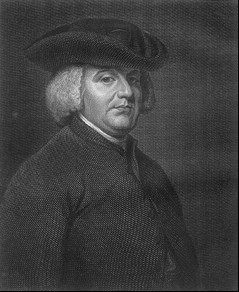






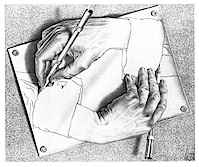


 Participants/